Implications
Increasing obesity and an ageing population increase the risk of chronic disease and its associated financial cost substantially. Diet is a modifier of risk and since milk, meat and their products are staple components of most Western diets, it is very important to understand whether these foods increase or decrease the risk of chronic disease. Milk appears to provide some worthwhile reduction in risk of cardiovascular disease and colorectal cancer and while this needs further understanding, the implications for milk production and milk consumers are potentially very substantial. There remains uncertainty about the effects of red meat and processed meat in the diet and these need urgent clarification both for the consumer and the producer.
Introduction
Public health nutrition is facing multiple and major challenges. In particular, there are three major forces at work that will shape food-related policy for decades to come. These are the rapidly increasing burden of obesity, the increasing age of populations and the challenge of increasing world food production by some 50% by 2030 to meet the increasing demands (House of Commons, 2009). The first two forces in particular will increase the risk of chronic disease substantially and the third may also add to this risk. These issues mean that diet, a key moderator of chronic disease risk, will play an increasingly important role. The World Health Organization/United Nations Food and Agriculture Organization (WHO/FAO, 2003) provide data which suggest that by 2020 chronic diseases will account for almost 75% of all deaths worldwide with the vast majority being related to cardiovascular disease (CVD). The associated large increase in the obesity/type 2 diabetes and the so-called Metabolic Syndrome is of particular concern since it is now also beginning to affect younger people (Nugent, Reference Nugent2004). In the United Kingdom, the recent Foresight Report on obesity predicts that by 2050 some 55% of United Kingdom adults will be obese (Butland et al., Reference Butland, Jebb, Kopelman, McPherson, Thomas, Mardell and Parry2007). Similarly, projections to 2050 of the age structure of the European Union (EU) 25 suggests that its old-age dependency ratio (the number of people aged 65 and over relative to those between 15 and 64) is projected to double to 54% by 2050 (Carone and Costello, Reference Carone and Costello2006). The outcome of these trends will, if not moderated, lead to unsustainable costs of health care. Already, CVD costs the EU some €200 billion/year in direct and indirect charges and notably the cost per person in the United Kingdom is already higher than the EU average (Allender et al., Reference Allender, Scarborough, Peto, Raynor, Leal, Luengo-Fernández and Gray2008).
It has been recognised for many years that diet plays a major role as a risk factor for chronic disease. Although factors such as the effect of amount and type dietary fat has had much attention in relation to chronic disease risk, there has also been increasing attention on the role of individual foods and animal-derived foods in particular. Although public health nutrition policy should be aware of the need for evidence-based conclusions, as concluded by Alvarez-Leon et al. (Reference Alvarez-Leon, Roman-Vinas and Serra-Majem2006) in relation to dairy products, it appears that conclusions about the benefits and risks of their consumption are often based on selected markers of risk and not on valid epidemiological evidence. It is also crucial that risks associated with the consumption of individual foods are interpreted in the context of all known lifestyle issues such as habitual diet, alcohol consumption, physical activity and smoking. It is of note that the recent report of the Sustainable Development Commission (2009) concluded that to achieve a sustainable diet, reductions in consumption of meat and dairy products would be one of three actions that would have the ‘most significant and immediate impact’.
This short review will examine the positive and negative evidence in relation to consumption of milk/dairy products and meat and briefly highlight opportunities to modify the composition of animal fats through animal nutrition in ways that will bring benefits in relation to long-term health, including the potential economic benefits of such action.
Milk, dairy products and chronic disease
In principle, the chronic effects of milk and dairy product consumption on health would be best tested in adequately powered randomised control intervention studies. To date, no adequate studies have been reported that have disease/death events as the key outcome. Such studies would need to be very long term, would be very costly and are not likely to be carried out. Accordingly, as concluded by Elwood et al. (Reference Elwood, Givens, Beswick, Fehily, Pickering and Gallacher2008 and Reference Elwood, Pickering, Givens and Gallacher2010), the most valuable evidence on associations between milk and dairy products and health and survival will be provided by long-term prospective cohort studies. As such studies can only identify associations and cannot elucidate mechanisms, the same concerns have been raised in relation to the relationship between dietary fat type and CVD risk. Warensjö et al. (Reference Warensjö, Sundström, Vessby, Cederholm and Risérus2008) identified that many intervention studies looking at this relationship have been of too short duration, too underpowered and have often failed to adequately assess intakes of individual fatty acids.
Gibson et al. (Reference Gibson, Makrides, Smithers, Voevodin and Sinclair2009) reviewed the evidence from cohort studies in relation to dairy foods and coronary heart disease (CHD) and concluded that there was no consistent evidence that dairy food consumption was associated with higher risk of CHD. Elwood et al. (Reference Elwood, Givens, Beswick, Fehily, Pickering and Gallacher2008) reported on meta-analyses that examined the associations between milk and dairy products and health and survival. This used Cochrane systematic review methods that yielded 180 papers on milk/dairy products and heart disease, etc., 33 papers on milk and stroke and 111 on milk and diabetes. These were all examined and those, which were population based and prospective, and gave baseline data on milk or dairy consumption, together with a vascular disease outcome or incident diabetes, were accepted for review. For heart disease, 11 papers were found to be relevant and to contain the data necessary for inclusion in a meta-analysis, for stroke seven and for diabetes four papers. Some cross-sectional case-control studies were also identified for the metabolic syndrome (four papers) and for myocardial infarction (four papers).
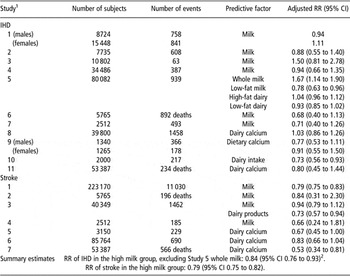
They showed convincing epidemiological evidence that a high intake of milk can provide long-term reductions in the risk of CVD. The relative risk (RR) of stroke and ischaemic heart disease in subjects with high milk or dairy consumption was shown to be 0.79 (95% CI 0.75, 0.82) and 0.84 (95% CI 0.76, 0.93), respectively, relative to the risk in those with low consumption (Table 1). Two studies were cited (Kinjo et al., Reference Kinjo, Beral, Akiba, Key, Mizuno, Appleby, Yamaguchi, Watanabe and Doll1999; Umesawa et al., Reference Umesawa, Iso, Date, Yamamoto, Toyoshima, Watanabe, Kikuchi, Koizumi, Kondo, Inaba, Tanabe and Tamakoshi2006), which indicated that RR for both haemorrhagic and ischaemic strokes were similar and both significantly less than 1.0. Elwood et al. (Reference Elwood, Givens, Beswick, Fehily, Pickering and Gallacher2008) also examined four studies in which incident diabetes was the outcome, and RR in subjects with the highest intake of milk or dairy foods was 0.92 (95% CI 0.86, 0.97). This work has been extended to examine the evidence for the differential effects of milk, cheese and butter on the incidence of vascular disease (Elwood et al., Reference Elwood, Pickering, Givens and Gallacher2010). This essentially found that there were very few prospective cohort studies available for cheese (five) and butter (six). For butter, only three studies were suitable for meta-analysis, yielding a non-significant RR for high v. low consumption (0.93, 95% CI 0.84 to 1.02). For cheese, only two studies were suitable for meta-analysis. Although there is some additional evidence related to butter and cheese from retrospective case-control studies, this is weaker evidence than from cohort studies and overall this highlights a large gap in knowledge.
Meta-analysis of prospective studies of milk and dairy consumption, IHD and stroke (from Elwood et al., Reference Elwood, Givens, Beswick, Fehily, Pickering and Gallacher2008)

IHD = ischaemic heart disease; RR = relative risk; CI = confidence interval.
1see Elwood et al. (Reference Elwood, Givens, Beswick, Fehily, Pickering and Gallacher2008) for details of studies.
2When the estimates of Study 5 for whole milk was included there was considerable heterogeneity (I2=54.1%).
In most studies, the type of milk (full fat, semi-skimmed, etc.) was not identified and since many studies took place over long periods, there may have been a shift from full fat to fat reduced types with time. In addition, most studies used quartiles or quintiles of the distribution of intakes, while others defined in terms of ‘glasses’ drunk and others simply accepted the number of occasions on which milk or dairy foods were consumed. Nevertheless, some guidance can be taken from definitions in several of the studies. Thus, several studies defined a ‘high’ intake as the consumption of 568 ml (one pint) or more per day, others two or more ‘glasses’ per day, while in one study based on weighed dietary intakes the mean daily consumption of milk in the subjects who showed a reduction in vascular disease and diabetes was over 190 ml.
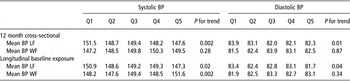
These data provide the best evidence available that those who consume large quantities of milk/dairy products are at no greater risk of CVD than those who consume little, and indeed there appears to be a small but valuable reduction in risk of vascular disease from increased consumption. This conclusion is in agreement with the recently reported outcome of the 61-year follow-up of the Boyd-Orr cohort. This study involved the recruitment of 4999 children in England and Scotland in 1937 to 1939 with causes of death recorded from 1948 (van der Pols et al., Reference van der Pols, Gunnell, Williams, Holly, Bain and Martin2009). This study showed that a family diet in childhood that was high in dairy products did not give rise to a greater risk of CHD or stroke mortality. Indeed, all-cause mortality was lowest in those with the highest dairy product and milk intake (basic Hazard Ratio for both, 0.69; 95% CI 0.57, 0.84; P for trend <0.002), and calcium intake during childhood was inversely associated with stroke mortality but was not significant for CHD mortality. The somewhat greater impact of calcium than milk or dairy products seen in the Boyd-Orr study is of great interest as dietary calcium has many effects, including the binding of cholesterol and bile acids in the gut (Ditchfield et al., Reference Ditchfield, Keller and Jahreis2005). However, of probably more importance is that calcium in dairy foods can lead to reduced blood pressure, though the effects of calcium and dairy product intake appear to be independent (Ruidavets et al., Reference Ruidavets, Bongard, Simon, Dallongevill, Ducimetière, Arveiler, Amouyel, Bingham and Ferrières2006). Notably in a 6-year study with 2245 older subjects in the Rotterdam Cohort Study, a substantial reduction in incident hypertension (Hazard Ratio 0.84; 95% CI 0.70, 1.01) was attributed to consumption of dairy products (Engberink et al., Reference Engberink, Hendriksen, Schouten, van Rooij, Hofman, Witteman and Geleijnse2009). The independent effect of dairy foods may be because, in addition to the effect of calcium, milk proteins release certain peptides during digestion, which may have a beneficial effect on blood pressure by inhibiting the angiotension-1-converting enzyme, thus modulating endothelial function and leading to vasodilation (Clare and Swainsgood, Reference Clare and Swainsgood2000). This concept has been put into commercial practice whereby, for example, the AmealPeptide® is produced from the enzymatic hydrolysis of casein. This product is a combination of two tri-peptides composed of valine-proline-valine and isoleucine-proline-proline that claims to help maintain blood pressure in a healthy range (AmealPeptide, 2009). It is important to note that most of the epidemiological data available for the meta-analysis of Elwood et al. (Reference Elwood, Givens, Beswick, Fehily, Pickering and Gallacher2008) related to liquid milk consumption rather than dairy products. In addition, in the Rotterdam Study (Engberink et al., Reference Engberink, Hendriksen, Schouten, van Rooij, Hofman, Witteman and Geleijnse2009), the reducing effects on blood pressure were considerably greater with milk and low-fat dairy products than for cheese and high-fat dairy products. Similarly, in the PREDIMED study, with a cohort of older subjects (aged 55 to 80 years) having high CVD risk factors, systolic and diastolic BP were significantly lower in the highest quintile of low-fat dairy food intake (−4.2 (95% CI −6.9, −1.4) and −1.8 (95% CI −3.2, −0.4) mmHg, respectively; Table 2; Toledo et al., Reference Toledo, Delgado-Rodŕıguez, Estruch, Salas-Salvadó, Corella, Gomez-Gracia, Fiol, Lamuela-Raventós, Schröder, Arós, Ros, Ruíz-Gutiérrez, Lapetra, Conde-Herrera, Sáez, Vinyoles and Martínez-González2009). These studies add weight to the idea that the beneficial effects on vascular disease outcome relate mainly to milk. Further studies are urgently needed to confirm this and to clarify the effects of cheese, butter and other high-fat dairy products.
Mean BP (mmHg) values across Q of LF and WF dairy food consumption in subjects from the PREDIMED study (from Toledo et al., Reference Toledo, Delgado-Rodŕıguez, Estruch, Salas-Salvadó, Corella, Gomez-Gracia, Fiol, Lamuela-Raventós, Schröder, Arós, Ros, Ruíz-Gutiérrez, Lapetra, Conde-Herrera, Sáez, Vinyoles and Martínez-González2009)

BP = blood pressure; Q = quintiles; LF = low fat; WF = whole fat.
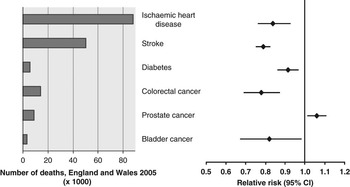
Elwood et al. (Reference Elwood, Givens, Beswick, Fehily, Pickering and Gallacher2008) also reviewed the data on milk/dairy product consumption and cancer as provided in the report of the World Cancer Research Fund (WCRF, 2007). In a meta-analysis of 10 cohort studies involving 534 536 subjects and 4992 cases of colorectal cancer, the highest milk intake group had an RR of 0.78 (95% CI 0.69, 0.88) compared with the lowest intake group. These and other data led WCRF (2007) to conclude that milk probably protects against colorectal cancer. WCRF (2007) also concluded that there was limited evidence suggesting that milk protects against bladder cancer and a similar level of evidence suggesting that cheese increases the risk of colorectal cancer. A further conclusion was that there was also limited evidence that diets high in calcium and high in milk and dairy products increase the risk of prostate cancer, although the report did note that the evidence from both cohort and case-control studies was inconsistent. Since the report of WCRF (2007), there have been several additional reviews on the possible relationship between milk/dairy product consumption and colorectal (Pufulete, Reference Pufulete2008) and prostate cancer (Givens et al., Reference Givens, Morgan and Elwood2008; Huncharek et al., Reference Huncharek, Muscat and Kupelnick2008; Parodi, Reference Parodi2009). Pufulete (Reference Pufulete2008) concluded that while most of the protective effect of milk for colorectal cancer had been attributed to calcium, this was difficult to translate into the public health nutrition policy since the proposed protective calcium dose varied substantially between studies. In relation to prostate cancer, Huncharek et al. (Reference Huncharek, Muscat and Kupelnick2008) carried out a meta-analysis of pooled data from 45 observational studies and concluded that cohort studies showed no evidence of a relationship between dairy product (RR 1.06; 95% CI 0.92, 1.02) or milk consumption (RR 1.06; 95% CI 0.91, 1.23) and risk of prostate cancer. This conclusion was supported by data from case-control studies. Similarly, Parodi (Reference Parodi2009) concluded that there was no plausible biological explanation for an association between dairy product consumption and prostate cancer, although he conditioned this by saying that a combination of factors, as yet undetermined, cannot be excluded. Overall, the current evidence indicates very little, if any, evidence that high consumers of milk have greater risk of prostate cancer than low consumers. In any event, set against the high proportion of total deaths in the United Kingdom attributable to vascular disease and associated diabetes, Elwood et al. (Reference Elwood, Givens, Beswick, Fehily, Pickering and Gallacher2008) concluded that their results provide evidence of an overall survival advantage from the consumption of milk. The concept of survival advantage is depicted in Figure 1, but as highlighted above, it is important to note that evidence for this advantage relates mainly to milk, since as noted above there are only limited data available for cheese and butter, etc. (Elwood et al., Reference Elwood, Pickering, Givens and Gallacher2010). There have also been some concerns raised about the possibility of an association between milk consumption and breast cancer. The review of Parodi (Reference Parodi2005) concluded that more than 40 case-control and 12 cohort studies did not support an association between dairy product consumption and breast cancer. WCRF (2007) commented that observational epidemiological evidence did not consistently implicate consumption of animal-derived foods with breast cancer. Since then the European Prospective Investigation into Cancer and Nutrition has reported that no consistent association between milk and dairy product consumption and breast cancer was seen in their study involving 319 826 women over an 11-year period, although sub-group analysis did indicate an increased risk from high v. low butter consumption in premenopausal women only (Pala et al., Reference Pala, Krogh, Berrino, Sieri, Grioni, Tjønneland, Olsen, Jakobsen, Overvad, Clavel-Chapelon, Boutron-Ruault, Romieu, Linseisen, Rohrmann, Boeing, Steffen, Trichopoulou, Benetou, Naska, Vineis, Tumino, Panico, Masala, Agnoli, Engeset, Skeie, Lund, Ardanaz, Navarro, Sánchez, Amiano, Svatetz, Rodriguez, Wirfält, Manjer, Lenner, Hallmans, Peeters, van Gils, Bueno-de-Mesquita, van Duijnhoven, Key, Spencer, Bingham, Khaw, Ferrari, Byrnes, Rinaldi, Norat, Michaud and Riboli2009).
The numbers of deaths in England and Wales in 2005 from various causes, and the risks for these causes in subjects with the highest milk/dairy consumption, relative to the risk in the subjects with the lowest milk/dairy consumption (from Elwood et al., Reference Elwood, Givens, Beswick, Fehily, Pickering and Gallacher2008).

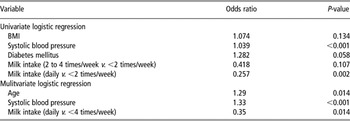
Partly because of the increased life expectancy, there is growing concern about the trend in the prevalence of dementia with the numbers in the United Kingdom projected to double between 2001 and 2040 (Jagger et al., Reference Jagger, Matthews, Lindesay, Robinson, Croft and Brayne2009). There are, however, few studies that have examined any relationship between milk consumption and risk of dementia. One study that did look at this is the Adult Health Study, a prospective cohort of 1774 subjects in Hiroshima, Japan born before September 1932. Between 1992 and 1997, 1660 were shown to have no dementia and 114 had dementia (51 with Alzheimer’s disease, 38 with vascular dementia). Vascular dementia prevalence increased significantly with age, with higher systolic blood pressure and, crucially, with lower milk intake. The odds ratios of vascular dementia for age (in 5-year increments), systolic blood pressure (10 mmHg increments) and milk intake (almost daily v. less than four times a week) were 1.29, 1.33 and 0.35, respectively (Table 3). The authors (Yamada et al., Reference Yamada, Kasagi, Sasaki, Masunari, Mimori and Suzuki2003) concluded that increased blood pressure and low milk intake in midlife were associated with vascular dementia detected 25 to 30 years later. The mechanism whereby milk provided protection cannot be stated with certainty, but given other evidence linking milk consumption with lowered blood pressure, it would seem probable that this mechanism was involved. Clearly, much further research is needed in this area.
The association between milk consumption and other variables with vascular dementia in the Adult Health Study cohort (from Yamada et al., Reference Yamada, Kasagi, Sasaki, Masunari, Mimori and Suzuki2003)

Milk and dairy products as sources of saturated fatty acids (SFAs)
There is consistent evidence that dietary SFAs increase the concentrations of serum low-density lipoprotein cholesterol (LDL-C), a long used predictor of CVD risk and of CHD in particular (Zock, Reference Zock2006). Until recently, LDL-C alone has been relied on to predict risk; yet a meta-analysis of 60 selected human studies (Mensink et al., Reference Mensink, Zock, Kester and Katan2003) confirmed that when dietary carbohydrates are substituted by an isoenergetic amount of C12:0 to C16:0 SFA, while an increase in LDL-C does occur, there is also a concomitant increase in the protective high-density lipoprotein cholesterol (HDL-C). Mensink et al. (Reference Mensink, Zock, Kester and Katan2003) cite papers which show good evidence that the ratio of total cholesterol to HDL-C provides the best cholesterol-based predictor of the effect of dietary fatty acids on the risk of CHD, and this interpretation indicates that the effects of C12:0 and C14:0 fatty acids may be rather beneficial as they both lower the total to HDL-C ratio while the opposite is the case for C16:0. These data suggest that the SFA profile of milk fat is therefore not likely to have such a negative effect on CVD risk as would have been interpreted from the use of LDL-C as the sole indicative predictor of risk. The data also suggest that any attempt to reduce the proportion of SFA in milk fat should target C16:0 in particular. The meta-analysis of Mensink et al. (Reference Mensink, Zock, Kester and Katan2003) also showed that overall, the risk of CHD would be most effectively reduced by the replacement of dietary SFA with either cis-monounsaturated fatty acid (MUFA) or cis-polyunsaturated fatty acid (PUFA). The benefits of the two replacement strategies in terms of the resulting serum cholesterol profile was similar.
The replacement of SFA by both cis-MUFA and cis-PUFA may provide additional benefits. There is epidemiological evidence linking high SFA intake with impaired glucose tolerance (Feskens and Kromhout, Reference Feskens and Kromhout1990; Parker et al., Reference Parker, Weiss, Troisi, Cassano, Vokonas and Landsberg1993; Feskens et al., Reference Feskens, Virtanen, Rasanen, Tuomilehto, Stengard, Pekkanen, Nissinen and Kromhout1995) and some intervention evidence. In a study involving 162 healthy subjects given diets rich in SFA (from butter and margarine) or cis-MUFA (from high oleic sunflower oil), those on the SFA diet had significantly impaired insulin sensitivity (−10%) while those on the cis-MUFA diet showed no change (Vessby et al., Reference Vessby, Uusitupa, Hermansen, Riccardi, Rivellese, Tapsell, Nälsén, Berglund, Louheranta, Rasmussen, Calvert, Maffetone, Pedersen, Gustafsson and Storlien2001). The favourable effects of cis-MUFA were however not seen in subjects with a high fat intake (>37% of energy intake). In the LIPGENE study, the same moderating effect of dietary fat intake has been observed recently together with the increased susceptibility of females (Tierney et al., Reference Tierney, McMonagle, Shaw, Gulseth, Defoort, Saris, Paniagua, bek-Leszczyńska, Larion, Williams, Karsltrom, Vessby, Dembinska-Kiec, Lopez Miranda, Blaak, Drevon, Gibney, Lovegrove and Roche2008).
Despite the well-exposed benefits of reducing dietary SFA, many parts of the EU still fail to meet dietary targets. Henderson et al. (Reference Henderson, Gregory, Irving and Swan2003) reported that in the United Kingdom, men and women exceeded the mean population target (<11% energy intake) by 22% and 20%, respectively, and Gregory et al. (Reference Gregory, Lowe, Bates, Prentice, Jackson, Smithers, Wenlock and Farron2000) indicated that children exceed the target by an even greater amount. The initial report from Year 1 (2008/2009) of the new rolling National Diet and Nutrition Survey (Bates et al., Reference Bates, Lennox and Swan2010) indicates that intake of SFA in adults is similar to that reported by Henderson et al. (Reference Henderson, Gregory, Irving and Swan2003). There does seem, therefore, to be considerable scope for reduction in SFA intake.
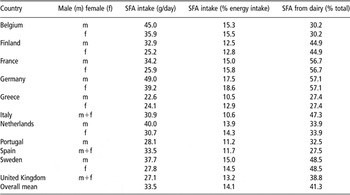
A number of studies have shown that in most parts of the EU, milk and dairy products make the single greatest contribution to SFA intake. The data of Hulshof et al. (Reference Hulshof, van Erp-Baart, Anttolainen, Becker, Church, Couet, Hermann-Kunz, Kesteloot, Leth, Martins, Moreiras, Moschandreas, Pizzoferrato, Rimestad, Thorgeirsdottir, van Amelsvoort, Aro, Kafatos, Lanzmann-Petithory and van Poppel1999) indicate that in the United Kingdom, milk and dairy products supply about 40% of all SFA (Table 4), somewhat higher than the data from the National Diet and Nutrition Survey (Henderson et al., Reference Henderson, Gregory, Irving and Swan2003). Thus, it may be argued that reducing the intake of SFA would simply be achieved by reducing the consumption of milk and dairy products. However, given the epidemiological evidence discussed above, and the fact that these foods also provide important amounts of calcium, vitamin B12 and other nutrients (Givens and Kliem, Reference Givens and Kliem2009), such a simple solution is not a realistic one and is likely to be counterproductive.
Intakes of SFA and the proportion supplied by dairy products in 11 EU Member States (adapted from Hulshof et al., Reference Hulshof, van Erp-Baart, Anttolainen, Becker, Church, Couet, Hermann-Kunz, Kesteloot, Leth, Martins, Moreiras, Moschandreas, Pizzoferrato, Rimestad, Thorgeirsdottir, van Amelsvoort, Aro, Kafatos, Lanzmann-Petithory and van Poppel1999)

SFA = saturated fatty acids; EU = European Union.
The possibility that changing the fatty acid composition of dairy foods to replace some SFA with cis-MUFA or cis-PUFA could provide a valuable means of reducing SFA intake while retaining the cardioprotective benefits of milk has recently been reviewed by Givens and Minihane (Reference Givens and Minihane2009). Based on the rather limited number of intervention studies using milk/milk products with SFA reduced from typically 70% to 55% of total fatty acids and cis-MUFA increased from typically 20% to 33% of total fatty acids, this review concluded that there was indeed potential benefit to be obtained from production of dairy products with reduced SFA. Such changes in milk SFA and cis-MUFA are quite feasible by alteration of the cow’s diet (Givens and Shingfield, Reference Givens and Shingfield2006). As part of a modelling exercise, Givens (Reference Givens2008) predicted that reductions of some 10 500 and 3900 deaths from CHD and stroke per annum, respectively, in the EU 27 could result from such a strategy.
Milk and dairy products as sources of trans-fatty acids (TFA)
There has been concern for many years about the negative health effects of dietary TFA, in particular as high intakes have been associated with a substantially increased risk of CHD (Willett et al., Reference Willett, Stampfer, Manson, Colditz, Speizer, Rosner, Sampson and Hennekens1993). The TRANSFAIR study (Hulshof et al., Reference Hulshof, van Erp-Baart, Anttolainen, Becker, Church, Couet, Hermann-Kunz, Kesteloot, Leth, Martins, Moreiras, Moschandreas, Pizzoferrato, Rimestad, Thorgeirsdottir, van Amelsvoort, Aro, Kafatos, Lanzmann-Petithory and van Poppel1999) showed that in all the European countries studied, trans isomers of C18:1 were by far the primary TFA in diets. For example, in France and the Netherlands, they represented 54% and 82% of dietary TFA intake by women. This study did not differentiate analytically between different isomeric forms of trans C18:1 but the contribution by dairy products (milk, cheese and butter) to total TFA intake was estimated. The mean contribution across all countries was 37.8% but the range was large from 16.7% (Netherlands) to 71.8% (Germany). Although trans C18:1 represents the main TFA in human diets, it is particularly notable that the isomeric profile of TFA from milk fat is different to that from industrial hydrogenation of vegetable and other oils. The most abundant isomer in milk fat is trans-11, C18:1 (trans-vaccenic acid), which represents in excess of 40% of total trans C18:1, while that from industrial hydrogenation is trans-9, C18:1 (elaidic acid). A key question is whether the TFA in milk fat have the same deleterious effect as seen for TFA from industrial biohydrogenation?
Four prospective epidemiological studies have examined the relationship between the intake of TFA from ruminant derived foods and the risk of CHD (Willett et al., Reference Willett, Stampfer, Manson, Colditz, Speizer, Rosner, Sampson and Hennekens1993; Pietinen et al., Reference Pietinen, Ascherio, Korhonen, Hartman, Willett, Albanes and Virtamo1997; Oomen et al., Reference Oomen, Ocke, Feskens, van Erp-Baart, Kok and Kromhout2001; Jakobsen et al., Reference Jakobsen, Bysted, Andersen, Heitmann, Hartkopp, Leth, Overvad and Dyerberg2006). None of these studies found a significant positive relationship and indeed in three of the studies there was a non-significant trend towards a negative relationship. Owing to the small amount of data and since most human intervention studies have only evaluated TFA from industrial sources, the TRANSFACT study was set up to directly compare the effects of TFA from milk and industrial sources on CHD risk factors in healthy humans. The first output from the TRANSFACT study showed that industrial and ruminant TFA have different effects on CVD risk factors. Only industrial TFA lowered HDL-cholesterol, although the responses were greater in women than in men (Chardigny et al., Reference Chardigny, Destaillats, Malpuech-Brugère, Moulin, Bauman, Lock, Barbano, Mensink, Bezelgues, Chaumont, Combe, Cristiani, Joffre, German, Dionisi, Boirie and Sébédio2008). Overall, there appears to be little if any increased risk of CVD from consumption of ruminant TFA, at least at current intakes. This conclusion appears to be supported by a recent study in mice, which confirmed that consuming a trans-9, C18:1-rich diet stimulates atherosclerosis, whereas consumption of a trans-11, C18:1-rich butter provides protection (Bassett et al., Reference Bassett, Edel, Patenaude, McCullough, Blackwood, Chouinard, Pacquin, Lamarche and Pierce2010). Confirmation in human studies is needed.
Milk, dairy products and chronic disease: conclusions
There is convincing epidemiological evidence that increased consumption of milk does not result in increased risk of CVD. Indeed, it may lead to long-term reductions in the risk of CVD and possibly some cancers, and as proposed by Elwood et al. (Reference Elwood, Givens, Beswick, Fehily, Pickering and Gallacher2008), there is evidence of an overall survival advantage from the consumption of milk. Although such studies cannot confirm cause and effect, on balance, simply reducing milk/dairy consumption in order to reduce SFA intake or to improve sustainability of diets may not produce benefits overall. It is important, however, to note that the epidemiological evidence relates mainly to milk, and in the United Kingdom at least, cheese and butter provide most of the dairy-derived SFA (Henderson et al., Reference Henderson, Gregory, Irving and Swan2003). It would therefore seem logical that the use of animal nutrition strategies to produce milk with reduced SFA and increased cis-MUFA or cis-PUFA (Chilliard et al., Reference Chilliard, Ferlay, Mansbridge and Doreau2000; Givens and Shingfield, Reference Givens and Shingfield2006) should initially be targeted at cheese and butter production. That said, there is an urgent need for robust intervention studies to evaluate the impact of such changes in a whole diet context using modern functional makers of CVD risk such as endothelial function (Nicholls et al., Reference Nicholls, Lundman, Harmer, Cutri, Griffiths, Rye, Barter and Celermajer2006). There is also a need for more data on the relationship between milk consumption and dementia.
Meat consumption and chronic disease
The relationship between consumption of red meat and chronic disease has been recently reviewed in detail by McAfee et al. (Reference McAfee, McSorley, Cuskelly, Moss, Wallace, Bonham and Fearon2010) and therefore will only be covered here in outline. In relation to CVD, McAfee et al. (Reference McAfee, McSorley, Cuskelly, Moss, Wallace, Bonham and Fearon2010) concluded that associations between red meat consumption and CVD risk are unclear as in many studies it is impossible to isolate the effects of red meat alone. However, the recent systematic review and meta-analysis of Micha et al. (Reference Micha, Wallace and Mozaffarian2010) identified that consumption of each serving of processed meats is associated with a 42% higher incidence of CHD (RR 1.42, 95% CI 1.07 to 1.89) and a 19% increase in type 2 diabetes (RR 1.19, 95% CI 1.11 to 1.27), but for red meat there was no association. There is clearly a need for more work in this area given the uncertainties over the definitions of red and processed meats and the need to understand the causative mechanisms for processed meats.
Much attention has been focused on the WCRF (2007) report which summarised all available evidence relating red meat consumption and colorectal cancer. The report concluded that the association between red meat and processed meat intake and colorectal cancer risk was convincing and added weight to the report 10 years earlier which indicated that the evidence for red meat and processed meat, respectively, was probable and possible (WCRF, 1997). However, in a more recent meta-analysis of studies involving data on consumption of animal fat and protein and colorectal cancer, no consistent evidence of a positive relationship between consumption of these foods and colorectal cancer was observed in either prospective cohort or case-control studies (Alexander et al., Reference Alexander, Cushing, Lowe, Sceurman and Roberts2009). The study was, however, not able to separate different types of animal product (e.g. dairy products, red meat, processed meat, poultry meat and fish) as this was not reported consistently across the studies used. McAfee et al. (Reference McAfee, McSorley, Cuskelly, Moss, Wallace, Bonham and Fearon2010) also reviewed all the available data on red meat consumption and colorectal cancer risk. They concluded that the evidence showing that red meat contributes to colorectal cancer risk is still conflicting and inconsistent and suggested that it is unlikely that reducing red meat consumption alone would be sufficient to reduce risk unless whole diet balance was also addressed. In that context, it is worth noting that in the United Kingdom red meat consumption has fallen very substantially since the 1950s and the WCRF (2007) report did confirm that the risk of cancer development from alcohol consumption was not only higher than from red meat but that it can also affect many more body sites.
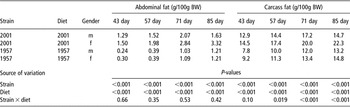
In contrast to red meat, poultry meat consumption in the United Kingdom has increased vastly over the last 60 years from about 15 g/person per week in 1950 (MAFF, 2001) to around 250 g/person per week (DEFRA (Department for Environment, Food and Rural Affairs), 2010), although industry estimates of total poultry meat entering the food chain is much higher (500 g/person per week; The Association of Poultry Processors and Poultry Trade in the EU countries (AVEC, 2009)). Recently, there have been concerns in the scientific (Wang et al., Reference Wang, Lehane, Ghebremeskel and Crawford2009) and popular press (e.g. Ungoed-Thomas, Reference Ungoed-Thomas2005) that modern chicken meat contains considerably more fat than was the case some years ago, thus contributing to the concerning rise in obesity. There appear to be few data in the peer-reviewed scientific literature to support this and the most recent UK National Diet and Nutrition Survey (Henderson et al., Reference Henderson, Gregory, Irving and Swan2003) indicates that chicken and turkey meat and meat products contribute only 5% of dietary fat. A recent study on the fat content of retail chickens in this laboratory agrees with that estimate (Givens et al., Reference Givens, Gibbs and Brown2010). Poultry meat does, however, have a very variable fat content depending mainly on which part of the body the meat is derived from and whether it is associated with any skin, and this variability makes a direct comparison with older data difficult. An interesting study comparing the fat content of an old strain of meat chicken (Athens-Canadian Randombred Control; ACRBC) fed a diet typical of 1957 with that of a modern strain (Ross 308) fed a modern diet (2001) was reported by Havenstein et al. (Reference Havenstein, Ferket and Qureshi2003). Some of the key results are summarised in Table 5 and show that while the Ross 308 on the 2001 diet had higher fat contents than the ACBRC on the 1957 diet at each date of measurement, the Ross 308 on the 2001 diet had a slightly lower carcass fat content at its normal slaughter age of 43 days (13.7 g/100 g males and females combined) than the ACRBC on the 1957 diet had at its normal slaughter age of 85 days (14.0 g/100 g). On the basis of this study, it would seem that if modern diets have any tendency to increase the fat content of birds, this is essentially compensated by their increased growth rate and lower maturity at slaughter. This conclusion, however, is at odds with the findings of a study in the United Kingdom (Fleming et al., Reference Fleming, Fisher and McAdam2007) which compared birds from three modern genetic lines with their 1972 control lines and showed at typical slaughter ages and similar body weights that the modern birds had considerably lower carcass fat contents (13.9 to 15.4 v. 21.6 to 23.8 g/100 g; excluding abdominal fat pad). Overall, there seems little evidence that meat poultry nowadays contain more fat in edible meat than was the case in the past.
Abdominal and carcass fat contents of old (1957) and modern (2001) strains of meat poultry fed diets typical of 1957 and 2001 (adapted from Havenstein et al., Reference Havenstein, Ferket and Qureshi2003).

m = male; f = female.
As with milk, there appear to be few data relating long-term meat consumption with risk of dementia. One recent study (Albanese et al., Reference Albanese, Dangour, Uauy, Acosta, Guerra, Gallardo Guerra, Huang, Jacob, Llibre de Rodriguez, Hernandex Noriega, Salas, Sosa, Sousa, Williams, Ferri Cleusa and Prince2009) did investigate the association between meat (and fish) consumption with dementia in low- and middle-income countries. This was a cross-sectional survey conducted in subjects aged 65 years or more in areas of China, India, Cuba, the Dominican Republic, Venezuela, Mexico and Peru. This involved a total of 14 960 subjects with standardised questions on average weekly fish and meat intakes being assessed in face-to-face interviews. The authors reported a dose-dependent inverse association between fish intake and dementia (Prevalence ratio 0.81; 95% CI: 0.72, 0.91), which was consistent across all study areas except India, and a rather less consistent but positive, dose-dependent association between meat consumption and prevalence of dementia (Prevalence ratio 1.19; 95% CI: 1.07, 1.31). No attempt was made to differentiate between types of meat (e.g. red v. white) and the authors do confirm that the negative effects of meat observed should only be considered directly relevant to populations with similar dietary and health characteristics. It is worth noting that in a large cohort of French adults studied for 7 years, no association of meat intake with dementia risk was seen (Barberger-Gateau et al., Reference Barberger-Gateau, Letenneur, Deschamps, Peres, Dartigues and Renaud2002).
Meat consumption and chronic disease: conclusions
As concluded by McAfee et al. (Reference McAfee, McSorley, Cuskelly, Moss, Wallace, Bonham and Fearon2010), overall, there is little strong evidence to support the recent conclusion from WCRF (2007) that red meat has a convincing role to play in the development of colorectal cancer. Many studies reporting such an association have several methodological limitations and inconsistencies that may impact on the validity of their findings. This topic should, however, not be ignored and requires more targeted research not least to differentiate, if necessary, between the varied range of meats classified as red and processed meats. Likewise, Micha et al. (Reference Micha, Wallace and Mozaffarian2010) confirmed that there was no association between red meat consumption and vascular disease, although consumption of processed meats increased the risk very substantially. There is sparse and inconsistent evidence relating meat consumption to dementia and this needs further study. Red meat no doubt contributes key nutrients to the diet, notably haem iron, vitamin B12 and high-quality protein and McAfee et al. (Reference McAfee, McSorley, Cuskelly, Moss, Wallace, Bonham and Fearon2010) suggest that lean red meat can have an important role as a dietary source of long chain (LC, carbon chain length ⩾20) n-3 fatty acids. The increased consumption of poultry meat over recent decades has no doubt made an increasing contribution to the intake of high-quality protein while there are concerns that its fat content has increased. Poultry meat is consumed in many products by a large proportion of the population and more information is needed on the composition of the many variant products available (burgers, nuggets, etc.), especially those targeted at children. Poultry meat may also be an important dietary source of LC n-3 fatty acids in the large section of the population that consumes no oily fish (Givens and Gibbs, Reference Givens and Gibbs2006 and Reference Givens and Gibbs2008). The role of animal-derived foods as a source of LC n-3 fatty acids will be briefly reviewed in the following section.
LC n-3 fatty acids and chronic disease
In the 1960s and 1970s a number of studies demonstrated that consumption of fish was associated with a reduced risk of CHD in the Greenland Eskimos despite an overall diet rich in fat (Dyerberg et al., Reference Dyerberg, Bang and Hjorne1975; Bang et al., Reference Bang, Dyerberg and Sinclair1980). This work led to the concept that LC n-3 PUFA, in particular eicosapentaenoic acid (EPA) (C20:5) and docosahexaenoic acid (DHA) (C22:6), typically found in marine foods provided the cardioprotective effects. More recently, beneficial effects have been widely reported and include anti-atherogenic, anti-thrombotic and anti-inflammatory effects and overall increased intakes leading to reduced risk of CHD (see review of the Scientific Advisory Committee on Nutrition (SACN) and Committee on Toxicity (COT), 2004).
Evidence is also accumulating that the intake of EPA and DHA may influence cognitive function in the elderly. In the Zutphen Elderly Study, van Gelder et al. (Reference van Gelder, Tijhuis, Kalmijn and Kromhout2007) examined fish consumption in 210 males, aged 70 to 89 years in 1990, along with estimates of cognitive function in 1990 and 1995. A significant (P < 0.01) positive linear trend was seen for the relationship between EPA + DHA intake and cognitive ability with a mean difference in intake of about 380 mg/day being associated with a 1.1-point difference in cognition. van Gelder et al. (Reference van Gelder, Tijhuis, Kalmijn and Kromhout2007) concluded that moderate intakes of EPA + DHA may delay the decline in cognitive function in elderly men. More recent studies have, however, not shown an association between EPA/DHA intake and long-term dementia risk (Devore et al., Reference Devore, Grodstein, van Rooij, Hofman, Rosner, Stampfer, Witteman and Breteler2009; Kröger et al., Reference Kröger, Verreault, Carmichael, Lindsay, Julien, Dewailly, Ayotte and Laurin2009).
The dietary essential α-linolenic acid (C18:3 n-3, ALA) can in theory be desaturated and elongated to EPA and DHA, but recent studies (e.g. Burdge et al., Reference Burdge, Finnegan, Minihane, Williams and Wootton2003) and reviews (Burdge and Calder, Reference Burdge and Calder2005; Harris et al., Reference Harris, Mozaffarian, Lefevre, Toner, Colombo, Cunnane, Holden, Klurfeld, Morris and Whelan2009) have concluded that while the principal role of ALA is indeed as precursor for EPA/DHA, the efficiency of conversion of ALA to EPA is very low especially in men and that further transformation to DHA is often minimal. Indeed, Burdge and Calder (Reference Burdge and Calder2005) concluded that ALA is probably a quite limited source of EPA/DHA in humans, which may suggest that these fatty acids should now be regarded as dietary essential. This is supported by the systematic review of Wang et al. (Reference Wang, Harris, Chung, Lichtenstein, Balk, Kupelnick, Jordan and Lau2006) which concluded that increased consumption of n-3 fatty acids from fish or fish oil supplements, but not from ALA, reduces the rates of all-cause mortality, cardiac and sudden death and possibly stroke.
Givens and Gibbs (Reference Givens and Gibbs2008) reviewed the current recommended intakes of EPA+DHA. Where such recommendations are made, typically they are in the region of 500 mg/day, although there is evidence of benefits from considerably higher intakes (SACN/COT, 2004). The recent study of Harris et al. (Reference Harris, Mozaffarian, Lefevre, Toner, Colombo, Cunnane, Holden, Klurfeld, Morris and Whelan2009) into the establishment of a dietary reference intake for EPA + DHA also concluded that the most international recommendations are ∼500 mg/day, although the European Food Safety Authority has proposed 250 mg/day as the labelling reference intake value for EPA + DHA (EFSA, 2009). In the United Kingdom, the target intake is 450 mg/day, which is consistent with the consumption of two portions of fish per week, one of which is oil-rich. No consideration has yet been given to dietary recommendations in relation to brain function due to the relative paucity of data in this area.
Current intakes of LC-n-3 fatty acids
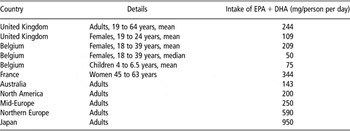
Givens and Gibbs (Reference Givens and Gibbs2008) also reviewed the evidence related to current intakes of EPA and DHA in various parts of the world. The data are summarised in Table 6. Some of the variability in estimated mean intake is likely to be due to the use of different food consumption surveys which suggest different levels of consumption of the key food types. Of note are the recommendations of SACN/COT (2004) that canned Tuna should be excluded from the oil-rich fish food category, which makes it possible that some of the studies substantially overestimated EPA + DHA intake. It is also very important to realise that estimates of mean intake may not be very helpful. For example, in the United Kingdom, SACN/COT (2004) found that only about 27% of the adult population consume any oil-rich fish and thus for the vast majority of the adult population the daily intake will probably at best be about 100 mg. A similar effect was seen in Belgian women (Sioen et al., Reference Sioen, Pynaert, Matthys, De Backer, Van Camp and De Henauw2006). Notably, in non-consumers of oil-rich fish in the United Kingdom, about half of the estimated 100 mg/day intake was provided by animal-derived foods, poultry meat in particular (Givens and Gibbs, Reference Givens and Gibbs2006). It is likely that much of the LC n-3 fatty acids found in poultry meat from birds which did not have fish oil in their diets is due to the diet containing fishmeal, which contains some residual fish oil. In 2004, some 48 000 t of fish meal (25% of total use) was used in the United Kingdom for poultry diets (Fishmeal Information Network, 2007), although this has declined considerably since. Overall, it is clear that in many areas and central Europe in particular, intake of EPA + DHA is considerably sub-optimal and this may be a key public health nutrition issue.
Recent estimated daily intakes of EPA + DHA in various countries (from Givens and Gibbs, Reference Givens and Gibbs2008)

Enriching animal-derived foods with EPA and DHA
Many studies have examined increasing the EPA and DHA concentration in animal-derived foods as a means of increasing daily intake (see e.g. reviews of Givens (Reference Givens2005) and Pisulewski et al. (Reference Pisulewski, Franczyk and Kostogrys2005)), although few have connected the potential for enrichment with current and projected patterns of food consumption. Assuming that consumption of enriched foods would be the same as that of normal foods, Givens and Gibbs (Reference Givens and Gibbs2006) calculated the potential for enrichment of a wide range of animal-derived foods and how these may contribute to additional EPA + DHA intake in the United Kingdom. This showed that enrichment of animal-derived foods has the potential to provide a daily intake of EPA + DHA of about 230 mg/person per day with poultry meat providing the largest potential intake (74 mg). The contribution of poultry meat is a result of it being consumed in large quantities and its amenability to enrichment. Other useful contributions could be provided by eggs and full fat cheese, although the contributions from liquid milk and other meats are likely to be quite modest based on current food consumption data.
Conclusions
Foods derived from animals are an important source of nutrients in the diet. However, certain aspects of some of these foods have led to concerns that they may increase the risk of various chronic diseases. For milk in particular, there appears to be an enormous mismatch between both the advice given on milk/dairy foods by various authorities and public perceptions of harm from the consumption of milk and dairy products, and the evidence from long-term prospective cohort studies. Notwithstanding this, there is an urgent need for targeted studies to confirm and elucidate the role of milk in the diet and its effects on health and to more clearly differentiate between the effects of full fat milk, fat reduced milk, cheese, etc. The future role of animal nutrition in creating foods closer to the optimum composition for long-term human health will be increasingly important. Certain animal-derived foods may have negative effects on long-term health and research is required to fully characterise these effects; however, they do need to be put into a whole diet context and considered alongside other risk factors to long-term health such as obesity, smoking and alcohol consumption. The desire to move towards a more sustainable diet in which health, environment and economic/social factors complement each other better than now must take all the above factors into account.
Acknowledgements
This paper is based on the Sir John Hammond Memorial lecture given to the British Society of Animal Science 2009 Annual Conference. I am most grateful to the Society for the honour and opportunity to do this. I am also grateful to my colleague Professor Peter Elwood (Cardiff University Hospital) for his continued collaboration in epidemiological studies.