Introduction
Agricultural production in sub-Saharan Africa (SSA) faces a challenging future in light of a more variable climate (Jones and Thornton, Reference Jones and Thornton2003) and increasing land degradation (Bai et al., Reference Bai, Dent, Olsson and Schaepman2008). Noting SSA's growing demographic pressures (Fuglie et al., Reference Fuglie, Wang and Ball2012), demand for cereals is likely to triple over the coming three decades (van Ittersum et al., Reference van Ittersum, Bussel, Wolf, Grassini, Wart, Guilpart, Claessens, Groot, Wiebe, Daniel, Haishun, Hendrik, Oortf, Loon, Saito, Adimo, Adjei-Nsiah, Agali, Bala, Chikowo, Kaizzi, Kouressy, Makoi, Ouattara, Tesfaye and Cassman2016). Yet current productivity for key food crops in Africa remains nearly stagnant (FAO, 2016), leading to rising concerns over food security and environmental sustainability.
Much of the discourse on these issues has focused on conservation agriculture (CA), defined as the grouping of three inter-related principles that are often promoted in a restricted way and thus interpreted as prescribed practices: minimal soil disturbance, permanent soil cover and rotation of diverse crops (FAO, 2014). CA has shown extensive potential for agronomic and environmental improvements (Ndah et al., Reference Ndah, Schuler, Uthes, Zander, Traore, Gama, Nyagumbo, Triomphe, Sieber and Corbeels2014; Thierfelder et al., Reference Thierfelder, Bunderson and Mupangwa2015, Reference Thierfelder, Matemba-Mutasa, Bunderson, Mutenje, Nyagumbo and Mupangwa2016; Mupangwa et al., Reference Mupangwa, Mutenje, Thierfelder and Nyagumbo2016), yet despite more than five decades of CA within the research and extension systems throughout eastern and southern Africa, the uptake of CA remains limited. According to Brown et al. (Reference Brown, Nuberg and Llewellyn2017b), this limited uptake reflects two key themes: (1) the limited uptake of CA by smallholder farmers; and (2) a tendency for the smallholder farmers who do apply CA to do so at low intensities.
The literature has generally addressed the limited uptake of CA through binary classifications of farmers as either ‘adopters’ or ‘non-adopters’. In doing this, there has been limited exploration beyond the ‘success’ and/or explanation of ‘adoption’ and limited understanding of the intensity of CA use by farmers, and particuarly of modification by farmers to meet their local contextual realities (Glover et al., Reference Glover, Sumberg and Andersson2016). This is in strong contrast to the growing body of literature suggesting that incomplete adoption of CA dominates uptake in Africa and that three-factor CA is rarely fully embraced (Baudron et al., Reference Baudron, Mwanza, Triomphe and Bwalya2007; Gowing and Palmer, Reference Gowing and Palmer2008; Giller et al., Reference Giller, Witter, Corbeels and Tittonell2009; Pannell et al., Reference Pannell, Llewellyn and Corbeels2014). Brown et al. (Reference Brown, Nuberg and Llewellyn2017b) found that while binary adoption of CA was considerable amongst eastern and southern African smallholder farmers (Ethiopia: 57%, Kenya: 89%, Tanzania: 94%, Malawi: 94% and Mozambique: 98%), 99% of CA implementation was in modified forms and the intensity of CA use was constrainted to below 40% in all five studied countries. This highlights a need to specifically explore with farmers who are implementing CA why they do so at limited intensities, yet this is often overlooked due to the application of binary classifications that treat all utilizations as adoption.
The literature body also has a tendency to apply econometric lenses to household survey data (e.g., Bekele and Drake, Reference Bekele and Drake2003; Suri, Reference Suri2011; Arslan et al., Reference Arslan, McCarthy, Lipper, Asfaw and Cattaneo2014; Baudron et al., Reference Baudron, Jaleta, Okitoi and Tegegn2014; Kathage et al., Reference Kathage, Kassie, Shiferaw and Qaim2015; Ngoma et al., Reference Ngoma, Mason and Sitko2015; Pedzisa et al., Reference Pedzisa, Rugube, Winter-Nelson, Baylis and Mazvimavi2015). While such approaches can identify commonalities in the features of ‘adopters’ or ‘non-adopters’, they tend to lack depth for understanding farmer decision-making and the determinants of the various forms and intensities of CA utilization (Andersson and D'Souza, Reference Andersson and D'Souza2014; Brown et al., Reference Brown, Nuberg and Llewellyn2017b). Chambers (Reference Chambers2006) argued the need for a deeper exploration of perceptions of those involved in rural development programs, noting that such explorations are rare but important in understanding decision-making. Such qualitative explorations are critically important for probing farmer experiences and eliciting key lessons that can help to improve on farm outcomes, as well as R&D efforts in support of small farms, with several recent studies affirming such a need (Andersson and D'Souza, Reference Andersson and D'Souza2014; Glover et al., Reference Glover, Sumberg and Andersson2016; Brown et al., Reference Brown, Nuberg and Llewellyn2017b).
The purpose of this study is to deeply explore directly with farmers the reasons for their limited intensity of CA utilization, an area within the literature body that is yet to be deeply explored. Analysis of this subset of farmers is particarly improtant noting that the perceptions of users are influential and important in both the scale of their uptake and the generation of positive message for potential nearby users. Furthermore, these perspectives have rarely been analyzed beyond the success of ‘adoption’, leaving a void in the understanding of the diverse implementations of CA that occur in practice. Hence, we work from the example set in Brown et al. (Reference Brown, Nuberg and Llewellyn2017a) who explored the negative evaluation of CA by African smallholder farmers with this study exploring positive evaluation, and more specifically the decision-making of farmers in implementing low-intensity CA activities once positive evaluation has occurred. Hence, all respondents in this study have positively evaluated CA and have been able to implement in some capacity. Farmers who negatively evaluate CA, who are currently evaluating without making an implementation decision, or who are yet to begin evaluation due to a lack of information are excluded in order to understand our specific research question: Why do farmers choose to implement CA at low intensities?
Exploring the perspectives of this subset of utilizing farmers provides an opportunity to increase our understanding of the benefits, feasibility and relevance of CA to African smallholder farmers based on utilizing farmers’ lived experience. Such perspectives are largely absent from the literature, and hence this study provides a unique exploration of how to increase the intensity of utilization for both utilizing and non-utilizing African smallholder farmers.
Methods
This study implements qualitative methods to deeply explore directly with utilizing farmers the reasons for their resource allocation decision-making in general, and for the intensity of CA utilization more specifically. We acknowledge that qualitative methodologies have limitations as they may not be representative of larger populations and may lead to bias in reporting. Yet such work is required to reach beyond current understandings based on quantitative analysis of household surveys. The methodology outlined in this section attempts to address many of the known limitations of qualitative research methods.
Study implementation
Details of broader investigation
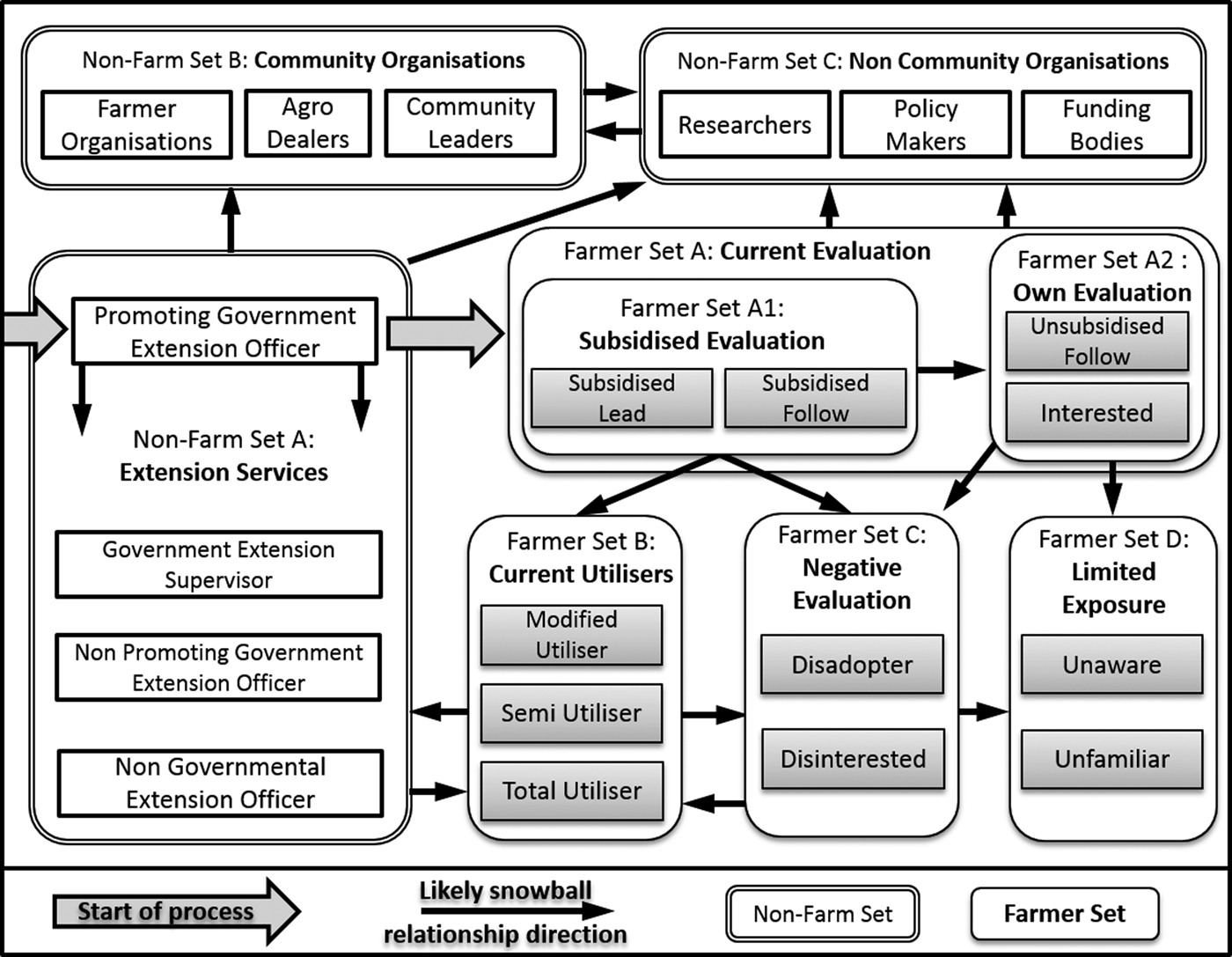
This paper forms part of a broader exploration of the sustainable intensification of maize–legume farming systems in eastern and southern Africa through exploration of various perspectives from the subsets of African communities, the first of which is Brown et al. (Reference Brown, Nuberg and Llewellyn2017a) which explores the negative evaluation of CA by African smallholder farmers. Twenty case study locations were purposively selected on the basis of: (1) the importance of maize–legume systems for farmer livelihoods; (2) subsequent high potential impact of CA on farmer livelihoods (3) and existence of promotional activities on CA currently active in the district. Respondents were then purposively selected via a snowball sampling methodology (Fig. 1) to ensure a diversity of perspectives were obtained. Snowball methodologies have been variously used in qualitative research to access otherwise hidden populations (e.g., Browne, Reference Browne2005) and it should be noted that this work is not intended to provide a representative sample of communities, but specifically seeks a diversity of perspectives and then investigates them in a disaggregated manner to avoid confounding different subsets of farmer decision-making.
The classification of respondent sets and snowball methodology employed in this study, first proposed in Brown et al. (Reference Brown, Nuberg and Llewellyn2017a).

Details of specific study
The total dataset of the broader study consists of 325 semi-structured interviews conducted in 85 communities across 20 case study locations in six countries (Ethiopia, Kenya, Uganda, Malawi, Zambia and Mozambique). As the purpose of this paper is to explore the experiences and decision-making of farmers utilizing CA, a subset of respondents from the larger dataset was utilized. As such, this study explores a subset of 57 respondents from 47 villages in 17 case studies from six countries. As per the snowball methodology (Fig. 1), this paper explores ‘Farmer Set B’ (current utilizers) which comprises:
Modified utilizers: Farmers implementing elements of CA but in a modified form (i.e., not in a ‘complete’ three-factor form; 29 respondents);
Semi utilizers: Farmers implementing CA in a three-factor form on some area of their farm, but not on all available area (25 respondents); and
Total utilizers: Farmers implementing CA in a three-factor form on all available area of their farm (three respondents).
Despite all efforts to identify total utilizers in each case study, only three total utilizers were identified. This reflects the strict classification of total CA utilization for the purposes of this study and hence the limited total utilizers that exist in each of the studied countries (see Brown et al., Reference Brown, Nuberg and Llewellyn2017b).
Details of interviews and analysis
An interview schedule was developed to provide the opportunity for each respondent to explore their decision-making regarding their CA activities and broader livelihoods. Written informed consent was obtained from all study participants prior to the interviews. Except in two locations in Ethiopia where custom demands it, no remuneration was made to farmers to participate in the discussion. Interviews were conducted primarily in the preferred local language, except in cases where the respondent was comfortable expressing themselves in English. A translator was used from a local agricultural research station, and was, in the majority of cases, unknown to the respondent.
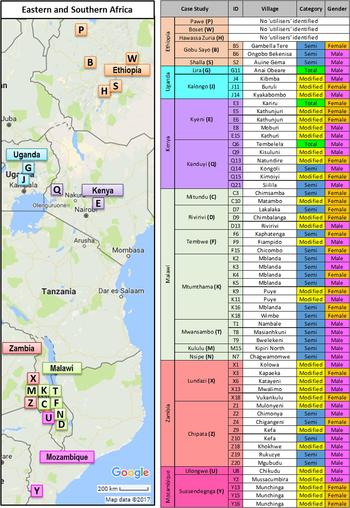
Interviews were digitally recorded and transcribed independently of the translator to English. All transcribed interviews were coded using Nvivo™ (Version 11) content analysis software. The average length of the interviews was 40 min, but ranged between 13 and 92 min. The interview subset for this article includes 40 h of interview. Figure 2 provides the characteristics of respondents in the subset, alongside an alphanumerical code that is used in the results to identify respondents by characteristic/s.
Location and classification of respondents (map courtesy of Google Maps, 2017).

Theoretical framework
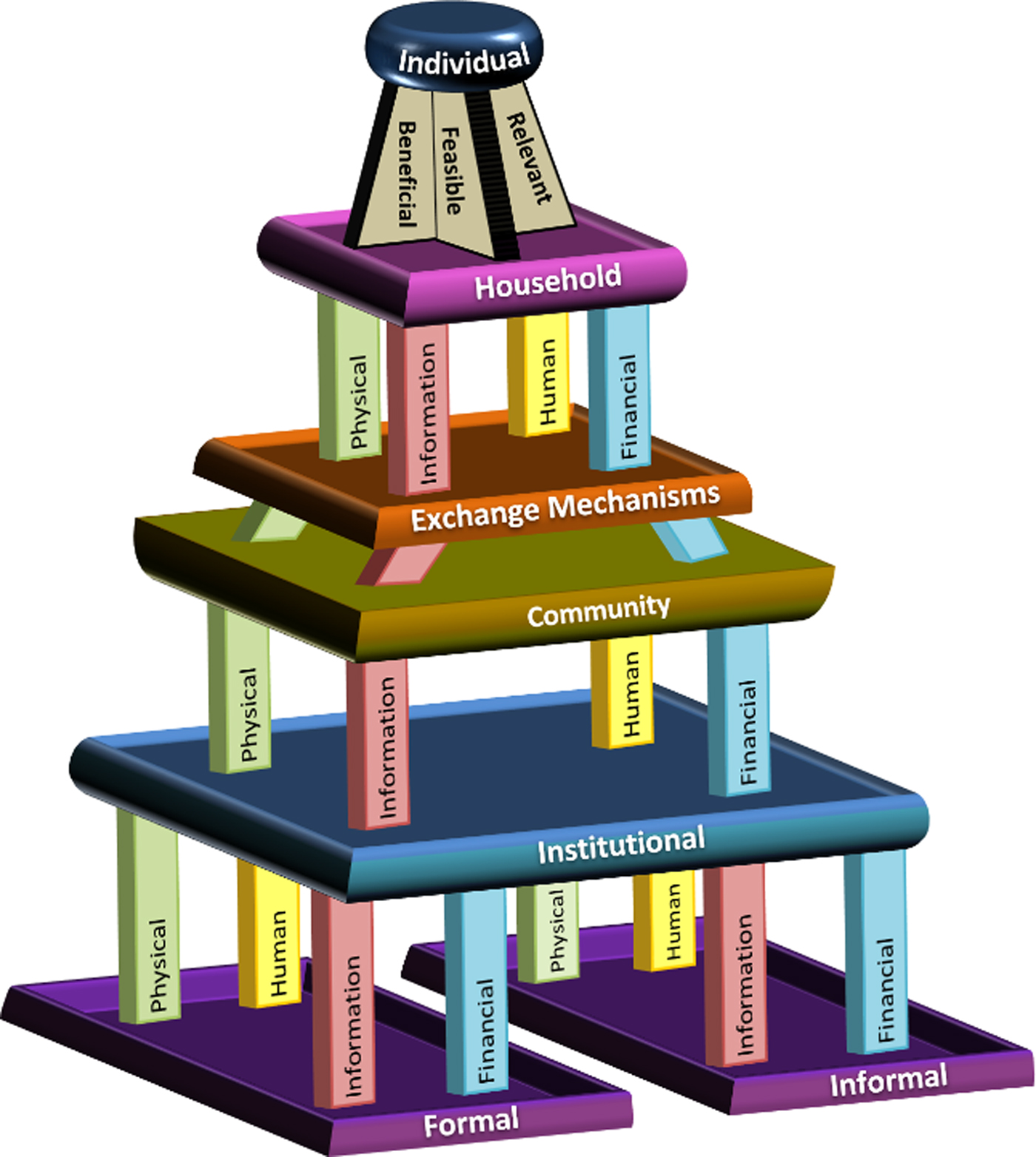
This paper implements the livelihood platforms approach (LPA) proposed by Brown et al. (Reference Brown, Nuberg and Llewellyn2017a; Fig. 3). The LPA provides a framework to explore farmer decision-making embedded within the wider community and institutional context. Farmer decision-making is proposed as a function of three farmer evaluations:
(1) Will utilization of the practice be potentially beneficial?;
(2) Is the practice feasible with the resources I have or can access? and
(3) Does the technology fit within my livelihood objectives and broader context?
The livelihood platforms approach (LPA) framework as proposed by Brown et al. (Reference Brown, Nuberg and Llewellyn2017a).

Farmers undertake these three evaluations based on the balance of four livelihood platforms (individual, household, community and institutional) which are supported by four resource pillars (physical, financial, human and informational).
Results
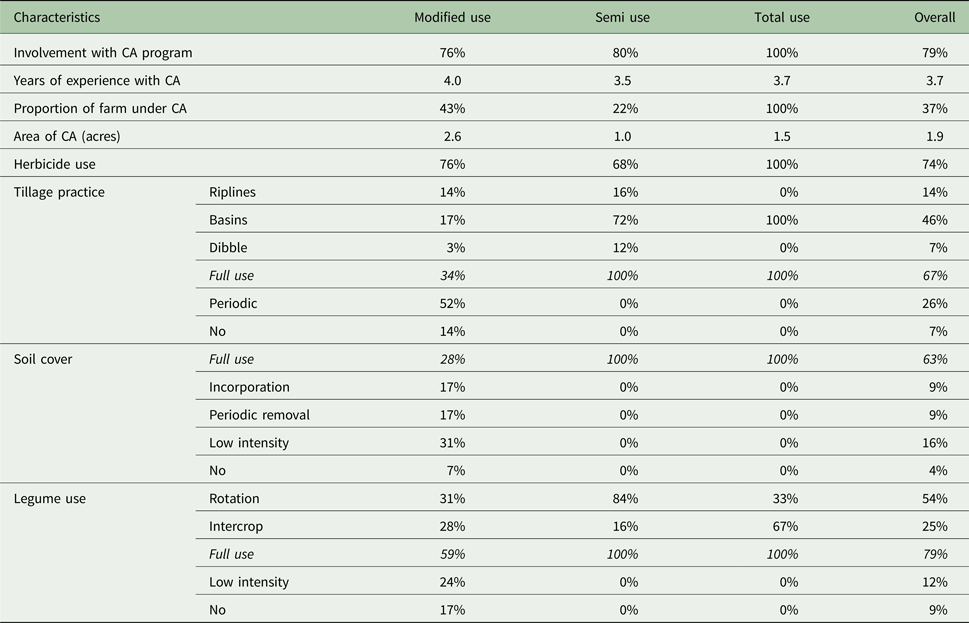
Respondents were generally involved in a CA program and averaged 3.7 years of experience with CA. A summary of characteristics of respondents, including the types of implementation, is given in Table 1. Despite specific efforts to locate utilizers (modifying, semi or total), we were unable to identify utilizers in three of our 20 case studies and only three ‘total’ utilizers were identified (Fig. 3). Respondents confirmed limited utilization of CA, with the majority of respondents estimating utilization of CA in any form to be below 5% in their community, and a quarter identifying themselves, to the best of their knowledge, as the only utilizers of CA in their community. Even where respondents identified some use of CA in their community, it was generally in limited forms (e.g., ‘most of them are doing CA on just [0.025 acres]’—K3).
Summarized characteristics of respondents

Perceived benefits of CA
Physical resource benefits
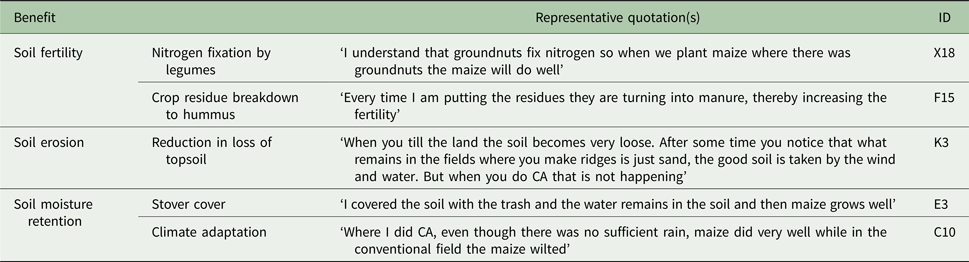
No respondent identified yield as decreasing under a CA system, and respondents generally estimated substantial yield benefits from CA (e.g., ‘Since starting CA, I am now getting 18 bags not 10 bags, so double’—Q14). This reflected three perceived physical benefits of CA: improved soil fertility, reduced erosion and increased moisture retention (Table 2).
Physical resource benefits of CA utilization identified by respondents

Human resource benefits
CA utilization was perceived to reduce labor requirements by 37 of our 58 respondents. The reduced need for weeding due to herbicide use was perceived to be a major benefit of the shift to CA (e.g., ‘CA is better because once I apply the herbicides I don't go back again for weeding while in conventional fields I have to go back for weeding’—F15). Some farmers also identified that CA allowed them to modify their calendar of events and move labor to less constrained times (e.g., ‘If we are serious that we are planting an acre [of CA], we can take four days to prepare and plant, but this can be done in the dry season’—J4). Traditional tillage practices were also perceived as labor intensive (e.g., ‘we spend much time ridging the land which is wasteful’—G11).
Financial resource benefits
The major financial benefit of CA was linked to the use of herbicides (primarily glyphosate) and a reduction in the need for hired labor (e.g., ‘If I buy one packet of ‘Weedall’ [non-selective post-emergence glyphosate herbicide], it is around 400 [Kenyan] shillings. My field is one acre so I use two packets to spray and it will enable me to prepare my land for just 800 shilling, which I am able to do. But ploughing, it might cost almost 3000 or 4000 shilling [with hired oxen]. For a tractor it is even 4500 shilling’—Q15).
Constraints, adaptations and pathways to greater CA utilization
Physical resources
Stover resources
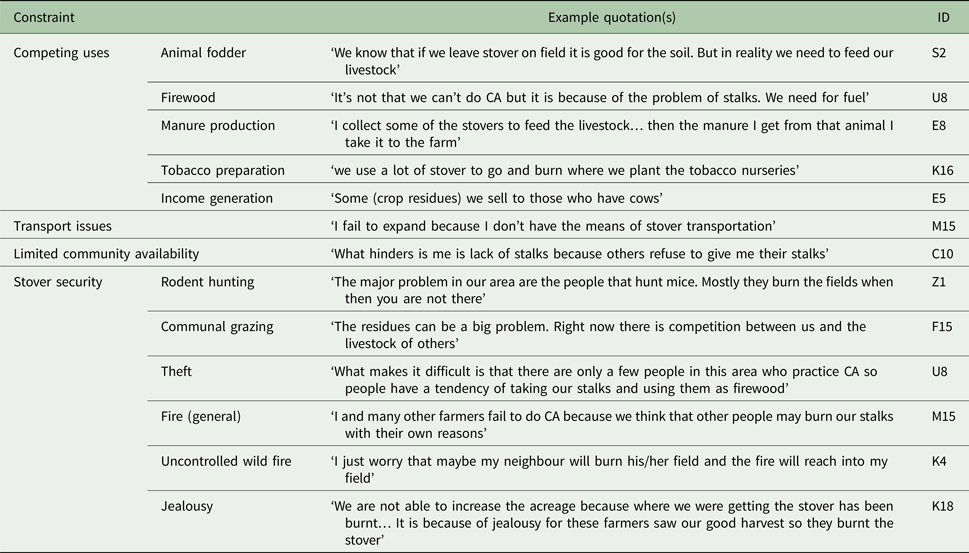
Even with the identified increase in yield, respondents identified stover resources as the primary physical resource constraint (e.g., ‘We are doing half an acre [of CA]. This size of the field is not ideal and we wished to do much more but we do not have stover’—K18). Stover constraints primarily reflected high competition for stover residues, limited community availability and the security of stover in CA fields (Table 3). To overcome substantial stover deficits, many respondents stated they address stover constraints through planting alternative forage and fuel sources (e.g., ‘At every border of my farm I have Napier grass. So I can use that, and I have also established these fodder trees’—Q6; ‘we will plant more trees so that we should be using them as firewood instead of using stalks’—U8). When this was not the case, respondents identified the need to concentrate CA in one location through the importation of stover from surrounding fields (e.g., ‘I add from other fields because mine are always not enough’—M15). However, this often increased the cost of implementing CA (e.g., ‘It is very hard [to find stover] as I have to travel far to find them…[and] I need money to pay for stover to be carried to my field’—Y13).
Stover constraints identified by respondents

Due to stover security concerns, stover was often imported from fields nearby to residences to monitor stover loss (e.g., ‘Our field hasn't been [burned] because we do it close to our house’—K16). An alternative adaptation was periodic removal of stover (e.g., ‘If we just leave the stalks there sometimes they do burn so when we bundle them and lay them [when the rain comes] so they don't bother us’—X3). Kenyan respondents indicated that most animal rearing occurred in enclosures and this reduced stover security concerns (e.g., ‘People keep the zero grazing in their place so their cows don't go to other places’—E5), while in southern Africa, some respondents indicated that local by-laws helped them ensure their stover security (e.g., ‘We do not worry because there is a by-law that has been put in place by the chiefs’—K2). However, other respondents identified concerns over their implementation (e.g., ‘They can put a rule that people should not burn… We have that now but it is not seriously enforced at the moment’—K5).
Input markets
Respondents identified that increasing the intensity of their CA activities was challenging due to issues with the availability and quality of, and access to, inputs required to implement CA (e.g., ‘You want to use the method but you can't get what you want… I would say availability of those materials is a big hindrance’—E15) and most respondents emphasized that obtaining inputs took substantial effort (e.g., ‘If herbicide is available widely, we could expand… The problem of herbicide is that it is not available, not a finance issue, but one has to go to Adama or even Addis Ababa to get the supply’—S2). The quality of inputs on the market was also an issue (e.g., ‘That is something which is burning farmers. They are losing faith in buying inputs… these agro inputs like chemicals, like herbicides, they are fake. They don't do what they are supposed to do. That is what also is scaring the people’—G11). Despite project-aligned farmers obtaining inputs directly from their associated projects, there were often issues with the sharing of equipment which also limited their intensity of use (e.g., ‘We do not have a sprayer, we just borrow… at times it becomes very busy and the owner is using it and I want to use it at the same time. By the time I have access to it the weeds have grown’—Z2).
Financial resources
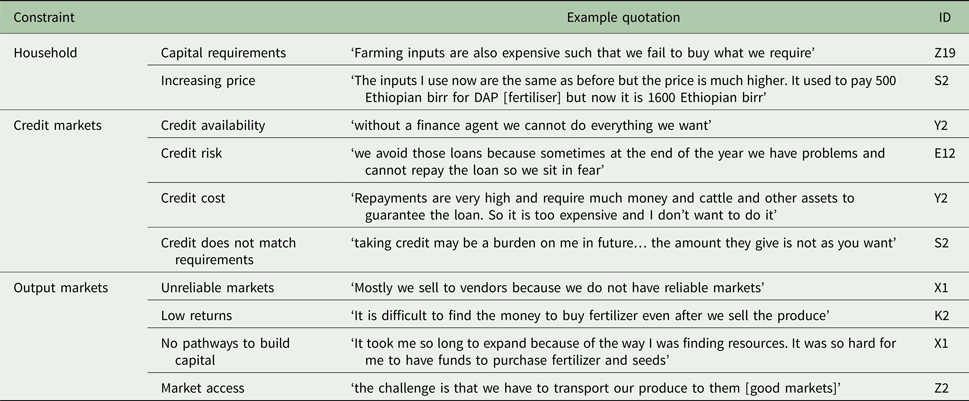
More than half of respondents identified constrained financial resources as their reason for limited CA intensity, reflecting a lack of capital, limited credit and low financial return for output (Table 4).
Financial constraints identified by respondents

In exploring the financial context of their communities, farmers tended to identify poverty as a key determinant of the limited CA utilization (e.g., ‘Most people are poor so they fail to buy farm inputs’—F9). Because of this, when respondents interacted with others in their community to promote CA, there was an expectation that inputs be provided to facilitate CA adoption (e.g., ‘people expect to receive something from the technology, so if the project brings nothing the adoption rate becomes very low’—T9). This was related to a history of input provision by projects to encourage the use of new technologies (e.g., ‘People are difficult. They are accustomed to receive things when they are told what to do’—Z9).
Human resources
Only a minority of farmers identified that labor constraints were a reason for their low intensity of CA use. When respondents did identify labor constraints, they tended to assert that:
(1) Stover importation was a labor burden and poorly perceived by the community members (e.g., ‘They think I'm crazy when I'm doing it… People laugh at you when carrying the stalks thinking that you are crazy’—M15) and often led respondents to reduced intensity of CA utilization (e.g., ‘What stops me from expanding is when it comes to gathering stalks… it is a tiresome job’—F9).
(2) Community labor was often unwilling to import stover (e.g., ‘It is difficult to find labour to lay the stover even if it is a cheaper method. The labour force prefers to make ridges rather than carry the stover’—K5).
(3) Herbicides were required to reduce labor compared with conventional practices (e.g., ‘If you have not applied the herbicides that's when CA becomes a problem [for labour]’—F15).
(4) Irrigated production often limited farmers’ time and hence ability to implement dry land CA activities (e.g., ‘After harvest a lot of people produce in the lower lands with irrigation, so they go and spend a lot of time there’—Y2).
Many respondents attributed their utilization of CA to their focus on farming activities and devotion of labor only to farming (e.g., ‘I am not employed anywhere, as I am just totally depending on my farm’—Q6). The opportunity cost of agricultural labor was also important in case studies that were located close to major trading hubs and towns (especially near Embu, Bungoma and Lira), where farmers were not willing to invest their labor in farm activities (e.g., ‘In our village, people plant maize but not well as they are busy doing other things … they go to town for trading and business, so they are not serious’—Q9; ‘most people need to participate in business around town… Farming here is for home consumption and very few do it for business’—G11).
Informational resources
Access to and availability of informational resources
Respondents were generally well connected to information sources, with only 12 out of the 57 respondents not having been involved in a CA project at some point. The majority of the respondents identified themselves as CA lead farmers who were receiving inputs to provide CA demonstrations to the community, and often identified direct lines of contact with government extension officers (e.g., ‘I will call my officer for agriculture… I like him because when I call him he runs to come here’—Q9) or substantial personal engagement (e.g., ‘She comes often, three to four days a week’—C10). Despite this, respondents consistently asserted concerns about their knowledge of CA (e.g., ‘I am satisfied with CA but I still need more information to continue with it’—Q13).
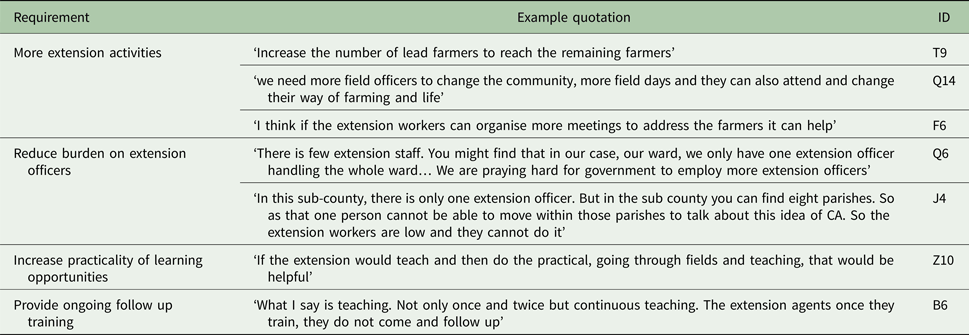
Respondents identified that information about CA was difficult to access in their communities (e.g., ‘I am not able to learn anywhere, even though this year I am interested to learn’—Y15) and particularly so if a farmer was not connected with a project (e.g., ‘It would have been difficult [for other farmers to gain information] because other than the (CA) project, we have never seen any group training in the use of CA methods’—J4). Overall, information constraints were generally seen as the largest inhibitor of wider utilization of CA in their communities (e.g., ‘Training is the most important… Unless people get the necessary training change is not expected’—S2). To achieve this, respondents identified key strategies to facilitate greater informational exchange (Table 5).
Strategies identified by respondents to increase the availability of informational resources on CA

Quality of informational resources
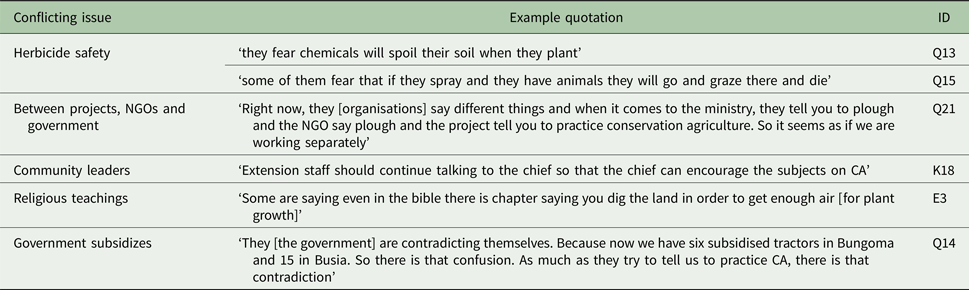
Respondents identified that a confusing informational environment existed for them and within their communities, which reflected incomplete information and multiple conflicting messages regarding CA (Table 6). Conflicting information manifested itself in issues such as stover incorporation due to prior messaging on stover management (e.g., ‘we re-pack the soil so that the fertile top soil and the residues of the crop are moved lower. It is for fertility’—Y2).
Conflicting and incomplete information identified by respondents

Discussion
Benefits of CA implementation
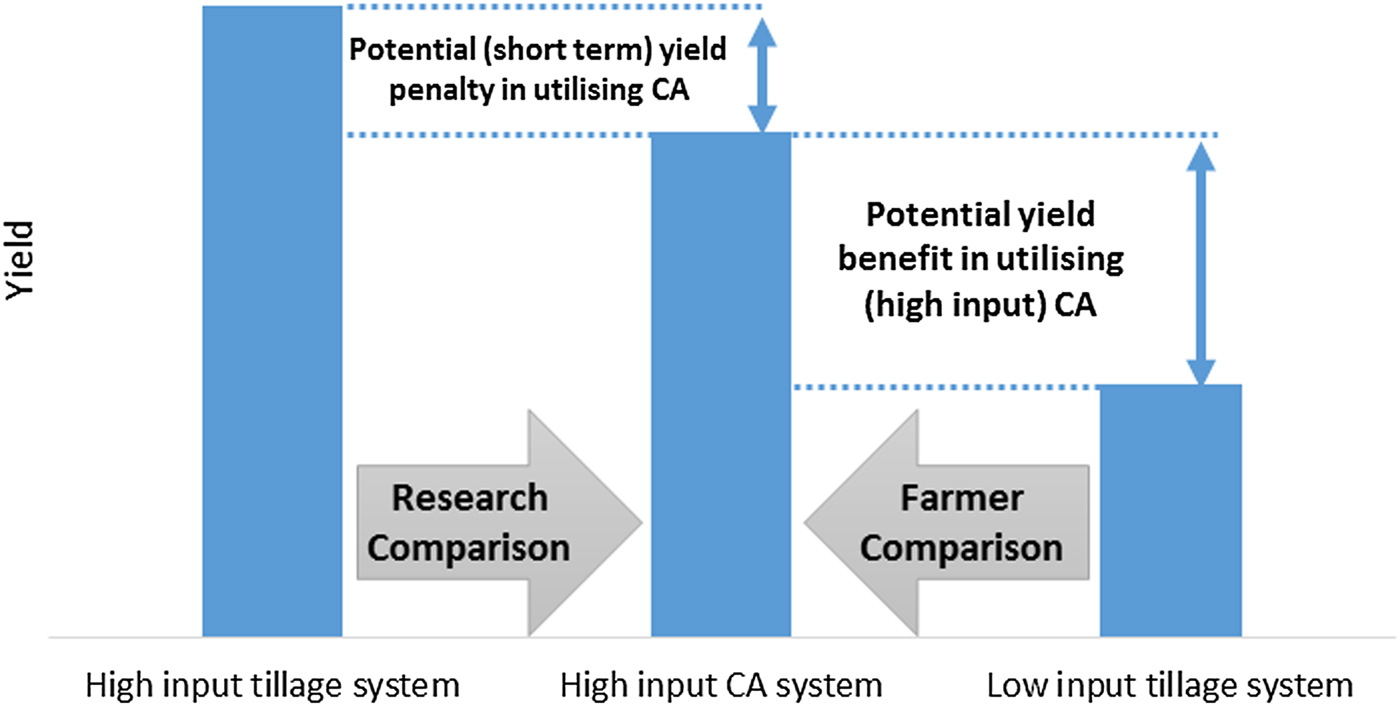
The net benefits of CA utilization for African smallholder farmers continue to polarize the agricultural R&D community (Andersson and D'Souza, Reference Andersson and D'Souza2014; Giller et al., Reference Giller, Andersson, Corbeels, Kirkegaard, Mortensen, Erenstein and Vanlauwe2015; Pittelkow et al., Reference Pittelkow, Liang, Linquist, van Groenigen, Lee, Lundy, van Gestel, Six, Venterea and van Kessel2015). A meta-analysis of CA studies by Pittelkow et al. (Reference Pittelkow, Liang, Linquist, van Groenigen, Lee, Lundy, van Gestel, Six, Venterea and van Kessel2015) found that, on average, no-tillage in itself resulted in a yield penalty. Our results indicate that utilizing farmers did not perceive a yield gap. This likely reflects that most studies compare tillage and no tillage systems with the same input usage, but the comparison generally made by African smallholder farmers is between a low input, traditional tillage system with a high input, CA-based system (visualized in Fig. 4). Our findings confirm that much of the perceived benefit of CA implementation is related to input use (Kirkegaard et al., Reference Kirkegaard, Conyers, Hunt, Kirkby, Watt and Rebetzke2014), particularly noting the nitrogen depletion common in the soils of SSA (Lundy et al., Reference Lundy, Pittelkow, Linquist, Liang, van Groenigen, Lee, Six, Venterea and van Kessel2015).
Visualization of typical research and farmer comparisons being made to evaluate the yield benefit of CA.

Themes contributing to the low intensity of utilization of CA
Key themes emerged in the reasons why farmers were led to incomplete utilization, and why others in their communities failed to utilize CA. These issues tended to originate from issues at the community and institutional platforms, and as such are embedded within wider socio-economic and system constraints (Andersson and D'Souza, Reference Andersson and D'Souza2014; Arslan et al., Reference Arslan, McCarthy, Lipper, Asfaw and Cattaneo2014). There were key themes at each of the four resource pillars of the LPA:
Physical resources
Competition for limited stover resources defined a farmer's intensity of CA utilization, confirming the previously identified importance of stover resources to African smallholder CA implementation (Valbuena et al., Reference Valbuena, Erenstein, Homann-Kee Tui, Abdoulaye, Claessens, Duncan, Gérard, Rufino, Teufel, van Rooyen and van Wijk2012; Baudron et al., Reference Baudron, Jaleta, Okitoi and Tegegn2014). The functionality of input markets was also limiting, particularly when farmers were not aligned with a project promoting CA.
Financial resources
The overall financial viability of smallholder farmers hindered the intensity of CA utilization. This reflected a lack of household capital, and limited credit facilities and financial return through output markets, leading to the continued use of low input agricultural practices (i.e., although use of agronomic inputs may be financially beneficial, their use is beyond many farmers’ financial means and hence benefit cannot be achieved). The limited use of inputs that dominates within communities also hampered the development of functional input and output markets, because demand is not sufficient to incentivize supply.
Human resources
Our results confirm the findings of various studies that assert CA without herbicides becomes challenging in terms of labor required (Giller et al., Reference Giller, Witter, Corbeels and Tittonell2009; Marongwe et al., Reference Marongwe, Kwazira, Jenrich, Thierfelder, Kassam and Friedrich2011; Grabowski and Kerr, Reference Grabowski and Kerr2013; Rusinamhodzi, Reference Rusinamhodzi2015). The promotion of stover importation as a form of ‘no-herbicide’ CA was also poorly perceived due to the cost or type of labor involved, confirming a need to create more biomass through fertiliser application (Vanlauwe et al., Reference Vanlauwe, Wendt, Giller, Corbeels, Gerard and Nolte2014) to reduce biomass competition and labour requirements.
Informational resources
We find an overall information-poor environment for respondents, despite respondents being the most strongly connected to informational providers and hence having the greatest opportunity for learning about CA compared with other community members. Hence, there is further justification for the investigation of the functionality of informational exchange mechanisms that a growing body of literature question (Diagne, Reference Diagne2009; Simtowe, Reference Simtowe2011; Wellard et al., Reference Wellard, Rafanomezana, Nyirenda, Okotel and Subbey2013; Ngwira et al., Reference Ngwira, Johnsen, Aune, Mekuria and Thierfelder2014; Brown et al., Reference Brown, Llewellyn and Nuberg2018).
While a diversity of constraints are identified, there is a common narrative: the juxtaposition of the need for increased engagement with the community platform; and the limited resources present at that platform to facilitate CA use. A key example is respondents perceiving a need for financial resources for herbicides, fertilizer and/or stover importation, yet a limited ability to build or access financial capital to facilitate this. These results further contribute to the literature questioning the relevance of CA as a ‘pro-poor’ technology (Giller et al., Reference Giller, Witter, Corbeels and Tittonell2009; Andersson and D'Souza, Reference Andersson and D'Souza2014; Corbeels et al., Reference Corbeels, de Graaff, Ndah, Penot, Baudron, Naudin, Andrieu, Chirat, Schuler, Nyagumbo, Rusinamhodzi, Traore, Mzoba and Adolwa2014; Pannell et al., Reference Pannell, Llewellyn and Corbeels2014).
Current transformational CA adoption pathways
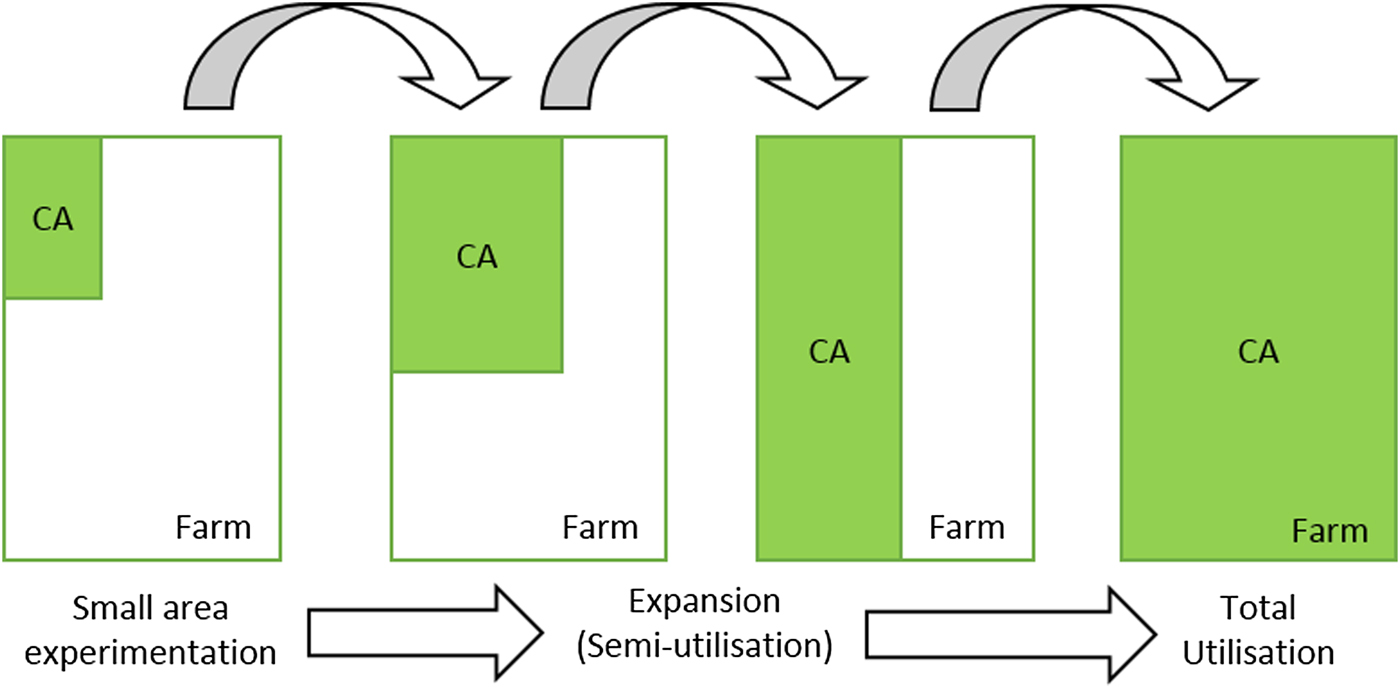
At the core of the identified constraints to CA utilization is the limited adaptation of CA to local contexts. CA has commonly been framed as a narrow amalgamation and promoted as a singular practice (Giller et al., Reference Giller, Witter, Corbeels and Tittonell2009; Andersson and D'Souza, Reference Andersson and D'Souza2014; Stevenson et al., Reference Stevenson, Serraj and Cassman2014; Glover et al., Reference Glover, Sumberg and Andersson2016). Because of the constrained financial context and limited input and output markets, implementation of CA has been dominated by project-supported adoption as evidenced by the high number of respondents that continue to be subsidized. In essence, the farmers’ limited financial context has been altered through subsidization to enhance the ‘fit’ of CA and facilitate utilization. The assumed adoption pathway for CA is hence underwritten by a technology transfer approach, whereby CA is promoted as a singular technology as opposed to an amalgamation of principles. These adoption pathways tend to be based on the expansion of CA area, with CA as a singular technology (Fig. 5).
Current adoption pathway using CA as a singular technology and based on the expansion of CA area through a field approach.

Such promotion is problematic to facilitating total adoption of CA, and usually culminates in low-intensity semi-utilization and modified adoption (Brown et al., Reference Brown, Nuberg and Llewellyn2017b), because:
• CA has substantial overhead costs that limit the feasibility of small area implementation (e.g., spraying equipment, tillage equipment, time invested in knowledge, costs of obtaining resources from distant locations) that create the need for subsidization;
• Such a system limits overall CA area within the community and does not allow a sufficient scale to be reached to demand facilitating by-laws, markets and policy changes (e.g., input markets, community grazing practices);
• Limited application is unlikely to build financial resources sufficiently to sustain the expansion of CA activities due to small return and considerable costs in meeting basic needs;
• Perceptions often arise that promoting farmers are ‘playing games’ because of the small size of such demonstrations and trials; and
• Promotion of CA as a singular technology lessens the importance of building on existing farming systems and tends to lead to CA being perceived as new, difficult or non-feasible.
These approaches also limit the understanding of modified and semi-spatial utilization because of the ambiguity around how to classify such utilization strategies (Brown et al., Reference Brown, Nuberg and Llewellyn2017b). This can be particularly important in the case of modification of CA and potential negative outcomes (Guto et al., Reference Guto, Pypers, Vanlauwe, de Ridder and Giller2011; Erenstein et al., Reference Erenstein, Sayre, Wall, Hellin and Dixon2012; Pittelkow et al., Reference Pittelkow, Liang, Linquist, van Groenigen, Lee, Lundy, van Gestel, Six, Venterea and van Kessel2015). Because of these issues, we find there to be a significant need to re-evaluate the adoption pathways for CA.
Reframing the promotion of CA
To address these inadequacies, there is a need for greater adaptation of CA to local contexts, as opposed to adaptation of local contexts to CA (i.e., through subsidization). To do this, we propose a widening from CA practices to CA principles and a movement to transitional adoption pathways. An approach like this is integral to fostering locally relevant utilization of CA that meets the physical, financial, human and informational constraints that limit broader and total CA utilization.
From CA practices to CA principles
The current definition of CA as the simultaneous implementation of minimum tillage, stover cover and legume diversification (FAO, 2014) is highly restrictive and does not facilitate a stepwise approach to adoption. Instead a focus should be placed on finding the best suited set of practices for a farmer's realities, objectives and resource endowments (Tittonell et al., Reference Tittonell, van Wijk, Herrero, Rufino, de Ridder and Giller2009). As such, the objectives of development organizations should not be to create CA adoption, but to facilitate locally relevant adaptation of CA within a set of broader objectives. This involves showcasing a set of options through which farmers choose their most suitable way to sustainably implement their agricultural livelihoods (Giller et al., Reference Giller, Witter, Corbeels and Tittonell2009).
We propose that, in line with Vanlauwe et al. (Reference Vanlauwe, Wendt, Giller, Corbeels, Gerard and Nolte2014), there are four principles around which CA promotion should be framed:
(1) Strategic tillage: Beyond prescriptive minimum or zero tillage, we propose a shift to strategic tillage, where the objective is to reduce soil disturbance, to strategic, necessary events required for healthy crop growth and ease of management. This may include a reduction in tillage events before an eventual movement toward direct seeding, periodic tillage or shallow strategic tillage.
(2) Soil protection: Promoting stover cover within the context of low biomass and high competing uses appears limited in potential over the short term, even in light of some emerging local by-laws to facilitate stover security. Hence, we propose a shift to soil protection, with the objective being to reduce erosion and maintain soil moisture. This may include green manure cover crops, permanent terracing and border plantations alongside crop residue retention, some of which are already present in African communities. The success of promotion must be tied within a flexible systems approach so as to address previous issues with their promotion.
(3) Crop diversification: Locally specific cash crops should be the focus of this principle, with the objective of maximizing profit to enable a household to meet its basic needs and re-invest in agriculture. This may be achieved through a broadening of CA promotion to non-food crops that are currently preferenced by farmers (e.g., sugar cane and cotton) in order to increase the financial relevance of CA, and then ‘spill-over’ into other food crops. This departs from the current approach that emphasizes legume diversification, often for legumes that do not have a ready market, but creates a need for alternative soil fertility management.
(4) Input management: The objective of this principle is to focus input management not only to maximize net returns, but to address the farmer's objectives in biomass and labor outcomes to ensure CA is both feasible and relevant. This might originally be addressed through organic inputs with an overall objective for farmers to reach an agronomically and financially sustainable production system. It is important to note that all intensification, conventional or otherwise, requires input management and will have implications on environmental outcomes as intensification occurs. However, we specifically propose this as a fourth principle for CA due to the integral requirements for biomass production and labor reduction as indicated by respondents. As the studied countries increase their local production of agro-chemicals, the financial burden in addressing this principle should ease.
Transitional CA adoption pathways
Our findings indicate that transformational adoption pathways have shown a propensity to perpetuate financial dependency, as previously identified by Brown et al. (Reference Brown, Nuberg and Llewellyn2017a) who highlighted that the current promotion of CA tends to lead to reliance on donor provision of input and donor dependency to implement CA. To alleviate these constraints, there is a need to rethink the adoption pathways for CA utilization. As opposed to the current intense focus of development organizations on achieving ‘adoption’ under a binary classification and an associated provision of inputs to enable immediate (but often short-lived) practice change, we propose a transitional approach that aims to foster utilization via stepwise, progressive intensification of our four proposed CA principles. Under this utilization pathway, we maintain the end goal of (four factor) CA, but have a series of progressive, locally relevant stepping stones to achieve total utilization. This is based not on expansion of CA as a singular technology, but on disaggregation of the principles and stepwise intensification of utilization. It also places CA within a wider faming context, whereby the goal is to first diversify, then intensify resource use and this then makes the additional CA principles a more attractive proposition.
One such example is proposed in Figure 6. In the first instance, a locally relevant cash crop is used to build financial capital. This might be supported through soft loans of seed to stimulate local demand and hence overall community supply. Once sufficient capital is built to meet various household basic needs and reinvest into agriculture, financial capital could be used to invest in the input required for CA (such as herbicides, fertilizers and seed for alternative soil protection strategies and fodder/fuel crops). As soil protection is increased, further financial capital could be invested in strategic tillage equipment and other diversification strategies. The creation of financial capital in such a way is also likely to underwrite the improved functionality of credit facilities and build demand in both input and output markets over time. A transitional approach also provides a higher potential pathway for farmers to build their way out of subsistence farming over time and with minimized financial requirements from outside promotional organizations and governments.
Example of transitional CA utilization pathway based on the four principles proposed in this study.

Such a change in focus would also allow promoting organizations to focus their efforts on enabling environments for CA utilization. This includes market development, local by-law creation and working with research and extension organizations to create a more coherent informational environment based on the four proposed CA principles. Particularly for the informational environment, CA can be framed more broadly, facilitating greater understanding and local adaptation within the four proposed CA principles. It will also decrease the complexity of CA utilization because change occurs transitionally over time, requiring less transformational change and therefore less perceived risk by farmers.
However, this approach will require greater investment in the extension systems of the target countries to ensure that modifications and stepwise iterations of CA are locally beneficial and feasible. In all of our six study countries, agricultural research is underfunded based on the ratio of agricultural GDP: investment in agricultural research (Lele et al., Reference Lele, Pretty, Terry and Trigo2010), which will considerably diminish the ability of research and extension services to facilitate transitional adoption pathways. To facilitate both greater total use and utilization more generally, there is a need to address not only the adoption pathways, but funding for the institutional system that develops and delivers CA to African smallholder farmers.
Conclusions
This paper explores how to facilitate wider CA utilization in eastern and southern Africa, both in terms of the intensity of currently utilizing farmers and the uptake of CA within the broader community. We find that while perceived as beneficial to yield, financial and labor benefits are limited by the low use of inputs, particularly herbicides. The feasibility of CA implementation was also limited across all of physical, financial, human and informational resources, and usually related to constraints at the community and institutional platforms. We find this to be linked to the assumed transformational adoption pathway for CA and the focus on binary adoption, as opposed to modification and intensification of utilization. We propose a more nuanced approach focused on four broader principles as opposed to the strict packaging of CA practices, as well as the promotion of CA via transitional pathways that are focused on smallholder farmers building their intensity of CA utilization over time. This will reduce the burden of CA implementation, both financially and informationally and allow for spontaneous, as opposed to subsidized, utilization of CA. Implementing transitional pathways will require greater funding of research and extension services, but provides greater potential for African smallholder farmers to sustainably intensify their farming systems, noting the contextual realities that currently constrain the intensity of CA utilization.
Acknowledgements
Thanks must primarily go to all the farmers who participated in this research. The fieldwork for this study was funded by the CIMMYT-led maize CRP and CIMMYT socio-economics program, with additional support from CSIRO Agriculture and the University of Adelaide. The views expressed are those of the authors alone.