


INTRODUCTION
The success of parties that espouse a far-right ideology in recent elections across Europe and North America has raised widespread concern about their impact on democratic norms and, particularly, the treatment of ethnic and racial minorities. While a substantial literature examines the causes of this far-right resurgence (Berman Reference Berman2021; Golder Reference Golder2016), a burgeoning body of research investigates its consequences, especially for the social, economic, and political inclusion of these groups. This research demonstrates that far-right electoral successes increase expressions of prejudice (Álvarez-Benjumea Reference Álvarez-Benjumea2025; Bursztyn, Egorov, and Fiorin Reference Bursztyn, Egorov and Fiorin2020; Newman et al. Reference Newman, Merolla, Shah, Lemi, Collingwood and Karthick Ramakrishnan2021), give rise to hate crimes (Bracco et al. Reference Bracco, De Paola, Green and Scoppa2022; Romarri Reference Romarri2020), and result in the avoidance of municipalities governed by far-right mayors by immigrants and their descendants (Bracco et al. Reference Bracco, De Paola, Green and Scoppa2018; Cerqua and Zampollo Reference Cerqua and Zampollo2023). Further building on this evidence, Grosjean, Masera, and Yousaf (Reference Grosjean, Masera and Yousaf2023) document increased scrutiny of Black Americans by law enforcement following local Trump rallies, suggesting that far-right rhetoric emboldens discriminatory behavior not only among ordinary citizens, but also among public officials. While street-level bureaucrats with discretionary authority are expected to be impartial, field-experimental audits reveal systematic biases against ethnic and racial minorities across diverse organizational contexts, including public primary schools (Olsen, Kyhse-Andersen, and Moynihan Reference Olsen, Kyhse-Andersen and Moynihan2022; Taghizadeh and Adman Reference Taghizadeh and Adman2024) and unemployment offices (Hemker and Rink Reference Hemker and Rink2017).
Bridging the literatures on far-right politics and street-level bureaucracy, this study investigates whether political shifts toward the far-right increase discriminatory practices by street-level bureaucrats, thereby challenging the principle of impartial and equal treatment under the law for ethnic and racial minority groups. While existing research shows that far-right victories increase expressions of prejudice among ordinary citizens, less is known about how these political shifts affect the behavior of public officials who interact directly with minority groups. To explore this question at the intersection of two research fields, we examine the case of Italy, focusing on ethnic discrimination in access to basic healthcare services. Italy provides a particularly relevant setting for investigating these dynamics due to its growing ethnic diversity, substantial rise in support for far-right parties in both national and local elections, and its locally administered universal healthcare system. While Italy’s universal healthcare system formally guarantees access to all legal residents, prior research demonstrates disparities between Italian citizens and immigrants in accessing primary care (Allegri, Banks, and Devillanova Reference Allegri, Banks and Devillanova2022). Moreover, Italy’s municipal electoral system, characterized by close elections and considerable variation in far-right representation across municipalities, provides an ideal setting for isolating the effect of far-right electoral victories on bureaucratic discrimination.
Theoretically, we integrate research on the far-right and street-level bureaucracy by linking meso-level theories of electoral victories as coarse public signals that erode anti-discrimination norms (Bursztyn, Egorov, and Fiorin Reference Bursztyn, Egorov and Fiorin2020; Valentim Reference Valentim2024) with a burgeoning field of public administration research demonstrating that ideological alignment between bureaucrats and their political leaders is a driver of internal motivation, morale, and performance (Geys et al. Reference Geys, Lægreid, Murdoch and Yackee2025; Spenkuch, Teso, and Xu Reference Spenkuch, Teso and Xu2023). Specifically, we argue that a far-right victory primarily exacerbates discrimination by altering the external normative environment and internal motivational structures in ways that embolden ideologically aligned street-level bureaucrats to act on their prejudice. We use this framework to argue that far-right political shifts primarily affect the calculus of taste-based discrimination, such as more assertive gatekeeping against groups perceived as “foreign,” while leaving the stereotype-driven efficiency calculations underlying statistical discrimination largely unchanged.
Empirically, we link these fields by combining a regression discontinuity (RD) design, commonly used to study the effects of far-right electoral outcomes, with a nested field-experimental audit, typically used to examine discrimination by street-level bureaucrats. The discontinuity design exploits the quasi-random assignment of narrow victories, comparing municipalities where far-right candidates from either La Lega or Fratelli d’Italia narrowly won to those where they narrowly lost. Within these discontinuity-design-selected municipalities, the field-experimental audit assesses whether street-level bureaucrats at local healthcare offices impose differential levels of scrutiny and are more likely to give an unfavorable assessment of requests for a general medical practitioner from individuals requesting with West-African versus native-Italian accents. This design allows us to examine whether far-right electoral victories, identified through the discontinuity design, exacerbate discrimination by street-level bureaucrats in healthcare access, as measured by the field-experimental audit. This novel combination of methods provides both a direct measure of bureaucratic discrimination through the field experiment and a quasi-experimental estimate of the impact of far-right electoral wins through the RD design.
Our findings reveal that individuals with West-African accents, compared to native-Italian callers, experienced significantly more discouraging responses to requests for service and heightened scrutiny—both in terms of eligibility, but also including unjustified requests not legally required—when seeking to register for a general medical practitioner. The difference in unfavorable assessments and unjustified scrutiny, but not eligibility scrutiny, was significantly larger in municipalities where far-right candidates narrowly won, compared to those where they narrowly lost. This pattern is consistent with an increase in taste-based discrimination under far-right leadership, likely driven by the internal emboldenment of ideologically-aligned staff and a more permissive external environment with greater tolerance for discriminatory behavior.
Based on a novel nested design, this study and its results make two primary contributions to the literatures on far-right politics and public administration. First, it provides rare quasi-experimental evidence of far-right electoral victories as a critical contextual moderator on bureaucratic discrimination, encompassing both heightened unwarranted scrutiny and unfavorable initial assessments of requests. Second, we extend existing research on far-right politics by analyzing its tangible consequences for ethnic and racial minority groups through the discretionary actions of street-level bureaucrats, highlighting the potential for political shifts to undermine the impartial allocation of public services—here jeopardizing access to basic healthcare services and thus the human right to health. Overall, this research underscores the importance of considering both individual-level biases and broader political contexts when examining discrimination in street-level bureaucracy.
THE FAR-RIGHT, NATIVIST DISCRIMINATION, AND STREET-LEVEL BUREAUCRATS
Parties that espouse a far-right ideology have had considerable success in recent elections across the world. In the United States, Donald Trump won the presidency in 2016 and 2024. In Germany, the AfD has gained significant traction, becoming the second strongest party in the last national elections. In Italy, Fratelli d’Italia, led by Giorgia Meloni, currently governs. In India, under Prime Minister Narendra Modi, the BJP champions Hindu nationalism. In Turkey, President Recep Tayyip Erdoğan’s AKP has increasingly embraced a nationalist and Islamist agenda, often accompanied by restrictions on civil liberties and minority rights. In South America, Jair Bolsonaro’s presidency in Brazil (2019–22) was marked by nationalist rhetoric and attacks on democratic institutions. More recently, figures like José Antonio Kast in Chile and Javier Milei in Argentina have gained prominence promoting far-right platforms. Across Africa, various far-right and ethno-nationalist movements and parties, while diverse in their specific aims and levels of success, may reflect a similar trend.
The electoral successes of these and similar parties have raised concerns about their impact on minority groups. This is because these parties, often classified within the broader category of populist radical right, share a core ideology centered on nativism, supported by elements of populism and authoritarianism (Mudde Reference Mudde2019; Pirro Reference Pirro2023). Populism frames politics as a fundamental antagonism between “pure” ordinary citizens and a “corrupt” elite—often including established politicians, media, and academics—accused of prioritizing special interests, including those of minority groups, over the “general will” of the people. Far-right populists claim to represent this “general will,” often seeking to bypass traditional political institutions, minority rights, and the rule of law, which they perceive as obstacles to its direct expression (Kyriacou and Trivin Reference Kyriacou and Trivin2026; Weyland Reference Weyland2017). They also exhibit authoritarian tendencies, emphasizing stringent law-and-order policies, the consolidation of executive power, and a hierarchical structure with a strong leader figure embodying the national identity. These authoritarian tendencies, coupled with populist rhetoric, can undermine judicial independence and oversight, and foster a climate where internal dissent is suppressed (Bellodi, Morelli, and Vannoni Reference Bellodi, Morelli and Vannoni2024).
The foundational element of this ideology, however, is nativism, a xenophobic and often racist form of nationalism. Nativism distinguishes between an ethnically-defined native population and those perceived as “foreign,” especially immigrants and established minorities. This distinction is based on perceived racial, cultural, religious, or linguistic differences, which are interpreted as indicators of divergent ancestral origins. These perceived differences are then used to delegitimize minority claims to equal membership in the national public sphere. This ideology advocates for the prioritization of natives in state, politics, and culture, framing the presence and cultural practices of minorities and immigrants as existential threats to the nation. These perceived threats often manifest as allegations of a disproportionate burden on the welfare state, healthcare system, and other social services, fueling welfare chauvinism, the idea that access to public benefits, including healthcare services (Crabtree, Holbein, and Quin Monson Reference Crabtree, Holbein and Quin Monson2022; Schaeffer and Larsen Reference Schaeffer and Larsen2023), should be restricted to the national citizenry (Andersen and Bjørklund Reference Andersen and Bjørklund1990; Careja and Harris Reference Careja and Harris2022; Kitschelt and McGann Reference Kitschelt and McGann1997). Welfare chauvinism combines a commitment to generous public services with the exclusion of immigrants from these programs, a policy stance particularly popular among European far-right parties (Koning Reference Koning2017).
The public promotion of nativism, with its inherent suspicion and devaluation of ethnic and racial minorities, particularly when legitimized by electoral success, has direct implications for the everyday lives of minorities. For instance, Bracco et al. (Reference Bracco, De Paola, Green and Scoppa2022) show that mere campaigning by La Lega caused a 10-percentage-point increase in the probability of immigrant children, but not native Italian children, to experience bullying in school. In the United States, local Trump rallies led to a subsequent increase in hate crime incidents (Feinberg, Branton, and Martinez-Ebers Reference Feinberg, Branton and Martinez-Ebers2022) and a 6-percentage-point increase in traffic stops of Black Americans by law enforcement, especially the more the rallies featured racially-charged rhetoric (Grosjean, Masera, and Yousaf Reference Grosjean, Masera and Yousaf2023). Trump’s 2016 election victory similarly fueled a surge in reported hate crimes, especially in counties that voted for Trump by the widest margins (Rushin and Edwards Reference Rushin and Edwards2018), often initiated by Trump’s social media posts (Müller and Schwarz Reference Müller and Schwarz2023). Extending this pattern to relocation decisions, electoral victories by La Lega resulted in a subsequent decrease in the inflow, but not the outflow, of immigrants to the affected municipalities, suggesting an impact that extends beyond direct interactions with local far-right government (Bracco et al. Reference Bracco, De Paola, Green and Scoppa2018; Cerqua and Zampollo Reference Cerqua and Zampollo2023). Even with this avoidance by immigrants, these victories resulted in an increase of hate crimes against minorities of 5 percentage points across the following five years and nearly twice as much within the first year after the election, an effect that even spilled over to surrounding municipalities that had not elected a far-right mayor (Romarri Reference Romarri2020). D’Ambrosio, Leombruni, and Razzolini (Reference D’Ambrosio, Leombruni and Razzolini2025) document that better electoral performance of far-right parties in Italy increased the work-related injury risks for immigrants, especially due to their reallocation to overtime and night shifts.
Through what underlying mechanisms can far-right political shifts possibly produce such a diverse array of negative consequences for minority groups? The most encompassing explanation points to the erosion of social norms (Álvarez-Benjumea Reference Álvarez-Benjumea2025; Bursztyn, Egorov, and Fiorin Reference Bursztyn, Egorov and Fiorin2020; Valentim Reference Valentim2024). As we explain below, this framework is also relevant for understanding the external context in which street-level bureaucrats, who are expected to uphold social norms of impartiality and nondiscrimination, operate. Additionally, a burgeoning literature suggests that far-right victories can trigger the related yet distinct internal mechanism of increasing the morale and feeling of emboldenment among bureaucrats who are ideologically aligned with the new government. The following sections will first detail the general social norms framework before turning to the specific logics at play within the bureaucracy.
Far-Right Political Shifts and Social Norms
Social norms are widely-shared rules of appropriate behavior within a social group (Bicchieri Reference Bicchieri2005). Importantly, while personally-held opinions and convictions are relatively stable, changing primarily through generational shifts (Kiley and Vaisey Reference Kiley and Vaisey2020; Lersch Reference Lersch2023), social norms can be surprisingly malleable. These rules are maintained by a combination of empirical and normative expectations. The empirical expectation refers to the belief that most people in the group follow the norm. The normative expectation refers to the belief that most people in the group disapprove of violating it and enforce it through sanctions, ranging from direct confrontation to indirect gossiping and reputational loss (Molho et al. Reference Molho, Tybur, Van Lange and Balliet2020). Therefore, social norms are conditional on second-order beliefs, that is, people’s beliefs about what other people believe regarding both the prevalence and the appropriateness of the norm-related behavior.
Because they are contingent on these second-order beliefs, social norms are susceptible to rapid change. Highly visible events or shifts in public discourse can alter individuals’ perceptions of what others believe and do, thus weakening social norms that discourage prejudice and discrimination (Álvarez-Benjumea Reference Álvarez-Benjumea2025). For example, negative media framing of refugees has been shown to predict subsequent violence against them, in part by increasing bystander applause during initial attacks on asylum homes, suggesting a shift in perceived social acceptability of such violence (Braun and Koopmans Reference Braun and Koopmans2014). Such a shift in perceived social norms, rather than a fundamental change in deeply-held personal attitudes, is thus crucial for understanding how far-right political shifts can increase the expression of prejudice and discriminatory behavior (Crandall, Miller, and White Reference Crandall, Miller and White2018; Giani and Méon Reference Giani and Méon2021; Newman et al. Reference Newman, Merolla, Shah, Lemi, Collingwood and Karthick Ramakrishnan2021; Ruisch and Ferguson Reference Ruisch and Ferguson2022). Far-right electoral victories are particularly impactful because they provide a highly visible and verifiable signal of support for nativist views, directly affecting individuals’ second-order beliefs. Specifically, these victories can alter both the empirical expectation (by suggesting that more people hold such views) and the normative expectation (by suggesting that expressing such views is more acceptable and less likely to be sanctioned).
Street-Level Bureaucrats and Discrimination
While prior literature on the consequences of far-right political shifts has focused primarily on the discriminatory actions of ordinary citizens, this article examines a distinct category of actors: street-level bureaucrats (Brierley et al. Reference Brierley, Lowande, Potter and Toral2023; Lipsky Reference Lipsky2010). These public officials, through their direct interactions with citizens, hold significant discretionary power that can be used in discriminatory ways. Street-level bureaucrats differ from private sector actors in two crucial respects. First, unlike private actors, street-level bureaucrats operate within a legal framework that explicitly mandates impartiality. Post-World War II constitutional guarantees against (ethnic and racial) discrimination in Western democracies were primarily designed to ensure equality before the law, directly targeting the actions of public officials (Smith Reference Smith2022). This legal framework, reflecting and reinforcing the ideal of impersonal administration articulated by Weber (Reference Weber, Roth and Wittich1978), creates a strong normative expectation of nondiscrimination. Second, street-level bureaucrats control access to public resources, which are often associated with principles of universal access and social rights, further strengthening this expectation. Therefore, the unique position of street-level bureaucrats—bound by law and professional norms to be impartial, and responsible for the equitable distribution of public goods—should, in principle, lead to minimal discrimination in the access to public services.
However, a substantial body of audit studies, a specific field-experimental methodology designed to detect discrimination (Schaeffer, Krakowski, and Olsen Reference Schaeffer, Krakowski and Olsen2026), documents widespread ethno-racial discrimination by those very officials (Halling and Baekgaard Reference Halling and Baekgaard2024). This discrimination, though not universal (Einstein and Glick Reference Einstein and Glick2017; Grohs, Adam, and Knill Reference Grohs, Adam and Knill2016), disproportionately impacts various minority groups, with particularly strong evidence documenting bias against Black and Hispanic Americans as well as individuals with Muslim-sounding names in Europe. This discriminatory behavior manifests in diverse bureaucratic settings, including public schools (Oberfield and Incantalupo Reference Oberfield and Incantalupo2021; Olsen, Kyhse-Andersen, and Moynihan Reference Olsen, Kyhse-Andersen and Moynihan2022; Pfaff et al. Reference Pfaff, Crabtree, Kern and Holbein2021; Taghizadeh and Adman Reference Taghizadeh and Adman2024), election offices (White, Nathan, and Faller Reference White, Nathan and Faller2015), COVID-19 vaccination centers (Heinrich et al. Reference Heinrich, Camacho, Binsted and Gale2022), elder-care facilities (Xu and Lee 2024), and unemployment offices (Hemker and Rink Reference Hemker and Rink2017). This begs the question of how to reconcile the expectations and responsibilities of street-level bureaucrats to treat citizens impartially with the widespread evidence of discrimination across a range of settings.
Mechanisms of Bureaucratic Discrimination
To explain the prevalence of bureaucratic discrimination, public administration scholars draw primarily on two individual-level motivations, widely recognized in the social sciences: taste-based and statistical discrimination (Becker Reference Becker1957; Phelps Reference Phelps1972). We argue that the meso-level political context of far-right electoral success alters the cost-benefit calculus of taste-based discrimination by creating a more permissive external environment while simultaneously emboldening ideologically aligned bureaucrats internally.
Taste-based discrimination, as defined by Becker (Reference Becker1957), arises from a personal animus or prejudice against members of a particular group, leading actors to discriminate even when doing so is not economically advantageous. While Becker’s original formulation focused on market contexts, where such prejudice can lead to demonstrable economic costs, such as a smaller pool of qualified applicants or reduced productivity, the concept applies equally to public administration. Although unconscious biases differ conceptually from conscious prejudice (Bertrand, Chugh, and Mullainathan Reference Bertrand, Chugh and Mullainathan2005), they similarly lead to costly decisions and thus fall under the umbrella of taste-based discrimination. In the context of street-level bureaucracy, taste-based discrimination carries a distinct set of potential costs. Rather than direct financial losses, the primary costs are violations of legal and professional norms of impartiality, which are central to the legitimacy of public service. Acting on these discriminatory impulses therefore risks sanctions, such as disciplinary action, investigations, and reputational damage, as bureaucrats’ actions can be monitored by peers, recorded, or subjected to client complaints. If street-level bureaucrats engage in taste-based discrimination, we expect to observe the following hypothesis.
Hypothesis 1. Individuals perceived as belonging to a minority group experience less favorable assessments of requests and more unjustified scrutiny (requests for information not legally required) than individuals perceived as belonging to the majority group.
Statistical discrimination provides an alternative explanation for differential treatment. It posits that when actors lack complete information about individuals, they may rely on observable group-level characteristics, such as perceived ethnicity or race, as proxies for unobservable information relevant to a decision (Phelps Reference Phelps1972). Unlike taste-based discrimination, which is rooted in animus, statistical discrimination is theorized to be driven by a desire to increase efficiency in decision-making under uncertainty. A landlord, for example, might use perceived group averages regarding income or creditworthiness when assessing an applicant’s financial stability. While such private-sector actors are often motivated by profit maximization aiming to select the “best” candidate, street-level bureaucrats are formally tasked with impartially allocating services to all eligible applicants. However, the process of verifying eligibility and processing applications can be time-consuming. Building on this insight of efficiency-driven discrimination, research has identified two distinct, yet related, mechanisms: cream-skimming and attention discrimination. These mechanisms offer contrasting predictions regarding the manifestation of statistical discrimination in bureaucratic settings.
Time-consuming eligibility verification creates incentives for cream-skimming, whereby bureaucrats prioritize clients perceived as less demanding, less likely to present complications, and more conducive to organizational goals (Guul Reference Guul2023; Lipsky Reference Lipsky2010). In the context of healthcare access, cream-skimming might manifest as bureaucrats quickly discouraging requests from individuals perceived as belonging to groups stereotypically associated with ineligibility (e.g., irregular nonresident immigrants) to avoid a time-consuming verification process that they believe, based on group-level generalizations, is likely to result in a determination of ineligibility anyway. Therefore, we expect the following hypothesis.
Hypothesis 2. Individuals perceived as belonging to a minority group experience less favorable assessments of requests and less eligibility scrutiny (requests for information to verify healthcare eligibility) than individuals perceived as belonging to the majority group.
The theory of attention discrimination also posits that because acquiring and processing information is costly, actors ration their attention based on expected net benefits (Bartoš et al. Reference Bartoš, Bauer, Chytilová and Matějka2016). However, in contrast to cream-skimming, attention discrimination suggests that bureaucrats are more likely to invest additional scrutiny in cases where the default decision, based on initial information like ethnicity or race, is likely to be overturned by further investigation. In the context of public service allocation, where applicants are typically presumed eligible, this resembles what Bartoš et al. (Reference Bartoš, Bauer, Chytilová and Matějka2016) call a “lemon-dropping” market. Thus, administrators may subject applicants perceived as potentially ineligible or whose eligibility is uncertain to greater scrutiny, requesting additional documentation to verify their status. While this heightened scrutiny, or administrative burden, may disproportionately affect minority groups due to statistical discrimination, it does not predict whether the eventual assessment is favorable or not. If these applicants can satisfactorily provide the requested documentation, they should ultimately receive the services. Therefore, if street-level bureaucrats engage in attention discrimination, we expect the following hypothesis.
Hypothesis 3. Individuals perceived as belonging to a minority group experience greater eligibility scrutiny (requests for information to verify healthcare eligibility) than individuals perceived as belonging to the majority group.
Far-Right Political Shifts and Bureaucratic Discrimination
Having established the taste-based and efficiency-driven motives for bureaucratic discrimination, we now turn toward the question of how these link to far-right victories. European far-right politicians typically cast the allocation of public resources as a zero-sum game, where benefits for minorities are perceived as losses for the “native” population (Cremaschi et al. Reference Cremaschi, Rettl, Cappelluti and De Vries2025). Consequently, they advocate for the prioritization of natives by combining a commitment to generous public services with the exclusion of immigrants from these programs. While politicians can use direct channels like patronage and executive orders to control top-level appointees, their influence over tenured, street-level bureaucrats is more constrained. Therefore, we argue that a far-right victory primarily exacerbates discrimination by altering the external normative environment and internal motivational structures in ways that embolden ideologically-aligned street-level bureaucrats to act on their prejudice.
Upon taking office, far-right politicians can issue directives and enact legislation designed to disadvantage minorities (Paxton Reference Paxton2023), and recent evidence from Italy shows that far-right mayors do cut welfare spending specifically targeting immigrants and refugees (Pulejo Reference Pulejo2025). However, a mayor’s direct authority over street-level bureaucrats is typically constrained by national laws, collective bargaining agreements, and established civil service protections (Carreri Reference Carreri2021). One might argue that far-right politicians still exert influence through their budgetary and hiring authority, reshaping the public administration through patronage (Brierley et al. Reference Brierley, Lowande, Potter and Toral2023; Fiva et al. Reference Fiva, Geys, Heggedal and Sørensen2021; Hassan, Larreguy, and Russell Reference Hassan, Larreguy and Russell2024; Toral Reference Toral2024). Indeed, far-right electoral victories in Italian municipality elections result in increased turnover among top-level bureaucrats (Bellodi, Morelli, and Vannoni Reference Bellodi, Morelli and Vannoni2024). However, this rich literature on patronage is less applicable to the tenured, street-level bureaucrats at the heart of our study (see the “Research Setting” section).
Insulated from direct political hiring, firing, and wage setting, far-right electoral success is better theorized to change the external social context and with it the internal motivational structure for these street-level bureaucrats (Bauer and Becker Reference Bauer and Becker2020). A far-right victory is a coarse public signal that legitimizes nativist views. Even in a close election, the outcome of victory reveals the substantial number of far-right supporters to those less engaged with local politics (Fowler Reference Fowler2018), shifting beliefs about what is socially acceptable and lowering the perceived social cost of acting on prejudice. Moreover, close far-right victories expand the winning actors’ access to media and public discourse, conferring visibility and thus legitimacy to ideologically extreme agendas (Maltzman and Sigelman Reference Maltzman and Sigelman1996; Tresch Reference Tresch2009), including far-right nativism (Valentim Reference Valentim2024). For street-level bureaucrats in particular, this lowers perceived professional risks of taste-based discrimination, because their actions are not perfectly private; they typically share offices, their interactions with citizens can be monitored (e.g., through call recordings, see below), or be subjected to client complaints (Bertelli and Cannas Reference Bertelli and Cannas2025; Slough Reference Slough2022). A far-right victory thus coarsely signals a new normative context with a reduced risk of sanctions and reputational damage for violating professional norms against discrimination.
This external far-right shift also reshapes the internal motivational structure of street-level bureaucrats by establishing or breaking an ideological alignment between a bureaucrat and their organization’s perceived mission. Based on the insight that the mission- rather than profit-oriented public administration attracts employees uniquely motivated by a desire to serve the public interest (Dur and Zoutenbier Reference Dur and Zoutenbier2014; Perry and Wise Reference Perry and Wise1990), a burgeoning field of public administration research demonstrates that bureaucrats who become ideologically misaligned with a new government can be demoralized (Piotrowska Reference Piotrowska2024), lower their performance (Spenkuch, Teso, and Xu Reference Spenkuch, Teso and Xu2023), and strategically try to avoid oversight (Potter Reference Potter2022). Spenkuch, Teso, and Xu (Reference Spenkuch, Teso and Xu2023) also report a decline in feedback frequency and informal interactions with superiors, one of the few incentive channels for mayors whose formal powers over tenured staff are otherwise limited (Carreri Reference Carreri2021). The dissonance resulting from misalignment with new political leadership can be so profound that some top-level bureaucrats even adjust their partisan identification to align with their new principals (Geys et al. Reference Geys, Lægreid, Murdoch and Yackee2025). Conversely, for street-level bureaucrats who are ideologically aligned with the nativist agenda of a far-right mayor, the victory is emboldening. By installing a political leadership that validates their personal views, the victory aligns their prejudice with the organization’s perceived mission, thereby reducing the internal psychological cost of violating the norm of impartiality.
We argue that these changes to the external context and internal motivation act in concert as intertwined facets of a single process driving down the professional and psychological costs of taste-based discrimination. Alignment with the nativist mission alone may motivate more assertive gatekeeping against minority groups. However, even a highly-motivated bureaucrat is unlikely to engage in discriminatory behavior, which remains constitutionally illegal, if they fear sanctions and reputational damage from peers or superiors. The far-right victory coarsely signals a more permissive external environment that lowers these professional risks. It is this combination, the heightened internal motivation of aligned bureaucrats and the reduced external constraints on their behavior, that we argue drives the exacerbation of taste-based discrimination. Therefore, we expect the following hypothesis.
Hypothesis 4. Far-right electoral victories increase taste-based discrimination by street-level bureaucrats, leading to less favorable assessments and more unjustified scrutiny.
Alternatively, far-right rhetoric and electoral success could reinforce or amplify pre-existing stereotypes about minority groups, influencing the efficiency calculations underlying statistical discrimination. This alternative pathway reflects a change in bureaucrats’ stereotypes. This could lead bureaucrats to perceive minority applicants as more likely to be ineligible (increasing the incentive for cream-skimming and leading to quick discouraging responses without or after minimal eligibility scrutiny) or as requiring more scrutiny to determine their eligibility (consistent with attention discrimination). Therefore, we expect the following hypothesis.
Hypothesis 5. Far-right electoral victories increase statistical discrimination by street-level bureaucrats, leading to less favorable assessments (via cream-skimming) or greater eligibility scrutiny (via attention discrimination).
DATA AND METHODS
Research Setting: Italy and Its Municipal Healthcare System
Italy provides an ideal setting to investigate the impact of far-right electoral success on bureaucratic discrimination in access to public services. The country features increasing ethnic diversity, a significant rise in support for far-right parties (both nationally and locally), and a universal healthcare system administered at the municipal level. This combination of factors allows us to examine how political shifts toward the far right might influence the behavior of street-level bureaucrats responsible for allocating essential healthcare services.
Italy’s population is becoming increasingly diverse. Approximately 11% of the population are immigrants or the descendants of immigrants, with the four largest immigrant communities originating from Romania, Albania, Morocco, and China (ISTAT 2024). However, political and media discourse, particularly since the 2015–16 “European Migration Crisis,” has focused on the arrival of undocumented immigrants via the Mediterranean Sea, primarily from North Africa. According to the Italian Interior Ministry, nearly a million (920,518) immigrants reached Italy via this route in the past decade, most originating from Central Asia, West Africa, and the Middle East (Ministero dell’Interno 2024). This influx, and the associated political rhetoric, has created a context where perceived ethnicity may play a significant role in bureaucratic interactions.
Concurrently, Italy has experienced a surge in support for far-right parties, notably La Lega and, more recently, Fratelli d’Italia. La Lega, under Matteo Salvini’s leadership, capitalized on dissatisfaction with established political parties by adopting strong stances on immigration, Euroscepticism, and national identity (Albertazzi, Giovannini, and Seddone Reference Albertazzi, Giovannini and Seddone2018). During his time as Interior Minister, Salvini implemented policies that closed Italian ports to migrant rescue ships. In the 2022 general election, Fratelli d’Italia, led by Giorgia Meloni, became the largest party in the Italian Parliament, securing 26% of the vote and promoting a populist and nativist agenda. This electoral shift coincided with a sharp increase in populist rhetoric in Italian politics (Di Cocco and Monechi Reference Di Cocco and Monechi2022).
This national-level trend is mirrored in municipal politics. Italy has 7,904 municipalities, the lowest level of government. Mayors and local councils are directly elected and serve five-year terms, with staggered elections within a subset of municipalities held each spring. Mayoral candidates are typically affiliated with national political parties, though local civic lists also exist. In most municipalities (those with fewer than 15,000 inhabitants, representing 91% of all municipalities), the candidate with the most votes wins, and their party or coalition secures two-thirds of council seats. Larger municipalities (over 15,000 inhabitants) use a dual-ballot system where a runoff is held if no candidate achieves a majority in the first round. At the time of writing, mayors associated with La Lega or Fratelli d’Italia govern 5.5% of municipalities. These municipalities, and those where far-right candidates ran for office, are disproportionately concentrated in the wealthier, industrial north (Bracco et al. Reference Bracco, De Paola, Green and Scoppa2018; Romarri Reference Romarri2020). Due to the centralized and hierarchical nature of these parties, they maintain strict discipline over their candidates, resulting in a strong alignment between local politicians’ policies and agendas and the national party platforms (Bellodi, Morelli, and Vannoni Reference Bellodi, Morelli and Vannoni2024; Fasone Reference Fasone, Delledonne, Martinico, Monti and Pacini2020).
These elected municipal officials oversee the local bureaucracy. Municipalities employ two types of bureaucrats: those with managerial rank (qualifica dirigenziale) and those without (qualifica non dirigenziale). Our study focuses on the latter, the street-level bureaucrats, who are typically hired through public competitions and hold permanent contracts negotiated nationally via collective bargaining. These contracts afford significant job security, with termination occurring only in cases of severe misconduct. Consequently, while these bureaucrats may be sensitive to potential sanctions and reputational damage related to misconduct, they are less susceptible to influence through personnel turnover, patronage, or informal directives (Carreri Reference Carreri2021). This is a key point, reinforcing our theoretical focus on how far-right victories alter the external normative environment and the internal motivational structures of frontline staff.
The Italian municipal bureaucracy is responsible for providing a wide range of essential public services, including primary schooling, local police, waste management, infrastructure, social services, and, crucially for this study, basic healthcare. Italy’s municipally-administered universal healthcare system provides essential medical services to all legal residents. Financed primarily through taxation, healthcare services are largely free at the point of use. Primary care is delivered through a network of general medical practitioners, who serve as the first point of contact for patients. Both Italian citizens and legal foreign residents are required to register with the local health authority (Azienda Sanitaria Locale, ASL) in their municipality of residence. Upon registration, legal foreign residents gain full access to the same healthcare services as Italian citizens, including the assignment of a general medical practitioner. Crucially, eligibility requires legal residency—a status that undocumented immigrants lack. This distinction is important for understanding potential mechanisms of discrimination.
To register with the health authority in Italy, individuals typically initiate contact with their local ASL office by phone to inquire about the procedure and arrange an in-person visit to complete the registration. The assigned office corresponds to their municipality of residence or, in larger cities, to their neighborhood. After this initial phone call, applicants are required to appear in person at the indicated office, where they must present a valid healthcare card (tessera sanitaria), proof of residence issued by the municipal registry (anagrafe), and select a general practitioner. The decision of whether an applicant is registered for the service or not is taken at this stage. However, the initial phone interaction leading up to this in-person stage is more than a preliminary step; it is a semi-decisional barrier where discriminatory practices can determine whether a resident even proceeds to register in person. A dismissive response at this stage can deter individuals from pursuing their entitlement or delay access to care, and it constitutes an institutional act that can be formally challenged.
Nested Research Design: Overview
To investigate whether far-right electoral victories exacerbate discrimination by these street-level bureaucrats, we use a nested research design combining an RD design with a field-experimental audit, which allows us to leverage the strengths of both methods. We preregistered our design on the Open Science Framework prior to data collection (Krakowski et al. Reference Krakowski, Romarri, Rosenberg and Schaeffer2022), and consequently report one-sided inference (e.g., p-values and confidence intervals) for tests of directional hypotheses and two-sided inference otherwise; deviations are detailed in the Supplementary Material (7).
The RD design exploits the quasi-random assignment of narrow electoral victories, comparing municipalities where far-right candidates (from either La Lega or Fratelli d’Italia) narrowly won to those where they narrowly lost. This provides a quasi-experimental estimate of the effect of far-right governance. Within these RD-selected municipalities, we conducted a field-experimental audit to measure bureaucratic discrimination (Schaeffer et al. Reference Schaeffer, Romarri, Rosenberg and Krakowski2026). The field experiment relies on fictitious phone requests to register with a general medical practitioner, made by confederates whose ethnic identity was systematically varied. Research assistants with native-Italian or West-African accents, posing as potential patients, contacted each sampled municipality’s healthcare office at randomly assigned dates, allowing us to assess differential treatment based on perceived ethnicity. This nested design—a field experiment embedded within an RD design—provides a powerful and novel approach to isolate the effect of far-right electoral wins on bureaucratic discrimination in a real-world setting. The following sections detail the procedures for each component.
Strategic Sampling of Municipalities
In an initial step, we constructed a comprehensive dataset of municipal elections in Italy from spring 2017 to summer 2020, obtained from the Italian Ministry of the Interior (Ministero dell’Interno 2020). This dataset provides information on each election, including candidate vote shares, their affiliated parties or electoral lists, and the date of the ballot.
From this universe of elections, we identified the subset of municipalities where a far-right candidate affiliated to La Lega or Fratelli d’Italia (including candidates from a civic list supported by either of these parties) either won the mayoralty or secured the second-highest vote share. While other far-right parties exist in Italy, they were not involved in any close elections during our study’s timeframe. We define the “Margin of Victory” as the difference in vote share between the far-right candidate and their closest competitor:
$ M={V}_{\mathrm{Far}\hbox{-}\mathrm{right}\ \mathrm{candidate}}-{V}_{\mathrm{Contender}} $
 . Positive values indicate a far-right victory, negative values a loss, and zero represents the threshold for electoral victory.
We initially selected 202 municipalities within a
$ \pm 10 $
 -percentage-point bandwidth around the threshold. This bandwidth balanced sample size with proximity to the threshold. Due to challenges in completing the field experiment in all targeted municipalities, we implemented our preregistered plan to expand the sample to a bandwidth of
$ -13.86 $
 and +13.89 percentage points, resulting in 263 municipalities. After accounting for municipalities with incomplete experimental data (see below), the final sample used in our analyses comprises 252 municipalities.
Confederates, Protocol, and Training
We employed four confederates to make phone requests to the ASL: two with native-Italian accents (one male, one female) and two with West-African accents (one male, one female) who were proficient in Italian. The confederates, social science students from North and Central Italian universities, were hired as research assistants. We included gender variation in our design to increase the generalizability of our findings, but our pre-analysis plan specified that any gender-based analysis would be exploratory. These exploratory analyses do not reveal consistent gender effects (Supplementary Material, 3).
The confederates underwent thorough training and followed a standardized conversation protocol (Supplementary Material, 4ff.), developed based on a pretest. The protocol began with the confederate introducing themselves as a local resident with a temporary employment contract (contratto di collaborazione) who had recently relocated and required a new general medical practitioner. Consequently, confederates consistently initiated every call by mentioning their registered local residency and previous general medical practitioner to signal their eligibility for healthcare services. The protocol further included eight typical questions asked by administrators, along with appropriate answers, and concluded with the confederate explicitly requesting a definitive answer regarding eligibility to have a general practitioner assigned. On this basis, the confederates marked the occurrence of any of the eight pre-identified questions, the count of additional questions that arose, and the answer to their final request regarding eligibility in a data matrix. We preregistered and consequently coded four of the eight pre-identified questions as unjustified with respect to establishing eligibility. The Supplementary Material (5ff.) provides the list of pre-identified questions, our rationale for classifying them as unjustified, and additional logistical details regarding the implementation of the protocol. We designed the protocol to collect data on three key outcomes:
-
1. Unfavorable Assessment: the final assessment of the request, coded on a five-point Likert scale (see Figure 1). This captures dismissive or unfavorable responses that can deter individuals from pursuing care, thereby functioning as a mechanism of exclusion.
-
2. Unjustified Scrutiny: the number of legally-irrelevant questions (up to four) regarding employment type and work contract.
-
3. Eligibility Scrutiny: the total number of questions asked, excluding those deemed legally irrelevant. The distinction between the latter two outcomes is crucial for testing competing hypotheses derived from taste-based versus efficiency-driven (statistical) discrimination theory.
Bureaucratic Discrimination in Healthcare Access
Note: +
$ p<0.1 $
 , *
$ p<0.05 $
 , **
$ p<0.01 $
 , ***
$ p<0.001 $
 . Jittered raw data and kernel density estimates for each outcome by caller accent. Covariate-adjusted mean differences
$ (\Delta ) $
 , estimated through OLS, are shown with cluster-robust 95% confidence intervals, controlling for municipality fixed effects, caller gender, and call date and time. Inference is one-tailed for tests of preregistered Hypotheses 1–3. See the Supplementary Material, 2, for the full regression table.

Figure 1. Long description
A three-panel multiplot showing jittered raw data and kernel density estimates. Each panel compares Native-Italian accent (green) to West-African accent (purple).
* Panel 1: Unfavorable assessment. Y-axis ranges from Yes to No. Higher values indicate less favorable assessment. The West-African accent distribution is significantly shifted toward No. Delta equals 0.27 with three asterisks, 95% confidence interval 0.2 to 0.34.
* Panel 2: Eligibility scrutiny. Y-axis shows number of questions asked from 0 to 10. The West-African accent distribution shows a higher density of callers receiving 4 to 10 questions compared to Native-Italian callers. Delta equals 0.76 with three asterisks, 95% confidence interval 0.58 to 0.94.
* Panel 3: Unjustified scrutiny. Y-axis shows number of irrelevant questions asked from 0 to 3. The West-African accent distribution has a higher peak at 1 and more outliers at 2 and 3. Delta equals 0.19 with three asterisks, 95% confidence interval 0.15 to 0.23.
In all panels, the Delta represents the covariate-adjusted mean difference estimated through O L S, with three asterisks indicating p less than 0.001.
Field Procedures and Data Handling
Our data collection took place from October 2021 to August 2022 (during the COVID-19 pandemic and initial vaccine rollout). Our four callers contacted each sampled municipality’s healthcare office, targeting (202 × 4 =) 808 completed calls. Achieving this target proved unfeasible, so we implemented the preregistered supplementary sampling strategy, resulting in 255 unique municipalities and 827 successful calls with at least one outcome observed. Importantly, the four student confederates worked individually and were unaware that the others were calling the same offices. To equalize work pace and prevent overlap, we distributed call lists in separate randomized batches of 25 municipalities, ensuring that at any given time each confederate contacted different offices. We explained to the confederates that we were interested in the responsiveness and efficiency of healthcare authorities in handling requests amid the COVID-19 pandemic. This prevented them from second-guessing the study’s purpose and led them to believe that comparisons would be made across localities rather than across callers. Confederates followed the order of their call lists, varying the time of day within the assigned time frame for each batch. They retried unreachable offices up to three times on later hours/days (Supplementary Material, 4ff.).
The period between October and mid-January 2021 served as a pilot study. As the experimental protocol remained unchanged, we preregistered the final design on January 25, 2022, but include the pilot observations in our primary analyses to increase statistical power. Robustness analyses excluding the pilot data are presented in the Supplementary Material (8 and 9).
While our design stipulated that at least one native-Italian and one West-African confederate should successfully contact each municipality, this was not fully achievable in 24 municipalities. However, our tests for ethno-racial discrimination use municipality fixed effects, effectively using only within-municipality variation. Thus, we retain all municipalities with at least one completed call.
There are two sources of missing information among the 827 successful calls. First, in 17 cases (2.1%), the date and/or time of calls were not recorded. These are excluded from all analyses due to date and time covariate adjustment. Second, instead of the 1–5 scale, confederates sometimes coded final outcomes as “0” or left a respective note in the open-ended comment field, indicating referral to an online system. Due to ambiguity, these 12 observations (1.5%) were treated as missing. Consequently, the sample size for the unfavorable assessment outcome is slightly smaller than for the scrutiny outcomes. Sensitivity analyses demonstrate the robustness of key findings to alternative imputations of the “0”-coded assessment outcomes and to the inclusion of cases with missing date/time data (Supplementary Material, 11 and 14ff.).
After accounting for missing data, the primary analysis is based on 801 requests across 252 municipalities (390 native-Italian, 411 West-African). Of these, 790 requests across 251 municipalities (389 native-Italian, 401 West-African) have a fully-measured unfavorable-assessment outcome without referral to an online system.
Ethics
The field-experimental audit component of our design warrants careful ethical consideration. This methodology inherently involves deception and includes public officials as participants without their explicit informed consent, while imposing a small demand on their time. To mitigate concerns, the study design ensured anonymity; calls were not recorded (in line with EU data protection regulation) and no personally-identifying information regarding the individual public officials involved was collected. Moreover, we argue that our brief demands on bureaucrats’ time are justified by the significant public interest in monitoring adherence to the fundamental legal and normative requirements of impartial public service provision for all groups. Such monitoring serves a function analogous to established regulatory oversight (like tax audits or compliance reviews), which is essential for accountability and upholding equality before the law in public administration. Recognizing this justification, the institutional review board (IRB) at Collegio Carlo Alberto granted ethical approval for this study prior to its commencement (on September 4, 2021). Consistent with the IRB’s recommendations, we did not debrief the contacted healthcare offices. Doing so would have compromised the design by undermining the credibility of subsequent calls by the other confederates.
Analysis of Field-Experimental Data
We assess ethno-racial discrimination using the following linear model, estimated via OLS:

where Y is the outcome (unfavorable assessment, eligibility scrutiny, or unjustified scrutiny) for caller i in municipality j within province g.
$ {T}_{ijg} $
 is a dummy variable for calls made by a confederate with a West-African accent, and
$ {G}_{ijg} $
 is a binary indicator for the caller’s gender.
$ \theta $
 is the key parameter of interest, capturing the average difference in the outcome between callers with a West-African accent compared to those with a native-Italian accent.
$ \gamma $
 captures gender differences.
$ {X}_{ijg} $
 is a matrix of covariates, including continuous date and time.
$ \beta $
 is a vector of associated slope coefficients. These control for potential confounding events (e.g., trends in healthcare utilization during the pandemic).
$ {\phi}_j $
 are municipality fixed effects.
$ {\epsilon}_{ijg} $
 is a residual error term, with standard errors clustered at the province level.
Regression Discontinuity Analysis
Building upon our sample of municipalities, we leverage a close-election RD design to isolate the effect of far-right mayoral victories on bureaucratic outcomes. This built-in RD within our field experiment allows us to establish a robust counterfactual, comparing municipalities where far-right candidates narrowly won to those where they narrowly lost. The RD design is increasingly prevalent for identifying effects of electoral outcomes in political science. Within Italian politics, our study builds on research leveraging close mayoral elections (e.g., Bellodi, Morelli, and Vannoni Reference Bellodi, Morelli and Vannoni2024; Bracco et al. Reference Bracco, De Paola, Green and Scoppa2018; Casarico, Lattanzio, and Profeta Reference Casarico, Lattanzio and Profeta2022; Cerqua and Zampollo Reference Cerqua and Zampollo2023; Romarri Reference Romarri2020).
We acknowledge, however, that this RD design estimates a compound local average treatment effect (
$ \lambda $
 ) specific (i.e., local) to municipalities where far-right candidates both ran and secured outcomes close to the victory threshold. Moreover, the design captures the compound effect of a far-right electoral victory bundled with other, often unobserved, candidate characteristics (Marshall Reference Marshall2024). Far-right candidates in our sample, for instance, have a similar age and gender composition to their opponents but are less likely to be incumbents and have lower educational attainment (Supplementary Material, 19).
To estimate the effect of far-right electoral wins, we use the following RD model:

where Y denotes the outcome for caller i in municipality j within province g. R is a binary indicator for municipalities where a far-right mayor won.
$ {X}_{jg} $
 is a matrix of covariates intended to improve precision and enhance credibility (Calonico et al. Reference Calonico, Cattaneo, Farrell and Titiunik2019), including caller gender, continuous date and time, and municipality-level measures of the percentage of foreign-born residents, economic prosperity, logged population density, educational attainment, and altitude (ISTAT 2011; 2018).
$ \beta $
 is a vector of associated slope coefficients.
$ {\epsilon}_{ijg} $
 is the error term.
A naive comparison of outcomes across
$ {R}_{ijg} $
 would likely be biased due to the nonrandom distribution of far-right victories. Equation 2 addresses this by incorporating M, the “Margin of Victory,” centered around the threshold
$ {M}_0 $
 .
$ f(\cdot ) $
 is a flexible function, estimated through local linear regression (Gelman and Imbens Reference Gelman and Imbens2019). The interaction term,
$ f(M-{M}_0)\times R $
 , allows the slope of M to vary independently on either side of the threshold.
$ \lambda $
 identifies the average difference in the outcome between municipalities with and without a far-right mayor conditional on
$ M=0 $
 , capturing the compound local average treatment effect at the threshold. Under standard RD assumptions (i.e., the continuity of potential outcomes and no precise manipulation of the vote margin at the threshold), this design ensures that observed and unobserved confounders are balanced, isolating the causal effect of far-right mayors. To assess covariate balance around the electoral threshold, we performed analyses mirroring our main specification but using each pretreatment covariate as the outcome variable. These analyses reveal no significant discontinuities in covariate values at the threshold (Supplementary Material, 19). These findings are consistent with tests of the RD assumptions in prior studies using close mayoral elections in Italy.
Following Calonico, Cattaneo, and Titiunik (Reference Calonico, Cattaneo and Titiunik2014; Reference Calonico, Cattaneo and Titiunik2015), we estimate Equation 2 using weighted least squares, with weights determined by a triangular kernel function that assigns higher weights to observations closer to the margin of victory. Observations outside a computationally-optimized bandwidth receive a weight of zero (Calonico, Cattaneo, and Farrell Reference Calonico, Cattaneo and Farrell2020). Our results are robust to varying bandwidths (Supplementary Material, 17ff.). We use a robust variance estimator that yields bias-corrected confidence intervals and p-values, clustering at the province level (Calonico, Cattaneo, and Titiunik Reference Calonico, Cattaneo and Titiunik2014).
Difference in Regression Discontinuity Design
Finally, we use a difference-in-regression-discontinuities (Diff-in-Disc) design (Eggers et al. Reference Eggers, Freier, Grembi and Nannicini2018) to assess whether far-right victories exacerbate discrimination. This approach can distinguish between a general effect of far-right victories and a specifically discriminatory one, by incorporating a comparison group (callers with native-Italian accents). For instance, a far-right victory could affect outcomes for all callers, regardless of their accent; our Diff-in-Disc design isolates the component of the effect that is specifically due to discrimination. This identification rests on the key assumption that any effect of a far-right victory unrelated to ethnic discrimination is common to both groups of callers at the electoral threshold. This aligns with the concept of discrimination, which emphasizes unequal treatment relative to a relevant counterfactual group (Lippert-Rasmussen Reference Lippert-Rasmussen2014; Moreau Reference Moreau2020).
To assess whether far-right electoral victories exacerbate discrimination, we estimate Equation 2 separately for calls made by confederates with a West-African accent and those with a native-Italian accent. We then formally test for a difference in the RD estimates:

This Diff-in-Disc design provides a more rigorous test for discrimination, as it accounts for the uncertainty in the RD estimates for both groups. Because an analytical solution for the standard error of
$ \Delta (\mathrm{RD}) $
 is not readily available, we use a nonparametric cluster bootstrap for statistical inference. We draw 10,000 bootstrap resamples at the municipality level (the level at which the far-right treatment varies) to construct bias-corrected and accelerated (BCa) confidence intervals. We report one-sided 95%, 99%, and 99.9% confidence intervals, corresponding to conventional significance levels for directed hypotheses. Bootstrapping is particularly well-suited for this application, allowing for valid inference when analytical standard errors are unavailable (Efron and Hastie Reference Efron and Hastie2016).
RESULTS
Do immigrant minorities in Italy face bureaucratic discrimination in accessing essential healthcare, notwithstanding legal and ethical standards of impartiality? Figure 1 summarizes the results of our field experiment, pooling across all sampled municipalities. It demonstrates that requests from individuals with West-African accents faced greater scrutiny (both general and unjustified inquiries) and less favorable assessments of requests (coded on a five-point scale where higher values indicate more unfavorable assessments of requests) compared to those with native-Italian accents. Though not a final administrative decision, these measured unfavorable assessments of requests function as semi-decisional barriers that can deter individuals from pursuing their right to care. While most administrators acted impartially, affirming 88.0% of requests from individuals with West-African accents (“Yes” or “Probably yes”), this rate is significantly lower than the 99.7% affirmation rate for native-Italian speakers. Notably, 10 requests from individuals with West-African accents were met with outright rejection (“No” or “Probably no”), another 14 with a high number of six or more questions, and four with 2–3 unwarranted ones. Not a single request from a native-Italian caller was met by such dismissive responses or close scrutiny.
Formal statistical tests, indicated by
$ \Delta $
 in Figure 1, confirm that requests from West-African confederates received significantly less favorable assessments (
$ p\le 2.0e-07 $
 ), eligibility scrutiny (
$ p\le 2.4e-08 $
 ), and unjustified scrutiny (
$ p\le 5.9e-09 $
 ) compared to the control group of native-Italian speakers. These disparities, observed during the ongoing COVID-19 pandemic and vaccine rollout, are substantial. Expressed in standard deviations of the respective outcome observed in the control group, a West-African accent increases eligibility scrutiny by approximately 80%, unjustified scrutiny by 102%, and unfavorable assessments by 148%. Moreover, because bureaucratic discrimination has been documented across various public services (schools, law enforcement, etc.), even seemingly small rates of discrimination can accumulate over a minority individual’s lifetime, leading to substantial disparities.
From a theoretical perspective, these findings suggest a complex interplay of motivations among street-level bureaucrats. Some appear to be motivated by a taste for discrimination, as evidenced by their propensity to pose unwarranted questions and to deliver less favorable responses, despite the confederates’ clear indication of eligibility (consistent with Hypothesis 1). Other bureaucrats, however, seem to engage in attention discrimination, leading them to engage in heightened scrutiny of individuals they deem less likely to be eligible (consistent with Hypothesis 3). This interpretation is supported by an additional exploratory analysis shown on panel A of Figure 2 , which demonstrates that the unfavorable assessments decrease as the number of eligibility scrutiny questions increases—suggesting that increased scrutiny may allow bureaucrats to more accurately assess eligibility, as predicted by the theory of attention discrimination. Specifically, when predicting unfavorable assessments, we find a statistically significantnegative interaction effect between our ethnicity indicator and the number of eligibility scrutiny questions asked (
$ \beta =-0.09 $
 ,
$ p=6.0e-03 $
 , Supplementary Material, 4). The nonlinear marginal effect displayed in panel A of Figure 2 suggests a similar pattern of effect heterogeneity, with an absence of unfavorable assessments after approximately four eligibility questions. This pattern, where increased scrutiny leads to more favorable outcomes, is inconsistent with cream-skimming, which would predict quick rejections to avoid such an effortful verification process. This heterogeneity in bureaucratic behavior underscores the multifaceted nature of discrimination and suggests that taste-based and (efficiency-driven) statistical discrimination may be coexisting motivations within a diverse population of bureaucrats.
Additional Exploratory Analyses
Note: +
$ p<0.1 $
 , *
$ p<0.05 $
 , **
$ p<0.01 $
 , ***
$ p<0.001 $
 . Panel A displays nonlinear marginal effects, estimated using the smoothed kernel estimator proposed by Hainmueller, Mummolo, and Xu (Reference Hainmueller, Mummolo and Xu2019), with cluster-robust 95% CI. Panel B displays bias-corrected local linear RD estimates with 95% cluster-robust CIs. Inference is one-tailed for preregistered Hypotheses 4 and 5 and two-tailed otherwise. See the Supplementary Material, 3ff., for the full regression table.

Figure 2. Long description
Panel A is a line graph. The x-axis is labeled Eligibility scrutiny (Nr. of questions asked) ranging from 0.0 to 7.5. The y-axis is labeled Marginal unfavorable-assessment discrimination ranging from -0.75 to 0.50. A solid black line starts at approximately 0.40 on the y-axis and trends downward to -0.40 as x increases. A grey shaded area representing the 95% C I surrounds the line, widening significantly as x increases. A dashed red horizontal line marks the 0.00 baseline. A rug plot at the bottom shows data density.
Panel B is a coefficient plot showing standardized R D estimates. The x-axis ranges from -2 to 10. The y-axis has three categorical labels: Unfavorable assessment, Unjustified scrutiny, and Eligibility scrutiny. A vertical dashed red line marks the 0 baseline. Data points are color-coded: light teal circles for Incumbent and dark purple circles for Newcomer.
* For Unfavorable assessment: Incumbent is at -0.44; Newcomer is at 2.85 with two asterisks.
* For Unjustified scrutiny: Newcomer is at 1 with one asterisk; Incumbent is at 4.49 with a plus sign.
* For Eligibility scrutiny: Newcomer is at 0.19; Incumbent is at 1.17.
Horizontal black lines through each point represent the 95% cluster-robust C Is.
Do far-right political shifts influence this bureaucratic process, despite professional norms of impartiality? To answer this question, panel A in Figure 3 illustrates the core elements of our RD design. Dots represent local averages of the outcome within bins of the margin of victory. As is common when averaging Likert-scale data of a skewed phenomenon like bureaucratic misconduct, the binned averages show some “jumpy” local variance. The solid lines show conventional local linear regression fits on each side of the electoral threshold (the “Margin of Victory” on the x-axis), estimated within their optimal bandwidths. These fits provide a clearer indication of the underlying trend on either side of the threshold. For requests from callers with native-Italian accents, they show the flat continuity of the outcome across the threshold of a far-right victory. Conversely, for callers with West-African accents, we observe a sharp discontinuity in unfavorable assessments (and unjustified scrutiny) precisely at the threshold. Turning to a formal test of this observation, panel B in Figure 3 reveals a statistically significant bias-corrected discontinuity (
$ p\le 3.6e-03 $
 ). This discontinuity represents a substantial 267% increase relative to the standard deviation of unfavorable assessments of requests from individuals with native-Italian accents.
Exacerbated Bureaucratic Discrimination
Note: +
$ p<0.1 $
 , *
$ p<0.05 $
 , **
$ p<0.01 $
 , ***
$ p<0.001 $
 . Panel A visualizes regression discontinuities with binned outcome data and conventional local linear regression fits within their optimal bandwidth. The binned averages of the discrete Likert-scale outcome naturally exhibit variance due to the skewed distribution of bureaucratic misconduct. Panel B plots our main inferential results: bias-corrected local linear RD estimates with 95% cluster-robust CIs. Brackets indicate
$ \Delta (\mathrm{RD}) $
 , with CIs derived from 10,000 bias-corrected and accelerated (BCa) bootstrap resamples. All effect sizes are standardized by the control group’s standard deviation. Inference is one-tailed for preregistered Hypotheses 4 and 5. See the Supplementary Material, 2, for the full regression table.

Figure 2. Long description
Panel A contains six scatter plots with regression lines arranged in three rows and two columns. The left column is labeled Native-Italian accent and the right column is labeled West-African accent. The rows represent three outcomes: Unfavorable assessment, Unjustified scrutiny, and Eligibility scrutiny. Each plot shows a vertical threshold at zero percent on the x-axis, separating Far-right lost on the left from Far-right won on the right. Blue dots represent binned data and red lines show local linear fits. The West-African accent plots show steeper slopes and larger discontinuities at the zero threshold compared to the Native-Italian accent plots.
Panel B is a forest plot titled Standardized bias-corrected non-parametric R D estimate. The y-axis lists the three outcomes. For each outcome, two horizontal error bars represent 95 percent cluster-robust confidence intervals. Light green open circles represent the Native-Italian accent, and solid purple circles represent the West-African accent.
1. Unfavorable assessment: Native-Italian is near zero (0.16); West-African is significantly higher at 2.67 with two asterisks. The difference Delta R D is 2.51 with two asterisks.
2. Unjustified scrutiny: Native-Italian is slightly negative (-0.14); West-African is 1.48 with one asterisk. The difference Delta R D is 1.62.
3. Eligibility scrutiny: Both groups are near zero (0.1 and 0.17). The difference Delta R D is 0.07.
Importantly, the significant discontinuity at the threshold, observed for unfavorable assessments, is also present for unjustified scrutiny (
$ p\le 0.042 $
 ) but not for eligibility scrutiny (
$ p\le 0.75 $
 ). This pattern suggests that while requests from individuals with West-African accents generally face stricter eligibility checks regardless of the mayor’s political affiliation (Figure 1), these checks, once completed, typically result in impartial affirmations. However, in municipalities with a far-right victory, we observe a different pattern: unwarranted scrutiny and denials increase despite the thorough eligibility checks. This finding aligns with the theoretical distinction between efficiency-driven attention discrimination, which can be mitigated by information, and taste-based discrimination, which is not.
Further supporting this, additional exploratory analyses shown on panel B of Figure 2 reveal that the effect of far-right electoral victories on unfavorable assessments is concentrated among newly-elected far-right mayors who successfully challenged and unseated a non-far-right incumbent, although the pattern is less pronounced for unjustified scrutiny. This finding suggests that the increase in discrimination is driven by the immediate ideological alignment and erosion of social norms against taste-based discrimination, rather than by slower-moving institutional changes like new directives or personnel turnover, which would require more time to take effect. The victory of a newcomer, in particular, acts as a trigger that simultaneously reshapes the perceived external normative environment and the internal motivational structure of frontline staff, consistent with our theoretical framework.
However, discrimination implies the comparison to a relevant counterfactual—in our case, requests made by callers with native-Italian accents. To distinguish between a general increase in bureaucratic misconduct and actual discrimination, we implement a differences in discontinuities design. Substantively, we would not expect the electoral success of a far-right candidate to affect access to public services for individuals considered native to the nation. Comparing the RD estimates for callers with West-African accents to those for callers with native-Italian accents (shown in Figure 3) suggests that this is indeed the case.
Figure 3, panel B, also provides formal statistical tests of these differences, indicated by
$ {\Delta}_{RD} $
 , and offers compelling evidence for exacerbated administrative discrimination in access to healthcare. Specifically, we find that the electoral success of far-right mayors significantly increases unfavorable assessments of requests for a general medical practitioner from callers with West-African accents, relative to those with native-Italian accents. The estimated
$ {\Delta}_{\mathrm{RD}} $
 represents a substantial increase in unfavorable assessments, equivalent to 251% of the standard deviation of unfavorable assessments in the control group. While we find a similar pattern for unjustified scrutiny (162% of the standard deviation of the unjustified scrutiny rate in the control group), the confidence interval includes zero. Importantly, we find no evidence that far-right electoral success exacerbates discrimination in eligibility scrutiny. As established earlier, callers with West-African accents face heightened scrutiny regardless of the mayor’s political affiliation.
This pattern of results has important theoretical implications. We find no support for Hypothesis 5, which predicted that far-right mayors would increase statistical discrimination. Instead, the overall pattern of findings provides support for the hypothesis that far-right electoral victories exacerbate taste-based discrimination (Hypothesis 4), particularly as manifested in unfavorable assessments of requests and unjustified scrutiny. This is consistent with our argument that a far-right victory lowers the costs of taste-based discrimination by creating a more permissive external environment and activating the internal motivation and sense of mission of ideologically aligned staff. Moreover, this interpretation is consistent with a growing body of research documenting the effects of far-right campaigning and electoral victories on outcomes beyond the direct control of mayors.
Robustness Tests
To assess the robustness of our findings, we conducted eight supplementary analyses. We find significant evidence of discrimination across all three outcome variables and all robustness tests. Our key findings regarding exacerbated discrimination in unfavorable assessments of requests and unjustified scrutiny remain largely consistent across these robustness checks. Notably, the RD estimates for callers with native-Italian accents are consistently null. Conversely, for callers with West-African accents, the RD estimates for unfavorable assessments and unjustified scrutiny are consistently positive and significant. The significant Diff-in-Disc effect (
$ \Delta (\mathrm{RD}) $
 ) for unfavorable assessments is no longer statistically significant only when we restrict the analysis to second-round elections in large municipalities, although the estimated effect remains of similar magnitude. This restriction effectively halves the sample size and severely reduces statistical power.
Exclusion of Pilot Data (Supplementary Material, 8 and 9): Our initial analysis included pilot data collected prior to the study’s preregistration (30.5% of the total observations). As a robustness check, we re-analyzed the data excluding the pilot observations. We replicate the analysis using (1) only observations collected after preregistration (n = 557) and (2) only observations entered (made available) after preregistration (n = 582). Despite the reduced sample sizes in these subsets, our key finding regarding unjustified scrutiny remains consistent and statistically significant. However, when we subset the analysis to the postpilot phase (calls placed after preregistration), the RD estimate for unfavorable assessment drops to approximately 30% of the original effect size and does not reach conventional levels of significance. Yet, when we subset the analysis to cases unseen until preregistration (calls entered into the project’s data matrix by the confederates after preregistration), this RD estimate remains unchanged from the original finding.
Second-Round Elections (Supplementary Material, 10): The robustness of our RD design is optimized in second-round elections with only two parties. In such scenarios, municipalities with close election results inherently have similar far-right party vote shares. However, in multi-party first-round elections, close races can mask substantial differences in far-right support due to the influence of smaller parties. Therefore, as a robustness check, we restrict our analysis to large municipalities where the mayoral election proceeded to a two-party second round. This restriction significantly reduces our sample size, limiting statistical power. Nevertheless, our key findings remain consistent, although the Diff-in-Disc estimate for unfavorable assessments loses significance (
$ \Delta (\mathrm{RD})=2.53 $
 ; BCa 95%-CI:
$ -1.61 $
 to
$ 15.16 $
 ).
Online Referrals (Supplementary Material, 11): In some cases, research assistants coded final denial outcomes as “0,” indicating a referral to an online system, instead of using the standard 1–5 scale. Due to ambiguity in interpreting these referrals (potentially a “Yes” for easy online processing, a stalling tactic “Don’t know,” or even a “No”), these observations were excluded from the primary analysis. To address this, we replicated our main analysis using three alternative codings for these referrals: “Yes,” “Don’t know,” or “No,” covering the full range of possibilities. Our key findings are robust to these alternative coding strategies.
Coarsened Versions of Unfavorable Assessment (Supplementary Material, 12ff.): A potential concern regarding our main outcome variable relates to its continuous nature, as it is derived from the coding of the ultimate reply to the confederates’ requests on a five-point scale. This raises the issue of potential subjectivity in the interpretation of administrators’ responses. The distinction between “Yes” and “Probably yes,” for instance, may be subtle, and our confederates’ prior experiences with discrimination could potentially influence their perception of these responses. To assess robustness, we re-estimate our main models using a coarsened three-point scale and two binary indicators that distinguish acceptance from nonacceptance or outright refusal. The binary measures exhibit little variation within the local bandwidths required for the Diff-in-RD estimator—particularly for native-Italian callers, among whom outright refusals are virtually absent—resulting in unstable or unidentified estimates. Nevertheless, the corresponding point estimates remain directionally consistent with our main findings. By contrast, the coarsened three-point scale retains sufficient variation and yields statistically significant effects. Overall, these results indicate that our findings are robust to alternative codings of the outcome, provided the measure captures the shift from acceptance to uncertainty that characterizes discrimination in this setting.
Covariate Adjustment (Supplementary Material, 14ff.): To assess the robustness of our randomized field experiment and the underlying assumption of balanced covariates in our RD design, we replicated our analyses using both unadjusted models, models adjusting only for the date and time of the calls, and models using full covariates but categorical indicators for the time of day and season. All results remain consistent across these alternative specifications.
Sensitivity to Influential Observations (Supplementary Material, 15): Given the combination of a rare-event outcome and an RD design, we tested whether our results depend on specific influential observations. Using a leave-one-out jackknife approach on municipalities and its associated observations (typically two calls), we find that the effect on unfavorable assessments for West-African callers remains statistically significant even when excluding the most influential municipality, indicating that our estimates are not driven by extreme outliers in far-right municipalities or irregularities at the discontinuity.
Open-Ended Field Notes and Ambiguous Observations (Supplementary Material, 16): We manually reviewed all open-ended field notes to ensure data integrity. This process identified two anomalous observations that were not flagged as unsuitable by confederates and contain complete outcome and timing information, yet whose notes indicate that the request should have been handled online. We therefore report a robustness check excluding them. While this reduces the magnitude of the RD effect on unfavorable assessments, the estimate remains statistically significant, and results for unjustified scrutiny are unchanged.
Bandwidth Sensitivity (Supplementary Material, 17 and 18): Our RD estimates are robust to using alternative bandwidths (0.5, 0.75, 1.5, and 2 times the optimal bandwidth). The sole exception is for unjustified scrutiny, which is not statistically significant at half the optimal bandwidth but retains the magnitude of the baseline estimate.
CONCLUSION
This study demonstrates the tangible consequences of far-right electoral victories for minority groups, revealing how political shifts can undermine the principle of equal access to essential public services. Our findings show that individuals with West-African accents faced significantly higher rates of unjustified scrutiny and unfavorable assessments when requesting access to healthcare in Italy, and that this discrimination was amplified in municipalities where far-right candidates narrowly won. These disparities, observed during the COVID-19 pandemic and vaccine roll-out, underscore how political shifts can significantly impact vulnerable populations. Our study also sheds light on the mechanisms linking far-right electoral success and bureaucratic behavior. Our findings suggest that far-right victories embolden street-level bureaucrats by reshaping both their external normative environment and their internal motivational structures. Our finding that this effect is driven by newcomers, not incumbents, critically underscores that the victory itself serves as the trigger, rather than a slow change in institutional practice. Importantly, we find evidence of both taste-based and efficiency-driven (statistical) attention discrimination, though the latter is not exaggerated by far-right victories. This highlights the complex interplay of motivations within a diverse population of bureaucrats.
These results make several key contributions to political science. First, our study adds to the growing literature on the consequences of the rise of far-right politics, extending a literature that has primarily focused on hate crimes and avoidance behaviors by providing direct evidence of discrimination in the allocation of public services. Second, we highlight the importance of the broader political context in shaping bureaucratic behavior, linking debates on ideological alignment and bureaucratic discrimination in public administration. By bridging research on the far-right and public administration, we demonstrate how far-right electoral success can undermine the principles of impartiality and equal access to essential services.
While our primary focus was on Italy, these findings have implications for other countries experiencing rising political polarization and the electoral success of far-right parties, particularly those with similar systems of decentralized public service provision. Moreover, the extensive documentation of bureaucratic discrimination across various contexts suggests that our results may generalize to other sectors beyond healthcare, such as education and law enforcement, although further research is needed to explore these possibilities.
Finally, our findings raise concerns about potential public health externalities. By delaying or preventing treatment among marginalized groups, discrimination can hinder timely diagnosis and contribute to the spread of infectious diseases throughout the entire population. However, methodological limitations render our additional preregistered analyses inconclusive regarding a potential link between a municipality’s level of ethnic discrimination, or a close far-right victory, and its excess mortality during the COVID-19 pandemic (Supplementary Material, 21ff.).
While this study focused on the impact of far-right victories at the municipal level, the findings raise concerns about the potential consequences of far-right influence at the national level. Municipal mayors, particularly in Italy, have limited authority over many aspects of public administration, constrained by national laws, collective bargaining agreements, and civil service protections. A national government, however, possesses significantly greater power to shape policy, appoint officials, and influence bureaucratic behavior across a wider range of sectors. If even limited far-right influence at the local level can exacerbate discrimination in access to essential services, the potential for more widespread and systemic discrimination under a far-right national government is a serious concern that warrants further investigation.
Ultimately, this study underscores the critical importance of safeguarding bureaucratic impartiality and equal treatment under the law, particularly in the face of rising political polarization and the normalization of discriminatory attitudes.
SUPPLEMENTARY MATERIAL
The supplementary material for this article can be found at https://doi.org/10.1017/s0003055426101907.
DATA AVAILABILITY STATEMENT
Research documentation and data that support the findings of this study are openly available at the American Political Science Review Dataverse: https://doi.org/10.7910/DVN/MSGFQM.
ACKNOWLEDGEMENTS
Parts of this manuscript were presented at seminars at Aarhus University, Binghamton University, Copenhagen University, Columbia University, CUNEF University, European University Institute, Hamburg University, Leipzig University, Sciences Po Paris, and Yale University. The authors thank participants for their useful feedback. The authors especially thank Simone Cremaschi, Marco Giani, Pauline Grosjean, Thorbjørn Sejr Guul, Anselm Hager, Marc Keuschnigg, Joscha Legewie, Federico Masera, Clement Minaudier, Yasmin Mohamed Hassan, Mathias Wullum Nielsen, Asmus Leth Olsen, Nicholas Sambanis, Vicente Valentim, and Matia Vannoni for helpful comments and suggestions. Finally, the authors are particularly grateful to Nina Magdeburg for her support in compiling the data as well as Serena Donatone, Viviane Ehoussou, Luca Garzino Demo, and Leonel N’Da for conducting the requests to the municipalities.
FUNDING STATEMENT
This research was funded by Collegio Carlo Alberto, Turin, and the Cluster of Excellence “The Politics of Inequality” at the University of Konstanz.
CONFLICT OF INTEREST
The authors declare no ethical issues or conflicts of interest in this research.
ETHICAL STANDARDS
The authors declare that the human subjects research in this article was reviewed and approved by Collegio Carlo Alberto and certificate number is provided in the text. The authors affirm that this article adheres to the principles concerning research with human participants laid out in APSA’s Principles and Guidance on Human Subject Research (2020).


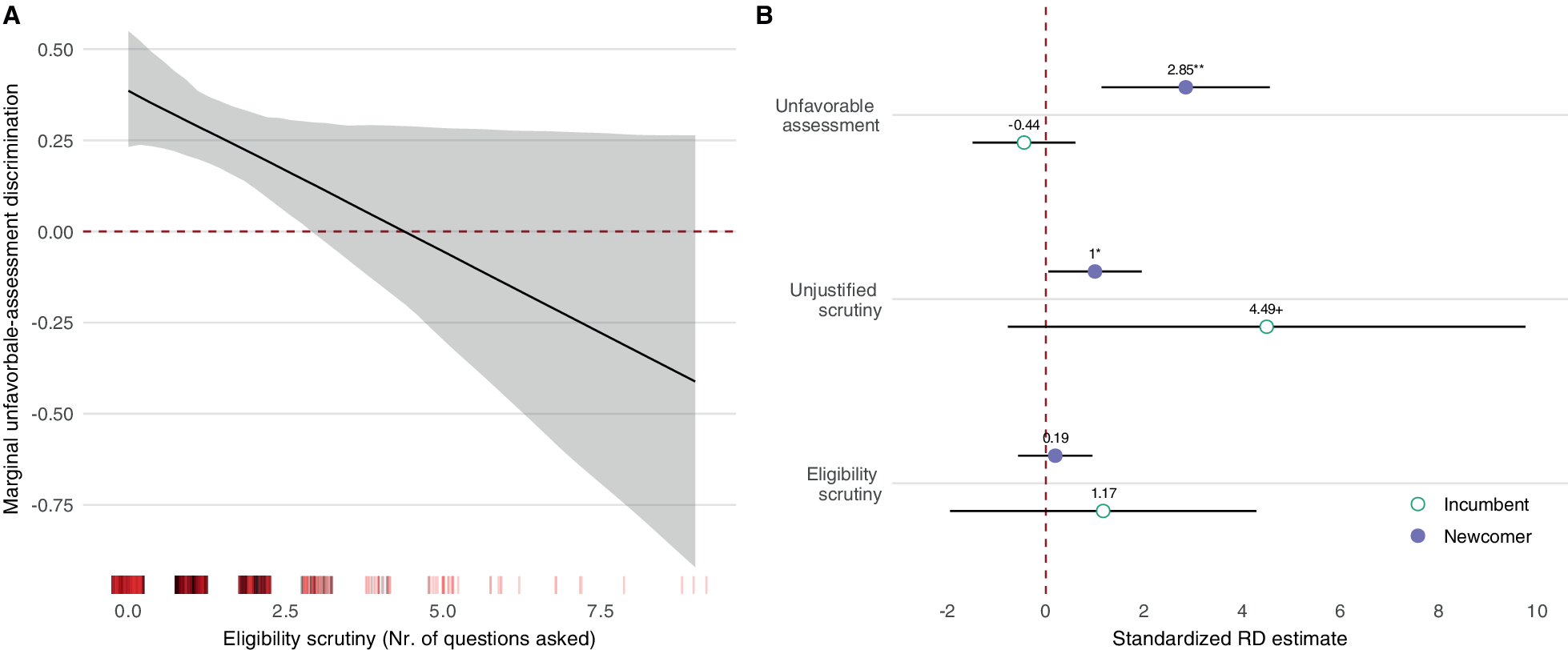


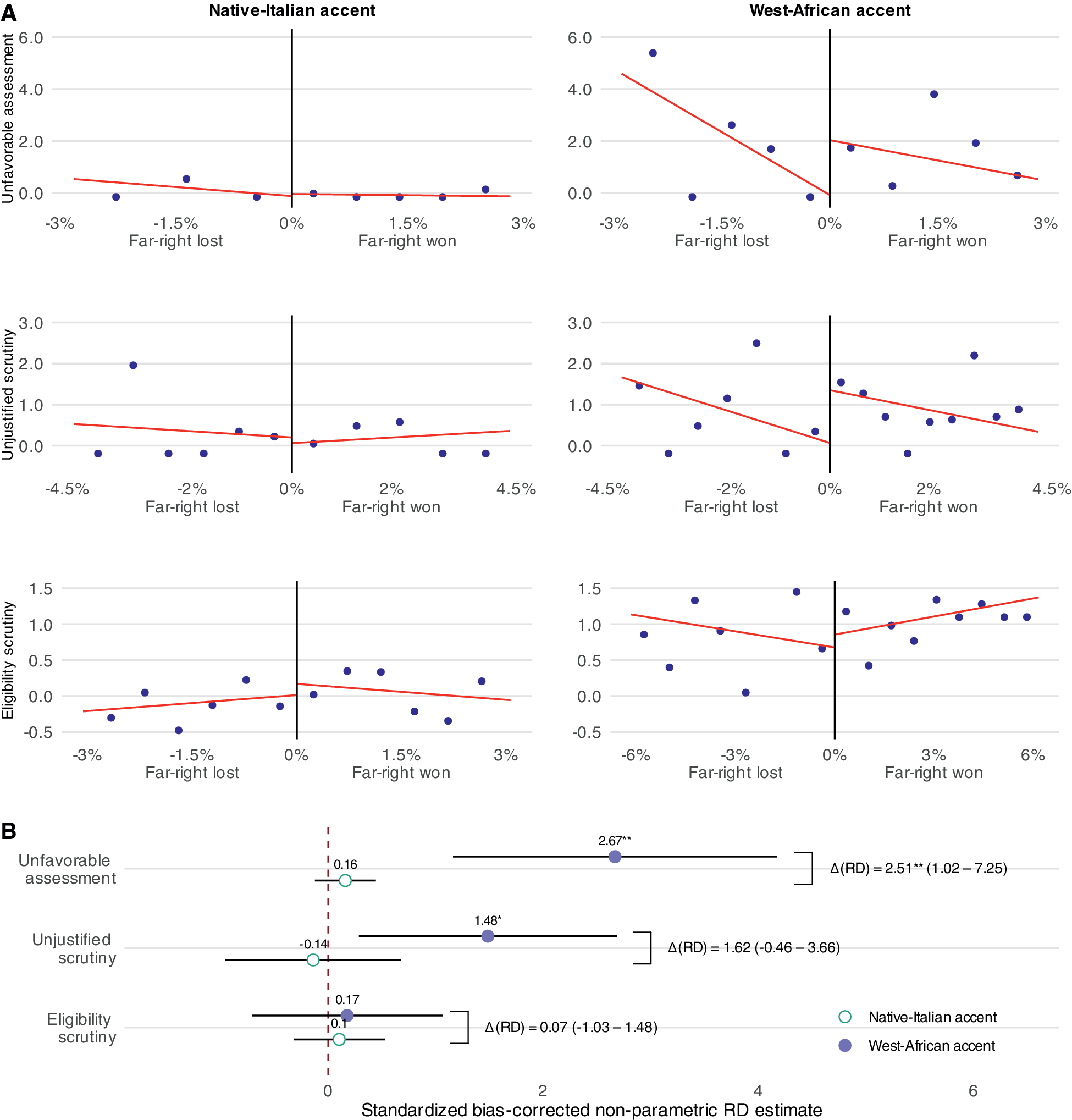


 Open access


Comments
No Comments have been published for this article.