Introduction
Capacitation takes place during sperm transition through the female genital tract, primarily in the oviduct (Rodriguez-Martinez, Reference Rodriguez-Martinez2001; Suarez, Reference Suarez2002). Glycosaminoglycans (GAGs) have been ascribed among a variety of substances within the oviductal fluid (ODF) as causing sperm capacitation (Lee et al., Reference Lee, Clayton, Bushmeyer, First and Ax1986; Kawakami et al., Reference Kawakami, Arai, Oishi, Hori and Tsutsui2000, Tienthai et al., Reference Tienthai, Johannisson and Rodriguez-Martinez2004). One of the sulphated GAGs (S-GAGs), heparin, is used routinely to induce capacitation in bull spermatozoa in vitro. Generally, sperm capacitation involves changes in the sperm plasma membrane and in the intracellular metabolism of the spermatozoon.
One of the most often used methods for determination of the capacitation status is the CTC (chlortetracycline) assay. This fluorescent antibiotic will detect and exhibits enhanced fluorescence over the segments of the membrane where Ca2+ accumulates. Chlortetracycline has been shown to interact with mammalian spermatozoa, showing different binding patterns on the sperm head, which are believed to reflect different stages of the capacitation process (Ward & Storey, Reference Ward and Storey1984; DasGupta et al., Reference DasGupta, Mills and Fraser1993; Fraser et al., Reference Fraser, Abeydeera and Niwa1995). Another method to detect early capacitation changes in the sperm plasma membrane is the lipid dye merocyanine-540, which changes its fluorescent intensity depending on the degree of lipid disorder present in the plasma membrane (Harrison et al., Reference Harrison, Ashworth and Miller1996; Harrison & Gadella; Reference Harrison and Gadella2005).
When spermatozoa are exposed to processes used routinely in AI, like freezing and cooling, a sub-population of them may display membrane changes similar to capacitation (Maxwell & Johnson Reference Maxwell and Johnson1995; Cormier et al., Reference Cormier, Sirard and Bailey1997; Bailey et al., Reference Bailey, Bilodeau and Cormier2000).
In the present study we have investigated the effect of exposing frozen-thawed bull spermatozoa to particular GAGs, some of them present or presumably present in bovine oviductal fluid. The methods used were the chlortetracycline (CTC) assay at microscopy level and the shift in fluorescence expressed by spermatozoa loaded with merocyanine-540 assessed by flow cytometry (FACS). We have used frozen-thawed spermatozoa in this study because it is normally used for Swedish dairy cattle breeding.
Material and methods
Spermatozoa
Spermatozoa used in this study came from 25 Swedish progeny tested dairy bulls. The collection and freezing of the semen were performed at Svensk Avel (ek. för, Örnsro, Sweden), using standard procedures. In brief, the semen was diluted with a commercial extender (Triladyl, Minitüb, Germany), packed into 0.25 ml plastic straws, containing 15 × 106 spermatozoa per straw and stored in liquid nitrogen until used. Thawing was committed according to standard procedures; 12 s in 35 °C water bath, before Percoll centrifugation and/or incubations continued.
Density gradient (Percoll) centrifugation
Centrifugation through two layers of Percoll (35–70%; Amersham Biosciences) was used to cleanse the spermatozoa from protein particles to avoid interference with the CTC analyses. Non-DNA containing protein particles were excluded from the FACS analyses based on the Hoechst fluorescence. Frozen-thawed (FT) semen from several bulls was pooled and mixed. The FT semen was layered on the top of one layer of 35% Percoll and one layer of 70% Percoll, 1 ml of each layer in 3 ml plastic tubes. The tubes were submitted to centrifugation at 700 g at RT for 20 min. The sperm pellet was recovered and re-extended 1:2 v/v in a Tris–citrate–fructose buffer (Tris 250 mM, citrate 88 mM, fructose 14 mM; 325–350 mOsm; pH 7.0) prior to determinations of sperm concentration, which was assessed in a counting chamber (Bürker haemocytometer). Sperm motility was estimated subjectively under a phase contrast microscope with a warm stage. Spermatozoa were further extended to approximately 60 × 106 sperm/ml for CTC in experiment 2 and 10 × 106 sperm/ml in experiment 3 in incubation media, then subjected to the different treatments and incubation times described below. Spermatozoa in the FACS study were not submitted to Percoll centrifugation, only diluted in incubation media to approximately 15 × 106 sperm/ml before the different GAG treatments and incubations.
Medias, glycosaminoglycans, oviductal fluid and incubations.
The modified Fert-talp used as incubation media in this study contained; 114 mM NaCl, 3.2 mM KCl, 25 mM NaHCO3, 0.4 mM NaH2PO4, 2 mM CaCl2, 0.5 mM MgCl2,10 mM sodium lactate and phenol red (pH 7.8, 280–300 mOsm). All chemicals were purchased from Sigma. For Fert-talp without bicarbonate, NaHCO3 was replaced with NaCl to reach the same osmolarity, pH was then adjusted to the same level (7.8) as Fert-talp with bicarbonate, using NaOH (1 M).
The different GAGs used in this study were heparin (hep; Sigma), heparan sulphate (HS; Seikagaku), chondroitin sulphate C (CSC; Seikagaku), chondroitin sulphate E (CSE; Seikagaku), dermatan sulphate (DS; Sigma) and hyaluronan (HA; Sigma). The GAGs were diluted in SuperQ water (SVA) to a concentration of 1 mg/ml and kept frozen at –20 °C until used.
Incubations were carried out in the dark at 39 °C and 5% CO2 except for the negative samples for the CTC assay, which were incubated without CO2. Care was taken to keep the temperature when the samples were outside of the incubator.
Flow cytometric assessment of sperm plasma membrane stability
Measurements were carried out on an LSR flow cytometer (Becton Dickinson), equipped with a HeCD UV laser (325 nm, 8 mW), an argon ion laser (488 nm, 20 mW) and a HeNe laser (633 nm, 17 mW) as excitation sources. Forward and side scatter values were recorded on a linear scale, while fluorescent values were recorded on a logarithmic scale. Acquisitions were made using CellQuest 3.3 software (Becton Dickinson). The flow cytometer was used at low flow rate (6–24 ml/min).
The following fluorochrome working solutions were used: merocyanine-540 (M 24571; Molecular Probes) 1 mM in DMSO (Sigma), Yo-PRO 1 (Y 3603; Molecular Probes) 25 μM in DMSO and Hoechst 33342 (Molecular Probes) 5 mg/ml in distilled water.
Frozen-thawed sperm samples were extended to approximately 15 × 106 sperm/ml in 2 ml Fert-talp in a 5 ml Falcon tube containing 2.0 μl Yo-PRO 1, 5.2 μl merocyanine-540 and 2 μl Hoechst working solutions. Stained samples were incubated at 39 °C in 5% CO2, in the dark for 10 min before submitted to any GAG treatment. The different GAGs were added and the samples were analysed in the FACS machine after different incubation times according to experiment 1 below.
Merocyanine-540 and Yo-PRO 1 were excited by an argon ion laser and Hoechst was excited by a HeCD UV laser. Detector FL 1 (530/28 nm) was used to identify Yo-PRO fluorescence. Merocyanine-540 fluorescence was identified with detector FL 2 (670 LP) and Hoechst fluorescence was identified with detectors FL 4 (510/20 DF) and FL 5 (380 LP). All non-sperm events or non-DNA containing events were gated out based on the Hoechst fluorescence. Acquisitions were stopped after recording 10 000 Hoechst-positive events. In the Yo-PRO 1/ merocyanine-540 dot plots, the regions were set to differentiate viable and non-capacitated i.e. Yo-PRO 1 negative and merocyanine-540 with low fluorescence (mero low), from viable and capacitated i.e. Yo-PRO 1 negative and merocyanine-540 with high fluorescence (mero high) and from dead i.e. Yo-PRO 1 positive spermatozoa.
CTC (chlortetracycline) assay
The CTC-staining solution consisted of 0.7 mM CTC, 5.0 mM dl-cysteine, 130 mM NaCl and 20 mM Tris (Sigma; pH adjusted to 7.8). The ethidium homodimer-1 (Molecular Probes) was diluted 1:100 in phosphate-buffered saline (PBS). Fresh staining solutions were prepared for each assay and protected from light by aluminium foil.
The sperm samples were extended to approximately 60 × 106 sperm/ml in incubation media, which consisted of Fert-talp without bicarbonate. For the CTC assay 49 μl was taken from each sperm sample and mixed with 1 μl EthD-1(1:100). The samples were incubated for 3 min in the dark at RT, 25 μl CTC staining solution was added and all samples were mixed thoroughly. Finally, 1 μl of 4 % paraformaldehyde was added for fixation. Equal amounts anti-fade and each sample was mixed on a glass slide and mounted with a coverslip, gently pressed between sheets of tissue to remove excess fluid and sealed with transparent nail vanish. The glass slides were stored at 4 °C, in dark until read. Evaluation was accomplished within 12 h under a Diaplan Leitz microscope (Leica, Wetzlar, Germany) equipped with epifluorescence optics. The cells were observed with a blue filter block H3 (excitation 420 to 490 nm). In each sample, 200 morphologically normal, EthD-1 negative spermatozoa were classified according to Fraser et al. (Reference Fraser, Abeydeera and Niwa1995), where F-pattern, showing green fluorescence over the whole the head, indicated uncapacitated, acrosome intact spermatozoa. Pattern B, had a fluorescence-free area in the post acrosomal region, denoted capacitated, acrosome intact spermatozoa and pattern AR showed a fluorescence-free head except a thin line of fluorescence on the equatorial region. The spermatozoa that did not fit into these three categories were not included.
Experimental design
Experiment 1: Early capacitation changes in frozen-thawed bull spermatozoa exposed to GAGs
Frozen-thawed semen was diluted to approximately 15 × 106 sperm/ml in Fert-talp; control, hep, CSC, CSE, DS, HA or HS. All S-GAGs at the concentration of 5 μg/ml and HA at a concentration of 3 μg/ml. The incubation times 0, 5, 15, 30, 60, 120, 180 and 240 min were used for the control and heparin, for the samples treated with the other GAGs the incubation times were only 0, 15 and 30 min. The sperm samples were stained with merocyanine-540, Yo-PRO 1 and Hoechst and read at the FACS machine according to the description above.
Experiment 2: Late capacitation changes in frozen-thawed bull spermatozoa exposed to GAGs
Frozen-thawed semen was subjected to Percoll centrifugation according to the previous description. The recovered sperm pellet was diluted in Fert-talp without bicarbonate and aliquoted into three tubes. For the treatments, the incubation media was either supplemented with 20 μg hep/ml or 10 μg HA/ml. The control tube was left untreated. The CTC staining was either done immediately (i.e. after 0 h of incubation) or after 4 h of incubation.
Experiment 3: Control experiments for sperm capacitation and acrosome reaction end points
To evaluate if the spermatozoa showing B-pattern (capacitated) in the CTC assay, were capacitated and able to acrosome react, we incubated sperm samples with zona pellucida (ZP) protein. Offal bovine ovaries were collected at a local slaughterhouse and kept at 30 °C in a 0.9% NaCl solution. Visible antral follicles were aspirated using a vacuum pump. The COCs were transferred to Petri dishes with PBS supplemented with BSA and transferred by pipetting, using a stereomicroscope into 10 ml centrifuge tubes. Zona pellucida protein extraction was done essentially as described by Gil et al., (Reference Gil, Januskauskas, Håård, Håård, Johanisson, Söderquist and Rodriguez-Martinez2000)). Aspirated oocytes were washed twice by centrifugation 10 min 800 g in RT in 2 ml of 5 mM ammonium bicarbonate solution (pH 8.2) and the supernatant removed. The final pellet was resuspended in 150 μl of the same solubilization media, heated to 70 °C for 30 min and finally centrifuged at 13 000 g for 5 min to remove debris. After ZP solubilization was confirmed by microscopy (no visible ZP or ZP fragments were found in the pellet), aliquots of 100 ZP per tube were stored at –80°C and thawed before use. Frozen-thawed semen from four different bulls were mixed and submitted to Percoll centrifugation, according to the previous description. After evaluating the sperm concentration the sample was diluted to 10 × 106 spermatozoa/ml in Fert-talp. Two aliquots of diluted sperm was incubated, either with ZP protein equivalent to a rate of one oocyte per to 1000 spermatozoa (treatment) or incubated with Fert-talp (control), for 120 min at 39 °C and 5% CO2.
Statistical analysis
The statistical analyses were performed by using the SAS software, version 8.2 (SAS Institute Inc.). Data from experiments 1 and 2 were analysed by analysis of variance using the GLM procedure. The variables analysed were, number of alive, unreacted (F), capacitated (B) and acrosome reacted spermatozoa (AR) for the CTC assay. The variables for the flow cytometric assay were low merocyanine-540 fluorescence (alive unreacted), high merocyanine-540 fluorescence (alive, capacitated) and Yo-PRO positive (dead). The statistical model the fixed effects of effects of treatment, incubation time, run and the interaction between treatment and run. In experiment 3 the means for control and ZP protein treated samples were compared using Student's t-test (Microsoft Office Excel, 2003). p-values < 0.05 were considered statistically significant.
Results
Progressive sperm motility after thawing was 60–80% and after Percoll centrifugation 80–90%.
Experiment 1: GAGs elicit sperm capacitation as measured by merocyanine-540
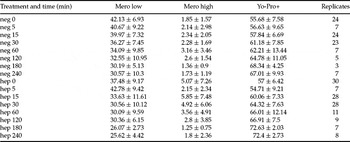
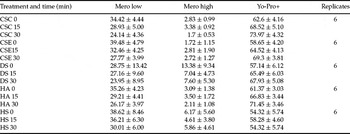
The data collected from the different assessments are summarized in Table 1a (merocyanine-540, after 0–240 min exposure) and Table 1b (merocyanine-540, after 0–30 min exposure). Values are the mean±SD. When comparing heparin treatment to negative control at the incubation times 0, 5, 15, 30, 60, 120, 180 and 240 min, we found a significant higher proportion of spermatozoa, which were alive with unaffected membranes (p < 0.0001) (uncapacitated; mero low) in the negative controls. The time of incubation was also highly significant for the proportion of mero-low spermatozoa, which were decreasing with the duration of the incubation (p < 0.0001).
Experiment 1 Percentages of frozen-thawed bull spermatozoa depicting proportions (%) of merocyanine-540 fluorescence intensity merolow (uncapacitated) and mero-high (capacitated) and of Yo-PRO 1 (dead) staining when suspended in Fert-talp (control) or Fert-talp with hep (heparin) after exposure to for 0–240 min at 39 °C in 5% CO2. Mean ± SD 3–30 replicates. HS (heparan sulphate), HA (hyaluronan), CSC (chondroitin sulphate C), CSE (chondroitin sulphate E) or DS (dermatan sulphate) after exposure to for 0–30 min at 39 °C in 5% CO2. Mean ± SD 3–30 replicates.

Run was also a significant variable, but less than treatment and time, for the number of intact spermatozoa (p = 0.0016). There was also significant higher proportion of alive spermatozoa with a shift in the phospholipid membranes (capacitated; mero high), when comparing the heparin-treated samples with the control samples (p < 0.0001). The differences between the runs were significant (p < 0.0001), but not the time of incubation for the population of mero-high fluorescent sperm. The percentage of dead spermatozoa (Yo-PRO 1 positive) was less significantly dependent on the heparin treatment (p = 0.0052), than mero low and high. But the proportion of Yo-PRO 1 positive sperm increased significantly with the incubation time (p < 0.0001). Yo-PRO 1 positive staining was also dependent on run (p < 0.0001). When comparing treatments with each other (CSC, CSE, HS, HA, hep and control) and the incubation times 0, 15 and 30 min; there was a high significance difference between all treatments and incubation times (p < 0.0001) for alive, unreacted spermatozoa (mero low). When comparing the different treatments to the negative control we could observed that there was no significant difference between the HS treatment and the negative control and the significant difference between CSC and the negative control was small (p = 0.019), whereas when any of the other the other treatments were compared to the negative control, the significance level was (p < 0.0001). The percentage of mero-high spermatozoa was not significantly dependent on the incubation time, but on the treatment and run (p < 0.0001). When comparing the different treatments one by one to the negative control, only hep and DS were significant (p < 0.0001) higher than the control. The proportion of dead spermatozoa (Yo-PRO 1 positive) was significantly dependent on incubation time, treatment and run (p < 0.0001). Compared to the negative control, HS treatment did not cause a significant change in the Yo-PRO 1 positive cells, while the increase in Yo-PRO 1 positive spermatozoa caused by hep (p = 0.0048) and DS (p = 0.0005), was less significant compared with the other treatments (p < 0.0001).
Experiment 2

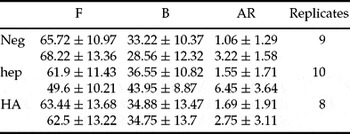
Percentages of frozen-thawed bull spermatozoa depicting proportions (%) of CTC patterns, F (uncapacitated), B (capacitated) and AR (acrosome reacted) staining when suspended in Fert-talp (control) or Fert-talp with hep (heparin), HA (hyaluronan), after exposure for 0–240 min, normal font 0 min, bold 240 min, at 39 °C in 5% CO2 (control without CO2). Means ± SD for 8–10 replicates.
Experiment 2: Heparin elicits sperm capacitation as measured by CTC
The data collected from the different assessments are summarized in Table 2 (CTC assay after 0–4 h exposure). Values are the mean±SD. Frozen-thawed spermatozoa were subjected to Percoll centrifugation according to the description above and thereafter treatment with hep or HA for 0 or 4 h. For normal, uncapacitated sperm (F-pattern) there was significant difference between the different runs (p = 0.0001) and a smaller significant difference (p = 0.0019), depending on the different treatment used. As shown in Table 2, hep elicited a bigger response among the spermatozoa than HA.
When comparing the treatments one by one to the negative control, hep provided a significant (p = 0.0005) decrease in proportion of F-pattern sperms, while there was no significant difference when comparing HA treated with untreated (negative control) spermatozoa. B-pattern or alive, capacitated spermatozoa was highly significantly dependent on run (p < 0.0001) and significant, but less on treatment (p = 0.008). When comparing the hep treated samples to the negative control there was a significant increase in B-pattern in the hep treated samples (p = 0.0021). There was no such difference for the HA treated samples. Time of incubation was not significant for the F- or B-pattern. For the AR-pattern (acrosome reacted, alive) spermatozoa, incubation time was a highly significant variable (p < 0.0001), while treatment (p = 0.0143) and run (p = 0.0256) were less significant.
Experiment 3: Zona pellucida protein induces the acrosome reaction
We found a significant difference both for the incidence of AR, which were higher in the ZP treated sample (p = 0.016) compared to the control sample. There was also a significant although not as big difference in the number of capacitated spermatozoa, which were greater in the control sample (p = 0.024).
Discussion
In this study we have investigated the effects of different individual GAGs on frozen thawed bull sperm capacitation in vitro. The capacitation process, together with the subsequent AR induced by the ZP glycoproteins, are essential for a spermatozoon to be able to bind and penetrate the ZP, fuse with and be incorporated into the oocyte during fertilization (Yanagimachi, Reference Yanagimachi1989).
Several scientific studies state that S-GAGs induce capacitation in bull sperm in vitro (Parrish et al., Reference Parrish, Susko-Parrish, Winer and First1988; 1989b; Chamberland et al., Reference Chamberland, Fournier, Tardif, Sirard, Sullivan and Bailey2001; Thérien et al., 2005). For the FACS analysis in the present study a lower concentration of S-GAGs compared to the CTC assay was used. This lower concentration (5 μg/ml) is the same concentration as used for heparin in our IVF laboratory. The total concentration of S-GAGs may be higher in bovine ODF, according to a recent study by our group (Bergqvist & Rodriguez-Martinez, Reference Bergqvist and Rodriguez-Martinez2006). Thus for the CTC assay we have used 20 μg/ml of heparin. Although our intention was to try to use as physiological concentrations as possible of the different GAGs in the experiments, only one previous study (Lee & Ax, 1984) gives relative but not exact concentrations of the different GAGs in bovine ODF. This is still a problem, since no commercially available assay could separate and calculate the concentrations of the different S-GAGs in ODF, reliably.
The HA concentration (3 μg/ml) used in the FACS study was chosen to reflect the true mean concentration for HA present in bovine ODF according to our own results (Bergqvist et al., Reference Bergqvist, Yokoo, Heldin, Frendin, Sato and Rodríguez-Martínez2005). The HA concentration used in the present CTC assay is similar to the highest concentration of HA found in the same study. A previous study has concluded that HA did not increase capacitation or AR in FT bull spermatozoa (Januskaukas et al., Reference Januskaukas, Gil, Söderquist and Rodriguez-Martinez2000), using CTC, which is in accordance with our results. We did not find any significant increase in B-pattern, AR or mero high when submitting FT bull spermatozoa to HA in the present study.
Since heparin until now has only been found in the granules of mast cells and not in the oviducts (Kjellén & Lindahl, 1991), several studies have designated heparan sulphate, which only differs from heparin in the degree of sulphatation, as the in vivo inducer of bull sperm capacitation (Parrish et al., Reference Parrish, Susko-Parrish, Handrow, Sims and First1989a; Kawakami et al., Reference Kawakami, Arai, Oishi, Hori and Tsutsui2000). However, in the present study we could not find evidence that heparan sulphate elicited sperm capacitation in vitro. This is in accordance with our recent findings using fresh bull spermatozoa (Bergqvist et al., Reference Bergqvist, Ballester, Johannisson, Hernandez, Lundeheim and Rodriguez-Martinez2006). The reason for our results diverging from the other studies may be that there is a large diversity between different types of heparan sulphate, making comparisons difficult, if not impossible, across studies.
Other S-GAGs than heparin and heparan sulphate may also be able to induce capacitation (Parrish et al., Reference Parrish, Susko-Parrish, Handrow, Sims and First1989a). A recent study by Thérien et al. (2005) concluded that dermatan sulphate (DS) induced capacitation in bull spermatozoa. Those results are in accordance with the present study, where dermatan sulphate significantly increased sperm capacitation rates, when measured as an increase in merocyanine-540 fluorescence. This finding is also in accordance with the findings in fresh bull spermatozoa (Bergqvist et al., Reference Bergqvist, Ballester, Johannisson, Hernandez, Lundeheim and Rodriguez-Martinez2006). Dermatan sulphate is one of the most heavily sulphated GAGs and studies have suggested that the ability of an S-GAG to induce capacitation depends on its degree of sulphatation (Parrish et al., Reference Parrish, Susko-Parrish, Handrow, Ax and First1989b). Our results support this assumption, since the most heavily sulphated GAGs, heparin and dermatan sulphate elicited the biggest proportion of mero-high spermatozoa (p < 0.0001) compared to negative controls.
The results in the present study are not the same as when using fresh bull spermatozoa for all the GAGs (Bergqvist et al., Reference Bergqvist, Ballester, Johannisson, Hernandez, Lundeheim and Rodriguez-Martinez2006). Recent studies in boar spermatozoa have shown a big difference between the number of fresh boar spermatozoa, which attain merocyanine-540 measurable membrane changes (mero high) when triggered by bicarbonate, compared to frozen-thawed boar spermatozoa (Guthrie & Welch, Reference Guthrie and Welch2005). In the present study, we found significant differences in merocyanine-540 fluorescence using FT bull spermatozoa.
However, the overall the differences in merocyanine-540 fluorescence induced by GAGs in bull spermatozoa, both fresh and FT, is small compared to when subjecting fresh bull spermatozoa to whole oviductal fluid (Bergqvist et al., Reference Bergqvist, Ballester, Johannisson, Hernandez, Lundeheim and Rodriguez-Martinez2006). The reason for this may be that there are different GAGs acting together synergistically in ODF and/or more substances in the ODF, which are able to induce sperm capacitation.
Some investigators have found different response to heparin comparing fresh and frozen-thawed bull semen using CTC (Cormier et al., Reference Cormier, Sirard and Bailey1997). We found differences concerning HA treatment of FT spermatozoa in the present study compared to fresh in our previous study (Bergqvist et al., Reference Bergqvist, Ballester, Johannisson, Hernandez, Lundeheim and Rodriguez-Martinez2006). One reason for different results using the CTC assay in FT compared to fresh spermatozoa is that the FT spermatozoa may already exhibit some capacitation-like changes in their membranes after the freezing procedure (Cormier et al., Reference Cormier, Sirard and Bailey1997; Thundathil et al., Reference Thundathil, Gil, Januskauskas, Larsson, Soderquist, Mapletoft and Rodriguez-Martinez1999; Bailey et al., Reference Bailey, Bilodeau and Cormier2000; Collin et al., Reference Collin, Sirard, Dufour and Bailey2000).
Some authors claim that serum-derived albumin-like substances in ODF act as cholesterol acceptors during capacitation (Visconti et al., Reference Visconti, Westbrook, Chertihin, Demarco, Sleight and Diekman2002). Other studies conclude that protein supplementation may facilitate capacitation of bovine spermatozoa, but it is not needed (Tajik et al., Reference Tajik, Wang, Okuda and Niwa1994; Keskintepe & Brackett, Reference Keskintepe and Brackett1996). The explanation for the relatively low capacitation rate after GAGs exposure in the present study may be that GAGs need the albumin–cholesterol route to achieve sperm capacitation. We did not use albumin (BSA) in the incubation media in the present study because protein components may interfere with the analyses (Peña et al., 1999; Nagy et al., Reference Nagy, Jansen, Topper and Gadella2003). Another reason was that we did not want to add too many different components to the incubation media, given our interest in the effects of the separate components. We wanted as few factors as possible to influence the sperm membrane and capacitation. For this reason, pyruvate, hypotaurine, penicillamine and epinephrine were also were excluded from the media. This may also have influenced the capability of the spermatozoa to undergo capacitation
The present study confirms previous findings that various GAGs stimulate bull sperm capacitation and that their ability to induce capacitation seem to be higher with higher degree of sulphation.
Acknowledgements
We would like to express our gratitude to professor Lena Kjellén for the kind gift of the different S-GAGs. This study was supported by FORMAS, Stockholm. The flow cytometer used in this study was financed by the Swedish Research Council (Vetenskapsrådet), Stockholm.