Introduction
Telemedicine refers to remote provision of medical services using technology. In otolaryngology, telemedicine mostly encompasses telephone and video consultations but also includes the use of clinical photographs and the telephone or video delivery of care, such as speech therapy, tinnitus retraining therapy or vestibular rehabilitation, by allied healthcare professionals.Reference Holter and Burgess1,Reference Garritano and Goldenberg2 Although telemedicine was used in otolaryngology prior to the coronavirus disease 2019 (Covid-19) pandemic, particularly in countries where remote provision of care was required,Reference Garritano and Goldenberg2 its use was limited in UK hospitals. The pandemic led many ENT departments to offer virtual (video or telephone) consultations as a rapidly implementable alternative to standard face-to-face consultations.Reference Ohlstein, Garner and Takashima3–Reference Manning and Gillepsie6
A major benefit of telemedicine in the recent context is the reduced exposure of patients and healthcare professionals to Covid-19, but other benefits include convenience of access for many patients, such as those with reduced mobility, busy schedules or those living in remote areas, shorter consultation times, and a cost benefit.Reference Anari, Arullendran and Reilly7 There are obvious drawbacks, such as the lack of clinical examination creating a risk of misdiagnosis, as well as technology limitations, access barriers for some patient groups, such as those with hearing loss or those who speak a different language, and potential patient dissatisfaction with the perceived level of care.Reference Manning and Gillepsie6,Reference Ramirez, Ojeaga, Espinoza, Hensler and Honrubia8 Overall, most studies find telemedicine to be an effective method for delivering healthcare,Reference Ekeland, Bowes and Flottorp9 and patient satisfaction rates are high.Reference Ning, Cabrera and D'Anza10,Reference Choi, Kim, Park, Lin, Abdur-Raman and Mack11
After using telephone consultations as an alternative to face-to-face consultations during the pandemic, many clinicians are keen to continue incorporating them in routine practice. However, it is important that what was an ad hoc modification becomes an effective system in order to maintain a good standard of care and to improve efficiency. This means that telephone consultations should be reserved for patients who have been identified as likely to benefit from them, rather than add an additional step before a face-to-face consultation, which would waste resources and potentially lead to delays in treatment.
The purpose of this quality improvement project in a UK university hospital was to assess the role of telephone consultations in the management of ENT patients and to identify areas where telephone consultations may be effective. This was achieved by analysing and comparing outcomes between telephone and face-to-face consultations for new ENT patients during two periods of one month, before and during the Covid-19 pandemic.
Materials and methods
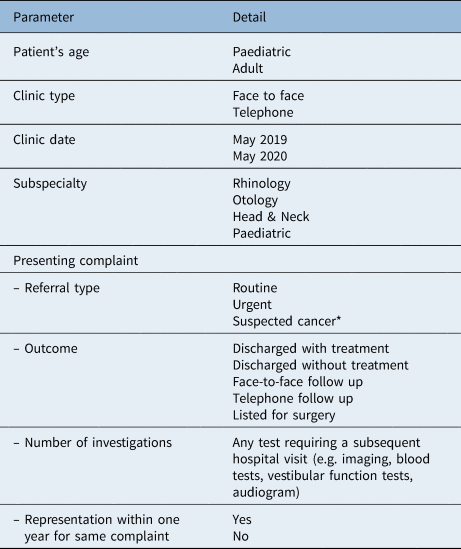
All new patient appointments at the Oxford University Hospital ENT Department for the months of May 2019 and May 2020 were selected for review. Appointments were identified from clinic booking lists. Data collected for each appointment are included in Table 1. Analysis of the data included a comparison of the number of appointments, referral type, number of investigations, outcome, and rate of representation within the year for each subspecialty, between 2019 and 2020 and between face-to-face and virtual consultations. When relevant, data were statistically analysed using SPSS® statistical software, and p-values less than 0.05 were considered statistically significant.
Data collection

* In the UK, referrals can be sent from general practitioners to hospital specialists on the ‘two-week wait’ pathway; this is an urgent suspected cancer referral pathway, which ensures that patients are offered a specialist appointment within two weeks of referral. Other referrals are routine or can be flagged by the general practitioner as urgent.
Results
Total number of consultations
There were 465 new patient consultations in May 2019 and 173 in May 2020. All consultations were face to face in 2019. In 2020, 87 consultations (50 per cent) were face to face, and 86 (50 per cent) were by telephone. There was no video consultation.
In 2019, the 465 face-to-face consultations were divided as follows based on the presenting complaint: 161 head and neck (66 per cent suspected cancer and 34 per cent other), 146 otology (6 per cent suspected cancer and 94 per cent other), 96 rhinology (9 per cent suspected cancer and 91 per cent other), and 62 paediatric ENT consultations (all routine or urgent).
In 2020, consultations were only offered following urgent or suspected cancer referrals, and the 173 consultations were divided as follows: 113 head and neck (63 per cent face to face and 37 per cent telephone), 12 otology (42 per cent face to face and 58 per cent telephone), 18 rhinology (33 per cent face to face and 67 per cent telephone), and 30 paediatric ENT consultations (17 per cent face to face and 83 per cent telephone).
Outcomes
Comparison of outcomes per year
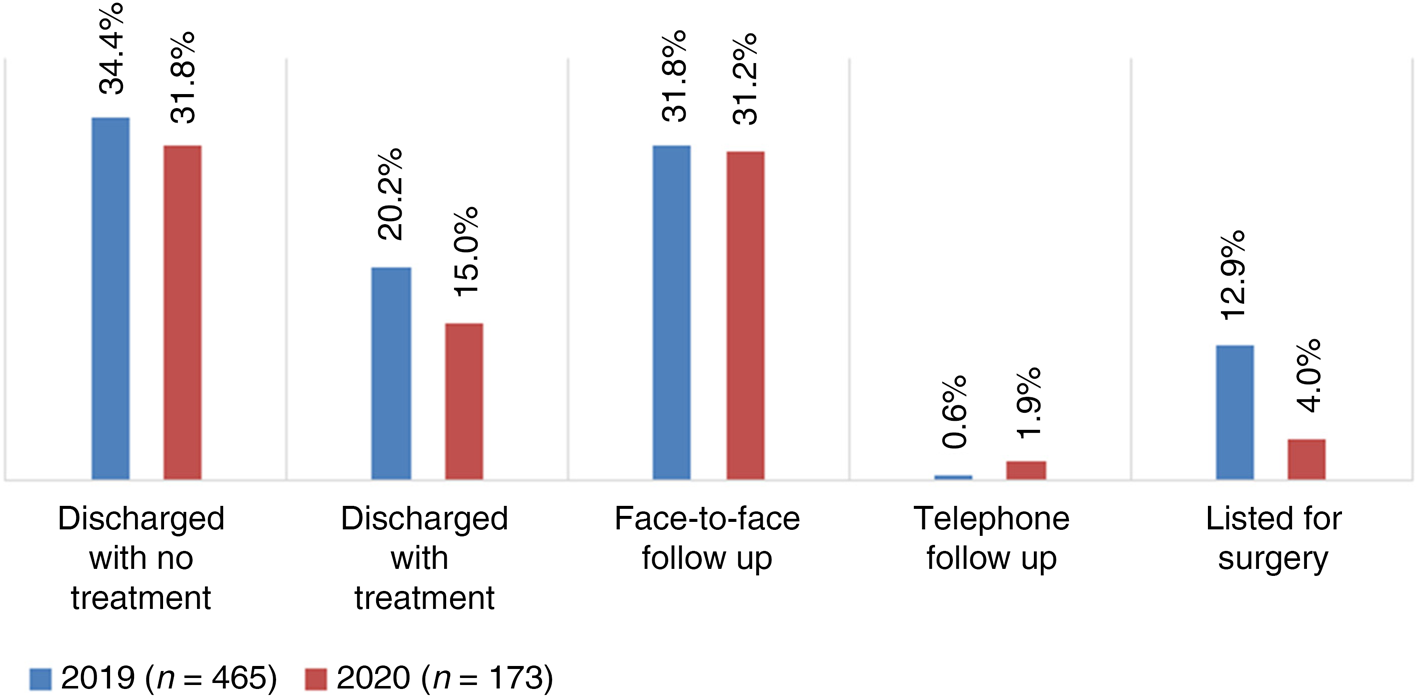
Figure 1 shows the outcomes of consultations in 2019 and 2020. The average number of investigations per patient was 0.7 in 2019 and 0.5 in 2020.
Outcome comparison of 2019 and 2020 consultations (p < 0.001).

Comparison of outcomes per appointment type
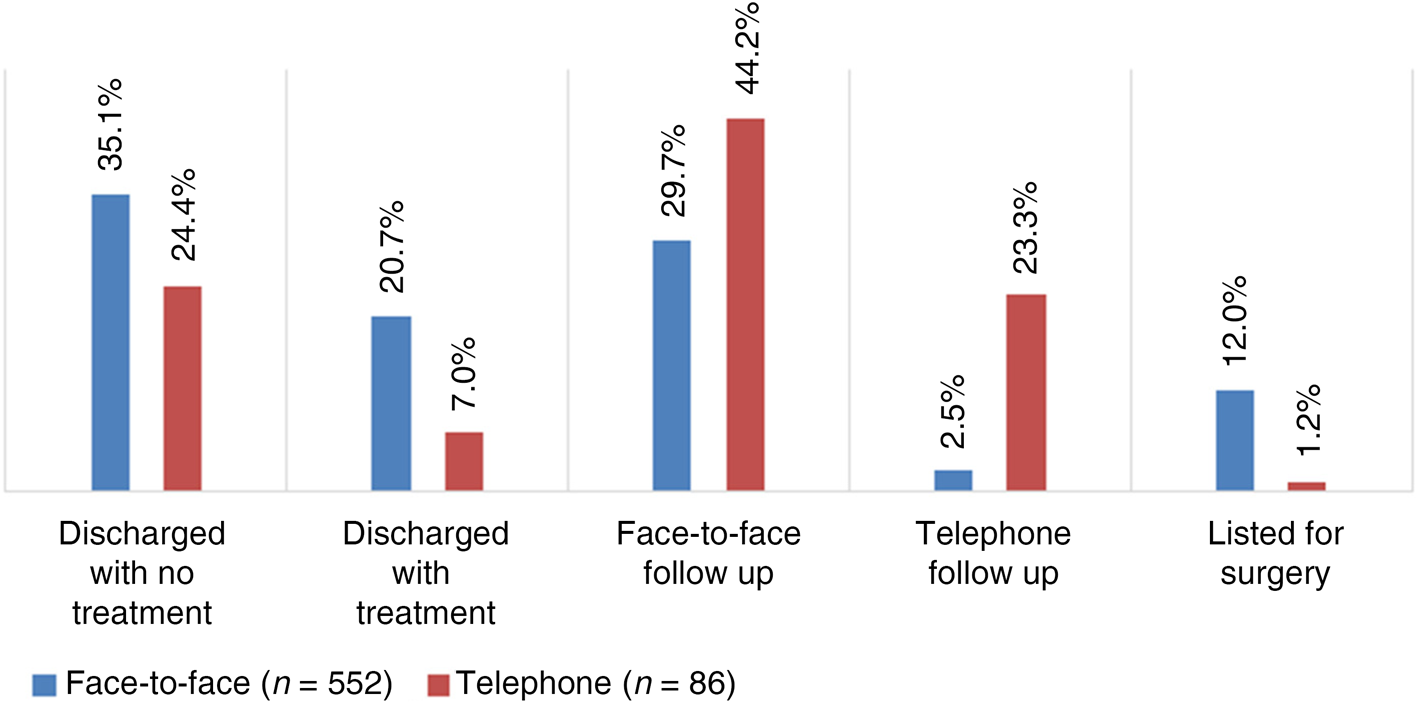
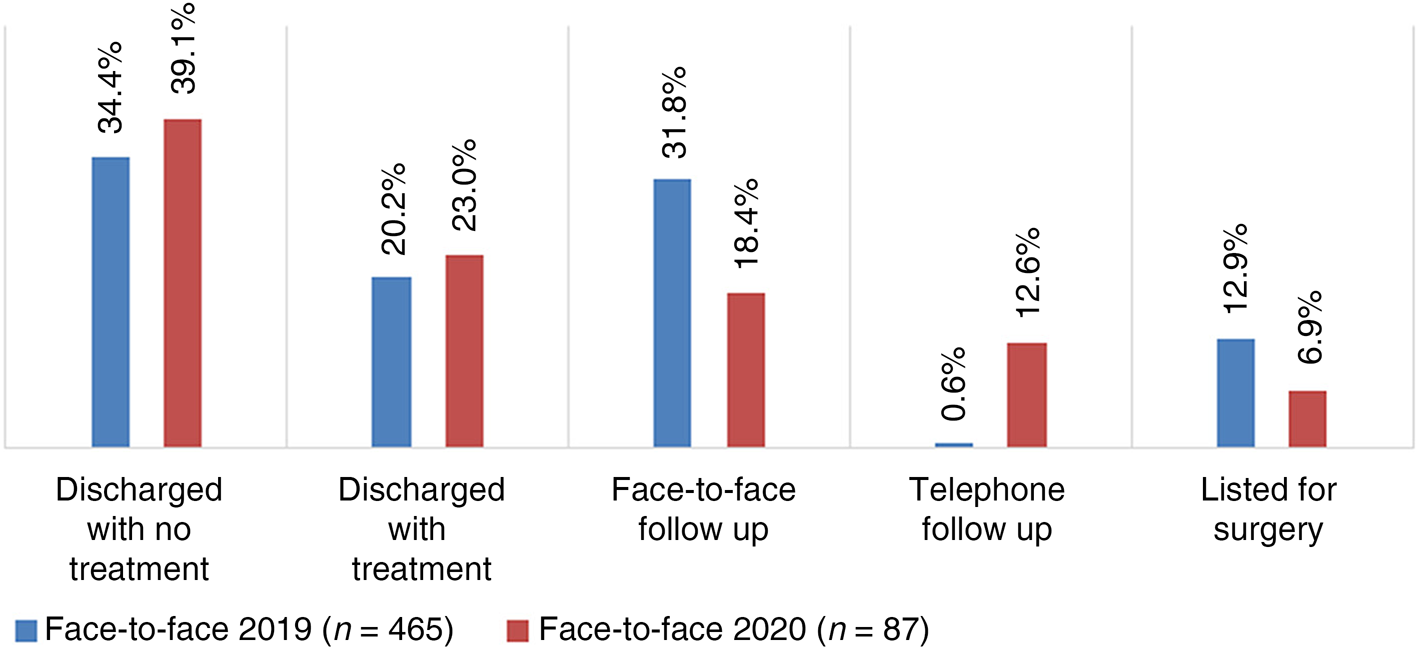
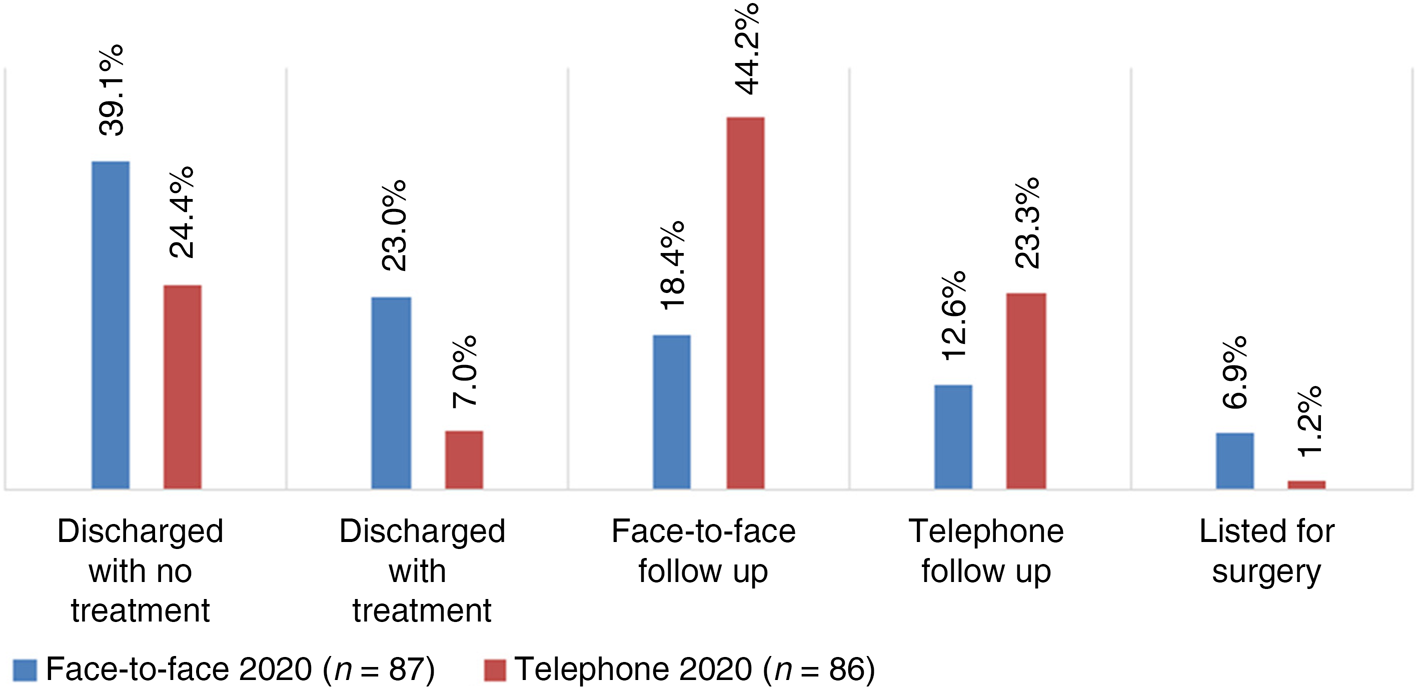
Figure 2 shows the comparison of outcomes between all face-to-face (2019 and 2020) and all telephone (2020 only) consultations. Figure 3 compares the outcomes of face-to-face consultations in 2019 and face-to-face consultations in 2020. Finally, Figure 4 compares the outcomes of face-to-face and telephone consultations in 2020 only. The average number of investigations per patient was 0.7 following face-to-face consultations (0.7 in 2019 and 0.6 in 2020) and 0.3 following telephone consultations. The rate of representation within a year for discharged patients was 5 per cent following face-to-face consultations in 2019, 4 per cent following face-to-face consultations in 2020 and 12 per cent following telephone consultations in 2020. When comparing outcomes for suspected cancer, routine and urgent appointments, they were similar with the exception of routine telephone appointments generating more follow-up appointments compared with suspected cancer appointments, where more patients were discharged.
Outcome comparison of face-to-face and telephone consultations (p < 0.001).

Outcome comparison of face-to-face consultations in 2019 and 2020 (p < 0.001).

Outcome comparison of face-to-face and telephone consultations in 2020 (p < 0.001).

Comparison of outcomes per subspecialty
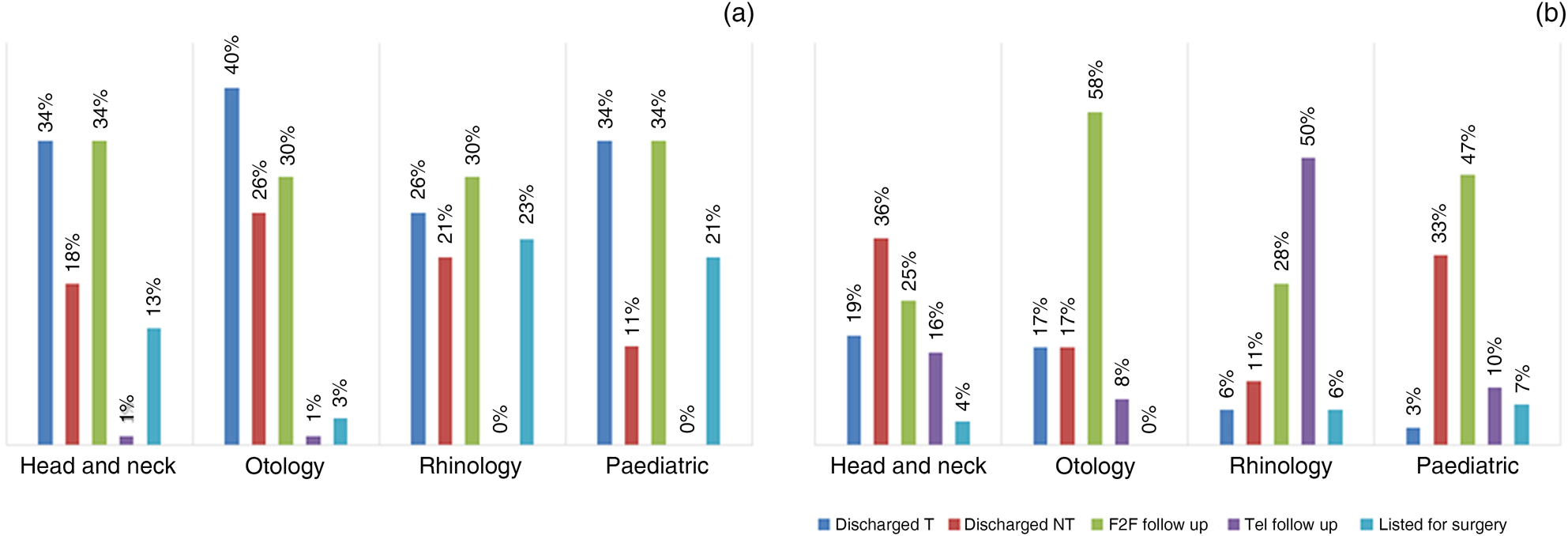
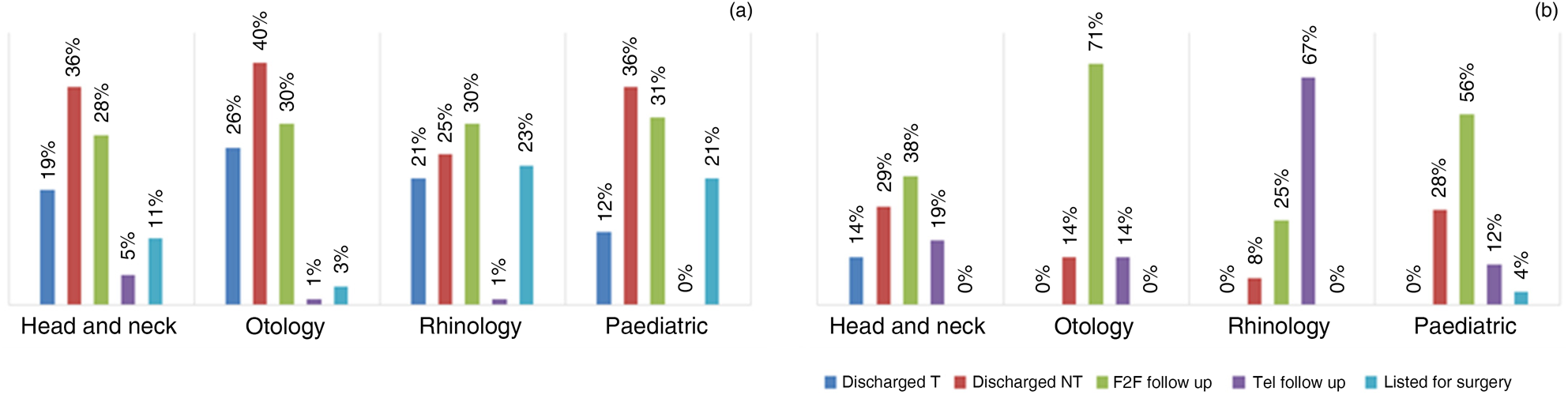
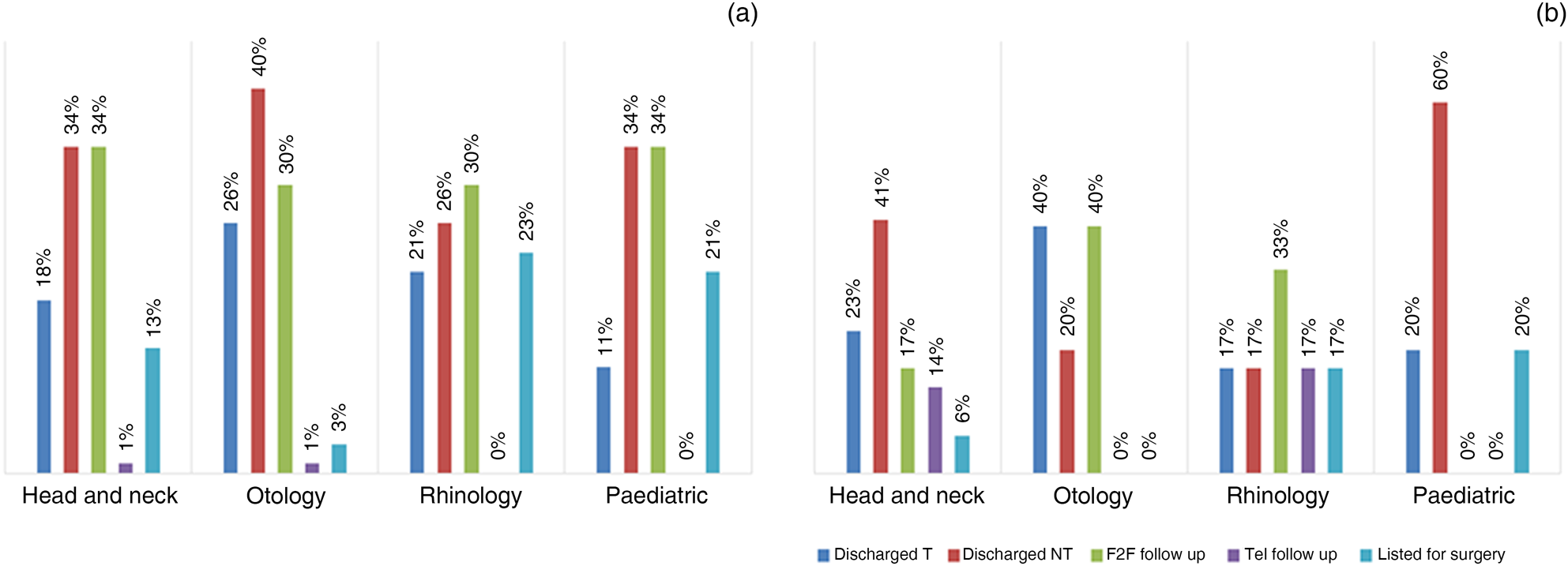
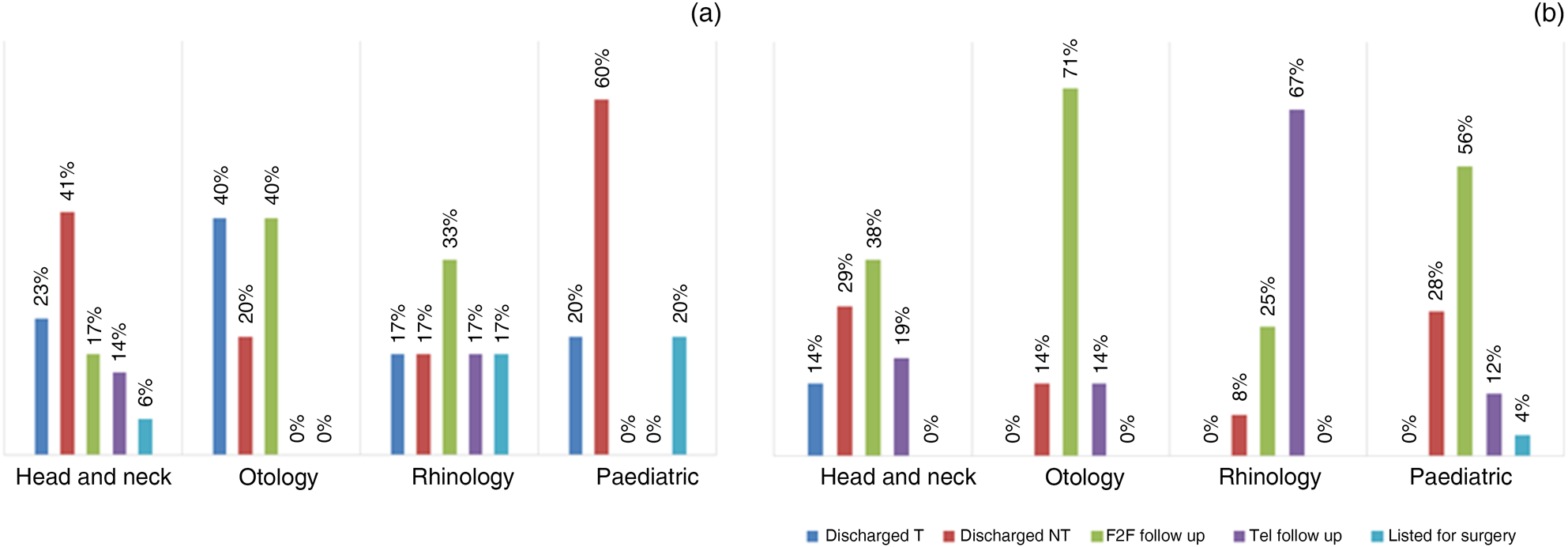
Figures 5, 6, 7 and 8 illustrate the difference in outcomes per subspecialty in each year and per appointment type.
Subspecialty-specific outcome comparison of (a) 2019 and (b) 2020 consultations. T = with treatment; NT = without treatment; F2F = face to face; Tel = telephone

Subspecialty-specific outcome comparison of (a) face-to-face (2019 and 2020) and (b) telephone consultations (2020). T = with treatment; NT = without treatment; F2F = face to face; Tel = telephone

Subspecialty-specific outcome comparison of face-to-face consultations in (a) 2019 and (b) 2020. T = with treatment; NT = without treatment; F2F = face to face; Tel = telephone

Subspecialty-specific outcome comparison of (a) face-to-face and (b) telephone consultations in 2020. T = with treatment; NT = without treatment; F2F = face to face; Tel = telephone

Outcomes for specific presentations
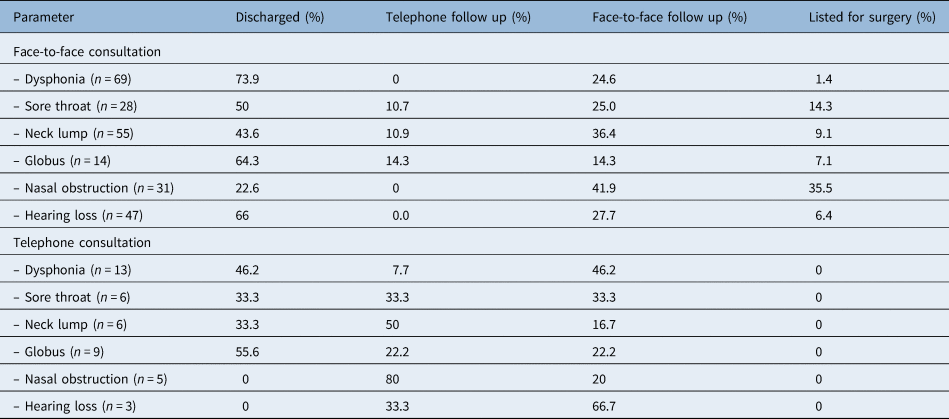
Outcomes were compared for common presentations, including the main head and neck symptoms of dysphonia, sore throat, neck lump and ‘a feeling of something in the throat’, as well as nasal obstruction and hearing loss (Table 2).
Outcomes for common presentations

Discussion
Virtual consultations have disadvantages over face-to-face consultations, including the possible diagnostic uncertainty resulting from lack of clinical examination, technology limitations and the perceived reduced standard of care by some patients.Reference Manning and Gillepsie6 However, they have many benefits beyond the lowered exposure risk to Covid-19, particularly with regard to time and cost for the health service and for patients, and patient satisfaction has been shown to be high.Reference Anari, Arullendran and Reilly7,Reference Ekeland, Bowes and Flottorp9–Reference Choi, Kim, Park, Lin, Abdur-Raman and Mack11
Virtual consultations have been supported by the UK National Health Service (NHS) and by the Royal College of Surgeons of England. The NHS Long Term Plan, published in 2019 before the Covid-19 pandemic, set out to provide virtual consultations for NHS patients.12 The Royal College of Surgeons published a guidance document to support surgeons with virtual consultations.13
In order to interpret the results, the triaging system for new referrals and booking follow-up appointments must be explained. The month of May was chosen for data collection in both years so as to avoid potential seasonal variation. May 2019 was prior to the Covid-19 pandemic, and May 2020 was during the first wave of the pandemic. In 2019, appointments included routine, urgent and suspected cancer referrals, all of which were face to face. At the time, telephone appointments were ad hoc and usually used for communication of investigation results rather than being incorporated into clinics. In 2020, following the beginning of the pandemic, a new temporary triaging system was adopted to minimise unnecessary exposure risk for both patients and hospital staff and to allow staff to provide support with the management of Covid-19 patients where feasible. As a result, routine referrals were rejected, and only urgent or suspected cancer appointments were given. Referrals were further triaged to assess which patients could receive a telephone appointment and which required a face-to-face appointment; there was also the option to book follow-up appointments as face-to-face or telephone consultations. These comparisons between 2019 and 2020 are certainly affected by the referral type because the 2020 data included no routine referrals.
One of the main comparisons of interest is the difference in outcomes across all subspecialties between telephone and face-to-face consultations. It is particularly relevant because, although telephone consultations were less common before the pandemic, they are now incorporated into normal practice, and it is important to assess their efficiency. Following face-to-face consultations, a total of 56 per cent of patients were discharged, compared with 31 per cent of patients being discharged following telephone consultations, whereas 33 per cent received a follow-up appointment following a face-to-face consultation, compared with 67 per cent following a telephone appointment. The percentage of patients listed for surgery following face-to-face consultations was 12 per cent, and this reduced to 1 per cent following telephone consultations. It must also be pointed out that the representation rate within a year of discharge was significantly higher following telephone consultations, although none of the patients who re-presented had a negative outcome.
Of course, these wide variations in outcomes could also be because of a change in approach between 2019 and 2020, rather than simply the appointment type, and therefore comparing 2019 and 2020 outcomes as well as face-to-face versus telephone outcomes in 2020 can help identify the sources of variation. When comparing face-to-face consultations only, there was no significant difference in discharge and follow-up rates between 2019 and 2020 (54 per cent vs 62 per cent and 33 per cent vs 31 per cent, respectively). There was a decrease in the percentage of patients listed for surgery (13 per cent in 2019 vs 7 per cent in 2020), which is likely secondary in part to the change in the triaging system and the type of patients seen during the pandemic. Only 3 per cent of follow-up appointments in 2019 were telephone appointments; this was over 40 per cent in 2020. This reflects the fact that the option for a telephone appointment only became widely available during the pandemic.
Finally, looking at face-to-face versus telephone consultations in 2020 only (each of which comprised half of the consultations), 31 per cent of patients were discharged following telephone consultations, whereas this doubled to 62 per cent of patients being discharged following face-to-face consultations. Only 1 per cent of patients were listed for surgery following telephone consultation, compared with 7 per cent following face-to-face consultations. And 67 per cent of patients were followed up after telephone consultations compared with 31 per cent following face-to-face consultations, although the distribution of telephone and face-to-face appointments was similar.
The data suggested that not only did the consultation type have an effect on outcomes, there was also likely an attitude change between pre-pandemic and pandemic consultations. Many fewer patients were listed for surgery during the pandemic, and this was even lower following a telephone consultation, shifting from 13 per cent in 2019 to 7 per cent following face-to-face consultations in 2020 and 1 per cent following telephone consultations in 2020. Although few operations were undertaken at this time, patients could still have been added to the waiting list if an operation was required. However, if the waiting time for surgery was expected to be long, it may be that patients were brought back for a review instead. In addition, it is indeed challenging to list a patient for surgery after a telephone consultation without at least a clinical examination or further investigation. It is therefore likely that many patients requiring an operation following a telephone appointment were brought back for a face-to-face review instead.
It appears that patients are less readily discharged following telephone consultations, which is most likely because of the lack of clinical examination affecting a doctor's confidence in making a diagnosis. The pre-pandemic discharge rate in face-to-face consultations was 54 per cent with a slight increase to 62 per cent during the pandemic, but it dropped to 31 per cent following telephone consultations.
A second important comparison is that of outcomes in the different subspecialties. In general, trends across subspecialties followed the general trends. Numbers of appointments per subspecialty in 2020 are relatively small for otology, rhinology and paediatric ENT, and conclusions from these numbers may therefore not be wholly reflective of the situation. It appears that the number of follow-up appointments was particularly high in otology and in rhinology following telephone consultations, with very few patients being listed for surgery or discharged. Most of the otology follow-up appointments were face-to-face (71 per cent of all otology telephone appointments), possibly reflecting the difficulty of making a decision without examination of the ear under the microscope. This suggests that telephone appointments are not efficient for new otology referrals. This is different to what is reported in the systematic review by Samarrai et al., which suggests that otology is the most amenable to telemedicine of all ENT subspecialties.Reference Samarrai, Riccardi, Tessema, Stezen and Brown4 This relies on prior otoscopic and audiological assessment of patients, which was not feasible during our study given the pandemic limitations and is an important consideration for future service planning.
Most rhinology follow-up appointments were by telephone (67 per cent of all rhinology telephone appointments), which may be because review of symptoms and imaging may be sufficient to make management decisions. Surprisingly, numbers of investigations were similar for face-to-face (0.6) and telephone (0.7) appointments.
The majority of paediatric patients (56 per cent) also required a face-to-face follow-up following an initial telephone consultation, suggesting that a face-to-face consultation in the first instance would be preferable for this patient group.
On the other hand, 43 per cent of head and neck patients were discharged following telephone consultations, many more than in other subspecialties. Considering the limitations in face-to-face out-patient clinics during the Covid-19 pandemic, the ENT UK association developed a set of guidelines for triaging new suspected head and neck cancer referrals in order to identify patients who require urgent face-to-face review. We believe that the use of this ENT UK symptoms-based telephone triaging score system during the telephone consultations helped to avoid unnecessary face-to-face follow-up appointments and resulted in an overall increase in the discharge rate following a telephone consultation.Reference Tikka, Kavanagh, Lowit, Jiafeng, Burns and Nixon14,15
Overall, our results on the outcomes per subspecialty are somewhat different from what was identified in the study by Puttasidaiah et al., including a less marked difference in the percentage of discharged patients across subspecialties for new patients. Several variables, such as their use of video consultation and the differing proportion of suspected cancer referrals, could explain this difference.Reference Puttasidaiah, Morris, Dwamena and Sanu16
Following face-to-face appointments in 2019 or 2020, there was little difference in outcomes between suspected cancer and other appointments. In contrast, the outcomes were not only different in telephone appointments generally as discussed above, but there was also a greater variation in outcomes between suspected cancer and other telephone appointments, with a higher rate of follow-up after urgent referrals compared with suspected cancer referrals. This may suggest that, although suspected cancer referrals (which consisted mostly of head and neck patients) may successfully be assessed over the telephone and discharged in about half of cases, other urgent cases may potentially be more complex and require further assessment.
A deeper dive into specific patient presentations offered further insight. The discharge rate following telephone consultation for patients presenting with dysphonia or a feeling of something in the throat was 46 per cent and 56 per cent, respectively (28 per cent and 8 per cent less than following face-to-face consultation, respectively). Follow-up appointments were shared evenly between telephone and face-to-face appointments for a feeling of something in the throat but were mostly face to face for dysphonia. A third of patients presenting with a neck lump or with a sore throat were discharged following telephone consultation, with follow-up appointments being shared evenly between telephone and face-to-face appointments for patients with a sore throat, compared with a clear majority of telephone appointments for patients presenting with a neck lump, usually after imaging. This suggests that, on the whole, telephone appointments are useful in head and neck patients. In a study by Sargsyan et al., findings were similar for patients with neck lumps, but all patients with throat symptoms required a face-to-face appointment, which led to a slightly different conclusion.Reference Sargsyan, Karunaratne, Masani, Howell and Yousif17 On the other hand, none of the patients who had a telephone consultation for hearing loss or nasal obstruction were discharged after the initial consultation; 80 per cent of patients with nasal obstruction were followed up by telephone, and two thirds of patients with hearing loss required a face-to-face consultation. This suggests that patients with nasal obstruction may benefit from an initial telephone appointment, but a review, at least by telephone, will be required, whereas patients with hearing loss would simply benefit from a face-to-face appointment in the first instance.
If remote otoscopy is used, the number of patients requiring face-to-face review may reduce, as suggested by other studies.Reference Schafer, Hudson and Elmaraghy18 Interestingly, the study by Sargsyan et al. also identified that patients referred with dizziness all required a face-to-face consultation.Reference Sargsyan, Karunaratne, Masani, Howell and Yousif17 Our number of patients receiving a telephone consultation for dizziness was too low to draw any conclusion.
It is surprising that investigations are overall less frequent following telephone consultations because it might be expected that the lack of clinical examination could be compensated for by a higher number of investigations; however, this may be because many patients were followed up, and the decision to request investigation was delayed until the review in some cases.
Patient satisfaction was not assessed in our study, but telemedicine has previously been shown to be deemed a satisfactory alternative by patients, both in otolaryngology and in other specialties.Reference Choi, Kim, Park, Lin, Abdur-Raman and Mack11,Reference Wolthers and Wolthers19–Reference Riley, Fischer, Nagy, Watson, McCoul and Tolisano22 Although other studies have shown no significant difference between telephone and video consultations, our study can only draw conclusions based on telephone consultations because video consultations were not used in the department during the time period of the study.Reference Hammersley, Donaghy, Parker, McNeilly, Atherton and Bikker23 Another limitation is the fact that the telephone appointments took place during the pandemic, and other services such as audiology were not available, which may affect the outcome of some consultations. Finally, an important limitation is that consultations during the pandemic included only suspected cancer or urgent referrals, and the overall outcomes may have been different if routine referrals had been accepted at the time and included. These last two limitations are partly overcome by the ability to compare face-to-face and telephone consultations in 2020 only, in addition to the comparison with the 2019 consultations. It must also be pointed out that the re-presentation rate includes only patients who re-presented to the same ENT department and not patients who were seen in other ENT departments or general practices.
• The use of virtual consultations significantly increased in the UK as an alternative to face-to-face consultations during the coronavirus disease 2019 pandemic
• Benefits of virtual consultations include convenience of access, shorter consultation times and a cost benefit
• Disadvantages include lack of clinical examination creating risk of misdiagnosis, technology limitations, access barriers for some patients and potential patient dissatisfaction
• Based on findings from this study, patients are less readily discharged or listed for surgery following telephone consultations, most likely because of the lack of clinical examination
• There is benefit to using telephone consultations for some patients, such as head and neck patients and rhinology patients to an extent, but specific presentations should be taken into account
The purpose of this project, which was to compare the outcomes of face-to-face and telephone consultations for new referrals in order to identify which telephone consultations are likely to be most effective and in order to inform service planning, was achieved. Based on our findings, there is a higher rate of follow-up appointments after telephone consultations and a lower rate of discharge and number of patients listed for surgery. Nevertheless, there is a benefit to using telephone consultations in certain subsets of patients: telephone consultations for new head and neck referrals are most effective and are also appropriate in rhinology, whereas they currently do not seem as effective in otology or paediatric ENT.
Overall, taking into account the time, access and cost benefits of remote consultations, they can have a valuable place in the management of selected ENT patients. These findings are very useful at a local level. They can be generalised to any ENT department, but it is important to take into account additional services that may be available, such as audiologists providing otoscopic images and a hearing assessment prior to the consultation or speech and language therapists performing flexible laryngoscopy for patients presenting with dysphonia, as these may affect outcomes. Additionally, it remains important to triage new patients appropriately to either face-to-face or telephone appointments based on the referral information.
Competing interests
None declared