Introduction
Amid the accelerating global trend of ageing, more adults are entering old age and the incidence of cognitive impairments is increasing significantly. Preserving the cognitive health of middle-aged and older adults represents one of the major challenges of this century (Suzman et al. Reference Suzman, Beard, Boerma and Chatterji2015). As a key manifestation of the ageing process, cognitive decline directly affects individuals’ capacity to process information and make decisions (Abaluck and Gruber Reference Abaluck and Gruber2011), adversely impacting retirement savings and the allocation of financial assets (Dell’Ariccia and Pence Reference Dell’Ariccia and Pence2009; Finke et al. Reference Finke, Howe and Huston2017), further leading to a deterioration of human capital and increased social burdens, which profoundly affect long-term economic growth. Although economists often focus more on the accumulation rather than the deterioration of human capital, and generally believe that investments in early human capital are more profitable than those made later in life, evidence suggests that cognitive abilities can still be malleable in adulthood and old age (Hertzog et al. Reference Hertzog, Kramer, Wilson and Lindenberger2008). Therefore, from an economic perspective, it is crucial to study how cognitive decline affects the depreciation of human capital throughout the lifecycle and whether the decline in cognitive abilities due to ageing can be mitigated through external interventions.
Since the late twentieth century, information and communication technologies (ICT), exemplified by the internet, have been rapidly adopted and popularized across both developed and developing nations. A core question in the research on ageing and technology is whether and how older adults benefit from the technological environments in their daily lives. The impact of internet use on cognitive functions is predicated on the fundamental assumption that the environment can serve as a source of cognitive stimulation and plasticity (Lawton Reference Lawton, Schaie and Schooler2013). For instance, the ‘use it or lose it’ hypothesis suggests that engaging in cognitively challenging activities is beneficial for cognition in later life (Bielak Reference Bielak2010). Internet use provides more opportunities for social participation, learning or recreational activities, offering a richer and more cognitively stimulating environment, which in turn helps middle-aged and older adults build cognitive reserves and maintain cognitive health during ageing.
However, digital access and usage patterns exhibit significant disparities, resulting in unequal distribution of potential cognitive benefits. Digital exclusion, defined as non-use of the internet, has been increasingly recognized as a significant risk factor for cognitive impairment and functional dependency among older adults. A multi-cohort analysis across 23 countries demonstrated consistent associations between digital exclusion and cognitive impairment across diverse socio-economic contexts (Wang et al. Reference Wang, Wu, Duan, Liu, Chen, Sun, Wang, Zhou, Wang and Huang2024). Digital exclusion prevalence varies substantially across countries, from 96.9 per cent in China to 23.8 per cent in Denmark (Lu et al. Reference Lu, Yao and Jin2022), reflecting broader socio-economic inequalities. Within ageing populations, digital exclusion disproportionately affects those who are older, have lower levels of education, live in rural areas, have lower socio-economic status or suffer from pre-existing health conditions (Schlomann et al. Reference Schlomann, Seifert, Zank, Woopen and Rietz2020). The Covid-19 pandemic highlighted these inequalities, creating what Seifert et al. (Reference Seifert, Cotten and Xie2021) described as a ‘double burden of exclusion’ for digitally excluded older adults who were simultaneously socially isolated due to physical distancing measures.
In considering the cognitive benefits of internet use, it is also important to recognize the potential downsides of excessive or problematic use. Recent studies have started to uncover the complicated relationship between digital dependence and cognitive function. For example, even mild internet addiction has been linked to declines in executive functioning (Devine et al. Reference Devine, Ogletree, Shah and Katz2022). Moreover, subjective cognitive decline and family conflicts have been shown to predict problematic smartphone use among middle-aged and older adults, suggesting that those with pre-existing cognitive vulnerabilities may be more likely to develop issues with digital dependence (Xu et al. Reference Xu, Zeng, Dong, Zheng and Si2023).
Intervention studies teaching older adults to use digital applications or devices have reported improvements in specific cognitive domains (Chan et al. Reference Chan, Haber, Drew and Park2016; Myhre et al. Reference Myhre, Mehl and Glisky2017; Vaportzis et al. Reference Vaportzis, Martin and Gow2017). However, these studies were experimental, with small samples and short durations, limiting the generalizability of their findings to everyday life. Although large-scale studies indicate a positive correlation between internet use and cognitive abilities in older adults (Czaja et al. Reference Czaja, Charness, Fisk, Hertzog, Nair, Rogers and Sharit2006; Tun and Lachman Reference Tun and Lachman2010; Elliot et al. Reference Elliot, Mooney, Douthit and Lynch2014), there is relatively scarce rigorous evidence of a clear causal effect of internet use on adaptive ageing indices such as cognition. Notably, findings from developed countries do not consistently confirm cognitive benefits, likely due to differences in baseline internet exposure and long-term spillover effects (Schulz et al. Reference Schulz, Wahl, Matthews, De Vito Dabbs, Beach and Czaja2015; Berner et al. Reference Berner, Comijs, Elmståhl, Welmer, Berglund, Anderberg and Deeg2019; Kamin and Lang Reference Kamin and Lang2020; Green et al. Reference Green, Mao and O’Sullivan2021). For example, Hunsaker and Hargittai (Reference Hunsaker and Hargittai2018) systematically reviewed how specific types of internet engagement differentially impact cognitive outcomes and how demographic factors such as age, gender and education influence usage and cognition in older adults. Firth et al. (Reference Firth, Torous, Stubbs, Firth, Steiner, Smith, Alvarez-Jimenez, Gleeson, Vancampfort, Armitage and Sarris2019) analysed neuro-imaging studies and found evidence that internet use may alter brain structure and function, potentially affecting cognitive performance, though long-term effects remain unclear. This mixed evidence highlights the importance of context-specific studies.
Such caution is particularly warranted because the ambiguous findings from developed countries cannot be directly extrapolated to developing countries like China. According to the China Internet Network Information Center’s 2025 report, as of December 2024, China had 1.108 billion internet users, corresponding to a penetration rate of 78.6 per cent, a substantial increase from less than 2 per cent in 2000 (China Internet Network Information Center 2025). The same report indicates that the internet penetration rate among Chinese adults aged 60 and above reached 52.5 per cent by the end of 2024, reflecting rapid adoption in the older population. Despite this considerable progress, internet use among middle-aged and older adults in China remains somewhat lower than in many developed countries (Seifert et al. Reference Seifert, Cotten and Xie2021). Meanwhile, in many low- and middle-income developing countries, internet use among older adults remains a minority activity (König et al. Reference König, Seifert and Doh2018). Given the significant differences between developed countries and China in terms of internet penetration rates, living environments, culture and family care models, it is necessary to address the effectiveness of internet use on cognitive abilities in older Chinese adults based on local realities.
The literature that is most closely related to this article is Yu and Fiebig (Reference Yu and Fiebig2020), which was the first to focus on the bidirectional relationship between internet use and cognitive abilities among older adults in China, obtaining through cross-lagged panel analysis the conclusion that there is a mutual association and promotion between internet use and cognition. However, their focus was correlational rather than causal, and they did not explore underlying mechanisms.
Three studies are particularly relevant to the present research. Jiao et al. (Reference Jiao, Guo, Sun, Wang and Yang2025) examined the relationship between internet use and cognitive abilities among older Chinese adults using CHARLS 2020 data. Analysing 7,142 individuals aged 60 and above, they found a significant positive correlation between internet use and cognitive function, with effects moderated by socio-demographic factors. Yu and Fiebig (Reference Yu and Fiebig2020) conducted the first study on the bidirectional association between internet use and cognition in older Chinese adults, employing cross-lagged panel analysis to reveal mutual enhancement between the two. Wu et al. (Reference Wu, Lewis and Rigaud2019) categorized 323 memory clinic patients based on their frequency of digital device use and observed poorer cognitive performance among those with infrequent usage. However, these studies primarily focus on correlations rather than establishing causal links and do not investigate the mechanisms underlying the observed associations. In contrast, this article uses three waves of panel data from the China Health and Retirement Longitudinal Survey (CHARLS) to answer and discuss through more rigorous causal identification methods for overcoming endogeneity issues such as reverse causality: can internet use enhance the cognitive abilities of older Chinese adults? Are its effects consistent across different demographic subgroups? What are the underlying mechanisms?
Compared to existing literature, this article’s marginal contributions are primarily threefold. First, through traditional instrumental variable (IV) methods and advanced generalized random forest (GRF) techniques, this article rigorously confirms the significant improvement of cognitive abilities among older adults in China due to internet use, providing direct empirical evidence from a developing country, with substantial policy implications under the current acceleration of ageing and further penetration of the internet among older demographics in China. Heterogeneity analysis shows that the cognitive improvement effects of internet use are better among rural populations, those with lower education levels and individuals who started using the internet in middle age. The article further explores potential mechanisms, finding that increased social interaction and reduced stress levels may play a key role in the cognitive enhancement of older adults through internet use, while the role of health behaviour mechanisms remains unclear.
Second, this article supplements the growing international literature that combines machine learning with traditional econometric methods for causal inference. The emerging machine learning methods are increasingly used by scholars abroad due to their robust explanatory power, with GRFs representing a significant breakthrough in economic interpretability in supervised machine learning, greatly enhancing the credibility of causal inference conclusions (Athey et al. Reference Athey, Tibshirani and Wager2019; Knittel and Stolper Reference Knittel and Stolper2019). Therefore, this article uses cutting-edge GRF methods for counterfactual simulation and causal identification and compares the estimation results with traditional linear regression models, providing a methodological reference for future cross-country studies.
Third, this article addresses the limitations of using a binary internet usage indicator by incorporating more nuanced measures of internet engagement, including usage frequency and duration. Our analysis demonstrates that both more frequent and longer internet use are significantly associated with enhanced cognitive abilities, suggesting that sustained and active engagement provides richer cognitive stimulation. Furthermore, recognizing the rapid proliferation of mobile internet technologies, we extend the investigation to examine the specific impacts of mobile internet tools, such as cellphone use and social media platforms like WeChat. The results indicate that active use of these mobile platforms, particularly frequent WeChat engagement, significantly correlates with improved cognitive performance among older adults, highlighting the importance of interactive digital participation over mere infrastructure availability. This extension provides deeper insights into the forms and modalities of internet use that are most beneficial for cognitive health, thereby enriching the understanding of digital engagement’s role in ageing populations.
Theoretical hypotheses
Cognitive ability refers to the brain’s capacity to process, store and retrieve information. As a multi-dimensional concept, it encompasses a wide range of skills necessary for learning, information processing and performing mental activities (Hyun et al. Reference Hyun, Sliwinski, Almeida, Smyth and Scott2018; Jackson et al. Reference Jackson, Hill, Payne, Parisi and Stine-Morrow2020; Hakiki et al. Reference Hakiki, Pancani, Portaccio, Molino-Lova, Sofi, Macchi and Cecchi2021). Existing research primarily focuses on the critical factors influencing cognition and the phenomenon of cognitive decline during the ageing process.
In the context of middle-aged and older adults, understanding cognitive decline and preservation mechanisms is particularly crucial. Two widely recognized hypotheses provide theoretical support for how cognitive abilities may be maintained or deteriorate in this population. The first is the cognitive reserve hypothesis, which suggests that individuals can cope with increased cognitive demands and sustain more significant brain damage by operating their brains more effectively or utilizing more brain cells before cognitive impairments manifest (Stern Reference Stern2002). For example, older adults with higher education or specialized occupational training can typically process cognitive tasks more effectively or use alternative brain regions and adjust mental strategies to deal with cognitive decline. Another explanation is the brain exercise hypothesis, or ‘use it or lose it’. This hypothesis proposes that continual engagement in mentally stimulating activities preserves an individual’s cognitive abilities, thereby preventing the cognitive decline associated with ageing (Salthouse Reference Salthouse2006), such as participating in cognitively challenging activities to improve cognition in later life (Bielak Reference Bielak2010). Neurobiological evidence also supports this hypothesis, suggesting that stimuli from new environments lead to the formation of new connections between neurons (Van Praag et al. Reference Van Praag, Kempermann and Gage2000). Such findings underscore the role of environmental enrichment in promoting cognitive resilience. The significance of these hypotheses lies in their implication that cognitive ageing can be delayed through interventions, such as policy measures to create healthier ageing societies (Geyer et al. Reference Geyer, Kuhlmann, Beller and Grasshoff2023).
At the core of these hypotheses is the idea that the environment can serve as a source of cognitive stimulation and plasticity (Lawton Reference Lawton, Schaie and Schooler2013). A substantial body of empirical research has found that internet use benefits middle-aged and older adults by enhancing social interactions, reducing feelings of loneliness, increasing happiness and improving physical and mental health, thereby helping them integrate more actively into society and reducing social isolation (Myhre et al. Reference Myhre, Mehl and Glisky2017). From this perspective, the internet directly or indirectly provides a rich stimulating environment, allowing older adults to continuously build cognitive reserves and engage in mental exercise, thereby improving cognitive abilities. Building on these foundations, we propose three primary mechanisms through which internet use may influence cognitive function in middle-aged and older adults.
First, the social interaction mechanism posits that internet use facilitates social connectivity via diverse platforms, thereby enhancing cognitive stimulation through interpersonal engagement. As Berkman (Reference Berkman2000) suggested, a dynamic social interaction environment, such as more frequent participation in social activities and social connections, may stimulate cognition, thus preventing cognitive decline. Extensive empirical evidence supports this; for example, Cai (Reference Cai2022) confirmed that participation social participation enhances cognitive abilities among Chinese older adults by increasing information exchange and expanding emotional support networks. Internet-mediated social interactions are particularly beneficial for older adults who face mobility limitations, physical health challenges or geographic isolation, all of which restrict traditional face-to-face socializing. The Covid-19 pandemic highlighted the importance of this, as digital connections provided a way to maintain cognitive stimulation when in-person interactions were limited (Seifert et al. Reference Seifert, Cotten and Xie2021).
Second, the stress level mechanism suggests that internet use may modulate cognitive function by influencing stress levels. Cognitive performance follows an inverted U-shaped relationship with stress, where moderate stress is beneficial, but chronic or excessive stress accelerates decline (Sandi Reference Sandi2013). Purposeful internet use can help reduce loneliness, provide a sense of social support and improve psychological wellbeing, all of which help older adults maintain a healthy balance of stress (Lu and Kandilov Reference Lu and Kandilov2021). However, technology anxiety caused by negative self-perceptions and frustration with digital complexity can increase stress and diminish the perceived usefulness of digital tools among older adults, potentially limiting cognitive benefits (Wang et al. Reference Wang, Shi and Kong2021).
Finally, the health behaviour mechanism proposes that internet use may indirectly affect cognition by facilitating access to health information and promoting behaviours conducive to cognitive health. Lifestyle factors such as physical activity, nutrition, smoking cessation and alcohol moderation significantly influence cognitive trajectories (Anstey et al. Reference Anstey, von Sanden, Salim and O’Kearney2007; Topiwala et al. Reference Topiwala, Allan, Valkanova, Zsoldos, Filippini, Sexton, Mahmood, Fooks, Singh-Manoux and Mackay2017). Internet resources, including health portals, fitness apps and telehealth, enable informed health decisions and encourage cognitive-protective behaviours. Internet users are generally more engaged in preventive health behaviours compared to non-users (Wang et al. Reference Wang, Shi and Kong2021). Nevertheless, some research indicates that active online health information seekers may paradoxically exhibit lower medication adherence due to concerns about side effects, complicating the net effect on cognition (Lim et al. Reference Lim, Ng, Abdullah, Danee, Raubenheimer and Dunn2024).
Research design
Data source and variable selection
This study utilizes data from the China Health and Retirement Longitudinal Study (CHARLS), a nationally representative survey that collects high-quality microdata on middle-aged and older adults in China. CHARLS employs a rigorous probability proportional to size (PPS) sampling method, with waves conducted in 2013, 2015 and 2018, covering 19,000 respondents across 150 counties and 450 communities. This dataset is widely recognized for its reliability and comprehensive coverage, making it ideal for studying ageing and cognitive health. We include both middle-aged and older adults in our sample to capture early cognitive changes starting from midlife and to study how internet use across this age range may impact cognitive function. This broader age coverage allows for more robust analysis of heterogeneous effects and better statistical power, while reflecting the gradual nature of cognitive decline.
The dependent variable, cognitive ability, includes five components: immediate memory, delayed memory, temporal orientation, figure memory and calculation ability. Each component is assessed through standardized tasks, with a total possible score of 33, capturing a broad spectrum of cognitive function.Footnote 1
The core explanatory variable is internet use, measured as a binary variable (1 for users, 0 for non-users). Control variables include demographic and socio-economic factors such as gender, age, urban/rural status, education, income, health status and family structure (Cai Reference Cai2022). Table 1 presents descriptive statistics.
Descriptive statistics of the main variables

Note: Due to varying degrees of missing data among different variables, there are discrepancies in the sample sizes for each variable.
Identification strategy: generalized random forests
Causal inference is one of the core issues in econometrics. Traditional econometric models, based on limited data and parametric settings, primarily focus on average treatment effects and do not adequately consider individual heterogeneity in treatment effects. In recent years, with the advent of big data, machine learning methods, which boast powerful generalization abilities and high explanatory power for real-world phenomena, have inspired an increasing number of social science researchers to optimize and upgrade algorithms for solving causal inference problems. Among these, the method of GRFs, further developed by Wager and Athey (Reference Wager and Athey2018) from foundational causal trees (Athey and Imbens Reference Athey and Imbens2016), allows for effective estimation of heterogeneous treatment effects through machine learning techniques, thereby providing more credible causal inferences. This represents a significant breakthrough in the explanatory power of supervised machine learning (such as random forests) in economics (Athey and Imbens Reference Athey and Imbens2016; Knittel and Stolper Reference Knittel and Stolper2019).
Using GRFs enhances causal inference by leveraging a data-driven, non-parametric approach that mitigates the ‘curse of dimensionality’ and provides robust counterfactual simulations. Unlike traditional random forests, GRFs estimate treatment effects at an individual level, ensuring more granular insights. The key advantage lies in their ability to account for complex interactions between covariates, enabling a nuanced understanding of how treatment effects vary across different subpopulations. This flexibility makes GRFs particularly well-suited for studies with high-dimensional datasets, where traditional econometric techniques might struggle to deliver accurate causal estimates.
In this study, GRFs facilitate a detailed exploration of the impact of internet use on cognitive ability, allowing us to uncover nuanced heterogeneity across demographic groups. Moreover, they provide a robust comparison between machine learning–based methods and traditional econometric approaches, reinforcing the validity of our findings. For technical details, including model construction and estimation algorithms, readers are referred to Appendix 1, which offers a comprehensive discussion of the GRF methodology and its implementation.
Empirical research results
Regression analysis results
The fixed effects model estimated in this article is a two-way fixed effects model that incorporates individual and year dummy variables:
 \begin{equation}{\text{Cognitio}}{{\text{n}}_{it}} = {\beta _0} + {\beta _1}{\text{Interne}}{{\text{t}}_{it}} + {\beta _2}{X_{it}} + {u_i} + {\lambda _t} + {\varepsilon _{it}}\end{equation}
where subscript  $i$ is for individual
 $i$,
 $t$ for year
 $t,{u_i}$ is individual fixed-effect,
 ${\lambda _t}$ is for year fixed-effect,
 ${\varepsilon _{it}}$ is random perturbation.
 ${\text{Cognitio}}{{\text{n}}_{it}}$ is for cognitive ability of individual
 $i$ at year
 $t$,
 ${\text{Interne}}{{\text{t}}_{it}}$ is whether individual
 $i$ uses the internet at year
 $t$,
 ${X_{it}}$ are control variables in Table 1.
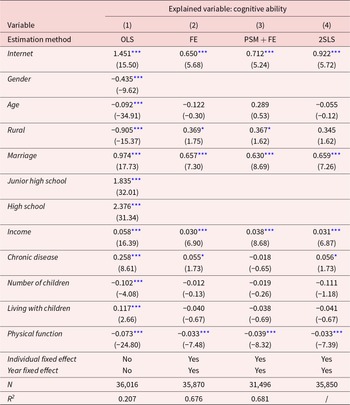
The fixed effects model includes individual and year dummy variables, forming a two-way fixed effects framework. Column (1) of Table 2 presents OLS baseline results, while Column (2) adds fixed effects, showing that internet use positively impacts cognitive abilities, significant at the 0.01 level. However, potential endogeneity arises from self-selection (e.g. higher-educated individuals are more likely to use the internet), reverse causality (cognitively stronger individuals may adopt internet use more readily) and omitted variables. To address these, the study combines propensity score matching (PSM) with fixed effects. Using a Logit model, individuals are matched within common support, and unmatched samples are excluded. Column (3) of Table 2 shows that the positive effect of internet use remains robust, though balance tests suggest residual endogeneity related to education. Instrumental variable estimation further mitigates endogeneity. Community internet usage and broadband installation rates serve as instruments, capturing infrastructure and network effects while maintaining exogeneity. Column (4) of Table 2 confirms the robustness of results, with a strong first-stage F-value (123.19) and no over-identification issues (Sargan p-value = 0.972). Internet use consistently enhances cognitive abilities, even after addressing potential biases.
Regression analysis results
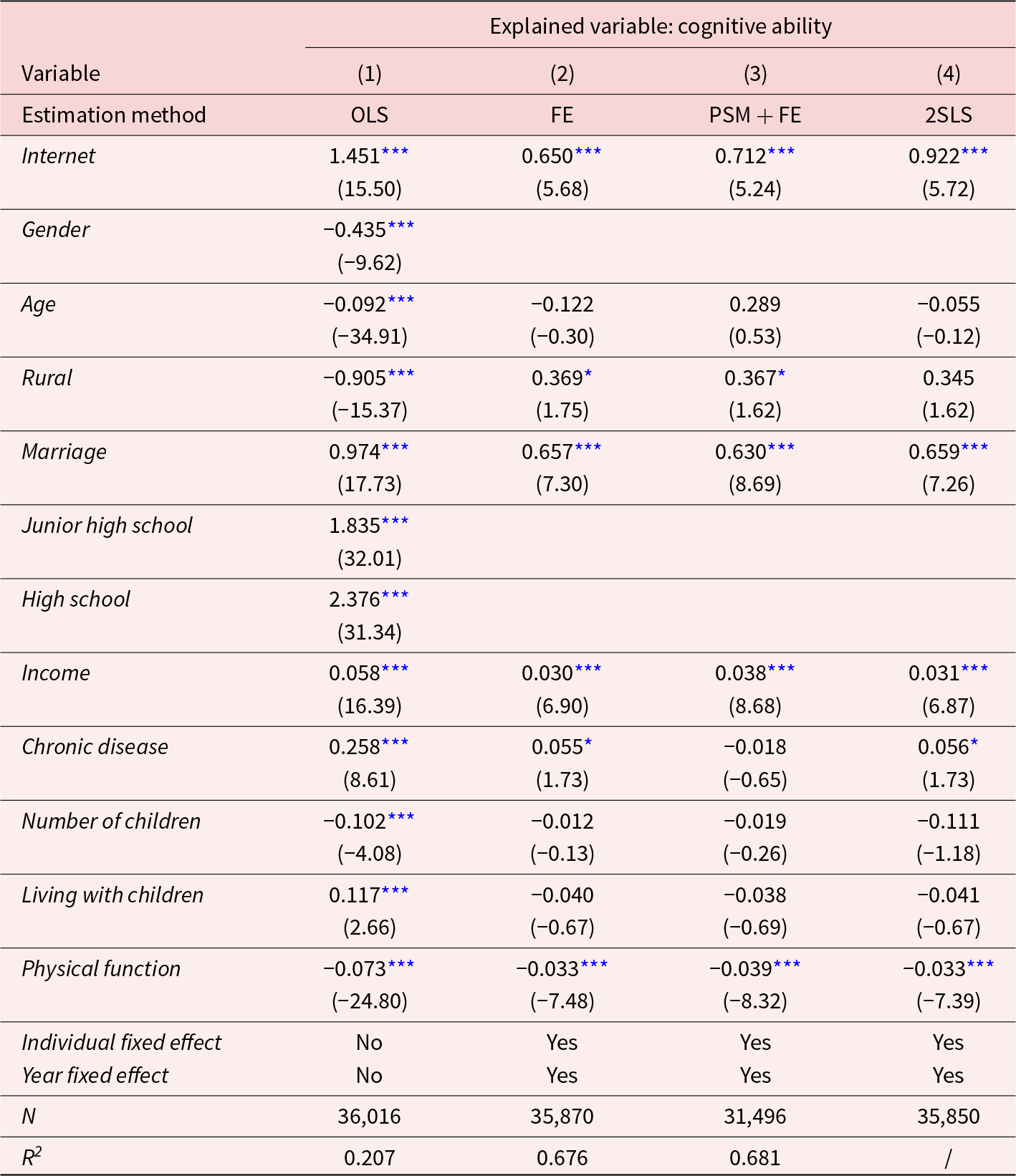
Notes: All standard errors used in this article are robust.
*** Further, ** and *, respectively, indicate significance at the 0.01, 0.05 and 0.10 levels, with t-statistics in parentheses, unless otherwise specified.
Causal identification based on machine learning
This study combines both traditional econometric methods (OLS, fixed effects and IV) with modern machine learning techniques (GRF) to strengthen the credibility of causal inference. Instead of picking one baseline model and using the others as robustness checks, we take a comparative approach to show the strengths and weaknesses of each method. The IV method identifies local average treatment effects (LATE) under the assumption of valid instruments, while the GRF method provides individual-level treatment effect estimates and captures effect heterogeneity. We give equal analytical attention to both methods: the IV method offers strong internal validity and interpretability, while the GRF method adds more flexibility and external validity to the analysis.
Traditional regression models, including OLS, fixed effects and IV approaches, show that internet use significantly enhances cognitive abilities in older adults. However, OLS and fixed effects fail to address endogeneity, particularly reverse causality, while IV methods rely on strong, unverifiable assumptions of exogeneity. To overcome these limitations, this study employs GRFs, a machine learning method that provides robust causal inference by estimating heterogeneous treatment effects (Athey and Imbens Reference Athey and Imbens2016; Knittel and Stolper Reference Knittel and Stolper2019). Unlike traditional models, GRFs diminish the emphasis on estimating equation coefficients, focusing more on accurate predictions of the dependent variable. This allows for more precise counterfactual predictions using existing data, and, thus, causal effects can be computed by comparing actual observations to counterfactual predictions (Ejlskov et al. Reference Ejlskov, Wulff, Bøggild, Kuh and Stafford2018; Li et al. Reference Li, Luo, Reangsing and Schneider2022; Lin et al. Reference Lin, Wu, He and Fang2023).
Counterfactual simulation
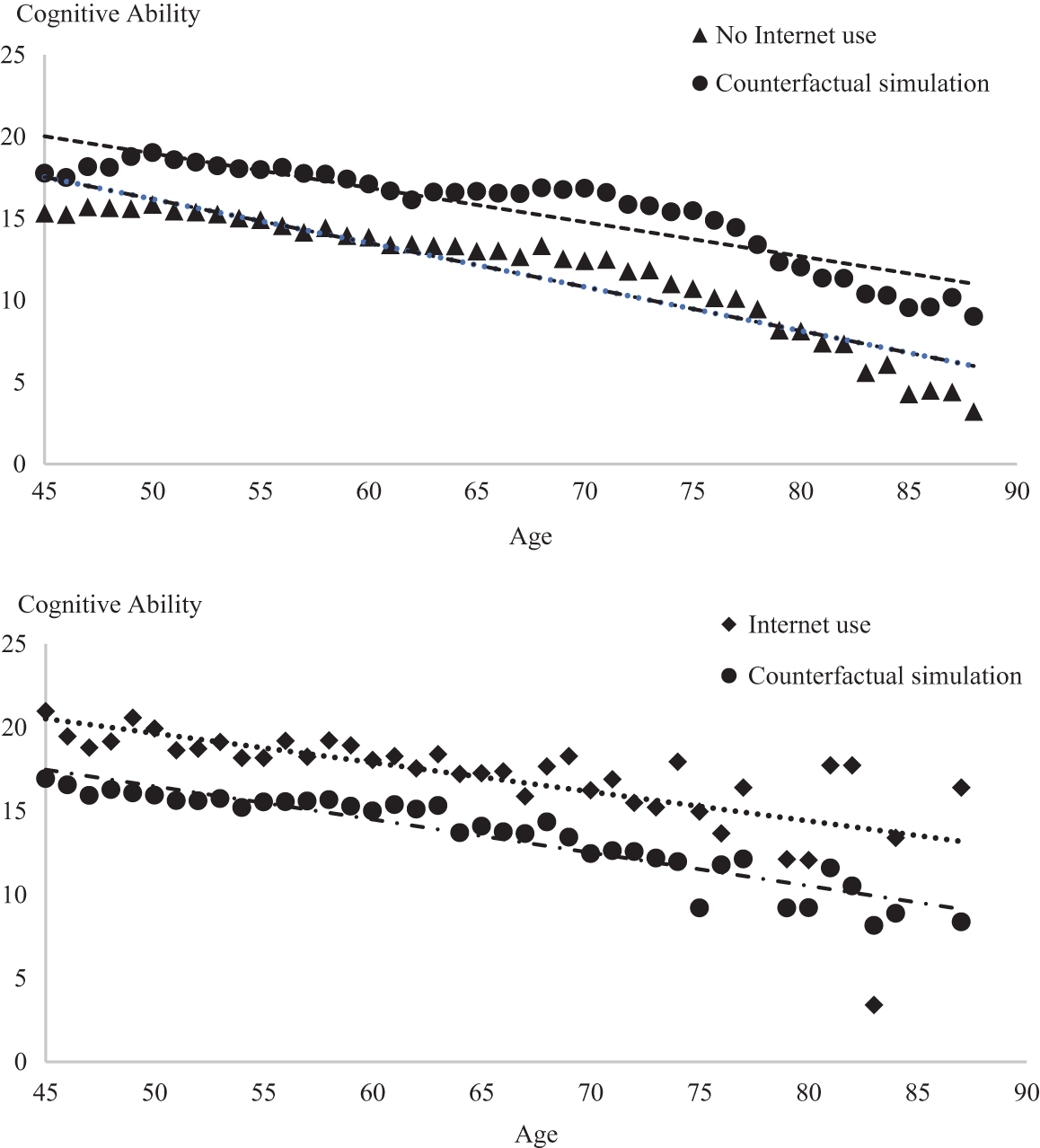
This study employs random forests to model counterfactual scenarios based on respondent characteristics, providing a nuanced comparison of cognitive abilities under two conditions: internet use and non-use. Figure 1 illustrates these simulations, highlighting a marked cognitive decline in older adults, particularly beyond age 60. The left side of the figure demonstrates that non-users would experience significant cognitive gains if they adopted internet use, while the right side shows a substantial decline in cognitive abilities for current users if they ceased internet use. These patterns underscore the positive impact of internet use on mitigating age-related cognitive decline. The comparison between users and non-users also reveals that internet users consistently exhibit higher cognitive abilities and slower decline rates. This suggests inherent differences in cognitive capacity, further affirming the role of reverse causality and other endogeneity issues.
Counterfactual simulation.

Table 3 quantifies these findings, indicating that internet use boosts cognitive abilities by approximately 16 per cent compared to non-use. Conversely, non-users experience a 24 per cent deficit relative to their potential cognitive capacity if they were to adopt internet use. These results underscore the significant role of internet use as a protective factor against cognitive decline. To ensure robust model performance, the study employs tenfold cross-validation, a rigorous method that divides the sample into subsamples for iterative validation. This process minimizes prediction error and enhances the accuracy of counterfactual estimates, with consistently reliable results across multiple iterations.
Average treatment effect estimates based on counterfactual predictions

Generalized random forest results
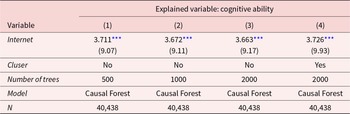
In constructing the GRF model, this study begins by incorporating respondent characteristics to identify key predictors, reporting their variable importance. Variables with importance below the average are excluded, and the model is recalibrated. This process enhances the accuracy of the estimates by removing predictors with weak explanatory power. Additionally, as random forests are ensemble methods, the number of decision trees plays a crucial role in model performance. Too few trees can compromise accuracy and introduce bias (Athey et al. Reference Athey, Tibshirani and Wager2019). To address this, the study tests different tree counts and employs the clustering method proposed by Athey and Wager (Reference Athey and Wager2019) to account for heterogeneity across groups.
Table 4 shows that with the increase in the number of decision trees, the average treatment effect remains around 3.7 with little change in t-values, indicating that the selected number of decision trees meets accuracy requirements. Column (4) presents results after applying the clustering method (Athey and Wager Reference Athey and Wager2019), showing that internet use significantly improves cognitive scores by 3.726 points. These GRF estimates exceed those from the IV model due to the LATE nature of IV, which offers strong internal validity but limited external validity, potentially underestimating the broader impact of internet use. In contrast, GRF captures a more comprehensive effect, aligning better with the study’s context. Furthermore, GRF parameter estimates yield significantly higher t-values compared to fixed effects and IV models, indicating greater precision. Overall, GRF provides more robust and reliable estimates than traditional regression approaches.
Generalized random forest results
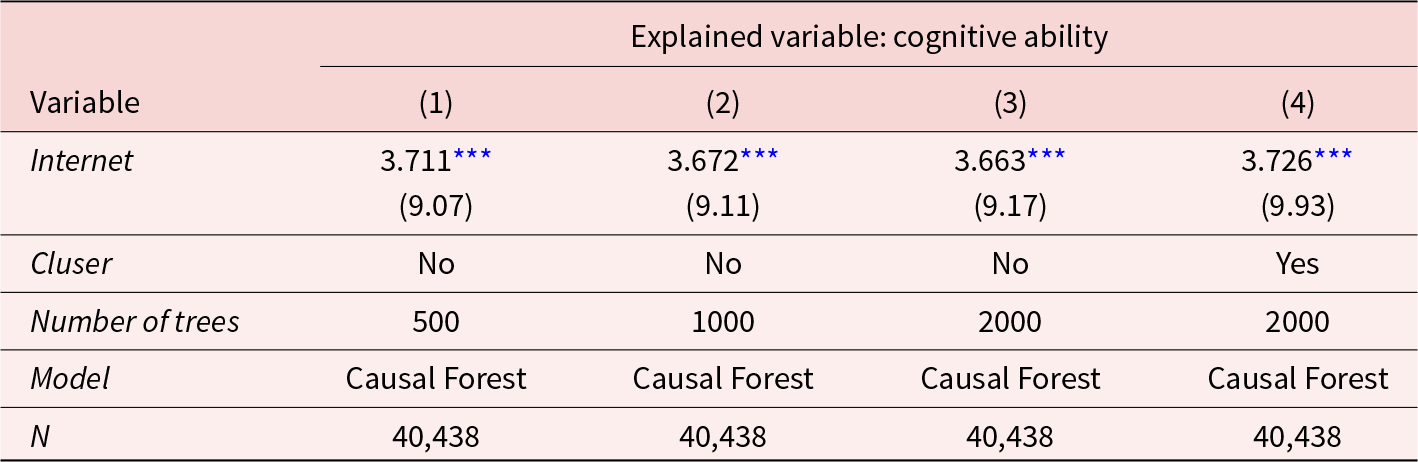
* P < 0.1, **P < 0.05, ***P < 0.01.
Heterogeneity analysis
Heterogeneity test
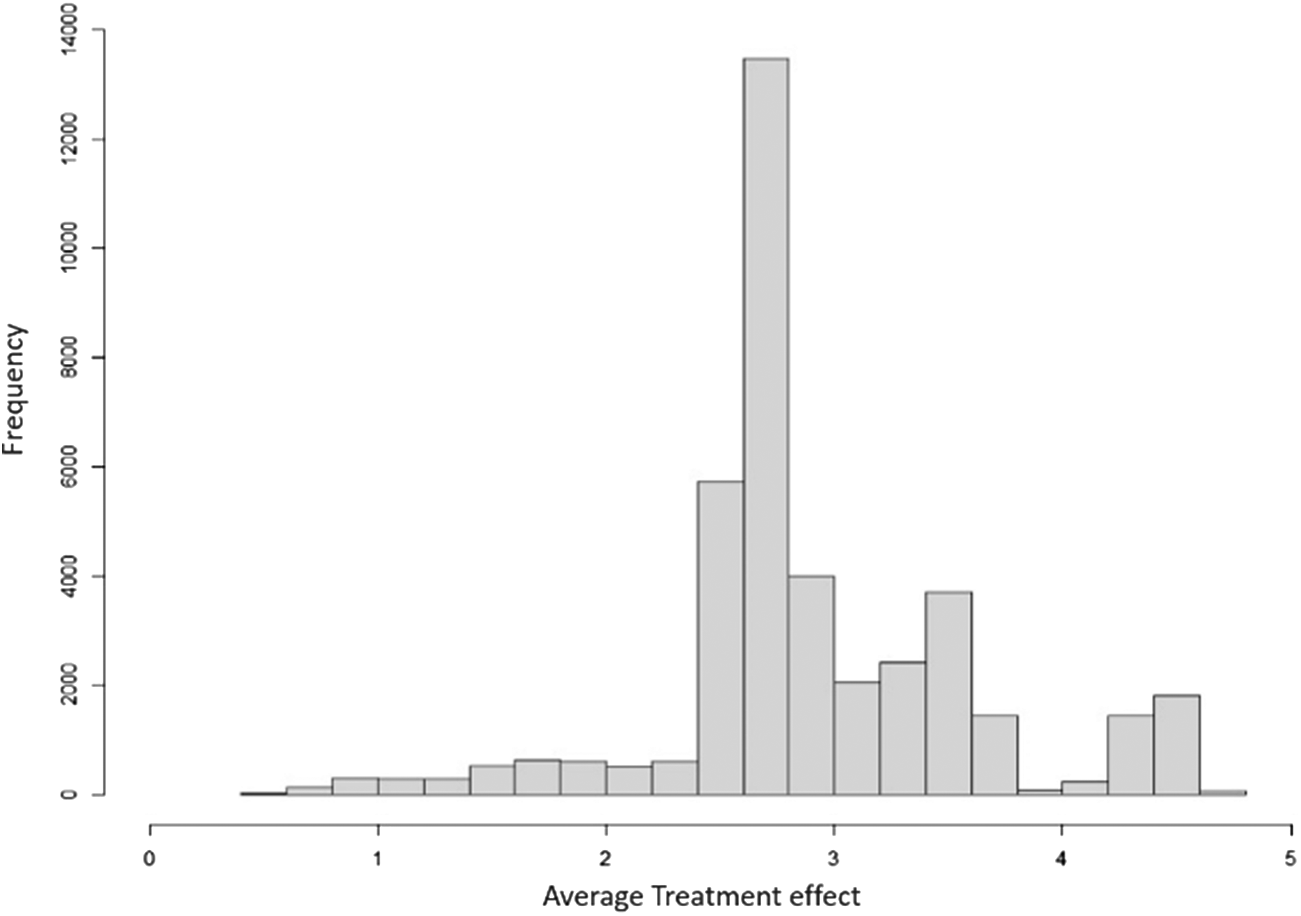
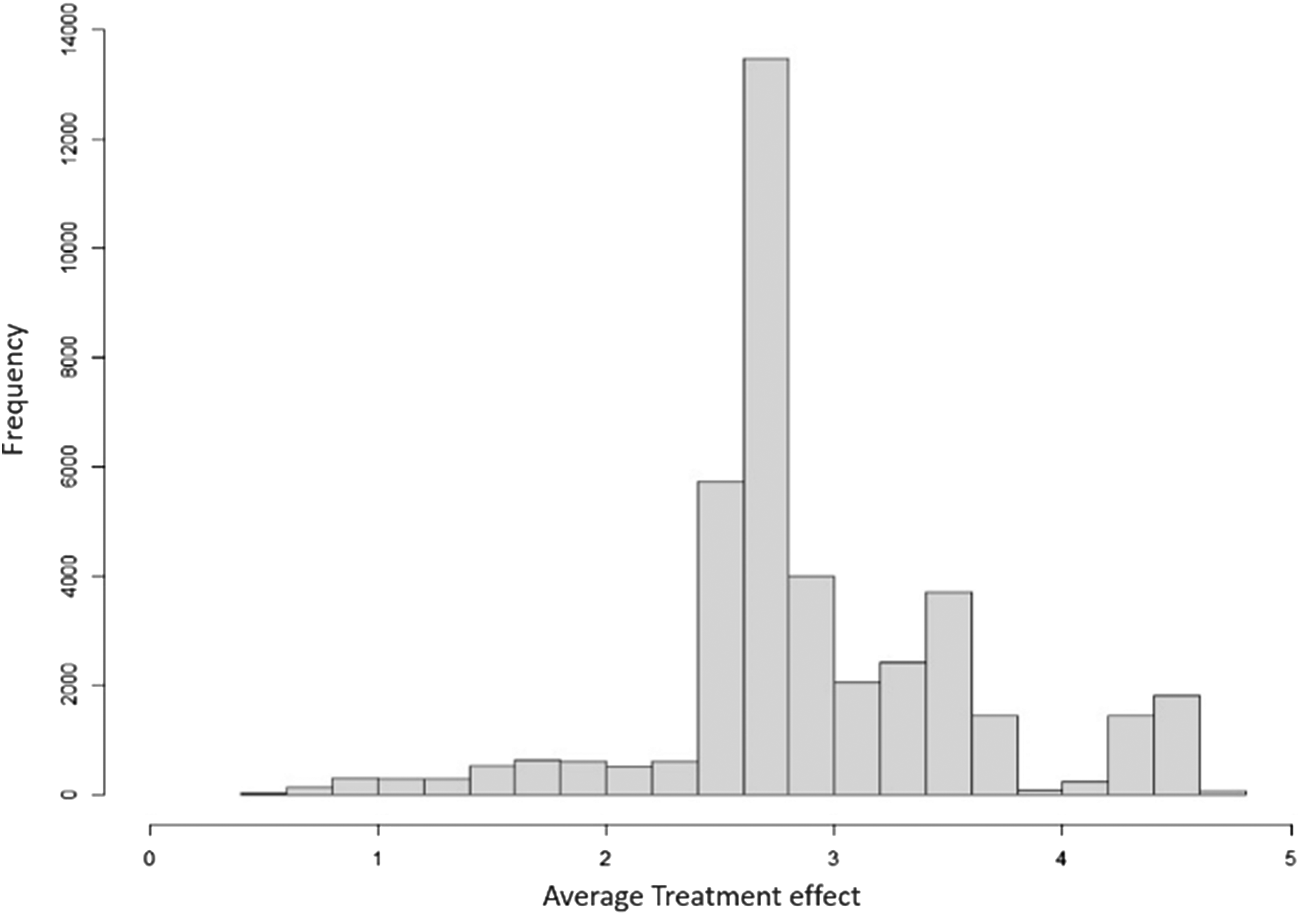
Traditional linear regression, based on limited data and parametric settings, typically assumes that the average treatment effect is constant, which does not sufficiently consider the heterogeneity of individual treatment effects. The GRF model, however, allows for estimating the average treatment effect for individual subjects and uses clustering to obtain the average effect estimate for the entire sample. Figure 2 displays the distribution of the estimated average treatment effects of internet use on cognitive abilities. It can be observed that most sample average treatment effects are concentrated around 2.7, but the overall range of estimates varies from 0.6 to 5.0, which visually suggests that the impact of internet use on cognitive abilities exhibits significant heterogeneity across different individuals.
Distribution of average treatment effect estimates for internet use.
Further, this article employs the ‘optimal linear prediction method’ proposed by Chernozhukov et al. (Reference Chernozhukov, Demirer, Duflo and Fernandez-Val2018) to test for heterogeneity. The results in Table 5 show that, regardless of whether clustering is applied, the coefficient of  ${D_i}$ is significantly positive, indicating significant differences in the impact of internet use on the cognitive abilities of older adults.
Heterogeneity test
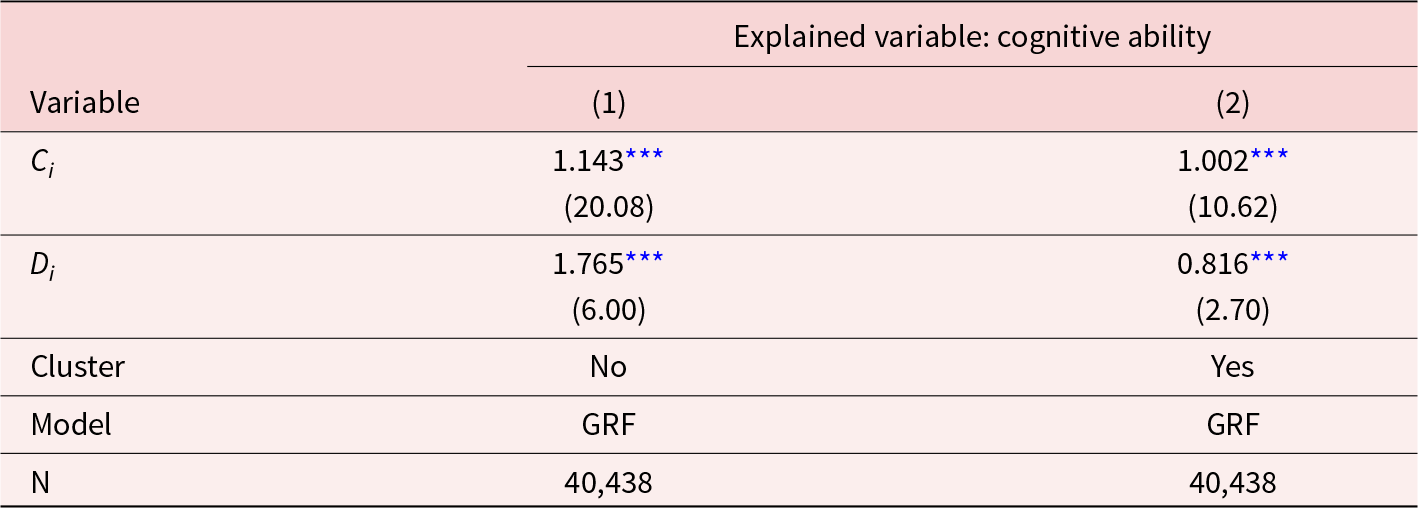
* P < 0.1, **P < 0.05, ***P < 0.01.
Heterogeneity analysis
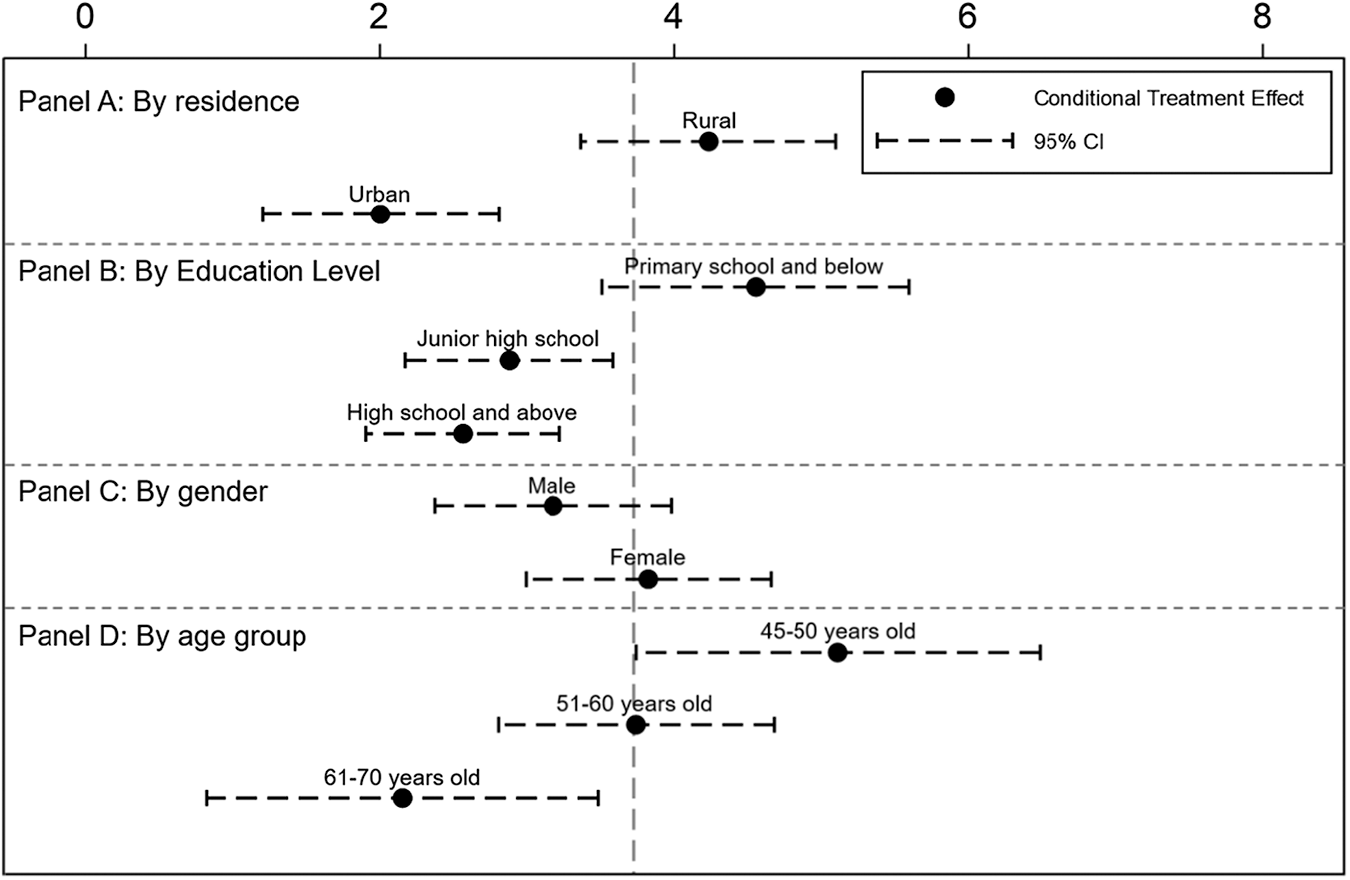
In contrast to traditional linear regression, which analyses heterogeneity through grouping or interaction terms, the GRF model can directly estimate the average treatment effects for different sample groups, facilitating more precise heterogeneity analysis. This article specifically selects variables of interest such as urban/rural residence, education level, gender and age for heterogeneity estimation, with the results reported in Figure 3.
Heterogeneity test.
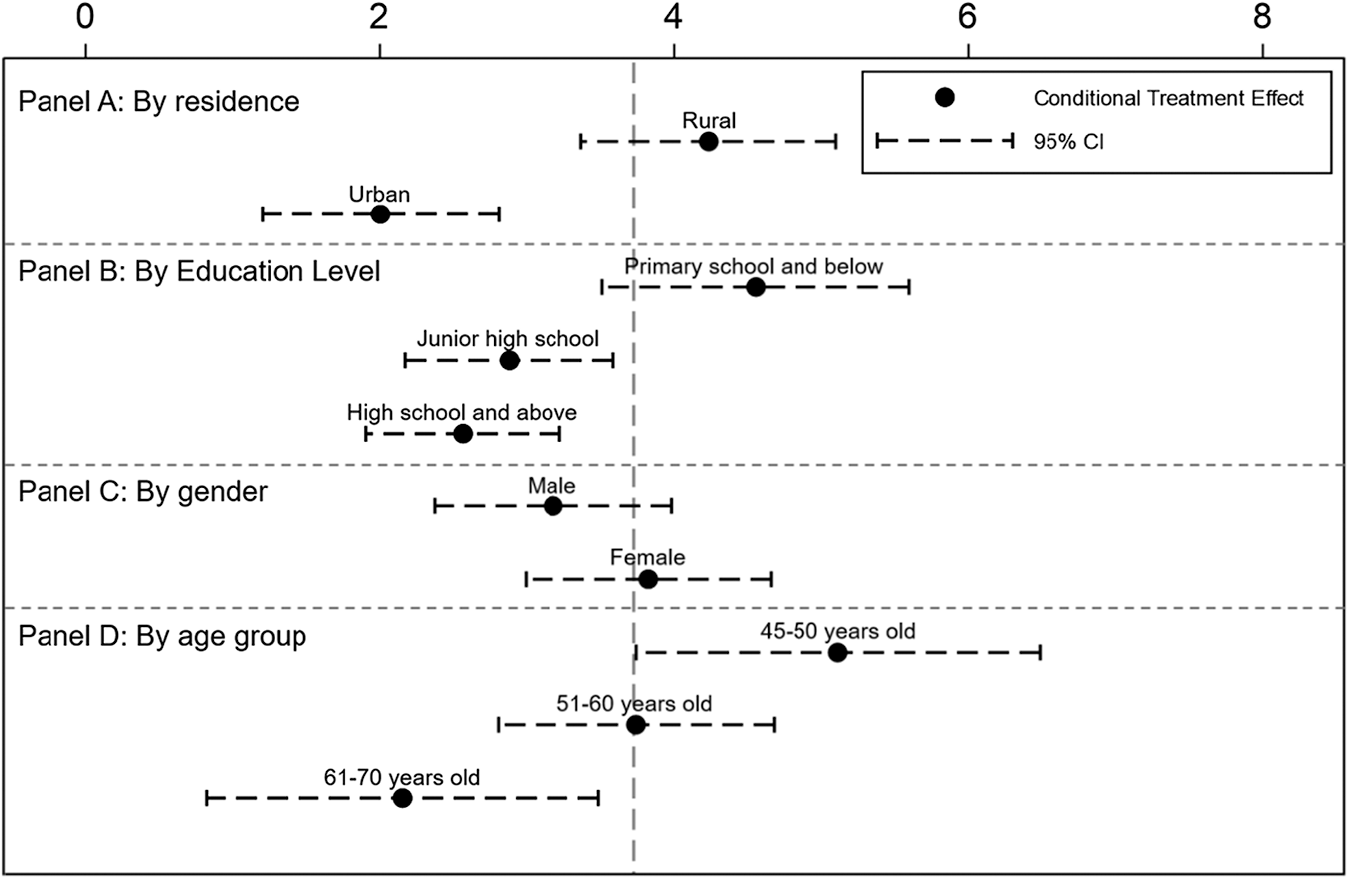
The analysis reveals that internet use provides greater cognitive benefits to rural older adults compared to their urban counterparts (Panel A). This disparity likely stems from the richer social environments and better infrastructure in urban areas, which already support cognitive engagement. In contrast, the internet offers rural older adults a vital channel for mental stimulation, significantly enhancing their cognitive outcomes. Panel B indicates that the cognitive gains from internet use are more pronounced among individuals with lower education levels. Those with higher education already possess greater cognitive reserves, limiting the incremental benefits. Conversely, less-educated individuals experience substantial cognitive improvements, as the internet serves as a key source of cognitive stimulation. Panel C highlights minimal gender differences, with slightly stronger cognitive gains observed in women, suggesting broadly similar benefits across genders. Finally, Panel D shows that cognitive improvements are most significant when internet use begins in middle age (45–60). This may be due to a greater capacity for learning and higher internet usage frequency in this group, as older individuals (61–70) generally exhibit reduced adaptability to new technologies, resulting in smaller cognitive gains.
Mechanism analysis
The empirical research confirms the positive impact of internet use on cognitive abilities among older Chinese adults. Based on estimates from the GRF model, internet use has been shown to improve older adults’ cognitive abilities by an average of 28 per cent. How is this improvement achieved? The article next discusses the potential underlying mechanisms suggested in the theoretical hypotheses section – social interaction, stress levels and health behaviours – using data. For social interaction, the study considers involvement in social activities (total involvement in activities such as playing mahjong or cards, dancing or exercising, participating in club activities, volunteering and attending classes or training over the past month, with each activity scored 1 point, total score = 5) and social engagement (whether they visited friends or socialized in the past month, scored as 1). For stress levels, the article uses depression (based on related depression scale questions, total score = 24) and life satisfaction (total score = 5) as characteristic variables. For health behaviours, current smoking (yes = 1) and drinking habits (frequency of drinking in the past year, 1 = does not drink, 2 = less than once a month, 3 = more than once a month) are used as proxy variables. The article first verifies the impact of mechanism variables on cognitive abilities using linear regression, then tests whether internet use affects these mechanism variables using the GRF model. This approach effectively combines the advantages of traditional linear econometric methods and machine learning, offering better interpretative power for mechanism analysis.
Panel A of Table 6 shows that all six variables significantly affect cognitive abilities, highlighting the roles of increased social interaction, reduced stress and healthier behaviours. Panel B further demonstrates that internet use significantly boosts social activities and engagement, aligning with prior findings (Cotten et al. Reference Cotten, Anderson and McCullough2013; Ejlskov et al. Reference Ejlskov, Wulff, Bøggild, Kuh and Stafford2018). By connecting older adults to broader social networks, the internet mitigates isolation and fosters cognitive engagement (Cai Reference Cai2022). Additionally, internet use reduces depression and enhances life satisfaction, supporting its role in stress reduction (Nilsen et al. Reference Nilsen, Andel, Fors, Meinow, Darin Mattsson and Kåreholt2014; Turner et al. Reference Turner, James, Capuano, Aggarwal and Barnes2017; Lu and Kandilov Reference Lu and Kandilov2021). This stress relief complements social interaction, collectively preserving cognitive health as suggested by the ‘use it or lose it’ hypothesis. However, internet use shows no significant impact on smoking and drinking habits, suggesting that health behaviours play a limited role in cognitive improvements for older adults through digital engagement. This finding aligns with mixed evidence in the literature (Maher et al. Reference Maher, Lewis, Ferrar, Marshall, De Bourdeaudhuij and Vandelanotte2014), that is, the health behaviour mechanism may not play a role or may play a small role in the cognitive improvement of middle-aged and older adults caused by internet use.
Mechanism test

* P < 0.1, **P < 0.05, ***P < 0.01.
Further analysis
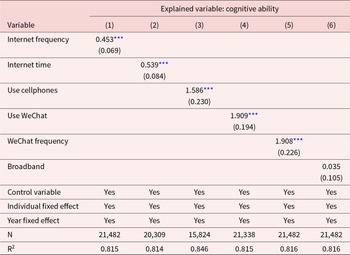
To address the limitations of using a binary indicator for internet usage, we further explore the effects on cognitive ability of internet usage frequency (internet frequency) and duration (internet time). Table 7 shows a significant positive relationship between internet usage frequency and cognitive ability (Column 1), as well as between the amount of time spent online and improved cognitive ability (Column 2). These findings suggest that both frequent and prolonged internet usage provide valuable information and stimulation, which can enhance cognitive ability.
Further analysis
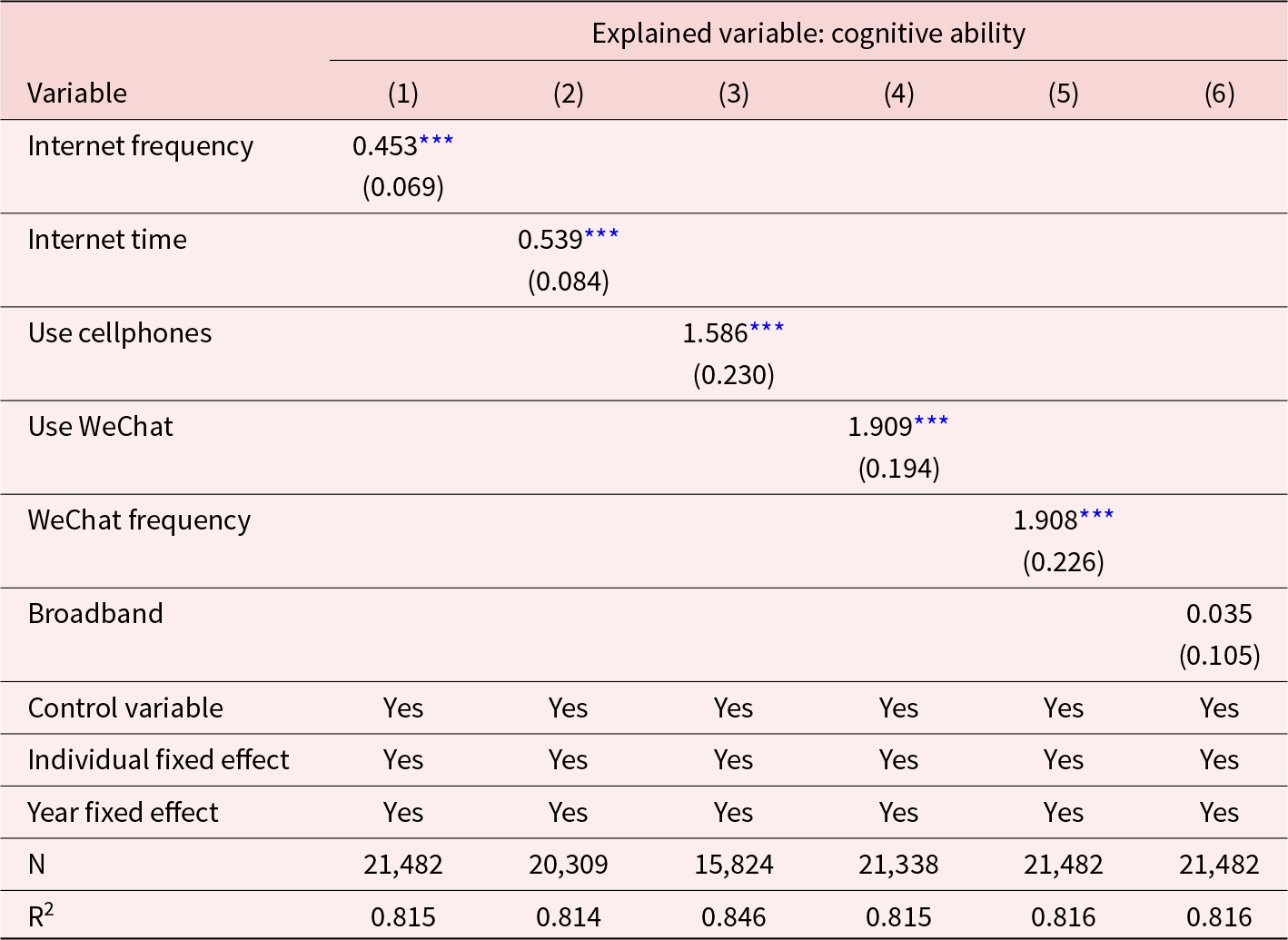
* P < 0.1, **P < 0.05, ***P < 0.01.
With the rapid expansion of mobile internet, the penetration of mobile internet tools has continued to rise. Building on survey items related to mobile internet usage, we extend our analysis to examine its potential impact on cognitive ability, particularly considering how smartphones and social media platforms may influence cognitive function among older adults. In Columns (3) to (6), we include indicators for cellphone use, WeChat use, WeChat usage frequency and broadband access. The results show that cellphone use is significantly and positively associated with cognitive ability (Column 3), as is WeChat use (Column 4). Even more, frequent WeChat use (Column 5) is associated with better cognitive performance. These findings suggest that mobile internet tools – especially social platforms like WeChat – may enhance cognitive ability by facilitating information exchange, social interaction and cognitive stimulation. In contrast, broadband access alone does not show a significant effect (Column 6), indicating that it is not merely the availability of digital infrastructure but the active engagement with mobile internet tools that matters for cognitive outcomes.
Discussion
This study provides robust empirical evidence that internet use significantly enhances cognitive abilities among middle-aged and older adults in China, addressing critical gaps in causal inference and heterogeneity through advanced methodologies. The regression analyses, including fixed effects and IV approaches, confirm a strong positive association between internet use and cognitive performance, even after rigorously addressing endogeneity from self-selection and reverse causality. The IV estimates, leveraging community-level internet infrastructure as exogenous instruments, further validate these findings, with first-stage F-statistics exceeding conventional thresholds, underscoring the robustness of the causal interpretation. These results align with the cognitive reserve hypothesis (Stern Reference Stern2002) and the ‘use it or lose it’ paradigm (Salthouse Reference Salthouse2006), suggesting that internet engagement acts as a dynamic cognitive stimulant, particularly for populations with limited access to traditional intellectual resources.
The integration of GRF into causal inference represents a methodological leap, offering granular insights into heterogeneous treatment effects that traditional linear models might obscure. The GRF estimates reveal that the cognitive benefits of internet use are not uniform but vary substantially across demographic groups, with rural residents, less-educated individuals and those adopting internet use in middle age experiencing disproportionately larger gains. This heterogeneity underscores the internet’s role as a social equalizer in ageing societies, bridging gaps exacerbated by geographic isolation and educational disparities. The counterfactual simulations further illustrate that non-users could achieve a 24 per cent cognitive improvement by adopting internet use, while current users risk significant decline if they disengage. These findings resonate with cross-national studies highlighting digital exclusion as a critical risk factor for cognitive impairment (Schlomann et al. Reference Schlomann, Seifert, Zank, Woopen and Rietz2020), yet uniquely emphasize the transformative potential of digital inclusion in developing contexts like China.
Mechanism analyses elucidate the pathways through which internet use preserves cognition. Social interaction emerges as a central mediator, consistent with Berkman’s (Reference Berkman2000) social integration theory, where platforms like WeChat facilitate information exchange and emotional support, mitigating the isolation that is common among rural and mobility-limited older adults (Cai Reference Cai2022). Stress reduction, another key mechanism, aligns with Sandi’s (Reference Sandi2013) inverted U-shaped model of stress and cognition; internet use appears to alleviate chronic stress by fostering social connectivity and life satisfaction, creating an optimal cognitive environment. However, the absence of significant effects on health behaviours – such as smoking or drinking – challenges assumptions that digital engagement indirectly improves cognition through lifestyle changes (Anstey et al. Reference Anstey, von Sanden, Salim and O’Kearney2007). Instead, our results suggest that cognitive benefits derive directly from the cognitive stimulation inherent in digital participation, emphasizing the primacy of active engagement over passive infrastructure access.
Further analyses deepen these insights by dissecting the nuances of digital engagement. Frequent and prolonged internet use, as well as active utilization of mobile tools like smartphones and WeChat, correlate strongly with enhanced cognitive performance, whereas mere broadband availability shows no effect. This underscores the importance of quality over quantity in digital participation, particularly in contexts where mobile platforms dominate daily interactions. The prominence of WeChat, a ubiquitous social media app in China, highlights how culturally embedded technologies can uniquely foster cognitive resilience through interactive and habitual use. These findings extend prior experimental studies (Chan et al. Reference Chan, Haber, Drew and Park2016) by demonstrating real-world applicability and scalability, critical for policy makers aiming to design targeted interventions.
While this study underscores the cognitive benefits of internet use, it also cautions against over-simplified assumptions about digital engagement. Moderate use may serve as cognitive stimulation, but excessive or addictive use, particularly in the absence of meaningful social interaction, could prove counter-productive (Xu et al. Reference Xu, Zeng, Dong, Zheng and Si2023). This duality underscores that policy makers must prioritize context-sensitive digital inclusion strategies that balance accessibility, meaningful engagement and risk mitigation. In China, where rural–urban disparities and late-life digital adoption intersect, infrastructure expansion alone is insufficient; programmes should integrate digital literacy training into community health initiatives, leveraging intergenerational mentoring to reduce technology anxiety (Seifert et al. Reference Seifert, Cotten and Xie2021) and foster confidence among older adults. For instance, pairing seniors with younger volunteers, as seen in Singapore’s ‘Digital Readiness Blueprint’, could institutionalize support while promoting lifelong learning. Simultaneously, age-friendly interface designs, such as simplified app layouts and voice-assisted navigation, would lower barriers to entry, ensuring equitable access to cognitive-enhancing tools like WeChat, which our study identifies as a key driver of social interaction and stress reduction. To address risks of excessive or passive use, public campaigns could promote balanced digital habits, emphasizing active participation (e.g. social connectivity, online learning) over compulsive scrolling, while regulatory measures (e.g. verified health portals and anti-misinformation frameworks) would safeguard vulnerable users.
Despite its contributions, this study has several limitations. First, while CHARLS data provide nationally representative coverage, reliance on self-reported cognitive tasks may lack sensitivity to domain-specific declines, such as executive function or working memory, which neuro-imaging or biomarker-based assessments could better capture (Firth et al. Reference Firth, Torous, Stubbs, Firth, Steiner, Smith, Alvarez-Jimenez, Gleeson, Vancampfort, Armitage and Sarris2019). Second, the observational design, despite rigorous econometric controls, cannot fully eliminate unobserved confounders like genetic predispositions or unmeasured lifestyle factors (e.g. diet, sleep patterns) that may influence both internet use and cognitive trajectories. Third, the study’s focus on China limits generalizability to other developing regions with distinct cultural norms, technological infrastructures or family care dynamics. For example, in countries with lower mobile internet penetration or stronger intergenerational cohabitation traditions, the mechanisms linking digital use to cognition might differ substantially. Additionally, the analysis does not account for the role of digital literacy or technology anxiety, which prior research identifies as critical moderators of digital engagement’s cognitive effects (Wang et al. Reference Wang, Shi and Kong2021). Future studies could adopt longitudinal designs to track how varying usage patterns – such as balanced versus compulsive use – shape cognitive trajectories over time, or employ mixed-methods approaches to explore how subjective experiences of technology adoption influence outcomes. Finally, the rapid evolution of digital tools, including AI-driven platforms and virtual reality, necessitates ongoing research to assess how emerging technologies reshape cognitive ageing pathways. These limitations don’t take away from the study’s value, but they do highlight why continued, cross-disciplinary work is essential to better understand how digital life can support healthy ageing.
Conclusion
This study confirms that internet use serves as a vital resource for preserving cognitive health in ageing populations. By employing rigorous causal inference combined with machine learning techniques, we demonstrate that digital engagement offers widespread cognitive benefits, specifically for rural residents and those with lower levels of education. Mechanism analyses further reveal that these benefits stem primarily from enhanced social interaction and stress reduction, highlighting the internet’s role as a social connector. These findings indicate that the internet can function as a lever to reduce health disparities rather than just as a tool for communication.
Translating these results into policy requires moving beyond simple infrastructure expansion. To truly harvest these cognitive dividends, development strategies must prioritize digital literacy within community health initiatives. Intergenerational programmes that pair older adults with younger mentors offer a practical approach to reducing technology anxiety and fostering confidence. Simultaneously, the development of age-friendly interfaces remains essential to ensure that cognition-enhancing tools are accessible to those with declining physical function. Future research should extend these findings by adopting longitudinal designs to track how specific usage patterns shape cognitive trajectories over time, ensuring that the digital transition supports healthy ageing across all demographic groups.
Supplementary material
The supplementary material for this article can be found at https://doi.org/10.1017/S0144686X26100609.
Author contributions
Jia Tang: conceptualization, methodology, validation, writing original draft, and reviewing and editing. Baokui Shao: software, formal analysis, data curation, writing original draft. Xiaosen Zang: software, formal analysis, investigation, data curation, visualization. Zhenglong Cong: conceptualization, methodology, supervision, project administration, reviewing and editing the draft manuscript.
Competing interests
None.