Heart failure and ventricular assist devices in children
In the United States of America, an estimated 12,000–35,000 children <19 years of age suffer from heart failure. Although representing only a small fraction of the nearly 5 million Americans affected by this syndrome, paediatric heart failure is often more severe, and children are more likely to require surgical, rather than medical, intervention alone.Reference Hsu and Pearson 1 When medical therapy fails, heart transplantation offers the best chance of survival.Reference Rossano, Dipchand and Edwards 2 Nevertheless, transplantation is limited by the timeliness of an available organ from a small donor pool. This limited donor-organ availability contributes to significant mortality (16–17%) among children awaiting heart transplantation.Reference Almond, Thiagarajan and Piercey 3 , Reference Zafar, Castleberry and Khan 4
To support children awaiting heart transplantation, ventricular assist devices are increasingly being used as a so-called bridge-to-transplant option. While initially implanted infrequently and under compassionate (or off-label) use, a significant increase in funding since 2004 has promoted ventricular assist device development as a bridge-to-transplant in children. 5 In 2011, the Berlin Heart EXCOR® device was approved by the Food and Drug Administration for use in children and infants.Reference Fraser, Jaquiss and Rosenthal 6 , Reference Almond, Morales and Blackstone 7 Since that time, the use of ventricular assist devices in the paediatric population has continued to increase, although Berlin Heart EXCOR® remains the only Federal Drug Administration-approved device in children for long-term use as a bridge-to-transplant. In 2014, 33% of heart transplant recipients were bridged with some form of mechanical circulatory support, 29% of which was a ventricular assist device or total artificial heart; this represents the largest number of ventricular assist devices ever reported to the International Society for Heart and Lung Transplantation. Survival over time for children supported with ventricular assist devices or total artificial hearts is comparable to children not requiring mechanical circulatory support before transplant, and is significantly better than for children requiring extracorporeal membrane oxygenation – 84% 5-year survival for children with ventricular assist devices or total artificial hearts, 83% for children without mechanical circulatory support, and 65% for children on extracorporeal membrane oxygenation. In 2016, the Pediatric Interagency Registry for Mechanical Circulatory Support reported an actuarial survival of 86% at 6 months in children supported with ventricular assist devices.Reference Blume, Rosenthal and Rossano 8 In addition, during this era of increased ventricular assist device use, waitlist mortality recorded in the United Network of Organ Sharing database has declined from 16% in 1999–2004 to 8% in 2004–2012.Reference Zafar, Castleberry and Khan 4
As children who are bridged to transplant with ventricular assist devices are achieving survival outcomes comparable to patients not requiring preoperative mechanical circulatory support, the option of ventricular assist device as a bridge-to-transplant provides valuable time for patients who are dependent on a limited donor pool. Not surprisingly, patients who required a ventricular assist device preoperatively were more likely to be hospitalised, require preoperative inotrope and ventilator support, and had more evidence of decreased liver and renal function compared with those not requiring preoperative mechanical circulatory support.Reference Sutcliffe, Pruitt and Cantor 9 As this unique patient population increases, we must continue to optimise their care in order to maximise the benefits of ventricular assist devices as a bridge towards successful heart transplantation. A major part of this care optimisation is continuing to improve medical management through a better understanding of the pharmacokinetics of drugs used to support these patients. There is reason to believe that pharmacokinetics in patients supported by ventricular assist devices may be modified similarly to alterations observed with extracorporeal membrane oxygenation, which is another form of mechanical circulatory support, and owing to organ dysfunction resulting from underlying heart failure, as well as exposure to cardiopulmonary bypass.Reference Upperman, Lacroix and Curley 10 – Reference Apostolakis, Filos, Koletsis and Dougenis 13 This topic warrants further investigation and understanding to ensure that drugs are used safely and effectively in this population.
Pharmacotherapy in ventricular assist device-supported patients
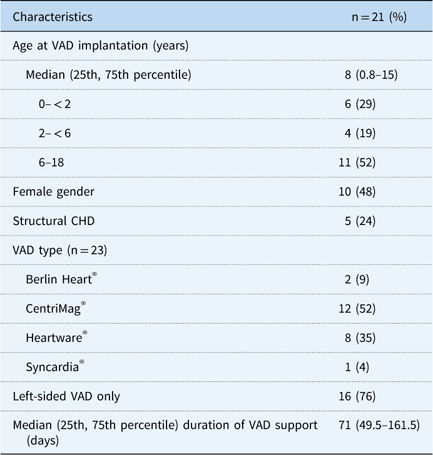
Multiple drugs across several drug classes are routinely used in ventricular assist device-supported patients to complement the device in the management of their heart failure, to treat the side effects associated with ventricular assist device use, and to optimise overall clinical status before heart transplantation.Reference Dang and Naka 14 , Reference Ensor, Paciullo, Cahoon and Nolan 15 An unpublished retrospective review of twenty-one children supported with ventricular assist devices at our institution between 2013 and 2016 found multiple drugs commonly used in this population while their device was in place. The median age of patients in the cohort was 8 years (25th, 75th percentile 0.8, 15.0). In all, 21 patients had a total of 23 ventricular device types, which included Thoratec CentriMag® (52%), HeartWare® (35%), Berlin Heart EXCOR® (9%), and SynCardia Total Artificial Heart® (4%). Two patients supported with two device types underwent initial implantation of a CentriMag® and then were transitioned to a HeartWare® device. The median number of individual drugs received while a ventricular assist device was in place, including enteral and parenteral electrolyte supplements, was 70 (25th, 75th percentile 65.5, 80.5). Patients received drugs from categories including anti-infectives, anticoagulants, steroids, vasopressors/inotropes, anti-hypertensives/vasodilators, neurologic/pain/sedation drugs, and electrolytes/nutrition/gastrointestinal drugs (Table 1). The most commonly used drugs across all categories were acetaminophen, cefuroxime, dexmedetomidine, epinephrine, fentanyl, ketamine, midazolam, potassium chloride, unfractionated heparin, and vancomycin.
Demographics of the cohort of ventricular assist device-supported children at a single institution (2013–2016).
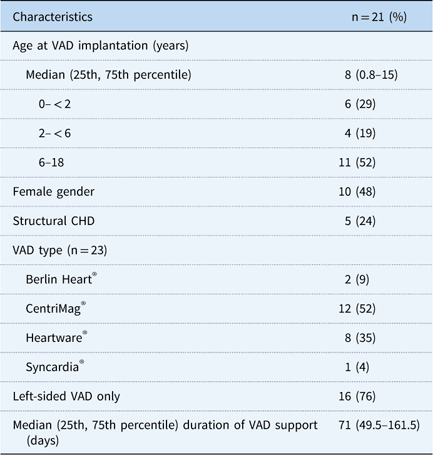
VAD=ventricular assist device
Anti-infectives
Anti-infectives are commonly prescribed in the ventricular assist device population, given the high risk of postoperative infections and significant associated morbidity. According to the Pediatric Interagency Registry for Mechanical Circulatory Support registry, infection is the third most common complication during the first 3 months post implantation – 13.8 per 100 patient-months – and the most common complication after 3 months – 6.1 per 100 patient-months.Reference Blume, Rosenthal and Rossano 8 A total of 25% of these infections were device-related, and the remainder were systemic (bloodstream) infections. Data from a single-centre paediatric cohort study show that ventricular assist device infections lead to a significantly longer duration of mechanical support and longer ICU and hospital length of stay.Reference Fragasso, Ricci and Grutter 16 Common pathogens that must be considered in both prophylactic and empiric treatment of device-related and systemic infections include Staphylococci, Enterococcus species, and Gram-negative bacilli such as Pseudomonas and Candida species.Reference Jarral, Saso and Harling 11 Consideration of methicillin-resistant Staphylococcus aureus is of particular importance. Trauma and poor wound healing at the driveline site provide potential entry for skin flora, and methicillin-resistant S. aureus infection is particularly devastating in this population given its propensity to form biofilms, which renders clearance challenging. In a retrospective single-centre review of 51 children supported with ventricular assist devices, 35 (69%) experienced a total of 92 infections, 33 (36%) of which were considered ventricular assist device-specific – involving the driveline or device pocket – or ventricular assist device-related.Reference Cabrera, Khan and Morales 17 Of the 10 ventricular assist device-specific infections, two (20%) were due to methicillin-resistant S. aureus. A similar study reported on driveline and device pocket infections, mediastinitis, and endocarditis in 60 adults supported with ventricular assist device.Reference Monkowski, Axelrod, Fekete, Hollander, Furukawa and Samuel 18 In this cohort, 12/70 (17%) infections were due to methicillin-resistant S. aureus.
A best evidence topic review from 2012 addressed the question of optimal antimicrobial prophylaxis surrounding ventricular assist device implantation and concluded that a beta-lactam should be used as primary prophylaxis, with the addition of vancomycin if there is an increased risk of methicillin-resistant S. aureus infection.Reference Acharya, Som and Tsui 19 The authors also state that anti-fungal prophylaxis may benefit groups susceptible to fungal infection. In a survey of 21 centres routinely performing left ventricular assist device implantation in adults, wide variability in surgical-infection prophylaxis regimens was reported.Reference Walker, DePestel, Miles and Malani 20 The most common drug combination in use was vancomycin, a cephalosporin or quinolone, rifampin, and fluconazole. According to the 2017 consensus guidelines from the International Society for Heart and Lung Transplantation, perioperative prophylaxis should include “coverage for Staphylococcus sp. and, in colonised patients or in centres with high methicillin-resistant S. aureus prevalence, coverage for methicillin-resistant S. aureus is recommended. Centres should use their local institutional epidemiology data to guide the antibiotic prophylaxis protocol for mechanical circulatory support implant procedures. Routine use of broad-spectrum Gram-negative or fungal prophylaxis is not recommended.”Reference Kusne, Mooney and Danziger-Isakov 21 These antibiotics should be given within 1 hour of the skin incision and continued for no more than 48 hours if there are no ongoing concerns for infection.
Anticoagulants
Ventricular assist device implantation induces a hypercoagulable state by activating the endothelium, haemostatic proteins, fibrinolysis, platelets, and leucocytes, leading to increased thrombin productionReference Massicotte, Bauman, Murray and Almond 22 ; this creates a persistent risk of pump thrombosis and necessitates the use of anticoagulants and antiplatelet agents throughout the duration of ventricular assist device support. Unfortunately, these drugs also inherently cause an increased risk of bleeding, which is the most common complication in the first 3 months post implantation in children (15.1 per 100 patient-months).Reference Blume, Rosenthal and Rossano 8 Given the fine balance between anticoagulation and bleeding, these drug regimens are carefully monitored, and would benefit from more individualised dosing regimens.
Recommendations provided by the 2013 International Society of Heart and Lung Transplantation Guidelines for Mechanical Circulatory Support state that anticoagulation and antiplatelet therapies should be administered with the goal of achieving “device-specific recommended international normalised ratio for warfarin and desired antiplatelet effects.”Reference Feldman, Pamboukian and Teuteberg 23 For adults, anticoagulation guidelines exist for the most commonly used ventricular assist devices, including the Heartmate II® and HeartWare® devices.Reference Baumann Kreuziger 24 In general, unfractionated heparin is the initial choice for anticoagulation once postoperative haemostasis is achieved, except in patients with a history of heparin-induced thrombocytopaenia, in which case a direct thrombin inhibitor such as bivalirudin would be indicated. Warfarin is most frequently used for long-term anticoagulation and is typically started once chest tubes are removed and the patient is able to take enteral medications. An antiplatelet agent such as aspirin or dipyridamole is also added to the regimen once platelet counts have stabilised.
In paediatrics, the Edmonton protocol was developed to guide anticoagulation and antiplatelet therapy for the Berlin Heart EXCOR.Reference Steiner, Bomgaars and Massicotte 25 This protocol uses thromboelastography to adjust therapy in order to reach therapeutic goals. Heparin is initiated postoperatively, followed by dipyridamole at 48 hours. Aspirin is started when chest tubes are removed. Once anticoagulation is stable, patients <1 year of age are transitioned to enoxaparin and children >1 year of age receive warfarin for long-term anticoagulation therapy with an international normalised ratio goal of 2.7–3.5. Despite the availability of this protocol, paediatric anticoagulation practices in general are much more variable between institutions compared with adults,Reference Moffett, Cabrera, Teruya and Bomgaars 26 which is partially because paediatric guidelines exist for only one specific device. As additional devices are increasingly being used in children, physicians typically extrapolate anticoagulation regimens from adult guidelines. In a retrospective review of data from the Pediatric Health Information System database, unfractionated heparin was the most commonly used drug across all age groups in paediatric ventricular assist device patients.Reference Moffett, Cabrera, Teruya and Bomgaars 26 These data also revealed trends towards more use of antiplatelet agents and oral medications over time.
In our experience, current use of antiplatelet agents in paediatrics largely mimics the use of these agents in adults; however, all of these drugs are considered off-label in children.Reference Massicotte, Bauman, Murray and Almond 22 Furthermore, unlike warfarin, which has an established monitoring system, antiplatelet monitoring is not well established in children. Platelet aggregometry is considered the gold standard, but there is no set target range for platelet inhibition, making it difficult to use in guiding clinical management.Reference Adachi, Kostousov, Hensch, Chacon-Portillo and Teruya 27 As mentioned previously, thromboelastography was used in the Edmonton protocol, whereas thromboelastography is the most commonly used monitoring regimen in children supported with ventricular assist devices; this regimen is fraught with limitations, including a lack of validated target ranges, as well as a lack of reproducibility and interpretability of test results.Reference Massicotte, Bauman, Murray and Almond 22 This is certainly an area that warrants more investigation.
Alternative regimens, such as bivalirudin – a direct thrombin inhibitor – and epoprostenol – a synthetic prostacyclin analog – infusions have been used in children who either fail more traditional regimens owing to recurrent thrombosis or develop heparin-induced thrombocytopaenia.Reference Rutledge, Chakravarti, Massicotte, Buchholz, Ross and Joashi 28 In a case series of six children supported with a Berlin Heart EXCOR® device, five were successfully bridged to transplant on this new regimen, whereas one died of multi-organ failure before transplant. The only major complication on the bivalirudin/epoprostenol regimen was a cerebrovascular infarct from which the patient fully recovered.
Notably, although some agents, including unfractionated heparin, warfarin, and argatroban, have paediatric dosing information in their Food and Drug Administration label, none of the drugs discussed in this section have a specific indication for anticoagulation in children supported with ventricular assist devices.Reference Massicotte, Bauman, Murray and Almond 22
Multiple factors, including the age-related physiologic differences in haemostasis in children, require more variability in anticoagulant dosing and management.Reference Monagle, Chan and Goldenberg 29 Clinical outcomes reflect this challenge with a recent retrospective single-centre review of 25 paediatric ventricular assist device patients undergoing 27 device implantations showing stroke in 22% of patients, major bleeding in 32%, and device thrombosis in 22%.Reference Stein, Robbins and Sabati 30 Even patients managed with the device-specific Edmonton Protocol have demonstrated high rates of complications.Reference Walker, DePestel, Miles and Malani 20 Recent data from a prospective, multicentre cohort of 68 children supported by a Berlin Heart EXCOR® ventricular assist device demonstrate major bleeding in 43% of patients, with 24% determined to be probably/definitely related to antithrombotic management, and neurologic events in 28%, with 9% determined to be probably/definitely related to antithrombotic management. Pump changes for suspected thrombosis were performed in 56% of patients. Unfortunately, there is a paucity of data with regard to the safety and timing of resuming anticoagulation in ventricular assist device patients – children or adults – who have experienced a bleeding event. Data in adults with mechanical heart valves suggest that reversal, temporary cessation, and then re-initiation of oral anticoagulation therapy after intracerebral haemorrhage between 1 and 6 days (median 3 days) is safe and the risk of recurrent bleeding is low.Reference Butler and Tait 31 , Reference Romualdi, Micieli, Ageno and Squizzato 32 Additional study in this area would be extremely beneficial, given the common occurrence of bleeding due to the inherent risk of thrombosis.
Miscellaneous drugs
Additional categories of drugs frequently used in ventricular assist device patients include those supporting haemodynamics (including pulmonary vasodilators), haemostasis, and nutrition.Reference Dang and Naka 14 , Reference Ensor, Paciullo, Cahoon and Nolan 15 The inflammatory state induced by ventricular assist device implantation also necessitates steroid use in some patients. Right ventricular support is of particular importance in patients after left ventricular assist device implantation as right ventricular failure is associated with increased mortality.Reference Kormos, Teuteberg and Pagani 33 , Reference Lampert and Teuteberg 34 The need for inotropic support in the immediate postoperative period is common, and preference is often given to those agents that cause pulmonary vasodilation if right ventricular failure is present.Reference Jarral, Saso and Harling 11 For more long-term support, the Phosphodiesterase-5 inhibitor sildenafil is commonly used given its pulmonary vasodilation properties to help wean off inhaled nitric oxide and inotropes.Reference Klodell, Morey and Lobato 35 , Reference Houston, Kalathiya and Hsu 36
When further considering the management of these patients, other potential drug categories of interest include those used for postoperative pain and sedation, as well as to treat co-morbid psychiatric conditions. Although the paediatric literature is extremely limited on these topics, data identified rates of clinically significant anxiety and depression in adult patients post left ventricular assist device implantation between 18 and 23%,Reference Modica, Ferratini and Torri 37 , Reference Brouwers, Denollet and Caliskan 38 which supports the need for further study of the pharmacologic options for patients supported by ventricular assist devices.
Pharmacokinetics in ventricular assist device-supported patients
Pharmacokinetic trials
Extensive literature shows important pharmacokinetic alterations for many forms of mechanical circulatory support – for example extracorporeal membrane oxygenation – and, consequently, standard medication dosing regimens may result in therapeutic failures.Reference Wildschut, Ahsman and Houmes 39 – Reference Watt, Gonzalez and Benjamin 43 Patients supported with ventricular assist devices are exposed to multiple medications that complement the device in heart failure management, treat the side effects associated with ventricular assist device use, and optimise their overall clinical status before heart transplantation.Reference Dang and Naka 14 , Reference Ensor, Paciullo, Cahoon and Nolan 15 Commonly used medications include antibiotics and antifungals for infection prophylaxis and treatment, as well as drugs for thromboprophylaxis, sedation and analgesia, support of right heart function, nutritional supplementation, and treatment of co-morbidities such as renal dysfunction. Despite the prevalence of pharmacotherapy in these patients, pharmacokinetics is extremely understudied in adults with ventricular assist devices, and, to date, no pharmacokinetics trials in children supported with ventricular assist devices have been reported. A single-centre pharmacokinetics study of vancomycin administered per standard of care to 12 adult patients with HeartMate II continuous flow left ventricular assist devices found significantly lower clearance and higher volume of distribution estimates using a 1-compartment pharmacokinetics model when compared with population-based equation estimates used in routine clinical practice.Reference Jennings, Makowski, Chambers and Lanfear 44 The authors concluded that using equations commonly used in routine clinical practice is likely to result in excessive vancomycin dosing and subsequent toxicity in patients supported with ventricular assist devices. The observed pharmacokinetics alterations are consistent with those demonstrated in non-left ventricular assist device patients with heart failure. For vancomycin specifically, decreased clearance in heart failure patients has correlated with both decreased creatinine clearance and decreased left ventricular ejection fraction.Reference Shimamoto, Fukuda and Tominari 45
A second source of pharmacokinetics data in ventricular assist device patients comes from a case report of a 25-year-old woman with a history of dilated cardiomyopathy supported by a HeartWare® left ventricular assist device, a CentriMag® right ventricular assist device, and haemodialysis; this patient received extended-infusion cefepime for a multidrug-resistant Pseudomonas aeruginosa ventricular assist device infection.Reference Heil, Lowery, Thom and Nicolau 46 The authors describe a dosing regimen of 2 g given over 3 hours a day, as compared with the standard infusion time of 30 minutes. 47 With this regimen, cefepime concentrations were maintained above the pharmacodynamic target of four times the minimum inhibitory concentration of the patient’s organism, which is 8 µg/ml on hospital day 178 and 16 µg/ml on hospital day 191, for 50% of the dosing interval. The exception to this was post-dialysis, immediately before the next dose, when concentrations fell below the minimum inhibitory concentration, owing to the fact that haemodialysis removed 82% of the drug. On the basis of their experience with this patient, the authors recommended the extended-dosing regimen of 2 g over 3 hours a day. Extended-infusion cefepime is used commonly to treat P. aeruginosa in critically ill patients to optimise time spent above the minimum inhibitory concentration. This case report did not definitively address whether or not additional pharmacokinetics alterations can be expected owing to the ventricular assist device itself.Reference Nicasio, Ariano and Zelenitsky 48
Although not providing pharmacokinetics data, a pharmacoepidemiologic study described dosing regimens of warfarin before and after implantation of ventricular assist devices in 13 adult patients.Reference Jennings, Brewer and Williams 49 This study found significant intra-individual variability in dosing before and after ventricular assist device implantation, with 7/13 patients requiring postoperative adjustment of their mean weekly dose to maintain the international normalised ratio target of 2–3. Of these seven patients, five required a lower dose of warfarin postoperatively, whereas two needed a higher dose. This study excluded patients taking any additional drugs known to interact with warfarin. On the basis of a pharmacodynamic end point – target international normalised ratio – this study provides another example of the large intra- and inter-individual variability in drug exposure among patients supported with ventricular assist devices. Although variability in warfarin dosing is not specific to the ventricular assist device population, and other potential mechanisms responsible for this variability, including known mutations in the gene encoding the warfarin target VKORC1, were not addressed by the authors, the frequent dose adjustment required after ventricular assist device implantation suggests the need for more warfarin pharmacokinetic studies in this population.
Mechanisms of altered drug disposition
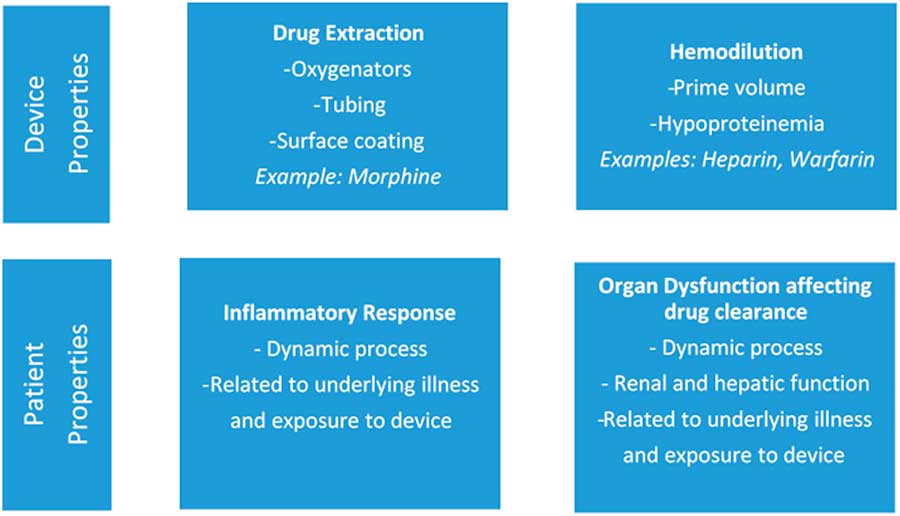
Owing to the lack of pharmacokinetics trials in ventricular assist device-supported patients, population-specific dosing recommendations are limited. In contrast, pharmacokinetics data are expanding greatly for extracorporeal membrane oxygenation, which is another type of mechanical circulatory support. Multiple pharmacokinetics trials in adults and children have demonstrated altered drug disposition during extracorporeal membrane oxygenation, leading to specific dosing recommendations. Although extracorporeal membrane oxygenation and ventricular assist devices are different forms of mechanical circulatory support, there are enough similarities to suggest possible mechanisms that may alter drug disposition in ventricular assist device patients, necessitating further investigation. Patients, including children, supported with extracorporeal membrane oxygenation frequently display an increased drug volume of distribution. This increase occurs via several mechanisms, including (1) drug extraction by the circuit, (2) haemodilution, and (3) physiologic changes related to critical illness/disease state (Fig 1).
Mechanisms of altered drug disposition during mechanical circulatory support. This figure displays the mechanisms of altered drug disposition during mechanical circulatory support and is shown according to device and patient properties.
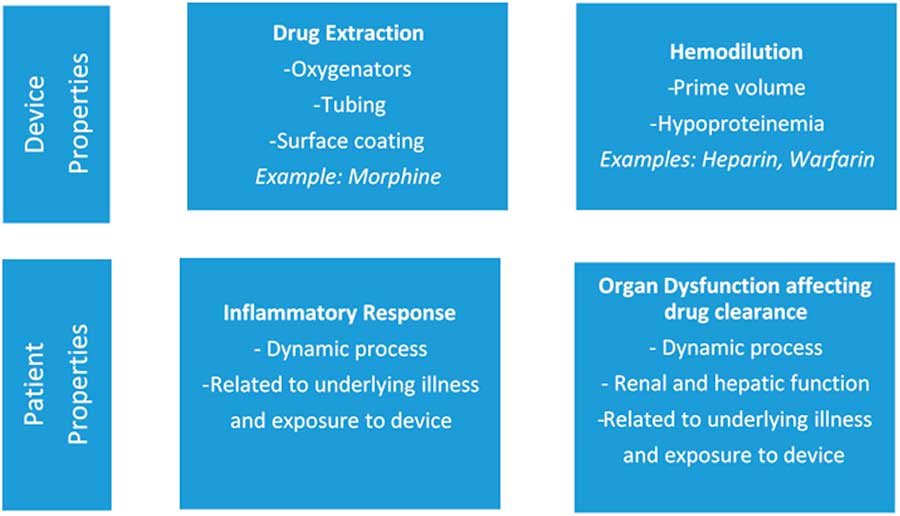
Contact of patient blood with the foreign surface of the extracorporeal membrane oxygenation circuit results in drug extraction, specifically altering the pharmacokinetics of highly lipophilic and protein-bound drugs.Reference Harthan, Buckley, Heger, Fortuna and Mays 41 , Reference Shekar, Roberts and McDonald 42 , Reference Shekar, Roberts and McDonald 50 Although some of this drug extraction is secondary to the oxygenator, which is not part of a ventricular assist device circuit, the circuit tubing itself has also been found to cause drug loss.Reference Preston, Hodge, Riley, Leib-Sargel and Nicol 51 , Reference Preston, Ratliff and Gomez 52 For example, different coatings on the polyvinyl chloride tubing have been shown to affect the degree of morphine loss in the extracorporeal membrane oxygenation circuit, ranging from 41 to 74% after 5 minutes.Reference Preston, Ratliff and Gomez 52 This finding suggests that, depending on the characteristics of the drug and the type of surface coating of the device, some degree of drug loss may occur secondary to the ventricular assist device circuit itself. Ventricular assist device surface coatings usually consist of a thromboresistant heparin, and dedicated ex vivo studies would need to be performed to determine whether drug loss occurs secondary to these particular surfaces. However, independent of surface coatings and the surface area of the circuit tubing, which is variable, one would expect decreased drug extraction with a ventricular assist device compared with extracorporeal membrane oxygenation owing to the lack of an oxygenator.
Haemodilution has the greatest effects on drugs whose distribution is limited to the plasma compartment.Reference Shekar, Roberts and McDonald 42 Examples of such drugs used in patients requiring mechanical circulatory support include large molecules such as heparin, and hydrophilic drugs including aminoglycosides and warfarin. Haemodilution in extracorporeal membrane oxygenation is particularly relevant in infants, where the circuit prime volume may be more than double the native blood volume. 53 However, the priming volumes of ventricular assist devices are significantly smaller than those used in extracorporeal membrane oxygenation. The smallest Berlin EXCOR® pump, for example, requires only a 10-ml prime. 54 In a 3-kg infant, 10 ml would represent only a ~4% increase in circulating volume compared with ~100% increase with a standard extracorporeal membrane oxygenation circuit. For an older child with a continuous flow device such as the CentriMag pump, the prime volume of 31 ml is even less significant when compared with their circulating blood volume. 55 Owing to these relatively smaller prime volumes, haemodilution may play less of a role in expanding volume of distribution in ventricular assist device-supported patients compared with those requiring extracorporeal membrane oxygenation.
In critically ill patients supported with extracorporeal membrane oxygenation, a profound inflammatory response results in capillary leak and oedema that can further increase the volume of distribution.Reference Anderson, Coran, Drongowski, Ha and Bartlett 56 – Reference Seghaye, Grabitz and Duchateau 58 A similar inflammatory response is seen in patients immediately after ventricular assist device implantation. A single-centre study of pro-inflammatory biomarkers in six adult patients before and after left ventricular assist device insertion demonstrated increased peak levels of interleukin-6 and interleukin-8, as well as prolonged time to normalisation after left ventricular assist device, compared with patients who underwent cardiopulmonary bypass surgery alone.Reference Corry, DeLucia and Zhu 59 These findings are probably owing to the ongoing inflammatory stimulus of the ventricular assist device after implantation, whereas the cardiopulmonary bypass circuit is disconnected at the conclusion of surgery. However, patients with ongoing heart failure may also suffer from a heightened inflammatory state at baseline, before ventricular assist device implantation.Reference Petretta, Condorelli and Spinelli 60 As a result, a transient decline in inflammatory response following ventricular assist device implantation has been described in a study of 48 adult patients with NYHA class IV heart failure, who demonstrated a temporary decrease in interleukin-6, tumour necrosis factor alpha, and other inflammatory cytokines following ventricular assist device placement.Reference Clark, Loebe and Potapov 61 Nevertheless, despite this initial decrease in inflammation, cytokine levels rose again and approached pre-implantation levels by 90 days, suggesting that inflammation is a recurrent process after ventricular assist device implantation. In another study comparing patients with stable end-stage heart failure with ventricular assist device recipients, oxidative inflammatory markers and total sequential organ failure assessment scores were initially elevated after ventricular assist device implantation, but both improved to pre-implant levels by 1 month.Reference Caruso, Verde and Campolo 62 On the basis of the available data, the inflammatory response in patients after ventricular assist device implantation appears to be a highly dynamic process that varies over time and that is likely modulated by the preoperative disease state.Reference Petretta, Condorelli and Spinelli 60 Regardless, the inflammatory response is likely to be present in the early postoperative period, and its potential effect on volume of distribution or clearance should be considered when evaluating pharmacokinetics in these patients.Reference Slaviero, Clarke and Rivory 63
Critically ill patients, including those receiving ventricular assist device support, frequently display impaired drug clearance, which is due to dysfunction of drug-eliminating organs such as the kidney and liver. In many cases, this dysfunction may be present preoperatively, secondary to heart failure. Both renal and hepatic function tend to improve after ventricular assist device implantation, owing to better end-organ perfusion and decreased hepatic and central venous congestion that results from increased cardiac output. Nevertheless, this improvement may be preceded by a brief period of worsened function, possibly because of the insult associated with surgery. Studies in sheep have shown initial increases in blood urea nitrogen, serum creatinine, total bilirubin, total protein, and liver enzymes after ventricular assist device implantation, which returned to baseline by post-implantation day 7.Reference Reddy, Goldstein, Pacella, Cattivera, Clark and Magovern 64 In humans, similar findings have been observed, with initial increases in blood urea nitrogen, creatinine, and bilirubin followed by normalisation within 1–2 months post ventricular assist device implantation, even for patients with abnormal preoperative renal and hepatic function.Reference Corry, DeLucia and Zhu 59 , Reference Russell, Rogers and Milano 65 Similarly, in a study of 15 adult ventricular assist device patients requiring preoperative renal replacement therapy, 10 showed significant improvement in all markers of renal function after ventricular assist device implantation and were ultimately weaned off renal support.Reference Demirozu, Etheridge, Radovancevic and Frazier 66 Of the remaining 5 who were not weaned from renal replacement therapy, four died of sepsis with progressive multi-organ failure and one remained critically ill in the hospital at the time of publication.
Hepatic function is similarly affected by ventricular assist device implantation. A total of 23 adult patients with advanced hepatic dysfunction defined as alanine aminotransferase or aspartate transaminase levels five times normal, serum total bilirubin levels three times normal, and/or necessity for a liver biopsy before or during device implantation were followed up after left ventricular assist device implantation.Reference Demirozu, Etheridge, Radovancevic and Frazier 66 Of the 20 patients who survived for more than 1 month postoperatively, all demonstrated significant improvement in aspartate transaminase, alanine aminotransferase, and bilirubin levels compared with preoperative values, yet how these changes affect hepatic function, including drug metabolism and excretion, following ventricular assist device implantation remains unclear.
In an effort to determine which patients are more likely to experience organ recovery after left ventricular assist device implantation, a scoring system has been developed using preoperative total bilirubin or creatinine adjusted for patient age (0.15×age +1.1×[preoperative total bilirubin] or 0.2×age+3.6×[preoperative creatinine]).Reference Imamura, Kinugawa and Shiga 67 Patients with a total bilirubin score >11 or a creatinine score >14.1 were significantly more likely to experience persistently elevated total bilirubin and creatinine levels postoperatively. Furthermore, when combined, the two scores correctly predicted 6-month mortality from multi-organ failure, stratifying patients into low-, intermediate-, and high-risk groups.
The same group developed another scoring system called the TODAI ventricular assist device score after evaluating 59 patients undergoing left ventricular assist device implantation.Reference Imamura, Kinugawa and Shiga 68 Using serum albumin, left-ventricular end-diastolic diameter, and central venous pressure, the score better predicted 1-year mortality in ventricular assist device patients compared with other scoring systems used to assess the risk of ventricular assist device implantation, including Leitz-Miller, Columbia, Seattle, Heart Failure Model, and Acute Physiology and Chronic Health Evaluation II. Whether either scoring system could be used to optimise drug dosing in ventricular assist device patients is not known, but stratification of a ventricular assist device clinical trial population by these scores is likely to greatly facilitate interpretation of the study findings and should be considered. Nonetheless, these scoring systems have been created and validated only for the adult population, so additional caution must be taken into consideration for these scoring systems in children supported with ventricular assist devices.
As a result of the dynamic changes in renal and hepatic function, drug clearance after ventricular assist device implantation may evolve from an immediate postoperative decline to a longer-term period of recovery and potential normalisation. Nevertheless, patients with more severe organ dysfunction before ventricular assist device implantation are at risk for permanent organ dysfunction or failure; therefore, these patients may continue to show alteration of drug metabolism and elimination. Significantly, this body of data largely comprises information on adults; until more paediatric data are published, these data must be interpreted with caution when extrapolating to children.
Ventricular assist devices may also alter drug disposition through an increased volume of distribution, secondary to haemodilution, drug extraction by the circuit, and the postoperative inflammatory response. Implant devices are unlikely to be as affected by factors related to volume of distribution and exposure to circuit surfaces given their relatively smaller size, but this should remain a consideration for the Berlin Heart EXCOR® and Centrimag® devices. Consequently, further investigation into altered drug distribution in ventricular assist device patients is needed.
Conclusions and future directions
Optimised medical and surgical interventions are needed to improve outcomes of children with severe heart failure. Pharmacokinetic and pharmacodynamics methods offer the opportunity to study the significant effects surgical interventions may have on drug exposure, efficacy, and safety. This is particularly important for children supported with ventricular assist devices, who are exposed to multiple drugs, including some with a narrow therapeutic index. Children with heart failure who are supported by ventricular assist devices are a unique patient population that combines the pathophysiology of heart failure, critical illness, and mechanical circulatory support, thereby making predictions about pharmacokinetics alterations challenging. As a result, conducting population-specific pharmacokinetics trials to identify optimal drug doses is essential.
Fortunately, conducting pharmacokinetics studies in this population is feasible. First, the drugs of interest are administered according to the standard of care. Second, ventricular assist device patients frequently require laboratory monitoring, making them very amenable to opportunistic pharmacokinetics sample collection. This strategy combining standard of care drug dosing and opportunistic PK sampling has been successfully used to develop population pharmacokinetics models.Reference Gonzalez, Melloni and Yogev 69 This type of modelling approach would allow for the inclusion of specific ventricular assist device characteristics, such as ventricular assist device type, flow rate, and so on, as well as individual patient physiologic alterations, as covariates in the modelling, and may help predict inter-individual variability in drug exposure. A complementary strategy could also leverage the use of physiologically based pharmacokinetics modelling, an alternate modelling strategy that could accommodate the physiologic alterations associated with ventricular assist device implantation. Following an opportunistic pharmacokinetics trial in ventricular assist device patients, the collected data could be combined with adult trial information to develop a paediatric physiologically based pharmacokinetics model.Reference Hornik, Wu, Edginton, Watt, Cohen-Wolkowiez and Gonzalez 70 Either model type could ultimately be applied to identify optimal dosing associated with different types of ventricular assist devices and different levels of physiologic alterations. Overall, this approach would maximally leverage paediatric opportunistic, adult ventricular assist device and ex vivo ventricular assist device data to minimise the number of ventricular assist device-supported children enrolled in clinical trials.
Acknowledgements
None.
Financial Support
This research received no specific grant from any funding agency or from commercial or not-for-profit sectors. K.D.H. receives salary support for research from the National Center for Advancing Translational Sciences of the National Institutes of Health (UL1TR001117, U01TR001803-01) and from the Gilead Cardiovascular Scholars Program. K.M.W. receives support from the Pediatric Critical Care and Trauma Scientist Development Program (5K12HD047349), the Eunice Kennedy Shriver National Institute of Child Health and Human Development (1K23HD075891), and the United States government for his work in paediatric and neonatal clinical pharmacology (Government Contract HHSN267200700051C, PI: Benjamin under the Best Pharmaceuticals for Children Act). D.G. receives support for research from NICHD (K23HD083465) and the non-profit organisation Thrasher Research Fund (www.thrasherresearch.org). C.P.H. receives support for research from the Eunice Kennedy Shriver National Institute of Child Health and Human Development (1K23HD090239) and the United States government for his work in paediatric and neonatal clinical pharmacology (Government Contract HHSN267200700051C, PI: Benjamin under the Best Pharmaceuticals for Children Act).
Conflicts of Interest
None.
Ethical Standards
This research did not involve human and/or animal experimentation.