


Introduction
Research study participation should reflect patient populations to ensure results are generalizable. Because of inequities in health, health care, and research access, underrepresentation in clinical research remains a problem [Reference Arias, Rogus-Pulia, Kind, Bibbins-Domingo and Helman1]. Warranted mistrust in biomedical research exists among some disenfranchized populations and may contribute to decision-making about research participation. However, it is also critical that engagement strategies, particularly new and emerging strategies, are implemented to expand access to and facilitate research participation for all. A rapidly evolving practice in health care and associated clinical research has been the use of remote methods to engage patients/participants virtually, with the potential to enhance access.
During the COVID-19 pandemic, use of telehealth and telemedicine to provide remote health care skyrocketed as an acceptable alternative to in-person care while remaining compliant with quarantine and stay-at-home orders [Reference Mistry, Shaw and Raffan2]. However, not all populations had the same access to and use of telemedicine [Reference Budhwani, Fujioka and Thomas-Jacques3,Reference Eberly, Kallan and Julien4]. For example, telehealth use for health care was lower among those living in rural versus urban areas in the U.S. during the pandemic [Reference Bin Abdul Baten, Zohora and Siddiqui5]. Lack of access to and more limited use of virtual care has also been observed among other historically underserved groups. For example, Weber and colleagues report 1.2–4.3 times higher COVID-19 care-seeking at in-person venues (i.e., emergency room and office visits) than via telehealth for Black and Hispanic compared to white and Asian populations, and higher in-person care-seeking also among older adults in their New York City patient sample [Reference Weber, Miller, Astha, Janevic and Benn6]. Rodriguez and colleagues examined video versus telephone and in-person visits among different groups, finding lower care by video visits among Spanish-speaking patients compared to English-speaking patients, and also less remote engagement among those living in lower-income and lower-broadband-access areas. Notably, provider and practice-level factors also contributed significantly to these differences in health care delivery, suggesting systemic and access issues on the care provision side (e.g., access for care providers to safe and secure remote connection) need to be considered [Reference Rodriguez, Betancourt, Sequist and Ganguli7]. Such findings have facilitated interest and calls for designing, evaluating, and having remote connection tools and methods that better ensure engagement for all in health care as well as research [Reference Bucher, Chaudhry and Davis8].
Remote research engagement, which we define as human subjects research that engages participants remotely (e.g., remote consent, video conferenced study visits, wearable data collection devices), has been presented as a potential solution to decrease barriers associated with in-person research engagement. In recent years, the landscape of clinical research has been transformed by the integration of remote technologies, offering new opportunities for accessibility and engagement. However, the use of remote technologies in research may exacerbate existing issues in research access and introduce new challenges [Reference Douthit, Kiv, Dwolatzky and Biswas9]. Some have recently explored the experience of engaging participants remotely, identifying the benefits, facilitators, and barriers for remote engagement in a specific study (e.g., convenience of telephone-based cognitive assessment [Reference Dumassais, Grewal, Aubin, O’Connell, Phillips and Wittich10], the challenges of violence experience research conducted remotely [Reference Mahlangu, Machisa, Jewkes, Gibbs, Shai and Sikweyiya11]). Others have highlighted the potential to enhance certain aspects of research implementation by remote means (e.g., digital approaches to community engagement [Reference Tan, Wu and Day12]) or considered barriers and strategies for remote engagement of specific disease populations (e.g., people with dementia [Reference O’Connell, Vellani, Robertson, O’Rourke and McGilton13]). Identifying more universal challenges and facilitators based on varied remote engagement experiences is critical to enhancing access for all to participate in remote research. We sought to understand potential benefits, barriers, and facilitators of remote research engagement by gathering perspectives from numerous clinical translational researchers and research participants across a variety of study types.
Material and methods
Design
The objective was to better understand the use of remote research including study teams’ implementation practices, participant acceptability, and how this might affect participant accessibility to study participation, particularly among populations underrepresented in clinical translational research. To do this, we conducted (1) a survey of clinical research faculty and staff at core institutions affiliated with the Institute of Translational Health Science (ITHS; the clinical translational science award-funded work to facilitate and support clinical translational research throughout the Washington, Wyoming, Alaska, Montana, and Idaho, or WWAMI, region) about use of remote technologies; (2) semi-structured interviews with research teams (i.e., investigators and research staff) who had implemented remote methods and/or technologies; and (3) semi-structured interviews with research participants who completed at least one study using remote methods and/or technologies.
Remote research engagement use survey
The survey link was e-mailed and response prompted from June to August 2022 to investigators and research staff conducting clinical research at core ITHS institutions, including the University of Washington Medical Center (UWMC), Seattle Children’s Research Institute (SCRI) and the Fred Hutch Cancer Center (FHCC). The survey link was also e-mailed to institutional leads of the Northwest Participant Clinical Interactions (NW PCI Network [Reference Baldwin, Hassell and Laukes14]), a collaboration of regional clinical and translational research centers throughout the WWAMI region, and they were encouraged to circulate the survey opportunity to their investigators. The survey included multiple-choice and open-ended questions about the use of and experience with remote technologies for study assessments in research, including types of technologies used, potential barriers to the use of remote technologies, and perceived impact on participant diversity. Participating investigators and staff were given the option of entering a drawing for a $50.00 gift certificate. Survey data were collected and managed using REDCap electronic data capture tools hosted by ITHS. The survey collection was determined to be exempt by the University of Washington Institutional Review Board (IRB) review in March 2022. The survey is provided in supplemental materials.
Semi-structured interviews
Two subgroups within the ITHS, the prior Integrating Special Populations team (focused on increasing clinical research participation across the lifespan) and the Hub Liaison team (providing researchers with resources and connections to conduct better and more efficient clinical translational research), conducted semi-structured interviews focused on understanding the benefits, challenges, and facilitators of remote research engagement. The Integrating Special Populations team conducted interviews with research teams and individual research participants between February and November 2023, using the HIPAA-approved Zoom virtual platform (all research teams and 5 research participants) or via phone (14 research participants). The research teams and corresponding research participants were involved in behavioral and pharmaceutical clinical trials that utilized at least one form of remote engagement including but not limited to remote consenting, intervention delivery (e.g., behavioral intervention), device use, and surveying. Contact information for research participants was obtained from the research teams which were encouraged to identify participants who might be interested in interviews about remote research engagement. Research participants were approached only after receiving permission to be contacted was obtained from the research team. Interviews were all conducted in English, were 30-60 minutes, and were focused on understanding barriers and facilitators for remote research engagement for all. Sociodemographic characteristics were collected as part of the interviews of research participants, with the goal of including diverse perspectives across the lifespan. The Hub Liaison team conducted interviews only with individual researchers, from March 2022 to March 2023 using the HIPAA-approved virtual platform Zoom. These interviews were 30–45 minutes and focused on remote research engagement more broadly, with access for all being only one part of the inquiry. The University of Washington and Seattle Children’s IRBs determined the interviewing as exempt. Interview guides are provided in supplemental materials.
Data analysis
Analysis of the remote research engagement use survey was descriptive and focused on frequencies and percentages for categorical variables. Open-ended responses were summarized and grouped into overarching themes.
Interviews from both groups, researchers/research teams, and research participants, were audio-recorded, professionally transcribed, and de-identified. Interview guides had standardized questions, with probes to elicit additional details and experiences (see supplemental materials). Thematic qualitative analysis was applied to de-identified interview transcripts using the qualitative coding software Dedoose 9.2.12. Two study team members (GP, TS) were trained in coding, analysis, and synthesis and used the interview guides to develop preliminary codebooks. The codebooks were reviewed and iteratively refined by the Integrating Special Populations and Hub Liaison teams, which included experienced qualitative researchers. The revised codebooks were tested, with additional inductive codes being added following the test and approved by each team. Using a consensus approach, all transcripts were systematically coded independently by two coders (GP, TS) using content analysis, with discrepancies resolved by a third coder (KP). Coders met regularly for reconciliation meetings to reach consensus agreement. Once all the transcripts were coded, code reports were exported, and themes were developed across domains to enable interpretation and presentation of the results. Recruitment for interviews was carried out until the teams determined that new themes were no longer appearing in the data and thematic saturation had been reached.
Results
Remote research engagement use survey results
Surveys were completed by 95 individuals from the core ITHS partner institutions, with ten additional individuals responding via outreach in the NW PCI Network. The majority (94/105; 90%) of respondents identified as investigators. Most (74/105; 70%) reported current or past use of remote technology in their clinical research studies. Among these 74 respondents, 17 (23%) reported that most of their studies were conducted without any in-person visits. Among the listed remote research activities in the survey, respondents most reported use of electronic/remote consent (81%), remote patient clinical assessment (43%), and remote delivery of interventions (42%). The latter consisted primarily of delivery of behavioral interventions. Only 22 of these respondents (30%) reported using home specimen collection. Most of these respondents (51/74; 69%) reported encountering barriers when implementing remote methods, with the most common being lack of participant access to necessary infrastructure (59%), the existence of regulatory pathways about research use of remote technology that were confusing or burdensome (55%), and the high cost of the needed technology (45%). Among those reporting using remote technology, nearly half (47%) indicated they would like to use additional remote resources but were limited by cost (53%), lack of an available technology for that research method/practice (44%), or burdensome or nonexistent regulatory pathways for additional remote technology use (32%). When queried about whether the use of remote technology impacted the demographic make-up of their research participants, 28% indicated “yes,” 28% “no” and 45% were “unsure.”
Among the 31/105 (30%) respondents who had not yet used remote technology in research, 55% indicated that remote technology was inappropriate for their studies. High cost (29%), uncertainty of the impact on study design (29%), confusion around regulatory pathways (26%), and lack of remote tools (26%) were the top barriers for those who wished to adopt remote technologies in the future but were not currently.
Interview results
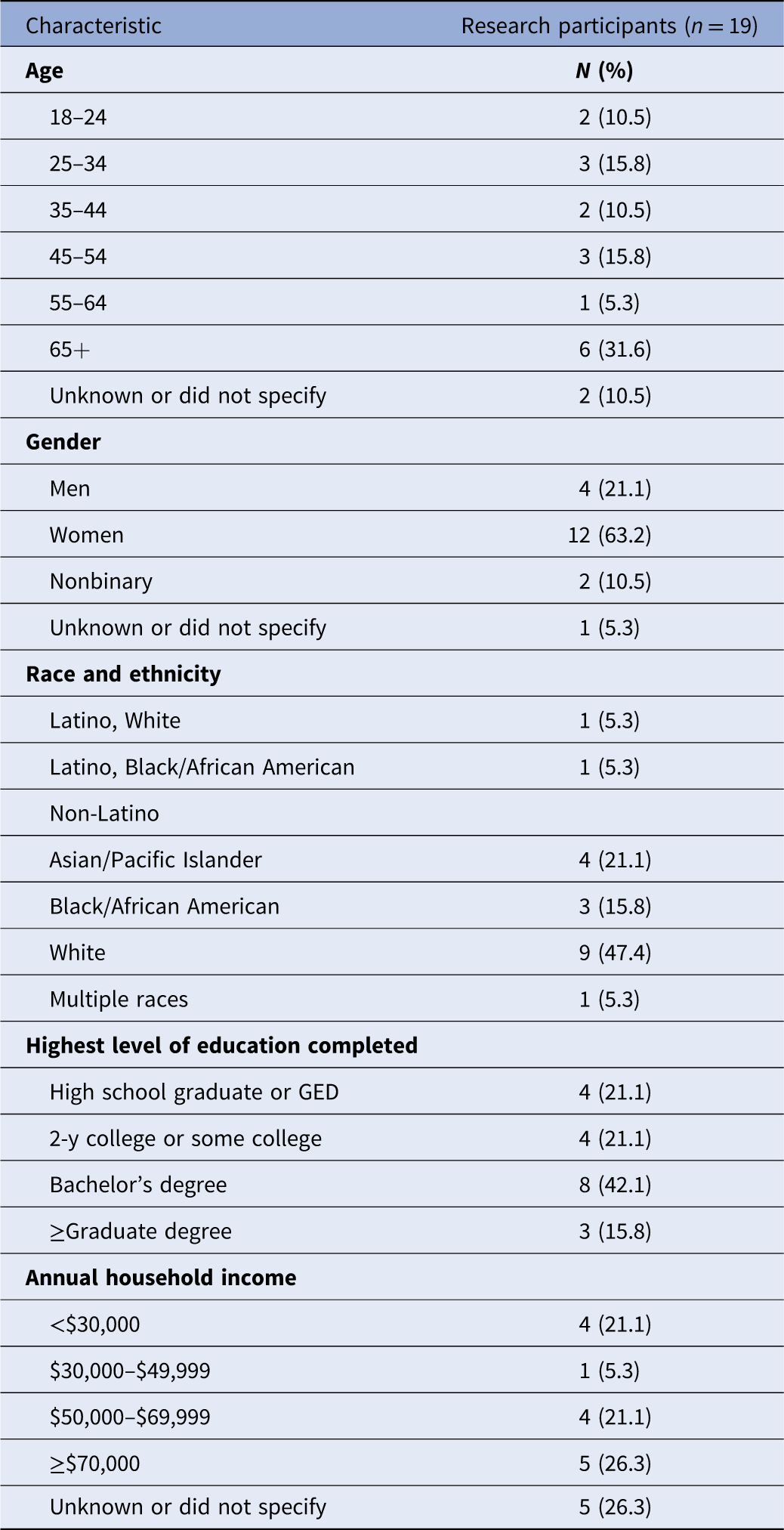
Six research teams were approached for participation, with five teams agreeing to participate. Twenty-five research participants from five research studies were approached for participation, with nineteen participating. A total of 54 individuals were interviewed, including 1) research teams and individual researchers using remote research engagement methods (n = 35 individuals were interviewed including 19 from 5 research teams and 16 individual researcher interviews; demographics not collected for researchers) and 2) research participants engaged in studies with remote methods (n = 19). Researchers and research participants were primarily based within the greater Seattle area (97% and 79%, respectively). Research participant characteristics are provided in Table 1. We intentionally interviewed research participants across the lifespan (including parents/caregivers from one study focused on youth), with prominent representation from older adults (nearly 32%). The research studies participants and researchers were engaged in were all interventional studies, although focused on different physical and mental health issues and outcomes and ranged from prevention to acute care and chronic disease intervention trials.
Research participant interviewee characteristics

Table 1. Long description
Demographic information, including age group, gender, race/ethnicity, highest level of education, and annual household income are provided for the 19 participants who were interviewed about their experience using remote/virtual methods for engaging in a research study.
Remote research opportunities
Researchers and research participants described perceived benefits of remote research engagement while also suggesting caution and indicating that remote technology alone will not resolve and alleviate all research access and participation disparities.
Better general access to research
Researchers and participants discussed the advantages of hybrid and flexible engagement options through utilizing remote technologies (example interview quotes in Table 2), which can provide opportunities for participation to individuals who might not otherwise be able to engage. Both researchers and participants noted that remote research engagement, for example, through a wearable device that is collecting data, makes it easier to participate because of the reduced burden of time and transportation compared to in-person participation options. Engagement benefits such as these may be especially salient for procedures that can feasibly and reliably be done at home, which may also be a more convenient research participation option and more accessible for those with limited transportation access and/or mobility issues that make in-person engagement more difficult.
Remote research opportunities

Table 2. Long description
Quotes from 7 researchers and 5 research participants highlight the increased flexibility, cost/time savings, increased access to rural population engagement, and wider geographic engagement that is possible when using remote research engagement.
Reaching populations underrepresented in research
Both researchers and participants suggested that studies using remote methods enabled more recruitment and engagement from diverse geographic locations, age groups, and income levels because of lower participation barriers (e.g., transportation time and costs for in-person study visits, coverage for caregiver/childcare responsibilities to allow for in-person study visits). Researchers and participants noted that remote technology facilitated access to research opportunities by allowing participants to engage without needing to be located near a study site. A few participants said that without remote engagement, such as Zoom or web-based surveys, they wouldn’t have participated in the research study. The theme of remote technology expanding access for rural populations and individuals who find in-person participation difficult, thereby improving geographic reach and breadth and potentially reducing bias in sample selection, was highlighted in many interviews. In contrast, investigators noted that the impact on diverse research engagement resulting from deploying remote technologies remains uncertain. There were concerns that without regulatory or funding consequences or other incentives about study inclusion that remote research methods use alone would not enhance representative inclusion.
Remote research challenges
In addition to discussing the potential for expanded access with remote approaches, researchers and participants also identified barriers and challenges to remote research engagement that require support, resources, and problem-solving. The general themes of these are detailed below, with specific example quotes from interviews provided in Table 3.
Remote research challenges

Table 3. Long description
Quotes from 6 researchers and 8 research participants describing challenges that some individuals have in using remote research methods including access to devices and connectivity, limited experience and/or knowledge of the use of technology, language barriers, and the difficulty of translating some aspects of in-person research engagement to remote engagement.
Limits on access to remote technology and resources
Lack of access to remote technological devices (e.g., tablets, computers), associated equipment (e.g., video camera), and resources (e.g., high-speed internet) were identified barriers, particularly for populations that already experience health and resource disparities because of socioeconomic disadvantage. Participants residing in rural areas, where connectivity resources may be more limited or unreliable, expressed that even with initiatives to enable more broadband access they had difficulty connecting reliably and consistently. Researchers discussed how some participants had access to a shared smartphone (e.g., among family members) but not to a computer, which made study-related communication, such as visit reminders, less reliable.
Gaps in equitable usability of remote technologies
Researchers communicated concerns about the reliability of remote technologies for study engagement and how that may exacerbate existing disparities. Even with good access to devices and remote connectivity, engagement in remote technologies may favor and be more comfortable for those who are already more tech-savvy, younger, and more educated. Interviews highlighted challenges in setup and familiarity with the use of remote technology. Vulnerable populations, including those with cognitive challenges, lower health or digital literacy, and other limited resources (e.g., homelessness, food insecurity) encounter additional barriers engaging with remote technologies and may need additional support from others (e.g., family members, the research team).
Language barriers
Researchers highlighted the benefits of conducting remote interventions in the participants’ native languages when possible, including using interpreters for participant interactions, and the need for training on device usage and translating remote technology instructions into multiple languages. However, the translation of digital tools and other study materials for remote engagement was identified as a significant challenge by several researchers because of the cost and added staff time, despite some available institutional resources for translation (e.g., electronic consent templates in languages other than English). One investigator shared that it was not feasible to expand their project to languages other than English because of insufficient budget to customize an investigational app that was only developed for English speakers.
Difficulties transitioning from in-person to remote engagement
Some research staff and research participants voiced concerns about engagement methodologies not being as effective or impactful in a remote format compared to the in-person format. For example, participants in an interventional, family-based group intervention reported not feeling well connected to other families when participating virtually. One participant indicated being distracted by their own self-view video during group sessions. Research teams highlighted the varying degrees of participation, attention, and engagement in these remote interventional sessions compared to previous in-person iterations of the sessions. They also noted the importance of home or other remote spaces being available for participation (e.g., availability of private space for remote research visit).
Cultivating remote research with access for all: facilitators
Researchers and participants identified potential facilitators to strengthen use of remote research engagement methodologies and engagement, including 1) ensuring access to remote technology and resources, 2) assessing user preference and experience in remote engagement, and 3) working to build strong participant-research team connections remotely to foster meaningful and trusting relationships (Table 4).
Cultivating equitable remote research

Table 4. Long description
Quotes from 3 researchers and 6 research participants describing strategies to increase access for remote research participation, including having researchers provide devices, technical support, and detailed instructions in order to increase and enhance engagement of participants using remote research methods.
Ensure reliable access to remote technology and resources at the individual participant level
Researchers emphasized the need for all participants to have access to the necessary technology and remote access resources to enable study participation. They highlighted considerations such as utilizing devices participants already have for remote engagement and understanding how participants may be using this existing technology (e.g., pre-paid phones, Messenger apps) to ensure reliable study participation. Researchers discussed budgeting for and providing participants with devices such as smartphones, tablets, and mobile hotspots to facilitate engagement for all. One research team utilized the publicly available “Lifeline program,” a government-sponsored program providing discounted cell phones, whereas others facilitated connections for research participants to access low-cost internet services as options. Research participants appreciated the provision of these resources. It was also mentioned that some studies allow participants to keep these devices after study end as participation incentives.
Assess participants’ comfort with technology, provide initial and ongoing training and resources
Researchers emphasized the significance of assessing participants’ likes and dislikes regarding the technology being employed in a study, along with evaluating other aspects of the user experience, such as the usability of device interfaces. One researcher highlighted the benefits of collecting baseline data on participants’ digital literacy, stating that this approach helps in tailoring the use of and training in technology to participants’ capabilities and preferences. Another researcher shared the value of community input to better understand local perspectives on using mobile health technologies. Investigators discussed the importance of providing instruction and training in the use of remote technology and with the applications/programs with which participants will interact during each study to facilitate more and better research engagement. Researchers emphasized the significance of tailored and individualized approaches in teaching participants how to use remote technologies, including research staff meeting with participants one-on-one, updating applications or devices, and addressing questions about what the technology will be used for and how it will be used.
Researchers highlighted the need to provide materials and participant instructions for remote engagement in multiple approachable formats, using images, picture guides, or audio (in multiple languages) to enhance understanding and accessibility. They emphasized how these approaches can facilitate easier translation into other languages. The use of images and concise language in the remote consent process was also highlighted. For instance, one researcher developed a web-based application instead of a native smartphone app to accommodate participants’ unfamiliarity with smartphone applications, allowing them to use a tablet or computer. Another researcher designed their study so that surveys could be administered verbally over the phone instead of via the web for participants with lower literacy levels or visual impairments. Participants stressed the importance of providing information and detailed steps for use of technology for remote engagement and ideally in multiple formats (e.g., written, verbal, video).
Researchers discussed the advantages of providing support in real-time to troubleshoot technology-related issues after initial technology training. Technology support from the research team can start before issues arise with initial setup and include having backup plans in place should the technology not work as desired.
Foster meaningful, trusting relationships
Research participants emphasized the importance of building personal connections with research teams especially when engaging in remote research, emphasizing the importance of how participants are treated when non-verbal communication is limited. Researchers discussed using study newsletters and scheduling regular phone conversations to facilitate engagement, with one researcher utilizing methods akin to non-profits for donor engagement including frequent outreach and information sharing about the study. Researchers stressed that addressing privacy and security concerns regarding remote technology early on enhanced participants’ trust in the goals of the research. One investigator suggested improving participant understanding through detailed consenting calls prior to the actual study interviews. Researchers also highlighted creating a safe and comfortable remote environment for participants, recognizing that some individuals may prefer not to appear on video despite being otherwise comfortable with remote engagement.
Discussion
The use of remote technologies for participant engagement in clinical translational research has expanded considerably, accelerated by the COVID-19 pandemic. Understanding the benefits, barriers, and potential facilitators for taking part in remote aspects of research as perceived by research participants and researchers could enhance access for all. Among clinical translational researchers who responded to our survey, the majority reported using some form of remote study engagement, ranging from remote consenting to remote assessment and remote behavioral intervention delivery within clinical trials. The benefits of remote engagement identified by researchers as well as research participants included convenience and flexibility, the potential to increase inclusion of individuals living far from traditional study sites (urban medical centers) and those who otherwise face barriers to in-person study visits, and reduced cost and impact of other constraints to participation (e.g., childcare or other caregiving). Given these benefits, the use of remote research practices is likely to continue and even accelerate, as well as evolve with new available technologies.
Several challenges were identified that may influence accessibility for all eligible and interested participants to engage in remote research. Among the primary challenges is the digital divide, wherein there are disparities in consistent and affordable internet access, device availability, and digital literacy, with prior research indicating that these disproportionately affect socioeconomically disadvantaged and otherwise historically marginalized communities around health and health care access [Reference Yang, Cha and van Kessel15]. The barriers highlighted by researchers and research participants in the present study are broadly consistent with those derived by expert review of individual studies that included remote research engagement in some capacity [Reference Aiyegbusi, Cruz Rivera and Kamudoni16]. In the U.S. context, these barriers, if unaddressed, are likely to continue to skew research inclusion demographics towards populations more adept at navigating technology, living in urban/suburban areas, who are often younger, more affluent, more educated, and proficient in English.
Both researchers and research participants identified strategies to facilitate more or better remote engagement and address some of the identified challenges. They highlighted the need to ensure availability of devices, connection resources, and ongoing technical and other support for all potential participants to engage remotely. Innovative approaches to supply and support participation through technology may not always be cost prohibitive (i.e., devices can be shared across studies and research teams). Approaches should also include consideration of how to tailor remote methodologies in culturally and linguistically appropriate ways to facilitate more diverse engagement, while also considering the specific remote engagement needs of a study’s focus population (e.g., older adults). Further, it is critical to provide instruction on remote methods in multiple modalities to enable better and more consistent remote engagement as well as maintain close relationships between participants and study personnel to troubleshoot remote engagement problems. Sanchez and colleagues emphasize this in their review and best practices recommendations for virtual real-time data collection [Reference Sanchez, Trofholz and Berge17]. Others have also highlighted the importance of assessing study personnel in digital literacy and training to ensure robust implementation and problem-solving around remote participant engagement [Reference Aiyegbusi, Cruz Rivera and Kamudoni16].
Clinical translational investigators reinforced that researchers should not assume remote engagement is a simple transition from in-person study procedures. They must plan for use of remote technologies in their protocols and funding applications and early in research design and planning including creating study budgets which anticipate research staff time and effort to deploy remote engagement of participants. This may include connecting with advisors or members of the study population to understand remote engagement barriers and opportunities during study design. Consistent with equity practices, it is also critical to consider the choice of remote engagement tools and processes based on different study populations (e.g., youth versus older adults). Researchers could benefit from robust infrastructure and support mechanisms to facilitate equitable access to remote technologies. Initiatives such as the Remote Technologies for Research Reference Center (REMOTECH; https://www.iths.org/remotech1/), launched by the ITHS, exemplify collaborative efforts to provide researchers with resources and guidance on implementing remote methodologies effectively and inclusively.
The benefits of remote research engagement identified in the present study are consistent with prior research, including greater convenience [Reference Daudelin, Brewer, Cabrera, Dulko and Selker18]. Some of the challenges and facilitators identified were unique or more detailed (e.g., the variety of issues needed to consider for reliable technology use and connection) than previously reported. Addressing these and other recommended approaches decreases the likelihood that remote research engagement will exacerbate existing disparities in research participation and instead serve as tools for better access to research for all [Reference Aiyegbusi, Cruz Rivera and Kamudoni16]. Strategies to enhance digital literacy, provide technical support, and address logistical barriers are essential steps towards facilitating a more accessible and inclusive research environment. Additionally, ongoing evaluation and adaptation of recruitment and engagement strategies based on participant feedback are crucial for continuously improving inclusivity in remote studies.
There are limitations to this study. This study only examined the experiences of researchers and participants who were able to engage in at least some aspect of remote research engagement and agreed to be interviewed virtually. The type and frequency of remote research engagement used varied across the included research teams and participants in their research, but perspectives of those who could or chose not to engage in these studies are not represented. Outreach and investigation with those not able to engage remotely are needed to understand whether and how the proposed strategies for facilitating remote research engagement and removing barriers to such engagement would require enhancement and/or additional strategies to ensure more complete research accessibility. Also, participants in the present study were English-speaking, which is a limitation, although providing multiple language options for remote engagement was highlighted as a facilitator by researchers and participants. The survey and interviews conducted were in one geographic region in the U.S. and happened during or soon after the COVID-19 pandemic that disrupted health care, research, and many in-person options. There may be unique challenges to the remote engagement resources available in different places, including at sites conducting the research and within the communities and populations with whom research teams are seeking to engage. Although likely dynamic over time, this suggests the need to consider a local inventory of remote research engagement resources for research sites and the focus community/population during research design and initiation. The present study only collected data from adults, although included pediatric health researchers and parents/caregivers participating in a study with their children about child health. Youth may have other barriers and assets in remote research engagement. In addition, there may be barriers and facilitators that are specific to one aspect of remote engagement (e.g., e-consent versus remote intervention delivery) or to a given study. This study did not seek to identify this specificity but rather to examine research engagement overall. The present study also did not address some of the substantial pitfalls to fully remote participant engagement (e.g., fraudulent activity among people solely seeking participant incentives [Reference Moore, Chieng and Pirner19]). There are also likely types of research, health issues/conditions, populations, or a combination thereof for which remote research engagement is not viable and potentially unsafe or harmful [Reference Mahlangu, Machisa, Jewkes, Gibbs, Shai and Sikweyiya11,Reference Zaidi, Dominguez Gomez, Jordan, Jessell and Harocopos20]. Further, use of remote engagement in the research process extends beyond the connection between the research team and participants, including strategies to develop better and more inclusive ways for research teams to function and conduct other aspects of research [Reference Kramer, Schwartz and Hallock21].
While remote technologies offer promising avenues for expanding the reach and inclusivity of clinical research, concerted efforts are needed to overcome digital and logistical barriers. A user-friendly summary of best practices for equitable and effective remote research engagement, derived in part from this research, is available at: https://equity.uwmedicine.org/wp-content/uploads/2025/07/Guidelines-for-Equitable-and-Effective-Teleresearch-Engagement.pdf. Remote technologies and their use are evolving rapidly, so ongoing evaluation of and ways to ensure equitable access to remote research engagement will likely be needed. By prioritizing equity in research practices and leveraging innovative strategies, researchers can create more representative and impactful studies that benefit diverse populations and advance scientific knowledge more inclusively.
Supplementary material
The supplementary material for this article can be found at https://doi.org/10.1017/cts.2026.10845.
Acknowledgements
We appreciate the researchers and research participants who participated in the surveys and interviews. We also appreciate the guidance from our Community Advisory Council consisting of community leaders and community members who informed the direction of ITHS Integrating Special Populations’ work including this focus on remote research access for all.
Author contributions
Taylor Salaguinto: Data curation, Formal analysis, Investigation, Methodology, Writing — original draft, Writing — review & editing; Georgina Perez: Data curation, Investigation, Project administration, Writing — original draft, Writing - review & editing; Tumaini R. Coker: Conceptualization, Funding acquisition, Methodology, Supervision, Writing — review & editing; Marshall Brown: Data curation, Methodology, Project administration, Writing — review & editing; Margaret Rosenfeld: Conceptualization, Supervision, Writing — review & editing; Christopher H. Goss: Conceptualization, Methodology, Writing — review & editing; Kimiko Domoto-Reilly: Data curation, Methodology, Writing — review & editing; Michelle Harvey: Data curation, Methodology, Writing — review & editing; Laurie Hassell: Conceptualization, Project administration, Supervision, Writing — review & editing; Charlie Gregor: Conceptualization, Funding acquisition, Methodology, Writing — review & editing; Stephanie A. Kraft: Data curation, Investigation, Methodology, Writing — review & editing; Ann Melvin: Conceptualization, Data curation, Investigation, Writing — review & editing; Kathryn Porter: Investigation, Writing — review & editing; Brian E. Saelens: Conceptualization, Methodology, Supervision, Writing — original draft, Writing — review & editing.
Funding statement
Research reported in this publication was supported in part by the Institute of Translational Health Sciences, funded by the National Center for Advancing Translational Sciences of the National Institutes of Health award number UL1TR002319 through 2024. It is subject to the NIH Public Access Policy. Through acceptance of this federal funding, NIH has been given a right to make this manuscript publicly available in PubMed Central upon the Official Date of Publication, as defined by NIH. The National Institutes of Health and the National Center for Advancing Translational Sciences had no role in the design and conduct of the study. Content in this manuscript is solely the responsibility of the authors and does not represent official views of the National Institutes of Health.
Competing interests
The authors declare that they have no conflicts of interest.


 Open access

