


Scholars and other observers of politics regularly disapprove of politicians who are ideologically rigid in the sense of being unwilling to reconsider their policy positions, regardless of policy-relevant information. For instance, scientists and ethicists have criticized President George W. Bush for using his Council on Bioethics merely to “give an ideologically rigid president the veneer of open-mindedness” (Mishra 2004). Morris Fiorina, describing recent politics more generally, has argued that the “real dividing line” in Washington is between ideologically rigid officials and ones like John McCain who are willing to go against their party when they believe doing so is in the public interest (Saunders 2004). Such a critique, although especially salient in an era of partisan polarization among elites, is not new to the American political scene. For example, in the late 1960s, the Wall Street Journal condemned what it saw as an increase in ideological rigidity and argued that policymakers should accept the potential fallibility of any given position (Wall Street Journal 1968).
Indeed, significant problems can arise when officials stick to particular positions regardless of policy information. Such behavior would seem to counter the premise of representative democracy, which is predicated on the notion that politicians will have useful policy expertise, or more information than voters have. More specifically, voters may end up with policy outcomes they do not want. In other words, consistent with Fiorina's assessment, ideological rigidity may not advance voters' interests.1
See Fiorina (2006) for further discussion of problems associated with ideological rigidity.
Why might ideological rigidity occur? The political science literature suggests several factors that could contribute to this behavior, including interest groups, parties, and candidates' personal preferences. Yet in contrast, the literature indicates that elections might well reduce the incentives for politicians to stick to particular positions regardless of policy information. A standard view of elections, which harks back to Downs (1957), is that they provide incentives for politicians to represent the position of the median voter. In the canonical rendition of this theory, voters and politicians have access to the same information. One natural question, then, is whether the intuition that politicians will do what the median wants can be simplistically applied to a world in which politicians have policy expertise. For example, one might expect that if the median desired an elected official to base her decisions on policy-relevant information, then she would do so. Ideological rigidity would occur only if voters wanted officials to ignore their information.
Perhaps because of the appeal of this logic, the literature has paid scant attention to the possibility that elections might induce more ideological rigidity than voters would like.2
For a review of the literature see Grofman (2004), which underscores the role of elections in providing “centripetal” incentives for politicians.
We address this topic by developing a theory of how elections affect an official's incentives to use policy information. In the theory, voters recognize that the official may have ideological leanings that encourage him to make policy decisions they might not desire if fully informed. At the same time, voters know that the official has better policy information than they do. In this basic theory, we show how the incentives for ideological rigidity are influenced by factors including the leanings of the electorate, the preferences of the official, and the quality of the information that the official has. We also extend the theory to show how these incentives depend on voters' information about an official's preferences, about the policy knowledge that the official has, and the degree to which they observe consequences of the official's decision.
By analyzing ideological rigidity, we also examine the conditions under which elections induce an opposing behavior, information-based moderation, in which an official becomes more likely to take an opposing position if his policy information recommends doing so. More specifically, we say that information-based moderation occurs when at least some officials who prefer a left-leaning policy regardless of their information will follow their information if it recommends a right-leaning policy, and at least some officials who prefer a right-leaning policy regardless of their information will follow it if it recommends a left-leaning policy. This concept differs from moderation in the canonical Downsian model, which does not incorporate private policy information and instead simply asks whether officials have electoral incentives to adopt certain positions. Information-based moderation, in contrast, depends crucially on whether officials have electoral incentives to change their policy positions in response to policy-relevant information.
Despite these differences, the two types of moderation bear some similarity. Like Downsian moderation, information-based moderation requires that a politician be willing to move in the direction of an opposing side. Furthermore, survey data indicate that voters in the center of the ideological distribution are more likely than others to want officials to use policy expertise. Self-identified moderates are significantly more likely than conservatives or liberals to want politicians to use their knowledge when it conflicts with public opinion, and moderates are the only group in which a majority favors decision making based on politicians' knowledge over mass opinion.3
Role of Polls in Policymaking Survey, conducted by Princeton Survey Research Associates Jan. 3–Mar. 26, 2001, on a national adult population. Respondents were asked, “I am going to read you two statements. Please tell me which comes closer to your views, even if neither is exactly right. The first statement is, elected and government officials should use their knowledge and judgement to make decisions about what is best policy to pursue, even if this goes against what the majority of the public wants. The second statement is, elected and government officials should follow what the majority wants, even if it goes against the officials' knowledge and judgement. Which comes closer to your views?” The first statement was preferred by 44% of conservatives, 51% of moderates, and 44% of liberals. Comparing moderates to the other two groups in a pairwise comparison, the difference is significant at conventional levels with p = 0.015, two-tailed.
RELATED LITERATURE
Two strands of literature concern whether elections encourage politicians to be ideologically rigid or instead engage in information-based moderation: research on politicians' role as a delegate versus trustee and research on candidate position-taking. The question of whether politicians should behave more like trustees or delegates has long been a focus of normative theory, and around the middle of the twentieth century, positivist scholars began to examine the issue through surveys of legislators. This scholarship suggests substantial variation in whether legislators view themselves as trustees or delegates (e.g., Eulau et al. 1959), and relates the variation to legislative voting behavior (Kuklinski and Elling 1977). Unlike our analysis, however, these studies do not focus on how members' electoral incentives affect their willingness to use information.
Recent formal theories and experimental research provide insight into this question. For instance, Canes-Wrone, Herron, and Shotts (2001) develop a model that suggests incumbents often have electoral incentives to behave like trustees, that is, by exercising policy leadership rather than pandering to public opinion. The theory presumes that voters and politicians have identical policy preferences. Yet in many circumstances, voters are concerned that elected officials do not share their policy preferences, and experimental work indicates that this voter concern may increase politicians' incentives to behave like delegates. For example, McGraw, Lodge, and Jones (2002) analyze how subjects respond to a legislator's speech on gun control and find officials have strong incentives to follow public opinion. The study does not, however, presume the legislator has private information about gun control policy. The experiment in Sigelman and Sigelman (1986) does incorporate such informational asymmetry; subjects are told the president has received an intelligence briefing, and are asked to evaluate his decision over whether to use force. The results indicate that voters are willing to support politicians who behave as trustees in addition to those who behave like delegates; in particular, hawkish subjects supported a hawkish president who took a dovish or hawkish action. Yet because the experiment concerns citizens' reactions to presidents rather than presidents' reactions to citizens, it is not designed to examine whether elections encourage presidents to use their private policy information.
The scholarship that most closely addresses this general topic includes Maskin and Tirole (2004) and Fox (Forthcoming); each examines optimal institutional design. Like our analysis, these papers develop formal theories in which politicians have policy expertise and private information about their preferences. Yet the structure of preferences in these models makes it impossible to distinguish circumstances in which elections induce a particular ideological leaning from circumstances in which information-based moderation is an incentive. In other words, the models preclude analyzing whether both left- and right-leaning politicians may become more likely to use their policy information under given circumstances. The preference and information structure in Downs and Rocke (1994) would ostensibly allow for such analysis, but Downs and Rocke simply assume an electoral incentive for information-based moderation; they do not examine whether politicians indeed have such an incentive. Thus in sum, research on politicians' role as a trustee does not tackle whether, and under what conditions, elections induce politicians to be ideologically rigid or instead to engage in information-based moderation.
Studies of candidate position-taking also do not tackle this question because they generally do not incorporate the possibility that politicians have private policy information. This scholarship does, however, offer a variety of findings on how voters' lack of information about their preferences may affect candidates' incentives. For instance, Duggan's (2000) model of repeated elections shows that electoral pressures from centrist voters induce candidates to move toward the median voter's position when voters' preferences can be arrayed on one dimension. In contrast, Chappell and Keech (1986) demonstrate through computer simulations that once voters' preferences are specified on two distinct policy dimensions, voter uncertainty about candidates' positions can decrease incentives for Downsian moderation. Alvarez (1997) supports this finding through survey evidence. Yet because none of these position-taking studies focus on asymmetries in policy information, they cannot address how this feature of representative government may influence politicians' policy incentives.
MODELING ISSUES
Preferences
A key tension in the model is that an official's preferences may diverge from those of voters. As in other models that assume officials have private information about their preferences and expected policy consequences, we presume that there are two states of the world and two policy choices, where the correct choice is the one that matches the state of the world (Downs and Rocke 1994; Fox Forthcoming; Maskin and Tirole 2004). For instance, an antiterrorist policy that curbs civil liberties may or may not be necessary to prevent large-scale terrorist attacks. The choice is whether to approve the policy. Preference divergence arises from the fact that the actors may place different weights on the two types of errors–a failure to approve a necessary policy versus mistakenly approving an unhelpful one. If the true state of the world were known, all actors would prefer the same policy choice—everyone would like to prevent large-scale terrorist attacks, and no one wants to curb civil liberties. In this sense the players have common interests. However, because some players are more concerned about minimizing the risks of terrorism and others are more concerned about the negative side effects, they may weigh the two types of errors differently and consequently have different preferences over what policy actions the official should take. The theory assumes a continuum of preferences in that there are a continuum of possible weights players can place on the two types of policy errors.
Information
Actors do not know the true state of the world—for example, no one knows for certain whether a given antiterrorist policy is necessary or whether a new drug should be approved. Voters know the prior probability that a proposed policy is good, and an elected official has an additional signal. Although this signal is not perfect, it gives the official more information than the public has. As a result, it is possible that the official's information could indicate that a popular policy is not the one fully informed voters would want, and voters know this.
Yet because an official and voters may weigh possible policy errors differently, an official may wish to choose policies that run counter to what fully informed voters would want. This is why preference divergence creates a key tension in the model; voters cannot simply trust an official to use her policy expertise to advance their interests. Continuing with the example of antiterrorist policy, there are two types of officials that a voter may worry about: a type who is too willing to curb civil liberties, and a type who is too reluctant to do so. The model allows for both types.
These informational assumptions relate to the concepts of ideological rigidity and information-based moderation. Consider the case where politicians must decide whether to allow a pesticide to be used for farming, and the politicians have a signal regarding the safety of the pesticide. Ideological rigidity occurs when an official will support a particular position regardless of the information; for example, the official will legalize the pesticide regardless of the safety information or ban it regardless. Information-based moderation, in contrast, occurs if elections induce both left- and right-leaning politicians to become more likely to use their information. Continuing with the pesticide example, at least some officials who prefer to ban the pesticide regardless of the signal must be electorally induced to legalize it when the signal indicates that it is safe, and at least some officials who prefer to legalize it regardless of the signal must be induced to ban the pesticide when the signal indicates that it is unsafe.
This example highlights a notable distinction between information-based moderation and the canonical Downsian moderation. The latter entails a continuum of policies. In contrast, information-based moderation does not inherently require more than two policies; in a two-policy world, the behavior can occur when a politician becomes more willing to support either option on the basis of policy information. This feature of information-based moderation comports with recent scholarship on democratic deliberation, which argues that policy debates commonly involve a choice between supporting and opposing a particular option (Jackman and Sniderman 2006). Correspondingly, officials often act in institutional contexts that allow for two policy choices, for example, roll-call votes on which a legislator can vote yea or nay or court cases on which an elected judge can rule for the defendants or plaintiffs.
Electoral Competition
When deciding to reelect or remove an incumbent, voters know the policy choice. In the main model voters have information about the success or failure of this policy. This assumption is altered in the extensions, where we examine how the results change if no policy feedback is available or if feedback occurs for only one of the policy options. From these and other alternative specifications, we develop testable predictions about how voters' policy information alters politicians' incentives for ideological rigidity.
The main version of the model also employs the standard assumption that the challenger and incumbent come from the same pool of potential candidates (e.g., Duggan 2000; Ferejohn 1986).4
This assumption is standard not only in general electoral models, but also in policy-specific ones. See, for instance, Gordon and Huber's (2002) analysis of elected prosecutors, where an incumbent can be replaced by someone who is more or less punitive, or Downs and Rocke (1994), where an incumbent executive can be replaced by a challenger who is more pro- or anti-war.
THE MODEL
The model has two time periods. In each there is one policy decision and the state of the world is ω∈{A, B}. The periods are independent and the prior probability of A in each is π∈(0, 1). At the beginning of a given period the elected official receives a private signal s∈{A, B} about the state of the world, where the quality of the signal is
Given this information, the official must choose a policy x∈{A, B}.5
To minimize subscripts and superscripts, we abuse notation by using A and B to refer to a state of the world and the signal that corresponds to that state, as well as the action that is appropriate in that state.
There are three actors in the model: a voter, incumbent official, and challenger, all of whom are policy motivated and prefer x=ω over x≠ω. The actors can differ, however, in their degree of concern over each type of error (choosing x=B, when ω=A vs. choosing x=A, when ω=B). The relative importance that each actor places on choosing x=B when ω=B is denoted by
subscripted βV for the voter, βI for the incumbent, and βC for the challenger. If the correct outcome occurs; that is, x=ω, then the actor receives zero utility. If x=A when ω=B then the actor receives utility −β. On the other hand if x=B when ω=A the actor receives utility −(1−β). An actor's total utility from the game is the sum of the utility in the two periods:

The voter and official may have divergent preferences, and an official's β is her private information. Specifically βV∈[0, 1] is common knowledge, but βI is a random draw from a uniform distribution F:[0, 1]→[0, 1]. The challenger's βC is also independently drawn from F. We specify an official's strategy as a function of her preference parameter and private signal about the state of the world. For the first period let the incumbent's strategy, which determines whether she chooses x=A or x=B, be σ1(βI, s):[0, 1]×{A, B}→{A, B}. Similarly, let σ2(β, s):[0, 1]×{A, B}→{A, B} be the strategy for the second period official.
After the first period the voter must decide either to retain the incumbent or to replace her. Before the election, the voter observes the true state of the world ω. Let the voter's strategy be ν=(νAA, νAB, νBA, νBB), a vector that specifies the probability that he re-elects the incumbent in each of four information sets. Here νAA∈[0, 1] is the probability that the voter re-elects the incumbent when x=A and ω=A. Similarly, the voter reelects the incumbent with probability νAB when x=A and ω=B, νBA when x=B and ω=A, and νBB when x=B and ω=B.
The equilibrium concept employed is Perfect Bayesian. We specify voter beliefs in more detail later, but for now it is worth noting that we do not need to specify beliefs off the equilibrium path because each possible outcome occurs with strictly positive probability.
Policy Choice
The official's action in the second period depends on her preference parameter β and her beliefs about the probability that A is the state of the world. Let these beliefs, which are straightforward to calculate via Bayes's Rule, be denoted as
and
. Given these beliefs, the second-period private signal s, and the second-period official's preferences β, we can characterize optimal second-period behavior.
Proposition 1 (Second-Period Policy Choice) There exist cutpoints
and
such that:
- If then the official chooses x = A regardless of s.
- If then the official chooses x = s.
- If then the official chooses x = B regardless of s.
- , and either or .
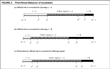
Proofs of all propositions are in the Appendix. As shown in Figure 1, there are three types of officials, categorized according to their second-period behavior: a type A official always chooses x=A regardless of the signal; a type R, or signal-responsive, official always chooses x=s; and a type B official always chooses x=B.

Second-Period Behavior of Official
It is worth emphasizing that an official's type depends not only on her preferences β but also on the quality of her signal q and the ex-ante likelihood π that A is the correct policy, since the cutpoints
and
depend on q and π. Thus an official who is type B when the quality of her signal is low may be signal-responsive if q is high. At the same time, for a given q and π, type R officials are the only ones who are open to choosing either A or B in the second period on the basis of the policy information. Accordingly, in the model type R officials are more centrist than type A or B officials, and information-based moderation occurs when some type A and some type B officials are electorally induced to behave in the first period like a type R official. Conversely, elections promote ideological rigidity when some type R officials behave like a type A or B official.
Just as we can characterize officials as being type A, R, or B, we also can categorize a voter as one of these types depending on whether
, or
A type A voter, for instance, wants to elect a type A official for the second period. Because all officials within a given category behave identically in the second period, the voter's expected utility from an official taking office depends on his beliefs about the probability that the official falls into each of these three categories. Let
be the probability that a randomly drawn official is type A, let
be the probability that a randomly drawn official is type R, and let
be the probability that the randomly drawn official is type B. These ϕ's are also relevant for the first period official's behavior, because she is policy motivated and cares about the action her replacement will take if she fails to win reelection.
The incumbent's probability of reelection depends on the voter's reelection strategy ν and the voter's beliefs about the state of the world. For an official who observes signal s let rA(s) denote the probability of reelection if she chooses policy A and let rB(s) denote her probability of winning if she chooses policy B.


We can now partially characterize first-period policy behavior. The incumbent's decision depends not only on first period policy considerations but also on second period ones, which are based on the probability that she will be reelected as well as the behavior of her replacement if she is not. Specifically, for any voter behavior, the incumbent's policy choice can be characterized by cutpoints like the ones for second period behavior.
Proposition 2 (Incumbent's First Period Best Response to Voter Strategy) For any voter strategy ν there exist cutpoints
and
such that in the first period:
- If then the official chooses x=A regardless of s.
- If then the official chooses x=s.
- If then the official chooses x=B regardless of s.
- , and either or .
Propositions 1 and 2 enable us to categorize possible effects that voter behavior may have on first-period policy choices. One possibility, shown in Figure 2a, is that for both signals s∈{A, B} the official has an electoral incentive to choose policy A, i.e., rA(s)>rB(s).

First-Period Behavior of Incumbent
In this case, rA(B)>rB(B) implies that
; that is, some signal-responsive or type R officials, who prefer x=B when s=B, instead choose x=A. Likewise, rA(A)>rB(A) implies that
; that is, some type B officials, who prefer x=B even when s=A, are electorally induced to choose x=A. On the flip side, as shown in Figure 2b, if rA(s)<rB(s) for both signals s∈{A, B} then a first-period official always has an incentive to choose x=B so that
} and
.
Notably, in both Figures 2a and 2b, some officials have an electoral incentive to be more ideologically rigid than they otherwise would be; the figures accordingly highlight how elections can induce ideological rigidity. For instance, in Figure 2a, officials in the range
simply choose policy A regardless of the signal, even though these officials would prefer to follow the signal. These incentives for ideological rigidity are asymmetric in the sense that when some officials are induced to be ideologically rigid, others—depending on their preferences and the voter strategy—are induced to use their policy information. For example, in Figure 2a some right-leaning officials, specifically those in the interval
are induced to follow their information when choosing the first-period policy, whereas some left-leaning officials, specifically those in the interval
are driven to be ideologically rigid. This asymmetry occurs because voters are not trying to induce ideological rigidity per se; rather they are employing a voting rule that rewards officials for choosing a particular policy option.
There are two other possible effects of voter behavior on the first-period policy decision. One, which would give the official incentives to go against her signal, is rA(A)<rB(A) and rA(B)>rB(B). However this pattern of electoral incentives never occurs in the model.
The final possibility, shown in Figure 2c, is rA(A)>rB(A) but rA(B)<rB(B), so that
but
In this case, officials always have electoral incentives to follow their signals when choosing first-period policy. As a result, an official never has an incentive to be rigid and may engage in information-based moderation. In particular, type A officials in the region
are electorally induced to moderate their behavior by choosing x=B when s=B. Likewise, type B officials in the region
moderate their behavior by choosing x=A when s=A. It is worth noting that information-based moderation here is not complete—an incumbent with
or
does not behave like the more centrist, signal-responsive type but rather supports a particular policy regardless of her signal. Still, as in Duggan (2000), both liberal and conservative officials have incentives to alter their behavior and act like centrists. Of course, the moderation here is quite different from that in Duggan's model, which presumes politicians do not have private policy information and choose policy from a continuum. Moreover, information-based moderation does not encompass circumstances in which an official represents the position of a district that wants her to ignore her policy information; indeed, we would call this behavior ideologically rigid while recognizing that it is desired by voters.
As will soon become clear, however, the incentives for ideological rigidity are not limited to electorates that desire such rigidity.
Equilibrium
The equilibrium depends on the voter's type. To explain the equilibrium we begin with some intuition based on how the voter wants the official to behave. A type A voter wants her to choose x=A regardless of her private information so it's natural to think that he will reward the official for choosing x=A and punish her for choosing x=B. A type B voter wants her to choose x=B regardless of her private information so it's natural to think he will reward her whenever she chooses x=B. A type R voter, in contrast, wants the official to be responsive to her private information, choosing x=A when her private signal is s=A and choosing x=B when s=B. Thus, one might expect the type R voter to reward the incumbent for policy successes (x=ω) and punish her for policy failures (x≠ω).
It turns out that this intuition is correct for type A and type B voters, but it often fails for type R voters. The reason the intuition fails is that the voter is not designing a mechanism with the goal of providing incentives for the incumbent to behave in a particular manner. Rather, he votes only based on his expectation of what policies an incumbent will enact in the future. Therefore, first-period policy choice, and subsequent success or failure of the policy, only matters to the extent that it reveals information about the incumbent's type.
Voter beliefs about the incumbent's type are characterized in Lemma 4 in the Appendix. The key feature of these beliefs is that a first period policy choice of x=A means that the incumbent is likely to be type A and unlikely to be type B. A policy choice of x=B, in contrast, means that the incumbent is likely to be type B and unlikely to be type A.
What does this imply for a voter's reelection decision? Consider first a type A voter. From this voter's perspective, a type A official is better than a type R official, who is in turn better than a type B official. Thus if this voter observes x=A he strictly prefers to reelect the incumbent. It doesn't matter, at least for an extreme voter's reelection decision, whether the chosen policy succeeds or fails, that is, whether ω=A or ω=B is revealed to be the true state of the world. The voter's beliefs about the incumbent's type are of course influenced by this outcome, but it is always the case that an incumbent who chooses x=A is more likely than a replacement to be type A and less likely than a replacement to be type B. Thus if an incumbent chooses x=A, a type A voter wants to retain her in office. A type B voter has exactly the opposite preferences over the three types of officials, so he strictly prefers to remove an incumbent who chooses x=A.
Similarly, if the incumbent chooses x=B, either a type A voter or a type B voter will make his reelection decision solely based on this policy choice: a type A voter prefers to remove her and a type B voter prefers to retain her. In summary, we have the following proposition.
Proposition 3 (Equilibrium for Extreme Voters) For any type A or type B voter there exists a unique equilibrium:
- If then the voter reelects the official if and only if she chooses x=A; that is, νAA=νAB=1 and νBB=νBA=0.
- If then the voter reelects the official if and only if she chooses x=B; that is, νAA=νAB=0 and νBB=νBA=1.
What about a type R or moderate voter, that is, one with
who wants the incumbent to follow her signal when formulating policy? This voter faces a tradeoff because he prefers a signal-responsive official over either a type A or a type B official. For example, if the incumbent chooses x=A, the voter learns that the incumbent is less likely to be type B than a new official; this is good news from the voter's perspective. However, the incumbent is also more likely to be type A than her replacement; this is bad news from a type R voter's perspective. And for at least some values of βV in the type R voter region, the success or failure of the policy matters, because it affects the voter's beliefs about the incumbent's type.
Recall from Figure 2c that the key conditions for information-based moderation are rA(A)>rB(A) and rA(B)<rB(B), which imply that the incumbent has an electoral incentive to follow her signal. These conditions are most obviously satisfied if the voter's strategy is to reelect the incumbent if and only if x=ω; that is, νAA=νBB=1 and νAB=νBA=0. This strategy rewards or punishes the incumbent based on the success or failure of her chosen policy, and the incumbent's probability of winning reelection when she takes a given action is simply her belief about the probability that that action matches the state of the world; that is, rA(A)=θA(A), rB(A)=1−θA(A), rA(B)=θA(B), and rB(B)=1−θA(B). If θA(A)>1−θA(A) and θA(B)<1−θA(B), which holds whenever the incumbent's signal is sufficiently informative (q>max{π, 1−π}), the incumbent has an incentive to choose x=A whenever s=A and x=B whenever s=B; that is, there is an electoral incentive for information-based moderation.
It may seem that such strategies will inevitably arise in equilibrium so that a voter who wants the incumbent to follow her private signal will simply reward or punish her based on policy success or failure. However, the voter's concern over reelecting the wrong type of incumbent will often cause him not to use such strategies. Indeed for many types of moderate voters, with
the voter sets νAA=νAB and νBB=νBA in equilibrium. In such cases the voter's election decision is based only on the incumbent's policy choice, and not the success or failure of this policy. Without outcome-based rewards and punishments there can be no electoral incentives for information-based moderation, and some types of officials will be induced to be ideologically rigid when choosing the first-period policy.
The following proposition characterizes equilibria when the voter is type R.
Proposition 4 (Equilibria for Moderate Voters) For any type R voter there exists an equilibrium, and all equilibria are one of the following five types, each of which occurs for some values of
- νAA=νAB=1,νBB=νBA=0.
- νAA=1, νAB∈ (0,1), νBB∈ (0,1),νBA=0.
- νAA=1, νAB=0, νBB=, νBA=0.
- νAA∈ (0,1), νAB=0, νBB=1,νBA∈ (0,1).
- νAA=νAB=0,νBB=νBA=1.
For some type R voters the equilibrium is the same as the equilibrium for a type A voter (part 1 of the proposition) or a type B voter (part 5 of the proposition). Thus even though the voter wants an official to use her information, she can have electoral incentives to be ideologically rigid.
There are also several additional equilibria (parts 2–4). In which of these equilibria does an incumbent have an electoral incentive to use her information? The obvious place for such an incentive is in part 3 of the proposition, where the incumbent is rewarded for choosing a policy that matches the state of the world. Information-based moderation can also occur for some of the equilibria in parts 2 and 4 of the proposition, depending on whether the voter's mixed strategy gives the incumbent a sufficient incentive to follow her signal.
Example 1. To illustrate the equilibria in Propositions 3 and 4, suppose that the prior probability that ω=A is
and the quality of the official's signal is
. In this example, the cutpoints for second period official behavior are
and
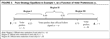
Figure 3 shows how different types of voters want the incumbent to act: a voter to the left of 0.25 always prefers x=A, a voter to the right of 0.75 always prefers x=B, and voter in the region [0.25, 0.75] prefers that the incumbent follow her signal, choosing x=A when s=A and x=B when s=B.

Pure Strategy Equilibria in Example 1, as a Function of Voter Preferences βv
In this example there is always a pure strategy equilibrium. There are also mixed strategy equilibria from parts 2 and 4 of Proposition 4 but they only occur for an exceedingly narrow range of parameter values, βV∈(0.43, 0.44) and βV∈(0.56, 0.57) respectively.6
All numerical cutpoints for βV in the example are rounded to two decimal places.
A few features of the equilibria are worth noting. If the voter is type A or type B (βV<0.25 or βV>0.75) we know from Proposition 3 that the incumbent always has an electoral incentive to choose the voter's preferred policy. In other words, when the voters have ideologically rigid preferences incumbents are motivated to be responsive to these preferences.
What is more interesting is that for many R voter-types, who would like the official to choose A or B on the basis of the policy information she receives, equilibrium behavior is exactly the same as for a type A or type B voter. A moderate voter, βV∈[0.25, 0.75], prefers that the incumbent follow her signal, choosing x=s. Yet for most values of βV within this range, elections induce some incumbents to be ideologically rigid.
Take a relatively pro-A moderate voter βV∈[0.25, 0.44], which corresponds to part 1 of Proposition 4. Such a type R voter behaves exactly like a type A voter, rewarding the incumbent for choosing policy A and punishing her for choosing policy B, regardless of whether B turned out to be the correct policy choice. The reason the voter removes an official who chooses policy B is that this policy choice reveals information about the incumbent's type; that is, that she is likely to be a type B official. As a result of this voter behavior, incumbents have an incentive to favor policy x=A systematically, as in Figure 2a. Consequently, elections induce ideological rigidity by some officials whose own preference is not to be ideologically rigid and who represent electorates that would like officials to respond to policy information. Specifically, officials in the region
prefer to choose x=B when s=B but instead, due to electoral motivations, choose x=A.
Similarly, a relatively pro-B moderate voter
, which correspond to part 5 of Proposition 4, removes an incumbent who chooses x=A and reelects an incumbent who chooses x=B, even if B turns out to be the wrong policy. As shown in Figure 2b, this electoral incentive causes type R incumbents in the region
to be ideologically rigid by choosing policy B even when their information indicates that it is not the correct policy. Again, we have a situation where elections induce ideological rigidity, contrary to the interests of both officials and voters.
The most centrist type R voters βV∈(0.44, 0.56), which correspond to part 3 of Proposition 4, reward policy success and punish policy failure, reelecting the incumbent if and only if her policy matches ω. These voters are roughly equally concerned about avoiding type A and type B incumbents, so in making their electoral decisions they focus instead on reelecting those most likely to use policy information. This is accomplished by reelecting the incumbent if and only if x=ω since type R incumbents are the ones that tend to choose policy that matches the state of the world. Thus βV∈(0.44, 0.56) is the only region of voter types for which we observe information-based moderation, as in Figure 2c, where elections give both left- and right-leaning officials an incentive to follow their signals.
The key point of this analysis involves moderate voters in the region
who want the incumbent to use her private information. Notably, except for voters where βV∈(0.44, 0.56), this desire is not sufficient to ensure an electoral incentive for information-based moderation. Rather, the voter's concern over reelecting the wrong type of politician causes him to reelect an incumbent simply based on the incumbent's policy choice and not on whether the choice actually turned out to be the correct one. Accordingly the incumbent, to signal her preference similarity, has an electoral incentive for ideological rigidity.
This rigidity is a form of what Canes-Wrone, Herron, and Shotts (2001) characterize as pandering; that is, the official, to enhance her electoral prospects, takes an action that in her expert judgment does not promote voters' interests. The fact that the pandering is coincident with rigidity stands in contrast to the common notion that pandering is a form of moderation (e.g., Jacobs and Shapiro 2000). Indeed, the moderation that occurs in our model, information-based moderation, does not encompass pandering. Both behaviors concern an official whose reelection prospects depend on moderate voters that want her to use her information. However, information-based moderation occurs when electoral pressures cause such an official to use her information, whereas pandering occurs when electoral pressures cause her to disregard it.
The pandering we observe also differs substantively from that in Canes-Wrone, Herron, and Shotts (2001). In that analysis, all actors are assumed to have exactly the same policy preferences. An official never panders to signal preference similarity, but instead to convince voters that she is skilled at gathering accurate policy information. Indeed, if voters shared her policy information, then the official in that model would have no incentives to pander. By contrast, as we detail in the following section, pandering can occur in the theory we develop here even when voters share an incumbent's policy information.
EXTENSIONS
We now briefly discuss several extensions of our model. We first show that our conclusions are robust to alternative technical assumptions. We then examine how the amount of information available to voters affects the prospects for ideological rigidity and information-based moderation.
Alternative Technical Assumptions
First, our model can be extended to a situation where the electorate consists of N voters, with preference parameters
voting under majority rule. From Lemma 6 in the Appendix, it is straightforward to show that the voter with the median βV is decisive, so there is no loss in generality in solving the model with only a single representative voter.
Second, our model can be extended to a nonuniform distribution F(·) of official types. With a nonuniform distribution, equilibria like the ones in Proposi- tions 3 and 4 always still exist. For certain parameter values there also exists an equilibrium in which the incumbent always follows her signal regardless of βI, and any type of voter is always indifferent between reelecting or removing the incumbent. This additional equilibrium can only occur if the official's signal is extremely accurate, that is, for q close to 1. Also, the distribution of official types must be exceedingly polarized; there must be a substantial probability that the challenger has
and also a substantial probability that
. Thus despite the fact that the signal is highly accurate, it must be likely that the challenger will simply ignore the signal if elected. Moreover, the challenger distribution for such an equilibrium cannot simply be skewed in one direction; rather it must be sharply bimodal. If any of these conditions fails to hold, then the only equilibria that can occur are the types characterized in Propositions 3 and 4, even allowing for a nonuniform F.
Alternative Assumptions about Voter Information
The voter in our model is imperfectly informed about two things—officials' preferences and policy—so we examine different assumptions regarding voter information about each of these factors.
If the voter knows with certainty the incumbent's and challenger's preferences, βI and βC, the incumbent's policy choice is irrelevant for the voter's election decision. Thus the incumbent has no reason to use her policy action to signal that her preferences are in line with the voter; that is, the incumbent does not have an electoral incentive to be ideologically rigid. In fact, even if only βI, but not βC, is known to the public, the voter's electoral decision is unaffected by the incumbent's actions in the first period; thus the incumbent has no electoral reason to be ideologically rigid.
We now consider three ways that the voter's information about policy could differ from our main model. First we consider an extreme case, in which all information available to the official when she chooses policy is also available to the public. Specifically, assume that the voter observes the incumbent's private signal s. One might think that in such a model, a type R voter will always reward an incumbent who follows her signal./However, even though the voter has all of the information necessary to adopt this strategy, it is not necessarily adopted in equilibrium. Rather, type R voters who are on the left end of the type R voter region will behave just like type A voters, reelecting an incumbent if and only if she chooses x=A. It is optimal for voters to do this, even though they know that s=B. This voter behavior is motivated by a concern over selecting an incumbent with the correct preferences; that is, although a voter to the pro-A side of the type R voter region prefers a type R official over a type A or type B one, a type B official is far and away the worst type. The voter is consequently willing to reelect an incumbent who is quite possibly her second-favorite type (A) to avoid getting stuck with her worst type (B). Even without any private policy information, elections may induce ideological rigidity.
It is worth highlighting, however, that the existence of private policy information increases the incentives for ideological rigidity and, correspondingly, decreases the incentives for information-based moderation. In general, an incumbent is more likely to use her policy information if voters share that information. For instance, in Example 1, the region of type R voters for which information-based moderation is an electoral incentive expands substantially, from βV∈(0.44, 0.56) to βV∈(0.38, 0.62), if voters observe s. Thus the incentives for politicians to use their policy information depend not only on the preferences of voters and officials but also on the amount of policy information available to voters.7
Proofs for the extensions, and the comparative claims about them, are available upon request.
We now extend the model in the other direction, by examining variants in which less information is available to voters. We first consider a model with no uncertainty resolution, that is, the voter does not learn before the next election whether a policy has succeeded or failed. This type of assumption is particularly applicable to policy decisions with long-term consequences. Without uncertainty resolution, the voter must base the electoral decision solely on the incumbent's policy choice; rather than the strategies νAA and νAB, which can differ according to the policy outcome, the voter chooses a single νA as the probability of reelection when the incumbent chooses x=A. Similarly the voter chooses a single νB as the probability of reelection when x=B. If νA>νB then the official always has an incentive to choose A, whereas if νA<νB the official always has an incentive to choose B. If νA=νB then elections have no effect on policy choice. In other words, without uncertainty resolution, elections always cause some types of incumbents to be ideologically rigid, and there is no possibility for information-based moderation. The incumbent focuses instead on trying to signal that her ideological preferences are ones the voter would like.
Finally, we consider a model with asymmetric uncertainty resolution; in particular, if x=A the voter observes the success or failure of a policy before the next election, but if x=B the voter only observes the policy choice itself and does not learn anything about whether the policy was in fact correct. This assumption is natural in situations where A represents taking action and B represents inaction. For example, if the President decides to go to war then voters can observe the success or failure of the war, and make inferences about whether going to war was in fact a good idea. In contrast, if the President does not go to war, voters may learn much less about whether war would have been a good idea. The general patterns of behavior in such a model are similar to Proposition 4, in the sense that not only extremist voters but also many signal-responsive voter types don't take into account the success or failure of a policy when making electoral decisions. In an asymmetric-resolution variant of Example 1, the range of voter types for which information-based moderation occurs, βV∈(0.49, 0.51), is smaller than the region for which moderation occurs under symmetric uncertainty resolution.
Comparing the variants of the model, we see that the incentives for an official to use her private information when making a policy decision depend on how much the public knows. Generally speaking, the better informed the voters are, the less likely it is that officials will be ideologically rigid and the more likely they will engage in information-based moderation.
EMPIRICAL IMPLICATIONS
Voters' Information about Politicians' Leanings
According to the theory, an incumbent—unless she is from the most moderate of districts—will be more ideologically rigid on an issue if voters do not know her preferences. When voters lack this knowledge, the incumbent can have strong incentives to use policy decisions to signal that her preferences are similar to those of the electorate. By contrast, if voters are informed about her predispositions, she has no incentive to use policy in this way; regardless of her actions, voters maintain a similar assessment of whether she is to the right or to the left of the challenger on that issue.
One could assess this prediction empirically by exploiting variation in citizens' knowledge of politicians' preferences across issues, for a given issue over time, or across electoral institutions. For instance, in a cross-issue analysis, one could compare legislative voting records over issues on which party provides a strong cue of a member's position versus issues on which parties are not well known to be distinct from each other. Think of policy areas such as trade, where members are commonly forced to choose between legislation that is either pro- or anti-free trade, or abortion, where a vote is often construed as pro-life or pro-choice. If party labels do not strongly signal politicians' leanings, a legislator will have strong incentives to vote consistently with district inclinations regardless of her information about the details of the roll call items. Alternatively, when party labels reveal candidates' preferences on an issue, then a legislator can be less concerned that roll-call votes could cause voters to conclude she does not share their preferences; she accordingly has more flexibility to vote against district inclinations if her information regarding the details of specific roll-call items recommends doing so.
More specifically, one could analyze U.S. Senate roll-call voting on a set of issues that vary in the degree to which party identification signals politicians' preferences. Voters' ability to differentiate parties on the issues could be assessed with established survey instruments that ask respondents to place the parties on various policy matters on a given scale. Voters' leanings could be obtained through existing or new state-level surveys, which are increasingly cost efficient due to web-based survey techniques. Given this information, one could assess whether Senators are more likely to vote consistently with state leanings—independent of the content of the legislation—as the electorate's ability to distinguish the parties diminishes.
Public opinion data for such a test is clearly easier to gather from a forward-looking perspective. However, it is worth pointing out that empirical analysis of previous legislative behavior is also possible. Consider, for instance, a comparison of Senate voting in the Reagan and Bush 41 administrations on immigration, a policy on which the parties were not clearly distinguished at that time (e.g., Tichenor 1994), versus a policy that did clearly distinguish the parties such as government provision of health care. State-level preferences on these issues could be obtained via CBS–New York Times polls, which Erikson, Wright, and McIver (1994) find can be pooled to create well-constructed state samples.
As an alternative to cross-issue comparisons, one could analyze legislative voting over time on an issue that originally does not distinguish the parties but later does distinguish them. Research suggests that abortion, for instance, has these characteristics because the parties were not divided on the issue until the 1980s (e.g., Adams 1997).
Finally, one could assess the prediction outside of the legislative setting. Indeed, a quite different type of test would be to compare the decision making of state supreme court justices selected through partisan versus nonpartisan (retention) elections. According to the theory, judges selected through nonpartisan elections should be more ideologically rigid to district inclinations because these judges are more dependent on case decisions to signal their preferences. This expectation of the theory receives support from a recent conference paper by Caldarone, Canes-Wrone, and Clark (2006), which finds that on abortion cases since the 1980s state supreme court justices in nonpartisan systems have been more likely than ones in partisan systems to rule consistently in line with state leanings on that issue. Notably, this finding contrasts with conventional wisdom about the effect of nonpartisan elections on policy decisions.
Of course, all of the tests we have discussed depend on appropriate control variables. Because we are simply suggesting venues for testing, we do not delve into this level of detail. It is worth pointing out, however, that the theory itself suggests an important control for the analyses that compare various issues. Namely, the theory implies that citizens' knowledge about an issue should influence elected officials' incentives for ideological rigidity.
Voters' Policy Information
The theory indicates that incentives for rigidity to district leanings decline as voters acquire more policy information. For instance, in the baseline model, where the electorate does not share the politician's information but does learn whether the policy was successful, only politicians with quite moderate electorates lack incentives for rigidity. By comparison, if voters share politicians' policy information, incentives for rigidity are less prevalent. And conversely, if voters are not going to receive any information about a policy's success, incentives for rigidity are widespread.
The literature suggests that citizens' policy knowledge should vary across issues, for a given issue over time, and across localities. Variation across issues may occur because some are “easy” to understand readily, whereas others are more “hard” or technical (Carmines and Stimson 1980). Policy makers may also have truly private or secret information, for example, on foreign policy matters. Correspondingly, on a given issue over time, citizens can gain policy knowledge as secret information is revealed or as they become more familiar with the issue. Finally, voters' policy knowledge may vary across localities due to disparities in citizens' interest in the issue or local media coverage (Arnold 2004).
One could analyze legislative voting to assess our predictions regarding policy information. More specifically, legislators should be more rigid in their propensity to follow district leanings on an issue the lower is citizens' level of policy information. To measure policy information, one could use existing survey instruments that ask respondents to rank how closely they follow certain issues along with factual questions that assess actual knowledge.
These suggested empirical analyses are not meant to cover all possibilities for testing the theory. Nor is this the place to specify all details of implementation. Rather, we have sought to outline ways to test new hypotheses that the theory motivates. Additionally, for one of these hypotheses, we have reviewed preliminary evidence that supports the theory.
CONCLUSION
We have found that elections may provide strong incentives for politicians to be ideologically rigid. Even when voters want a politician to be open to choosing different policies on the basis of information, elections can induce him to disregard it. Moreover, elections often fail to induce the converse behavior, information-based moderation, whereby either a left- or right-leaning politician becomes more likely to use his policy information when it conflicts with his personal preferences. These seemingly perverse electoral incentives occur because an official wants to signal that his ideological preferences are similar to those of his electorate.
Paradoxically, there are situations in which both the incumbent and voters, if they were fully informed, would want the incumbent to take a different position. Thus as in other recent theories, politicians can have the incentive to pander to voters by taking positions that the politicians do not want and that voters would not want if they had better information (Canes-Wrone, Herron, and Shotts 2001; Maskin and Tirole 2004; Fox, Forthcoming). A new feature of this theory is that pandering is linked to the behaviors of ideological rigidity and information-based moderation; pandering is coincident with rigidity and does not occur if there is information-based moderation. More specifically, we show that dogmatic actions can be popular simply because voters are worried about electing an incumbent with the wrong policy preferences; if voters knew the incumbent shared their preferences, then these actions would not be popular.
Extensions of the theory show that voter knowledge strongly influences an official's incentive to use her private information. The more policy information voters have, the stronger this incentive and accordingly, the lower the incentive for ideological rigidity. Furthermore, the incentive for rigidity is lower when voters know an incumbent's preferences on an issue. The analysis as a whole therefore suggests we should see variation in rigidity across issues, time, and electoral systems according to voters' knowledge about policy and candidate preferences.
By focusing on these effects of voter knowledge, the theory highlights that electoral pressures unto themselves can induce elites to be more polarized than voters on particular issues. For instance, the results indicate that elected representatives from two moderate districts, which want their representatives to use all available policy information on an issue and vary only by the fact that one slightly leans left and the other slightly right, can have incentives to ignore relevant policy information and always vote to the left (in the case of the first district) and to the right (in the second case). Conventional explanations for why politicians might behave this way focus on elite actors such as party and interest group activists. Obviously, we are not suggesting that such actors are irrelevant. However, we have shown that even in the absence of such influences, officials can have incentives to be more ideologically rigid than their electorates.
APPENDIX
Proof of Proposition 1
We use a superscript t to denote (expected) utility from the period t policy choice. Throughout the Appendix, we analyze utility differences that are functions of β as well as other parameters, though in an abuse of notation we omit the β arguments. The official's utility is U2(A [mid ] s)=−β(1−θA(s)) from x=A and U2(B [mid ] s)=−(1−β)θA(s) from x=B. The difference is U2(B [mid ] s)−U2(A [mid ] s)=β−θA(s). The derivative with respect to β is 1, so we set U2(A [mid ] s)=U2(B [mid ] s) for the cutpoints:
and
.[squf ]
To prove Proposition 2 we first prove a few lemmas.
Lemma 1.
For any voter strategy ν and probabilities ϕA, ϕR, and ϕB that the challenger is type A, R, and B, the incumbent's expected utility difference between x=B and x=A in the first period is a continuous, piecewise linear, strictly increasing function of βI.
Proof. Let U(x [mid ] s) denote the official's total expected utility from choosing policy x∈{A, B} in the first period given signal s. We first consider a type A official, and find U(B [mid ] s)−U(A [mid ] s). The first component of the difference between these utilities is the first period utility difference from the two actions, which by the reasoning in the proof of Proposition 1 is βI−θA(s).
The second component is the second- period effect of her first-period action. The difference in her probability of being reelected as a result of her policy choice is rB(s)−rA(s). If the type A incumbent loses office, there is an increased chance of an incorrect policy B in the second period, which results in −(1−βI) utility. Specifically, with probability ϕRπ(1−q) a type R challenger observes s=B when ω=A, and chooses x=B. Or, with probability ϕBπ, the challenger is type B and chooses x=B when ω=A. If a type A official loses office, there is also a decreased chance of an incorrect policy A in the second period, which results in −βI utility. With probability ϕRq(1−π) the challenger is type R and s=B when ω=B. Or, with probability ϕB(1−π), the challenger is type B and ω=B. Combining these terms, for a type A incumbent,
:

A type R incumbent's reasoning is similar, except that a type R challenger will act like the incumbent. For

For a type B official,

It is straightforward to confirm that U(B|s)-U(A|s) is continuous at
and
. Also, U(B [mid ] s)−U(A [mid ] s) is clearly piecewise linear in βI, and the slope is strictly greater than zero since [rB(s)−rA(s)]∈[−1, 1], π∈(0, 1), (ϕRq+ϕB)∈(0, 1), (ϕR(1−q)+ϕB)∈(0, 1), (ϕAq−ϕB(1−q))∈(−1, 1), (ϕA(1−q)−ϕBq)∈(−1, 1), (ϕA+ϕR(1−q))∈(0, 1), and (ϕA+ϕRq)∈(0, 1).[squf ]
Lemma 2.
There exists a cutpoint
such that for any voter strategy ν it is strictly optimal for an incumbent with
to choose x=A when s=A the first period and it is strictly optimal for an incumbent with
to choose x=B when s=B the first period.
Proof.
In period t, an official can observe s=A or s=B. A type B official cares more about current-period effects of choosing x=B when s=B than when s=A, i.e., for any

Similarly, for a type A official, i.e.,
Ut(A | A)−Ut(B | A)>Ut(A | B)−Ut(B | B).
For a type R official we find
such that the official cares equally about the two decisions, Ut(A | A)−Ut(B | A)=Ut(B | B)−Ut(A | B). This reduces to
We still must establish that for
, x=A is optimal in the first period when s=A. For
, the biggest possible difference between an official's expected utility from her own policy choice when re-elected versus a challenger's policy choice occurs when s=A in the second period. She can lose up to U2(A | A)−U2(B | A) if the challenger is type B. However, this occurs with probability strictly less than 1, since the second period signal may be s=B or the replacement official may be type A. Thus a strict upper bound on the official's expected second-period utility loss from choosing x=B when s=A in the first period is U2(A | A)−U2(B | A). Since the official's utility difference for first period policy when s=A, i.e., U1(A | A)−U1(B | A), equals this upper bound it is strictly optimal for her to choose x=A. For
a symmetric argument shows that x=B is strictly optimal when s=B in the first period.[squf ]
Lemma 3.
For any voter strategy ν, if π≥1/2, an official with βI=0 strictly prefers to choose x=A in the first period regardless of s. If π≤1/2, an official with βI=1 strictly prefers to choose x=B in the first period regardless of s.
Proof. For π≥1/2 we show that an incumbent with βI=0 strictly prefers to choose x=A even when s=B. We build on Equation (3) in the proof of Lemma 1. Note that for βI=0 this expression is maximized when rB(B)=1 and rA(B)=0. The distribution of official types F is uniform so
θA(B), ϕB=
and ϕR=θA(A)−θA(B). Substituting in, we need to show that U(B | B)−U(A | B)= −θA(B)+π[(θA(A)−θA(B))(1−q)+1−θA(A)]<0, that is, π[1−qθA(A)] <θA(B)[1+π(1−q)]. Since
and
, we need
For π≥1/2, πq +(1 − π)(1 − q)≥(1 − π)q + π(1 − q) so it is sufficient to focus on the numerator—after some algebra it simplifies to 0<2π[1−q], which holds, since q<1. A symmetric argument establishes the result for π≤1/2 and βI=1.[squf ]
Proof of Proposition 2
We first find the cutpoint
to the left of
from Lemma 2, for the incumbent's first period behavior when s=B. Lemma 2 shows that x=B is strictly optimal for all
, and that U(B | B)−U(A | B)>0 for
Lemma 1 shows that U(B | B)−U(A | B) is continuous and strictly increasing on
Thus
or if there is no βI≥0 for which U(B | B)−U(A | B)≤0 then
A similar argument yields a cutpoint
where
for first period official behavior when s=A. From Lemma 3, at least one of the inequalities in part 4 of the proposition must be strict.[squf ]
For Propositions 3 and 4, we characterize voter beliefs. We use the notation μT(xω) to refer to the voter's belief about the probability that the incumbent is type T∈{A, R, B} given policy x and state of the world ω. Likewise ϕT denotes the probability that the challenger is type T.
Lemma 4.
For any first-period official strategy as in Proposition 2, μA(AA)>ϕA>μA(BA), μA(AB)>ϕA>μA(BB), μB(AA)<ϕB<μB(BA), and μB(AB)<ϕB<μB(BB).
We prove that μA(AA)>ϕA>μA(BA). The proofs for the other inequalities are very similar. Note that since ω is independent of the official's type, and there are only two possible actions, ϕA is a convex combination of μA(AA) and μA(BA) so it is sufficient to show that ϕA>μA(BA). If
then no type A official ever chooses x=B in the first period so μA(BA)=0. If
, then
.[squf ]
We now state without proof a trivial lemma for preferences of type A and type B voters over the three types of officials. Proposition 3 follows directly from Lemmas 4 and 5.
Lemma 5.
A type A voter strictly prefers a type A official over a type R official and strictly prefers a type R official over a type B official. A type B voter has the opposite strict ordinal preferences.
We prove Proposition 4 via a few lemmas. First we characterize cutpoints for voter behavior, βA and βB, that vary according to the incumbent's strategy in the first period.
Lemma 6.
If first period official behavior is characterized by cutpoints
and
as in Proposition 2 then there exist cutpoints βA and βB such that:
- .
- If ω=B, a voter βV<βB strictly prefers to re-elect the official if x=A and to remove her if x=B. A voter βV>βB has the opposite strict preferences, and a voter βV=βB is indifferent.
- If ω=A, a voter βV<βA strictly prefers to re-elect the official if x=A and to remove her if x=B. A voter βV>βA has the opposite strict preferences, and a voter βV=βA is indifferent.
Proof. We first prove part 2 of the lemma. For a voter who observes x=B and ω=B, we show that the expected utility difference from reelecting versus removing the incumbent is a linear, and hence monotonic, function of βV. We denote these utilities as U(old [mid ] BB) and U(new).

Also, from Lemmas 4 and 5, a voter at
strictly prefers to remove the official when x=B and ω=B and a voter at
strictly prefers to retain her. Thus there exists a cutpoint
such that a voter with βV<βB prefers to remove whereas a voter with βV>βB strictly prefers to reelect when x=B and ω=B. Also, since there are only two actions and the incumbent and challenger come from the same pool, we can draw conclusions about voter preferences when x=A and ω=B. Specifically, U(old | AB)>U(new) iff U(old | BB)<U(new), U(old | AB)<U(new) iff U(old | BB)>U(new), and U(old | AB)=U(new) iff U(old | BB)=U(new). Thus the same cutpoint βB applies to voter preferences when x=A and ω=B, and we have proved part 2 of the lemma. The proof for part 3 is similar.
We now order the cutpoints. If βB≥βA, a voter βV∈[βB, βA] weakly prefers to reelect whenever x≠s. We let
be an arbitrary such voter and derive a contradiction. We use the notation U(β>g) to denote a voter's expected utility from an official randomly drawn from the portion of the distribution F that is greater than g∈(0, 1). Similarly U(β∈(g, h)) denotes expected utility from an official drawn from F restricted to the interval (g, h)⊆(0, 1).
For a voter at
to weakly prefer reelecting when x=A and ω=B and weakly prefer removing the incumbent when x=A and ω=A requires that U(old | AB)≥ U(new) and U(new) ≥ U(old | AA), so U(old | AB)≥ U(old | AA); that is,
. After some algebra, this reduces to
A symmetric argument for x=B establishes that
Expressing
in terms of the voter's utility from each of the three incumbent types U(A), U(R), and U(B) we need

Since
and U(R)>U(B) for a type R voter, Equation (4) requires that
; that is,
A similar argument building on
establishes that
; that is,
Plugging this latter result back in to Equation (4) we get
Since U(R)>U(A) for a type R voter and
, it must be the case that U(B)>U(A).
But working from
a symmetric argument shows that U(B)<U(A), which is a contradiction.[squf ]
Proposition 4 summarizes the following three lemmas.
Lemma 7.
Each of the following is an equilibrium voter strategy for some
(1) νAA=νAB=1, νBB=νBA=0; {\rm (2)} νAA=1, νAB∈(0, 1), νBB∈(0, 1), νBA=0; (3) νAA=1, νAB=0, νBB=1, νBA=0; (4) νAA∈(0, 1), νAB=0, νBB=1, νBA∈(0, 1); (5) νAA=νAB=0, νBB=νBA=1.
Proof. For (1), set νAA=νAB=1 and νBB=νBA=0, which, by Proposition 2, implies cutpoints
and
for first-period official behavior. By Lemma 6, this official behavior implies voter cutpoints βB and βA. The voter behavior in part (1) is optimal for any βV≤βB.
For (2), let νAA=1 and νBA=0, and let νABand νBB each take any arbitrary value in (0, 1). Proposition 2 gives cutpoints
and
and Lemma 6 gives the resulting voter cutpoints βB and βA. For βV=βB it is optimal to play νAA=1 and νBA=0. Since this voter type is indifferent after observing either x=A or x=B when ω=B, he can mix using the particular νAB and νBB that were used to generate this βB. The arguments for (3)–(5) are similar.[squf ]
Lemma 8.
Any equilibrium voter strategy must be one of the 7 types in Lemma 7.
Proof. Consider any (possibly mixed) voter strategy ν. Given ν, Proposition 2 implies cutpoints
and
for first period official behavior. Given these cutpoints, Lemma 6 characterizes cutpoints for voter behavior. The only voter strategies ν that are compatible with these cutpoints are the types listed in Lemma 7.[squf ]
Lemma 9.
For any
there exists an equilibrium.
We set up a continuous function λ(z):
. Each
specifies a particular equilibrium from Lemma 7, and we use the intermediate value theorem to show that for any
there is some z such that βV∈λ(z); that is, there is an equilibrium. The intuition behind the proof is that there are three intervals of βV values for the three types of pure strategy equilibria in parts (1), (3), and (5) of Lemma 7, and any gaps between these intervals can be filled in using specific mixed strategy equilibria from parts (2) and (4).
We begin by setting up notation. First let β(1) be the maximum βV for which the voter can play νAA=νAB=1 and νBB=νBA=0 in equilibrium. Specifically β(1) is the value of βB from Lemma 6 generated by official behavior that is optimal given νAA=νAB=1 and νBB=νBA=0. Likewise we set νAA=1, νAB=0, νBB=1, and νBA=0, and let β(2) be the minimum and β(3) be the maximum βV for which this voter behavior can occur in equilibrium; these are the βB and βA from Lemma 6 generated by official behavior that is a best response to νAA=1, νAB=0, νBB=1, and νBA=0. Finally, let β(4) be the minimum βV for which the voter can play νAA=νAB=0 and νBB=νBA=1 in equilibrium. This is the value of βA from Lemma 6 generated by official behavior that is a best response to νAA=νAB=0 and νBB=νBA=1.
Define λ(z) as follows:

By construction for
there is an equilibrium in which νAA=νAB=1 and νBB=νBA=0; for
there is an equilibrium in which νAA=1, νAB=0, νBB=1, and νBA=0; and for
there is an equilibrium in which νAA=νAB=0 and νBB=νBA=1. Also λ(z) is nonempty for
and by Lemma 7, λ(z) is nonempty, ∀z∈(1, 2)∪(3, 4). Finally,
and
so to apply the intermediate value theorem, all we need to do is to show that λ(z) is continuous.
Clearly λ(z) is continuous on [0, 1), (2, 3), and (4, 5], so we just need to check continuity on [1, 2] and [3, 4]. Suppose
; we need to show that
To do this we define
and
to be the cutpoints for incumbent policy choice from Proposition 2 given voter behavior specified by
and similarly define
and
based on zn. We show that
and
We use Lemma 6 to define cutpoints for voter behavior
βB(zn), and βA(zn) then show that
and
Finally we show that convergence of the voter cutpoints ensures that
To show
recall from the proof of Proposition 2 that
From Lemma 1, U(B | B)−U(A | B) is continuous and strictly increasing in βI. We now note that it has a slope that is strictly bounded away from zero, since in Equation (3) for
Similarly, for
,
Let d>0 be a lower bound on the slope of U(B | B)−U(A | B). From Equations (1) and (2) in the main text the reelection probability difference [rA(s)−rB(s)] is a continuous function of the voter strategy ν, and νAA, νAB, νBB, νBAare continuous functions of z, as set up in the definition of λ(·). Thus the utility difference for zn, which we denote as Un(B | B)−Un(A | B) converges pointwise to the utility difference for
, which we denote as
And, if we pick an ε>0 and let δ=εd there exists an N such that for all n>N, at
Un(B | B)−Un(A | B)<δ and thus
If
and
for βV=0 then there exists an N such that for all n>N, Un(B | B)−Un(A | B)>0 and thus
By an argument similar to the one in this paragraph, \smash{
We now establish convergence of the voter cutpoints, starting with
As noted in the proof of Lemma 6, for a given pair of incumbent behavior cutpoints
and
,
the voter's utility difference for reelecting versus removing the incumbent when x=A and ω=B, is strictly positive for
. Likewise, given
and
for a voter with preference
is strictly negative. Let d>0 be the slope of this utility difference function, and note that because voter beliefs μ(·) are a continuous function of
and
, Un(old | AB)−Un(new) converges pointwise to
so we can pick an N such that for n>N the absolute value of the slope of Un(old | AB)−Un(new) is greater than
. Then the same type of argument we used to show that
can be used to show that
The argument for
is similar.
To show that
we consider two cases. First suppose
, and consider the specific subcase
Then
implies that there exists an N, such that ∀n>N, zn∈(1, 2). For such zn∈(1, 2), by Lemma 6 and the definition of λ(·), λ(zn)=βB(zn) and
The argument is similar for
, using βA.
Now suppose
and consider the specific case
in which case
Pick any ε>0, and note from the definition of λ(·) that we can pick an N1 such that for any n>N1, if zn≤1 then |β(1)−λ(zn)|<ε. Similarly, since for zn>1, λ(zn)=βB(zn) and
, given ε we can pick an N2 such that for any n>N2, if zn>1 then |β(1)−λ(zn)|<ε. Thus for any n>max{N1, N2}, |β(1)−λ(zn)|<ε.[squf ]
This paper is dedicated to Michael Wallerstein, who was an influential colleague, mentor, and friend. We are grateful for helpful comments from Larry Bartels, John Duggan, Marty Gilens, Greg Huber, Craig Volden, three anonymous referees, and seminar participants at Harvard, NYU, Princeton, Rochester's Wallis Institute, Stanford, Washington University, and Yale. We particularly thank Michael Herron for helpful discussions early on in the project. For financial support, Ken Shotts thanks the Hoover National Fellows program.




Comments
No Comments have been published for this article.