Introduction
In the past years gold nanoparticles (AuNPs) have emerged as excellent materials for different applications. Several shape-based and facet-based gold nanostructures such as star, flower, etc., and geometrical shape-based structures such as triangular, cylindrical, square, rod, etc., as well as hollow and core–shell nanoparticles have been synthesized till date adopting different synthesis protocols. Among these catalyst materials, hollow gold nanoparticles (HGNPs) have drawn much attention due to their distinctive properties and presence of rather interesting plasmonic nanostructures. HGNPs exhibit localized surface plasmon resonance, which can cause enhanced near-field amplitude at the resonance frequency.[Reference Tsai, Lu, Lin and Lee1] Hollow and porous gold nanostructures are important because of their high surface-to-volume ratio and much improved optical, electrocatalytic and mechanical properties compared with those of normal spherical AuNPs. The plasmonic response of HGNPs is beneficial for the application of drug or gene delivery.[Reference Timko, Arruebo, Shankarappa, McAlvin, Okonkwo, Mizrahi, Stefanescu, Gomez, Zhu, Zhu, Santamaria, Langer and Kohane2] These hollow materials have prolonged blood circulation half-life in comparison to other nanoparticles (including core–shell type SiO2-Au nanostructures)[Reference Lu, Melancon, Xiong, Huang, Elliott, Song, Zhang, Flores, Gelovani, Wang, Ku, Stafford and Li3] which absorb in the near infrared region. These particles also show less cytotoxicity than gold nanorods.[Reference Melancon, Lu, Yang, Zhang, Cheng, Elliot, Stafford, Olson, Zhang and Li4] HGNPs are used as photoacoustic imaging tags, contrast agents in optical coherence tomography, in multiphoton microscopy, as biosensors, as thermal tags, and in cancer therapeutic applications.[Reference Lu, Huang, Ku, Wen, Zhou, Guzatov, Brecht, Su, Oraevsky, Wang and Li5–Reference Fan, Gösele and Zacharias8]
In addition, HGNPs show enhanced catalytic properties, compared with solid nanoparticles because of the cage effect confining the reactants within the hollow interior.[Reference Mahmoud, Garlyyev and El-Sayed9] Galvanic replacement reaction (GRR) where metal nanostructures are used as sacrificial templates is one of the very few methods available for the synthesis of mono-disperse hollow nanostructures with high reproducibility.[Reference Seo and Song10] In this method, precursor nanostructures are allowed to react with metal ions which are more noble. The difference in the electrode potential of the two metals helps the nanostructured templates of less noble metal to dissolve out and the more noble metal ion to be reduced to zero oxidation state, and concomitantly deposits onto the template surface.[Reference Seo and Song10, Reference Yin, Erdonmez, Aloni and Alivisatos11] Meanwhile the first metal is continuously dissolved out from the core. At the end, a structure is formed which has a hollow core and a shell containing either just the second metal or it may be composed of the alloy of both metals. Till now, a wide variety of hollow nanostructures are created which include spherical nanoshells composed of Au, Pd, and Pt, where nanotemplates of Ag, Cu, or even more reactive metals (e.g., Zn or Mg) has been utilized via GRR.[Reference Yin, Erdonmez, Aloni and Alivisatos11–Reference You, Ahn, Min, Raja, O'Halloran and Odom14] Thus, according to literature report, mainly Ag (in some cases Zn and Mg also) has been used as the template for GRR. Recently As(0) nanoparticles are reported to be excellent template candidates for the formation of HGNPs.[Reference Pal, Saha, Maji, Kundu and Kundu15–Reference Sahoo, Dutta, Pradhan, Ray, Roy, Pal and Pal17] These reports lack on the information about the reproducibility, factors affecting the growth of HGNPs, and comparative study of catalytic activity of other reported nanostructures. In this paper, we have proved the credibility of As(0) as an excellent template, which is capable of producing HGNPs having almost similar size of it. We have also incorporated the study about the changes in catalytic activity with the variation of the size of HGNPs in 4-nitrophenol (4-NP) reduction[Reference Saha, Pal, Kundu, Basu and Pal18–Reference Aditya, Pal and Pal20] using borohydride in the presence of nanocatalysts. This reaction has gained tremendous attention in past decades, due to its simplicity and easy monitoring protocol. We have also analyzed the reusability of the catalysts. A comparative study with other gold nanocatalysts relevant to this category is also scrutinized. As far our knowledge goes, no other reports established any dependence between temperature and size variation of HGNPs. Here for the first time in controlled temperature condition, we are able to produce two different sized As(0) (e.g., As1 and As2 having the size 50 ± 7 and 70 ± 10 nm, respectively) which are used for the formation of similar sized mono-disperse HGNPs (i.e., AuNP1 and AuNP2 having the size 55 ± 7 and 72 ± 7 nm, respectively). Further, detailed study on the 4-NP reduction using both the catalysts indicates that, AuNP1 has much higher catalytic activity compared with AuNP2.
Experimental methods
Materials
NaAsO2 (LOBA Chemie, India) was used in our studies to prepare 1 × 10⁻² M As(III) stock solution. NaBH4 used was from SRL Chemicals (India). 4-NP was procured from LOBA Chemie. HAuCl4 was obtained from Sigma-Aldrich (India). Au(III) solution having a concentration of 5 × 10⁻³ M was used in this study. Double-distilled water was used in all experiments.
Instruments
A double-beam spectrophotometer (SPECTRASCAN UV 2600, Chemito, India) was used to obtain UV-visible spectra. Electronic balance (Afcoset, Bombay Burmah Trading Corporation Ltd., India) was used for weighing the chemicals. The pH of all solutions was measured with pH meter (Toshcon Industries Pvt. Ltd., Haridwar, India). Transmission electron microscopy (TEM) images were obtained using a High Resolution Transmission Electron Microscope (JEOL JEM-2100, Japan). Analytical TEM analyses were performed in FEI-TECNAI G2 20S-TWIN (USA). The x-ray diffraction (XRD) analyses of the prepared materials were done using Panalytical High Resolution XRD-II, PW 3040/60 instrument. The dynamic light scattering (DLS) experiment was carried out in Malvern Nano ZS instrument equipped with 4 mW He-Ne LASER (λ = 632.8 nm).
Time-dependent synthesis of As1 and As2
Here, an aliquot of 2 mL of As(III) solution (1 × 10⁻² M) was added to 24 mL of distilled water and the pH was adjusted in the range of 7–9. Then freshly prepared 1.2 mL of 0.1 M NaBH4 solution was added to it and kept at room temperature without any mechanical disturbance. After 10 min, a light yellow color started to develop. The color turned to deep yellowish brown in 2 h. To complete the decomposition of the excess NaBH4, the solution was kept for another 6–7 h. No change in color of As(0) was observed during this time period. This material was marked as As1. Getting As2 is very simple. After preparation of As1 solution, it was kept undisturbed for another 10–12 h. The color of the solution then faded slightly to light yellowish brown and this solution was designated as As2.
Temperature-dependent synthesis of As1 and As2
The As(0) formation was investigated at various temperatures, e.g., 10, 20, 30, 40 °C, and at each temperature, the formation of As(0) was examined. An aliquot of 2 mL of As(III) solution (1 × 10⁻² M) was added to 24 mL of distilled water (pH ~7–9) and then freshly prepared 1.2 mL of 0.1 M NaBH4 solution was introduced to the above solution and kept standing in a temperature-controlled incubator. It was noticed that to achieve a definite sized As(0) at lower temperature, longer time was required. Thus, by varying the temperature, it was possible to prepare As(0) nanoparticles having similar size of As1 or As2.
Synthesis of AuNP1 and AuNP2
An aliquot of 2.4 mL of As1 was taken in a sample vial and 0.6 mL of Au(III) solution (5 × 10⁻³ M) was mixed. The resultant mixture was then kept standing for 10 min to get a red colored sol (AuNP1). The sol was stable over 2 months at room temperature. The final concentration ratio was (As):(Au) = 1:1.66 (M/M). For the synthesis of AuNP2, the same above mentioned method was followed taking As2 as the starting aliquot. The obtained blue colored sol was stable over a period of 1 month under ambient condition. The ultimate concentration ratio was (As):(Au) = 1:1.66 (M/M). In both the cases, the final concentration of gold was 1 × 10⁻³ M.
Catalytic reduction of 4-NP in the presence of AuNP1 and AuNP2
The 4-NP reduction was performed in a cuvette (made of quartz) in the presence of excess of borohydride. In the cuvette, 2.5 mL of 0.1 M NaBH4 solution was taken and then 4-NP (1 × 10⁻² M) was added at an appropriate quantity. Next, to this mixture, a certain dose of catalyst, i.e., AuNP1 (2–5 µL) or AuNP2 (4–7 µL) was introduced. The experiments were designed to see the effect of catalyst dose as well as the initial 4-NP concentration. The catalytic effect was examined for both the catalysts AuNP1 and AuNP2. All reactions were monitored at 400 nm time to time.
Results and discussion
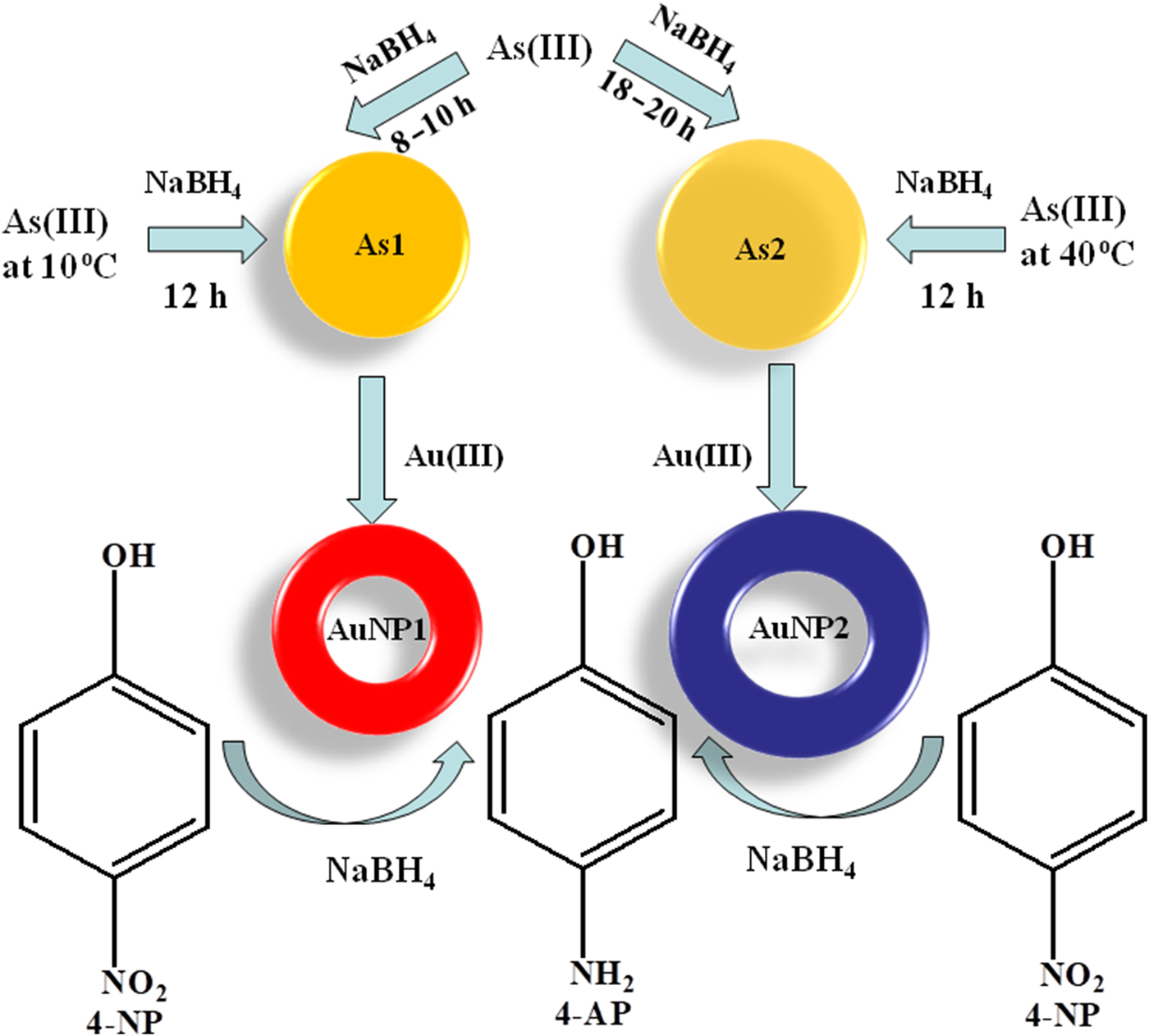
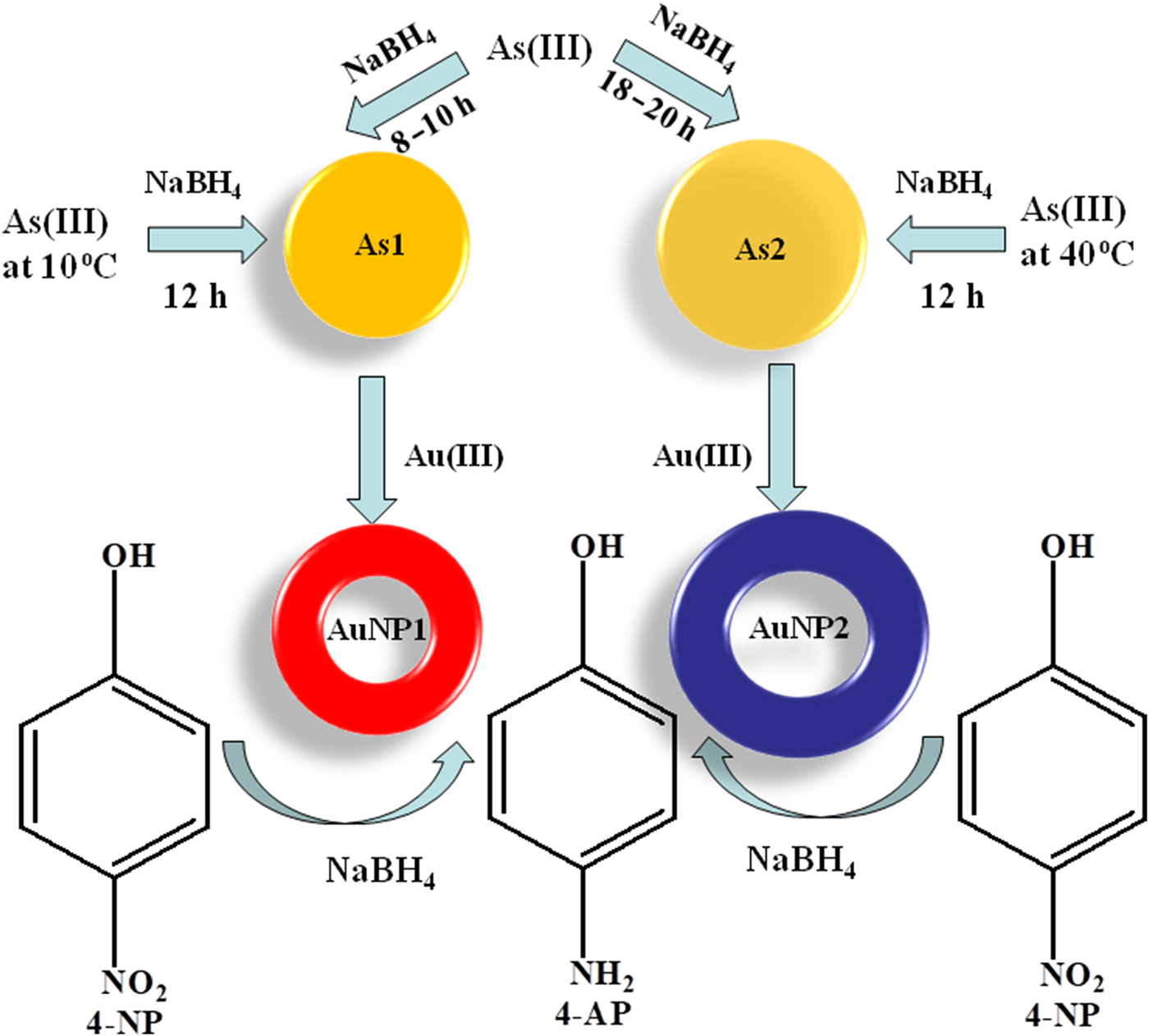
The present work constitutes mainly three steps: first, preparation of As(0) nanoparticles in two different size ranges; second, formation of HGNPs in two different size ranges from As(0) nanoparticles via GRR reaction; and third, catalytic application of HGNPs to convert 4-NP in to 4-AP using sodium borohydride and realization of size effect. The overall work is presented in Scheme 1. The steps are detailed in the following sections.
Preparation of AuNP1 and AuNP2 from As1 and As2, respectively (time- and temperature-dependent).
Time-dependent formation of As1 and As2 nanoparticles
The first step of the work was the transformation of As(III) to As(0). For this, aqueous NaBH4 solution was used as a reducing agent under controlled pH 7–9. Maintenance of pH is very crucial for this conversion, because NaBH4 may reduce As(III) to AsH3 at pH <4. The AsH3 gas generated from arsenite or arsenate is extensively used in quantifying arsenic.[Reference Pal, Saha, Maji, Kundu and Kundu15] The present study shows the quantitative reduction of As(III) to As(0) without the formation of trace of AsH3. This reaction is possible because of the suitable redox potential of the components. As reported earlier, the E0 of AsO2−/As(0) system is −0.7 V and that of As(0)/AsH3 system is −1.4 V in basic condition. On the other hand, the reported E0 of BH4−/BO2− is −1.33 V. This means under basic condition, borohydride is not at all effective to reduce As(III) to arsine gas. The above principle is utilized in our work to produce As(0) from arsenite using BH4− as a reductant.
In the first case, when As(0) just nucleated in solution, the light yellow color appeared and in 2 h the formation of As1 was complete. Then As1 was kept further for another 6 h for the complete decomposition of borohydride. It is to be noted that no external stabilizer was used in the preparation of As1. To prepare As2, the As1 sol was kept for another 10–12 h without any disturbance. During this time period, the As1 nanoparticles got the chance to grow further and form As2 which were of larger size. Thus, the formation of two different sized As(0) is time-dependent. This has been depicted in Scheme 1.
GRR of As(0) by Au(III) to form AuNP1 and AuNP2
In the second step, the As(0) nanoparticles were used for HGNP formation via GRR reaction. Thus, HGNPs in two different size ranges were obtained from As1 and As2. It is assumed that, during the GRR, stable As(0) nanoparticles served as the reducing agent for AuNP formation. In this case, HAuCl4 was reduced by As(0) in an aqueous phase (pH = 5.5) with simultaneous formation of arsenate. This was supported earlier by FTIR and Raman data.[Reference Pal, Saha, Maji, Sahoo, Kundu and Kundu16] Here Au(III) ions first got adsorbed on the As(0) nanoparticle surface and then were reduced to Au(0). During this process, As(0) was oxidized to As(III)/As(V), and slowly the formed ions dissolved out piercing the fresh gold surface making porous Au(0) particles. The process was continued until and unless all the As(0) was consumed leaving behind a HGNP. The most important part of such a procedure was that, the size of gold nanoparticle replicates almost the same size as that of parent As(0) precursor nanoparticle. The As(0) formation and the evolution of Au(0) nanoparticles are shown pictorially in Scheme 1.
The diameter of the HGNPs depended on the size of the As(0) provided in the solution. As1 and As2 are the two different sized nanoparticles which acted as the template to form two different sized HGNPs, viz., AuNP1 and AuNP2. This was indicated by two different colored (i.e., red and blue) gold sol obtained (Fig. S1). The formation of different sized gold nanoparticles was confirmed from the plasmonic peaks by the UV-vis spectroscopy and analytical TEM and DLS studies.
Characterization of As1 and As2
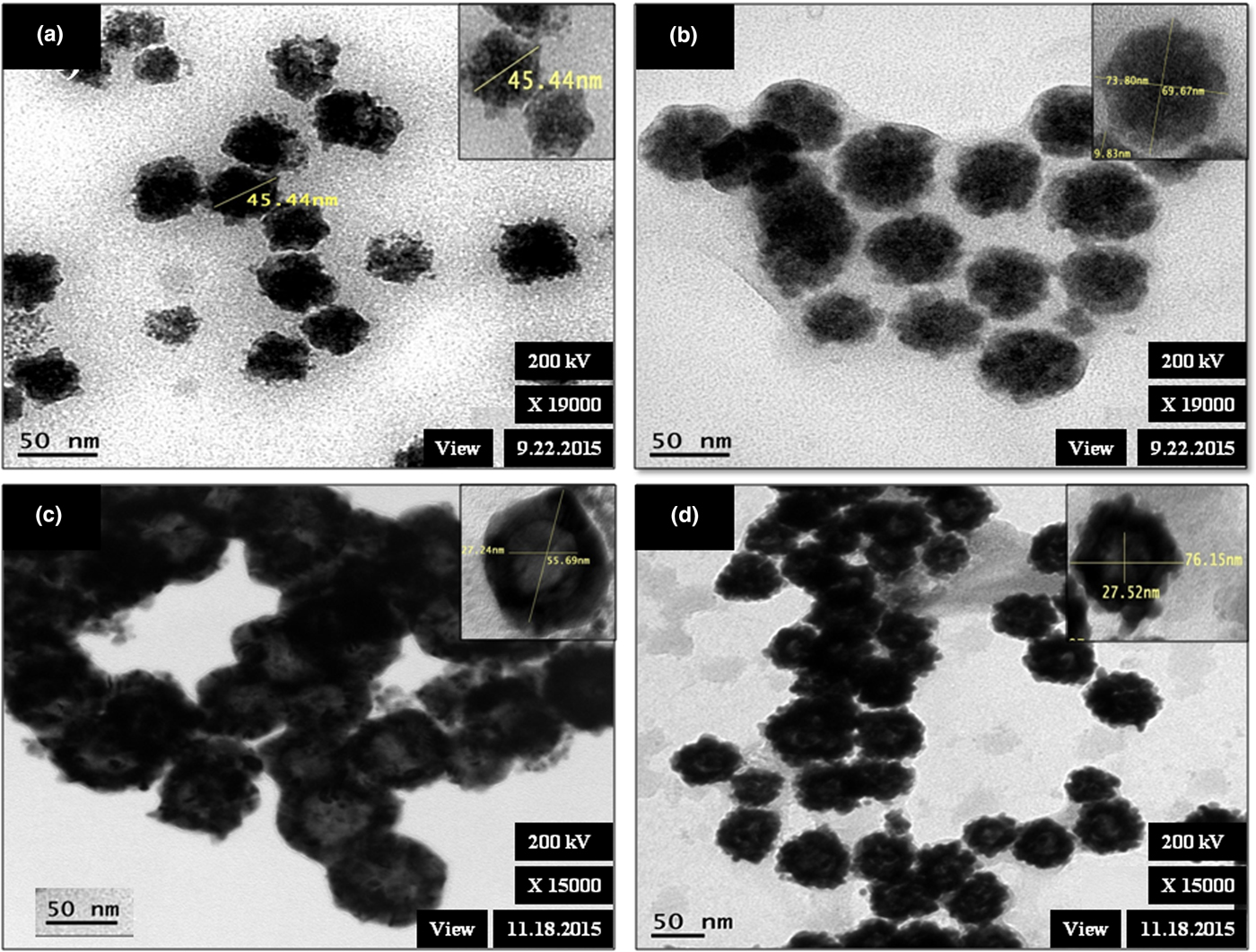
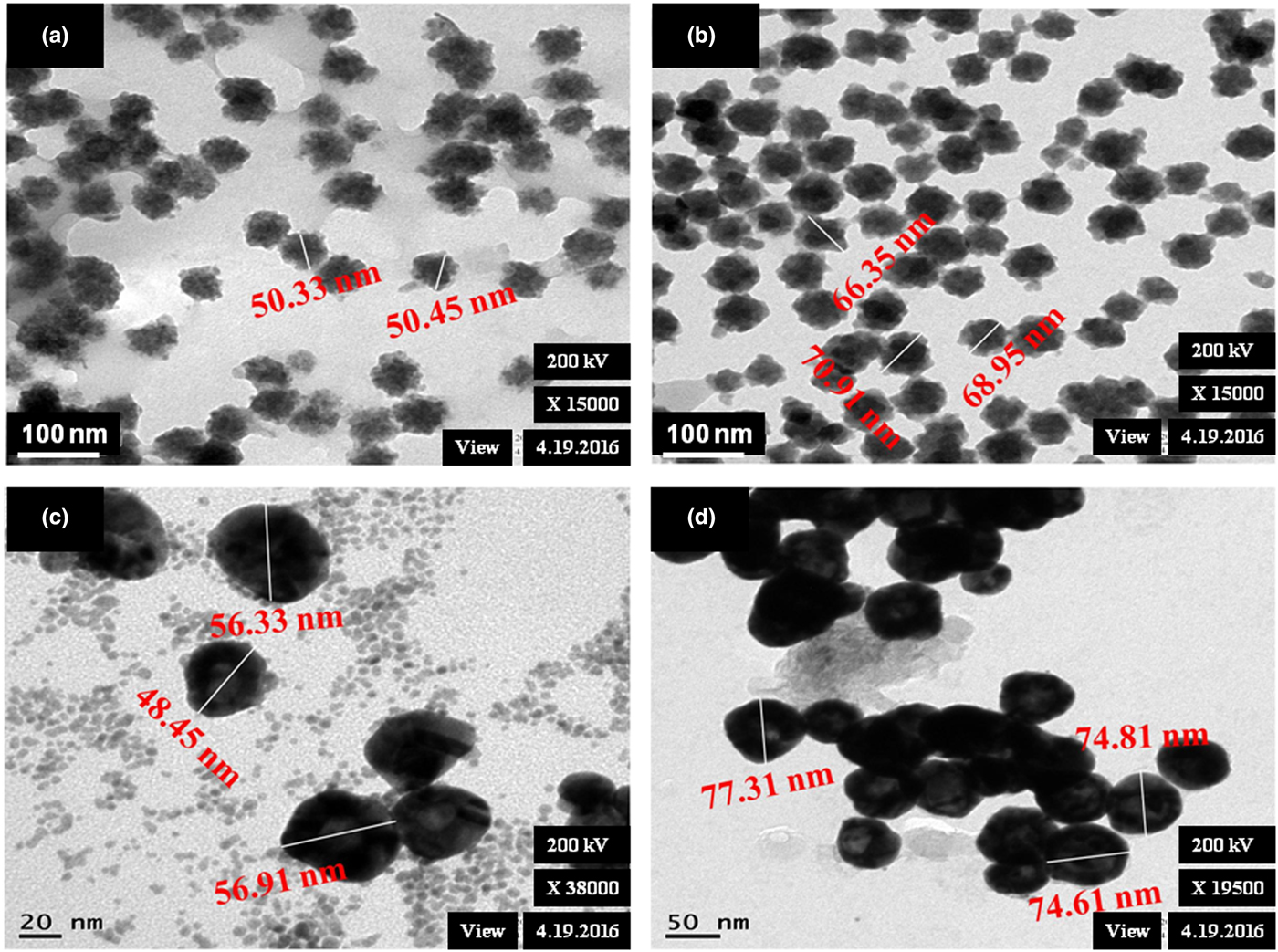
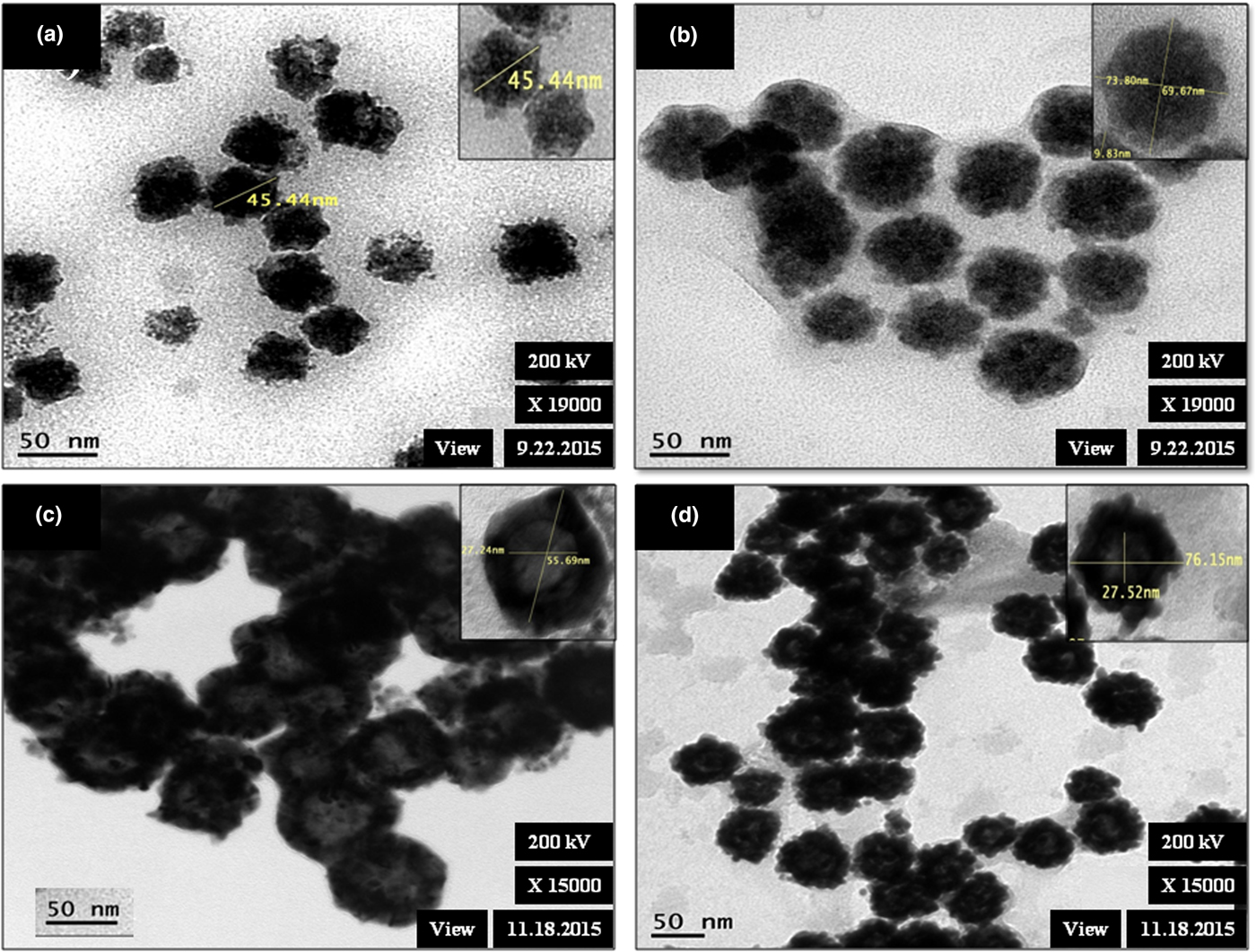
The formation of As(0) nanoparticles of size 60 ± 3 nm (similar to As1) and its detail characterization (by SEM, XPS, TEM, and DLS) was reported earlier by our group.[Reference Pal, Saha, Maji, Kundu and Kundu15] In the present work, two different sized As(0) nanoparticles (viz., As1 and As2) are formed by varying the digestion time. The size range of the As(0) nanoparticles were ascertained by TEM and DLS analyses. The analytical TEM results reveal that As1 is porous in nature and edges of the particles are rough [Fig. 1(a)]. The size is measured by SIP (Scilab image processing) and it corresponds to the average size range of 50 ± 7 nm as shown in the size distribution curve [Fig. S2(a)]. The particles of As2 are also very rough and porous [Fig. 1(b)], having a size distribution of 70 ± 10 nm as shown in the size distribution curve [Fig. S2(b)]. The DLS study predicts that the particle size of As1 is 59.46 nm [Fig. S3(a)] while that of As2 is 81.44 nm [Fig. S3(b)].
TEM images of (a) As1, (b) As2 and corresponding (c) AuNP1, (d) AuNP2 particle measured by SIP.
Characterization of AuNP1 and AuNP2
In the present work, the red colored gold sol (AuNP1) showed λ max at 531 nm [Fig. S1, spectrum (a)], and the blue colored sol showed λ max at 583 nm [Fig. S1, spectrum (b)]. The TEM study revealed that, the average particle size of Au(0) in case of the red colored gold sol (AuNP1) was 55 ± 7 nm [Fig. S2(c)] and that of the blue colored gold sol (AuNP2) was 72 ± 7 nm [Fig. S2(d)]. The TEM analysis of AuNP1 [Fig. 1(c)] and AuNP2 [Fig. 1(d)] revealed the size of the HGNPs. The images also revealed that, in both the cases, the average size of the hollow core is about 27 ± 1.5 nm. The DLS study indicated that the particle size of AuNP1 was 60.04 nm [Fig. S3(c)] while that of AuNP2 was 81.87 nm [Fig. S3(d)].
The slight difference in the size of nanoparticles in TEM and DLS study may be because two different conditions are employed in the two processes. While in the DLS experiments, the moving particles are considered under monochromatic light, in TEM studies, electron beams interact with static particles when images are taken. XRD analyses were also performed which confirmed all the necessary peaks of gold in case of AuNP1 [Fig. S4(a)] and AuNP2 [Fig. S4(b)].
Reduction of 4-NP
In the third step, the catalytic performance of AuNP1 and AuNP2 was examined through 4-NP reduction by borohydride. This reaction has been recognized as a model reaction to elucidate the catalytic activity of various nanoparticles.[Reference Aditya, Pal and Pal20] The reaction is thermodynamically favorable. However, it shows very slow kinetics under uncatalyzed reaction conditions.
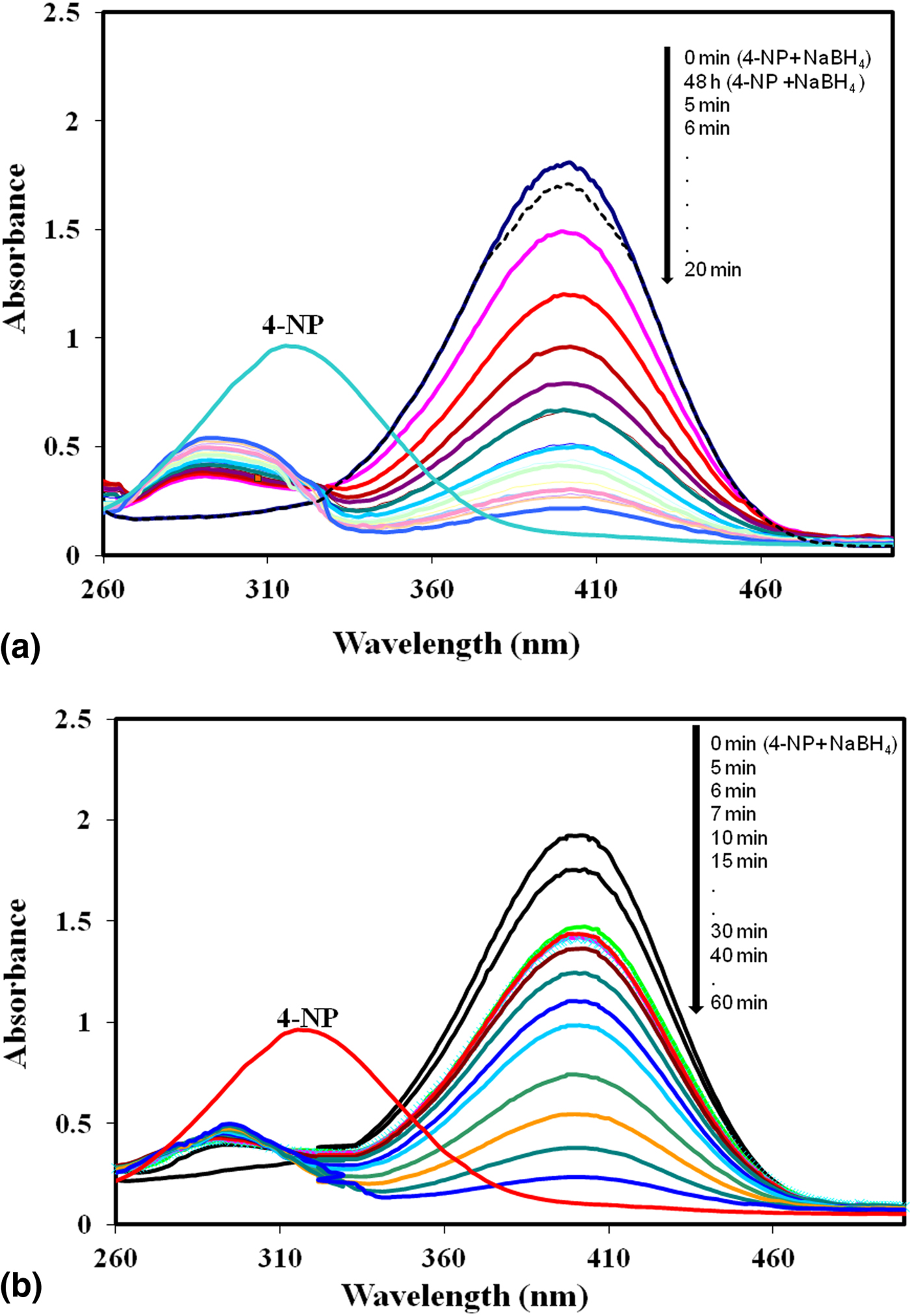
4-NP shows λ max at 317 nm [Figs. 2(a) and 2(b)]. However, upon addition of NaBH4, the peak undergoes a red shift to 400 nm (due to the formation of 4-nitrophenolate anions), which is experimental 0 min [Figs. 2(a) and 2(b)]. A reaction mixture of 4-NP (concentration 9.9 × 10⁻⁵ M) was prepared in borohydride medium (0.1 M), and it was allowed to remain as it is for 48 h. During this time period, the peak at 400 nm was monitored. Here neither a decrease in absorbance at 400 nm nor the formation of a new peak was noticed [Fig. 2(a), dotted curve].
Time-dependent UV-vis spectral change for 4-NP (9.9 × 10⁻⁵ M) to 4-AP reduction by nanocatalysts (a) AuNP1 (11.68 × 10⁻⁷ M) and (b) AuNP2 (19.80 × 10⁻⁷ M).

On the other hand, the catalytic activity of AuNP1 and AuNP2 is demonstrated convincingly as shown in Figs. 2(a) and 2(b). When the same reaction was performed in the presence of AuNP1 and AuNP2 at a dose of 11.68 × 10⁻⁷ and 19.80 × 10⁻⁷ M, respectively, the absorbance at 400 nm continuously decreased with time, and in return, a new peak of 4-AP was formed at 293 nm. The successive decrease in the intensity of the 400 nm peak is observed in both cases [Figs. 2(a) and 2(b)]. The change could be visualized even by naked eye when the yellow color of the nitrophenolate ion faded with time. In the present study, the isobestic points are clearly noticed implying that, 4-AP is the only product formed. Some isobestic points are not so prominent. This is because of the liberation of H2 gas in the reaction vessel.[Reference Mahamallik and Pal19] Detail kinetic studies were carried out on the 4-NP reduction using the two different sized HGNPs to understand the size effect.
Studies on the kinetics of 4-NP reduction
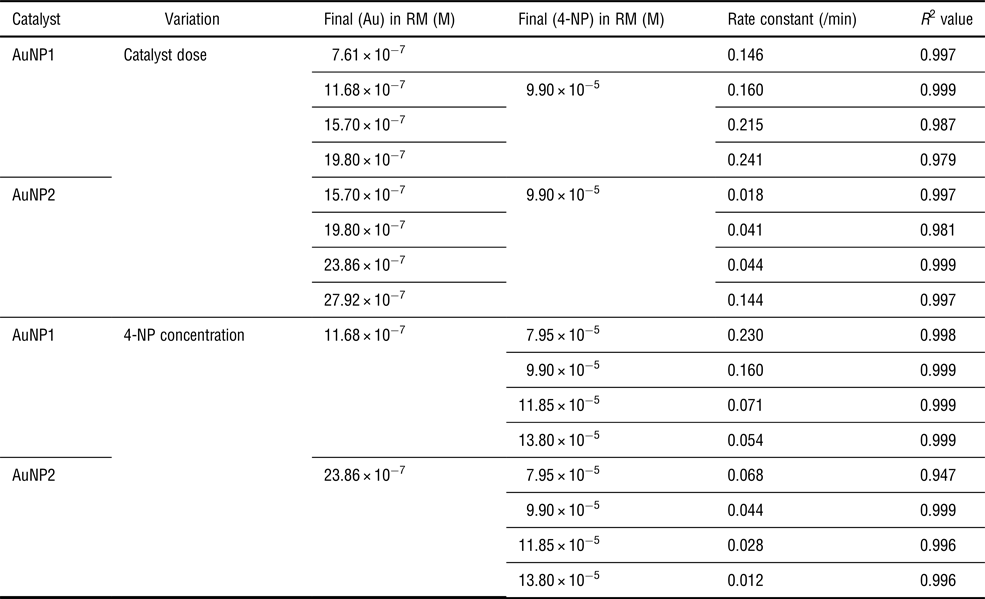
Kinetic study on the 4-NP reduction was performed using two nano-catalysts AuNP1 and AuNP2 particles and the size effect was realized by comparing the rate. In this study, firstly, the kinetic behavior is observed by fixing the concentration of 4-NP and varying the doses of the two nano-catalysts, and secondly, the dose of nano-catalyst was fixed while concentration of 4-NP was varied. In all cases, the reduction rate followed first order. The idea was to see the effect of size of the two HGNPs, i.e., AuNP1 and AuNP2 on 4-NP reduction. It has been shown in Table I that, the rate constant values increase upon increasing the catalyst dose, and the rate constant decreases with increase in 4-NP concentration. It is worthy of mention that, while the 4-NP concentration was kept fixed at 9.9 × 10⁻⁵ M and the catalyst dose at 15.70 × 10⁻⁷ M for both AuNP1 and AuNP2, the first-order rate constants obtained were 0.215 and 0.018/min (Table I). Similarly, the rate constants obtained using AuNP1 and AuNP2 were 0.241 and 0.041/min for the dose of 19.80 × 10⁻⁷ M at 4-NP concentration of 9.9 × 10⁻⁵ M (Table I). This clearly indicates that, AuNP1 is a better catalyst compared with AuNP2, and this is due to its relatively smaller size. Detailed procedure and the studies are given in the Supplementary Materials. The relevant kinetic plots of 4-NP reduction showing the behavior of AuNP1 and AuNP2 are presented in Figs. S5–S8.
Rate constants and R 2 values obtained for 4-NP reduction at various 4-NP concentrations and catalyst doses [reaction mixture (RM) = 2.5 mL NaBH4 + 4-NP (~25 µL) + catalyst AuNP1 or AuNP2 (2–7 µL)].

Comparison between catalytic activity of AuNP1 and AuNP2: Turnover number and turnover frequency of AuNP1 and AuNP2
The turnover number (TON) and the turnover frequency (TOF) are useful to compare catalyst efficiency. In case of homogeneous reaction, TON is represented either in the form of moles of product formed or moles of catalyst, while for heterogeneous catalyst, TON can be described as moles of product formed or number of active centers or surface area of the catalyst. Actually, TON neither provides information on the catalyst activity nor it can compare the activity of different catalysts, because two different catalysts can have same TON values. So to compare different catalysts, the time parameter is needed which brings TOF as a more convenient method to explain the catalytic activity of two different catalysts. TOF simply means TON/time.
In Table II, the catalytic activities of AuNP1 and AuNP2 are compared. It is worth noting that, at a fixed concentration of 4-NP, different activities are achieved for AuNP1 and AuNP2 despite of taking the same dose. For comparison, two different catalyst doses viz., 15.70 × 10⁻⁷ and 19.80 × 10⁻⁷ M were considered individually. In both the cases though the TON values are same for both AuNP1 and AuNP2, but TOF values are different. From the data shown in Table II, it is clear that AuNP1 is able to complete the reaction at a much faster rate than AuNP2 as it shows a higher value of TOF compared with the TOF of AuNP2. On further calculation, it is found that at two different nanocatalyst doses, the ratio, TOF of AuNP1:TOF of AuNP2 (keeping the dose same for both AuNP1 and AuNP2) is roughly ~6.6, which suggests that AuNP1 is ~6.6 times catalytically more active compared with AuNP2 for 4-NP to 4-AP reduction. Though AuNP1 and AuNP2 are made up of same material, their difference in size corresponds to the difference in surface to volume ratio. Being smaller in size, AuNP1 has higher surface-to-volume ratio than that of AuNP2, which leads to higher catalytic activity of AuNP1. So it can be observed that, at the same dose, the nanocatalyst AuNP1 is able to complete the reaction at a much faster rate than that with AuNP2.
Comparison of catalytic activity of AuNP1 and AuNP2 for 4-NP reduction [reaction mixture (RM) = 2.5 mL NaBH4 + 4-NP (~25 µL) + catalyst (AuNP1 or AuNP2) (4 or 5 µL)].

Comparison of catalytic performance of AuNP1 and AuNP2 with other homogeneously dispersed gold nanoparticles
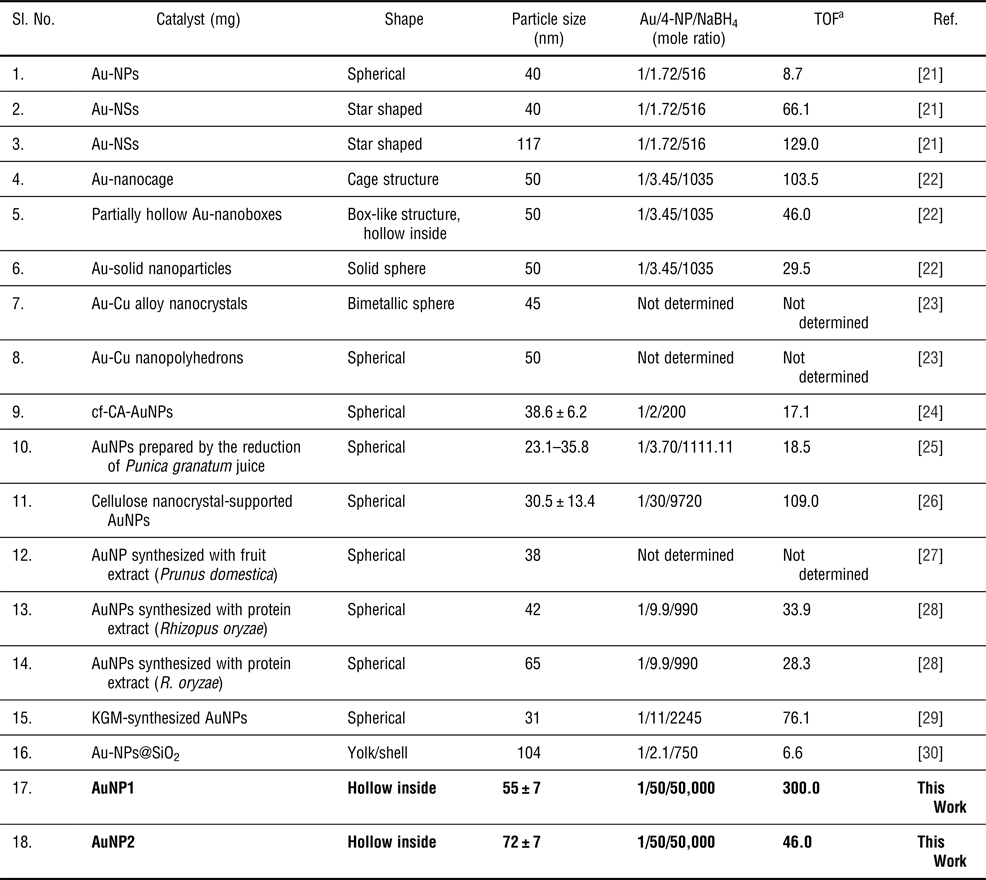
In Table III, the catalytic performance of AuNP1 and AuNP2 for 4-NP reduction together with the results reported earlier involving homogeneous gold nanoparticles with different structures is compiled.[Reference Ma, Yang, Liu, Zhang and Liang21–Reference Lee, Park and Song30] Since the size has significant impact in the activity of catalyst, only the gold nanoparticles having the size in the range of 30–120 nm have been considered for comparative analysis. To check the catalytic activity, the reaction under ambient temperature (25–35 °C) is considered. Here for AuNP1 and AuNP2, only 19.80 × 10⁻⁷ M dose has been chosen against the 4-NP concentration of 9.9 × 10⁻⁵ M. The comparative TOF values (moles of 4-NP converted per mole of catalyst present, in 1 h time) shown in Table III reveal that, AuNP1 has admirable catalytic activity for the conversion of 4-NP to 4-AP. Such an activity might be because of the smaller size of stabilizer-free AuNP1 and the hollow structure which can provide the extra space for the reaction.
Comparison of catalytic activity of different gold nanostructures.

a Approximate calculated values of TOF in moles of 4-NP converted per mole of catalyst present, in 1 h time.
Temperature-dependent formation of As1 and As2 nanoparticles
Formation of As(0) particle in ambient condition (30 ± 3 °C) is facile and it is possible to achieve two distinct sized As(0) nanoparticles, i.e., As1 and As2 easily by controlling the reaction time. The corresponding GRR products, HGNPs of two distinct size, i.e., AuNP1 and AuNP2, are obtained using HAuCl4-mediated As(0) oxidation protocol.
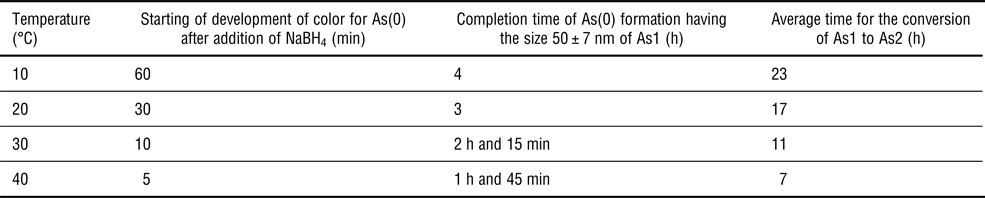
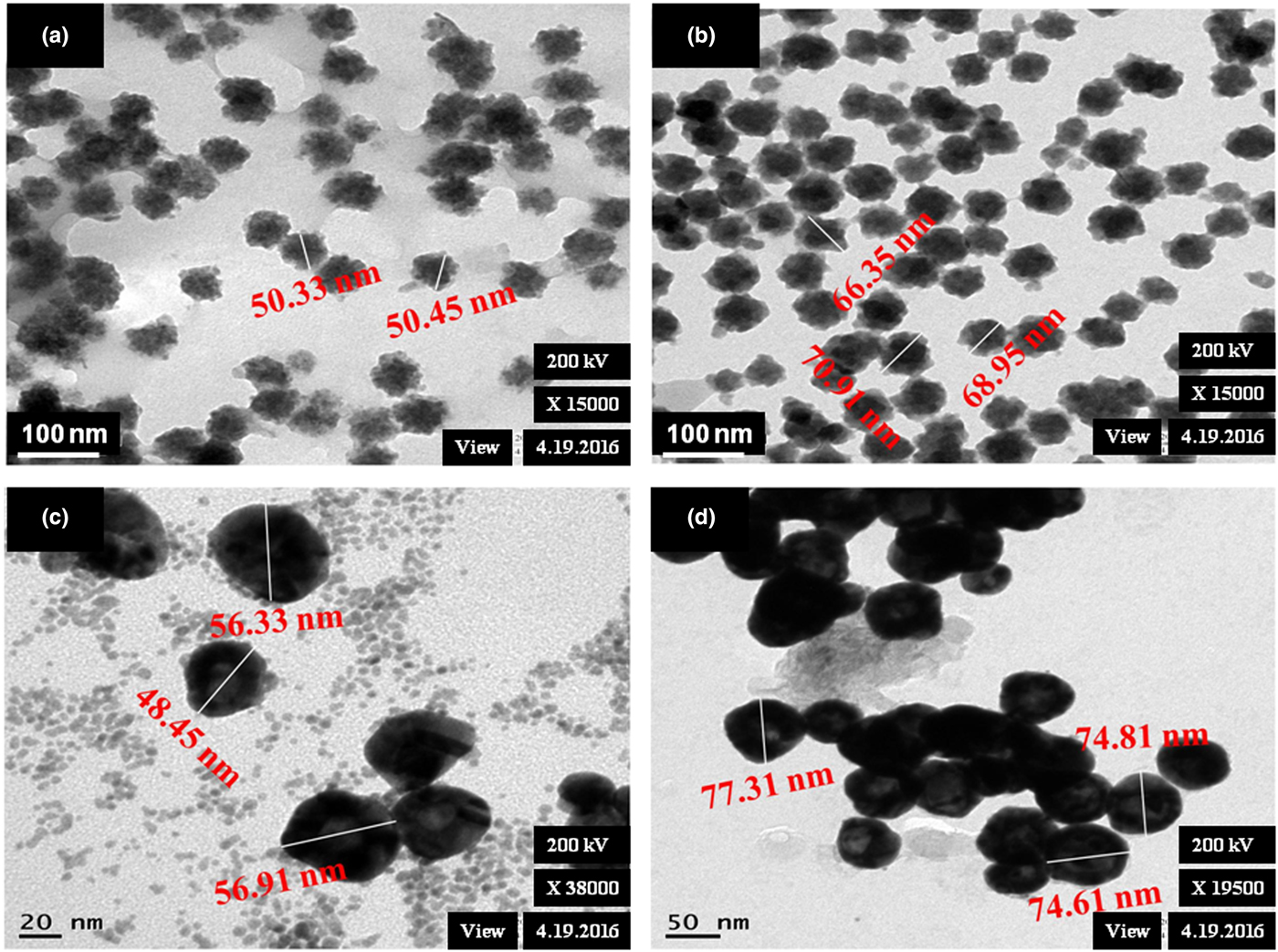
The time-dependent As(0) formation reaction prompted the present investigation to be examined further at four different temperatures: 10, 20, 30, and 40 °C, and in each temperature, the formation of As(0) was examined. It was noticed that, while the formation of As(0) took longer time at lower temperature, the formation of As(0) became faster at higher temperature. While As(0) was prepared at ambient temperature (30 ± 3 °C), it took 2 h to complete the formation of As(0). In this case, the color started to develop within 10 min of addition of NaBH4, and at the end of 2 h, the As(0) got its yellowish brown color and remained almost the same for another 8–10 h as mentioned earlier. Under ambient condition, the particles formed were similar in size as that of As1 (as observed from the TEM analysis and absorption spectrum). Again, transformation of these particles to bigger size corresponding to that of As2 (confirmed from the TEM analysis and absorption spectra) was possible upon aging the reaction mixture further for longer time. This conversion is also temperature-dependent. Table IV shows the time required at different temperatures for color development, and for the formation of As(0) particles at smaller and larger size domains. To get a clear insight in to the effect of temperature on the size of As(0), two different temperatures (10 and 40 °C) and the growth time of 12 h in each case was selected. The interesting observation from TEM was that, at 10 °C, the As(0) particles (designated as As10) showed an average size of 50 ± 4 nm [Fig. 3(a)], and at 40 °C, the particles (designated as As40) showed an average size of 70 ± 5 nm [Fig. 3(b)]. Here the representative two HGNPs, obtained from As10 (same size as As1) and As40 (same size as As2), through the GRR reaction, were named as AuNP10 (having a size of 50 ± 5 nm) [Fig. 3(c)] and AuNP40 (with an average size of 74 ± 6 nm) [Fig. 3(d)], respectively. This concludes that, by only maintaining the temperature and providing appropriate time of formation, it is possible to tune the As(0) particle size, which can lead to the preparation of HGNPs with variable size. This has been depicted in Scheme 1. Thus, this is a clear depiction of GRR reaction, where no extra stabilizer is used.
TEM images of (a) As10, (b) As40, (c) AuNP10, and (d) AuNP40.
Effect of temperature on As(0) formation from NaBH4 reduction of As(III).

The probable reason of getting different sized As(0) was the kinetics of As(0) formation. Here lower temperature caused the transformation of As(III) to As(0) to take place at a slower rate. Also at lower temperature, the embryonic As(0) were too small to create a critical radius, r* (the minimum size of embryo to form a nucleation site for nanoparticles) because of lesser possibility of collision between two embryos to grow further and start nucleation. But at higher temperature, the collision rate of the reaction was much faster; hence the possibility of formation of particles with critical radius (r*) was higher, which meant that the nucleation could start rapidly leading to the formation of As(0). As a result, the development of color started much quicker in NaBH4 added to As(III) at 40 °C compared with that at 10 °C. It was also noted that conversion of As1 to As2 was faster at higher temperature.
So, it is concluded that, As(0) particles of variable sizes are capable of producing HGNPs replicating the sizes of the used As(0) particles. The TEM results corroborate GRR process exhibiting the size retention motif.
Mechanism of 4-NP reduction
The reduction of 4-NP to 4-AP under catalytic condition involves six-electron transfer.[Reference Saha, Pal, Kundu, Basu and Pal18] In this reaction, catalyst adsorbs the reactant molecules on its surface to transfer electron from BH4− to 4-NP. There are four successive steps for heterogeneous catalysis reaction. First, the reactant molecule is adsorbed on the catalyst surface; second, the molecule gets diffused to the active site and forms surface complex; third, the complex reacts to form the adsorbed product; and fourth, the product desorbs from the site. The overall order of the reaction is decided by the slowest step. Here, both the catalysts lead to first-order reaction, which reveals that, the first step is the slowest step. The reaction goes faster with the increase of catalyst concentration, because when the concentration of the catalyst is increased, more surface area is available for the reactant molecules. The smaller catalysts show better catalytic activity, which is based on the same reason. The present reaction is a bimolecular reaction. Thus either one or both molecules can be adsorbed on the surface. Therefore, two models, namely, Langmuir–Hinshelwood or Eley–Rideal, might be considered.[Reference Saha, Pal, Kundu, Basu and Pal18] However, to know further details of the mechanism, more work is needed.
Recycle ability of AuNP1 and AuNP2 for 4-NP reduction
In the economic point of view, it is good to know about the recycle ability of the catalyst. When the catalysts are in heterogeneous phase, it is much easier to separate the catalyst from the reaction medium, and reuse it. However, the catalytic activity in case of heterogeneous catalysts is lower compared with that of homogeneous catalysts. In the present recycle ability test, the dose of AuNP1 and AuNP2 was fixed at 15.70 × 10⁻⁷ M against a fixed concentration of 4-NP at 9.90 × 10⁻⁵ M. The reduction of 4-NP to 4-AP was examined up to ~95% of its initial absorbance value in case of AuNP1, and up to ~80% in case of AuNP2. After each cycle, the fresh batch of concentrated 4-NP was added in such a way that, the final concentration of 4-NP remains the same in all cycles. Also fresh batch of concentrated NaBH4 was added to maintain the same concentration as before. The same process was repeated up to the fourth cycle, and the performance of the recycled catalyst was checked. The reaction followed first order in all cycles and the rate constant values were found to decrease as the catalysts were recycled. The results have been shown in Fig. S9. It was noticed that, with respect to the first cycle, in the fourth cycle, AuNP1 took ~30% more time to complete ~95% of the 4-NP to 4-AP conversion, while AuNP2 took ~10% more time to complete ~80% of the reaction.
Conclusions
Nanoparticles of As(0) in two different size ranges of 50 ± 7 and 70 ± 10 nm were prepared using borohydride reduction of arsenite under controlled pH condition. As(0) formation is time-dependent as well as temperature-dependent. These As(0) nanoparticles were further used as templates to evolve HGNPs in two size ranges, viz., 55 ± 7 and 72 ± 7 nm, designated as AuNP1 and AuNP2, respectively, through GRR. The excellent similarity of size between the precursor As(0) and the prepared AuNPs was a clear depiction of GRR-mediated place exchange reaction. The model reduction of 4-NP to 4-AP by sodium borohydride was chosen to examine the comparative catalytic activity of the two nanocatalysts AuNP1 and AuNP2. It was realized that, smaller sized hollow catalyst particles, i.e., AuNP1 had ~6.6 times higher catalytic activity (in terms of TOF), compared with that of the larger particles, i.e., AuNP2. The recyclability of both AuNP1 and AuNP2 as catalyst for 4-NP reduction was tested up to the fourth cycle, and the performance was good. The kinetics of As(0) formation was studied which revealed that, by controlling the time and temperature, it is possible to tune the size of both As(0) and AuNPs.
Supplementary material
The supplementary material for this article can be found at https://doi.org/10.1557/mrc.2018.214
Acknowledgments
We thank IIT Kharagpur for the instrumental facilities and financial support. We would also thank Prof. N. Sarkar of Chemistry Department, IIT Kharagpur for providing the DLS facility.