




No CrossRef data available.
Article contents
Anti-complement activity in the saliva of phlebotomine sand flies and other haematophagous insects
Published online by Cambridge University Press: 09 October 2003
Abstract
The saliva of haematophagous insects has a series of pharmacological activities which may favour blood feeding. In the present study, an inhibitory effect on the complement system was observed in salivary extracts obtained from the phlebotomine sand flies Lutzomyia longipalpis and Lu. migonei. Saliva from Lu. longipalpis was capable of inhibiting both the classical and alternative pathways, while that from Lu. migonei acted only on the former. Other haematophagous insect species were screened for inhibition of the classical pathway. The triatomine bugs Panstrongylus megistus, Triatoma brasiliensis and Rhodnius prolixus were also able to inhibit the classical pathway whereas the mosquito Aedes aegyti and flea Ctenocephalides felis were not. The activity of Lu. longipalpis saliva on the classical pathway was partially characterized. The inhibitor is a protein of Mr 10000–30000 Da, which is very resistant to denaturation by heat. The inhibition of the complement system by phlebotomine sand flies may have a role in the transmission of Leishmania to the vertebrate hosts. The inhibitor molecule is thus a promising component of a vaccine to target salivary immunomodulators.
Keywords
Information
- Type
- Research Article
- Information
- Copyright
- 2003 Cambridge University Press
INTRODUCTION
Phlebotomine sand flies of the Old World genus Phlebotomus and American genus Lutzomyia are important in public health as vectors of Leishmania spp. As in all haematophagous arthropods, the saliva of phlebotomines plays an important role in blood-feeding, being rich in pharmacologically active biomolecules that interfere in physiological processes of the vertebrate host facilitating ingestion of blood by the insects (Ribeiro, 1987 a, 1995; Kamhawi, 2000). These include biomolecules capable to interfere with platelet aggregation (Ribeiro, Rossignol & Spielman, 1986), coagulation (Adler & Theodor, 1926; Charlab et al. 1999) and vasodilatation (Ribeiro et al. 1989).
Infectivity of Leishmania promastigotes to their vertebrate hosts may be enhanced considerably by the saliva of Lu. longipalpis and other sand fly species (Titus & Ribeiro, 1988, 1990; Theodos, Ribeiro & Titus, 1991; Theodos & Titus, 1993; Warburg et al. 1994; Melo, Williams & Tafuri, 2001; Bezerra & Teixeira, 2001). Different mechanisms probably contribute to this phenomenon, including inhibition of antigen presentation (Theodos & Titus, 1993), reduction in nitric oxide production by infected macrophages (Hall & Titus, 1995), enhancement of interleukin-4 secretion by T-lymphocytes (Lima & Titus, 1996) and enhancement of macrophage chemotaxis (Zer et al. 2001).
Recently we observed that the saliva of Lu. longipalpis was able to inhibit the lytic activity of complement, acting both on the classical and alternative pathways. We also observed inhibitory activity on the classical pathway by the saliva of Lu. migonei (Cavalcante, Pereira & Gontijo, 2002). The capacity of saliva to inhibit the alternative pathway has already been described for some tick species (Ribeiro, 1987 b; Lawrie, Randolph & Nuttall, 1999; Valenzuela et al. 2000). The inhibition of the classical and alternative pathways by Lu. longipalpis may have a role in the transmission of Leishmania infantum (syn L. chagasi), the aetiological agent of American visceral leishmaniasis.
In this study we investigated the anti-complement activity in several haematophagous insect species, with special emphasis on the partial characterization of the activity of the saliva of Lu. longipalpis on the classical complement pathway.
MATERIALS AND METHODS
Origin and maintenance of insect colonies
Two populations of Lu. longipalpis were used in this study, established from specimens captured at Teresina and Abaetetuba, in the Brazilian states of Piauí and Pará respectively. The sand flies were maintained in closed colonies at 25 °C and 60–80% relative humidity (RH) as described by Modi & Tesh (1983). A Lu. migonei population from Venezuela was also maintained under this protocol. The triatomines Triatoma brasiliensis (Brazil), Rhodnius prolixus (Honduras) and Panstrongylus megistus (Brasil) were fed weekly on chickens (Gallus gallus) and maintained at 28 °C and 65% RH. Mosquitoes (Aedes aegypti) from Brazil were maintained following the rearing protocol of Eiras & Jepson (1991) in a closed colony at 27 °C and 70% RH. Cat fleas, Ctenocephalides felis, were collected directly from infested dogs when required.
Collection of saliva
Salivary glands of 4-day-old unfed female sand flies were dissected and transferred to 0·8% unbuffered saline in an ice bath. The glands were broken by sonication for 10 s, and after centrifugation at 10000 g for 2 min the supernatant was collected. Supernatant from salivary gland sonicate was as effective as that obtained by disruption of the salivary lobes by successive pipetting. Although the successive-pipetting method produces saliva without intracellular contaminants this method was set aside because it was difficult to disrupt all the salivary lobes in a preparation. The salivary glands of sand flies and mosquitoes were extracted from females only, while those from triatomines and fleas came from both sexes. The triatomines used had been fasted for at least a week. The quantity of saliva in the assays was expressed in the equivalent number of glandular lobes. Sand flies, mosquitoes and triatomines possess 2 lobes per insect gland whereas fleas have 4.
Assay of salivary action on the classical and/or common pathway of the complement cascade
Opsonization of sheep erythrocytes.
Opsonization of sheep erythrocytes was carried out as described by Whaley & North (1997), with slight modifications. In brief, this procedure consisted of washing the erythrocytes in GHB–EDTA (5 mM HEPES buffer, 145 mM NaCl, 10 mM EDTA and 0·1% gelatine at pH 7·4) followed by their opsonization with rabbit anti-sheep erythrocyte antibody (1[ratio ]1500) at 37 °C for 30 min. The anti-sheep erythrocyte antibody was purchased from Sigma. After incubation the cells were washed once in GHB–EDTA and then twice in GHB2+ (5 mM HEPES buffer, 145 mM NaCl, 0·15 mM CaCl2, 0·5 mM MgCl2 and 0·1% gelatine at pH 7·4). Erythrocytes used in the assays were diluted to a concentration of 1×10⁸ cells/ml in GHB2+ and stored at 4 °C for up to 1 week.
Assay.
This protocol was developed to assay the complement cascade by means of triggering the classical pathway, maintaining the alternative pathway inactive.
In a typical assay, 50 μl of a pool of human serum diluted in GHB2+ just enough to promote approximately 90% of the total haemolysis (a serum dilution of 1[ratio ]60 was usually sufficient) were mixed with 25 μl of saliva solution at the desired concentration. The human serum was obtained from volunteers and was kept congealed at −20 °C until use. After the addition of saliva, 50 μl of the suspension of sensitized sheep erythrocytes were added and the tubes incubated at 37 °C for 30 min. After incubation, 500 μl of ice-cold saline were added and a reading made at 415 nm after centrifugation (1700 g for 30 s) and transfer of 200 μl of supernatant to an ELISA plate.
As a control, in each experiment total haemolysis, spontaneous haemolysis and haemolysis in the presence of complement without saliva were measured. To measure total haemolysis, saline was substituted with an equivalent volume of water. To measure spontaneous haemolysis (haemolysis without complement), 50 μl of GHB2+ were added in place of diluted serum. Finally, to evaluate the action of complement without the interference of saliva, the 25 μl of saliva solution were substituted with the same volume of saline.
The results were expressed as percentage haemolysis, considering 100% to be the value obtained when complement was used without saliva (although this value was considered as 100% it actually corresponds to 90% of the total haemolysis). A haemolysis inhibition curve at different concentrations of saliva was made for each experiment.
Assay of the action of saliva on the alternative and/or common pathway of the complement cascade
Preparation of rabbit erythrocytes.
The erythrocytes were washed 3 times in GHB–EDTA and stored at 4 °C for up to 1 week. On the day of the experiment the erythrocytes were washed 3 times in Mg-EGTA (1 mM HEPES, 29 mM NaCl, 100 mM EGTA, 0·1 M MgCl2, 5% glucose and 0·02% gelatine at pH 7·4) and their concentration adjusted to 1×10⁸ cells/ml.
Assay.
This assay begins with the triggering of the alternative pathway of the complement cascade, maintaining the classical pathway inactive (the rabbit erythrocytes may spontaneously trigger the alternative pathway of the human complement system). Human serum (50 μl) diluted in Mg-EGTA, just enough to promote approximately 90% haemolysis (a serum dilution of 1[ratio ]10 was usually sufficient), were mixed with 25 μl of saliva at the desired concentration. The rest of the procedure is identical to that described for the classical pathway assay.
Search for haemolysins in sand fly saliva
Haemolysins were sought in the saliva of sand flies, based on the protocol for the assay of the classical pathway where diluted human serum was substituted for saline. In each test a quantity of saliva corresponding to 20 salivary lobes of Lu. longipalpis or Lu. migonei was used.
Characterization of the chemical nature of the factor(s) involved in the inhibition of the classical pathway of the complement system
Assay of inactivation by heat.
Saliva of Lu. longipalpis was incubated in a boiling water bath. Aliquots were removed after 10, 30 and 60 min of incubation and used in assays of haemolysis by the classical complement pathway, as described above.
Assay of digestion by proteinase K.
A sample of saliva (equivalent to 8 salivary lobes in 8 μl of saline) was incubated with 0·25 μg proteinase K in 10 mM HEPES buffer at pH 7·5 for 4 h at 37 °C (final incubation volume=28 μl). After incubation and dilution with 72 μl of saline containing BSA 1 mg/ml, its effect on the complement cascade was evaluated in assays of haemolysis by the classical pathway as described previously. Before adding proteinase K, an aliquot of the saliva sample was separated and tested as a positive control.
Evaluation of the molecular weight of the factor(s) involved in the inhibition of the classical pathway of the complement system
A saliva sample collected in 0·8% saline was divided into 3 equal aliquots. Each was ultrafiltered by centrifugation (4000 g for 5 min) using membranes whose cut-offs corresponded to 30000, 10000 and 5000 Da respectively. The 3 samples of ultrafiltered saliva were used in assays of haemolysis by the classical pathway, as described previously.
Assay of trypsin inhibition by Lu. longipalpis saliva
Ten μl containing 0·75 μg of pig trypsin were incubated at 25 °C in 80 mM HEPES/HCl buffer at pH 7·4 with or without saliva using 0·05 mML-BApNA (Nα-benzoyl-L-arginine-4-nitroanilide, from Sigma) as substrate. The saliva concentrations tested corresponded to 0, 25, 50 or 100 salivary lobes. The final volume of the mixture was 250 μl. After addition of the substrate, the optical density was continuously registered during 5 min at a wavelength of 410 nm. The initial velocities in the assays with saliva were compared with that of the assay without saliva.
Action of anti-Lu. longipalpis saliva serum on the inhibitory effect of the saliva on the classical pathway of the complement system
Four hamsters were immunized with Lu. longipalpis saliva over a 5-week period by subjecting them, under anaesthesia, to the bites of at least 100 female sand flies/individual each week. Seven days after the ultimate immunization the blood was collected by cardiac puncture. A pool of sera from the animals was inactivated at 56 °C for 30 min and then used in the assays of haemolysis by complement for the classical pathway, as described previously. In these experiments 25 μl of undiluted anti-Lu. longipalpis saliva serum were mixed with saliva before the addition of human complement and opsonized blood cells (final volume of the preparation was 125 μl).
RESULTS
Saliva samples from Lu. longipalpis, Lu. migonei and the triatomines P. megistus, T. brasiliensis and R. prolixus were able to inhibit the classical pathway of the complement system, as can be observed in Figs 1 and 2. When comparisons were made between the two strains of Lu. longipalpis, both Piauí and Pará strains inhibited the classical pathway of the complement system with the same intensity. Surprisingly, the inhibitory property of the classic pathway was not observed in the saliva of Ae. aegypti or C. felis.

Fig. 1. Inhibition of the classical pathway of the complement system by Lutzomyia longipalpis and Lu. migonei saliva. Inhibition of the classical pathway by saliva of Lu. longipalpis (A) and Lu. migonei (B) was measured using sensitized sheep erythrocytes in a haemolytic assay as described in the Materials and Methods section. The results were expressed as the mean % inhibition±1 S.D. per number of salivary gland lobes used to prepare the salivary extract. Ten and 3 replicates respectively were performed in the experiments.

Fig. 2. Inhibition of the classical pathway of the complement system by Panstrongylus megistus, Triatoma brasiliensis and Rhodnius prolixus saliva. The inhibition of the classical pathway by the saliva of each triatomine species was measured using sensitized sheep erythrocytes in a haemolytic assay as described in the Materials and Methods section. The results were expressed as mean % inhibition±1 S.D. per number of salivary gland lobes used to prepare the salivary extract. Three replicates of the experiment were performed.
Inhibition of the alternative pathway of the complement system was tested only in Lu. longipalpis (Piauí strain) and Lu. migonei. Inhibitory activity of the alternative pathways in saliva of Lu. longipalpis and Lu. migonei can be observed in Fig. 3. Unlike Lu. longipalpis, saliva of Lu. migonei was unable to inhibit the alternative pathway (at least, at the concentrations used in these experiments).

Fig. 3. Inhibition of the alternative pathway of the complement system by Lutzomyia longipalpis and Lu. migonei saliva. Inhibition of the alternative pathway was measured using unsensitized rabbit erythrocytes in a haemolytic assay as described in the Materials and Methods section. The results were expressed as mean % inhibition±1 S.D. per number of salivary gland lobes used to prepare the salivary extract. Two replicates of the experiment were performed.
The salivas of both Lu. longipalpis and Lu. migonei were free from any haemolysin that could have interfered in the assays, since the greatest concentration used in the experiments was unable to provoke any haemolysis.
In order to characterize partially the inhibitory molecule of the classical pathway of Lu. longipalpis saliva, its chemical nature, heat stability and approximate molecular weight were investigated. When pre-incubated with proteinase K, the anti-complement activity of the saliva disappeared, indicating that the inhibitory molecule is a protein. Despite being a protein, this molecule is strikingly heat stable, able to withstand temperatures close to 100 °C for 1 h without significant loss of activity (Fig. 4). Based on the ultrafiltration data shown in Fig. 5, its molecular weight is 10000–30000 Da.

Fig. 4. Stability of the Lutzomyia longipalpis salivary inhibitor to heat. Lu. longipalpis saliva was heated in boiling water for 10 (A), 30 (B) and 60 (C) min. Each sample was assayed for complement inhibition of the classical pathway using sensitized sheep erythrocytes in a haemolytic assay as described in the Materials and Methods section. The results were expressed as the mean % inhibition±1 S.D. per number of salivary gland lobes used to prepare the salivary extract. Three replicates of the experiment were performed.

Fig. 5. Estimation of the molecular weight of Lutzomyia longipalpis classical pathway inhibitory factor by ultrafiltration. Three aliquots of salivary extract were ultrafiltered in filters with cut-off molecular weights of 30000, 10000 and 5000 Da. The filtered samples were assayed for complement inhibition of the classical pathway using sensitized sheep erythrocytes in a haemolytic assay as described in the Materials and Methods section. The results were expressed as the mean % inhibition±1 S.D. per number of salivary gland lobes used to prepare the salivary extract. Three replicates of the experiment were performed.
Given that some of the activated factors of the complement cascade are serine proteases, it is possible that the inhibitory effect of saliva is due to the presence of some non-specific inhibitor of this class of enzymes. The possible inhibition of trypsin by Lu. longipalpis saliva was therefore tested using the synthetic substrate BApNA. It was found that even saliva corresponding to 100 salivary glands was unable to inhibit trypsin activity.
The development of antibodies against the inhibitory factor of the classical pathway of the complement system, present in the saliva of Lu. longipalpis, was examined in an experiment where hamsters were immunized for 5 weeks by means of sand fly bites. Although there was a tendency towards inactivation of anti-complement activity, total anti-saliva serum was unable to inactivate significantly the inhibitory activity of the classical pathway present in the saliva of Lu. longipalpis, (P=0·4, 0·2 and 0·2 for each saliva concentration respectively, using non-parametric t-tests), as can be observed in Fig. 6.

Fig. 6. The effect of anti-saliva immune serum on inhibition of the classical pathway of the complement system by Lutzomyia longipalpis saliva. Anti-saliva serum, obtained from hamsters immunized by Lu. longipalpis bites, was inactivated at 56 °C for 30 min and used in a haemolytic assay using sensitized sheep erythrocytes as described in the Materials and Methods section. The results were expressed as the mean % inhibition±1 S.D. per number of salivary gland lobes used to prepare the salivary extract. Three replicates of the experiment were performed.
DISCUSSION
Although haematophagy arose independently in several insect groups by evolutionary convergence (Ribeiro et al. 1998), salivary biomolecules able to interfere with the physiology of the vertebrate host at key points are repeatedly seen (Ribeiro, 1995). Blood-feeding activities against haemostasis, the cellular and humoral branches of the immune response and inflammation have previously been described (Belkaid et al. 2000) and it now appears that the complement system is also affected.
The capacity to interfere with the complement system has already been observed in the saliva of hard ticks, potent inhibitory activity of the alternative pathway being found in Ixodes species (Ribeiro, 1987 b; Lawrie et al. 1999; Valenzuela et al. 2000). It is quite important for ticks to moderate the complement system because it is the principal mechanism of host resistance against infestation (Wikel & Allen, 1977; Papatheodorou & Brossard, 1987).
The complement system comprises more than 30 proteins, linked in 2 biochemical cascades, the classical and the alternative pathways. Activation of the complement system encompasses a series of initiation, amplification and lytic steps which are regulated to control tissue-damaging capabilities of the complement system (Makrides, 1998).
In Lu. longipalpis, the inhibition curves of both the classical and alternative pathways are sigmoidal. The same does not happen with inhibition of the classical pathway by the saliva of Lu. migonei which shows a rectilinear pattern of inhibition. This difference could be related to the mechanism of action of the inhibitory molecules of the saliva of these insects.
The inhibitory molecule of the classical pathway present in the saliva of Lu. longipalpis is an extremely heat-stable protein of Mr 10–30 kDa. This stability is probably related to a high number of disulphide bonds between cysteine residues. Weak interactions are mainly responsible for maintenance of the tertiary structures of the proteins but they should be unable to stabilize the inhibitory protein structure for 1 h at 100 °C alone.
The proteases of the complement cascade are serine proteases (Arlaud, et al. 1998). When the possibility of Lu. longipalpis saliva acting as a non-specific inhibitor of serine proteases was examined no inhibitory activity was observed, indicating that the inhibitory activity may not be related with inhibition of serine proteases from the complement system.
The saliva of Lu. longipalpis has approximately the same potency to inhibit both pathways of the complement system since the ratio between the quantities of serum and saliva (required to provide 100% inhibition) in the two assays is the same (0·83 μl/2 for the classical pathway and 5 μl/12 for the alternative pathway).
When an infected sand fly bites a host, the immunomodulatory properties of the saliva (Gillespie, Mbow & Titus, 2000) could favour the parasites being transmitted during the bite. Since Leishmania infection is exacerbated when promastigotes are inoculated into the host together with sand fly saliva (Titus & Ribeiro, 1988, 1990; Theodos et al. 1991; Theodos & Titus, 1993; Warburg et al. 1994; Melo et al. 2001; Bezerra & Teixeira, 2001), it is quite probable that these parasites evolved to take advantage of the pharmacological properties of vector saliva.
The ability of different tick species to inhibit the alternative pathway is correlated to the hosts they commonly infest (Lawrie et al. 1999). The data presented in this study demonstrate the capacity of saliva from the different insects studied to interfere with the human complement system. The fact that sand fly saliva efficiently inhibits the human complement system could explain Leishmania transmission to man by the insects. If this was so, these findings could have important epidemiological implications.
Although promastigotes have escape mechanisms against complement (Mosser & Brittingham, 1997) none of the metacyclic forms can survive in undiluted serum (Nunes & Ramalho-Pinto, 1996; Noronha et al. 1998). Thus the inhibition of complement (classical and alternative pathways) by Lu. longipalpis saliva should be one of the factors in facilitating the establishment of Le. infantum in the hosts.
The antibodies raised by Lu. longipalpis saliva were unable to inactivate totally the activity of the complement inhibitor. Probably, this low efficiency may be related to the immunosuppressive properties of the phlebotomine saliva, especially its capability to inhibit antigen presentation (Theodor & Titus, 1993).
The results presented here indicate that the protein inhibitor of the classical and alternative pathways could make up part of the composition of a vaccine directed against some immunomodulatory components of the saliva of Lu. longipalpis or other sand fly species. Some salivary molecules are currently being studied with this objective (Kamhawi et al. 2000; Morris et al. 2001; Valenzuela et al. 2001). A vaccine directed against salivary components appears promising. Salivary components such as the peptide maxadilan, present in the Lu. longipalpis saliva can exacerbate infection with L. major and vaccinating against maxadilam protects mice against infection (Morris et al. 2001). Accordingly, immunization against P. papatasi saliva also protects mice against infection (Kamhawi et al. 2000).
This work was supported by a grant from CNPq (Conselho Nacional de Desenvolvimento Científico e Tecnológico).
References
REFERENCES
ADLER, S. & THEODOR, O.
(1926).
The mouthparts, alimentary tract, and salivary apparatus of the female in Phlebotomus papatasi.
Annals of Tropical Medicine and Parasitology 20, 109–140.CrossRefGoogle Scholar
ARLAUD, G. J.,
VOLANAKIS, J. E.,
THIELENS, N. M.,
NARAYANA, S. V.,
ROSSI, V. & XU, Y.
(1998).
The atypical serine proteases of the complement system.
Advances in Immunology 69, 249–307.CrossRefGoogle Scholar
BELKAID, Y.,
VALENZUELA, J. G.,
KAMHAWI, S.,
ROWTON, E.,
SACKS, D. L. & RIBEIRO, J. M. C.
(2000).
Delayed-type hypersensitivity to Phlebotomus papatasi sand fly bite: an adaptative response induced by the fly? Proceedings of the National Academy of Sciences, USA 97, 6704–6709.Google Scholar
BEZERRA, H. S. S. & TEIXEIRA, M. J.
(2001).
Effect of Lutzomyia whitmani (Diptera: Psychodidae) salivary gland lysates on Leishmania (Viannia) braziliensis infection in BALBl/c mice. Memórias do Instituto Oswaldo Cruz 96, 349–351.CrossRefGoogle Scholar
CAVALCANTE, R. R., PERIERA, M. H. & GONTIJO, N. F. (2002).
Inhibitory activity against the complement system in the Lutzomyia longipalpis and Lutzomyia migonei saliva. Entomología y Vectores 9, 87.Google Scholar
CHARLAB, R.,
VALENZUELA, J. G.,
ROWTON, E. D. & RIBEIRO, J. M. C.
(1999).
Toward an understanding of the biochemical and pharmacological complexity of the saliva of a haematophagous sand fly Lutzomyia longipalpis. Proceedings of the National Academy of Sciences, USA 96, 15155–15160.CrossRefGoogle Scholar
EIRAS, A. E. & JEPSON, P. C.
(1991).
Host location by Aedes aegypti (Diptera; Culicidae): a wind tunnel study of chemical cues. Bulletin of Entomological Research 81, 151–160.CrossRefGoogle Scholar
GILLESPIE, R. D.,
MBOW, M. L. &
TITUS, R. G.
(2000).
The immunomodulatory factors of bloodfeeding arthropod saliva.
Parasite Immunology 7, 319–331.CrossRefGoogle Scholar
HALL, L. R. & TITUS, R. G.
(1995).
Sand fly vector saliva selectively modulates macrophage functions that inhibit killing of Leishmania major and nitric oxide production.
Journal of Immunology 155, 3501–3506.Google Scholar
KAMHAWI, S.
(2000).
The biological and immunomodulatory properties of sand fly saliva and its role in the establishment of Leishmania infections.
Microbes and Infection 2, 1765–1773.CrossRefGoogle Scholar
KAMHAWI, S.,
BELKAIDE, Y.,
MODI, G.,
ROWTON, E. & SACKS, D.
(2000).
Protection against cutaneous leishmaniasis resulting from bites of uninfected sand flies.
Science 290, 1351–1354.CrossRefGoogle Scholar
LAWRIE, C. H.,
RANDOLPH, S. E. & NUTTALL, P. A.
(1999).
Ixodes ticks: serum sensitivity of anticomplement activity.
Experimental Parasitology 93, 207–214.CrossRefGoogle Scholar
LIMA, H. C. & TITUS, R. G.
(1996).
Effects of sand fly vector saliva on development of cutaneous lesions and the immune response to Leishmania brasiliensis in BALB/c mice.
Infection and Immunology 64, 5442–5445.Google Scholar
MAKRIDES, S. C.
(1998).
Therapeutic inhibition of the complement system.
Pharmacological Reviews 50, 59–87.Google Scholar
MELO, M. N.,
WILLIAMS, P. & TAFURI, W. L.
(2001).
Influence of lysates of the salivary glands of Lutzomyia longipalpis on the development of a Leishmania major-like parasite in the skin of golden hamster.
Annals of Tropical Medicine and Parasitology 95, 59–68.CrossRefGoogle Scholar
MODI, G. B. & TESH, R. B.
(1983).
A simple technique for mass rearing Lutzomyia longipalpis and Phlebotomus papatasi (Diptera: Psychodidae) in the laboratory.
Journal of Medical Entomology 20, 568–569.CrossRefGoogle Scholar
MORRIS, R. V.,
SHOEMAKER, C. B.,
DAVID, J. R.,
LANZARO, G. C. & TITUS, R. G.
(2001).
Sandfly maxadilan exacerbates infection with Leishmania major and vaccinating against it protects against L. major infection.
Journal of Immunology 167, 5226–5230.CrossRefGoogle Scholar
MOSSER, D. M. & BRITTINGHAM, A.
(1997).
Leishmania, macrophages and complement: a tale of subversion and exploitation.
Parasitology 115 (Suppl.),
S9–S23.CrossRefGoogle Scholar
NORONHA, F. S. M.,
NUNES, A. C.,
SOUZA, K. T.,
MELO, M. N. &
RAMALHO-PINTO, F. J.
(1998).
Differential sensitivity of New World Leishmania spp. promastigotes to complement-mediated lysis: correlation with the expression of three parasite polypeptides.
Acta Tropica 69, 17–29.Google Scholar
NUNES, A. C. & RAMALHO-PINTO, F. J.
(1996).
Complement resistance of Leishmania amazonensis promastigotes is independent of parasite proteases and lysis of sensitive forms is not due to natural antibodies in normal human serum.
Brazilian Journal of Medical and Biological Research 29, 1633–1640.Google Scholar
PAPATEODOROU, V. & BROSSARD, M.
(1987).
C3 levels in the area of rabbits infested and reinfested with Ixodes ricinus L. and in midguts of fed ticks.
Experimental and Applied Acarology 3, 53–59.CrossRefGoogle Scholar
RIBEIRO, J. M.,
ROSSIGNOL, P. A. & SPIELMAN, A.
(1986).
Blood-finding strategy of a capillary-feeding sandfly, Lutzomyia longipalpis.
Comparative Biochemistry and Physiology A83, 683–686.CrossRefGoogle Scholar
RIBEIRO, J. M.
(1987 a).
Role of saliva in blood-feeding by arthropods.
Annual Review of Entomology 32, 463–478.Google Scholar
RIBEIRO, J. M.
(1987 b).
Ixodes dammini: salivary anti-complement activity.
Experimental Parasitology 64, 347–353.Google Scholar
RIBEIRO, J. M., VACHEREAU, A.,
MODI, G. B. & TESH, R. B.
(1989).
A novel vasodilatory peptide from the salivary glands of the sand fly Lutzomyia longipalpis.
Science 243, 212–214.CrossRefGoogle Scholar
RIBEIRO, J. M. C.
(1995).
Blood-feeding Arthropods: live syringes or invertebrate pharmacologists? Infectious Agents and Disease 4, 143–152.Google Scholar
RIBEIRO, J. M. C.,
SCHNEIDER, M.,
ISAIAS, T.,
JURBERG, J. C.,
GALVÃO, C. & GUIMARÃES, J. A.
(1998).
Role of salivary antihemostatic components in blood feeding by triatomine bugs (Heteroptera).
Journal of Medical Entomology 35, 599–610.CrossRefGoogle Scholar
TITUS, R. G. & RIBEIRO, J. M. C.
(1988).
Salivary gland lysates from the sand fly Lutzomyia longipalpis enhance Leishmania infectivity.
Science 239, 1307–1308.CrossRefGoogle Scholar
TITUS, R. G. & RIBEIRO, J. M. C.
(1990).
The role of vector saliva in transmission of arthropod borne disease.
Parasitology 6, 157–160.CrossRefGoogle Scholar
THEODOS, C. M.,
RIBEIRO, J. M. C. & TITUS, R. G.
(1991).
Analyses of the enhancing effect of the sand fly saliva on Leishmania infection in mice.
Infection and Immunity 59, 1592–1598.Google Scholar
THEODOS, C. M. & TITUS, R. G.
(1993).
Salivary gland material from the sand fly Lutzomyia longipalpis has an inhibitory effect on macrophage function in vitro. Parasite Immunology 15, 481–487.CrossRefGoogle Scholar
VALENZUELA, J. G.,
CHARLAB, R.,
MATHER, T. N. & RIBEIRO, J. M.
(2000).
Purification, cloning, and expression of a novel salivary anticomplement protein from the tick, Ixodes scapularis.
Journal of Biological Chemistry 25, 18717–18723.CrossRefGoogle Scholar
VALENZUELA, J. G.,
BELKAIDE, Y.,
GARFIELD, M. K.,
MENDEZ, S.,
KAMHAWI, S.,
ROWTON, E. D.,
SACKS, D. L. & RIBEIRO, J. M. C.
(2001).
Toward a defined anti-Leishmania vaccine targeting vector antigens: characterization of a protective salivary protein.
Journal of Experimental Medicine 194, 331–342.CrossRefGoogle Scholar
WARBURG, A.,
SARAIVA, E.,
LANZARO, G. C.,
TITUS, R. G. & NEVA, F.
(1994).
Saliva of Lutzomyia longipalpis sibling species differs in its composition and capacity to enhance leishmaniasis.
Philosophical Transactions of the Royal Society of London, B 345, 223–230.CrossRefGoogle Scholar
WHALEY, K. & NORTH, J.
(1997).
Haemolytic assays for whole complement activity and individual components. In Complement: a Practical Approach (ed.
Dodds, A. W. &
Sim, R. B.,
I.P.),
pp. 19–47.
Oxford University Press, Oxford.
WIKEL, S. K. &
ALLEN, J. R.
(1977).
Acquired resistance to ticks. III. Cobra venom factor and the resistance response.
Immunology 32, 457–465.Google Scholar
ZER, R.,
YAROSLAVISKI, I.,
ROSEN, L. & WARBURG, A.
(2001).
Effect of sand fly saliva on Leishmania uptake by murine macrophages.
International Journal for Parasitology 31, 810–814.CrossRefGoogle Scholar

Fig. 1. Inhibition of the classical pathway of the complement system by Lutzomyia longipalpis and Lu. migonei saliva. Inhibition of the classical pathway by saliva of Lu. longipalpis (A) and Lu. migonei (B) was measured using sensitized sheep erythrocytes in a haemolytic assay as described in the Materials and Methods section. The results were expressed as the mean % inhibition±1 S.D. per number of salivary gland lobes used to prepare the salivary extract. Ten and 3 replicates respectively were performed in the experiments.

Fig. 2. Inhibition of the classical pathway of the complement system by Panstrongylus megistus, Triatoma brasiliensis and Rhodnius prolixus saliva. The inhibition of the classical pathway by the saliva of each triatomine species was measured using sensitized sheep erythrocytes in a haemolytic assay as described in the Materials and Methods section. The results were expressed as mean % inhibition±1 S.D. per number of salivary gland lobes used to prepare the salivary extract. Three replicates of the experiment were performed.

Fig. 3. Inhibition of the alternative pathway of the complement system by Lutzomyia longipalpis and Lu. migonei saliva. Inhibition of the alternative pathway was measured using unsensitized rabbit erythrocytes in a haemolytic assay as described in the Materials and Methods section. The results were expressed as mean % inhibition±1 S.D. per number of salivary gland lobes used to prepare the salivary extract. Two replicates of the experiment were performed.
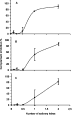
Fig. 4. Stability of the Lutzomyia longipalpis salivary inhibitor to heat. Lu. longipalpis saliva was heated in boiling water for 10 (A), 30 (B) and 60 (C) min. Each sample was assayed for complement inhibition of the classical pathway using sensitized sheep erythrocytes in a haemolytic assay as described in the Materials and Methods section. The results were expressed as the mean % inhibition±1 S.D. per number of salivary gland lobes used to prepare the salivary extract. Three replicates of the experiment were performed.

Fig. 5. Estimation of the molecular weight of Lutzomyia longipalpis classical pathway inhibitory factor by ultrafiltration. Three aliquots of salivary extract were ultrafiltered in filters with cut-off molecular weights of 30000, 10000 and 5000 Da. The filtered samples were assayed for complement inhibition of the classical pathway using sensitized sheep erythrocytes in a haemolytic assay as described in the Materials and Methods section. The results were expressed as the mean % inhibition±1 S.D. per number of salivary gland lobes used to prepare the salivary extract. Three replicates of the experiment were performed.

Fig. 6. The effect of anti-saliva immune serum on inhibition of the classical pathway of the complement system by Lutzomyia longipalpis saliva. Anti-saliva serum, obtained from hamsters immunized by Lu. longipalpis bites, was inactivated at 56 °C for 30 min and used in a haemolytic assay using sensitized sheep erythrocytes as described in the Materials and Methods section. The results were expressed as the mean % inhibition±1 S.D. per number of salivary gland lobes used to prepare the salivary extract. Three replicates of the experiment were performed.
 You have
Access
- 73
- Cited by