


1. Introduction
Energy goods are essential to contemporary societies. Hence, a sizeable increase in energy consumption is expected towards mid-century (1.3 per cent a year until 2040, according to projections based on GDP and population trends; see, e.g., IEA/OECD, 2019). In America, Mexico's growth in energy consumption is likely to be important with households playing a very relevant role. In face of this projected growth, issues such as climate change, energy security, energy poverty, energy price volatility and other environmental concerns constitute important reasons to further study household consumption patterns and energy requirements. In particular, household energy consumption is deeply affected by several public policies that bring about significant economic, distributional and environmental impacts.
Mexico is a major oil producer, and state-owned Petróleos Mexicanos (Pemex) has accordingly been a major source of public receipts (see CEFP, 2016). However, oil taxation has played a minor role there, at least when compared to other countries, as the mechanism for determining gasoline tax rates (designed to keep prices stable) converted the tax into a subsidy since the early 2000s in a regressive fashion (see SHCP, 2019). Concerning the electricity sector, a public subsidy program compensates households as a function of their consumption, thus favoring those with higher incomes (Hernández, Reference Hernández2007).
In December 2013, Mexico modified its constitution and enacted new laws to thoroughly reform the energy sector. The Pemex monopoly was eliminated to attract private investments and modernize the ailing Mexican energy industry (Álvarez and Valencia, Reference Álvarez and Valencia2015; SENER, 2015b; Vargas, Reference Vargas2015). In addition to introducing a carbon tax on fossil fuels in 2014, the mechanism for determining gasoline tax rates was abolished in 2016 and replaced by fixed tax rates (see Muñoz, Reference Muñoz2013).Footnote 1 In the electricity sector, the energy reform aimed to reduce systemic costs to lower prices (see Husar and Kitt, Reference Husar and Kitt2016) and, simultaneously, an emissions trading system was designed to contribute to the attainment of Paris Agreement-related objectives. Both issues are likely to sharply reduce household electricity subsidies. In any case, a new Presidential administration introduced changes to limit the scope of the reform to particularly avoid energy price increases. The IEPS ‘fiscal stimulus’ led to a substantial (20–40 per cent) reduction of the share of tax payments over final gasoline prices, whereas a new mechanism was implemented in the case of electricity to gradually update residential prices based on inflation (Government of México, 2019).
In this setting, this paper starts by estimating the household price and income elasticities of demand for different energy goods in Mexico.Footnote 2 Although a certain number of papers have analyzed Mexican energy demand,Footnote 3 to the best of our knowledge only three studies have attempted to estimate energy elasticities using micro data on household expenses within the framework of a complete demand system.Footnote 4 Given the large disparities in lifestyle and energy consumption in Mexico as compared to other countries, such limited and incomplete academic evidence constitutes a clear shortcoming of the literature that vindicates our approach. There are additional reasons to use a complete and flexible demand model such as the one in this paper. First, by including all non-durable goods in the basket of Mexican households, we can derive elasticities of substitution between different energy goods. Second, we opt for the quadratic extension of Deaton and Muellbauer's (Reference Deaton and Muellbauer1980) ‘Almost Ideal Demand Model’, as proposed by Banks et al. (Reference Banks, Blundell and Lewbel1997), because it incorporates flexibility in the income and price responses. This quadratic extension (QUAIDS) does not have constant elasticities, as they depend on the level of expenditure. Since the ultimate objective of the paper is to use our estimates to simulate the economic, environmental and distributional effects of real and hypothetical reform packages, we need reliable income and price responses, which we believe our choice can provide.
The results of our demand analysis are subsequently used by a microsimulation tool to provide a detailed economic, environmental and distributional assessment of a number of real and hypothetical reform packages. Once again, the substantial lack of academic (ex-ante) evidence on Mexican energy reformsFootnote 5 contrasts with a growing literature, especially concerning energy subsidy-removal, in several developing and emerging economies.Footnote 6
The paper contemplates three reforms of energy taxes and subsidies with different compensatory packages that could easily be implemented through existing Mexican redistributive devices: (1) considering all the taxes on gasoline in place in 2016, had they been fully implemented without fiscal stimulus; (2) eliminating the 2014 subsidy on gasoline; and (3) partially reducing subsidies on electricity. The aforementioned simulations are of keen interest for a growing middle-income country with large shares of poverty and high inequality indices, largely unexplored by the literature. Indeed, Gago et al. (Reference Gago, Labandeira, Labeaga and López-Otero2020) emphasize the importance of properly accounting for the distributional impacts of energy taxes and defining alternatives to mitigate such effects.
The remainder of this paper is organized as follows. Section 2 describes the Mexican energy context and the data. Section 3 presents the econometric model and the results of the estimation for Mexican households, while section 4 shows the results of simulated energy tax reforms and compensatory packages. Finally, section 5 provides the main conclusions and implications of the paper. The details of the data, the theoretical model and additional empirical results are included in four appendices.
2. Mexican energy context and data
Before developing our empirical exercise, it is necessary to describe the setting of Mexico's household energy demand, including its role in overall energy consumption, the relative importance of different energy goods, regional differences, and the issue of energy poverty. Indeed, given a substantial industrial expansion and improved living standards, Mexico's energy consumption witnessed an annual growth rate of 1.7 per cent between 1994 and 2014 (SENER, 2015a). In 2014 transport accounted for the largest share in total energy consumption (46 per cent), followed by industry (32 per cent), and the residential sector (15 per cent non-inclusive of transport fuels), for which liquefied petroleum gas (LPG), firewood and electricity constituted the main sources of energy consumption. Figure A2 in online appendix D shows the evolution of the consumption of major energy products in Mexican households for the period 1994 to 2014.Footnote 7 As depicted, gasoline (used by nearly all the Mexican automobile fleet) experiences the greatest growth rate over the period studied, followed by electricity, and their consumption is expected to grow throughout the coming years. By contrast, the shares of LPG and firewoodFootnote 8 sharply decreased over the period.
In terms of energy prices, data from the IEA/OECD (2016) indicate that while the price of gasoline in Mexico was above the USA and OECD average prices in 2014 and 2015, it was lower than that of other middle-income Latin American countries. Mexican electricity prices are also high by international standards. In this sense, it is worth noting that gasoline and electricity were subsidized in Mexico at a rate equivalent to 0.4 per cent of the country's 2014 GDP.
The aforementioned singularity of the Mexican household energy domain thwarts the extrapolation of existing international academic evidence and vindicates our empirical exercise. Indeed, we have extracted the data from the National Household Income and Expenditure Survey (or ENIGH, the acronym from the Spanish Encuesta Nacional de Ingresos y Gastos de los Hogares Footnote 9) for 1994–2014 to analyze energy demand. We select five different goods to estimate demand: food, electricity, LPG, gasoline, and other non-durable goods, representing all expenditure on non-durable goods. For the sake of avoiding complications arising from the investment nature of durables, we do not consider durable goods within the expenditure categories. We chose to aggregate the rest of the non-durable goods to attenuate the impact of the presence of null expenditure on multiple non-durable goods and thereby solve this problem. Nevertheless, we account for zeros in some groups and also estimate the model under alternative assumptions. We took the prices from the annual average of monthly price indices by city, provided by the National Institute of Statistics and Geography (INEGI per its name in Spanish, Instituto Nacional de Estadística y Geografía), and converted them into real terms using the retail price index.Footnote 10 We also included a series of variables on household, individual and residence characteristics that attempt to capture differences in tastes. Thus, our database consists of 124,771 individual observations but, to reduce heterogeneity among the different households, we restrict our analysis to the following definition of household categories: single; main contributor to income and husband/wife and/or children and/or relatives. After transforming, filtering and further selecting the data by dropping the households in the first and the last percentiles of total spending on non-durables and income as well as households with zero food expenditure, we kept a final sample size of 119,406 observations for the estimation.
The share of expenditures in Mexican households throughout the period 1994–2014 (see the left side of figure A1 in online appendix A) shows that food has the highest weight in their basket, followed by gasoline, electricity and LPG. The figure shows that the share of gasoline expenditure has virtually grown constantly throughout the period, with a remarkable stability in electricity and LPG shares, while the share of food decreased until the year 2006, only to rise thereafter.Footnote 11 However, these budget shares vary both across different regions of the country as well as from urban to rural areas; urban households devote a share of their expenditures to energy products well above national averages. Moreover, households in the southern region devote a higher (lower) share of their expenditures to food (energy goods) with respect to national averages.
Household income variation within the country could explain some of the differences in the aforementioned expenditure structure. Indeed, as advanced in the introduction, Mexico is a country with sizeable income differences and an important share of its population lives in deep poverty (see Hammill, Reference Hammill2005): in 2014 only 2.2 per cent of total income was available to the first decile, while 36.4 per cent was concentrated in the last one.Footnote 12 If we calculate the poverty rate, defined as the percentage of households living below the poverty line (see Foster et al., Reference Foster, Greer and Thorbecke1984), with the poverty line being equivalent to 60 per cent of the median income (Heindl, Reference Heindl2015), we obtain that 22.1 per cent of Mexican households were in poverty in 2014. In any case, poverty rates are very different across regions and rural/urban areas.
With the preceding information, figure A3 in online appendix D shows the well-known fact that as income increases the proportion of expenditure on food (energy) decreases (increases). Among the energy products, the percentage of spending on LPG increases up to the fifth decile and then falls, even though the percentages are similar across the distribution of income. The weight of spending on electricity is very similar in all deciles, while gasoline shows a growth profile with respect to income and differs significantly among rich and poor.Footnote 13
Since the paper contemplates reform packages that intend to tackle poverty –particularly energy poverty – we next provide a brief description of this issue. First, we consider the usual threshold that defines households as being energy poor when their energy costs rise above 10 per cent of their income (Boardman, Reference Boardman1991). Table A10 in online appendix D reports that 25.8 per cent of Mexican households spent over 10 per cent of their income on energy fuels in 2014,Footnote 14 with a slight difference among rural and urban households. However, this indicator has been widely criticized because it takes no heed of the level of household income and does not capture one of the main determinants of energy poverty (Hills, Reference Hills2011).Footnote 15 We therefore consider the After Fuel Cost Poverty (AFCP) and the Minimum Income Standard (MIS).
The AFCP (Hills, Reference Hills2012) considers a household to be fuel poor if its equivalent income (non-inclusive of energy costs and housing) is below 60 per cent of the equivalent average income (without energy costs and housing) for all households.Footnote 16 At an aggregate level, the outcome of this measure is similar to that obtained through the preceding alternative. However, results vary if we distinguish between the area and region of residence of the household. Table A10 (online appendix D) shows that energy poverty is much higher in rural than in urban households, and it is also higher in the poorest (southern) region.
The MIS (Bradshaw et al., Reference Bradshaw, Middleton, Davis, Oldfield, Smith, Cusworth and Williams2008) is defined as the necessary income for attaining the opportunities and choices required to participate in society.Footnote 17 The measure considers any household with a level of income below its MIS (once energy and average housing expenditures have been subtracted) as being energy poor. The MIS Mexican results for 2014 depict higher levels of energy poverty than those of the preceding measures and as with AFCP, the percentage of fuel poverty in households in the northern and central (southern) regions and urban (rural) areas are below (above) the national average (table A10, online appendix D).Footnote 18
In addition to our genuine interest in energy poverty, since Mexican poor households experience a large negative impact of food price increases on their living conditions in several regions across the country (see Attanasio et al., Reference Attanasio, Di Mario, Lechene and Phillips2013), we calculate, as a byproduct, an additional indicator of food poverty. In line with CONEVAL (Consejo Nacional de Evaluación de la Política de Desarrollo Social), food poverty is defined as the inability to purchase a basic basket of goods even if the household devotes all of its disposable income to it. We therefore calculate the equivalent basket of food commodities using this definition and the equivalent scales of CONEVAL (2014) and compare it with total household income. According to the results obtained using data from ENIGH for 2014 reported in table A10 in online appendix D, around one-tenth of Mexican households are in food poverty. Once more, important differences arise among results by region and rural/urban households.
3. An energy demand system for Mexico
3.1 Econometric model and estimation method
The advantage of the system approach applied in this paper over the single equation approach rests in its consideration of the interdependence of budget allocations for different goods. Such a framework may therefore provide essential information concerning the sensitivity of household energy demand relative to price changes and the expenditure of products contained in the basket of household goods, as well as interdependences between energy types at this level. It is also crucial to explicitly have food in the system since its share accounts for the most relevant component of the budget of Mexican households. Moreover, our system includes expenditure on all non-durable goods.
The chosen model, QUAIDS, is an extension of the Almost Ideal Demand System (AIDS) originally proposed by Deaton and Muellbauer (Reference Deaton and Muellbauer1980). Based on a non-parametric analysis of consumer expenditure patterns, Engel curves have been shown to be of higher rank than two, thus requiring quadratic terms in the logarithm of expenditure (a result also supported in this paper, as seen in online appendix A). Further, Banks et al. (Reference Banks, Blundell and Lewbel1997) stated that models failing to account for Engel curvature generate distortion in welfare measures when they are calculated after the adjustment of demand functions. Previous models such as the AIDS did not consider this issue and only used linear terms in total expenditure in the demand equations. The QUAIDS extends the AIDS model with a quadratic logarithm of expenditure that allows for more flexible responses. Since this model has become popular in adjusting demand systems, we relegate its details to online appendix B.
Energy products in our demand model can be considered as intermediate consumer goods needed to yield some final household goods and services, so they can be modelled in a production function framework (Baker et al., Reference Baker, Blundell and Micklewright1989). As per usual in demand system estimation, we assume that consumers follow a two-stage budgeting process (e.g., Jorgenson et al., Reference Jorgenson, Slesnick, Stocker and Jorgenson1997, or Gil and Molina, Reference Gil and Molina2009). In our context, since we divide the goods in several groups of non-durables, we assume that individuals first decide their leisure, savings and investment (durable goods), then decide the distribution of total expenditure in five commodities, namely food, electricity, LPG, gasoline and the rest of non-durable goods in the second stage. Using two-stage budgeting implies separability conditions that allow us to use income as an instrument for total expenditure.
We face two main challenges in estimating the model. The first problem we face relates to the presence of zero expenditure on some goods with consequences for the properties of the estimated parameters. Selecting the sample on the positives only allows us to estimate conditional effects (Deaton, Reference Deaton1990), but it has other upshots when the selection is endogenous. A widely-employed solution to the censoring problem is the use of a tobit-type approach (Tobin, Reference Tobin1958; Amemiya, Reference Amemiya1984), extensively employed in single-equation demand models but rarely used in demand system estimation because it requires the use of simulated methods when zeros arise in more than three goods (see Hajivassiliou and McFadden, Reference Hajivassiliou and McFadden1998). Several estimation proposals have been employed to deal with the difficulties, the first of which was noted by Wales and Woodland (Reference Wales and Woodland1983) and Lee and Pitt (Reference Lee and Pitt1986).Footnote 19 The logic behind this approach resides in determining whether the zeros arise because of corner solutions. When zeros are due to non-participation, we may consider a two-stage decisions model (i.e., tobit-type 3 in the terminology of Amemiya (Reference Amemiya1984)). We develop this approach further in online appendix B since the zeros in the considered group (gasoline) of our application are mainly due to the non-owning of cars by households, not to corner solutions.
We propose to estimate an unconditional demand system that does not account for any correction for the presence of zero records, and two conditional demand models on subsamples of households owning and not owning vehicles. The process for the conditional alternatives are implemented through the estimation of a probit model in the first stage and the calculation of the Inverse Mills Ratio (IMR) which, in turn, is used to correct the budget share equations of all goods at a second stage. We need the estimated parameters for the whole population to simulate the proposed reforms, so we estimate the equations for owners and non-owners (i.e., we employ a kind of Roy model as described, for instance, in Cameron and Trivedi (Reference Cameron and Trivedi2005)).
A second problem commonly found in survey data concerns the measurement errors in expenditure variables. Since the recording period is short (two weeks), infrequency of purchase is due to the acquisition of some goods not recorded throughout that time span. Of course, this does not exclude the presence of measurement errors arising from household reports with misleading information on some goods. In any case, total expenditure is created by aggregating expenditures on all the goods contained in the system, so it takes the errors along. Under this circumstance, total expenditure becomes endogenous in the budget share equations and the presence of endogeneity renders inconsistent parameter estimates. We may address this issue using instrumental variables (Blundell and Robin, Reference Blundell and Robin1999), thus facing a non-linear model whose equations should be estimated simultaneously to enforce the cross-equation restrictions imposed by the theory. Yet, instead of applying non-linear instrumental variables in three stages, we follow Blundell and Robin (Reference Blundell and Robin1999) and apply iterative linear least-squares (ILLS) because the almost-ideal demand models are conditionally linear. For given values of price aggregators, expression (A3) in the online appendix estimates the parameters of equation (A4) iteratively using a linear moment estimator and, within each iteration, we perform a Seemingly Unrelated Regression (SUR). Once we account for endogeneity of total expenditure, this SUR method is theoretically identical to three-stage least squares. The choice of instruments is driven by the separability conditions implied by two-stage budgeting, which leaves us income as a suitable instrument. At this estimation process we impose the restrictions. Since the intercept of the price aggregate in expression (A3) is not identified, we follow Deaton and Muellbauer (Reference Deaton and Muellbauer1980) who propose using the lowest value of the log of total expenditure in the data. Concerning the theoretical restrictions, adding-up is accommodated by dropping one of the equations, which simultaneously avoids the singularity of the variance-covariance matrix of the errors. Symmetry and homogeneity are imposed during estimation: symmetry is a cross-equation restriction, whereas homogeneity is essentially a within-equation restriction (see online appendix B for more details).
3.2 Results
3.2.1 Fuel demand determinants
Tables A2–A4 (online appendix C) report the results of the estimated parameters. The need for a rank three system is confirmed by the significance of the quadratic terms in log expenditure. The electricity results indicate that domestic equipment, electricity price, the price of other goods, geographical location and some socio-economic variables (such as age, gender and the education level of the head of the household) are key factors in explaining the electricity budget share. However, differences are observed between households that own vehicles and those that do not. The coefficients of the regional dummy variables imply that, with other factors remaining constant, the electricity budget share of the people in the north and in the center of the country is relatively low in households owning a vehicle. This may be explained by the relatively high level of income in those regions. Nonetheless, the budget share of electricity in households not owning a vehicle is relatively higher in the center of the country, given that economic progress may have led them to an increased use of electrical appliances.Footnote 20 Total income, geographic location, education and household vehicle ownership are the main drivers of the share of gasoline expenditure. The magnitude of the share of the gasoline budget is greater for households in northern Mexico than it is for the rest of the households. The socio-economic tissue of this zone may account for this as well as the longer distances driven in the North with respect to the rest of the country.
Household composition also affects the expenditure on required energy. Every additional senior member represents a reduction in the share of electricity, LPG and gasoline while every additional child represents a reduction in the budget share of LPG and gasoline. These results reflect the (impure) public nature of the energy goods within the household. Moreover, our results reveal that geographical location plays a role on the demand for LPG and gasoline. Urban households owning a vehicle have a higher share of LPG than do those corresponding to rural zones. On the other hand, people in the south have the lowest LPG and gasoline budget share, possibly resulting from the poverty rate of this area.
In addition, we have tried to capture different effects of total expenditure by age, area or residence and level of education. We find that, for most of the goods, these three variables show additional non-linear income effects that are heterogeneous across goods. For instance, a higher level of education corresponds to a lower effect of income on the demand for food and a higher effect of income on the demand for electricity. This is particularly the case of households owning a vehicle (car, van and/or motorcycle). All in all, we feel that these results gather the impact of economic and socio-demographic variables as well as the heterogeneity of behavior, which will be remarkably relevant in the implementation of the contemplated tax reforms.
3.2.2 Elasticities
Table 1 shows the results of expenditure and Marshallian own-price elasticities.Footnote 21 Food, LPG and gasoline are luxury goods while the other goods are estimated as normal goods. Our results for gasoline are similar to the findings of Olivia and Gibson (Reference Olivia and Gibson2008), but they contrast with those reported by Eltony and Al-Mutairi (Reference Eltony and Al-Mutairi1995) for Kuwait and those of Crôtte et al. (Reference Crôtte, Noland and Graham2010) for Mexico despite employing aggregate data. Mexican studies using micro data also identify gasoline as a luxury commodity (Moshiri and Martinez, Reference Moshiri and Martinez2018; Renner et al., Reference Renner, Lay and Greve2018). However, along with Rosas-Flores et al. (Reference Rosas-Flores, Bakhat, Rosas-Flores and Fernández2017), they do provide lower income elasticities that may be linked to a more imperfect representation of Mexican reality (see section 3.1). Attanasio et al. (Reference Attanasio, Di Mario, Lechene and Phillips2013) also find, with ENIGH data, that several of the commodities entering the food group are luxuries for Mexican households. Electricity, for its part, shifts from being a normal good for households owning a vehicle to a luxury good for households not owning a vehicle. The relatively high levels of income in the former type of household could account for this. Furthermore, while expenditure elasticities of food and LPG are rather similar for both types of households, the effects on other non-durable goods differ substantially in households not owning a vehicle, which are more sensitive to income changes.
Expenditure and Marshallian own-price elasticities

Note: Standard errors in parentheses.
The Marshallian own-price elasticities show that while foodFootnote 22 and gasoline are price inelastic, electricity is price elastic. LPG is price elastic in the unconditional model, although price inelastic in the conditional model with values close to one. Important differences are present between households that are owners and those that are non-owners of vehicles in the conditional model. Households with a vehicle are more sensitive to price changes in all goods.Footnote 23 Yet the values of price elasticity of electricity demand indicate a high sensitivity of households towards price changes regardless of whether they own a vehicle. Given that household electricity consumption is heavily subsidized in Mexico, a total or partial elimination of these subsidies and subsequent price increase would have relevant impacts on electricity demand. We additionally find that all the households in the sample have an inelastic response toward gasoline price changes, although the absolute values of their price elasticity are very close to 1. These results fall in line with those of Eskeland and Feyzioglu (Reference Eskeland and Feyzioglu1997a) using aggregate data and those obtained by Renner et al. (Reference Renner, Lay and Greve2018) and Moshiri and Martinez (Reference Moshiri and Martinez2018). However, they are higher (in absolute value) than those reported by Rosas-Flores et al. (Reference Rosas-Flores, Bakhat, Rosas-Flores and Fernández2017); this may be due to the lower reliability of an AIDS model in dealing with Mexican energy demand (see section 3.1).
As suggested before, LPG – with around 30 per cent of zero observations until the year 2000 and between 40 and 50 per cent since then – is a problematic good within our demand system. Individuals could take decisions both at the extensive and intensive margins; this would require having opted for a simultaneous tobit demand system estimated by maximum likelihood (ML) (see Kao et al., Reference Kao, Lee and Pitt2001) and the use of a different model. Since only two goods are subject to censoring, the ML can be obtained by simply evaluating a bivariate normal distribution without using any method of simulated moments. We also perform total expenditure to allow for measurement errors. Thus, we estimate the model to test whether the elasticities are within the range of those presented in table 1. Total expenditure elasticities in an unconditional simultaneous tobit framework for food, electricity, LPG and gasoline are, respectively, 0.903, 0.910, 0.992 and 1.767. Own price elasticities for the preceding four goods are, respectively, −0.760, −1.459, −1,691 and −0.538.
4. Simulating energy tax reforms, subsidy removal and distributional compensations
We consider simulations for three tax reforms on energy products, summarized in table 2, using the results of the conditional demand model. The first reform considers introducing the 2016 gasoline tax in 2014, while the second one analyzes the impact of eliminating the subsidy on gasoline in 2014 (consequent to the mechanism for calculating the IEPS). Finally, the last reform reduces electricity subsidies in 2014. The sample employed to assess all reforms is the 2014 wave of the ENIGH. In each case the results provide valuable socio-economic and environmental information: effects on household tax payments and on government revenue as well as the impact on energy demand and carbon dioxide (CO2) emissions.
Simulated reforms

Besides providing a detailed distributional analysis of energy tax changes and subsidy removal in Mexico, a major objective of this paper is to analyze the effects of the proposed reforms on poverty alleviation (and on energy poverty in particular). Table 2 includes the revenue-recycling alternativesFootnote 24: (1) transferring an equal lump sum to all households; (2) transferring a lump sum only to households in poverty (in an equal amount for all of them); (3) transferring an amount inversely proportional to the equivalent level of household income conditional on being in poverty. These recycling alternatives could easily be performed through current Mexican poverty-combatting programs (see Secretaría de Bienestar, 2019).
Before presenting the results of the reforms, we provide tax payments by households at the baseline scenario using the expenditure data from the ENIGH (figure A4 in online appendix D). The figure depicts a rather regressive tax situation in the baseline due to the impacts of VAT and IEPS: the income weight of all the deciles of income (except for the last two deciles) is lower than the percentage represented by their contribution to IEPS and VAT taxes. The subsidy for residential electricity is also very regressive because it rises as household income increases.
We simulate the effects of each reformFootnote 25 by first calculating the pre-reform tax payments on VAT and IEPS for each household from its expenditure on non-durable goods. We then aggregate household tax payments using the grossing-up factors (number of households in the population represented by each household in the sample) to obtain the initial revenue obtained by the government $({R^0})$ ,

where the first sum extends to all households in the sample (N) and the second to all the considered goods (K). $t_k^0$ is the pre-reform tax rate of good k (we assume it includes both the VAT and IEPS to keep notation simple) and $p_k^0$
 and $q_k^0$
 are, respectively, the pre-reform price and pre-reform quantity demanded. Post-reform revenue can be calculated using equation (1) in the same way, but substituting prices, quantities and tax rates for their post-reform values.Footnote 26 When behavior is not considered, only prices and tax rates change, whereas $q_k^0 = q_k^1;\; \forall k$
 .
In the case of electricity, we calculate the initial electricity subsidy following the procedure described in Komives et al. (Reference Komives, Johnson, Halpern, Aburto and Scott2009) using the information provided by the ENIGH along with the fee structure and climatic information. In addition, we assume a complete pass-through of tax changes to consumers and no change in household total expenditure. When consumers react to price changes, we impose the estimated parameters of the demand system. So, to calculate post-reform tax payments, we predict the expenditure shares at the new prices, and we compute expenditure on each good from these predictions. The post-reform tax payment of household i for good k is $t_k^1p_{ki}^1\hat{q}_{ki}^1/1 + t_k^1$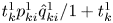 , with super-index 1 representing post-reform values and $\hat{q}_{ki}^1$
 denoting the predicted value of quantity demanded for good k by household i. The post-reform tax revenue, when behavior is considered, can then be expressed as

With the new shares (and quantities) we can now calculate the impact of the reform on energy consumption by just comparing pre-reform and post-reform quantities as well as the effects on CO2 emissions. Pre-reform emissions are computed using the initial amounts of gasoline and LPG with the average prices of these products in 2014 (in the case of electricity, the initial amounts are obtained when calculating the subsidy) and comparing them to post-reform emissions (with post-reform amounts and prices).Footnote 27 The information on the increase in tax revenue, together with the grossing-up factor, allows us to obtain the cash transfer each household will receive with the contemplated recycling options. The cash-transfer is added to the income of the household to obtain the new income variable, which we then use to calculate the new equivalent income and the new poverty rate. In order to calculate food and energy poverty indicators, we use new household income and food/energy expenditures at new prices.
4.1 Reform 1 (new gasoline tax)
The ‘morning-after’ effects of this reform represent an increase of 336.2 per cent in revenue from the IEPS and a 10.1 per cent increase in revenue from VAT, with an overall increase of government revenue from the new taxes of 61.7 per cent. However, once behavior is accounted for, the second-round effects provide a 44.6 per cent increase in total government revenue. The distribution of total tax payments (additional government revenue) by income deciles provides a picture of a very progressive reform (see figure 1). Over 22 per cent of the additional revenue would come from the highest income decile and over 50 per cent would come from the three highest income deciles. Concerning its effect on energy consumption and CO2 emissions, the reform would reduce household energy consumption by 26 per cent (mostly from the highest deciles) thereby allowing for a 19.1 per cent reduction in carbon emissions.
Distribution of the additional tax reform revenues by deciles of equivalent income (%).
Note: We consider the additional tax generated by the total IEPS and the VAT.

This progressive impact confirms the results obtained by Sterner and Lozada (Reference Sterner, Lozada and Sterner2012) or Renner et al. (Reference Renner, Lay and Greve2018), who found that a tax on the direct use of fuel (or a CO2 gasoline tax in the case of Cespedes (2013)) in Mexico would be strongly progressive; by Abramovsky and Phillips (Reference Abramovsky and Phillips2015), who found that the Mexican tax reform of 2010 (increased VAT rate together with minor changes in income and excise duties) was progressive when spending was used to measure the standard of living; by Huesca and López-Montes (Reference Huesca and López-Montes2016), who indicated that Mexican gasoline taxes tend to be borne by households with higher incomes; or by Rosas-Flores et al. (Reference Rosas-Flores, Bakhat, Rosas-Flores and Fernández2017), who showed that Mexican gasoline subsidy was noticeably regressive.Footnote 28 On the other hand, as shown by Renner et al. (Reference Renner, Lay and Greve2018) for Mexico, Williams et al. (Reference Williams, Gordon, Burtraw, Carbone and Morgenstern2015) for the United States, Durand-Lasserve et al. (Reference Durand-Lasserve, Campagnolo, Chateau and Dellink2015) for Indonesia or Douenne (Reference Douenne2020) for France, the redistribution of tax revenues to households is more progressive and more effective in reducing poverty rates, especially if it only targets the poorer households. Finally, we obtain the usual result in the literature: the reforms lead to reductions in energy consumption and, consequently, in CO2 and other fossil-fuel related emissions.Footnote 29
4.2 Reform 2 (removal of gasoline subsidy)
In this case, the immediate short-term effects of the reform consist of a 39.3 per cent increase in revenue from IEPS that, together with a small increase in revenue from VAT (1.2 per cent), represents an overall increase of 7.2 per cent in total government revenue. However, as in the preceding reform, these figures correspond to an upper threshold given the reaction of households to different relative prices. Second-round effects thus lead to a 28 per cent increase in revenue from IEPS, 7.1 per cent increase in revenue from VAT and 10.4 per cent increase in total government revenue.
Regarding the distribution of tax payments by deciles of equivalent income, this reform is less progressive than the previous one. The highest income decile contributes less than 12 per cent of the additional revenue and the three richest deciles contribute less than 40 per cent. Meanwhile, household energy consumption falls by 12.7 per cent, and the associated CO2 emissions decrease by 5.7 per cent. Thus, the poor now contribute more to reducing consumption and associated emissions.Footnote 30
It should be noted that reforms 1 and 2 are closely related. Results from reform 1 can be interpreted as arising from the decomposition of two effects: the removal of the subsidy (reform 2) and the tax increase. Taking this into account, the impacts of reform 1 mainly derive from the tax increase, since only 23.3 per cent of the expected increase in revenue from the first reform is brought about by the elimination of the subsidy. In terms of the impact by deciles, the tax increase is more progressive than the subsidy removal because the richest decile contributes 25.4 per cent of the additional revenue with the tax increase (as compared to 11.9 per cent in reform 2). On the other hand, the tax increase of the first reform makes a larger impact in terms of energy consumption and emissions.
4.3 Reform 3 (partial removal of the electricity subsidy)
The direct, no-reaction or ‘morning-after’ effects of this reform lead to a small increase in revenue from VAT (3.1 per cent) and a 16.3 per cent reduction in the total resources allocated to the electricity subsidy. However, the reduction of the total amount of electricity subsidy rises to 28.2 per cent if the response of consumers is considered. This, together with the VAT revenue increase, lead to additional revenues of around 0.17 per cent of Mexican GDP in 2014. The reform would indeed be very progressive, as the highest income decile contributes 22.8 per cent of this amount. As for energy consumption, the reform reduces the consumption of the three main energy products by 12.4 per cent and their associated emissions by 10.2 per cent. For equivalent income deciles, the 10 per cent richest (poorest) households contribute 19.3 per cent (4.4 per cent) of the reduction in consumption and 20.4 per cent (2.7 per cent) of the reduction in emissions.
4.4 Effects of the simulated reforms on poverty
In this section, we deal with the effects of recycling the extra revenue obtained from the above-mentioned tax reforms under the aforementioned three different transfer schemes. The first reform with the first transfer scheme allows for a lump-sum transfer of 1,668 pesos (US$125.50) to each household per year (as in every case from now onwards), thereby managing to slightly reduce the percentage of households in poverty (see table 3). The extra revenue available under the second alternative would provide a cash transfer of 7,564 pesos (US$569) to each household in poverty. This would reduce the poverty rate to 17.3 per cent, and the poverty in the (poorest) southern region would fall below 30 per cent. Finally, the third recycling option would involve transferring the additional revenue to households in poverty in an amount inversely proportional to their income level. Thus, each household in poverty would receive a different amount as a function of its income level, ranging from 4,843 to 50,041 pesos (US$364.30–3,764.70), thus reducing the poverty rate to 18.6 per cent. While this third alternative fails to reduce the poverty rate as much as the second alternative does, it allows for less pronounced inequalities between households in poverty, in the sense that in this case the poverty gap (defined as the aggregate difference between the income of households living in poverty and the poverty line: percentage of the latter divided by the total number of households) (Foster et al., Reference Foster, Greer and Thorbecke1984) is lower. When using an inequality measurement such as the Gini index,Footnote 31 the second and third transfer schemes have a bigger impact on inequality because they involve reducing the index by 2.4 per cent (as compared with a 0.8 per cent reduction in the index in the first scheme).
Poverty, energy poverty (MIS), and food poverty rates for the reforms (%)

The extra revenue obtained from the second reform would allow the government to transfer 389 pesos (US$29.26) to every household in the first recycling scheme; 1,763 pesos (US$132.70) in the second case and between 1,129 and 11,750 pesos (US$84.90–884) in the third one. With respect to the preceding reform, this alternative shows a similar qualitative impact on poverty, albeit less intensive due to the lower amount transferred to each household. The effects of this reform on the Gini index are obviously smaller too, with a 0.2 per cent reduction in the case of the first transfer scheme and a 0.6 per cent reduction in the other two schemes. Even though the effects of this reform on poverty indicators are limited, it may pose an interesting alternative, when considering the substantial payment increases with respect to the other reforms.
When devoting the resources generated by the third reform to the contemplated recycling options, every household in the first alternative would receive 1,182 pesos (US$89); every household in poverty would receive 5,360 pesos (US$403.30) in the second transfer scheme; and between 3,432 and 35,717 pesos (US$258.20–2,687) would go to households in poverty in the third recycling alternative. The impact on poverty would be akin to those of the first reform, although slightly lower given the somewhat smaller amount of the transfer. In this case the Gini index would show a 0.6 per cent reduction with the first transfer scheme and a 1.7 per cent reduction with the remaining schemes.
Table A5 in online appendix C provides information concerning the impact of the reforms on poverty rates by regions and areas of residence. Due to the higher level of poverty in the southern region and rural areas, the impact of fiscal reforms on the poverty rate is generally higher in the northern and central regions and urban areas than it is in the southern region and rural areas. However, the impact in absolute terms is greater in the latter.
Concerning energy poverty (see table 3 and tables A6–A7 in online appendix C), we see that reforms have little impact on the percentage of households in poverty. The energy poverty rate (MIS), which was initially 32.6 per cent, only slightly increased in the three reforms (32.7, 32.7 and 32.8 per cent respectively) in the absence of transfers. However, the recycling of revenues through transfers to households does allow for reduced energy poverty, especially in the case of equal transfers to all households in poverty. Table A7 in online appendix C shows the impact of the reforms on energy poverty rates by region and area of residence. Summing up, the cash transfers of the additional revenue have a greater impact on the poorer regions and areas in both absolute and relative terms.
Finally, we analyze the impact of recycling the additional revenue raised with the reforms on food poverty, and the results are also positive. Once transfers are given to households with each reform and recycling alternative, we again compare the equivalent basket of goods to the new disposable household income and calculate the average food poverty rates (depicted in table 3). We find Reform 1 is the most positive in terms of food poverty reduction under each of the transfer schemes. Regarding transfer schemes, none can be defined as superior in terms of food poverty rates; it all depends on the reform. Remarkably, reform 1 coupled with the second transfer scheme helps reduce the average food poverty rate by more than 43.5 per cent. The impact of the reforms on the food poverty rate is generally higher in rural areas and larger (smaller) in the poorest southern region with the third (first) transfer scheme (lower with the first scheme). The impact of the second redistributive scheme on food poverty depends on the reform (see table A8 in online appendix C).
5. Conclusions
This paper estimates a household demand system to analyze the socio-economic impact of different energy reforms and redistributive packages in Mexico. The Mexican government implemented two of these reforms (1 and 2) in 2016, although the introduction of a fiscal stimulus to moderate the increase in fuel prices made the actual tax burden lower than expected. This work simulates their impacts, had they been fully implemented, providing various revenue recycling alternatives that could be introduced with the purpose of equity to either compensate for potentially regressive effects or alleviate poverty. Although it remains to be implemented, the third reform may become a reality over the next few years given ongoing reforms in the Mexican electricity sector. Our results constitute the first comprehensive ex-ante micro assessment of the aforementioned reforms showing significant potential to reduce household energy demand and associated greenhouse gas (and local) emissions – as well as poverty (including energy and food poverty) – by recycling their revenues in certain ways.
The estimation of the demand system reveals significant differences between price and income elasticities of Mexican households with and without vehicles. Food, LPG and gasoline are luxury goods for both types of households, but electricity is a normal good for households owning vehicles while it is a luxury good for non-vehicle-owning households, which are more sensitive to income level changes. In terms of price elasticities, electricity is an elastic good while food, LPG, gasoline and other goods are inelastic, and households with vehicles are more sensitive to price changes in all goods. Geographic location and the level of income and prices, household equipment, composition and educational level of the household are among the variables affecting Mexican household energy demand.
Simulations are carried out with the parameter estimates provided by the demand system to analyze the impact of three reforms: the introduction in 2014 of gasoline taxes (IEPS) established in 2016, the suppression of the 2014 gasoline subsidy (IEPS) and the partial elimination of electricity subsidies. Moreover, the additional revenue generated in each of the preceding reforms is devoted to providing transfers to households to reduce poverty levels. The results of the simulations show that the reforms would generate an additional US$710–3,045 million (0.05–0.23 per cent of Mexican GDP in 2014) that would have a progressive impact on income, especially in the case of the first and third reforms. They would additionally reduce Mexican household energy demand (electricity, LPG and gasoline) between 12.7 and 26 per cent and mitigate CO2 emissions between 5.7 and 12.7 per cent. Furthermore, transfers to households would reduce the poverty and energy poverty rates, especially in the case of a lump-sum transfer to all households in poverty. However, a transfer inversely proportional to the income level of households in poverty would pose the best alternative for reducing the poverty gap. Finally, recycling additional revenues could also reduce the levels of food poverty, especially in the case of the first reform.
For many years Mexico's high (explicit and implicit) energy subsidies have been unsustainable from economic, distributional and environmental perspectives. However, international experience shows that putting energy prices ‘right’ requires long-term plans and the introduction of mechanisms to accommodate the transition (IMF, 2013). This paper shows the various socio-economic and environmental benefits of increased taxation and subsidy removal of energy goods in Mexico. It also provides detailed ex-ante evidence on the effects of compensatory devices that may contribute to successfully implementing energy reform packages and significantly mitigating poverty in Mexico.
Supplementary material
The supplementary material for this article can be found at https://doi.org/10.1017/S1355770X20000364.
Acknowledgements
The authors are grateful to Mohcine Bakhat, Don Fullerton, Alberto Gago, Michael Hanemann, Juan-Pablo Montero, Thomas Sterner and Jorge A. Rosas-Flores, the editors of this journal and two external reviewers for their comments and suggestions. They also acknowledge support from the Spanish Ministry of Science and Innovation (MCI), the State Agency for Research (AEI) and the European Regional Development Fund (ERDF) through the project RTI2018-093692-B-I00. The usual disclaimer applies.



