Introduction
New York University (NYU) Libraries, also known as the Division of Libraries, is a large academic research library network that serves the NYU community and scholars at its New York, Abu Dhabi, and Shanghai campuses. NYU is an R1 university, meaning that it grants doctoral degrees, engages in high research activity, and spends at least $5 million in total research expenditures per year.Footnote 1 Therefore, the Libraries’ primary focus is supporting research activities. Its collection development plan is managed by the Collections & Content Strategy department as well as subject specialists who liaise to the schools and departments throughout the University.Footnote 2 In this article, the authors will focus on collection development in the arts between the Elmer Holmes Bobst Library and the Institute of Fine Arts (IFA) Library at NYU.
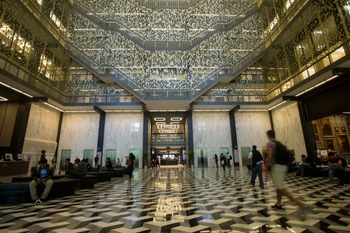
The Elmer Holmes Bobst Library serves as the flagship library location for NYU. Bobst Library has a large and diverse collection of research materials with more than 5.8 million print volumes and more than 2 million e-books total.Footnote 3 The Librarian for the Fine Arts at Bobst Library serves as the liaison to a wide variety of arts-related programs at NYU. The major liaison areas for this librarian include: the Photography & Imaging and Art & Public Policy programs at the Tisch School of the Arts; the Costume Studies, Studio Art, Art Education, Art Therapy, and Visual Arts Administration programs at the Steinhardt School of Culture, Education, and Human Development; the undergraduate program in Art History and the Museum Studies graduate program at the College of Arts and Sciences; the Gallatin School of Individualized Study; and the Liberal Studies program.
The Institute of Fine Arts Library is a branch library of the Division of Libraries located within NYU Graduate School of Arts & Science's Institute of Fine Arts. The IFA Library consists of two research collections, the Stephen Chan Library of Fine Arts and the Conservation Center Library specializing in art history, archaeology, and conservation. The library collection is developed primarily to provide for the educational and research needs of faculty and graduate students at the Institute of Fine Arts. The collection is also developed with consideration for the interests of the NYU community at large to the extent that such interests align with the needs of current IFA faculty and graduate students. The Head of the Institute of Fine Arts Library is the liaison to faculty, students, and visiting scholars.
The Elmer Holmes Bobst Library serves as the flagship library location for NYU. Bobst Library has a large and diverse collection of research materials with more than 5.8 million print volumes and more than 2 million e-books total. Photograph courtesy of the NYU Photo Bureau.

Selected Literature Review
Collaborative collection development is a topic that has been covered in library science literature in many different ways. Consortia partnerships,Footnote 4 interlibrary loan,Footnote 5 and demand-driven acquisitionsFootnote 6 are a few topics related to collaborative collection development that are readily found in the literature. Rather than an extensive analysis of these already well-developed findings, the authors are highlighting here a few publications that are particularly relevant to academic art libraries and the challenges that they face when it comes to collaborative collection development. This article aims to provide a more philosophical approach to collaborative collection development that can be applied to art librarianship in its various forms.
In developing a philosophy surrounding collaborative collection development in the arts at an academic institution, the authors identified greatly with Dempsey's 2018 article, “Library collaboration is hard; Effective collaboration is harder.” One of the main points that Dempsey makes is that there are trade-offs to both autonomy and consolidation such as efficiency versus control and systemwide versus local optimization.Footnote 7 He states, “Understanding the trade-offs involved in a particular collaboration and recognizing where the impulse to local control may be a barrier to longer term progress is important.”Footnote 8 Dempsey also aptly points out that a coordinated approach to collection development is very hard to do in practice at many academic libraries, as a desire for local control and faculty resistance may be roadblocks that librarians cannot avoid.Footnote 9 Historically, collection development between NYU's Bobst Library and the IFA Library has been challenging due to the need to preserve the delicate balance between local control and meeting the needs of the wider NYU community.
This negotiation is most important for the acquisition of print resources. Librarians in other disciplines besides the arts have been able to focus their efforts on the collection of electronic resources, which by nature tends to be a more collaborative process since electronic resources can facilitate simultaneous access, often not contingent upon location. For example, e-books related to STEM can be used by students and faculty across NYU campus locations from Brooklyn and Manhattan to Abu Dhabi and Shanghai, thus incentivizing selectors from these locations to work together to acquire these materials. Unlike other disciplines, however, the arts in general still rely heavily on print materials. In her article “The tenacious book, part 1: The curious state of art and architecture library collections in a digital era,” Kam discusses how art librarians must often contradict the preference of electronic resources over print that many library administrators and other subject specialists tend to exhibit.Footnote 10 In her 2014 study, Kam noted, “Numerous respondents indicated that the volume of print publications for their library to acquire remains vast, and from some perspectives, seems larger than ever.”Footnote 11 Without innovation and collaboration, this dissonance between art collections and those of many other subjects may have negative repercussions for academic arts research in the future. Kam explains,
As technical services units shift towards allocating more staff for the acquisition and processing of electronic resources, some libraries have seen a corresponding decrease in staff dedicated to working with print publications. The detrimental impacts of this situation, including backlogs of print materials requiring original cataloguing, less effort spent on fixing cataloguing issues for print materials, and a general decline in services for receiving and processing print materials for the collection, are already being felt by a number of those whom I interviewed.Footnote 12
Levenson's 2019 article “Notes on operations nimble collection development policies: An achievable goal” greatly influenced the authors’ ideas about what collection development guidelines should and shouldn't be. In describing the process of creating a collection development policy for Oakland University Libraries, Levenson states, “An initial element of the policy that was addressed early on was that the CDP was to be a statement of policy, not procedure. It would address why the library collected what it collected, not how.”Footnote 13 Acquisition procedures change often, and they need to be flexible to meet the demands of the ever-changing publishing landscape; therefore, it does not benefit an academic library to formalize these procedures publicly. Written public collection development policies and/or guidelines, however, have many benefits such as addressing the selectors’ attempts at minimizing personal bias, more easily communicating to patrons why a suggested purchase or donation may have been rejected, and more efficiently and effectively informing new selectors of their collection development responsibilities.Footnote 14
Collection Development Practices
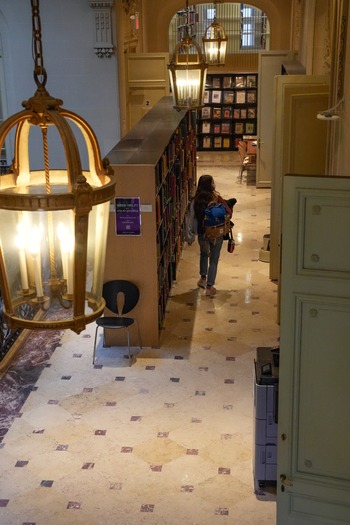
At the Institute of Fine Arts Library, the library faculty, with the assistance of the staff, are responsible for the general balance and quality of the resources acquired. Those with specialized knowledge of certain subject areas consider reviews in library publications, bibliographies, interlibrary loan requests, circulation data, and reference inquiries in selecting print and digital materials for acquisition. The library's aim is to accommodate requests that are in the scope of the collection development guidelines.Footnote 15 Users are also encouraged to make recommendations for material purchases by emailing the relevant subject specialist librarian directly. At Bobst Library, these same methods of analysis and selection exist but are largely conducted by the Librarian for the Fine Arts. Additionally, the selection of electronic databases related to the arts has traditionally been done by the Librarian for the Fine Arts at Bobst, and it is unclear if coordination with staff and faculty at IFA took place in regards to these decisions prior to 2018.
Since the IFA Library's inception in the 1930s as a departmental collection, it has been a non-circulating collection that served the program's faculty and students. Items did not leave the IFA buildings, but could be checked out for use in faculty offices or to be held on students' personal library shelves by filling out paper call slips. Due to this reason, duplication of print materials at the IFA Library was considered normal and necessary for Bobst, since access to the IFA collections was limited for users outside of that community.
At the Institute of Fine Arts Library, the library faculty, with the assistance of the staff, are responsible for the general balance and quality of the resources acquired. Photograph courtesy of N.L. Roberts, NYU/Institute of Fine Arts.

In Fall 2020, however, this circulation model changed because of the COVID-19 pandemic. Many art history materials are unavailable electronically and researchers were not able to use the library for their coursework or research. With this in mind the Head of the IFA Library, in consultation with the IFA faculty and the Division of Libraries, decided to allow some materials, predominantly monographs and exhibition catalogs in the Stephen Chan Library of Fine Arts, to circulate to NYU graduate students and faculty. Scanning services were also made more widely available to all NYU users for IFA Library materials such as book chapters and articles, within the restrictions of copyright and library guidelines.Footnote 16 Currently, the Institute of Fine Arts Library holds 204,045 items. The Stephen Chan Library of Fine Arts circulates 37 percent of the collection, while the rest of the collection is in-house use only. The Conservation Center Library continues to be a non-circulating collection.
This major change greatly impacted the volume and range of art research materials that NYU affiliates can now access. Additionally, a new contactless locker pickup system is in service at Bobst, which allows students and faculty to request books online and retrieve them from lockers with an individualized code, reducing the amount of human contact and time in the library needed to retrieve print materials. Many books from the IFA library are requestable for contactless pickup through this system, thus increasing accessibility to these collections for those who primarily use Bobst Library.
This unprecedented access to the IFA Library's collection will lead to a reassessment of duplication practices at both IFA and Bobst Libraries.
Collection development in the arts for Bobst Library has traditionally aimed to be encyclopedic in nature with the acquisition of print and electronic materials ranging from ancient to contemporary art without geographic, format, or language boundaries. Within the Library of Congress call number ranges of AM, GT500-GT2370, N-NX, TR, and TT,Footnote 17 Bobst Library has about 143,000 print volumes in its collection. About 52,000 of these volumes are located offsite. Additionally, there are over 1,000 journals related to the arts with electronic access and about 22,000 other electronic resources such as e-books and databases that are available for access through the library's online catalog.Footnote 18 This vast collection intends to meet the research and curriculum needs of students, faculty, and affiliated researchers who study the arts of all disciplines at NYU and the global community at large.
As a member of OCLC SHARES and with access to PALCI's EZ-Borrow service, NYU Libraries also extend their access to the collections of other research libraries who participate in these consortia. All of this diverse access to other collections informs collection development decisions that are made at NYU Libraries.
Methodology and Philosophy
The authors looked at three different approaches in comparing the collections at Bobst Library and the Institute of Fine Arts Library. The first consideration was to run an Integrated Library System (ILS) report on specific classes of the Library of Congress Classification. For example, book titles in class N, Art, have subclasses N, Visual arts; ND, Painting; and NK, Decorative arts that could be analyzed, but the use for these materials for curricular needs may vary, and other considerations such as space and staffing at both locations, and course reserves also affect which titles are collected at which library location. In addition, data collection and analysis throughout the NYU Division of Libraries is conducted differently; therefore, comparison of this data would not result in meaningful interpretations.
The second approach considered was sampling circulation metrics, but this data set would be incomplete because it would not include items that were browsed serendipitously, and there is no way for the authors to know which academic programs students and faculty who checked out the books were affiliated with.Footnote 19 Since Bobst is the flagship library, many NYU students and faculty use this location. It supplements library resources that are not available at IFA Library or can be borrowed from local art libraries, and it is in close proximity to their homes and the main campus.
The third method of interest to both authors was the OCLC WorldCat Collection Analysis Tool mentioned in Powers' article, “A collection development plan for art and art history at the University of South Florida.” Through Powers' analysis, they compared the library's holdings to peer institutions in order to identify gaps, overlapping, and unique materials.Footnote 20 The authors of this article, however, did not have access to this tool nor had the capacity to systematically survey faculty in their respective schools and departments to see if the data was relevant to the collections at hand. Finally, although both collections fall under the Division of Libraries, there are no recent collection development guidelines in place for either library, and circulation statistics are gathered differently at both locations.
These options did not suit the authors’ needs. Therefore, they decided to take the more philosophical approach of curators who acquire works for museum collections holistically over a long period. This role is similar to that of a library liaison's responsibility for ensuring that their collections have the necessary resources on a particular subject. Also, they are tasked with maintaining a good balance of material necessary for study and academic research in their field.
In Bruce Altshuler's introduction to Collecting the new: Museums and contemporary art he states that “curators make qualitative judgments all of the time — about new works as well as about old — but such assessment implicitly is done in the subjunctive mode.”Footnote 21 Librarians also make these qualitative judgments about the materials they select. They are bibliographers, the subject liaisons responsible for understanding the literature and areas of study in the field in which they work. This includes reading reviews of the most recent texts in their field and deciding if purchasing them is both a wise and a fiscally-sound choice based on the library's budget and library patrons' anticipated or immediate needs. A liaison's selection must be both an educated decision and visionary in its application since they are shaping the collection for both current research and future scholarship.
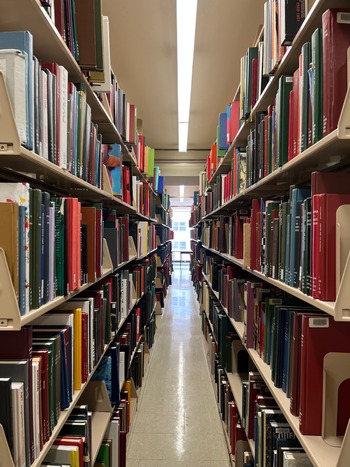
The stacks at the Elmer Holmes Bobst Library. Photograph courtesy of Giana Ricci

Discussion
General Selection Guidelines
The authors agree that writing general selection guidelines is critical. It frames the goals of librarians and supporting staff who shape the collection and decide on other elements of collection development such as weeding and preservation. As mentioned previously, it's important to prevent the library from being driven by personal taste and even the purchasing of random resources, which may not support the mission and vision of the library.
Both of the authors are members of the Collection Advisory Committee (2020-2022) - a group, convened by the Associate Dean for Collections and Content Strategy, Kristina Rose, and the Head of Collection Development, Bill Maltarich - that represents selectors and stakeholders in the collection development process. This monthly gathering provides an opportunity for communication and collaboration between selectors and the Knowledge Access and Resource Management Services department (KARMS), which handles the processing of collections. The group serves as a space where the needs of many departments can be voiced and heard in tandem. As a result of these conversations, written and public facing collection development guidelines for NYU Libraries are underway.
Collaboration Across Departments
This collection development work cannot be done without effective collaboration across multiple departments at NYU Libraries. Subject liaisons are generally responsible for collection development in their individual areas, but since the arts are so inherently multidisciplinary, it can be extremely helpful to have knowledgeable colleagues who can consult on purchases that could benefit many areas of study. The same can be said for colleagues in the Special Collections Department, who collect material related to the arts and other areas that is unique, ephemeral, archival, or more suited to a non-circulating, appointment-based environment. These key collaborations help all the selectors mentioned to develop well-rounded and meaningful collections that work together to serve the research needs of the NYU community.
After the selection phase, it is also vital to collaborate effectively with the KARMS team, which is responsible for creating cross-departmental workflows for the acquisition of print and electronic resources for NYU Libraries. As previously mentioned, many arts materials cannot be acquired through traditional library vendors or purchasing channels. This requires the art librarians to work one-on-one with KARMS staff to procure these items through other means such as publisher websites, online booksellers, or the second-hand market. These acquisitions can be time consuming, and it is important for the selectors to consider the time and resources required of the KARMS staff in order to fulfill these requests.
Advocacy and Outreach
The collaboration between the authors has necessarily extended beyond collection development into the areas of advocacy and outreach to related departments. As liaisons, the authors serve as representatives for the Libraries, promoting resources, services, and events, and advocating for support of the Libraries’ needs. This work in practice results in library instruction sessions that are tailored to arts research, periodic update emails to faculty about new resources and service updates, attendance at faculty meetings, and service on various committees and working groups across the Libraries and the University at large. The authors have also consulted each other on the creation and maintenance of research guides that are relevant to their liaison departments.Footnote 22
Since there are students and faculty who teach, learn, and research across multiple departments at NYU, consistent messaging from both of the art liaisons is paramount. Open communication between all the liaisons promotes an environment of collaboration and collegiality, but also helps the NYU community to more effectively and confidently use the Libraries.
Conclusion
Academic librarianship is not just about research or scholarship, although it is an important element to this work. It also requires a field practicum designed to integrate research with practice in a library setting. This practical application is what makes librarians, staff, collections, and physical and digital library spaces the epicenter of a research university.
As liaisons, the authors serve as representatives for the Libraries, promoting resources, services, and events, and advocating for support of the Libraries’ needs. Photograph courtesy of N.L. Roberts, NYU/Institute of Fine Arts.

This collaboration is only at its beginning. The authors recognize the need to document their activities over the course of the next several years in order to assess the effectiveness of their collaboration. Analyzing years’ worth of both quantitative and qualitative data will help the authors to identify potential areas of improvement and to elaborate more fully on areas that have proven to be effective. Areas of this collaboration that could use further research include: the acquisition of arts materials through non-traditional library channels, the challenges of advocating for print resources in a highly digital world, and the need for resources dedicated to the acquisition, cataloging, and processing of arts materials in a research library.