




No CrossRef data available.
Article contents
Microsatellite analysis reveals that female mice are indiscriminate when choosing infected or dominant males in an arena setting
Published online by Cambridge University Press: 18 November 2004
Abstract
Considering that both infection and dominance status can be conveyed through urinary odours and both are thought to affect mate choice, the present study assessed the role of infection and male dominance status on female mate choice in arena enclosures. Three male CD-1 mice were simultaneously introduced into each of 4 spatially complex arenas (3·0×0·6×0·4 m high) for 24 h prior to introduction of 5 females into each arena. During the first mating sequence (i.e. Mating 1), all 3 males were uninfected. Prior to Mating 2, the dominant male in each arena was infected with 200 L3 of Heligmosomoides polygyrus (Nematoda). Prior to Mating 3, the dominant male was drug-treated to remove the parasite. Dominance was assessed by the absence of rump or tail wounds (Freeland, 1981). Females were removed from the arena when visibly pregnant, and returned for subsequent mating 2 weeks following parturition. Paternity was determined by microsatellite analysis of each pup. Multi-male mating (i.e. mating with 2 or all 3 males) was a common strategy among females as littermates were sired by 2 or all 3 males in 64% of the litters. Contrary to expectation, the dominant male did not sire the majority of offspring in any of the mating sequences, and infection and subsequent drug treatment of the dominant male did not have a significant impact on female mate choice. In addition to methodological differences in paternity determination (i.e. DNA analysis versus behavioural observations and/or phenotypic traits), these findings may be further explained by the spatial complexity of the experimental arenas.
Keywords
Information
- Type
- Research Article
- Information
- Copyright
- © 2004 Cambridge University Press
INTRODUCTION
Although the role of parasites in female mate choice has been addressed in numerous bird and fish models (Clayton, 1991; Zuk, 1992), mammals have been largely neglected in both experimental and correlational assessments of the impact of parasites on mate choice. One study examining the effect of parasites on murine sexual behaviour demonstrated that female laboratory mice carrying clinically overt infections with the nematode, Trichinella spiralis, were less attractive to potential uninfected male mates; however, the males' avoidance of infected females was not a result of active mate choice, rather the infected females were more aggressive and less receptive to mating (Edwards & Barnard, 1987). In a separate study, male mice heavily infected with the cestode, Taenia crassiceps, displayed sexual inhibition as shown through a marked decrease in sexual behaviours (i.e. mounts, intromissions and ejaculations) over the course of a 15-week infection (Morales et al. 1996). Considering the energetic cost of reproduction incurred by females, it has been argued that in species such as Mus, where there is little parental care by the male, the female should be selective in her choice of mate, choosing the male that will confer the best genes to her offspring (Krackow & Matuschak, 1991), and recent evidence suggests that odours may serve as the signal by which females obtain information regarding the quality of a male.
The results of several odour preference studies indicate that female rodents can detect the odour of an infected conspecific male and that they prefer to spend more time exploring the odour of an uninfected male (see Penn & Potts, 1998; Ehman & Scott, 2001). As rodents and other mammals use odour as their primary mode of communication (Bronson, 1979), odour preferences are thought to be reflective of mate preferences (Egid & Brown, 1989; Krackow & Matuschak, 1991); yet, until recently, this had remained untested. Ehman & Scott (2002) found that female odour preferences for the urine of uninfected males extended to female mate choice for uninfected males in a controlled setting. CD-1 female mice demonstrated a significant mate preference for uninfected males over males subclinically infected with the intestinal nematode, Heligmosomoides polygyrus. Although this controlled mating experiment was an important step, tethers prevented intrasexual interactions and, as such, the impact of infection relative to behavioural factors (e.g. male dominance) could not be ascertained.
There exists substantial evidence showing that dominance status is also conveyed through urinary odours. Female mice discriminate between the odours of dominant and subordinate males and prefer the odours of dominant males (Hurst, 1990; Drickamer, 1992). As dominance in mice also reflects ability to defend a territory, females may use both the quality and perhaps the quantity of scent marks to assess a male's territory (Drickamer, 2000). By choosing a high-quality territory, a female gains access to territorial resources such as food, and may further profit indirectly through increased protection of her offspring if the territorial male protects the resident females and his presumed offspring from intruders (Labov, 1980). Moreover, successful acquisition and maintenance of a high-quality territory is reflective of overall fitness, thus the male's ‘good genes’ are passed to the female's offspring (Drickamer, 1992). That dominant males, or those successfully defending territories, achieve the most copulations within a territory, is widely accepted based on direct behavioural observations or paternity assessment using phenotypic characteristics such as coat colour (DeFries & McClearn, 1970; Oakeshott, 1974; Wolff, 1985; Rolland et al. 2003). Although subordinate male mice may reside within the territory of a dominant male, they typically acquire fewer copulations than the dominant male (DeFries & McClearn, 1970; Oakeshott, 1974; Wolff, 1985) and, in some studies, females have been observed actively refusing to mate with subordinate males (Wolff, 1985; Rolland et al. 2003).
Considering that both infection status and dominance can be conveyed through urinary odours, and that both are thought to influence female mate choice in mice, the present study used arena enclosures to assess the impact of H. polygyrus infection and male dominance status on mate choice in CD-1 female mice. Heligmosomoides polygyrus is a naturally occurring trichostrongyloid nematode of small rodents and has been thoroughly studied in the murine host (Liu, 1965; Bryant, 1973; Wakelin, 1988; Monroy & Enriquez, 1992; Scott & Tanguay, 1994). Moreover, prior work in CD-1 male mice has reported that H. polygyrus will not alter previously established dominance relationships (Freeland, 1981). Using 3 males and 5 females in each of 4 arena enclosures (n=20 females, n=12 males), the experiment was separated into 3 mating periods, and the following hypotheses were tested: (1) the dominant male will sire a higher percentage of offspring than the 2 subordinate males combined when all males are uninfected (Mating 1); (2) when the dominant male is infected, females will shift their mate choice to the uninfected subordinates since females will find the dominant (infected) male's scent unattractive (Mating 2); (3) drug treatment of the dominant male's infection will restore the female's mate preference to the dominant male and this preference will be evident in the proportion of offspring sired by the dominant male (Mating 3). By permitting both inter-and intrasexual interactions in large laboratory enclosures, this study served to advance our understanding of the relative impact of infection and dominance on female mate choice in comparison to earlier, more controlled studies.
MATERIALS AND METHODS
Arena design and conditions
Four arenas (0·3×0·6×0·4 m high) were used to evaluate female mate choice. A 15 cm high wall divided the length of the arena into 2 unequal sections, a small section (3·0×0·6×0·4 m) and a large section (2·7×0·6×0·4 m); all mice could scale the divider and move freely through the entire arena. The small section of the arena contained 1 food tray, 1 water bottle, 2 refuge tubes and 2 nest boxes. The large section of the arena contained 1 food tray, 1 water bottle, 6 refuge tubes and 4 nest boxes. Refuge tubes provided escape for both females and subordinate males. Based on previous studies, an arena of such size and complexity is sufficient to permit territory development by the dominant male (see Hayashi, 1996). Food (Mouse chow 5015, Agribrands Canada, Ontario, Canada) and water were available ad libitum, and the arena floor was covered with pine shavings. The arenas were maintained under a 10[ratio ]14 h dark[ratio ]light cycle (light 0700–2100) at an ambient temperature of 21 °C. At the start of the experiment (Mating 1), sexually naïve male and female CD-1 mice (Charles River, Montréal, Québec, Canada), 2 months of age (22–35 g), were used. CD-1 outbred mice were used to ensure adequate genetic diversity for microsatellite genotyping, and all individuals originated from different litters.
General protocol
Three males were randomly assigned to each of 4 arenas, and 5 randomly selected females were introduced into each arena 24 h later. Male aggression was recorded during daily arena inspections. All mice were marked with picric acid (Aldrich Chemical Company, Milwaukee, Wisconsin, USA) to relate observations to individuals. Dominance was defined as the absence of rump or tail wounds (DeFries & McClearn, 1970; Freeland, 1981).
Overall, the experiment involved 3 mating sequences and the same 3 males and 5 females were used in each arena (i.e. each female was mated 3 times under 3 different conditions). This design controlled for the effect of the individual over the 3 treatments as all males and females gained experience equally. In Mating 1, all males were uninfected. Once all of the females were visibly pregnant, they were transferred to individual clear Nalgene cages (Fisher Scientific, Montréal, Québec, Canada) to give birth to the first litter. Fourteen days post-parturition, the pups were sacrificed. The 3 males in each individual arena were only removed from the arena during bedding changes and always remained together so as to not disrupt the established dominance relationships. Prior to Mating 2, the dominant male was infected via oral intubation with 200 infective larvae (L3) of H. polygyrus suspended in 25 μl of deionized water. The 2 subordinate males were sham-infected with 25 μl of deionized water. Faecal egg counts were conducted at 2 weeks p.i. to verify infection status and revealed eggs counts of 31, 54 and 49 (×103) eggs/mouse/day for dominant males from arenas A, B and C, respectively. The females were reintroduced to their respective arenas 1 week later. The second mating sequence began when the males were 21 days p.i. to be consistent with our prior study (Ehman & Scott, 2002). The females were removed when visibly pregnant for the second time and the pups were sacrificed at post-natal day 14. Prior to Mating 3, the dominant, infected males were treated twice with an oral suspension (1·6 μl/g body wt) of Pyrantel Pamoate (230·4 mg/kg) (Pfizer Canada, Inc., Kirkland, Québec, Canada), and the other males were sham-treated with comparable amounts of deionized water. Two weeks following the initial treatment, faecal egg counts were conducted to verify the efficacy of the treatment. None of the infected males retained the infection. The females were reintroduced into their respective arenas 2 weeks later. As with previous mating sequences, females were removed when visibly pregnant, and all pups were sacrificed at post-natal day 14. At this time, all adult males and females were also sacrificed.
In 3 of the 4 arenas (arenas A, B and C), the presence of rump and tail wounds on 2 of the males within 1 or 2 days following the introduction of the females, revealed that 1 male became dominant, and remained dominant, while the other 2 males remained subordinate throughout the study. There are a number of ways to ascertain dominance, but male aggressiveness, as demonstrated through fights and biting, is one of the most well-established indicators (DeFries & McClearn, 1970; Bronson & Marsden, 1973; Freeland, 1981; Collins et al. 1997). Moreover, the rump/tail wound criteria had effectively been used in an earlier study assessing the impact of H. polygyrus infection on male dominance in CD-1 mice (Freeland, 1981). In arena D, there were no noticeable male dominance interactions; therefore, neither infection nor drug treatment were imposed. In the subsequent sections, arenas A, B and C will be referred to as experimental arenas, and arena D, the control arena.
Microsatellite genotyping
Liver samples were collected from all adults and all offspring and stored at −20 °C. Subsequently, the genomic DNA was extracted from the tissue using conventional phenol–chloroform extraction after digestion (3–5 h) with proteinase K. The DNA was resuspended in sterile deionized water (20 ng/μl), transferred to 96-well plates (Applied Biosystems, Foster City California, USA) and stored at 4 °C until use. Each plate contained 85 offspring samples, 8 controls (i.e. parental DNA) and 3 sterile deionized water blanks.
Microsatellites are polymorphic regions of DNA containing a repeated nucleotide sequence and are useful for identification of related individuals (Strassmann et al. 1996). Nine microsatellite regions were identified in the parents and gene-specific primers were designed to amplify these regions (Invitrogen Canada Inc., Burlington, Ontario, Canada). Combinations of the primers were then used for paternity testing in each arena (Table 1). Each pup was genotyped using a minimum of 2 different primer sets to ensure accurate paternity assignment. In brief, the microsatellite regions were amplified using the specific primers and paternity was assigned based on allele size. Each pup receives 1 allele from the mother and 1 from the father. In this study, maternity was known; therefore, we only needed to distinguish among 3 potential fathers in each arena. Touchdown PCR was carried out in an ABI 9700 thermocycler (Applied Biosystems, Foster City California, USA) using the following conditions: 10 min at 96 °C, followed by 3 cycles of 30 sec at 94 °C, 30 sec at 60 °C, 1 min at 72 °C; 2 cycles of 30 sec at 94 °C, 30 sec at 59 °C, 1 min at 72 °C; and 35 cycles of 30 sec at 94 °C, 30 sec at 54 °C, 1 min at 72 °C; and a final elongation of 10 min at 72 °C.

ABI 3700 DNA analyses
First, 8·25 μl of Hi-Di formamide and 0·25 μl of GS400HD size standard (Applied Biosystems, Foster City California, USA) were added to each well of a 96-well microtitre plate (Applied Biosystems, Foster City California, USA). Next, 1·3 μl of each PCR reaction was added to the 96-well plate and the entire plate was centrifuged for 1 sec to concentrate reagents on the bottom of each well. Following centrifugation, the samples were denatured at 95 °C for 5 min and immediately placed on ice. Each plate was then placed in the ABI 3700 automated sequencer and data collection setup was initiated. Band separation was obtained by capillary electrophoresis and detection of fluorescent-labelled fragments occurred at the end of the capillary elution. Genotyper® (Applied Biosystems, Foster City California, USA) software was used to obtain a graphical representation of the separation.
Ethical note
The Animal Care Committee at McGill University approved all experimental procedures. The arenas were monitored twice daily, specifically checking for physical wounds to the subordinate males. Although all subordinate males had minor tail or rump wounds, the criteria used to separate dominant from subordinate males, none of the subordinate males were wounded to the extent that they needed to be removed from the experiment. The structure of the arena provided adequate refuge, and behavioural observations indicated that all of the subordinates could access food and water. Moreover, all of the subordinate males gained weight during the experiment, further indicating that they were able to access the available food. With regards to infection, the dose of 200 L3 used in this experiment does not cause physical debilitation and is considered to be a light-moderate infection level.
Statistical analyses
Repeated measures analysis of variance (ANOVA) was used to determine if the percentage of offspring/litter sired by the dominant male differed significantly from that sired by each subordinate, as well as to evaluate the percentage of offspring sired by each male in the control arena since no dominance relationships were established (between-subject factor: male). Repeated measures was also used to analyse the proportion of offspring sired by the dominant male over the 3 matings and litter size (between-subject factor: arena). The effect of parity and number of fathers on litter size was evaluated using multiple linear regression, and associations between female weight and litter size as well as the association between male weight and number of offspring sired were evaluated using simple linear regression. In the experimental arenas, the likelihood that litters were sired by a single male, the chance that the dominant male sired a single-sired litter with time, and the number of copulations that the dominant male was allowed were assessed using Chi-square analysis. All proportion data were transformed using arcsine transformation prior to analysis. SAS (Version 8) (SAS Institute Inc., Cary, North Carolina, USA) and SigmaStat (Version 2.03) (SPSS Science, Chicago, Illinois, USA) were used for all statistical computations. In all cases, the level of significance was set at P<0·05.
RESULTS
Reproductive outcomes
Table 2 presents the descriptive statistics for initial female weight, male weight at each mating, litter size, sex ratios and total number of offspring, as well as the dominant males' contribution to reproduction in the experimental arenas. Overall, there was a significant increase in litter size over the 3 matings (Repeated measures ANOVA: F2,30=8·40, P=0·001), whereas the percentage of male pups/litter remained constant (Repeated measures ANOVA: F2,26=2·38, P=0·14). In 3 litters there were no males. Although the sex ratio in most instances was approximately 1[ratio ]1, which is considered to be normal (James, 1996), for unidentified reasons, at Mating 1 (arenas A and D), 2 litters were substantially male-biased.

Arena D
In arena D, dominance relationships were not established among males therefore infection and subsequent drug treatment were not introduced. Of the 15 litters produced throughout the experiment, 12 (80%) were sired by 2 or all 3 males, indicating a high degree of multi-male mating. Multiple regression analysis revealed that both parity and the number of males with which the female mated were significantly associated with litter size (Multiple regression: R2=0·39, F2,12=3·79, P=0·05). Interestingly, when the mating success of individual males was followed, one of the males sired a higher percentage of offspring (51·0%±0·6) than either of the other 2 males (17·4%±4·4, 31·5%±3·7) (Repeated measures ANOVA: F2,12=9·53, P=0·003). Moreover, there was no effect of mating sequence (Repeated measures ANOVA: F2,24=0·05, P=0·93), nor was there an interaction of ‘male’ and mating sequence (Repeated measures ANOVA: F4,24=0·27, P=0·89), indicating that the contribution of each male was consistent over time.
Dominance, infection and drug-treatment
In the remaining arenas (A, B and C), 1 male in each arena became socially dominant thus the impact of both dominance and infection in relation to female mate choice were assessed. Using the proportion of offspring sired at each mating, it was determined that the dominant male did not sire the majority of offspring at any of the 3 mating sequences. There was no difference in the percentage of pups sired by any of the 3 males (Repeated measures ANOVA: F2,36=0·42, P=0·66), nor was there an effect of mating sequence (Repeated measures ANOVA: F2,72=0·01, P=0·99) or an interaction (Repeated measures ANOVA: F2,72=2·15, P=0·09).
Fig. 1 shows the percentage of offspring sired/litter by the dominant male at each of the 3 mating sequences. There was no significant change in the percentage of pups sired by the dominant male/litter over the course of the experiment (Repeated measures ANOVA: F2,22=3·01, P=0·07), nor was there an arena effect (Repeated measures ANOVA: F2,11=1·79, P=0·21); however, there was a significant interaction (Repeated measures ANOVA: F4,22=3·49, P=0·02), with the univariate statistics revealing that in Mating 3, arena B, the dominant male sired significantly fewer offspring (Repeated measures ANOVA: F2,11=6·68, P=0·01).

Fig. 1. The proportion of offspring/litter sired by the dominant male at each of the 3 matings: (1) all males uninfected; (2) dominant male infected; and (3) dominant male drug-treated.
Single and multiple-sired litters
Because 2 or 3 males sired a large proportion of litters (i.e. multiple-sired litters), the contribution of the dominant male to each of the multiple-sired litters was investigated in addition to the overall pattern of multi-male mating. Fig. 2 depicts the percentage of litters that were sired by 1 (single-sired), 2 or all 3 males (multiple-sired). In the experimental arenas, 64% of the litters were sired by 2 or all 3 of the males. Multi-male mating did not vary with time, as the likelihood that a litter was sired by only 1 male did not change over the 3 mating sequences (Chi-square test; χ2=0·91, D.F.=2, P=0·64). In addition, the likelihood that the dominant male fathered a single-sired litter did not change over the 3 mating sequences (Chi-square test; χ2=3·56, D.F.=2, P=0·17). Assuming that if a particular male sired at least 1 pup in a litter, the female mated with that male once, the number of copulations in which the dominant male was a participant was calculated (i.e. the number of matings in which the female chose to include the dominant male as one of her mates). From Mating 1 to Mating 3, there was no change in the number of copulations that females permitted the dominant male (Chi-square test; χ2=1·85, D.F.=2, P=0·40); however, at Mating 3, of the 14 females that produced litters, all but 2 females mated with the dominant male at least once. Moreover, as in arena D, multiple regression analysis revealed that both parity and the number of males with which a female mated were significantly associated with the number of offspring produced (Multiple regression: R2=0·29, F2,56=11·67, P=0·001).

Fig. 2. Percentage of litters sired by 1 (single-sired), 2 or all 3 males (multiple-sired) at each of the 3 matings. The overall bar represents the total percentage of litters sired by 1, 2 or all 3 males. The shaded portion represents the specific contribution of the dominant male to each of the single- or multiple-sired litters. For example, in Mating 1, 27% (overall bar) of the litters were sired by only 1 male, and of those single-sired litters, the dominant male was the single father in 7% (shaded portion). In contrast by the 3rd mating sequence, the dominant male was the exclusive father in 30% of the single-sired litters.
Weight and litter size
There was no effect of female weight on the size of the litter in Mating 1 (Simple linear regression: R2=0·04, F1,18=0·81, P=0·38). Although female choice based on male weight could not be assessed since multiple males sired many of the litters, there was no reproductive advantage to mating with a heavier male in any of the 3 mating sequences. There was no effect of male weight on the number of individual offspring sired in Matings 1, 2 or 3, thus heavier males did not sire more offspring (data not shown).
DISCUSSION
We began this experiment with 2 underlying assumptions regarding female mate choice in mice: (1) dominance and infection are factors contributing to female mate choice and are conveyed through odours; and (2) odours are the primary means by which females select mates. This study followed a more controlled experiment in which male–male interactions were prevented, and females chose to mate with uninfected males over those infected with a subclinical H. polygyrus infection. Accordingly, the primary objective of this experiment was to evaluate the relative importance of each factor (i.e. dominance and infection) on female mate choice in a setting that permitted both scent marking and inter- and intrasexual interactions.
In 3 of the 4 arenas, behavioural dominance among males rapidly established and was sustained throughout the experiment. Yet, counter to expectation, dominant males did not sire the majority of offspring in any of the 3 mating sequences and infection of the dominant male (Mating 2) had no detectable impact on female mate choice. Consequently, the impact of subsequent drug treatment (Mating 3) could not be clearly assessed. To our surprise, the majority of the litters were consistently sired by more than 1 male throughout the study. In the experimental and control arenas, 64% and 80% of the litters were multiple-sired, respectively. Additionally, litter size was found to increase with female parity and with the number of fathers siring the litter, but was independent of female weight.
Although it is generally accepted that dominant male mice acquire the majority of matings, experimental evidence supporting the role of the dominant male in mate choice is variable and seemingly dependent on factors such as size and structure of the testing apparatus (DeFries & McClearn, 1970; Oakeshott, 1974; Wolff, 1985). In an enclosure similar in both size structure as those used in the present experiment, and using the same number of males and females, Oakeshott (1974) reported that the socially dominant males fathered 64% of the litters. Therefore, our discordant results regarding the role of the dominant male may be reflective of methodological differences in paternity analysis rather than arena design. Prior studies that relied on phenotypic characteristics and/or behavioural observations to ascertain paternity may have been inaccurate, specifically in terms of overestimating the contribution of the dominant male. Recent evidence in several species suggests that females often mate in a concealed manner thus paternity cannot be inferred from behavioural observations (Hughes, 1998; Zeh & Zeh, 2001). In earlier studies, the reproductive success of the dominant male was reported as the number of litters, as opposed to number of pups, sired by the dominant male and multiple-sired litters were not considered. Because we genotyped individual pups (724 pups in total), it is conceivable that our numbers more accurately reflect the actual contribution of the dominant male. Although differences in paternity assessment may partially explain the disparity with respect to the contribution of the dominant male, it does not offer an explanation as to why we did not observe a decrease in the reproductive success of the dominant, infected male (Mating 2).
Considering that both dominance and infection have an established function in odour determination (Hurst, 1990; Drickamer, 1992; Penn & Potts, 1998; Ehman & Scott, 2001), it was surprising to discover that neither factor prevailed as the basis of female mate choice in the arena setting. In brief, the structural complexity in our arenas may have delayed the ability of dominant males to establish unambiguously scent-marked territories. In complex structures such as our enclosures, where items are arranged randomly, or unevenly distributed, dominant males may have more difficulty excluding other males from a defended territory (Gray, Plesner-Jensen & Hurst, 2000). In addition to physically defending a territory, scent marking, which is paramount to territory establishment (Bronson, 1979), may also be altered as a result of structural complexity. As such, there remains the possibility that in our spatially complex enclosures, the dominant male was unable to clearly establish boundaries through scent marks; therefore, females could not distinguish between dominant and subordinate males despite the fact that there was apparent behavioural dominance. As mentioned above, it has been well established that information regarding infection can be conveyed through odours (Penn & Potts, 1998; Ehman & Scott, 2001), including urine, and further, that in a controlled environment, female mice prefer to mate with uninfected males (Ehman & Scott, 2002). However, if scent marks were overlapping, females may not have been able to clearly identify and avoid mating with infected males (Mating 2) as they did in the previous, more controlled, study (Ehman & Scott, 2002). In the experimental arenas (arenas A, B and C), it is argued that scent marks indicative of good health or high-quality (i.e. dominant or uninfected) could not be discerned, thus females reverted to a strategy of multi-male mating as indicated by the finding that 64% of the litters were sired by more than 1 male.
We are confident that our arena design permitted behavioural dominance to be established in 3 of the 4 arenas, as observations revealed that the dominant male physically defended resources (i.e. food and water) and frequently attacked subordinate males (data not shown). The design also allowed subordinate males to escape attacks from the dominant male and survive the duration of the experiment. We are unable to provide an explanation as to why social dominance did not develop in the control arena (arena D), but this provided a serendipitous opportunity to monitor mate choice in the absence of behavioural dominance. In the control arena (arena D), where there was no observable underlying factor potentially driving female mate choice (i.e. dominance or infection), 80% of the litters were multiple-sired, with no change in the pattern of mating over the 3 mating opportunities. From this, it was inferred that in a situation where dominance does not occur, and in the absence of infection, females will use a multi-male mating strategy. Yet, it is interesting to note that in arena D, the same male consistently sired over 50% of the offspring, suggesting that females may be using cues other than the apparent physical signs of dominance. Perhaps dominance was established in the absence of physical aggression and maintained through clear scent marks thus females were able to make distinctions based on an unambiguously marked territory. However, because dominance was ascertained through physical signs only, this theory remains purely speculative.
Female mice will often leave their territory to mate with the dominant male of another territory (Mackintosh, 1970; Potts, Manning & Wakeland, 1991); however, we did not expect the female to consistently solicit copulations from all 3 males within the same territory (arena). In our study, multi-male mating may have been the ideal strategy for the females under the provided conditions (i.e. relatively small enclosure, overlapping scent marks thus indiscernible males). If the goal of a female is to ensure survival of her offspring in a particular environment, mating with more than one male would not only result in larger litter size (present study), but could lead to increased genetic diversity (Yasui, 1998; Wolff & Macdonald, 2004), as well as paternity confusion, decreasing the risk of infanticide (Labov, 1980; Wolff & Macdonald, 2004). With respect to Mus, we are unaware of studies addressing the reproductive advantages associated with multi-male mating; yet, in terms of litter size, our results are counter to a previous finding in prairie voles, Microtus ochrogaster, demonstrating that neither litter size nor the probability of pregnancy were significantly different for females that mated with 1, 2 or 3 males (Wolff & Dunlap, 2002).
Regarding general reproductive outcomes, we explored the possibility that litter size was influenced by parity and female weight. Consistent with previous findings, parous females produced larger litters (Whittingham & Wood, 1983); yet, this may not be a general phenomenon as Scott (1990) found that parity was not a factor in female litter size. Further, though previous findings have shown that larger mice give birth to larger litters (Roberts, 1981), we did not find an association between female weight and size of first litter. We could not assess the role of male weight on litter size due to the high frequency of multi-male mating. Prior studies have shown that heavier males may be more competitive thus their chances of mating are increased (Gosling et al. 2000); however, if females are responding to odours associated with a male or his territory, the actual size of the male may be less relevant. In our study, the number of pups sired by individual males, in both single- and multiple-sired litters, was independent of male weight; heavier males did not sire more offspring.
In summary, to explain why neither dominance nor infection prevailed as factors of female mate choice, it was reasoned that the structural complexity of the arenas prevented behaviourally dominant males from establishing exclusively marked territories. As such, females were unable to make decisions based on scent marks indicative of dominance or infection (arenas A, B and C), and consequently, used the same strategy (i.e. multi-male mating) as when no prevailing factor was evident (arena D).
The results of this study evoke questions concerning the role of dominance and infection in mating systems as well as the impact of the testing environment. We are not attempting to extrapolate to wild populations; yet, it is important to acknowledge that even though infection impacted female choice in a controlled setting (Ehman & Scott, 2002), this effect was lost when male–male interactions were permitted (current study). As such, we believe this raises important issues regarding the interpretation of highly controlled behavioural experiments, and further, highlights the importance of conducting experiments in more natural settings.
Although molecular techniques have greatly advanced our understanding of animal behaviour, the information provided by such methods does not provide answers to all of our questions. In the current study, we relied on DNA analysis of the females' offspring in order to understand female mate choice over 3 mating sequences. Though genotyping provided us with accurate paternity, behavioural observations would have greatly complimented the molecular data. Future work in this domain should combine both behavioural measures and molecular techniques in order to more fully comprehend the complexity of such systems.
Funding for this research was provided by the Natural Sciences and Engineering Research Council (NSERC) of Canada grant OGP 3585. Research at the Institute of Parasitology is supported by the Fonds FCAR pour l'aide et le soutien à la recherche. We are extremely grateful to Andrei Verner and Corinne Darmond at the Montréal Genome Research Centre for facilitating our microsatellite analyses. We also thank Gordon Bingham for animal care and McGill University statistical consulting services. All animal care procedures were approved by McGill University, Protocol No. 406.
References
REFERENCES
BRONSON, F. H. (
1979).
The reproductive ecology of the house mouse.
Quarterly Review of Biology
54,
265–299.CrossRefGoogle Scholar
BRONSON, F. H. &
MARSDEN, H. M. (
1973).
The preputial gland as an indicator of social dominance in male mice.
Behavioral Biology
9,
625–628.CrossRefGoogle Scholar
BRYANT, V. (
1973).
The life-cycle of Nematospiroides dubius, Baylis 1926 (Nematoda: Heligmosomidae).
Journal of Helminthology
47,
263–268.CrossRefGoogle Scholar
CLAYTON, D. H. (
1991).
The influence of parasites on host sexual selection.
Parasitology Today
7,
329–334.CrossRefGoogle Scholar
COLLINS, S. A.,
GOSLING, L. M.,
HUDSON, J. &
COWAN, D. (
1997).
Does behaviour after weaning affect the dominance status of adult male mice (Mus domesticus)?
Behaviour
134,
989–1002.Google Scholar
DeFRIES, J. C. &
McCLEARN, G. E. (
1970).
Social dominance and Darwinian fitness in the laboratory mouse.
American Naturalist
104,
408–411.CrossRefGoogle Scholar
DRICKAMER, L. C. (
1992).
Oestrous female house mice discriminate dominant from subordinate males and sons of dominant from sons of subordinate males by odour cues.
Animal Behaviour
43,
868–870.CrossRefGoogle Scholar
DRICKAMER, L. C. (
2000).
Urine marking and social dominance in male house mice (Mus musculus domesticus).
Behavioural Processes
53,
113–120.Google Scholar
EDWARDS, J. C. &
BARNARD, C. J. (
1987).
The effects of Trichinella infection on intersexual interactions between mice.
Animal Behaviour
35,
533–540.CrossRefGoogle Scholar
EGID, K. &
BROWN, J. L. (
1989).
The major histocompatibility complex and female mating preferences in mice.
Animal Behaviour
38,
448–450.CrossRefGoogle Scholar
EHMAN, K. D. &
SCOTT, M. E. (
2001).
Urinary odour preferences of MHC congenic female mice, Mus domesticus: implications for kin recognition and detection of parasitized males.
Animal Behaviour
62,
781–789.CrossRefGoogle Scholar
EHMAN, K. D. &
SCOTT, M. E. (
2002).
Female mice mate preferentially with non-parasitized males.
Parasitology
125,
461–466.CrossRefGoogle Scholar
FREELAND, W. J. (
1981).
Parasitism and behavioral dominance among male mice.
Science
213,
461–462.CrossRefGoogle Scholar
GOSLING, L. M.,
ROBERTS, S. C.,
THORNTON, E. A. &
ANDREW, M. J. (
2000).
Life history costs of olfactory status signalling in mice.
Behavioral Ecology and Sociobiology
48,
328–332.CrossRefGoogle Scholar
GRAY, S. J.,
PLESNER-JENSEN, S. &
HURST, J. L. (
2000).
Structural complexity of territories: preference, use of space and defence in commensal house mice, Mus domesticus.
Animal Behaviour
60,
765–772.CrossRefGoogle Scholar
HAYASHI, S. (
1996).
Territorial dominance of male laboratory mice.
Ethology
102,
979–985.CrossRefGoogle Scholar
HUGHES, C. (
1998).
Integrating molecular techniques with field methods in studies of social behavior: a revolution results.
Ecology
79,
383–399.CrossRefGoogle Scholar
HURST, J. L. (
1990).
Urine marking in populations of wild house mice Mus domesticus Rutty. III. Communication between the sexes.
Animal Behaviour
40,
233–243.Google Scholar
JAMES, W. H. (
1996).
Evidence that mammalian sex ratios at birth are partially controlled by parental hormones at the time of conception.
Journal of Theoretical Biology
180,
271–286.CrossRefGoogle Scholar
KRACKOW, S. &
MATUSCHAK, M. (
1991).
Mate choice for non-siblings in wild house mice: evidence from a choice test and reproductive test.
Ethology
88,
99–108.CrossRefGoogle Scholar
LABOV, J. B. (
1980).
Factors influencing infanticidal behavior in wild male house mice (Mus musculus).
Behavioural Ecology and Sociobiology
6,
297–303.CrossRefGoogle Scholar
LIU, S. K. (
1965).
Pathology of Nematospiroides dubius. I. Primary infections in C3H and Webster mice.
Experimental Parasitology
17,
123–135.Google Scholar
MACKINTOSH, J. H. (
1970).
Territory formation by laboratory mice.
Animal Behaviour
18,
177–183.CrossRefGoogle Scholar
MONROY, F. G. &
ENRIQUEZ, F. J. (
1992).
Heligmosomoides polygyrus: a model for chronic gastrointestinal helminthiasis.
Parasitology Today
8,
49–54.CrossRefGoogle Scholar
MORALES, J.,
LARRAIDE, C.,
ARTEAGA, M.,
GOVEZENSKY, T.,
ROMANO, M. C. &
MORALI, G. (
1996).
Inhibition of sexual behaviour in male mice infected with Taenia crassiceps cystcerci.
Journal of Parasitology
82,
689–693.CrossRefGoogle Scholar
OAKESHOTT, J. G. (
1974).
Social dominance, aggressiveness and mating success among male house mice (Mus musculus).
Oecologica
15,
143–158.CrossRefGoogle Scholar
PENN, D. &
POTTS, W. K. (
1998).
Chemical signals and parasite-mediated sexual selection.
Trends in Ecology and Evolution
13,
391–396.CrossRefGoogle Scholar
POTTS, W. K.,
MANNING, C. J. &
WAKELAND, E. K. (
1991).
Mating patterns in seminatural populations of mice influenced by MHC genotype.
Nature, London
352,
619–621.CrossRefGoogle Scholar
ROBERTS, R. C. (
1981).
Genetical influences on growth and fertility. In
Biology of the House Mouse
(ed. Berry, R. J.), pp.
231–254.
Academic Press Inc.,
New York.
ROLLAND, C.,
MACDONALD, D. W.,
DE FRAIPONT,
MICHELLE,
BERDOY, M. (
2003).
Free female choice in house mice: leaving the best for last.
Behaviour
140,
1371–1388.CrossRefGoogle Scholar
SCOTT, M. E. (
1990).
An experimental and theoretical study of the dynamics of mouse–nematode (Heligmosomoides polygyrus) interaction.
Parasitology
101,
75–92.CrossRefGoogle Scholar
SCOTT, M. E. &
TANGUAY, G. V. (
1994).
Heligmosomoides polygyrus: a laboratory model for direct life cycle nematodes of humans and livestock. In
Parasitic and Infectious Diseases
(ed. Scott, M. E. & Smith, G.), pp.
279–300.
Academic Press Inc.,
New York.
STRASSMAN, J. E.,
SOLIS, C. R.,
PETERS, J. M. &
QUELLER, D. C. (
1996).
Strategies for finding and using highly polymorphic DNA microsatellite loci for studies of genetic relatedness and pedigrees. In
Molecular Zoology: Advances, Strategies, and Protocols
(ed. Ferraris, J. D. & Palumbi, S. R.), pp.
163–180.
Wiley-Liss,
New York.
WAKELIN, D. (
1988).
Helminth infections. In
Genetics of Resistance to Bacterial and Parasitic Infection
(ed. Wakelin, D. M. & Blackwell, J. M.), pp.
153–224.
Taylor and Francis,
New York.
WHITTINGHAM, D. G. &
WOOD, M. J. (
1983).
Reproductive physiology. In
The Mouse in Biomedical Research. Vol. III. Normative Biology, Immunology, and Husbandry
(ed. Foster, H. L., Small, D. L. & Fox, J. G.), pp.
153–154.
Academic Press,
Toronto.CrossRef
WOLFF, R. J. (
1985).
Mating behaviour and female choice: their reaction to social structure in wild caught house mice (Mus musculus) housed in a semi-natural environment.
Journal of Zoology, London
207,
43–51.CrossRefGoogle Scholar
WOLFF, J. O. &
DUNLAP, A. S. (
2002).
Multi-male mating, probability of conceptions, and litter size in the prairie vole (Microtus ochrogaster).
Behavioural Processes
58,
105–110.CrossRefGoogle Scholar
WOLFF, J. O. &
MACDONALD, D. W. (
2004).
Promiscuous females protect their offspring.
Trends in Ecology and Evolution
19,
127–134.CrossRefGoogle Scholar
YASUI, Y. (
1998).
The “genetic benefits” of female multiple mating reconsidered.
Trends in Ecology and Evolution
13,
246–250.CrossRefGoogle Scholar
ZEH, J. A. &
ZEH, D. W. (
2001).
Reproductive mode and the genetic benefits of polyandry.
Animal Behaviour
61,
1051–1063.CrossRefGoogle Scholar
ZUK, M. (
1992).
The role of parasites in sexual selection: current evidence and future directions.
Advances in the Study of Behavior
21,
39–68.CrossRefGoogle Scholar

Table 1. Specific primers used to genotype parents and progeny from 4 arenas
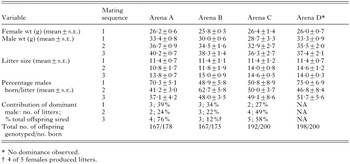
Table 2. Summary of descriptive statistics pertaining to individual arenas at each time-point (Mating 1, 2 or 3)

Fig. 1. The proportion of offspring/litter sired by the dominant male at each of the 3 matings: (1) all males uninfected; (2) dominant male infected; and (3) dominant male drug-treated.

Fig. 2. Percentage of litters sired by 1 (single-sired), 2 or all 3 males (multiple-sired) at each of the 3 matings. The overall bar represents the total percentage of litters sired by 1, 2 or all 3 males. The shaded portion represents the specific contribution of the dominant male to each of the single- or multiple-sired litters. For example, in Mating 1, 27% (overall bar) of the litters were sired by only 1 male, and of those single-sired litters, the dominant male was the single father in 7% (shaded portion). In contrast by the 3rd mating sequence, the dominant male was the exclusive father in 30% of the single-sired litters.
 You have
Access
- 9
- Cited by