

Introduction
Athletes are often required to use mouthguards during training and competition for the purpose of providing protection against orofacial and dental injuries. The prevalence of these types of injuries is high, not only in contact sports but also in non-contact activities and exercises1–Reference Kumamoto and Maeda4. Their use has also been promoted in an effort to reduce concussion frequency and severity, though the evidence for this is fairly inconclusive1. Mouthguards function by absorbing impact stresses, which results in a reduction of force transmitted to the teeth, bone structure, cranium and surrounding soft tissue1, Reference Low, Summii, Swain, Ishigami and Takeda5. Comparing the benefits to risks provides the justification behind requiring the use of mouthguards during training and competition. It is commonly agreed upon that the benefit of providing protection against orofacial injury outweighs the speculative concerns put forth by athletes of possible discomfort, reduced ability to breathe and decreased performanceReference von Arx, Flury, Tschan, Buergin and Geiser6. The latter concern seems to be a major consideration for high-level athletes who are typically looking to gain any competitive advantage. Recently, efforts have been made to address these concerns through redesigning the mouthguards using neuromuscular dentistry techniques that promote specific jaw positioning. Some studies have found that jaw positioning may affect posture and stabilityReference Bracco, Deregibus and Piscetta7, Reference Sakaguchi, Mehta, Abdallah, Forgione, Hirayama and Kawasaki8. Whether jaw positioning positively affects gross motor functioning has yet to be conclusively determined and remains to be a topic of controversy. In an effort to examine the effectiveness of the neuromuscular dentistry-designed approach, research on the comparison of performance outcomes associated with the use of standard, custom-fitted mouthguards (CFM) versus neuromuscular dentistry-designed mouthguards can be particularly useful.
There are three primary categories of mouthguard: stock, self-adapted and custom fitted. A stock mouthguard is ready-made and placed over the upper teeth without individualized fit, whereas the self-adapted type (also known as boil and bite) is heated until pliable and then moulded to the upper teeth and arch by the consumerReference Chalmers9, Reference Duarte-Pereira, del Rey-Santamaria, Javierre-Garces, Barbany-Cairo, Paredes-Garcia and Valmaseda-Castellon10. The expertise of a dentist is needed to obtain the CFM type, as it is formed to the mould derived from impressions of the upper teeth and dental archReference Chalmers9, Reference Duarte-Pereira, del Rey-Santamaria, Javierre-Garces, Barbany-Cairo, Paredes-Garcia and Valmaseda-Castellon10. While limited research exists on the performance impacts of each of these types, the studies that have been done have generally concluded that mouthguards do not produce negative effects on aerobic performance capacity or measures of ventilatory capacityReference von Arx, Flury, Tschan, Buergin and Geiser6, Reference Bourdin, Brunet-Patru, Hager, Allard, Hager and Lacour11–Reference Kececi, Cetin, Eroglu and Baydar13. At least two studiesReference von Arx, Flury, Tschan, Buergin and Geiser6, Reference Bourdin, Brunet-Patru, Hager, Allard, Hager and Lacour11 have found that both custom-fitted and stock mouthguards actually improved maximal aerobic capacity or improved economy at higher workloads. While these are useful findings, they should not be directly translated to the effects of mouthguards on anaerobic exercise performance. This is an important consideration in light of the bio-energetic requirements of most sports that require mouthguard use. While studies have found that modification of mandible position, particularly through changes in vertical dimension, can positively impact isometric strength of the upper extremities and cervical flexors even in asymptomatic subjectsReference Abduljabbar, Mehta, Forgione, Clark, Kronman and Munsat14–Reference Abdallah, Mehta, Forgione and Clark17, these findings may not readily translate to the more dynamic movements required in athletic contests and training. However, a recent study did find that wearing a traditional CFM improved anaerobic power and peak torque in taekwondo athletes, but that strength and vertical jump (VJ) were not impactedReference Cetin, Kececi, Erdogan and Baydar18. Research comparing the muscular endurance and anaerobic power performance outcomes associated with the use of a standard CFM versus a neuromuscular dentistry-designed mouthguard may prove applicable to the athletes participating in sports where mouthguard use is required or strongly encouraged.
Neuromuscular dentistry focuses on the alignment of the temporomandibular joint (TMJ), masticatory muscles, bones, teeth and the neural circuitry associated with the oral cavityReference Mahony19. Transcutaneous electric neural stimulation (TENS) is often used in this area of dentistry to reduce hyperactivity of musculature, to act as a local anaesthetic, to act as a chronic pain reliever and to treat TMJ dysfunctionReference Mahony19, Reference Cooper20. A low-voltage, low-frequency TENS is administered to patients to cause the facial and masticatory muscles to contractReference Bracco, Deregibus and Piscetta7, Reference Cooper20 and to relax into the mandibular resting position. This provides for the identification of more ideal occlusion positions of the jawReference Cooper20.
A relatively new mouthguard, the Pure Power Mouthguard™ (PPM; Pure Power Athletics, Inc., Ontario, Canada), uses neuromuscular dentistry techniques in its custom-fitting design. In addition to traditional protective effects of mouthguards, PPM is purported to increase the performance in sports by improving such as things strength, speed, endurance, agility, accuracy and balance. PPM developers provide a theory indicating that improved strength and balance will occur when muscles in the face and jaw are properly aligned and relaxed. This theory stems from the evidence that jaw position may affect posture and stability in human subjectsReference Bracco, Deregibus and Piscetta7. However, the relationship between jaw positioning and gross motor performance has not been definitively established and remains a controversial topic requiring further research.
Strategies to improve human performance while maintaining safety are crucial in the ever-increasingly competitive athletic environment. The application of neuromuscular dentistry principles in the design of athletic mouthguards is a novel technique that warrants scientific evaluation. First and foremost, evaluation must take place to determine whether designing a mouthguard using neuromuscular dentistry techniques leads to change in physical performance compared with a mouthguard designed using traditional methods. The purpose of the current study was to contrast the effects of the neuromuscular dentistry-designed PPM with a traditional CFM on competitive athletes' muscular endurance, anaerobic power and anaerobic capacity. It is hypothesized that the PPM will elicit superior performance compared with the CFM on VJ height, number of bench press (BP) repetitions completed, peak power and mean power on a modified Wingate anaerobic test (WAnT) protocol.
Methods
Experimental approach
A double-blind, crossover design was used to compare the effects of the neuromuscular dentistry-designed mouthguard (PPM) with a traditional CFM on anaerobic power and muscular endurance. PPM and CFM were matched for material and appearance. A ‘no-mouthguard’ condition was not used due to the fact that athletes are often required or strongly encouraged to wear mouthguards, not only during competition but also during training and practice. Because of this, the primary consideration was to compare the effects of different mouthguards on key performance outcomes. All the subjects underwent custom fittings for the CFM and PPM. A familiarization session was paired with the fitting session. The subjects underwent two testing sessions 5–7 days apart, where anaerobic power and muscular endurance were assessed using VJ, BP with a load equal to body weight, and a 30 s WAnT+eight 10 s WAnT intervals. The order of mouthguard use was randomized between subjects. Verbal screening prior to each testing session confirmed that all the subjects followed between-testing instruction and refrained from training/extraneous activity for at least 24 h prior to each testing session.
Subjects
Healthy, male professional and Division I collegiate athletes (n = 22, M weight = 86.2 ± 3.1 kg) aged 18–34 with 2+ years of weight-training experience participated in this blind, crossover study. Each subject was required to have been training anaerobically 4+ days a week for at least the previous 2 years. All the athletes were familiar with wearing mouthguards due to the sports in which they participated. Sports that were represented included football (n = 5), college lacrosse (n = 2), basketball (n = 4), wrestling (n = 8) and mixed martial arts (n = 3). This study was limited to males in order to control for muscular power differences that exist between genders, even if controlling for training history. Risks and benefits were explained to the subjects and each of them gave written informed consent prior to participation in the study. All the individuals were free from current injuries, illnesses or metabolic conditions limiting their ability to train and complete physiological testing. A health screening was completed with each subject in accordance with American College of Sports Medicine exercise testing procedures. The study was approved by the Rutgers University Institutional Review Board.
Procedures
Each subject completed a fitting session for the mouthguard followed by a familiarization session to control for practice effects on the anaerobic testReference Barfield, Sells, Rowe and Hannigan-Downs21. This was followed by two separate testing sessions (T1 and T2). During T1 and T2, participants warmed up and then completed three different performance tests: VJ, BP with a load equal to body weight for maximal repetitions and a modified WAnT, which included the standard 30 s WAnT followed by a 5 min rest, then eight 10 s intervals with 2 min rest between each interval. This latter protocol was used to simulate the interval-based nature of work efforts found in many sports and to simulate the intensity needed to elicit reliance on the anaerobic energy system. The participants were instructed to continue with their normal exercise training during the study, yet were required to refrain from training for 24 h prior to each testing session. Additionally, each subject was tested at the same time of day for T1 and T2.
Following the familiarization session, which included the health screening, the fitting process to take dental moulds to make the mouthguards and a familiarization WAnT, the subjects were randomly assigned to order of use of the PPM or CFM mouthguards. The mouthguards were matched for appearance and material, which was an ethylene vinyl acetate polymer. The fittings for the mouthguards were performed by dentists, who were also certified in PPM application and first involved in taking a standard dental impression for the CFM. The fitting for the PPM then involved the attachment of TENS surface electromyography (EMG) electrodes (Myotronics, Inc., Kent, WA, USA). A very low-voltage pulse was delivered using this device in order to facilitate muscular relaxation of the lower jaw. Muscular activation was continuously monitored to ensure a relaxed lower jaw position. Following this, new fast-setting impressions were taken to capture this ‘optimal’ bite alignment. The total fitting process took about 80–90 min. The dentists were responsible for taking the moulds and for the PPM fitting process, but an independent laboratory was contracted for production of both the mouthguards. Following the dental impressions, subjects underwent familiarization with the tests to be used during the actual testing. This included practice attempts on the VJ and familiarization with the BP weight, as well as completion of the 30 s WAnT plus one interval using the load to be used during testing. Once the mouthguards were produced, the athletes returned to the laboratory and the dentists ensured proper fit and comfort prior to commencing with testing. Following this, subjects completed T1 and T2, with the two trials separated by 5–7 days.
For each testing day, the subjects reported to the Rutgers University Human Performance Laboratory. The subjects were instructed to arrive for testing normally hydrated, having eaten a high-carbohydrate meal 2 h prior and having refrained from ingesting substances that could affect normal physiological functioning (i.e. tea, coffee, alcohol and nicotine). Verbal questioning revealed 100% compliance with these instructions. At each trial, the subjects completed a 10 min systemic warm-up before being tested on the VJ, followed by the BP with a load equal to body weight for maximal repetitions. VJ was assessed using the ‘Just Jump Mat’ (Probotics, Huntsville, AL, USA). Subjects completed three trials with 45–60 s rest between the trials. The highest of the three jumps was recorded. VJ tests have demonstrated coefficient of variations (CVs) as low as ~2.0%Reference Hopkins, Schabort and Hawley22 and the Just Jump Mat is highly correlated with measures obtained with a three-camera motion analysis system (r = 0.967)Reference Leard, Cirillo, Katsnelson, Kimiatek, Miller and Trebincevic23. After completing the VJ, the individuals rested for 3 min and then completed a standard upper body muscular endurance test (BP with body weight for repetitions). After two warm-up sets of eight to ten repetitions with 50% of the weight to be used, the subjects were given a 4–5 min rest before attempting the test. The score consisted of the total number of repetitions completed in good form before momentary muscular failure. Pilot testing in our laboratory revealed a CV of 10.3% for the BP test. The athletes rested for 5 min before beginning the WAnT protocol.
The subjects performed the 30 s WAnT plus eight 10 s intervals on a Monark 894E Anaerobic Test Ergometer (Monark Exercise AB, Vansbro, Sweden). The load was set according to each subject's weight, Reference Üçok, Gökbel and Okudan24 and it was equivalent to 0.10 kp kg− 1 body weight. Following the 30 s WAnT, subjects rested for 5 min and then completed eight 10 s intervals using the same load with a 2 min rest between each interval. The WAnT has previously demonstrated reliability between 0.89 and 0.99Reference Bar-Or25. The use of high-level athletes as well as a familiarization session further improves the reliabilityReference Hopkins, Schabort and Hawley22.
Performance measures
Peak power during the WAnT was defined as the highest mechanical power output elicited during each 30 s test. Mean power was calculated based on the average mechanical power produced during the test. Average peak power and average mean power were calculated across the WAnT plus intervals. Maximal VJ height was used to establish power, and the number of repetitions completed for the BP constituted the scores for muscular endurance.
Statistical analyses
A repeated measures multivariate analysis of variance was used to assess the effects of the PPM and CFM mouthguards on VJ, BP repetitions, peak power for the 30 s WAnT, mean power for the 30 s WAnT, average peak power for the WAnT+intervals and average mean power for the 30 s WAnT+intervals. Significant multivariate effects were followed by univariate follow-up tests. For each univariate analysis, the Huynh–Feldt epsilon was calculated to test the assumption of sphericity. If this statistic was >0.75, the sphericity assumption was considered to have been met and the unadjusted statistic was used. If epsilon was < 0.75, sphericity was considered to have been violated and the Huynh–Feldt-adjusted statistic was used to test the significance.
Because of the impact that even small effects may have on overall performance of athletes at this level and in accord with recent recommendations for statistical follow-upReference Nakagawa26, effect sizes (ES) were calculated to compare the magnitude of changes in the PPM and CFM conditions using Hedges' g formula for ES computation. This ES computation was used for all the variables. Group data are expressed as mean ± SD and statistical significance was set at α < 0.05.
Results
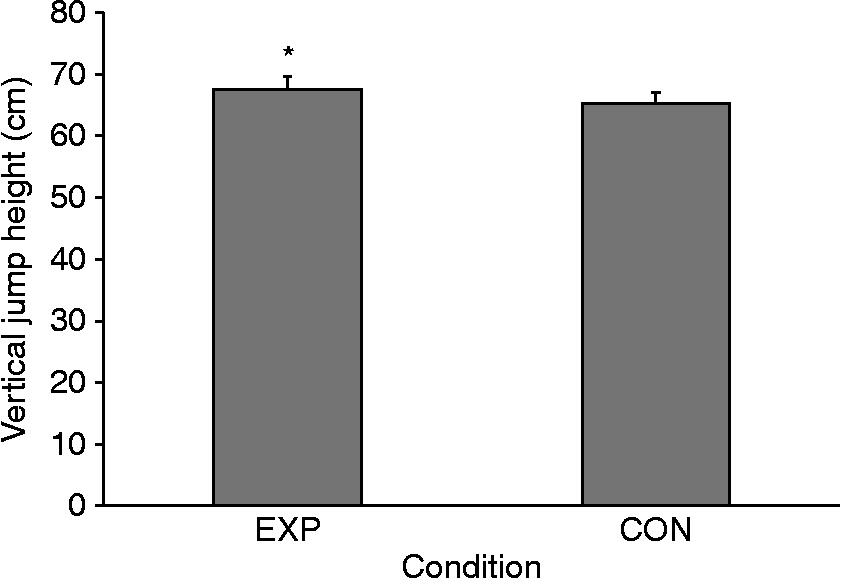
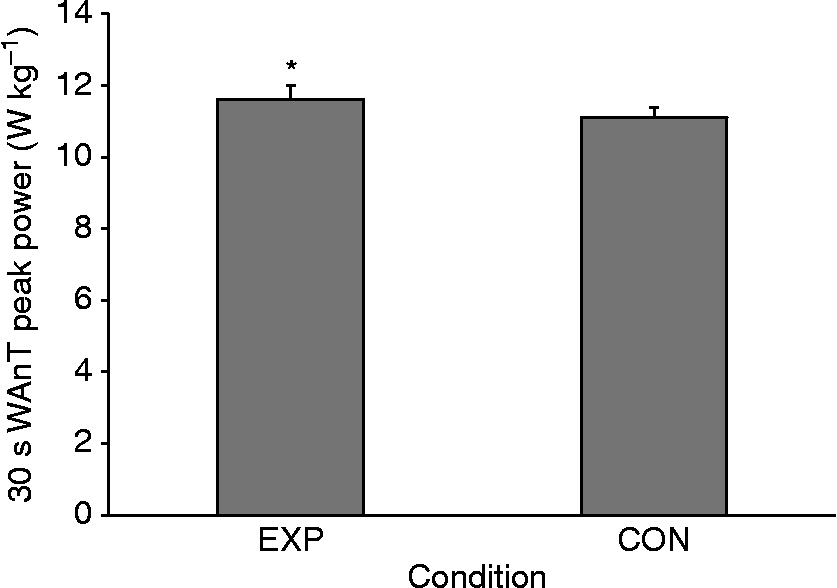
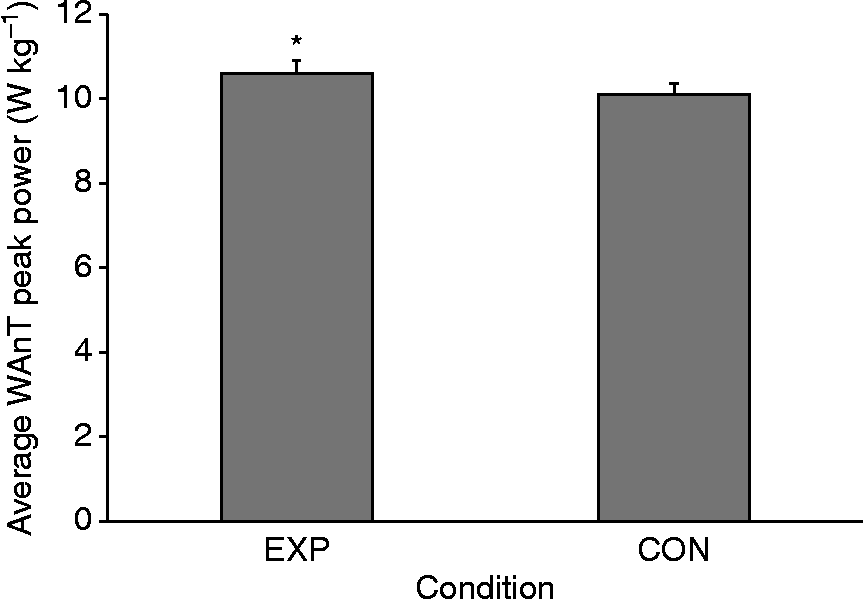
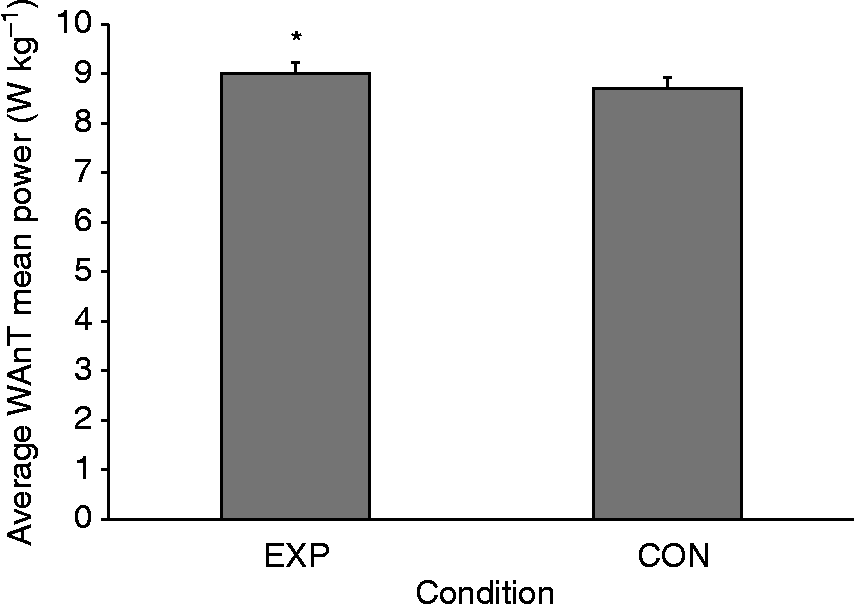
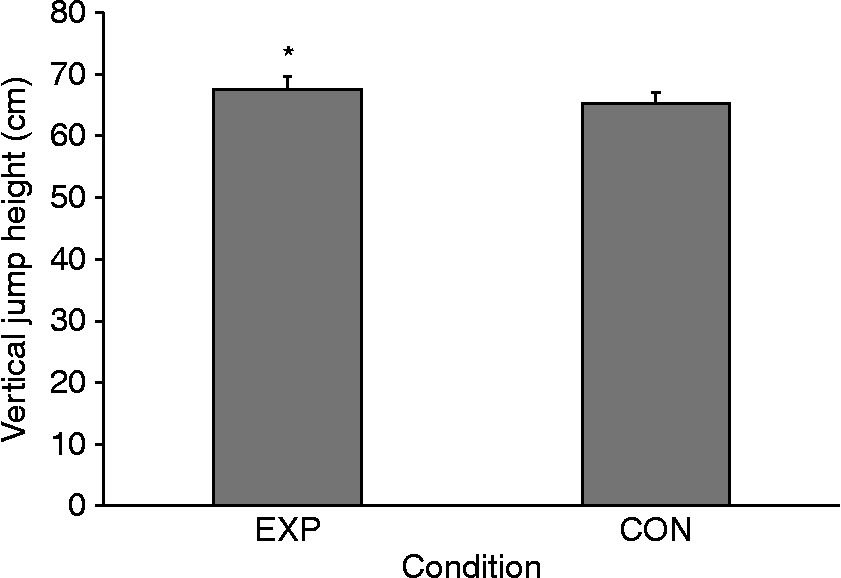
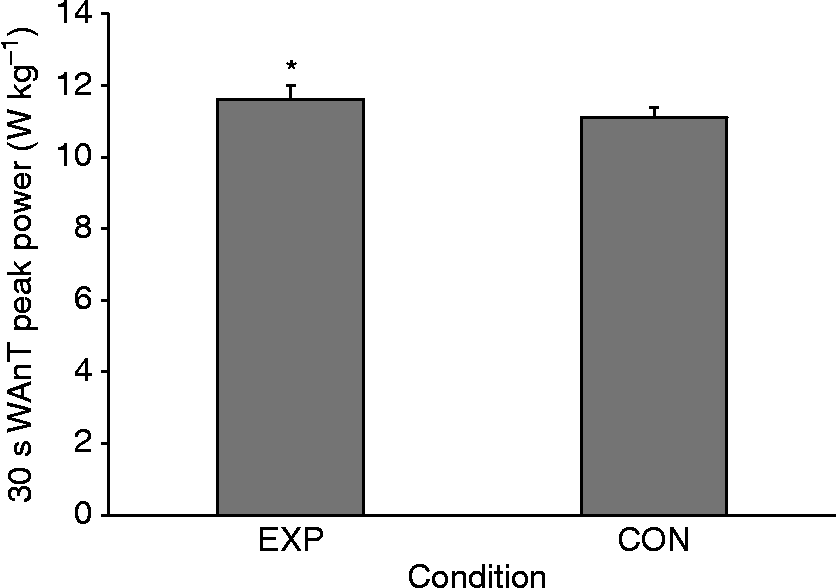
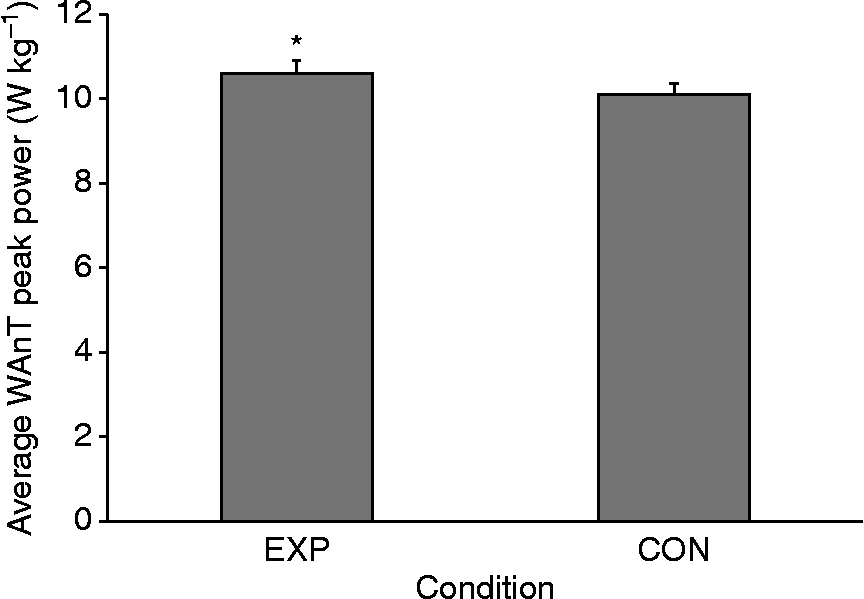
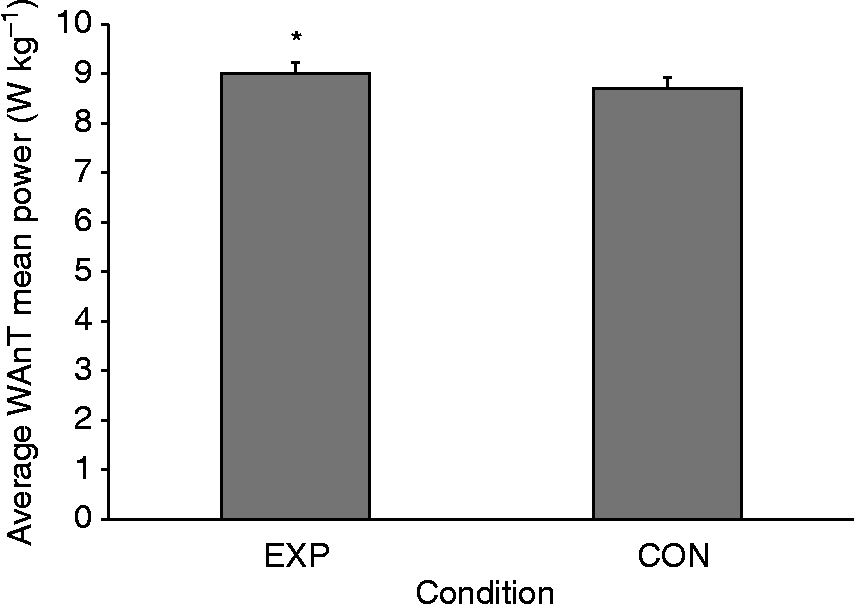
There was a significant multivariate effect for condition (P = 0.008). Follow-ups indicated significantly better performance for PPM compared with CFM for VJ (67.6 ± 9.4 cm vs. 65.3 ± 8.6 cm, P = 0.003, ES = 0.27), peak power for the 30 s WAnT (11.6 ± 1.7 W kg− 1vs. 11.1 ± 1.5 W kg− 1, P = 0.038, ES = 0.33), average peak power for WAnT+intervals (10.6 ± 1.4 W kg− 1vs. 10.1 ± 1.2 W kg− 1, P = 0.025, ES = 0.42) and average mean power for WAnT+intervals (9.0 ± 1.1 W kg− 1vs. 8.7 ± 1.0 W kg− 1, P = 0.034, ES = 0.3) (See Figs 1–4). There were no significant differences between PPM and CFM for either BP repetitions (16.1 ± 5.4 reps vs. 15.8 ± 5.5 reps, P = 0.48, ES = 0.05) or mean power for the 30 s WAnT (8.5 ± 1.2 W kg− 1vs. 8.4 ± 1.0 W kg− 1, P = 0.54, ES = 0.1).
Vertical jump (VJ) height (cm) with experiment (EXP) and control (CON) conditions. VJ height was significantly higher for EXP compared with CON (*P = 0.003)
30 s WAnT peak power (W kg− 1) for experiment (EXP) and control (CON) conditions. Peak power was significantly higher for EXP compared with CON (*P = 0.038)
Average peak power for WAnT+intervals (W kg− 1) for experiment (EXP) and control (CON) conditions. Average peak power was significantly higher for EXP compared with CON (*P = 0.025)
Average mean power for WAnT+intervals (W kg− 1) for experiment (EXP) and control (CON) conditions. Average mean power was significantly higher for EXP compared with CON (*P = 0.034)
Discussion
The results of the current study indicate that, in comparison with a traditional CFM, a neuromuscular dentistry-designed mouthguard resulted in greater VJ, peak power on a 30 s WAnT and greater average peak power and average mean power across nine WAnT intervals. There was no apparent effect on measures of muscular endurance and anaerobic endurance, expressed as repetitions completed on a BP with body weight test and a 30 s WAnT, respectively. Overall, these findings may hold practical relevance for all athletes required to use mouthguards, as these athletes are typically involved in sports that entail explosive ability and high levels of anaerobic capacity. It is possible that these positive effects on power and anaerobic capacity can translate beyond immediate use in a single performance bout and hold promise for improving overall progressive gains acquired during multiple training and performance bouts. Compared with the CFMs that have traditionally been used to prevent facial and dental trauma, neuromuscular dentistry-designed mouthguards that promote superior performance in outcome measures such as those assessed in the current study have the potential to facilitate the use of an overall greater workload in high-intensity activities. This may be particularly useful during interval-based training, given the improvements in average peak power and average mean power seen over the WAnT intervals.
The use of a mouthguard to reposition the jaw in an attempt to improve performance is not a new concept. Early work in this area focused on a mandibular orthopaedic repositioning appliance. While some positive effects on isometric strength about the head and neck were reportedReference Gelb, Mehta and Forgione27, the findings were mostly mixed and the studies were plagued with methodological problems, such as lack of placebo–control conditions and non-individualized mouthguard fittings, as well as a lack of applicability to sport-specific tasksReference Gelb, Mehta and Forgione27. Since that time, however, neuromuscular dentistry techniques have become more advanced. Based on the current study, it appears that a mouthguard designed using neuromuscular dentistry techniques has the potential to impact athletic performance in areas related to maximal power and repeatable power outputs. This may hold significance for the athlete who is required to wear a mouthguard while still looking for a competitive advantage and improvement in performance.
This study represents one of the first to apply neuromuscular dentistry-designed mouthguards to sport performance, and adds to the small amount of existing literature evaluating the effects of dentistry on physical performance. Bracco et al. Reference Bracco, Deregibus and Piscetta7 found that optimal jaw alignment achieved using neuromuscular dentistry techniques resulted in improved posture and stability. Future studies should evaluate the mechanism(s) responsible for the positive physical effects elicited by the use of the PPM. In addition, future research should consider evaluating the use of neuromuscular dentistry-designed mouthguards on range of motion, agility, speed, accuracy and balance in athletes. Based on the theories driving the application of neuromuscular dentistry, it is conceivable that the position of the mandibular joint may impact neural conduction and proprioceptionReference Bracco, Deregibus and Piscetta7. Given the peak power production, the use of these next-generation neuromuscular dentistry techniques appears to hold some promise for the strength and power athlete. Further research is warranted to evaluate the effects of long-term PPM use.
The findings of this study indicate that athletes performed better when using the PPM than when using the CFM. Either the PPM was less of a hindrance on performance compared with the CFM or it was effective in improving the performance. Comparison with a ‘no-mouthguard’ condition was not implemented in this study and therefore it is not possible to conclude in absolute terms whether the PPM improved or hindered the performance. However, the working assumption driving the design of this study was that athletes are often required to wear mouthguards during practice/training and competition, particularly for the sports represented in this study. In this case, the important consideration was to contrast the effects of these two different mouthguards on key performance outcomes. In previous studies that have compared CFMs with a no-mouthguard condition, it has been concluded that CFMs do not project any negative effects on aerobic performance or ventilatory capacity, nor do they interfere with maximal exercise performanceReference von Arx, Flury, Tschan, Buergin and Geiser6, Reference Bourdin, Brunet-Patru, Hager, Allard, Hager and Lacour11, Reference Kececi, Cetin, Eroglu and Baydar13. The results have been mixed for non-CFMs, with Francis and BasherReference Francis and Brasher12 noting improvements in economy at higher intensities while Delaney and MontgomeryReference Delaney and Montgomery28 found no differences at submaximal intensities, but a decrease in V E and V O2 at maximal intensities. Based on these previous results, as well as on a general agreement among researchers that the CFM provides more protection and is more accepted by athletesReference DeYoung, Robinson and Godwin29, Reference Scott, Burke and Watts30, we opted to compare the effects of PPM versus a CFM on anaerobic performance in order to provide the most stringent comparison.
These previous studies may provide insight into why significant effects were not found with the PPM for BP and for average power during the 30 s WAnT. These tests may have led to open-mouth breathing that would negate the effects of the PPM, or any mouthguard for that matter, on occlusion. In these particular tests, either mouthguard may have influenced performance outcomes, even in a negative manner. The inability to bite down into the PPM during prolonged anaerobic activities renders it similar to standard CFMs, which do not require forced biting. Future studies focusing on athletes who do not traditionally use mouthguards and who may be looking for a performance edge should include a ‘no-mouthguard’ control when evaluating the effects of multiple mouthguards on physical capacity. It appears that there is an optimal bite conundrum for muscular endurance activities, which may limit or negate the potential ergogenic effects of the PPM. Specific training and practice on PPM use may be needed to ensure that athletes benefit from the occlusional positioning.
Overall, the present study indicated that use of the novel mouthguard, PPM, resulted in significantly improved performance in a VJ, peak power of a 30 s WAnT, average peak power and average mean power across nine WAnT intervals compared with a standard CFM. Each of these tests requires quick bursts of anaerobic energy at very high-intensity levels, much like activities encountered in many sports. These findings can be applied to athletes and non-athletes engaged in activities that require power-based movements and explosive strength (e.g. mixed martial arts, football, baseball). Additionally, these findings may potentially translate to long-term training effects since, compared with the CFM, the PPM may improve peak power gains and workload during training, especially during interval-based training. Using neuromuscular dentistry techniques to design a mouthguard proved effective in improving anaerobic peak performance compared with the use of a standard, CFM. Use of the PPM may be another strategy that may help improve performance in individuals required to use a mouthguard while engaging in sports.
Acknowledgements
This study was funded by a grant from Pure Power Athletics, Inc. The results of the present study do not constitute endorsement of the product by the authors or by CEP. The authors are grateful to the athletes for their participation and cooperation. We thank Cynthia Jaouhari, Joseph Pellegrino, Jonathan Nicola, Karen Wilson and Jonathan Rodger for their assistance with recruitment and data collection. We also thank Dr Anil Makkar, Dr John Bixby, Dr Michael Bixby and Dr Gary Lederman for their work in fitting the athletes with the mouthguards. Gratitude is also extended to Dr Kristen M. Zgoba for her statistical guidance.