Introduction
Insects have five senses: touch, taste, sight, hearing, and smell. Smell is a major cue for many insect species (e.g., Franklin Reference Franklin1909; Lindstedt Reference Lindstedt1971). These senses play an important role in detecting and recognising food items (Franklin Reference Franklin1909). Some aquatic insects, such as some species of Odonata, Plecoptera, Trichoptera, and Diptera, detect their prey using tactile or mechanical cues, whereas other Odonata, Hemiptera, and Coleoptera species use visual cues (Lindstedt Reference Lindstedt1971). Many aquatic hemipteran predators use a combination of these cues to find food (Borkakati et al. Reference Borkakati, Venkatesh, Saikia and Sasanka2019).
Carnivorous larvae of diving beetles, Dytiscus spp. (Coleoptera: Dytiscidae), prey on other animals, including insects, amphibians, isopods, and fish (Blunck Reference Blunck1923; Balduf Reference Balduf1935; Wesenberg-Lund Reference Wesenberg-Lund1943; Jeffries Reference Jeffries1988; Johansson and Nilsson Reference Johansson and Nilsson1992). Larvae of D. verticalis Say use mechanical stimuli or chemicals from their prey instead of visual cues to locate their prey (Formanowicz Reference Formanowicz1987). Larvae of D. sharpi sharpi (Coleoptera: Dytiscidae) can recognise prey scents, enabling the promotion of feeding behaviour and prevention of cannibalism (Inoda Reference Inoda2012). These previous studies suggest that the larvae of diving beetles use smell (chemical cues) to detect and recognise their prey.
The predaceous larvae (first instar) of the water scavenger beetle, Hydrophilus acuminatus (Coleoptera: Hydrophilidae), can feed on various types of aquatic arthropods, such as Asellus hilgendorfii (Crustacea: Asellidae) and Palaemon paucidens (Crustacea: Palaemonidae) and larvae of Propsilocerus akamusi (Diptera: Chironomidae), during breeding experiments (Inoda et al. Reference Inoda, Inoda and Rullan2015). However, when only Propsilocerus larvae, Palaemon, or Asellus were provided as prey, the larvae of H. acuminatus could not grow and died in the first instar (Inoda et al. Reference Inoda, Inoda and Rullan2015). The first-instar larvae, provided with only snails, successfully developed into second-instar larvae. Therefore, the larvae of water scavenger beetles are specialist predators of snails (Inoda et al. Reference Inoda, Inoda and Rullan2015). In contrast, H. acuminatus adults mainly feed on water plants, such as Potamogeton distinctus (Potamogetonaceae), Nymphoides peltata (Menyanthaceae), and Myriophyllum verticillatum (Haloragaceae) (Hosoi Reference Hosoi1939), but also eat animal material such as dead fish (Tsuzuki et al. Reference Tsuzuki, Taniwaki and Inoda2000). The congeneric species, H. triangularis and H. piceus, primarily feed on water plants, although they also prey on animals such as small aquatic insects (Miall Reference Miall1895) and fish (Wilson Reference Wilson1923), respectively. Therefore, adult water scavenger beetles are omnivorous (Miall Reference Miall1895; Wilson Reference Wilson1923; Tsuzuki et al. Reference Tsuzuki, Taniwaki and Inoda2000).
Most aquatic coleopterans do not change their feeding habits during their ontogeny; for example, the diving beetle, D. sharpi sharpi, is carnivorous in both immature and adult stages (Inoda and Kamimura Reference Inoda and Kamimura2004). The water scavenger beetle, H. acuminatus, is one of only a few cases of aquatic coleopteran species that have ontogenetic shifts in feeding habits.
Hydrophilus acuminatus is designated as a near-threatened species in Japan (Ministry of the Environment of Japan 2020), and a better understanding of the trophic status of this species is crucial for its future conservation. No previous studies have shown how the water scavenger beetle detects and recognises its prey. Therefore, it is important to determine the factor(s) that induce feeding behaviour in both the immature and adult stages of this species. In the present study, each larval stage was provided with a snail or snail visceral mass and adults were given algae or thawed blood worms under laboratory conditions, allowing the adults and larvae to use their different senses to detect the food items. The study investigated how this species uses sense(s) to search for, recognise, and detect food items in detail.
Materials and methods
Insects
Hydrophilus acuminatus adults were collected from the Tochigi and Ibaraki Prefectures, Japan. Several pairs were maintained in outdoor aquaria (50 × 40 × 27 cm, containing 20 cm water; approximately 40 L) according to the method described by Inoda and Kamimura (Reference Inoda and Kamimura2004). Temperature and day length were not controlled, and the aquaria were exposed to rain and sunlight. Freshwater algae (Spirogyra spp.) (Zygnemataceae), fanwort (Cabomba caroliniana) (Cabombaceae), and thawed blood worms (Propsilocerus spp.) were used as food for the adult insects. Frozen blood worms as animal food were purchased from a pet shop (Kanedai; Saitama Prefecture, Japan) and stored in a freezer (–20 °C) until use. During oviposition, the female beetles laid egg cases containing approximately 30 eggs per egg case. The collected egg cases were transferred into the tank of an artificial breeding system (Inoda et al. Reference Inoda, Hirata and Kamimura2003; Inoda and Kamimura Reference Inoda and Kamimura2004). Each larval stage (first to third instars) was then obtained and fed with pond snails, Cipangopaludina chinensis laeta (Architaenioglossa: Viviparidae), that had crushed shells so that the larvae could easily feed on the snails. A total of 20 larvae or adults were randomly selected out of the aquaria containing 30–50 raised larvae, and 25 adult insects (wild and bred) were used for each experiment (N = 20).
Bait
Hydrophilus acuminatus larvae are specialist predators of snails (Inoda et al. Reference Inoda, Inoda and Rullan2015); therefore, pond snails (C. chinensis laeta) with shell lengths of 10–15 mm (for first and second instars) and 15–21 mm (for third instar) were used as bait in the present study’s larvae-feeding experiments. The pond snails were collected in Chiba Prefecture, Japan. To obtain the snail visceral mass, the shell of the snail was crushed using a hammer, and the visceral mass was removed. The visceral mass was then rinsed with aged tap water to remove any remaining shell debris before conducting the experiments.
Freshwater algae (Spirogyra spp.) were used for the feeding experiments of adult insects. The algae were previously collected in Tochigi Prefecture, where H. acuminatus is native, and were grown outdoors in Tokyo, Japan. The algae were cut into small pieces (approximately 60 mm) using scissors and were then placed inside filter paper or a microtube (see Filter paper section and Experiments 5–7 described below). Frozen blood worms were completely thawed under tap water and rinsed several times with fresh tap water to remove blood before conducting the experiment. The algae and thawed blood worms were used at a wet volume of 0.5 mL for each experiment.
3D printer
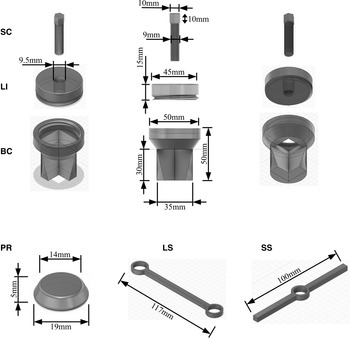
Six parts (screw, lid, bait container, presser, short support bar, and long support bar), as shown in Figure 1, were designed using Autodesk Fusion 360 (cloud-based CAD/CAM tool software, available from https://www.autodesk.co.jp/products/fusion-360/overview?term=1-YEAR), and these objects were created with a 3D printer (Reprap Prusa i3, 3DP21; HICTOP, Shenzhen, Guangdong, China) for the present study. Slicing software was used with Ultimaker Cura (Ultimaker: https://ultimaker.com/ja/software/ultimaker-cura). Filament made from polylactic acid was employed as the 3D printer material (PRILINE, diameter of 1.75 mm; Nanjing Feilemeng Information Technology Co., Ltd, Jiangsu, Nanjing, China), and the basic printing parameters were set as follows: layer height: 0.15 mm; infill density: 10%; printing temperature: 210 °C; and build plate temperature: 45 °C. All materials related to the 3D printer were purchased online from Amazon.com (Seattle, Washington, United States of America). The Standard Triangulated Language files of all three-dimensional objects are included as supplementary material.
Schematic drawing of the instruments made by a 3D printer and used to study feeding behaviour of H. acuminatus larvae and adults in the present study. SC, screw; LI, lid; BC, bait container; PR, presser; LS, long support bar; SS, short support bar.

Filter paper
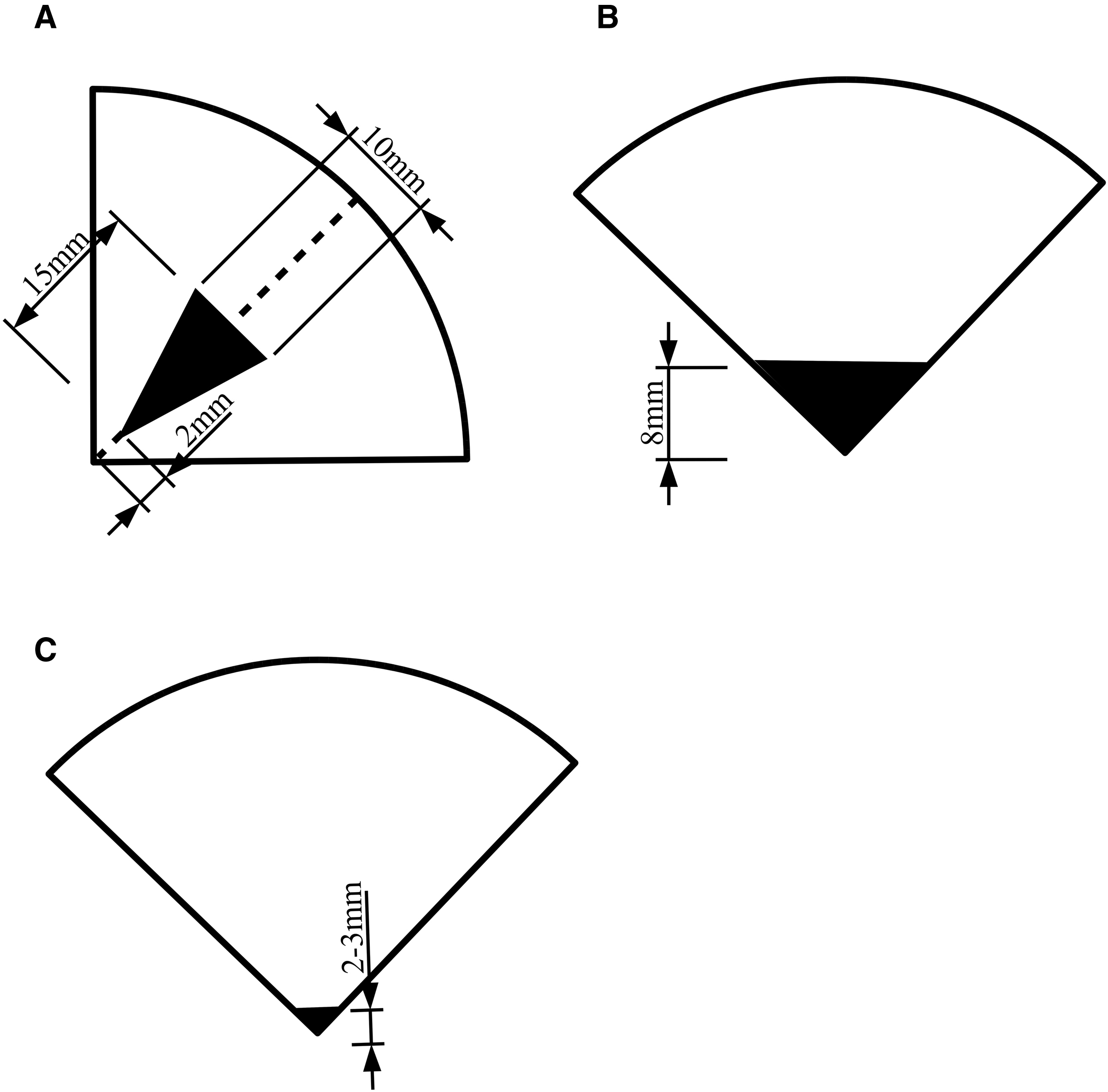
The filter paper was folded according to the following steps. The round piece of the filter paper (ADVANTEC 5 B, 70 mm) was folded in half. This half-folded paper was then folded again. Three quadrant-folded filter paper pieces were prepared, as shown in Figure 2 (A–C), and then opened to form a hollow cone (intact filter paper). Before placing them in the bait container, black areas of the folded filter paper, as indicated in Figure 2, were cut off. “Cut-off filter paper” (Fig. 2A) was used in Experiments 1, 3, and 5, “cut-off filter paper 1” (Fig. 2B) was used in Experiments 7 and 10, and “cut-off filter paper 2” (Fig. 2C) was used in Experiment 8. “Intact filter paper” was also used in Experiments 1, 2, 3, 4, 5, 6, 8, and 9.
The three different preparations of filter paper (ADVANTEC 5B, 70 mm). Three pieces of quadrant-folded filter paper are shown. A, cut-off filter paper, B, cut-off filter paper 1, and C, cut-off filter paper 2.

Feeding experiments
General information
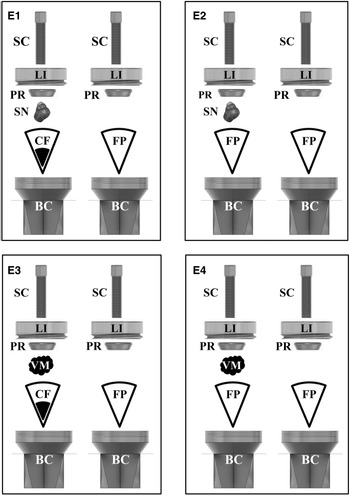
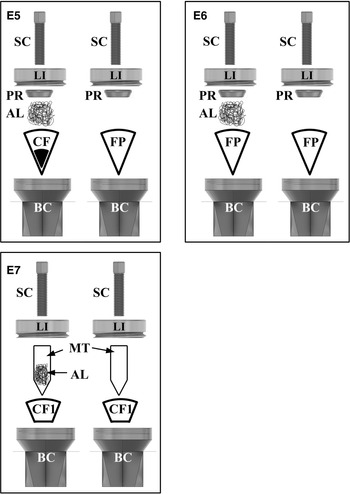
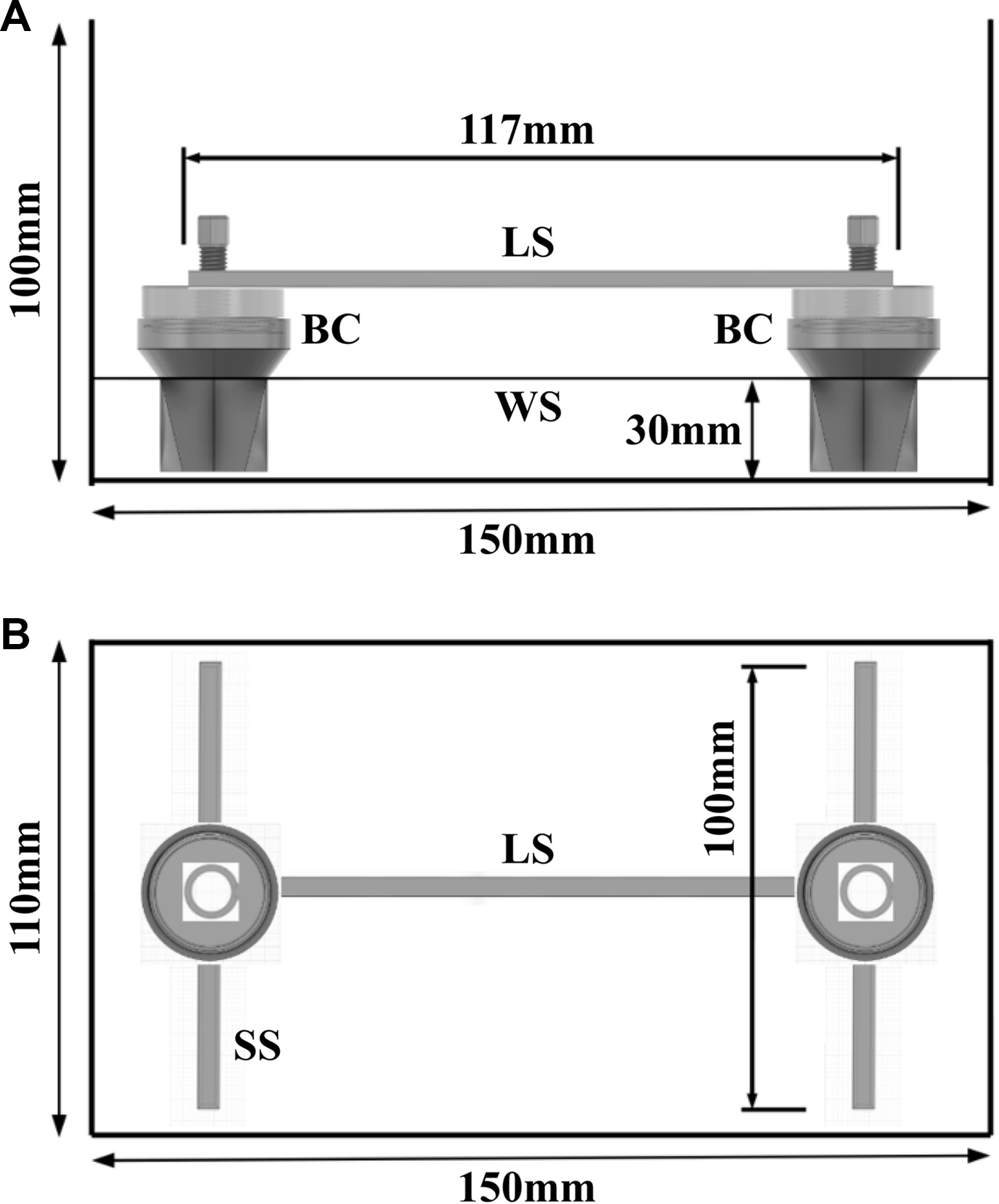
The 3D printed parts (Fig. 1), bait container, presser, lid, screw, the four types of filter paper (intact filter paper, cut-off filter paper, cut-off filter paper 1, and cut-off filter paper 2; Fig. 2), and bait (snail, snail visceral mass, algae, and thawed blood worms), or microtube were assembled, and this assembly was used to observe the feeding behaviour of H. acuminatus larvae and adults. Each experimental procedure is shown in each of Figures 3–5. These assemblies were placed in a clear plastic aquarium (150 × 110 × 100 mm) with a water depth of 30 mm (Fig. 6). Two bait containers were lightly connected to a short support bar (100 × 5 × 5 mm) and a long support bar (117 × 5 × 5 mm) to keep the two bait containers at a constant distance from each other. A beetle larva was then placed in the aquarium to begin the experiment.
Assembly of parts for Experiment 1 (E1), Experiment 2 (E2), Experiment 3 (E3), and Experiment 4 (E4) using H. acuminatus larvae. FP, filter paper; CF, cut-off filter paper; BC, bait container; SN, snail; VM, snail visceral mass; PR, presser; SC, screw; LI, lid.

Assembly of parts for Experiment 5 (E5), Experiment 6 (E6), and Experiment 7 (E7) using H. acuminatus adults. FP, filter paper; CF cut-off filter paper, CF1, cut-off filter paper 1; BC, bait container; AL, algae; MT, microtube; PR, presser; SC, screw; LI, lid.

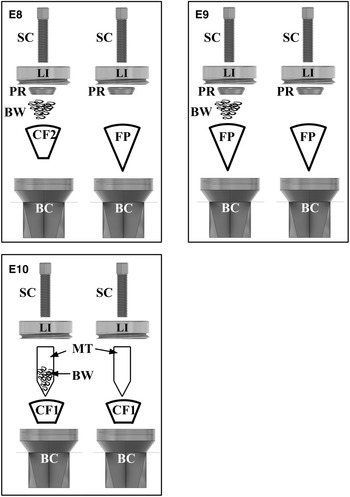
Assembly of parts for Experiment 8 (E8), Experiment 9 (E9), and Experiment 10 (E10) using H. acuminatus adults. FP, filter paper; CF1, cut-off filter paper 1, CF2, cut-off filter paper 2; BC, bait container; BW, thawed blood worm; MT, microtube; PR, presser; SC, screw; LI, lid.

Schematic drawing of aquarium setup: A, front view and B, top view of the aquarium (150 × 110 × 100 mm). Two bait containers (BC) were lightly connected to a short support bar (SS; 100 × 5 × 5 mm) and a long support bar (LS; 117 × 5 × 5 mm) to keep the two containers a constant distance from each other. Water depth was kept at 30 mm. WS, water surface of the aquarium.

The behaviour of the beetle larva was recorded using a digital video camera (Everio; Kenwood, Japan). When the larva started to bite the bait or filter paper in the presence of a snail, the larva was judged as having detected and recognised the bait. Larvae that did not find a bait container with or without bait for four hours were designated as “nonresponse”. The time until the bait was found was recorded using the video camera’s built-in timer.
Experiment 1: detection of a snail in cut-off filter paper by beetle larvae
To investigate how the beetle larvae detected and recognised a snail, as shown in Figure 3 (E1), one snail was placed in a bait container with cut-off filter paper. A presser was then installed to hold the snail shell tightly to prevent the snail from moving and escaping out of the container. A lid with a screw was placed in the assembly.
In the aquarium, the same assembly was set up using intact filter paper in the absence of a snail.
Experiment 2: detection of a snail in filter paper by beetle larvae
Experiment 2 was similar to Experiment 1 (Fig. 3: E2), except that intact filter paper, instead of cut-off filter paper, was used in Experiment 2. A presser and a lid with a screw were used in the assembly.
Experiment 3: detection of snail visceral mass in cut-off filter paper by beetle larvae
As shown in Figure 3 (E3), cut-off filter paper was used in the presence of snail visceral mass. The other side of the setting was used for intact filter paper in the absence of snail visceral mass. A presser and a lid with a screw were used in the assembly.
Experiment 4: detection of a snail visceral mass in filter paper by beetle larvae
As shown in Figure 3 (E4), intact filter paper was used in the presence of snail visceral mass. The other side of the setting was used for intact filter paper in the absence of snail visceral mass. A presser and a lid with a screw were used in the assembly.
Experiment 5: detection of algae in cut-off filter paper by adult beetles
As shown in Figure 4 (E5), cut-off filter paper was used in the presence of algae with a wet volume of 0.5 mL. The other side of the setting was used for intact filter paper in the absence of algae. A presser and a lid with a screw were used in the assembly.
Experiment 6: detection of algae in filter paper by adult beetles
As shown in Figure 4 (E6), intact filter paper was used in the presence of algae with a wet volume of 0.5 mL. The other side of the setting was used for intact filter paper in the absence of algae. A presser and a lid with a screw were used in the assembly.
Experiment 7: detection of algae in a microtube by adult beetles
As shown in Figure 4 (E7), cut-off filter paper 1 and a 1.5-mL transparent microtube without a cap were used in the presence of algae with a wet volume of 0.5 mL. The other side of the setting contained cut-off filter paper 1 and a 1.5-mL transparent microtube without a cap in the absence of algae. Then, a screw with a lid was installed directly into the microtube. The diameter of the screw was such to fit tightly to the mouth of the microtube.
Experiment 8: detection of thawed blood worms in cut-off filter paper by adult beetles
As shown in Figure 5 (E8), cut-off filter paper 2 was used in the presence of thawed blood worms with a wet volume of 0.5 mL. The other side of the setting was used for intact filter paper in the absence of thawed blood worms. A presser and a lid with a screw were used in the assembly.
Experiment 9: detection of thawed blood worms in filter paper by adult beetles
As shown in Figure 5 (E9), intact filter paper was used in the presence of thawed blood worms with a wet volume of 0.5 mL. The other side of the setting was used for intact filter paper in the absence of thawed blood worms. A presser and a lid with a screw were used in the assembly.
Experiment 10: detection of thawed blood worms in a microtube for adult beetle
As shown in Figure 5 (E10), cut-off filter paper 1 and a 1.5-mL transparent microtube without a cap were used in the presence of thawed blood worms with a wet volume of 0.5 mL. The other side of the setting contained cut-off filter paper 1 and a 1.5-mL transparent microtube without a cap in the absence of thawed blood worms. Then, a screw with a lid was installed directly into the microtube.
Data analysis
Fisher’s exact probability test was conducted to determine the percentage of insects attracted to the bait. If there was a statistical difference, Tukey’s multiple comparisons for proportions were used to determine the differences between the groups. To investigate the time until food was found, Tukey’s multiple comparison test was performed among groups. Statistical significance was set at P values less than 0.05. Statistical calculations were carried out using R software, version 2.15.0 (R Core Team 2017).
Results
Feeding behaviour of larvae
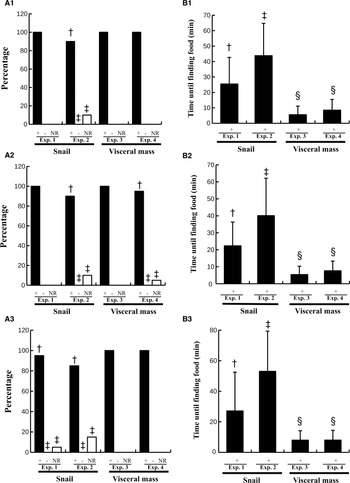
The percentage of H. acuminatus larvae that found the bait (A1: first-instar larvae, A2: second-instar larvae, A3: third-instar larvae) and time until finding the bait (B1: first-instar larvae, B2: second-instar larvae, B3: third-instar larvae) are shown in Figure 7. Experiments were performed in the presence (+) and absence (–) of bait (snail or visceral mass).
Percentage of H. acuminatus larvae that found the bait (A1, first-instar larvae; A2, second-instar larvae; A3, third-instar larvae), and time until finding bait (B1, first-instar larvae; B2, second-instar larvae; B3, third-instar larvae). Experiments were performed in the presence (+) and absence (–) of bait (snail or visceral mass). Larvae that did not find a bait container with or without bait were designated as “nonresponse” (NR). Values of B1, B2, and B3 are expressed as mean + standard deviation. Columns with different symbols in A1, A2, and A3 indicate significant differences by Tukey’s multiple comparison for proportion. Columns with different symbols in B1, B2, and B3 indicate significant differences by Tukey’s multiple comparison. Exp., experiment.

The results were almost the same for all larval stages. In Experiments 1 and 3, larvae at all stages were exposed to the bait. More than 95% or 100% of the larvae detected snails (Experiment 1; Fig. 7A1–A3) or visceral masses (Experiment 3, Fig. 7A1–A3), respectively. The majority of the larvae (more than 85%) detected a snail or visceral mass hidden in intact filter paper (Experiments 2 and 4; Fig. 7A1–A3). However, the larvae found snails in cut-off filter paper (Experiment 1; Fig. 7B1–B3) earlier than they found snails in intact filter paper (Experiment 2; Fig. 7B1–B3). The times to detect a snail in cut-off filter paper (Experiment 1; Fig. 7B1–B3) and in intact filter paper (Experiment 2; Fig. 7B1–B3) were compared, and the following results were obtained: 25.5 + 17.2 minutes (mean + standard deviation) and 43.8 + 20.9 minutes for first-instar larvae (Fig. 7B1), 22.3 + 14.0 minutes and 40.1 + 22.1 minutes for second-instar larvae (Fig. 7B2), and 27.1 + 25.4 minutes and 53.1 + 26.3 minutes for third-instar larvae (Fig. 7B3), respectively. A statistically significant difference occurred between Experiments 1 and 2 for larvae of all instars (Tukey’s multiple comparison test, t = 4.124, N = 18–20, P < 0.05 for first-instar larvae; t = 4.189, N = 18–20, P < 0.05 for second-instar larvae; and t = 4.312, N = 17–19, P < 0.05 for third-instar larvae). In contrast, the larvae given the visceral mass in cut-off filter paper (Experiment 3; Fig. 7B1–B3) or intact filter paper (Experiment 4; Fig. 7B1–B3) took the following times to detect the bait: 5.6 + 5.5 minutes or 8.5 + 6.9 minutes for first-instar larvae (Fig. 7B1), 5.4 + 4.9 minutes and 7.6 + 5.7 minutes for second-instar larvae (Fig. 7B2), and 8.0 + 6.1 minutes and 8.0 + 6.4 minutes for third-instar larvae (Fig. 7B3), respectively. No significant differences occurred between Experiments 3 and 4 in larvae of all instars (Tukey’s multiple comparison test: t = 0.678, N = 20, P = 0.905 for first-instar larvae; t = 0.541, N = 19–20, P = 0.948 for second-instar larvae; and t = 0.008, N = 20, P = 0.999 for third-instar larvae). The times to find snails and visceral masses in cut-off filter paper (Experiments 1 and 3; Fig. 7B1–B3) were also compared. Beetle larvae at all instar stages found the visceral mass in cut-off filter paper (Experiment 3; Fig. 7B1–B3) significantly sooner than they found snails in cut-off filter paper (Experiment 1; Fig. 7B1–B3; Tukey’s multiple comparison test: t = 4.599, N = 20, P < 0.05 for first-instar larvae; t = 4.109, N = 20, P < 0.05 for second-instar larvae; and t = 3.318, N = 19–20, P < 0.05 for third-instar larvae). In addition, the times to find snails and visceral mass in intact filter paper were investigated (Experiments 2 and 4; Fig. 7B1–B3). Larvae across all instar stages found the visceral mass in intact filter paper significantly sooner than they found snails in intact filter paper (Tukey’s multiple comparison test: t = 7.940, N = 18–20, P < 0.05 for first-instar larvae; t = 7.561, N = 18–19, P < 0.05 for second-instar larvae; and t = 7.578, N = 17–20, P < 0.05 for third-instar larvae). No larvae showed feeding behaviour towards the bait container that contained no bait.
Feeding behaviour of adult beetles
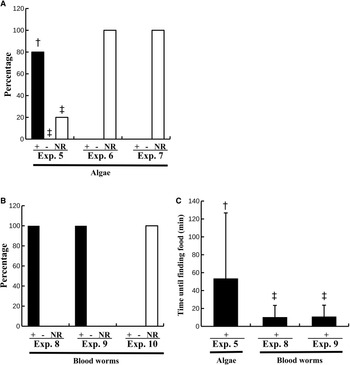
The feeding behaviour of adult beetles was investigated using algae and thawed blood worms, which are usually used as dietary items in laboratory experiments. As shown in Figure 8A, more than 80% of beetles found the algae in cut-off filter paper (Experiment 5; Fig. 8A). However, some beetles (20%) did not find and feed on algae (Tukey’s multiple comparison test for proportion, N = 4–16, Tukey’s wholly significant difference = 0.340, P < 0.05 between the presence (+) and nonresponse). In contrast, the beetles did not find the algae in intact filter paper (Experiment 6; Fig. 8A). The beetles did not show feeding behaviour towards the transparent microtube in the presence or absence of algae (Experiment 7; Fig. 8A).
A and B, Percentage of H. acuminatus adults that found the bait and C, time until finding the bait. Algae were used as bait for Experiments 5, 6, and 7, and thawed blood worms were used for Experiments 8, 9, and 10. Experiments were performed in the presence (+) and absence (–) of bait. Adults that did not find a bait container with or without bait were designated as “nonresponse (NR)”. Values in C show the mean + standard deviation. Columns with different symbols in A indicate significant differences by Tukey’s multiple comparison for proportion. Columns with different symbols in C indicate significant differences by Tukey’s multiple comparison. Exp., experiment.

Thawed blood worms were also used in the feeding experiment (Fig. 8B). All beetles detected and fed on the thawed blood worms in cut-off filter paper 2 (Experiment 8; Fig. 8B). Similarly, all beetles clearly showed feeding behaviour and bit intact filter paper containing the thawed blood worms (Experiment 9; Fig. 8B). The next day, most beetles broke through intact filter paper to feed on the thawed blood worms (data not shown). The beetles did not attack intact filter paper that did not contain the thawed blood worms. The beetles did not show feeding behaviour towards the transparent microtube in the presence or absence of thawed blood worms (Experiment 10; Fig. 8B).
The beetles found the algae on cut-off filter paper, thawed blood worms in cut-off filter paper 2, and thawed blood worms in intact filter paper in 53.6 + 73.2 minutes, 10.3 + 13.1 minutes, and 11.0 + 12.7 minutes, respectively (Fig. 8C). The beetles spent more time finding algae in cut-off filter paper (Experiment 5; Fig. 8C) than they did finding thawed blood worms in cut-off filter paper 2 (Experiment 8; Fig. 8C) and intact filter paper (Experiment 9; Tukey’s multiple comparison test, t = 3.187, N = 16–20, P < 0.05 between Experiment 5 and Experiment 8, and t = 3.140, N = 16–20, P < 0.05 between Experiment 5 and Experiment 9; Fig. 8C). No significant difference was found between Experiments 8 and 9 (Tukey’s multiple comparison test, t = 0.049, N = 20, P = 0.998).
Discussion
Hydrophilus acuminatus larvae have unique mandibles (asymmetry), with structure well suited for feeding on dextral (right-handed) snails (Inoda et al. Reference Inoda, Hirata and Kamimura2003; Sato et al. Reference Sato, Inoda, Niitsu, Kubota, Goto and Kobayashi2017). In the present study, all stages of instar larvae detected a concealed snail visceral mass earlier than they detected a concealed snail, suggesting that smell mainly was used to search for these food items. In these experiments, although a snail was tightly held inside the bait container, the snail might produce sounds when attempting to move. In contrast to a snail, the visceral mass was immobilised or lifeless bait and might extrude body fluid at a higher concentration around the bait container than a live snail might. Therefore, the difference in the detection times of finding a snail and of finding a visceral mass might be due to the concentration of the chemical substance(s) released by the baits. The beetle larvae could also detect the substance(s) from the snail and visceral mass using “smell” and not using other senses such as sight, hearing, touch, and taste. Therefore, scent was the only cue used by all H. acuminatus instar larvae to recognise food. Mori and Ohba (Reference Mori and Ohba2004) reported that third-instar larvae of H. acuminatus fed on a snake during field observations at midnight. According to that study, the larvae bit the dead body of a snake (Rhabdophis tigrinus tigrinus) (Colubridae), which might have been killed by other predators. The larvae probably detected the dead snake by its scent. Therefore, the water scavenger beetle larvae can detect a wide variety of prey smells for identifying possible food items. However, because H. acuminatus larvae are specialist predators of snails, other prey would not be the main food for their growth (Inoda et al. Reference Inoda, Inoda and Rullan2015).
Hydrophilus acuminatus adults largely feed on aquatic plants (Hosoi Reference Hosoi1939); however, they sometimes eat animal food (Tsuzuki et al. Reference Tsuzuki, Taniwaki and Inoda2000). In the present study, algae and thawed blood worms, which do not produce any sound or noises, were used as bait. These two foods are usually used for rearing adult insects during breeding experiments. The adult insects that were allowed to use only smell could not find the hidden algae (Experiment 6; Fig. 8A). In addition, adults did not recognise algae in the transparent plastic tube where only vision was allowed (Experiment 7; Fig. 8A). In contrast, the adults that were allowed to use all their senses started feeding on algae (Experiment 5; Fig. 8A and C). These results strongly indicate that adult insects rely on touch and/or taste when detecting algae.
Hydrophilus acuminatus adults might have some preference for specific water plants in the field (Hosoi Reference Hosoi1939). Moreover, adults did not eat some plants provided during breeding experiments and usually touched and bit a part of the plant stem or leaf before eating. Shortly after showing this behaviour, they started to eat when they realised that the plant is edible (Inoda, unpublished data).
Aside from feeding on algae, H. acuminatus adults detected the thawed blood worms only by smell. The adults were attracted to the hidden thawed blood worms in the filter paper. Most adults bit and broke the filter paper containing the thawed blood worms and ate them when the observation was continued overnight. During breeding experiments, H. acuminatus adults never prey on living organisms, but they do prey on dead bodies (Tsuzuki et al. Reference Tsuzuki, Taniwaki and Inoda2000). In habitats where Cybister brevis, C. chinensis, and H. acuminatus exist together, many C. brevis and C. chinensis have been collected using bait traps containing animal material (dried sardines) as bait. However, H. acuminatus has never been collected in the traps (Inoda and Ladion Reference Inoda and Ladion2016). Therefore, H. acuminatus adults might be indifferent to bait (animal food) or take longer to find or detect bait in the field. Although Hydrophilus species are omnivorous, some studies describe the types of animal food they feed on in nature (Miall Reference Miall1895; Wilson Reference Wilson1923). In the present study, thawed blood worms were used as representative animal food.
Adult beetles in the present study used “touch” and/or “taste” when they detected the studied vegetation, and they used “smell” when they searched for animal food. In conclusion, in the present study, H. acuminatus used at least two types of senses to detect food during their life cycle, which enabled them to adapt to the environment.
The size of the H. acuminatus population is decreasing, and it is classified as a near-threatened species in Japan (Ministry of the Environment of Japan 2020). Hydrophilus acuminatus uses two trophic levels of food resources, carnivory and omnivory, in the aquatic environment. Because of this, the insect requires a much more abundant environment than similar coleopteran species (e.g., Dytiscus and Cybister), which usually coexist in the same habitats (Inoda et al. Reference Inoda, Inoda and Rullan2015; Inoda and Ladion Reference Inoda and Ladion2016). The habitats of freshwater species, including insects and other invertebrates, are increasingly threatened worldwide (Allan and Flecker Reference Allan and Flecker1993). The results presented in this study may be used to help focus conservation efforts on protecting species of H. acuminatus by maintaining appropriate habitats for them.
Acknowledgements
The author thanks Gomei Yoda (University of Tsukuba) and Shun Yamasaki (Chiba University) for help with insect collection. The author is also very grateful to Kohei Watanabe (Ishikawa Insect Museum) and Koji Onoda (Tokyo) for providing information about the references.
Conflict of interest
The author declare no competing interests.
Ethical approval
Ethics approval was not required for the study. The author worked with an unprotected species that was collected in Japan.
Supplementary material
To view supplementary material for this article, please visit https://doi.org/10.4039/tce.2021.38.