



1. Introduction
In this paper, we investigate the uniqueness of smooth positive solutions for the following logarithm Choquard equation
 \begin{equation}
-\Delta u(x)=e^{[\int_{\mathbb R^N} \ln{\frac {|y|}{|x-y|}}u(y)^{\frac{2N}{N-2}}\,dy]}u(x)^{\frac{N}{N-2}}\quad {\rm in}\ \mathbb{R}^N,
\end{equation}
where  $N\geq 3$. Originally, the Choquard equation
 \begin{equation}
-\Delta u+u=\int_{\mathbb R^3}\frac{|u(y)|^2}{|x-y|}dyu(x)\quad {\rm in}\quad \mathbb R^3
\end{equation}
was used in [Reference Pekar23] to describe the quantum mechanics of a polaron at rest, and in [Reference Lieb15] to describe an electron trapped in its own hole. Other physical explanations can be found in [Reference Moroz, Penrose and Tod19], etc. Mathematically, Lieb studied in [Reference Lieb15] the existence and uniqueness of the minimal energy solution of (1.2). For higher-dimensional Choquard problems, it was investigated in [Reference Moroz and Van Schaftingen20–Reference Moroz and Van Schaftingen22] and references therein the existence, nonexistence, and regularity of solutions. We can find in [Reference Ma and Zhao18] a more general uniqueness result of positive solutions for the nonlinear Choquard equation in  $\mathbb R^N, N\geq 3$. On the other hand, for critical Choquard equation
 \begin{equation}
-\Delta u=\int_{\mathbb R^N}\frac{u(y)^{2_\mu^*}}{|x-y|^\mu}dyu(x)^{2_\mu^*-1}\quad {\rm in}\quad \mathbb R^N, \quad N\geq 3,
\end{equation}
it was recently shown in [Reference Du and Yang10] the uniqueness and non-degeneracy of positive solutions, where  $2_\mu^*=\frac{2N-\mu}{N-2}$. Liu, Yang and Yu [Reference Liu, Yang and Yu17] classified the positive solutions of the following multi-critical Choquard equation
 \begin{equation}
-\Delta u=\sum_{i=1}^k\int_{\mathbb R^N}\frac{|u(y)|^{2_i^*}}{|x-y|^{\mu_i}}dyu(x)^{2_i^*-1}\quad {\rm in}\quad \mathbb R^N, \quad N\geq 3,
\end{equation}
where  $2_i^*=\frac{2N-\mu_i}{N-2}$. However, to our knowledge, there seems to be no uniqueness result for the logarithm Choquard equation. In this paper, we deal with the uniqueness of a positive solution for problem (1.1).
Our main result is as follows.
Theorem 1.1 Suppose that  ${\int_{\mathbb R^N}} e^{\frac{N+2}2[\int_{\mathbb R^N} \ln{\frac {|y|}{|x-y|}}u(y)^{\frac{2N}{N-2}}\,dy]}\,dx \lt \infty$,
 $\int_{\mathbb R^N}u^{\frac{N+2}{N-2}}\,dx \lt \infty$ and
 $\int_{\mathbb R^N}u^{\frac{2N}{N-2}}\,dx \lt \infty$, then any
 $C^2$ positive solution of equation (1.1) must have the following form
 \begin{equation}
u(x)=(\frac{C\varepsilon}{\varepsilon^2+|x-x_0|^2})^{\frac{N-2}2},
\end{equation}
where  $C$ is a positive constant,
 $\varepsilon \gt 0$ and
 $x_0\in \mathbb R^N$ are two parameters.
Theorem 1.1 is proved by using the moving spheres method, which is a variant of the moving plane method. The moving plane method goes back to Alexandroff in his study of surfaces of constant mean curvature, and was then used by Serrin [Reference Serrin24] to study the symmetry property of an over-determined problem. Later, it became a powerful device to study the symmetry of positive solutions for nonlinear elliptic equations. In particular, under the assumption that
 \begin{equation}
\liminf_{|x|\to \infty}|x|^{N-2}u(x) \lt \infty,
\end{equation}
it was proved in [Reference Gidas, Ni and Nirenberg11] via the moving plane method that positive solutions of
 \begin{equation}
-\Delta u=u^{\frac{N+2}{N-2}}\quad {\rm in }\quad \mathbb R^N(N\geq 3)
\end{equation}
must be of the following form
 \begin{equation}
u(x)=(\frac{C\varepsilon}{\varepsilon^2+|x-x_0|^2})^{\frac{N-2}{2}},
\end{equation}
where  $\varepsilon$ is a positive parameter and
 $x_0$ is fixed point in
 $\mathbb R^N$. One sees in [Reference Caffarelli, Gidas and Spruck1] that such a result remains true without the assumption (1.6). The proof in [Reference Caffarelli, Gidas and Spruck1] was simplified in [Reference Chen and Li4] by using the moving plane method. A result of the classification of solutions for
 \begin{equation}
-\Delta u=e^{2u}\quad {\rm in }\quad \mathbb R^2
\end{equation}
was also obtained in [Reference Chen and Li4] under the assumption  $\int_{\mathbb R^2}e^{2u(x)}\,dx \lt \infty$. Actually, it was shown in [Reference Chen and Li4] that functions
 \begin{equation}
u(x)=\ln \frac{C\varepsilon}{\varepsilon^2+|x-x_0|^2}
\end{equation}
are the only solutions of problem (1.9), where  $\varepsilon \gt 0$ and
 $x_0\in \mathbb R^2$ are two parameters. After the work of [Reference Chen and Li4], many classification results and Liouville theorems were obtained, see for instance [Reference Chen, Fang and Li2, Reference Chen, Fang and Yang3, Reference Chen, Li and Li5–Reference Dai and Qin9, Reference Lin16, Reference Yu26] etc.
Although the moving spheres method [Reference Li and Zhu14] is powerful in writing out the solution for conformal invariant equations, it seems not easy to apply it to problem (1.1) for the following reasons. First, it is not easy to compare the value on the right-hand side of equation (1.1) because there is a nonlocal term. Second, since the kernel of the convolution term is a logarithm function, it is important to know the precise decay of  $\int_{\mathbb R^N}\ln{\frac{|y|}{|x-y|}} u^{\frac{2N}{N-2}}\,dy$ at infinity. More precisely, if the convolution term is the Riesz potential
 $|x|^{-\mu}$, then the Kelvin transformation of a positive function decays at infinity at the speed
 $|x|^{-\mu}$ and it is still positive in
 $B_1(0)\setminus\{0\}$. However, if the kernel is a logarithm function, which is not positive, we cannot get any information about the function after the Kelvin transformation in
 $B_1(0)\setminus\{0\}$. Hence, for a sign-changing function, we usually do not use the Kelvin transformation. Instead, we estimate the decay of the solution at infinity directly. Third, the right-hand side of equation (1.1) involves exponent function, we need the precise decay speed of
 $\int_{\mathbb R^N}\ln \frac{|y|}{|x-y|}u^{\frac{2N}{N-2}}$ at infinity. A elementary calculation shows that
 $\int_{\mathbb R^N}\ln \frac{|y|}{|x-y|}u(y)^{\frac{2N}{N-2}}dy$ decays at the speed
 $-\beta \ln |x|$, where
 $\beta=\int_{\mathbb R^N}u^{\frac{2N}{N-2}}\,dx$, however, the precise value of
 $\beta$ is very important during the process of implying the moving spheres method. For this purpose, we first show that slow decay, that is
 $\beta \lt 2$, cannot occur. Then we show that fast decay, that is
 $\beta \gt 2$, cannot occur. After the correct value of
 $\beta$ is known, we write out the expression of
 $u$ by using the moving spheres method.
The paper is organized as follows. After some preparations in Section 2, we exclude the possibilities that  $\beta \lt 2$ and
 $\beta \gt 2$ in Sections 3 and 4, respectively. The main result is proved in Section 5.
2. Preliminaries
As we mentioned before, problem (1.1) is a non-local problem, it seems not convenient to apply the moving spheres method directly. So we rewrite it into the following differential-integral system
 \begin{equation}
\left\{
\begin{array}{ll}
\displaystyle
-\Delta u(x)=e^{v(x)}u(x)^{\frac{N}{N-2}} &{\rm in}\quad \mathbb{R}^N, \\
\\ \displaystyle
v(x)={\int_{\mathbb R^N}} \ln \frac{|y|}{|x-y|}u(y)^{\frac{2N}{N-2}}\,dy &{\rm in}\quad \mathbb{R}^N.
\end{array}
\right.
\end{equation}
We first show that  $u$ and
 $v$ are bounded from above, then we establish a decay law for
 $v$.
Lemma 2.1. Let  $(u,v)$ be a solution of equation (2.1) with
 $u \gt 0$,
 \begin{equation*}
\int_{\mathbb R^N}u(y)^{\frac{2N}{N-2}}\,dy \lt \infty,\ \int_{\mathbb R^N}u(y)^{\frac{N+2}{N-2}}\,dy \lt \infty\quad {\rm and}\quad \int_{\mathbb R^N}e^{\frac {N+2}2v(y)}\,dy \lt \infty,
\end{equation*}
then we have
 \begin{equation*}
\sup_{x\in \mathbb R^N}u(x) \lt \infty \quad{\rm and}\quad \sup_{x\in \mathbb R^N}v(x) \lt \infty.
\end{equation*}
Proof. Since
 \begin{equation}
\beta=\int_{\mathbb R^N}u(y)^{\frac{2N}{N-2}}\,dy \lt \infty,
\end{equation}
we can choose  $R_0$ large enough, such that
 \begin{equation}
\int_{\mathbb R^N\setminus{B_{R_0}(0)}}u(y)^{\frac{2N}{N-2}}\,dy \lt \frac 18.
\end{equation}
Now for any  $x_0\in B_{R_0+8}^c$, consider
 \begin{equation}
\left\{
\begin{array}{ll}
\displaystyle
-\Delta h(x)=(N-2)\int_{B_4(x_0)}\frac{u(y)^{\frac{2N}{N-2}}}{|x-y|^2}\,dy &{\rm in}\quad B_4(x_0), \\
\\ \displaystyle
h(x)=0 &{\rm on}\quad \partial B_4(x_0)
\end{array}
\right.
\end{equation}
and
 \begin{equation}
v_1(x)=\int_{B_4(x_0)}\ln \frac{16}{|x-y|}u(y)^{\frac{2N}{N-2}}\,dy.
\end{equation}
Since  $|x-y|\leq 8$ for
 $x,y\in B_4(x_0)$, we have
 $\ln \frac{16}{|x-y|}\geq \ln 2$, which further implies
 \begin{equation*}
v_1(x) \gt 0 \quad {\rm in }\quad B_4(x_0).
\end{equation*}
We infer from equation (2.5) that  $v_1(x)$ satisfies
 \begin{equation}
-\Delta v_1(x)=(N-2)\int_{B_4(x_0)}\frac{u(y)^{\frac{2N}{N-2}}}{|x-y|^2}\,dy\quad {\rm in }\quad B_4(x_0).
\end{equation}
Hence, it follows from equation (2.4) to equation (2.6) that
 \begin{equation}
|h(x)|\leq v_1(x)\quad {\rm in}\quad B_4(x_0).
\end{equation}
Now define
 \begin{equation*}
d\mu=\frac{u(y)^{\frac{2N}{N-2}}\,dy }{\int_{B_4(x_0)}u(y)^{\frac{2N}{N-2}}\,dy },
\end{equation*}
then it follows from equation (2.3) and Jensen inequality that
 \begin{equation}
\begin{split}
\int_{B_4(x_0)}e^{4Nh(x)}\,dx&\leq \int_{B_4(x_0)} e^{\frac{Nv_1(x)}{2\int_{B_4(x_0)}u(y)^{\frac{2N}{N-2}}dy}}\,dx\\ & =\int_{B_4(x_0)} e^{\frac{N} 2 \int_{B_4(x_0)}\ln \frac{16}{|x-y|} \frac{u(y)^{\frac{2N}{N-2}}}{\int_{B_4(x_0)}u(y)^{\frac{2N}{N-2}}\,dy}\,dy}\,dx\\ &=\int_{B_4(x_0)} e^{\frac{N} 2 \int_{B_4(x_0)}\ln \frac{16}{|x-y|} \,d\mu}\,dx\\ &\leq \int_{B_4(x_0)} \int_{B_4(x_0)}(\frac{16}{|x-y|})^{\frac{N}2}dx\,d\mu\\ &= \int_{B_4(x_0)} \int_{B_4(x_0)} (\frac{16}{|x-y|})^{\frac{N}2}\frac{u(y)^{\frac{2N}{N-2}}}{\int_{B_4(x_0)}u(y)^{\frac{2N}{N-2}}\,dy}\,dxdy\\ &\leq C.
\end{split}
\end{equation}
Now consider the function  $q(x)=v(x)-h(x)$ in
 $B_4(x_0)$, it satisfies
 \begin{equation}
\Delta q(x)=-(N-2)\int_{\mathbb R^N\setminus B_4(x_0)}\frac{u(y)^\frac{2N}{N-2}}{|x-y|^2}\,dy.
\end{equation}
If  $x\in B_3(x_0)$, then we infer from equation (2.2) that
 \begin{equation}
0\leq -\Delta q(x)\leq (N-2)\int_{\mathbb R^N\setminus B_4(x_0)}u(y)^\frac{2N}{N-2}\,dy\leq (N-2)\beta.
\end{equation}
Hence, it follows from Harnack inequality that
 \begin{equation}
\sup_{B_2(x_0)}q(x)\leq C[\|q^+\|_{L^2(B_3(x_0))}+\|\Delta q\|_{L^\infty (B_3(x_0))}].
\end{equation}
A direct calculation shows that
 \begin{equation}
\int_{B_3(x_0)}[q(x)^+]^2\,dx \leq 2\int_{B_3(x_0)} (v^+)^2+|h(x)|^2\,dx,
\end{equation}
By the assumptions in Theorem 1.1, we have
 \begin{equation}
\int_{B_3(x_0)}[v(x)^+]^2\,dx \leq 2\int_{B_3(x_0)} e^{2v(x)^+}\,dx\leq 2\int_{B_3(x_0)}(1+ e^{\frac{N+2}2v(x)})\,dx\leq C
\end{equation}
and
 \begin{equation}
\int_{B_3(x_0)}|h(x)|^2\,dx \leq C\int_{B_3(x_0)} e^{4Nh(x)}\,dx\leq C.
\end{equation}
Substitute equation (2.13) and equation (2.14) into equation (2.12), then we get
 \begin{equation}
\int_{B_3(x_0)}[q(x)^+]^2\,dx \leq C.
\end{equation}
We infer from equation (2.10), equation (2.11) and equation (2.15) that
 \begin{equation}
\sup_{B_2(x_0)}q(x)\leq C.
\end{equation}
In particular, we have
 \begin{equation}
v(x)=q(x)+h(x)\leq C+|h(x)| \quad {\rm in }\quad B_2(x_0).,
\end{equation}
which further implies
 \begin{equation}
\int_{B_2(x_0)}e^{4Nv(x)}\,dx\leq C.
\end{equation}
So we have
 \begin{equation}
\begin{split}
&\int_{B_2(x_0) }\big(e^{v(x)}u(x)^{\frac{2}{N-2}}\big)^{\frac {N+1}2}\,dx\\ &\leq (\int_{B_2(x_0) }e^{4Nv(x)}dx)^{\frac{N+1}{8N}}\cdot (\int_{B_2(x_0) }u(x)^{\frac{2N}{N-2}}dx)^{\frac{N+1}{2N}}\cdot (\int_{B_2(x_0) }1\,dx)^{\frac{3N-5}{8N}}\\ & \leq C.
\end{split}
\end{equation}
By the result of [Reference Trudinger25], we get
 \begin{equation}
\sup_{B_1(x_0)}u(x)\leq C.
\end{equation}
Finally, we prove that  $v(x)$ is bounded from above. In fact, since
 $v(x)$ satisfies
 \begin{equation*}
-\Delta v(x)=(N-2){\int_{\mathbb R^N}} \frac{u(y)^{\frac{2N}{N-2}}}{|x-y|^2}\,dy
\end{equation*}
and
 \begin{equation}
\begin{split}
{\int_{\mathbb R^N}} \frac{u(y)^{\frac{2N}{N-2}}}{|x-y|^2}\,dy&=\int_{B_1(x)} \frac{u(y)^{\frac{2N}{N-2}}}{|x-y|^2}\,dy+\int_{\mathbb R^N\setminus B_1(x)}\frac{u(y)^{\frac{2N}{N-2}}}{|x-y|^2}\,dy\\ &\leq \int_{B_1(x)} \frac{C}{|x-y|^2}\,dy+\int_{\mathbb R^N\setminus B_1(x)}u(y)^{\frac{2N}{N-2}}\,dy\\ &\leq C,
\end{split}
\end{equation}
then we get
 \begin{equation}
0\leq -\Delta v(x)\leq C.
\end{equation}
Now let  $w_1$ be the solution of
 \begin{equation}
\left\{
\begin{array}{ll}
\displaystyle
-\Delta w_1(x)=-\Delta v(x)=f(x) &{\rm in}\quad B_1(x_0), \\
\\ \displaystyle
w_1(x)=0 &{\rm on}\quad \partial B_1(x_0),
\end{array}
\right.
\end{equation}
then we infer from the elliptic estimate of Poisson’s equation (see problem 4.10 on page 72 of [Reference Gilbarg and Trudinger12]) that
 \begin{equation}
|w_1(x)|\leq \frac{1}{2N} \sup_{B_1(x_0)}|f|\leq C.
\end{equation}
Now we define  $w_2(x)=v(x)-w_1(x)$ in
 $B_1(x_0)$, then
 $w_2$ is harmonic in
 $B_1(x_0)$. By the mean value theorem for harmonic functions, we have
 \begin{equation}
\|w_2^+(x)\|_{L^\infty(B_{\frac 12}(x_0))}\leq C \int_{B_1(x_0)}w_2^+\,dx.
\end{equation}
Moreover, by the definition of  $w_2$, we have
 \begin{equation}
w_2^+\leq v^++|w_1|.
\end{equation}
While
 \begin{equation}
\int_{B_1(x_0)}v^+\,dx\leq \int_{B_1(x_0)}e^{v(x)}\,dx\leq C,
\end{equation}
we infer from equation (2.24) and equation (2.27) that
 \begin{equation}
\int_{B_1(x_0)}w_2^+\,dx\leq C.
\end{equation}
Then equation (2.25) implies
 \begin{equation}
\|w_2^+(x)\|_{L^\infty(B_{\frac 12}(x_0))}\leq C.
\end{equation}
Since  $v(x)=w_1(x)+w_2(x)$, then we get from equation (2.24) and equation (2.29) that
 \begin{equation}
v(x)\leq C.
\end{equation}
In the rest of this section, we establish the decay law of  $v$ at infinity. Let
 \begin{equation}
J(x)=\int_{\mathbb{R}^N}[\ln|x-y|-\ln(|y|+1)]u(y)^{\frac{2N}{N-2}}\,dy,
\end{equation}
since  $\beta={\int_{\mathbb R^N}} u(y)^{\frac{2N}{N-2}}\,dy$ is finite and
 $u\in C^2(\mathbb R^N)$,
 $J(x)$ is well-defined.
Lemma 2.2. Under the assumptions of Theorem 1.1, there holds
 \begin{equation}
\lim_{|x|\to \infty}\frac{J(x)}{\ln|x|}\to \beta.
\end{equation}
Proof. It is sufficient to prove
 \begin{equation}
\lim_{|x|\to \infty}{\int_{\mathbb R^N}} \frac{\ln|x-y|-\ln(|y|+1)-\ln |x|}{\ln |x|}u(y)^{\frac{2N}{N-2}}\,dy\to 0
\end{equation}
as  $|x|\to \infty$. For this purpose, we divide
 ${\mathbb{R}^N}$ into three parts:
 \begin{align*}
&D_1=\{y:|x-y|\leq 1\},\ D_2=\{y:|x-y| \gt 1, |y|\leq K\}\\
\quad {\rm and}\quad D_3&=\{y:|x-y| \gt 1, |y| \gt K\},
\end{align*}
where  $K$ is a positive constant to be determined later. Now, we estimate
 \begin{equation*}
I_i=\int_{D_i} \frac{\ln|x-y|-\ln(|y|+1)-\ln |x|}{\ln |x|}u(y)^{\frac{2N}{N-2}}\,dy, \,\,i= 1,2,3,
\end{equation*}
respectively.
By Lemma 2.1 and  ${\int_{\mathbb R^N}} u(y)^{\frac{2N}{N-2}}\,dy \lt \infty$, we have
 \begin{equation}
\begin{split}
|I_1|&\leq \int_{D_1}|\frac{\ln|x-y|-\ln(|y|+1)-\ln |x|}{\ln |x|}u(y)^{\frac{2N}{N-2}}|\,dy\\
&\leq C\int_{D_1}u(y)^{\frac{2N}{N-2}}\,dy-\frac 1{\ln |x|}\int_{D_1}\ln|x-y|u(y)^{\frac{2N}{N-2}}\,dy\\ &\to 0
\end{split}
\end{equation}
as  $|x|\to \infty$.
Next, for any fixed  $K$ and
 $y\in D_2$, we note the kernel
 \begin{equation*}
\frac{\ln|x-y|-\ln(|y|+1)-\ln |x|}{\ln |x|}\to 0
\end{equation*}
uniformly as  $|x|\to \infty$. Hence,
 \begin{equation}
I_2=\int_{D_2}\frac{\ln|x-y|-\ln(|y|+1)-\ln |x|}{\ln |x|}u(y)^{\frac{2N}{N-2}}\,dy\to 0
\end{equation}
as  $|x|\to \infty$
Finally, for  $y\in D_3$, we may verify that
 \begin{equation*}
\bigg|\frac{\ln|x-y|-\ln(|y|+1)-\ln |x|}{\ln |x|}\bigg|\leq C.
\end{equation*}
Hence, the integral
 \begin{equation}
I_3=\int_{D_3}\frac{\ln|x-y|-\ln(|y|+1)-\ln |x|}{\ln |x|}u(y)^{\frac{2N}{N-2}}\,dy
\end{equation}
can be arbitrarily small if  $K$ is large enough. The assertion then follows.
Lemma 2.3. Under the assumptions of Theorem 1.1, the solution  $v(x)$ of (2.1) satisfies
 \begin{equation}
\lim_{|x|\to \infty}\frac{v(x)}{\ln |x|}=-\beta.
\end{equation}
Proof. Let us define
 \begin{equation*}
l(x)=v(x)+J(x),
\end{equation*}
which is a harmonic function. By Lemma 2.1,  $v$ is bounded from above, we know from Lemma 2.2 that
 \begin{equation}
l(x)\leq C_1+C_2\ln |x|.
\end{equation}
For any  $R \gt 0$ and
 $x_0\in \mathbb R^N$, we note the function
 \begin{equation*}
P(x)=\sup_{y\in B_R(x_0)}l(y)-l(x)
\end{equation*}
is nonnegative and harmonic in  $B_R(x_0)$. Moreover,
 $\frac{\partial P}{\partial x_i}$ is also harmonic. Hence, by the mean value property of harmonic functions, we have
 \begin{equation}
\begin{split}
|\frac{\partial l}{\partial x_i}(x_0)|&=|\frac{\partial P}{\partial x_i}(x_0)|\\ &=|\frac N{\omega_{N-1}R^N}\int_{B_R(x_0)}\frac{\partial P}{\partial x_i}(y)\,dy| \\ &= |\frac N{\omega_{N-1}R^N}\int_{\partial B_R(x_0)}P(y)\nu_i\,dS_y|\\ &\leq \frac{N}{R}[C_1+C_2\ln(|x_0|+R)]\\ &\to 0
\end{split}
\end{equation}
as  $R\to \infty$, where
 $\omega_{N-1}$ is the measure of
 $S^{N-1}\subset \mathbb R^N$. We know from equation (2.39) that
 $l(x)$ must be a constant in
 ${\mathbb{R}^N}$. Finally, it follows from Lemma 2.2 that
 \begin{equation*}
\lim_{|x|\to \infty}\frac{v(x)}{\ln |x|}=-\beta.
\end{equation*}
3. Rule out slow decay
In this and the next sections, we will find the exact decaying law for the solution  $v$ of (2.1), that is, we will show that
 $\beta={\int_{\mathbb R^N}} u(x)^{\frac{2N}{N-2}}=2$. This fact enables us eventually to find the explicit form (1.5) for
 $u$.
First, we rule out the slow decay case in this section, namely  $\beta \lt 2$. The fast decay case
 $\beta \gt 2$ will be excluded in the next section.
We argue indirectly. Suppose, on the contrary, that  $\beta \lt 2$. We show that this will lead to a contradiction by moving spheres method. But we cannot apply the moving spheres method directly to
 $(u,v)$ since
 $v$ decays slowly. Instead, we consider the Kelvin transformation of
 $(u,v)$:
 \begin{equation}
\left\{
\begin{array}{ll}
\displaystyle
p(x)=\frac 1{|x|^{N-2}}u\Big(\frac{x}{|x|^2}\Big), \\
\\ \displaystyle
q(x)=v\Big(\frac{x}{|x|^2}\Big)-2\ln |x|
\end{array}
\right.
\end{equation}
and try to use the moving spheres method on  $(p,q)$ to get a contradiction.
We may verify that  $(p(x),q(x))$ satisfies
 \begin{equation}
\left\{
\begin{array}{ll}
\displaystyle
-\Delta p(x)=e^{q(x)}p(x)^{\frac{N}{N-2}}\quad &{\rm for}\quad x\neq 0,\\
\\ \displaystyle
q(x)={\int_{\mathbb R^N}} [\ln |x|-\ln |x-y|]p(y)^{\frac{2N}{N-2}}\,dy-2\ln |x| \quad &{\rm for}\quad x\neq 0.
\end{array}
\right.
\end{equation}
We define  $(p_\lambda(x),q_\lambda(x))$ as the reflection of
 $(p(x),q(x))$ with respect to the sphere
 $\partial B_\lambda(0)$. That is,
 \begin{equation}
p_\lambda(x)=\frac{\lambda^{N-2}}{|x|^{N-2}}p\Big(\frac{\lambda^2x}{|x|^2}\Big)=\frac{1}{\lambda^{N-2}}u\Big(\frac{x}{\lambda^2}\Big)
\end{equation}
and
 \begin{equation}
q_\lambda(x)=q\Big(\frac{\lambda^2x}{|x|^2}\Big)+2\ln\frac{\lambda}{|x|}=v\Big(\frac{x}{\lambda^2}\Big)-2\ln \lambda.
\end{equation}
By equation (2.1), we can verify that  $(p_\lambda(x), q_\lambda(x))$ satisfies
 \begin{equation}
\left\{
\begin{array}{ll}
\displaystyle
-\Delta p_\lambda(x)=e^{q_\lambda(x)}p_\lambda(x)^{\frac{N}{N-2}}\quad &{\rm in}\quad \mathbb R^N,\\
\\ \displaystyle
q_\lambda(x)={\int_{\mathbb R^N}} [\ln |y|-\ln |x-y|]p_\lambda(y)^{\frac{2N}{N-2}}\,dy-2\ln \lambda \quad &{\rm in}\quad \mathbb R^N.
\end{array}
\right.
\end{equation}
Let
 \begin{equation}
w_\lambda(x)=p(x)-p_\lambda(x),\ z_\lambda(x)=q(x)-q_\lambda(x),
\end{equation}
then we have
 \begin{equation}
-\Delta w_\lambda(x)=e^{q(x)}p(x)^{\frac{N}{N-2}}-e^{q_\lambda(x)}p_\lambda(x)^{\frac{N}{N-2}}\quad{\rm for}\quad x\neq 0
\end{equation}
and
 \begin{align}
z_\lambda(x)&=\int_{B_\lambda}\ln \frac{|x-\frac{\lambda^2y}{|y|^2}|\cdot |y|}{\lambda |x-y|}
\Big(p(y)^{\frac{2N}{N-2}}-p_\lambda(y)^{\frac{2N}{N-2}}\Big)\,dy\cr
&\quad +\left( {\int_{\mathbb R^N}} p(y)^{\frac{2N}{N-2}}\,dy-2\right)(\ln|x|-\ln\lambda).
\end{align}
We remark that the integral kernel
 \begin{equation}
\ln \frac{|x-\frac{\lambda^2y}{|y|^2}|\cdot |y|}{\lambda |x-y|} \gt 0
\end{equation}
for  $x,y\in B_\lambda(0)\setminus\{0\}$.
We first establish some technical lemmas.
Lemma 3.1. Suppose that  $p(x)$ satisfies
 \begin{equation}
\left\{
\begin{array}{ll}
\displaystyle
-\Delta p(x)\geq0 & {\rm in} \quad \mathbb{R}^N\setminus\{0\} \\
\\ \displaystyle
p(x) \gt 0 & {\rm in} \quad \mathbb{R}^N\setminus\{0\},
\end{array}
\right.
\end{equation}
if we denote  $\varepsilon=min_{\partial B_R}p(x)$, then
 $p(x)\geq\varepsilon$ for
 $x\in B_R\setminus\{0\}$.
Proof. Define  $\varphi(x)=\varepsilon-\frac{r^{N-2}\varepsilon}{|x|^{N-2}}$ and
 $h(x)=p(x)-\varphi(x)$ for
 $r\leq|x|\leq R$, then we have
 \begin{equation}
\left\{
\begin{array}{ll}
\displaystyle
-\Delta h(x)=-\Delta p(x)\geq0 &{\rm in} \quad B_R\setminus B_r, \\
\\ \displaystyle
h(x)=p(x)-\varepsilon+\frac{r^{N-2}\varepsilon}{R^{N-2}} \gt 0 &{\rm on} \quad \partial B_R, \\
\\ \displaystyle
h(x)=p(x) \gt 0 &{\rm on} \quad \partial B_r.
\end{array}
\right.
\end{equation}
We infer from maximum principle that  $p(x)\geq\varepsilon-\frac{r^{N-2}\varepsilon}{|x|^{N-2}}$ in
 $B_R\setminus B_r$. Let
 $r\to0$, then we get
 $p(x)\geq\varepsilon$ in
 $B_R\setminus\{0\}$.
Now, we show that the moving spheres method can be started from infinity.
Proposition 3.2. Under the assumptions of Theorem 1.1 and suppose  $\beta\leq 2$, then we have
 \begin{equation*}
w_\lambda(x)\geq 0\quad{\rm and}\quad z_\lambda(x)\geq 0
\end{equation*}
in  $B_\lambda(0)\setminus\{0\}$ for
 $\lambda$ large enough.
Proof. First, we show that there exists  $R_0$ large enough, such that
 $w_\lambda\geq 0,\ z_\lambda\geq 0$ for
 $R_0\leq |x|\leq \frac \lambda 2$. In fact, by the definition of
 $w_\lambda$, we have
 \begin{equation}
\begin{split}
w_\lambda(x)&=
\frac 1{|x|^{N-2}}u\Big(\frac{x}{|x|^2}\Big)-\frac{1}{\lambda^{N-2}}u\Big(\frac{x}{\lambda^2}\Big)\\ &
=\Big(\frac 1{|x|^{N-2}}-\frac{1}{\lambda^{N-2}}\Big)u\Big(\frac{x}{|x|^2}\Big)+\frac{1}{\lambda^{N-2}}\Big[u\Big(\frac{x}{|x|^2}\Big)-u(\frac{x}{\lambda^2}\Big)\Big]\\ &
\geq \frac{2^{N-2}-1}{\lambda^{N-2}}(u(0)+o(1))+\frac 1{\lambda^{N-2}}\nabla u(\xi)\Big(\frac{x}{|x|^2}-\frac{x}{\lambda^2}\Big)\\ &
\geq \frac{2^{N-2}-1}{\lambda^{N-2}}(u(0)+o(1))-\frac{C(\lambda^2-R_0^2)}{\lambda^{N}R_0}\\ & \gt 0
\end{split}
\end{equation}
for  $R_0\leq |x|\leq \frac \lambda 2$ and
 $R_0$ large enough.
Similarly, we have
 \begin{equation}
z_\lambda(x)
=v\Big(\frac{x}{|x|^2}\Big)-v\Big(\frac{x}{\lambda^2}\Big)+2\ln \frac{\lambda}{|x|}
\geq 2\ln 2+o(1)
\end{equation}
for  $R_0\leq |x|\leq \frac \lambda 2$ and
 $R_0$ large enough.
Next, we show that  $w_\lambda(x)\geq 0$ and
 $z_\lambda(x)\geq 0$ for
 $\frac \lambda 2\leq |x|\leq \lambda$ and
 $\lambda$ large enough. In fact, we note
 \begin{equation*}
\nabla (|x|^{\frac{N-2}{2}}u(x))\cdot x=\frac{N-2}{2}|x|^{\frac{N-2}{2}}u(x)+|x|^{\frac{N-2}{2}}\nabla u(x)\cdot x \gt 0
\end{equation*}
for  $|x|$ small enough. That is,
 $|x|^{\frac{N-2}{2}}u(x)$ is increasing in the direction
 $x$. Hence,
 \begin{equation*}
\Big|\frac{x}{|x|^2}\Big|^{\frac {N-2} 2}u\Big(\frac x{|x|^2}\Big)\geq \Big|\frac{x}{\lambda^2}\Big|^{\frac {N-2} 2}u\Big(\frac x{\lambda^2}\Big),
\end{equation*}
e.g.,
 \begin{equation*}
\frac 1{|x|^{N-2}}u(\frac x{|x|^2})\geq \frac 1{\lambda^{N-2}} u(\frac x{|x|^2}).
\end{equation*}
Alternatively,
 \begin{equation*}
p(x)\geq p_\lambda(x)
\end{equation*}
for  $\frac \lambda 2\leq |x|\leq \lambda$ and
 $\lambda$ large enough.
Similarly, since
 \begin{equation*}
\nabla (v(x)+\ln |x|)\cdot x=\nabla v(x)\cdot x+1 \gt 0
\end{equation*}
for  $|x|$ small, we get
 \begin{equation*}
v(\frac x{|x|^2})-\ln |x|\geq v(\frac x{\lambda^2})+\ln (\frac {|x|}{\lambda^2})
\end{equation*}
for  $\frac \lambda 2\leq |x|\leq \lambda$ and
 $\lambda$ large enough. Hence, we get
 $z_\lambda(x)\geq 0$ for
 $\frac \lambda 2\leq |x|\leq \lambda$ and
 $\lambda$ large enough.
Finally, we show that  $w_\lambda(x)\geq 0$ and
 $z_\lambda(x)\geq 0$ for
 $0 \lt |x|\leq R_0$ and
 $\lambda$ large enough. In fact, since
 \begin{equation*}
-\Delta (\frac{1}{|x|^{N-2}}u(\frac x{|x|^2}))=\frac{1}{|x|^{N+2}}e^{v(\frac x{|x|^2})}u(\frac x{|x|^2})^{\frac{N}{N-2}} \gt 0
\end{equation*}
for  $x\neq 0$, hence if we define
 \begin{equation*}
\varepsilon=\min_{\partial B_{R_0}}\frac 1{|x|^{N-2}}u(\frac x{|x|^2}) \gt 0,
\end{equation*}
then we infer from Lemma 3.1 that
 \begin{equation*}
\frac 1{|x|^{N-2}}u(\frac x{|x|^2})\geq \varepsilon
\end{equation*}
in  $B_{R_0}\setminus\{0\}$. Hence we get
 \begin{equation*}
w_\lambda(x)=\frac 1{|x|^{N-2}}u(\frac x{|x|^2})-\frac 1{\lambda^{N-2}}u(\frac x{\lambda^2})\geq \varepsilon-\frac 1{\lambda^{N-2}}u(\frac x{\lambda^2}) \gt 0
\end{equation*}
in  $B_{R_0}\setminus\{0\}$ for
 $\lambda$ large enough.
Up to now, we have proved
 \begin{equation}
p(x)\geq p_\lambda(x)\quad{\rm in}\quad B_\lambda\setminus\{0\}
\end{equation}
for  $\lambda$ large enough. Substitute equation (3.14) into equation (3.8), then we get
 \begin{equation}
z_\lambda(x)\geq 0\quad{\rm in}\quad B_\lambda\setminus\{0\}.
\end{equation}
This completes the proof of Proposition 3.2.
For any fixed  $b\in \mathbb R^N$, we define
 $u_b(x)=u(x+b),\ v_b(x)=v(x+b)$ and denote
 $(p_b(x),q_b(x))$ the Kelvin transformation of
 $(u_b(x),v_b(x))$. Let
 $(p_{\lambda, b}(x),q_{\lambda, b}(x))$ be the reflection of
 $(p_b(x),q_b(x))$ with respect to the sphere
 $\partial B_\lambda(0)$, that is
 \begin{equation*}
p_{\lambda, b}(x)=\frac{\lambda^{N-2}}{|x|^{N-2}}p_b\Big(\frac{\lambda^2x}{|x|^2}\Big)=\frac 1{\lambda^{N-2}}u_b\Big(\frac x{\lambda^2}\Big)
\end{equation*}
and
 \begin{equation*}
q_{\lambda, b}(x)=q_b\Big(\frac{\lambda^2x}{|x|^2}\Big)+2\ln\frac{\lambda}{|x|}=v_b\Big(\frac x{\lambda^2}\Big)-2\ln \lambda.
\end{equation*}
Since equation (2.1) is invariant under translations, an application of Proposition 3.2 to
 \begin{equation*}
w_{\lambda, b}(x)=p_b(x)-p_{\lambda, b}(x),\ z_{\lambda, b}(x)=q_b(x)-q_{\lambda, b}(x)
\end{equation*}
shows that there exists  $\lambda$ large enough, such that
 \begin{equation*}
w_{\lambda, b}(x)\geq 0,\ z_{\lambda, b}(x)\geq 0
\end{equation*}
in  $B_{\lambda}(0)\setminus\{0\}$. Hence, for any fixed
 $b\in\mathbb{R}^N$, by Proposition 3.2,
 \begin{equation}
\lambda_b=\inf\{\lambda \gt 0|w_{\mu, b}(x)\geq0,z_{\mu, b}(x)\geq0\quad {\rm in} \quad B_\mu\setminus \{0\},\ \forall\lambda \lt \mu \lt \infty\}
\end{equation}
is well-defined.
Proposition 3.3. There exists  $\bar {b}\in\mathbb{R}^N$, such that
 $\lambda_{\bar{b}} \gt 0$.
Before proving Proposition 3.3, we show a technical lemma which will be used in the moving spheres method.
Lemma 3.4. Suppose  $u,\,v\in C^1(\mathbb{R}^N)$.
(1) If for all  $b\in \mathbb{R}^N$ and
 $\lambda \gt 0$, the following inequality holds
 \begin{equation}
\frac{1}{|x|^{N-2}}u_b(\frac{x}{|x|^2})-\frac{1}{\lambda^{N-2}}u_b(\frac{x}{\lambda^2})\geq0,\ \forall x\in B_\lambda\setminus\{0\},
\end{equation}
then  $u(x)\equiv C$.
(2) If for all  $b\in \mathbb{R}^N$ and
 $\lambda \gt 0$, the following inequality holds
 \begin{equation}
v_b(\frac{x}{|x|^2})-2\ln|x|-v_b(\frac{x}{\lambda^2})+2\ln\lambda\geq0,\quad \forall x\in B_\lambda\setminus\{0\},
\end{equation}
then  $v(x)\equiv C$.
Proof. (1) Let  $g_{b,\lambda}(x)=\frac{1}{|x|^{N-2}}u_b(\frac{x}{|x|^2})-\frac{1}{\lambda^{N-2}}u_b(\frac{x}{\lambda^2})$. For
 $0 \lt r \lt 1$, we infer from equation (3.17) that
 \begin{equation}
\begin{split}
g_{b,|x|}(rx)
=\frac{1}{|rx|^{N-2}}u_b(\frac{rx}{|rx|^2})-\frac{1}{|x|^{N-2}}u_b(\frac{rx}{|x|^2})\geq0.
\end{split}
\end{equation}
Equation (3.19) and the fact
 \begin{equation}
\begin{split}
g_{b,|x|}(x)=\frac{1}{|x|^{N-2}}u_b(\frac{x}{|x|^2})-\frac{1}{|x|^{N-2}}u_b(\frac{x}{|x|^2})=0
\end{split}
\end{equation}
yield
 \begin{equation}
\begin{split}
\frac{dg_{b,|x|}(rx)}{dr}|_{r=1}\leq0.
\end{split}
\end{equation}
That is,
 \begin{align}
&-\frac {N-2}{r^{{N-1}}} \frac{1}{|x|^{N-2}}u_b\Big(\frac{x}{r|x|^2}\Big)+\frac{1}{r^{N-2}|x|^{N-2}}\frac{x}{|x|^2}\nabla u_b\Big(\frac{x}{r|x|^2}\Big)\Big(-\frac{1}{r^2}\Big)\cr
&-\frac{x}{|x|^{N}}\nabla u_b\Big(\frac{rx}{|x|^2}\Big)|_{r=1}\leq 0,
\end{align}
i.e.,
 \begin{equation}
\begin{split}
\frac{{N-2}}{|x|^{N-2}}u_b\Big(\frac{x}{|x|^2}\Big)+\frac{2}{|x|^{N}}\nabla u_b\Big(\frac{x}{|x|^2}\Big)\cdot x\geq0.
\end{split}
\end{equation}
Hence, we get
 \begin{equation}
\begin{split}
(N-2) u(y+b)+2y\cdot \nabla u(y+b)\geq0
\end{split}
\end{equation}
or
 \begin{equation}
\begin{split}
(N-2) u(x)+2(x-b)\nabla u(x)\geq0.
\end{split}
\end{equation}
Divide equation (3.25) by  $|b|$ and let
 $|b|\to\infty$, then we get
 $\nabla u(x)\frac{b}{|b|}\leq0$. Since
 $b$ is arbitrary, we have
 $\nabla u(x)=0$, and then
 $u\equiv C$.
The proof of (2) is similar. In fact, let
 \begin{equation*}
g_{b,\lambda}=v(\frac{x}{|x|^2})-2\ln|x|-v_{b}(\frac{x}{\lambda^2})+2\ln\lambda,
\end{equation*}
then we have
 \begin{equation*}g_{b,|x|}=0\end{equation*}
and
 \begin{equation*}g_{b,|x|}(rx)=v_b(\frac{x}{r|x|^2})-2\ln r-2\ln|x|-v_b(\frac{rx}{|x|^2})+2\ln|x|\geq0\end{equation*}
for any  $0 \lt r \lt 1$, which imply
 \begin{equation*}
\frac{\partial g_{b,|x|}(rx)}{\partial r}|_{r=1}\leq0,
\end{equation*}
that is,
 \begin{equation}
\frac{x}{|x|^2}\cdot \nabla v_b\Big(\frac{x}{|x|^2}\Big)+1\geq0.
\end{equation}
Denote  $y=\frac{x}{|x|^2}$, then equation (3.26) can be written as
 \begin{equation*}
y\cdot\nabla v_b(y)+1\geq0,\end{equation*}
i.e.
 \begin{equation*}y\cdot \nabla v(y+b)+1\geq0.
\end{equation*}
Hence,
 \begin{equation}
( x-b)\cdot\nabla v(x)+1\geq0.
\end{equation}
Divide inequality (3.27) by  $|b|$ and let
 $|b|\to+\infty$, we find
 \begin{equation*}
\frac{b}{|b|}\cdot\nabla v(x)\leq0.
\end{equation*}
Since  $b$ is arbitrary, we have
 $\nabla v(x)=0$, and hence
 $v(x)\equiv C$.
Proof of Proposition 3.3
We prove the proposition by contradiction. Suppose, on the contrary, then for all  $b\in\mathbb{R}^N$, we would have
 $\lambda_b=0$. By the definition of
 $\lambda_b$, there hold
 \begin{equation*}
w_{\lambda,b}(x)\geq0\quad{\rm and}\quad
z_{\lambda,b}(x)\geq0
\end{equation*}
for any  $\lambda \gt 0$ and
 $x\in B_\lambda\setminus\{0\}$. Then, Lemma 3.4 yields that
 $u(x)\equiv C_1$ and
 $v(x)\equiv C_2$, a contradiction to that
 $\int_{\mathbb{R}^N}e^{\frac{N+2}2v(x)}dx \lt +\infty $ and
 ${\int_{\mathbb R^N}} u(x)^{\frac{2N}{N-2}}\,dx \lt \infty$.
Proposition 3.5. Suppose  $\beta \lt 2$ and
 $b \in {\mathbb{R}^N}$ with
 ${\lambda _b} \gt 0$, then we have
 \begin{equation*}
{w _{{\lambda _b},b}(x)} \equiv 0,\ {z_{{\lambda _b},b}(x)} \equiv 0
\end{equation*}
for  $x \in B_{\lambda_b}\setminus \{0\}$.
Proof. We can assume that  $b=0$ without loss of generality and denote
 $w_{\lambda_0}=w_{\lambda_0,0},\ z_{\lambda_0}=z_{\lambda_0,0}$ for simplicity.
We argue indirectly. Suppose, on the contrary, that  ${w _{{\lambda _0}}(x)} \not\equiv 0$ or
 $ {z_{{\lambda _0}}(x)} \not\equiv 0$. By the definition of
 $\lambda_0$, we deduce that
 \begin{equation*}
{w _{{\lambda_0}}}(x) \geq 0\quad {\rm and} \quad {z_{{\lambda_0 }}}(x) \geq 0\quad {\rm in}\quad {B_{{\lambda _0}}}\setminus\{0\}.
\end{equation*}
The strong maximum principle implies
 \begin{equation}
{w_{{\lambda _0}}}(x) \gt 0\quad {\rm in}\quad {B_{{\lambda _0}}}\setminus\{0\}.
\end{equation}
Substituting inequality (3.28) into equation (3.8), we get
 \begin{equation}
{z_{{\lambda _0}}}(x) \gt 0
\end{equation}
in  ${B_{{\lambda _0}}}\setminus\{0\} $.
By the definition of  $\lambda_0$ again, either of the following two cases may occur.
(i) There exists a sequence  $\lambda_n \lt \lambda_0$,
 $\lambda_n\to \lambda_0$, such that
 \begin{equation*}
\inf_{x\in B_{\lambda_n}(0)\setminus\{0\}}w_{\lambda_n}(x) \lt 0.
\end{equation*}
(ii) There exists a sequence  $\lambda_n \lt \lambda_0$,
 $\lambda_n\to \lambda_0$, such that
 \begin{equation*}
\inf_{x\in B_{\lambda_n}(0)\setminus\{0\}}w_{\lambda_n}(x)\geq 0,
\end{equation*}
but
 \begin{equation*}
\inf_{x\in B_{\lambda_n}(0)\setminus\{0\}}z_{\lambda_n}(x) \lt 0.
\end{equation*}
We show that either case will lead to a contradiction.
Suppose case (i) occurs. Then we claim that there exists some  $\gamma=\gamma(\lambda_0) \gt 0$, such that
 \begin{equation*}
w_{\lambda_0}(x)\geq \gamma\quad {\rm for}\quad {x\in B_{{\frac{\lambda _0}2}}}\setminus\{0\}.
\end{equation*}
Indeed, let
 \begin{equation*}
\gamma=\inf_{\partial B_{\frac {\lambda_0}2}(0)}w_{\lambda_0}(x).
\end{equation*}
By (3.28), we have  $\gamma \gt 0$. For any
 $0 \lt r \lt \frac {\lambda_0}2$, we define
 \begin{equation*}
h(x)=\gamma\Big(1-\frac{r^{N-2}}{|x|^{N-2}}\Big )\quad {\rm in}\quad B_{\frac {\lambda_0}2}(0)\setminus B_{r}(0).
\end{equation*}
It follows that  $k(x)={w_{{\lambda _0}}}(x) - h(x)$ satisfies
 \begin{equation}
\left\{
\begin{array}{ll}
\displaystyle
- \Delta k(x) = - \Delta {w_{{\lambda _0}}}(x) \ge 0 &{\rm in} \quad {B_{\frac{{{\lambda _0}}}
{2}}}\setminus {B_r}, \\
\\ \displaystyle
k(x) = {w_{{\lambda _0}}}(x) \gt 0 &{\rm on} \quad \partial {B_r}, \\
\\ \displaystyle
k(x)\geq 0 &{\rm on} \quad {\partial B_{\frac{{{\lambda _0}}}
{2}}}.
\end{array}
\right.
\end{equation}
The maximum principle then leads to that  ${w_{{\lambda _0}}}(x) \ge \gamma\Big(1-\frac{r^{N-2}}{|x|^{N-2}}\Big )$ in
 $\ {B_{\frac{{{\lambda _0}}}
{2}}}\setminus {B_r}.$ Let
 $r \to 0$, then the claim is proved.
Since  $\mathop {\inf }\limits_{{{B}_{{\lambda _k}}}\setminus \{0\} }{w_{{\lambda _k}}}(x) \lt 0$, we infer from the claim that there exists
 $x_k\in {B _{{\lambda _k}}}\setminus {B_{\frac{{{\lambda _0}}}
{2}}}$ such that
 \begin{equation*}
{w_{{\lambda _k}}}({x_k}) = \mathop {\inf }\limits_{{B_{{\lambda _k}}}\setminus \{0\} }{w_{{\lambda _k}}}(x) \lt 0,
\end{equation*}
which implies that  $\nabla {w_{{\lambda _k}}}({x_k}) = 0$ and
 $- \Delta {w_{{\lambda _k}}}({x_k}) \le 0$. Hence, we can assume that, up to a subsequence,
 ${x_k} \to \bar x $, then
 $\nabla {w_{{\lambda _0}}}(\bar x ) = 0 $ and
 $ {w_{{\lambda _0}}}({\bar x}) = 0$. It means that
 ${\bar x} \in \partial {B_{\lambda _0}}$. By the Hopf lemma, we obtain a contradiction.
Now we show that case (ii) cannot occur. Indeed, by equation (3.8), we have
 \begin{align}
z_{\lambda_k}(x)&=\int_{B_{\lambda_k}}\ln \frac{|x-\frac{\lambda_k^2y}{|y|^2}|\cdot |y|}{\lambda_k |x-y|}
\Big(p(y)^{\frac{2N}{N-2}}-p_{\lambda_k}(y)^{\frac{2N}{N-2}}\Big)\,dy\cr
&\quad +\left( {\int_{\mathbb R^N}} p(y)^{\frac{2N}{N-2}}\,dy-2\right)(\ln|x|-\ln\lambda_k) \gt 0
\end{align}
in  $B_{\lambda_k}\setminus\{0\}$. Hence, case (ii) cannot occur.
This proves Proposition 3.5.
Proposition 3.6. Under the assumptions of Theorem 1.1, if  $(u,v)$ is a nontrivial solution of problem (2.1), then
 $\beta \lt 2$ cannot occur.
Proof. Suppose, on the contrary, that  $\beta \lt 2$, then it follows from Proposition 3.3 and Proposition 3.5 that there exist
 $b\in {\mathbb{R}^N}$ and
 $\lambda_b \gt 0$ such that
 \begin{equation*}
z_{\lambda_b,b}\equiv 0\quad{\rm in }\quad B_{\lambda_b}\setminus\{0\}.
\end{equation*}
That is
 \begin{equation}
v_b(\frac{x}
{{|x{|^2}}}) - 2\ln |x| - v(\frac{x}
{{\lambda _b^2}}) + 2\ln {\lambda _b} \equiv 0\quad{\rm in }\quad B_{\lambda_b}\setminus\{0\}.
\end{equation}
Denote  $y=\frac{x}{|x|^2}$ and let
 $x\to 0$, we obtain
 \begin{equation*}
\lim_{|y|\to \infty}[v(y)+2\ln|y|]=C.
\end{equation*}
This contradicts Lemma 2.3 and the assumption  $\beta \lt 2$.
4. Rule out fast decay
In this section, we exclude the case  $\beta \gt 2$. We prove the conclusion by contradiction. Hence, we assume in the following of this section that
 $\beta \gt 2$.
Lemma 4.1. Under the assumptions of Theorem 1.1, we have
 \begin{equation}
u(x)=\frac 1{(N-2)\omega_{N-1}}{\int_{\mathbb R^N}} \frac{1}{|x-y|^{N-2}}e^{v(y)}u(y)^{\frac{N}{N-2}}\,dy,
\end{equation}
where  $\omega_{N-1}$ is the area of the unit sphere
 $S^{N-1}\subset\mathbb R^N$.
Proof. Since
 \begin{equation*}
{\int_{\mathbb R^N}} e^{v(y)}u(y)^{\frac{N}{N-2}}\,dy\leq ({\int_{\mathbb R^N}} e^{\frac{N+2}2v(y)}\,dy)^{\frac 2{N+2}}\cdot ({\int_{\mathbb R^N}} u(y)^{\frac{N+2}{N-2}}\,dy)^{\frac N{N+2}} \lt \infty
\end{equation*}
and  $(u,v)$ is bounded from above, the function
 \begin{equation}
k(x)=\frac 1{(2-N)\omega_{N-1}}{\int_{\mathbb R^N}} \frac{1}{|x-y|^{N-2}}e^{v(y)}u(y)^{\frac{N}{N-2}}\,dy
\end{equation}
is well-defined. Moreover, we have
 \begin{align}
|k(x)|&\leq C\int_{B_1(x)}\frac{1}{|x-y|^{N-2}}e^{v(y)}u(y)^{\frac{N}{N-2}}\,dy \nonumber\\
&\quad +C\int_{\mathbb R^N\setminus B_1(x)}\frac{1}{|x-y|^{N-2}}e^{v(y)}u(y)^{\frac{N}{N-2}}\,dy\nonumber\\ &\leq C\int_0^1\frac 1{r^{N-2}}r^{N-1}\,dr+\int_{\mathbb R^N\setminus B_1(x)}e^{v(y)}u(y)^{\frac{N}{N-2}}\,dy\nonumber\\ &\leq C.
\end{align}
On the other hand, since
 \begin{equation*}
\Delta (u(x)+k(x))=0,
\end{equation*}
and  $u,k$ are bounded, it follows that
 $u(x)+k(x)=C$ in
 $\mathbb R^N$, that is,
 \begin{equation}
u(x)=\frac 1{(N-2)\omega_{N-1}}{\int_{\mathbb R^N}} \frac{1}{|x-y|^{N-2}}e^{v(y)}u(y)^{\frac{N}{N-2}}\,dy+C.
\end{equation}
Now we claim the constant  $C$ must be zero. If we can prove that
 \begin{equation}
\lim_{|x|\to \infty}{\int_{\mathbb R^N}} \frac{1}{|x-y|^{N-2}}e^{v(y)}u(y)^{\frac{N}{N-2}}\,dy=0,
\end{equation}
then it follows from  ${\int_{\mathbb R^N}} u(x)^{\frac{2N}{N-2}}\,dx \lt \infty$ that
 $C=0$. Now we prove equation (4.5) indeed holds. In fact, since
 \begin{equation*}
{\int_{\mathbb R^N}} e^{\frac{N+2}2v(x)}\,dx \lt \infty \quad{\rm and }\quad {\int_{\mathbb R^N}} u(x)^{\frac{N+2}{N-2}}\,dx \lt \infty,
\end{equation*}
then for any  $\varepsilon \gt 0$, there exists
 $R \gt 0$, such that
 \begin{equation*}
\int_{B_R^c} e^{\frac{N+2}2v(x)}\,dx \lt \varepsilon, \quad \int_{B_R^c} u(x)^{\frac{2N}{N-2}}\,dx \lt \varepsilon \quad{\rm and }\quad \int_{B_R^c} u(x)^{\frac{N+2}{N-2}}\,dx \lt \varepsilon.
\end{equation*}
Hence, we have
 \begin{equation}
\int_{B_R(0)}\frac{1}{|x-y|^{N-2}} e^{v(y)}u(y)^{\frac{N}{N-2}}\,dy\leq \frac{1}{(|x|-R)^{N-2}}
\int_{B_R} e^{v(x)}u(x)^{\frac{N}{N-2}}\,dx\to 0
\end{equation}
as  $|x|\to \infty$. Moreover, since
 $u$ and
 $v$ are bounded, we have
 \begin{equation}
\begin{split}
&\int_{B_1(x)} \frac{1}{|x-y|^{N-2}} e^{v(y)}u(y)^{\frac{N}{N-2}}\,dy\\ & \leq C\int_{B_1(x)} \frac{1}{|x-y|^{N-2}} u(y)^{\frac{2N}{(N-2)(N-1)}}\,dy\\
&\leq C\Big(\int_{B_1(x)} \frac 1{|x-y|^{N-1}}\,dy\Big)^{\frac{N-2}{N-1}}\Big(\int_{B_1(x)}u(y)^{\frac{2N}{N-2}}\,dy\Big)^{\frac 1{N-1}}\\ &\leq C(\varepsilon),
\end{split}
\end{equation}
where  $C(\varepsilon)\to 0$ as
 $\varepsilon \to 0$. Finally, we have
 \begin{equation}
\int_{B_R^c\setminus B_1(x)} \frac{1}{|x-y|^{N-2}} e^{v(y)}u(y)^{\frac{N}{N-2}}\,dy\leq \int_{B_R^c} e^{v(y)}u(y)^{\frac{N}{N-2}}\,dy\leq \varepsilon.
\end{equation}
Equation (4.5) follows from equation (4.6) to equation (4.8).
Lemma 4.2. Suppose that  $v(x)=(-\beta+o(1))\ln |x|$ as
 $|x|\to \infty$ with
 $\beta \gt 2$ and let
 \begin{equation*}\alpha = \int _{\mathbb{R}^N}e^{v(y)}u(y)^{\frac N{N-2}}dy,\end{equation*}
then we have
 \begin{equation*}(N-2)\omega_{N-1}|x{|^{N-2}}u(x) - \alpha \to 0\quad {\rm as}\quad |x|\to \infty.
\end{equation*}
Proof. First, by Theorem 2.9 in [Reference Li and Ni13], we have
 \begin{equation}
u(x)\leq \frac{C}{|x|^{N-2}} \quad {\rm for}\quad |x|\geq 1.
\end{equation}
Next, a direct calculation shows that
 \begin{equation}
(N-2)\omega_{N-1}|x|^{N-2}u(x) - \alpha =\int _{\mathbb{R}^N}\frac{{|x{|^{N-2}} - |x - y{|^{N-2}}}}
{{|x - y{|^{N-2}}}}{e^{v(y)}u(y)^{\frac N{N-2}}}dy.
\end{equation}
Hence, to prove Lemma 4.2, it is sufficient to show
 \begin{equation*}
\int _{\mathbb{R}^N}\frac{{|x{|^{N-2}} - |x - y{|^{N-2}}}}
{{|x - y{|^{N-2}}}}{e^{v(y)}u(y)^{\frac N{N-2}}}dy\to 0 \quad {\rm as}\quad |x|\to \infty.
\end{equation*}
For this purpose, we divide  ${\mathbb{R}^N}$ into three parts,
 \begin{equation}
{D_1} = \{y||x - y| \le \frac{{|x|}}
{2}\} , \quad
{D_2} = \{y||x - y| \ge \frac{{|x|}}
{2},|y| \le K\}
\end{equation}
and
 \begin{equation}
{D_3} = \{y||x - y| \ge \frac{{|x|}}
{2},|y| \gt K\},
\end{equation}
where  $K$ is a positive constant to be determined later.
If  $y\in D_1$, we have
 $\frac{{|x|}}
{2} \le |y| \le \frac{3}
{2}|x|$. Moreover, by Lemma 2.3,
 $\beta \gt 2$ and equation (4.9), we have
 \begin{equation*}
e^{v(y)}u(y)^{\frac{N}{N-2}}\leq C|y|^{-N-\frac 32}\leq C'|x|^{-N-\frac 32}
\end{equation*}
for  $ y\in D_1$ and
 $|x|$ large. So we have
 \begin{equation}
\begin{split}
&|{\int _{{D_1}}}\frac{{|x{|^{N-2}} - |x - y{|^{N-2}}}}
{{|x - y{|^{N-2}}}} e^{v(y)}u(y)^{\frac{N}{N-2}}dy| \\
&\leq \int_{D_1}e^{v(y)}u(y)^{\frac{N}{N-2}}dy+|x|^{N-2}\int_{D_1}\frac{e^{v(y)}u(y)^{\frac{N}{N-2}}}{|x-y|^{N-2}}\,dy\\
&\le C_1{\int _{{D_1}}} |x|^{-N-\frac 32}dy+C_2|x|^{-\frac 72}\int_{D_1}\frac{1}{|x-y|^{N-2}}\,dy \\
&\le C|x{|^{-\frac 32}}\\ &\to 0
\end{split}
\end{equation}
as  $|x| \to \infty$.
Next, if  $y\in D_2$, we have
 \begin{equation*}
\frac{{|x{|^{N-2}} - |x - y{|^{N-2}}}}
{{|x - y{|^{N-2}}}}\to 0
\end{equation*}
uniformly as  $|x|\to \infty$. Hence,
 \begin{equation*}
{\int _{{D_2}}}\frac{{|x{|^{N-2}} - |x - y{|^{N-2}}}}
{{|x - y{|^{N-2}}}} e^{v(y)}u(y)^{\frac N{N-2}}\,dy \to 0\quad {\rm as}\quad |x|\to \infty.
\end{equation*}
Finally, if  $y\in D_3$, we have
 \begin{equation*}\frac{{|x|^{N-2}}}
{{|x - y|^{N-2}}} \leq 2^{N-2},\end{equation*}
which implies
 \begin{equation*}|\frac{{|x{|^{N-2}} - |x - y{|^{N-2}}}}
{{|x - y{|^{N-2}}}}| \le 2^{N-2}+1.\end{equation*}
Therefore,
 \begin{equation*}{\int _{{D_3}}}\frac{{|x{|^{N-2}} - |x - y{|^{N-2}}}}
{{|x - y{|^{N-2}}}}e^{v(y)}u(y)^{\frac N{N-2}}\,dy \to 0\end{equation*}
as  $K\to +\infty.$ This completes the proof.
Lemma 4.3. Suppose  $\beta \gt 2$, then
 \begin{equation}
|x|^{N-2}(x \cdot \nabla u(x) + (N-2) u(x)) \to 0
\end{equation}
as  $ |x| \to \infty$.
Proof. We infer from the definition of  $v(x)$ that
 \begin{align}
&|x|^{N-2}((N-2)u(x) + x \cdot \nabla u(x)) \nonumber\\
&\quad = \frac 1{\omega_{N-1}}\int_{{\mathbb{R}^N}} {\frac{{|x|^{N-2}|x - y|^2 - |x|^{N-2}\langle x,x-y\rangle}}
{{|x - y{|^{N}}}}}e^{v(y)}u(y)^{\frac N{N-2}}\,dy.
\end{align}
To estimate the integral in (4.15), we still divide  ${\mathbb{R}^N}$ into
 $D_1$,
 $D_2$ and
 $D_3$ as in equation (4.11) and equation (4.12), i.e.,
 \begin{equation}
{D_1} = \{y||x - y| \le \frac{{|x|}}
{2}\} , \quad
{D_2} = \{y||x - y| \ge \frac{{|x|}}
{2},|y| \le K\}
\end{equation}
and
 \begin{equation}
{D_3} = \{y||x - y| \ge \frac{{|x|}}
{2},|y| \gt K\},
\end{equation}
where  $K$ is a positive constant to be determined later.
If  $y\in D_1$, we have
 \begin{equation*}
\frac{{|x|^{N-2}|x - y{|^2} - |x|^{N-2}\langle x, x - y\rangle }}
{{|x - y{|^{N}}}} \le \frac {|x|^{N-2}}{|x-y|^{N-2}} + \frac{|x|^{N-1}}
{{|x - y|^{N-1}}},
\end{equation*}
which implies
 \begin{equation}
\begin{aligned}
& \Big|\int_{{D_1}} {\frac{{|x|^{N-2}|x - y{|^2} - |x|^{N-2} \langle x,x - y \rangle }}
{{|x - y{|^{N}}}}}e^{v(y)}u(y)^{\frac N{N-2}}\,dy \Big| \\
&\le |x|^{N-2}\int_{{D_1}} \frac{e^{v(y)}u(y)^{\frac N{N-2}}}{|x-y|^{N-2}} dy + |x|^{N-1}\int_{{D_1}} \frac{e^{v(y)}u(y)^{\frac N{N-2}}}{|x-y|^{N-1}}\,dy \\
&\le C|x|^{-\beta} \\ & \to 0
\end{aligned}
\end{equation}
as  $|x|\to \infty$.
For  $ y\in {D_2}$, there holds
 \begin{equation*}
\frac{{|x|^{N-2}|x - y{|^2} - |x|^{N-2}\langle x,x-y\rangle}}
{{|x - y{|^{N}}}} \to 0\end{equation*}
uniformly in  $y$ as
 $ |x| \to \infty $. It yields
 \begin{equation}
\int_{{D_2}} {\frac{{|x|^{N-2}|x - y{|^2} - |x|^{N-2}\langle x,x - y \rangle}}
{{|x - y{|^{N}}}}} e^{v(y)}u(y)^{\frac N{N-2}}\,dy \to 0
\end{equation}
as  $|x|\to \infty$.
Finally, for  $y\in {D_3} $, we deduce from
 \begin{equation*}
\Big|\frac{{|x|^{N-2}|x - y{|^2} - |x|^{N-2}\langle x,x - y \rangle }}
{{|x - y{|^{N}}}}\Big| \le \frac {|x|^{N-2}}{|x-y|^{N-2}} + \frac{{|x|^{N-1}}}
{{|x - y|^{N-1}}} \le 2^{N-2}+2^{N-1}
\end{equation*}
that
 \begin{align}
&\Big|\int_{{D_3}} {\frac{{|x|^{N-2}|x - y|^2 - |x|^{N-2}\langle x,x - y \rangle }}
{{|x - y{|^{N}}}}} e^{v(y)}u(y)^{\frac N{N-2}}\,dy\Big|\cr
&\quad \leq C\int_{D_3} e^{v(y)}u(y)^{\frac N{N-2}}\,dy\to 0
\end{align}
as  $K\to \infty$.
The assertion follows.
Now we are ready to exclude the case  $\beta \gt 2$. This will be done by the moving spheres method. We define
 \begin{equation*}
u_\lambda(x)=\frac{\lambda^{N-2}}{|x|^{N-2}}u\Big(\frac{\lambda^2x}{|x|^2}\Big),\ v_\lambda(x)=v\Big(\frac{\lambda^2x}{|x|^2}\Big)+2\ln \frac{\lambda}{|x|}
\end{equation*}
and
 \begin{equation}
\tilde w_\lambda (x) = u(x) - u_\lambda(x),\ \tilde z_\lambda(x) = v(x) - v_\lambda(x).
\end{equation}
It can be verified that  $(\tilde w_\lambda(x), \tilde z_\lambda(x))$ satisfies
 \begin{equation}
-\Delta \tilde w_\lambda (x)=e^{v(x)}u(x)^{\frac N{N-2}}-e^{v_\lambda(x)}u_\lambda(x)^{\frac N{N-2}}
\end{equation}
and
 \begin{align}
\tilde z_\lambda(x) &=\int_{B_\lambda(0)}\ln \frac{|x-\frac{\lambda^2 y}{|y|^2}|\cdot|y|}{\lambda |x-y|}[u(y)^{\frac{2N}{N-2}}-u_\lambda(y)^{\frac{2N}{N-2}}]\,dy \cr
&\quad +(2-{\int_{\mathbb R^N}} u(y)^{\frac{2N}{N-2}}\,dy)(\ln |x|-\ln \lambda).
\end{align}
Now we show that the moving spheres method can be started at some  $\lambda$.
Proposition 4.4. Assume that  $\beta \gt 2$, then for
 $\lambda$ large enough, we have
 \begin{equation*}\tilde w_\lambda (x) \ge 0\quad {\rm and}\quad {\tilde z_\lambda }(x) \ge 0 \end{equation*}
for  $x \in {B_\lambda }(0)\setminus \{0\}. $
Proof. First, we prove that there exists  $R_0 \gt 0$, such that
 \begin{equation*}{\tilde w_{\lambda }}(x) \ge 0\quad {\rm and}\quad {\tilde z_{\lambda }}(x) \ge 0
\end{equation*}
for  $R_0\leq |x|\leq \frac \lambda 2$ and
 $\lambda$ large enough. In fact, by Lemma 4.2, we have
 \begin{equation}
\begin{split}
(N-2)\omega_{N-1}\frac{\tilde w_\lambda(x)}{|x|^{2-N}}&=(N-2)\omega_{N-1}\Big (\frac{u(x)}{|x|^{2-N}}-\frac{u(\frac{\lambda^2x}{|x|^2})}{(\frac{\lambda^2}{|x|})^{2-N}}\frac{|x|^{N-2}}{\lambda^{N-2}}\Big)
\\ &=\alpha+o(1)-(\alpha+o(1))(\frac{|x|}{\lambda})^{N-2}\\ &\geq (\alpha+o(1))[1-(\frac 12)^{N-2}]
\\ & \gt 0.
\end{split}
\end{equation}
Similarly, we have
 \begin{equation*}\begin{aligned}
\frac{{\tilde z_{\lambda }}(x)}{\ln |x|} &= \frac{v(x)}{\ln |x|} -\frac{v(\frac{\lambda^2x}{|x|^2})}{\ln |x|}-2\frac{\ln \lambda}{\ln |x|}+2 \\ &= [-\beta+o(1)]-\frac{v(\frac{\lambda^2x}{|x|^2})}{2\ln \lambda-\ln |x|}\frac{2\ln \lambda-\ln |x|}{\ln |x|}-2\frac{\ln \lambda}{\ln |x|}+2\\
& = [-\beta+o(1)]-[-\beta+o(1)][2\frac{\ln \lambda}{\ln |x|}-1]-2\frac{\ln \lambda}{\ln |x|}+2\\
& =[2\beta-2+o(1)](\frac{\ln \lambda}{\ln |x|}-1) \\
& \gt 0
\end{aligned}
\end{equation*}
for  $R_0\leq |x|\leq \frac \lambda 2$ and
 $R_0,\ \lambda$ large enough.
Next, if  $\lambda $ is large enough, we claim that
 \begin{equation*}\tilde w_\lambda (x) \ge 0\quad{\rm and} \quad {\tilde z_\lambda }(x) \ge 0 \end{equation*}
for  $x\in \{x\in \mathbb R^N|\frac \lambda 2\leq |x|\leq \lambda\}$. Indeed, Lemma 4.1 and Lemma 4.2 imply that
 \begin{equation}
\begin{split}
|x|^{\frac {N-2} 2}\nabla(|x|^{\frac {N-2} 2}u(x))\cdot x&=|x|^{{N-2} }[\frac {N-2} 2u(x)+\nabla u(x)\cdot x]\\
&=|x|^{N-2}[({N-2}) u(x)+\nabla u(x)\cdot x]-\frac {N-2} 2 u(x)|x|^{N-2}
\\ &\to -\frac {\alpha} {2\omega_{N-1}}
\end{split}
\end{equation}
as 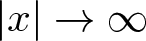 $|x|\to \infty$. Hence,
 $|x|^{\frac {N-2} 2}u(x)$ is decreasing in
 $x$ direction for
 $|x|$ large enough. Since
 $|\frac{\lambda^2 x}{|x|^2}|\geq |x|$, it implies
 \begin{equation*}
\tilde w_\lambda(x)=u(x)-\frac{\lambda^{N-2}}{|x|^{N-2}}u\Big(\frac{\lambda^2x}{|x|^2}\Big)\geq 0
\end{equation*}
for  $\frac \lambda 2\leq |x|\leq \lambda$.
On the other hand, since
 \begin{equation}
\begin{split}
\frac{{\tilde z_{\lambda }}(x)}{\ln |x|} &= \frac{v(x)}{\ln |x|} -\frac{v(\frac{\lambda^2x}{|x|^2})}{\ln |x|}-2\frac{\ln \lambda}{\ln |x|}+2 \\ &= [-\beta+o(1)]-\frac{v(\frac{\lambda^2x}{|x|^2})}{2\ln \lambda-\ln |x|}\frac{2\ln \lambda-\ln |x|}{\ln |x|}-2\frac{\ln \lambda}{\ln |x|}+2\\
& = [-\beta+o(1)]-[-\beta+o(1)][2\frac{\ln \lambda}{\ln |x|}-1]-2\frac{\ln \lambda}{\ln |x|}+2\\
& =[2\beta-2+o(1)](\frac{\ln \lambda}{\ln |x|}-1),
\end{split}
\end{equation}
hence we have
 \begin{equation*}
\tilde z_\lambda(x)\geq 0
\end{equation*}
for 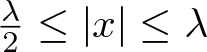 $\frac \lambda 2\leq |x|\leq \lambda$.
Finally, we prove that  $\tilde w_\lambda(x)\geq 0$ and
 $\tilde z_\lambda(x)\geq 0$ for
 $0 \lt |x|\leq R_0$. In fact, we have
 \begin{equation}
\begin{split}
\tilde z_\lambda(x)&=v(x)-v(\frac{\lambda^2x}{|x|^2})-2\ln \lambda+2\ln |x|\\ &=v(x)+(\beta+o(1))[2\ln \lambda-\ln |x|]-2\ln \lambda+2\ln |x|\\ &=v(x)+[2\beta-2+o(1)]\ln \lambda-(\beta-2)\ln |x| \gt 0
\end{split}
\end{equation}
for  $0 \lt |x|\leq R_0$ and
 $\lambda$ large enough.
Similarly, we have
 \begin{equation}
\begin{split}
\tilde w_\lambda(x)&=u(x)-\frac{\lambda^{N-2}}{|x|^{N-2}}u(\frac{\lambda^2x}{|x|^2})\\ &=u(x)-\frac{\alpha+o(1)}{(N-2)\omega_{N-1}\lambda^{N-2}}\\ & \gt 0
\end{split}
\end{equation}
for  $0 \lt |x|\leq R_0$ and
 $\lambda$ large enough.
The proof is complete.
Let  $u_b(x)=u(x+b),\ v_b(x)=v(x+b)$ for any fixed
 $b\in {\mathbb{R}^N}$ and
 \begin{equation*}
u_{\lambda,b}(x)=\frac{\lambda^{N-2}}{|x|^{N-2}}u_b(\frac{\lambda^2x}{|x|^2}),\ v_{\lambda,b}(x)=v_b(\frac{\lambda^2x}{|x|^2})+2\ln\frac{\lambda}{|x|}
\end{equation*}
as well as
 \begin{equation*}\tilde w_{\lambda,b}(x)=u_b(x)-u_{\lambda,b}(x),\ \tilde z_{\lambda,b}(x)=v_b(x)-v_{\lambda,b}(x).\end{equation*}
We may show as in Proposition 4.4 that
 \begin{equation*}
\tilde w_{\lambda,b}(x)\geq 0,\ \tilde z_{\lambda,b}(x)\geq 0
\end{equation*}
for  $x\in B_\lambda(0)\setminus\{0\}$ and
 $\lambda$ large enough. The infimum
 \begin{equation}
{\lambda _b} = \inf \{\lambda \gt 0|{\tilde w_{\mu,b}}(x) \ge 0\ {\rm and}\ {\tilde z_{\mu ,b}}(x) \ge 0\ {\rm in}\ {B_\mu }\setminus \{0\}, \ \forall \lambda \lt \mu \lt \infty\}
\end{equation}
then is well defined.
Proposition 4.5. There exists  $\bar b \in \mathbb R^N$, such that
 $\lambda_{\bar b} \gt 0.$
Proof. The proof is the same as that of Proposition 3.3. We omit the details.
Proposition 4.6. Suppose  $\lambda_b \gt 0$ for some
 $ b \in {\mathbb{R}^N}$, then we have
 \begin{equation*}{\tilde w_{\lambda_b ,b}}(x) \equiv 0\ {\rm and}\ {\tilde z_{\lambda_b ,b}}(x) \equiv 0\end{equation*}
in  $B_{\lambda_b}\setminus\{0\}$.
Proof. The proof is the same as the proof of Proposition 3.5.
Proposition 4.7. Under the assumptions of Theorem 1.1, if  $(u,v)$ is a nontrivial solution of problem (2.1), then
 $\beta \gt 2$ cannot occur.
Proof. Suppose, on the contrary, that  $\beta \gt 2$, then it follows from Proportion 4.5 and Proposition 4.6 that there exist
 $b\in {\mathbb{R}^N}$ and
 $\lambda_b \gt 0$ such that
 \begin{equation*}
\tilde z_{\lambda_b,b}\equiv 0\quad{\rm in }\quad B_{\lambda_b}\setminus\{0\}.
\end{equation*}
That is
 \begin{equation}
v_b(\frac{\lambda_b^2 x}
{{|x{|^2}}}) - 2\ln |x| - v_b(x) + 2\ln {\lambda _b} \equiv 0\quad{\rm in }\quad B_{\lambda_b}\setminus\{0\}.
\end{equation}
Denote  $y=\frac{\lambda_b^2 x}
{{|x{|^2}}}$ and let
 $x\to 0$, we get
 \begin{equation*}
\lim_{|y|\to \infty}[v(y)+2\ln|y|]=C
\end{equation*}
a contradiction to Lemma 2.3 and the assumption  $\beta \gt 2$.
5. Proof of Theorem 1.1
In this section, we prove our main result.
By Proposition 3.6 and Proposition 4.7, we have the following key result.
Proposition 5.1. Under the assumptions of Theorem 1.1, let  $(u,v)$ be a nontrivial solution of equation (2.1) and
 $\beta$ be defined in equation (2.2), then
 \begin{equation*}
\beta = 2.
\end{equation*}
Now, by using the moving spheres method, we will prove that the solutions of equation (2.1) have the exact form as (1.5).
Let  $ w_\lambda$ and
 $ z_\lambda$ be defined as in equation (3.6) in the rest of this section.
Proposition 5.2. There exists  $\lambda \gt 0$ large enough, such that
 \begin{equation}
w_\lambda(x)\geq 0\quad {\rm and}\quad z_\lambda(x)\geq 0\quad {\rm in }\quad {B_\lambda\setminus\{0\}}.
\end{equation}
Proof. The proof of Proposition 5.2 is the same as that of Proposition 3.2, we omit it.
For  $b\in {\mathbb{R}^N}$, let
 $\lambda_b$ be defined as in equation (3.16), we may prove as Proposition 3.3 that
Proposition 5.3. There exists  $\bar b\in {\mathbb{R}^N}$, such that
 $\lambda_{\bar b} \gt 0$.
Similarly, we deduce as the proof of Proposition 3.5 that
Proposition 5.4. Suppose that  $\lambda_b \gt 0$ for some
 $b\in {\mathbb{R}^N}$, then we have
 $ w_{\lambda_b,b}\equiv 0$ and
 $ z_{\lambda_b,b}\equiv 0$ in
 $B_{\lambda_b}\setminus\{0\}$.
Proposition 5.5. For all  $b\in {\mathbb{R}^N}$, we have
 $\lambda_b \gt 0$.
Proof. By Proposition 5.3 and Proposition 5.4, there exists  $\bar b\in {\mathbb{R}^N}$ such that
 $\lambda_{\bar b} \gt 0$ and
 \begin{equation*}
w_{\lambda_{\bar b},\bar b}(x)\equiv 0,\ z_{\lambda_{\bar b},\bar b}(x)\equiv 0
\end{equation*}
in  $B_{\lambda_{\bar b}}\setminus \{0\}$. That is
 \begin{equation}
v_{\bar b}(x)-v_{\bar b}(\frac{\lambda_{\bar b}^2x}{|x|^2})+2\ln|x|-2\ln \lambda_{\bar b}\equiv 0 \quad{\rm for}\quad x\neq 0.
\end{equation}
Let  $|x|\to \infty$ in (5.2), we obtain
 \begin{equation}
\lim_{|x|\to \infty} v_{\bar b}(x)+2\ln |x|=v_{\bar b}(0)+2\ln \lambda_{\bar b}.
\end{equation}
Now, suppose on the contrary that there exists  $b\in {\mathbb{R}^N}$ such that
 $\lambda_b=0$, then we have
 \begin{equation}
v_{b}(x)-v_{b}(\frac{\lambda^2x}{|x|^2})+2\ln|x|-2\ln \lambda\geq 0
\end{equation}
for all  $\lambda \gt 0$ and
 $x\in B_\lambda\setminus\{0\}$. Fix
 $\lambda$ and let
 $x\to 0$ in (5.4), we infer
 \begin{equation}
\limsup_{x\to 0} v_{b}(\frac{\lambda^2x}{|x|^2})-2\ln |x|\leq v_b(0)-2\ln \lambda
\end{equation}
or
 \begin{equation}
\limsup _{|x|\to \infty} v_{b}(x)+2\ln |x|\leq v_b(0)+2\ln \lambda.
\end{equation}
We derive from (5.3) and (5.6) that
 \begin{equation}
v_{\bar b}(0)+2\ln \lambda_{\bar b}\leq v_b(0)+2\ln \lambda,
\end{equation}
this is a contradiction for small  $\lambda$.
As a consequence of Proposition 5.4 and Proposition 5.5, we have the following result.
Proposition 5.6. For all  $b\in {\mathbb{R}^N}$, we have
 $\lambda_b \gt 0$ and
 $ w_{\lambda_b,b}\equiv 0$,
 $ z_{\lambda_b,b}\equiv 0$ in
 $B_{\lambda_b}\setminus\{0\}$.
Proof of Theorem 1.1
Up to now, we have proven that
 \begin{equation*}
u(x)=\frac{\lambda_b^{N-2}}{|x-b|^{N-2}}u\Big(\frac{\lambda_b^2(x-b)}{|x-b|^2}+b\Big).
\end{equation*}
for any  $b\in \mathbb R^N$. Let
 \begin{equation}
A=\lim_{|x|\to \infty}|x|^{N-2}u(x)=\lambda_b^{N-2}u(b),
\end{equation}
we claim that  $A\neq 0$. In fact, if
 $A=0$, then
 $u(b)=0$, which contradicts
 $u$ is a positive solution.
Now, we show that  $u$ has the exact form given in (1.5). We first assume that
 $A=1$. Since
 \begin{equation*}
u(x)=\frac{\lambda_0^{N-2}}{|x|^{N-2}}u\Big(\frac{\lambda_0^2x}{|x|^2}\Big)=\frac{\lambda_b^{N-2}}{|x-b|^{N-2}}u\Big(\frac{\lambda_b^2(x-b)}{|x-b|^2}+b\Big),
\end{equation*}
we have
 \begin{equation}
u(x)=\frac{\lambda_0^{N-2}}{|x|^{N-2}}\Big[u(0)+\nabla u(0)\frac{\lambda_0^2x}{|x|^2}+o\Big(\frac{1}{|x|}\Big)\Big]
\end{equation}
and
 \begin{equation}
u(x)=\frac{\lambda_b^{N-2}}{|x-b|^{N-2}}\Big[u(b)+\nabla u(b)\frac{\lambda_b^2(x-b)}{|x-b|^2}+o\Big(\frac{1}{|x-b|}\Big)\Big]
\end{equation}
as  $|x|\to \infty$. It follows from (5.9) and (5.10) that
 \begin{equation*}
\frac{\partial u(b)}{\partial x_i}u(b)^{-\frac{N}{N-2}}=\frac{\partial u(0)}{\partial x_i}u(0)^{-\frac N{N-2}}-(N-2)b_i
\end{equation*}
or
 \begin{equation}
(u^{-\frac 2{N-2}})_i(b)=2b_i+(u^{-\frac 2{N-2}})_i(0)=\frac {\partial}{\partial b_i}(|b|^2+\nabla u^{-\frac 2{N-2}}(0)\cdot b ).
\end{equation}
Equation (5.11) implies that
 \begin{equation*}
u(b)=(\frac{C_1}{|b-d_0|^2+d})^{\frac {N-2} 2}.
\end{equation*}
If  $A\not=1$, we can prove that
 \begin{equation}
u(x)=(\frac{C\varepsilon}{\varepsilon^2+|x-x_0|^2})^{\frac {N-2} 2}.
\end{equation}
This completes the proof of Theorem 1.1.
Acknowledgements
This work is supported by NSFC, No. 12171212, 12271369, and Shenzhen Science and Technology Innovation Program RCYX20231211090222026.



