Introduction
Functional foods are gaining importance due to the fact that consumers are becoming more health conscious (Sloan, Reference SLOAN2004). There are over forty essential nutrients required in a human's daily diet for normal health and well-being. Among these essential nutrients the omega 3 fatty acids (n-3 FA) are considered to be important. The increasing incidence of certain degenerative diseases in recent times has been attributed to deficiencies in n-3 FA (Simopoulos, Reference SIMOPOULOS2001). One of the ways by which the consumers may reduce their risk of cardiovascular and other degenerative diseases would be to consume more polyunsaturated fatty acids (PUFA), especially n-3 FA (Gebauer et al., Reference GEBAUER, PSOTA, HARRIS and KRIS-ETHERTON2006; Harris et al., Reference HARRIS, POSTON and HADDOCK2007; Schacky et al., Reference SCHACKY2007). Therefore, enriching meat and other foods with n-3 FA has been an active and challenging area of research. As a result, attempts are being made to enrich poultry, bakery and dairy products with n-3 FA. Amongst these, chicken meat has tremendous potential to become a sustainable omega-3 functional food (Hasler, Reference HASLER1998). Several studies have shown that feeding n-3 FA enriched poultry feed, is an effective means of producing n-3 FA enriched chicken meat (Paweł and Pisulewski, Reference PAWEŁ2005; Betti et al., Reference BETTI, PEREZ, ZUIDHOF and RENEMA2009; Zuidoff et al., 2009).
Chicken meat is the fastest growing component of global meat demand. In India the consumption of chicken meat is higher compared to other meats, as it is preferred over other meat for its health appeal because of its higher protein content as well as lower cholesterol and fat. Compared to other meats, chicken meat has lower saturated fat. However, commercial chicken meat is known to be deficient in n-3 FA and rich in n-6 FA. From the human health point of view, it is important to have low saturated fat and adequate amount of PUFA preferably less n-6 FA, balancing n-3 FA. Therefore it is important to enrich chicken meat with n-3 FA and lower the saturated and n-6 FA content.
It is interesting to note that omega-3 eggs are already popular in many parts of the world, and are consumed by health conscious consumers willing to pay a premium price. The cholesterol content of omega-3 eggs is lower than the normal range in regular eggs, (360-400 mg of cholesterol per 100 g of egg). However, a 100 g portion of chicken meat contains, at the most, 100 mg of cholesterol. Therefore chicken meat enriched with n-3 FA has the potential to become a sought after omega-3 functional food.
Eicosopentaenoic acid (EPA, 20:5 n-3) and decosohexaenoic acid (DHA, 22:6 n-3), are functionally important in human metabolism. Plants provide alpha linolenic acid (ALA, 18:3 n-3) which is the precursor for EPA and DHA. Fish is preferred source of n-3 FA because they provide readymade EPA, DHA and instantly meet requirements. Since chicks have ability to convert ALA to EPA and DHA, it is possible to feed chicks ALA and obtain meat enriched with ALA, EPA and DHA.
Presently, in India the growth rate of the broiler sector is 11% which is double that of the layer sector. This scenario of preference for meat over eggs can be attributed to several factors that influence the relative success rate of broiler farming. The lifespan of birds in broiler farms is less than two months whereas a hen is productive for 17-18 months. Therefore one needs to take care of the birds for a much shorter period on a broiler farm. This means that there is lower risk of disease outbreaks, natural calamities and seasonal variations in broiler farming. The initial investment in infrastructure, manpower, feed, vaccination/medication, transportation for broilers is less than that for layer farming, and so broilers provide a better cost: benefit ratio. In the case of market fluctuations and seasonal variations (e.g. in summer or in religious holy months when consumption drastically drops) farmers have better control over production. They can readily plan their activities in accordance with the demand in the market as the production period for broilers is only 45 days. In 45 days of broiler farming one gets almost full return whereas in layer farming the full returns can only be realized after a year or more. Further, in broiler farming, in the case of high production and low demand, excess produce can be diverted to chicken processing industries e.g. frozen chicken or related cut up products. Consumption of poultry meat has increased by 73% in the last 30 years worldwide and is also increasing in India. Therefore, it is a viable means to increase the availability of n-3 FA and safeguard the health of consumers.
India ranks fifth in broiler production after US, China, Brazil and Europe (Evans, Reference EVANS2009). The present per capita consumption of meat is 2.4 kg which is far below the recommended consumption of 11 kg (Athale et al., Reference ATHALE, SUJATHA and HIMATSINGKA2010), and the Indian industry expects the consumption of chicken meat to double in the next five years. To achieve this target, the broiler sector has to expand at a rate of 12-15% annually. Presently, the Indian chicken industry annually rears 2400 million birds. Focus has been directed to the improvement of the meat yield through dietary manipulations; unfortunately, however, these efforts have not been aimed at improving the quality of chicken meat keeping in mind the health benefits for the consumer and the health of birds (Roy et al., Reference ROY, SINGH and PUJARI2008).
There are inherent problems in the production of omega-3 enriched chicken meat and its acceptability by the regular consumer. The objective of this article is to briefly enumerate these problems and review the literature to illustrate as to how these problems are being tackled.
Evaluation of sources of omega-3 fatty acids in chicken feed
Rymer and Givens et al. (Reference RYMER and GIVENS2005) have shown that it is possible to increase the omega-3 PUFA in edible chicken tissues through enriched chicken feed. The lipid profile of meat can be modified within a week of replacement of fat with a source of n-3 FA in the poultry feed. A linear response to the increasing amounts of n-3 FA in feed to n-3 FA incorporated into meat has been observed (Lopez-Ferrer et al., Reference LOPEZ-FERRER, BAUCELLS, BARROETA, GALOBART and GRASHORN2001). Unlike ruminants, in poultry the dietary fatty acids are absorbed unaltered from the small intestine and directly incorporated into tissue lipids. Essential PUFA (EPUFA) is not synthesised in the chick body and their carcass lipid profile responds rapidly to EPUFA in the feed. (Paweł and Pisulewski, 2005). Decreasing the n-6/n-3 FA ratio in chickens is important in order to make chicken meat a functional food (Rondelli et al., Reference RONDELLI, MARTINEZ and GARCIA2004).
The various sources of n-3 FA that have been tested in chicken feeds include linseed, rapeseed, chia seeds, marine algae, fish and fish oils (FO). The n-3 FA content and fatty acid profile of these sources vary widely. There is a limit to which each of these can be incorporated in the regular chicken feed safely without causing any problem to the bird's health, performance and consumer acceptability. The choice of source and its composition as well as the amount to be incorporated in the regular feed has to be carefully worked out. It is important to keep in mind problems such as organoleptic properties, the cost of inclusion, and shelf-life of the product. (Lopez-Ferrer et al., Reference LOPEZ-FERRER, BAUCELLS, BARROETA, GALOBART and GRASHORN2001; Zuidhof et al., Reference ZUIDHOF, BETTI, KORVER, HERNANDEZ, SCHNEIDER, CARNEY and ENEMA2009).
Commonly used n-3 FA sources are either fish meal or FO, linseed or linseed oil (LO). The use of fish meal included at greater than 5% has been reported to affect the performance parameters of broilers e.g. body weight and feed conversion ratio (FCR), which resulted in reduced growth rate causing subsequent economic losses for the producer (Chanmugam et al., Reference CHANMUGAM, BOUDREAU, BOUTTE, PARK, HEBERT, BERRIO and HWANG1992; Scaife et al., Reference SCAIFE, MOYO, GALBRAITH, MICHIE and CAMPBELL1994). The usage of FO did not show any such negative effects on performance (Huang et al., Reference HUANG, ACKMAN, RATNAYAKE and PROUDFOOT1990; Phettleplace et al., Reference PHETTEPLACE and WATKINS1990). However, there is a limit to its use, as FO above 2% adversely affected the sensory parameters of meat (Dansky Reference DANSKY1962; Edwards and May et al., 1965; Fry et al., Reference FRY, VAN WALLEGHEM, WALDROUP and HARMS1965; Miller and Robish et al., Reference MILLER and ROBISCH1969; Hargis and Van Elswyk et al., Reference HARGIS and VAN ELSWYK1993).
Linseed and LO have higher levels of n-3 FA and show minimal influence on sensory parameters. Therefore, the usefulness of linseed and LO have been a subject of extensive investigations. However, in birds fed linseed at a level of 20% for long period, growth performance was adversely affected. This was attributed to low energy availability, increased intestinal viscosity and the presence of anti-nutrients (Madhusudhan et al., Reference MADHUSUDHAN, RAMESH, OGAWUA and SASAOKA1986; Ajuyah et al., Reference AJUYAH, LEE, HARDIN and SIM1991; Lee et al., Reference LEE, OLOMU and SIM1991; Cunnane, Reference CUNNANE, HAMADEH, LIEDE, THOMPSON, WOLEVER and JENKINS1995; Lee and Sim et al., Reference LEE and SIM1995; Rodriguez et al., Reference RODRIGUEZ, ALZUETA, REBOLE, ORTIZ, CENTENO and TREVINO2001; Shen et al., Reference SHEN, FENG, ORESANYA and CHAVEZ2005). LO, rapeseed oil and other vegetable oils increase the n-3 FA content mostly in the form of ALA. However, the increase in deposition of omega-3 long chain PUFA (LC PUFA) is low compared to marine sources (Ajuyah et al., Reference AJUYAH, HARDIN and SIM1993; Scaife et al., Reference SCAIFE, MOYO, GALBRAITH, MICHIE and CAMPBELL1994, Lopez-Ferrer et al., Reference LOPEZ-FERRER, BAUCELLS, BARROETA and GRASHORN1999). If ALA is given as a source of n-3 FA, it is converted in the chick liver to EPA and DHA. EPA and DHA are important components of membrane phospholipids (Whelan et al., Reference WHELAN, BROUGHTON and KINSELLA1991; Bezard et al., Reference BEZARD, BLOND, BERNARD and CLOUET1994; Lopez-Ferrer et al., Reference LOPEZ-FERRER, BAUCELLS, BARROETA, GALOBART and GRASHORN2001; Azcona et al., Reference AZCONA, GARCIA, COSSU, IGLESIAS, PICALLO, PEREZ, GALLINGER and SCHANG2008). The non-utilised ALA gets deposited in abdominal fat or in the liver for future conversion to EPA and DHA.
Several attempts have been made to enrich chicken meat with n-3 FA using different sources of n-3 FA. Linseed has been used by several workers for the enrichment of chicken meat. (Newkirk, Reference NEWKIRK2008). The advantage of linseed is that it naturally contains three times more n-3 FA than n-6 FAs, which is a useful factor as the final aim is to decrease the n-6/n-3 FA ratio in chicken meat. Further, LO has 55-60% n-3 FA unlike FO which may have approximately 30% n-3 FA. Non-n-3 FA in linseed is low and so better manipulation of n-3 FA in chicken meat is possible with linseed and LO used in moderate amounts.
There has been a perception that humans have a low capacity to convert ALA to EPA and DHA; however, this contention has been refuted in a recent review, where it was argued that DHA has a very long half-life of 773 days and ALA is stored in adipose tissue and requires conversion to produce EPA and DHA in a tissue specific manner (Barcelo and Murphy et al., Reference BARCELO and MURPHY2009). Presumably the vast majority of people who are purely vegetarian can only use ALA as their sole source of n-3 FA, and derive EPA and DHA from ALA. When chicks are fed with ALA using either linseed or LO, edible tissues get enriched not only with ALA but also with EPA and DHA (Bhalerao et al., Reference BHALERAO, HEGDE, RANADE, AVARI, NIKAM, KSHIRSAGAR and KADAM2010).
It should be noted that fish and FO may contain undesirable harmful contaminants (including methyl mercury), which are likely to concentrate in the fatty tissues of fish by bioaccumulation and biomagnification processes (Karl et al., Reference KARL, RUOFF and BLUTHGEN2002; Kris-Etherton et al., Reference KRIS-ETHERTON, HARRIS and APPEL2002; Reference KRIS-ETHERTON, HARRIS and APPEL2003). It is not to say that linseed is problem-free, as it has not always been regarded as a readily edible grain and its oil is mostly used in paints and varnishes. It is only recently that linseed has assumed importance in human nutrition mainly on account of its high n-3 FA content. However there are anti-nutrients in linseed. Linatine in linseed can cause vitamin B 6 deficiency in broilers. This can be overcome by supplementation of additional vitamin B 6 to offset the potential negative effects of linatine, however, this has been found to be necessary only when 10% linseed is used in the feed as below this level there are no adverse effects (Klosterman et al., Reference KLOSTERMAN, LAMOUREUX and PARSONS1967). Cynogenic glycosides is another group of anti-nutrients in linseed. Heat treatment of the seed during oil extraction denatures ß-glucosidase thereby preventing formation of HCN (Shen et al., Reference SHEN, FENG, ORESANYA and CHAVEZ2005). Related mucins increase intestinal viscosity and young birds are more sensitive to this phenomenon, and so inclusion of linseed products inclusion in diet of young broiler should be avoided. To overcome the anti-nutritional effects of mucin, linseed diet can be increased gradually to prevent digestive upsets, and should be introduced from the 22nd day of age onwards (Gonzalez and Leeson, Reference GONZALEZ and LEESON2000; Newkirk, Reference NEWKIRK2008). Linseed cake obtained after the cold press extraction of LO still contains 8-10% LO, although it has higher content of anti-nutrients than linseed. However, its use in moderate quantities can be economically very rewarding (Bhalerao et al., Reference BHALERAO, HEGDE, RANADE, AVARI, NIKAM, KSHIRSAGAR and KADAM2010). While making a choice between the two major sources; linseed or fish, linseed, and more particularly linseed cake in moderate amounts seems to be a better alternative for n-3 FA enrichment of broiler diets.
Commercialisation of omega 3 chicken meat
In order to commercialise omega 3 enriched chicken meat, several issues related to the effect of n-3 FA in the feed, e.g. the performance of the birds, sensory parameters, consumer acceptability, shelf-life of meat and cost of production, need to be considered. Higher amounts of linseed or fish in the broiler feed may create health problems for the birds, adversely effecting production and product cost (Karl et al., Reference KARL, RUOFF and BLUTHGEN2002; Kris-Etherton et al., Reference KRIS-ETHERTON, HARRIS and APPEL2002; Reference KRIS-ETHERTON, HARRIS and APPEL2003; Zuidhof et al., Reference ZUIDHOF, BETTI, KORVER, HERNANDEZ, SCHNEIDER, CARNEY and ENEMA2009). Further, anti-nutrient deposition in tissues can also be harmful for the consumer.
Enrichment of meat with n-3 FA can no doubt add value to chicken, but can also increase the cost of production. In order to get high amount of n-3 FA in chicken meat, several researchers have attempted to use higher levels of linseed (14-17%) in the feed. A level of 300 mg of n-3 FA per 100 g of meat is required to qualify as omega-3 functional food according to Canadian standards, however it has not been found to be suitable for commercialisation of chicken meat due to many reasons (Zuidhof et al., Reference ZUIDHOF, BETTI, KORVER, HERNANDEZ, SCHNEIDER, CARNEY and ENEMA2009). Firstly, it increases the cost of production, secondly, the shelf- life of the product may be affected, and thirdly, and most importantly, higher n-3 FA adversely affects organoleptic properties and consumer acceptability.
Although fish or FO can directly enrich chicken meat with EPA and DHA, the flavour of meat is drastically affected (Hargis and Van Elswyk et al., 1993; Marshall et al., Reference MARSHALL, KUBENA, HINTON, HARGIS and VAN ELSWYK1994). Therefore the use of fish or FO for n-3 FA enrichment has to be at tolerable levels resulting in regulated incorporation of LC PUFA in chicken meat (Lopez-Ferrer et al., Reference LOPEZ-FERRER, BAUCELLS, BARROETA and GRASHORN1999). Additionally n-3 FA enrichment using sources such as fish or linseed could lead to alterations in shelf-life of chicken meat due to the presence of LCPUFA, which are more susceptible to oxidation and may lead to undesirable changes in quality parameters, such as loss of water holding capacity, texture and flavour due to rancidity. (Leskanich and Noble et al., Reference LESKANICH and NOBLE1997; Morrissey et al., Reference MORRISSEY, SHEEHY, GALVIN, KERRYH and BUCKLEYH1998). Moreover, post- slaughter biochemical changes involved in the conversion of muscle to meat are accompanied by loss of cellular antioxidant defences and an increased susceptibility of meat lipids to undergo oxidation (O'Neill et al., Reference O'NEILL, GALVIN, MORRISSEY and BUCKCLEY1998). During further processing, oxidation may be accentuated by the disruption of muscle membranes which facilitates greater interaction between lipids and pro-oxidants (Morrissey et al., Reference MORRISSEY, SHEEHY, GALVIN, KERRYH and BUCKLEYH1998).
In-vitro chicken meat: an alternative
In-vitro chicken meat is a new attractive concept that is amenable for omega-3 chicken production. It is hoped that in vitro meat production will meet the growing demand for meat from the rising world population, predicted to reach 9.2 billion by the year 2050. It is envisaged that in vitro meat production may become a reality by the year 2050 (US Census Bureau), although its production is currently very expensive. Nevertheless, it is pertinent to mention here that the very attractive features of this novel radical approach. In vitro meat production can be regarded as more environmentally friendly, likely to require limited resources and produce less greenhouse gas and other wastes than conventional meat production. In vitro meat may reduce the need for agricultural resources to produce meat and may be free from seasonal variation as meat is produced in factory under controlled conditions (Edelman et al., Reference EDELMAN, MCFARLAND, MIRONOV and MATHENY2005). In vitro meat may be more acceptable to certain human sectors which are against animal slaughter. This is very futuristic and more research is needed to make it cost effective and acceptable to consumers.
In vivo enrichment of chicken meat with omega 3 fatty acids
Cold pressed de-oiled cake is a by-product from the LO industry which still contains a substantial (8-10%) amount of oil (Balevi et al., Reference BALEVI, COSKUN and AKTUMSEK2001). Although this would have a somewhat higher amount of anti-nutrients than the linseed itself, with some standardisation and pelletising, it is possible to use the de-oiled cake without any harmful effects on broiler performance (Bhalerao et al., Reference BHALERAO, HEGDE, RANADE, DESAI and KADAM2011). The incorporation of n-3 FA into chicken meat obviously would depend on the period of feeding and when in the growth period the feed is given. Researchers have supplemented broiler with omega 3 enriched feed from days 0, 7 and 22 and during the last week before slaughtering. It appears that from current data, 2% FO, up to 10% linseed, 4% LO and 10% chia seeds can be safely incorporated in feed without affecting bird performance and sensory properties of the resulting meat (Edwards and May, Reference EDWARDS and MAY1965; Ayerza et al., Reference AYERZA, COATES and LAURIA2002; Bean and Leeson., Reference BEAN and LEESON2003; Newkirk, Reference NEWKIRK2008).
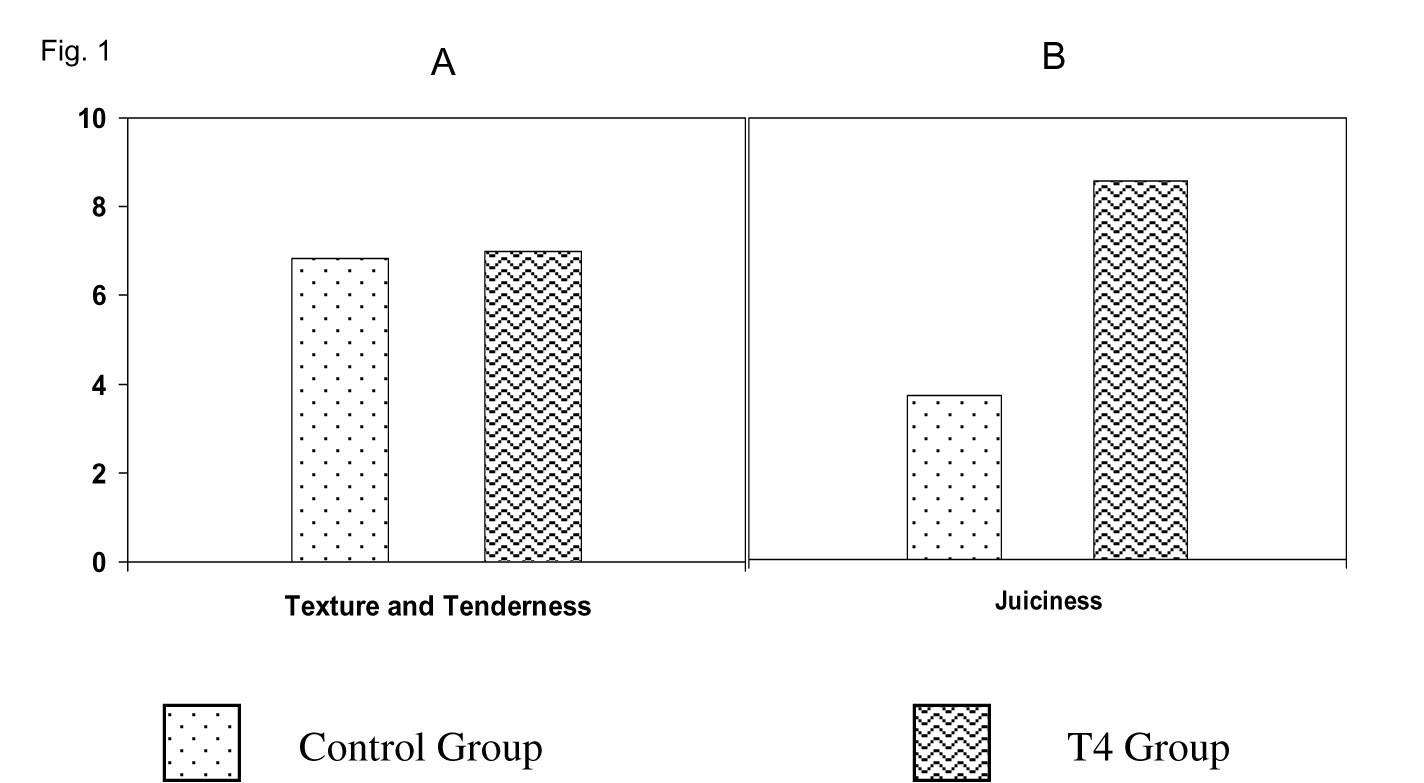
In other (Bhalerao et al., Reference BHALERAO, HEGDE, RANADE, AVARI, NIKAM, KSHIRSAGAR and KADAM2010) trials, birds were maintained on various permutations and combinations of enriched feed mix (EFM) and LO for varying durations e.g. from day one, or only for the last week prior to culling the birds at 42 days old. The birds were fed EFM in the range of 3-10% in combination with 2-4% LO. The control group received the regular feed without any supplementation of EFM or LO. The combination of 5% EFM and 2% LO regimen starting on day 21 of age produced optimum results. This regimen did not affect the health of the birds as noted in terms of weight gain which was comparable to the control group. However, breast and thigh muscle contained at least 300 mg or more omega 3 fatty acid per 200 g serving which is about three to four times enrichment compared to the control. Organoleptic parameters e.g. texture, tenderness and juiciness showed higher scores as judged by four independent panels of experts from Institute of Hotel Management and Catering Technology Bharati Vidyapeeth Deemed University, Pune, (Figure 1) as well as regular chicken consumers. Significantly, abdominal fat decreased by about 30% with a seven-fold enrichment in omega 3 fatty acid and subcutaneous fat showed a nine-fold enrichment. Additionally it was also reported that the birds had improved ability to recovery from trauma and brain injury and displayed more regular heart beats.
There has been reportedly great success in enriching eggs with omega-3 fatty acids, and omega-3 enriched eggs are being marketed at an affordable competitive price, although on a small scale. Efforts are now on the way for test-marketing omega 3 enriched chicken meat. It is not currently thought that any farmers in India, including the major players, have thus far attempted in vivo enrichment of omega 3 in chickens.
Omega-3 chicken as an instrument for rural development from an Indian perspective
Due to its least demanding nature in terms of infrastructure, poultry has been widely accepted by the rural poor, with more than 50% of the landless and marginal farmers make their living from poultry. Thus poultry has been one of the supplementary income supports, especially for women. (Government of India National Poultry Policy, 2005). Organising this sector through societies, co-operatives, self- help groups, providing training in omega-3 chicken production, facilitating backward and forward linkages and effective quality control can be quite rewarding both for rural development and health of the people in both urban and rural settings.
Sensory parameter evaluation for cooked chicken meat samples from conrol and T4 groups. Ordinate represents sensory parameters on Hedonic scale.

Conclusions
Although both fish and FO or linseed and LO may be equally effective, linseed could provide a preferred source as the chicken meat produced may be more palatable. Therefore, moderate use of linseed, preferably linseed cake in pellet form, seems to be an ideal choice which can keep the anti-nutrients within tolerable limits with reasonable enrichment of omega-3 and improved shelf-life. Linseed is a sustainable omega-3 source unlike fish which may decline in future years. Also, the use of linseed cake can be cost effective. Additionally the moderate use of linseed cake improves the performance of the bird. Thus this approach can be a ‘win-win’ situation for the birds, farmers, entrepreneurs and consumers.
Enriching chicken meat with n-3 FA can be a rewarding enterprise, realise added value to the final product and provide health benefits to the consumer through omega 3 enriched functional foods.
Acknowledgements
The authors thank ICAR for the financial grant through NAIP projects on linseed value addition and livelihood security to farmers. We thank the team members for their unstinted supports.