INTRODUCTION
Psychological Capital (PsyCap) reflects an ‘individual’s positive psychological state of development,’ characterized by the psychological resources of hope, self-efficacy, resilience and optimism (Luthans, Youssef, & Avolio, Reference Luthans, Youssef and Avolio2007: 3). Previous research suggests it is an important predictor of desirable outcomes including job performance, job satisfaction, work–family enrichment, organizational commitment and psychological well-being (e.g., Avey, Reichard, Luthans, & Mharte, Reference Avey, Reichard, Luthans and Mharte2011; Lee, Seo, Jeung, & Kim, Reference Lee, Seo, Jeung and Kim2017; Mishra, Bhatnagar, Gupta, & Wadsworth, Reference Mishra, Bhatnagar, Gupta and Wadsworth2017). Although PsyCap has mainly been examined at the individual level, a small number of studies have demonstrated positive associations between team-level PsyCap and team performance (Clapp-Smith, Vogelgesang, & Avey, Reference Clapp-Smith, Vogelgesang and Avey2009; Peterson & Zhang, Reference Peterson and Zhang2011; Mathe, Scott-Halsell, Kim, & Krawczyk, Reference Mathe, Scott-Halsell, Kim and Krawczyk2017).
To advance emerging team-level PsyCap literature, this study aims to examine the cross-level influences of team-level PsyCap. Specifically, we investigate how team-level PsyCap relates to outcomes relevant to individual employees, as well as work team outcomes. In addition, a recent review of team-level PsyCap (Dawkins, Martin, Scott, & Sanderson, Reference Dawkins, Martin, Scott and Sanderson2015) revealed that its measurement has been approached in two different ways (i.e., direct-consensus composition and referent-shift composition). It is argued that these two methods of aggregation may measure two distinct constructs (Mischel & Northcraft, Reference Mischel and Northcraft1997). Thus, the second aim of this study is to investigate the viability of these different compositional models for operationalizing team-level PsyCap. Finally, the third aim of this study is to commence investigation into boundary conditions of team-level PsyCap, by exploring the influence of PsyCap strength (the degree of homogeneity within teams regarding their PsyCap perceptions) in team-level PsyCap/outcome relationships. Thus, in this study we develop and test a model (Figure 1) to investigate the following questions: (i) How does team-level PsyCap relate to outcomes at both the team-level and the individual-level? (ii) Which compositional model of team-level PsyCap (e.g., direct-consensus composition or referent-shift composition) is most viable in terms of predicting outcomes at the individual- and team-level? and (iii) How does PsyCap strength influence the relationships between team-level PsyCap and team- and individual-level outcomes?
Research model of the individual and collective PsyCap (team and assimilated PsyCap) relationships with team- and individual-level outcomes

Therefore, in providing the first in-depth empirical investigation of team-level PsyCap, this study will improve understanding of the benefits of team-level positivity in relation to employee satisfaction and turnover intentions, as well as team performance, satisfaction and conflict. Moreover, by comparing two models for operationalizing team-level PsyCap this study will extend collective PsyCap theory by determining the unique effects each form of team-level PsyCap has on individual- and team-level outcomes, thereby providing the first assessment of the criterion validity of team-level PsyCap. Finally, by examining the role PsyCap strength in the relationship between team-level PsyCap and individual- and team-level outcomes, this study will provide insights into the importance (or otherwise) of uniformity of PsyCap perceptions among team members in order to gain the benefits of team-level PsyCap.
Individual-level PsyCap
PsyCap is defined as a higher-order construct derived from a constellation of motivational and behavioral tendencies associated with self-efficacy (‘having confidence to take on and put in the necessary effort to succeed at challenging tasks’); hope (‘persevering towards goals and when necessary redirecting paths to goals’); optimism (‘making a positive attribution about succeeding now and in the future’); and resilience (‘when beset by problems and adversity, sustaining and bouncing back and even beyond to attain success’) (Luthans, Youssef, & Avolio, Reference Luthans, Youssef and Avolio2007: 3).
PsyCap and its individual components are considered ‘state-like’ in nature. Using a continuum perspective dichotomized by ‘pure’ poles of state and trait PsyCap is positioned as midrange and therefore a ‘state-like’ construct which is relatively malleable and open to development (Luthans, Youssef-Morgan, & Avolio, Reference Luthans, Youssef-Morgan and Avolio2015). As such, PsyCap is differentiated from both stable, fixed traits (e.g., Big Five personality dimensions, core-self evaluations) and pure, transient states (e.g., moods and emotions). Although not a focus of the current study, previous research has provided evidence to support the state-like nature of PsyCap and its construct validity including convergent and discriminant validity in relation to other constructs (see Dawkins, Martin, Scott, & Sanderson, Reference Dawkins, Martin, Scott and Sanderson2013 for a detailed psychometric review of the PsyCap construct).
The primary explanation for these relationships is that employees with higher PsyCap tend to expect good things to happen to them at work (optimism); believe they can create their own success (hope and self-efficacy); and are persistent in the face of challenges (resilience) when compared with employees with lower PsyCap (Avey et al., Reference Avey, Reichard, Luthans and Mharte2011). Thus, given the expectations for success and belief in one’s ability to achieve success, those with higher PsyCap are more likely to be satisfied with their job (Luthans, Avolio, Avey, & Norman, Reference Luthans, Avolio, Avey and Norman2007; Cheung, Tang, & Tang, Reference Cheung, Tang and Tang2011), and therefore less likely to harbor turnover intentions (Avey, Luthans, & Youssef, Reference Avey, Luthans and Youssef2010).
Team-level PsyCap: theoretical foundations
PsyCap can also be experienced at the level of teams (Clapp-Smith, Vogelgesang, & Avey, Reference Clapp-Smith, Vogelgesang and Avey2009; Peterson & Zhang, Reference Peterson and Zhang2011; Vanno, Kaemkate, & Wongwanich, Reference Vanno, Kaemkate and Wongwanich2014). Drawing on the transition from personal efficacy to collective efficacy (‘a group’s shared belief in its conjoint capabilities;’ Bandura, Reference Bandura1997: 477), collective PsyCap has been conceptualized as a group’s shared psychological state of development characterized by hope, efficacy, optimism and resilience (Peterson & Zhang, Reference Peterson and Zhang2011).
In a recent examination of the theoretical conceptualization of PsyCap at the team level, this definition was extended to reflect both the referent and level of analysis (Dawkins et al., Reference Dawkins, Martin, Scott and Sanderson2015). Thus, although there may be more than one single way to conceptualize and operationalize collective PsyCap, it is critical that mode of measurement is congruent with the conceptualization of the construct at each level of analysis (Chan, Reference Chan1998). Accordingly, Dawkins et al. (Reference Dawkins, Martin, Scott and Sanderson2015) differentiate between what they termed assimilated PsyCap (i.e., agreement, or similarity, among team members regarding their own individual-referent PsyCap, characterized by hope, efficacy, optimism and resilience) and team PsyCap (i.e., agreement among team members in regards to the team’s shared, team-referent PsyCap perception – characterized by hope, efficacy, optimism and resilience).
Drawing on social contagion theory (Degoey, Reference Degoey2000), which refers to the process of communicating and exchanging information among members of a collective, thus resulting in shared perceptions among the collective, it is proposed that team-level PsyCap emerges via social contagion processes (Dawkins et al., Reference Dawkins, Martin, Scott and Sanderson2015). Thus, as a team provides a social environment within which members can interact and communicate, perceptions regarding each of the four components of PsyCap can become shared among team members, via communications regarding their own individual abilities and performance, as well as that of the overall team.
Although social contagion processes are proposed as imperative for the development of team-level PsyCap, it is suggested that there are differences in the nature and foci of these social processes (e.g., communications and interactions) which determine the emergence of assimilated and team PsyCap. It is theorized that team PsyCap emerges via interactions directly relating to the team (e.g., team-related goal planning) and is thereby distinct from the individual PsyCap perceptions team member may hold about themselves (Dawkins et al., Reference Dawkins, Martin, Scott and Sanderson2015). Thus, perceptions regarding each of the four components of PsyCap (hope, efficacy, resilience and optimism) can become shared among team members via communications and interactions regarding the team’s functions and operations. In contrast, assimilated PsyCap is thought to emerge primarily from meaningful social interactions among team members regarding their own individual psychological capacities in relation to their work tasks (Dawkins et al., Reference Dawkins, Martin, Scott and Sanderson2015). For example, interactions among team members regarding their own individual goal development and obstacle planning may influence other team members to develop similar ways of planning and expecting their own successes. This in turn may led to similarity of individual PsyCap perceptions within the team (i.e., assimilated PsyCap).
Furthermore, potential antecedents have been identified as relating to the emergence of each form of team-level PsyCap. For instance, team size has been proposed as being negatively related to the emergence of assimilated PsyCap, due to relational loss (Mueller, Reference Mueller2012), where there is reduced opportunity for supportive social exchanges as team size increases. However, in contrast, team size has been theorized as being positively related to the development of team PsyCap, as greater human capital within the team may increase the perceived resources (e.g., skills, problem-solving capacity) available to the team to help them achieve their shared goals (Dawkins et al., Reference Dawkins, Martin, Scott and Sanderson2015). However, there may be boundary conditions for antecedents related to the emergence of team-level PsyCap and that further empirical research is needed to affirm these propositions.
Measurement of team-level PsyCap
To date, measurement of team-level PsyCap has been operationalized in two ways; a direct-consensus approach, which aggregates individual PsyCap to the team-level; and a referent-shift approach, in which the referent of the PsyCap items is modified to measure an individual’s perception of the team as a whole. Both methods require sufficient within-group agreement to be established before aggregation (Chan, Reference Chan1998).
Both compositional measurement approaches have demonstrated associations between team-level PsyCap and team performance outcomes. However, despite this, arguably two distinct constructs are being measured using these approaches. Mischel and Northcraft (Reference Mischel and Northcraft1997) argued that the sum of the cognition ‘can we do this task?’ (referent-shift consensus) is different from the sum of the cognition of ‘can I do this task?’ (direct consensus). Chan (Reference Chan1998) further suggested that referent-shift composition is important because it results in a new form of the construct that is conceptually distinct from the original construct. Dawkins et al. (Reference Dawkins, Martin, Scott and Sanderson2015) argued that aggregated individual-referent PsyCap and team-referent PsyCap are distinct constructs that emerge via separate pathways and consequently suggested broadening conceptualizations of collective (i.e., team-level) PsyCap to include alternate definitions or ‘forms’ of collective PsyCap to represent different operationalizations of the construct at higher levels. Of relevance to this study, and as outlined previously, Dawkins et al. (Reference Dawkins, Martin, Scott and Sanderson2015) differentiate between assimilated PsyCap (i.e., agreement among team members in regards to their own individual-referent PsyCap and measured using direct-consensus model of aggregation) and team PsyCap (i.e., agreement among team members in regards to the team’s shared [team-referent] PsyCap and measured using referent-shift model of aggregation). Thus, we adopt these definitions and terminology of team-level PsyCap (e.g., assimilated PsyCap and team PsyCap) to explore whether either form of team-level PsyCap has unique relationships with the investigated outcome variables.
Cross-level relationships: team PsyCap and individual-level outcomes
Although there is good evidence of significant relationships between PsyCap and individual-level outcomes, to date, there has been no investigation of cross-level relationships between team-level PsyCap and individual-level outcomes (i.e., job satisfaction and turnover intentions). Given that individuals are embedded in social relations at work, individuals within a team may be influenced by the shared capacities of the team (West, Patera, & Carsten, Reference West, Patera and Carsten2009). According to the social information processing perspective (Salancik & Pfeffer, Reference Salancik and Pfeffer1978) an important source of information for effective team member behavior and attitudes comes from the immediate work environment (i.e., the work team/unit). Thus, we suggest that belonging to a team with high positivity (i.e., high team PsyCap) will have a positive bearing on individual employees’ job-related well-being in terms of heightened job satisfaction and lower turnover intentions. This proposition is further supported by social exchange theory (Blau, Reference Blau1964) and Fredrickson’s (Reference Fredrickson2003) upward spiral of positive emotions theory, which postulates that individual’s behaviors and attitudes are influenced by how and who they interact with.
PsyCap strength
Following multilevel research recommendations (i.e., r wg; James, Demaree, & Wolf, Reference James, Demaree and Wolf1984), extant team-level PsyCap studies have aggregated individual-level data only once acceptable within-group agreement is demonstrated. Within-group agreement has been considered a crucial prerequisite for aggregation (Meade & Eby, Reference Meade and Eby2007). However, several scholars have highlighted shortcomings of this approach, including failure to consider potentially meaningful variation in team member responses (Lindell & Brandt, Reference Lindell and Brandt2000); assuming that all team members perceive and understand a construct in a similar manner; and assuming that only groups with high agreement (thus low dispersion) are appropriate for multilevel research (Cole, Bedeian, Hirschfeld, & Vogel, Reference Cole, Bedeian, Hirschfeld and Vogel2011). Subsequently, it has been suggested that consensus models run the risk of over-simplifying group-level phenomena, resulting in potentially biased and equivocal findings (Colquitt, Noe, & Jackson, Reference Colquitt, Noe and Jackson2002).
Thus, approaches that focus on the variance of group members’ responses may actually strengthen multilevel findings and offer more complete understandings into group-level phenomena (Cole et al., Reference Cole, Bedeian, Hirschfeld and Vogel2011). This approach (dispersion modeling) differs from consensus models in that it postulates that the degree to which team members share (or do not share) the same opinion is more than a statistical requirement for aggregation and that dispersion of scores is a construct in its own right (Li & Cropanzano, Reference Li and Cropanzano2009). Expanding the research focus from solely considering members’ average response the consensus of a higher-level construct allows for meaningful increments in the prediction of outcomes (Lindell & Brandt, Reference Lindell and Brandt2000).
Although other areas of organizational behavior research have implemented dispersion modeling (i.e., justice climate strength; Roberson, Reference Roberson2006), to date this approach has not been applied in empirical PsyCap research. However, in considering the premise of dispersion modeling, it is clear that there is scope to investigate its application in multilevel PsyCap research. The term PsyCap strength has been defined as ‘the degree of within-unit agreement among team members’ collective PsyCap perceptions’ (Newman, Ucbasaran, Zhu, & Hirst, Reference Newman, Ucbasaran, Zhu and Hirst2014: 124). More recently, Dawkins et al. (Reference Dawkins, Martin, Scott and Sanderson2015) have proposed an expansion of this definition to reflect dispersion in relation to both assimilated PsyCap and team PsyCap. As such, they distinguish between individual PsyCap strength (the degree of dispersion among team members’ individual-referent PsyCap perceptions) and team PsyCap strength (the degree of dispersion among team members’ team-referent PsyCap perceptions). Furthermore, they suggest that various contextual factors may promote or hinder the emergence of both individual PsyCap strength and team PsyCap strength. For example, team size may inhibit emergence of individual PsyCap strength as it may reduce the likelihood of social contagion of individual-referent PsyCap perceptions among team members, thereby reducing the level of agreement within a team in relation to assimilated PsyCap perceptions (Dawkins et al., Reference Dawkins, Martin, Scott and Sanderson2015). Similarly, age diversity in a team may create greater dispersion in assimilated PsyCap perceptions, as research has shown that age is significantly and positively related to individual-level PsyCap (McMurray, Pirola-Merlo, Sarros, & Islam, Reference McMurray, Pirola-Merlo, Sarros and Islam2010).
In contrast, team-related factors such as task interdependency, cohesion and tenure have been identified as potentially important factors for the emergence of team PsyCap strength. Each of these factors provide teams with greater opportunities for social exchange among team members regarding the team’s ability and psychological resources, which in turn may facilitate team PsyCap strength (Dawkins et al., Reference Dawkins, Martin, Scott and Sanderson2015).
It has also been argued that moderating effects could be expected in relation to both individual PsyCap strength and team PsyCap strength. For instance, when team members similarly report high individual PsyCap (e.g., high individual PsyCap strength) they may be able to more effectively undertake their individual work roles that contribute to team outcomes. Thus, individual PsyCap strength may moderate the relationship between assimilated PsyCap and team-level outcomes, such as performance and satisfaction. Similarly, high team PsyCap strength (e.g., a team with high agreement regarding the team’s psychological capacities) may strengthen the relationship between team PsyCap and outcomes variables such as team performance, as virtually all team members perceive the team as having psychological capacities (hope, efficacy, resilience and optimism), and increasing the likelihood of the team achieving its goals.
The current study
This study has three primary aims. First, to examine potential cross-level effects of team-level PsyCap on both team- (e.g., team performance, satisfaction and conflict) and individual-level (job satisfaction, turnover intentions) outcomes. Second, to compare two compositional models to represent PsyCap at the team level; and third, to commence investigation of boundary conditions of team-level PsyCap by exploring the influence of construct operationalization and individual PsyCap strength and team PsyCap strength in team-level PsyCap/outcome relationships. Given this is the first empirical study to explore the measurement of team-level PsyCap, outcomes have been selected on the basis of having evidence to support their relationship with PsyCap. Previous research has shown that individual-level PsyCap has a positive relationship with employee job satisfaction (Avey, Avolio, & Luthans, Reference Avey, Avolio and Luthans2011; Cheung, Tang, & Tang, Reference Cheung, Tang and Tang2011) and a negative relationship with turnover intentions (Avey, Luthans, & Youssef, Reference Avey, Luthans and Youssef2010; Avey, Avolio, & Luthans, Reference Avey, Avolio and Luthans2011). This is thought to be because individuals with higher levels of optimism regarding their future and greater confidence in their ability to succeed are more likely to be motivated to take on challenging tasks and put in the necessary effort to succeed (Avey, Luthans, & Youssef, Reference Avey, Luthans and Youssef2010). Higher levels of resilience also enable individuals to persist, even when faced with challenges, rather than contemplate giving up; while individuals with higher hope tend to generate multiple pathways towards their goals and actively pursue positive outcomes. Therefore, given that replication serves an important role in protecting against the uncritical acceptance of empirical findings (Singh, Ang, & Leong, Reference Singh, Ang and Leong2003), we aimed to investigate the individual-level relationships between employee PsyCap and employee job satisfaction and turnover intentions. Accordingly, we hypothesized:
Hypothesis 1: Individual-level PsyCap will be positively related to individual-level job satisfaction, and negatively related to individual-level turnover intent.
Importantly, the multilevel design of this study enabled two new lines of inquiry for PsyCap research. The first was the examination of potential cross-level effects of team-level PsyCap. The second was identification of team-level PsyCap boundary conditions by investigating the influence of construct operationalization and individual PsyCap strength and team PsyCap strength on team-level PsyCap/outcome relationships.
As previous research has demonstrated that individuals with higher PsyCap tend to experience greater job satisfaction and lower turnover intentions (Avey et al., Reference Avey, Reichard, Luthans and Mharte2011), we expect that assimilated PsyCap will have significant cross-level influence on individual employee attitudes. Furthermore, based on the social information processing perspective (Salancik & Pfeffer, Reference Salancik and Pfeffer1978) and the upward spiral of positive emotions theory (Fredrickson, Reference Fredrickson2003) which posits that the social context of a team can shape individual perceptions and behaviors, we also expect that team PsyCap will have significant cross-level influence on individual employee job satisfaction and turnover intent. Specifically, we expect that being a member of a team that positively appraises their circumstances and probability for success under those circumstances based on their combined motivated effort and perseverance will increase the degree to which individual team members feel satisfied with their job, and reduce the desires to leave their job. As such, we proposed:
Hypothesis 2: Both assimilated PsyCap and team PsyCap will be positively related to individual-level job satisfaction.
Hypothesis 3: Both assimilated PsyCap and team PsyCap will be negatively related to individual-level turnover intent.
This study was also concerned with demonstrating relationships between team-level PsyCap and team-level outcomes. Previous research has shown that team-level PsyCap has been positively associated with team performance when operationalized using both the direct-consensus (Clapp-Smith, Vogelgesang, & Avey, Reference Clapp-Smith, Vogelgesang and Avey2009; Peterson & Zhang, Reference Peterson and Zhang2011; Mathe et al., Reference Mathe, Scott-Halsell, Kim and Krawczyk2017) and referent-shift (Vanno, Kaemkate, & Wongwanich, Reference Vanno, Kaemkate and Wongwanich2014; Heled, Somech, & Waters, Reference Heled, Somech and Waters2016) models of aggregation. Dawkins et al. (Reference Dawkins, Martin, Scott and Sanderson2015) draw on social contagion theory (Degoey, Reference Degoey2000) to explain that team members come to share PsyCap perceptions via communications and exchanging of information regarding the team’s functions and operations. Thus, teams with higher levels of shared PsyCap may perform better as a team, as they are more likely to generate multiple pathways towards team goals, have greater confidence in the team’s shared abilities and resources to enable success, hold more positive expectations for the team’s likelihood of successful goal attainment and identify team-based strengths to assist them in overcoming obstacles to goal attainment. Hence, we hypothesized:
Hypothesis 4: Both assimilated PsyCap and team PsyCap will be positively related to team performance.
Although elements of team-level PsyCap (i.e., resilience, efficacy and optimism) have been found to positively relate to team satisfaction and negatively relate to team conflict (West, Patera, & Carsten, Reference West, Patera and Carsten2009), such relationships are yet to be demonstrated with team-level PsyCap in its entirety. However, it is suggested that team-level PsyCap can influence team satisfaction, in that members of teams with higher PsyCap are more actively engaged in their work and proactively interact with each other towards successful completion of tasks, thereby increasing team satisfaction. Moreover, based on previous research examining team-level positivity (i.e., team-level resilience, efficacy and optimism; West, Patera, & Carsten, Reference West, Patera and Carsten2009), we theorize that overall team-level PsyCap may provide a buffer to both team relationship and task conflict. Specifically, teams with higher PsyCap may perceive conflict as a resolvable challenge that can be overcome with renewed dynamism to work towards team goals (Dawkins et al., Reference Dawkins, Martin, Scott and Sanderson2015). Team-level PsyCap may also prevent team members from internalizing and personalizing potential relationship conflicts, thus lessening the experience of extended relationship conflict within teams with higher team-level PsyCap. Therefore, we predicted:
Hypothesis 5: Both assimilated PsyCap and team PsyCap will be positively related to team satisfaction.
Hypothesis 6: Both assimilated PsyCap and team PsyCap will be negatively related to team task and team relationship conflict.
Finally, this study aimed to extend current team-level PsyCap literature by investigating individual PsyCap strength and team PsyCap strength in relation to the individual- and team-level outcomes using dispersion modeling. A conceptual exploration of PsyCap strength has suggested that when team members similarly perceive themselves as having the psychological capacities necessary to enable them to effectively undertake their work and contribute to team goals (individual PsyCap strength), the relationship between assimilated PsyCap and criterion outcomes is likely to be strengthened (Dawkins et al., Reference Dawkins, Martin, Scott and Sanderson2015). In contrast, when only some team members perceive themselves as having adequate psychological capacities to effectively carry out their individual work duties and contribute to the overall goals and performance of the team (i.e., low individual PsyCap strength), the relationship between assimilated PsyCap and criterion variables is likely to be weaker.
It has also been suggested that team PsyCap strength may moderate relationships between team PsyCap and outcome variables, such as performance. Teams with high team PsyCap strength perceive the team as having the necessary shared psychological capacities to enable greater likelihood of the team achieving its goals. Conversely, when only some team members perceive the team as having the necessary psychological capacities to achieve team goals and succeed, there may be a reduction in the motivational propensity of the team and thereby weaken the relationship between team PsyCap and criterion variables (Dawkins et al., Reference Dawkins, Martin, Scott and Sanderson2015). However, to date these propositions have not been tested empirically so we posed the following research questions:
Research Question 1a: Does individual PsyCap strength explain significant variance beyond that explained by assimilated PsyCap in the prediction of individual-level (job satisfaction and turnover intent) and team-level (team performance, satisfaction and conflict) outcomes?
Research Question 1b: Does team PsyCap strength explain significant variance beyond that explained by team PsyCap in the prediction of individual-level (job satisfaction and turnover intent) and team-level (team performance, satisfaction and conflict) outcomes?
Research Question 2a: Does individual PsyCap strength moderate the association between assimilated PsyCap and each of the individual-level (job satisfaction and turnover intent) and team-level (team performance, satisfaction and conflict) outcomes?
Research Question 2b: Does team PsyCap strength moderate the association between team PsyCap and each of the individual-level (job satisfaction and turnover intent) and team-level (team performance, satisfaction and conflict) outcomes?
Method
Sample and procedure
Data were collected from 10 organizations from a cross-section of industries including energy and resources, employment and recruitment, financial services, counseling and childcare. An initial email was sent by the first author to the HR manager outlining the purposes of the study and inviting the organization to extend the opportunity for their work teams to participate in the study. Once an organization had agreed to participate in the study, a second email was sent, via the HR manager, to employees from work teams participating in the study. This email outlined the purposes of the study and provided a link to the secure online survey. Employees were informed that participation was voluntary and that no information would be provided to their organization regarding their decision to participate, or otherwise.
Complete data were collected from 193 employees across 43 teams (average team size=4.51). This represents a 50.3% response rate from individual members of participating teams. In total, 60.6% of participants were female and respondents were aged 18–29 (24.9%), 30–39 (21.8%), 40–49 (28.5%), 50–59 (17.6%) and 60 years or older (7.3%).
PsyCap
Individual-level PsyCap was assessed using the 12-item version of the Psychological Capital Questionnaire (PCQ-12; Luthans, Youssef, & Avolio, Reference Luthans, Youssef and Avolio2007). Permission to use the PCQ was obtained through the www.mindgarden.com permissions process. The PCQ-12 consists of four subscales: (a) hope, (b) resilience, (c) optimism and (d) efficacy. The 12-item version has been psychometrically validated (Avey, Avolio, & Luthans, Reference Avey, Avolio and Luthans2011) and used in previous research (e.g., Luthans, Avey, Clapp-Smith, & Li, Reference Luthans, Avey, Clapp-Smith and Li2008, Roche, Haar, & Luthans, Reference Roche, Haar and Luthans2014). Items were rated using a 6-point Likert scale (1=‘strongly disagree,’ 6=‘strongly agree’). The scale score was derived from the average of the responses to the 12 items. Reliability for this scale was good (α=0.87).
Job satisfaction
A 3-item scale by Warr, Cook, and Wall (Reference Warr, Cook and Wall1979) was used to measure perceptions of job satisfaction. Responses are on a 5-point Likert scale (1=‘strongly disagree,’ 5=‘strongly agree’). The scale score was derived from the sum of the responses to the three items. Reliability for this scale was acceptable (α=0.84).
Turnover intentions
Four items adapted from Fried and Tiegs (Reference Fried and Tiegs1995) and Meyer, Allen, and Smith (Reference Meyer, Allen and Smith1993) were used to assess turnover intentions. Responses are on a 7-point Likert scale (1=‘strongly disagree,’ 7=‘strongly agree’). The scale score was derived from the sum of the responses to the four items. Reliability for this scale was good (α=0.90).
Assimilated PsyCap
Individual-referent PsyCap perceptions from team members were averaged to measure assimilated PsyCap using the direct-consensus model of aggregation (Chan, Reference Chan1998).
Team PsyCap
Items from the PCQ (Luthans, Youssef, & Avolio, Reference Luthans, Youssef and Avolio2007) were adapted with a team referent (Chan, Reference Chan1998) to assess team PsyCap. Reliability for this measure was good (α=0.92).
Individual PsyCap strength
Individual PsyCap strength was measured using the within-group agreement index, r* wg(j) (Lindell & Brandt, Reference Lindell and Brandt1999) across individual-referent PsyCap perceptions among team members. Within-group agreement across the teams for individual-referent PsyCap ranged from 0.12 to 0.94.
Team PsyCap strength
Team PsyCap strength was measured using the within-group agreement index, r* wg(j) (Lindell & Brandt, Reference Lindell and Brandt1999) across team-referent PsyCap perceptions among team members. Within-group agreement across the teams for team-referent PsyCap ranged from 0.39 to 0.98.
Team performance and satisfaction
Employee perceptions of team performance and satisfaction were assessed using 11 items from the Team Performance Scale (Hirst, Reference Hirst1999). Responses were on a 5-point Likert scale (1=‘strongly disagree,’ 5=‘strongly agree’). The scale score was derived from the sum of the responses to the 11 items. Reliability for both scales was good (team performance α=0.80; team satisfaction α=0.89).
Team conflict
An 8-item scale by Jehn (Reference Jehn1995) was used to measure perceptions of team interpersonal and task conflict. Responses were on a 5-point Likert scale (1=‘none,’ 5=‘a lot’). The scale score was derived from the average of the responses to the eight items. Reliabilities for team relationship conflict (α=0.93) and task conflict (α=0.77) were acceptable.
Levels of analysis
To assess the appropriateness of aggregating PsyCap scores to the team-level, we examined both between-team and within-team agreement. We used two intraclass correlations (ICCs) for assessing agreement among team members. The ICC1 indicates level of agreement from members in the same team, while the ICC2 suggests whether teams can be differentiated on the variables under investigation. For individual PsyCap, the ICC1 was 0.09 and the ICC2 was 0.31; while for team PsyCap the ICC1 was 0.07 and the ICC2 was 0.24. The F-values for ANOVA tests were not significant for team PsyCap (F(42, 150)=1.32, p=.11), not for individual PsyCap (F(42, 150)=1.45, p=.06). The r* wg(j) average value was 0.75 for individual PsyCap and 0.81 for team PsyCap. Thus, both r* wg(j) values exceeded the recommended minimum cut-off value of 0.70 (James, Demaree, & Wolf, Reference James, Demaree and Wolf1984).
Hierarchical linear modeling (Raudenbush, Bryk, Cheong, & Congdon, Reference Raudenbush, Bryk, Cheong and Congdon2004) was used to test the individual-level and cross-level hypotheses. Hierarchical two-level regression analysis was performed using robust maximum likelihood estimation to test individual, cross-level and team-level hypotheses. All predictors and outcome variables were entered into one model, allowing the model to account for correlations between predictor as well as outcome variables. Model 1 incorporated individual-level PsyCap, assimilated PsyCap, and team PsyCap on each outcome variable. Model 2 had the additional moderation of individual PsyCap strength and team PsyCap strength on each pathway. Within level regressions were adjusted for age, gender and education. Between level regressions were adjusted for organization. Age, education and individual-level PsyCap were group mean centered. Both models were a good fit to the data (Model 1: χ2=8.79, df=9, comparative fit index=1.00, root mean square error of approximation=0.00, standardized root mean square residual within=0.01, standardized root mean square residual between=0.07; Model 2: χ2=7.91, df=9; comparative fit index=1.00, root mean square error of approximation=0.00, standardized root mean square residual within=0.01, standardized root mean square residual between=0.04).
RESULTS
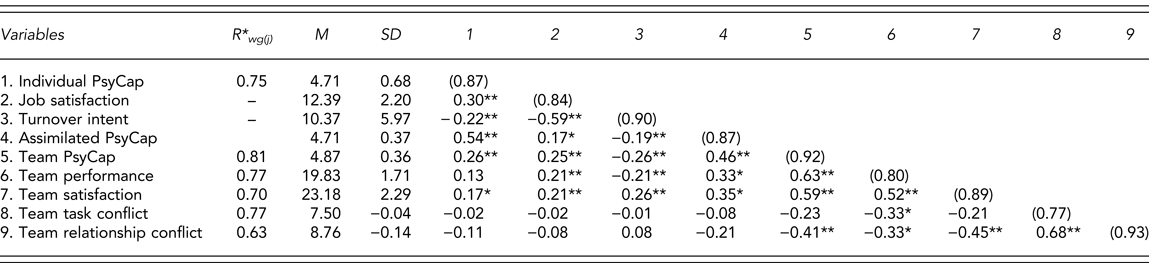
Table 1 presents the means, standard deviations and correlations between the variables of interest. Following Mathieu and Taylor (Reference Mathieu and Taylor2007) we first ran a series of null models (i.e., no individual-level or team-level predictors) in order to examine the ratio of within-team to between-team variability in individual-level job satisfaction and turnover intent (ICC). These revealed nonignorable ICCs for individual-level job satisfaction (ρ=.06) and turnover intent (ρ=.07; Snijders & Bosker, Reference Snijders and Bosker1999).
Means, standard deviations and correlations among the study variables

Note. Variables 1 to 3 are computed at the individual level using n=193. Variables 4 to 9 are computed at the team level using n=43 teams. Coefficient α appear in parentheses along the diagonal.
PsyCap=psychological capital.
*p<.05; **p<.01.
Because data were collected from 10 organizations, we also examined whether significant variance in the variables studied could be attributed to between organization differences. However, ICCs revealed that the proportion of variance explained by between organization differences was negligible (<0.02%) for each outcome variable being studied, with the exception of team relationship conflict (0.60%). Thus, based on these results, we concluded that the effects observed in the present study were not attributable to organization-level context.
We conducted a series of hierarchical regression analyses with individual-level PsyCap, assimilated PsyCap and team PsyCap. In the first step, PsyCap level was entered into the model. In the second step PsyCap level/PsyCap strength was entered into the model to predict the relevant dependent variable. A level×strength interaction was also entered into the second step, using centered predictors, to measure potential moderating effects of individual PsyCap strength and team PsyCap strength. The results are presented in Table 2, with the findings from Model 2 analyses reported below in relation to each of the hypotheses.
Estimates of within and between predictors for individual- and team-level outcomes

Notes.
a Individual PsyCap strength has been used in the assimilated PsyCap model of aggregation and team PsyCap strength has been used in the team PsyCap model.
PsyCap=psychological capital.
Individual-level relationships
We predicted that individual-level PsyCap would be positively related to job satisfaction, after adjusting for age, gender and education. Our results show that job satisfaction is predicted by individual-level PsyCap (β=1.00, p<.01). Conversely, we posited that individual-level PsyCap would be negatively related to turnover intent. Our results supported this, showing that turnover intent is predicted by individual-level PsyCap (β=−1.81, p<.05). Thus, Hypothesis 1 was fully supported.
Cross-level relationships
We also examined how assimilated and team PsyCap related to individual-level job satisfaction and turnover intent. Our results indicate that assimilated PsyCap was not significantly related to individual-level job satisfaction (β=−1.38, n.s.). In contrast, team PsyCap was significantly related to individual-level job satisfaction (β=7.58, p<.01). Thus, our results provide partial support for Hypothesis 2. Similarly, assimilated PsyCap was not significantly related to individual employee turnover intent (β=3.31, n.s.), but team PsyCap was (β=−15.85, p<.01). Thus, our results provide partial support for Hypothesis 3.
For each of these cross-level analyses, we also investigated the potential effect of individual and team PsyCap strength. Individual PsyCap strength was not significantly related to individual job satisfaction (β=−7.36, n.s.) or turnover intentions (β=36.62, n.s.). However, team PsyCap strength was significantly related to both individual job satisfaction (β=37.63, p<.01) and turnover intent (β=−74.78, p<.01).
An interaction term of assimilated PsyCap and individual PsyCap strength did not have a significant effect on either job satisfaction or turnover intent. However, an interaction term of team PsyCap and team PsyCap strength did have a significant effect on job satisfaction (β=−7.88, p<.01), as well as turnover intent (β=15.65, p<.01). With increasing team PsyCap strength, the magnitude of the coefficient of team PsyCap on individual-level job satisfaction decreased and the magnitude of the coefficient of team PsyCap on individual-level turnover intent increased.
Team-level relationships
Assimilated PsyCap was not a significant predictor of team performance (β=−3.28, n.s.) and individual PsyCap strength in the second step did not significantly predict team performance (β=−18.96, n.s.). Moreover, individual PsyCap strength did not moderate the relationship between assimilated PsyCap level and team performance (β=4.20, n.s.).
A different pattern emerged for team PsyCap. Team PsyCap level was found to be a significant predictor of team performance (β=8.65, p<.01). Team PsyCap strength also significantly predicted team performance (β=37.00, p<.05) and moderated the relationship between team PsyCap level and team performance (β=−7.64, p<.05). Thus, with increasing team PsyCap strength, the magnitude of the coefficient of team PsyCap on team performance decreased.
Looking at team satisfaction, assimilated PsyCap was not a significant predictor (β=−6.17, n.s.) and individual PsyCap strength in the second step did not significantly predict team satisfaction (β=−31.78, n.s.). Moreover, individual PsyCap strength did not moderate the relationship between assimilated PsyCap level and team satisfaction (β=7.20, n.s.).
However, team PsyCap did significantly predicted team satisfaction (β=11.68, p<.01). Team PsyCap strength was a significant predictor of team satisfaction (β=53.64, p<.01) and team PsyCap strength moderated the relationship between team PsyCap and team satisfaction (β=−10.73, p<.01). Thus, with increasing team PsyCap strength, the magnitude of the coefficient of team PsyCap on team satisfaction decreased.
Task conflict and relationship conflict were not significantly predicted by assimilated PsyCap or team PsyCap level or strength.
DISCUSSION
This study aimed to examine how different operationalizations of team-level PsyCap influenced both team- and individual-level outcomes. We found significant associations at both levels, particularly when a referent-shift model of aggregation was employed to represent team-level PsyCap (i.e., team PsyCap). We also investigated how individual and team PsyCap strength influenced the prediction of these outcomes, with analyses revealing that team PsyCap strength had a significant influence in the prediction of most outcomes.
Individual-level relationships
A significant and positive relationship between individual-level PsyCap and employee job satisfaction was reported. This finding aligns with previous research demonstrating positive correlations between individual-level PsyCap and job satisfaction (Luthans et al., Reference Luthans, Avolio, Avey and Norman2007; Cheung, Tang, & Tang, Reference Cheung, Tang and Tang2011). Our study also demonstrated that individual-level PsyCap is a protective factor against employee turnover intentions. This finding is also consistent with previous research (Avey, Luthans, & Youssef, Reference Avey, Luthans and Youssef2010). Thus, our findings provide further evidence to suggest that when employees have higher levels of PsyCap they tend to perceive their work in a more positive manner (Bergheim, Nielsen, Mearns, & Eid, Reference Bergheim, Nielsen, Mearns and Eid2015), and are therefore more satisfied with their working situation and less inclined to contemplate leaving their job. However, by conducting these analyses in a multilevel model, our study adds to previous literature in that it controls for team clustering effects in both the dependent and independent variables.
Cross-level relationships
Our findings revealed that employees nested in teams with greater levels of team PsyCap reported higher job satisfaction and lower turnover intentions than employees from teams with lower team-referent PsyCap. However, when these same relationships were analyzed using the direct-consensus model of aggregation (i.e., assimilated PsyCap) we failed to find significant associations between team-level PsyCap and the individual-level outcomes. Thus, similarity of individual-referent PsyCap within teams had no significant influence on employee job satisfaction or turnover intent.
These findings add to the literature in two ways. First, consistent with the social information processing perspective (Salancik & Pfeffer, Reference Salancik and Pfeffer1978), our results demonstrate the beneficial value of being part of a positively oriented team in terms of heightened employee job satisfaction and lower turnover intentions. Based on previous job satisfaction research, these relationships, in turn, could have broader, flow-on effects to employee well-being (e.g., Bowling, Eschleman, & Wang, Reference Bowling, Eschleman and Wang2010), and reduced organizational costs associated with job dissatisfaction and turnover (e.g., Monte, Reference Monte2012). Second, with respect to measurement, these findings provide important insights into the operationalization and measurement of PsyCap at the collective level. The findings from this study provide initial support for the criterion validity of a referent-shift operationalization of team-level PsyCap (i.e., team PsyCap). This is a substantial finding in itself, as this issue has not been empirically explored within the PsyCap literature previously, despite both modes of aggregation being implemented for the measurement of team PsyCap.
Debate regarding the most appropriate mode of operationalization for aggregated constructs has characterized related areas of study, such as collective efficacy (Baker, Reference Baker2001). We do not posit that the referent-shift model of aggregation is the only way to conceptualize and operationalize team-level PsyCap. Rather, we provide initial empirical support for a proposed multilevel-multireferent framework of collective PsyCap (Dawkins et al., Reference Dawkins, Martin, Scott and Sanderson2015) by demonstrating that assimilated PsyCap and team PsyCap relate to outcome variables differently. In this study team PsyCap had significant relationships with individual-level job satisfaction and turnover intentions, but assimilated PsyCap did not. Consequently, we suggest assimilated PsyCap and team PsyCap should be considered as distinct constructs, and not used interchangeably as has been the case in past team-level PsyCap research.
Team-level relationships
Both the direct-consensus (assimilated PsyCap) and referent-shift (team PsyCap) aggregation approaches were used to explore the effects of team-level PsyCap on team-level outcomes. Again, we found differential effects of team-level PsyCap on team-level outcomes. Consistent with previous research (e.g., Vanno, Kaemkate, & Wongwanich, Reference Vanno, Kaemkate and Wongwanich2014), we found that team PsyCap had significant and positive relationships with team performance and team satisfaction. Thus, positively oriented teams not only perform better as a team, but members within these teams are also more likely to feel satisfied with the team. However, our results showed that assimilated PsyCap was not significantly related to either team performance or team satisfaction. While this finding was contrary to our hypotheses and previous research (e.g., Mathe et al., Reference Mathe, Scott-Halsell, Kim and Krawczyk2017), we argue that it further demonstrates the criterion validity of the team PsyCap construct, and underscores the importance of conceptualizing and operationalizing assimilated PsyCap and team PsyCap as distinct constructs.
Contrary to our hypotheses, we found that neither assimilated or team PsyCap had a significant influence on either team task or relationship conflict. Although the association between team-level PsyCap (assimilated or team PsyCap) and team task and relationship conflict has not been investigated in previous research, our finding is inconsistent with West, Patera, and Carsten (Reference West, Patera and Carsten2009), who found that the combination of team-referent efficacy, optimism and resilience was significantly and negatively related to team task and relationship conflict. Thus, we suggest that more research is needed to investigate the relationship between team-level PsyCap and team conflict. For example, previous research has demonstrated that team goal orientation (e.g., team PsyCap hope) is an important moderator in the relationship between team conflict and team performance (Huang, Reference Huang2012). Thus, investigating team-level PsyCap as a moderator (rather than a predictor) of team conflict may be a promising line of future enquiry.
Individual PsyCap strength and team PsyCap strength
Our results showed that individual PsyCap strength did not explain additional variance beyond assimilated PsyCap in relation to either individual-level outcomes (e.g., job satisfaction and turnover intent) or team-level outcomes (team performance, satisfaction and conflict), nor did it moderate the relationship between assimilated PsyCap and these outcomes. However, we found that team PsyCap strength did explain variance beyond team PsyCap for both individual-level and team-level outcomes. Furthermore, team PsyCap strength moderated the relationships between team PsyCap and job satisfaction and turnover intent at the individual-level, and performance and satisfaction at the team-level. However, the moderation effect was contrary to previous conceptual propositions (Dawkins et al., Reference Dawkins, Martin, Scott and Sanderson2015). For example, our results showed that the positive relationship between team PsyCap and job satisfaction, team performance and team satisfaction was greater in teams with low PsyCap strength, compared to teams with high PsyCap strength. Similarly, the negative relationship between team PsyCap and turnover intentions was greater in teams with low PsyCap strength, compared to teams with high PsyCap strength. These findings could indicate that diversity of team PsyCap perceptions can be beneficial and that it may not be necessary for all team members to be similar in their team PsyCap perceptions in order to achieve desired outcomes. However, in interpreting these findings it is important to acknowledge that overall teams in this study had reasonably high within-group agreement (strength) in relation to team PsyCap (team PsyCap strength mean=0.80, median=0.83, range 0.39–0.98). Therefore, further research implementing samples of teams with greater variation in team PsyCap perceptions (strength) is needed to confirm this proposition and provide additional insight into the role that team PsyCap strength plays in team PsyCap/outcome relationships.
Limitations and future research
As the cross-sectional design of this study does not allow for interpretation of causality, future research would benefit from examining the relationships assimilated PsyCap and team PsyCap level and strength have on individual- and team-level outcomes across time. This would also provide for investigation of situational factors that may influence the emergence of team-level PsyCap across time (e.g., team task demands). Longitudinal research would also enable examination of potential cross-level effects of team PsyCap on individual-level PsyCap. For example, employees with low individual-level PsyCap may benefit from being part of teams with high team PsyCap, as the positive team context may promote the employee’s individual-level PsyCap over time.
The findings of this study may also be susceptible to common method bias because data were collected using self-report, single-source methods. However, several procedural steps were implemented to minimize the likelihood of common method bias. These included (i) informing participants of the purpose of the study and how information collected could provide benefit to individual employees, work teams and organizations; (ii) advising how feedback on the overall findings of the study could be provided to participants at the conclusion of the study; and (iii) having senior management endorse and promote the opportunity to participant in the study to their employees. Each of these steps can improve respondent motivation to provide accurate responses (Podsakoff, MacKenzie, & Podsakoff, Reference Podsakoff, MacKenzie and Podsakoff2012). Participants were also instructed that there were no right or wrong answers to survey items and surveys were completed anonymously, thereby reducing the tendency to respond in a socially desirable manner (Podsakoff, MacKenzie, & Podsakoff, Reference Podsakoff, MacKenzie and Podsakoff2012).
Methodological steps were also taken to reduce common method bias. These included (i) inclusion of items with reverse wording; (ii) varying scale anchor points, and labeling all scale points (not just endpoints); and (iii) physically separating predictor and criterion measures in the survey. These methodological remedies can reduce the likelihood for response acquiescence bias, eliminate the influence of contextual retrieval cues and reduce the respondent’s ability to use prior responses to answer subsequent questions (Podsakoff, MacKenzie, & Podsakoff, Reference Podsakoff, MacKenzie and Podsakoff2012).
Although multiple procedural and methodological steps were taken to minimize the risk of common method bias, we acknowledge that these procedures were unlikely to control for every type of method bias. Most notably, self-deception biases and memory biases are more likely to be controlled for when data for the predictor and criterion constructs is collected from different sources (Podsakoff, MacKenzie, & Podsakoff, Reference Podsakoff, MacKenzie and Podsakoff2012). Although many of the variables in this study are subjective in nature and arguably best evaluated by self-report (Conway & Lance, Reference Conway and Lance2010), the use of self-report measures for performance is considered problematic, as individuals are likely to hold favorable views of their own performance or that of their team. Thus, objective ratings of team performance should be included in future team-level PsyCap research.
Finally, although a strength of this study was the use of in situ work teams, the study did employ nonprobability, convenience sampling. Although this method is commonly used sampling technique research, it constrains the generalizability of the findings. Future studies should employ random sampling techniques.
Overall, this study has provided important insights into the issue of aggregating PsyCap to the team-level and an initial examination of the strength of the relationship between team-level PsyCap and outcomes at outcomes at different levels of analysis. As such, foundations are now in place to enable future research to now investigate potential moderators of the team-level PsyCap/workplace outcomes relationship. It has been suggested that the influence of team-level PsyCap may be enhanced by factors including team value congruence and team cohesion, as greater consensus and understanding among team members may enable greater effort to be directed towards goal setting and achievement (Newman et al., Reference Newman, Ucbasaran, Zhu and Hirst2014). Organizational-level or industry-level factors may also moderate the relationship between team-level PsyCap and outcomes at different levels of analysis. For instance, there is some evidence to suggest that at the individual-level, PsyCap has a greater effect on outcomes in the service sector compared with the manufacturing sector (Avey et al., Reference Avey, Reichard, Luthans and Mharte2011). Although, between organization differences were found to be negligible in the current study, future research is encouraged to examine organizational-level moderators of the team PsyCap/work outcomes relationship to develop greater understanding of the context in which, and for which types of teams, team-level PsyCap will provide the most benefit.
Theoretical and practical implications
At a most basic level the findings demonstrate the significant relationships team-level PsyCap has with team performance and satisfaction. Moreover, the study goes beyond previous collective PsyCap research by demonstrating that team-level PsyCap can also have significant influence on individual employee outcomes, including job satisfaction and turnover intentions. The study also provides important insights into boundary conditions of team-level PsyCap in regards to construct operationalization; thereby responding to calls for greater research investigating the conditions under which, and for whom PsyCap has the strongest effect (e.g., Newman et al., Reference Newman, Ucbasaran, Zhu and Hirst2014). The results provide clarification regarding the operationalization and measurement of team-level PsyCap by demonstrating support for a referent-shift operationalization of team-level PsyCap (i.e., team PsyCap). Thus, when team members consider the psychological capacities of their team, greater insight is garnered about the influence of team-level PsyCap on outcome variables than when team members are asked about their perceptions of their own psychological capacities. Social contagion process is considered critical for the emergence of team PsyCap (Dawkins et al., Reference Dawkins, Martin, Scott and Sanderson2015). Therefore, these findings also contribute to team-level PsyCap theory development by underscoring the importance of providing team members ample opportunity to interact and exchange perceptions regarding the team’s abilities and strengths, in order to reap the benefits of team-level PsyCap.
Additionally, this study has contributed to the team PsyCap theory contributed by providing the first examination of the influence of team PsyCap strength in the relationship between team PsyCap and outcomes at the team and individual level. Contrary to previous propositions (Dawkins et al., Reference Dawkins, Martin, Scott and Sanderson2015), our findings suggest that some diversity of team PsyCap perceptions may be beneficial and that it may not be necessary for all team members to be similar in their team PsyCap perceptions in order to achieve desired outcomes. In other words, it may be possible to achieve desired outcomes when only particular members of a team have elevated team PsyCap perceptions. However, further research is needed to confirm this and to ascertain ‘optimal’ levels of agreement among team members to achieve desirable outcomes at both the team and individual level.
In terms of practical implications of this study, the results highlight the importance of fostering PsyCap within work teams, not only to enhance team-level outcomes, such as performance and satisfaction, but also outcomes at the individual-level, including job satisfaction and lower turnover intentions. Thus, our findings point to the potential for training interventions aimed at bolstering team PsyCap, similar to those aimed at developing individual PsyCap (Luthans, Avey, Avolio, & Peterson, Reference Luthans, Avey, Avolio and Peterson2010). However, we suggest the benefits of a team PsyCap interventions could be more encompassing than interventions focused solely on developing individual employee PsyCap, as a team PsyCap intervention may produce desirable outcomes as both the team and individual level. This means that for PsyCap, team-level interventions may be far more effective than interventions focusing solely on the individual.
Conclusions
Although previous research has demonstrated positive associations with team-level outcomes this research has been divergent in terms of its operationalization of team PsyCap. Moreover, cross-level effects of team-level PsyCap had not been examined. This study employed a multilevel approach to examine relationships between team-level PsyCap and team- and individual-level outcomes. In conducting our analyses, we compared two composition models of aggregation, with results supporting a referent-shift operationalization of team PsyCap (team PsyCap) in the prediction of both individual- and team-level outcomes. Individual PsyCap strength and team PsyCap strength were also introduced to explore the degree to which consensus among team members regarding PsyCap perceptions moderate these relationships. The results indicated that team PsyCap strength was a significant moderator in most of the relationships examined, suggesting that some diversity of team PsyCap perceptions may be beneficial. Overall, the results from this study not only contribute to team-level PsyCap theory development and measurement clarification, but also offer important insights for management practice regarding the benefits of fostering team PsyCap to enhance both team and employee outcomes.
Acknowledgements
Research is supported by Australian Research Council Linkage Grant LP0990010 awarded to A. Martin, K. Sanderson, J. Scott, and P. Brough and an Australian Postgraduate Industry Award Scholarship to S. Dawkins. K. Sanderson is supported by an Australian Research Council Future Fellowship (FT991524). Industry Research Partner contributions from Beyond Blue and Workcover Tasmania are also acknowledged.