Introduction
Frail seniors are at increased risk of falls, with approximately 50 per cent falling at least once per year (three times the risk of healthy seniors) (Kenny, Rubenstein, Martin, & Tinetti, Reference Kenny, Rubenstein, Martin and Tinetti2001; Speechley & Tinetti, Reference Speechley and Tinetti1991). They are also more likely to sustain serious injury and take longer to recover after falling (SmartRisk, 1998). Evidence suggests that most falls are predictable and preventable. Previous intervention studies showed that approximately 30 to 40 per cent of falls are preventable (Close, Ellis, Hooper, Glucksman, Jackson, & Swift, Reference Close, Ellis, Hooper, Glucksman, Jackson and Swift1999; Gillespie, Gillespie, Robertson, Lamb, Cumming, & Rowe, Reference Gillespie, Gillespie, Robertson, Lamb, Cumming and Rowe2003; Tinetti, Baker, McAvay, Claus, Garrett, Gottschalk et al., Reference Tinetti, Baker, McAvay, Claus, Garrett and Gottschalk1994). Falls prevention strategies could result in 7,500 fewer hospitalizations per year among Canadian seniors (SmartRisk, 1998).
Home care occupies a strategic position in the prevention of falls among older people (Todd & Skelton, Reference Todd and Skelton2004) who represent 75 to 80 per cent of home care users (Roos, Stranc, Peterson, Mitchell, Bogdanovic, & Shapiro, Reference Roos, Stranc, Peterson, Mitchell, Bogdanovic and Shapiro2001). However, the number of older home care recipients in Canada who are at risk for falls is not well documented. As well, there is little or no information about the best way to provide home care services for prevention of falls among seniors with chronic needs.
The Burden of Falls in Canada
Thirty per cent of community-dwelling adults over 65 years of age fall at least once a year, and the proportion increases to 50 per cent by age 80 (O’Loughlin, Robitaille, Boivin, & Suisa, Reference O’Loughlin, Robitaille, Boivin and Suisa1993). In people aged 65 years and older, falls are the leading cause of injury-related admissions to acute care hospitals and in-hospital deaths (Canadian Institute for Health Information [CIHI], 2002) and explain 40 per cent of nursing home admissions (Wilkins, Reference Wilkins1999). Many older people who fall need ongoing assistance at home from community services. The costs of health care associated with fall-related injuries are staggering. The 1999/2000 costs of fall injuries to seniors in Canada were estimated to be $2.4 billion (CIHI, 2002). With an aging population and an associated increase in the number of falls and fall-related injuries, these cost estimates are projected to rise as high as $240 billion by the year 2040 (SmartRisk, 2006). Aside from the economic cost, the human cost of a fall should not be underestimated. Fall injuries often result in fear of falling (Fletcher & Hirdes, Reference Fletcher and Hirdes2004; Sjösten, Vaapio, & Kivelä, Reference Sjösten, Vaapio and Kivelä2008), leading to self-imposed restriction of activity and loss of confidence (Tinetti & Powell, Reference Tinetti and Powell1993), low self-esteem, depression (Sjösten et al.), chronic pain, and functional deterioration (Tinetti, Speechley, & Ginter, Reference Tinetti, Speechley and Ginter1988). Falls and fall-related injuries and complications are the leading cause of death among seniors (CIHI, 2004). Clearly, prevention of falls is an important issue if it can avert a decline in function and independence and avoid the associated increased costs of complications.
Home Care Services and Falls Prevention
An aging population, technological advances, and budget constraints have led to major health care reforms worldwide. Extensive reform initiatives have given rise to fewer acute care hospitals and increasing pressure to continue to expand and enhance home care services for older, more vulnerable, and frail individuals within the confines of economic constraint (Bergman, Beland, Lebel, Contandriopoulos, Tousignant, Brunelle et al., Reference Bergman, Beland, Lebel, Contandriopoulos, Tousignant and Brunelle1997). The result of these trends is increasing competition for scarce home care resources. Home care programs have responded to this increased demand for their services by redirecting scarce resources away from health promotion and preventive functions, for individuals with chronic health needs, to substitution functions to meet the more pressing need for post-acute care (Canadian Home Care Association [CHCA], 2003; CIHI, 2002; Hollander, Reference Hollander2003; Soderstrom, Tousignant, & Kaufman, Reference Soderstrom, Tousignant and Kaufman1999).
These changes have resulted in a number of issues that challenge the ability of home care programs to provide effective falls prevention to older people. First, frail older adults have limited access to professional services directed towards preventing falls (Hollander, Reference Hollander2003). Second, there is limited collaboration and communication among home care providers involved in caring for older people at risk for falls. Third, there is no evidence-based practice standard for falls prevention in home care and a lack of expertise among service providers in fall prevention strategies. The result is a fragmented and inefficient system of health service delivery, rather than a comprehensive and proactive approach to care. Typically, on-demand care is less effective and more costly than providing comprehensive care (Browne, Roberts, Byrne, Gafni, Weir, & Majumdar, Reference Browne, Roberts, Byrne, Gafni, Weir and Majumdar2001; Johri, Beland, & Bergman, Reference Johri, Beland and Bergman2003). Recent data suggest that preventable and ameliorable adverse events (such as a fall) are associated with one or more deficiencies in the system of care, such as ineffective communication among providers (Forster, Murff, Peterson, Gandhi, & Bates, Reference Forster, Murff, Peterson, Gandhi and Bates2003). New ways of approaching care are needed, and different solutions are required to address these issues and enhance the ability of home care programs to provide effective falls prevention.
Multifactorial Falls Prevention Programs for Older Adults
Falls generally result from an interaction of multiple, diverse risk factors and situations, correction of just one of which can reduce the frequency and morbidity of falls (Kenny et al., Reference Kenny, Rubenstein, Martin and Tinetti2001). The risk factors can be broadly divided into “intrinsic” and “extrinsic” factors (Kenny et al.; Masud & Morris, Reference Masud and Morris2001). Demographic and biological factors are intrinsic, whereas environmental and behavioural factors are extrinsic (Speechley & Tinetti, Reference Speechley and Tinetti1991). Among the community-dwelling population, intrinsic risk factors for falling include history of falls, female gender, advanced age, reduced lower-limb strength, gait and balance impairment, previous slips or trips, difficulty in activities of daily living (ADLs), functional impairment, certain chronic diseases (e.g., arthritis, Parkinson’s disease, diabetes, or stroke) and co-morbidity, cognitive impairment, depression, poor nutrition, underweight or unintentional weight loss, visual impairment or hearing loss, and urinary incontinence or nocturia. Extrinsic risk factors for falling include taking four or more prescription medications daily or taking sedative or hypnotic medications, environmental hazards, fear of falling, inactivity, inappropriate clothing or footwear, low income and education levels, excess alcohol use, and social isolation (Bueno-Cavanillas, Padilla-Ruiz, Jiménez-Moleón, Peinado-Alonso, & Gálvez-Vargas, Reference Bueno-Cavanillas, Padilla-Ruiz, Jiménez-Moleón, Peinado-Alonso and Gálvez-Vargas2000; Kenny et al.; Lord, Ward, Williams, & Anstey, Reference Lord, Ward, Williams and Anstey1994; O’Loughlin et al., Reference O’Loughlin, Robitaille, Boivin and Suisa1993; Steinberg, Cartwright, Peel, & Williams, Reference Steinberg, Cartwright, Peel and Williams2000; Tinetti et al., Reference Tinetti, Speechley and Ginter1988).
Early prevention interventions that incorporate an interdisciplinary approach combining a variety of strategies, aimed at all possible factors that contribute to causing a fall, will have the greatest effect because of the multifactorial nature of falls (Chang, Morton, Rubenstein, Mojica, Maglione, Suttorp et al., Reference Chang, Morton, Rubenstein, Mojica, Maglione and Suttorp2004; Gillespie et al., Reference Gillespie, Gillespie, Robertson, Lamb, Cumming and Rowe2003), especially among high-risk groups (Gillespie et al., Reference Gillespie, Gillespie, Robertson, Lamb, Cumming and Rowe2003; Tinetti et al., Reference Tinetti, Baker, McAvay, Claus, Garrett and Gottschalk1994) and individuals with chronic conditions (Leatt, Pink, & Guerriere, Reference Leatt, Pink and Guerriere2000). A key strategy for preventing multifactorial adverse events (such as falls) is the development of partnerships among individuals, service providers, and organizations, because no single discipline alone can identify and address all risk factors (National Steering Committee on Patient Safety, 2002). Furthermore, there is accumulating evidence in Canada that proactive, comprehensive, and coordinated community care for people with chronic needs is more effective and less expensive than providing reactive and on-demand care (Browne et al., Reference Browne, Roberts, Byrne, Gafni, Weir and Majumdar2001; Markle-Reid, Weir, Browne, Roberts, Gafni, & Henderson, Reference Markle-Reid, Weir, Browne, Roberts, Gafni and Henderson2006b).
The literature on the effectiveness of multifactorial falls prevention programs specific to older, community-dwelling adults is surprisingly limited. Few published randomized controlled trials have assessed the effect of interventions on secondary outcomes such as functional health status and related quality of life, mental health (e.g., depression) (Lin, Wolf, Hwang, Gong, & Chen, Reference Lin, Wolf, Hwang, Gong and Chen2007; Sjösten et al., Reference Sjösten, Vaapio and Kivelä2008), and behavioural factors (Clemson, Cummings, Kendig, Swann, Heard, & Taylor, Reference Clemson, Cummings, Kendig, Swann, Heard and Taylor2004; Close et al., Reference Close, Ellis, Hooper, Glucksman, Jackson and Swift1999; Day, Fildes, Gordon, Fitzharris, Flamer, & Lord, Reference Day, Fildes, Gordon, Fitzharris, Flamer and Lord2002; Gallagher & Brunt, Reference Gallagher and Brunt1996; van Haastregt, Diederiks, van Rossum, de Witte, Voorhoeve, & Crebolder, Reference van Haastregt, Diederiks, van Rossum, de Witte, Voorhoeve and Crebolder2000; Hornbrook, Steven, Wingfield, Hollis, Greenlick, & Ory, Reference Hornbrook, Steven, Wingfield, Hollis, Greenlick and Ory1994; Kingston, Jones, Lally, & Crome, Reference Kingston, Jones, Lally and Crome2001; Lightbody, Watkins, Leathley, Sharma, & Lye, Reference Lightbody, Watkins, Leathley, Sharma and Lye2002; Nikolaus & Bach, Reference Nikolaus and Bach2003; Rizzo, Baker, McAvay, & Tinetti, Reference Rizzo, Baker, McAvay and Tinetti1996; Robson, Edwards, Gallagher, & Baker, Reference Robson, Edwards, Gallagher and Baker2002; Shaw, Bond, Richardson, Dawson, Steen, McKeith et al., Reference Shaw, Bond, Richardson, Dawson, Steen and McKeith2003; Shumway-Cook, Silver, LeMier, York, Cummings & Koepsell, Reference Shumway-Cook, Silver, LeMier, York, Cummings and Koepsell2007; Steinberg et al., Reference Steinberg, Cartwright, Peel and Williams2000; Tinetti et al., Reference Tinetti, Baker, McAvay, Claus, Garrett and Gottschalk1994; Vetter, Lewis, & Ford, Reference Vetter, Lewis and Ford1992; Wagner, LaCroix, Grothaus, Leveille, Hecht, Artz et al., Reference Wagner, LaCroix, Grothaus, Leveille, Hecht and Artz1994; Yates & Dunnagan, Reference Yates and Dunnagan2001), or examined which sub-groups of home care recipients benefit most. In addition, older people with chronic conditions were often excluded from these trials. These omissions are important because depression, behavioural factors (Sjösten et al.), and chronic conditions increase the risk of falls (Kenny et al., Reference Kenny, Rubenstein, Martin and Tinetti2001), functional decline, and use of expensive health care resources (Stuck, Walthert, Nikolaus, Bula, Hohmann, & Beck, Reference Stuck, Walthert, Nikolaus, Bula, Hohmann and Beck1999).
A limited number of the studies included persons receiving home support services. Such individuals are typically medically unstable, have severe mobility or cognitive impairments, or are in need of assistance with ADLs, the same conditions that are associated with increased risks of falling and being injured (Scott, Votova, & Gallagher, Reference Scott, Votova and Gallagher2006b). In addition, no study has examined the costs of health services associated with a multifactorial falls prevention program compared to usual care. Furthermore, the interventions were staffed by different types of providers, resulting in limited information on how to optimize the allocation of health services.
Based on the potentially important role of home care in falls prevention for frail older people, the compelling evidence for an interdisciplinary team approach, and the increasing pressure for evidence of efficient use of scarce resources, we identified the need for a study of the effects and costs of a multifactorial and interdisciplinary team approach to falls prevention. The rationing of home care services for clients with chronic needs enabled a natural comparison of the effects of a proactive service with those of on-demand use of these services. Our primary hypothesis was that older people receiving the multifactorial and interdisciplinary team approach versus usual home care would show a reduction in fall risk factors and number of falls at six months. Further, we hypothesized that the intervention would pay for itself by reducing the use of expensive health care resources.
Methods
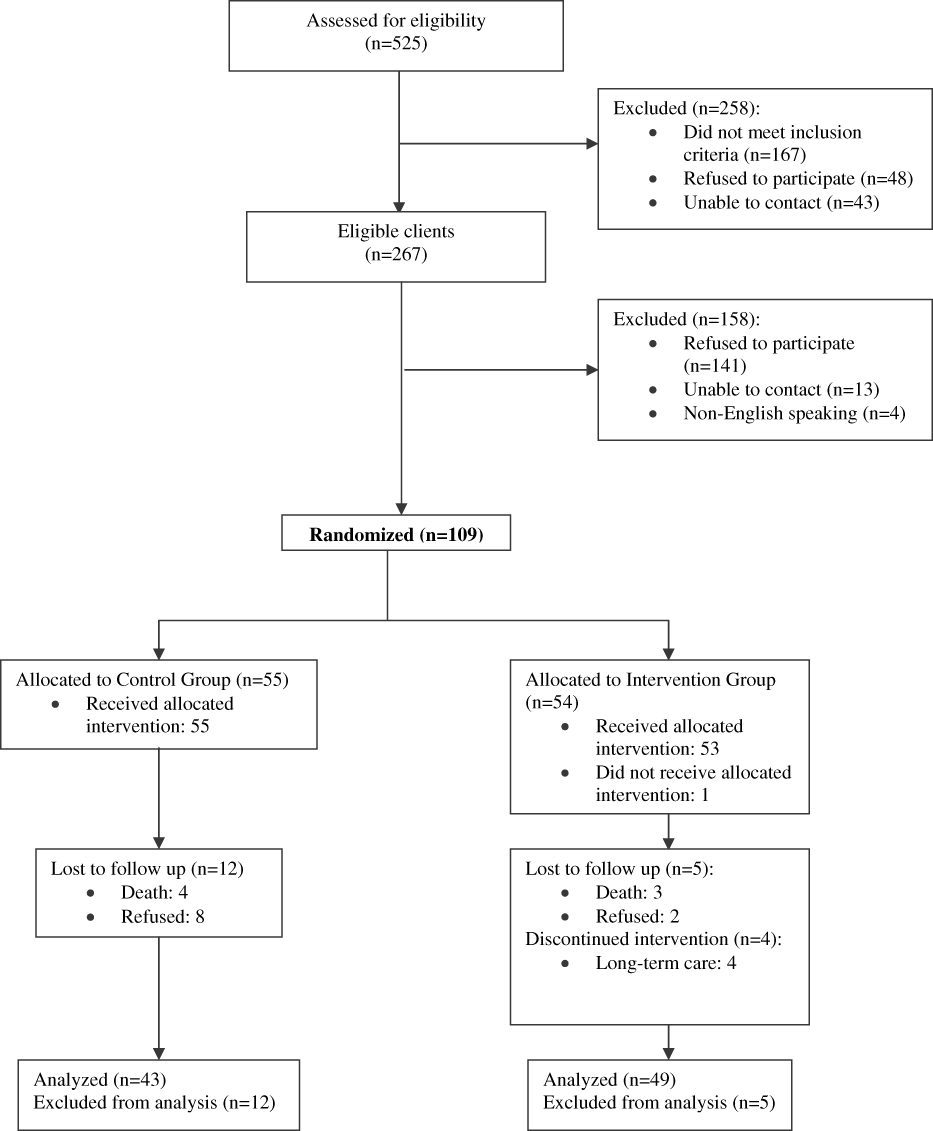
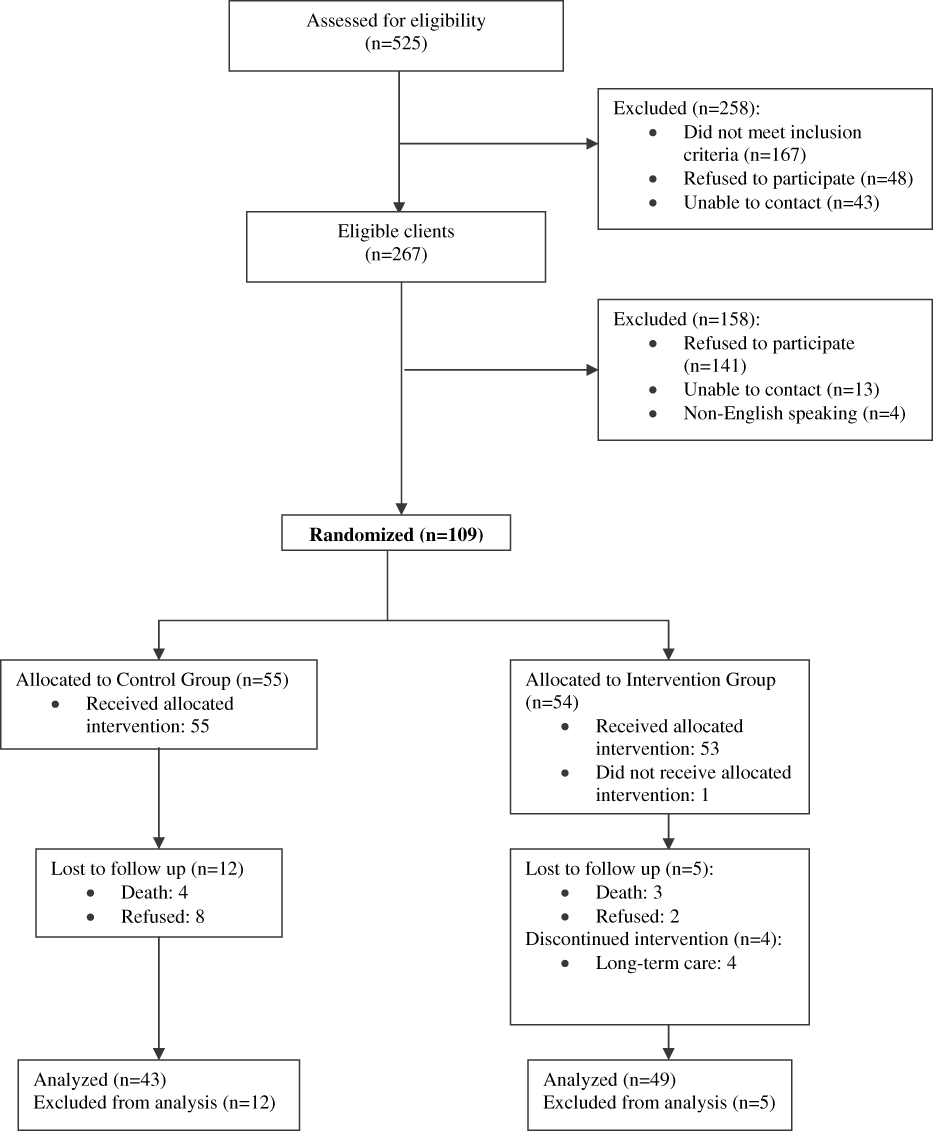
The randomized controlled trial was conducted in accordance with the Tri-Council Policy Statement, “Ethical Conduct for Research Involving Humans” (Canadian Institutes of Health Research, Natural Sciences and Engineering Research Council of Canada, Social Sciences and Humanities Research Council of Canada, 1998). Ethics approval for the study was obtained from the McMaster University Research and Ethics Board and renewed yearly as required (# 05-279). All participants provided written informed consent for participation. The methods, results, and flow of participants through the study (see Figure 1) are presented here according to the Consolidated Standards of Reporting Trials (CONSORT)Statement (Moher, Schulz, & Altman, Reference Moher, Schulz and Altman2001).
Study flow diagram
Research Questions
The specific research questions follow Among older home care clients at risk for falling, (1) is a six-month multifactorial, interdisciplinary team approach to falls prevention effective in reducing the number of falls compared with usual home care services; (2) does a six-month multifactorial, interdisciplinary team approach have a favourable effect on fall risk factors (number of slips and trips, functional health status and related quality of life, nutritional status, gait and balance, depressive symptoms, cognitive function, and confidence in performing ADLs) compared with usual home care services; and (3) what are the six-month costs to use health services with a multifactorial, interdisciplinary team approach compared with usual home care services?
Participants and Setting
This was a collaborative project between researchers in the McMaster University System-Linked Research Unit (SLRU) and decision makers and practitioners in the Hamilton Niagara Haldimand Brant and Mississauga Halton Community Care Access Centres (CCAC) and two direct care provider agencies (Halton Region Health Department, Community Rehab) in Ontario, Canada. The SLRU has extensive experience conducting community-based randomized trials. The CCAC provides publicly funded home care using a contractual model of service delivery, wherein case managers contract out home care services to agencies that provide care to clients.
Study participants were adults aged 75 years and older, newly referred to and eligible for home support services through the CCAC, living in the community (not in a nursing home or other long-term care facility), mentally competent to give informed consent, and competent in English or with a translator available. Individuals were eligible for home support services if they required assistance with personal care, which could be provided by either a caregiver or a home support worker contracted by the CCAC. With oral consent, clients meeting these criteria were screened for risk for falls. An older person was deemed to be “at risk” for falls and thus eligible for the study, if he/she answered “yes” to any of the following questions: Have you fallen in the past 12 months; do you have a fear of falling, or are you unsteady on your feet (Kenny et al., Reference Kenny, Rubenstein, Martin and Tinetti2001)? To validate their informed consent to enrolling and continued participation in the study, participants needed to score 24 or higher on the Standardized Mini-Mental State Examination (SMMSE) (Kukull, Larson, Teri, Bowen, McCormick, & Pfanschmidt, Reference Kukull, Larson, Teri, Bowen, McCormick and Pfanschmidt1994) or have a substitute decision-maker to provide consent and complete the questionnaires on their behalf.
Interventions
Control (Usual Home Care Services)
Participants randomly allocated to the control group received standard home care services arranged by the CCAC. These included (1) routine follow-up by the CCAC case manager whose focus was on assessing the client’s eligibility for in-home health services; (2) arranging and coordinating professional (i.e., nursing, occupational therapy, physiotherapy, social work, speech-language pathology, and nutrition) and non-professional home support services; (3) providing information and referral to community agencies; and (4) monitoring and evaluating the plan of care on an ongoing basis through in-home assessments with clients (MacAdam, Reference MacAdam2000). Additional services may have included drug cards, supplies, equipment, transportation, and in-house laboratory services (CHCA, 2003).
Experimental (Multifactorial and Interdisciplinary Team Approach)
The experimental group received the same standard home care services as the control group, plus home visitation by a dedicated team of professionals (CCAC case manager, registered nurse, occupational therapist, physiotherapist, and registered dietitian) a minimum of once per month for six months. The CCAC case manager provided leadership and coordinated communication among members of the interdisciplinary team, the family physician, and other community services. A geriatrician and community pharmacist were available on a consultation basis. The professionals tailored their visits to the individual needs of the client. Their main activities included (1) conducting a comprehensive, systematic, and routine assessment to identify known risk factors for falls and other factors influencing health using validated screening instruments; (2) regularly assessing and managing modifiable fall risk factors; (3) providing intensive client support; and (4) educating clients about falls prevention. The aim of the interdisciplinary team was to reduce falls and fall-related injuries, enhance health and quality of life, and reduce on-demand use of health care services. All aspects of the intervention were developed through a collaborative process with decision makers and practitioners from the participating agencies with the goal of integrating the intervention into normal practice once the study ended.
A fall risk management protocol was developed to provide a systematic, standardized, and evidence-based approach to the initial and ongoing assessments and modification of risk across disciplines. The protocol included the use of validated screening instruments to assess fall risk and other factors influencing health. The screening instruments targeted proven intrinsic and extrinsic causes of falls.
Each client was discussed by the interdisciplinary team at a case conference a minimum of once per month for six months. A team meeting booklet was developed to guide the team systematically through a series of questions that triggered the assessment of fall risk factors, use of motivational theory, and recommended actions for prevention for each study participant. Motivational interviewing is a directive and client-centered counselling style that relies upon identifying and mobilizing the client’s intrinsic values and goals to stimulate behaviour change (Miller & Rollnick, Reference Miller and Rollnick2002), thus encouraging client and family involvement in all aspects of care. During the case conference, the team developed a single accessible fall prevention plan to address modifiable fall risk factors and other factors influencing health using various evidence-based strategies (e.g., environmental modification, routine exercise, health assessment, and maintenance medication modification) (Gillespie et al., Reference Gillespie, Gillespie, Robertson, Lamb, Cumming and Rowe2003; Kenny et al., Reference Kenny, Rubenstein, Martin and Tinetti2001) and to identify and manage barriers to preventing falls such as low self-efficacy, low self-confidence, and fear of falling (Watter & Studensky, Reference Watter and Studensky1996). The plan included specific short-term and six-month goals, a list of actions and referrals, and a record of all recommendations. The results of the initial and ongoing assessments of risk and the client’s involvement in the care plan were documented in the team meeting booklet and reviewed during each case conference.
One-day training sessions were provided for the CCAC case managers and all members of the interdisciplinary team, based on their differing levels of expertise and team roles. The sessions focused on the problem scope and proven fall prevention strategies, as well as more general theory-based strategies for addressing barriers to falls prevention. Specific training was given on the use of motivational interviewing to address these barriers and promote positive changes in behaviour to reduce falls risk. The sessions also stressed the importance of working in partnership with clients, their families, and other professionals, and the key features of an effective collaboration. The training sessions were interactive, based on experience, and supplemented by follow-up sessions over the course of the trial. A detailed description of the intervention can be found elsewhere (Markle-Reid, Henderson, Anderson, Baxter, Hecimovich, Browne et al., Reference Markle-Reid, Henderson, Anderson, Baxter, Hecimovich and Browne2007; Markle-Reid, Miles, Vaitonis, Henderson, Anderson, Baxter et al., Reference Markle-Reid, Miles, Vaitonis, Henderson, Anderson and Baxter2008a).
The frequency and timing of the home visits and case conferences were tailored to individual client needs and the results of ongoing risk assessment (Kenny et al., Reference Kenny, Rubenstein, Martin and Tinetti2001). Participants received a median of 19.5 home visits and three telephone contacts by members of the interdisciplinary team over the six-month study period. These contacts consisted of a median of three home visits and 1.5 telephone contacts by the CCAC case manager, six visits by the nurse, four visits by the occupational therapist, six visits by the physiotherapist, and zero visits by the registered dietitian, social worker, and pharmacist. The average duration of home visits was one hour. Participants were discussed a median of six times at interdisciplinary team meetings. To ensure continuity of care, team members followed the same clients over the trial’s course.
Outcomes
Trained interviewers, blinded to the purpose of the study and group assignment, assessed participants at baseline and six months through a structured in-home interview. Previous research suggests that six months is an optimal time to assess the immediate effects (Gillespie et al., Reference Gillespie, Gillespie, Robertson, Lamb, Cumming and Rowe2003; Lightbody et al., Reference Lightbody, Watkins, Leathley, Sharma and Lye2002; Scott, Bawa, Votova, Rajabali, Han, Swan et al., Reference Scott, Bawa, Votova, Rajabali, Han and Swan2006a), while minimizing attrition rates. The interviewers were experienced health professionals who underwent intensive training, standardization, and inter-rater reliability assessment in all interview and data collection procedures.
The primary outcome was mean number of falls during the six-month follow-up, measured by self-report. All participants kept a calendar to record daily any slip, trip, or fall and returned it at the end of each month. Interviewers blinded to treatment assignment telephoned participants monthly to obtain additional information on any incident recorded on the previous month’s fall calendar using the Falls Surveillance Report, which was created by the research team (Markle-Reid et al., Reference Markle-Reid, Miles, Vaitonis, Henderson, Anderson and Baxter2008a). For the purposes of this study, a slip or trip was defined as regaining balance without a fall (Steinberg et al., Reference Steinberg, Cartwright, Peel and Williams2000), whereas a fall was defined as unintentionally coming to rest on the ground or floor (Registered Nurses Association of Ontario, 2005). Self-report is an essential source of data because many falls among older community-dwelling adults are not witnessed and do not require medical attention (Clemson et al., Reference Clemson, Cummings, Kendig, Swann, Heard and Taylor2004; Day et al., Reference Day, Fildes, Gordon, Fitzharris, Flamer and Lord2002; Lightbody et al., Reference Lightbody, Watkins, Leathley, Sharma and Lye2002; Steinberg et al.).
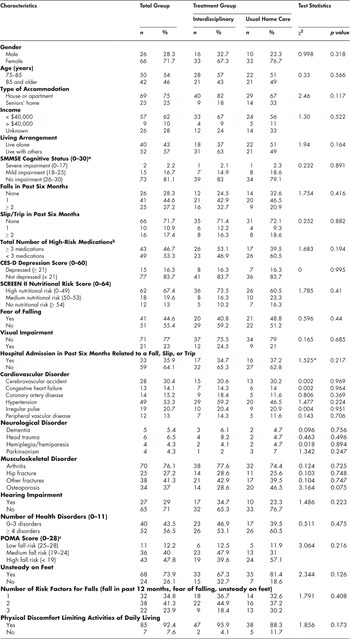
Secondary outcomes were changes in fall risk factors from baseline to six months. These risk factors included the following: (1) self-reported slip or trip frequency measured by the Falls Surveillance Report; (2) functional health status and related quality of life measured by the SF-36 health survey (Ware, Snow, Kosinski, & Gandek, Reference Ware, Snow, Kosinski and Gandek1993); (3) nutritional status measured by the Seniors in the Community: Risk Evaluation for Eating and Nutrition, Version II (SCREEN II) (Keller, Goy, & Kane, Reference Keller, Goy and Kane2005); (4) gait and balance measured by the Performance-Oriented Mobility Assessment (POMA) (Tinetti, Reference Tinetti1986); (5) depressive symptoms measured by the Centre for Epidemiological Studies in Depression Scale (CES-D) (Radloff, Reference Radloff1977); (6) cognitive function measured by the SMMSE (Folstein, Folstein, & McHugh, Reference Folstein, Folstein and McHugh1975); and (7) confidence in performing ADLs without falling measured by the Modified Falls Efficacy Scale (MFES) (Hill, Schwartz, Kalogeropoulos, & Gibson, Reference Hill, Schwartz, Kalogeropoulos and Gibson1996). The thresholds for the SCREEN II, POMA, CES-D, and SMMSE are identified in Table 1. All measurement tools have established reliability and validity. In addition to these data, we also collected basic socio-demographic data and information on health status.
Comparison of demographic, clinical, and social characteristics between treatment groups at baseline (study completers, n = 92)

* Wald Chi-Square
a Numbers do not add to 92 as a result of missing scores (n = 2)
b High-risk medications include these: antidepressant, anti-psychotic, anti-histamines, anticonvulsants, anti-Parkinson’s, benzodiazepines, non-steroidal anti-inflammatories, cardiovascular medicines, opioid analgesics.
c Numbers do not add to 92 as a result of missing scores (n = 2)
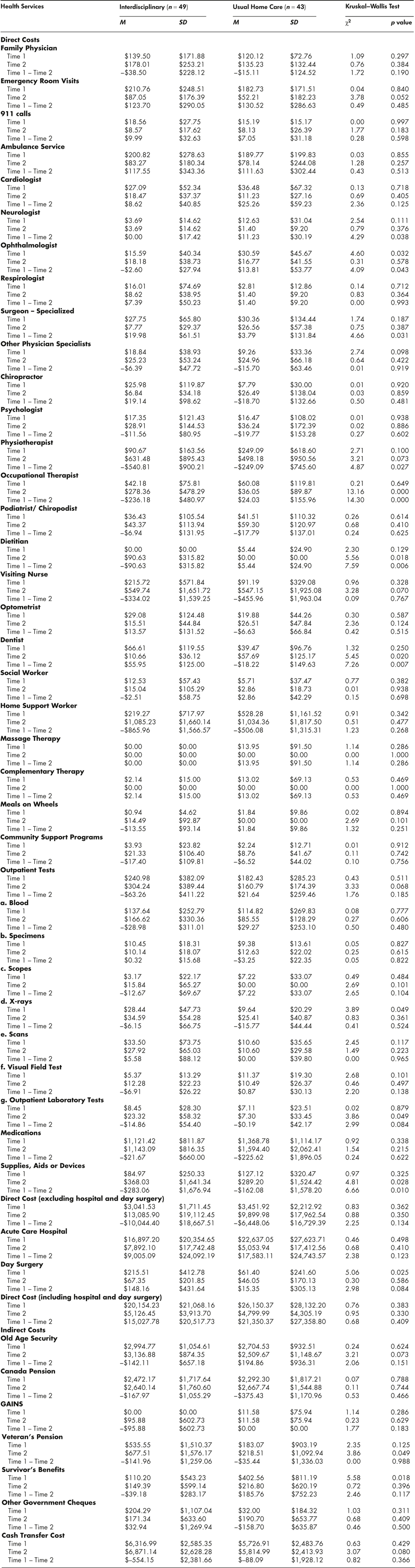
The costs of use of all types of health services from baseline to six months were determined using the Health and Social Services Utilization Inventory (HSSUI), which assesses costs from a societal perspective (Browne, Gafni, & Roberts, Reference Browne, Gafni and Roberts2006). A societal perspective implies collecting all costs, regardless of who bears them. The wider the perspective taken, the more applicable the study is to social policy decisions (Drummond, O’Brien, Stoddart, & Torrance, Reference Drummond, O’Brien, Stoddart and Torrance1997). The HSSUI consists of questions about the respondent’s use of six categories of direct health care services: (1) primary care; (2) emergency department and specialists; (3) hospital days; (4) seven types of other health and social professionals; (5) medications; and (6) lab services. Inquiries were restricted to the reliable duration of recall: six months for remembering a hospitalization, two weeks for a visit to the physician, and two days for use of a prescription medication (Browne et al., Reference Browne, Gafni and Roberts2006; Petrou, Murray, Cooper, & Davidson, Reference Petrou, Murray, Cooper and Davidson2002). Questions to assess out-of-pocket costs (indirect costs, cash transfer effects) are also included (Browne et al., Reference Browne, Gafni and Roberts2006). The six-month cost data were derived from “quantity” data reported on the HSSUI and 2006 “price” data obtained by our team for the HSSUI. The product of the number of units of service (quantity) and unit cost (price) is total cost. Price data for both direct and indirect costs were obtained from multiple sources that are reported in detail elsewhere (Browne et al., Reference Browne, Gafni and Roberts2006). Each person’s cost data were analyzed in relation to outcome. This measure has been previously tested and assessed for reliability and validity (Browne et al., Reference Browne, Roberts, Gafni, Byrne, Weir and Majumdar1999, Reference Browne, Roberts, Byrne, Gafni, Weir and Majumdar2001), and was recently acknowledged as one of the few published measures of ambulatory utilization that is empirically validated (Guerriere, Ungar, Corey, Croxford, Trammer, Tullis et al., Reference Guerriere, Ungar, Corey, Croxford, Tranmer and Tullis2006).
Sample Size
The sample size calculation was based on the primary measure of effect, which was the difference between groups in mean number of falls during the six-month follow-up. We expected that the control group would have a mean of 0.50 falls (Speechley & Tinetti, Reference Speechley and Tinetti1991). The sample size was calculated to detect a 30 per cent difference (0.15 falls) between groups. A 30 per cent reduction at six months was considered achievable on the basis of other multifactorial studies in this population (Gillespie et al., Reference Gillespie, Gillespie, Robertson, Lamb, Cumming and Rowe2003; Lightbody et al., Reference Lightbody, Watkins, Leathley, Sharma and Lye2002; Robson et al., Reference Robson, Edwards, Gallagher and Baker2002; Scott et al., Reference Scott, Bawa, Votova, Rajabali, Han and Swan2006a; Yates & Dunnagan, Reference Yates and Dunnagan2001) and of considerable economic importance. Using a standard deviation of 0.25 as a conservative estimate and a delta of 0.15, a sample size of 110 participants (55 per group) was estimated to be sufficient to address the primary question, allowing an additional 20 per cent to offset drop-outs (2-tailed alpha = 0.05; beta = 0.20) (Fleiss, Reference Fleiss1981).
Randomization
After participants provided written consent and completed baseline questionnaires, they were randomly assigned by the project coordinator at McMaster University to one of two treatment strategies using a 1:1 allocation ratio. Randomization was achieved using consecutively numbered, sealed, opaque envelopes containing randomly generated numbers constructed by a biostatistician who was not involved in the recruitment process.
Blinding
Once randomization had taken place, the CCAC case managers, members of the interdisciplinary team, and participants were aware of group assignments. This lack of blinding was unavoidable. However, the outcome assessors and statistician/data analyst were blinded to the purpose of the study and group assignments.
Statistical Methods
All analyses were performed using SPSS version 15.0 for Windows. The baseline prevalence of falls, slips, and trips and the characteristics of the sample were summarized using descriptive statistics expressed as mean (standard deviation [SD]) for continuous variables and count (percent) for categorical variables. The hypothesis of effectiveness and efficiency was tested in a two-group comparison of all participants who completed the six-month follow-up. We used repeated measures of analysis of variance (ANOVA) to compare the mean changes in scores for primary and secondary outcomes at six months. We used normal probability plots to assess normality and the Kruskal–Wallis test if the normality assumption was seriously violated. We used Poisson regression to adjust for potential residual effects of key baseline characteristics on outcomes. All statistical tests were performed using two-sided tests at the 0.05 level of significance. For regression analyses, we checked the residuals and found no major violations of model assumptions.
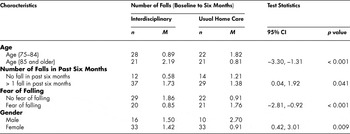
Sub-group analysis was performed by regression techniques using simple two-way interactions between study group and characteristics thought to influence fall risk (female gender, fall in the past six months, balance and gait, cognitive status, use of four or more prescription medications, use of three or more prescription medications affecting the cardiovascular or central nervous systems, depression, visual impairment, nutritional risk, fear of falling, unsteadiness on feet, four or more co-morbid health conditions, age, living arrangement, slips or trips in the past six months, admission to acute care hospital in the past six months, hearing impairment, environmental hazard, cardiovascular, neurological, or musculoskeletal disorder, limitations in ADLs , and functional health status and related quality of life). Number of falls during the six-month follow-up was the dependent variable. We hypothesized that older people with these risk factors would benefit most from the intervention. This sub-group analysis was decided a priori.
Results
Recruitment/Participant Flow
Recruitment was conducted over a nine-month period between May 2006 and February 2007. A total of 525 consecutive CCAC clients were screened for the study, and 267 (50.9%) were considered eligible. The most common reason for ineligibility (36.8%) was not being at risk for falls (no fall within the previous 12 months, fear of falling or unsteadiness on their feet). Other reasons included refusal to participate (18.6%), inability to contact (16.7%), non-English speaking with no translator available (16.3%), living outside the study region (7.0%), and failing the SMMSE with no substitute decision maker available (3.9%). In total, 109 (40.8%) of the 267 eligible home care clients consented and were randomized (Figure 1).
Numbers Analyzed
The proportion of participants who completed the study was 43/55 (78.2%) in the control group and 49/54 (90.7%) in the intervention group (Figure 1). Reasons for loss to follow-up included death (seven participants) and refusal to participate (10 participants). Rates of attrition because of death did not differ significantly between groups. Thus, analyses were based on a final sample of 92 participants.
Study drop-outs were similar to completers in most baseline characteristics. Compared with completers, smaller proportions of drop-outs reported a slip or trip in the past six months (5.9% vs. 29.3%; p = 0.04) or a fall, slip, or trip outside the home (0% vs. 28.2%; p = 0.04). Drop-outs had lower mean scores in general health perception (difference: 15.7; 95% CI: 4.8 to 26.5) and higher per-person costs of use of speech language pathologists (p = 0.02) and nurse practitioners (p = 0.02) in the past six months. All but one participant randomized to the intervention group (98%) received at least one home visit by a member of the interdisciplinary team. Nine additional clients discontinued the intervention early because of admission to a long-term care facility (n = 4), death (n = 3), or refusal to participate (n = 2) (Figure 1).
Baseline Characteristics
Baseline characteristics by treatment group for the 92 study participants retained in the six-month follow-up are shown in Table 1. Most baseline characteristics were similar in the two groups. Participants in the interdisciplinary group, compared with the usual-care group, reported fewer mean slips and trips (difference: –0.7; 95% CI: –2.5 to 1.1) but a similar mean number of falls in the past six months. The interdisciplinary group had a lower mean score in role functioning related to emotional health (difference: 15.27; 95% CI: 1.8 to 28.5), lower per-person costs of use of ophthalmologist (p = 0.03), and higher per-person cost to use day surgery (p = 0.03). Data were re-analyzed, adjusting for these variables, with no differences in results (data not shown).
Of the 92 participants who completed the study, 72 per cent reported at least one fall in the six months preceding the study, 45 per cent reported a fear of falling, and 74 per cent indicated that they were unsteady on their feet. Most participants (76%) had two or more of these risk factors for falls that defined the target sample for the study. Twenty-six participants (28.3%) reported at least one slip or trip in the six months preceding the study. Approximately 80 per cent of falls, slips, or trips resulted in injury including hip or other fracture (40%); cuts, scrapes, or abrasions (35%); bruising (29%); or other minor injuries (22%). One half of these incidents resulted in hospitalization, with an average stay length of 32 days.
Primary Outcome: Number of Falls at 6 Months
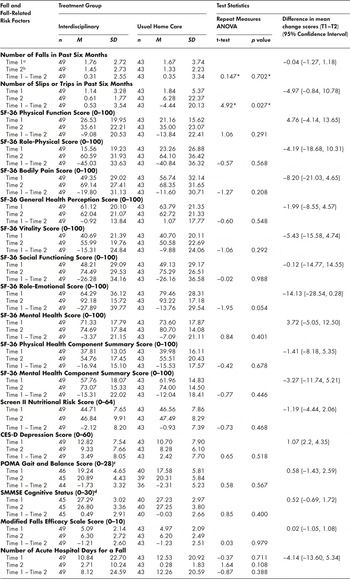
Of the 92 participants who completed the study, 48 (52.2%) reported a total of 128 falls in the 6 months after randomization, including 93 injury falls, 26 fracture falls, and 33 hospitalized falls (note that these fall types are not mutually exclusive). In the two groups combined, the mean number of falls in the last six-month period decreased by 19 per cent from 1.72 at baseline to 1.39 at six months. The interdisciplinary and usual-home-care groups did not differ in mean number of falls at six months (1.45 vs. 1.33, p = 0.70) or change in mean number of falls (–0.31 vs. –0.35, difference: 0.04, 95% CI: –1.18 to 1.27) (see Table 2). In addition, there was no difference between the two groups in the number and type of fall-related injuries.
Group comparisons of fall and fall-related risk factors at baseline and six-month follow-up

* Kruskal–Wallis Test
a Time 1 (T1): Baseline
b Time 2 (T2): Six-month follow-up
c Numbers do not add to 92 as a result of missing scores (n = 12)
d Numbers do not add to 92 as a result of missing scores (n = 7)
M = mean
SD = standard deviation
Secondary Outcomes: Risk Factors for Falls at Six Months
Slips and Trips
Of the 92 participants who completed the study, 28 (30.4%) reported a total of 300 slips or trips in the six months after randomization. The mean number of slips or trips in the past six- month period decreased by 46 per cent in the interdisciplinary group (from 1.14 at baseline to 0.61 at six months) but increased more than threefold in the usual-home-care group (from 1.84 to 6.28) (p = 0.03). The change in mean number of slips or trips was –0.53 in the interdisciplinary group, compared with 4.44 in the usual-home-care group (difference: –4.97, 95% CI: –10.78 to 0.84) (p = 0.03) (see Table 2).
Functional Health Status and Related Quality of Life
From baseline to the six-month follow-up, both groups improved in most SF-36 dimensions of functional health status and related quality of life, with no significant difference between groups. The interdisciplinary group showed greater improvement in role functioning related to emotional health than the usual-care group, although this difference did not reach statistical significance (p = 0.054; difference: 14.13, 95% CI: –0.28 to 28.54). Participants in the interdisciplinary group also had greater improvements in bodily pain and energy/vitality that were clinically important, but not significant. A difference of five points between groups for a domain of the SF-36 is considered clinically and socially important (Ware et al., Reference Ware, Snow, Kosinski and Gandek1993).
Nutritional Status
The SCREEN II mean score improved in the two groups combined by 3.4 per cent (from 45.58 at baseline to 47.14 at six months). This difference translated into a 20 per cent reduction in the number of clients at nutritional risk (< 54 out of 64 on SCREEN II). The change in nutritional risk mean score did not differ between the two groups (p = 0.47).
Depression
At six months, the depressive-symptom mean score decreased overall by 25.3 per cent (from 11.83 to 8.84). This translated into an 11 per cent reduction in the number of clients with depression (≥ 21 out of 60 on the CES-D). The change in depressive-symptom mean score did not differ statistically or clinically between the two groups (p = 0.52).
Gait and Balance
Gait and balance mean score increased in the two groups combined by 11.6 per cent (from 18.47 to 20.62). This translated into a 15 per cent reduction in the number of clients at high risk for falls (< 25 out of 28 on POMA). The change in gait and balance mean score did not differ statistically or clinically between the two groups (p = 0.57).
Cognitive Function
Cognitive function mean score decreased overall by 0.9 per cent (from 27.26 to 27.01). This translated into a 2.3 per cent increase in the number of clients with cognitive impairment (≤ 25 out of 30 on SMMSE). The change in cognitive function mean score did not differ between the two groups (p = 0.40).
Confidence in Performing Activities of Daily Living
The level of confidence in performing ADLs without falling increased in the two groups combined by 24.2 per cent (from 5.04 to 6.26). The change in MFES mean score did not differ statistically or clinically between the two groups (p = 0.98).
Cost of Use of Health Services
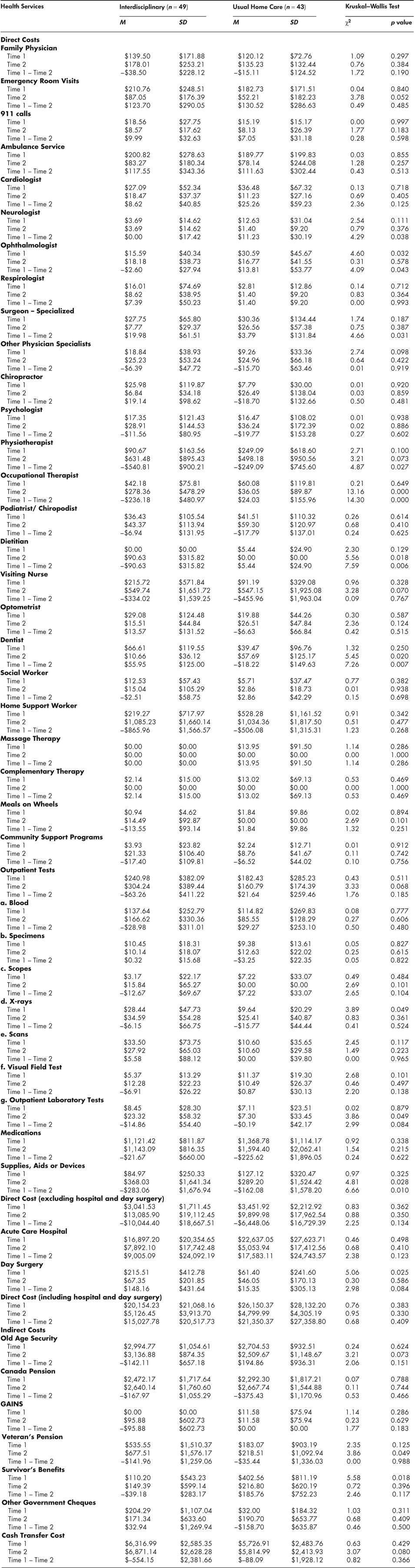
The mean six-month costs of use of all types of health services decreased overall by 78.3 per cent (from $22,956 at baseline to $4,973 at six months). The change in total per-person direct costs of use of health services did not differ between the two groups (p = 0.41). The interdisciplinary group had higher per-person costs of use of registered dietitians (p = 0.02), occupational therapists (p < 0.001), and supplies (p = 0.03). These increases in costs were offset by lower costs of use of dentists (p = 0.01), and lower costs of use of surgeons, chiropractors, psychologists, optometrists, podiatrists, and prescription medications compared with the usual-home-care group; however, these differences were not statistically significant. There was no difference between groups in use of any other type of health service, including acute hospitalization for a fall (p = 0.39) (see Table 3).
Group comparisons of selected six-month costs of use of health services at baseline and six-month follow-up
M = mean
SD = standard deviation
Sub-group Analysis
The a priori hypothesis for evaluating differences in number of falls during the six-month follow-up included examining characteristics thought to influence fall risk. Variables with fewer than 10 participants per sub-group were excluded from the sub-group analysis. The findings indicate that an interdisciplinary team approach is more effective than usual home care in reducing the number of falls in males (p = 0.009), 75 to 84 years of age (p < 0.001), with a fear of falling (p < 0.001), or a negative history of falls in the six months preceding the study (p < 0.04) (see Table 4). The total per-person direct costs of use of health services did not differ between the participants in the sub-groups compared to similar participants in the control group.
Subgroup analysis

M = mean
Discussion
The objective of the present study was to determine the effects and costs of a multifactorial, interdisciplinary team approach to falls prevention compared with usual home care services. To our knowledge, this is the first randomized controlled trial with an economic evaluation of the effects and costs of a multifactorial, interdisciplinary team approach to falls prevention for frail older home care clients at risk for falling, compared with usual home care services. This study is important because of the high prevalence of falls among older adults receiving home support services. The baseline fall rate of 72 per cent in the present sample greatly exceeds the fall rates of 30 per cent typically reported for representative samples of community-dwelling older adults (Kenny et al., Reference Kenny, Rubenstein, Martin and Tinetti2001; Speechley & Tinetti, Reference Speechley and Tinetti1991). This setting is also important because it represents the logical target for any initiatives to improve the early identification and management of falls and fall risk factors.
We found that a multifactorial, interdisciplinary team approach to falls prevention, proactively provided to older people at risk for falling, 72 per cent of whom reported at least one fall in the previous six months, 56.5 per cent of whom suffered from four or more chronic health problems, and 82 per cent of whom were functionally limited, produced significant improvements in fall risk factors (slips and trips, health-related quality of life), and a reduction in the incidence of falls among males (≧75–84 years), with a fear of falling and a negative history of falls. Notably, these improvements were achieved at no additional cost to society as a whole, thus making the intervention highly feasible given its clinical benefits. Although we did not directly measure the acceptability of the intervention, the high engagement rate (98%) and low “dropout” rate (9%) over the six-month study period suggests that this approach is highly acceptable to this population. This study demonstrates that, with modest reorganization of the delivery of existing home services, giving greater priority to interdisciplinary care and prevention, significant enhancements in patient safety and quality of life can result. Previous studies have focused only on the use of institutional care and home care services as measures of cost (Close et al., Reference Close, Ellis, Hooper, Glucksman, Jackson and Swift1999; Rizzo et al., Reference Rizzo, Baker, McAvay and Tinetti1996). Our study is unique in that it measured use and costs of the full range of health services.
The results of this study add to the growing evidence for the effectiveness of multifactorial falls prevention programs for older adults in reducing falls and fall-related risk factors (Clemson et al., Reference Clemson, Cummings, Kendig, Swann, Heard and Taylor2004; Close et al., Reference Close, Ellis, Hooper, Glucksman, Jackson and Swift1999; Gillespie et al., Reference Gillespie, Gillespie, Robertson, Lamb, Cumming and Rowe2003; Robson et al., Reference Robson, Edwards, Gallagher and Baker2002; Steinberg et al., Reference Steinberg, Cartwright, Peel and Williams2000; Tinetti et al., Reference Tinetti, Baker, McAvay, Claus, Garrett and Gottschalk1994; Wagner et al., Reference Wagner, LaCroix, Grothaus, Leveille, Hecht and Artz1994). However, the home care settings targeted in this study serve a considerably frailer group of seniors than the general population of community-dwelling seniors. Such people are often excluded from community-based studies of the effectiveness of multifactorial falls prevention programs. Thus, this study makes an important contribution by providing knowledge of the effectiveness of multifactorial falls prevention among a much frailer group of seniors than recruited in previous studies.
The baseline characteristics of our sample indicate that we reached our intended target group – older adults at risk for falling. Two thirds of our sample had two or more of the leading risk factors for falls: fall within the previous 12 months, fear of falling or unsteadiness on their feet. Thus, the results also lend support for the effectiveness of falls prevention programs targeted to populations at risk (Gillespie et al., Reference Gillespie, Gillespie, Robertson, Lamb, Cumming and Rowe2003; Tinetti et al., Reference Tinetti, Baker, McAvay, Claus, Garrett and Gottschalk1994). Categorizing individuals into different levels of risk is important from both clinical and economic perspectives because it is the seniors with the highest risk of falling who will benefit most from preventive efforts and from avoiding the negative consequences of falls.
After six months, compared with the baseline, participants in the interdisciplinary group reported a greater improvement in role functioning related to emotional health than the usual-home-care participants. Given the lower level of role functioning in the interdisciplinary group at baseline, this is a clinically important gain. At six months, the interdisciplinary group reported 47 per cent fewer slips and trips than at baseline, compared with a more than threefold increase in the usual home care group (p = 0.03). Our findings are consistent with those of previous studies, which have reported significant improvements in health-related quality of life and function (Close et al., Reference Close, Ellis, Hooper, Glucksman, Jackson and Swift1999; Lightbody et al., Reference Lightbody, Watkins, Leathley, Sharma and Lye2002; Lin et al., Reference Lin, Wolf, Hwang, Gong and Chen2007; Wagner et al., Reference Wagner, LaCroix, Grothaus, Leveille, Hecht and Artz1994) and a reduction in slips and trips (Steinberg et al., Reference Steinberg, Cartwright, Peel and Williams2000) with a multifactorial approach. These findings are noteworthy, given that slips and trips and poor quality of life and function are two of the most common predictors of falls (Speechley & Tinetti, Reference Speechley and Tinetti1991).
One possible explanation for the improvement in health-related quality of life and function is that many of the risk factors for falls also contribute to functional decline and reduced quality of life (Sjösten et al., Reference Sjösten, Vaapio and Kivelä2008). Consequently, a multifactorial approach targeted to reduce these risk factors could result in reductions in falls as well as improvements in health.
A unique contribution of our study was its focus on both falls and near falls (slips or trips). Although falls among older adults have been studied extensively, data are limited on the prevalence of slips and trips and the prevention of such incidents in this age group (Steinberg et al., Reference Steinberg, Cartwright, Peel and Williams2000). Yet, the most common circumstances leading to falls are slips and trips. It has been proposed that there is a continuum from slips and trips, wherein balance is regained, through near falls, to complete falls when balance is lost (Steinberg et al.). Because both seniors and health care providers focus on the consequences of falls, non-injurious falls may be disregarded (Gallagher & Brunt, Reference Gallagher and Brunt1996). Our findings suggest that it would be beneficial for the health care system to focus attention on warning signs such as slips or trips. However, future research is necessary to determine whether improvements in these risk factors for falls lead to reductions in subsequent falls. If slips and trips have an effect on falls incidence, this would also suggest an earlier point of intervention on the continuum of falls (Steinberg et al.).
The study findings provide important information regarding which specific sub-groups of older home care clients benefited most from a multifactorial, interdisciplinary team approach to falls prevention. Few trials on the effectiveness of multifactorial falls prevention programs have examined which sub-groups of older adults benefit most from the intervention (Clemson et al., Reference Clemson, Cummings, Kendig, Swann, Heard and Taylor2004; Hornbrook et al., Reference Hornbrook, Steven, Wingfield, Hollis, Greenlick and Ory1994; Nikolaus & Bach, Reference Nikolaus and Bach2003; Shaw et al., Reference Shaw, Bond, Richardson, Dawson, Steen and McKeith2003). As a result, it is difficult to distinguish whether the differences in effectiveness are attributable to variations in the type of intervention or to characteristics of the samples. The subgroup analyses in this study suggested that the intervention was more effective in men (p = 0.009), 75 to 84 years of age (p < 0.001), who had a fear of falling (p < 0.001), or a negative history of falls in the months preceding the study (p < 0.04). In these subgroups, the number of falls could be reduced significantly by interdisciplinary team intervention at no additional cost.
The finding that the intervention was more effective in men than women is consistent with those of previous studies (Clemson et al., Reference Clemson, Cummings, Kendig, Swann, Heard and Taylor2004), and may reflect the fact that it was more attractive to this population. Another explanation is that, in general, men are less active in health activities and seeking knowledge than women. Therefore, they may have had a greater initial readiness, resulting in a much greater uptake and receptivity to the strategies affected by the interdisciplinary team (Clemson et al.).
The finding that the intervention was more effective for seniors with a fear of falling is noteworthy because fear of falling is highly prevalent among seniors and is considered to be one of the leading risk factors for falling with effects on functional health status and related quality of life (Sjösten et al., Reference Sjösten, Vaapio and Kivelä2008). One possible explanation for the superiority of the multifactorial, interdisciplinary approach in this subgroup is that falls, and fear of falling, have multifactorial causes and actually share many risk factors (e.g., gait and balance problems, depressive symptoms, and poor cognition). Consequently, a multifactorial approach targeted to reduce several risk factors simultaneously may be more beneficial than a single-focused approach.
The finding that the intervention was more effective for seniors with a negative history of falls in the six months preceding the study is consistent with those of previous studies (Clemson et al., Reference Clemson, Cummings, Kendig, Swann, Heard and Taylor2004; Hornbrook et al., Reference Hornbrook, Steven, Wingfield, Hollis, Greenlick and Ory1994). One hypothesis is that the intervention was more effective for seniors with a negative history of falls because they had higher levels of physical, social, and psychological functioning compared with fallers (Markle-Reid et al., Reference Markle-Reid, Miles, Vaitonis, Henderson, Anderson and Baxter2008a). Individuals with lower functional levels normally are apt to need more support and receive it (Markle-Reid, Weir, Browne, Roberts, Gafni, & Henderson, Reference Markle-Reid, Weir, Browne, Roberts, Gafni and Henderson2008b). This may have reduced the differences between the two groups. It is equally likely that the intervention was less effective for seniors with a history of falls because the modifications of risk factors in this complex population may not have been large enough or may have been focused on the wrong type and so did not affect falls in this sub-group. Home care services often are put into place to compensate for and help people cope with irreparable physical decline associated with advanced chronic disease and the aging process in later life. The limited effectiveness of the intervention in this sub-group may as likely reflect that reality as the possibility that services are not achieving outcomes.
The finding that the intervention was more effective for younger seniors (75–84 years) than older seniors (> 85 years) or individuals who did report a fall suggests the need for a more upstream approach to falls prevention, targeting a younger population at an earlier point along the continuum of falls to prevent the onset of falls. Overall, these findings suggest that limited home care resources may be used more effectively if targeted toward males (≥75–84 years), with a fear of falling and a negative history of falls.
Implications
Our study adds to the accumulating evidence showing that high functioning interdisciplinary teams – those that have the client at the centre, communicate easily and frequently, have shared objectives and clear roles and responsibilities, and conduct interdependent decision making – improve the quality of care and reduce adverse events among seniors with chronic conditions (Barrett, Curran, Glynn, & Godwin, 2007; Canadian Health Services Research Foundation, 2005; Ontario Ministry of Health and Long-Term Care, Health Human Resources Strategy Division, 2007). Given the multifactorial nature of falls, people with multiple chronic conditions are best served by an interdisciplinary group of professionals with complementary skills to address the bio-psychosocial determinants of falls (World Health Organization, 2005).
The findings of this study also confirm that early, proactive, and comprehensive care for people with chronic needs is both more effective and no more expensive in a system of national health insurance than providing services on a limited, reactive, and piecemeal basis (Browne, Roberts, Gafni, Byrne, Weir, Majumdar et al., Reference Browne, Roberts, Gafni, Byrne, Weir and Majumdar1999; Browne et al., Reference Browne, Roberts, Byrne, Gafni, Weir and Majumdar2001; Markle-Reid, Weir, Browne, Roberts, Gafni, & Henderson, Reference Markle-Reid, Weir, Browne, Roberts, Gafni and Henderson2006a, Reference Markle-Reid, Weir, Browne, Roberts, Gafni and Henderson2006b). Given that the annual cost of health services use was $11,500 per person higher for fallers compared with non-fallers (Markle-Reid et al., Reference Markle-Reid, Miles, Vaitonis, Henderson, Anderson and Baxter2008a), a program targeted to this at-risk group of frail seniors has the potential for significant cost savings from a societal perspective. A falls prevention intervention that achieves a reduction in falls could result in enough costs savings to pay for the intervention. It also has the potential to reduce the human cost of a fall, which can include loss of independence and confidence, low self-esteem, depression, chronic pain, functional deterioration, fractures, or death.
The study results support and extend the literature regarding best-practice guidelines for providing falls prevention to older people at risk for falls. A multifactorial approach to falls prevention should target individuals at risk (Tinetti et al., Reference Tinetti, Baker, McAvay, Claus, Garrett and Gottschalk1994); use a variety of strategies that are tailored to an individual’s risk profile (Gillespie et al., Reference Gillespie, Gillespie, Robertson, Lamb, Cumming and Rowe2003; Kenny et al., Reference Kenny, Rubenstein, Martin and Tinetti2001); involve substantial realignment of roles and scopes of practice; formalize mechanisms for communication among health care providers; improve integration between home care and primary care (Leatt et al., Reference Leatt, Pink and Guerriere2000); include regular follow-ups using validated screening instruments and evidence-based practice guidelines; and involve providers with formal training in falls prevention, referral to and coordination of community services, and continuity of care provider (Gillespie et al., Reference Gillespie, Gillespie, Robertson, Lamb, Cumming and Rowe2003; Markle-Reid et al., Reference Markle-Reid, Weir, Browne, Roberts, Gafni and Henderson2006a).
Limitations of the Study
Although the randomized design and high engagement and follow-up rates were major strengths of this study, several limitations must be considered when examining our study results. Despite concerted efforts, we were only able to recruit and randomize 41 per cent of eligible clients. Thus, our sample might not have been truly representative of the population at risk. Future research is warranted to identify the most-effective strategies for recruiting at-risk seniors who are truly in need of falls prevention interventions.
There may have been an under reporting of falls since reluctance to report falls among older people has been observed. They may fear loss of an independent lifestyle and the associated stigma of aging (Gallagher & Brunt, Reference Gallagher and Brunt1996). Further, recall bias due to forgetfulness and memory impairment might also have led to under-reporting (Cummings, Nevitt, & Kidd, Reference Cummings, Nevitt and Kidd1988). More studies are needed to develop and test strategies to maximize the likelihood that seniors report all falling events.
Although the calendar and monthly telephone contacts were designed primarily to record outcomes, it is possible that their use might also have constituted an intervention in its own right. If the control participants benefited from these contacts, this minor intervention would have diluted the treatment effect and decreased the differences between groups. Further research is needed to confirm the effect of this strategy on its own as an effective preventive intervention. If confirmed, it has the potential to be a low-cost, sustainable approach to decreasing falls and near falls among older people (Steinberg et al., Reference Steinberg, Cartwright, Peel and Williams2000).
Only the immediate effects of the intervention were observed. Further research is needed to determine if the effects of the intervention are sustained over longer periods of time. The finding that there was no difference between groups in per-person costs of use of health services may be because of an insufficient sample size and limited power to detect differences. Future trials with an economic evaluation are needed that have sufficient power to detect cost differences. Lastly, the results reflect what happened in two home care programs, which may or may not be representative of other home care environments. The generalizability of the results to the wider population of older people depends on the extent to which the services under study are available and the criteria for service provision are comparable in different areas.
Conclusions
With the rapid increase in the number of seniors living in the community, falls and fall-related injuries are becoming a serious problem that, without intervention, will place extensive burdens on health care resources (SmartRisk, 2006). Home care has the potential to play a pivotal role in preventing falls and enhancing the quality of life of older people with chronic needs. Our study shows that a multifactorial, interdisciplinary team approach is more effective and no more expensive than usual home care in improving quality of life, reducing the incidence of slips and trips, and reducing falls among males (≥ 75–84 years), with a fear of falling and a negative history of falls. Such an approach is highly acceptable to this population, and can be implemented in a home care setting using existing resources. Home care policy makers, agencies, and funders should work together to ensure that an interdisciplinary team approach is available to the subgroups of seniors who could benefit from it most to reduce future falls, enhance quality of life, and reduce the on-demand use of expensive health services.