


Introduction
Cognitive behavioural models of obsessive compulsive disorder (OCD) highlight the importance of interpretations of intrusions in the development and maintenance of obsessive compulsive symptoms (Salkovskis, Reference Salkovskis1985, Reference Salkovskis1989; Wilhelm and Steketee, Reference Wilhelm and Steketee2006). Correlational and experimental research findings show a link between interpretations of intrusions and obsessive compulsive symptoms (Lopatka and Rachman, Reference Lopatka and Rachman1995; Obsessive Compulsive Cognitions Working Group, 1997, 2003; Bouchard et al., Reference Bouchard, Rheaume and Ladouceur1999; Salkovskis et al., Reference Salkovskis, Wroe, Gledhill, Morrison, Forrester, Richards, Reynolds and Thorpe2000). Recent research also shows that reduction in obsessive compulsive symptoms is associated with changes in interpretations of intrusions (Solem et al., Reference Solem, Hagen, Hansen, Ashild, Launes, Lewin, Storch and Vogel2015). In line with this, treatment manuals and the Centre for Outcome Research Effectiveness (CORE) competencies report the identification, challenging and monitoring of idiosyncratic interpretations of intrusions as a key element of cognitive behavioural therapy (CBT) for OCD (Whittal and McLean, Reference Whittal and McLean1999; Wilhelm and Steketee, Reference Wilhelm and Steketee2006; Roth and Pilling, Reference Roth and Pilling2007).
The introduction of the ‘No Health Without Mental Health’ strategy (Department of Health, 2011) in the UK has resulted in increased provision of evidence-based psychological treatments through Improving Access to Psychological Therapies (IAPT) services. The stepped care model used in these services involves service users with OCD being offered the least intensive treatment in primary care and only being referred onto specialist OCD services if they do not have an adequate response to lower intensity treatment (National Institute for Health and Clinical Excellence, 2005). This model has improved access to CBT and led to OCD being predominantly treated by primary mental health clinicians with training in protocols of depression and anxiety disorders, including OCD, but no specific expertise in OCD. However, OCD is a heterogenous disorder and cognitive and behavioural interventions are effective for 50–60% of the cases, with only 25% achieving full recovery (Fisher and Wells, Reference Fisher and Wells2005). Primary mental health clinicians may therefore experience several challenges when working with OCD. This is reflected in IAPT's 2015/2016 annual summary (NHS Digital, 2017) reporting that service users with OCD are offered more sessions when compared with other mental health disorders, are not consistently offered NICE recommended treatments and recovery rates vary greatly across IAPT sites (i.e. 22.4–88.2%). Identifying primary mental health clinicians’ views on working with OCD including common challenges can help inform training and supervision and improve outcomes for service users with OCD.
A comparison of expert and non-expert clinicians’ views on key aspects of CBT for OCD may shed some light on current practice and challenges faced by primary mental health clinicians. One study to date has explored how level of expertise in OCD impacts on clinical practice. Zivor and colleagues (Reference Zivor, Salkovskis and Oldfield2013a) compared clinician and highly specialist clinicians’ views on key aspects of formulation in CBT for OCD. They found that both clinicians and highly specialist clinicians reported identifying negative automatic thoughts/appraisals as very important in formulation. However, clinicians differed from highly specialist clinicians in various respects: highly specialist clinicians reported identifying safety-seeking behaviours as more important, were less likely to use a pre-existing model of OCD, shared their formulation at first session and reformulations more frequently with service users compared to clinicians. This finding suggests differences in views on key aspects of formulation and its use among clinicians and highly specialist clinicians. Research in fields other than OCD also report differences between highly skilled clinicians and clinicians in that highly skilled clinicians develop higher quality formulations and intervention plans compared with other clinicians (Persons and Bertagnolli, Reference Persons and Bertagnolli1999; Eells et al., Reference Eells, Lombart, Kendjelic, Turner and Lucas2005; Kuyken et al., Reference Kuyken, Fothergill, Musa and Chadwick2005; Mumma and Mooney, Reference Mumma and Mooney2007; Dudley et al., Reference Dudley, Ingham, Sowerby and Freeston2015).
Interpretations of intrusions are a key aspect of CBT for OCD and preliminary findings on clinician and service users’ views on CBT for OCD indicate that clinicians do not address interpretations of intrusions within formulation and treatment. For instance, Zivor and colleagues (Reference Zivor, Salkovskis, Oldfield and Kushnir2013b) investigated the key aspects of formulation in CBT for OCD where poor quality formulations were classified as not including interpretations of intrusions. They found that the average quality of formulation for clinicians from various professional backgrounds fell within the poor quality range. Stobie and colleagues (Reference Stobie, Taylor, Quigley, Ewing and Salkovskis2007) focused on service user experiences and carried out a pilot study on treatment histories of individuals of OCD. They found that 40% of participants who were provided CBT did not receive treatment meeting minimum criteria for adequate CBT. The researchers found that participants did not do exposure exercises or homework and spent the majority of the sessions either speaking freely or about their childhoods. Moreover, only 36% of participants reported having modified misinterpretations in CBT for OCD. The results of these studies indicate that there may be variability in clinician delivery of CBT for OCD, particularly in relation to working with interpretations of intrusions.
It has been proposed that a key aspect of CBT for OCD is the identification and modification of interpretations of intrusions and developing highly idiosyncratic formulations. However, the reviewed research suggests that therapist views of, and competences in, aspects of formulation and therapy may differ depending on experience and training (e.g. Zivor et al., Reference Zivor, Salkovskis and Oldfield2013a,b). No previous research has explored similarities and differences in clinician views on formulation and treatment with OCD and whether these views vary depending on expertise. Clinicians’ views are particularly relevant today as OCD is treated using a stepped care model by clinicians with varied training backgrounds. Exploring variability in clinical practice can help identify training needs and improve outcomes for service users with OCD. Therefore, the present study aimed to firstly identify key aspects of therapy as noted by clinicians working in specialist OCD services (hereinafter referred to as OCD-expert clinicians), and to compare this with views of primary care or IAPT clinicians (hereinafter referred to as non-OCD-expert clinicians); secondly, to systematically quantify primary care clinicians’ views on the importance and ease of a range of clinical aspects, noted by OCD-experts as key to CBT for OCD. It was hoped that the above aims would improve understanding of primary care clinicians’ views of and perceived confidence in implementing CBT for OCD and provide important insight into key elements of current clinical practice, common challenges and possible areas of support for primary care clinicians.
Method
Previous studies investigating therapist views on therapy have employed two methodologies: semi-structured interviews or questionnaires (e.g. Morrison and Barratt, Reference Morrison and Barratt2010; Naeem et al., Reference Naeem, Gobbi, Ayub and Kingdon2010; Zivor et al., Reference Zivor, Salkovskis and Oldfield2013a; De Haan and Lee, Reference De Haan BKL2014; Kroese et al., Reference Kroese, Jahoda, Pert, Trower, Dagna and Selkirk2014). The present investigation used both semi-structured interviews and questionnaires in exploring OCD-expert clinicians and non-OCD-expert clinicians’ views on the key elements of CBT for OCD.
Local approval was gained from the Healthcare NHS Foundation Trust Research and Development Department to recruit staff members within IAPT services in the trust.
Study 1
Design
Study 1 involved a qualitative thematic analysis approach to exploring OCD-expert clinicians’ views on the key elements of CBT for OCD. Thematic analysis is a method used to identify, analyse and report themes within data (Braun and Clarke, Reference Braun and Clarke2006). Thematic analysis was favoured for the present study above other qualitative approaches as the main aim was to establish whether participants’ views were influenced by their CBT practice, to explore similarities and differences across participant groups and analyse data from a realist as opposed to interpretative approach. The researcher held a realist position where the participants’ language was regarded as reflecting the meaning and experience of the phenomenon under investigation (Widdicombe and Wooffitt, Reference Widdicombe and Wooffitt1995).
Participants
Six OCD-expert clinicians agreed to participate in the study. OCD-expert clinicians were a convenience sample recruited from the Centre for Anxiety Disorders and Trauma, South London and Maudsley NHS Trust, a specialist OCD service in London. OCD-experts were approached to explore views of clinicians with extensive experience of working with OCD clients and within specialist OCD settings. Experts in the field were considered ‘OCD-expert clinicians’ if (i) they had extensive clinical experience in CBT for OCD (i.e. more than 3 years), (ii) were currently working in or had experience of working in specialist OCD clinics, and (iii) had peer-reviewed publications in OCD. The OCD-expert clinicians consisted of four females and two males aged between 38 and 45 years. The OCD-expert clinicians had 3 to 10 years of experience working with OCD clients following clinical psychology training.
Six non-OCD-expert clinicians (high intensity therapists), four females and two males, aged between 28 and 48 years agreed to participate in the study. Non-OCD-expert clinicians were recruited through poster and email advertisement at local IAPT services. The therapists had between 2 and 15 years of experience following high intensity (HI) training and had worked with OCD during their time as a qualified therapist. However, they did not have any extra specialist training or supervision in OCD.
Procedure
Initial interview schedule
The initial interview schedule was sent to a clinical psychologist working in an IAPT service for feedback. The feedback suggested that the schedule was clear and concise. No changes were therefore made to the initial interview schedule. Two pilot interviews were carried out prior to recruitment: one with an OCD-expert clinician and one with a non-OCD-expert clinician. Feedback from these interviews was used to devise instructions, and a question on the challenges of working with clients with OCD was added.
Interview procedure and transcription
The interviews were carried out over the telephone with participants, after participants read the information sheet and completed the consent forms. One interview was carried out in person. The interviews lasted approximately 30 minutes. Each interview was transcribed verbatim by the researcher and did not include non-verbal utterances and pauses. To maintain anonymity, clinicians were given participant numbers.
Analytic strategy
Stages of thematic analysis
The study followed the three stages of thematic analysis outlined by Braun and Clarke (Reference Braun and Clarke2006): (i) the researcher read and re-read the transcripts during transcription to familiarize themselves with the depth and content of the interviews; (ii) the researcher generated an initial thematic coding frame by organizing chunks of data into meaningful categories; and (iii) the researcher reviewed, defined and named themes by contrasting them with previous themes.
Validity and reliability
A trainee clinical psychologist (TCP) developed a separate coding frame based on a random selection of 20 passages from all transcripts. Overlap and lack of overlap in coding frames was discussed and the researcher and TCP collaboratively developed a new coding frame. The TCP and researcher then re-assessed agreement on 20 randomly selected passages from all transcripts. Inter-rater reliability analysis on the new coding frame indicated a substantial agreement [K = 0.8, p < .001, 95% CI (0.757, 0.865)], between the researcher and TCP (Landis and Koch, Reference Landis and Koch1977).
Results
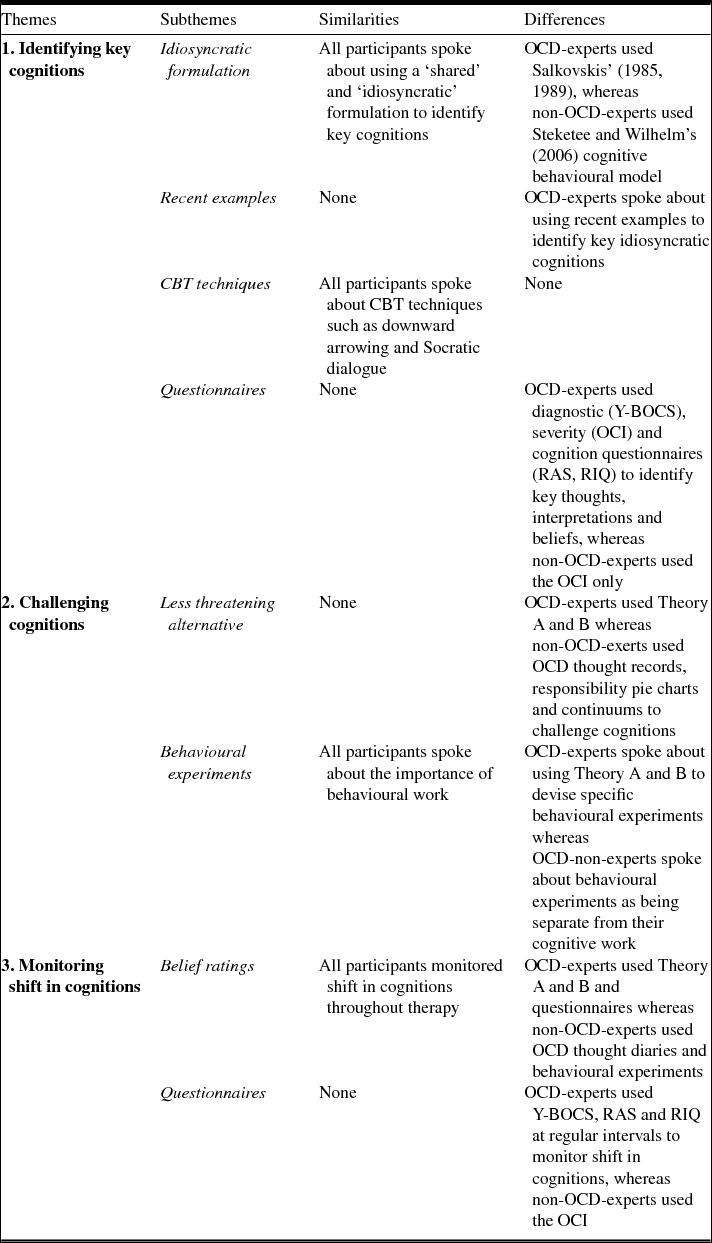
The final thematic coding frame was organized into three main themes. These themes were further divided into two or four subthemes (see Table 1). The results are described in relation to similarities and differences between OCD-expert and non-OCD-expert clinicians.
Themes and subthemes with similarities and differences between OCD-expert and non-OCD-expert clinicians
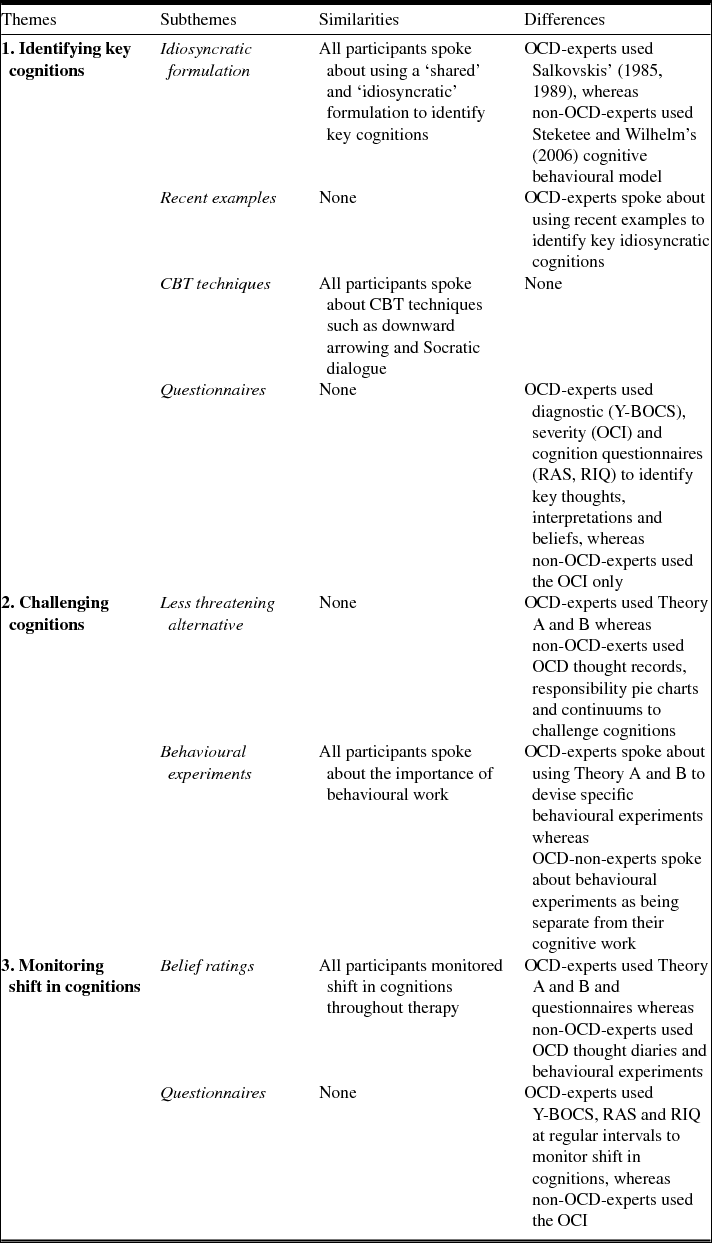
RAS, Responsibility Attitudes Scale (Salkovskis et al., Reference Salkovskis, Wroe, Gledhill, Morrison, Forrester, Richards, Reynolds and Thorpe2000); RIQ, Responsibility Interpretations Questionnaire (Salkovskis et al., Reference Salkovskis, Wroe, Gledhill, Morrison, Forrester, Richards, Reynolds and Thorpe2000); Y-BOCS, Yale-Brown Obsessive Compulsive Scale (Goodman et al., Reference Goodman, Price, Rasmussen, Mazure, Fleischmann, Hill, Heninger and Charney1989); OCI, Obsessive Compulsive Inventory (Foa et al., Reference Foa, Kozak, Salkovskis, Coles and Amir1998).
Theme 1: Identifying key cognitions
Subtheme: Idiosyncratic formulation
Similarities
Participants spoke about the importance of having a ‘shared’ and ‘idiosyncratic’ understanding of the client's key cognitions within a formulation. All participants explained that they used cognitive behavioural formulations to identify key cognitions. Participants described that the idiosyncratic formulation consisted of two components: the interpretation, appraisal or meaning associated with intrusive thoughts and the maintenance cycles. Participants described the importance of bringing these two components to the service user's awareness.
The shared formulation should be. . . idiosyncratic to them, so, it should feel like it's a really personalized . . . explanation of what is happening for them, when they get anxious . . . the really key thing about it is that it has the maintenance cycles, so it should help them to see that what they're doing. [OCD-expert clinician 3]
It's the maintenance cycle, the feedback loops that take them from the compulsion, which reduces their anxiety or reduces the stress in some way, but leaves this appraisal intact. And so what we need to do is to, to challenge that appraisal by stopping the behaviour. [Non-OCD-expert clinician 4]
Differences
OCD-experts explained that they used Salkovskis’ (Reference Salkovskis1985, Reference Salkovskis1989) cognitive behavioural model. The majority of non-OCD-expert clinicians explained that they used Steketee and Wilhelm's (Reference Wilhelm and Steketee2006) cognitive behavioural model.
Subtheme: Recent examples
Similarities
There were no similarities within this subtheme.
Differences
Four of six OCD-expert clinicians spoke about exploring a recent example where anxiety had been triggered to identify key idiosyncratic cognitions that were maintaining the client's obsessive compulsive symptoms whereas only one non-OCD-expert clinician spoke about using recent examples. For instance, non-OCD-expert clinician 3 explained that:
We might just look at a recent situation . . . then we try to pick up . . . the intrusive thought, try and look at perhaps any assumptions they might have had, we start to look at the appraisals they might have had as well.
OCD-expert clinicians’ accounts suggested that this was a useful technique in identifying intrusive thoughts and associated interpretations.
Subtheme: CBT techniques
Similarities
All participants spoke briefly of a range of CBT techniques they used with clients to identify key interpretations. All participants described two key techniques in this subtheme: downward arrowing and Socratic dialogue. For instance, OCD-expert clinician 1 explained: ‘you might use stuff like, downward arrow or so on to get people to kind of, identify specific things which are at the bottom of it’. Participants also spoke about the usefulness of Socratic dialogue in eliciting the key interpretation for the client: ‘So, a lot of which is Socratic questioning, like asking the client for what the meaning is to them or what happens next’ [non- OCD-expert clinician 1].
Differences
There were no differences within this subtheme.
Subtheme: Questionnaires
Similarities
There were no similarities within this subtheme.
Differences
OCD-expert clinicians spoke about using diagnostic and cognition questionnaires to identify key thoughts and beliefs. All non-OCD-expert clinicians explained that they exclusively use the Obsessive Compulsive Inventory (OCI; Foa et al., Reference Foa, Kozak, Salkovskis, Coles and Amir1998) as the OCD questionnaire in their work as it is a service requirement.
The Y-BOCS [Yale-Brown Obsessive Compulsive Scale; Goodman et al., Reference Goodman, Price, Rasmussen, Mazure, Fleischmann, Hill, Heninger and Charney1989] checklist which will just sort of give you an overview of kind of what people are like experiencing and . . . like the responsibility attitudes questionnaire, that you would use to look at, the second level of thoughts. [OCD-expert clinician 1]
One OCD-expert clinician spoke about developing idiosyncratic questionnaires to capture the idiosyncrasies in their client's difficulties alongside the use of standardized questionnaires:
For some I would develop idiosyncratic measures . . . we would kind of figure out what the belief was and get a rating of that belief so it's not total measures. But I also of course use total measures . . . the OCI of course . . . the Y-BOCS. [OCD-expert clinician 6]
Overall, the main theme of idiosyncratic cognitions highlighted the importance of identifying key intrusive thoughts and interpretations in CBT for OCD. All participants reported that idiosyncratic formulation and CBT techniques supported them in identifying cognitions. However, OCD-expert clinicians reported using recent examples, diagnostic, cognition and severity questionnaires to elicit idiosyncratic cognitions whereas one non-OCD-expert clinician reported using recent examples and the majority used only severity questionnaires that were not used to inform therapy.
Theme 2: Challenging cognitions
Subtheme: Less threatening alternative
Similarities
There were no similarities within this subtheme.
Differences
Four of six OCD-expert clinicians spoke about the importance of supporting the client in identifying a less threatening alternative. OCD-expert clinician 2, for instance, explained that the therapist's task was to ‘help people develop a less threatening understanding of why these thoughts are occurring and to normalize the kind of thoughts that they have’. OCD-expert clinicians spoke particularly about using the Theory A and Theory B framework (Salkovskis, Reference Salkovskis1999), very early in therapy to help clients develop a less threatening alternative.
Non-OCD-expert clinicians did not report developing a less threatening alternative using the Theory A and Theory B framework (Salkovskis, Reference Salkovskis1999). Instead, non-OCD-expert clinicians spoke about the importance of normalizing client experiences. Non-OCD-expert clinicians also described using a range of cognitive challenging techniques such as OCD thoughts records, responsibility pie charts and continuums to challenge the threatening cognitions.
Generally using [OCD] thought diaries are helpful, in getting them to write them [interpretations] down and challenge them. I guess the responsibility pie chart can often be really helpful with OCD ’cause often there is that overinflated sense of responsibility. [non-OCD-expert clinician 7]
Subtheme: Behavioural experiments
Similarities
All participants spoke about the importance of behavioural work and of doing this as early on in the intervention as possible. Participants described the link between behavioural experiments and formulation by explaining that: ‘it is translating their [service user's] new understanding into action’. [OCD-expert clinician 2].
Differences
Several non-OCD-expert clinicians discussed using behavioural experiments as a method of challenging idiosyncratic cognitions and spoke about behavioural experiments as being separate from their cognitive work.
To help them challenge those beliefs and the question we're asking is ‘does having a bad thought makes me a bad person’ basically. And once we've worked on that, it's straight for behaviours, behaviour work and working on stopping the reassurance, mental rituals. [non-OCD-expert clinician 2]
OCD-expert clinicians spoke about combining cognitive and behavioural work by using behavioural experiments within a Theory A and Theory B framework (Salkovskis, Reference Salkovskis1999). For instance, OCD-expert clinician 3 explained:
We would get a belief rating for Theory A and Theory B at the beginning . . . and . . . if we were doing behavioural experiments, we would get a belief rating for whichever belief it was that we were particularly testing out with that.
Overall, all participants described that they challenged key cognitions throughout therapy. There were differences in the approaches OCD-expert and non-OCD-expert clinicians used to address key cognitions. OCD-expert clinicians described that the service user's Theory A and B (Salkovskis, Reference Salkovskis1999), which were identified early on in therapy, continued to inform the basis of challenging cognitions in their work. However, non-OCD-expert clinicians addressed key cognitions using a range of cognitive techniques and did not describe clear links between cognitive and behavioural interventions.
Theme 3: Monitoring shift in cognitions
Subtheme: Belief ratings
Similarities
All participants monitored shift in cognitions throughout therapy.
Differences
All OCD-expert clinicians explained that these cognitions were monitored regularly, often session by session. Four OCD-expert clinicians spoke about monitoring shifts in idiosyncratic cognitions they had identified when devising a Theory A and Theory B approach (Salkovskis, Reference Salkovskis1999). They explained that they monitored belief ratings regularly throughout therapy. OCD-expert clinician 4’s response best encapsulated how these ratings were used:
I guess that would be through what I was just saying in terms of Theory A and B, so we would take kind of a Theory A and B rating. So, the extent to which the person feels that those thoughts mean that they are bad, dangerous, bad person versus these are just mental junk, random thoughts that all of us can have . . . That would be kind of captured I guess in their theory, sort of idiosyncratic Theory B that we would kind of draw up and we would kind of take a rating of that, so regularly.
Non-OCD-expert clinicians explained that they used several ways to monitor idiosyncratic cognitions throughout therapy. These included OCD thought diaries, reviewing the formulation and reviewing goals. Non-OCD-expert clinicians also described using belief ratings in OCD thought diaries and behavioural experiments.
‘what he does is ERP [exposure and response prevention], so he will kind of write down the thoughts that he's challenging and he'll kind of come back and re-rate his belief in them’ (non-OCD-expert clinician 7).
Subtheme: Questionnaires
Similarities
There were no similarities within this subtheme.
Differences
Three of six OCD-expert clinicians spoke about using questionnaires to monitor shift in cognitions. These included questionnaires such as the Responsibility Attitudes Scale (RAS; Salkovskis et al., Reference Salkovskis, Wroe, Gledhill, Morrison, Forrester, Richards, Reynolds and Thorpe2000) and Responsibility Interpretations Questionnaire (RIQ; Salkovskis et al., Reference Salkovskis, Wroe, Gledhill, Morrison, Forrester, Richards, Reynolds and Thorpe2000). OCD-expert clinicians explained that they asked clients to complete questionnaires at regular intervals. The questionnaires allowed them to identify areas that needed further intervention and gave them the opportunity to select specific highly rated cognitive items to address in intervention.
So, the RAS and the RIQ we would use it at the beginning, middle and end of treatment basically, so at Session 6, which is in theory at the middle of treatment, we would use that to check that things are coming down. [OCD-expert clinician 3]
Within this main theme, all participants described monitoring shift in cognitions. All clinicians monitored the shift using belief ratings and cognitive challenging techniques, with OCD-expert clinicians also using questionnaires. OCD-expert clinicians used questionnaires to select highly rated cognition items and monitored these over time.
Study 2
Design
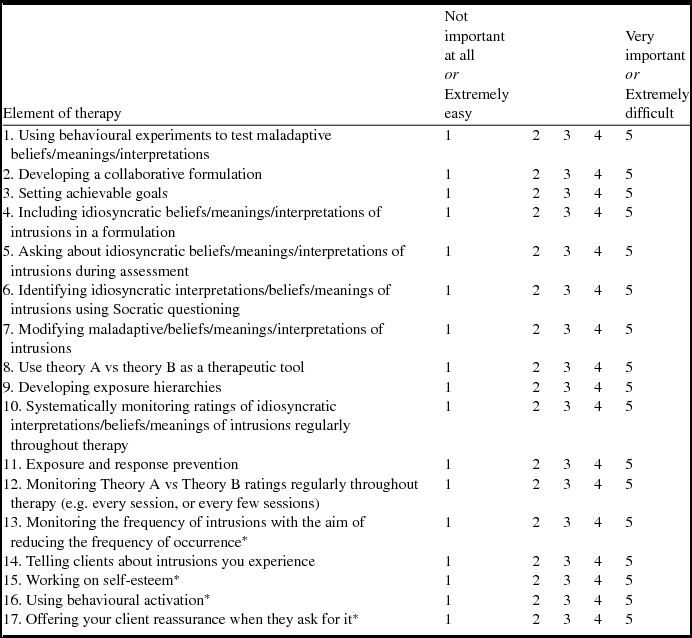
Study 2 involved participants completing a questionnaire developed by the researchers. The questionnaire was devised using the key elements of therapy mentioned in Study 1 and the key elements of therapy listed in the CORE competencies for CBT for OCD (Whittal and McLean, Reference Whittal and McLean1999; Wilhelm and Steketee, Reference Wilhelm and Steketee2006; Roth and Pilling, Reference Roth and Pilling2007). The questionnaire consisted of 13 questions focused on elements of CBT for OCD and four control items (see Appendix for full questionnaire). Control items were included to identify whether participants rated non-OCD relevant competences as highly as OCD relevant competences. Participants rated the ‘importance’ and ‘difficulty’ of the items using a 5-point Likert scale (1 = not important at all to 5 = very important; 1 = extremely easy to 5 = extremely difficult).
Participants and procedure
Participants were recruited from the local IAPT services through email and poster advertisement. HI therapists (non-OCD-experts) participating in Study 1 were not invited to participate in Study 2. Eighteen non-OCD-expert clinicians completed the questionnaire on SurveyMonkey (https://www.surveymonkey.co.uk). The participants consisted of three males and 15 females, aged between 28 and 48 years. Participants had experience of providing CBT for OCD to an average of 5–20 clients within a given year in the IAPT service. Two participants were excluded as they did not have experience of working with at least five clients with OCD. The final sample consisted of 16 non-OCD-expert clinicians.
Statistical analyses
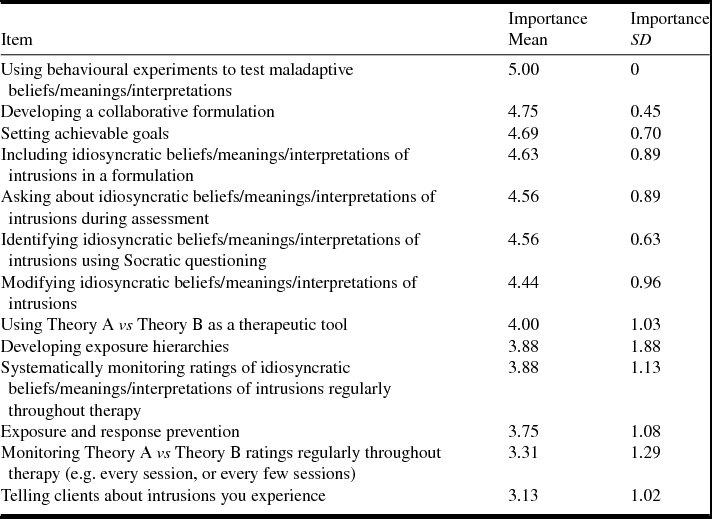
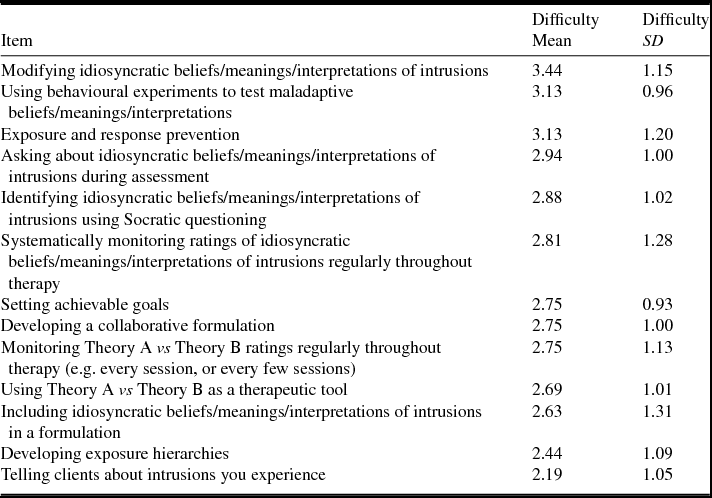
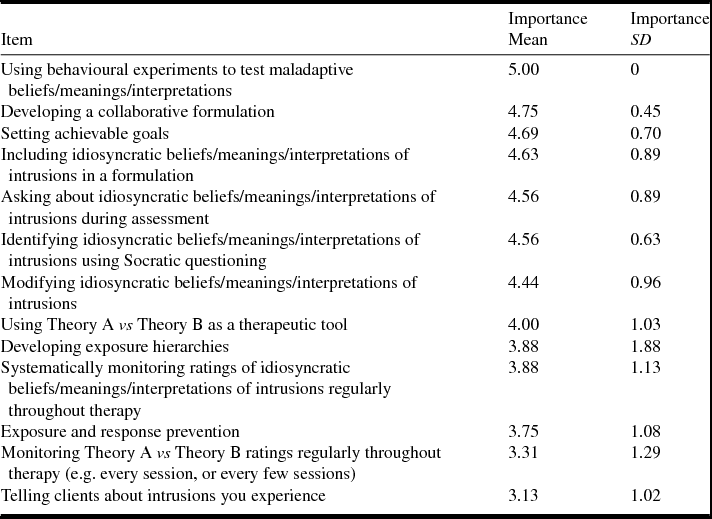
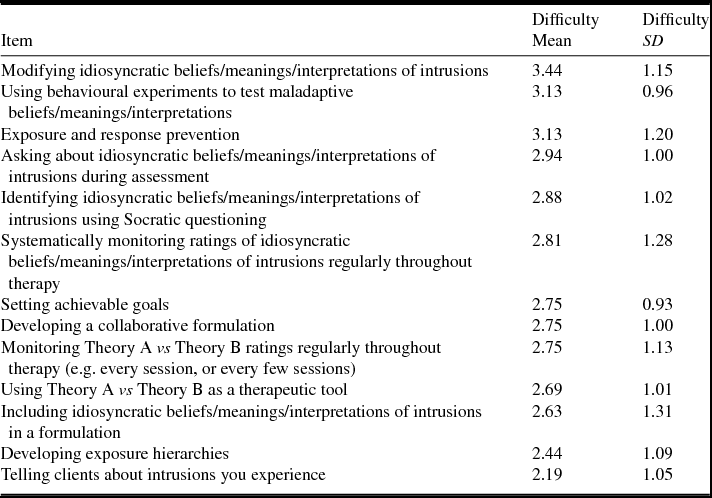
SPSS (version 17.0) was used to analyse the data (SPSS Incorporated, 2008). There were no missing data. Preliminary examination of the data showed that non-parametric analyses were appropriate. Descriptive data were calculated for each item and items were ranked from most to least important, and from most to least difficult using mean ratings (see Tables 2 and 3), and the Friedman test was carried out to see if there was a significant difference between the top five ranked items. Wilcoxon signed rank tests were used to compare OCD and non-OCD items (reverse items) for importance and difficulty ratings.
Mean rated importance of items, ranked from most to least important (n =16)
Mean rated ease of items, ranked from most to least difficult (n = 16)
Results
Aspects of therapy rated as most important
Five aspects of therapy rated as most important were selected using mean ratings. The mean ratings suggested that ‘use of behavioural experiments to test maladaptive beliefs/meaning/interpretations’ was rated as the most important element of therapy (mean = 5, SD = 0), followed by ‘developing a collaborative formulation’ (mean = 4.75, SD = 0.45), ‘setting achievable goals’ (mean = 4.69, SD = 0.70), ‘including idiosyncratic beliefs/meanings/interpretations of intrusions in a formulation’ (mean = 4.63, SD = 0.89) and finally ‘asking about idiosyncratic beliefs/meanings/interpretations of intrusions during assessment’ (mean = 4.56, SD = 0.89). There was no significant difference between importance ratings for the top five rated items (χ2 (4) = 5.10, p >.05).
Aspects of therapy rated as most difficult
Five aspects of therapy rated as most difficult were selected using difficulty mean ratings for OCD items only. The difficulty ratings suggested that ‘modifying idiosyncratic beliefs/meanings/interpretations of intrusions’ was rated as the most difficult element of therapy (mean = 3.44, SD = 1.15), followed by ‘using behavioural experiments to test maladaptive beliefs/meanings/interpretations’ (mean = 3.13, SD = 0.96), ‘exposure and response prevention’ (mean = 3.13, SD = 1.20), ‘asking about idiosyncratic beliefs/meanings/interpretations of intrusions during assessment’ (mean = 2.94, SD = 1.00) and ‘identifying idiosyncratic beliefs/meanings/interpretations of intrusions using Socratic questioning’ (mean = 2.88, SD = 1.02). There was no significant difference between difficulty ratings for the top five rated items (χ2 (4) = 3.13, p >.05).
Difference between OCD and control items
Importance
There was a significant difference in importance ratings for OCD and non-OCD (control) items (Z = –3.52, p < .001). Median ratings were higher for OCD items (median = 4) compared with non-OCD (control) items (median = 2.9).
Difficulty
There was no significant difference in difficulty ratings for OCD and non-OCD (control) items (Z = –1.06, p > .05). Median ratings were the same for OCD and non-OCD items (median = 2.9).
Discussion
The findings suggest that there are both similarities and differences in CBT for OCD offered by OCD-expert and non-OCD-expert clinicians. The main similarity between participants was that they described both cognitive (e.g. identifying, challenging and monitoring idiosyncratic interpretations) and behavioural approaches (e.g. exposure and response prevention) as being important when delivering CBT for OCD. The use of both behavioural and cognitive approaches in CBT for OCD is in line with CORE competencies (Roth and Pilling, Reference Roth and Pilling2007). However, this finding is inconsistent with previous research reporting that non-expert clinicians are less likely to identify interpretations of intrusions compared with expert clinicians (Zivor et al., Reference Zivor, Salkovskis and Oldfield2013b). The differences in results between the present investigation and Zivor and colleagues’ (Reference Zivor, Salkovskis, Oldfield and Kushnir2013b) study may be due to participant characteristics. Zivor and colleagues’ (Reference Zivor, Salkovskis, Oldfield and Kushnir2013b) study included clinicians with varied training in and experience of CBT, whereas in the present study, all non-OCD-expert clinicians had received high intensity training in protocol driven CBT interventions (Department of Health, 2008). Non-OCD-experts also reported being trained to use the Wilhelm and Steketee's (Reference Wilhelm and Steketee2006) cognitive behavioural model, a model that identifies interpretations of intrusions as a key element. The findings therefore suggest that non-OCD-expert clinicians had good knowledge of the importance of working with interpretations of intrusions in CBT for OCD.
The main differences between OCD-expert and non-OCD-expert clinicians were in the use of specific CBT techniques and questionnaires. Expert clinicians placed greater emphasis on the idiosyncratic nature of cognitions in CBT for OCD and linked their formulation to specific techniques, such as Theory A and Theory B (Salkovskis, Reference Salkovskis1999) compared with non-expert clinicians. Although the present investigation did not systematically assess the quality of formulation and treatment options suggested by OCD-expert and non-OCD-expert clinicians, the qualitative (Study 1) results lend some support to previous findings that experts produce better quality formulations and choose more relevant treatment options compared to non-expert clinicians (Persons and Bertagnolli, Reference Persons and Bertagnolli1999; Eells et al., Reference Eells, Lombart, Kendjelic, Turner and Lucas2005; Kuyken et al., Reference Kuyken, Fothergill, Musa and Chadwick2005; Mumma and Mooney, Reference Mumma and Mooney2007; Dudley et al., Reference Dudley, Ingham, Sowerby and Freeston2015). The greater emphasis on idiosyncratic cognitions by experts may be due to more experience and confidence in working with various complex presentations of OCD compared with non-experts. It may also be the case that idiosyncratic cognitions are difficult to identify and modify in treatment. Interestingly, in Study 2, non-OCD-expert clinicians generally ranked activities involving beliefs/meanings/interpretations of intrusions as most important and most difficult in CBT for OCD. It is therefore possible that non-OCD-expert clinicians struggle to identify, challenge and modify interpretations of intrusions throughout therapy. It is important to note that there was no significant difference between the top-rated importance and difficulty ratings when comparing other key aspects of CBT for OCD. It is possible that with a larger sample size and reduced conceptual overlap between beliefs/meanings/interpretations of intrusions items, the findings may have been significant.
Consistent with the finding that OCD-expert clinicians place greater emphasis on idiosyncratic interpretations of intrusions, Study 1 demonstrated that OCD-expert clinicians reported using more cognition specific questionnaires throughout therapy compared with non-OCD-expert clinicians. OCD-experts reported using measures of beliefs, such as the RAS and RIQ (Salkovskis et al., Reference Salkovskis, Wroe, Gledhill, Morrison, Forrester, Richards, Reynolds and Thorpe2000), whereas non-OCD-expert clinicians reported using the OCI (Foa et al., Reference Foa, Kozak, Salkovskis, Coles and Amir1998) to measure outcome. Several studies report that service users find completing questionnaires helpful when their responses were discussed in therapy and felt this strengthened the therapeutic relationship (Lambert et al., Reference Lambert, Whipple, Vermeersch, Smart, Hawkins and Nielsen2002; Unsworth et al., Reference Unsworth, Cowie and Green2012; Thew et al., Reference Thew, Fountain and Salkovskis2015). There is also some evidence that questionnaire use can improve identification of psychological difficulties (Greenhalgh and Meadows, Reference Greenhalgh and Meadows1999) and potentially improve therapeutic outcomes (Lambert et al., Reference Lambert, Whipple, Smart, Vermeersch and Nielsen2001, Reference Lambert, Whipple and Hawkins2003; Hawkins et al., Reference Hawkins, Lambert, Vermeersch, Slade and Tuttle2004; Harmon et al., Reference Harmon, Hawkins, Lambert, Slade and Whipple2005). It is therefore possible that non-expert clinicians may benefit from using cognition questionnaires to identify and monitor shift in idiosyncratic cognitions, devise formulations and plan interventions.
Some preliminary research in the OCD field shows that identification of idiosyncratic interpretations of intrusions in CBT for OCD improve following training (Zivor et al., Reference Zivor, Salkovskis and Oldfield2013a). Moreover, supervision has been found to have a greater impact on CBT trainees’ competence than clinical teaching (Rakovshik and McManus, Reference Rakovshik and McManus2013). Training and supervision on specific techniques such as Theory A and Theory B (Salkovskis, Reference Salkovskis1999) and cognition questionnaires may help non-OCD-experts link key cognitions to behavioural interventions. For instance, Theory A and B and the ‘as if’ frameworks can be used to devise behavioural experiments where service users attempt to live ‘as if’ Theory A or B is correct (Salkovskis, Reference Salkovskis1999). Further training and supervision could improve therapist confidence in providing CBT for OCD that is consistent with treatment manuals and CORE competencies.
The present investigation is the first to explore OCD-expert and non-OCD-expert clinician views on CBT for OCD using both qualitative and quantitative approaches, but it was not without its limitations. Firstly, the investigation relied heavily on self-report and the findings therefore reflect clinicians’ perceptions as opposed to actual ability or skill. For instance, non-OCD-experts may not report on elements of therapy they found difficult due to restricted insight into clinical practice or as this may reflect poorly on their ability or skill. Future studies using observation and/or analysis of session tapes alongside questionnaires may help clarify whether reported perceptions and knowledge translate to actual skill. Secondly, the questionnaire used was not rigorously tested for validity. Zivor and colleagues (Reference Zivor, Salkovskis, Oldfield and Kushnir2013a) requested that leading experts assess their questionnaire for face validity prior to implementation. The present investigation could have benefited from validating the questionnaire prior to use with OCD expert and non-OCD-expert clinicians. Thirdly, convenience samples were used, and this may have resulted in selection bias. All OCD-expert clinicians were also recruited from the same service and the results may be restricted in their generalizability to other OCD expert groups. Future research may therefore wish to recruit from several OCD specialist and IAPT services. Finally, most interviews were carried out over the telephone, there was a small sample size for participants completing the questionnaire and participants may have detected the researchers’ aims as several of the items on the questionnaire included cognitions in OCD.
This investigation aimed to better understand expert and non-expert clinicians’ views on working with interpretations of intrusions in CBT for OCD to inform training and supervision, and therefore improve outcomes for service users with OCD. The findings indicate that it may be helpful to offer additional training and supervision to non-OCD-expert clinicians on specific techniques that help combine cognitive and behavioural techniques and cognition questionnaires that facilitate identification and challenging of idiosyncratic interpretations of intrusions. The present investigation had a small sample size in its qualitative investigation with OCD experts being recruited from one service; future research may wish to use larger sample sizes of expert groups across the UK, using observation and session tapes alongside interviews to fully establish whether non-OCD-expert clinicians find it challenging to work with interpretations in therapy.
Main points
(1) The present investigation explored clinicians’ views on key elements of CBT for OCD to determine whether identifying and modifying key interpretations were considered important in therapy and whether clinicians who do not have specific expertise in OCD found working with interpretations difficult.
(2) The qualitative study showed that OCD-experts and non-OCD-experts report identifying, monitoring and challenging interpretations as a key aspect of CBT for OCD. OCD-expert clinicians report more instances of linking interpretations to formulation and using interpretation specific CBT techniques than non-OCD-experts.
(3) The quantitative study showed that non-OCD-experts report working with interpretations as both important and difficult. However, they do not report these to be more important or difficult than other key elements of CBT for OCD (e.g. exposure and response prevention).
(4) It may be helpful for non-OCD-expert therapists to have further training on linking techniques to formulation and using questionnaires to identify and monitor key idiosyncratic interpretations.
(5) Further research into primary mental health clinicians’ perceived and actual difficulties in implementing CBT for OCD is needed to fully understand challenges they may face when working with interpretations of intrusions.
Ethical statement
The authors assert that all procedures contributing to this work comply with the ethical standards of the relevant national and institutional committees on human experimentation and with the Helsinki Declaration of 1975, as revised in 2008.
Acknowledgements
The present investigation was conducted as part of a research thesis for the Doctorate in Clinical Psychology at Royal Holloway, University of London by the first author. We would like to thank all clinicians who kindly gave their time to take part in this research.
Financial support
This research received no specific grant from any funding agency, commercial or not-for-profit sectors.
Conflicts of interest
None.
(1) To understand expert and non-expert views on key elements of CBT for OCD.
(2) To learn if and how expert and non-expert clinicians work with interpretations of intrusions throughout therapy.
(3) To understand non-expert clinicians’ views on the most important and most difficult aspects of providing CBT for OCD.
(4) To consider how non-expert clinicians can be supported in working with interpretations of intrusions in CBT for OCD.
Appendix 1 (Table 4). Full questionnaire
Instructions: The following list is a list of some elements of CBT for OCD. On a scale from 1 to 5 to what extent do you find this element of therapy important or difficult when working therapeutically with OCD clients? Please select the relevant number. Please remember there are no right answers and any information you give will be anonymous.



Comments
No Comments have been published for this article.