Emergency events occur everywhere around the world, including in developing Nations like Nigeria. In Nigeria, emergency events like flooding, terrorism, banditry, and insurgency, as well as medical emergencies, occur.Reference DrIE 1 These events affect the overall well-being of individuals and small groups.Reference Gallagher, Block and Gibbs 2 For first responders, a good deal of emphasis is placed on saving the lives of the individuals involved in such emergencies, and more attention is paid to their physical health.Reference Williams, Armitage and Tampe 3 Hernandez et al. stated that while physical health is vital, there is also a need to pay attention to psychological well-being, as emergency response efforts can be hindered if an emergency leaves people mentally unstable, and these issues may last long-term if they are neglected, as mental health issues can have a long-lasting psychological impact. 4 According to a report by the World Health Organization, Psychological First Aid (PFA) is important for providing front-line psychological support for persons affected by crises.Reference James, Wardle and Steel 5 James et al. stated that Psychological First Aid is similar to first aid treatment used in catering for physical health problems. Psychological First Aid is used to address the immediate psychological needs of victims.Reference Shultz and Forbes 6 Gispen and Wu noted that Psychological First Aid is not professional counselling, professional debriefing, or designed for only professionals.Reference Gispen and Wu 7 Baker and Cormier stated that there is a PFA training manual developed by Save the Children International for child practitioners and community members to provide support and communicate with children in distress and their caregivers in emergency settings.Reference Baker and Cormier 8
First responders play a vital role in guaranteeing the safety and well-being of persons affected during emergencies and disasters.Reference Surya, Jaff and Stilwell 9 The focus of first responders is often on physical assistance and medical care. However, the physiological effect of emergencies cannot be underrated. The emotional toll on emergency victims is profound, requiring the implementation of effective Psychological First Aid (PFA) approaches.Reference Everly and Lating 10 Shakespeare-Finch, Rees, and Armstrong (2014) attested that the instance emphasis is on physical injuries as well as immediate medical needs.Reference Shakespeare-Finch, Rees and Armstrong 11 However, the nuances of offering Psychological First Aid (PFA) in Nigeria still need to be explored. Nigeria has various cultural landscapes and a history of facing numerous emergencies, ranging from natural disasters, like floods, to artificial crises, like conflicts.Reference Essoh and Abutu 12 , Reference Kristiansen, Johansen and Carlström 13
In Nigeria, PFA training is available (to varying extents across different sectors and professional groups).Reference Aderibigbe 33 PFA training is provided to some first responders as part of other international organizations’ broad emergency response programs, such as WHO, UNICEF, Red Cross, local government, NGOs, and professional development programs.Reference Jackson 34 Even with such training opportunities, awareness and access to organized PFA training remain greatly disadvantaged in the community and among those first responders and volunteers who work in an informal emergency aid capacity.
There are a wide range of professions of first responders in Nigeria, including paramedics, firefighters, police officers, military personnel, and volunteers.Reference Onyedire, Ekoh and Chukwuorji 35 Although the experiences with PFA training vary widely, some are trained on formalized methodologies, while others may depend on informal knowledge or experience from exposure to emergencies.Reference Wang, Norman and Edleston 36 Due to a lack of standardized training, many of the first responders (particularly those in rural or underserved areas) will be unable to deliver PFA in a standardized manner, further expanding inconsistent PFA delivery.
Nigeria encounters a range of emergencies, from natural disasters to artificial crises.Reference Makwana 14 Regardless of the significance of Psychological First Aid, there seems to be a dearth of comprehensive studies on how first responders in Nigeria navigate the dynamic challenges of delivering effective PFA. Existing literature focuses on Western countries 15 , Reference Gray, Eaton and Christy 16 and overlooks infrastructural, cultural, and social factors that might help structure PFA practices in Nigeria.
This study identifies a significant gap in comprehensive studies on how Nigerian first responders navigate the dynamic challenges of delivering effective PFA. The knowledge or practice of PFA remains unknown or practiced in Nigeria; thus, there is a need to know the awareness, training, and implementation of PFA among the first responders. Existing literature primarily focuses on Western contexts, overlooking Nigeria’s unique infrastructural, cultural, and social factors. The lack of specialized training programs, cultural diversity, limited mental health resources, and societal stigmatization of mental health issues further hinder effective PFA delivery. The research aimed to bridge these gaps by examining the strategies used by Nigerian first responders and identifying specific challenges in delivering PFA. This study aims to bridge these gaps by examining the strategies of first responders in Nigeria, identifying PFA delivery-specific challenges, and assessing accessibility training. This study is significant as it seeks to enhance training programs, inform policy recommendations, and contribute to global discussions on culturally sensitive PFA practices, ultimately fostering resilience and recovery in the aftermath of emergencies.
Component of Psychological First Aid (PFA)
PFA emerges as a supportive and compassionate approach designed to address the affected persons’ immediate psychological and emotional needs.Reference Everly and Lating 10 PFA aims to offer survivors comfort, stability, and empowerment to foster resilience after a crisis, which is formed based on foundational principles and set goals. Heavey affirmed that PFA is directed by principles prioritizing the well-being of persons in crisis.Reference Heavey 17 Safety and comfort are vital as responders work to establish an atmosphere that enables immediate security.Reference Dirani, Abadi and Alizadeh 18 Techniques such as stabilization and calming are used to decrease distress and ensure a sense of stability, which allows the crucial role of emotional support in the recovery process. Applied help, like providing food, water, and medical aid, contributes to both physical well-being and the restoration of resemblance of normality.
Psychological first aid training positively affects the attainment of suitable psychological responses, knowledge retention, and the application of response tactics in acute disasters and crises.Reference Lanza, Roysircar and Rodgers 19 Shua et al. affirmed that training programs allow responders and mental health practitioners to adequately train in community-based PFA, providing prompt counselling and physiological intervention.Reference Shah, Bedi and Onyeaka 20 It is, however, imperative to note that individuals providing psychological responses must be trained and prepared to manage responses during disasters and crises effectively. Furthermore, Wang et al. stated that PFA trainers have higher psychosocial responses.Reference Wang, Norman and Xiao 21 This finding was attested by Osborne, Greene, and Immel, who noted that the trainer’s expertise and knowledge positively resulted in the effectiveness of rendering psychological skills.Reference Osborne, Greene and Immel 22 In essence, PFA is essential in providing psychological interventions to persons who have experienced traumatic events.
The successful implementation of PFA is faced with several barriers and facilitators.Reference Wang, Norman and Xiao 21 Limited training and awareness among health care practitioners on PFA affects its successful implementation, which causes health care providers to struggle to effectively apply PFA principles, resulting in suboptimal support for people in crisis.Reference Sijbrandij, Horn and Esliker 23 Furthermore, Stigma surrounding mental health is another barrier that hinders the implementation of PFA.Reference Knaak, Mantler and Szeto 24 Johnson et al. affirmed that stigma caused by mental health problems obstructs the acceptance and utilization of PFA services, which leads to individuals resisting psychological support due to the fear of judgement.Reference Johnson, Devdutt and Mehrotra 25
PFA training improves first responders’ ability to provide effective assistance, enhancing their professional outlook and emotional resilience. PFA offers emotional comfort and practical support, mitigating the psychosocial impact of traumatic events. It promotes resilience and recovery, reducing the risk of mental health crises, and is increasingly integrated into responses to extreme events.Reference Wang, Norman and Xiao 21 Trauma Theory, developed by Judith Herman, provides a framework for understanding psychological responses to trauma. It highlights the diverse emotional reactions to traumatic events and guides PFA interventions. PFA practitioners use insights from Trauma Theory to adapt their approaches, offering empathy, stabilization, and emotional support. The theory emphasizes fostering resilience and empowering individuals toward recovery.
Methods
A convergent parallel mixed methods approach was used in this descriptive cross-sectional survey to identify the knowledge and practice of first responders regarding psychological first aid in Lagos, Nigeria. Simultaneously, quantitative and qualitative data were collected through a pretested self-administered questionnaire and informant interview. Lagos was a metropolis consisting of 16 local government areas in southwestern Nigeria, bordered by Ogun State, the Republic of Benin, and the Atlantic Ocean, where the setting occurred. The emergencies include traffic accidents, fire incidents, and seasonal flooding, which different first responders are involved in attending to, including emergency medical technicians, firefighters, police officers, and other personnel that constitute first responders in Lagos. This research aims to inform the evidence-based policies at law and improve the practice of PFA with first responders to improve mental health support in emergencies.
Fischer’s formula determined a total sample size of 369 to compensate for a 10% non-response rate. Such a convenient sampling technique was used for quantitative data collection. In contrast, snowball sampling was utilized during the latter phases to make a vibrant and experienced participant pool available. Logistical constraints and the fact that these methods may be difficult to use to sample first responders influenced the choice of these methods. Nevertheless, to avoid possible biases inherent in using these methods, efforts were made to ensure the sample resembled the population of the responders in Lagos. Participants had to be first responders aged 18 years and above, residing in Lagos and willing to participate. The data collection instruments were piloted to ensure validity, and with Cronbach’s alpha correlation, the reliability coefficient was 0.6. Expert reviews and feedback were included to make the instruments valid.
These quantitative data were collected using a semi-structured questionnaire designed for this study. The questionnaire contained 4 sections: the socio-demographic profile, knowledge and practice of PFA, and perceptions of Lima under the heading of access to PFA by the victims of violence. The quantitative phase data were analyzed with STATA descriptive statistics (frequencies, percentages, mean values) listed, and inferential statistics (Chi-square test) were used to test the link between variables.
Data were obtained qualitatively through in-depth interviews with 15 participants, which attained sufficient data saturation, employing no new themes emerging from the last interviews. The basis of this decision was that subsequent interviews continued to disclose the themes as they had before. The wealth of these interviews on factors influencing the practice of PFA and existing support measures was tremendous. The thematic analysis was used to analyze the qualitative data, searching for recurrent themes and patterns within the responses. Transcriptions of each interview were made verbatim, and codes were assigned to broader data themes. And there was a continuous comparison to ensure they were consistent and rigorous. Afterwards, further interviews did not yield new categories or insights. Thus, the thematic saturation was reached, meaning the main themes were covered well enough.
Even with the convergent parallel mixed method design, the steps were to analyze the quantitative and qualitative data separately and then compare and synthesize the results to comprehend PFA practice among first responders fully. The quantitative results informed what was collected as qualitative data, while the qualitative insights gave meaning to the numerical results. In the discussion phase, these 2 data types were integrated to explore commonalities and differences between the data for its improved interpretation of findings.
Relevant committees gave ethical approval for the study, and principal confidentiality and privacy of participants’ data were strictly maintained throughout the study. All participants were asked to participate in writing after consent so that participants could understand and withdraw their participation at any time. This ensured confidentiality by using unique identifiers for each participant and safe data storage. Additionally, reports and publications did not leak any personal information. Thus, participant privacy adhered to the ethical standards of research. The study followed Ethical guidelines based on the relevant local authorities to ensure full compliance with the privacy regulations.
Results
Quantitative Findings
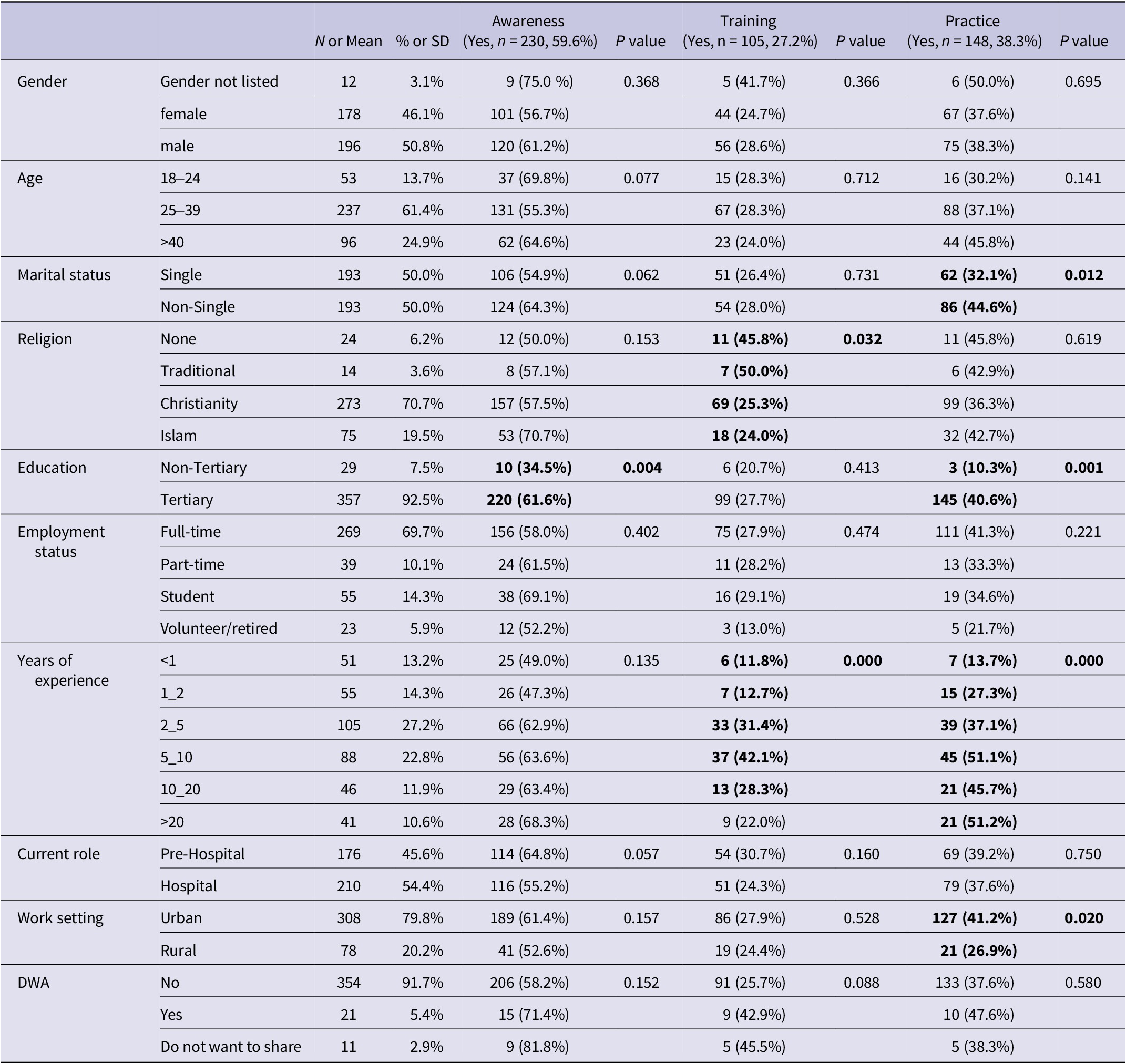
This study analyzed first responders’ awareness of Psychological First Aid (PFA), their level of PFA training, and the level of PFA utilization in emergency treatment in Nigeria. Table 1 shows the characteristics of the sample, with a sample size of 386. Regarding awareness, there was a significant difference (59.6%) in awareness between individuals with non-tertiary and tertiary education levels. Tertiary education shows a statistically significant correlation with higher awareness. Among those with tertiary education, 61.6% are aware, whereas only 34.5% of those with non-tertiary education are aware. This suggests that individuals with tertiary education are more likely to be aware than those without (P = 0.004, n = 230).
Characteristics of sample (N = 386)

* DWA: Disability Workplace Accommodation
For training, a significant difference of (27.2%) was found in training based on religious affiliation (P = 0.032) and years of experience (P < 0.001). These results indicate that religious affiliation and years of experience significantly impact the likelihood of receiving PFA training (n = 105). In practice, a significant difference of (38.3%) was observed between single and non-single individuals (P = 0.012, n = 148). There was also a significant difference in practice between individuals with non-tertiary and tertiary education levels (P = 0.001). Additionally, a significant difference in practice was found across different experience levels (P < 0.001) and between urban and rural work settings (P = 0.020). This suggests that marital status, education, years of experience, and work setting all influence the utilization of PFA in practice.
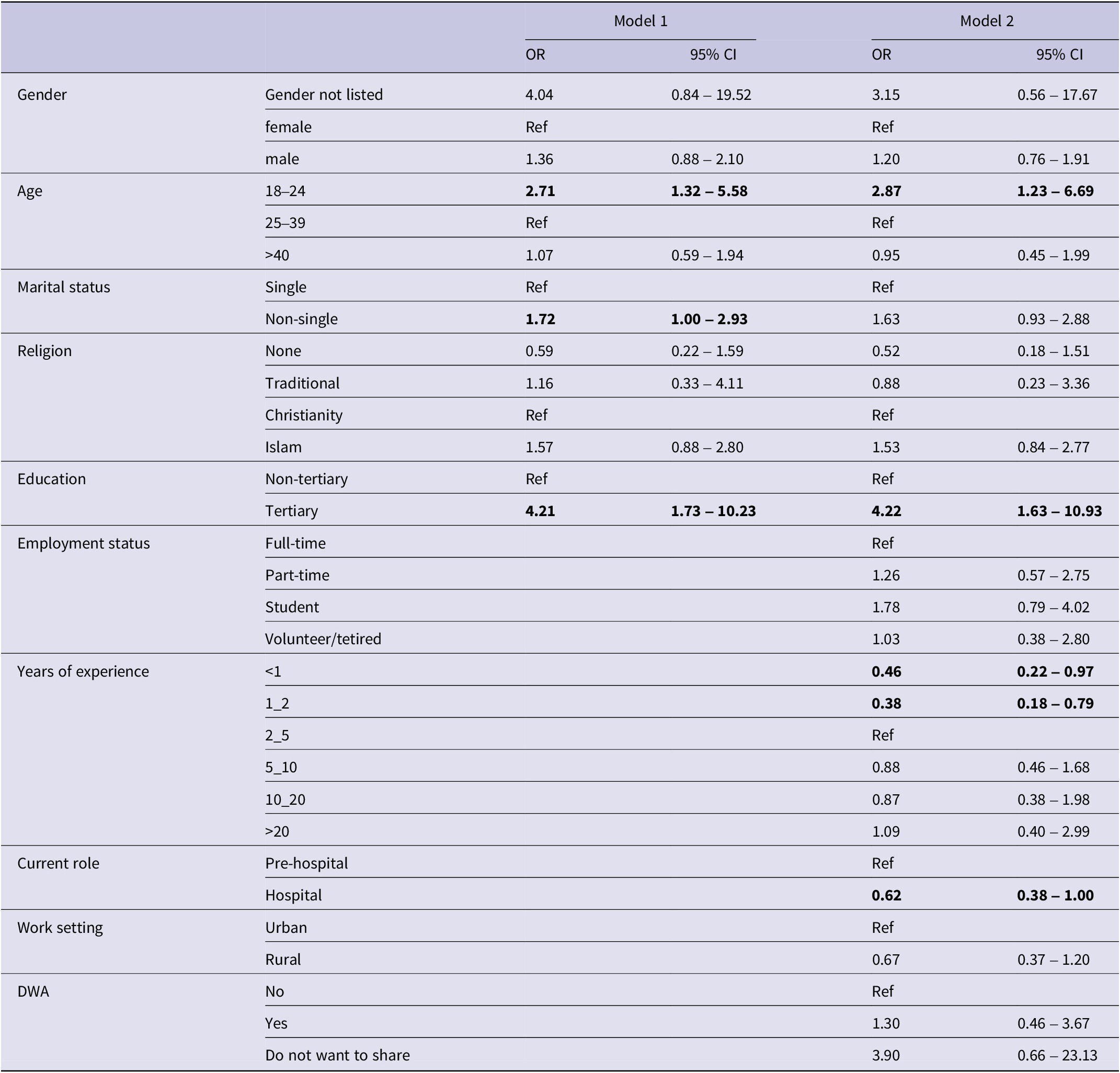
Logistics regression on the awareness of PFA is presented in Table 2. Age and Education as Predictors of PFA Awareness. Individuals aged 18-24 years have significantly higher odds of being aware of Psychological First Aid (PFA) than those aged 25-39. Specifically, in Model 1, the youngest age group has 2.71 times higher odds of being aware of PFA than other age groups. In Model 2, the same group has 2.87 times higher odds of having heard of PFA. Higher levels of education consistently correlate with greater awareness of PFA. This suggests that age and education are robust predictors of PFA awareness across different contexts and models. Marital Status and PFA Awareness, Model 1: Non-single individuals have 1.72 times higher odds of being aware of PFA than single individuals, indicating that marital status significantly influences PFA awareness when considering personal demographic characteristics alone.
Result of logistics regression on the awareness of PFA (N = 386)

* DWA: Disability Workplace Accommodation
Model 1: Adjusted Gender/Age/Marital Status/Religion/Education
Model 2: Model 1 + Employment Status/Years of Experience/Current Role/Work Setting/Disability Workplace Accommodation
Model 2: After adjusting for work-related demographics, the influence of marital status on PFA awareness becomes nonsignificant. This implies that work-related factors (e.g., employment status, years of experience, current role, work setting, and disability workplace accommodation) may overshadow the effect of marital status. Work Experience and PFA Awareness, less than 1 Year: Individuals with less than 1 year of work experience are 0.46 times less likely to be aware of PFA than those with 2-5 years of experience. 1 to 2 Years: Those with 1-2 years of work experience are 0.38 times less likely to be aware of PFA than those with 2-5 years of experience. Hospital first responders have 0.619 times lower odds of being informed about PFA than pre-hospital first responders. This indicates a trend where hospital first responders are less likely to be aware of PFA, though this finding has only marginal statistical significance.
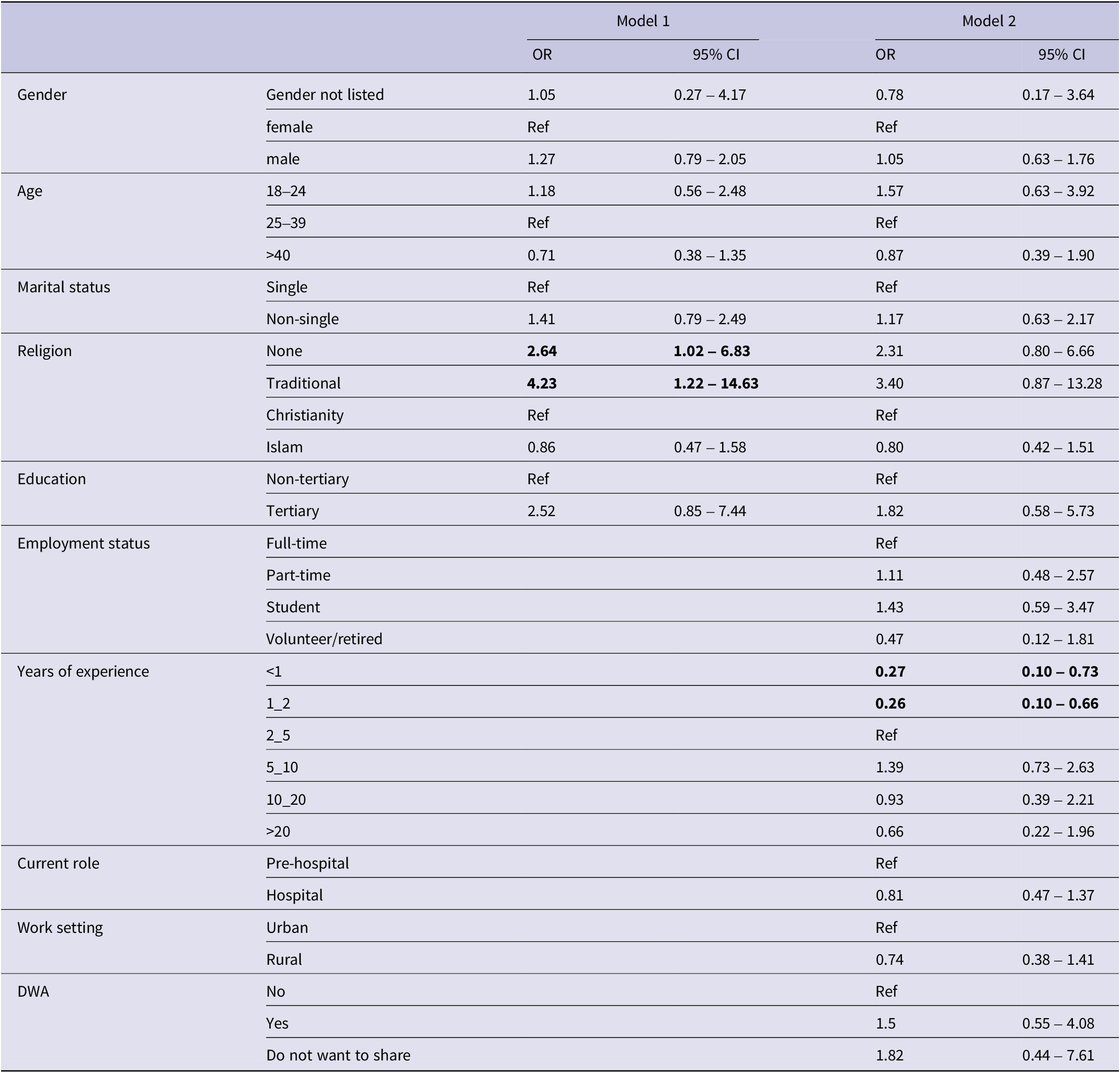
The result of the logistics regression for receiving training on PFA is presented in Table 3. Influence of Religion on PFA Training, Non-Religious and Traditional Religious Practitioners: In Model 1, individuals who identify as non-religious or traditional religious practitioners have significantly higher odds of receiving training on Psychological First Aid (PFA) compared to Christians: Non-religious individuals are 2.64 times more likely to receive PFA training. Traditional religious practitioners are 4.23 times more likely to receive PFA training. After adjusting for work-related demographics, the statistical significance of having a professional job as a first responder in improving access to PFA training is no longer present, regardless of an individual’s religious affiliation. This suggests that professional job status alone does not significantly impact training accessibility when other work-related factors are considered. Work Experience and PFA Training, less than 1 Year Experience: Individuals with less than 1 year of work experience have a significantly lower likelihood of receiving PFA training, with their probability decreased by 0.27 compared to those with 2-5 years of experience. 1 to 2 Years Experience: Similarly, those with 1-2 years of work experience have a decreased probability of 0.26 of receiving PFA training compared to those with 2-5 years of experience. The significant decrease in the likelihood of entry-level first responders (those with less than 2 years of experience) receiving PFA training highlights critical barriers to training accessibility. This issue underscores the urgent need to address and improve the availability of PFA training programs for new and willing first responders, ensuring they are adequately prepared to serve their communities.
Result of logistics regression for receiving training on PFA (N = 386)

* DWA: Disability Workplace Accommodation
Model 1: Adjusted Gender/Age/Marital Status/Religion/Education
Model 2: Model 1 + Employment Status/Years of Experience/Current Role/Work Setting/Disability Workplace Accommodation
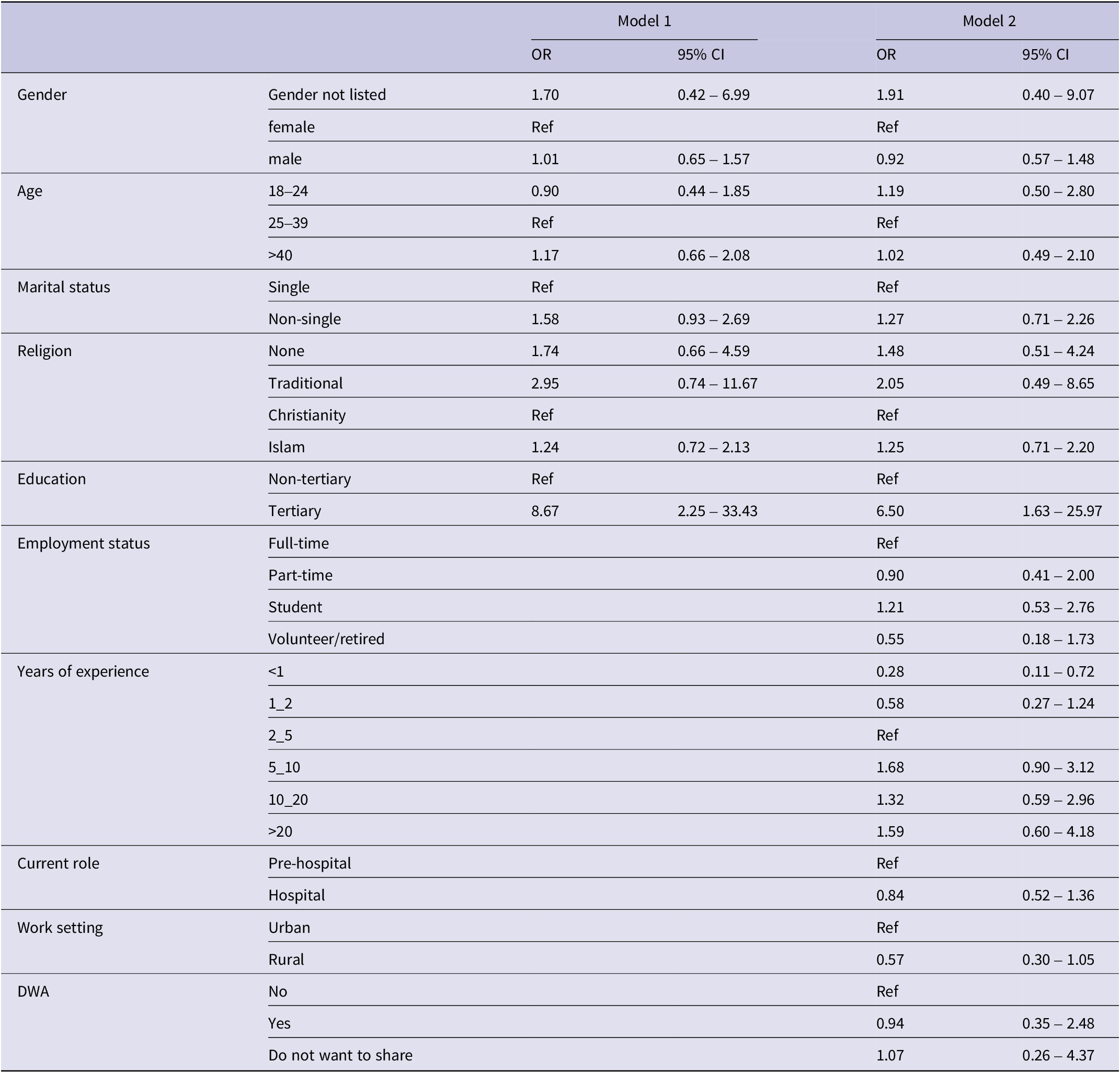
For Model 1, the probability of practicing Psychological First Aid is 8.67 times higher for those with tertiary education compared to those without, and this difference is statistically significant. In addition, when adjusted for Model 2, which includes work-related demographic qualifiers, in Model 2, tertiary-educated practitioners are 6.5 times more likely to practice PFA than non-tertiary-educated practitioners, as shown in Table 4, which is statistically significant. For Model 2, there is a statistically significant difference between the probability of practicing Psychological First Aid for those with less than 1 year of work experience and those with 2-5 years of work experience, with the former being 0.28 lower. This indicates that entry-level first responders have less practice or experience in PFA than other groups (see Table 4).
Result of logistics regression for practicing PFA (n = 386)

* DWA: Disability Workplace Accommodation
Model 1: Adjusted Gender/Age/Marital Status/Religion/Education
Model 2: Model 1 + Employment Status/Years of Experience/Current Role/Work Setting/Disability Workplace Accommodation
Qualitative Findings
The qualitative interviews provided deeper insights into the trends identified in the quantitative analysis, which showed that education, age, and work experience significantly influence awareness, training, and practice of Psychological First Aid (PFA). A thematic analysis approach was applied to the qualitative data, ensuring that emerging themes were systematically identified and aligned with the study objectives. The selection of qualitative excerpts was based on their relevance to these key themes: education and awareness, barriers to training, work experience and practice, and the role of cultural and contextual factors in PFA implementation.
Participants, coded anonymously as Participants 1-17, shared personal experiences that illustrated these themes. For example, education and awareness emerged as a crucial factor, with higher levels of formal education correlating with increased knowledge of PFA. A 24-year-old medical student with a degree in Microbiology emphasized the growing awareness of mental health among younger generations and their proactive approach to learning about PFA through online resources and formal training. They noted, “Also, the younger generation is not putting as much stigma on mental health or anything about it compared to the older generation. So yes, it may gravitate towards understanding the world of psychology or psychological first aid and all of that.”
Conversely, barriers to training were highlighted by professionals with competing responsibilities or limited exposure to structured PFA education. A 30-year-old medical doctor with extensive clinical experience but familial obligations had limited awareness of PFA but expressed a willingness to learn, stating, “I just never took note of it. Also, I’ve done a bit of fieldwork, but not too much. However, the fieldwork I’ve done is not psychologically related. But now that I know about this, why not if it will improve my practice?”
The theme of work experience and practice revealed that frontline health care professionals often encountered situations where PFA skills were essential, despite inconsistent training opportunities. A 26-year-old pharmacist emphasized the necessity of PFA training in community pharmacy settings due to frequent patient interactions. In contrast, a 20-year-old nurse described the gap between awareness and formal training, noting that their knowledge came from personal research rather than structured education: “Well, I read just, I browsed about it online, I just read some articles I saw online about it. I wasn’t trained about it; I wasn’t trained.”
Additionally, the importance of cultural and contextual factors was underscored by participants who advocated for culturally sensitive curricula and scenario-based training. A public health practitioner and a psychologist emphasized the need for PFA training tailored to specific community needs. A paramedic working with the International Organization for Migration illustrated the practical application of PFA in aiding refugees, highlighting the critical need for immediate psychological support in crises: “We see different conditions. We break down some of them while trying to assess or provide medical management. You see a lot of reactions coming from them because of the experiences they have had.”
By systematically coding and analyzing these narratives, the qualitative findings provide a nuanced understanding of how education, work experience, and contextual challenges shape PFA practices. This enrichment of the quantitative data suggests targeted interventions to improve PFA training and support for first responders, reinforcing a broader trend towards prioritizing mental health awareness across diverse professional domains.
Discussion
Psychological First Aid (PFA) is a cornerstone of the holistic approach to emergency response. It aims to address the immediate psychological needs of individuals affected by crises. Understanding the level of PFA awareness among these responders is paramount for evaluating the effectiveness of current protocols and identifying areas for improvement.
The findings from this study shed light on the varying levels of PFA awareness among first responders, unveiling significant disparities based on educational level and years of experience. Among those with tertiary education, 61.6% were aware of PFA, while only 34.5% of respondents with non-tertiary education were. This difference indicates the role of education in raising awareness among responders, which is a crucial step towards administering PFA interventions. However, it does not necessarily imply that this awareness translates into the skill or knowledge required for effective PFA-style care.
The findings of this study also showed that respondents between the ages of 18-24 years, as indicated in model 1, are 2.71 times more likely to be aware of PFA compared to those who are 25 to 39 years old. This report is similar to the study by Hart et al., who affirmed that younger age groups are more likely to be aware of PFA.Reference Hart, Morgan and Rossetto 26 However, a study by Figueroa et al. stated that older age groups are more likely to be aware of PFA;Reference Figueroa, Cortés and Marín 27 the difference in both studies may be due to the different study populations. Similar to Model 1, respondents between the ages of 18 and 24, as indicated in Model 2, are 2.87 times more likely to have heard of PFA compared to respondents between the ages of 25 and 39. A prior study by Ndile et al. noted that age and education are major factors influencing the awareness of PFA among individuals.Reference Ndile, Saveman and Outwater 28
This study also revealed that respondents with less than 1 year of work experience and those between 1-2 years of work experience are 54% and 62% less likely to have heard of PFA than respondents with 2-5 years of work experience. This report is similar to the study conducted by Geoffrion et al., who reported that first responders with over 10 years of experience are more likely to have heard about PFA.Reference Geoffrion, Leduc and Bourgouin 29 This highlights the gap in on-the-job training and mentorships for new responders, indicating a need for targeted intervention to boost their skills.
The findings from this study provide insight into PFA training practices for first responders, showing differences connected to educational level and religious beliefs. The probability of respondents who identify as non-religious or traditional religious practitioners receiving training on Psychological First Aid is 2.64 and 4.23 times more likely than Christians, respectively. This is similar to the report of Kunzler et al., who stated that Christians are less likely to receive training on PFA than non-traditional practitioners.Reference Kunzler, Helmreich and Chmitorz 30 This report suggests that potential cultural factors play a role in access to educational resources and training opportunities.
This study noted that respondents with less than 1 year of experience or 1-2 years of experience are 73% and 74% less likely to receive training on Psychological First Aid than those with 2-5 years of experience. This report echoes Geoffrion et al., who noted that first responders with over 10 years of experience are more likely to receive PFA training.Reference Geoffrion, Leduc and Bourgouin 29 Also, this study acknowledged the significance of PFA training for first responders. Another interviewee noted, “I work as a pharmacist. I feel like people working in the community should have training in Psychological First Aid. Still, I haven’t been in the community or retail pharmacy scene where you see patients face to face, and they can bring cots and other things to you." This assertion aligns with the findings of O’Toole, Mulhall, and Eppich, who explained that training and workplace culture also play a significant role in shaping knowledge and understanding of PFA among first responders.Reference O’Toole, Mulhall and Eppich 31 Individuals who received formal training in PFA, such as the Red Cross team lead and disaster manager, demonstrated a deeper knowledge of the significance of providing psychological support following trauma, which validated the opinion of Participant 11, who affirmed that it made them happy as certain people believe that psychological support was important after a traumatic experience. This emphasized the importance of PFA training and its recognition among first responders.
This study examined the accessibility of PFA practices for victims of emergencies, one of the key findings concerning the difference in PFA practices based on educational level and years of experience among responders. Respondents with tertiary education are 8.67 times more likely to practice Psychological First Aid compared to respondents without tertiary education, a similar finding to Sijbrandij et al., who stated that respondents without tertiary education are less likely to practice Psychological First Aid.Reference Sijbrandij, Horn and Esliker 23
Respondents with less than 1 year of work experience are 72% less likely to practice Psychological First Aid compared to respondents with 2-5 years’ work experience,Reference Islam and Mozumder 32 highlighting the disparity in training accessibility and its impact on the availability of psychological support in emergencies. Prior studies by Wang et al. stated that Victims’ access to PFA during emergencies often depends on the availability and implementation of PFA protocols within health care settings.Reference Wang, Norman and Edleston 36
Additionally, a participant pointed out that the lack of institutional support and established procedures for PFA limits its application. “I have not been able to apply Psychological First Aid in real-world emergencies because the center I’m learning in and practicing in does not have a protocol. So, I couldn’t implement it based on my knowledge without a hospital protocol." This aligns with a previous study by Ndile et al., who highlighted organizational barriers, such as the absence of protocols for PFA in health care settings, and how this may impact the availability and utilization of PFA services. Without formal guidelines and institutional support, responders may struggle to integrate PFA into their practice, limiting access to psychological support for individuals in crises.Reference Ndile, Saveman and Outwater 28
Limitations and Strengths of this Study
This study on the awareness and practice of Psychological First Aid (PFA) among first responders in Lagos, Nigeria, has several limitations. The sample size is relatively small and may not fully represent the broader population of first responders in Nigeria, limiting the generalizability of the findings. Additionally, the study relies on self-reported data, which may be subject to response bias, where participants might overstate their knowledge or practice of PFA. The cross-sectional design captures a snapshot in time but does not account for changes in PFA awareness and practices over time. Furthermore, the study does not extensively explore the impact of organizational policies or specific training methods, which could significantly influence the effectiveness of PFA practices. Cultural and contextual factors unique to Lagos might not apply to other regions in Nigeria, affecting the transferability of the results.
Despite these limitations, the study has notable strengths. It provides valuable insights into PFA awareness and practices among first responders in a major Nigerian city, highlighting areas for improvement and potential interventions. Using a mixed-methods approach, combining quantitative and qualitative data, enhances the depth and richness of the findings. The study also sheds light on the importance of educational attainment and years of experience in influencing PFA practices, providing a basis for targeted training programs. These strengths contribute to a better understanding of the challenges and opportunities in implementing PFA among first responders in Lagos, Nigeria.
Conclusion
This study highlights the critical role of education, experience, and training in enhancing the awareness, practice, and delivery of Psychological First Aid (PFA) among first responders in Lagos, Nigeria. The findings reveal significant disparities in PFA awareness based on educational attainment, with those having tertiary education demonstrating higher awareness and practice levels. Additionally, younger first responders and those with more experience were more likely to be aware of and practice PFA, underscoring the importance of continuous education and professional development. Barriers such as limited training opportunities, cultural and religious influences, and the stigma surrounding mental health were identified as significant challenges in the effective implementation of PFA. These insights underscore the necessity for targeted interventions to address these gaps and enhance the capacity of first responders to provide timely and effective psychological support during emergencies.
Recommendations
This study provides several recommendations to improve the delivery of PFA in Nigeria. It is recommended that comprehensive training programs be developed and made accessible to all first responders, regardless of their educational background or years of experience. These programs should include culturally sensitive curricula that address the diverse needs of the Nigerian population and promote mental health awareness. Additionally, policies should be formulated to integrate PFA training into the standard training regimen for first responders and include continuous professional development opportunities. Efforts should also be made to reduce the stigma associated with mental health issues through public awareness campaigns and by incorporating mental health education into school curricula. Furthermore, establishing a robust support system for first responders, including access to mental health professionals and peer support networks, can enhance their resilience and ability to manage the psychological impacts of emergencies effectively.
Author contribution
-
1. Dr. Oluwaseun Adebayo Adewunmi: (Corresponding Author): Study design, data collection, data analysis, and manuscript drafting
-
2. Prof. Takeo Fujiwara: Supervision, methodology, and critical manuscript review
-
3. Prof. Nobutoshi Nawa: Data interpretation and critical manuscript review
-
4. Dr. Yu Par Khin: Methodological support, data interpretation, and manuscript review
-
5. Prof. Celina Mojisola Adewunmi: Data collection, data interpretation, and manuscript review
-
6. Ms. Eyitayo Lawal: Data collection, contribution to manuscript review, and analysis of public health implications
Funding statement
None declared.
Competing interests
The authors declare no competing interests.