Introduction
Substantial research has shown that marriage contributes to cardiovascular functioning (Zhang and Hayward, Reference Zhang and Hayward2006) and that such health benefits depend largely on the quality of marital relationships (Liu and Waite, Reference Liu and Waite2014). With growing prevalence of cardiovascular disease (CVD) in the United States of America (USA) and worldwide (Yusuf et al., Reference Yusuf, Reddy, Ôunpuu and Anand2001), increasing attention has been paid to how marital context contributes to the wellbeing of people living with CVD. While the associations of relationship quality with cardiovascular risks, mental health and survival of individuals diagnosed with CVD are well documented (Coyne et al., Reference Coyne, Rohrbaugh, Shoham, Sonnega, Nicklas and Cranford2001; Rohrbaugh et al., Reference Rohrbaugh, Cranford, Shoham, Nicklas, Sonnega and Coyne2002; Liu and Waite, Reference Liu and Waite2014), much less is known about how relationship quality affects their functional health.
The disablement process model posits that functional limitations are a critical pathway through which chronic disease pathology develops into disability and emphasises the salience of social contexts for modifying this process (Verbrugge and Jette, Reference Verbrugge and Jette1994). Disability is a major health complication of CVD (Masoudi et al., Reference Masoudi, Rumsfeld, Havranek, House, Peterson, Krumholz and Spertus2004) that undermines patients’ quality of life and independence, and causes substantial financial burdens on individuals and the US health-care system (Newschaffer et al., Reference Newschaffer, Liu, Sim, Remington, Brownson and Wegner2010). As marriage is an important social context for health, particularly among older adults (Umberson and Williams, Reference Umberson and Williams2005), it is critical to examine how relationship quality contributes to the progression of functional health after disease onset so that interventions for disease management can be better implemented. To this end, we used data from the 2006–2012 Health and Retirement Study (HRS) to investigate the link between relationship quality and functional limitations among older partnered adults diagnosed with CVD in the USA. Our study consists of three research objectives. First, we examine the associations of baseline positive and negative relationship quality with subsequent functional limitations in two-year and four-year follow-ups. Second, guided by previous work on marital quality and health, we evaluate health behaviours and psychological distress as possible explanations for the observed associations (Kiecolt-Glaser and Newton, Reference Kiecolt-Glaser and Newton2001). Lastly, informed by the status–resource interaction model of the cumulative advantage/disadvantage process (Choi and Marks, Reference Choi and Marks2013), we assess whether the association between relationship quality and functional limitations differs by individuals’ household income.
Relationship quality, CVD and functional health
The disablement process: functional limitations as a critical stage
The disablement process model provides a useful framework for conceptualising the development of physical limitations and disability after the onset of disease pathology, and how contextual factors, such as relationship quality, can shape the course of this disease process. In essence, the model postulates that disease pathology leads to physiological impairments in specific body systems, which in turn leads to functional limitations that ultimately progress into disability (Verbrugge and Jette, Reference Verbrugge and Jette1994). It is also suggested that functional limitations are a critical stage for the progression from disease to disability (Lawrence and Jette, Reference Lawrence and Jette1996).
The disablement process model not only delineates the pathways from illness to disability, but also accentuates the role of social contexts in modifying the course of the postulated pathways (Verbrugge and Jette, Reference Verbrugge and Jette1994; Jette et al., Reference Jette, Manago, Medved, Nickerson, Warzycha and Bourgeois1997). Given the significance of marriage and intimate partnerships for population health, assessing how relationship quality influences the development of functional limitations among older adults with CVD can inform us of how the progression into disability can be delayed or even prevented.
Why relationship quality matters
Relationship quality can have direct physiological impacts on the functional health of CVD patients. Both clinical and population-based studies have shown that relationship distress can cause physiological insults on the cardiovascular, neuroendocrine and immune systems (Robles et al., Reference Robles, Slatcher, Trombello and McGinn2014). For example, marital strains were associated with greater cardiovascular reactivity such as heightened blood pressure and faster heart rate (Robles and Kiecolt-Glaser, Reference Robles and Kiecolt-Glaser2003; Liu and Waite, Reference Liu and Waite2014), both of which are precursors of CVD and risk factors for functional decline (Karlamangla et al., Reference Karlamangla, Singer, McEwen, Rowe and Seeman2002). Additionally, recent studies reported significant associations between marital quality and metabolic disorders such as central obesity, high blood pressure and dyslipidemia (Whisman and Uebelacker, Reference Whisman and Uebelacker2012), all of which are associated with a higher risk of functional limitations (Penninx et al., Reference Penninx, Nicklas, Newman, Harris, Goodpaster, Satterfield, de Rekeneire, Yaffe, Pahor and Kritchevsky2009). Lower marital quality has also been linked to higher levels of inflammation (Donoho et al., Reference Donoho, Crimmins and Seeman2013), another risk factor for functional disability (Kuo et al., Reference Kuo, Al Snih, Kuo and Raji2012).
Additionally, relationship quality can affect the functional health of older adults with CVD via its impacts on psychological wellbeing (Kiecolt-Glaser and Newton, Reference Kiecolt-Glaser and Newton2001). Studies have shown that better relationship quality can help CVD patients develop psychological adjustments and buffer depression resulting from coping with the disease, thereby maintaining better functional health. In parallel, relationship distress may exacerbate adverse outcomes of CVD via psychological distress (Brecht et al., Reference Brecht, Dracup, Moser and Riegel1994; Rohrbaugh et al., Reference Rohrbaugh, Cranford, Shoham, Nicklas, Sonnega and Coyne2002; Roijers et al., Reference Roijers, Sunamura, Utens, Dulfer, ter Hoeve, van Geffen, Draaijer, Steenaard and van Domburg2016). Recent developments in behavioural cardiology have established psychological distress as a major risk factor for adverse cardiovascular outcomes, including decline in functional capacity (Das and O'Keefe, Reference Das and O'Keefe2006).
Lastly, relationship quality can influence the functional health of CVD patients via change in health behaviours. Studies have shown that relationship strains can induce or exacerbate unhealthy habits such as smoking and excessive drinking (Kiecolt-Glaser and Newton, Reference Kiecolt-Glaser and Newton2001), both of which can negatively affect the functional health of CVD patients (Fried and Guralnik, Reference Fried and Guralnik1997; Lin et al., Reference Lin, Guerrieri and Moore2011). Furthermore, it is well-documented that marriage benefits health through spousal health monitoring and the effectiveness of such health controls depends much on relationship quality (Waite and Gallagher, Reference Waite and Gallagher2000). Recent evidence also showed that greater health-related spousal support, such as listening to one's health concerns and assistance in health care, can encourage the adoption of healthy behaviours such as engagement in physical activity and healthy diet among heart disease patients (Franks et al., Reference Franks, Stephens, Rook, Franklin, Keteyian and Artinian2006), whereas relationship distress can hinder medication adherence (Cornwell and Waite, Reference Cornwell and Waite2012). Given the importance of self-care for managing CVD (Gallant, Reference Gallant2003), we expect that relationship quality could also affect the functional health of CVD patients via behavioural changes.
In general, the empirical work shows that better relationship quality is significantly associated with better mental health (Brecht et al., Reference Brecht, Dracup, Moser and Riegel1994; Roijers et al., Reference Roijers, Sunamura, Utens, Dulfer, ter Hoeve, van Geffen, Draaijer, Steenaard and van Domburg2016) and greater survival prospects among CVD patients (Orth-Gomer et al., Reference Orth-Gomer, Wamala, Horsten, Schenck-Gustafsson, Schneiderman and Mittleman2000; Coyne et al., Reference Coyne, Rohrbaugh, Shoham, Sonnega, Nicklas and Cranford2001).
In contrast, little is known about how relationship quality contributes to the development of functional limitations among CVD patients despite its significant role in the disablement process. However, a small but growing number of studies have shown that relationship quality is significantly associated with functional health in the general population. Overall, the studies found empirical support for both positive and negative relationship quality as risk/protective factors for disability. For example, Bookwala (Reference Bookwala2005) reported that greater negative marital quality was significantly associated with more physical disabilities among older adults. Choi and Marks (Reference Choi and Marks2006) showed that marital conflicts significantly increased functional impairments at a later time. As for positive marital exchanges, Warner and Kelley-Moore (Reference Warner and Kelley-Moore2012) demonstrated that positive marital quality buffered against the stressful effect of loneliness on functional limitations while Choi et al. (Reference Choi, Yorgason and Johnson2016) found that higher positive marital quality of older adults and their spouses was significantly linked to fewer physical disabilities later. Both theoretical and empirical work on relationship quality, CVD and functional health suggest that relationship quality should play a significant role in the functional health progression of CVD patients after the disease onset. Building on the existing work, we propose the following hypothesis:
• Hypothesis 1:
Higher baseline positive relationship quality is significantly associated with fewer functional limitations while higher baseline negative relationship quality is significantly linked to more functional limitations among older adults diagnosed with CVD over two-year and four-year follow-ups.
Additionally, past research showed that psychological distress and health behaviours were significant risk factors for adverse outcomes of CVD (Das and O'Keefe, Reference Das and O'Keefe2006) and linked to the development of functional disability (Fried and Guralnik, Reference Fried and Guralnik1997). These two factors are also theoretical pathways through which relationship quality affects physical health (Kiecolt-Glaser and Newton, Reference Kiecolt-Glaser and Newton2001). Thus, we also examine them as possible explanations for the observed associations. We hypothesise that:
• Hypothesis 2:
Psychological distress and health behaviours partially explain the link between relationship quality and functional limitations among older adults diagnosed with CVD.
The moderating role of household income
The principle of linked lives in the lifecourse framework maintains that individuals’ health is influenced by their socially significant others like spouses or co-habiting partners (Moen and Hernandez, Reference Moen, Hernandez, Elder and Giele2009). Viewed from this perspective, relationship quality can be seen as a resource/constraint that married or co-habiting couples develop over time and can influence the course of their health status (Umberson and Montez, Reference Umberson and Montez2010; Warner and Kelley-Moore, Reference Warner and Kelley-Moore2012). Furthermore, the significance of important social relationships for health may depend on other macrostructural contexts such as income or race/ethnicity (Choi and Marks, Reference Choi and Marks2013).
The status–resource interaction model of cumulative advantage/disadvantage proposed by DiPrete and Eirich (Reference DiPrete and Eirich2006) suggests that when examining the effects of individual resources or constraints on lifecourse outcomes such as health, one needs to also consider how these resources or constraints interact with structural status to have differential impacts on the outcomes. Guided by this model, we consider how the link between relationship quality and functional limitations among older adults with CVD may depend on household income as income, an important form of socio-economic resource, is consistently shown to impact health and disease outcomes, and is particularly crucial for shaping disease progression compared to education (Zimmer and House, Reference Zimmer and House2003; Herd et al., Reference Herd, Goesling and House2007). Following the status–resource interaction model and cumulative advantage theory, we expect that the association between relationship quality and functional health may be different across income levels where those with higher income benefit more from relationship support and those with lower income are more disadvantaged by relationship strains. Examinations of relationship quality, income and health are scarce. A recent study by Choi and Marks (Reference Choi and Marks2013) provides a good example. They found that increases in marital happiness were associated with improvements in physical health primarily for higher-educated individuals whereas increases in marital conflicts were linked with more physical limitations for individuals with lower income. Thus, we propose that
• Hypothesis 3:
The association between higher positive relationship quality and fewer functional limitations among older adults with CVD is stronger for those with higher household income while the link between higher negative relationship quality and more functional limitations is stronger for those with lower income.
Methods
Data
We used data from the HRS 2006–2012, a multi-stage longitudinal household survey with a probability sample representative of non-institutionalised civilian adults aged 50 years and older in the USA with over-samples of Blacks, Hispanics and residents of the state of Florida. The HRS routinely collects rich information on respondents’ socio-demographic and socio-economic characteristics and their health conditions biennially. Variables used in this study are from individual HRS waves, the 2014 tracker file and the RAND HRS Data Version N (RAND Center for the Study of Aging, 2016).
To understand better the psycho-social experience of US older adults, the HRS launched a pilot study in 2004 and officially included a module in 2006 to collect psycho-social information of the respondents with self-administered leave-behind questionnaires. The HRS conducts the leave-behind questionnaires on a rotating basis with a random half of the total 2006 sample surveyed in 2006, and the other half in 2008, and collects longitudinal information on the relationship quality every four years (Smith et al., Reference Smith, Fisher, Ryan, Clarke, House and Weir2013). Measures of relationship quality used in this study are from the baseline psycho-social modules in 2006 and 2008 (Time 1 (T1)) and their respective four-year follow-up in 2010 and 2012 (T3).
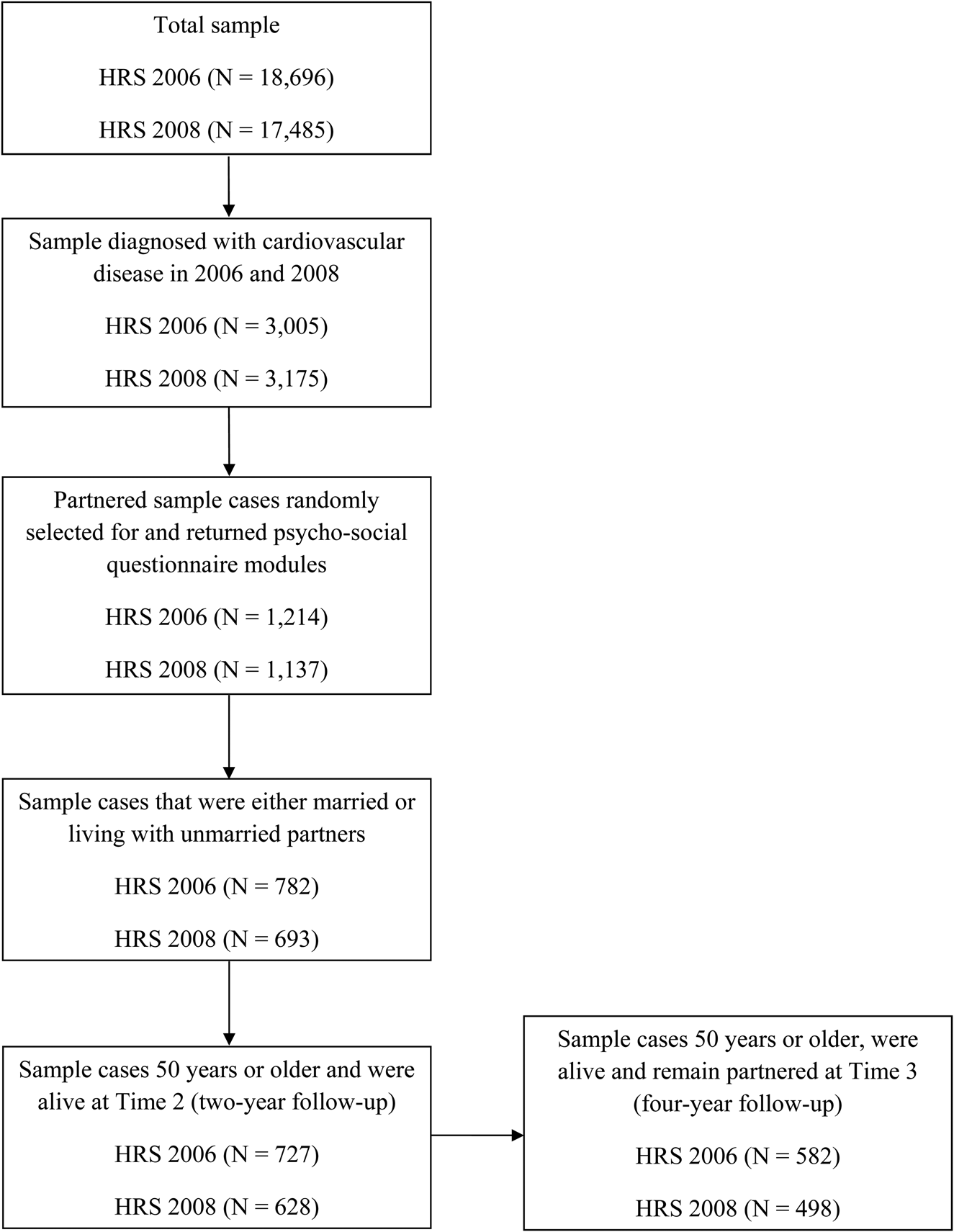
Our study focuses on partnered older adults in the US diagnosed with CVD. Respondents with CVD were identified between 1992 and 2008 through their self-reported heart problems (e.g. heart attack, coronary heart disease or heart failure) or stroke (including transient ischaemic attack) diagnosed by a doctor. As our primary objective was to examine the health implications of relationship quality, we did not distinguish between union types and the term ‘spouse’ was used throughout the text to refer to either marital spouses or co-habiting partners. Among the 2006 and 2008 HRS respondents who were diagnosed with CVD, randomly selected and returned the psycho-social questionnaires, 1,475 older adults reported being partnered, of whom 1,414 were married and 61 were co-habitors. Our analytic samples came from these 1,475 individuals. Respondents’ union types at T1 were controlled for in all analytic models. Figure 1 shows our detailed sample selection procedures.
Flow chart of sample selection procedure for the current study.

Our analyses consisted of two parts, the two-year (2006/2008–2008/2010) and four-year follow-ups (2006/2008–2010/2012). The two-year follow-up analysis examined how relationship quality at T1 (2006/2008) was prospectively associated with functional limitations at T2 (2008/2010). The sample used in this analysis included 1,355 older adults who were at least 50 years old at T1 and alive at T2. The four-year follow-up analysis examined how relationship quality at T1 was prospectively associated with functional limitations at T3 (2010/2012), controlling for relationship quality at T3. A total of 1,080 older adults who were alive and remained partnered at T3 were used in the four-year analysis.
Measures
Functional limitations was created by totalling respondents’ answers across 12 questions on difficulty in performing the following tasks (no difficulty = 0 versus at least some difficulty = 1): ‘walking several blocks’, ‘jogging one mile’, ‘walking one block’, ‘sitting for about two hours’, ‘getting up from a chair after sitting for long periods’, ‘climbing several flights of stairs without resting’, ‘climbing one flight of stairs without resting’, ‘lifting or carrying weights over 10 lbs [approximately 4.5 kilograms]’, ‘stooping, kneeling or crouching’, ‘reaching arms above shoulder level’, ‘pushing or pulling large objects’, and ‘picking up a dime [coin] from the table’. The scores ranged from 0 to 12.
Relationship quality was measured by seven questions that tapped into respondents’ perceived support from their spouses, an important dimension of relationship quality. Three questions assessed respondents’ perceptions of spouses’ positive support: (a) ‘How much do they really understand the way you feel about things?’, (b) ‘How much can you rely on them if you have a serious problem?’ and (c) ‘How much can you open up to them if you need to talk about your worries?’ Four questions evaluate respondents’ perceptions of spouses’ negative behaviours: (a) ‘How often do they make too many demands on you?’, (b) ‘How much do they criticise you?’, (c) ‘How much do they let you down when you are counting on them?’ and (d) ‘How much do they get on your nerves?’ The response categories for these seven questions were (1) a lot, (2) some, (3) a little and (4) at not all. Respondents’ raw values were reverse-coded so that higher values indicated more positive/negative behaviours from spouses. The Cronbach's alpha for the positive dimension items was 0.78 and 0.76 for negative items in our sample, indicating satisfactory internal consistency across the items.
Past research suggested that marital quality consisted of both positive and negative dimensions, two distinct constructs not exclusive of each other (Fincham and Linfield, Reference Fincham and Linfield1997). Following the suggestion of the HRS manual (Smith et al., Reference Smith, Fisher, Ryan, Clarke, House and Weir2013) and past research (e.g. Choi et al., Reference Choi, Yorgason and Johnson2016), we created two summary scores for positive and negative relationship quality by summing up the values across the items and taking the average respectively for the positive and negative dimensions. The two summary measures were centred at their respective mean values when entered in the models.
Health behaviours were indexed by drinking, smoking, physical activity and body weight. Drinking was recoded into three categories: abstainers, light to moderate drinkers (one to two drinks per day; reference category) and heavy drinkers (three drinks or more) (Zhang and Hayward, Reference Zhang and Hayward2006). Smoking included the following categories: non-smokers (reference category), past smokers and current smokers. Physical activity was a binary indicator of whether respondents engaged in vigorous physical activity at least more than once a week (no = 0). Body weight, measured by the Body Mass Index, was included as an indicator for health behaviour because it was not only a significant risk factor for CVD but also reflected one's health behaviour and lifestyle. All health behaviours were measured at baseline.
Psychological distress was indexed by depressive symptoms and diagnosed emotional problems. Depressive symptoms were measured by a short eight-item version of the Center for Epidemiological Studies Depression Scale asking whether respondents experienced the following feelings in the past week: ‘depressed’, ‘everything is an effort’, ‘restless sleep’, ‘lonely’, ‘sad’, ‘could not get going’, ‘happy’ and ‘enjoying life’. We used the summary score created by the RAND HRS data-set, ranging from 0 to 8, with higher values indicating more depressive symptoms. Emotional problems were measured by respondents’ self-reported diagnosis of any emotional, nervous or psychiatric problems (no = 0). The two psychological indicators were measured at baseline.
We controlled for a series of covariates, including socio-demographic and socio-economic variables and respondents’ social integration across all the models. Gender was a binary indicator (male = 0). Age at baseline (centred at age 50) and age of diagnosis were controlled for their close links to functional ability and CVD severity. Race/ethnicity included non-Hispanic white (reference category), non-Hispanic black, non-Hispanic other races and Hispanic. Birthplace was measured by a dummy indicator of South versus non-South regions (reference category). Immigration status was a binary indicator (immigrants = 0). Current union status at baseline included the first-time married (reference category), remarried and co-habiting. Two chronic conditions at baseline were also controlled: respondents’ self-reported diagnosis of hypertension (no = 0) and diabetes (no = 0). The analysis of the two-year follow-up also controlled for whether respondents remained partnered after two years (no = 0). Approximately 93.75 per cent (N = 1,331) remained partnered after two years among the 1,355 respondents at baseline.
Baseline socio-economic conditions were controlled with the following four indicators. Education was measured by years of formal schooling. Annual household income was measured in nominal dollars by the sum of all income from the respondent and the spouse, not including other household members. Net household assets were measured by the sum of all wealth components (excluding the second residency) minus all debts. Missing cases on household income and net assets were imputed by the RAND HRS. The imputation procedures were implemented in a wave-specific and progressive fashion, depending on the type of missing cases. Readers interested in detailed imputation methodology can refer to the latest report contributed by the RAND Corporation (Pantoja et al., Reference Pantoja, Bugliari, Campbell, Chan, Hayden, Hayes, Hurd, Main, Mallet, McCullough, Meijer, Moldoff, Rohwedder and St. Clair2018).
Both income and net assets were adjusted for household size and naturally logged. The adjusted household income was further centred at its median value. Insurance status was coded as ‘0’ if respondent reported not having any kind of public or private health insurance and ‘1’ if at least one type of health insurance. To control for respondents’ other social integration, all the models were adjusted for whether respondents had living children (no = 0), siblings (no = 0) and religious preference (no = 0). Lastly, baseline survey wave (year 2006 = 0 versus 2008 = 1) and baseline functional limitations were controlled in all the models.
The proportion of missing values in our analytic sample is less than 4 per cent. We handled missing values with multiple imputation. Ten multiply imputed data-sets were produced using the PROC MI procedure in SAS 9.2, and the model results were consolidated with PROC MIANALYZE.
Analytic approach
We used a lagged dependent variable approach to examine the links between baseline relationship quality (i.e. T1) and subsequent functional limitations in two (i.e. T2) and four years (i.e. T3). Baseline functional limitations, socio-demographic, socio-economic and social integration covariates, and survey years were controlled in all the models. Model 1 examined the association between baseline positive/negative relationship quality and functional limitations at T2 and T3, respectively. Models 2 and 3, respectively, adjusted for health behaviours and psychological distress to assess these two factors as possible explanations. Model 4 controlled for all the covariates. The final model added interaction terms to test whether the link between relationship quality and functional limitations varied by household income. Additionally, in our analysis of the four-year follow-up, we also controlled for change in positive and negative relationship quality over the four-year span in all the models.
To control for potential bias introduced by sample attrition due to premature mortality (as couples with poor relationship quality may have higher risk of death than their counterparts with good relationship quality), we adopted a two-stage Heckman approach to control for mortality selection (Liu, Reference Liu2012; Umberson et al., Reference Umberson, Liu and Powers2009). First, we used the entire HRS sample at T1 to predict T2/T3 probability of death by estimating discrete hazard models with baseline covariates including age, gender, race/ethnicity, education, household income, insurance status, smoking and depression. Then, we included the predicted probability of death at T2/T3 as a control variable in all the models.
Multi-level linear regression models were employed to assess the association between relationship quality and functional limitations to control for clustering effects at the household level because more than 15 per cent of our respondents were partnered couples in the same household. Results from the unconditional model (not shown here) indicated that approximately 24 per cent of the total variance in T2 functional limitations occurred at the household level and 15 per cent in T3 functional limitations, lending empirical support for our using multi-level models.
Results
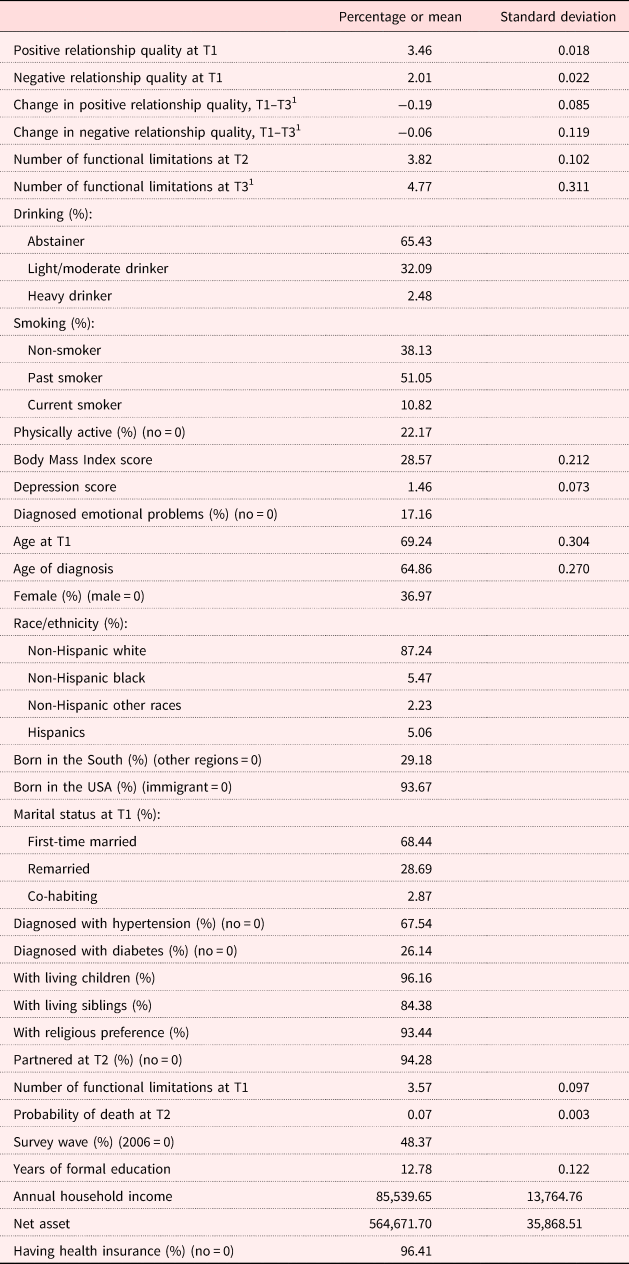
Table 1 shows that the average age at baseline for our sample was about 70 years old, 63 per cent of the respondents were men and, on average, they had at least a high school degree. Most respondents were former smokers and light/moderate drinkers at baseline, and physically inactive. The average number of depressive symptoms was approximately 1.5 out of a total of 8, and over 17 per cent of the respondents reported having emotional problems at baseline. More than two-thirds of the respondents were diagnosed with hypertension and over a quarter with diabetes, both of which are highly correlated with CVD. Most remained partnered two years later at T2.
Weighted sample characteristics

Notes: N = 1,355. T1: Time 1. T2: Time 2. T3: Time 3. USA: United States of America. 1. The sample size for these measures is 1,080, i.e. the four-year follow-up sample.
Relationship quality and functional limitations of older adults with CVD
Two-year follow-up
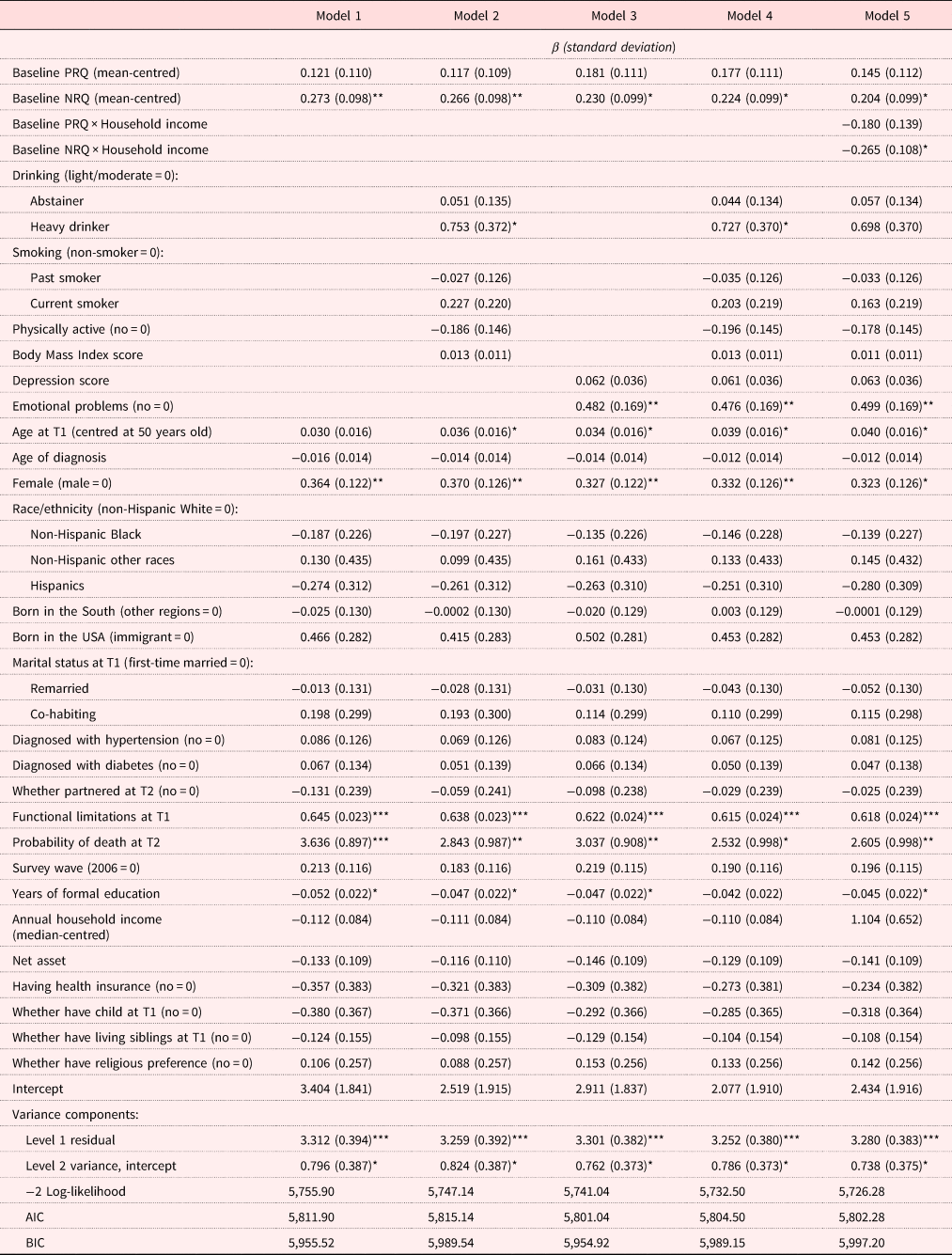
Model 1 in Table 2 shows that positive relationship quality at T1 was not significantly associated with T2 functional limitations among older adults diagnosed with CVD (β = 0.121, p = 0.271). In contrast, negative relationship quality was significantly linked to more functional limitations two years later (β = 0.273, p = 0.006). Model 2 tests health behaviours as a possible explanation for the association observed in Model 1. The results show that the estimated coefficient for negative relationship quality only changed slightly with additional adjustments for health behaviour indicators. Model 3 assesses psychological distress as another explanation. Adjusting for psychological distress reduced the estimated coefficient of negative relationship quality by more than 15 per cent ([(0.273–0.230)/0.273] × 100), suggesting that psychological distress was likely an explanation for the link between negative relationship quality and functional limitations among older adults with CVD. Negative relationship quality remained significantly associated with functional limitations after the model adjusted for psychological distress (β = 0.230, p = 0.02). Model 4 controlled for all the covariates, and the association between negative relationship quality and functional limitations remained statistically significant (β = 0.224, p = 0.023).
Multi-level models of relationship quality and functional limitations among US older adults with cardiovascular disease, two-year follow-up
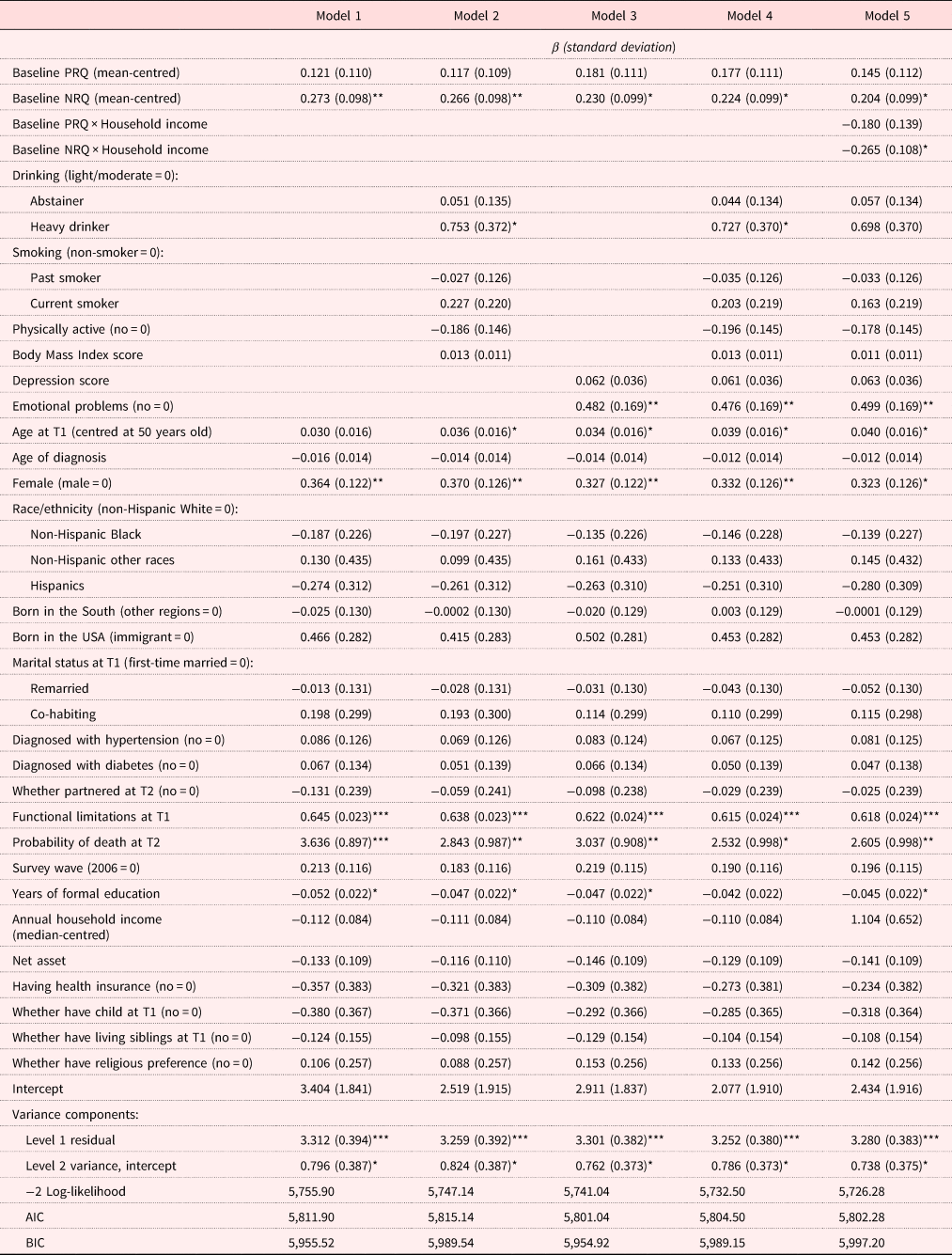
Notes: N = 1,355. T1: Time 1. T2: Time 2. PRQ: positive relationship quality. NRQ: negative relationship quality. USA: United States of America. AIC: Akaike information criterion. BIC: Bayesian information criterion. Annual household income and net asset have been naturally logged and adjusted for household size.
Significance levels: * p < 0.05, ** p < 0.01, *** p < 0.001.
Four-year follow-up
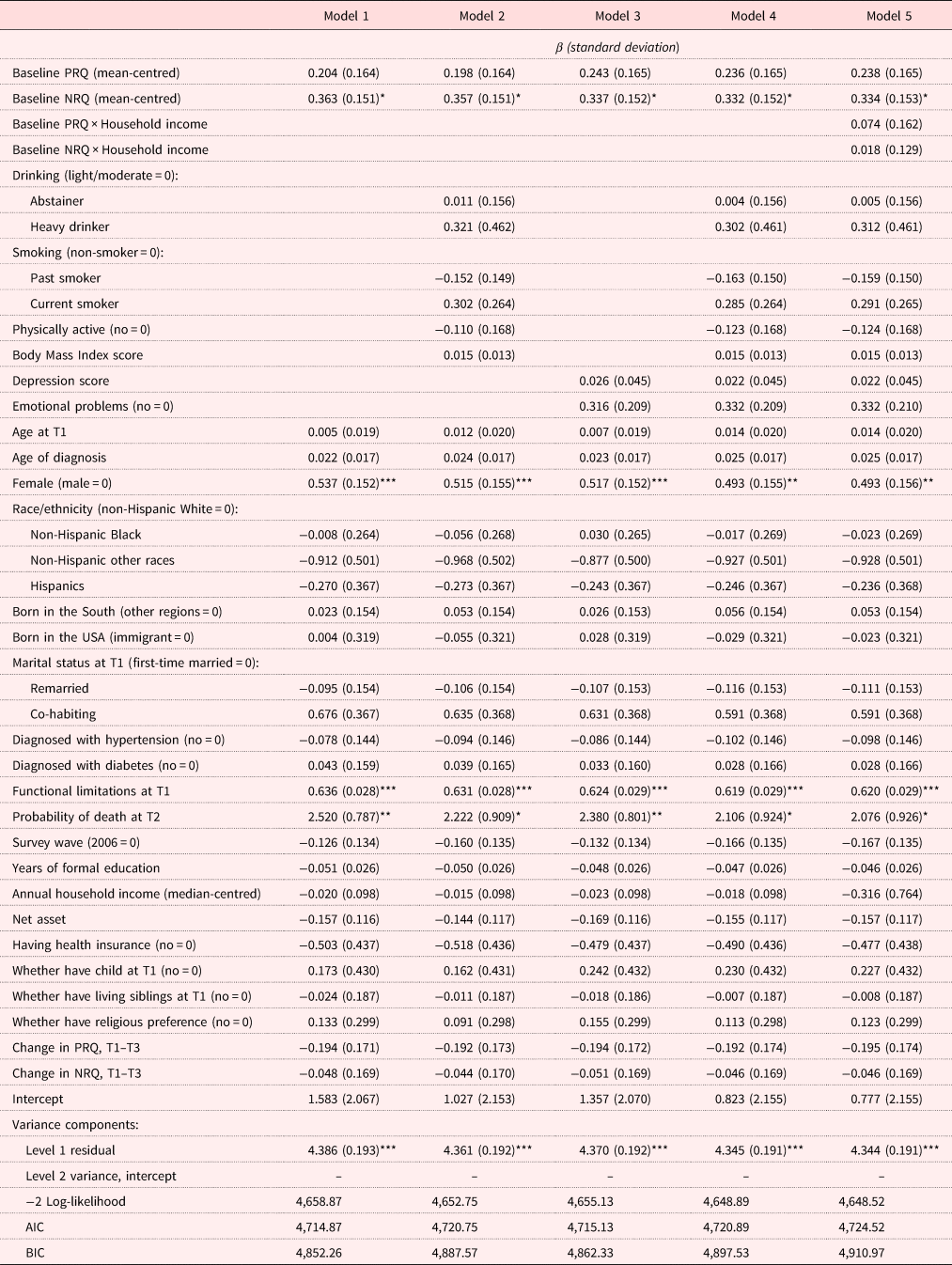
Model 1 in Table 3 demonstrates the link between baseline relationship quality and functional limitations over a four-year span. The results are consistent with our analysis of the two-year follow-up. While baseline negative relationship quality was significantly associated with increased functional limitations among older adults with CVD (β = 0.363, p = 0.02), there was no significant link between positive relationship quality and functional limitations (β = 0.204, p = 0.212). Model 2 shows that adjusting for health behaviours barely changed the estimated coefficient of negative relationship quality whereas Model 3 suggests that controlling for psychological distress further reduced the estimated coefficient of negative relationship quality by approximately 7 per cent ([(0.363–0.337)/0.363] × 100). Model 4 shows that negative relationship quality was still significantly associated with increased functional limitations in four years (β = 0.332, p = 0.03) after adjustments for all the covariates.
Multi-level models of relationship quality and functional limitations among US older adults with cardiovascular disease, four-year follow-up
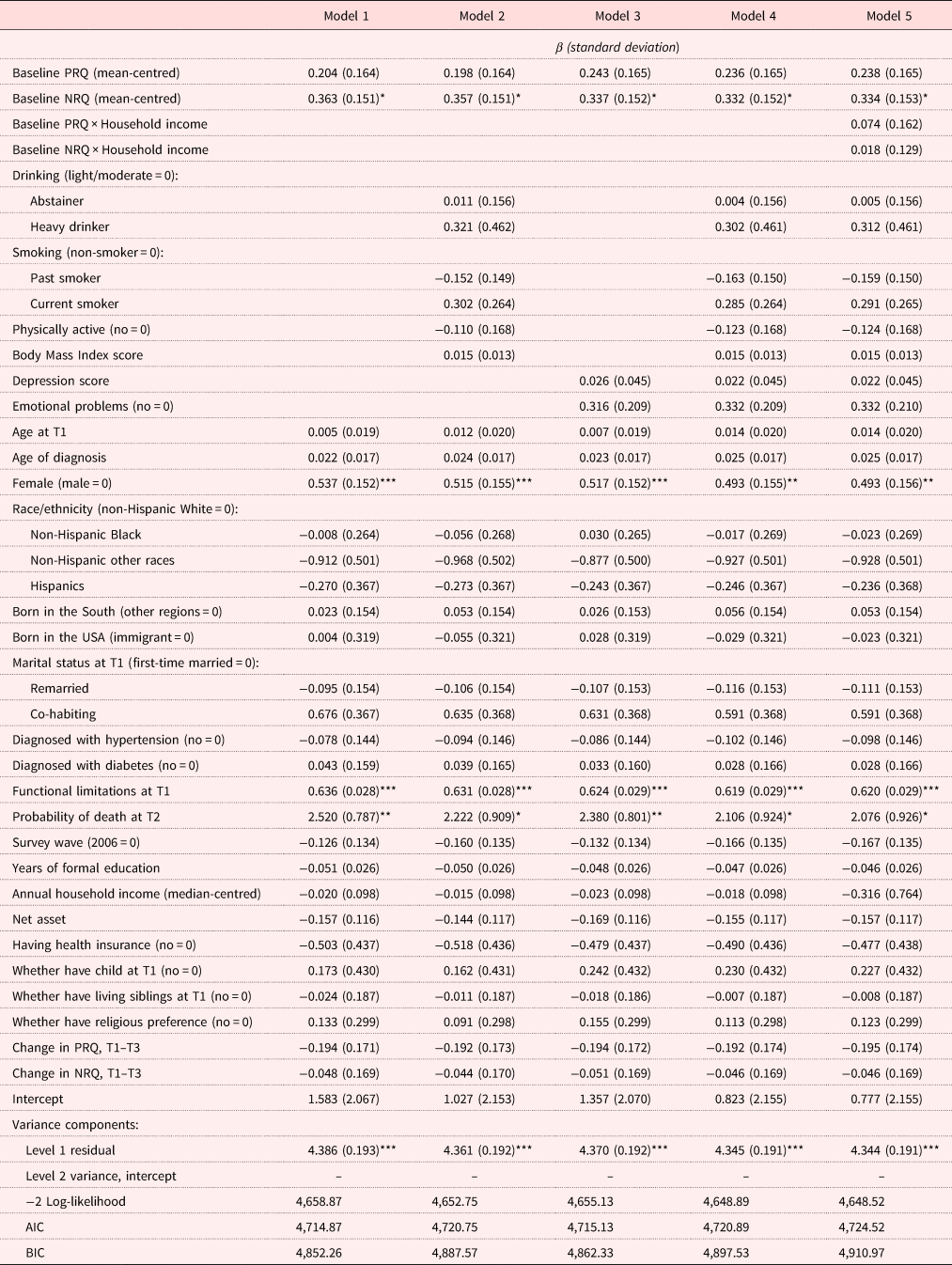
Notes: N = 1,080. T1: Time 1. T2: Time 2. T3: Time 3. PRQ: positive relationship quality. NRQ: negative relationship quality. USA: United States of America. AIC: Akaike information criterion. BIC: Bayesian information criterion. Annual household income and net asset have been naturally logged and adjusted for household size.
Significance levels: * p < 0.05, ** p < 0.01, *** p < 0.001.
Comparing the results in Models 2 and 3 in both Tables 2 and 3 suggests that psychological distress played a more important role than health behaviours in explaining the link between negative relationship quality and functional limitations among older adults with CVD.
Does the association between relationship quality and functional limitations vary by levels of household income?
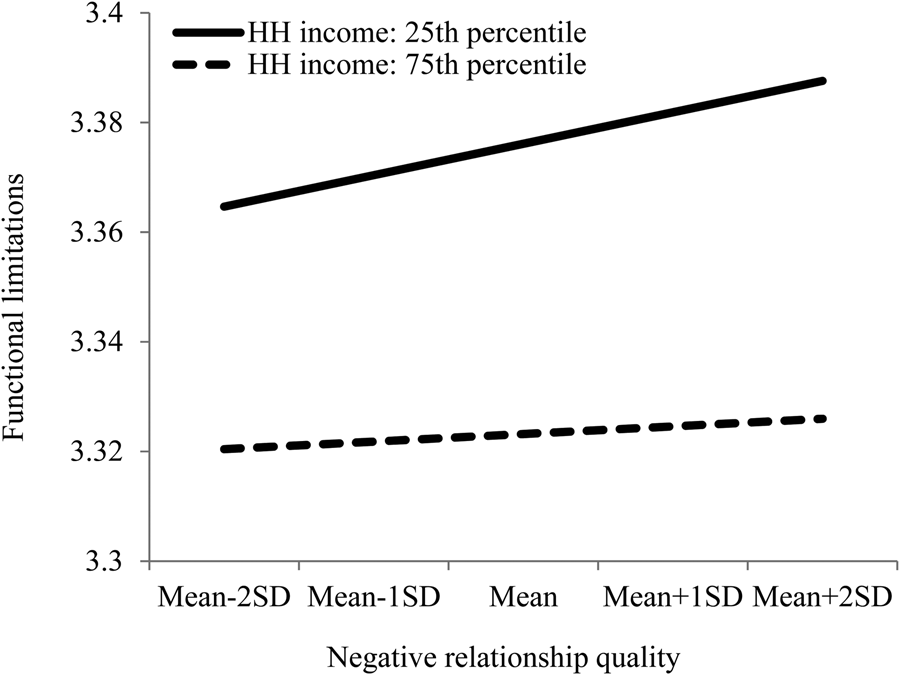
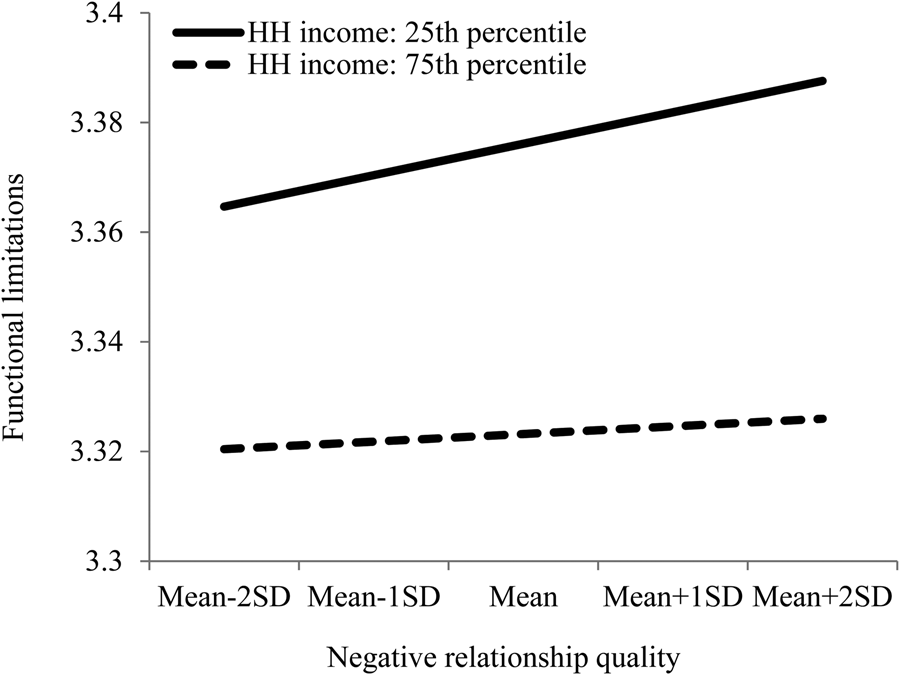
Model 5 in both Tables 2 and 3 tests whether the association between relationship quality and functional limitations among older adults with CVD varied by levels of annual household income. The results in Table 2 show that while there was no significant interaction effect between positive relationship quality and annual household income on functional limitations in a two-year follow-up, the link between negative relationship quality and functional limitations significantly varied by household income. While the main effect of negative relationship quality was significant and positive (β = 0.204, p = 0.039), the interaction effect was significant and negative (β = −0.265, p = 0.014), suggesting that baseline negative relationship quality was associated with worse functional limitations more strongly for older adults with lower household income over the two-year follow-up. In other words, higher household income buffered the effects of negative relationship on functional limitations. In contrast to the analysis of the two-year follow-up, Model 5 in Table 3 shows that there was no significant interaction between either positive or negative relationship quality at baseline and household income in relation to subsequent functional limitations over the four-year span.
To illustrate this interactive relationship, we plotted estimated numbers of functional limitations at different levels of negative relationship quality (i.e. mean, mean ± 1 standard deviation (SD) and mean ± 2SD) by low- versus high-income groups (25th versus 75th percentile) in Figure 2 based on the results of Model 5 in Table 2. The figure clearly shows that the lower-income group (i.e. 25th percentile) had a steeper increase in functional limitations with increasing negative relationship quality compared to the higher-income group (75th percentile).
Estimated number of functional limitations and negative relationship quality: 25th versus 75th percentile household (HH) income, two-year follow-up.
Discussion and conclusion
Guided by the disablement process model and the lifecourse paradigm, the current study examined how relationship quality, both positive and negative, was associated with the development of functional limitations in two and four years among US partnered older adults diagnosed with CVD, and assessed health behaviours and psychological distress as possible explanations. Additionally, we considered whether and how the link between relationship quality and change in functional limitations varied by levels of annual household income. Findings from our study make several important contributions to the literature.
Relationship quality matters
First, given that little is known of how relationship quality impacts the functional health of individuals with CVD, we contribute to the literature by demonstrating that baseline negative relationship quality, but not positive, is significantly associated with increased functional limitations subsequently over a two- and four-year span among older adults with CVD, providing robust empirical evidence from a national sample. Additional analyses on gender differences (not shown here) show that these significant associations are comparable for older men versus women. Our findings here suggest that frequent unsupportive behaviours such as criticising or making excessive demands (i.e. measures of negative relationship quality) are detrimental to the functional health of older adults living with a major chronic illness like CVD over time.
Our results are consistent with findings from previous research that also showed greater importance of negative relationship quality for physical health than positive relationship quality (Kiecolt-Glaser and Newton, Reference Kiecolt-Glaser and Newton2001; Bookwala, Reference Bookwala2005). Additionally, it aligns with the larger literature that demonstrates a stronger link between negative exchanges and wellbeing than positive ones in interpersonal relationships (Newsom et al., Reference Newsom, Rook, Nishishiba, Sorkin and Mahan2005). This greater salience of negative relationship quality also fits with research that shows individuals are more attuned to negative experiences in daily life (Taylor, Reference Taylor1991; Umberson et al., Reference Umberson, Williams, Powers, Liu and Needham2006). In a similar vein, experimental studies also show immediate physiological changes in response to relationship conflicts or discords such as heightened blood pressure or faster heart rates (Robles and Kiecolt-Glaser, Reference Robles and Kiecolt-Glaser2003).
Household income moderates the association
Additionally, informed by the status–resource interaction model in the lifecourse paradigm (DiPrete and Eirich, Reference DiPrete and Eirich2006), we examined whether the link between relationship quality and functional limitations was moderated by annual household income. The results provide partial support for our hypothesis. Given that higher negative relationship quality was significantly associated with increased functional limitations, we found that this association was stronger among older adults with lower household income than those with higher over the two-year follow-up, suggesting that older adults with higher income were partially protected by their greater economic resources against the physical burden of being in a bad relationship, whereas those with lower income were doubly disadvantaged by negative relationship quality and limited economic resources while managing their disease. Our findings also suggest that the buffering effect of household income is only temporary. In this respect, we contribute further empirical evidence to the literature on how the relationship between social contexts and the disablement process can be further modified by important structural statuses like income, although only temporarily. Since our sample consists of older adults living with CVD, our finding here has implications for public health interventions in CVD management.
Psychological distress partially explains the link
We also examined health behaviours and psychological distress as possible explanations. Our results showed that psychological distress played a greater role in explaining the association between relationship strains and deteriorating functional health among US older adults with CVD, contributing additional evidence on mental health as an important risk factor for managing CVD (Das and O'Keefe, Reference Das and O'Keefe2006). However, even after adjusting for all the covariates, negative relationship quality was still significantly associated with functional limitations. Future research should assess other aspects of psycho-social attributes as explanations such as anxiety, pessimism or anger (Rozanski, Reference Rozanski2014). A dyadic approach to the psycho-social distress of both patients and spouses as potential care-givers would also inform the current scholarship on the link between relationship strains and chronic disease progression.
Although we did not find evidence for health behaviours as a possible explanation, we encourage researchers to investigate other behavioural explanations given the significance of self-care in managing a chronic condition like CVD (Sayers et al., Reference Sayers, Riegel, Pawlowski, Coyne and Samaha2008). In contrast to our general behavioural measures, future research should examine behaviours specific to disease management such as medication adherence or dietary adjustments to understand better how relationship strains impact chronic disease management via behavioural pathways.
Limitations
Despite our robust findings that are consistent with the literature, a few limitations need to be addressed. First, this study only examined a specific dimension of relationship quality ‒ i.e. supportive and unsupportive behaviours ‒ due to data limitation. In light of the significance of relationship quality for chronic disease management, future research should employ other validated measures such as the Dyadic Adjustment Scale and the Marital Adjustment Test to investigate how other dimensions of relationship quality contribute to the functional health of individuals with CVD and other chronic illnesses. Additionally, our analyses may have underestimated the impact of relationship quality due to the selectivity of our sample. Given that relationship quality and the mortality risk of CVD are closely linked (Coyne et al., Reference Coyne, Rohrbaugh, Shoham, Sonnega, Nicklas and Cranford2001), our sample, by definition, is a select group of older adults who survived CVD during our observation window. Our adjustment for mortality selection reduces this bias but does not eradicate it. Furthermore, as relationship quality is indicative of partnership stability (Amato and Rogers, Reference Amato and Rogers1997) and relationships of very low quality may have already dissolved before we began our observation, our sample may be in relatively more robust partnerships that would have otherwise broken up had they been worse and more fragile. In light of this sample selectivity, our findings could be considered conservative estimates. It is of theoretical interest to also compare the association of relationship quality and functional limitations between the divorced/separated versus the partnered sample, given that divorced/separated couples tend to have lower relationship quality than the married. The fairly small sample size of divorced/separated older adults who were diagnosed with CVD and reported relationship quality (less than 1%) prevents us from pursuing this analysis.
Here, we only considered how relationship quality affected subsequent functional health among older adults with CVD. However, the health burden of disease management and care-giving for both patients and their partners can exert a toll on relationship quality (Choi and Marks, Reference Choi and Marks2006). Future research should consider the reciprocal relationships between relationship quality and chronic disease progression to gain more insight into the causal dynamics. Lastly, our study did not distinguish between co-habitation and marriage due to the small sample size of co-habitors. In light of co-habitation as a growing alternative partnership among older adults in addition to marriage (Brown et al., Reference Brown, Lee and Bulanda2006), future research should examine whether the link between relationship quality and chronic disease progression differs by union types.
The limitations notwithstanding, our study sheds light on the importance of relationship quality for a critical phase of the disablement process – functional limitations – after the onset of CVD and showcases how income inequality may exacerbate the impact of negative relationship quality for the less fortunate. Therefore, our findings call for greater attention to older people who manage CVD in a partnership characterised by negative experiences, and more importantly, interventional efforts need to be directed particularly to those with limited economic resources.