Introduction
The occurrence of mass-casualty incidents has increased over the past decades. These incidents involve a large number of individuals, including children.1, Reference Kelly2 In such settings, the aim of the medical support team is to provide the best possible care for the largest number of patients. When the appropriate care to be given to a large number of casualties exceeds the available medical resources, a triage method of assigning priorities for patient care is necessary. The aim of triage is not only to deliver the right patient to the right place at the right time for receiving optimal treatment, but also to distribute valuable medical resources and care for all patients. Several triage methods for the assessment of casualties are used throughout the world.Reference Smith3 Although disaster settings often include large numbers of pediatric patients, there are no triage methods that have performed consistently well for them, as both primary and secondary triage, due to age-related differences in the physiological parameters.Reference Jones, White and Tofil4–Reference Heffernan, Lerner and McKee8
Previous study showed that the Pediatric Physiological and Anatomical Triage Score (PPATS) was developed as a new secondary triage method, with a scoring system for children in a disaster setting, since secondary triage is critical for refining the results of primary triage.Reference Toida, Muguruma and Abe9 Because the previous study was a single-center study, this study was conducted as a multi-center study using data from the national registry of Japan. The aim of this study was to externally validate the PPATS for severe trauma patients, of whom will be the majority in disaster settings. The accuracy of PPATS, with that of the currently available triage methods with a scoring system, the Triage Revised Trauma Score (TRTS),1 was also compared.
Methods
Study Design and Study Population
This retrospective observational study was based on data from the Japan Trauma Data Bank (JTDB), a nation-wide trauma registry in Japan. A total of 264 medical centers in all 48 prefectures in Japan participated in the JTDB data collection at the end of 2016. The inclusion criteria for JTDB are trauma patients with an Injury Severity Score (ISS) of three or above. The JTDB collects prehospital and hospital patient information, such as demographic data, comorbidities, injury types, mechanism of injury, means of transportation, vital signs, Abbreviated Injury Scale (AIS) score, prehospital procedures, in-hospital procedures, trauma diagnosis as indicated by the AIS, and outcomes. In most cases, physicians of the participating institutions, who are trained in AIS coding, register the data from individual patients electronically.
The JTDB dataset, which included information from January 1, 2012 through December 31, 2016 (n = 55,627) was used. The inclusion criteria for the patients were: younger than 16 years of age, admitted to the hospital, and availability of vital sign data for calculation of the PPATS and TRTS. The following conditions excluded patients from the study: out-of-hospital cardiac arrest, and data necessary for evaluation were missing. The intensive care unit (ICU)-indicated patients were defined as having immediate triage priority.
Data Collection
The following data were collected for each patient: demographic variables (sex and age in years); clinical characteristics (mechanism of injury, ISS, revised trauma score, and predicted survival rate calculated by the Trauma and Injury Severity Score [TRISS] method); outcome information (duration of hospital stay [days], and in-hospital mortality [%]); and physiological variables (Glasgow Coma Score [GCS], respiratory rate [RR], heart rate [HR], and systolic blood pressure [sBP]). The previous studyReference Toida, Muguruma and Abe9 defined anatomical abnormalities as any of the following: compound depressed skull fracture, jugular venous distention, subcutaneous emphysema of the neck or chest, flail chest, open pneumothorax, abdominal distension, pelvic fracture (flailing and/or tenderness and/or leg length discrepancy), bilateral femoral fracture, quadruple amputation, quadriplegia, penetrating injury, degloving injury, and severe burns (facial and/or inhalation burns). However, the JTDB data set used in this study included only the anatomical severity calculated by AIS 199010 and not the data based on the original definition. For calculation of the AIS, scoring was performed as follows: one = mild, two = moderate, three = serious, four = severe, five = critical, and six = limitation of survival. In this study, the anatomical abnormalities were defined as an AIS score ≥three.
Criteria of the PPATS and TRTS
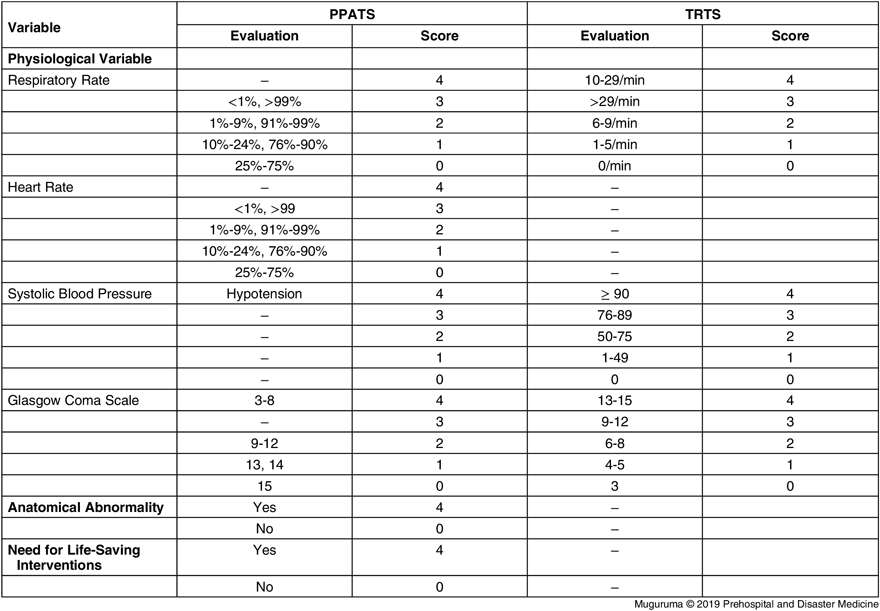
The PPATS is calculated based on RR, HR, sBP, GCS, anatomical abnormalities, and the need for life-saving interventions. Based on previous reports,Reference Fleming, Thompson and Stevens11, 12 representative centiles of RR (1st, 10th, 25th, 75th, 90th, and 99th) and the normal range of sBP for each age were calculated, as shown in Appendix 1 (available online only). An anatomical abnormality was defined as the presence of at least one of the above-mentioned anatomical variables. Life-saving interventions included tracheal intubation, mechanical ventilation, puncture and insertion of drain tube in chest and/or abdomen, craniotomy, emergency dialysis, and so on. For calculation of the PPATS, the patients’ condition was graded as follows: zero = normal, one = mild, two = moderate, three = severe, and four = serious. The RR and HR were assigned scores from zero to three based on percentiles (zero = 25th-75th; one = 10th-25th or 76th-90th; two = 1st-9th or 91st-99th; and three = <1st or >99th), and the other four variables were assigned scores from zero to four. The sum of the score for these six items made up PPATS, with 22 being the highest value (Table 1). In terms of priority, patients with scores ≥six points were classified as “immediate.”Reference Toida, Muguruma and Abe9
Comparison between PPATS and TRTS
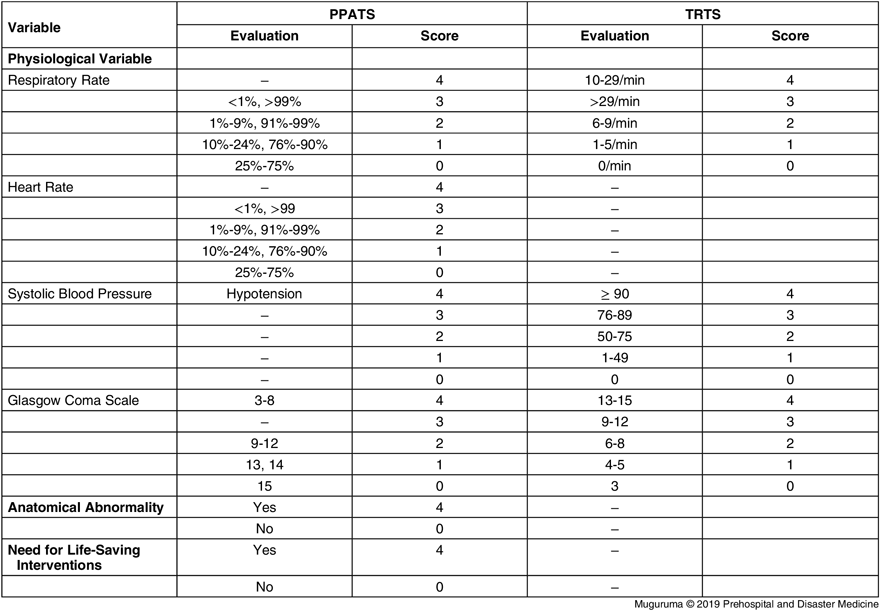
Abbreviations: PPATS, Pediatric Physiological and Anatomical Triage Score; TRTS, Triage Revised Trauma Score.
In contrast, TRTS was based on RR, sBP, and GCS, with 12 being the highest possible score. Patients with scores between one to 10 points were assigned “immediate” priority (Table 1). 1
Statistical Analysis
Data were expressed as a median and interquartile range (IQR; 25th-75th percentile) for continuous variables or as percentages for categorical variables. The Mann-Whitney U test was used for analysis of continuous variables and Fisher’s exact test for categorical variables in order to compare between the ICU-admitted patients and others. In all statistical tests, a two-tailed value of 0.05 indicated statistical significance. All statistical analyses were performed by using the STATA software, version 12.1 (StataCorp; College Station, Texas USA).
Primary Analysis
In this study, a new secondary triage method (PPATS) was compared with the currently used TRTS to determine the more effective predictor of immediate triage priority. The accuracy of each method was assessed by determining the area under the receiver-operating characteristic (ROC) curve (AUC). This study compared the AUC and their 95% confidence intervals (CI) for the two methods.Reference DeLong, DeLong and Clarke-Pearson 13 This study also obtained a positive predictive value (PPV) and a negative predictive value (NPV) for each triage method.
Secondary Analysis
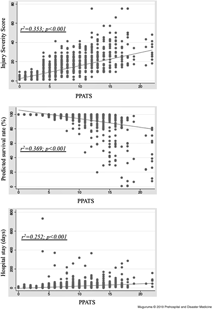
This study also estimated the correlation between PPATS and ISS, predicted survival rate, and duration of hospital stay by performing a univariate regression analysis.
Ethics
This retrospective study was approved by the independent ethics committees of the Yokohama City University Medical Center (Yokohama, Japan), Yokohama Municipal Citizen’s Hospital (Yokohama, Japan), and National Hospital Organization Yokohama Medical Center (Yokohama, Japan) to ensure that patient confidentiality was maintained (Registration No. of the study: B170900003). The requirement for informed patient consent was waived due to the retrospective nature of the study.
Results
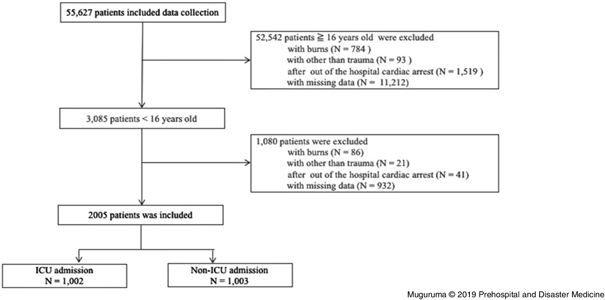
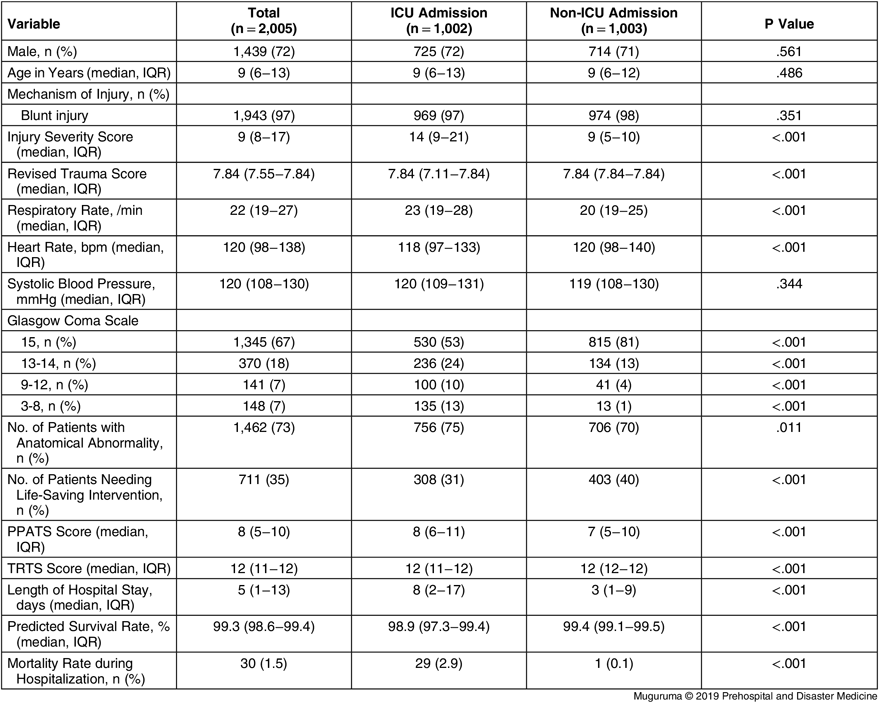
A total of 2,005 patients met the inclusion criteria for the study (Figure 1). The median age was nine years, and 72% were boys. Among all these cases, 1,943 (97%) involved a blunt injury. Among 2,005 patients, 1,002 (50%) were admitted to the ICU, and their characteristics have been summarized in Table 2. The median age of the patients admitted to the ICU was nine years (IQR: 6-13 years). Median ISS, predicted survival rate, and duration of hospital stay were 14 (IQR: 9-21), 98.9% (IQR: 97.3-99.4 %), and eight days (IQR: 2-17 days), respectively. The median PPATS score was significantly higher in the patients admitted to the ICU (8; IQR: 6-11) compared to those who were not (7; IQR: 5-10; P <.001).
Flow Diagram of the Study Population.

Characteristics and Hospital Course
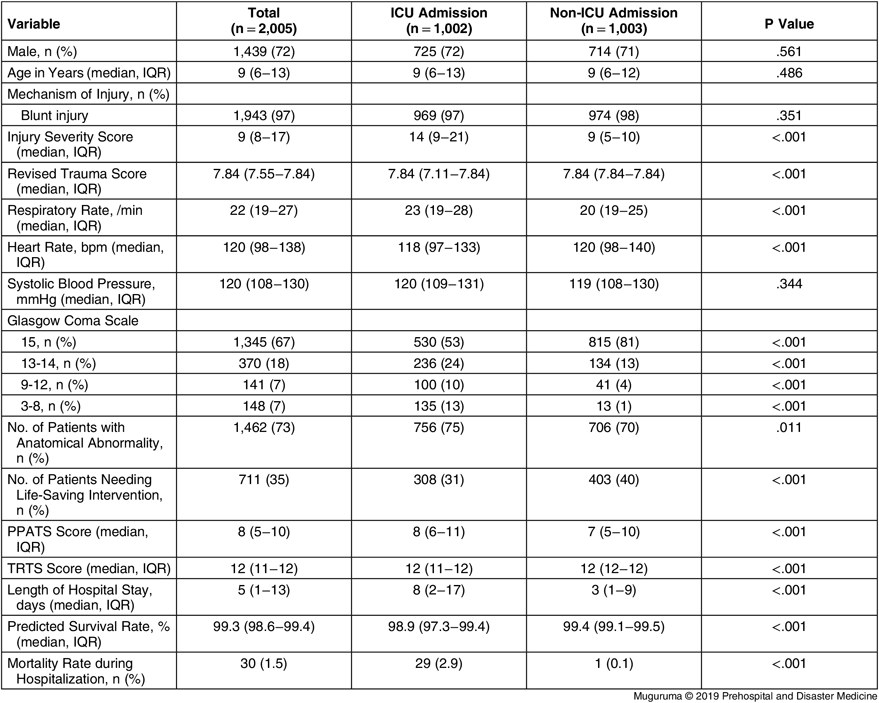
Abbreviations: ICU, intensive care unit; PPATS, Pediatric Physiological and Anatomical Triage Score; TRTS, Triage Revised Trauma Score.
Accuracy of PPATS
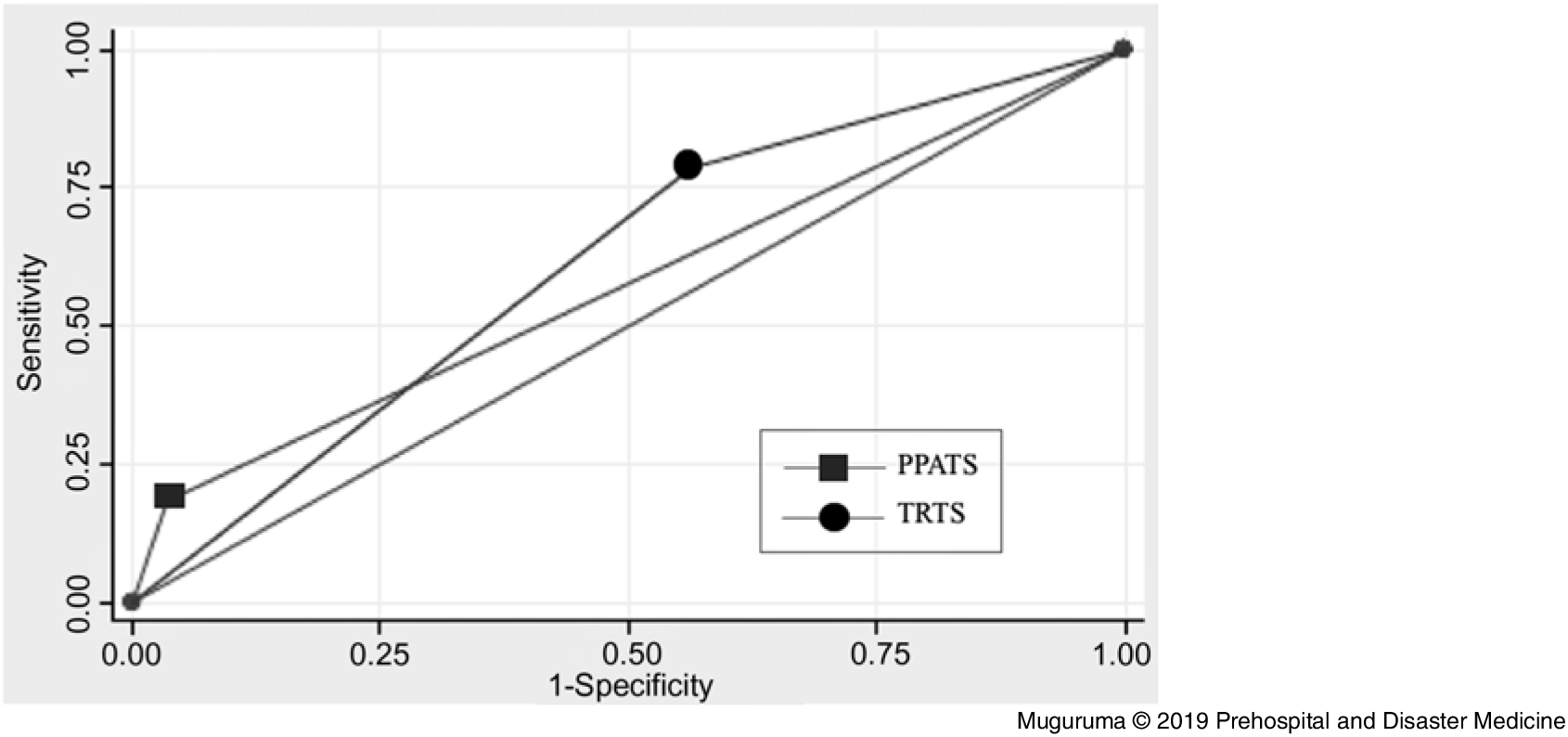
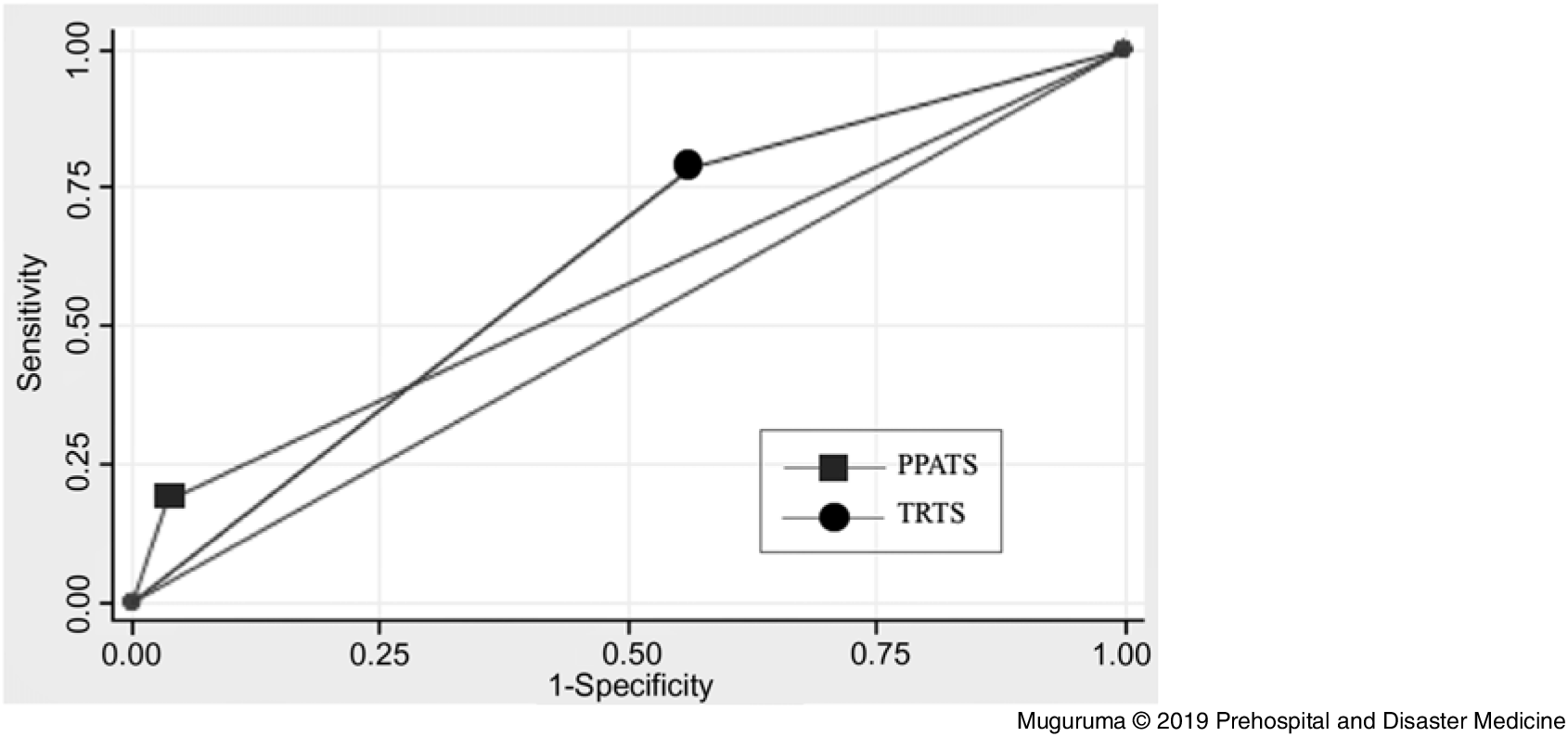
The sensitivity, specificity, PPV, and NPV of PPATS were respectively 78.6%, 43.7%, 58.2%, and 67.2% at a cut-off value of six points (Table 3). Also, PPATS had a larger AUC than TRTS did (0.61; 95% CI, 0.59-0.63 and 0.57; 95% CI, 0.56-0.59, respectively; P <.001; Figure 2).
Performance of the PPATS and TRTS

Abbreviations: AUC, area under the receiver operating characteristic curve; NPV, negative predictive value; PPATS, Pediatric Physiological and Anatomical Triage Score; PPV, positive predictive value; TRTS, Triage Revised Trauma Score.
ROC Curves for the PPATS and TRTS.
Correlation between PPATS and the Severity/Outcome
Regression analysis showed a significant association between PPATS and ISS (r2 = 0.353; P <.001), predicted survival rate (r2 = 0.369; P <.001), and the duration of hospital stay (r2 = 0.252; P <.001; Figure 3).
Correlation between PPATS Score and the Severity/Outcome.

Discussion
This study investigated the accuracy of PPATS, a new secondary triage method, and compared it to that of the current method (TRTS). Two important points were noted. First, compared to TRTS, PPATS could more accurately identify patients who were in-need of immediate treatment among all the injured pediatric patients. Second, PPATS could accurately and objectively determine the triage priority ranking based on the severity of the patient’s condition.
The PPATS method was more accurate than the current triage method. In a disaster setting, under-triage or over-triage leads to an increase in morbidity and mortality.Reference Donfrio, Kaji and Cladius 14 Therefore, it is essential for the triage method to be able to identify high-priority patients for treatment or transportation accurately. Several triage methods are currently used to assess the patient’s physiological parameters for determining the priority. However, age-related variations in physiological parameters can result in accurate triage by such methods in children.Reference Toida, Muguruma and Hashimoto 6 , Reference Koziel, Meckler and Brown 7 In contrast, PPATS assesses physiological parameters based on the normal range for each age, which accounts for its higher accuracy as a triage method in situations where an imbalance exists between the number of casualties and the availability of medical resources.
As mentioned above, even though the accuracy of PPATS was superior to that of TRTS, it did not seem to be a clinically meaningful advantage in the view of the relatively low ROC value. However, even though PPATS is significantly useful as a scoring system based on the patient’s severity, it is not a substitute for the other triage methods. The PPATS method could accurately and objectively determine the triage priority ranking by grading patients based on the severity of their condition. This study demonstrated that PPATS correlates significantly with severity (ISS and predicted survival rate) and outcome (hospital stay). Hence, patients with a higher PPATS score are more likely to heavily utilize medical resources after admission to the hospital. In case of a wide-area disaster, such as a natural calamity, it is, therefore, recommended that patients with a greater requirement for medical resources should be transported from the disaster area with insufficient medical resources to another area where medical resources are adequately provided. 1 In such settings, a panel of evaluators should assess the priority ranking for treatment and transportation from a remote area to one with better resource. Moreover, the emotional stress of caring for children makes accurate triage more difficult, especially when there is a lack of experience in pediatric medical treatment.Reference Koziel, Meckler and Brown 7 An objective method, such as PPATS, helps medical staff who do not have much experience in pediatric medical treatment accurately identify patients who require the medical treatment and transport immediately.
Triage is a dynamic rather than a static process. Casualties have to be constantly re-triaged as their physical conditions change, and they enter a different stage of care. Therefore, it is also crucial for a triage system to be easy to learn and apply. As shown in Appendix 1, it is not easy to evaluate the physiological parameters for each age by using PPATS because of the age-related variations in children. In the future, it is planned to develop an application equipped to automatically calculate the PPATS score by entering the six factors in the PPATS algorithm. With such a device, it is desirable to establish a widely applicable and acceptable disaster triage method for all injured pediatric patients.
Limitations
This study has several limitations. First, because this was a retrospective study, the vital signs data could not be collected from patients’ records in real-time when the PPATS was implemented. This might have affected the analysis since the data might not accurately represent the real clinical status of patients. There might also have been bias when these vital signs were recorded in the patients’ chart. Second, it excluded a large number of patients with missing data. This might have affected the analysis since the number of injured pediatric patients is already small. However, influences by missing data among the pediatric patients might be similar to, or even smaller than, that of adult patients, because the proportion of the pediatric patients with missing data (30.2%) was lower than that of the adult patients (34.7%). Third, the criteria for ICU admission for each hospital could not be perfectly standardized, potentially affecting the primary outcomes in which the priority of each triage method was evaluated. However, this study was conducted using a nation-wide database with a large sample size to bolster the statistical analyses. Fourth, PPATS can only identify patients requiring “immediate” treatment. Moreover, the criteria of PPATS and ICU admission, which were defined as the immediate triage priority, might be self-explanatory. However, ICU admission was determined by not only the criteria of PPATS, such as need for live-saving interventions, but also need of careful observation and so on. It is necessary to consider these factors when revising the criteria of PPATS in a near future. In addition, it might be necessary to concern whether ICU admission was defined as having immediate triage priority. Finally, any new method is generally validated through three steps: derivation, retrospective validation, and prospective validation. However, this study could not cover the last step. Accordingly, a large-scale prospective study will be needed to confirm the accuracy of PPATS in triaging both critically ill and injured pediatric patients.
Conclusions
The accuracy of PPATS, a new secondary triage method for injured pediatric patients, was superior to that of the current method (TRTS). The PPATS method is useful not only for identifying high-priority patients, but also for determining the priority ranking for medical treatment and evacuation. In the future, it might be essential to increase the convenience of evaluation by incorporating PPATS into an electronic triage system which can be adapted nationally, and beyond, in order to make it beneficial for assessing the priority of critically ill or injured pediatric patients.
Conflicts of interest/funding
This work was funded by Japanese Society for the Promotion of Science KAKENHI (Tokyo, Japan) Grant Number 17K17064 (Grant-in-Aid for Young scientists [B]). Authors declare no conflicts of interest.
Supplementary Materials
For supplementary material for this article, please visit https://doi.org/10.1017/S1049023X19004552