Tom Dishion stands as a giant among his fellow researchers for many reasons, not the least of which was his commitment to exploring and understanding the ways in which development can go awry in young people. More than simply exploring developmental pathways and their risk and protective factors, however, Tom Dishion went much further, illuminating some of the deepest secrets of what it means to be human and providing tremendous insight into some of our most problematic developmental tendencies and their interaction with modern societal conditions. In this paper, we illustrate and extend some of Tom's most innovative ideas and focus on one population that we consider to be at very high risk: boys and men raised in dangerous, stressful conditions. In so doing, we salute the rigorous scientific spirit and commitment to helping others that Tom's life represented.
The Developmental Difficulties of Boys and Men
The elevated risk status of boys and men can be seen in their tendency to experience certain developmental difficulties at greater rates than do girls and women. Below, we review research that has explored a variety of maladaptive developmental outcomes and highlight the sex differences in those findings. Given that our focus is on socialization processes in this paper, we focus on childhood, adolescence, and adulthood, setting aside prenatal, postnatal, and infant sex differences.
Oppositional Defiance Disorder (ODD) and Conduct Disorders (CD)
Oppositional defiance disorder in childhood is associated with maladaptive outcomes such as delinquency in adolescence and criminal behavior in adulthood, particularly for males (Loeber et al., Reference Loeber, Green, Lahey, Frick and McBurnett2000; Mordre et al., Reference Mordre, Groholt, Kjelsberg, Sandstad and Myhre2011). Oppositional defiance disorder is more common in boys than girls among preschool school-age children, but there are no differences in adolescence (Burnette, Reference Burnette2013; Lahey & Waldman, Reference Lahey and Waldman2017; Moffitt, Caspi, Rutter, & Silva, Reference Moffitt, Caspi, Rutter and Silva2001). In contrast, CD is higher among boys than girls during adolescence (Lahey & Waldman, Reference Lahey and Waldman2017). A combination of multiple disorders such as ADHD and ODD or CD is the key developmental precursor to adult antisocial personality disorder (ASPD; Lahey & Waldman, Reference Lahey and Waldman2017; Moffitt et al., Reference Moffitt, Caspi, Rutter and Silva2001). In adulthood, outcomes of ODD and CD can vary in males and females; for example, males are more likely to exhibit criminal behavior, work problems, and substance use, while females are more likely to experience depression, suicidal behavior, and poor physical health (Loeber et al., Reference Loeber, Green, Lahey, Frick and McBurnett2000; Moffitt et al., Reference Moffitt, Caspi, Rutter and Silva2001).
Substance use disorders
Alcohol use and other substance use disorders have been repeatedly shown worldwide to be more prevalent in males than females (Holdcraft & Iacono, Reference Holdcraft and Iacono2004; Keyes, Grant, & Hasin, Reference Keyes, Grant and Hasin2008; Steingrímsson, Carlsen, Sigfússon, & Magnússon, Reference Steingrímsson, Carlsen, Sigfússon and Magnússon2012; Wilsnack, Wilsnack, Kristjanson, Vogeltanz-Holm, & Gmel, Reference Wilsnack, Wilsnack, Kristjanson, Vogeltanz-Holm and Gmel2009). Various studies have shown sex differences in binge drinking and marijuana use, with males surpassing female substance use (Whaley, Hayes-Smith, & Hayes-Smith, Reference Whaley, Hayes-Smith and Hayes-Smith2013). Substance use supports emotional disinhibition and thus is a common comorbid condition with impulsivity and various mental, conduct, or antisocial disorders related to impulsivity (Möller-Leimkühler, Reference Möller-Leimkühler2003).
Physical and mental health
Males who are socialized to internalize emotions and adhere to traditional masculine gender norms tend to have a variety of maladaptive physical and mental health outcomes including risk taking, impulsivity, anger and aggression, heart disease, depression, and premature death (Cohn, Seibert, & Zeichner, Reference Cohn, Seibert and Zeichner2009; Granato et al., Reference Granato, Smith and Selwyn2015; Houle, Mishara, & Chagnon, Reference Houle, Mishara and Chagnon2008; Mahalik, Burns, & Syzdek, Reference Mahalik, Burns and Syzdek2007; Martin, Neighbors, & Griffith, Reference Martin, Neighbors and Griffith2013; Möller-Leimkühler, Reference Möller-Leimkühler2003; Syzdek & Addis, Reference Syzdek and Addis2010; Wimer, Williams, Smalley, & Noronha, Reference Wilsnack, Wilsnack, Kristjanson, Vogeltanz-Holm and Gmel2009). As a result, throughout the world, the life expectancy at birth is higher for women than for men (Mathers et al., Reference Mathers, Sadana, Salomon, Murray and Lopez2001). It has also been repeatedly found that men participate in more damaging health behaviors like risky driving and increased substance use, and they are also less likely to use health care proactively or follow physician recommendations (Arndt, Cook, Goldenberg, & Cox, Reference Arndt, Cook, Goldenberg and Cox2007; Arndt et al., Reference Arndt, Cox, Goldenberg, Vess, Routledge, Cooper and Cohen2009; Courtenay, Mccreary, & Merighi, Reference Courtenay, Mccreary and Merighi2002; Evans, Brotherstone, Miles, & Wardle, Reference Evans, Brotherstone, Miles and Wardle2005; Janda et al., Reference Janda, Youl, Lowe, Elwood, Ring and Aitken2004; Khallad, Reference Khallad2010; Zimmermann & Sieverding, Reference Zimmermann and Sieverding2010).
Suicide
Suicide is one of the 10 leading causes of death in the United States, and the vast majority of suicides (78%) are committed by men (Hedegaard, Curtin, & Warner, Reference Hedegaard, Curtin and Warner2018), although we acknowledge that females have historically been found to have higher levels of suicide attempts (Nock et al., Reference Nock, Borges, Bromet, Cha, Kessler and Lee2008; Weissman et al., Reference Weissman, Bland, Canino, Greenwald, Hwu, Joyce and Newman1999) as well as higher rates of anxiety and depression, which can contribute to suicide attempts (Hawton et al., Reference Hawton, i Comabella, Haw and Saunders2013). Globally, on average, there are about three male suicides to every one female suicide (World Health Organization, 2002). Among adolescents, recent studies have shown that suicidal ideation and attempted suicides are often comorbid conditions with various mental disorders (Avenevoli, Swendsen, He, Burstein, & Merikangas, Reference Avenevoli, Swendsen, He, Burstein and Merikangas2015). There is evidence that commonly socialized masculine traits such as aggression, autonomy, expected success, and emotional stoicism gives males the acquired capability for suicide completion (Granato, Smith, & Selwyn, Reference Granato, Smith and Selwyn2015). Higher rates of stressful conditions in childhood also predispose individuals to suicide, and this effect may be mediated by factors such as increased likelihood for substance abuse (Dube et al., Reference Dube, Anda, Felitti, Chapman, Williamson and Giles2001).
The Etiology of Developmental Difficulties
One of the most significant contributions made by Tom Dishion to behavioral sciences was the extensive research he did on the etiology of these developmental difficulties among boys. Working with Gerald Patterson and many others, he studied how boys could get on a trajectory that resulted in academic failure, drug use, antisocial behavior, depression, and risky sexual behavior (e.g., Patterson, Reid, & Dishion, Reference Patterson, Reid and Dishion1992).
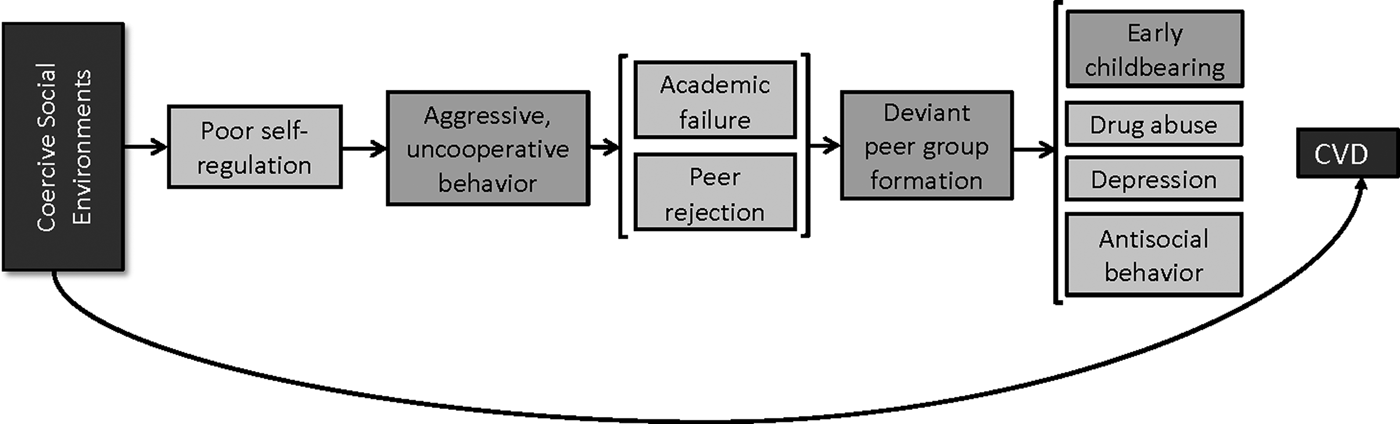
Figure 1 is adapted from one that Tom used to summarize this trajectory. In the context of families in which there is a high level of stressful, coercive interactions, children fail to develop good self-regulation and social skills; instead, in such families, both parents and children become accustomed to responding to each other's aversive behavior with aversive actions of their own (Dishion & Tipsord, Reference Dishion and Tipsord2011). As the child grows, he (or she) develops a repertoire of aggressive and coercive behavior that enables him/her to avoid things that he/she doesn't like or doesn't want to do and to suppress others’ aversive behavior. Although these coercive behaviors are immediately reinforcing, they result in the child's not learning to regulate his/her emotions, cooperate with others, or resolve conflict in a positive manner. By elementary school, this pattern of aggressive and coercive behavior contributes to the child's being rejected by peers, who naturally find the child's behavior to be disagreeable.
Fast life development.

By early adolescence, children who have a history of coercive relationships in families and school begin to meet other children with similar histories. The result is the formation of a deviant peer group (i.e., deviant peer clustering). Dishion and colleagues (Reference Dishion, Patterson, Stoolmiller and Skinner1991) studied the development of 206 boys between the ages of 10 and 12 in the Oregon Youth Study, and they found that boys’ involvement with antisocial peers at age 12 was predicted by peer rejection, academic failure, and poor parental discipline and monitoring practices at age 10. Boys’ antisocial behavior at age 10 was also a predictor of involvement with antisocial peers at age 12. These findings suggested a positive feedback loop between behavior and affiliation, whereby antisocial behavior and involvement with antisocial peers were mutually reinforcing.
In some of the most innovative studies of male socialization, Dishion and colleagues directly observed the social interactions of boys who were at risk for antisocial behavior. Dishion, Spracklen, Andrews, and Patterson (Reference Dishion, Spracklen, Andrews and Patterson1996) observed the conversations of 186 boys and their friends at age 13 or 14. They were asked to discuss five topics (planning an activity together and problems each boy was having getting along with parents and peers). Their conversations were coded in terms of talk about deviant activities vs. normative activities and two reactions to such talk—laughter or pause. They found that the duration of deviant talk was related to the rate of laughter following it; in other words, the laughter was reinforcing the deviant talk. Dishion et al. (Reference Dishion, Spracklen, Andrews and Patterson1996) conceptualized the deviant talk/laughter contingency as deviancy training. They found that such deviancy training predicted increases in self-reported delinquency in the ensuing two years, even when controlling for prior levels of delinquency.
In another study, Dishion and colleagues (Reference Dishion, Eddy, Haas, Li and Spracklen1997) examined a subset of the 206 boys from Dishion et al. (Reference Dishion, Patterson, Stoolmiller and Skinner1991), who were asked to bring a friend into the lab to be videotaped for 25 minutes at ages 13 to 14, 15 to 16, and 17 to 18. It was found that the duration of deviant talk in these interactions was a significant predictor of police contact for violent offenses. This was true even when they controlled for prior self-reported violence and parental discipline practices—two well-established predictors of subsequent behavior. Similarly, Dishion, Capaldi, and Spracklen (Reference Dishion, Capaldi, Spracklen and Li1995) found that this same deviancy training interaction predicted escalation in substance use during the transition from middle school to high school. Additional longitudinal studies of children from families with this risk profile showed that coercive processes contribute to the development of late adolescent antisocial behavior (Van Ryzin & Dishion, Reference Van Ryzin and Dishion2012), substance dependence (Van Ryzin & Dishion, Reference Van Ryzin and Dishion2014), and mental and physical health problems (Repetti et al., Reference Repetti, Taylor and Seeman2002).
Finally, Capaldi, Dishion, Stoolmiller, and Yoerger (Reference Capaldi, Dishion, Stoolmiller and Yoerger2001) examined whether this type of deviancy training would predict aggression toward female partners. They coded hostile talk about women in the interactions of the Oregon Youth Sample boys when they were 17 or 18. They then assessed relationships between the boys and a female partner at 17 to 20 years old and at 20 to 23 years old. Their talk about women was considered aggressive if it involved “disrespectful or derogatory talk that could be considered to devalue women” or “endorsement of severely aggressive behavior toward women.” They found that antisocial and delinquent behavior at age 17 to 18 and hostile talk about women at that age predicted aggression toward a partner at age 20.
In a more recent study, Van Ryzin and Dishion (Reference Van Ryzin and Dishion2013) examined the role that coercion played in these deviancy training interactions. They studied the interactions in a multiethnic sample of adolescents at age 16 or 17 and whether those interactions could be used to predict violence when they were age 22 or 23. The youths had a 45-minute interaction with a same-sex friend they had invited. As in earlier studies, deviancy training was coded as the percentage of total time that deviant talk occurred. In addition, they coded three dimensions of what they called coercive joining: dominant behavior (e.g., dismissive of the other's statement), hostile or abusive references to others, and obscene language and gestures. The three measures were combined into a single latent construct. Their analysis showed that over and above the influence of deviancy training, coercive joining at 16 to 17 predicted violent behavior at 22 to 23 (e.g., arrests, carrying a weapon). Moreover, coercive joining was more likely among youth in families that were high in coercion in childhood (i.e., age 12). This finding signified a second pathway from early coercive family interactions to later maladaptive behavior; deviancy training represented a positive feedback loop, in which laughter and encouragement in response to deviant talk led to greater antisocial behavior, while the process of coercive joining represented a negative feedback loop, in which aggressive, coercive behavior was reinforced by the withdrawal of others’ aversive behavior. This process of socialization of coercive behavior among peers follows the same pattern as the socialization process that occurs in the family.
The Evolutionary Origin of Developmental Difficulties
Building on the early work of Ellis and colleagues (Reference Ellis, Figueredo, Brumbach and Schlomer2009) and Belsky and colleagues (Reference Belsky, Schlomer and Ellis2012), Dishion (Reference Dishion, Dishion and Snyder2016) subsequently discussed the evolutionary aspects of the development of antisocial behavior in young men. The overarching theory posits that the threats children experience in conflict-filled environments trigger an epigenetic bias toward a “fast-life” developmental trajectory that involves a precocious and opportunistic mating strategy. Thus, having children earlier in development, in the context of our evolutionary history, makes the long-term survival of the species more likely in a dangerous world. However, Dishion (Reference Dishion, Dishion and Snyder2016) extended this theory by pointing out that humans have evolved a tremendous capacity for cooperation. In keeping with much recent work on human evolution (e.g., Lieberman, Reference Lieberman2013), he argued that humans have been so successful in taking control of the world because they evolved the ability to cooperate to master their environment. The story of human evolution is not a story of individual evolution as much as it is story of the evolution of groups. In this context, Dishion points to deviancy training as an evolution of cooperative groups that see themselves as working for their wellbeing in the context of a threatening world. The tendency to affiliate with deviant peers, for example, can be seen as an effort to recruit allies in the quest for survival. Having children earlier in development is a critical part of that effort.
One of the last contributions that Dishion (Reference Dishion, Dishion and Snyder2016) made to our understanding of male socialization may his most important. He pointed out that the primary way in which we have been thinking about terrorism is as behavior that is driven by a hateful ideology. He argued that terrorist acts (and similarly, gang violence) need to be seen in light of what is known about the socialization of violent males. Boys and young men who have a history of aggressive social behavior and who have been marginalized due to social rejection and frequent punishment are quite susceptible to forming friendships with other similarly marginalized boys and young men. Any ideology that allows them to feel that those who have marginalized them are their enemies and that their aggression toward them is justified can provide the basis of shaping attacks on the rejecting social group. It can be argued that similar processes are at work in many of the school-related violent episodes in our recent history, such as at Columbine High School.
In sum, Tom Dishion's work has demonstrated how our evolutionary history has helped to shape a developmental trajectory by which humans, particularly males, respond to a stressful, threatening environment by developing a high degree of risky, aggressive behavior as part of a “fast-life” developmental trajectory. Although such an approach may have been adaptive in some contexts during our evolutionary history, today it suggests an evolutionary mismatch with profound consequences for both these young men and for society as a whole. We discuss this mismatch in more detail in the following section.
Traditional Male Phenotypes
Traditional male gender norms include toughness, restrictions on the display of emotions, the importance of sex, dominance of women, and negativity toward sexual minorities (Levant, Hall, Weigold, & McCurdy, Reference Levant, Hall, Weigold and McCurdy2016). Obviously, this does not imply that every male has these characteristics, nor is it the case that these norms are universal. Indeed, Levant et al. (Reference Levant, Hall, Weigold and McCurdy2016) suggest that these norms might better be described as “traditional White Western masculine ideology.” As suggested by Dishion (Reference Dishion, Dishion and Snyder2016) and others (e.g., Causadias, Telzer, & Gonzales, Reference Causadias, Telzer, Gonzales, Causadias, Telzer and Gonzales2018), this traditional male phenotype appears to have been adaptive in our evolutionary history during epochs of adverse and stressful environments, but it may no longer be adaptive in many modern societal contexts.
Exposure to significant environmental stress in the developmental histories of humans has always existed (Kaplan & Lancaster, Reference Kaplan, Lancaster, Watcher and Bulatao2003). From an evolutionary perspective, we should have biological processes that can help us adapt to adverse environments. One such example is how epigenetic processes affect our biological stress response system (SRS) functioning to produce response patterns that are biologically adaptive when encountering stressful conditions, even if those patterns are harmful in terms of the long-term welfare of the individual or society as a whole (Ellis et al., Reference Ellis, Oldehinkel and Nederhof2017).
Epigenetic SRS system adaptation to stressful environments has been shown in animal research where poor maternal care (e.g., diminished licking and grooming) can alter pups stress physiology and brain morphology with shorter dendritic branch lengths, higher corticosterone levels, and lower density of hippocampal neurons. Although this appears to be pathological, these adaptations proved to result in better learning and memory under stressful conditions (Champagne et al., Reference Champagne, Bagot, van Hasselt, Ramakers, Meaney, De Kloet and Krugers2008; Oomen et al., Reference Oomen, Soeters, Audureau, Vermunt, Van Hasselt, Manders and Lucassen2011). These types of epigenetic changes as a result of variations in maternal care may also increase socialization problems, such as social anxiety, because of an observed alteration in other areas of neurological development or functioning such as the alternation of GABA(A) receptor subunit expression in brain regions associated with fear (Calji, Diorio, & Meaney, Reference Caldji, Diorio and Meaney2003).
Thus, differences in parental care may function to set up offspring to survive and reproduce in different ways across a variety of contexts. Moreover, differences in children's SRS may largely reflect individual children's neurobiologically tracking their environmental conditions and entraining their SRS to match those conditions in order to enhance survival and reproductive success. For example, having an SRS that is adapted to be hypervigilant may provide protection and contribute to survival when living or working in a harsh environment. It may also be the case that these epigenetic processes contribute to early childbearing as an evolutionary strategy for genetic survival.
Evolutionary Mismatch with Modern Society
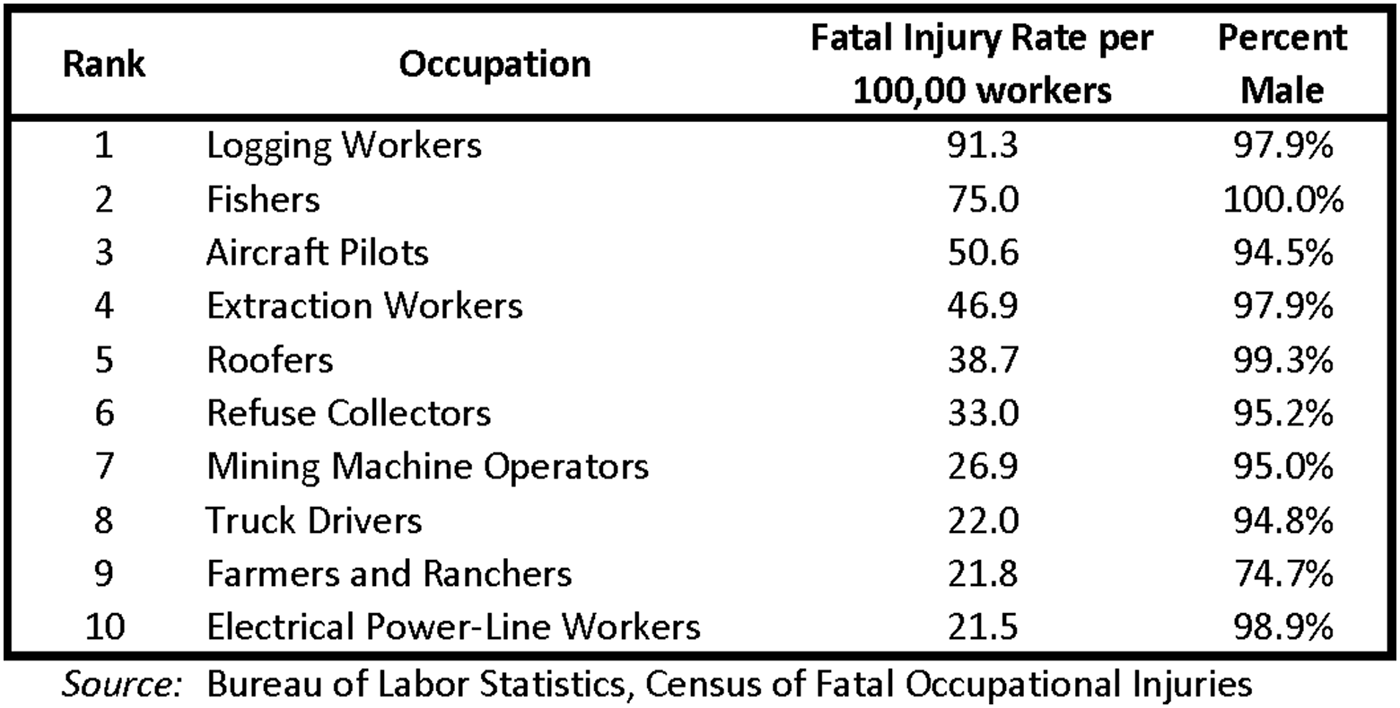
Previous to the last one hundred and fifty years, traditional male phenotypes that emerged in more dangerous or stressful contexts were still quite adaptive to many dangerous or violent environmental and occupational contexts (e.g., logging, fishermen, pilots, miners; see Figure 2). However, these types of environmental, occupational, and work settings have been dramatically reduced over the past 100 years. For example, the number of soldiers in all branches of the US military in 1954 was more than 3.3 million but by 2014 there were only about 1.35 million (Coleman, Reference Coleman2019). In 1910 within the nonfarm major industry classification workforce, forestry and fisheries had 1% of the total workforce, mining had 4%, and construction had 9.1%. By 2015, these percentages were 0.0, 0.5, and 4.5%, respectfully. Similarly, in 1910 the percentage for finance and real estate was 2% of the nonfarm employment workforce, for education 3.5%, and for other professional services 3%. By 2015, these figures were 5.7, 9.7, and 28.9%, respectfully. Farming itself accounted for 30.9% of the work force in 1910 but only 0.7% in 2015 (Bureau of Labor Statistics, 2019).
Top ten most dangerous US occupations and percent male, 2013.

Along with these longer-term changes in occupations, shorter-term changes are also associated with a decrease in occupational settings that may be more adaptive for traditional male phenotypes. For example, manufacturing employment has been on a decreasing trend since 1970, and this trend has more recently accelerated. The manufacturing sector lost up to 2 million jobs between 1980 and 2000 and then a more dramatic 5.5 million jobs between 2000 and 2017 (Charles, Hurst, & Schwartz, Reference Charles, Hurst and Schwartz2018).
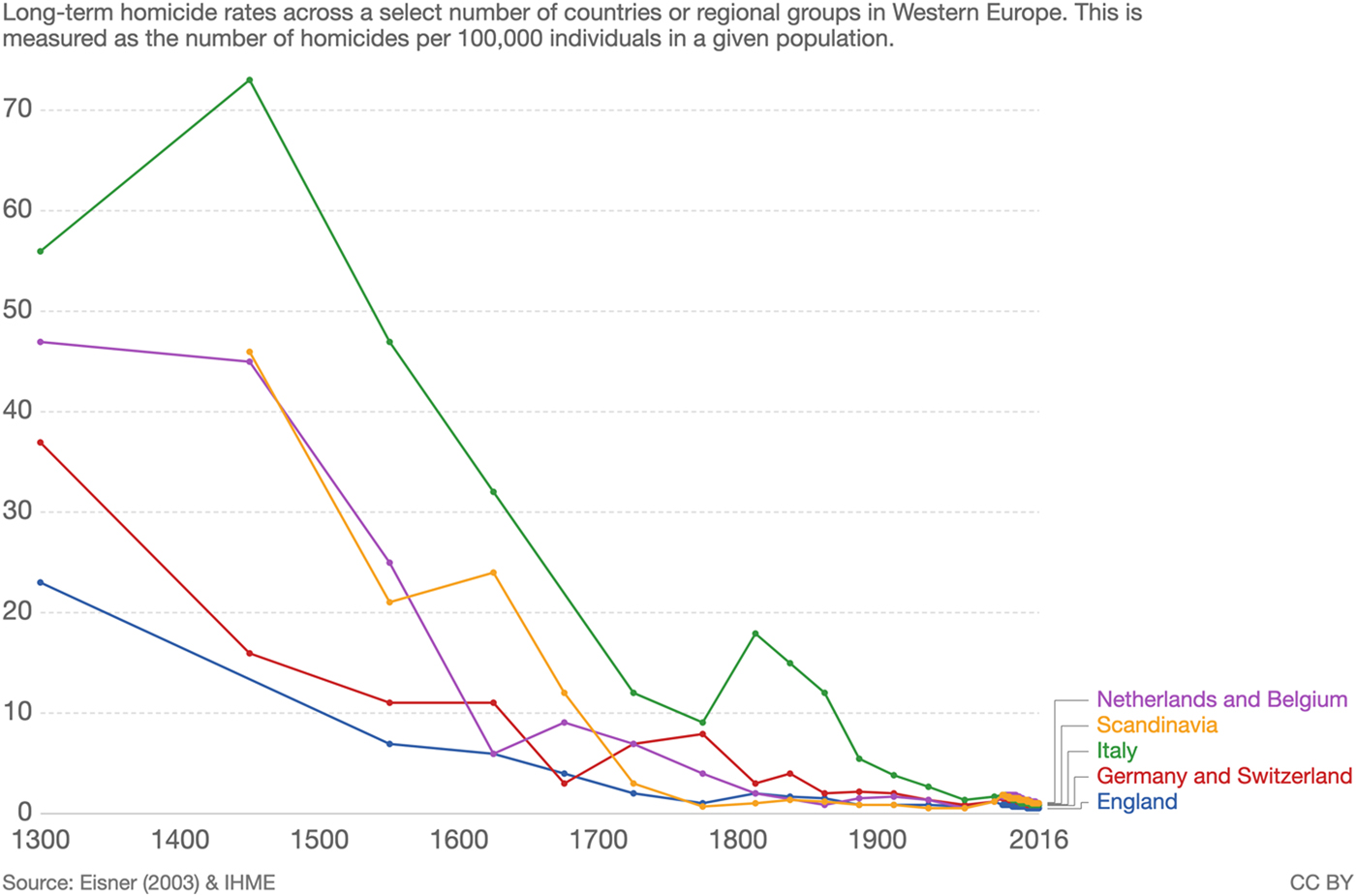
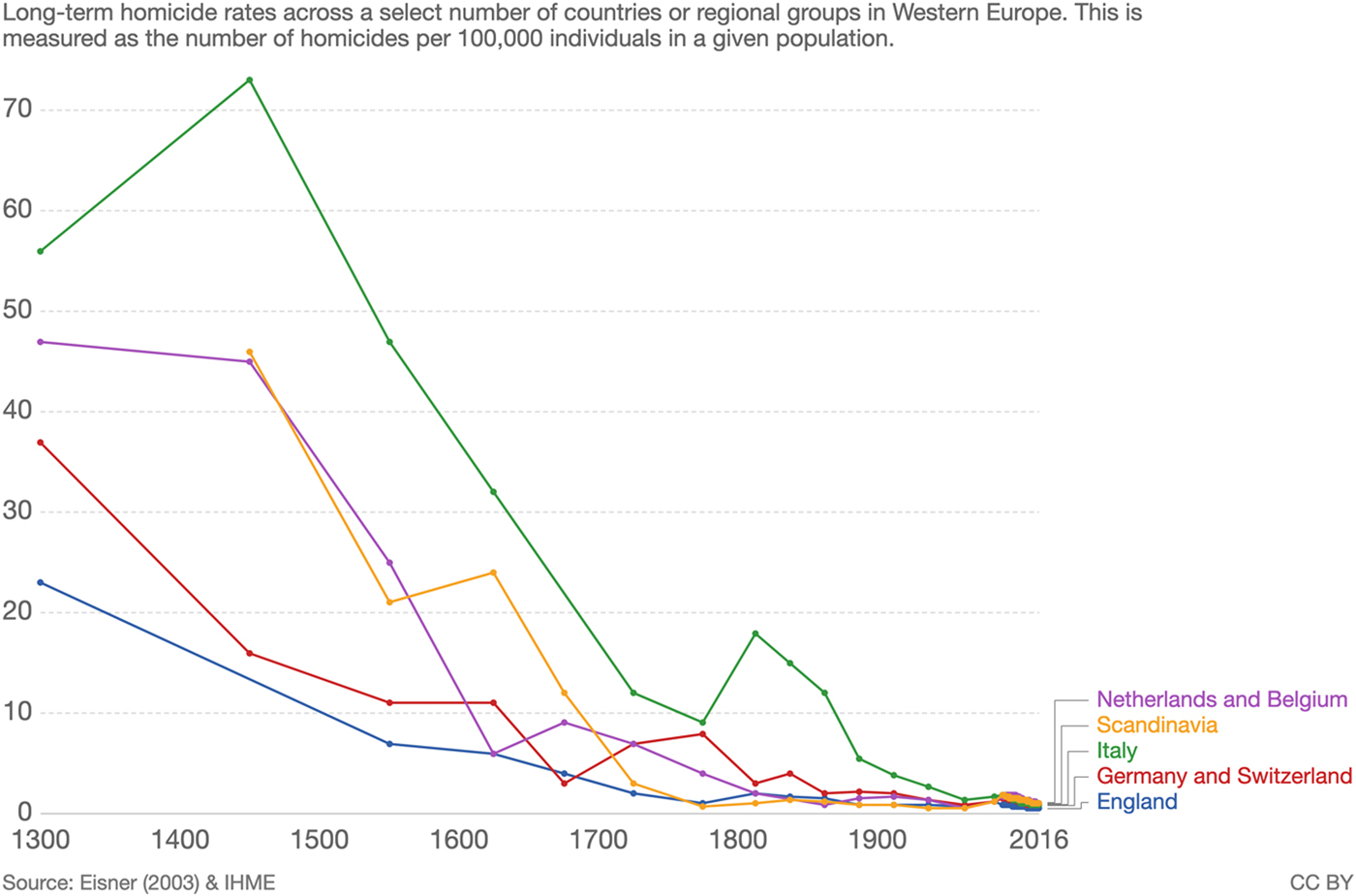
The historical Western European homicide rates shown in Figure 3 demonstrate a fairly dramatic example of why an evolutionary need for traditional male phenotypes would be adaptive in certain contexts or time periods but less necessary when environmental change occurs. The development of male phenotypes that are adaptive to aversive environments but less adaptive or problematic when environments are more benign may also be part of the reason that, at certain times in history, societies have evolved specific institutional structures and rules for men to follow (e.g., noble habitus, chivalry, pre/post battle rules for pillaging and raping; cf., Reston, Reference Reston1999; Russell, Reference Russell1945).
Long-term homicide rates across Western Europe.
Thus, genetic evolutionary history and the diversity of modern human environments predicts that a significant proportion of males will have phenotypes that are adaptive to harsher or more dangerous environments but may be less adaptive in other social environments, such as modern service or interpersonally focused occupations, which require sophisticated relational skills including patience, listening skills, empathy, sensitivity, and warmth. Because there are fewer and fewer occupational settings where traditional male phenotypes can be adaptive, societies’ ability to socialize and usefully contain the more “negative” but often functional dimensional aspects of the male phenotype has been similarly reduced.
Fortunately, the differential susceptibility hypothesis (Belsky & Pluess, Reference Belsky and Pluess2009) suggests that children who are more genetically and perhaps epigenetically susceptible to adverse environments are also more likely to benefit from more “nurturing” environments. For example, it has been shown that certain sensitive and nurturing environments provided by both animal (e.g., Caldji, Diorio & Meaney, Reference Caldji, Diorio and Meaney2003) and human (e.g., Fisher, Gunnar, Chamberlain & Reid, Reference Fisher, Gunnar, Chamberlain and Reid2000; Van Ryzin, et al., Reference Van Ryzin, Leve, Neiderhiser, Shaw, Natsuaki and Reiss2015) parents can positively alter negative developmental trajectories of genetically and epigenetically vulnerable children. This evidence suggests that those children most vulnerable to maladaptive developmental outcomes would benefit the most from prevention programs designed to provide a more nurturing, prosocial developmental environment. It is this subject to which we turn in the following section.
Prevention Approaches Targeting Aggressive Behavior
To address the evolutionary mismatch brought about by stressful environments, the field of Prevention Science, of which Tom Dishion was an esteemed member, has developed programs directed at promoting the positive development and socialization of young men. Nearly all of these programs focus on the need to reduce aggressive behavior in young men as a means of coping with difficult social situations or navigating disagreements with family or friends. These prevention programs include family-based programs, school-based programs, and community-based programs. Each of these is reviewed below.
Family-based Prevention
Family-based prevention programs help parents to abandon harsh, coercive, and inconsistent discipline practices, reducing the likelihood that their children will exhibit these coercive interactional styles with their playmates in school. Family-based prevention programs focus on providing education to families, improving the quality of family relationships, and teaching family management skills (Van Ryzin, Kumpfer, Fosco, & Greenberg, Reference Van Ryzin, Kumpfer, Fosco and Greenberg2015). The goal of these programs is to transform the way parents manage and monitor child behavior, the way the family negotiates conflicts, and the emotional quality of the family environment. These programs view the family as the most influential and malleable context from which to promote long-lasting behavioral and emotional adjustment among children and youth. By improving parenting practices and family relationships, these programs can promote positive behavior in youth and reduce aggression and violence by reducing family-based risk factors and promoting more effective family functioning (Farrington & Welsh, Reference Farrington and Welsh2003; Reyno & McGrath, Reference Reyno and McGrath2006; UNODC, 2010; Van Ryzin et al., Reference Van Ryzin, Roseth, Fosco, Lee and Chen2016). Example programs include the following:
• Family Check-Up (Dishion, Nelson, & Kavanagh, Reference Dishion, Nelson and Kavanagh2003; Dishion & Stormshak, Reference Dishion and Stormshak2007);
• Strengthening Families Program (Kumpfer et al., Reference Kumpfer, Whiteside, Greene and Allen2010);
• Strong African-American Families (Brody et al., Reference Brody, Kogan, Chen and Murry2008);
• Triple P–Positive Parenting Program (Sanders et al., Reference Sanders, Kirby, Tellegen and Day2014); and
• Incredible Years (Menting et al., Reference Menting, de Castro and Matthys2013; Webster-Stratton et al., Reference Webster-Stratton, Rinaldi and Reid2011).
School-based Programs
School-based programs specifically target alternatives to coercive behavior and violence as a means to resolving conflict. These are generally delivered by teachers, and include a set curriculum with group discussion and role-playing. Topics that are discussed include self-regulation, communication, and conflict resolution. Example programs include the following:
• Peaceful Alternatives to Tough Situations (9 sessions of 60 minutes; Williams et al., Reference Williams, Johnson and Bott2008);
• Responding in Peaceful and Positive Ways (25 sessions of 50 minutes each; Farrell, Meyer, & White, Reference Farrell, Meyer and White2001);
• PeaceMakers (18 classroom sessions of 45 minutes each; Shapiro et al., Reference Shapiro, Burgoon, Welker and Clough2002); and,
• Life Skills (15 sessions in year one, 10 booster sessions in year two, and 5 booster sessions in year three, plus optional sessions on violence prevention each year; Botvin et al., Reference Botvin, Griffin and Nichols2006).
School-based programs have also been developed to specifically target bullying, a form of aggressive behavior meant to increase individual social status at the expense of another. The most widespread approach to preventing bullying is typified by the Olweus program (Olweus, Reference Olweus1993), which involves direct instruction in areas related to bullying and victimization (e.g., awareness, empathy, attitudes, peer norms, etc.). To date, however, research has failed to establish a strong empirical justification for this approach. For example, a meta-analysis by Ttofi, Farrington, and Baldry (Reference Ttofi, Farrington and Baldry2008) evaluated 44 bullying intervention studies, most of which were based on the Olweus Program. Results indicated that bullying and victimization were reduced by 17–23% in experimental schools compared with control schools, although Ttofi and colleagues noted that antibullying programs were more efficacious in smaller-scale European studies and less effective in the United States, a conclusion that was echoed in other recent reviews and meta-analyses (Evans, Fraser, & Cotter, Reference Evans, Fraser and Cotter2014; Merrell, Gueldner, Ross, & Isava, Reference Merrell, Gueldner, Ross and Isava2008; Olweus & Limber, Reference Olweus and Limber2010). Taken together, this research suggests that existing antibullying programs have not been effective in reducing bullying in American schools.
A slightly different approach is represented by Cooperative Learning, which addresses social precursors of bullying and aggressive behavior by increasing students’ positive social contacts through collaborative, group-based learning activities in school. These activities put at-risk youth in contact with low-risk, prosocial youth and interrupt the formation of deviant peer clusters. Cooperative learning can increase interpersonal attraction and acceptance, support the development of new friendships, and, in an educational context, promote academic engagement and achievement (Johnson & Johnson, Reference Johnson and Johnson1989, Reference Johnson and Johnson2005; Roseth et al., Reference Roseth, Johnson and Johnson2008). Cooperative learning can generate significant reductions in bullying and victimization, with effect sizes ranging from .37 to .69 (Van Ryzin & Roseth, Reference Van Ryzin and Roseth2018a), mediated by improvements in peer relations and affective empathy (Van Ryzin & Roseth, Reference Van Ryzin and Rosethin press). Cooperative learning has also been found to reduce alcohol and tobacco use (Van Ryzin & Roseth, Reference Van Ryzin and Roseth2018b) and to promote prosocial behavior (Van Ryzin & Roseth, Reference Van Ryzin and Roseth2019). These findings suggest that cooperative learning can promote substantial increases in academic achievement while simultaneously addressing some of the social processes that can promote aggressive and antisocial behavior.
The Good Behavior Game represents a similar approach that is primarily provided to elementary school students. The Good Behavior Game is a classroom management approach rather than a curriculum, operating on principles of social reinforcement of on-task behavior. Children in The Good Behavior Game classrooms learn to inhibit aggressive impulses, regulate emotions, and monitor the behavior of their classmates in a game-like setting. The Good Behavior Game increases the likelihood that examples of prosocial and on-task behavior are rewarded and reinforced by teachers and peers. As a result, continual practice of inhibitory control and social reinforcement of prosocial behavior can enhance self-regulatory skills and social competence. The Good Behavior Game has consistently proven to be effective at reducing aggressive/disruptive and off-task behaviors (Dolan et al., Reference Dolan, Kellam, Brown, Werthamer-Larsson, Rebok, Mayer, Laudolff, Turkkan, Ford and Wheeler1993; Kellam et al., Reference Kellam, Rebok, Ialongo and Mayer1994). In recent years, Embry and colleagues added a set of behavior influence kernels to the game that further support children's development of self-regulation (Embry & Biglan, Reference Embry and Biglan2008).
Rather than targeting bullying and/or aggressive behavior, some school-based programs focus on promoting the social and emotional competencies of students. Durlak et al. (Reference Durlak, Weissberg, Dymnicki, Taylor and Schellinger2011) define social-emotional learning as a “process of acquiring core competencies to recognize and manage emotions, set and achieve positive goals, appreciate the perspectives of others, establish and maintain positive relationships, make responsible decisions, and handle interpersonal situations constructively” (p. 406). Their meta-analysis of the effect sizes for curriculum-based social-emotional learning programs, such as Positive Action (Flay & Allred, Reference Flay and Allred2003) and the PATHS program (Domitrovich et al., Reference Domitrovich, Cortes and Greenberg2007), found that, on average, such programs have small-to-moderate effect sizes (ranging from .15 to .24) on conduct problems and emotional distress as well as social-emotional skills and positive social behavior.
Community-Based Programs
Mentoring has been established as a useful mechanism by which to reduce risk and promote a variety of beneficial outcomes across age groups and settings. Many mentoring programs attempt to encourage positive relationships between young men and older men, which can then serve as a vehicle for positive socialization, specifically more prosocial forms of conflict resolution, and the setting of explicit goals directed toward positive outcomes. Recent meta-analyses have established the benefits of academic or school-based mentoring at elementary, secondary, and post-secondary levels (Eby et al., Reference Eby, Allen, Evans, Ng and DuBois2008; Wheeler, Keller, & DuBois, Reference Wheeler, Keller and DuBois2010). Reviews and meta-analyses of community-based or psychosocial mentoring programs have also found positive behavioral, social, emotional, and academic outcomes for youth of various ages (DuBois, Holloway, Valentine, & Cooper, 2002; DuBois, Portillo, Rhodes, Silverthorn, & Valentine, Reference DuBois, Portillo, Rhodes, Silverthorn and Valentine2011), including domains such as delinquency prevention (Tolan, Henry, Schoeny, & Bass, Reference Tolan, Henry, Schoeny and Bass2008) and juvenile reoffending (Jolliffe & Farrington, Reference Jolliffe and Farrington2007).
The majority of the research on community-based mentoring to date has focused on one-on-one mentoring (e.g., Big Brothers/Big Sisters; Tierney et al., Reference Tierney, Grossman and Resch1995), with comparatively little research conducted on group mentoring programs, in which one or more mentors work simultaneously with multiple youth (Kuperminc & Thomason, Reference Kuperminc, Thomason, DuBois and Karcher2013). One example of a large-scale group-based mentoring program is Boys & Girls Clubs (Hirsch, Reference Hirsch2005; Hirsch, Deutsch, & DuBois, Reference Hirsch, Deutsch and DuBois2011), although the mentoring occurring in these contexts is often informal and unstructured, and thus difficult to evaluate.
Van Ryzin (Reference Van Ryzin2014) recently conducted a qualitative study of a promising group-based program known as the Stepping Stones Project (SSP), a long-term group mentoring program in Northern California. The SSP was initiated in 2002 and sought to create small groups of 6 to 8 youth along with two coleaders, who would work together over an extended period of time (i.e., throughout middle and high school). The SSP encouraged an open, honest style of communication that the youth learned to adapt through observation and experience, and the youth and coleaders developed intimate, trusting relationships during the program (Van Ryzin, Reference Van Ryzin2014). These relationships fulfilled the criteria put forth by Li and Julian (Reference Li and Julian2012), who hypothesized that the most beneficial developmental relationships would be characterized by a strong emotional attachment, reciprocity, progressive complexity, and a balance of power that gradually shifts from the developed person in favor of the developing person. The value of such close mentoring relationships for young men has been echoed in previous research (Hirsch, Reference Hirsch2005; Spencer, Reference Spencer2007).
Together, these findings suggest that, although it may be socially normative for boys to retreat behind bravado or “hypermasculine” behavior (Mosher & Tomkins, Reference Mosher and Tomkins1988), boys often desire social situations in which a high degree of emotional intimacy is accepted and encouraged. Further, these relationships can serve as the vehicle for positive socialization in areas such as dealing with conflict and expressing emotions.
In sum, this research suggests that prevention science has developed the tools needed to head off the developmental trajectories among young men that result in the tragic levels of violence, addiction, and suicide that were outlined at the beginning of this paper. The fact that these outcomes continue to occur suggests that such prevention programs must be more actively promoted through additional research and changes to public policy, the topic to which we turn in the following section.
An Agenda to Fulfill a Vision
The present paper is far from a complete review of what is known about the socialization of boys and men. However, we believe that the evidence generated by Tom Dishion and his colleagues clearly demonstrates that there is a strong need to improve the current male socialization process. Many boys are failing to develop the skills and values they need to lead caring and productive lives that will benefit them and the people around them. Further, existing evidence from both longitudinal studies of male development and studies of the effectiveness of leading prevention programs suggests that many more boys could develop successfully if they had access to key supports and resources in specific contexts at crucial points in their lives.
Thus, we argue for greater investment in research and specific changes to public policy to move our society in the direction of more positive youth development. We believe that the central organizing goal for research in this area should be reducing the incidence and prevalence of boys (and girls) who develop psychological, behavioral, and health problems (Biglan, Reference Biglan2015). That, in turn, will require that we reduce the prevalence of environmental conditions that contribute to problem development. Below we discuss three things that we think are urgently needed to fulfill the vision represented by Tom Dishion's work.
Reducing poverty
Notably, about 21% of US children and adolescents live in poverty (Jiang, Ekono, & Skinner, Reference Jiang, Ekono and Skinner2016) and poverty represents one of the most significant risk factors for developmental difficulties. Family poverty makes stressful social relationships more likely (Bank, Forgatch, Patterson, & Fetrow, Reference Bank, Forgatch, Patterson and Fetrow1993; Lee, Biglan, & Cody, Reference Lee, Biglan, Cody, Sanders and Morawska2018), and such adverse social environments contribute to the negative outcomes discussed above. Thus, it is likely that reducing intergenerational poverty will help to prevent the “fast” life path development outlined by Dishion (Reference Dishion, Dishion and Snyder2016). Many of the prevention programs described above will contribute to that outcome, as will the adoption of policies that increase family income (Van Ryzin, Fishbein, & Biglan, Reference Van Ryzin, Fishbein and Biglan2018).
Reforming the criminal justice system
There is growing evidence that the punitive practices that are commonly employed when juveniles offend are increasing rather than decreasing subsequent offending. Among the practices that have proven to be counterproductive are the congregation of at-risk offenders (Dishion, Dodge, & Lansford, Reference Dishion, Dodge, Lansford, Dodge, Dishion and Lansford2006) and the use of punitive as opposed to therapeutic interventions (Lipsey, Howell, Kelly, Chapman, & Carver, Reference Lipsey, Howell, Kelly, Chapman and Carver2010). Research is needed on how to help juvenile justice agencies replace punitive practices with more effective interventions. Such research should combine evaluations of strategies for getting more effective practices adopted with assessments of their effects on the rate of offending in the population.
Spurring more rapid implementation
To achieve a widespread influence, research should focus on how prevention programs can be scaled up to achieve a population-level effect on public health. For example, family-based programs have not yet been successful in reaching their targeted population (Hawkins et al., Reference Hawkins, Jenson, Catalano, Fraser, Botvin, Shapiro and Rotheram-Borus2016), and as a result, they have not yet achieved a significant improvement in public health. Some prevention scientists have promoted a service delivery approach that coordinates evidence-based family services with pediatric primary care, which potentially would be better positioned to reach at-risk families, although the results so far have been mixed (Leslie et al., Reference Leslie, Mehus, Hawkins, Boat, McCabe, Barkin and Brown2016). We argue for additional investment in this area to move toward a more integrated model of physical and behavioral health.
At the school level, curriculum-based prevention programs have also failed to achieve a significant public influence on health. In addition to reporting only small-to-moderate effects, many of these programs can be difficult to disseminate with fidelity and challenging to sustain (Bradshaw, Reference Bradshaw2015; Ringwalt et al., Reference Ringwalt, Ennett, Johnson, Rohrbach, Simons-Rudolph, Vincus and Thorne2003) due to complex designs and the large time and money expenditures required for materials and training. In addition, these programs require schools to sacrifice instructional time for curricula that may or may not contribute to student achievement, making them a difficult proposition. To achieve a more widespread effect, we argue that research and implementation efforts should focus on approaches such as Cooperative Learning and the Good Behavior Game, where prevention effects can be conferred through modifications to instruction and classroom practice rather than as a separate (i.e., curriculum-based) effort. We also suggest that technology could play a role in making these approaches more accessible and scalable, particularly the handheld devices that are becoming increasingly prevalent in modern classrooms.
In this endeavor, we argue that a report by the National Academy of Medicine would push the conversation forward in productive ways. The National Academy of Medicine is the premier organization for thoroughly reviewing the evidence and making recommendations for improving health and wellbeing. The present paper is just the first step in the thorough review that is needed if attention to the problems with current socialization of males is going to reach the level that can effectively address this problem. A report from the National Academic of Medicine could prompt the allocation of the resources needed to define and advance the research, policies, and practice.
Conclusion
Given the long and extensive history of the ways in which males have harmed females, some readers may understandably experience resistance to the idea of increasing attention to male socialization. However, we are not calling for policies such as affirmative action for men. Rather, we are simply directing attention to the need for additional resources and support for at-risk boys. The prevention programs presented above will provide the same nurturing conditions for females as they do for males. As a result, girls who are at risk for a “fast” developmental pathway will be less likely to get on that pathway if we can reach them with the same kinds of interventions that will work for boys. Additionally, many of the adversities that are visited upon girls and women will be prevented if we do a better job of socializing boys and men. In short, if we ensure that every at-risk child gets the family, school, and community supports that are needed, it would improve outcomes for both men and women and help to fulfill Tom Dishion's vision for our society.
Acknowledgments
The National Institute on Alcohol Abuse and Alcoholism (NIAAA) provided financial support this project (R34 AA024275, PI: M. J. Van Ryzin; and R01 AA021726, PI: A. Biglan). The content of this manuscript is solely the responsibility of the authors and does not necessarily represent the official views of NIAAA or the National Institutes of Health.
Disclosure Statement
The authors have no conflicts of interest.