Introduction
The genus Lecithaster Odhner, 1905 contains more than 30 parasite species that infect marine and euryhaline fish species (WoRMS Editorial Board, 2014). Among these, the following eight species have been reported in East Asian and Australian coastal waters from fishes of the order Perciformes Bleeker, 1859: L. atropi Shen, 1987, L. fusiformis Wang, 1991, L. stellatus Looss, 1907 and L. xiamenensis Liu, 1995; of the order Clupeiformes Bleeker, 1959: L. confusus Odhner, 1905, L. setipinnae Qiu and Liang, 1995 and L. clupanodonae Liu, 1995; and of the order Mugiliformes Günther, 1880: L. mugilis Yamaguti, 1970 and L. sudzuhensis Besprozvannykh, Atopkin, Ngo, Ermolenko, Ha, Tang, Beloded, 2017 (Yamaguti, Reference Yamaguti1934, Reference Yamaguti1970; Pan, Reference Pan1984; Bray et al., Reference Bray, Cribb and Barker1993; Liu et al., Reference Liu2010; Besprozvannykh et al., Reference Besprozvannykh2017). Lecithaster sayori Yamaguti, 1938 and L. tylosuri Li, Qiu and Zang, 1989, which have been described from the order Beloniformes Berg, 1937 from East Asia, were synonymized with L. stellatus (Manter and Pritchard, Reference Manter and Pritchard1960; Shen and Qiu, Reference Shen and Qiu1995), and L. salmonis Yamaguti, 1934 from Salmoniformes Bleeker, 1859, Siluriformes Cuvier, 1817 and Perciformes from Japan (Yamaguti, Reference Yamaguti1934, Reference Yamaguti1940) was synonymized with L. gibbosus by Margolis and Boyce (Reference Margolis and Boyce1969). Only morphological data were used to validate most Lecithaster species, including the species mentioned above. Molecular data were obtained only for L. stellatus, L. mugilis, L. gibbosus and L. sudzuhensis (Anderson and Barker, Reference Anderson and Barker1998 (direct submission); Cribb et al., Reference Cribb, Littlewood and Bray2001; Olson et al., Reference Olson2003; Besprozvannykh et al., Reference Besprozvannykh2017).
Adult worms from three Lecithaster species were found in the intestine of Strongylura strongylura (van Hasselt, 1823), Hemirhamphus marginatus (Forsskål, 1775) (order Beloniformes) from coastal waters off Cat Ba Island, Vietnam, Osmerus mordax (Mitchill, 1814) and Hypomesus japonicus (Brevoort, 1856) of the order Osmeriformes (Nelson, Grande and Wilson, 2016) from Japan and Acanthogobius flavimanus Temminck and Schlegel, 1845 (order Perciformes) from the southern Russian Far East. Moreover, one unidentified specimen, Lecithaster sp., along with Hysterolecithoides epinepheli Yamaguti, 1934 were found in Vietnamese Siganus fuscescens (Houttuyn, 1782). Morphological and molecular data for these worms, and discussions about species validity and phylogenetic relationships within family Lecithasteridae Odhner, 1905 are provided below.
Materials and methods
Specimen collection
Adult worms consistent with the genus Lecithaster were found in the intestines of Strongylura strongylura, Hemirhamphus marginatus and Siganus fuscescens in coastal waters off Cat Ba Island, Halong Bay, Vietnam. Osmerus mordax and Hypomesus japonicus were found in Akkeshi Gulf, Hokkaido, Japan and A. flavimanus was found in Lake Lebedinoe, Chasansky district, Primorsky Region, Russia. Adult worms consistent with the genus Hysterolecithoides were found in S. fuscescens in coastal waters off Cat Ba Island, Halong Bay, Vietnam. Worms from fish were rinsed in distilled water, killed in hot distilled water and preserved in 70% ethanol. After fixation, flukes were transferred to 96% ethanol. Whole mounts were prepared for morphometric and metric descriptions by staining the specimens with alum carmine, dehydrating the specimens in a graded ethanol series and cleaning them in clove oil, followed by mounting in Canada balsam under a coverslip on a slide. All sizes are presented in mm. This material is held in the parasitological collection of the Zoological Museum (Federal Scientific Center of the East Asia Terrestrial Biodiversity, Far Eastern Branch of the Russian Academy of Sciences, Vladivostok, Russia; e-mail: petrova@ibss.dvo.ru).
Molecular analysis
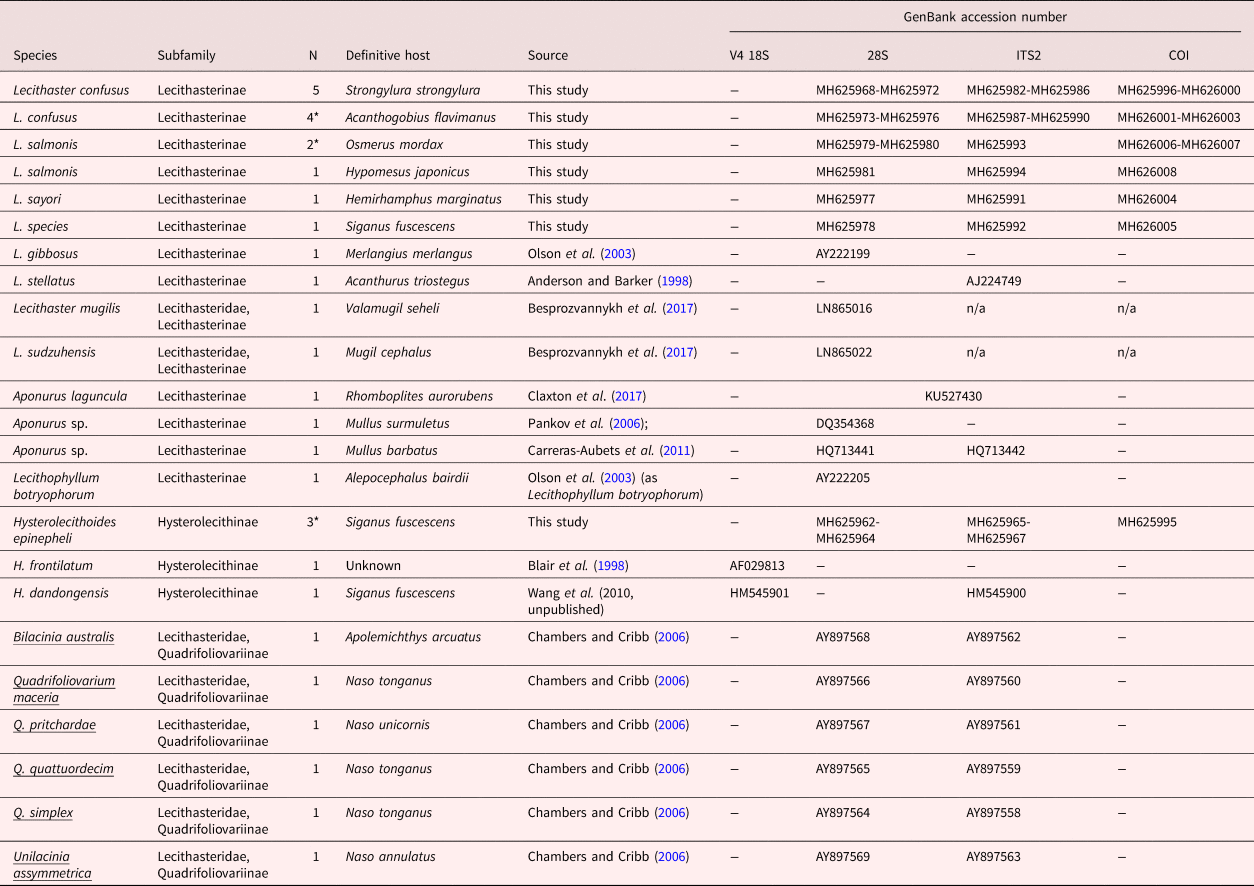
Adult specimens of Lecithaster confusus (n = 8), L. s ayori (n = 1), L. salmonis (n = 3), Hysterolecithoides epinepheli (n = 3) and Lecithaster sp. (n = 1) were used for molecular analysis (table 1). Total DNA was extracted from flukes, which were fixed in 96% ethanol, using a “hot shot” technique (Truett, Reference Truett and Kieleczawa2006).
List of Lecithasteridae incorporated into molecular analysis.
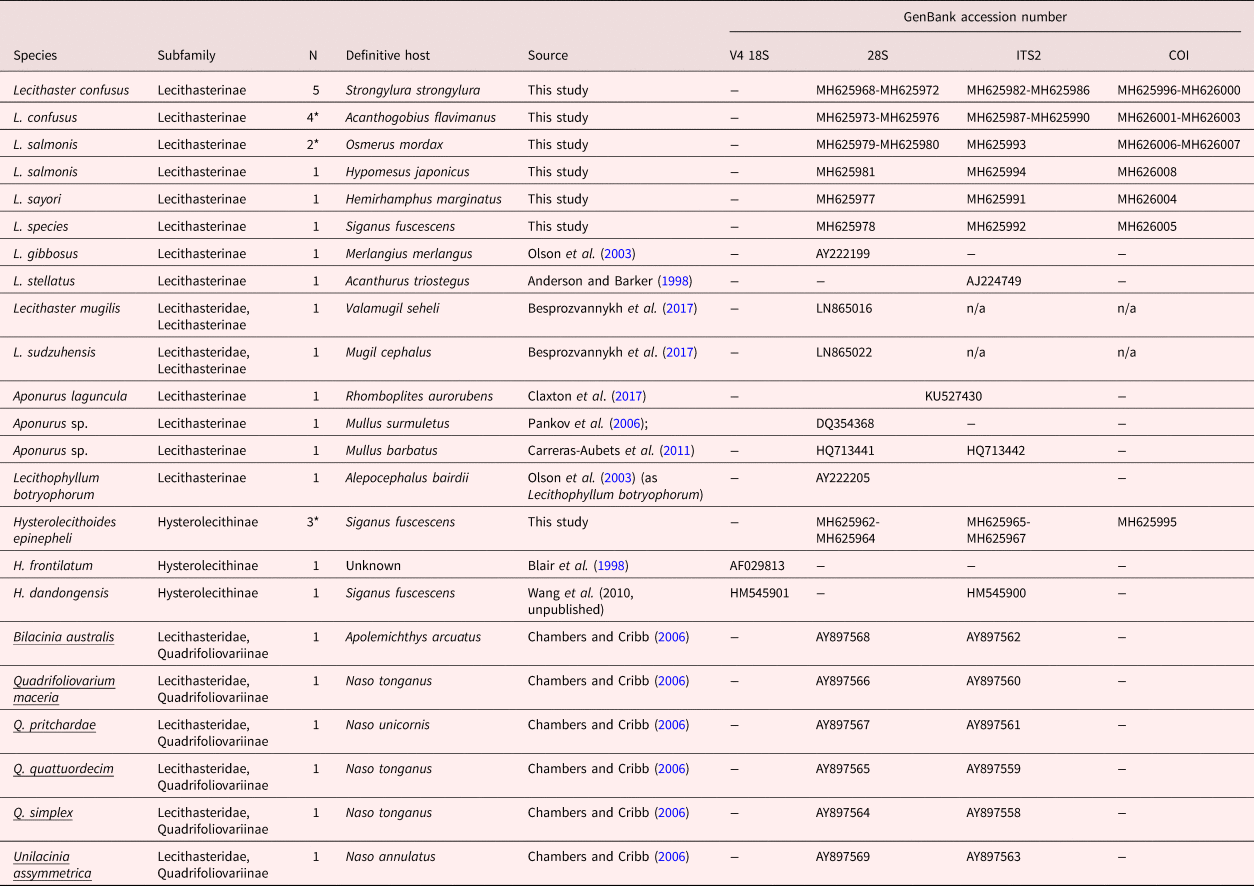
*n = 3 for COI of Lecithaster confusus ex Acanthogobius flavimanus; n = 1 for ITS of Lecithaster salmonis ex Osmerus mordax; n = 1 for COI of Hysterolecithoides epinepheli
n/a, accession numbers will be received later
Polymerase chain reaction (PCR) was used to amplify 18S ribosomal DNA (rDNA) with the primers 18S-8 (5′-GCA GCC GCG GTA ACT CCA GC-3′) and 18S-A27 (5′-CCA TAC AAA TGC CCC CGT CTG-3′) as described previously (Littlewood and Olson, Reference Littlewood, Olson, Littlewood and Bray2001). The initial PCR reaction was performed in a total volume of 20 μl and contained 0.25 mm of each primer, approximately 10 ng of total DNA in water, 10X Dream Taq buffer, 1.25 mm dNTPs and 1 unit of Dream Taq polymerase (Thermo Scientific, USA). Amplification of a 2000 base pair (bp) fragment of 18S rDNA was performed in a GeneAmp 9700 (Applied Biosystems, USA) with a 5-minute denaturation at 96°C, 35 cycles of 1 minute at 96°C, 20 s at 58°C and 5 minutes at 72°C and a 10-minute extension at 72°C. Negative and positive controls using both primers were included.
28S rDNA was amplified with the primers DIG12 (5′-AAG CAT ATC ACT AAG CGG-3′) and 1500R (5′-GCT ATC CTG AGG GAA ACT TCG-3′) as described previously (Tkach et al., Reference Tkach2003). The master mix for the PCR reaction was identical to that described above for 18S rDNA. Amplification of a 1200 bp fragment of 28S rDNA was performed in a GeneAmp 9700 (Applied Biosystems, USA) with a 3-minute denaturation at 94°C, 40 cycles of 30 s at 94°C, 30 s at 55°C and 2 minutes at 72°C and a 7-minute extension at 72°C. Negative and positive controls using both primers were included.
A ribosomal ITS1-5.8S-ITS2 fragment was amplified with primers BD1 (5′-GTC GTA ACA AGG TTT CCG TA-3′) and BD2 (5′-TAT GCT TAA ATT CAG CGG GT-3′) (Luton et al., Reference Luton, Walker and Blair1992) with an annealing temperature of 54°C. Negative and positive controls using both primers were included. A mitochondrial COI gene fragment was amplified and directly sequenced with primers Trema-cox1/F (5′-TTCGGTCATCCTGAGGTTTATGTT-3′) and Trema-cox1/R (5′- CAGCAAATCATGATGCAAAAGGTA-3′).
PCR products were directly sequenced using the ABI Big Dye Terminator v.3.1 Cycle Sequencing Kit (Applied Biosystems, USA), as recommended by the manufacturer, with the internal sequencing primers described by Littlewood and Olson (Reference Littlewood, Olson, Littlewood and Bray2001) for 18S rDNA, Tkach et al. (Reference Tkach2003) for 28S rDNA and Luton et al. (Reference Luton, Walker and Blair1992) for the ITS2 rDNA fragment. PCR products were analysed using an ABI 3130xl genetic analyser at the Department of Cell Biology, Far Eastern Federal University. Sequences were submitted to GenBank of the NCBI database with the accession numbers listed in table 1.
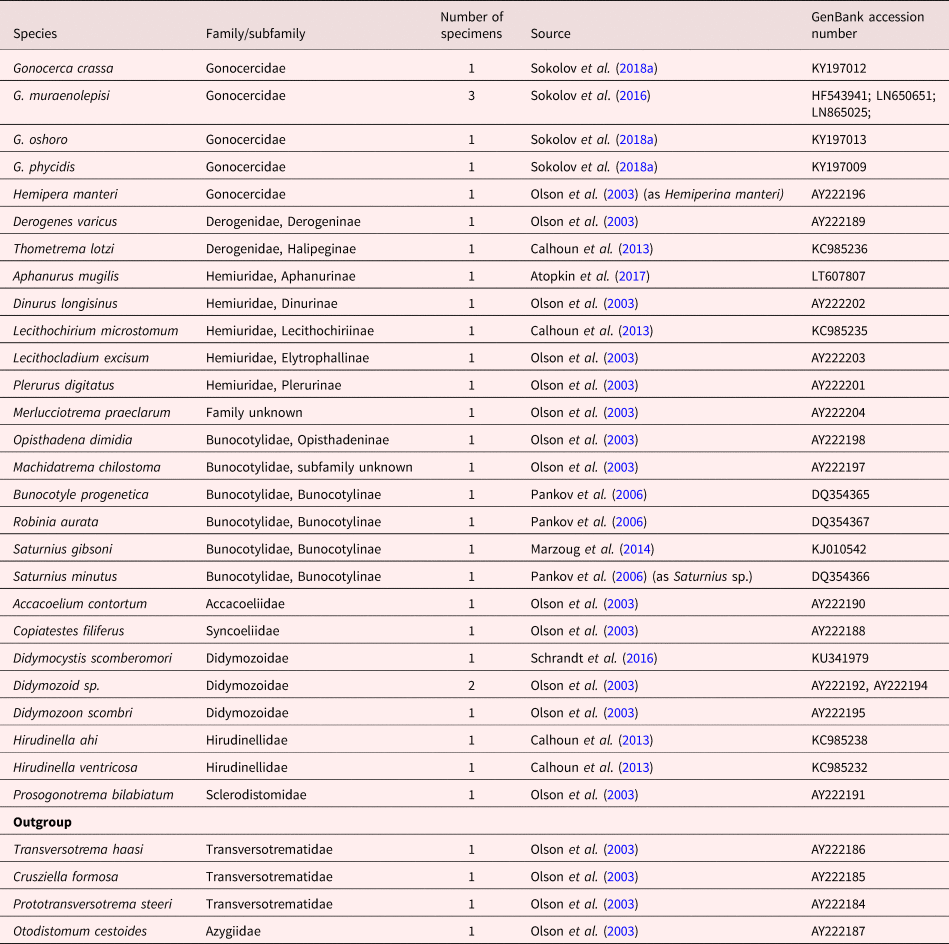
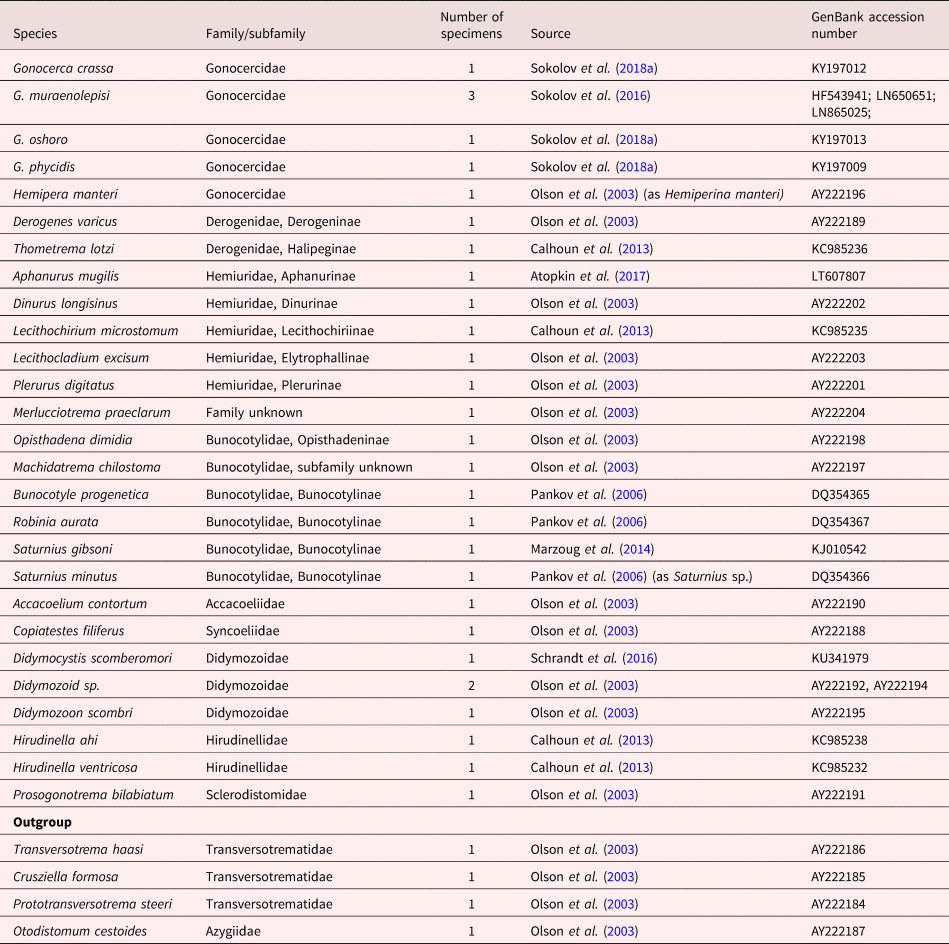
rDNA sequences were assembled with SeqScape v. 2.6 software. Alignments and estimation of the number of variable sites and sequence differences were performed using MEGA 7.0 (Kumar et al., Reference Kumar, Stecher and Tamura2016). Phylogenetic analyses of the nucleotide sequences were performed using the Bayesian algorithm with MrBayes v. 3.1.2 software (Huelsenbeck et al., Reference Huelsenbeck2001). The best nucleotide substitution models, TIM3+G, TPM3uf+I+G and TPM1uf+G for ribosomal 28S, ITS2 and mitochondrial COI gene fragment, respectively, were estimated with jModeltest v. 2.1.5 software (Darriba et al., Reference Darriba2012). Bayesian analysis was performed using 10,000,000 generations, with two independent runs. Summary parameters and the phylogenetic tree were calculated with a burnin of 1,500,000 generations. The significance of the phylogenetic relationships was estimated using posterior probabilities (Huelsenbeck et al., Reference Huelsenbeck2001). The phylogenetic relationships among the species of Lecithasteridae were inferred from our data, along with the nucleotide sequences of the 18S rDNA, 28S rDNA, ITS2 rDNA and COI gene fragment of mitochondrial DNA of other trematode specimens obtained from the NCBI GenBank database (tables 1 and 2).
List of trematodes of Hemiuroidea, incorporated into molecular analysis of 28S rDNA from GenBank. Molecular data for Lecithasteridae are presented in table 1.
Results
Lecithaster confusus Odhner, 1905
Host. Strongylura strongylura (van Hasselt, 1824), Belonidae.
Locality. Coastal water off Cat Ba Island, Halong Bay, northern Vietnam (20°84′N, 106°59′E).
Intensity of infection. 1–17 worms per fish.
Other host. Acanthogobius flavimanus (Temminck & Schlegel, 1845), Gobiidae Cuvier, 1816.
Locality. Lake Lebedinoe, Chasansky district, Primorsky Region, Russia (42°34′N, 130°41′E).
Intensity of infection. 15 worms per fish.
Site. Intestine.
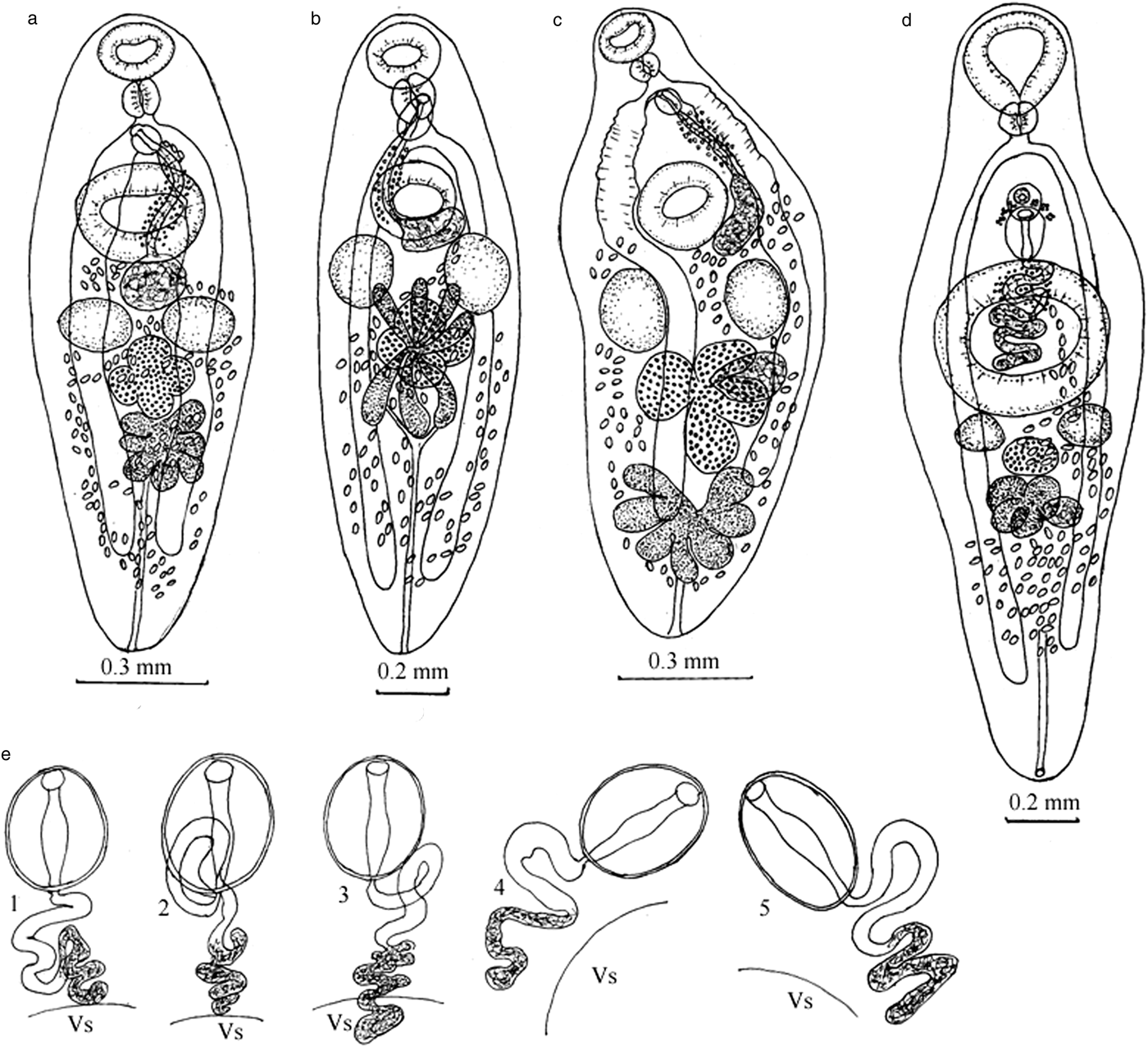
Description (based on 8 specimens; fig. 1a; table 3)
Body fusiform, smooth. Pre-oral lobe present. Oral sucker subterminal, prepharynx absent, pharynx spherical, oesophagus short. Intestinal bifurcation immediately anterior or 0.065–0.154 mm from ventral sucker. Caeca reach level of middle vitellarium to middle postvitelline region. Ventral sucker large, on border of anterior and middle thirds of body. Testes round, symmetrical and located in middle of body close to ventral sucker. Seminal vesicle saccate, between level of middle of ventral sucker and anterior margin of testes. Pars prostatica elongated, lined with vesicular cells and surrounded by numerous prostatic cells. Sinus sac oval, between anterior edge of ventral sucker and intestinal bifurcation, penetrated by hermaphroditic duct. Genital pore median, located at level of intestinal bifurcation. Pit connected to thin-walled sac located on median line posterior to genital pore. Ovary consists of four round lobes, between posterior border of testis and anterior margin of vitellarium. Seminal receptacle round, dorsal to ovary. Vitellarium consists of seven drop-shaped, oval or elongated oval lobe located immediately posteroventral to ovary. Anterior lobes of vitellarium partially overlap ovary. Uterine loops located between posterior margin of ventral sucker and posterior end of body. Eggs small, oval and operculated. Excretory bladder Y-shaped, excretory pore terminal.
Adult worms of Lecithasterinae Odhner, 1905 and Hysterolecithinae Yamaguti, 1958. (a) Lecithaster confusus Odhner, 1905. (b) L. sayori Yamaguti, 1938. (c) L. salmonis Yamaguti, 1934. (d) Hysterolecithoides epinepheli Yamaguti, 1934. (e) Terminal genitalia H. epinepheli: 1–3 ventral; 4 & 5 lateral. Vs, ventral sucker.

Lecithaster sayori Yamaguti, 1938
Host. Hemirhamphus marginatus (Fosskåi, 1775), Hemiramphidae Gill, 1859.
Locality. Coastal water off Cat Ba Island, Halong Bay, northern Vietnam (20°84′N, 106°59′E).
Intensity of infection. 2 worms per fish.
Site. Intestine.
Description (based on 1 specimen; fig. 1b; table 3)
Body is fusiform, smooth. Pre-oral lobe present. Oral sucker subterminal, prepharynx absent, pharynx spherical, oesophagus short. Intestinal bifurcation immediately anterior to ventral sucker. Caeca reach to posterior third of post-vitelline region. Ventral sucker in middle of anterior half of body. Testes round, symmetrical, adjacent or close to ventral sucker. Seminal vesicle transversely oval, between level of middle of ventral sucker and anterior margin of testes. Pars prostatica elongated, passes to right of median line of body, lined with vesicular cells and surrounded by numerous prostatic cells. Sinus sac oval and located anterior of ventral sucker, at level of pharynx-intestinal bifurcation, penetrated by hermaphroditic duct. Genital pore median, at pharynx level. Ovary consists of four round lobes, median line in middle third of body. Seminal receptacle round, dorsally to ovary. Vitellarium ventral to ovary, consists of seven elongated lobes; central part of vitellarium at level of central part of ovary. Uterus loops between posterior margin of ventral sucker and posterior end of body. Eggs small, oval, operculated. Excretory bladder Y-shaped, excretory pore terminal.
Lecithaster salmonis Yamaguti, 1934
Hosts. Osmerus mordax and Hypomesus japonicus.
Locality. Akkeshi Gulf, Hokkaido Japan (43°02′N, 144°85′E).
Intensity of infection. 7 specimens per fish.
Site. Intestine.
Description (based on 4 specimens; fig. 1; table 3)
Body elongated oval, smooth. Pre-oral lobe present. Oral sucker subterminal, prepharynx absent, pharynx spherical, oesophagus short. Intestinal bifurcation 0.119–0.193 mm from ventral sucker. Caeca reach vitellarium level. Ventral sucker in middle of anterior half of body. Testes round, symmetrical, close to posterior margin of ventral sucker. Seminal vesicle elongated, at level of ventral sucker. Pars prostatica elongated, lined with vesicular cells and surrounded by numerous prostatic cells. Sinus-like sac oval, immediately posterior to intestinal bifurcation, penetrated by hermaphroditic duct. Genital pore median, immediately posterior to or at the level of intestinal bifurcation. Ovary consists of four round or oval lobes, at median line immediately posterior to testes. Seminal receptacle oval, dorsal to ovary. Vitellarium consists of seven drop-shaped lobes, located in posterior third of body, post-ovarian. Uterus loops between middle of ventral sucker and posterior end of body. Eggs oval, operculated. Excretory bladder Y-shaped, excretory pore terminal.
Hysterolecithoides epinepheli Yamaguti, 1934
Host. Siganus fuscescens (Houttuyn, 1782).
Locality. Coastal water off Cat Ba Island, Halong Bay, northern Vietnam (20°84′N, 106°59′E).
Site. Intestine.
Intensity of infection. 17 specimens per fish.
Description (based on 9 specimens; fig. 1; table 3)
Body fusiform, smooth. Pre-oral lobe present. Oral sucker subterminal, prepharynx absent, pharynx spherical, oesophagus short. Intestinal bifurcation located 0.246–0.674 mm from ventral sucker. Caeca reach close to posterior edge of body; terminations asymmetrical in post-uterine region. Ventral sucker large, on border of anterior and posterior half of body. Testes round or transversely oval, symmetrical, close to posterior margin of ventral sucker. Seminal vesicle tubular, sinuous, at middle of ventral sucker level. Pars prostatica sinuous, sigmoid, lined with vesicular cells and surrounded by numerous prostatic cells, apex loops dorsally over distal part of sinus sac to level of posterior end or middle of sinus sac. Sinus sac oval, pre-acetabular, penetrated by hermaphroditic duct. Genital pore median. Pit connected with thin-walled sac located on median line anterior to genital pore. Gland cells close to pit. Genital pore and pit open separately into genital atrium. Ovary transversely oval, between posterior border of testis and anterior margin of vitellarium. Juel's organ large and oval or elongated, located left of vitellarium. Vitellarium consists of 3–4 drop-shaped lobes (one specimen was three-lobed), immediately posterior to ovary. Uterus reaches close to posterior extremity. Eggs small, oval, operculated. Excretory bladder Y-shaped, subterminal. Excretory pore opens ventrally.
Molecular analysis
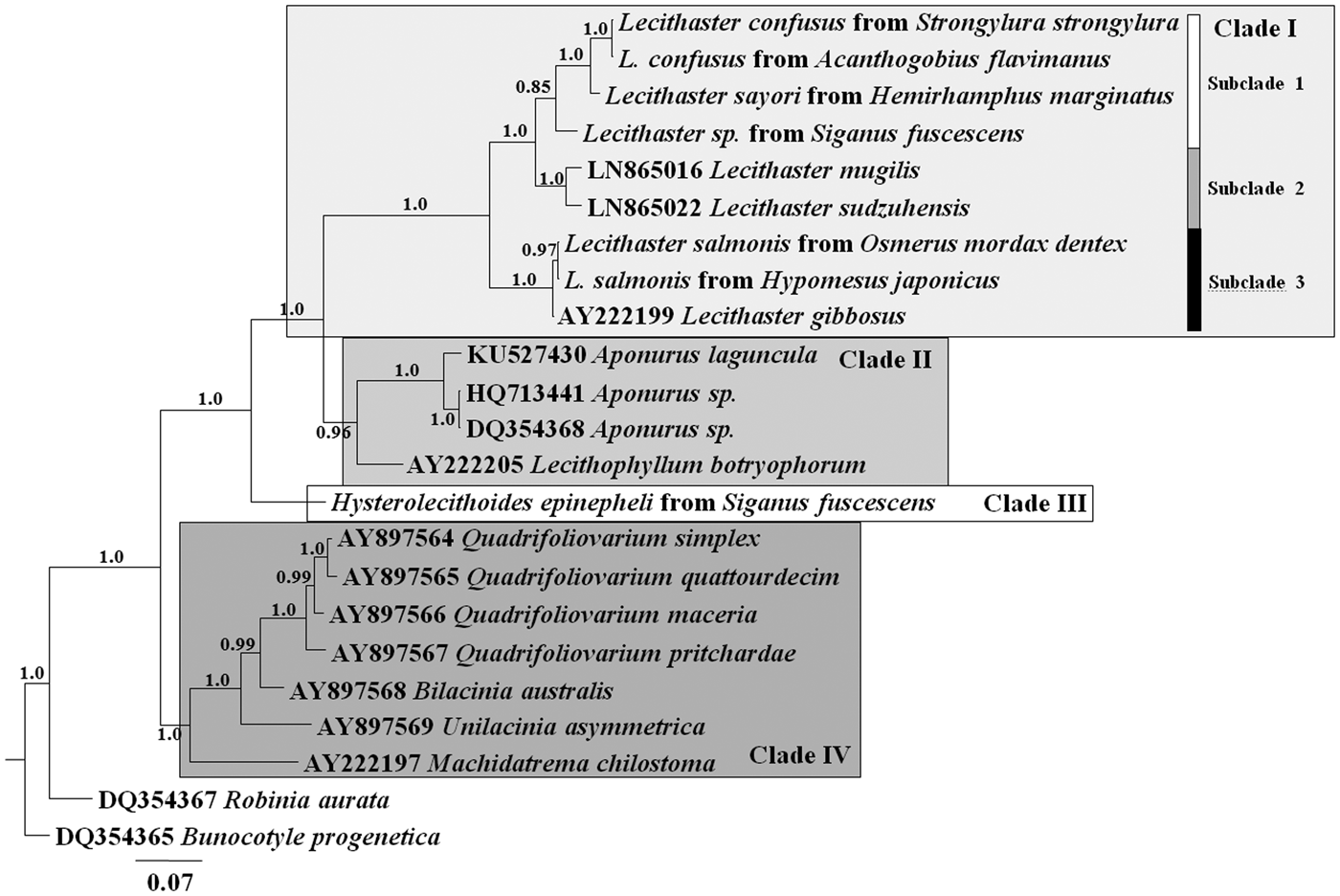
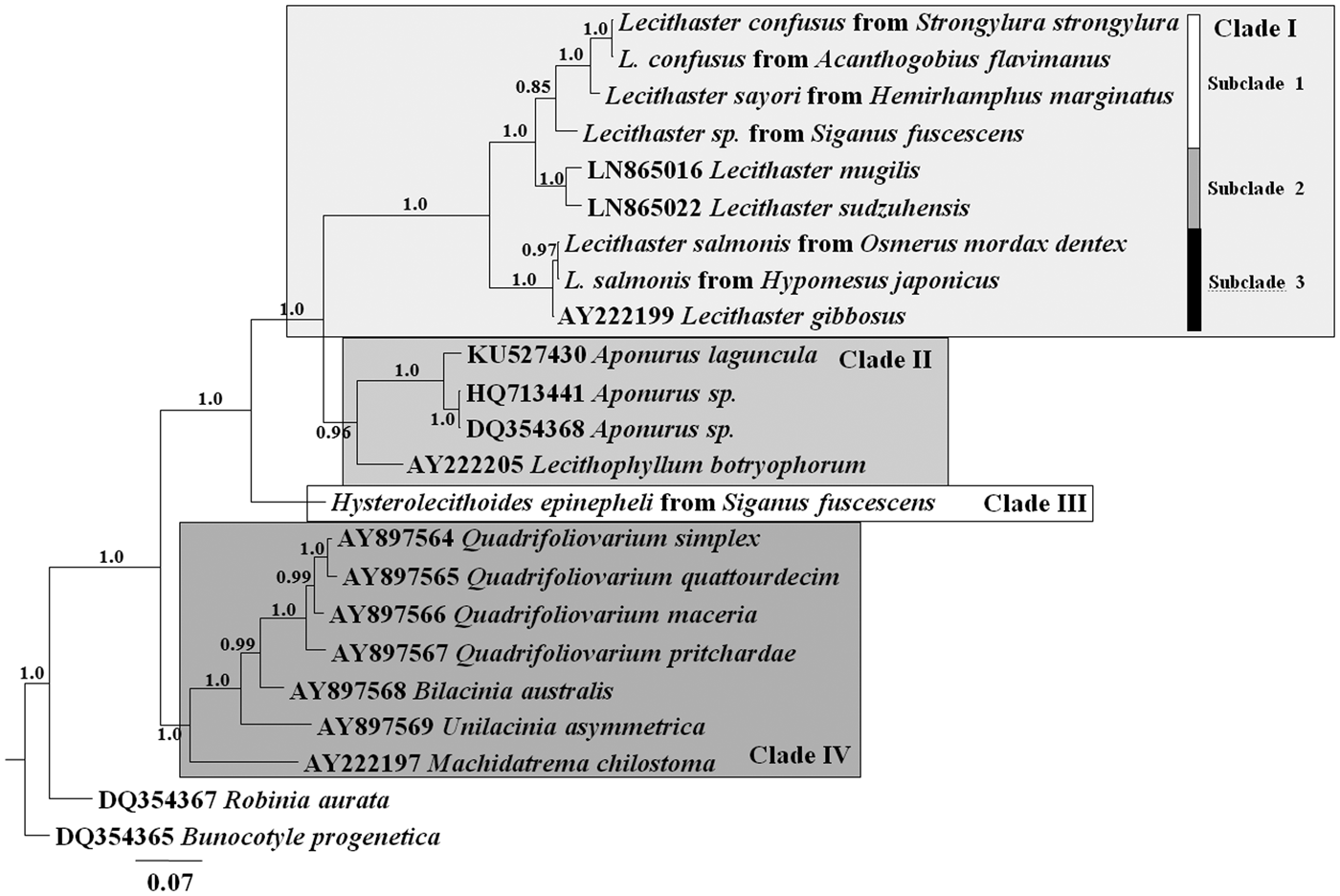
Three phylogenetic trees for Lecithasteridae were reconstructed with Bayesian analysis based on a 28S rDNA fragment (872 bp), an ITS2 rDNA fragment (448 bp) and a mitochondrial COI gene fragment (686 bp), respectively. The 28S-rDNA-based phylogenetic tree was subdivided into four clades. Clade I represents the monophyletic genus Lecithaster (fig. 2). Within this clade, there are two subclades. The first consists of L. confusus, L. sayori, L. mugilis, L. sudzuhensis and Lecithaster sp.; L. confusus and L. sayori are closely related to each other and Lecithaster sp. is basal to these two species. Lecithaster mugilis and L. sudzuhensis are closely related to each other. The second subclade includes L. salmonis from Japan and L. gibbosus from the United Kingdom. Clade II consists of representatives of the genus Aponurus and Lecithophyllum botryophorum, which are closely related to each other with high statistical support. Clade III comprises all specimens of H. epinepheli. from S. fuscescens. Clade IV includes species of four genera: Quadrifoliovarium, Bilacinia, Unilacinia and Machidatrema. Within this clade, Quadrifoliovarium and Bilacinia are closely related to each other, and Unilacinia assymetrica appears as a sister taxon to these two genera. Machidatrema chilostoma is basal for clade IV.
Phylogenetic relationships of the family Lecithasteridae obtained with the Bayesian algorithm, based on partial 28S rRNA gene sequences. Nodal numbers are posterior probabilities that indicate statistical support of phylogenetic relationships.
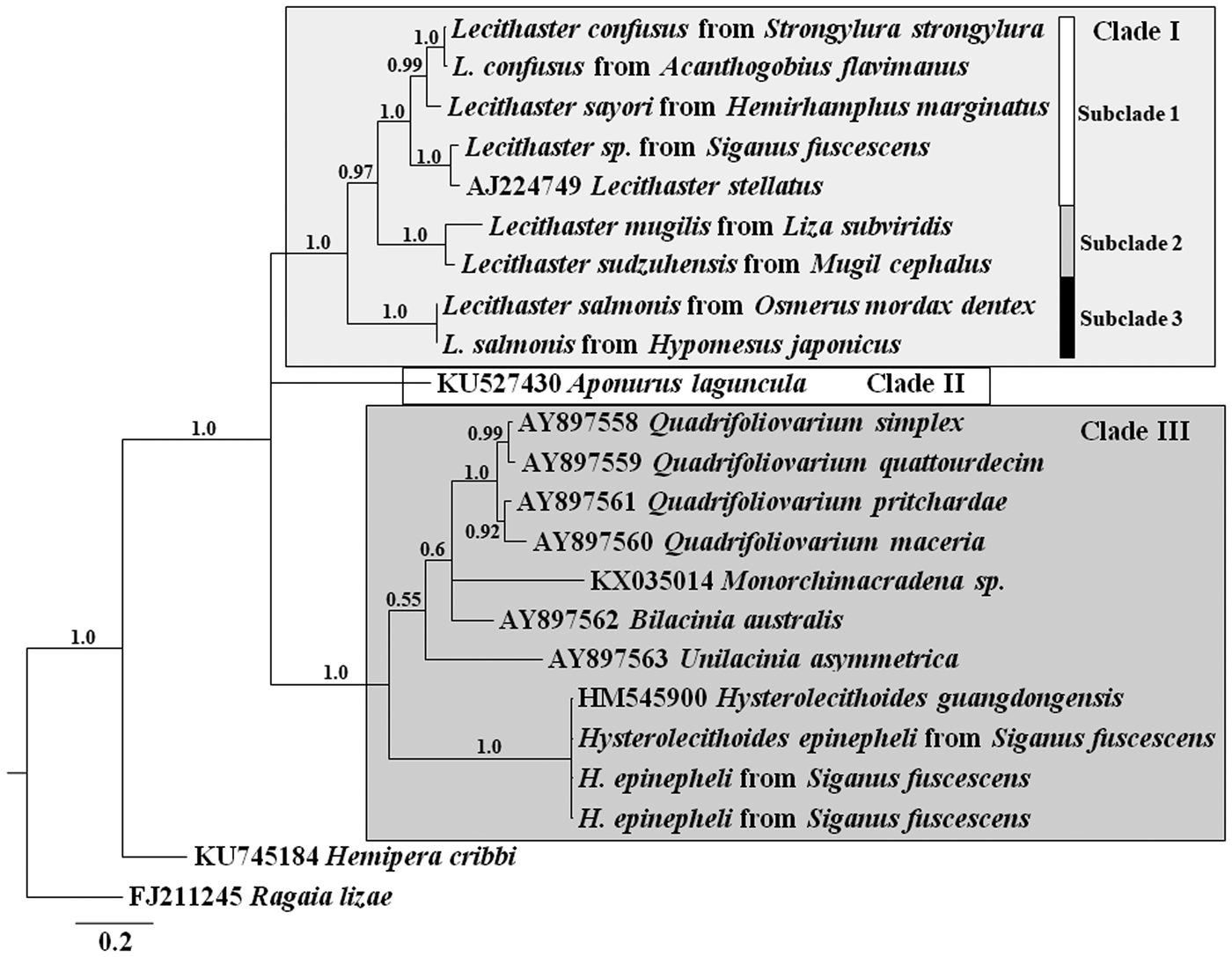
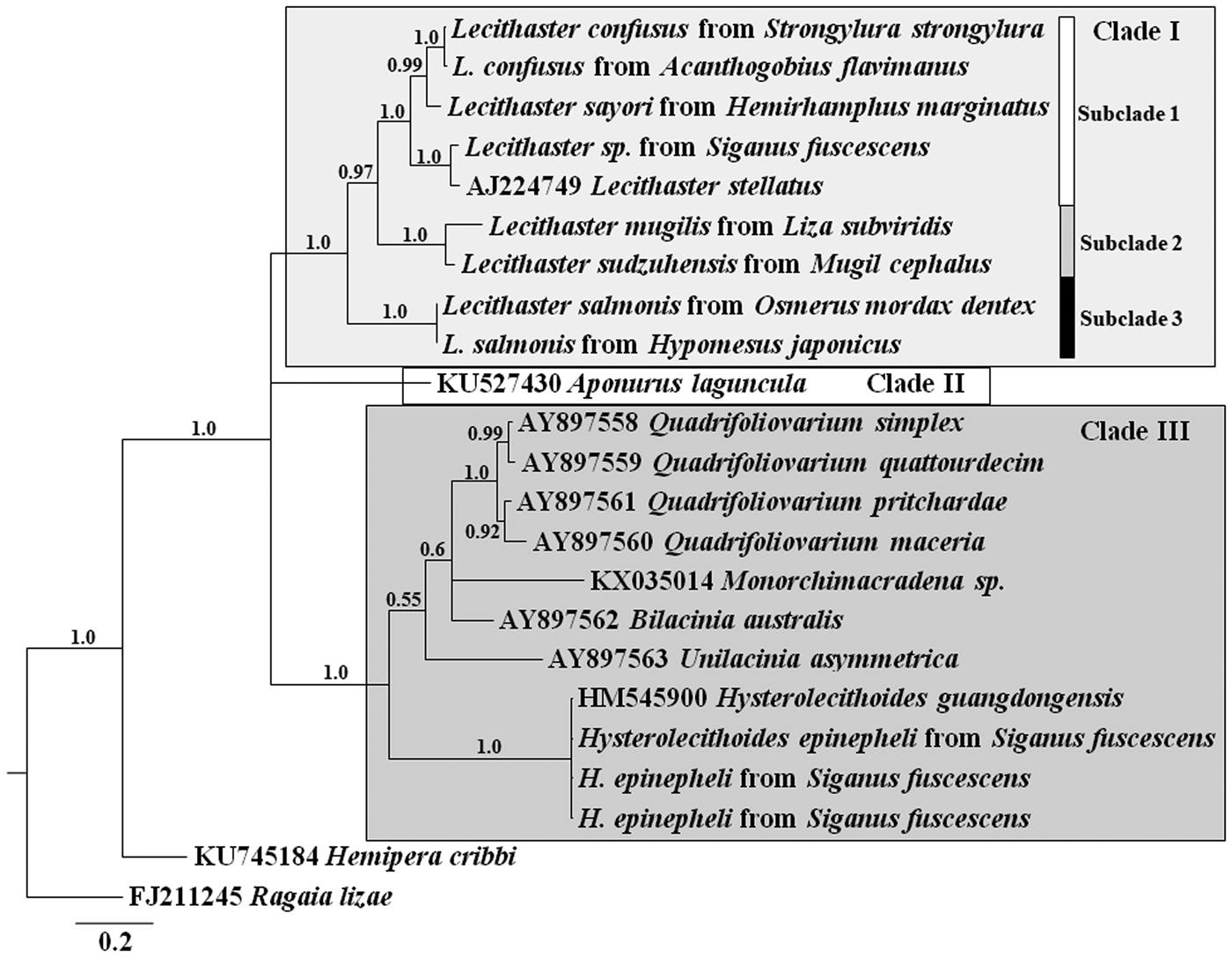
Lecithasterid species were subdivided into three main clades and form a polytomy in the ITS-rDNA-based phylogenetic tree (fig. 3). Clade I represents the genus Lecithaster. Within this clade, there are three subclades. The first subclade consists of the evidently closely related L. confusus + L. sayori as well as closely related L. stellatus + Lecithaster sp. The second subclade comprises L. sudzuhensis + L. mugilis, and the third subclade comprises only Japanese L. salmonis. Aponurus laguncula forms clade II. Clade III contains representatives of the genera Quadrifoliovarium, Monorchimacradena, Bilacinia, Unilacinia and Hysterolecithoides. Within this clade, Hysterolecithoides epinepheli from our study is identical to H. guangdongensis. The genus Hysterolecithoides appears as a sister taxon relative to other species within clade III.
Phylogenetic relationships of the family Lecithasteridae obtained with the Bayesian algorithm, based on ITS2 rDNA gene sequences. Nodal numbers are posterior probabilities that indicate statistical support of phylogenetic relationships.
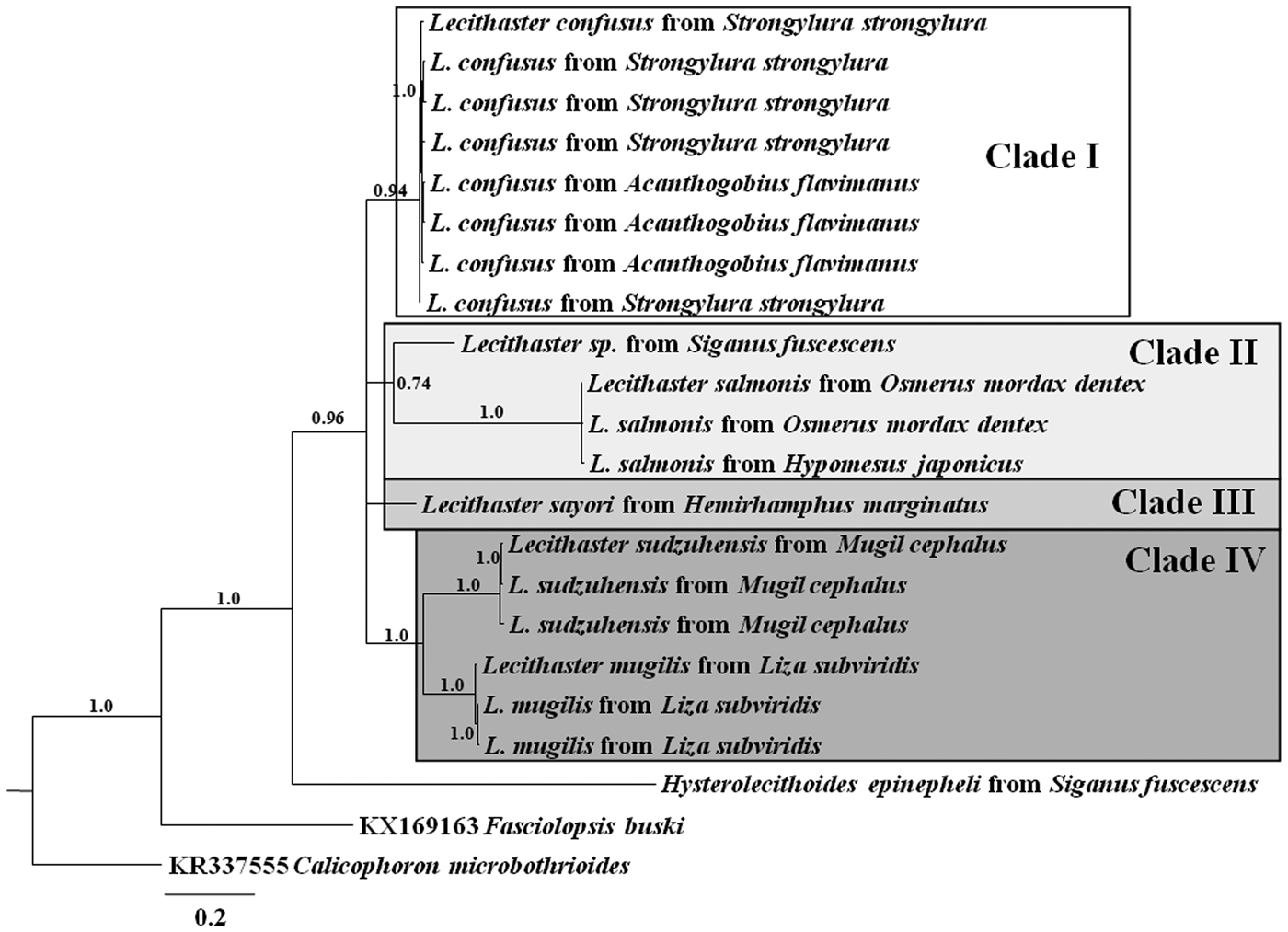
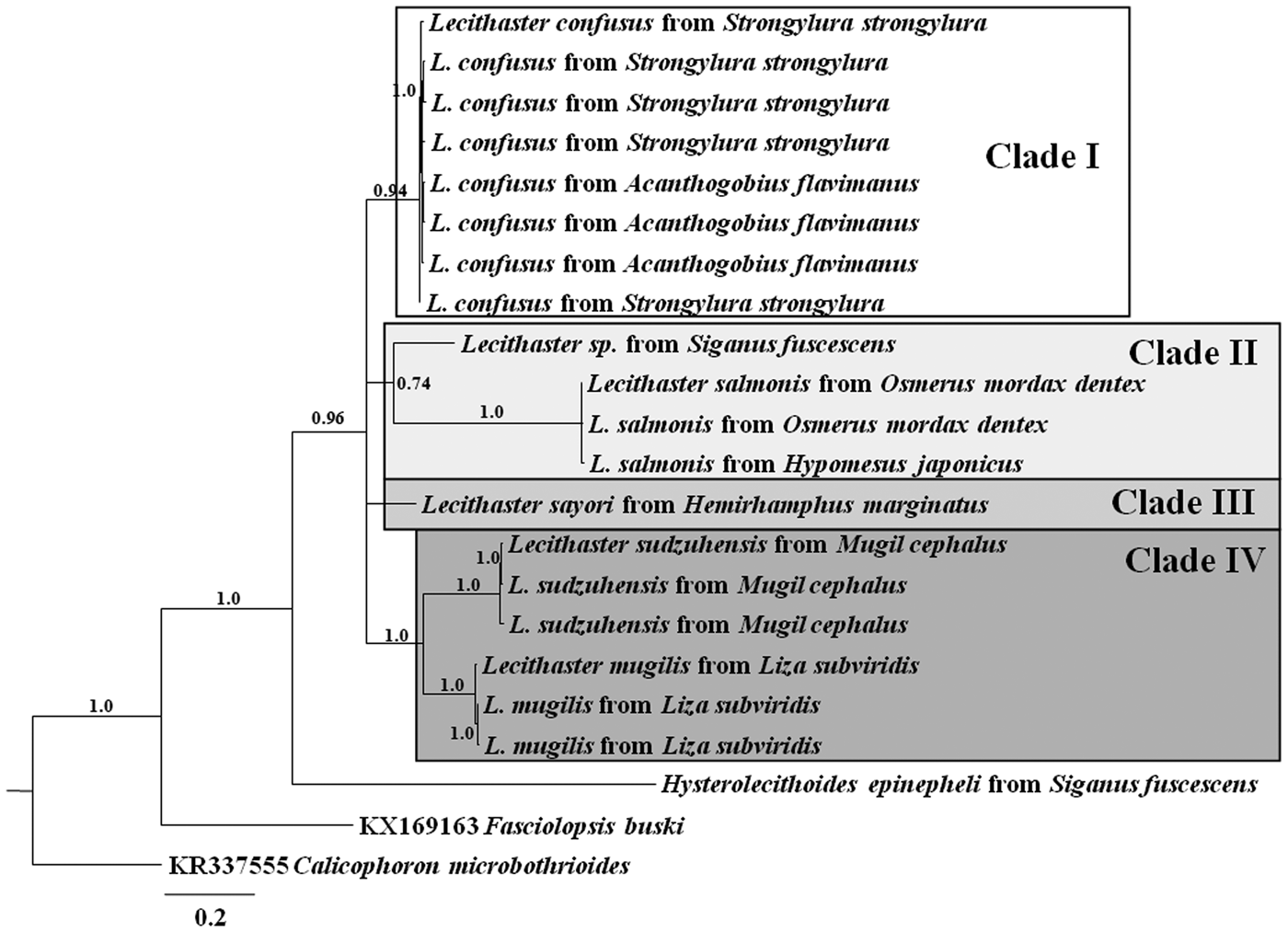
The phylogenetic tree based on nucleotide sequences from a COI gene fragment (fig. 4) includes only species of Lecithaster and Hysterolecithoides from this study. Separate lineages correspond to these two genera. The genus Lecithaster has a polytomy with four clades that represent L. confusus (clade I), Lecithaster sp. and L. salmonis (clade II), L. sayori (clade III) and L. mugilis + L. sudzuhensis (clade IV), respectively. Hysterolecithoides epinepheli appears as a sister taxon to Lecithaster.
Phylogenetic relationships of the genus Lecithaster obtained with the Bayesian algorithm, based on partial mitochondrial COI gene sequences. Nodal numbers are posterior probabilities that indicate statistical support of phylogenetic relationships.
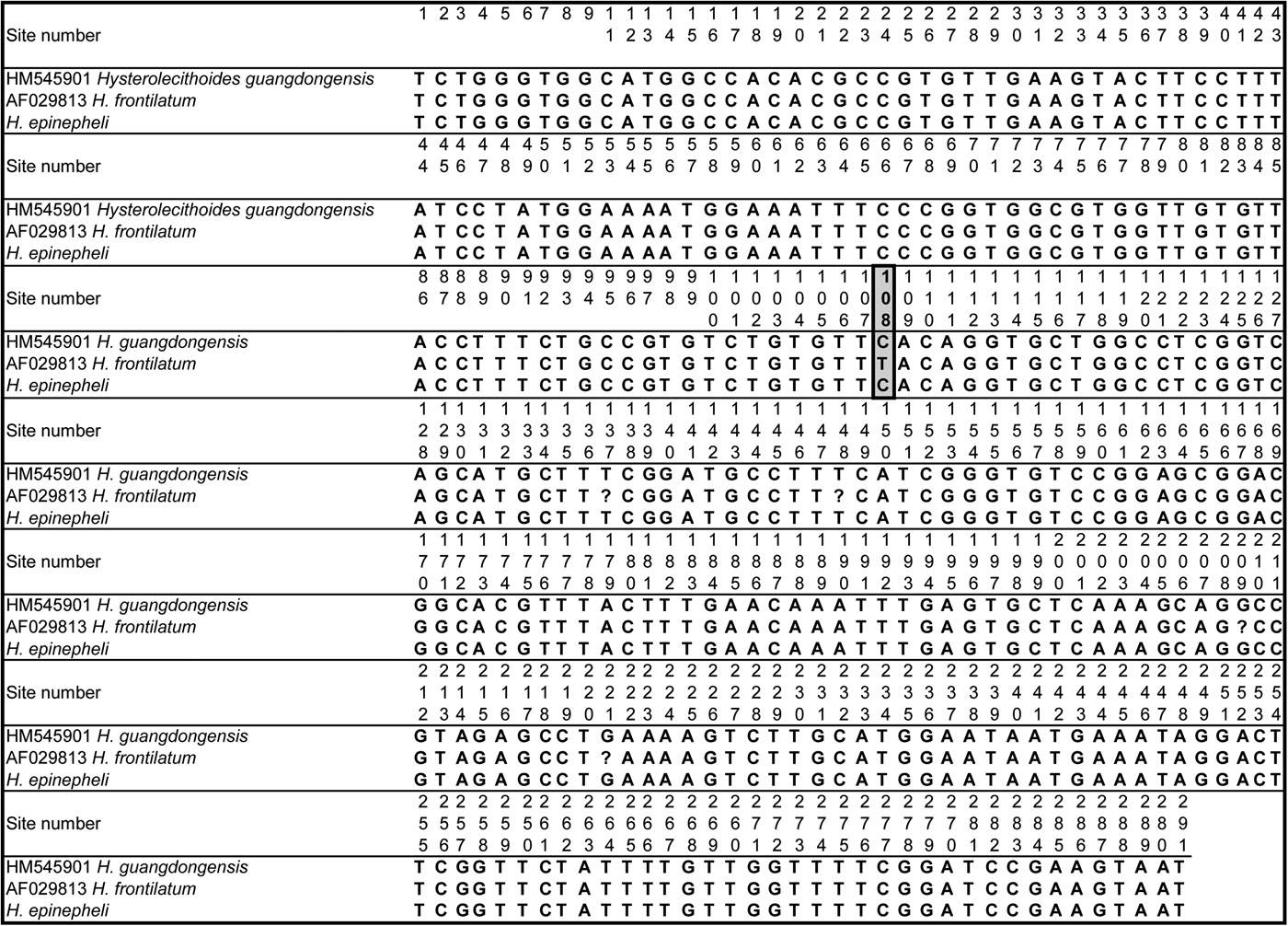
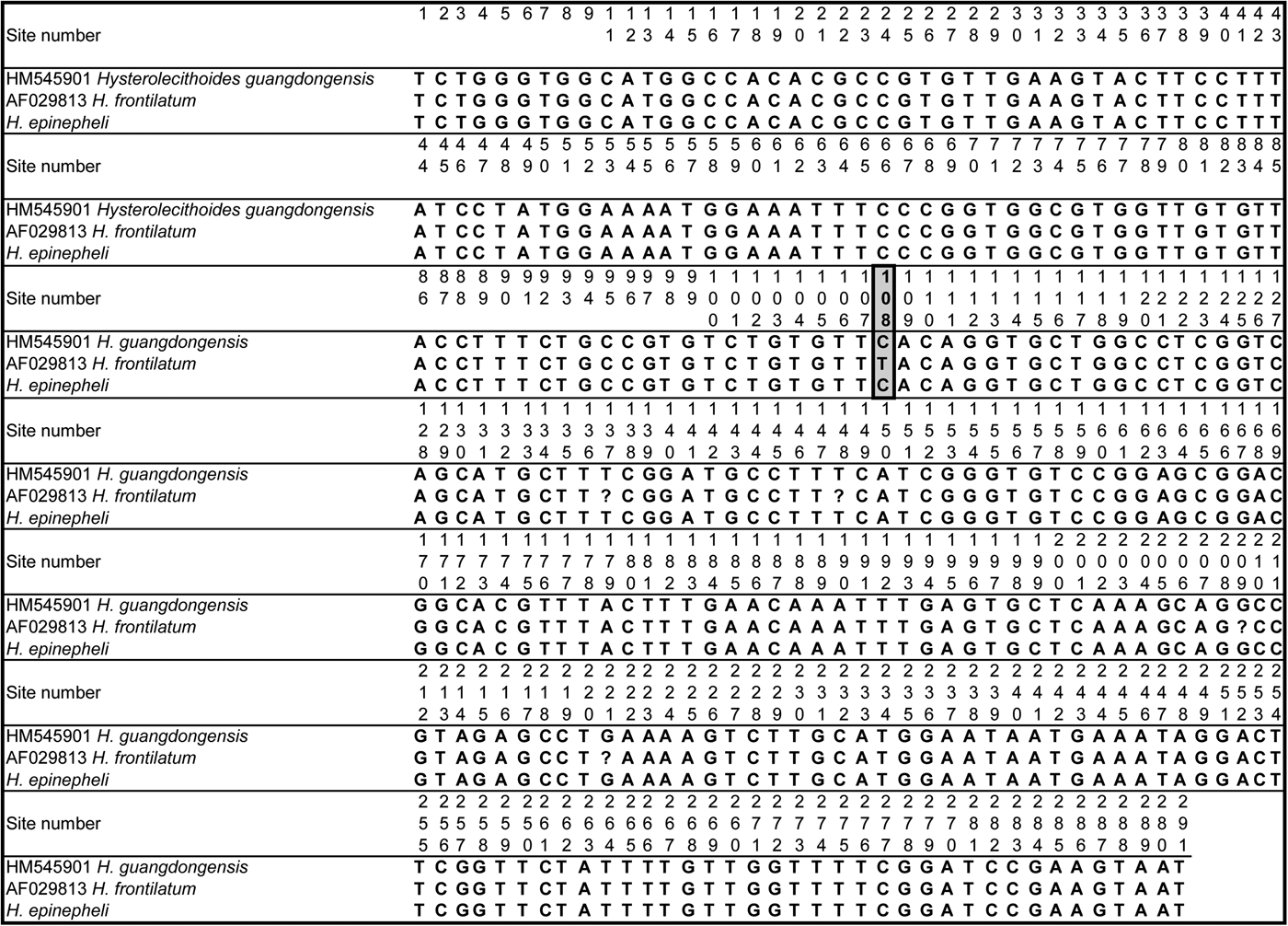
Ribosomal 18S rDNA gene V4 region sequences (291 bp) of H. epinepheli, H. frontilatum and H. guangdongensis were highly similar to each other. Only one variable site (no. 108) was detected (fig. 5).
Alignment of V4 fragment of ribosomal 18S rRNA gene 291 bp in length of Hysterolecithoides species. Variable site no. 108 is indicated in grey.
Discussion
Taxonomic conclusion with respect to Lecithaster and Hysterolecithoides species
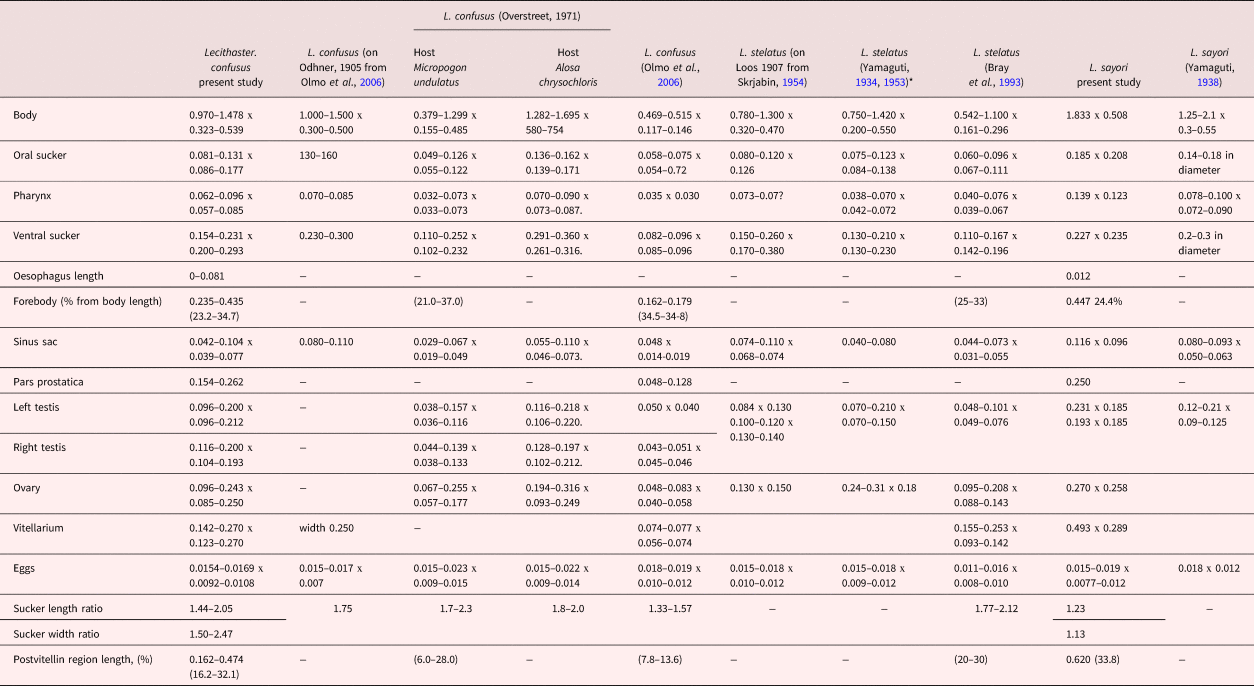
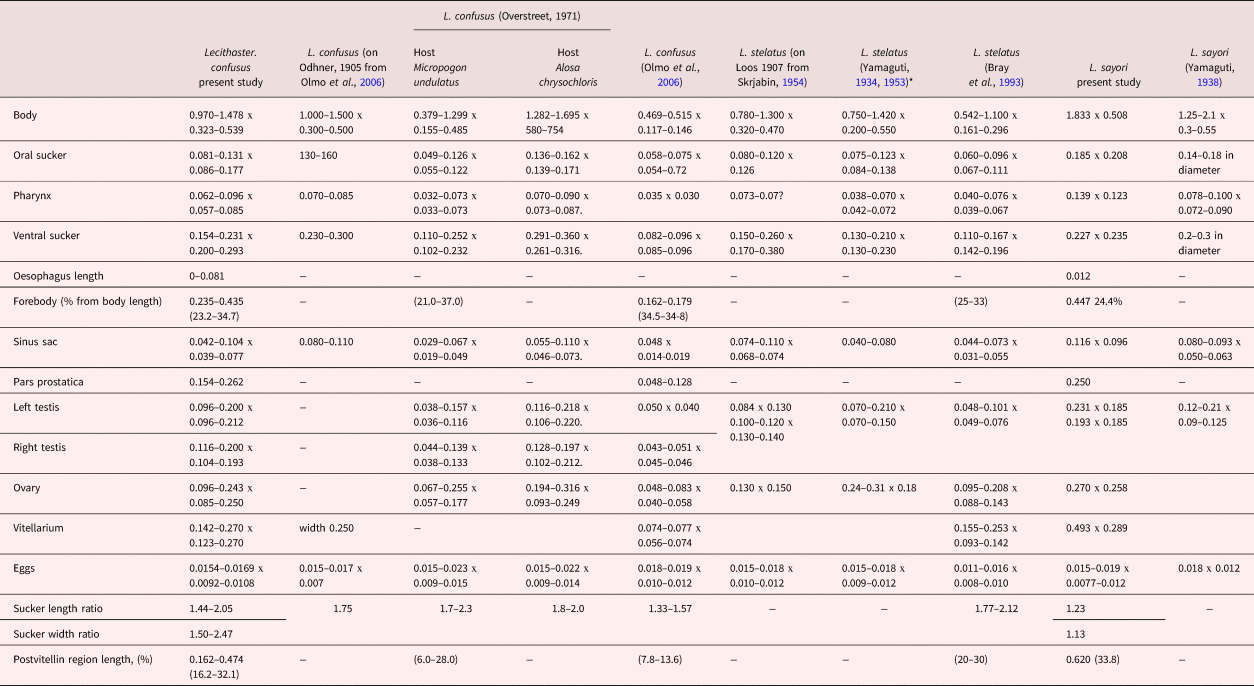
Representatives of the genus Lecithaster, like most worms that belong to the same genus, can resemble each other closely, making species identification based solely on morphometric analysis difficult. Trematodes from Vietnamese S. strongylura resemble L. confusus and L. stellatus, based on metric index values (table 3). Morphologically, and by organ arrangements, particularly the vitellarium lobe form and position, these trematodes resemble L. confusus and L. stellatus from the study of Yamaguti (Reference Yamaguti1953), in which the lobes were flask-like and the vitellarium was postero-ventrally to the ovary. Vietnamese worms, however, were different from L. stellatus specimens with respect to these two parameters, as reported by Looss (1908, cited in Skrjabin, Reference Skrjabin and Skrjabin1954) and Bray et al. (Reference Bray, Cribb and Barker1993). These authors indicated that the vitellarium with elongated lobes was partially (Looss, 1908, cited in Skrjabin, Reference Skrjabin and Skrjabin1954) or completely (Bray et al., Reference Bray, Cribb and Barker1993) at the level of the ovary.
Measurements for adult worms Lecithasteridae.
*Generalized data
Lecithaster confusus has been described in Alosa finta (Clupeiformes) from Egypt by Odhner, 1905 (cited in Skrjabin, Reference Skrjabin and Skrjabin1954). Subsequently, this trematode species was detected in representatives of six fish orders from northern European waters, the Atlantic coast of North America, and the Mediterranean and Black seas (Skrjabin, Reference Skrjabin and Skrjabin1954; Pérez-del-Olmo et al., Reference Pérez-del Olmo2006) and in East Asia off the Chinese coast (Pan, Reference Pan1984). Lecithaster stellatus was originally detected from the intestines of perciform fishes from the coastal waters of Triest, Mediterranean Sea (Skrjabin, Reference Skrjabin and Skrjabin1954). Later, it was found in beloniform species from coastal waters of Japan (Yamaguti, Reference Yamaguti1934), Australia (Bray et al., Reference Bray, Cribb and Barker1993) and China (Liu et al., Reference Liu2010). Thus, both L. confusus and L. stellatus are reported to exhibit a wide host range and overlapping distributions. At the same time, data from different authors reveal discrepancies in morphological characteristics of these species. Results from studies of L. confusus collected from Micropogon undulatus Linnaeus, 1766 and Alosa chrysochloris Rafinesque, 1820 from the Gulf of Mexico (Overstreet, Reference Overstreet1973) and Boops boops Linnaeus, 1758 from Malpica, Spain (Perez-del-Olmo et al., 2006) confirm considerable variation in morphometric indices of these worms (table 3) that may be caused by trematode infection of fish with different taxonomic affiliations. On the other hand, morphometric differences possibly indicate that these specimens belong to separate species. Molecular data are necessary to resolve this ambiguity. There is a single nucleotide sequence for L. stellatus from in or near Moreton Bay, eastern Australia (Anderson and Barker, Reference Anderson and Barker1998). Comparative analysis among ITS rDNA nucleotide sequences from L. stellatus from GenBank and Lecithaster from Vietnamese S. strongylura in our study indicates that these trematodes belong to different species (fig. 3). Based on these data and morphometric analysis, we conclude that trematodes from Vietnamese S. strongylura belong to L. confusus.
Lecithaster sayori Yamaguti, 1938 has been found in Hyporhamphus sajori Temminck and Schlegel, 1846 in Hamana Lake, Japan, which is connected to the sea (Yamaguti, Reference Yamaguti1938). Manter and Pritchard (Reference Manter and Pritchard1960) recognized L. sayori as a synonym of L. stellatus based on morphometric similarity. A unique feature of L. sayori, however, is the arrangement of the medial vitellarium at the same level as the ovary and elongated follicles of the vitellarium. Metrical (table 3) and morphological data, including vitellarium arrangement and vitellarium lobe form, for trematodes from Vietnamese H. marginatus from our study indicated that these worms were identical to L. sayori described by Yamaguti and L. stellatus reported by Bray et al. (Reference Bray, Cribb and Barker1993). Phylogenetic analysis showed that Vietnamese trematodes differed from L. stellatus, deposited in GenBank, in their ITS rDNA nucleotide sequences. This finding confirmed the validity of Vietnamese trematodes (fig. 3). Thus, based on the morphological similarity of Vietnamese trematodes to L. sayori, and molecular data, L. sayori and L. stellatus were apparently synonymized unreasonably.
Wang (1999) described a new Lecithaster species, namely L. fusiformis from Chinese S. fuscescens. Morphometrically, these worms resemble both L. stellatus reported in Bray et al. (Reference Bray, Cribb and Barker1993) and L. sayori. However, as there are no molecular data for L. stellatus from Bray et al. (Reference Bray, Cribb and Barker1993) or for L. fusiformis it is not possible to clarify the taxonomic status of these worms.
Lecithaster salmonis, as well as other Lecithaster species, are often low-specificity fish parasites that have been detected in fish orders Salmoniformes, Siluriformes and Perciformes from Japan (Yamaguti, Reference Yamaguti1934, Reference Yamaguti1940). In this study, this species was found in Japanese osmerid fishes. These worms were identical to specimens morphologically (fig. 1) and metrically (table 3) described by Yamaguti (Reference Yamaguti1934). Molecular data confirmed the validity of L. salmonis from this study. In our opinion, synonymization of this species with L. gibbosus is unreasonable.
Hysterolecithoides epinepheli was first described in Epinephelus akaara from Japan and also detected in the fish genera Caranx Lacépède, 1801 and Siganus Forsskål, 1775 (Yamaguti, Reference Yamaguti1934, Reference Yamaguti1953; Bray and Cribb, Reference Bray and Cribb2000). Adult H. frontilatus (Manter, Reference Manter1969) that were morphologically and metrically (table 3) similar to H. epinepheli have been described from Siganus from New Caledonia (Manter, Reference Manter1969; Bray and Cribb, Reference Bray and Cribb2000). Based on morphological analysis of H. epinepheli and H. frontilatus specimens from different areas and host species, Bray and Cribb (Reference Bray and Cribb2000) concluded that these species are valid. They showed that these worms were identical with respect to most metric and morphological characters, including 3–6 vitellarium lobes and a pit anterior to the genital pore. A single difference between these worms was the location of the distal part of the pars prostatica. For H. epinepheli it was always posterior to the sinus sac, whereas for H. frontilatus it loops dorsally to the sinus sac. Among the worms collected from Vietnamese Siganus, we found specimens that had either the first or second variant of the distal part of the pars prostatica position. Herewith, the first variant of the position of the distal part of the pars prostatica is usually at the lateral arrangement of worms, while the second is at the dorsoventral level. Moreover, the distal part of the pars prostatica is usually posterior from the sinus sac for young, small specimens with a poorly developed uterus. According to Yamaguti (Reference Yamaguti1953), the pars prostatica of H. epinepheli is sigmoid (S-shaped curve), similar to other Vietnamese worms. A sigmoidal pars prostatica occurs when the worm is in a lateral position. When the worm is in a ventral position, the distal pars prostatica is loop-like. Shared areas, the same definitive host species and morphometric similarity indicate that H. epinepheli and H. frontilatus belong to the same species. Molecular data confirm the conspecificity of these worms, indicating high identity of ribosomal 18S rDNA gene V4 region sequences of these species (fig. 5). Based on these results, we believe that worms collected from Vietnamese Siganus in this study belong to H. epinepheli, and H. frontilatus is the junior synonym of H. epinepheli. In addition, H. guangdongensis (Wu, 2000) from Chinese Siganus oramin (Bloch & Schneider) is identical to H. epinepheli in morphometric indices. Molecular data support that these worms belong to the same species (figs 3 and 5). Based on these data we conclude that H. guangdongensis is a synonym of H. epinepheli.
Interrelationships of Lecithasteridae
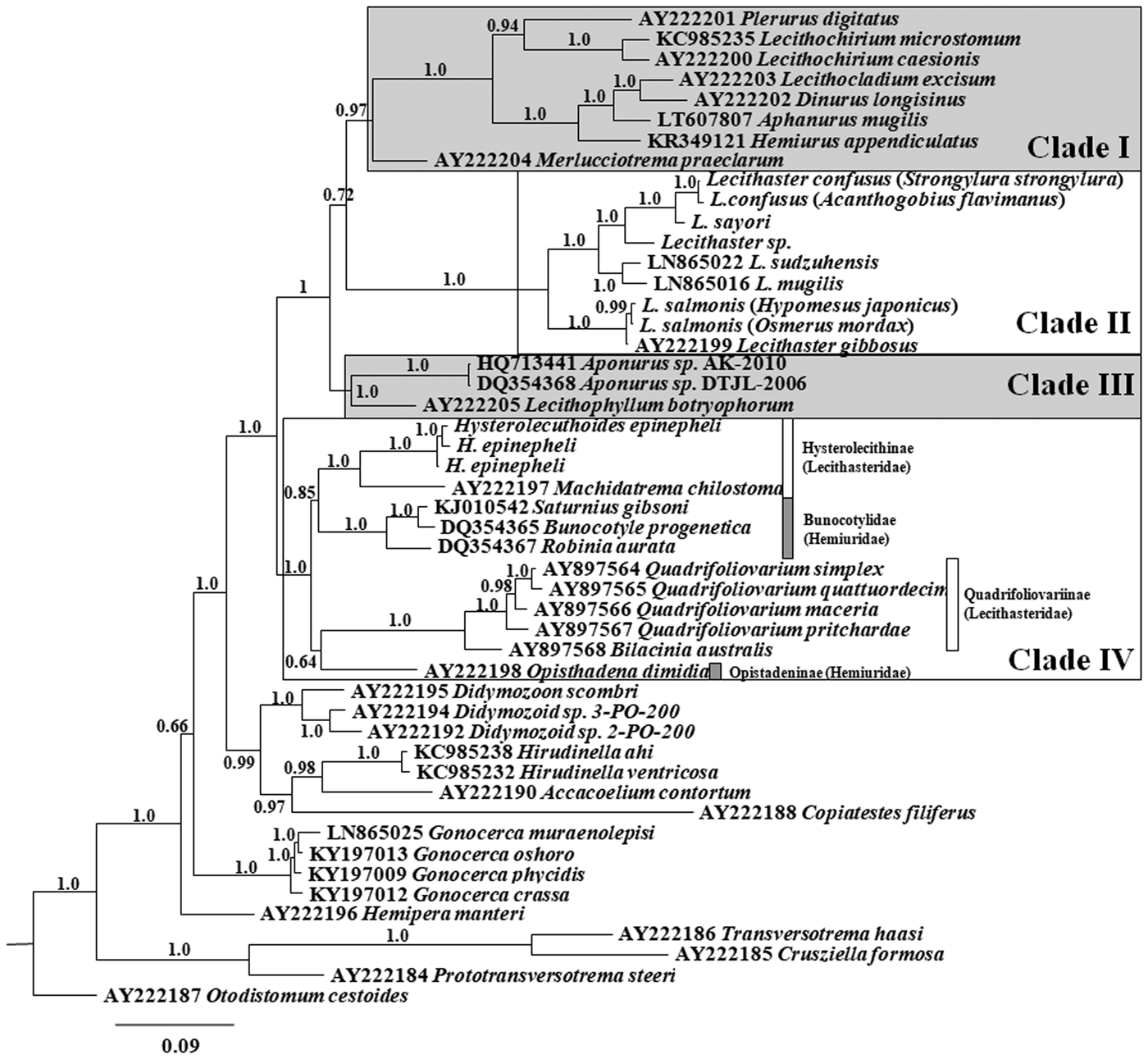
All phylogenetic trees showed a distinct position of the genus Lecithaster within the Hemiuroidea. In the 28S-rDNA-based phylogenetic reconstruction, this genus formed a clade with internal differentiation into three subclades: L. confusus, L. sayori + Lecithaster sp. within the first, L. mugilis + L. sudzuhensis within the second and L. salmonis + L. gibbosus within the third (fig. 6).
Phylogenetic relationships of Hemiuroidea obtained with the Bayesian algorithm based on partial 28S rRNA gene sequences. Nodal numbers are posterior probabilities that indicate statistical support of phylogenetic relationships.

Phylogenetic studies of hemiurid and lecithasterid trematodes demonstrate an association between molecular differentiation and definitive host-specificity within different trematode groups and provide an explanation from the point of view of host-switching processes (León-Règagnon, Reference León-Règagnon1998; León-Règagnon et al., Reference León-Règagnon1998). Numerous data show that a number of representatives of Lecithaster infect a wide range of definitive host species. However, molecular-based phylogenetic reconstructions (figs 2 and 3) indicate that members of the subclades recognized here generally display a distinct host preference. For example, L. mugilis + L. sudzuhensis have been reported only from mugilid fish species (Besprozvannykh et al., Reference Besprozvannykh2017), and L. salmonis and L. gibbosus infect mainly salmonids, but also species of Beloniformes, Clupeiformes, Gadiformes, Perciformes and other orders (Skrjabin, Reference Skrjabin and Skrjabin1954). Lecithaster confusus from the first subclade has been reported for Salmonidae, but mostly this species is detected in clupeiforms (Skrjabin, Reference Skrjabin and Skrjabin1954). The other two species from the first subclade, L. sayori and Lecithaster sp., have been reported only in Hemiramphidae and Siganus, respectively. Different levels of specificity for definitive host species for trematodes from the first subclade is a possible reason for higher molecular differences between these species in comparison with trematodes from the other two internal subclades of Lecithaster. However, further studies are necessary to clarify this question. Unfortunately, most reports of Lecithaster representatives in different fish species are not supported genetically; species identification is usually performed only with morphometric data. These circumstances, along with the morphological similarity of specimens within the genus and possible intraspecific morphological variations, decrease confidence in trematode species identification. Thus, in spite of some molecular evidence of host-switching processes for Lecithaster species, there are not enough data for representatives of this genus to confirm or reject this hypothesis.
Molecular-based restoration of Bunocotylidae Dollfus, 1950
Molecular-based phylogenetic reconstructions of Hemiuridae and Lecithasteridae are difficult to interpret with regards to previous taxonomic studies that concerned these families (Blair et al., Reference Blair, Bray and Baker1998; León-Règagnon et al., Reference León-Règagnon, Pérez-Ponce de León and Brooks1998; Olson et al., Reference Olson2003; Pankov et al., Reference Pankov2006; Atopkin et al., Reference Atopkin2017). However, in these studies some molecular data from Lecithasteridae were omitted during phylogenetic analyses. Namely, nucleotide sequences of 28S and ITS rDNA from three species of Quadrifoliovariinae Yamaguti, 1965 were used once for studying phylogeny, evolution and biogeography of this subfamily (Chambers and Cribb, Reference Chambers and Cribb2006). Including 28S-rDNA-based Bayesian phylogenetic reconstructions of Hemiuroidea, we found four clades for members of the Hemiuridae and Lecithasteridae. Clade I consisted of Hemiuridae representatives and clade II included species of the genus Lecithaster, which appeared as a sister to the Hemiuridae. Aponurus and Lecithophyllum (Lecithasteridae) were closely related to each other within clade III. Thus, the genus Lecithaster differs considerably from Aponurus and Lecithophyllum by molecular data, although these three genera belong to the Lecithasterinae. These results agree with Skrjabin (Reference Skrjabin and Skrjabin1954); this author considered the genera Aponurus and Lecithophyllum to be in same subfamily, Lecithophyllinae, separate from Lecithaster (Lecithasterinae) based on a different vitellarium structure. Clade IV combined members of the lecithasterid subfamilies Quadrifoliovariinae and Hysterolecithinae and the hemiurid Opisthadeninae and Bunocotylidae with high statistical support. This clade differs from other clades at the level of a distinct family. Within this clade, Quadrifoliovariinae and Hysterolecithinae were closely related to the Opisthadeninae and Bunocotylidae, respectively. However, these relationships were poorly supported, a result that indicates a lack of molecular data for other species of these subfamilies. Nevertheless, this clade included the hemiurid subfamily Opisthadeninae, which was thought to have a controversial taxonomic status (León-Règagnon et al., Reference León-Règagnon, Pérez-Ponce de León and Brooks1998; Pankov et al., Reference Pankov2006), and restored family Bunocotylidae, which includes the genera Bunocotyle Odhner, 1928, Robinia Pankov, Webster, Blasco-Costa, Gibson, Littlewood, Balbuena & Kostadinova, 2006 and Saturnius Manter, 1969. Later studies have accumulated evidence that the family Bunocolylidae Dollfus, 1950 is valid (Atopkin et al., Reference Atopkin2017; Faltýnková et al., Reference Faltýnková, Klimpel, Heinz and Mehlhorn2017; Sokolov et al., Reference Sokolov2018b). However, we conclude that trematodes of Quadrifoliovariinae and Hysterolecithinae, along with Opisthadeninae, belong to the family Bunocolylidae, which differs considerably from both Hemiuridae and Lecithasteridae based on molecular data.
Author ORCIDs
D.M. Atopkin 0000-0001-8417-3424.
Financial support
This study was supported by a grant from the Russian Scientific Foundation (no. 17-74-20074).
Conflict of interest
None.