Introduction
Binge eating disorder (BED) is characterized by recurrent-persistent episodes of excessive and uncontrollable food consumption within a short period of time. Although individuals with BED generally have a higher-than-average body mass index (BMI), weight and BMI are not diagnostic criteria for BED. The aberrant eating behavior behind this disorder is characterized by a subjective sense of loss of control, distress, uncomfortable fullness, and intense feelings of disgust and embarrassment,Reference Stein, Kenardy, Wiseman, Dounchis, Arnow and Wilfley 1 without the inappropriate compensatory behaviors of bulimia nervosa. 2 Episodes of binge eating, associated with at least 3 specific features (eg, eating more rapidly than normal; eating until uncomfortably full; eating a large amount when not hungry; eating alone because of embarrassment; feeling disgusted, depressed, or guilty about overeating), occur both in BED and in bulimia nervosa with an average frequency of at least once a week, over 3 months. 2
The lifetime prevalence of frequent binge eating in the United States is about 1.5% with a median age of onset of about 12.5 years.Reference Hudson, Hiripi, Pope and Kessler 3 , Reference Swanson, Crow, Le Grange, Swendsen and Merikangas 4 About 35% of those who regularly binge are overweight or obese.Reference Devlin 5 Additionally, individuals who report engaging in binge eating behaviors have been shown to regain weight at a faster rate than those who do not.Reference Pacanowski, Senso, Oriogun, Crain and Sherwood 6 Interestingly, among those who binge, approximately 76% of adults and 85% of adolescents experience psychiatric comorbidities such as anxiety, mood, and substance use disorders,Reference Hudson, Hiripi, Pope and Kessler 3 as well as other disorders such as obesity, diabetes, and cardiovascular diseases.Reference Wilfley and Berkowitz 7 Based on the growing evidence of high prevalence and clinical significance,Reference Striegel-Moore and Franko 8 , Reference Striegel-Moore and Franko 9 the Fifth Edition of the Diagnostic and Statistical Manual of Mental Disorders (DSM-V) has now designated BED as a psychiatric illness distinct from other eating disorders with a specific formal diagnosis. 2 The only pharmacological treatment for BED, lisdexamfetamine dimesylate, has just recently been approved by the Food and Drug Administration (FDA). 10 On the other hand, medications that have been reported to reduce binge eating in clinical studies, eg, topiramate,Reference McElroy, Guerdjikova, Martens, Keck, Pope and Hudson 11 , Reference McElroy, Hudson and Capece 12 are associated with a variety of adverse side effects, which may result in discontinuation of therapy.Reference Yager 13
Unlike individuals with bulimia nervosa, individuals with BED typically do not show marked or sustained dietary restriction designed to influence body weight and shape between binge eating episodes. They may, however, report frequent attempts at dieting. Therefore, a widely accepted hypothesis about the etiology of binge eating is based on the sequential access to foods with different hedonic value, as occurs in restrained eaters.Reference Polivy and Herman 14 , Reference Mela 15 Highly palatable foods are typically rich in sucrose and fat, and they are commonly perceived as “forbidden” between binges because they are calorie-dense.Reference Yeomans, Blundell and Leshem 16 , Reference Cottone, Sabino, Steardo and Zorrilla 17 Therefore, selection of low energy-dense foods in chronic dietersReference de Zwaan 18 – Reference Yanovski, Leet and Yanovski 20 may instead increase craving for more appetitive palatable foods, and makes individuals more vulnerable to behavioral excess and overeating.Reference Polivy 21 Highly palatable foods are more likely to be consumed for reasons beyond hunger, and their high palatability makes it more difficult to limit and to control their intake.Reference Boggiano, Turan, Maldonado, Oswald and Shuman 22 , Reference Witt and Lowe 23
The opioid system (endogenous peptides and their receptors) has been strongly linked to rewarding impact of palatable food intake, and it represents one of the key systems that regulates hedonic overeating.Reference Nathan and Bullmore 24 Opioid receptor agonist administration increases food intake, while opioid receptor antagonists decrease it.Reference Kelley 25 Among the different opioid receptor subtypes, μ-opioid receptors have been strongly involved in the modulation of hedonic feeding in general and more specifically in pathological overeating observed in BED.Reference Nathan and Bullmore 24 Motivated behaviors are not only characterized by hedonic mechanisms leading to consummatory episodes; anticipatory incentive processes by which an individual comes to expect contact with palatable food, eg, the exposure to cues associated with that specific food, also play a fundamental role. A cue may be successfully resisted many times, but on some occasions it may trigger irresistible temptation.Reference Peciña and Berridge 26 , Reference Flagel, Watson, Robinson and Akil 27 Clinical data have suggested that some individuals may attribute a higher motivational value to food cues compared to others and, therefore, they may be more likely to overeat.Reference Dagher 28 , Reference Robinson, Burghardt and Patterson 29 Indeed, food craving has been reported to be a major precipitant of binge episodes.Reference Ng and Davis 30 , Reference Greeno, Wing and Shiffman 31
While emphasizing the results obtained in animal models of binge eating, the present review will focus on the role of the opioid system both in the hedonic component of consummatory behavior and more specifically in anticipatory incentive processes preceding binge-eating hedonic episodes.
Hedonically Driven Eating Behavior
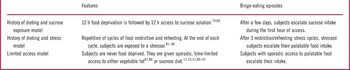
Because consumption of large volumes of palatable food in brief periods of time is the key diagnostic criterion for BED, animal models of this disorder have been developed to mimic this essential maladaptive behavioral outcome. Table 1 summarizes the most predictive binge eating preclinical models, divided into 3 major classes, as a function of the procedures used to induce binge eating in animals: (1) binge eating induced by cycles of food deprivation and renewed access to a sucrose solution; (2) binge eating induced by cycles of stress and food restriction/refeeding; (3) binge eating induced by limiting access to a highly palatable diet.
Summary of the most predictive binge eating preclinical models, divided into 3 major classes, as a function of the procedures used to induce binge eating in the animal

Abundant evidence implicates the brain opioid systems in the regulation of food intake and the rewarding impact of palatable food intake.Reference Nathan and Bullmore 24 Hedonic pleasure reactions have been operationalized in animals through “liking” reactions to sweetness, which are affective orofacial expressions (tongue and lateral tongue protrusions) that are homologous in human infants, monkeys, horses, and rats.Reference Berridge 32 The neural mechanisms associated with hedonic responses to palatable foods have been investigated by using selective µ-opioid receptor ligands to identify “hotspots” in the basal ganglia, especially in the ventral pallidum (VP) and the nucleus accumbens (NAc).Reference Peciña and Berridge 33 , Reference Smith and Berridge 34 It has been shown that the ability of μ-opioid receptor agonists to increase food intake is restricted to a specific portion of the NAc shell (the rostrodorsal quadrant of NAc medial shell), which shows high μ-opioid receptor density.Reference Peciña and Berridge 33 Recently, it has been shown that within the same μ-opioid receptor hotspot, stimulation of the δ-opioid receptor, a subtype of opioid receptor having a prominent role in emotional processing, can also amplify hedonic reactions to sweetness.Reference Castro and Berridge 35
The NAc sends projections to the VP, which also projects back to the NAc, and each structure is embedded in complex mesocortico-limbic circuits involving the lateral hypothalamus, the ventral tegmental area, the prefrontal cortex and the amygdala. Each of these areas is fundamental in reward and motivational processes. Similar to the NAc, the VP has been shown to contain a hedonic hotspot, specifically in the posterior portion.Reference Smith and Berridge 34
Based on these mechanisms, μ-opioid receptor agonists have been demonstrated to increase the intake of palatable food with a high sugar or fat content and to increase the consumption of more preferred food when presented at the same time with less preferred food.Reference Woolley, Lee and Fields 36 μ-Opioid receptor antagonists, on the other hand, reduce binge episodes for highly palatable food,Reference Cottone, Sabino, Steardo and Zorrilla 17 , Reference Blasio, Steardo, Sabino and Cottone 19 , Reference Giuliano, Robbins, Nathan, Bullmore and Everitt 37 – Reference Ziauddeen, Chamberlain and Nathan 39 confirming the critical involvement of this system in the hedonic and consummatory aspects of ingestive behavior. For example, the preferential µ/k-opioid receptor antagonist nalmefene, an effective and approved treatment for heavy alcohol drinking,Reference Gual, Bruguera and López-Pelayo 40 has been successfully tested in a binge-eating paradigm.Reference Cottone, Sabino, Steardo and Zorrilla 17 In this study, adolescent female Wistar rats were food deprived for 2 h a day and then offered 10-min access to a feeder containing chow followed sequentially by 10-min access to a highly preferred, but macronutrient-comparable, sucrose-rich diet. Those exposed to chow and the high-sucrose diet developed experience-dependent binge-like hyperphagia of the diet as well as anticipatory hypophagia of the less preferred alternative. “Binges” were reduced dose-dependently by systemically injected nalmefene,Reference Cottone, Sabino, Steardo and Zorrilla 17 supporting the hypothesis that the endogenous opioid system promotes hedonic intake. Using the binge-eating procedure described above, the behavioral effects of a novel, selective µ-opioid receptor antagonist, GSK1521498, which is currently in clinical development for the treatment of compulsive eating disorders and obesity, was tested in comparison with naltrexone (NTX), a preferential µ-opioid receptor antagonist clinically approved for alcoholism.Reference Giuliano, Robbins, Nathan, Bullmore and Everitt 37 Both GSK1521498 and NTX reduced binge-like palatable food hyperphagia and food intake after instrumentally working to obtain it, confirming the key role that the opioid system plays in hedonic eating behavior. The same compound, GSK1521498, was tested for 4 weeks in binge-eating obese subjects and resulted in reduced hedonic preference, specifically for higher concentrations of sugar and fat, and markedly reduced calorie intake in an ad libitum buffet, particularly for more palatable foods.Reference Ziauddeen, Chamberlain and Nathan 39
Incentive Salience in Eating Behavior
Reward processing comprises 2 dissociable components: an anticipatory (or appetitive) phase, which is directed at procuring the reward, and a consummatory phase. The anticipatory phase can be associated with stimuli (contextual, visual, auditory, or food-associated) or the food per se. These stimuli can have a great impact on the eating behavior, as they can increase it. It has been shown, for example, that learned contextual cues potentiate eating in rats.Reference Petrovich, Ross, Gallagher and Holland 41 Castro and Berridge have also demonstrated that hedonic reactions to palatable food can be dissociated from the motivation process regulating its intake (“wanting”), showing that food intake can be stimulated without enhancing “liking” reactions.Reference Castro and Berridge 42
In animal studies, food-associated cues have been operationalized and thoroughly studied in the context of both Pavlovian and instrumental conditioning.Reference Dickinson and Mackintosh 43 After repeated pairings of a cue, such as the presentation of a stimulus light (conditioned stimulus, CS) with the delivery of palatable food (unconditioned stimulus, US), the learned cue itself becomes salient, triggers intense urges to obtain the associated reward, and also acts as a conditioned reinforcer able to maintain instrumental seeking even in the absence of food presentation. Importantly, cues paired with the delivery of palatable food become capable of promoting consumption even when the animals are not deprived (CS-potentiated feeding).Reference Crombag, Galarce and Holland 44 Even in fully sated rats, CSs strongly promote feeding compared to neutral stimuli.Reference Weingarten 45 , Reference Petrovich, Ross, Gallagher and Holland 46 Both associative learning and prediction contribute to motivation for rewards. The conditioned stimuli gain salience and elicit incentive motivation, even in the absence of physiological needs.
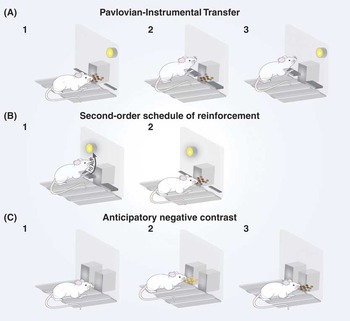
Evidence from the influence of Pavlovian stimuli on instrumental behavior is provided by experiments based on the specific Pavlovian-instrumental transfer (PIT) effect, where appetitive CSs (associated with positive reinforcers such as food) can greatly enhance instrumental responding for the same reinforcer when presented unexpectedly (independent of the instrumental response). Training consists of 3 phases: in the first, a Pavlovian association is acquired between a cue and a reinforcer; in the second, an instrumental response is trained for the same reinforcer (without any cue); in the third, the cue is presented during the performance of instrumental behavior in extinction (without any reinforcer). Such a procedure has shown that appetitive Pavlovian stimuli can greatly enhance instrumental responding for the same reinforcer (specific PIT effect). PIT has been interpreted as evidence that CSs can exert a motivational influence over instrumental performanceReference Hall, Parkinson, Connor, Dickinson and Everitt 47 (Figure 1A).
Incentive salience in eating behavior has been operationalized in the context of both Pavlovian and instrumental conditioning through the use of (A) specific Pavlovian-instrumental transfer, which consists of 3 phases: (1) a Pavlovian association between cue-food, (2) an association between instrumental response-food, (3) the instrumental response in the presence of the cue; (B) second-order schedule of reinforcement, which consists of 2 temporarily distinct phases: (1) during the first interval, each 10th active lever press (ALP) is associated with a brief 1-sec CS presentation and (2) during the interval(s) following the first, the 10th active lever press is associated with a 20-sec CS and food delivery; (C) anticipatory negative contrast, which develops in a procedure consisting of (1) 2-hour food deprivation, (2) 10-min brief access to a standard chow diet, and (3) 10-min brief access to a highly palatable food.

An additional useful procedure for measuring the impact a CS may have over instrumental performance is the second-order schedule of reinforcement, where a stimulus that acquires its reinforcing properties by being paired with other, generally primary, reinforcers such as food or drugs, can act as a conditioned reinforcerReference Everitt and Robbins 48 to enhance and maintain high levels of instrumental responses over protracted periods of time, even in the absence of the primary reinforcer. This procedure, used previously to study the seeking of a sexual reward, as well as cocaine, heroin, and alcohol seeking, has been adapted in order to measure, in terms of instrumental responses, the motivation for the opportunity to binge on a palatable food, as well as the impact that ingestion of that food has on subsequent food seeking.Reference Everitt and Robbins 49 The procedure has temporarily distinct intervals that enable the separate assessment of motivational influence of the food-related CS over instrumental response before and after food ingestion, respectively. This allows the dissociation between pharmacological effects on response to food cues (during the interval before food ingestion) and effects on hedonic impact of the food reward (during the interval(s) after food ingestion)Reference Giuliano, Robbins, Nathan, Bullmore and Everitt 37 , Reference Smith, Rao and Velázquez-Sánchez 50 (Figure 1B).
A different way to study anticipatory incentive processes preceding consummatory behaviors mediated by hedonic mechanisms consists of analyzing the phenomenon known as “anticipatory negative contrast”.Reference Flaherty, Coppotelli, Grigson, Mitchell and Flaherty 51 Evidence suggests that binge hyperphagia of “forbidden” foods is linked with the refusal of otherwise acceptable alternatives in humans.Reference Pliner, Peter and Polivy 52 The phenomenon has been operationalized in preclinical models by exposing the animals to less preferred, but perhaps healthier, foods followed by highly palatable foods for restricted periods of timeReference Cottone, Sabino, Steardo and Zorrilla 17 , Reference Giuliano, Robbins, Nathan, Bullmore and Everitt 37 , Reference Katsuura and Taha 53 : as described above, 10-min brief access to a standard chow diet, followed by a 10-min access to a highly palatable food,Reference Cottone, Sabino, Steardo and Zorrilla 17 , Reference Giuliano, Robbins, Nathan, Bullmore and Everitt 37 promotes binge eating of the highly palatable food, and self-restriction of the otherwise acceptable chow diet (Figure 1C).
The Role of the Opioid System in Incentive Motivation for Palatable Food
The mesolimbic dopamine system has long been implicated in the motivational aspects of feeding behavior. Exposure to either drugs or palatable food as well as to food-associated stimuli promotes dopamine release in the striatum. Dopamine has been demonstrated to be fundamental in the stimulus–reward learning that is specifically associated with the attribution of incentive salience to reward cues.Reference Flagel, Clark and Robinson 54 It is widely accepted, although quite simplistic, that motivated behaviors for food are dopamine-mediated and that hedonic reactions to food are opioid-mediated. Indeed, dopaminergic manipulations within or outside the NAc shell hotspot consistently fail to enhance positive hedonic reactions to sweet tastes,Reference Smith, Berridge and Aldridge 55 , Reference Tindell, Berridge, Zhang, Peciña and Aldridge 56 but potently alter motivated “wanting” for the food rewards.Reference Castro and Berridge 42
Although there is much less consensus, it has been proposed that opioid mechanisms can also regulate incentive motivational processes that underlie the propensity to seek palatable foods.
Striatum
It has been shown that opioid receptor agonists in the NAc increase motivation for food (see Table 2 for a summary).Reference Zhang, Balmadrid and Kelley 57 Recently, selective stimulation of the 3 major subtypes of opioid receptors via agonist microinjections [µ (DAMGO), δ (DPDPE), or κ (U50488H)] in the NAc shell hotspot has been employed in order to construct anatomical maps for functional localization of consequent changes in hedonic “liking” (assessed by affective orofacial reactions to sucrose taste) versus “wanting” (assessed by changes in food intake). In line with results from other groups that demonstrated that the NAc shell contributes not only to the hedonic impact of sensory pleasure, but also to the incentive motivation to consume foods,Reference Zhang, Balmadrid and Kelley 57 δ- and µ-opioid receptor stimulation enhanced the “wanting” to eat more food. The real distinction between “wanting” and “liking” emerged from the effects of µ- and κ-opioid receptor stimulation: although they both increased the “liking,” only the µ-opioid receptor stimulation increased the incentive motivation for food.
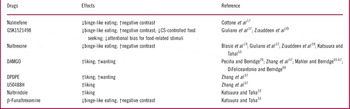
Summary of the drugs targeting the opioid system that have been tested on binge-eating paradigms, their effects, and the relative references
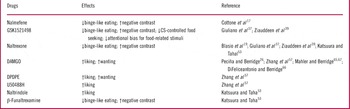
In contrast, opioid receptor antagonists have been shown to reduce the anticipatory incentive processes preceding the consummatory episodes of highly palatable food (see Table 2 for a summary). The nonselective opioid receptor antagonist nalmefene, for example, blocked the anticipatory negative contrast in the binge-eating procedure, as well as highly palatable food binge eating.Reference Cottone, Sabino, Steardo and Zorrilla 17 Additionally, the µ-opioid receptor antagonist GSK1521498 exerted a more specific effect on the impact of the hedonic value of the food and intake than did NTX, reducing the anticipatory chow hypophagia, before the highly palatable food was available for ingestion. Although the paradigm used did not include any discrete stimulus (ie, a light), several cues might have served as conditioned stimuli predictive of imminent preferred food availability, including the test environment, the deprivation period, or even the preceding first feeder (chow) presentation.
A different anticipatory contrast paradigm was developed by Katsuura and Taha,Reference Katsuura and Taha 53 in which separate groups of rats were presented sequentially with 4% sucrose and then either 20% or 0% sucrose (Group 1: 4–20%, Group 2: 4–0%). Similar to the paradigm described above,Reference Cottone, Sabino, Steardo and Zorrilla 17 , Reference Giuliano, Robbins, Nathan, Bullmore and Everitt 37 daily training in this paradigm produced robust intake of 20% sucrose (binge) preceded by learned hypophagia during access to 4% sucrose (anticipatory negative contrast). The authors then tested the effects of NTX, naltrindole (a δ-opioid receptor antagonist), and β-funaltrexamine (a µ-opioid receptor antagonist) in the NAc shell on sucrose consumption. NTX and β-funaltrexamine infused into the NAc shell significantly reduced sucrose intake in both groups, but the suppressive effects were strongly selective and dependent upon the relative value of sucrose solutions within each group. Specifically, they reduced sucrose consumption in the 4–0% group, but they decreased the 20%, and not the 4%, sucrose solution consumption in the 4–20% group. Although the authors interpreted the results as a demonstration that endogenous opioid signaling promoted consumption of the preferred food, since the µ-opioid receptor antagonists tested blocked the learned hypophagia (anticipatory negative contrast) and reduced the sucrose hyperphagia (binge), therefore, it would have been interesting to test the compounds on a group of animals exposed to 4% sucrose during both phases of the session, rather than 4–20%. In that case, a specific effect of the µ-opioid receptor antagonists on the anticipatory negative contrast could have resulted in an increase of 4% sucrose solution intake in the first phase associated with a decrease of the 20% sucrose solution intake in the second phase.
External food-related cues precipitate a desire for food items, resulting in food craving independent of energy-homeostatic needs. In this context, opioid receptor antagonists have been tested in animal models that are aimed at investigating the role of a conditioned stimulus on instrumental response. In a study comparing dopamine and µ-opioid receptor stimulation in enhancing cue-triggered motivation for reward in PIT,Reference Peciña and Berridge 26 it was shown that opioid stimulation caused increased cue-triggered “wanting” as well as “liking” at nearly all NAc sites (see Table 2 for a summary). Thus, µ-opioid receptor stimulation has been shown possibly to have effects functionally identical to dopamine stimulation: they both elevated “wanting”. Additionally, the µ-opioid receptor antagonist GSK1521498 has been tested in comparison with NTX on food seeking under a second-order schedule of chocolate-flavored pellet reinforcement, in which a CS associated with chocolate ingestion supports high levels of instrumental seeking behavior over delays to the delivery of a large chocolate reward.Reference Giuliano, Robbins, Nathan, Bullmore and Everitt 37 Although both compounds reduced food intake, only GSK1521498 reduced the seeking responses for chocolate before its delivery for ingestion, suggesting the additional effect the opioid system has on incentive motivational mechanisms controlling food seeking. The higher potency of GSK1521498 compared with NTX has been hypothesized to be due to its increased selectivity at µ-opioid receptors and/or its specific action on appetitive processes underlying food selection. Several putative neural sites at which µ-opioid receptor antagonism may cause decreases in the propensity to seek food have been hypothesized. It has been shown that the dopaminergic transmission in the NAc has a major role in incentive motivational processing for food.Reference Smith and Berridge 34 Therefore, µ-opioid receptors localized on the GABAergic interneurons in the ventral tegmental area (VTA) may provide one site at which GSK1521498 might act to decrease dopamine release in the NAc to reduce food seeking and incentive motivation for food.
Additional studies confirmed the role of the striatum and the basal ganglia, specifically the putamen and pallidum, which are brain regions involved in the motivational mechanisms underlying eating behavior, in cue-induced responses for highly palatable food.Reference Cambridge, Ziauddeen and Nathan 38 For example, a 28-day treatment with GSK1521498 in obese individuals with moderate binge eating and was associated with reduction in pallidum/putamen responses to pictures of high-calorie food and a reduction in motivation (measured as grip force) to view images of high-calorie food, confirming its potential as a treatment aimed at reducing compulsive food seeking behavior.
Amygdala
The amygdala is the brain area hypothesized to encode the association of initially motivationally neutral environmental stimuli with motivationally relevant outcomes in a Pavlovian manner.Reference Fernando, Murray and Milton 58 This structure is divided into several subnuclei, including the central (CeA) and the basal and the lateral nuclei often grouped as the basolateral amygdala (BLA), and it has connections with the hypothalamus, striatum andmedial, and orbital prefrontal cortical areas.Reference Fernando, Murray and Milton 58 The CeA has been hypothesized to mediate more generalized associations based on the motivational valence of the reinforcer,Reference Cardinal, Parkinson, Hall and Everitt 59 , Reference Holland and Hsu 60 whereas the BLA has been shown to be required for selective cuing effects related to the identity of a particular outcome.Reference Corbit and Balleine 61
Incentive-specific rewards have been shown to increase when the mesocortico-limbic brain systems are activated.Reference Berridge 62 Although Petrovich and colleagues reported that enhancement of eating by an appetitive CS is dependent on the integrity of the BLA, but not the CeA,Reference Holland and Petrovich 63 , Reference Petrovich, Ross, Mody, Holland and Gallagher 64 specific stimulation of the µ-opioid receptor circuit in the CeA has been shown to produce elevation of incentive salience in rats. Specifically, µ-opioid receptor stimulation (using DAMGO infusions) in the CeA caused elevated incentive motivation in subjects naturally attracted by a predictive cue (sign-trackers) and in those naturally attracted by a reward contiguous goal cue (goal-trackers),Reference Mahler and Berridge 65 , Reference DiFeliceantonio and Berridge 66 but also elevation in “wanting” under PIT.Reference Mahler and Berridge 67 These findings may have strong clinical implications in compulsive pursuit disorders involving intense motivations for a specific target, which is the case in binge eaters who want food and perhaps a particular food.
Cortex
It has been shown that the medial prefrontal cortex (mPFC), projecting to the amygdala and the lateral hypothalamus, is activated selectively by a cue that stimulates eating behavior in sated rats.Reference Petrovich, Holland and Gallagher 68 Moreover, it has been shown that the mPFC mediates enhanced food consumption driven by contextual conditioned cues.Reference Petrovich, Ross, Holland and Gallagher 69
µ-Opioid receptors within the mPFC have been shown to mediate an important function in overeating.Reference Mena, Sadeghian and Baldo 70 Naltrexone microinfused into the mPFC selectively reduced the consumption and the motivation to obtain highly palatable food, but not standard chow.Reference Blasio, Steardo, Sabino and Cottone 19
In humans, the µ-opioid receptor antagonist GSK1521498 was tested for 4 weeks in obese adults with moderate to severe binge eating and resulted in a significant reduction in attentional bias for food-related stimuli, quantified using objective indices of cognitive prioritization of food (eg, the visual dot probe task), and was shown to be associated with the activation of the lateral PFC,Reference Browning, Holmes, Murphy, Goodwin and Harmer 71 supporting the central role of µ-opioid receptors in reward-related cognitive functions.Reference Chamberlain, Mogg and Bradley 72 Additionally, a functional magnetic resonance imaging study showed that naltrexone decreased the response in the anterior and dorsal anterior cingulate cortex, an area involved in the processing of rewarding stimuli, including food, to the rewarding sight and taste of chocolate.Reference Murray, Brouwer, McCutcheon, Harmer, Cowen and McCabe 73
Conclusions
Recent evidence suggests that loss of control over food intake is the primary indicator of BED severity. Deficits in cognitive functionReference Van den Eynde, Guillaume and Broadbent 74 and inhibitory controlReference Manasse, Espel and Forman 75 are considered a possible risk and maintenance factor for binge eating, and so are the hypersensitivity to motivational stimuli with high incentive salience producing a bias in attentional processing toward drug-related cues.Reference Robinson and Berridge 76 Obese versus lean individuals report greater sensitivity to rewardReference Davis, Strachan and Berkson 77 and elevated responses to food cues in regions of the brain that encode the sensory properties of food. The opioid system has been extensively demonstrated to be involved in the hedonic and consummatory aspects of ingestive behavior. Here, in reviewing the existing literature, we discuss the importance of the opioid system in mediating the impact of palatable food-conditioned stimuli on the incentive motivation for food. Drugs inhibiting opioid system activity may have utility in treatments intended to reduce maladaptive, palatability-driven eating behavior by reducing the motivational properties of stimuli that elicit the binge eating strongly associated with obesity.Reference Yanovski, Leet and Yanovski 20 , Reference Goldfein, Walsh, LaChaussee, Kissileff and Devlin 78
Disclosures
Chiara Giuliano has the following disclosures: Medical Research Council Programme, grant recipient (no. G1002231). Pietro Cottone has the following disclosures: NIDA/NIH, principal investigator, DA030425, MH091945.