Introduction
Under the rubric of globalisation, the making of fashion encompasses multiple chains of transnational production, circulation and consumption (Maynard Reference Maynard2004; Jenss and Breward Reference Jenss and Breward2016; Welters and Lillethun Reference Welters and Lillethun2018). The clothes tag made in does not necessarily depict authenticity, as it does not reflect the transglobal production process from the raw materials to the end products on the shelf. Adding to this is the crew of transcultural actors and consumers in the fashion supply chain who prompt practices of hybridity and fluidity. The resulting evolving styles (Niessen, Leshkowich and Jones Reference Niessen, Leshkowich and Jones2003) are not limited to dress styles and consumer practices, but also to the making of fashion brands (Ling Reference Ling and Menarini2016). Contemporary fashion-making is typified by transcultural co-creation wherein aesthetics and practices are shared, negotiated and adapted. This transcultural fashion co-creation is exemplified by the Sino-Italian joint ventures.
The first stage of the joint Sino-Italian fashion production in China saw the attempt by the Italians to separate garment manufacturing from the making of fashion. By the early 2000s, the Sino-Italian joint venture was fast becoming an impossible mission for the Italians. Segre Reinach (Reference Segre Reinach2005) analysed the process of collaboration by noting that between 2002 and 2010 China was marked by a series of important and accelerated economic changes that transformed the country from the leader of outsource manufacturing, the infamous factory of the world, into a fast-rate consumer market of global fashion brands. Given China's speedy industrialisation, the Italian factories in China have not only enabled low-cost manufacturing for Italian/European brands, but also enhanced the skills of Chinese labour at an astonishing rate. Today, the label Made in China cannot denote inferior quality, since production across all market levels is being performed in the world's factory. Indeed, since the reappreciation of the RMB in 2005, the cost of Chinese produce has no longer been economical when compared to that of Vietnam and Malaysia, where low-cost manufacturing is now operating.
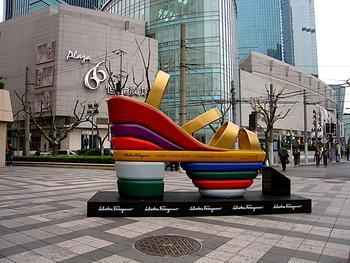
Only six years elapsed between Segre Reinach's visit to the half-empty luxury mall in Shanghai's Kerry Centre in 2002 and the global première in 2008 of the exhibition Salvatore Ferragamo Evolving Legend at Shanghai's Museum of Contemporary Art (moca) for the brand's eightieth anniversary (Figure 1). The exhibition attracted a host of celebrities from the global fashion world (Movius Reference Movius2008), attesting to the crucial importance of the Chinese fashion market. The momentum moved quickly in an increasingly urbanised and commercialised China (Segre Reinach Reference Segre Reinach, Rofel and Yanagisako2019). When Segre Reinach completed her research on the Sino-Italian fashion joint venture in 2010, China was in a whole new era, establishing a fashion system comprised of various production levels, a burgeoning consumer market with first-rate global and Chinese brands and an emerging fashion aesthetic that communicated both globally and locally (Segre Reinach Reference Segre Reinach, Rofel and Yanagisako2019). For instance, leading Italian book publisher Rizzoli Electra released a lavishly illustrated book devoted entirely to the art of couture of one of the most celebrated Chinese fashion designers, Guo Pei (Wallace Reference Wallace2018). Also, the exhibition New China Chic: A Fusion of East And West (2018) at the Power Station of Art museum in Shanghai, curated by London-trained Chinese curator Pooky Lee, examined ‘Chinese-ness’ through the creation of contemporary Chinese fashion designers, juxtaposing their cultural roots with the West-centric global fashion system by showcasing the exquisite work of Uma Wang, Yingwei Yin, Quihao, Snow Xue Gao and Samuel Gui Yang, among others.
Installation by Salvatore Ferragamo to accompany the brand's exhibition at MOCA, Shanghai, 2008. Photograph by Simona Segre Reinach.

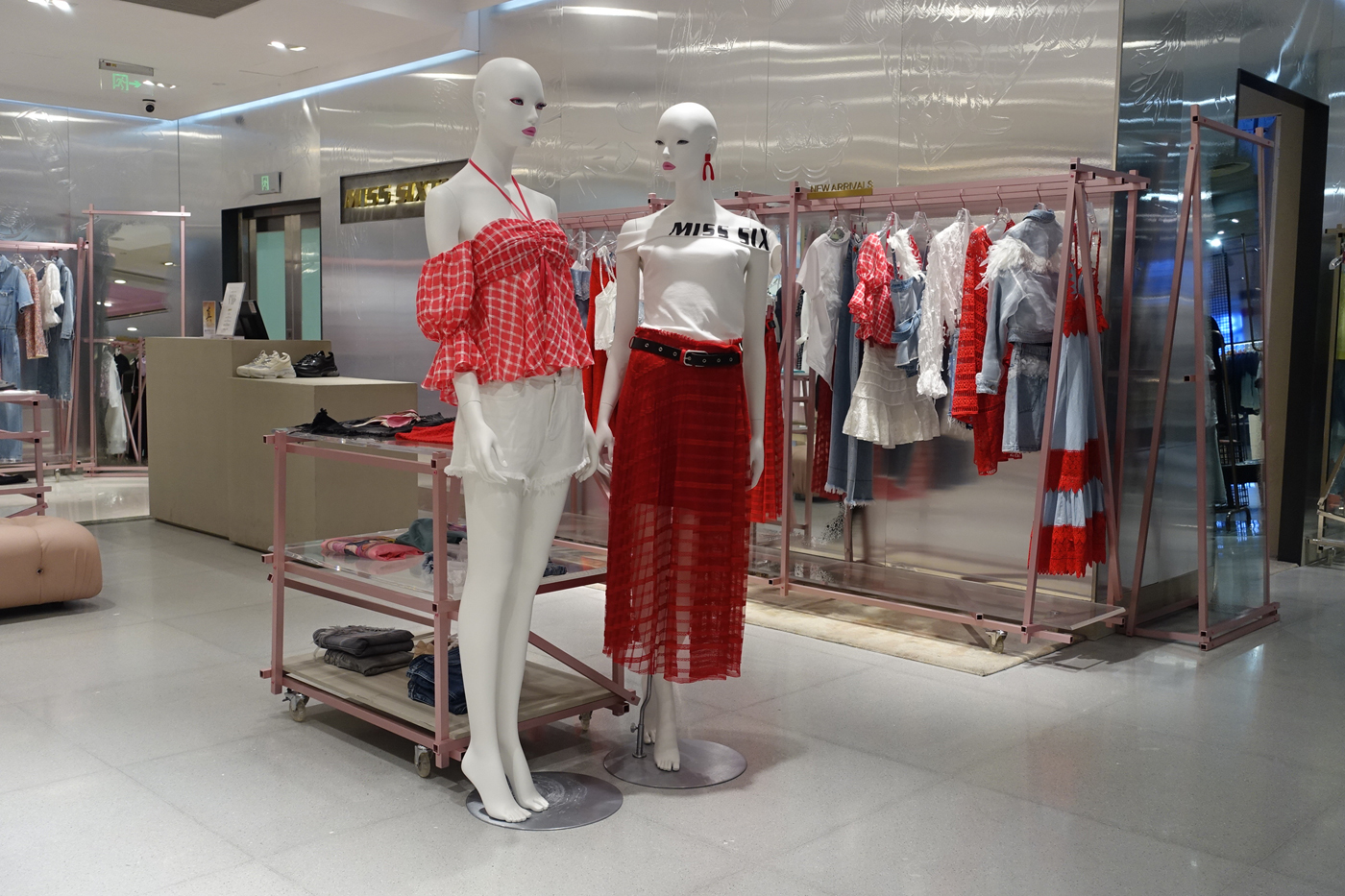
The popularity of Italian fashion in China has proved itself in the healthy sales figures of luxury brands such as Prada, Salvatore Ferragamo and Bottega Veneta (Pologgolo Reference Pologgolo2018). Italy comes second after France in the fashion and accessory sector among the Chinese upper class, according to a survey conducted by Business Strategies (Pologgolo Reference Pologgolo2018). Indeed, popular Chinese buyers considered the Made in Italy label to be an excellent return on their investment. In 2010, for example, the luxury fashion brand Cerruti was bought by the Hong Kong-based company Li & Fung Group for $70 million; in 2012, Miss Sixty, another well-known Italian fashion brand (Figure 2), was bought by the Guangzhou-based group Trendy International (Verot Reference Verot2014). The list of Chinese acquisitions of Italian brands continues to grow each year.
Italian women's fashion brand now owned by the Chinese fashion group Trendy International. Miss Sixty, Shanghai, 2019. Photograph by Wessie Ling.

While Italian fashion continues to entice the discerning appetite of the huge untapped Chinese market (Ap Reference Ap2019), in this article, we are interested in the underbelly of the Sino-Italian fashion collaboration aside from the Chinese acquisition of Italian brands. In particular, what does the Sino-Italian co-creation reveal regarding the making of Chinese fashion and Italian fashion? What do the trajectories of this co-creation uncover about the construction of fashion identity with respect to the national narrative? What can we learn about contemporary fashion-making in China, if not global fashion in the transglobal landscape?
This article is part of a research project examining Sino-Italian collaboration with respect to Italian fashion brands operated by the Chinese and Chinese brands operated by Italians. Three interrelated elements will be investigated: aesthetics and design evaluation through branding, an anthropological quest regarding Italianese vs Chineseness, integrated Italianese-Chineseness and a post-merger integration (PMI) through economic and political inquiry. The present article underpins the foundation of study for this project. It will begin with an account of Italian and Chinese fashion, followed by the context of Sino-Italian collaboration, through which a reflection on the research questions will be conducted and the proposal of a framework to examine the case will be provided.
A dynamic history of ‘made in Italy’
Italian fashion is generally given two birthdates: one in 1950s Florence, when Italy freed itself from Paris by establishing its own path in fashion and boutique wear, and another in mid-1970s Milan, when fashion designers were infusing their work with Italian narratives. It is difficult to identify Italian fashion in the first half of the twentieth century, since French-inspired fashion dominated the wardrobe of most European countries. More specifically, French inspiration informed women's fashion, while British models prevailed for menswear. Admittedly, Elsa Schiaparelli and Mariano Fortuny were exceptions. However, the work of Spanish-born Fortuny was closer to fine art than to fashion, and Schiaparelli was an Italian designer who based her professional life in Paris. For this reason, until 1950, despite numerous points of excellence in various sectors, such as the brands Ferragamo and Gucci, only isolated episodes in the history of Italian fashion have been referenced, which is hardly a coherent and continuous history of Italian fashion. The autarchic phase under Fascism had no repercussions on either the international perception of Italian fashion or the promotion of a genuine development of the clothing sector, with the exception of research on synthetic fibre. Only from the early 1950s did Italian fashion achieve international recognition. With the 1951 fashion shows, organised by Giovanbattista Giorgini in Florence, Italian fashion took its place in the European circuit and, above all, in America. The result was an Italian style identified with codes of aristocratic elegance, but also with a simplicity of attitude, elegance of fabrics and the competence of masterful artisans. The 1950s was also a decade of growth for Italian industry. Industry in Florence succeeded in creating the basis for Italian fashion and developing opportunities for a new prêt-à-porter or ready-to-wear fashion culture, which then emerged in Milan in the 1980s. Italian fashion managed to fully capture this new culture full-blown. The prevailing style was aesthetically attractive, stylistically and structurally independent of haute couture and of France, and completely different from both the French pret-à-porter de luxe and the Florentine boutique fashion. Italy thus confirmed its engagement with fashion as a language of mass culture.
Why can the history of Chinese fashion not be written?
The history of Chinese fashion, on the other hand, has yet to be agreed upon, as the meaning of fashion remains an open debate. Many people still maintain that the fixity of fashion must come from the West or that there was no fashion during the Cultural Revolution or the pre-Reform era in China. However, the Eurocentric and Franco-centric theories of the origins of fashion have been revised, scaled down and criticised by anthropologists, historians and fashion theorists (Belfanti Reference Belfanti2008; Finnane Reference Finnane2008; Jansen and Craik Reference Jansen and Craik2016). On the one hand, dress has been defined as a set of modifications and supplements to the body, thus expanding the notion of fashion in the anthropological sense (Eicher Reference Eicher2008). On the other hand, specific studies based on historical and iconographic sources have demonstrated that fashion, i.e. a more-or-less swift change in styles, even in past periods, did exist prior to the fourteenth and fifteenth centuries, the period in which the origin of fashion is usually located, including in places outside Europe. The total fixity of costume not only does not exist; like every human phenomenon, costume also changes, but the very concept of costume is identified as an ideological construction. In his analysis of the evolution of Indian, Chinese and Japanese clothing systems, Belfanti (Reference Belfanti2008) argued that fashion was indeed not a European invention. The propitious economic conditions and the prosperity leading towards consumption perpetuated the traditional hierarchies of appearance that are usually regulated by canons of a prescriptive nature. While fashion has fully developed as a social institution in Europe, particularly in the dominant fashion capitals, with a well-heeled fashion system legitimising and disseminating new styles and designers, countries like China only evolved partially and without full social recognition.
China's fashion system has been rapidly developing in recent years, with its own legitimation, commercially viable brands and trends that inspire a national following. However, it has not received the praise and recognition accorded to its European counterparts. The country is one of the world's biggest fashion luxury markets, with many still favouring European brands. Although Chinese-owned fashion labels are developing at an astonishing rate, they are still given European brand names, with clothing styles replicating international trends. Creativity in China is waiting to gain ground nationally and internationally. While Made in China garments fill most wardrobes across the world, Chinese fashion designers have yet to become household names. Fashion is arguably a social phenomenon dependent on acceptance by observers and wearers alike. The point at which clothing is accepted or rejected as fashion (Loschek Reference Loschek2009) is the defining point that allows it or forbids it to claim a share in the world of fashion.
Recent studies (Maynard Reference Maynard2004; Teunissen and Brand Reference Teunissen and Brand2006; McCracken Reference McCracken2014) on the effects of globalisation on people's dress, tastes and habits have sought to further pinpoint those models, constant factors and features with which fashion is spread, thereby making a globalised map to trace the footprints of fashion. Fashion, therefore, cannot be simply reduced to a form of cultural imperialism or a mere commercial expansion of brands from the West to China and the rest of the world. According to some authors (Eicher Reference Eicher2008; Loschek Reference Loschek2009; Arora Reference Arora2014), the very expression expansion of fashion from Europe to other parts of the world is deemed problematic in that it is already an ethnocentric expression. Indeed, it is further proof of the persistence of the preconception that fashion was born in Europe, the cradle of civilisation. The first axiom to question this notion, therefore, did not concern the European and Western origin of fashion, but the association of fashion with Western modernity, while linking the dress of the Rest to the pre-modern tradition. One must bear in mind that the globalisation of fashion proceeds according to an uneven ‘leopard spotted’ pattern; its flow responds to a logic that has not been recently shaped. Thus, its outcome is the very history of fashion, more so with regard to China. Differences and inequalities are crucial in the relation between Europe, China and the rest of the world, from imperialism to colonialism to present-day brand construction (Tu Reference Tu2010). In the case of China, historical, political, economic and power relations have driven its specific directions, and this is further underlined by continual global interactions (Ling and Segre Reinach Reference Ling and Segre Reinach2018). It is, therefore, useful to know the directions in which ideas and trade have moved, in order to overcome former stereotypes and refute claims to ‘pure’ sartorial identities – those of product, consumption and communication, which perhaps never existed and certainly do not exist today. Consequently, the concepts of national costume and fashion have ceased to be in opposition – an opposition between tradition and modernity – as in the colonial culture with which the European and Western fashion was formed between the nineteenth and twentieth century, and are in constant and fertile union. Even heritage, in the present terms of preservation and management, has transformed tradition into fashion, a typical process in the march of a cultural and creative economy, albeit one not without ambivalences (Garcia Reference Garcia2018).
Chinese fashion as a case in point for global fashion studies
The making of Chinese fashion has been a transcultural and transglobal project that could only happen through interplay between China and the West, if not the rest of the world, as shown from different points of observation (Ling and Segre Reinach Reference Ling and Segre Reinach2018). We are especially interested in depicting its unique path within the global fashion circuit and exploring the representation of Chinese fashion in the global context. Through China, we consider global fashion in a fresh new way. We maintain that the making of fashion in China started with the Reform in the twentieth century, although numerous directions must be taken into account. The study of the evolution of Chinese fashion could constitute a theoretical case, and the starting point for future research in global fashion through the interrogation of the varied paths of collaboration, negotiation, adaptation and trajectories. China is, in fact, a crucial site for the study of the conflicts and uneven experiences in fashion's new world order. The reasons are multiple. First, the majority of its global fashion is manufactured in China. Second, its vast domestic market is of enormous commercial interest to global brands. Finally, China is very keen to make creativity a distinguishing mark in its role in post-market reform in the world, and fashion is a quick route to such global recognition. Ling and Segre Reinach (Reference Ling and Segre Reinach2018, 1–12) have revealed that the globalisation of fashion is a heterogeneous process, structuring different forms of national subjectivity within an unstable hierarchy. Studying Chinese, if not global fashion, without considering the heterogeneity of the process, global interactions and the role of the international players, only scratches the surface of the subject.
Like other cultural practices, fashion operates in both the material and immaterial realms. Fashion designers are concerned with both the design and the production of their creation. Garment production and visual representation are inseparable and are usually governed by external pressures and liberties that link together these often severed domains (Tu Reference Tu2010, 6). As a currency of exchange in globalised relations, fashion in China represents ‘a social field of desire’ (Rofel Reference Rofel2007, 3) in which multiple collaborations take place. As Bourdieu (Reference Bourdieu1984) observed, this social field of desire has its own specific stakes, the object of rivalry and regulated by specific conventions, which are elsewhere taken for granted as being quite natural. The social desire manifested in such a playing field has intriguingly contributed to the symbolic capital of world fashion, the value of which is under ongoing renegotiation. Fashion as a multidimensional form of knowledge adopts a variety of interdependent expressions, or modalities, each of which is shaped by context-specific and relationally constituted powers. Because such a form of knowledge flows across space and time at different rates, and with varying degrees of mutation, the nature of the specific reconfigurations in different places and times is always uncertain. Fashion is nonetheless crucially important to the world's garment industries, because it is instrumental in the formation of consumer preferences and, at the same time, dominates the ever-changing character of the design-based inputs to the world's garment manufacturing structures (Weller Reference Weller2006). While visual composition has an equal role in contributing to the notion of fashion, the relation between the material and immaterial components underscores the inquiry of contemporary fashion-making. The case in point here is the co-existence of material and symbolic production in Chinese fashion (Gu Reference Gu, Ling and Segre Reinach2018), given its ‘world's factory’ status and emerging visual cultures in fashion.
Collaborations: the Sino-Italian joint venture
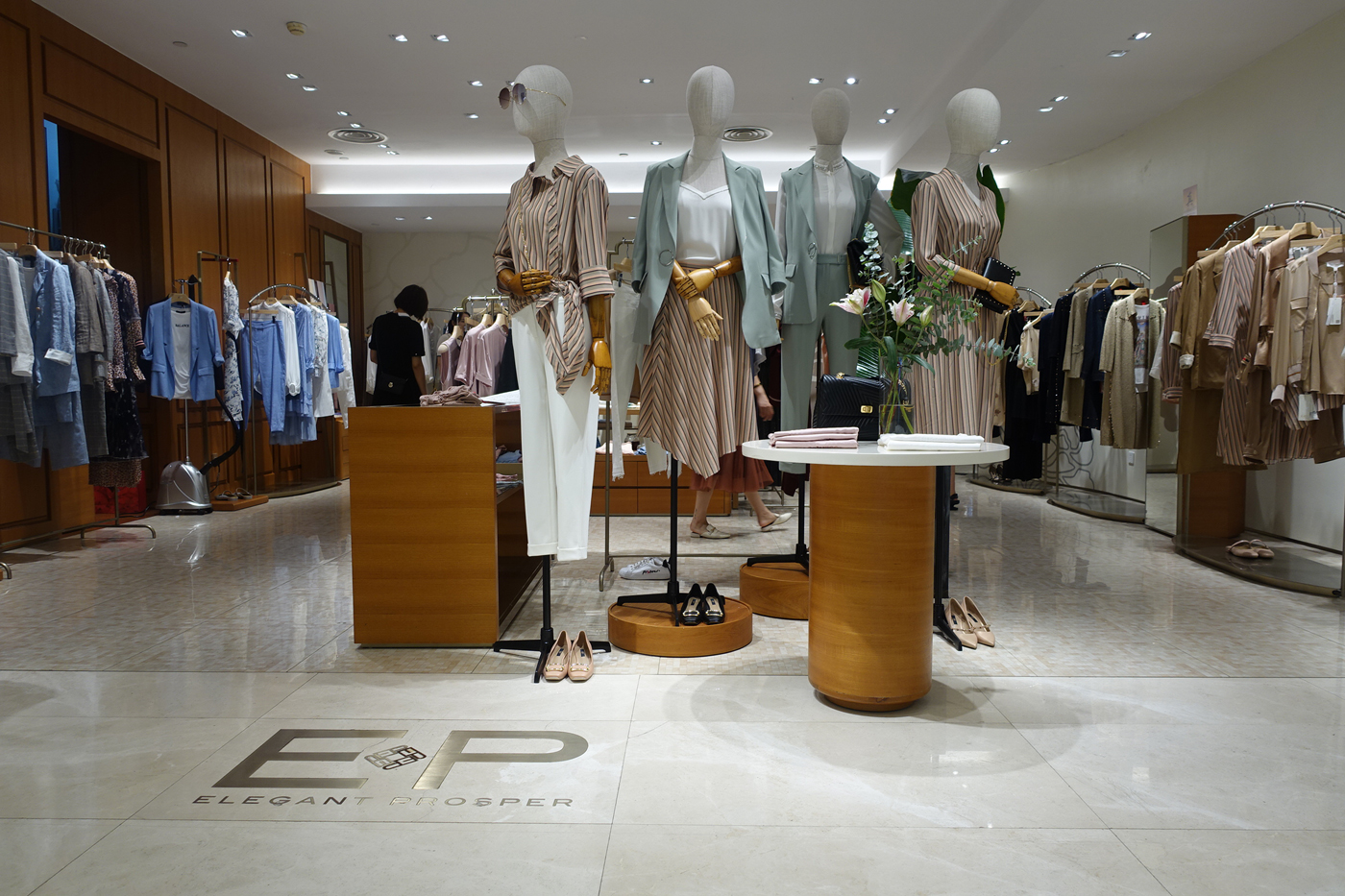
Because China and the Western fashion system cannot be taken separately, dissecting the operations of the transglobal landscape of fashion-making necessitates an understanding of fashion production in China, the process of which is characterised by constantly evolving relations, with a chain of agencies entangled in the correlated macro and micro environment, which are, at times, problematic and conflicted. In the first instance, the monolithic idea of Made in Italy, which typifies the nation of taste, was superior to China's image of heavy manufacturing. An aesthetic judgment could only shift from the former to the latter when the first collaborative phase of Sino-Italian relations resulted in China's rapid mastering of stylistic forms (Figure 3).
Garment manufacturer for European brands (1998), joint-ventured with Italian group Miroglio (2004–2016), now a Chinese women's fashion brand. Elegant Prosper, Shanghai, 2019. Photograph by Wessie Ling.

The process we describe is ascribable neither to two opposing aesthetics – Italian and Chinese – nor to two opposing concepts of fashion. It is, instead, a question of Italian-Chinese relations as expressed through fashion. Italian fashion has been and is a mirror for China and a model in many ways: the supreme craftsmanship of fashion practices, beyond industrialisation, is the characteristic of both countries (Sequi Reference Sequi and Spalletta2017). Both desire to enhance it with an adaptable fashion system that addresses their respective needs. A reputation for quality, for beautiful and well-crafted products and for the values that embody the quintessence of Italian fashion (Lees Maffei and Fallan Reference Lees Maffei and Fallan2013) fit seamlessly into Xi Jinping's ideology of a ‘prosperous, strong, culturally advanced, harmonious and beautiful’ China (Stanzel et al Reference Stanzel, Holbig, Mittelstaedt, Sautin and Doyon2017). Fashion and luxury have become a type of global language, an indicator of contemporaneity (McNeil and Riello Reference McNeil and Riello2016) and active participation in exchanges among modern countries. Mastering fashion, on the Chinese side, not only in its physical dimension, but above all in the creative and symbolic dimensions, has long been considered a strategy for building, raising and consolidating the soft power that China has been seeking since the early years of Reform (Keane Reference Keane2007; Lavagnino and Mottura Reference Lavagnino and Mottura2016; Ling and Segre Reinach Reference Ling and Segre Reinach2018).
Sino-Italian fashion production has undergone different phases of collaboration and exchange since the beginning of the delocalisation, i.e. outsourcing, of the Made in Italy production in the 1980s. The first phase of the collaboration was marked by direct sourcing or merely a joint venture (Segre Reinach Reference Segre Reinach, Riello and McNeil2010, Reference Segre Reinach, Rofel and Yanagisako2019). The Italian counterpart tended to remain hegemonic culturally and no less economically. ‘Creativity is something you are born with’, said an Italian manager of a joint-venture, ‘it can't be taught’ (Segre Reinach Reference Segre Reinach2008). The Italians essentialised the capacity of fashion-making, leaving aside the historical reasons for their success in this business. From early accounts of Italians taking part in joint ventures conducted prior to the rapidly developed commercial and industrial Sino-Italian relations, it is clear that China was often referred to as something half-imagined, half-real. Findings from these interviews echoed the period of the early 1990s, when the Italians were ‘discovering’ China's Economic Reform. The case in point here is the Italians’ eagerness to communicate with China, subsequent to which various forms of collaboration ensued. Although far from wholly invented, many were successively reconstructed or manipulated, while others were less adventurous, and others ended up with more problematic situations.
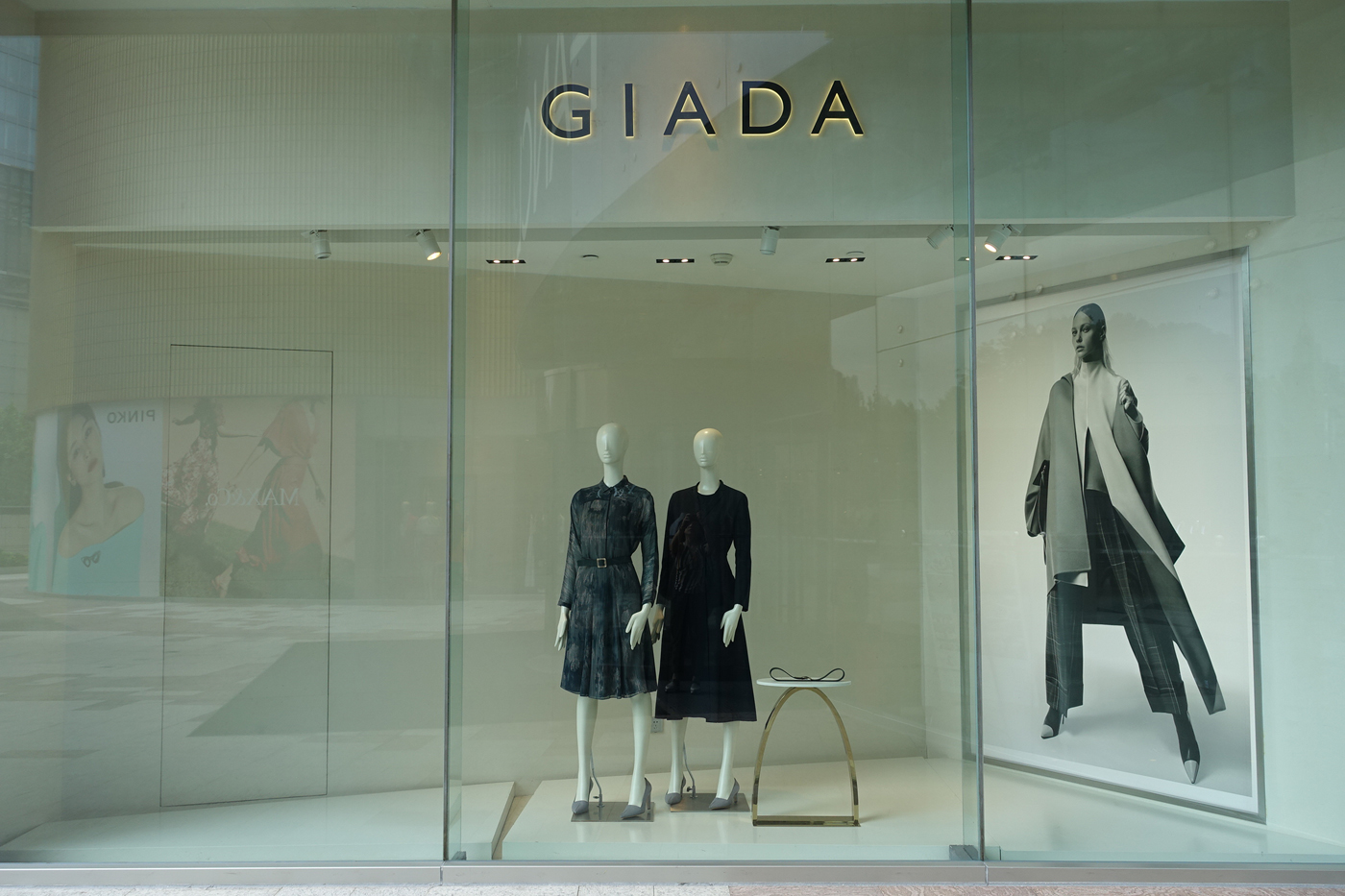
In a dramatic shift, the last decades have witnessed full or partial acquisition, often with major shares, of Italian brands by Chinese entrepreneurs and fashion conglomerates (Figure 4). The evolution of Sino-Italian joint ventures – from the supposed separation of manufacture and creation, as in the ‘sourcing’ of an idealised model of an imagined first encounter (Segre Reinach Reference Segre Reinach, Rofel and Yanagisako2019) to the complete acquisition of Italian historical brands by Chinese investors in recent years – has uncovered nothing but the global complexity of the fashion industry. It is undoubtedly a strategic move based on the business decisions of the marketplace. Acquiring a well-known and reputed brand is considered, from a marketing point of view, more effective than building a new one (Xiao Reference Xiao2008). Aside from the investment on return, fashion is only a small part of the Chinese strategy for international expansion. In fact, 2019 marks a new economic partnership between Italy and China under the new Silk Road project, with Italy being the first developed economy to join China's global investment programme (Reuters 2019). Elsewhere, in France, Chinese investors already own approximately 40 per cent of the Bordeaux vineyards (Jalil Reference Jalil2018). In Britain, the Chinese have poured most of their investments into the property sector, buying outright the landmark Walkie-Talkie building for £1.3 billion and the Cheesegrater building for £1.15 billion, both in the financial heart of London (Liu Reference Liu2019). But the cultural dimension of these acquisitions and overseas investments is perhaps no less important than the economic one, and it will certainly be full of consequences in the long run (Spalletta 2017).
Giada, founded in Milan by Rosanna Daolio in 2001, was bought by Chinese Redstone (2005–2006), and is now a Chinese-owned brand, designed since 2015 by Gabriele Colangelo, with garments claimed to be made in Italy. Giada, Shanghai, 2019. Photograph by Wessie Ling.

Fashion is perhaps most useful in the construction of a visual narrative for a country in the race for global competition. ‘Fashionalisation’ necessitates global interactions and positioning on the global stage (Ling Reference Ling and Berry2012) and demands a resonating image to underline the fashion narrative of a country (or a city). What then does the Chinese convergence on historic Italian brands mean for Italian fashion? What position do these brands occupy in the broad sense of Chinese fashion? And what are the aesthetic and cultural dimensions for both countries? Beyond the prevailing rhetoric of the Italian media, which speak of a Chinese ‘conquest’, Italian brands becoming Chinese entails complex hybrid and transnational products being taken as cultural forms in today's fashion (Zhiyan, Borgeson and Schroeder Reference Zhiyan, Borgerson and Schroeder2013). If fashion in the twentieth century is no longer about class distinction, but about representation, according to Geczy and Karaminas (Reference Geczy and Karaminas2018), then what kind of representation do collaborations in fashion create, given the backdrop of global dynamics and transcultural exchanges?
Sino-Italian co-creation as a method of global fashion studies
We will conduct qualitative interviews with Italian and Chinese protagonists, and examine the socio-cultural, economic, historical and aesthetic dimensions of the Italian brands becoming Chinese in our ethnographic project of Sino-Italian collaboration. The study will uncover new (Chinese) realities in fashion-making and a new statute for Italian and Chinese fashion. Unfolding the story, the trajectory, the changes and intentions of the acquisitions, and the market realities, will allow us to unpack the complexity of fashion-making in contemporary China, thereby shedding light on the development of global fashion in the transglobal landscape.
Our discussion of Sino-Italian fashion collaboration exemplifies an embracing approach in the study of Chinese, if not global, fashion in which contemporary fashion theory is combined with social and cultural frameworks (Bruzzi and Church Gibson Reference Bruzzi and Church Gibson2013; Jenss and Breward Reference Jenss and Breward2016; Rocamora and Smelik Reference Rocamora and Smelik2015). We acknowledge the impact of the shifting agenda of global history on the history of fashion. Against the backdrop of Eurocentric fashion history, recent years have seen many studies, from the Euro-American centre-sphere to the periphery. What has been shown through some pioneer works (Welters and Lillethun Reference Welters and Lillethun2018, McNeil and Riello Reference McNeil and Riello2016, Niessen, Leshkowich and Jones Reference Niessen, Leshkowich and Jones2003) is the fact that fashion was not exclusive to post-1350 Europe and its diaspora. That fashion is a global phenomenon has been evidenced throughout past time and space, in case studies that allow us to understand the varieties of fashion and change beyond the existing Euro-American models. While global fashion history is in the making, we build on this collective effort to examine fashion-making in the twenty-first century. The interaction of local and global forces involved in the fashion-making process under the rubric of a transglobal landscape remains the backbone for our investigation. In a recent study by Ling and Segre Reinach (Reference Ling and Segre Reinach2018), a project examining fashion-making in contemporary China with respect to its geographic, socio-cultural, economic and political multiples, three interconnected concepts were highlighted; they are further developed here as methodological tools to examine transglobal fashion-making through the lens of Sino-Italian fashion collaboration. We proposed three interlocking concepts: (1) common belief, (2) time and (3) space. Central to the study of fashion, they are adopted as the methodological framework to govern the research inquiry instead of as a basis for contextualisation. Within the framework, we maintain that, first, fashion-making in the twenty-first century is operated in a transglobal landscape in which interaction and exchanges prevail across the globe. Second, time and space are entwined in the transnational, inter/intra-regional, translocal and transcultural networks with various socio-cultural, economical, political and environmental dimensions; all await to be unpacked. In this article, we propose that contemporary fashion-making is a sphere of transglobal activity of which the outcome is necessarily hybrid and co-created. Using the three interlocking concepts as for the core of our examination allows us to situate the subject matter, in this case Sino-Italian collaboration, in the agenda of transglobal fashion and dissect the complexity that is entailed in making and consuming fashion today.
Common belief
The term common belief generally refers to former stereotypes and preconceptions, and it starts primarily with the conception of fashion. The meaning of fashion, like that of art, is an open debate for many. It varies from discipline to discipline, one country to another, and one generation to the next. It evolves over time and has garnered new significance with, at times, conflicting roles along the way. It is not possible to uncover its roots and its origins. Argued elsewhere earlier and as seen with the case of China, as well as other regions, its ambiguous conception opens a site for inquiry. Because it crosses borders, bridges and boundaries and transcends disciplines, the definition of fashion is often bounded by its trajectories. Through decades of historical, socio-cultural and economic studies, the dominant Euro-American capitals have unfolded their stories of fashion. While an increasing acknowledgment of the multiple routes of fashion development in the territories of the Other has recently been recorded, we continue to encounter preconceptions rather than the actuality of fashion in places outside the dominant fashion capitals. Given the embedded social structure, the differences and the power imbalance in the perception and reception of fashion, it is impossible to speak of fashion, especially in the regions outside of the key Euro-American fashion capitals, without examining fundamental details of its locality. Thus, our first proposed concept begins with common belief. Dissecting stereotypical images of fashion in a region, in our case, China, levels the playing field for investigation and enables us to question the preconceived belief and inquire into the specific epidemiology and realities of fashion. In many ways, confronting the common belief is a direct response to the Eurocentric vision of fashion. Breaking down the preconceptions reveals the underlying layers of fashion in the studied region. Similarly, unwinding the misbelief repositions fashion, allowing for an examination of its making. A case in point here is the stereotypical dissection of Sino-Italian fashion, in which transcultural co-creation is understood as the foundation of fashion-making in China, if not global fashion, and the challenges it poses to the national fashion narrative for Italy and China, given the inseparable nature of material and immaterial fashion production in China.
Time
Whilst the study of fashion is a project across time interacting with socio-cultural, economic, political and environmental conditions, the definition of fashion has much to do with these conditions, both internally and externally. The debate of costume vs fashion and tradition vs modernity has loomed large in recent fashion studies. Although the specific and varying nature of ‘costume’ has long been proven, the term continues to be widely adopted and circulated. The notion of fixity emerging from the term ‘costume’ appears to give value to the collectors and, more recently, cultural policy makers who subsequently marketed it in terms of heritage and/or national treasure. It is ironic that the so-called fixed category ‘costume’ has regularly been revamped, if not remade, in many creative projects, as if it had never undergone a process of imaginative evolution. It is not helpful to uphold the weak binary of fashion vs costume. On the other hand, the defining point of the study of fashion relates to the importance of time in the operation in the examined region. Specifically, the Chinese government takes time to animmaculate level. It is an unfailing source of assurance for the country, as only its authority has been able to manoeuvre throughout history. Recent decades witnessed a sea change in China's social, political and economic policies, which has driven the country to become one of the key global players. However, the success of an industrial powerhouse is not the only prerequisite for a burgeoning fashion nation. The term Made in China is maligned because it is so widespread, but created in China is yet to be recognised. Fashion in China has travelled a long and hard road in order for the country to be acknowledged as the world's next fashion capital, and the journey is still ongoing. Our second proposed concept is, therefore, time, which not only scrutinises the opposing binary of costume vs fashion and/or material production vs immaterial production, but also confronts the complicated histories of difference that, in some ways, consolidated such opposition. Time will reveal the effects that the convergence of historic Italian fashion brands in China will have on Chinese fashion and Italian fashion as China aims to transform itself from a manufacturing giant into a leading manufacturing powerhouse with international recognised brands and quality by 2025 (Tse and Wu Reference Tse and Wu2018). Here, political movement, economic intervention, socio-cultural trajectories, global interaction and transcultural exchanges are the aspects of interrogation. Entwined within these elements, race, identity and power imbalance encapsulate the evolution of fashion.
Space
Along the way, fashion travels and traverses frontiers. The making of fashion in the twenty-first century is a transglobal project involving a network of transnational agencies and cross-border activities. Like culture, it is never a pure entity. Underneath the surface, contemporary fashion-making is a transcultural mosaic in which authenticity is often glossed over for the purpose of marketing and economic gains. The distinction between authentic and inauthentic often turns on nothing more than a statement of authorship. But no statement has value unless it is accepted as valid by its audience, a determination that depends on shared notions of authenticity, as well as on a common understanding of what is designated by authenticity (Heymann Reference Heymann2015). In this vein, the country of origin has more recently been considered to be the site of construction. When consumers are willing to pay more for labels coming from countries where quality, creativity and innovation are regarded as premier, that has reinforced their economic value. That the country of origin only tells part of the manufacturing journey of a fashion item is no longer an industrial secret. Marketers are toying with consumers’ knowledge of the reality of fashion-making and their prejudice regarding prestige. Media gatekeepers have joined forces to consolidate the preconceived image of the fashion capitals by having the same transnational crews travel from Paris to Milan during fashion week to mount different designer shows. To what extent fashion identity is exclusive to a particular capital sparks an insightful debate, the essence of which appears to relate to the preservation of distinctive images in the dominant fashion capitals. Retaining the statement of authorship, in pristine condition, has thus become a standard practice for the luxury sector. Here, the Sino-Italian fashion co-creation unpacks not only the statement of authorship, but also the construction of Italian-ness and Chinese-ness from the new era of Chinese-acquired Italian brands. Material production in China, exemplified by the made in clothes tag, has already dominated the wardrobe of most wearers. Would Chinese immaterial (re)production, exemplified by China's interpretation of the world's aesthetics, penetrate through to our everyday awareness? This leads to our third proposed concept, that of space, which surpasses national boundaries and flows in multiple directions. The case in point here is the agency, which is central to the making of fashion. Today, transcultural backgrounds and transnational networks are fundamental to fashion agencies. Even consumption has branched into sans-frontières cyberspace. Transglobal spatial production, circulation and consumption have given rise to the new world order of fashion.
Conclusion
The three interconnected concepts, common belief, time and space, are intertwined and correlated with one another. When discussing one element, another is revealed. The concepts triangulate the examination of Sino-Italian fashion collaboration. Indeed, this interconnectivity enables our analysis of the shifting motion of branding, the conflicting idea of fashion identity and the trajectories of post-merger integration (PMI), which trace the process of fashion-making in China. This article is a preliminary review of the study of Sino-Italian fashion co-creation. Because fashion brand acquisition has in recent decades become common in the global fashion industry, the Sino-Italian example allows us to closely inspect the underbelly of fashion-making. Thus, we draw on the close ties between China and Italy in an attempt to situate Chinese fashion in the transglobal fashion industry while unpacking its complexity. Consequently, global fashion is given a new voice, and novel ways are revealed to augment its understanding.
Postscript
Beyond the first phase of joint venture, the new era of Sino-Italian fashion collaboration is underpinned by a strong market economics. The Italianerie – the notion to which this special issue is dedicated – underlying the fashion relation of China and Italy facilitates transcultural exchanges within which global competition driven by economic intervention takes a significant role. The fascination for Italian fashion in China under the rubric of Italianiere was and will not be a one-way street, i.e. from Italy to China. The instigation of Chinese investment in Italy, albeit bringing economic advancement to both countries and the revival of loss-making Italian heritage brands, poses an unwelcome threat to Italy's European allies, let alone to America. While hybrid and transcultural practices may be pertinent to Sino-Italian co-created fashion, Chinese interest in mastering the material and immaterial production to an internationally recognisable standard undermines the Italian reputation for quality, craftsmanship, luxury and branding. Anxiety about this is already widespread in the Italian manufacturing industry. Sino-Italian collaboration is arguably an economic and socio-cultural contest, not necessarily between China and Italy, but in which China can launch its global ambition to attain the title of ‘Middle Kingdom’ in the true sense.
Acknowledgements
The authors would like to thank the Department of Arts of Northumbria University, and Department for Life Quality Studies and the International Research Centre of Culture Fashion Communication at the University of Bologna.
Notes on contributors
Wessie Ling is a Reader in Fashion Studies at Northumbria University. Her research examines cultural identities in the production of fashion and cultural property of fashion. Author of Fusionable Cheongsam (2007), she co-investigated the Arts and Humanities Research Council (AHRC, UK) project, Writing and Translating Modern Design Histories in East Asia for the Global World (2012–2014), resulting in a co-edited volume, with Simona Segre Reinach, on Fashion in Multiple Chinas: Chinese Styles in the Transglobal Landscape (2018). With the ASEAN Research Fellowship at the Research Institute of Languages and Cultures of Asia (RILCA) at Mahidol University (2018), she co-curated the conference leading to this special issue. Her Rita Bolland Fellowship for Textile and Fashion Study at the Research Centre for Material Culture in the National Museum of World Cultures, the Netherlands (2018/2019), will lead to a special issue on Global Fashion for ZoneModa Journal (2019/2020).
Simona Segre Reinach is an Associate Professor in Fashion Studies at Bologna University. She has written extensively on fashion from a global perspective in books such as Berg Encyclopedia of World Dress and Fashion (2010), The Fashion History Reader (2010), Fashion Media. Past and Present (2013). In Italy, she authored Orientalismi. La moda nel mercato globale (2006), La moda. Un'introduzione (2010), Un mondo di mode (2011), Exhibit! (2017), Biki. French Visions for Italian Fashion (2019, Italian and English edition). She sits on the editorial board of Fashion Theory, Critical Studies in Fashion and Beauty, The International Journal of Fashion Studies, Anthem Studies in Fashion, Dress and Visual Culture, China Matters (Leuven University Press). She is the editor-in-chief of Zonemoda Journal, and has curated a number of fashion exhibitions.