INTRODUCTION
Historically, non-timber forest products (NTFPs) were considered economically and ecologically irrelevant resources (Arnold & Ruiz Pérez Reference Arnold and Ruiz Pérez2001; Sills et al. Reference Sills, Shanley, Paumgarten, Beer, Pierce, Shackleton, Shackleton and Shanley2011). Then, in the 1980s, they came to be understood as a means of promoting rural development that is compatible with forest conservation (Shackleton Reference Shackleton, Delang, Shackleton, Shanley, Shackleton, Shackleton and Shanley2011 a), based on the propositions that (1) NTFPs play a key role in rural livelihoods and could contribute more with expanded commercialization by rural households; (2) the harvest of NTFPs is less ecologically destructive than timber harvesting; and (3) forest management for NTFPs may be financially competitive with deforestation for alternative land uses (Myers Reference Myers1998; Nepstad & Schwartzman Reference Nepstad and Schwartzman1992; Shanley et al. Reference Shanley, Silva, Melo, Carmenta and Nasi2012). This new perspective on NTFPs led to interventions to stimulate their commercialization in order to generate improvements in household livelihoods and to provide incentives for ecosystem conservation, especially in tropical forests (Wollenberg & Ingles Reference Wollenberg and Ingles1998).
NTFPs are estimated to be essential for about 60 million people in the world (Shackleton et al. Reference Shackleton, Delang, Shackleton, Shanley, Shackleton, Shackleton and Shanley2011 a), yet their economic potential has been heavily debated (Adam et al. Reference Adam, Pretzsch and Pettenella2013; Steele et al. Reference Steele, Shackleton, Shaanker, Ganeshaiah and Radloff2015). On the one hand, scholars mention NTFPs as mechanisms for increasing household income (Schreckenberg et al. Reference Schreckenberg, Degrande, Mbosso, BoliBaboulé, Boyd, Enyong, Kanmegne and Ngong2002), recognizing the value of traditional knowledge (Redford & Mansour Reference Redford and Mansour1996), securing community rights to use forest ecosystems (Dove Reference Dove1993), empowering women (Enriquez et al. Reference Enriquez, Arancibia, Marshall, Marshall, Schreckenberg and Newton2006) and capturing benefits from the global economy (Leslie Reference Leslie2005). On the other hand, there are questions about the effectiveness of NTFP markets for reducing poverty and conserving natural resources (Ingram & Bongers Reference Ingram and Bongers2009).
There have been many initiatives to expand markets for NTFPs throughout the tropics. However, there is little evidence that these initiatives have effectively contributed to poverty alleviation and forest conservation (Marshall et al. Reference Marshall, Newton and Schreckenberg2003). Criticism of these initiatives has focused on competitive aspects of land use (Newton et al. Reference Newton, Marshall, Schreckenberg, Golicher and Velde2006) and biological degradation of ecosystems due to the overexploitation of species to meet market demands (Marshall et al. Reference Marshall, Schreckenberg and Newton2006). Financial gains have been largely captured by dominant social groups (Ambrose-Oji Reference Ambrose-Oji2003), and there have been conflicts over use (Guariguata et al. Reference Guariguata, Garcia-Fernandez, Sheil, Nasi, Herrero-Jáuregui, Cronkleton and Ingram2010). Thus, conservation and development advocates continue to search for ways to harness the perceived potential of NTFP commercialization for poverty alleviation and forest conservation.
We examine one effort to harness this potential by linking communities in the Brazilian Amazon who can harvest tree seeds to landowners in the same region who need seeds for forest restoration required by the federal Forest Code (Aronson et al. Reference Aronson, Durigan, Brancalion, Rodrigues, Engel, Tabarelli, Tereza, Gandolfi, Melo, Kageyama, Marques, Martins, Gandara, Reis and Barbosa2011). Since the 2000s, several seed networks have been established to create opportunities for households to supply seeds from native species. To date, only the Xingu Seed Network in the state of Mato Grosso has a commercial production system that is capable of meeting regional market demand. It is considered a model, because it has facilitated the production and sale of a substantial volume of seeds (over 98 tonnes), which have been used to reforest over 2564 hectares (Campos Filho et al. Reference Campos-Filho, Da Costa, De Sousa and Junqueira2013; Durigan et al. Reference Durigan, Guerin and Costa2013).
The Xingu Seed Network was established in a region with a history of intense social conflicts between indigenous communities, who depended on the land and natural resources for the social reproduction of their culture and livelihoods, and agricultural interests encouraged by the federal government to develop farms and ranches out of the Amazon forest (Mertens et al. Reference Mertens, Poccard-Chapuis, Piketty, Lacques and Venturieri2002). In 1961, the Xingu Indigenous National Park was created to help mitigate these social conflicts and conserve the forest (Maeda et al. Reference Maeda, Almeida, Ximenes, Formaggio, Shimabukuro and Pellikka2011), and it remains home to approximately 6000 indigenous people from 14 different ethnicities, although it is under strong deforestation pressures (Schwartzman et al. Reference Schwartzman, Villas Bôas, Ono, Fonseca, Doblas, Zimmerman, Junqueira, Jerozolimski, Salazar, Junqueira and Torres2013). In 2004, a ‘shared responsibility’ campaign, named Y Ikatu Xingu, was launched (Sanches & Bôas Reference Sanches and Villas Bôas2005). The aim was to articulate and implement a new vision of development compatible with conservation of the Xingu's headwaters, involving landowners, communities, non-governmental organizations (NGOs), and political representatives (Durigan et al. Reference Durigan, Guerin and Costa2013).
The Y Ikatu Xingu campaign, together with increased enforcement of the ecological restoration requirements in the Brazilian Forest Code, led to increased demand for tropical forest seeds. In 2007, the Xingu Seed Network was established as a partnership between communities, landowners, and five NGOs: Instituto Socioambiental (Socioenvironmental Institute), Comissão Pastoral da Terra (Pastoral Land Commission), Associação Terra Viva (Association Living Earth), Associação de Educação e Assistência Social Nossa Senhora da Assunção (Association for Education and Social Care: Our Lady of Assumption), and Operação Amazônia Nativa (Native Amazon Operation). By 2012, the Xingu Seed Network involved more than 350 seed producers organized in 11 groups located in 22 municipalities in the Upper Xingu region.
Seed networks seek to increase the value of local knowledge and the standing forest (Durigan et al. Reference Durigan, Guerin and Costa2013). However, a recent change to the Forest Code reducing the area that must be restored nationwide from 50 to 21 million hectares (Soares-Filho et al. Reference Soares-Filho, Rajão, Macedo, Carneiro, Costa, Coe, Rodrigues and Alencar2014) could depress demand for seeds, thus exposing the potential vulnerability of these seed networks to changes in the law (Stickler et al. Reference Stickler, Nepstad, Azevedo and McGrath2013). This makes it important to assess how participation in seed networks influences the different dimensions of household capital that shape the livelihood strategies available to households beyond the supply of forest seeds.
In this study, we compare participation in the Xingu Seed Network by three different sociocultural groups. We first characterize and compare their household economies, including degree of market integration. Second, we describe their participation in the Seed Network in terms of the quantity, variety and value of seeds that they supply. We then report their perceptions of how participation has affected their livelihood assets across the five dimensions identified in the sustainable livelihoods approach (SLA). The SLA examines the dynamic between external interventions and local activities based on an assessment of (1) vulnerability context; (2) livelihood assets; (3) transforming structures and processes; (4) livelihood strategies; and (5) livelihood outcomes (DFID [Department for International Development] 2000). We hypothesize that effects vary across different dimensions of capital and across different sociocultural groups. Specifically, we expect the sociocultural groups most integrated with the market to benefit the most from participation in the Seed Network. We also test for relationships between the different dimensions of capital as reported by households and other indicators of household participation tracked by the Seed Network.
METHODS
Sample
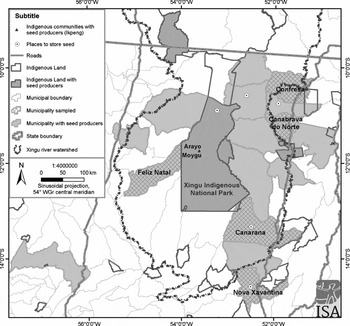
The communities involved in the Xingu Seed Network were stratified by their sociocultural characteristics into settler farmers, urban and indigenous categories. In each stratum, we selected producer groups that were considered well organized and experienced, as identified by staff from the five NGOs and recognized by the Network. Thus, our sample represents better organized groups, which may mean that the households have higher than average livelihoods capital. Specifically, the sample includes the urban areas of Canarana and Nova Xavantina municipalities, two Ikpeng indigenous villages in the portion of Xingu Indigenous National Park in the municipality of Feliz Natal, and settler farmers in the municipalities of Confresa and Canabrava Norte (Fig. 1). Producer households were selected purposively, based on recommendations by the NGO staff and leaders of the seed producers. We considered a ‘household’ to include people who live in the same house and share resources. In each selected household, D. Urzedo and a research assistant interviewed the male and female heads of household together, to elicit information about the household, and then separately, to ask about their participation in the Xingu Seed Network. In the indigenous group, men generally do not engage in seed collection or processing, and therefore only women were interviewed about their participation in the seed network. The resulting sample was 67.5% female and 32.5% male.
Municipalities with seed producers in the Xingu Seed Network (Upper Xingu region, Brazilian Amazon), showing the municipalities with sampled producers from the three sociocultural groups.

We interviewed producers until no new content was being obtained from the interviews. Because this saturation point was never reached with urban residents (n = 13; two municipalities) and settler farmers (n = 15; two settlements), all of the producers in the selected groups were interviewed, while 16% of the indigenous producers were interviewed (n = 12; two villages). Interviews were conducted during July–September 2012 and July–August 2013.
Data
A structured questionnaire (see Supplementary material) was employed to gather information on household characteristics (such as gender and age composition, and location relative to markets), identify all household activities that generated cash income during the year (2012), and describe the household's participation in markets. For analysis, household income sources were sorted into six categories, namely agriculture (horticulture, exotic fruits, cassava and sugar cane), livestock (cattle, pigs, poultry and milk), native non-timber tree products (native fruit pulp, seedlings and seeds), processing (honey, cheese and handicrafts), and government transfer payments and autonomous activities (such as employment as a housemaid, painter or mason).
Individual male and female respondents were asked about their reasons and motivations for engaging in seed production. We use the term ‘seed production’ to encompass all processes involved in the harvesting, processing and storage of seeds, while the term ‘seed producer’ refers to the people engaged in these activities.
Information on livelihood outcomes was elicited using the sustainable livelihoods approach (DFID 2000). We asked how seed market participation had affected livelihood assets in the physical, natural, human, financial and social dimensions of capital. The survey instrument was developed following the methodology proposed by Kusters et al. (Reference Kusters, Belcher, Ruiz Pérez and Achdiawan2005) to assess the effects of NTFP trade. Respondents were asked to characterize change in each asset, which the interviewer recorded on an ordinal scale (much worse = 0; worse = 0.25; same situation = 0.5; better = 0.75; much better = 1.0).
In addition, we obtained and analysed the 2012 marketing database of the Xingu Seed Network to quantify the cash income earned from seeds, the total volume of seeds produced, and the number of different seed species supplied by each household in our sample. This was a ‘normal’ year for natural seed production, with no evidence that it was affected by unusual environmental or ecological factors. This database aggregates information on seeds sold by all indigenous producers in a community, and therefore our data include seed production by all eight indigenous ethnicities or communities (including the Ikpeng community from which two villages were sampled) involved in seed commercialization.
Analysis
Responses about changes in assets were summed across assets and the mean summative score in each dimension of capital was calculated for each sociocultural group. These mean scores were compared across groups using one way ANOVA (p = 0.05), followed by Tukey test pair-wise comparisons of group means (p = 0.05). In addition, differences across sociocultural groups in the reported change in each asset were evaluated with Kruskal-Wallis tests. We applied cluster analysis to the changes in assets to assess similarities and distances between the different dimensions of capital in each sociocultural group, using hierarchical clustering (squared Euclidean distances). In addition, Spearman rank correlation coefficients were calculated and evaluated (p = 0.05) to assess the relationships between cash income and number of species (as reported in the seeds marketing database) and changes in different livelihood assets (as reported by the households), as well as between changes in different livelihood assets. All analyses were performed in Statistica Version 12.
RESULTS
Household economy
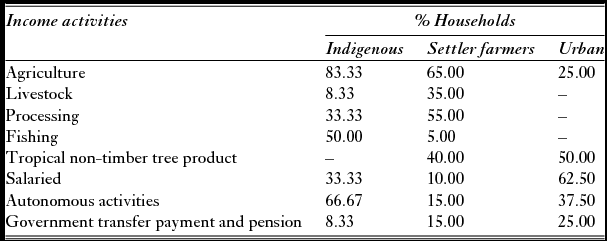
Each of the sociocultural groups generated cash income from a diversity of sources (Table 1). In total, the settler farmers had the greatest number of income sources, while the urban households had the least. However, most sources of cash income for the settler farmers were based on agricultural production (65%). In urban areas, wage employment was by far the most common source of income, cited by 62.5% of households. Half of the households interviewed in urban areas had earned cash income from seedlings (categorized as non-timber forest products), which they raised in nurseries.
Production activities with sources of cash income in indigenous (n = 2 villages; 12 producers), settler farmer (n = 2 villages; 15 producers) and urban households (n = 2 villages; 13 producers), showing the percentage of households engaging in each activity; data do not consider forest seed production.

Although the indigenous respondents also reported seven income sources, this reflected mostly subsistence production because there were limited markets for most of their products. The Ikpeng only participated in markets external to their communities through the sale of forest seeds, supported by NGOs from the Xingu Seed Network. In interviews, they argued that they faced a binding constraint on all potential market activities: the great distances (42 to 348 km) and long travel times (partly due to poor road quality) required to reach urban centres, often involving travel by both boat and car.
Participation in the seed network
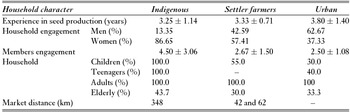
The three sociocultural groups all received training when they joined the seed network. The training was offered by NGO staff, sometimes together with more experienced producers, and focused on subjects like how the network functions, and recommendations and techniques for seed production. Some of the urban households were already involved in the market for forest seeds (especially for nurseries) before the seed network started. Consequently, they were the first group to supply seeds to the Xingu Seed Network for restoration projects in 2007, and they were the most experienced (Table 2).
Household characterization of indigenous (n = 2 villages; 12 producers), settler farmer (n = 2 villages; 15 producers) and urban households (n = 2 cities; 13 producers). Children < 12 years old; teenagers 12–18 years old; adults 18–60 years old; elderly > 60 years old. Mean is followed by the standard deviation.

There was wide variation in participation by women across the three sociocultural groups. In the indigenous community, seed production was predominantly a women's activity, with only 14% of men participating, specifically in seed harvesting. In addition, indigenous households on average had the greatest number of people (4.5 ± 3.1) involved in the initiative. In both the agricultural settlement and urban contexts, there was a division of labour between men and women, in which the seeds were harvested by men and processed by women.
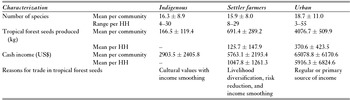
The timing of seed production was similar across the three sociocultural groups, because it was largely defined by environmental and ecological factors. Generally, seeds were collected during the dry season (June to December in the Upper Xingu) when most tree species disperse their seeds. The quantities of seed to be collected were planned by NGO staff, taking into account the market and the ability of each producer to obtain seeds of different species. The 2012 forest seed marketing data show that urban households sold the most seeds on average, albeit with much variation (370 ± 423 kg household–1 yr–1) (Table 3).
Number of different species collected, total weight of seeds sold (kg), and cash income from sale of seeds (US$) in 2012 by type of household (HH) engaged in seed network: indigenous (n = 8 communities), settler farmer (n = 2 villages; 15 producers) and urban households (n = 2 cities; 13 producers). Mean is followed by the standard deviation.

Seeds also contributed most to household income (US$ 5916 ± 6825 yr–1) in urban areas, consistent with the production logic expressed by all urban respondents: they had invested in a seed production system with good infrastructure (tools and machines), allowing them to produce large quantities of seeds and earn high financial returns. In contrast, settler farm households produced on average one-third the number of seeds. The indigenous population produced even less: on average, an indigenous community (with 5 to 89 producers) produced less than an average urban household in the network. In 2012, the two Ikpeng villages together produced 362.9 kg of seeds, with a total sale value of US$ 7597.
The seed network traded in 242 forest species as recognized by gender, of which 212 have been identified by scientific name (Table S1, see Supplementary material). Households in each community harvested seeds from a similar number of species (Table 3). However, there was significant variation across households. The number of species was strongly positively correlated with total cash income from seeds among indigenous (R2 = 0.83; p < 0.01) and settler farmer producers (R2 = 0.90; p < 0.001). In these two communities, diversity was associated with greater financial returns, while this association was much weaker among urban producers (R² = 0.39; p = 0.07). As expected, there was a strong positive correlation between cash income and seed production (kg) among all three groups.
Livelihood outcomes of participation
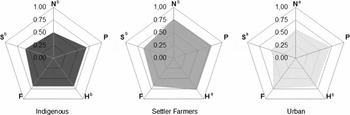
Overall, respondents considered participation in the trade of forest seeds to have improved their household livelihoods, as shown by average increases in financial, human and physical capital (Fig. 2). One notable exception was social capital among urban households. In general, outcomes were different among sociocultural groups, with significant differences in the perceived impacts on natural (F = 2664.8; p < 0.01), social (F = 1603.9; p < 0.01) and human (F = 2677.6; p < 0.01) assets.
Household livelihood outcomes in natural (N), physical (P), human (H), financial (F), and social (S) capital for indigenous (n = 12 producers), settler farmers (n = 15 producers) and urban households (n = 13 producers) after engagement with seed production in the Upper Xingu of the Brazilian Amazon. 1 = major improvement; 0.5 = no change; 0.0 = major deterioration. a, b = significant statistical differences between sociocultural groups (p < 0.01).

Natural capital
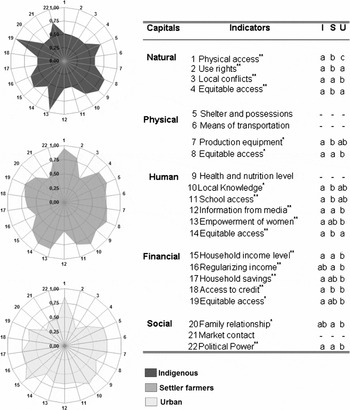
Natural capital was perceived to have improved significantly (F = 2664.8; p < 0.001) more in the communities of settler farmers (0.77 ± 0.23) than among urban (0.56 ± 0.24) and indigenous households (0.50 ± 0.03). In particular, the settler farmers reported a large improvement in contact with resources (0.95 ± 0.13; Fig. 3). Urban households also perceived greater access to natural resources (0.85 ± 0.10), but indigenous households did not consider their access to natural resources to have been affected by the production of seeds (0.52 ± 0.07).
Livelihood indicators in different forms of capital for indigenous (I; n = 12 producers), settler farmers (S; n = 15 producers), and urban households (U; n = 13 producers) in the Upper Xingu region. Ordinal scale: 1.00 = major improvement; 0.50 = no change; 0.00 = major deterioration. * = indicates significant at the 5% level. ** = indicates significant at the 1% level. a, b, c indicates significant differences between sociocultural groups.

Almost half of all urban households reported that seed production had led to conflicts over natural resources, resulting in a significant decline in this dimension of natural capital (0.35 ± 0.22; p < 0.001). Some urban households (38.5%) from Canarana described intragroup disputes over areas and mother trees for seed harvest. Only settler farmers indicated significant impacts on the legal right to use natural resources (0.81 ± 0.21; p < 0.001). Settler farmers also believed that the initiative had promoted sharing of best practices in the use of nature across members of the same household (0.81 ± 0.21).
Physical capital
Improvements in physical capital were observed in all groups, although they were greater for the urban residents (0.71 ± 0.23) and farmers (0.78 ± 0.20). In particular, these groups reported improved access to transportation (0.77 ± 0.23 for farmers and 0.75 ± 0.24 for urban producers), due to investments in automobiles or motorcycles to reach harvest sites and deliver seeds to the warehouse, which also increased the general mobility of all household members. These same groups reported the greatest investment in production and processing equipment (p < 0.05), and they also invested in shelter (such as home renovations) and durable goods that promoted family comfort.
In comparison to settler farmers and urban residents, the indigenous community had made fewer gains in physical assets (0.58 ± 0.11). Indigenous respondents reported increased access to donated equipment and materials as a result of participation in the seed network, but they still faced transportation, logistical, material and equipment constraints.
Human capital
All three groups perceived significant improvements in human resources, with the greatest improvements reported by the settler famers. Specifically, knowledge about the forest was enhanced by participation in the seed network, especially among settler farmers (0.87 ± 0.16; p < 0.01). Two-thirds of farmers reported that seed collection gave them an incentive to identify and monitor the phenology of forest species, as well as to innovate in their systems and technologies for collecting seeds. In addition, 75% of settler farmers reported that seed production had improved their families’ access to education (0.77 ± 0.20; p < 0.01) by helping them purchase school supplies and uniforms and support children staying in cities to study at the high school or university level. The indigenous population (91% of respondents) reported that the greatest gain in human capital (0.72 ± 0.14) was learning new techniques for seed production in training courses offered by the Xingu Seed Network.
Participation in the seed network had also led to the empowerment of women, especially in the indigenous (0.96 ± 0.10; p < 0.01) and farming (0.86 ± 0.20) communities. According to all indigenous respondents, seed collection and processing were entirely compatible with the skills and traditional responsibilities of women in the indigenous communities. Respondents in all groups reported improvements in the health and nutrition of their families, with the greatest average improvement among indigenous people (0.85 ± 0.12). They all attributed this largely to improved diets due to the addition of fruit pulp that is a by-product of collecting seeds from species such as Hymenaea courbaril L., Byrsonima crassifolia (L.) Kunth, Mauritia flexuosa L. f., Guazuma ulmifolia Lam., and Annona muricata L.
Financial capital
All producers from the three groups reported financial improvements as a result of participation in the seed network. The urban producers reported the greatest gains (0.73 ± 0.19), with significant improvements in cash income (0.89 ± 0.12; p < 0.01), stabilization of cash income (0.72 ± 0.17), and savings (0.75 ± 0.18). In contrast, for all settler farmers and indigenous people, sale of seeds was a supplemental source of income that had not resulted in a major improvement in their financial status (Table 3). The revolving fund offered by the seed network (which charged only 4% for administration and no interest) also facilitated access to credit, especially for 57% of settler had a higher than average score in this dimension (0.70 ± 0.14; p < 0.01) than the other groups, reflecting the importance of credit access for investing in seed production.
Social capital
Little change in social capital (mostly in local organization) was reported by indigenous (0.58 ± 0.16) or settler farmers (0.63 ± 0.17), while the urban seed producers reported a loss of social capital (0.46 ± 0.19, F = 1603.9; p < 0.001). Urban producers indicated negative impacts especially for family relationships (0.41 ± 0.32; p < 0.05) and for local organization and linkages among households (0.47 ± 0.07; p < 0.01). About a third of urban respondents mentioned evidence that family problems had interfered with their participation in the seed network.
In contrast, indigenous respondents reported improvements in community organization (0.75 ± 0.18) due to seed production, especially for women. The Ikpeng community created a women's group that had facilitated exchange of knowledge, experience and information. Settler farmers also reported improvements in local organization and linkages among households (0.72 ± 0.08) through local meetings and dissemination of experiences and expertise. None of the groups reported changes in their contact with the market, probably because all aspects of marketing are handled by the supporting NGOs.
Relationships among different dimensions of capital
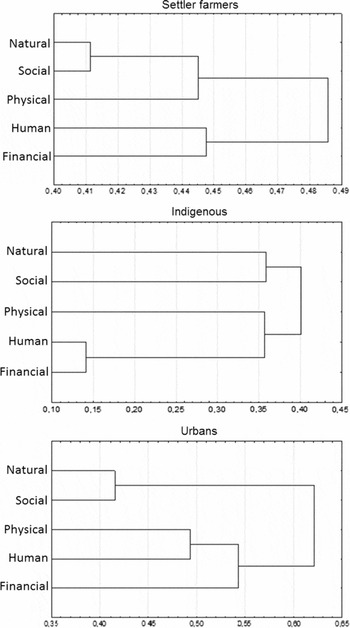
The perceived changes in different dimensions of household capital show different patterns among the social groups (Figs 3–4). Urban households linked natural and social outcomes, which both had low averages. Respondents attributed this to the difficulty of establishing agreements to collaborate on seed production, including sharing areas for seed harvest. For settler farmers, human and natural capital were closely linked, and both were strengthened by participation in the Seed Network. For indigenous households, the results in the financial and human capital domains were closely related, although the reported changes in individual assets were highly variable. Changes in financial capital were the least closely associated with changes in other forms of capital among urban households, who were the most integrated into the market.
Clustering of household livelihood assets for indigenous (n = 12 producers), settler farmers (n = 15 producers) and urban households (n = 13 producers) in the Upper Xingu of the Brazilian Amazon.

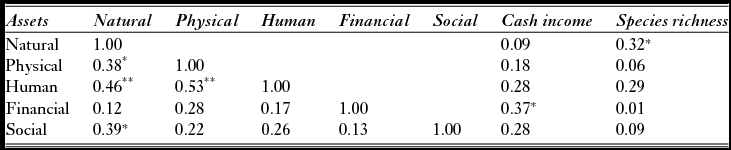
Across all three groups changes in natural capital were weakly but significantly correlated with changes in physical, human and social capital (Table 4). In addition, a significant correlation was found between changes in physical and human capital. There were no negative correlations between the changes reported in different dimensions of capital, but the financial dimension was not significantly correlated with any other dimensions. While cash income was significantly correlated with changes in the financial dimension, none of the other dimensions of capital were significantly related to cash income (Table 4). The number of species collected was significantly and positively correlated with natural capital (R2 = 0.3204; p = 0.0439).
Spearman rank correlation coefficients of aggregate between household livelihood outcomes, species richness and cash income from forest seed sales (n = 6 villages or cities; 40 producers). * = significant at the 5% level. ** = significant at the 1% level.

DISCUSSION
There are some important caveats in our study, including the small sample size and reliance on self-reported changes in different livelihood assets. SLA is a difficult model to use empirically, and there are simpler indicators for measuring livelihood status and change (Angelsen & Wunder Reference Angelsen and Wunder2003). However, if we had relied on the data base of the Xingu Seed Network, our key indicators of participation would have been revenues and number of species of seeds supplied. Each of these indicators was correlated with only one dimension of livelihood assets: financial in the case of revenues, and natural in the case of the species count.
Financial capital is generally considered the most versatile, as it can be converted into other types of capital (DFID 2000). For example, Kusters et al. (Reference Kusters, Achdiawan, Belcher and Ruiz Pérez2006) found that financial indicators are good proxies for access to human, social and physical assets. However, in the Xingu Seed Network, high cash income from sale of seeds was actually associated with negative outcomes in social and natural capital, especially regarding cooperation between households and sharing of natural resources. In particular, urban households reported that family disputes, often related to breaches of their own agreements and disagreements about how to share income and work, interfered with their participation in the seed network. Conversely, producers with lower cash income and financial capital had improved their social, human and physical capital through local organization, strengthening confidence, sharing knowledge, and women's empowerment.
Changes in natural capital were much more closely correlated than financial capital with the other dimensions of capital. Changes in natural capital were in turn correlated with the number of seed species harvested. The producers in the Xingu Seed Network collect a large number of species, for example, relative to the number of plant species used by indigenous communities who are famous for their use of forest biodiversity (González-Pérez et al. Reference González-Pérez, Robert and Coelho-Ferreira2013). A caveat is that indigenous households may not have perceived any change in natural capital because they consider their livelihoods inseparable from nature, independent of this external market opportunity.
Qualitative results from in-depth interviews confirm that among the urban population, access to financial benefits, including both cash income and credit, had intensified conflict among households. Guariguata et al. (Reference Guariguata, Garcia-Fernandez, Sheil, Nasi, Herrero-Jáuregui, Cronkleton and Ingram2010) showed that one type of conflict occurs over disputed species that have high value for both timber and NTFPs. In our case, urban households were more prone to conflict over seed collection because they did not own the land where they were harvesting seeds, relying instead on public areas and land owned by others. When these lands are targeted by more than one urban producer, the overlapping harvest areas lead to conflict. Turner et al. (Reference Turner, Ayantunde, Patterson and Patterson2011) hypothesized that reduced availability of resources leads to greater resource competition and conflict, although these are also shaped by social identities, political interests, historical precedent, and the defence of broader principles. Our qualitative interview data suggest that these other factors were important among urban households in the Xingu: they have widely varying backgrounds and divergent perceptions of organization and production, which are obstacles to local coordination. Enforcement of rules, social homogeneity, ecological knowledge and market integration have direct implications for governance of NTFPs (Mutenje et al. Reference Mutenje, Ortmann and Ferrer2011).
Unlike the urban producers, both the indigenous groups and settler farmers participated in the seed network through community organizations. In the indigenous context, participation in the seed network was led by women in a way compatible with the social structure of the Ikpeng community. This explains why the communities that were already organized (such as the settler farmers and indigenous communities) strengthened their social capital through the establishment of the seed network, even though it was clearly an external intervention led by NGOs. Increased market access and income may strengthen or weaken cooperation (Rizek & Morsello Reference Rizek and Morsello2012). When a community does not have any tradition of local organization and cooperation, the external intervention can weaken social capital, as in the urban zone in our case. The urban producers' strategy has been to specialize in seed production, which also leaves them more vulnerable to any legal changes that depress the demand for seeds. Meanwhile, settler farmers and indigenous groups were less dependent on seeds to support their household economy, and therefore are buffered from changes in market dynamics and government regulations. Of course, this may not reflect their choice so much as the constraints that they face, including relatively poor market access and the relatively small workforces of settler households, whose teenage children have migrated to urban centres searching for opportunities to work and study.
Value chains for forest products have provided work and cash income for women in many developing countries, especially when they can integrate those activities with their home and family responsibilities, as in the Ikpeng culture in our case (Quang & Anh Reference Quang and Anh2006; Shackleton et al. Reference Shackleton, Paumgarten, Kassa, Husselman, Zida, Purnomo, Irawati and Fauzan2012). The empowerment of women has been an important outcome of participation in the Xingu Seed Network, partly because the network makes women the key protagonists in an income generating activity and in the process of ecological restoration. Moreover, both indigenous and settler farmer communities had women's groups that were involved in planning and encouraged dialogue about the network, including reflection on the importance of seed production for women and their households in the community. Collective action by women can provide them with greater voice, negotiating power, and help with economies of scale (Shackleton et al. Reference Shackleton, Delang, Shackleton, Shanley, Shackleton, Shackleton and Shanley2011 b).
CONCLUSIONS
In the southeastern Amazon, tropical forest seed production for ecological restoration has been successfully harnessed to help diversify household income sources and livelihoods, according to the interviewed households. On the whole, households engaged in the harvest and processing of seeds reported positive impacts on their livelihoods, in dimensions including health and nutrition level, home and shelter, local knowledge, cash income, and empowerment of women. However, these outcomes vary across groups with different sociocultural backgrounds and local vulnerability contexts.
Compared to urban households, who are integrated into the market, indigenous and settler farmers, who are less integrated into the market, achieved better livelihood outcomes through participation in the seed market. This illustrates how an intervention to integrate households into the same supply chain can have different impacts in different socioeconomic and cultural settings, and it confirms the importance of designing and implementing interventions in participatory consultation with local communities, since their perceptions and objectives will mediate the outcomes of the intervention. In communities without any tradition of local organization and cooperation, the external intervention can actually weaken social capital. Conversely, organized communities can achieve better household livelihood outcomes as a result of external support for marketing non-timber forest products.
ACKNOWLEDGEMENTS
We thank the Xingu Seed Network and the Instituto Socioambiental for making available their commercialization database, for all of their support during the field work, and for the map. This research received financial support from FAPESP (Process: 12/23464-0 and 12/10142-4).
Supplementary material
To view supplementary material for this article, please visit http://dx.doi.org/10.1017/S0376892915000247.