Introduction
The most common causes of emotional suffering in old age are psychiatric morbidities, particularly dementia and depression (Blazer et al., Reference Blazer2003). These two diseases often co-occur but the relationship between them remains unclear. Common opinion holds that depression constitutes a risk factor for dementia (Leinonen et al., Reference Leinonen, Santala, Hyotyla, Santala, Eskola and Salokangas2004; Modrego and Ferrandez, Reference Modrego and Ferrandez2004; Andersen et al., Reference Andersen, Lolk, Kragh-Sorensen, Petersen and Green2005), although other studies have shown that depression and depressive symptoms are rather a prodromal stage to dementia than an independent risk factor (Garre-Olmo et al., Reference Garre-Olmo2003; Vinkers et al., Reference Vinkers, Gussekloo, Stek, Westendorp and Van Der Mast2004; Ganguli et al., Reference Ganguli, Du, Dodge, Ratcliff and Chang2006). It has also been suggested that depression is a reaction to a subjective or early cognitive decline and that the depressive symptoms decrease when the dementia disorder deteriorates (Garre-Olmo et al., Reference Garre-Olmo2003; Holtzer et al., Reference Holtzer2005; Mitchell, Reference Mitchell2005).
The prevalence of depression has been shown to be higher in people with dementia than in people without dementia (Ballard et al., Reference Ballard, Bannister, Solis, Oyebode and Wilcock1996; Forsell and Winblad, Reference Forsell and Winblad1998; Li et al., Reference Li, Meyer and Thornby2001) but the symptoms of depression, particularly in old people, resemble the symptoms of an early dementia, which complicates the differentiation between depression and dementia. The preponderance of depression in women, which is seen among people without dementia, seems to disappear among people with dementia (Ballard et al., Reference Ballard, Bannister, Solis, Oyebode and Wilcock1996; Regan et al., Reference Regan, Katona, Walker and Livingston2005). The risk factors for depression in those who have a dementia disorder also seem to differ from those without dementia. Among people with dementia no association has been found with common factors associated with depression in old age such as gender, living alone and functional decline (Ballard et al., Reference Ballard, Bannister, Solis, Oyebode and Wilcock1996; Forsell and Winblad, Reference Forsell and Winblad1998; Regan et al., Reference Regan, Katona, Walker and Livingston2005).
The aims of this study were to investigate the prevalence of depression among very old individuals with dementia compared to those without dementia and to examine if there are any differences between these conditions regarding associated factors.
Methods
Participants
A random sample was selected comprising half the population of 85-year-olds, the total population of 90-year-olds and all individuals in the range 95 years and older who were living in the municipality of Umeå, Sweden on 1 January 2000 (n = 348). Similarly, a random sample was selected comprising half the population of 85-year-olds, the total population of 90-year-olds and all individuals in the range 95 years and older who were living in five rural municipalities in northern Sweden on 1 January 2002 (n = 179). The participants received a letter containing information about the study and two weeks later they were informed about the home-visit procedure and gave their informed consent. If the participant suffered from dementia, relatives were informed and decided whether or not their relative could participate.
Forty-four (8.3%) of the originally selected sample died before they could be asked to participate and 52 (9.8%) declined to participate. A higher proportion of those who died were married, which was the case also for those who declined. Among the latter, a higher proportion were men. There were no differences among those who died or declined concerning age or living conditions. Sixty-eight (12.9%) subjects could not be evaluated for depression. No differences were found regarding age, sex or civil status, but a higher proportion (p = 0.042) were in institutional care. Fifteen out of these 68 subjects were impossible to evaluate for depression due to severe cognitive impairment. No differences were found regarding gender or civil status but among those impossible to evaluate for depression due to cognitive decline more were older (p = 0.018) and a higher proportion were in institutional care (p = 0.025). The final sample consisted of 363 participants, 75% out of the 483 who were alive at inclusion. The participants’ age distributions were 85 (n = 146), 90 (n = 131) and ≥95 years (range 95–103 years, n = 86) and there were 102 men and 261 women.
All participants were assessed in their homes by a trained team of assessors: physicians, nurses, physiotherapists or medical students.
Social factors
In order to investigate objective and subjective loneliness, questions such as “how often does someone visit you?”, “how often do you visit others?” and “how often do you receive phone calls” were developed and used. Relatives and caregivers were also asked to confirm the number of visits and phone calls received by participants with dementia. The question “Do you ever feel lonely?” was used to investigate if the participants experienced loneliness. The information about the loss of one or more children was asked for and also collected from the National Tax Board population register.
Depression
Depression was diagnosed after an evaluation of previously documented diagnoses and current treatment with antidepressants. Depressive symptoms were also screened for using the Geriatric Depression Scale (GDS-15), where scores between 5 and 9 indicate mild depression, and a score of 10 or more indicates moderate to severe depression (Sheikh and Yesavage, Reference Sheikh and Yesavage1986). The GDS-15 has been evaluated in a sample of the very old and been found to have high sensitivity and specificity in diagnosing depression (de Craen et al., Reference de Craen, Heeren and Gussekloo2003). In participants without a documented depression diagnosis but with a score of 5 or more on the GDS scale, a specialist in geriatric medicine visited the participant within two to three weeks after the first assessment for validation of the diagnosis. At that visit, the participant was assessed with the Montgomery-Åsberg Depression Rating Scale (MADRS) (Montgomery and Åsberg, Reference Montgomery and Åsberg1979), and the specialist decided if the participant fulfilled DSM-IV criteria for depression. Depressive and other psychiatric symptoms were also rated according to the Organic Brain Syndrome scale (OBS scale) (Jensen and Dehlin, Reference Jensen, Dehlin and 1993). Depression was diagnosed according to DSM-IV criteria but anyone who had a previously diagnosed depression with ongoing treatment with antidepressants, despite a GDS <5, was diagnosed as having depression. A person on antidepressive treatment with a GDS-score <5 was regarded to have responded to the treatment.
Dementia
The Mini-mental State Examination (MMSE) was used for cognition screening (Folstein et al., Reference Folstein, Folstein and McHugh1975). In order to accentuate the diagnostic differentiation between depression and dementia, a composite set of diagnostic information was collected. The OBS-scale was used for assessment of different psychiatric symptoms as well as fluctuations in the participant's cognition and psychiatric symptoms during the past weeks. In addition, relatives and caregivers were interviewed and records from hospitals, general practitioners and caring institutions were reviewed. Based on this comprehensive information a specialist in geriatric medicine decided if the participants fulfilled DSM-IV criteria for dementia. In a few uncertain cases the participants were referred for a complete dementia assessment including neuropsychological examination and brain imaging.
Physical measurements
Activities of daily living (ADL) were rated using the Barthel ADL Index (Collin et al., Reference Collin, Wade, Davies and Horne1988), which consists of ten items concerning personal ADL. The maximum score is 20, which indicates total independence in ADL. Nutrition was assessed using the Mini Nutritional Assessment (MNA) scale, a screening instrument for nutritional status among the oldest old (Guigoz et al., Reference Guigoz, Lauque and Vellas2002). The MNA has a maximum score of 30, which indicates good nutritional status. Scores of between 23.5 and 17 indicate risk of malnutrition and scores below 17 indicate the presence of malnutrition.
Ethics
The study was approved by the Ethics Committee of the Medical Faculty of Umeå University (§ 99–326).
Statistics
All calculations were made using the Statistical Package for Social Sciences (SPSS). The χ2 and Student's t-tests were used to analyze differences between groups. Since a magnitude of 50 t-tests were made between subgroups, according to Bonferroni (Abdi et al., Reference Abdi and Salkind2007), a p-value of ≤0.001 was regarded as statistically significant in the analysis of the results.
Multicholinearity was controlled for by correlation analyses. Variables with a statistically significant association with depression were included in logistic regression models to find independent factors associated with depression in participants with and without dementia. The variables that best explained the differences between demented people with and without depression, as well as between people with no dementia with and without depression, were chosen in the final model. A p-value of <0.05 was regarded as statistically significant
Results
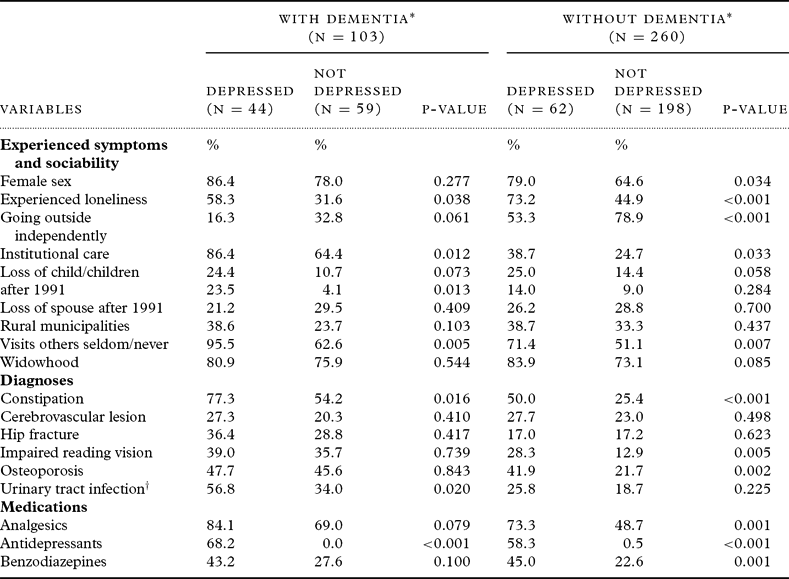
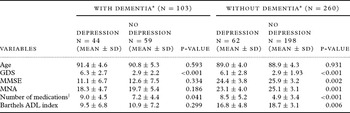
In the total sample of 363 individuals, 106 (29%) were depressed, and 103 (28%) were diagnosed as having a dementia disorder. The prevalence of depression was significantly higher among the participants with dementia than those without: 43% vs. 24% (p < 0.001). A majority of those with dementia had Alzheimer's disease (AD) and approximately one out of five had vascular dementia while the rest had other forms of dementia. The participants with dementia were older (mean age 91 vs. 89 years, p < 0.001), but the age differences were subtle and non-significant in the group comparisons between depressed and non-depressed in the groups of people with and without dementia. In the demented group, the MMSE scores were in the range of moderate to severe dementia, with slightly and non-significantly lower results for the depressed. The MMSE results in the non-demented group were higher, and the differences were more pronounced between people with and without depression, with higher results for the latter although the differences were not significant. The nutritional status, expressed in MNA scores, was significantly higher for the non-depressed people than the depressed among those without dementia, while there was no significant difference among those with dementia.
Concerning gender, living in institutional care or not, and level of dependency (expressed in scores on the Barthel ADL index), there were no significant differences among those with dementia nor among those without between depressed and non-depressed people. In the group without dementia, the depressed subjects went outside significantly less often than the non-depressed and experienced significantly more loneliness, while in the group of people with dementia, going outside independently and experienced loneliness did not differentiate between depression and non-depression. Among both the people with dementia and those without, visits to others, losses of one or more children or of a spouse did not differentiate between the depressed and non-depressed groups.
Regarding medications, 68% of the depressed people with dementia were on antidepressant medication compared with 58% among those with depression without dementia. None of the non-depressed people with dementia and 0.5% of the non-depressed without dementia were on antidepressants. Among those with dementia as well as those without, approximately 50% (46% vs. 52%, p = 0.743) had responded to treatment. There was no significant difference in the total number of medications except antidepressants between depressed and non-depressed people with dementia, while in the group of people without dementia, the depressed used a significantly higher number of medications. Concerning specific drug categories, there was no difference between the depressed and non-depressed people with dementia with regard to treatment with analgesics and benzodiazepines. In the non-demented group, such treatment was significantly more common among the depressed compared with the non-depressed people.
The only diagnosis concerning physical comorbidity factors that was significantly associated with depression was constipation in the group of people without dementia. None of the other physical co-morbidity factors asked for – cerebrovascular lesion, hip fracture, impaired reading vision, osteoporosis or urinary tract infection – differentiated significantly between depression and non-depression in the two groups (Tables 1 and 2).
Factors associated with depression among the very old with and without dementia
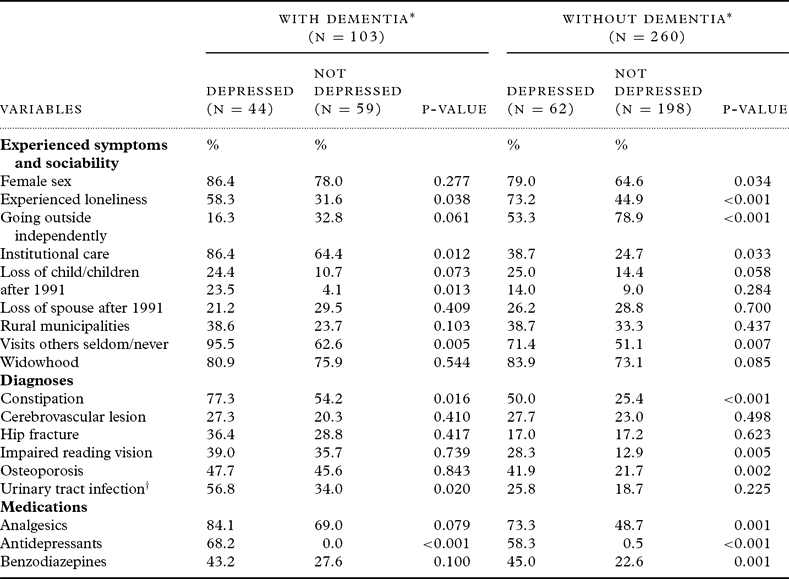
*Statistics based on number of valid cases (different numbers of cases missing in different variables). †During preceding year.
Factors associated with depression among the very old with and without dementia

*Statistics based on number of valid cases (different numbers of cases missing in different variables).
†Except antidepressants.
GDS = Geriatric Depression Scale; MMSE = Mini-mental State Examination; MNA = Mini Nutritional Assessment; ADL = activities of daily living.
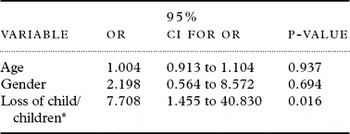
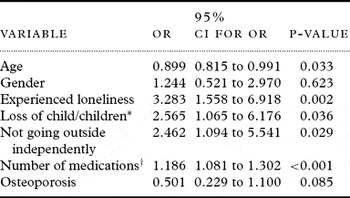
In the final regression models, loss of a child/children during the past ten years was the only factor that remained independently associated with diagnosed depression among the very old with dementia. Among the depressed without dementia, this factor remained also associated with depression in the final regression model, together with age, loneliness, not being able to go outside independently and number of medications. Among the people with dementia, the regression model explained only 16% of the variance; among those without dementia the corresponding figure was 32% (Tables 3A and 3B).
Multivariate logistic regression model of variables associated with depression among the very old with dementia

*During the past ten years.
χ2for the model, p-value = 0.033.
Association between predicted probabilities and observed responses, concordant: 66.3%.
Multiple regression model of variables associated with depression among the very old without dementia

*During the past ten years.
†Except antidepressants.
χ2 for the model, p-value <0.001.
Association between predicted probabilities and observed responses, concordant = 82.3%.
Discussion
The prevalence of depression was high both among those with as well as those without dementia. The higher prevalence found among the people with dementia in the present study is consistent with previous findings (Ballard et al., Reference Ballard, Bannister, Solis, Oyebode and Wilcock1996; Forsell and Winblad, Reference Forsell and Winblad1998; Li et al., Reference Li, Meyer and Thornby2001; Leinonen et al., Reference Leinonen, Santala, Hyotyla, Santala, Eskola and Salokangas2004; Regan et al., Reference Regan, Katona, Walker and Livingston2005). Concerning the differences in MMSE results, among the people with dementia the possible influence of depressive symptoms on cognitive performance was limited, while among those without dementia such an influence seems to be of a greater magnitude, although the difference was non-significant. The female preponderance for depression among the people without dementia was not statistically significant, indicating that gender differences in depression might not be a universal finding in the age bands studied. The absence of significant gender differences among the depressed people with dementia is in line with previous findings (Ballard et al., Reference Ballard, Bannister, Solis, Oyebode and Wilcock1996; Regan et al., Reference Regan, Katona, Walker and Livingston2005).
Depression has been thought to decrease as the degree of dementia worsens (Garre-Olmo et al., Reference Garre-Olmo2003; Lopez et al., Reference Lopez2003; Holtzer et al., Reference Holtzer2005). The present study is not a longitudinal study. Nevertheless, the significant preponderance of depression in the people with dementia, with many subjects being in advanced stages, compared with those without dementia cannot be regarded as supporting the theory that the decrease in the prevalence of depression is related to deterioration in the dementia.
Of those who received antidepressant treatment, approximately half had responded, both among the people with dementia as well as among those without dementia. This is consistent with earlier findings showing that depression in old age is poorly treated (Unützer et al., Reference Unützer2003). In this context, it should be noted that the discrepancy in response rate between depressed people with and without dementia in the present study is relatively modest in favor of the people without dementia, bearing in mind that there is relatively weak support for the efficacy of antidepressants in the treatment of depression in dementia (Bains et al., Reference Bains, Birks and Dening2002). The prescription of antidepressant medication without a proper diagnosis has been recognized as a problem in the health care of the elderly (Fastbom and Schmidt, Reference Fastbom and Schmidt2004). Therefore it is interesting to note that a negligible number of non-depressed subjects in this study were on antidepressant medication. The poor result of the treatment is probably a combination of the fact that drugs might be less effective in the very old and deficiencies in individual adjustment and follow-up of treatment.
The total number of medications was independently associated with depression in the group of people without dementia. In the comparisons between groups, the depressed without dementia used significantly more medications than the non-depressed, in line with findings of increased use of medication in depression (Bingefors et al., Reference Bingefors, Isacson, von Knorring, Smedby, Ekselius and Kupper1996). This discrepancy subsumes specific categories of drugs, such as analgesics and benzodiazepines. Pain constitutes a component within the spectrum of depressive symptomatology (Fishbain et al., Reference Fishbain, Cutler, Rosomoff and Rosomoff1997), which could be an explanation for the higher use of analgesics. In the present study a statistically increased utilization of benzodiazepines was found only in depressed people without dementia. These differences in prescriptions indicate divergent symptoms in very old depressed subjects with regard to co-existing dementia or not and/or, possibly, that divergent clinical approaches prevail among physicians in the methods of treating depression in these patient groups.
In the present study, the only medical comorbidity that differed between depression and non-depression was constipation among the people without dementia, an established and vital depressive symptom. This disparity can be interpreted as an indication of discrepancies in symptomatology between depressed people with dementia and those without dementia among the very old. A significant difference between depressed and non-depressed people in terms of nutritional status was found among those without dementia, probably partly in line with common findings of reduced appetite in depression. The higher scores concerning the experience of loneliness in depressed people without dementia in comparison with the non-depressed correspond with findings of an independent association with depression in the group of people without dementia and give further support to the differences in the manifestation and consequences of depression between people with and without dementia. Concerning activity-related aspects, the only factor that was independently associated with depression among those without dementia and that differentiated significantly between depressed and non-depressed people without dementia was going outside independently, a difference that might be related to decreased functional abilities in daily activities in dementia, which overrides the functional limitation exerted by depression.
Among the people with dementia and those without, the loss of a child in recent years was independently associated with depression. Although stressful life events, such as the loss of a child, has a well-established relationship with depression (Brilman and Ormel, Reference Brilman and Ormel2001), the present finding should be interpreted with caution. Besides the actual loss, it probably reduces the frequency and number of close and emotionally important contacts. This in turn might constitute a risk factor for depression.
The regression model explained a low proportion of the total variance among the people with dementia, while among the people without dementia, the regression model explained a considerable part of the total variance. This is in accordance with previous findings of different associated factors for depression in people with or without dementia (Waite et al., Reference Waite, Bebbington, Skelton-Robinson and Orrell2004). This might indicate that depression without dementia has causal determinants that are partly different from those found in depression in the elderly with a coexisting dementia disorder.
This study has some limitations. It should be noted that the implications of the associated factors vary in a spectrum from possible casual importance to symptoms and consequences of depression in people with and without dementia. It is a cross-sectional study without a follow-up. Earlier diagnosis of depression with ongoing treatment was accepted as a depression diagnosis, although there was no verification that the DSM-IV criteria had been met in all cases. Of those who could not be evaluated for depression because of cognitive impairment, a higher proportion were in institutional care. This is a limitation since the prevalence rates of depression is known to be high in institutional care, and the prevalence rate of depression might therefore have been underestimated. Detailed information about the individual dosages and possible follow-up adjustment of antidepressants, which might have influenced the response rate, is not complete for all participants.
In conclusion, the present study confirms that, in the very old, depression is more common among people with dementia than among those without dementia. Evidence is presented which suggests that a large proportion of the oldest old, both with and without dementia, are underdiagnosed and untreated, and, in addition, that a large proportion in both groups are non-responders to treatment. Many of the factors associated with depression among the people without dementia in this study were not associated with depression in the group of people with dementia. This suggests that depression in people with dementia constitutes a condition that is at least partly separated from depression in people without dementia with respect to associated factors related to risk, clinical manifestations and psychosocial consequences. Further studies of etiological mechanisms underlying depression and dementia, and of the pathogenic relationship between these disorders, therefore appear to be warranted. This is also a prerequisite in the development of diagnostic criteria for depression in these groups.
Conflict of interest
None.
Description of authors'roles
Ellinor Bergdahl collected, analyzed and interpreted the data, carried out the statistical analysis and was a co-author of the paper. Per Allard analyzed and interpreted the data together with EB and was a co-author of the paper. Yngve Gustafson designed and supervised the study, including the collection and interpretation of data, and was a co-author of the paper.
Acknowledgments
This work was supported by grants from the Vårdal Research Foundation, the Detlof Research Foundation, the Dementia Foundation and the Swedish Research Council K2005-27vx-15357-01a.