Introduction
The UK and Ireland Zine Librarians group (UIZL) began life as a JiscMail list in 2015 as a way for those working with zine collections to share resources, skills and advice. The idea was to bring together the small network of librarians working with zine collections in the UK and Ireland, opening up discussions around zine librarianship to everyone regardless of job titles or professional status.
The group was initially created by myself and Leila Kassir (former Academic Support Librarian at London College of Communication Library) having both struggled to hold many a complex cataloguing discussion over the noise of a crowd at UK zine fairs over the years. We wanted the group to be democratic, open, and led by its members.
Of course, UK and Irish zine libraries had already established vital collections and methods of working with zines long before UIZL. Zine collections have flourished in institutional libraries such as British Library, The Women's Library and London College of Communication Library (University of the Arts London); and also in DIY community run spaces such as 56a Infoshop, Salford Zine Library and Forgotten Zine Archive. But while zines are occasionally included in wider discourse of librarianship in the UK and Ireland, zines never really take centre stage. Conversations around acquisitions, cataloguing, storage, preservation, fundraising, staffing, access and outreach specific to zine collections mostly take place in isolation within individual institutions.
Zine librarianship in the UK and Ireland felt inaccessible, fragmented and far away from the achievements and movements taking place in the US, where zine librarianship commanded its own spotlight. Web resources such as ZineLibraries.info, Footnote 1 the yahoo zine librarian's discussion list, Footnote 2 and journal articles, conferences and blogs relating to zine librarianship remain overwhelmingly North American. While these invaluable resources provide much needed solidarity, advice and inspiration, this activity can feel a little too out of reach for UK and Irish zine libraries just getting started and seeking examples of librarianship closer to home. It was through discussions with Leila we identified that any kind of UK and Irish based network would need to start with the basics. While there was no intention to reinvent the wheel and duplicate the hard work already achieved by zine librarians in the US, it was hoped that the UIZL could address concerns specific to UK and Irish libraries and zine communities.
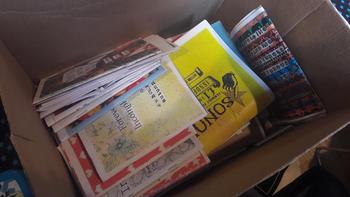
UIZL donations box.

Bridging the gap
Leila and I established the UIZL JiscMail group in March of 2015, initially tapping into existing networks such as ARLIS UK & Ireland and Radical Librarians Collective, as well as utilising our own contacts in the wider zine community to encourage members. We created a brief mission statement and invited anyone working with zines to join:
A group for all who work with zine collections or in zine libraries in the UK and Ireland. Sharing resources, information, and support across the field from institutional libraries to DIY grassroots community libraries. Open to all regardless of professional status.Footnote 3
In that first month we had 20 members join, which felt like a success of sorts. While the group existed only in the form of a JiscMail list we were keen to break down the barriers of professional librarianship, as many of those working with zine collections are not professional or qualified librarians with the funds, structure, staff, space and technology afforded by institutional libraries.
Zines are DIY documents rooted in histories of radical self-publishing, and as such they are naturally found in radical and DIY spaces. It is vital that this history and context of politics, radical publishing, and subcultural production is understood by those working with zine collections in order to create a best practice of working with zines. Looking back, our initial idea to set up a network via Jisc, a service traditionally used to support academic research, was perhaps short-sighted and maintained the very barriers we were seeking to deconstruct. However, we hoped to broaden the tools we used to communicate with each other, later establishing a Facebook group, Twitter page and blog, adamant that institutional zine libraries and DIY community zine libraries had much to learn from each other.
During this initial call-out stage we hoped that our position within the general zine community would help broaden our appeal for people to join and validate the DIY ethos integral to the group. Leila had experience volunteering with the collections at 56a Infoshop, a radical social centre with a large DIY zine collection, and I was a long-time creator of DIY queer feminist zines. We both straddled the world of DIY zine culture and institutional librarianship and hoped this would help shape the callout for zine librarians to join us.
During the early stages of establishing the group we purposefully referred to ‘collections’ rather than ‘libraries’ and stressed that anyone working with zine collections regardless of job title, professional status, or qualification was welcome to join. While the term ‘collection’ felt useful to begin with, it also invited private collectors of zines to contact the group who misunderstood the term outside of a library context. Eventually the terms ‘library’ and ‘librarian’ were appropriated back into usage by the group but with the understanding that anyone working with zine collections could refer to themselves as a zine librarian with no professional stipulations in place.
UIZL london meetup 2017.

With the group established and introductions made, it was time to foster a community of zine enthusiasts working with collections. While many members of the group had already developed zine collections and methods of working with them over time, some members were only just beginning to think about expanding their existing library collections to include zines, and early topics of conversation included how to define zines, acquisition methods, basic cataloguing, and fundraising advice. It was hoped that these conversations would enable librarians new to the world of zines to learn the basics, while those already working with zine libraries could perhaps benefit from fresh approaches and advice from a burgeoning community.
How to set up a zine library and other easy steps
Establishing a brand new zine library or developing existing collections to include zines is undoubtedly a daunting task, and there are many reasons why library collections would want to include zines in their collection policies. From museum and gallery libraries expanding their artists’ books and special collections, to public libraries hoping to appeal to new audiences, as well as academic libraries interested in documenting histories of self-publishing, subcultures, and marginalised voices. While grassroots community zine libraries are already well aware of the importance of collecting marginalised voices and alternative forms of media, institutional libraries often still struggle with the basics of writing zines into collection development policies. Zines are an effective way of diversifying existing collections and can provide new engagement with users, but knowing what to do with this material is another thing.
I had previously established zine collections in two institutional libraries, although each required their own unique approach. While Deputy Librarian at Iniva's Stuart Hall Library, I established a zine collection with Library Manager Sonia Hope. We both had a background in reading and making zines, and understood the relevance of zines in a collection which focused on race, ethnicity, class, gender and sexuality in relation to art. Our approach to setting up that zine collection was to jump in feet first and worry about collection development policies, cataloguing and storage at a later date. The autonomy of working in a small team and a small collection meant that changes to the collection could be made relatively quickly.
In more recent times I developed the existing artists’ books collection in Tate Library's special collections to include zines. This has been a much more measured approach across the library team and required careful consideration in identifying zines as a separate entity to artists’ books while sharing the same shelf location. This sparked a great deal of internal conversation regarding the differences and similarities between artists’ books and zines, during which I received advice and support from the newly created UIZL group. These discussions culminated in a list of criteria to help better identify zines in Tate library which was presented as a free zine available at Tate library's show and tell event on zines and self-publishing in July 2015.Footnote 4 Other widely available resources such as From a to zine: building a winning zine collection in your library Footnote 5 provide guidance for expanding existing collections to include zines, but it was anecdotes shared by UIZL members taking their first few steps which emboldened me to have these discussions within the Tate library team.
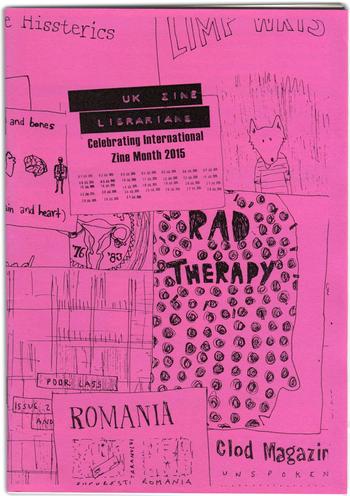
UIZL zine.

We were interested in steering conversation to explore the ways in which other UK and Irish zine collections had established themselves, recognising the power in sharing origin stories, so in May 2015 we launched a call for submissions to the first UIZL zine. The zine was to build on the conversations taking place on the Jisc group, providing in-depth personal pieces on the zine libraries and collections we all worked with. Throughout this call for submissions we reminded members that the zine was not an academic journal or a piece of formal writing, and encouraged everyone to write in their own voices, sharing their personal stories in whatever style, aesthetic and language they felt comfortable with.
The UIZL zine was published in 2015 and featured contributions from Salford Zine Library, British Library, Manchester LGBT Zine Library, LCC library, LCF Library, Poetry Library, Stuart Hall Library, Tate Library, Women's Library and Zineopolis. Each contributor discussed the size and scope of their respective collections, recounting how each collection was established, with mentions of budgets and fundraising, staffing, cataloguing, and accessibility. The zine, like the Jisc list, was heavily populated with institutional zine collections but benefited greatly from also having voices at smaller DIY community zine libraries represented. These personal accounts not only provided effective strategies and models which could be replicated in other libraries, but also provided a small snapshot of the range of zine libraries in UK and Ireland. The zine highlighted ways in which both institutional and DIY community zine libraries operate in similar ways, while promoting emerging and lesser known zine collections.
Strength in numbers: promoting our collections
Since the zine's publication UIZL now has a Facebook group, Twitter account and blog, which features posts written by UIZL members. Two UIZL meetings have been held in the last two years, the first at the British Library and the second held at Tate Britain. These informal meetings were a chance to host more in-depth discussions, focusing on specific concerns such as cataloguing, organising conferences and workshops, and ways of using UIZL to promote our collections. As well as these meetings UIZL has also been represented by its members at various talks and zine events, with some of our members attending the 2017 Zine Librarians (un)Conference held in Long Beach, CA.
While individual zine libraries continue to organise and promote their collections in many productive ways, the continued activity of UIZL has demonstrated strength in numbers, particularly when it comes to showcasing our individual zine collections to the zine community at large.
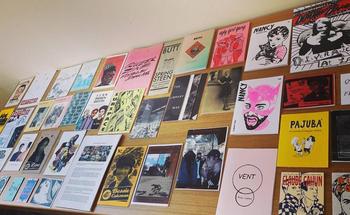
In 2017 UIZL hosted a stall at Weirdo Zine Fest, a London based zine fair privileging radical and marginalised voices. The stall was established to promote the network of zine librarians and to encourage donations to many of the collections in this network. UK and Irish zine libraries interested in participating were asked to create a poster outlining the scope of their collections, highlighting specific types and genres of zines they would be interested in acquiring. These posters were then displayed at the stall, complete with a donations box, where zine creators at the event could deposit their zines. Zine creators were able to specify which zine libraries they wanted their zines to be deposited with based on the information provided in the posters on the stall.
Priority was given to smaller DIY zine libraries which rely heavily on donations rather than larger institutions with budgets for acquiring zines. Priority was also given to new and emerging zine libraries.
The presence of a UIZL stall at the zine fair had a positive impact, encouraging over 50 donated zine titles to zine libraries, and enabled face to face interaction between zine librarians and the zine community. Developing good relationships with the zine community is invaluable to the future of UIZL. Not only is this presence at zine fairs a vital way of promoting individual zine libraries to the zine community, but having the opportunity to have face to face discussions with zine makers encourages a greater understanding of their work and can benefit future zine acquisitions, and also contribute to the cataloguing process with zine makers better able to provide keywords to describe their work.
UIZL are planning for members to attend future zine fests in 2018 to continue this promotion and to increase the number of zine donations to smaller zine libraries with little or no acquisition budget. However future stalls at zine fairs will also aim to address the need to pay zine creators for their works where possible. In addition to welcoming donations, UIZL stalls will also encourage zine creators and distros to complete purchase suggestion cards with details of their zines available for purchase to be shared with the network. It is hoped that by encouraging purchases as well as donations, zine libraries with budgets can better support zine creators where possible.
These discussions regarding the ethics of acquisitions are often unique to zines: The Zine librarians code of ethics zine created by the US Zine Librarians group recommends that zine purchases should always include some form of consent from the zine creator as the highly personal and DIY nature of zines means that their content was possibly never intended to be kept, collected or displayed in libraries.Footnote 6 This would mean clearly informing the zine creator that their zine will be made available to a wider public for research, displays, workshops etc. and possibly removing the zine at the request of the creator. Some UK zine libraries are already doing this and include on the same consent form a copyright declaration for the zine creators to sign. The consent form can even be used to capture a list of keywords identified by the zine creator to describe their work which is then used to inform the cataloguing process. The results of the ground work by US zine librarians is hugely beneficial to UIZL members who have used the JiscMail list to share details of consent and copyright forms used in the acquisition process.
The most recent achievement of UIZL has been the creation of the online directory of UK and Ireland based zine libraries in 2017.Footnote 7 While lists of zine libraries in UK and Ireland have previously been collated by other groups and organisations, the aim of a UIZL directory was not just to create a list of links to institutions, but also to keep an up to date comprehensive directory outlining the collecting policies, scope, access requirements, and donations policy of each zine library. This directory could then be updated and amended by individual zine libraries at any time.
Zine libraries in the UK and Ireland were encouraged to complete a Google form which surveyed the scope and accessibility of each zine library, capturing data such as opening hours, location, closed or open access, number of zines in the collection, links to online catalogues or lists, and types of zines collected. At present this is the only online directory to capture this level of detail and it was created to benefit both zine librarians and the zine community. The idea being that zine librarians can promote their collections as well as recommending other zine libraries to their users depending on their research needs. Zine makers can also use this directory to keep informed of the developing landscape of zine libraries, with clear guidelines on which zine libraries accept donations and what type of zines are suitable for those collections.
Submissions to the directory remain permanently open, allowing zine libraries of any size and status to upload their details for inclusion. Zine libraries are also able to amend details at any time should access or collecting policies change, or an address and contact details need to be amended. The directory includes academic libraries, special collections, museum and gallery libraries, public libraries, DIY community libraries, a mobile library, and possibly even the first lending zine library in the UK or Ireland.
The future
With just under 100 members on the Jisc group, and many more active members via social media, UIZL is a growing community of people working with zines. Future aims include hosting more meetings outside of London, expanding the blog to feature more varied zine libraries, and working harder to engage with smaller DIY grassroots zine libraries to ensure that the group is not just addressing the concerns of institutional zine libraries
In October 2017 members of UIZL met to discuss current zine library practice, with the focus firmly on cataloguing as a future concern. From our online and face to face discussions there was the general feeling that we were all cataloguing and listing slightly differently but creating the best records for the types of collections and systems we work with. But naturally there is the need to create consistency and guidance for those struggling. Those working with DIY community libraries may not have cataloguing experience or access to library management systems and so sharing fundamental tools of cataloguing using basic applications is vital. In turn, DIY community zine libraries may have a greater knowledge of zine histories, makers and distros, and have key contributions to make regarding storage, cataloguing, and classification.
One of the future aims of UIZL is to create a cataloguing working party to adapt some of the existing cataloguing literature in order to create a jargon-free guide and a workshop template suitable for both institutional and DIY community zine libraries in the UK and Ireland. Any such working party or guide would inherently rely on the equal input of DIY grassroots zine librarians in collaboration with institutional zine librarians.
The future strength of UIZL is dependent on this type of collaboration. UIZL seeks to hold true to the DIY ethos of zines in our activities through creating accessible resources for all and shining a spotlight on the radical cultures found in the many zine libraries, archives and collections in the UK and Ireland.