Epilepsy is a chronic medical problem that requires long-term therapy. Many studies have shown that prolonged treatment with anti-epileptic drugs may be an important factor in the initiation or the progression of atherosclerosis.Reference Verrotti, Domizio, Angelozzi, Sabatino, Morgese and Chiarelli1, Reference Karabiber, Sonmezgoz, Ozerol, Yakinci, Otlu and Yologlu2 Atherosclerosis is a chronic inflammatory disease. Accumulation of oxidised low-density lipoprotein within the vascular wall drives a related immune response very early during the disease course.Reference Li and Mehta3 It is widely accepted that oxidative modification of oxidised low-density lipoprotein is involved in the development of atherosclerotic lesions through the formation of macrophage-derived foam cells and/or through pro-inflammatory effects on vascular cells.Reference Li and Mehta3 Paraoxonase was identified as an enzyme having organophosphates as its substrates.Reference Rodríguez Esparragón, Hernández Trujillo, Macías Reyes, Hernández Ortega, Medina and Rodríguez Pérez4 Paraoxonase-1 is synthesised in the liver and is transported along with high-density lipoprotein in the plasma. It functions as an anti-oxidant; it prevents the oxidation of low-density lipoprotein. Its serum concentration is influenced by inflammatory changes and the levels of serum-oxidised low-density lipoprotein. To our knowledge, there is no study that analyses the effect of anti-epileptic drugs on paraoxonase-1 activity and arterial distensibility. Pulse wave velocity is a technique in which large artery elasticity is assessed from the analysis of the peripheral arterial waveform.Reference Asmar, Benetos and Topouchian5 It is calculated from the measurements of the pulse transit time and the distance travelled by the pulse between the two recording sites. It is an index of arterial stiffness and a surrogate marker for coronary atherosclerosis. Pulse wave velocity is inversely correlated with arterial distensibility and relative arterial compliance.Reference Asmar, Benetos and Topouchian5
The aim of this study is to investigate the mechanism of the effect of valproic acid, carbamazepine, and valproic acid plus carbamazepine by determining the serum levels of oxidised low-density lipoprotein, apolipoprotein A-1, homocysteine, folic acid, vitamin B12, paraoxonase-1 activity, total anti-oxidant capacity, malondialdehyd, nitric oxide, and thyroid hormones. For technical reasonsReference Asmar, Benetos and Topouchian5 (body height less than 120 centimetres, body weight less than 30 kilograms, and body mass index more than 35 kilograms per square metre), the arterial distensibility using carotid–femoral pulse wave velocity was measured in 39 children (group I: 8, two girls; group II: 7, two girls; group III: 12, two girls; and group IV: 12, five girls).
Patients and methods
Study population
The study was conducted in the Physiology and Pediatric Neurology Department of Istanbul University, Cerrahpaşa Medical Faculty, between 2006 and 2008. We recruited 59 patients aged 4–13 years with epilepsy, who treated with anti-epileptic drugs for at least 6 months and 23 sex- and age-matched controls (group IV) aged 4–13 years with a mean age of 7.3 plus or minus 2.4 years (11 boys). The epileptic group was divided into three groups on receiving anti-epileptic drugs as follows: group I: receiving carbamazepine (mean plasma concentration of 5.69 plus or minus 5.48 micrograms per millilitres; 20 children with a mean age of 7.0 plus or minus 2.6 years, 11 boys); group II: receiving valproic acid (mean plasma concentration of 54.49 plus or minus 34.12 micrograms per millilitres; 19 children with a mean age 7.2 plus or minus 3.2 years, 15 boys); group III: receiving carbamazepine (mean plasma concentration of 0.56 plus or minus 1.30 micrograms per millilitres) and valproic acid (mean plasma concentration of 55.24 plus or minus 37.50 micrograms per millilitres; 20 children with a mean age 8.4 plus or minus 3.6 years, 15 boys). All children gave their consent for inclusion in the study. The investigation conforms with the principles outlined in the Declaration of Helsinki. The study was approved by the ethics committee of the Cerrahpasa Medical Faculty of the Istanbul University.
Children having mental–motor retardation, liver, kidney, cardiac or any other organ system dysfunction, long-term medication to treat any other disease, taking multivitamins during the past 4 months, and family history of hypertension, diabetes mellitus, coronary artery disease, cerebrovascular disease, peripheral arterial disease, cardiac failure, renal failure, liver failure, and collagen vascular disease were excluded from the study. No children had convulsion 4 months before this study.
Body mass index and waist–hip ratio measurements
Body mass index was calculated by dividing body weight in kilograms by the square of body height in metres. The circumference of the waist was divided by the circumference of the hip, and the waist–hip ratio was calculated.
Blood pressure and carotid–femoral (aortic) pulse wave velocity measurements
In each child, the carotid–femoral pulse wave velocity and arterial blood pressure were measured by the same observer in a supine position after at least 20 minutes of rest. Clinic blood pressure was measured using a mercury sphygmomanometer with a cuff appropriate for the arm circumference – Korotkoff phase I for systolic blood pressure and phase V for diastolic blood pressure. For each child, two blood pressure measurements were taken, and their mean was considered for analysis.

Arterial distensibility was assessed by automatic carotid–femoral (aortic) pulse wave velocity measurement using the Complior Colson device (Createch Industrie, Massy Cedex, France); the technical characteristics of this device have been described and indicate inter- and intra-observer repeatability coefficient values greater than 0.9.Reference Asmar, Benetos and Topouchian5 Pulse wave velocity along the aorta can be measured by using two ultrasound or strain-gauge transducers, non-invasively using a TY-306 Fukuda pressure-sensitive transducer (Fukuda, Tokyo, Japan), fixed transcutaneously over the course of a pair of arteries separated by a specified distance: the femoral and right common carotid arteries. Pulse wave velocity is calculated from the measurements of pulse transit time and the distance – the distance between two recording sites is measured on the surface of body in metres – travelled by the pulse between two recording sites, according to the following formula:

Laboratory measurements
Blood samples were taken between 08.30 and 09.30 am from the antecubital veins of children who had fasted overnight. All samples were centrifuged at 2000 revolutions per minute for 15 minutes and stored at −80°C until further analysis. Serum fasting blood glucose, urea, creatinine, SGOT (AST), SGPT (ALT), total cholesterol, high-density lipoprotein cholesterol, very low-density cholesterol, triglyceride, total bilirubin, direct bilirubin, and indirect bilirubin were measured using an Abbott C8000 (Abbott, Texas, United States of America) automatic analyzer.

Blood cells were counted on the HMX (Beckman Coulter HMX, Miami, FL, United States of America) analyzer. Thyroid-stimulating hormone, free T3 and T4 were measured with Immulite 2000 (DPC; Los Angeles, California, United States of America) by chemiluminescent immunometric assay. The plasma level of homocysteine was determined by high-performance liquid chromatography (by Agilent 1100 Series, Waldbronn, Germany), coupled with a fluorescence detector. Vitamin B12 and folic acid were measured by a chemiluminescent microparticle immunoassy with Architect-i 2000 System (Abbott Architect-i 2000, Texas, United States of America). Serum valproic acid and carbamazepine levels were measured by Immulite 2000 analyzer (DPC). Serum apolipoprotein A-1 (ELISA 96 test, Immunospec) concentrations were calculated by the immunoturbidimetric end-point method. Serum paraoxanase-1 (Paraoxanase kit, 100 test; Invitrogen, Carlsbad, CA, USA) was analysed by a fluorometric assay.Reference Saha, Roy, Teo, Tay and Ratnam6 Serum nitric oxide levels were measured by the nitric oxide ELISA kit (96 test; Cayman, Montigny-le-Bretonneux, France). Serum-oxidised low-density lipoprotein (96 test; Biomedica, Wien, Austria) concentrations were determined by a commercial enzyme-linked immunosorbent assay (Mercodia AB, Uppsala, Sweden). Serum total anti-oxidants’ capacity was measured by the Cayman chemical antioxidant assay kit. Serum malondialdehyde levels in plasma were analysed with the method of Buege and Aust.Reference Buege and Aust7
Statistical analysis
Statistics were obtained using the ready-to-use program of SPSS version 8.0. All the values were expressed as mean plus or minus standard deviation. The obtained results were assessed by χ2 and analysis of variance (post hoc, Tukey test) tests. Pearson test was used for correlations in children. p-value less than 0.05 was considered significant.
Results
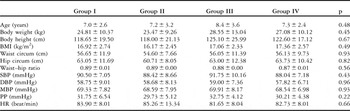
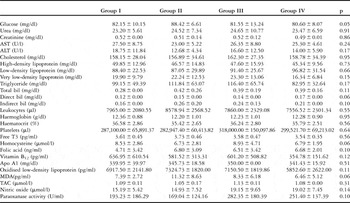
There were no significant differences in the anthropometric values, haemodynamic values, and haematologic and biochemical laboratory parameters, except for free T4 and serum thyroid-stimulating hormone, between the groups treated with anti-epileptic drugs and the control group (Tables 1 and 2). There were no significant differences in the duration of drug therapy (group I: 14.9 plus or minus 15.2 months, group II: 18.2 plus or minus 16.2 months, and group III: 16.9 plus or minus 12.1 months) between the groups treated with anti-epileptic drugs (p = 0.77).
Anthropometric and haemodynamic values in all groups.

BMI, body mass index; circum, circumference; DBP: diastolic blood pressure; HR: heart rate; MBP, mean blood pressure; PP: pulse pressure; SBP, systolic blood pressure
Haematologic and biochemical laboratory parameters in all groups.
ALT, alanin aminotransferaz; Apo A1, Apolipoprotein A-1; AST, aspartat aminotransferaz; bil, biluribine; MDA, malondialdehyd; TAC, total antioxidant capacity
Serum-free T4 levels were decreased in the groups treated with anti-epileptic drugs (group I: 0.94 plus or minus 0.13 nanogram per decilitre, group II: 0.93 plus or minus 0.12 nanogram per decilitre, group III: 0.99 plus or minus 0.13 nanogram per decilitre) when compared with the control group (group IV: 1.16 plus or minus 0.12 nanogram per decilitre; p < 0.01). Serum thyroid-stimulating hormone levels were increased in group II (3.78 plus or minus 1.77 milli international unit per millilitre) compared with group IV (1.79 plus or minus 0.92 milli international unit per millilitre; p < 0.01). There were no significant differences in the serum thyroid-stimulating hormone levels between group I – 2.94 plus or minus 1.92 milli international unit per millilitre – and group III – 3.07 plus or minus 2.18 milli international unit per millilitre (p > 0.05).
Pulse wave velocity was measured in 39 children (group I: 8, two girls; group II: 7, two girls; group III: 12, two girls; and group IV: 12, five girls) whose body height was greater than 120 centimetres, body weight was more than 30 kilograms and body mass index was less than 35 kilograms per square metre. There were no significant differences in sex among all these groups (p = 0.62). There were no significant differences in the duration of drug therapy among the groups treated with anti-epileptic drugs (p = 0.82). Although serum-free T4 levels were decreased in the groups treated with anti-epileptic drugs (group I: 0.83 plus or minus 0.00 nanogram per decilitre; group II: 0.89 plus or minus 0.12 nanogram per decilitre; and group III: 0.98 plus or minus 0.13 nanogram per decilitre) when compared with group IV (1.18 plus or minus 0.11 nanogram per decilitre; p < 0.05), there were no significant differences in the other laboratory data and anthropometric and haemodynamic values among all these groups (p > 0.05). The carotid–femoral pulse wave velocity was increased in group III (7.08 plus or minus 0.86 m/sn) when compared with group IV (6.15 plus or minus 0.56 meter/second; p < 0.05). There were no significant differences in the carotid–femoral pulse wave velocity between groups I (6.33 plus or minus 0.58 milli international unit per millilitre) and II (6.93 plus or minus 0.98 milli international unit per millilitre; p > 0.05).
We found a significant correlation between pulse wave velocity and valproic acid concentration and thyroid-stimulating hormone (p = 0.02, r = 0.37; p = 0.04, r = 0.33, respectively).
Discussion
In this study, there were no significant differences in the oxidised low-density lipoprotein, apolipoprotein A-1, homocysteine, folic acid, vitamin B12, paraoxanase-1 activity, total anti-oxidant capacity, malondialdehyde and nitric oxide levels were between the groups treated with anti-epileptic drugs and the control group. Serum-free T4 levels were significantly lower in children using anti-epileptic drugs (groups I, II, and III) compared with the control group (group IV). Serum thyroid-stimulating hormone levels were statistically higher in group II compared with group IV. Serum T4 levels were significantly lower in children with measured pulse wave velocity (groups I, II, and III) compared with the control group (group IV).
The mechanisms of valproic acid and/or carbamazepine on atherosclerosis are controversial.Reference Verrotti, Domizio, Angelozzi, Sabatino, Morgese and Chiarelli1, Reference Karabiber, Sonmezgoz, Ozerol, Yakinci, Otlu and Yologlu2 This study was sought to clarify the hypothesis on the mechanisms of this drug by using biochemical markers (oxidised low-density lipoprotein, apolipoprotein A-1, homocysteine, folic acid, vitamin B12, thyroid hormones, total anti-oxidant capacity, malondialdehyde, and nitric oxide) including those, especially paraoxanase-1, which was never studied before.
Serum lipids and lipoproteins are important in the atherosclerotic disease. Although higher high-density lipoprotein cholesterol and apolipoprotein A-1, the major receptors for non-esterified cholesterol from the peripheral tissues, levels are associated with a decreased risk for atherosclerotic cardiovascular disease, higher total cholesterol, low-density lipoprotein cholesterol, oxidised low-density lipoprotein, and apolipoprotein B levels independently increase the risk for cardiovascular disease. Oxidised low-density lipoprotein is taken into macrophages through scavenger receptors without going to downregulation and causes the formation of foam cells. Oxidation products of low-density lipoprotein are cytotoxic and these cytotoxic products are especially dangerous for endothelial cells. Oxidised low-density lipoprotein may induce vasoconstriction through the inhibition of nitric oxide production and stimulation of endothelin.Reference Mackness, Durrington and Mackness8 Neither oxidised low-density lipoprotein levels nor nitric oxide levels changed in epileptic children using anti-epileptic drugs in our study.
Human serum paraoxanase-1 enzyme is a calcium-dependent ester hydrolase and is related to high-density lipoprotein.Reference Mackness, Durrington and Mackness8 N-terminal hydrophobic signal peptide of paraoxanase-1 enzyme is required for interaction with high-density lipoprotein. Human serum paraoxanase-1 enzyme, in connection with high-density lipoprotein, has an anti-oxidative function.Reference Mackness, Durrington and Mackness8 High-density lipoprotein has the capacity to protect low-density lipoprotein from oxidation. Decreased activity of serum paraoxanase-1 enzyme was reported to be a risk factor for the development of atherosclerosis.Reference Ikeda, Suehiro and Itahara9 Apolipoprotein A-1, the major protein of high-density lipoprotein, was reported to be required for the anti-inflammatory function of high-density lipoprotein and paraoxanase-1 activity.Reference Cabana, Reardon, Feng, Neath, Lukens and Getz10 In addition to the levels of apolipoprotein A-1, the activity of paraoxanase-1 was not affected in children using anti-epileptic drugs in this study. ReddyReference Reddy11 reported that valproic acid, carbamazepine, and phenytoin therapies caused significant increase in apolipoprotein A-1 levels but did not affect apolipoprotein B. Unaffected paraoxanase-1 activity may be associated with unchanged levels of apolipoprotein A-1 in this study.
Thyroid hormones and the carotid–femoral pulse wave velocity
Decrease in thyroid hormone levels accompany the decrease in arterial elasticity, which is measured by pulse wave velocity.Reference Dagre, Lekakis and Papaioannou12 Anti-epileptic drugs used in the treatment of epilepsia may increase pulse wave velocity by decreasing thyroid hormone levels. The change in the thyroid functions in carbamazepine therapy is because of the induction of the hepatic P-450 enzyme system. Thyroid hormone metabolism increases through the induction of this enzyme.Reference Isojärvi, Turkka, Pakarinen, Kotila, Rättyä and Myllylä13 Decreased levels of serum-free T4, normal serum T3, and thyroid-stimulating hormone concentrations were reported in epileptic patients using carbamazepine and oxycarbamazepine, as in our study.Reference Isojärvi, Turkka, Pakarinen, Kotila, Rättyä and Myllylä13 Children with low levels of serum thyroid hormone did not have increased levels of thyroperoxydase and thyroglobin antibodies. For this reason, the change in thyroid functions in children who used carbamazepine and oxycarbamazepine was not assumed to be related to autoimmune mechanisms. The other mechanism, carbamezapine, may inhibit the entry of iodine to the thyroid gland.Reference Villa and Alexander14 The development of hypothroidism during carbamazepine therapy was reported and this situation improved with lowering therapy.Reference Aanderud and Strandjord15, Reference Hegedüs, Hansen, Lühdorf, Perrild, Feldt-Rasmussen and Kampmann16
Hypothyroidism is related to decreased cardiac contractility, cardiac output, heart rate, and left ventricular compliance, which is associated with increased total peripheral vascular resistance. Increased total peripheral vascular resistance and arterial stiffness especially have a role in increased diastolic blood pressure.Reference Wilkinson and Cockcroft17 Significantly increased pulse wave velocity as a marker of arterial stiffness was detected in group III compared with the control group. According to the data, it was suggested that carbamazepine plus valproic acid decreased the elastic properties of the arteries. But these variations were not enough to affect blood pressure levels in this group. Furthermore, a significant decrease in serum T4 levels with increased pulse wave velocity in group IV suggested that anti-epileptic drugs may induce atherogenesis through thyroid hormones.
Both direct and indirect mechanisms are responsible for increased arterial stiffness in children with untreated hypothyroidism. Thyroid hormones directly cause relaxation of vascular smooth muscle cells. In the acute deficiency of thyroid hormones, smooth muscle relaxation is affected and it may be associated with increased arterial stiffness.Reference Ojamaa, Balkman and Klein18 Thyroid hormone receptors were shown on the vascular smooth muscle cells of the aorta.Reference Mizuma, Murakami and Mori19 The change in thyroid hormone concentrations may be regulated vascular smooth muscle relaxation of the aorta and arterial stiffness through genetic regulation. Hypothyroidism may cause fastening of the atherosclerotic process, probably through the accompanying dyslipidaemia.Reference Bengel, Nekolla, Ibrahim, Weniger, Ziegler and Schwaiger20 In this study, there was no significant difference in the lipid profiles of the groups. Endothelial dysfunction was presented in the early phases of atherosclerosis and it was defined to be the key initiating event.Reference Davignon and Ganz21 Endothelial dysfunction was proposed to be independent of the lipid profiles in patients with hypothyroidism.Reference Akinci, Comlekci and Yener22 The stability of the serum lipid profiles in children with increased pulse wave velocity group supported the data in our study. In addition, increased homocystein levels in the thyroid hormone deficiency were shown in earlier studies.Reference Orzechowska-Pawilojc, Sworczak, Lewczuk and Babinska23, Reference Ozmen, Ozmen, Parildar, Mutaf, Turgan and Bayindir24 Some studies showed that the folat metabolism was affected in hypothyroidism.Reference Orzechowska-Pawilojc, Sworczak, Lewczuk and Babinska23, Reference Ozmen, Ozmen, Parildar, Mutaf, Turgan and Bayindir24 Homocystein and folic acid levels were not affected both in the children with decreased levels of T4 and decreased levels of T4 with increased levels of thyroid-stimulating hormone (group II) in our study. The anti-oxidative function of T4 and the prevention of low-density lipoprotein oxidation with free radicals by T4 were reported in another study.Reference Hanna, Feller, Witiak and Newman25 But low-density lipoprotein level was not affected in children using anti-epileptic agents and with decreased T4 levels in our study. Besides lipid profiles, other biochemical parameters of atherosclerosis were not affected in our study; therefore, the thyroid hormones may affect the vascular system directly. Furthermore, the thyroid hormone replacement therapy was reported to improve endothelial functions irrespective of blood pressure, serum lipids, homocystein, and C-reactive protein levels.Reference Squizzato, Gerdes, Brandjes, Büller and Stam26 Moreover, depending on the association between pulse wave velocity and thyroid-stimulating hormone levels, thyroid-stimulating hormone may be accused of being related to cardiovascular diseases. Besides thyroid glands, thyroid-stimulating hormone receptors are also located on the adipocytes, lymphocytes, and endothelial cells, and therefore increased thyroid-stimulating hormone levels in hypothyroidism may affect the homeostasis of these cells.Reference Crisp, Lane, Halliwell, Wynford-Thomas and Ludgate27 By increasing the cholesterol levels, high serum thyroid-stimulating hormone levels may predispose to peripheral arterial disease as emphasised by Powell et alReference Powell, Zadeh, Carter, Greenhalgh and Fowler28 Nanda et alReference Nanda, Bobby and Hamide29 showed that despite the hypometabolic state in hypothyroidism, increased levels of thyroid-stimulating hormone may increase oxidative stress and low-density lipoprotein oxidation. But, Duntas et alReference Duntas, Mantzou and Koutras30 reported that increased oxidative stress in hypothyroidism was related to the increased level of cholesterol as a substrate of oxidative stress. Cholesterol, oxidative stress, and oxidised low-density lipoprotein levels were not affected in children with increased thyroid-stimulating hormone levels and other groups in our study. Increased carotid intima-media thickness in children with subclinical hypothyroidism was reported by Duman et al,Reference Duman, Demirtunc, Sahin and Esertas31 and carotid intima-media thickness was decreased with T4 therapy through the suppression of thyroid-stimulating hormone without affecting lipid levels.
Data on the paraoxanase-1 activity of hypothyroidism and hyperthyroidism are limited and controversial. Coria et alReference Coria, Pastrán and Gimenez32 did not observe changes in the activity of paraoxanase-1 between overt hypothyroidism, subclinical hypothyroidism, and euthyroidism, but another report showed that paraoxanase-1 activity decreased in children with hypo- and hyperthyroidism.Reference Azizi, Raiszadeh and Solati33 Increased reactive oxygen species level in hypothyroidism may result in a pro-oxidation environment, which in turn could result in decreased anti-oxidant paraoxanase-1 activity.Reference Baskol, Atmaca, Tanriverdi, Baskol, Kocer and Bayram34 Lower levels of paraoxanase-1 activity may occur due to the direct effects of increased thyroid hormones on paraoxanase production or breakdown.Reference Yavuz, Yüksel, Deyneli, Ozen, Aydin and Akalin35 In addition, high levels of thyroid-stimulating hormone were accused of causing induction of cytokines and hence decreasing anti-oxidative activity.Reference Nanda, Bobby and Hamide29 But, in this study, the total anti-oxidative capacity was not affected, either in the group with increased thyroid-stimulating hormone or in other groups.
In addition, valproic acid therapy may increase pro-inflammatory cytokines through increasing thyroid-stimulating hormone levels. Increased synthesis of cytokines during epileptic seizures and use of anti-epileptic drugs, such as valproic acid and carbamazepine, were revealed.Reference Młodzikowska-Albrecht, Steinborn and Zarowski36–Reference Verrotti, Basciani, Trotta, Greco, Morgese and Chiarelli38 Shiah et alReference Shiah, Yatham, Yeh and Ravindran37 reported that valproic acid therapy increased interleukin-6 levels and there was a significant correlation between plasma interleukin-6 levels and valproic acid concentrations. Depending on the association between pulse wave velocity and valproic acid in this study, it may be concluded that valproic acid may induce atherogenesis.
It was assumed that thyroid hormones might affect endothelial functions directly or indirectly if the present data and data of other studies were evaluated together.
In conclusion, serum lipid profiles, homocystein, folic acid, vitamin B12, oxidative stress, total anti-oxidant capacity, nitric oxide, oxidised low-density lipoprotein, apolipoprotein A-1, and paraoxanase-1 activity were not affected, but free T4 level was decreased in children with epilepsia using valproic acid, carbamazepine, and valproic acid plus carbamazepine. A significant increase in thyroid-stimulating hormone levels in epileptic children using valproic acid was detected. Increased carotid–femoral pulse wave velocity was revealed in epileptic children using carbamazepine and valproic acid. A correlation between pulse wave velocity, valproic acid, and thyroid-stimulating hormone levels is detected. Anti-epileptic drugs may induce atherogenesis by affecting the thyroid hormones. According to current data, the effects of thyroid hormones on the vascular system may be independent of other biochemical markers. Epileptic patients using anti-epileptic drugs must be followed closely for arterial stiffness, and the development and progression of atherosclerosis.
Acknowledgements
This study was supported by the Research Fund of Istanbul University Project no. 775. We acknowledge the support of the Department of Physiology, Institute of Health Science, Istanbul University.