Sildenafil is a first-line agent used to treat pulmonary arterial hypertension (PAH) in children.Reference De’Alto and Mahadevan1, Reference Abman, Hansmann and Archer2 Inhibition of phosphodiesterase-5 activity increases intracellular concentrations of cyclic guanosine monophosphate in the pulmonary vascular smooth muscle cells causing vasodilation and a decrease in pulmonary arterial pressure.Reference Dhariwal and Bavdekar3 Because these vasodilatory effects are not limited to the pulmonary vasculature, sildenafil may cause systemic hypotension.Reference Siehr, McCarthy, Ogawa and Feinstein4 Although sildenafil is utilised in critically ill infants and children receiving continuous inotropic or vasopressor medications, whether sildenafil significantly worsens hemodynamic instability in this population has not been formally examined. We hypothesise that commonly used initial enteral sildenafil regimens may contribute to worsening hemodynamic instability in children receiving concurrent vasoactive infusions and that modified dosing recommendations may be appropriate for these patients.
Materials and methods
Study design, setting, and patient population
A retrospective chart review was performed at Riley Hospital for Children at Indiana University Health of admissions occurring between January 1, 2010, and September 30, 2016. Patients were considered for inclusion if enteral sildenafil was initiated while receiving one or more vasoactive continuous infusions. The study population was further limited to infants and children less than 2 years of age at the time of sildenafil initiation. Patients were excluded if they required mechanical circulatory support in the 24 hours before receiving sildenafil. Additional exclusion criteria included any form of renal replacement therapy or suspected septic shock during the study period. If patients were admitted multiple times during the course of the study, only the 24 hours before and after the first sildenafil administration with a concurrent vasoactive infusion were recorded. The Indiana University Institutional Review Board approved the study protocol.
Data collection
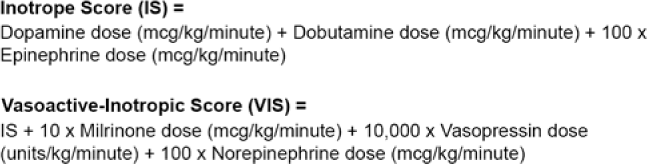
Data were collected during a 48-hour period beginning 24 hours before the first dose of sildenafil administered concomitantly with a vasoactive infusion and ending 24 hours after. Baseline demographic data collection included age, gender, weight, length of hospital stay, and trisomy 21 diagnosis. Information regarding mechanical respiratory support and administration of inhaled nitric oxide was collected. Data were also collected relating to the sildenafil regimen including initial dose and frequency, total dose of sildenafil given during the 24-hour study period, and medications known to interact with sildenafil. Efficacy and safety data collected included administration of anti-hypertensive medications during the study period, receipt of fluid boluses in the 24 hours after sildenafil administration, receipt of epinephrine via intravenous push, any initiation of mechanical circulatory support in the 24 hours after sildenafil administration, and minimum and maximum mean arterial pressures (MAP) 24 hours before and after the first sildenafil dose. Vasoactive inotrope scores (VIS) were also calculated throughout the 48-hour study period using the equation published by Gaies and colleagues in Figure 1.Reference Gaies, Jeffries and Niebler5
Vasoactive Inotrope score calculation. Calculation from study by Gaies and colleagues.Reference Gaies, Jeffries and Niebler5

End points
The primary outcome was worsening hemodynamic instability defined as a composite endpoint of one or more of the following observations within 24 hours of sildenafil initiation: sildenafil discontinuation, administration of fluid boluses totalling >10 ml/kg, increased vasoactive support, epinephrine intravenous push administration, and/or the need for mechanical circulatory support. Secondary endpoints included changes in MAP after sildenafil initiation and a subgroup analysis of the primary composite outcome in patients with trisomy 21.
Statistical analysis
Descriptive statistics and measures of central tendency were used for baseline characteristics. Kruskal–Wallis test was used for continuous variables and Chi-squared test was used for categorical variables. Data are represented as median (25%, 75%) or absolute counts (%) as appropriate. An alpha level less than or equal to 0.05 was considered significant.
Results
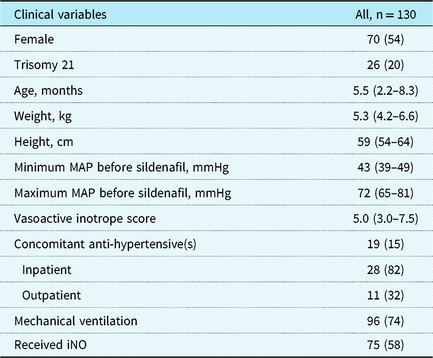
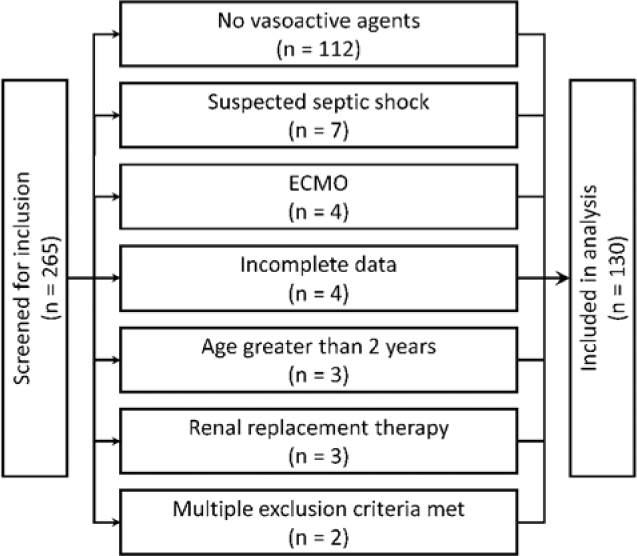
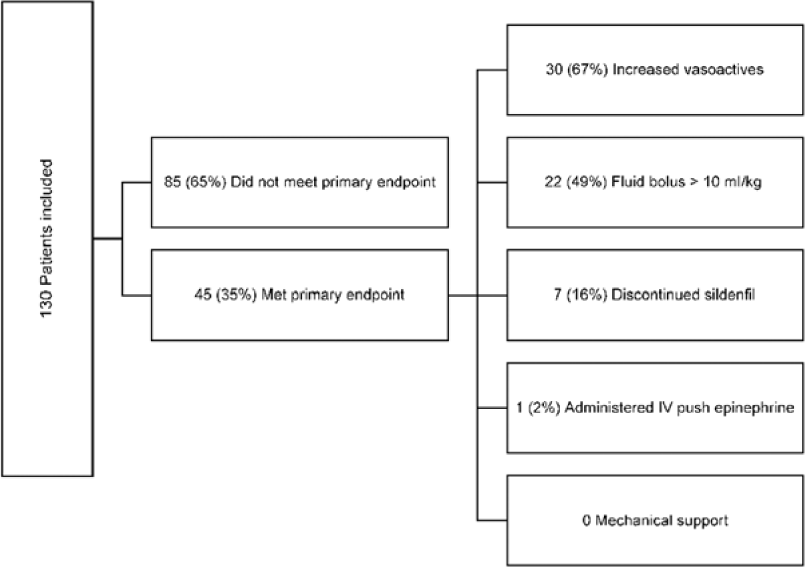
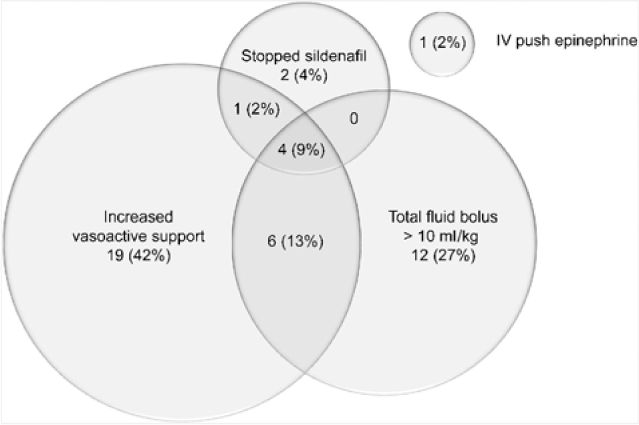
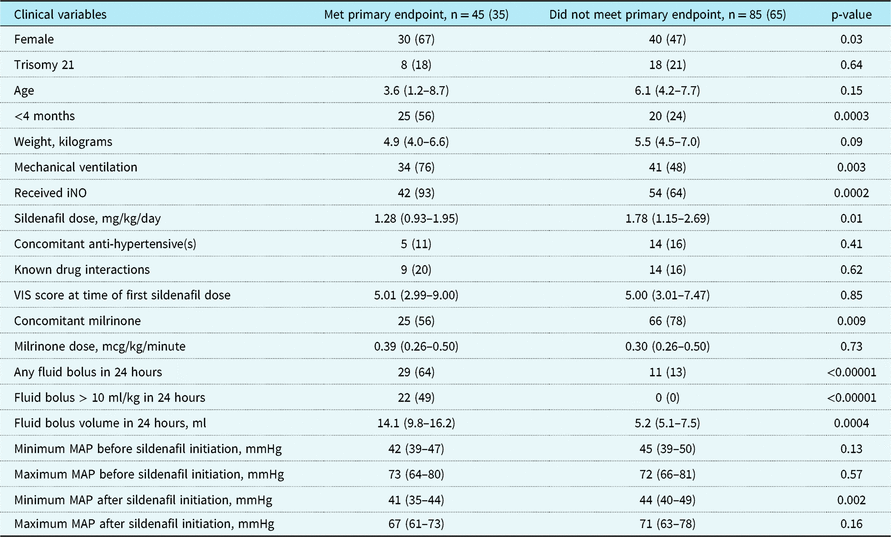
A total of 130 patients were included in the analysis (Table 1). Reasons for exclusion are highlighted in Figure 2. The median initial sildenafil dose was 1.5 (1.0, 2.5) mg/kg/day and patients had a median VIS of 5.0 (3.0, 7.5) at sildenafil initiation. Forty-five (35%) patients met the primary composite endpoint. Figures 3 and 4 show composite outcomes for those who met the primary endpoint. No patients required mechanical circulatory support after sildenafil initiation. Patients with trisomy 21 were no more likely to meet the primary endpoint than patients without trisomy 21 (18% versus 21%, p = 0.64). Overall, patients who met criteria for worsening hemodynamic instability tended to be younger (p < 0.0003), received lower median initial sildenafil dosing regimens (p = 0.01), and had a lower minimum MAP after sildenafil initiation (p = 0.002). Patients meeting the primary endpoint were also more likely to be mechanically ventilated (p = 0.003) and to be receiving concomitant inhaled nitric oxide (p = 0.0002) (Table 2).
Baseline demographics

Reasons for exclusion. Data represented as n of excluded patients. ECMO = extracorporeal membranous oxygenation.

Study population and outcomes. Data represented as n (%) of the entire study population. Nineteen patients met multiple arms of the primary endpoint.

Patients meeting multiple arms of primary endpoint. Data are represented as n (%) of patients meeting primary endpoint.

Primary endpoint

* Data presented as median (interquartile range) and number (%) as appropriate.
** VIS = vasoactive inotrope score; MAP = mean arterial pressure; and iNO = inhaled nitric oxide.
Discussion
Enteral sildenafil is often used at our institution for clinical pulmonary hypertension crises, inability to wean inhaled nitric oxide, echocardiographic evidence of significant pulmonary hypertension, and/or recently repaired cardiac lesions associated with a known risk for post-operative pulmonary hypertension. Because of the high use of enteral sildenafil in our local critically ill patient population, we aimed to assess the risk of worsening hemodynamic instability when used in patients receiving concomitant vasoactive infusions, with a specific focus on sildenafil dose and age as potential risk factors.
Debate continues over the optimal dosing of sildenafil in children. The ideal regimens based on age, weight, comorbid conditions, and disease severity remain undefined, especially in the critically ill.Reference Barst, Beghetti and Pulido6–Reference Humpl, Reyes and Erickson8 Some caution against the use of sildenafil in critically ill patients is due to its rapid onset, relatively long duration of action, unpredictable enteral absorption, and potential for systemic hypotension.Reference Kaestner, Schranz and Warnecke9, Reference Zamanian, Haddad, Doyle and Weinacker10 This risk of systemic hypotension and increased hemodynamic instability was greater in the cohort less than 4 months of age as 56% met the primary composite endpoint (p = 0.0003). These data underscore the need to consider developmental pharmacology when administering sildenafil in the critically ill child.
Sildenafil undergoes hepatic metabolism via CYP3A4 and CYP2C9, as well as by CYP3A7 in newborns.Reference Simonca and Tulloh11 Newborns have high CYP3A7 levels after birth, which decrease as CYP3A4 and CYP2C9 levels increase during the first weeks of life.Reference Kearns, Abdel-Rahman and Alander12 These age-related enzymatic differences may lead to unpredictable responses to sildenafil in younger patients relative to children and adolescents. It is plausible that these variations in enzymatic activity may have contributed to a higher risk of hemodynamic instability in the younger patients in our cohort. Other studies investigating patients with univentricular cardiac lesions have shown high interpatient variability in sildenafil pharmacokinetics, possibly secondary to increased exposure to the active metabolite desmethyl-sildenafil.Reference Hill, Tunks and Barker13, Reference Hill, Sampson and Li14 Higher serum concentrations of desmethyl-sildenafil may be a function of age, as well as increased hepatic and central venous pressure and decreased biliary elimination of the metabolite.Reference Hill, Tunks and Barker13, Reference Hill, Sampson and Li14 Patients at our institution typically receive initial sildenafil doses from 0.25 to 0.5 mg/kg/dose every 6–8 hours per previously published dosing recommendations. Our results indicate that potential physiologic differences in drug disposition as a result of age may be an important factor to consider in the critically ill patient population prior to the initiation of sildenafil.Reference Humpl, Reyes and Erickson8, Reference Bentlin, Saito and De Luca15, Reference Raja, Danton, MacArthur and Pollock16
The age-based risk factor warrants particular attention, because patients who met the primary endpoint also received significantly lower doses of sildenafil [median: 1.28 mg/kg/day (0.93 - 1.95)] than those who did not [1.78 mg/kg/day (1.15–2.69)] (p = 0.01). This further highlights the potential role of age-based pharmacokinetic differences, because despite utilising more conservative dosing regimens, younger patients were still at increased risk for hemodynamic instability despite similar baseline VIS scores, MAPs, and overall drug regimens compared with older patients.
Beyond isolating the role of age in sildenafil-induced hemodynamic instability, we aimed to assess whether patients with trisomy 21 may also respond differently to sildenafil. Patients with trisomy 21 are known to have an increased prevalence of congenital heart disease and are at increased risk for the development of pulmonary hypertension, but the response to current PAH therapies is not well characterised in this patient population.Reference De’Alto and Mahadevan1, Reference Freeman, Taft and Dooley17 A post-hoc analysis evaluating trisomy 21 patients who were enrolled in the STARTS-1 trial reported sildenafil treatment for 16 weeks showed no effect on pulmonary vascular resistance index or mean pulmonary arterial pressure.Reference Beghetti, Rudzinski and Zhang18 This suggests that children with trisomy 21 may be less responsive to sildenafil. Consistent with these findings, our study showed patients with trisomy 21 had a lower, but not statistically significant, incidence of worsening hemodynamic instability compared to our total patient population (13% versus 22%, p = 0.65).
Despite reported concerns about unreliable absorption of enteral medications in critically ill children, our study demonstrates that systemic effects are also frequently seen when enteral sildenafil is administered to children receiving concomitant vasoactive infusions.Reference Kaestner, Schranz and Warnecke9 Earlier studies have evaluated the safety of enteral sildenafil in children in the intensive care unit.Reference Palma, Giordano and Russolillo19, Reference El Midany, Mostafa and Azab20 These investigations, however, primarily focused on patients who previously demonstrated sildenafil tolerance in a pre-operative setting combined with peri-operative administration.Reference Palma, Giordano and Russolillo19, Reference El Midany, Mostafa and Azab20 Palma and colleagues studied 38 children (mean age 11 months) with pulmonary hypertension mostly associated with cardiac septal defects in which they initiated sildenafil in 15 children 1 week before surgery and 23 children upon initiation of cardiopulmonary bypass.Reference Palma, Giordano and Russolillo19 Treatment doses of 0.35 mg/kg/dose every 4 hours were given in both groups without interruption in the post-operative period.Reference Palma, Giordano and Russolillo19 While both groups showed a reduction in mean pulmonary arterial pressure post-operatively without the mention of increased hemodynamic instability, relatively high maximum vasoactive agent doses were reported (dopamine: 1–15 mcg/kg/minute; epinephrine: 0.05–1 mcg/kg/minute). El Midany similarly reported relatively high vasoactive agent requirements in patients undergoing cardiac septal defect repair (median age 11 months) when using enteral sildenafil in the peri-operative period (dobutamine: 5–15 mcg/kg/minute; epinephrine: 0.05–0.2 mcg/kg/minute; milrinone: 0.7 mcg/kg/minute).Reference El Midany, Mostafa and Azab20 Although our patient cohort differs from both previous studies in key ways, these results do share similarities with our finding that critically ill patients may require increased vasoactive support when receiving enteral sildenafil.Reference Palma, Giordano and Russolillo19, Reference El Midany, Mostafa and Azab20
While the previous reports from Palma and El Midany primarily included older infants, our study was the first to investigate the impact of enteral sildenafil in younger, hemodynamically unstable infants [median age 4.6 months (0.3, 7.7 months)]. Our cohort was comprised predominantly of cardiac intensive care unit patients with a very small number of other critically ill patients with non-cardiac diagnoses. Thirty-five percent of patients met the primary composite endpoint consisting of an increase in vasoactive support, sildenafil discontinuation, fluid boluses totalling greater than 10 ml/kg, receipt of intravenous push epinephrine, and/or initiation of mechanical circulatory support during the 24 hours following the first dose of sildenafil. Among the cohort of patients who met the composite endpoint, the need for increased inotropic or vasopressor support (67%) was the most prevalent, followed by fluid boluses totalling greater than 10 ml/kg (49%). Sixty-four percent of patients meeting the primary endpoint required at least one fluid bolus, compared to 13% of patients not meeting the primary endpoint (p < 0.00001). Additionally, 18% of patients required both an increase in vasoactive support and fluid bolus total greater than 10 ml/kg. At our institution, patients in the cardiac intensive care unit receive fluid boluses in increments of 5 ml/kg indicating that patients receiving >10 ml/kg of fluid boluses received a minimum of three interventions for hypotension in the 24 hours after sildenafil initiation.
Interestingly, although milrinone is known to cause systemic hypotension via peripheral vasodilation, our results do not demonstrate that the use of enteral sildenafil in patients receiving milrinone increases the risk of hemodynamic instability. Of note, patients meeting the primary endpoint were more likely to be receiving inhaled nitric oxide (p = 0.0002) during the study period but were less likely to be receiving concomitant milrinone (p = 0.009) than those who did not meet the primary composite endpoint.
Weaknesses of this study include those inherent to the retrospective study design. Since the data were skewed towards younger patients based upon inclusion criteria, the results may not be generalisable to the critically ill patient population as a whole. While the primary composite outcome reflects markers of increased cardiovascular support requirements and potential cardiovascular collapse, it may not have captured all hemodynamically significant adverse events in this cohort. In contrast, the definition of further hemodynamic instability may have captured false positives leading to unintended bias in favour of our hypothesis. Additional confounding factors impacting our results may be related to baseline differences in cardiovascular anatomy and provider-specific responses to changes in hemodynamics. We were also unable to comment on the efficacy of sildenafil in reducing mean pulmonary artery pressures in these patients, as not all patients received central venous pressure or pulmonary artery pressure monitoring. Ultimately, a prospective, randomised, controlled study would be beneficial in order to establish an optimal dosing regimen for sildenafil in hemodynamically unstable children.
To our knowledge, this is the first study to investigate enteral sildenafil dosing in hemodynamically unstable critically ill children. Such a study enables providers to consider adjusting enteral sildenafil dosing regimens based upon critical illness as well as age-based risk factors. Secondly, with 130 patients included, to our knowledge, this study represents the largest evaluation of enteral sildenafil in the critically ill children to date. Additional strengths of this study include the sub-group analysis of patients with trisomy 21, which have rarely been evaluated, as well as patients concurrently receiving milrinone.
Conclusions
Critically ill children receiving enteral sildenafil with concomitant vasoactive infusions may be at an increased risk for further hemodynamic instability. A dose lower than the current recommendations for initial enteral sildenafil doses of 0.25–0.5 mg/kg/dose every 6–8 hours should be considered for critically ill children, especially in children younger than 4 months of age. Patients with trisomy 21 did not appear to be at an increased risk for hemodynamic instability when receiving concurrent sildenafil and vasoactive infusions.
Acknowledgements
None.
Financial Support
None.
Conflicts of Interest
None.
Ethical Standards
The Indiana University Institutional Review Board approved the study protocol.