


Classic Maya elites across the lowlands engaged in ever-evolving interactions with and about their writing system and ritual practices. The previous two chapters have focused on transmission contexts closely tied to the royal court, namely the stela-altar cult and rituals surrounding the dedication of stone monuments, and performances that accompanied diplomatic encounters between polities. As illuminating as these contexts are, they run the risk of overemphasizing the dynastic ruler’s role in such exchanges. Although divine kingship as an institution was a major patron of elite scribal and artistic production – and sponsored creation of most material evidence addressed in this book – Classic Maya kings and queens and their court did not have a monopoly on all knowledge or practices that this production entailed. Rulers may have asserted privileged access to metapersons and a unique capacity to solicit them on the community’s behalf, but they did not claim exclusive participation in other-than-human relations.
This final chapter explores nagualism, a broad, complex range of beliefs and practices concerning other-than-human relations, as an intersection of ritual and hieroglyphic writing that stretched beyond the dynastic court. Lexically, its most straightforward testament in the Classic Mayan language takes the form of the word way, which was pronounced something like English “why” and can be variously translated as a verb “sleep; transform” or as a noun “companion spirit; co-essence.”Footnote 1 Nagualism is unique among Classic Maya religious phenomena for its abundant, complementary attestations in texts and imagery, which imply broader, more diverse engagement with way concepts and practices than we can confidently reconstruct in most other cases. Many hieroglyphic mentions of way, across a range of semantic contexts, appear in the very royal- and especially king-centric format of monumental inscriptions. Yet almost all iconographic representations occur on painted ceramics. Although some portraits are attached to a specific polity’s dynastic title, most are not. As such, the way tradition offered points of other-than-human contact for people beyond the king, queen, and core members of the royal family.
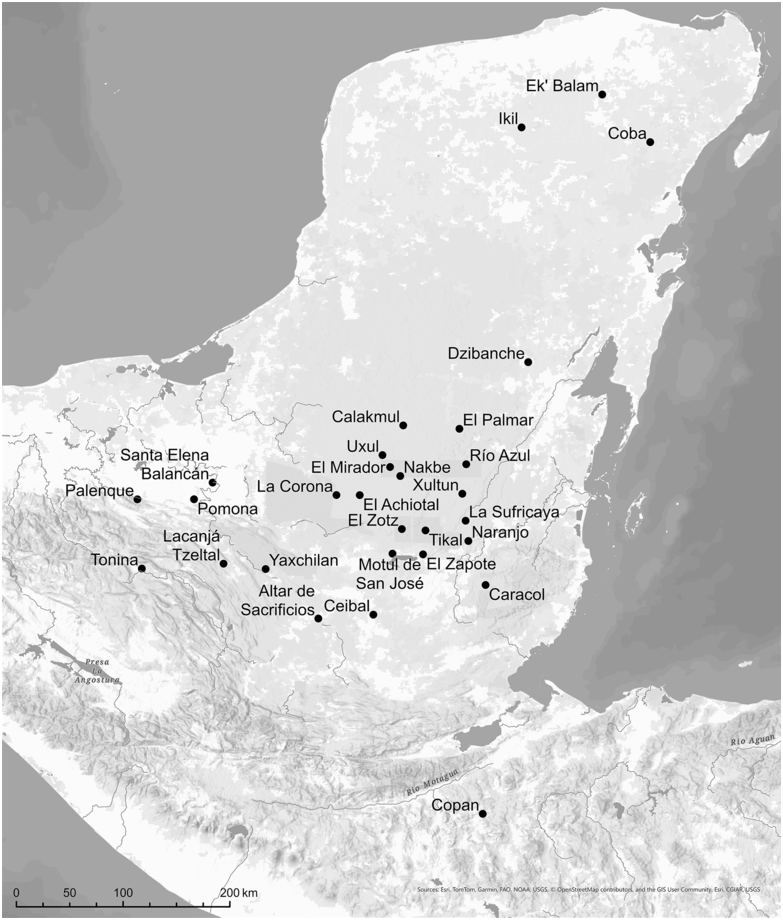
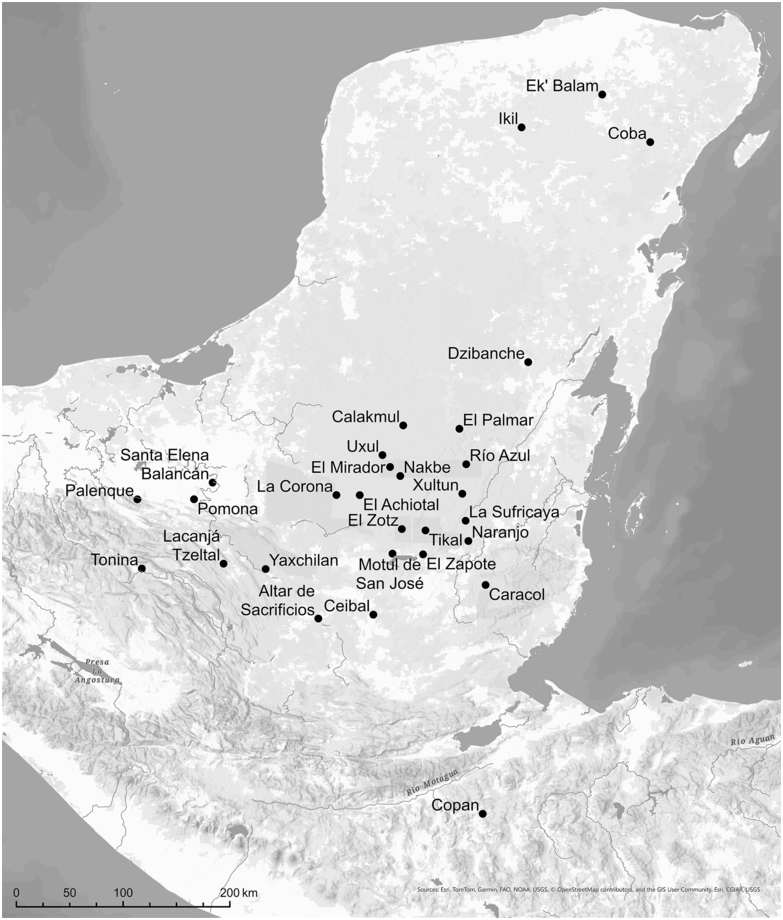
The following discussion draws on hieroglyphic and iconographic references to trace several pathways along which scribes and artists conveyed the way phenomenon between communities (Figure 6.1). Transmission of nagualism among elites mirrored the fragmented, entangled nature of their political landscape, occurring alongside but not always aligning with the interpolity relations that monumental inscriptions so emphasized. More than the contexts presented in prior chapters, the way tradition attests to interlocking spheres of exchange among Classic Maya persons who engaged in writing and ritual. The variation and coherence that simultaneously manifest in way expressions suggest that the tradition developed through iterative, multigenerational exchange, rather than discrete transmission episodes. Whereas hieroglyphic references reflect scribal knowledge shared across the lowlands, way imagery manifests more localized expressions of the larger, common tradition.
Classic Maya sites with hieroglyphic and iconographic references to the way phenomenon.
Way in Classic Maya Culture
Nagualism refers to an assemblage of practices and ideas about other-than-human engagement that, despite suppression under Christian influence starting in the sixteenth century, persists today in a wide variety of cultures in Mesoamerica, where it has been studied primarily in ethnohistorical and ethnographic contexts.Footnote 2 The modern designation derives from the Nahuatl root nāhual “transform, convert; trick, disguise.”Footnote 3 The Nahuatl noun based on this root, nāhualli “sorcerer, one who uses spells and incantations,”Footnote 4 circulated widely in Postclassic Mesoamerica thanks to the Aztec empire’s cultural influence and was later borrowed into Spanish as nagual (also nahual or nawal).Footnote 5 Although their diversity defies simple generalization, Mesoamerican nagualisms share a conception of other-than-human beings that move between the human realm and the realm of the gods and ancestors.Footnote 6 For some, a nagual is a person who can shapeshift between human and animal form and may serve as a priest or sage who practices healing, divination, or sorcery.Footnote 7 For others, a nagual is an alter ego that is both coeval with and outside of its human associate, inhabiting a distinct (often zoomorphic) body but inalienably sharing a destiny with its human counterpart, to the extent that one’s injury or illness impacts the other.Footnote 8
Like other metapersons, naguals are more than passive spirit companions. Although some could elicit constructive, positive effects, all are potentially malevolent forces that may have menacing, even harmful personae.Footnote 9 Some way metapersons are explicitly linked to death or physical violence through a combination of iconography, skeletal form, or onomastics.Footnote 10 Others are associated with disease, and powerful sorcerers can inflict way beings on victims to cause suffering or misfortune, just as they can cure or defend patients from such harm.Footnote 11 Thus, it seems that the more threatening connotations of way beings among various Maya groups – which today are often cast in terms of the Judeo-Christian devil, using a rhetorical trope introduced during the colonial period – are actually precolonial in origin.Footnote 12
In ethnohistorical and ethnographic accounts, naguals are regularly categorized with the larger class of “souls,” which “are multifaceted and can be realized in very different and often extrasomatic ways” within society or a single individual.Footnote 13 Among the Tzeltal Maya in Chiapas, for instance, everyone has at least one and often multiple souls, but higher-status individuals may have more numerous co-essences, or one(s) that are more potent or rarer, or possess especially desirable qualities.Footnote 14 The lexical identity of way with the Classic Mayan root way “sleep” reflects the enigmatic metapersons’ propensity to appear in dreams and to visit or wander away from their human companions after nightfall.Footnote 15 Nocturnal associations also account in part for why most persons do not know the identity of their co-essence(s) and may spend years trying to identify them, sometimes enlisting the support of a ritual specialist.Footnote 16
Nagualism was long assumed to have deep roots in Mesoamerican antiquity, but firm evidence for its ancient origins did not emerge until decipherment of the Classic Mayan cognate way.Footnote 17 In their initial publication, Houston and Stuart defined way as the “companion spirit” or, borrowing a term preferred by John Monaghan, “co-essence” of a dynastic ruler or other prominent historical person.Footnote 18 They argued that hieroglyphic inscriptions documented not only the way tradition’s existence but the central role of Classic Maya dynasties in shaping it.Footnote 19
Scholarship on Classic Maya way has concentrated on the phenomenon’s most widely attested expression, namely on the diverse naguals portrayed in imagery. Some way portraits are even captioned with the title of a Classic Maya dynasty, signaling a direct identification between polity and metaperson.Footnote 20 The wide range of way beings, in turn, has shaped scholars’ conception of Classic Maya rulers, who counted engagement with these metapersons within its repertoire of ritual practices for establishing and maintaining dynastic authority.Footnote 21 The way phenomenon embodies the intimate relationship between religion and political life in Classic Maya society, including ritual’s role in the development of divine kingship. Because not everyone would have been able to identify their own co-essence(s), illustrations of a king or dynasty’s way would have been “an important marker of elite status,” given that such “self-knowledge” was limited to those with the appropriate religious authority.Footnote 22 Yet an abundance of way expressions on portable ceramic vessels and the widespread practice of nagualism among later Maya communities suggest that, even during the Classic period, co-essence relations were not restricted to royal families. Certainly, not all members of society would have had the means, resources, or motivation to produce enduring material representations of their metaperson(s). At the same time, neither the artisans who produced hieroglyphic texts about or images of co-essences, nor those artifacts’ intended recipients, would have had exclusive access to participation in the way tradition.
Scribal exchange about hieroglyphic representations of Classic Maya nagualism encompassed most, if not all aspects of the tradition and crossed all major areas of the lowlands. However, iconographic representations of the way phenomenon focused on portraits of co-essences and were more limited in production and circulation. Similarly, the dynastic titles attributed to way metapersons account for a minority of polities, indicating that co-essences were not equally relevant to rulers across the lowlands. Thus, hieroglyphs and images with which scribes and artists registered the way phenomenon were not necessarily transmitted together. Instead, they may have circulated in conjunction with different aspects of the tradition, including local emphases on its engagement. Comparing hieroglyphic and iconographic evidence implicates a range of actors and motivations in the practice of a religious phenomenon that, despite its regional foundation, manifested differently across polities and scribal-artistic traditions.
Writing Way: Between Concept and Form
Hieroglyphic strategies for recording Classic Maya way were inextricably bound up in the term’s contextually dependent shades of meaning, which ranged from co-essences and shapeshifting to places of other-than-human activity. Hieroglyphic references are most abundant on polychrome ceramics, where they typically caption co-essence portraits.Footnote 23 A handful of examples, mostly from painted texts, feature the word in the toponym Waynal, which appears to have denoted a mythological location.Footnote 24 The root way is recorded less frequently in monumental inscriptions, where it tends to appear in the locative wayib, a “sleeping place” or “sanctuary” for gods and ancestors.Footnote 25
A modest subset of monumental references to way occurs within titles, whose political and religious status remains opaque. The most common among them was wayis or sak wayis (“white ?”), an enigmatic designation attributed to rulers at La Corona, Uxul, and other communities in the political orbit of Calakmul.Footnote 26 The title’s interpretation remains unresolved – it is unclear, for instance, whether it signals political status, lineage affiliation, or a combination of bothFootnote 27 – but it clearly clusters at sites within the Kaanul hegemonic sphere, where it appears no later than the mid-sixth century.Footnote 28 Another, less common title, wayaab (“dreamer?”), is attested mainly in the western lowlands, although there are some central lowland examples as well.Footnote 29 The root way also occurs in the name of the five-day “month” at the end of the 365-day solar year, known as Wayeb. There are relatively few epigraphic references to Wayeb dates, however, presumably reflecting the period’s brevity – the other eighteen months of the solar year consisted of twenty days each – and its negative connotations as a period of destabilization and uncertainty during the transition from one year to the next.Footnote 30
Spelling Way
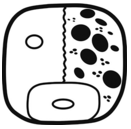
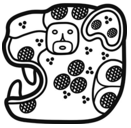
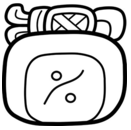
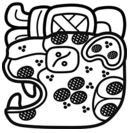
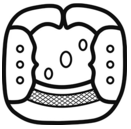
As with any Classic Mayan word, scribes always had the option of writing way phonetically. Yet they almost never did so. Instead, scribes favored logographic spellings of the term, and by the Early Classic period, they had developed a range of distinct signs with the reading WAY (Figures 6.2a–f). In the rare instance that they did deploy syllabic hieroglyphs, scribes almost always affixed them to a logograph as phonetic complements to reenforce its pronunciation (e.g., wa-WAY or WAY-ya).Footnote 31 Purely syllabic spellings, such as the sequences wa-ya on the mid-seventh-century Stela 4 at Coba or the Late or Terminal Classic Lintel 1 at Ikil,Footnote 32 remained highly unusual, maybe due in part to the way term’s semantic salience and the great abundance of WAY logographs in circulation.
Classic Maya logographs with the reading WAY.
T0539ex.
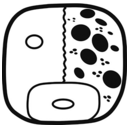
T0645st.

T0539st.
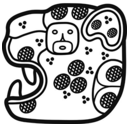
T0509bv.
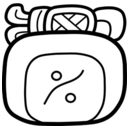
T0509hp.
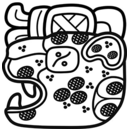
T0157bh.
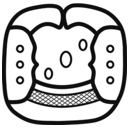
By far the most widespread WAY logograph is a sign that epigraphers classify as T0539ex, which resembles a stylized face partially shrouded in a jaguar pelt (Figure 6.2a).Footnote 33 Late Classic versions of the grapheme are rounded, but Early Classic renderings display the same lobed contours as a rare, serpentine sign (T0645st, Figure 6.2b).Footnote 34 The latter likely shares a graphic origin with T0539ex, but there are too few examples of the snake-like grapheme to trace its visual development.Footnote 35 A miniature version of the pelt-wrapped face (T0539ex), in turn, covers the eye of another WAY logograph, an uncommon head variant in the shape of a jaguar (T0539st, Figure 6.2c). A fourth, multipartite logograph contains the “percentage sign” associated with death in Classic Maya iconography (T0509bv, Figure 6.2d), and it could be conflated with the jaguar portrait to create yet another zoomorphic variant with the value WAY (T0509hp, Figure 6.2e). A rounded hieroglyph representing a closed centipede maw, in turn, could be written in full, as in Figure 6.2f (T0157bh), or bisected vertically down the middle, leaving only the right or the left side visible (T0157bl/br).
Visualizing Meaning
The broad spatial and chronological distribution of way spellings attests to widespread awareness of at least some aspects of Classic Maya nagualism. Because of their common linguistic value, WAY logographs were all interchangeable, at least in theory. In practice, however, semantic or pragmatic context seems to have influenced when and where scribes wrote a particular sign. Moreover, the logographs are not all equally disseminated across the lowlands. In most polities, in fact, scribes used only one or two of the existing logographs to record way in their inscriptions.Footnote 36 Tracking the temporal and spatial distribution of way spellings across semantic contexts provides hints about circulation of nagualism and scribal strategies for denoting it hieroglyphically. The latter may have interacted but do not seem to have circulated in parallel with iconographic representations of the way tradition, which will be discussed after addressing the hieroglyphic renderings.
In semantic terms, the majority of way references denote co-essences. The most common WAY logograph throughout Classic Maya history, T0539ex (Figure 6.2a), predominates in these contexts, particularly in captions for portraits of the other-than-human characters. The sign derives from an abstracted representation of a person half-hidden behind a jaguar pelt and thus is iconic of the shape-shifting, hybrid entities (Figure 6.2a).Footnote 37 Occurrences of the second-most frequent logograph, the centipede maw-shaped T0157bh and its halved variants, have a broader semantic spread across toponyms, titles and personal names, and generic locatives such as wayib (Figure 6.2f). By the Late Classic period, this grapheme was most closely associated with calendrical references. Its first clear appearance in this context comes on Altar de Sacrificios Stela 13 (9.3.0.0.0; January 30, 495 CE), where it seems to stand in for Glyph D in the Lunar Series.Footnote 38 By the mid-sixth century, scribes were using the logograph to denote the month Wayeb, as the inscription on El Palmar Altar 10 demonstrates (Figure 4.8).Footnote 39
Nonetheless, at least one other designation for the five-day interval was circulating in the late Early Classic lowlands. Written with a mixture of syllabic and logographic signs as ko-lo-AJAW, the rare name appears in at least four texts dedicated on the same 9.6.0.0.0 period-ending (March 21, 554) as El Palmar Altar 10: Caracol Stela 14, Dzibanche Lintel 3, Naranjo Stela 48, and an unprovenanced plate naming Tikal king Wak Chan K’awiil.Footnote 40 It clearly never gained widespread currency, however, and all but disappeared in favor of way-based spellings by the end of the sixth century – a scribal development that may have been symbolically motivated. As portals between the underworld and the world of humans, centipede jaws were conceptually relevant to the five-day month, as well as to spatial references such as the Waynal toponym or the “rooms” or “(bed)chambers” (way, wayil) described as “covered” or “closed” (mahkaj) on a series of Late and Terminal Classic capstones at Ek’ Balam.Footnote 41 These comparisons likely supported the month Wayeb’s associations with the way phenomenon more generally and with the centipede maw-shaped WAY logograph specifically, even if those associations may not have crystallized until the Late Classic period.
Iconic sensibilities may have shaped correspondences that scribes perceived between some WAY logographs and their linguistic context. Yet other signs’ distribution cannot be explained by this factor alone. Another obviously iconic logograph, T0539st (Figure 6.2c), whose jaguar guise presumably alluded to the shape-shifting aspect of the way phenomenon, was used only political titles and personal names; it does not appear in captions for co-essences. Like the T0509-group signs, the jaguar-head variant T0539st appears almost exclusively in spellings of the (sak) wayis title (Figure 6.2d–e). It is likely that T0539st and the T0509-group signs also originated in or around La Corona, where they are most abundantly attested over at least two and a half centuries of use (Figure 6.1).Footnote 42 Like the (sak) wayis designation, too, T0539st and the T0509-group logographs were never widely disseminated beyond the central lowlands.Footnote 43 Perhaps their local salience discouraged scribes from sharing them widely or introducing them in other semantic contexts.
Distribution and Dissemination
Hieroglyphic options for writing way diversified relatively early and quickly. At least four distinct logographs were in active use by the end of the sixth century, an indicator of the term’s religious and cultural import. The pelt-covered sign T0539ex is first attested in the fourth century on the unprovenanced Leiden Plaque (8.14.3.1.12; September 17, 320) and in Mural 7 from La Sufricaya, which was dedicated on 8.17.2.4.16 (January 15, 379 CE) (Figures 6.1, 6.2a).Footnote 44 It is also integrated into a deity’s headdress depicted on the same site’s Stela 6 c. 377–389.Footnote 45 By the late sixth century, the logograph was already being written by scribes based as far north as Coba and as far south as Copan (Figures 4.3, 6.1).Footnote 46 The graphemes T0645st, T0509bv, and T0157bh, in turn, appeared in hieroglyphic inscriptions by the beginning, middle, and end of the fifth century, respectively (Figure 6.2b, d, f).Footnote 47 By the beginning of the Late Classic period, then, almost all known WAY logographs were already in circulation, well before hieroglyphic and iconographic references to way began to proliferate in the seventh and eighth centuries.
Clearly, holes in the epigraphic dataset limit the conclusions we can draw about scribal transmission of the way phenomenon. Copan, El Achiotal, and Altar de Sacrificios, the first sites with datable examples of the logographs T0539ex, T0645st, and T0157bh, respectively, were not necessarily home to the scribes who invented those signs (Figure 6.2a–b, f). Nonetheless, some patterns are insightful for understanding the dynamics of way transmission among writers. For instance, following its fifth-century attestation at El Zapote, the next datable occurrence of the logograph T0539ex comes almost a century later on Lintel 37 at Yaxchilan, which was dedicated on 9.5.2.10.6 (January 15, 537).Footnote 48 The chronological lag and intervening spread of other WAY logographs indicates that T0539ex’s status among scribes as the semantically unmarked or default sign did not develop until later, through multi-generational scribal communication about the grapheme’s semantic and pragmatic associations.
Regardless of where they occurred, hieroglyphic innovations for writing way seem to have been prompted by knowledge of the linguistic and cultural phenomenon, rather than by contact with specific graphic forms. In other words, Early Classic scribes appear to have exchanged ideas and practices associated with the way complex, including co-essences, sorcery, shapeshifting, calendrics, mythical locations, in a manner that was not dependent on a particular hieroglyph. This situation is suggested by the geographic spread and semantically diverse contexts in which WAY logographs are attested in the Early Classic period. By the Late Classic period, however, T0539ex covered such a broad semantic scope – or, from another perspective, had become so conceptually divorced from its iconic referent – that it was the only logograph that scribes applied across all of the more than half-dozen semantic contexts in which they wrote the Classic Mayan term way (Figure 6.2a).Footnote 49 Other WAY logographs, in contrast, were limited to a subset of semantic settings, even though their linguistic values were identical to T0539ex. As such, these signs would have been culturally “marked” or salient among scribes because of their rarity relative to the unmarked T0539ex, and thus would have been more exposed to conscious manipulation by those writing them (Figure 6.2c–f).Footnote 50
Scribes active in textual production, especially those responsible for royal monumental commissions, would have been expected to understand the religious and political contexts of events that they recorded. Likewise, knowledge that they acquired, developed, and shared about what they were writing entailed more than simple sign-sound correspondences or techniques for graphic execution. In some cases, nonhieroglyphic imagery may have been an important vehicle for circulating knowledge among scribes, too. In particular, the co-essence portraits that are relatively abundant on portable objects and offer the most robust attestation of Classic Maya nagualism today would have been important sources of insight into the way phenomenon and the metapersons’ role within the larger religious tradition. At the same time, the portraits are less widely distributed than hieroglyphic references to way, alluding to local differences in engagement with the practices and concepts that the co-essences embodied.
Animating Figure and Image
Since the hieroglyphic decipherment of way, epigraphers have published several tabulations of nagual-metapersons portrayed in Classic Maya imagery. Nikolai Grube and Werner Nahm compiled the first catalog of co-essences portrayed on ceramics, more than fifty in total.Footnote 51 Subsequent research has expanded the roster even further, although numerous others remain unidentified or appear too infrequently to be categorized with confidence.Footnote 52 My goal is neither to reproduce nor to update that work; instead, I focus on interpreting cultural transmission based on spatial and chronological distribution, an aspect of way imagery that remains understudied.Footnote 53 Similar to hieroglyphic references, illustrations of co-essences are attested in several noncontiguous areas of the Maya lowlands during the Early Classic period. Yet the Late Classic tradition of way portraiture on ceramics remained largely restricted to pots produced in the central lowlands, where elite exchange of painted vessels seems to have been a key context in which way images and their captions circulated.
Archaeological excavations, art historical studies, and chemical analyses attest that the Classic Maya transported ceramics across the lowlands.Footnote 54 The high degree of skill and effort invested in producing the finest painted vessels, which would have been relatively fragile on the road compared to more packable finery such as jade or Spondylus shell, suggests that many pieces would have circulated not as market goods but as gifts for specific recipients.Footnote 55 Many ceramics are embellished with court scenes of kings and nobles receiving deferent visitors who come bearing goods, sometimes even miniature ceramics.Footnote 56 The highly personalized, face-to-face exchange of finely crafted vessels was embedded in sociopolitical relations of hierarchy and mutual dependency that also shaped which goods were transferred and among whom.Footnote 57
Although there are somes incised and modeled-carved examples,Footnote 58 the overwhelming majority of surviving way portraits appear on painted vessels, many of which became known to scholars only after they illicitly entered the art market and thus unfortunately lack archaeological context. As with portraits of other-than-human scribes (Chapter 3), way beings consistently feature other-than-human traits that signal their hybrid nature. They appear in a wide, largely ambiguous array of positions and contexts – sitting, dancing, brandishing weapons, contorting in acrobatic poses – that are rarely clarified by the terse accompanying caption, if there is one at all. A diverse and growing cast of unique beings attests to the great variety of Classic Maya expressions of the way tradition. At the same time, recurring portrayals of a single co-essence across vessels, albeit never on the same pot,Footnote 59 signal shared concepts underlying that tradition.
The earliest surviving way illustrations are early seventh-century productions from the area of El Zotz, Petén, Guatemala, which is also home to one of the first known occurrences of the WAY logograph T0509bv (Figures 6.1, 6.2d).Footnote 60 Variability in the portraits’ form and execution indicates that the ceramics were painted by multiple cohorts of artisans, rather than being the singular invention of one workshop.Footnote 61 What motivated local painters to represent the metapersons on ceramics is unknown. It is possible, though difficult to prove, that the imagery’s early presence at El Zotz attests to the local Pa’kan dynasty having been “ideological pioneers” in claiming sorcery as a source of moral and political authority.Footnote 62
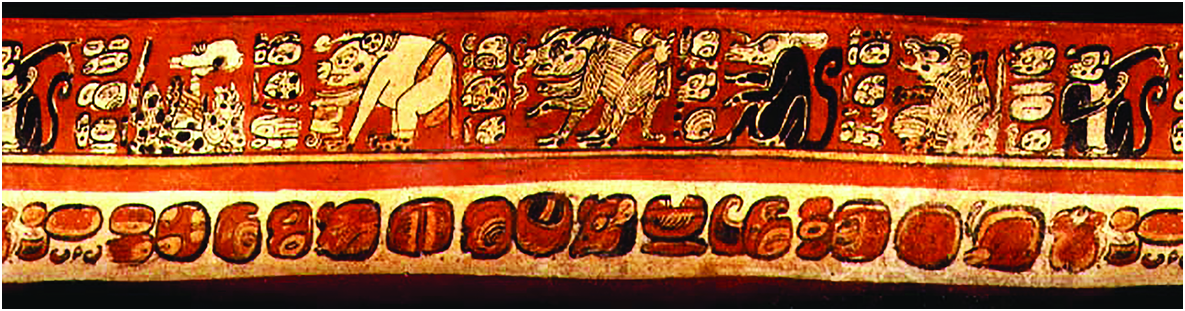
Nonetheless, some patterns in way representation on vessels from early seventh-century El Zotz foreshadow trends that would persist throughout the Late Classic period (Figure 6.3).Footnote 63 Most way figures are portrayed as zoomorphic, either as a recognizable species or as a hybrid combining features of several animals. Intermediate to large mammals such as peccaries, deer, or monkeys predominate, whereas nonmammals tend to take the form of serpents, toads, or birds. Among many attributes that distinguish way entities as other-than-human, the most ubiquitous is fire, which denotes the metapersons’ transformative and sacrificial connotations (Figure 6.3).Footnote 64 Some characters embody a skeletal form or clutch severed body parts, another explicit reference to the death and destruction that necessarily precedes renewal.
An unprovenanced bowl from the El Zotz ceramic tradition portrays six named way characters (from left to right): Ch’ok Muuk, Tilal Hix, K’ahk’ Uwe’ Chitaam, Ooch Maax, Sak Ux Ook, and Maax.
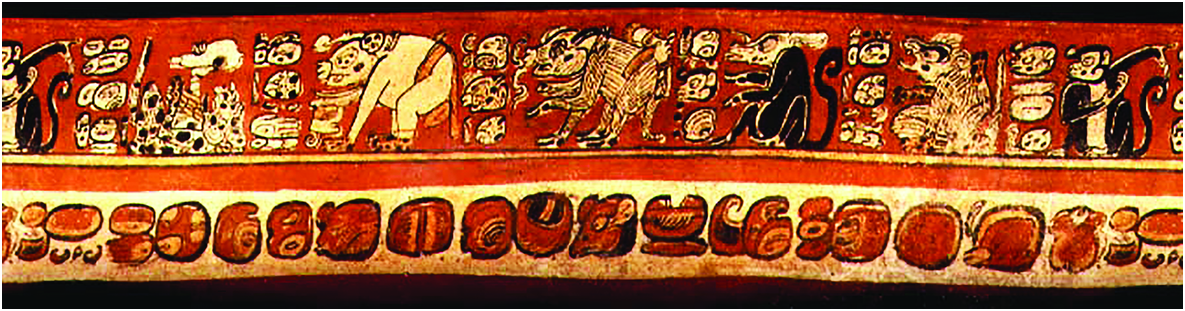
Like other-than-human scribes, co-essences consistently demonstrate some degree of anthropomorphism, often in the form of (male) clothing, human-like limbs, or a bipedal stance.Footnote 65 In a clear contrast with the subjects of Chapter 3, however, way figures display traits of or embody the jaguar more frequently than any other animal. Given the spotted pelt’s status as an emblem of Classic Maya divine kingship, the frequency of jaguar references in co-essence portraits may express the close relationship that some dynasties claimed with particular co-essences and with the practice of nagualism more generally.Footnote 66 Still, as will be discussed in more detail, political identification was by no means restricted to jaguar way beings, nor were these characters labeled with a dynastic title more frequently than other, nonjaguar co-essences.
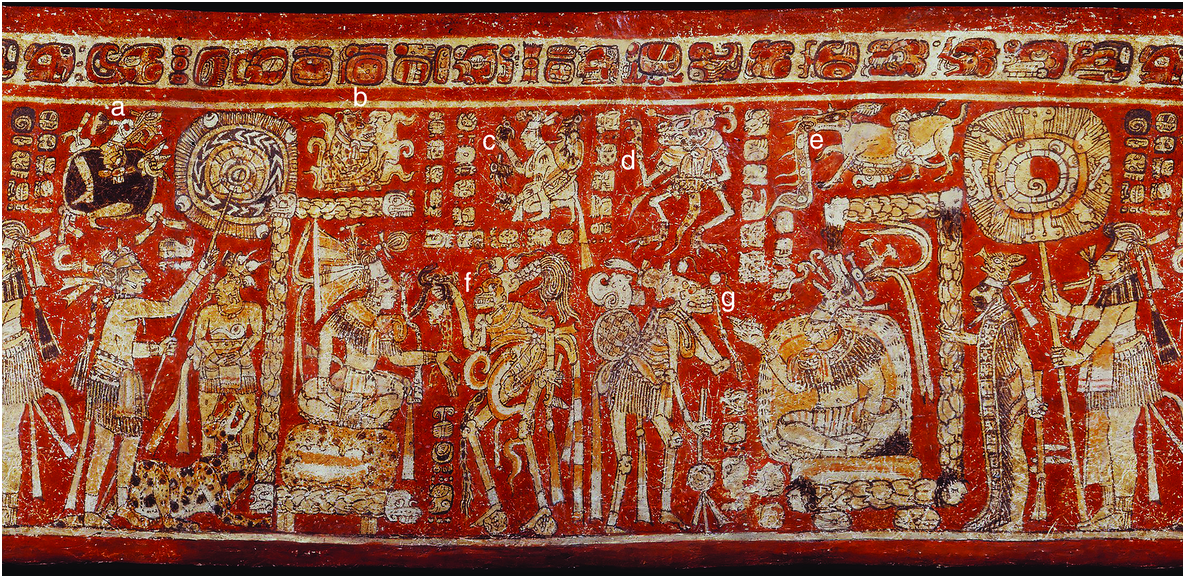
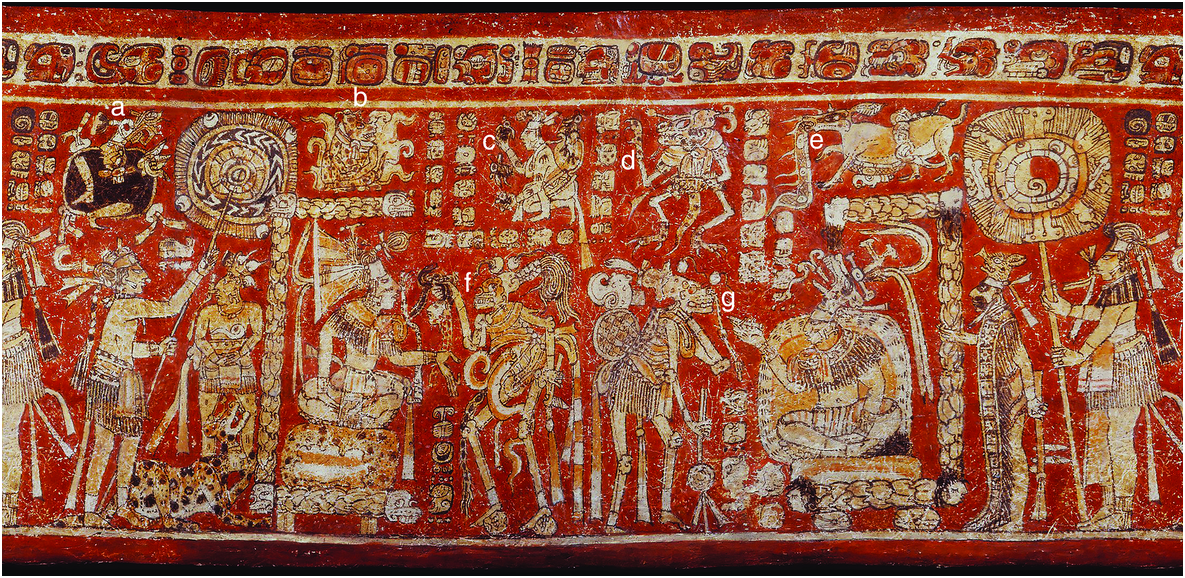
The way metapersons portrayed on El Zotz painted ceramics include a quartet of widely depicted figures who also occasionally appear together: K’ahk’ Hix “Fire Jaguar,” a skeletal jaguar whose name partially reads Hix K’an, Kukaan (alternatively, Kuk or Kukil) Winik “Bundle Person,” and the pulque-bearing god Mok Chih Ahkan (Figure 6.4).Footnote 67 Two other popular co-essences, K’ahk’ Yohl May Kamiiy and Ukuul (Ukuuw) Chij Kamiiy, incorporate the Classic Mayan word chamiiy/kamiiy “death” in their names and manifest explicit associations with the death god Kimi (Figure 6.4).Footnote 68 Additional figures that recur in the corpus include a deer with torn-out eyes, K’ahk’ Chitaam “Fire Peccary,” and a tapir with jaguar features possibly named Tilal Hix (Figure 6.3).Footnote 69 These characters were not necessarily innovated in the El Zotz region; however, their early portrayal here and, subsequently, in other Late Classic ceramic traditions attests to a fundamentally coherent religious phenomenon underlying synchronically and diachronically diverse way expressions.
An unprovenanced cylinder vase from the El Zotz ceramic tradition depicts seven named way characters: a) Kukaan Winik, b) K’ahk’ Hix, c) Jatz’ Tokal? Mok Chih Ahkan, d) ? Hix K’an ?, e) ? Chij, f) K’ahk’ Yohl May Kamiiy, and g) Ukuul Chij Kamiiy.
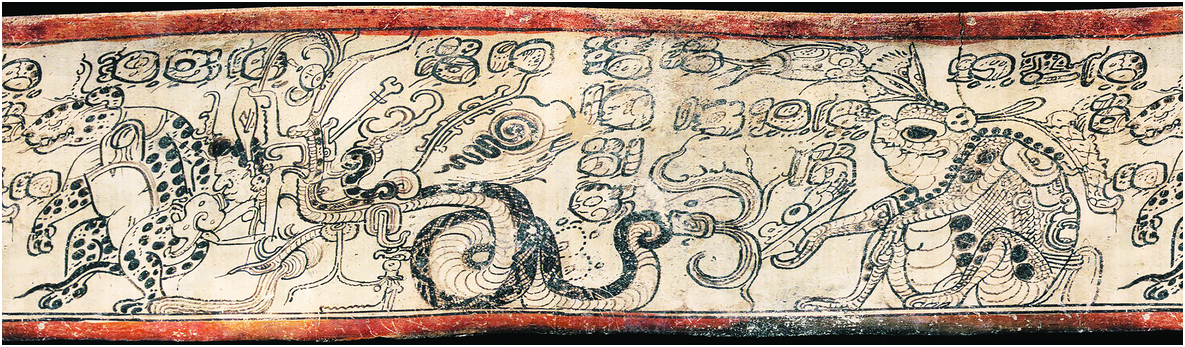
Another ceramic tradition with robust way portraiture is the so-called codex-style corpus, thus named because of its vessels’ aesthetic similarity to the barkpaper codices that many of their painters presumably composed as well.Footnote 70 Archetypically, the walls of codex-style pots were covered in a matte slip that varied in color from white to cream to yellowish and then painted in black line, sometimes with additional touches of red (Figure 6.5).Footnote 71 Although most complete examples lack provenance, chemical analysis and archaeological excavations locate the most likely origin for the codex-style ceramics in the area of El Mirador and Nakbe in the central lowlands (Figure 6.1).Footnote 72 Calakmul was another important center of production and consumption of these vessels, whose painted iconography and text often thematize Kaanul-affiliated persons or events.Footnote 73 Still, with production centers spread across the central Petén, codex-style pottery demonstrates significant diversity with respect to clay source and paste composition, which stands in contrast to the comparatively homogenous slips, color schemes, and motifs on their painted exteriors.Footnote 74
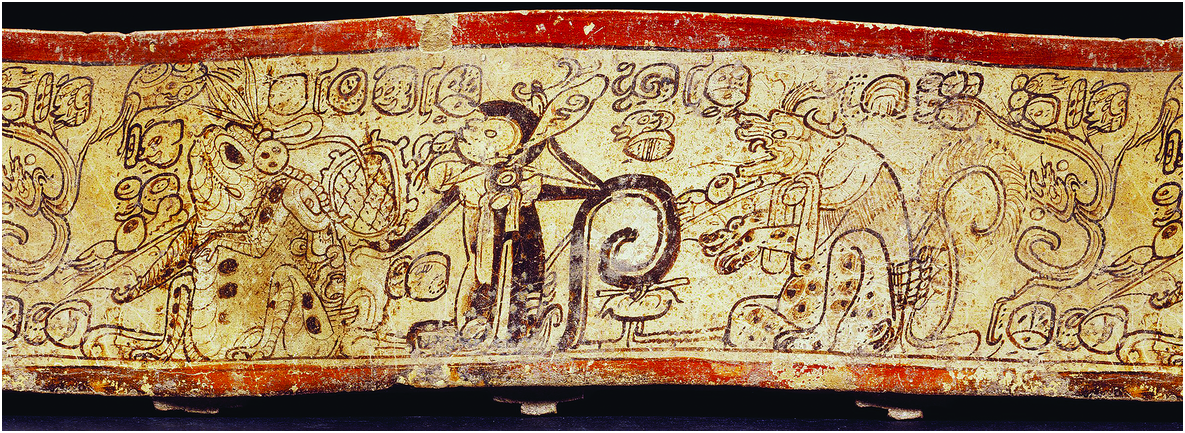
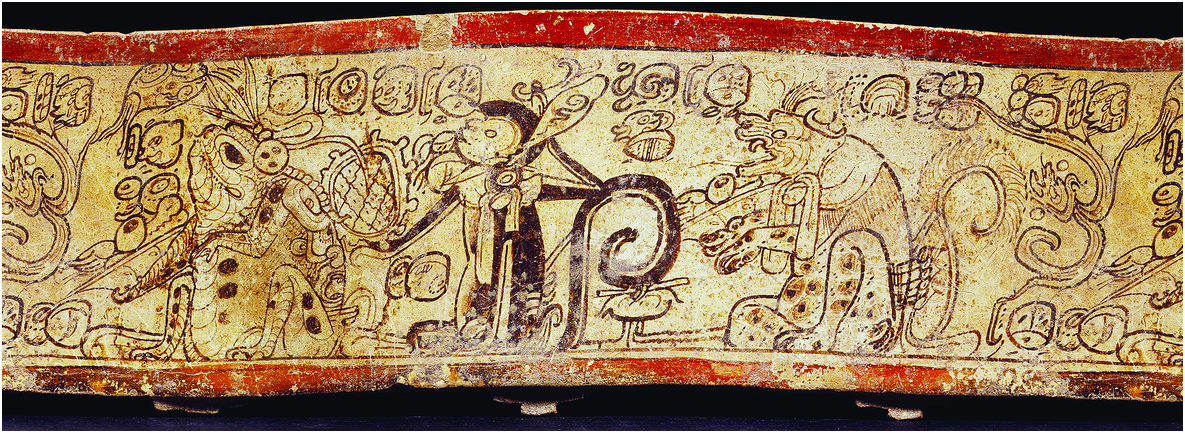
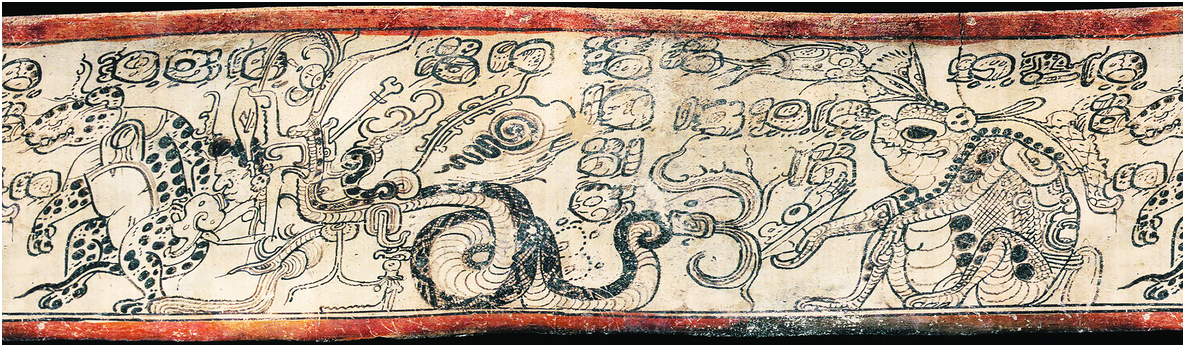
The iconography of many codex-style vessels features other-than-human themes, although illustrations with one or more co-essences are concentrated on cylinder vases and other vertical vessel forms.Footnote 75 The codex-style corpus of way imagery is relatively robust, yet many pots depict the same constellation of two or three metapersons in slightly different guises. Some scenes are reproduced on multiple vessels and may to depict some sort of mythological episode, although the narrative context is difficult to reconstruct without textual clues.Footnote 76 One common theme involves a skeletal death god, the hybrid human-feline infant Unen Bahlam, and the rain god Chahk dancing with an axe in one hand and, in some cases, a manopla in the other (Figure 6.6).Footnote 77 On one pot, the death god is also tailed by two hybrid naguals: one combining feline and canine features and one insect-like being (Figure 6.6). Other codex-style scenes, in turn, feature only zoomorphic characters, often some combination of the amphibian Tzuk ? Amal, the fiery coati K’ahk’ Ne’ Tz’uutz’, and the spider monkey Ooch Maax or Umaax (Figure 6.5).Footnote 78
An unprovenanced codex-style vase shows the infant feline Unen Bahlam (center) flanked by the rain god Chahk (left) and the skeletal death god (right). Note the two zoomorphic co-essences behind the latter.
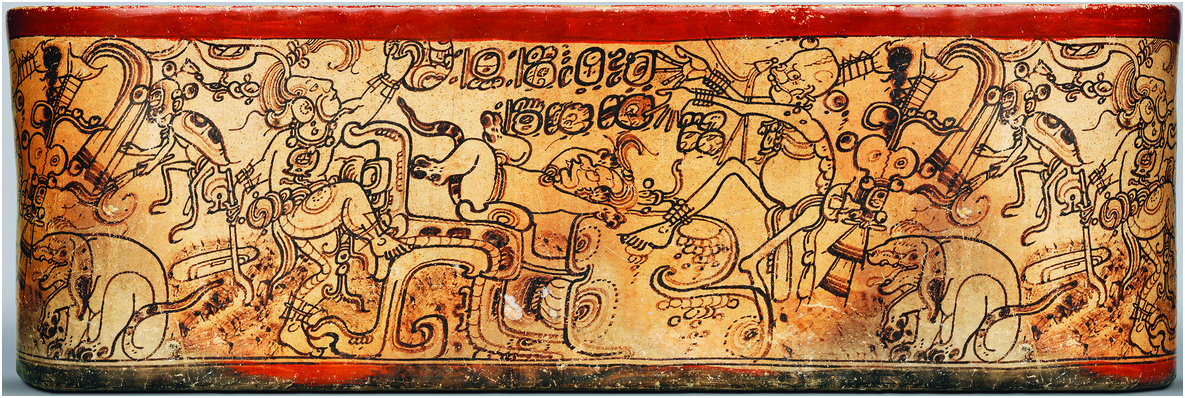
The lineup of way beings on codex-style ceramics includes characters that were shared with and possibly adopted from El Zotz-area imagery. Other figures, in contrast, are rarely or not at all depicted in other pottery traditions. The latter category includes a co-essence with a jaguar-like form, a k’in (“day, sun”) sign painted on its belly, and a largely undeciphered name that reads something like Tahnal K’ew? (“Stomach-Jaguar Pelt”) (Figure 6.7).Footnote 79 Another co-essence that is hardly ever depicted outside of codex-style vessels, Jatz’ Tokal? Ek’ Hix (“Striking Burning Star-Jaguar”), takes the form of a jaguar draped in a writhing snake and studded with stars.Footnote 80 Interestingly, this character shares part of its name with a king from the Sak Tz’i’ polity, whose capital at Lacanjá Tzeltal was located nearly 200 kilometers southwest of Nakbe, El Mirador, and other major centers of codex-style pottery production (Figure 6.1).Footnote 81 Throughout the lowlands, it was extremely rare for a Classic Maya dynastic ruler to share a personal name with a co-essence. It is unknown how the Sak Tz’i’ king was related, if at all, to Jatz’ Tokal? Ek’ Hix, but none of the latter’s portraits indicate any link with the western lowland dynasty, suggesting that the practice of illustrating the co-essence originated elsewhere.
An unprovenanced codex-style pot illustrates the co-essences ? Tahnal K’ew? (left), Chijil Tal Chan, and Tzuk ? Amal (right).
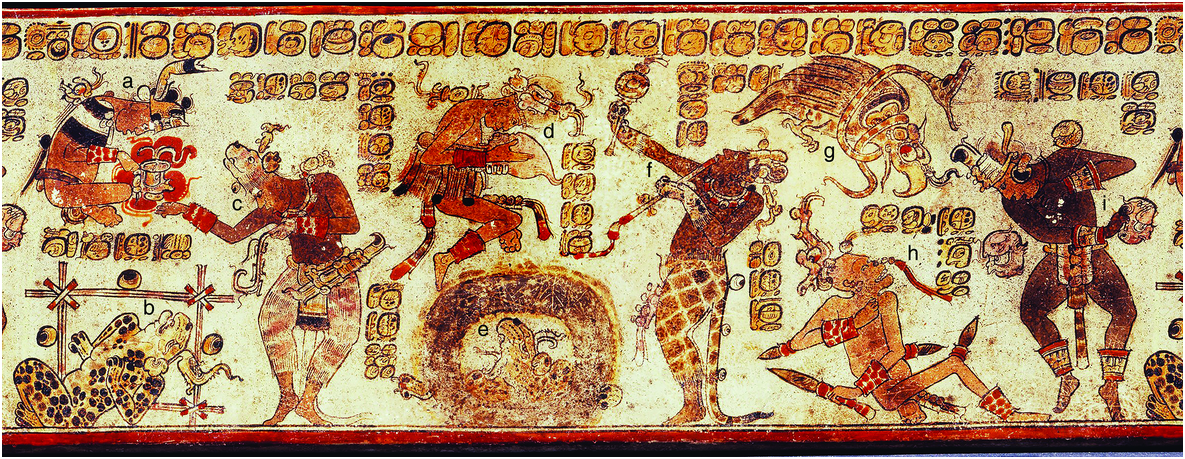
The third major Late Classic tradition of way ceramic portraiture was based in the Ik’a polity at Motul de San José. Among dozens of known Ik’a-style vessels, just a handful display painted way imagery, a strikingly small proportion relative to the many El Zotz and codex-style ceramic corpora with co-essence portraits.Footnote 82 Collectively, though, the pots portray over two dozen distinct characters, and the images attest that ceramic painters at Motul de San José innovated a local style based on a preexisting tradition of way portraiture. Some beings appear to be unique to the Ik’a tradition, such as a bird of prey with a serpent wrapped around its neck, known as Tahn Bihil Kimi, and a foliated jaguar named Ch’aktel Hixnal that reclines against a scaffold (Figure 6.8).Footnote 83 Other figures were clearly artistic inheritances, most notably K’ahk’ Yohl May Kamiiy and Ukuul Chij Kamiiy, who were common characters at El Zotz, too (Figure 6.8).Footnote 84 Nonetheless, Motul de San José painters made some modifications to the latters’ portraits. As a result, correspondences between characters on Ik’a-style vessels and co-essence illustrations from other traditions sometimes only become apparent through close examination of iconographic details or a hieroglyphic text providing the metaperson’s name.
An Ik’a-style cylinder vase features nine named way characters: a) K’ahk’, b) Ch’aktel Hixnal, c) Sak Ux Ook, d) Ukuul Chij Kamiiy, e) Ha’ Hix, f) K’util Hix, g) Mabib, h) Tahn Bihil Kimi, and i) Jatz’oon Ahkan.
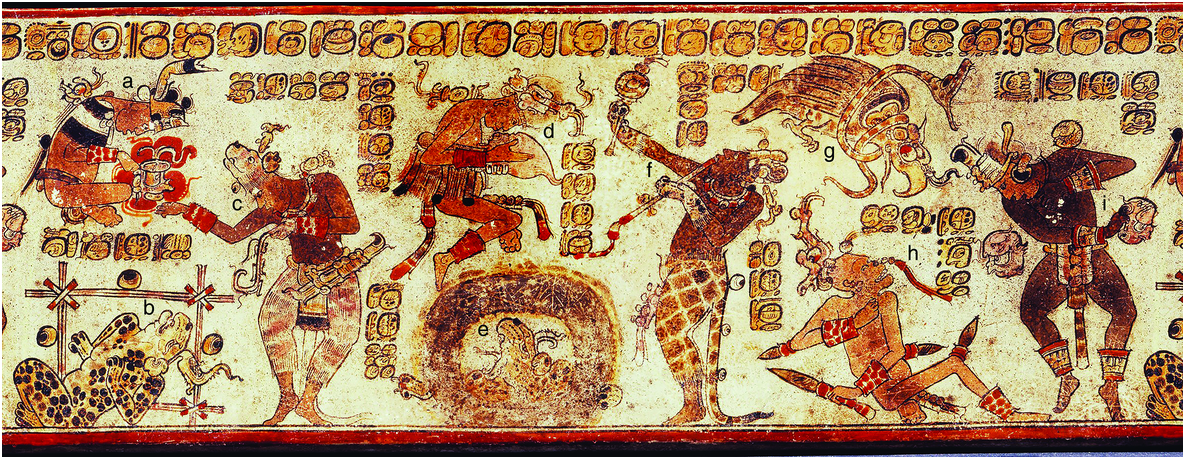
The way known as Ukuul Chij Kamiiy, for instance, is usually shown in other ceramic traditions as a skeleton standing upright with a bundle on his back (Figure 4.3).Footnote 85 On an Ik’a vessel from the year 755, however, the co-essence is represented in an anthropomorphic body and a seated posture, holding what may be an animated seed (Figure 6.8).Footnote 86 The same vase and an Ik’a-style pot found at Altar de Sacrificios depict the stone-wielding drinking god Jatz’oon Ahkan sitting or dancing with a modest-sized stone in his right hand, respectively, with no indication of how he intends to use the rock (Figure 6.8).Footnote 87 Both portraits deviate from other traditions in which Jatz’oon Ahkan holds up a rock as if preparing to throw it or stands with other objects in hand.Footnote 88 An Ik’a-style rendering of a trio known as Sak Ux Ook (“White Whree Dog(s)”) also manifests as a single, dancing man with a canine headdress (Figure 6.8), rather than as the one or three light-colored dogs illustrated in other ceramic traditions (Figures 6.3, 6.9).Footnote 89
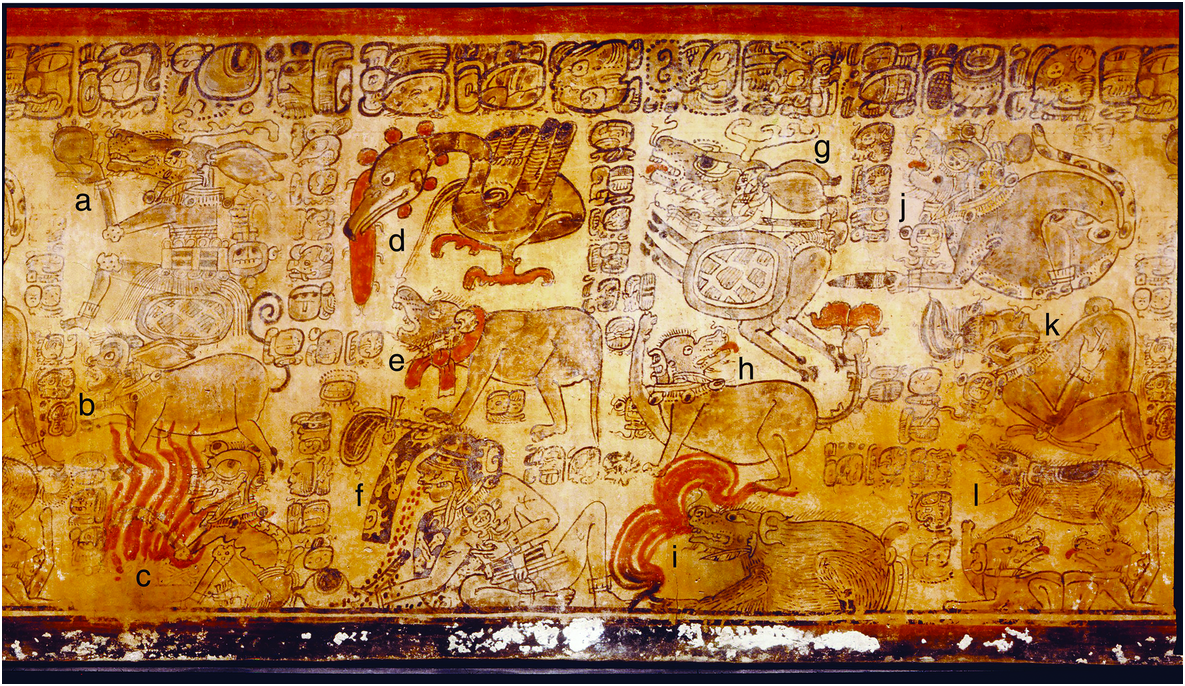
Twelve named way characters appear on an unprovenanced cylinder vase from the Naranjo region: a) Ukuul Chij Kamiiy, b) Noj Chij Yaj Maax, c) Naak? Xinik Kimi, d) Tz’utz’ih? Ak’?, e) Chak Tahn Wax, f) Ahkan ?, g) Chijil Tal Kaan, h) K’ahk’ Ne’ Tz’uutz’, i) K’ahk’ Uwe’ Chitaam, j) Tilal Hix, k) Sitz’ Winik, and l) Sak Ux Ook.
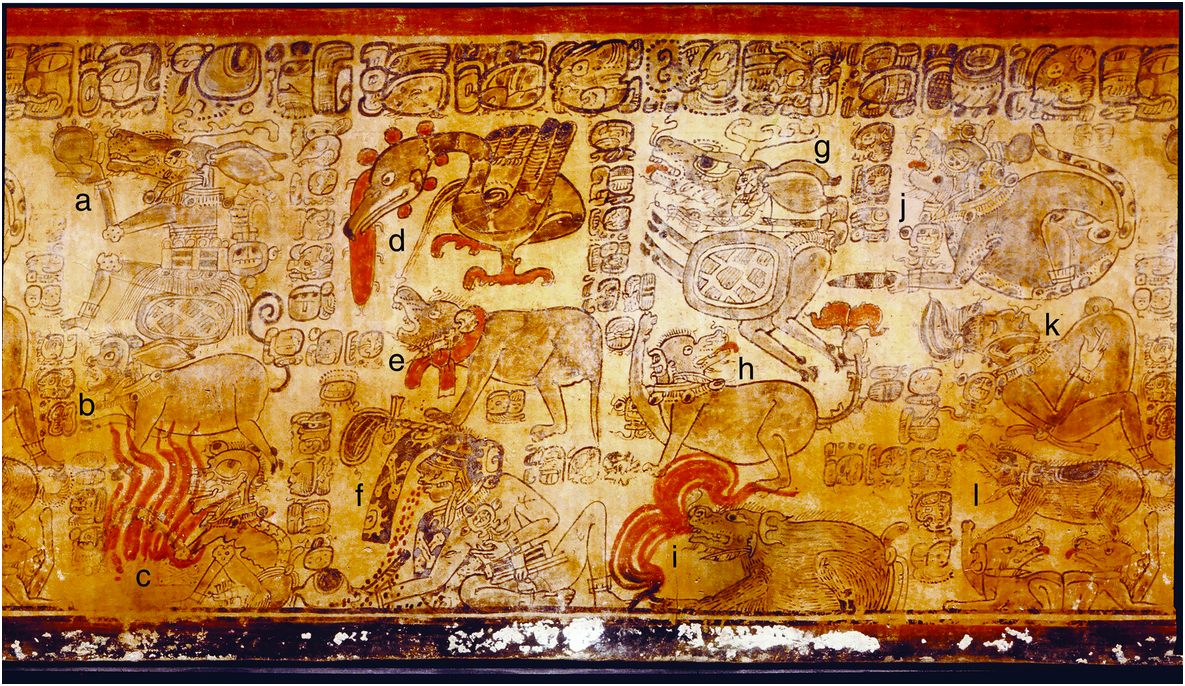
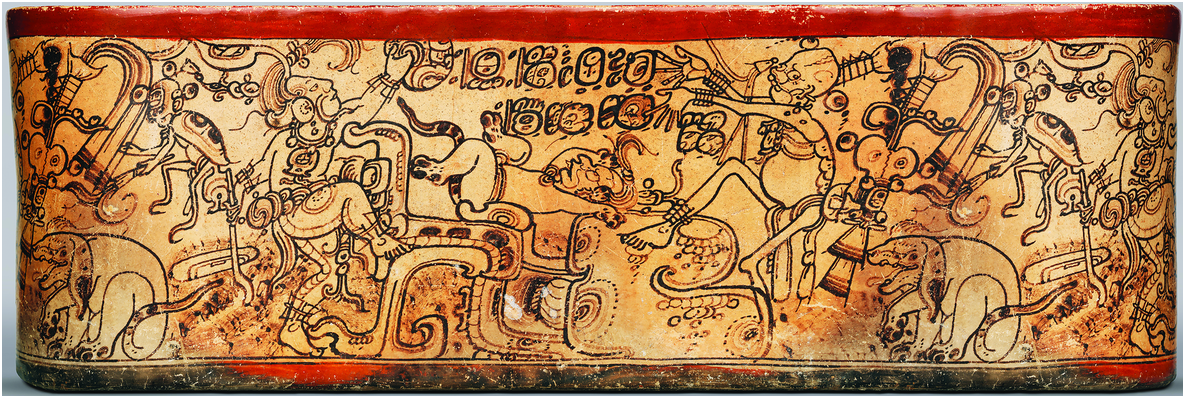
Another development in Ik’a-style way portraiture concerns how artists represented co-essences in relation to each other. Compared to other traditions, pots from Motul de San José emphasize busier scenes, often with four or more way figures on a single vessel (Figure 6.10). In contrast, codex-style vessels tend to highlight just two or three metapersons at a time (Figure 6.5). Although El Zotz-area ceramics also feature several scenes with more than three way beings, images from the Motul de San José area tend to show the figures in more dynamic configuration. Co-essences in the former tradition are often depicted standing or sitting, either in isolation or with just one or two companions (Figure 6.3), whereas they more often strike lively poses in Ik’a-style scenes (Figures 6.8, 6.10; though see also Figure 6.4). Even as they worked within a regional way tradition, artists in the Ik’a polity developed a local style for representing the other-than-human figures’ form and behavior.
An Ik’a-style vessel portrays four way characters (from left to right): Ch’ak Baah Ahkan, Muyal Hix, Mabaak Unal, and an anthropomorphic-feline character whose name is missing.

The mixture of differences and similarities in co-essence representation across and even within artistic spheres attests to regional and chronological adaptations to the way phenomenon over its history. Still, across all ceramic traditions and even in nonceramic imagery, way metapersons are almost never illustrated in isolation. Even when co-essences do not appear to directly interact with each other (Figure 6.4), they are almost always accompanied by at least one other human, or more often, other-than-human figure (Figures 6.3, 6.5–6.10). Clearly, the Classic Maya tradition of way portraiture was concerned with collectivity as much, if not more, than with individual characters. Thus, constellations of co-essence portraits were an apt vehicle for making iconographic statements of sociopolitical relations between their human referents – including, in some cases, the very relations through which those portraits were probably circulating through the lowlands.
Other-than-Human Dynastic Affiliation
A minority of co-essence portraits are captioned with an emblem glyph, a Classic Maya title typically reserved for the dynastic ruler. Minimally, an emblem glyph consisted of a polity-specific “emblem” and the designation ajaw “lord”; in the case of more prestigious dynasties, the prefix k’uhul (“holy, divine”) was added to identify the bearer as the “holy lord of [polity].”Footnote 90 Notably, most co-essences were given the emblem glyph of a kingdom other than the one in which the vessel was produced, although there are some notable exceptions.Footnote 91 Additionally, when mentioned in a co-essence caption, an emblem glyph almost never appears with the name of a historical king, indicating that the way’s political association was to a dynasty or polity, rather than to a specific representative thereof.
Recording a co-essence’s dynastic allegiance alongside its portrait was not uniform practice, though, and some ceramic traditions valued the titular tags more than others. Way figures on El Zotz-area pots are infrequently identified with an emblem glyph; a hieroglyphic caption, if present, tends to indicate only the other-than-human character’s name (Figures 6.3–6.4). In contrast, metapersons portrayed on codex- and especially Ik’a-style vessels were more likely to be assigned an emblem glyph (Figures 6.5, 6.8). Co-essence affiliations on codex-style pots primarily involve the Kaanul dynasty, whereas on Ik’a-style ceramics, their emblem glyphs more often refer to influential polities in the area around Motul de San José (Figures 6.1). In addition to informing interpretation of Classic Maya political history, such mentions are useful for understanding the way complex’s transmission among artist-scribes.
Correlating Co-essence and Polity
One complete Ik’a-style cylinder vase that was archaeologically excavated at Altar de Sacrificios is a unique testament to what was surely a primary mode of transmission for way imagery among Late Classic elites: circulation of painted ceramics and other portable objects through gifting or tribute.Footnote 92 The most prominent way in the crowded scene on the so-called Altar de Sacrificios Vase is Chak Bahlam (“Red/Great Jaguar”), a dancing man in a jaguar costume who bears the emblem glyph of Motul de San José, where his image was painted.Footnote 93 Each of his five companions, however, is affiliated with a distinct polity. Two emblem glyphs are not yet fully deciphered, but the other three belong to the Xultun, Palenque, and Mutul kingdoms, respectively. Collectively, the other-than-human group documents interdynastic connections that are unattested in other epigraphic records, since no other hieroglyphic sources mention these three polities in connection to each other or to Motul de San José or Altar de Sacrificios.Footnote 94
Persons outside the Ik’a polity would have had the opportunity to directly access the vessels’ way images and captions when the vessel was transported from Motul de San José some ninety kilometers southwest to Altar de Sacrificios in the mid- to late eighth century.Footnote 95 It is easy to imagine that such encounters entailed appreciation of and verbal commentary about the way figures animating the vessel’s outer walls and the other-than-human relations that they represented. The viewers may well have expressed their impressions in an enigmatic speech register exclusive to healers or sorcerers, one similar to the nahuallatolli attested among Nahuatl speakers in Postclassic central Mexico.Footnote 96 In addition to observing the co-essences’ physical and behavioral traits, participants would have learned about the other-than-human beings’ political affiliations and role in shaping particular dynastic identities.
Dynamics of material circulation and interpersonal exchange help account for widespread attribution of nonlocal emblem glyphs to way figures, somewhat “standardized” political attributions of some characters on multiple vessels, and repetition of way scenes across workshops.Footnote 97 The aquatic jaguar known as Ha’ Hix or Nahb Hix regularly carries the three-hearthstone emblem glyph of Ceibal, for instance (Figure 6.8),Footnote 98 whereas a deer-serpent hybrid named Chijil Tal Kaan is captioned on a half-dozen vases as a way of the Kaanul dynasty (Figure 6.9).Footnote 99 Among numerous portraits of K’ahk’ Ne’ Tz’uutz’, at least five include a caption linking the fiery coati to the Mutul polity.Footnote 100 In one codex-style scene, the chubby mammal wears a fringed cape and holds in his jaguar-spotted paws a bowl containing a dismembered arm and eye (Figure 6.5). His left eye glances back over his blazing tail at the Mutul emblem glyph written just behind his head, rather than at the hybrid spider monkey in front of him or their toady companion holding an offering identical to his own. Details of K’ahk’ Ne’ Tz’uutz’s presentation vary across illustrations – the character sometimes holds a skull instead of a bowl or wears a collar rather than a cape, for instance (Figure 6.9).Footnote 101 Yet visual commonalities across portraits and a recurring association with the Mutul dynasty indicate that painters shared a basic understanding of the coati way’s physical form and political alignment.
For the most part, a co-essence’s political identification demonstrates remarkable consistency across portraits when one considers the diversity of beings represented. This trend hints that scribe-artists included political affiliation in the knowledge that they shared about a way being’s visual form, character, and name. Nonetheless, most way metapersons were not assigned an emblem glyph, and among those who were, images and titles do not always correspond one-to-one. For example, Ch’ak Baah Ahkan, a self-decapitating manifestation of the drinking god Ahkan, alternately appears with titles from Palenque, an as-yet unidentified entity known as Chatahn, and the Río Azul area (Figure 6.10).Footnote 102 Three vessels portraying Jatz’oon Ahkan, in turn, caption the stone-brandishing deity with emblem glyphs that may correspond to Santa Elena Balancán, an unknown locale, and Ichnal, respectively (Figure 6.8).Footnote 103
Some way-emblem glyph correspondences differed even within a single ceramic tradition, suggesting that metaperson relations could indeed be multiple and overlapping. Variation in a co-essence’s political title across ceramic traditions, in contrast, intimates that knowledge connecting a way being to a particular dynastic identity was not uniform across scribal-artistic communities. On codex-style and El Zotz-area vessels, for instance, the tapir-jaguar Tilal Hix accounts for essentially all way beings designated with the k’ab te’ title that has been linked to Xultun (Figure 6.3).Footnote 104 On the Altar de Sacrificios Vase and a Naranjo-area pot, however, the same title is assigned to the serpent-wielding Buch Te’ Chan and a cervid figure, respectively (Figure 6.9).Footnote 105 It is quite possible that Ik’a and Naranjo-area artists had distinct conceptions of Xultun’s other-than-human relations. Still, the same Naranjo-area pot also labels Tilal Hix as a k’ab te’, indicating that the responsible scribe-artists associated Xultun with multiple way metapersons (Figure 6.9).
The clearest variation in co-essence affiliation across ceramic traditions concerns the Mutul dynasty. Most illustrations of K’ahk’ Ne’ Tz’uutz’, the fiery coati primarily associated with the Mutul emblem glyph, occur on codex-style ceramics (Figure 6.5). There are exceptions, though, including vessels attributed to the ceramic traditions of El Zotz and Naranjo, respectively (Figure 6.9).Footnote 106 To my knowledge, the only co-essence other than K’ahk’ Ne’ Tz’uutz’ that is hieroglyphically linked to the Mutul dynasty is Nupul Bahlam, a human-jaguar who appears holding a jar on the Altar de Sacrificios Vase.Footnote 107 The vessel was the product of an Ik’a ceramic tradition in which neither the fiery coati nor Mutul affiliation were common subjects. Even if Ik’a artists were familiar with practices of way representation among codex-style painters and with the Mutul polity as a common metaperson affiliation, they represented a distinct vision of that dynasty’s other-than-human relations in which K’ahk’ Ne’ Tz’uutz’ played at most a minor role.
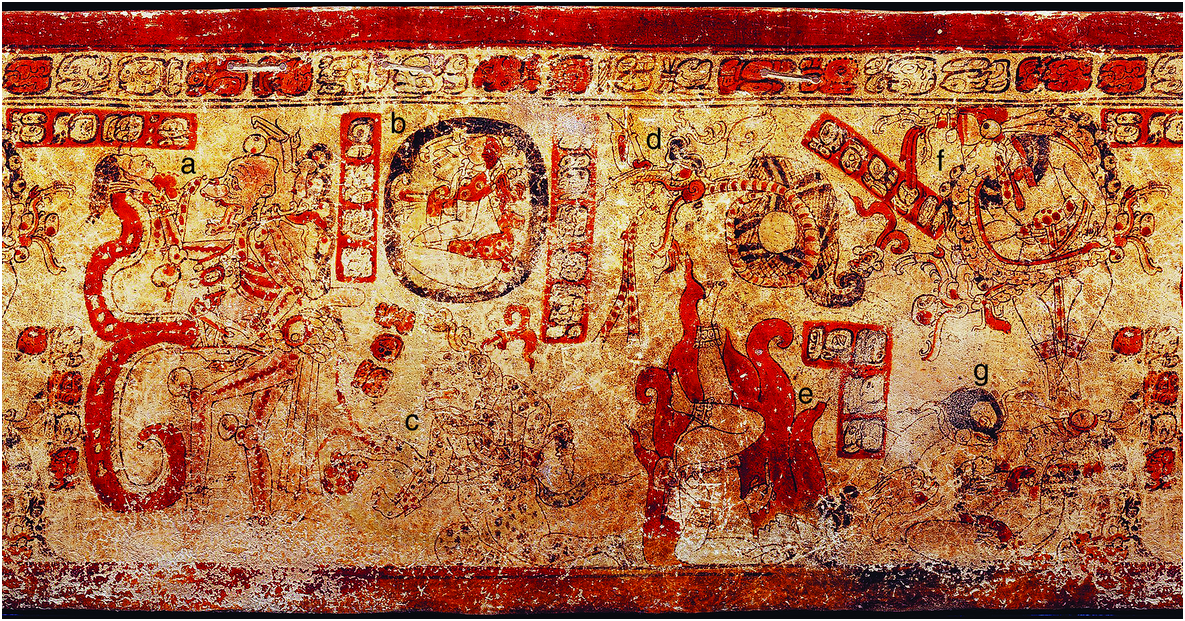
Conversely, as we have already seen, multiple co-essences could bear the same dynastic title. The Baakal polity based at Palenque, for instance, is associated with a scarf-wearing monkey, Yuch’ Maax,Footnote 108 and with Sak Baak Naah Chapaht, an anthropomorphic co-essence encircled by a centipede who shares the baak (“bone”) component of his name with the dynasty (Figure 6.11).Footnote 109 Likewise, the Uxwitz title from Caracol appears with at least three different co-essences (Figures 6.8–6.9).Footnote 110 Among them is Kukil? Winik (“bundle person”), who appears on other vessels with either an unknown emblem glyph or, more commonly, none at all (Figure 6.11).Footnote 111 The Kaanul polity’s ample way roster also includes a white bird draped in a scarf known as Sak Ne’ and the jaguar-shaped co-essence ? Tahnal K’ew? (Figure 6.7),Footnote 112 in addition to Chijil Tal Kaan (Figure 6.9). Yet vessels portraying two or more way beings with the same emblem glyph, such as one codex-style pot with two Kaanul-affiliated characters, are extremely rare (Figure 6.7). In almost all scenes with multiple co-essences, no figures share an emblem glyph. Scribe-artists producing the ceramic illustrations seem to have commonly associated way gatherings with political diversity, even as they acknowledged that one polity could claim several co-essence representatives.
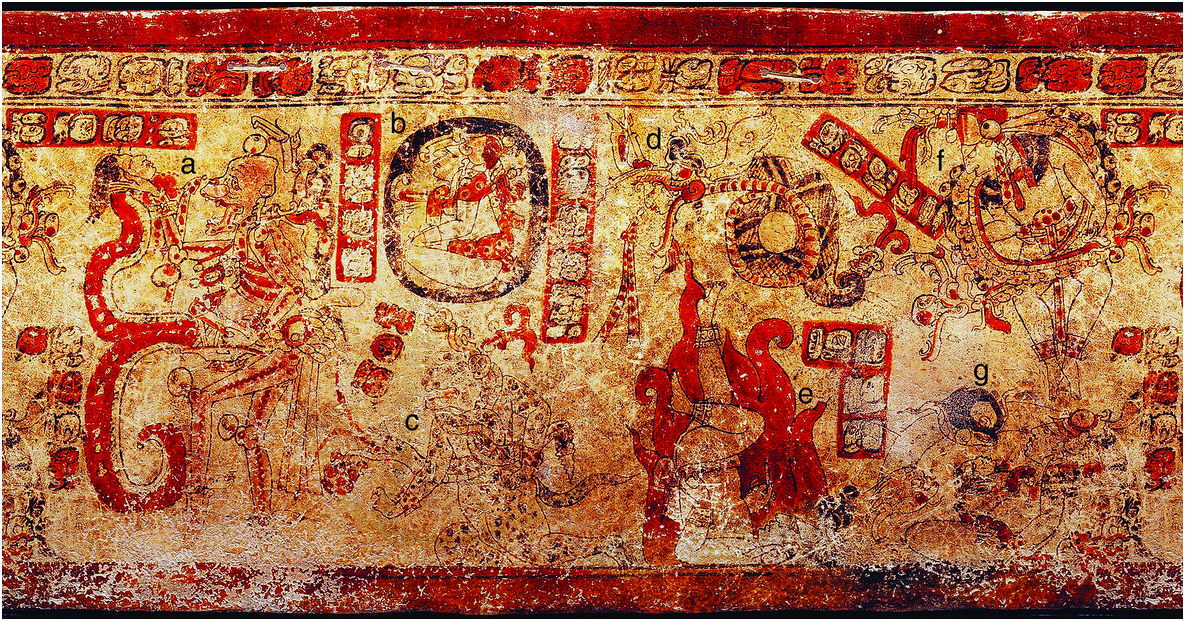
Seven named way characters decorate an unprovenanced polychrome vase: a) K’ahk’ Yohl May Kamiiy, b) Kuk Winik, c) K’ek’ Hix, d) Chijil Tal Kaan, e) Ak’abil Aj Pate’l K’ahk’, f) Sak Baak Naah Chapaht, and g) Ha’al Winik.
A Cross-Media Tradition
Despite their common knowledge base, Classic Maya creators of way portraiture operated within local, decentralized visual traditions. Still, focusing on way representations on ceramics, and specifically on ceramics from the three main production traditions in the areas of Calakmul, El Zotz, and Motul de San José, risks a misleadingly simplified narrative of central Peten invention and circulation of co-essence imagery. The nonceramic corpus, while considerably smaller, complicates this picture by implicating polities that are geographically farther flung and lack epigraphically proven ties with most, if not all major centers of ceramic way portraiture.Footnote 113 They include Tonina, Chiapas, where an early eighth-century stucco relief nicknamed the “Frieze of the Dream Lords” offers a rare monumental illustration of naguals.Footnote 114 Among the dynamic set of co-essences is a pocket gopher-rat named K’an Baah Ch’o, a relatively frequent character in the ceramic corpus who is typically shown standing upright and carrying a bundle.Footnote 115 The only metaperson with a surviving emblem glyph, however, is the skeletal Ahk Ook Kamiiy (“Turtle-Foot Death”), who carries the title of Pomona, a site eighty kilometers northeast of Tonina on the plains of Tabasco.Footnote 116 The stucco text provides the only epigraphic evidence for a connection between the two polities, so the nature of their relations is unclear. Nonetheless, the portrait demonstrates that local Tonina elites were familiar with Pomona’s other-than-human affiliates, even if the accompanying caption does not explain Ahk Ok Kamiiy’s role at either site.
Throughout the Classic period, knowledge of and visual interpretations of way beings likely circulated in a range of media, not only the ceramics that preserve most surviving portraits and hieroglyphic captions. The most robust and diverse Late Classic way portraits first appeared on El Zotz-area pottery, but several Early Classic polities housed their own workshops of artisans who had begun illustrating co-essences on other media centuries earlier. The Early Classic peccary skull from Copan discussed in Chapter 4, for instance, features incised portraits of several familiar metapersons (Figure 4.4a), including a skeletal hunter who appears on at least one Late Classic vessel with the El Zotz emblem glyph.Footnote 117 Although the peccary skull was not necessarily carved locally, it attests to the co-essence tradition’s presence in the southeastern center by the sixth century.Footnote 118
Even at Naranjo, only sixty kilometers east of El Zotz, monumental way iconography long predates the vessels painted with naguals that either polity’s Late Classic workshops produced (Figure 6.9). The complex Early Classic imagery on Naranjo Stela 43 features many metaperson characters, one of whom has embedded in its headdress a WAY logograph (T0539ex) that may label the wearer as a co-essence.Footnote 119 Several companions nearby feature jaguar-like spots on their bodies, a hint that they represent way beings as well (Figure 6.2a).Footnote 120 Thus, by the end of the Early Classic period, the co-essence component of nagualism – likely shapeshifting as well, to judge from the array of hybrid personae on Stela 43 – was already disseminated across a significant portion of the lowlands. Clearly, the way tradition impacted elite ritual and dynastic representation for a longer span of time and across a wider expanse of the lowlands than Late Classic ceramic imagery alone would indicate. The concepts, images, and hieroglyphs associated with way likely circulated in multiple, overlapping but distinct transmission networks, including the connections that conveyed pottery artifacts portraying the co-essences.
Circulating Way in Representation and Practice
Comparing way references in hieroglyphic writing and iconography yields an image of a Classic Maya religious tradition that was defined by tensions between the local and the regional. The Late Classic practice of illustrating co-essences on painted ceramics did not spread far beyond Motul de San José, El Zotz, or Calakmul, a geographic clustering that alludes to localized cultural preferences.Footnote 121 At the same time, scribes’ diverse modes of writing way across multiple semantic contexts, along with scattered co-essence portraits from outside the central lowlands and on nonceramic media, suggest that the larger phenomenon of nagualism was widely shared among polities in the region. Distinctions in source material – with way portraiture attested mostly on ceramics and hieroglyphic references more evenly distributed among portable and monumental surfaces – allude that circulating goods and people played tandem, but not necessarily coordinated, roles in shaping scribal-artistic expressions of the tradition across the lowlands.
Neither hieroglyphic nor iconographic evidence points to a single center for invention or transmission of the Classic Maya way phenomenon. Aggregation of early ceramic portraits in the El Zotz area points to that polity as a possible originator of that visual tradition, at least.Footnote 122 But what influence El Zotz may have exercised on the subsequent development of way ceramic portraiture is unclear. No one co-essence predominates in figural representations. Many common metapersons, including the pulque-drinking Mok Chih Ahkan, the simian Ooch Maax, and the flaming K’ahk’ Yohl May Kamiiy, appear among the El Zotz portraits and may well have originated among local artists (Figures 6.3–6.4). Others, such as the knife-studded Tahn Bihil Kimi, the anthropomorphic feline Muyal Hix, or the gluttonous Sitz’ Winik, do not appear at El Zotz, however, suggesting that their likenesses were introduced elsewhere (Figures 6.8–6.10).
Long-term distribution of WAY logographs points to multiple paths of transmission among artisans and scribes – paths that may not always have converged with those conveying knowledge of co-essence portraiture. The varied, at times idiosyncratic roster of naguals also indicates that engagement with these beings and with other aspects of the way tradition were decentralized and dispersed. Nonetheless, the geographic and temporal concentration of ceramic way portraits indicates that either the pots displaying them were not transported widely across the lowlands, or they lacked sufficient cultural purchase to inspire artists outside of major production areas around Calakmul, Motul de San José, and El Zotz to reproduce the images at a meaningful scale. Unfortunately, the largely unprovenanced ceramic corpus does not allow us to track dissemination of way imagery from El Zotz to other central Petén sites whose Late Classic workshops developed their own representational practices. Still, hieroglyphic and iconographic commonalities across known workshops suggest that movement of people and interpersonal exchange of knowledge contributed to disseminating the broader way tradition.
As with the cases addressed in previous chapters, there is always the black box of preservation. An unknowable quantity of portable but perishable media, such as palm leaves, barkpaper, or wood, may have been crucial for transmitting images of or texts about the way tradition between artists, scribes, and others invested in its practice. Furthermore, there were presumably many more ritual engagements with Classic Maya nagualism than those that were recorded in writing or images that we can interpret today. Still, material evidence for way representation, particularly the wealth of surviving portable media with hieroglyphic or iconographic references, permits reconstruction of some linkages between communities. The same evidence also alludes to a more specific mechanism through which way-related artifacts circulated: namely, interpersonal transfer of material goods, especially in the context of tribute or gifting.
Scribe-artists may have been directly involved in transmission by traveling to workshops in neighboring communities, but hieroglyphic or artistic training was probably not the primary context for interpolity exchange about Classic Maya way portraiture. Other actors – tribute bearers, merchants, emissaries, calendar priests – likely played key roles in conveying this knowledge across the lowlands.Footnote 123 Their interactions with painted images and with each other disseminated knowledge of co-essence characters beyond crafters and their elite patrons, although not all audiences used that knowledge to create their own way illustrations. Concentration of co-essence portraiture in select ceramic traditions points to local variation in appreciation of way images and, when captioned with emblem glyphs, their sociopolitical identities. Nonetheless, ritual engagement with the other-than-human beings, whose hieroglyphic references are much more geographically and chronologically dispersed than their portraits, was not unique to the communities that produced those images. Nor did the latter necessarily innovate the practice of way illustration, given the Early Classic imagery that has been recovered as far south as Copan.
Hieroglyphic captions attributing emblem glyphs to way figures signal that geopolitical projections of power were shaped by the other-than-human relations that the images represented. At the same time, the sheer volume of ceramic way illustrations, including a few exemplars that have been excavated from nonroyal burials, suggests that access to iconographic and hieroglyphic references to co-essences was not exclusive to core members of the dynastic court. The adult female occupant of Burial 96 at Altar de Sacrificios, from which the famous Ik’a-style vase was excavated, was probably relatively high-status; her skull had been artificially shaped, at least four teeth were notched and inlaid with jade, and multiple polychrome vessels were deposited alongside her remains.Footnote 124 She was interred at approximately the same time as another, older woman, whose more elaborate tomb architecture housed much richer and more abundant mortuary offerings, including at least one pyrite mirror, over a thousand beads carved from Spondylus shell or greenstone, and stingray spines tagged with hieroglyphic texts.Footnote 125 Yet the Altar de Sacrificios Vase was buried not with the high-ranking, likely royal elder but with a young woman who was a sub-royal elite, or at most a low-status member of the dynastic family.
Creating co-essence images required knowledge of the characters underlying them, including information that some scribe-artists incorporated into hieroglyphic captions. Viewers of the images, in turn, encountered the painted figures as representations of a phenomenon familiar from their own world. Still, even metapersons whose names or identities were already known to viewers would have evoked a degree of some strangeness because of their other-than-human forms and settings. For some Classic Maya audiences, the portraits may have provided the most lucid glimpse that they would ever have of the ephemeral beings.
The final chapter concludes by considering co-circulation of hieroglyphic and religious knowledge as fundamental to the mutual legibility of a writing system that the Classic Maya understood to be not only divine in origin but uniquely theirs. Maintenance of shared ritual practices and a common script ultimately reinforced the idea, at least among elites, of a civilization that was regionally coherent through geographic, temporal, and political distance. That belief found its most vivid expression, perhaps unexpectedly, when scribe-artists explicitly put their hieroglyphic and religious traditions in dialogue with those of a foreign culture.



 Open access