A malformation of the heart is one of the most common congenital diseases, Reference Liu, Chen and Zühlke1 and caregivers are responsible for the appropriate care of the child as well as for providing information to relevant actors, such as attending doctors, family members, or teachers. Yet, previous studies showed that opinions on what they need to know in order to cope with the child’s disease vary according to the group considered. Parents, nurses, and physicians agreed, e.g. on the recognition of and response to clinical deterioration, medications, prognosis, diagnosis, physiology, and interventions, as well as potential complications. Reference Daily, FitzGerald and Downing2 Parents also stressed the importance of knowing the medical team, tests, and hospital wards, as well as infection avoidance. Addionally, nurses emphasised that caregivers need to have sufficient information about preventive care, feeding, and compliance, whereas physicians focused on neurodevelopmental outcomes as well as activity and exercise recommendations.
Studies examining parental knowledge have addressed some of the topics raised above. A majority of parents were able to correctly name or identify their child’s heart defect, Reference Williams, Shaw and Kleinman3–Reference Chessa, de Rosa and Pardeo8 whereas only a few studies revealed knowledge gaps on this topic. Reference El Mahdi, Hashim and Ali9,Reference Cheuk10 Additionally, most of the caregivers knew the correct definition of their child’s CHD. Reference Bulat and Kantoch4,Reference Löbel, Geyer, Grosser and Wessel7,Reference Cheuk10–Reference Al-Jarallah, Lardhi and Hassan12 In contrast, information regarding the child’s medication was recalled accurately by not more than half of the respondents. Reference Wray, Small, Freedman and Franklin6–Reference Cheuk10,Reference Al-Jarallah, Lardhi and Hassan12 The majority of these studies reported that parents lacked information on complications, specifically on infective endocarditis. Naming the correct definition of infective endocarditis posed a main problem with only up to one quarter of the parents recalling it correctly. Reference Bulat and Kantoch4,Reference Löbel, Geyer, Grosser and Wessel7–Reference El Mahdi, Hashim and Ali9,Reference Al-Jarallah, Lardhi and Hassan12–Reference Knöchelmann, Geyer and Grosser14 Fewer difficulties were reported for remembering typical symptoms of infective endocarditis. Reference Chessa, de Rosa and Pardeo8–Reference Cheuk10,Reference Knöchelmann, Geyer and Grosser14
Until now, it is not clear whether caregivers had better knowledge at the time of hospitalisation, after a few months or even after a longer period, because of different settings and time points for assessing parental understanding. Additionally, it has not yet been investigated whether the understanding develops in a positive or negative way and whether this is associated with certain factors.
Studies have shown that the amount of parental knowledge varies with a number of indicators, such as parental education or cardiac diagnosis. Higher educational levels are related to a better understanding of the heart condition in general, the lesion itself, and the specifics of infective endocarditis. Reference Williams, Shaw and Kleinman3,Reference Beeri, Haramati, Rein and Nir5,Reference Löbel, Geyer, Grosser and Wessel7–Reference Cheuk10,Reference Knöchelmann, Geyer and Grosser14 Findings on knowledge of cardiac diagnoses were rather inconsistent. While El Mahdi et al. found better knowledge in parents of children with acyanotic lesions, Reference El Mahdi, Hashim and Ali9 the opposite was reported by Cheuk et al Reference Cheuk10 and others did not find any associations. Reference Beeri, Haramati, Rein and Nir5,Reference Wray, Small, Freedman and Franklin6 Moreover, it not clear whether parental knowledge is associated with disease severity as assessed by the caregivers. Given that factors such as educational level and cardiac diagnosis play a role in the variations of parental knowledge itself, it can also be assumed that they are important for possible differences in the development of understanding. Furthermore, the source of information needs to be considered as well because parents receive information not only from physicians but they also use the internet for seeking information on their child’s malformation. Reference Nicholl, Tracey, Begley, King and Lynch15–Reference Hand, McDowell, Glynn, Rowley and Mortell17 Yet, little is known whether this helps to improve their understanding. It is also necessary to know whether the parental assessment of their knowledge is associated with an understanding of the child’s disease.
The study presented here takes a longitudinal approach in order to examine what mothers know about their child’s heart defect and how the level of knowledge develops over a time period of one year. Furthermore, possible differences related to selected factors will be examined. To the best of our knowledge, we are among the first to assess changes in maternal knowledge on the child’s CHD and associated factors.
The study was designed to examine the long-term development of parental knowledge on CHD and its interplay with their child’s development. The observation period was in the first years of life as a critical phase for the development of motor functions, moving, the first explorations of the environment, social behaviour, and for the first steps of language development. Repeated measurements allowed to depict the development of parental knowledge as dependent on sources of knowledge and on opportunities to acquire it. The studies reviewed above used cross-sectional designs, thus permitting to assess the state of knowledge only at a single point in time. Taking these issues into account, the following research questions will be dealt with:
-
Does maternal knowledge on the child’s heart defect change from the first assessment to the second, i.e., after the child was discharged from hospital?
-
Does this development vary with (a) maternal education, (b) severity of CHD, (c) source of information, or (d) self-assessed knowledge?
Material and methods
Study population
Our study was conducted at Hannover Medical School from April 2008 to January 2012 in collaboration with the Clinic of Pediatric Cardiology and Pediatric Intensive Care. Children (≤2 years) were eligible for this study if they were admitted to Hannover Medical School for the first main surgery or interventional catheterisation. Patients with rare genetic syndromes were excluded as their group was considered too small for performing analyses of subgroups. The first interview was conducted during the hospital stay and the second one year later in order to assess the development of knowledge and possible influencing factors emerging after discharge. Interviews were performed at the hospital ward, in the outpatient clinic, or in the offices of the medical sociology unit as well as by visiting the families at home. Only mothers were asked to participate because they were more likely to stay with the child during hospitalisation and after discharge. This is based on an evaluation of the distribution of average care times of men and women, supporting the assumption that mothers are the main caregivers for underage children. 18 Therefore, they are the main recipients of information and responsible for the child’s well-being on a daily basis. Mothers received information about the study from a paediatric cardiologist who gave all relevant details and handed out information material.
The study was approved by the local ethics committee of Hannover Medical School under registry number 4457 issued on 22 January, 2007, and written consent was obtained from all participants.
Maternal knowledge
In order to assess maternal knowledge, the “Hannover Inventory of Parental Knowledge of Congenital Heart Disease” (HIPK-CHD) was used. It is based on the Leuven questionnaire Reference Moons, de Volder and Budts19 and was designed for assessing CHD-related topics identified as relevant for understanding CHD and for managing the disease. The HIPK-CHD is a combination of standardised and semi-standardised response formats consisting of 70 questions on “general knowledge of cardiac functioning”, “signs and symptoms before treatment”, “signs and symptoms after treatment”, “individual CHD and treatment”, “management of CHD”, “surveillance of deterioration”, “endocarditis”, and “physical activity” (Suppl. Table S1). A paediatric cardiologist familiar with the child’s medical history rated answers as “true”, “false”, “not known”, or “incomplete”. Based on this interpretation, categories were built according to the percentage of right answers per subscale:
-
Very low: 0–20% of the items per subscale correct
-
Low: 21–40% of the items per subscale correct
-
Moderate: 41–60% of the items per subscale correct
-
High: 61–80% of the items per subscale correct
-
Very high: 81–100% of the items per subscale correct.
Further information on the development and validation of the instrument was published earlier. Reference Löbel, Geyer, Grosser and Wessel7
Covariates
Demographic data, estimated CHD-severity, source of information, and self-assessed knowledge were collected during the second interview (Suppl. Figure S1). In the following analyses, self-assessed knowledge was taken from the first interview. It was assumed that mothers who consider their initial knowledge as good may feel capable to interact with medical professionals and search for information by themselves.
Cardiac malformations were classified into three categories as proposed by Perloff Reference Perloff and Child20 : i) Curatively operated defects with no or minor residual defects or symptoms. This applies to atrial and ventricular septal defects and patent ductus arteriosus. ii) Reparatively operated defects with residual symptoms where the heart function is approximately normal. This group consists of defects not assigned to the curative or palliative group. iii) Palliatively operated defects with permanent impairments and continuously perceptible symptoms. This group includes patients with Fontan circulation and transposition of the great arteries after Mustard or Senning procedure.
Statistical analyses
Only mothers who participated in both interviews were included in the analysis. Levels of knowledge at time of hospitalisation and after one year were displayed with descriptive measures, using frequencies and percentages. Differences of knowledge levels between the first and the second measurement were analysed using the Wilcoxon signed-rank test, as the distributions of the tests were skewed. Bivariate associations were calculated as Spearman rank-order correlations. All analyses were performed using STATA SE (version 10). 21
Results
Demographic data
Over the first study period, 196 children were admitted to the Clinic for Paediatric Cardiology and Paediatric Intensive Care at Hannover Medical School. Forty children were not eligible for the study due to rare genetic syndromes, comorbidities, language difficulties, and due to a less severe intervention or because caregivers could not be reached. Additionally, 17 caregivers refused to participate, and two children died after parents had consented, but before the interview was conducted. Upon follow-up six children had died, three mothers refused to participate, and five mothers were unavailable for interviews. After having excluded cases with incomplete questionnaires, data from 120 caregivers were used for repeated measurement.
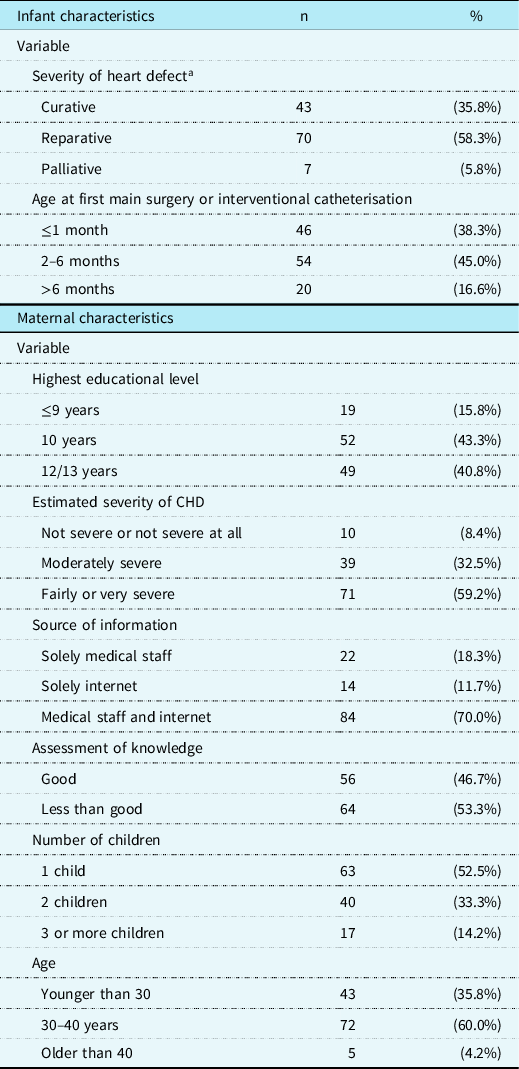
Table 1 shows the demographic characteristics of mothers and patients. The majority of mothers (43.3%) had ten years of schooling and were 30–40 years old (60%). For 53% the patient was their only child. For information seeking, they mostly relied on medical staff and the internet (70%), 18% of the respondents received information only from medical staff, and 12 % got their information on the internet. Self-assessment of knowledge was distributed evenly with 53% reporting less than good and 48% stating good understanding. The majority of mothers rated their child’s heart defect as fairly or very severe (59.2%) and only 8% assessed the child’s CHD as not severe. Approximately one-third of the children had a curative heart defect (35.8%), and only a minority had palliative defects (5.8%). Due to the low rate of occurrence, they were summarised with reparative defects as “residua”. Most of the children had their first main surgery or interventional catheterisation at the age of two to six months (45%).
Characteristics of the study population (N = 120).

a According to Perloff.
Maternal knowledge at hospitalisation
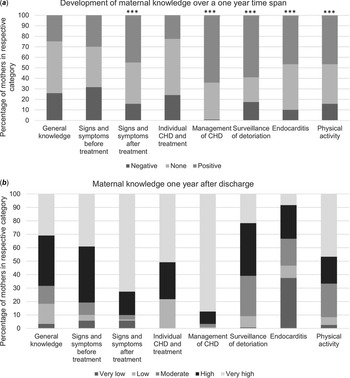
Figure 1 depicts maternal understanding at the time of hospitalisation. Very good knowledge on the child’s “individual CHD and its treatment” was shown by 55% of the mothers and 27% reached high levels of understanding. The results regarding “signs and symptoms before treatment” and “signs and symptoms after treatment” were comparable with approximately half of the mothers showing very good (48%, 49%) and 25% having good knowledge. Very poor understanding of “endocarditis” was found for 62% of the respondents. More detailed information on maternal understanding of the child’s heart defect and infective endocarditis are published elsewhere. Reference Löbel, Geyer, Grosser and Wessel7,Reference Knöchelmann, Geyer and Grosser14
Level of maternal knowledge at hospitalisation after child’s first main surgery or interventional catheterisation, knowledge assessed using the HIPK-CHD.

Development of maternal knowledge and knowledge level at follow-up
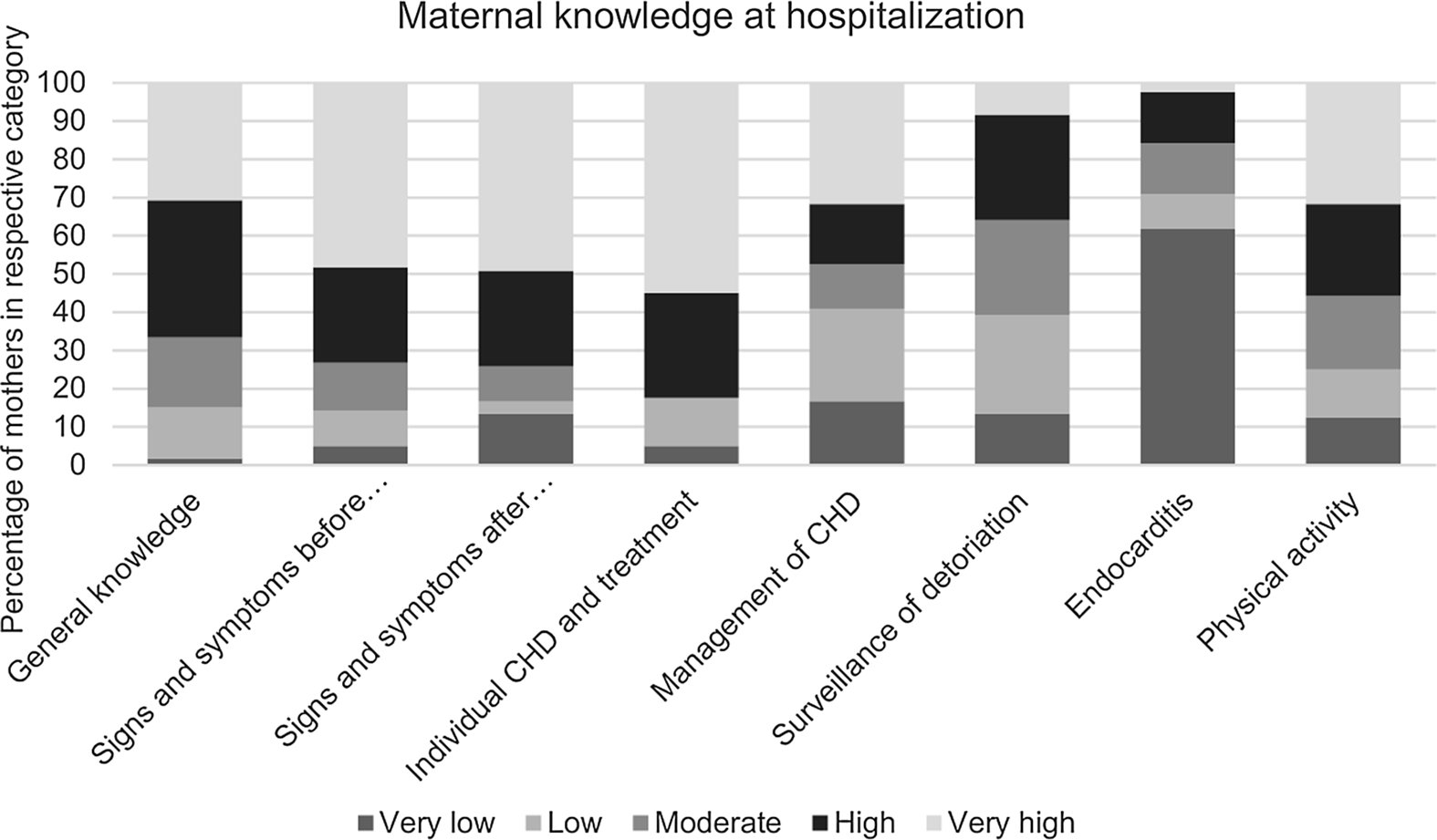
Between the two interviews mothers’ knowledge improved on most subscales (p < 0.01, Fig 2a). “Management of CHD” and “surveillance of deterioration” had the highest rates of improvement (r s = 0.12, 64.2% and r s = 0.20, 59.2%). In 47% of mothers had improved their knowledge on “endocarditis” and “physical activity” (r s = 0.57, r s = 0.47) over time. The understanding of “signs and symptoms after treatment” increased in 45% of the mothers (r s = 0.03). The highest levels of decrease were found for the subscales “signs and symptoms before treatment” and “general knowledge of cardiac functioning” (r s = 0.24, 32% and r s = 0.61, 26%).
( a ) Development of maternal knowledge from hospitalisation to follow-up after one year, results from the Wilcoxon signed-rank test, knowledge assessed using the HPIK-CHD. *** = significant = ≤0.001; ** = ≤0.001; * = significant = ≤0.05. ( b ) Level of maternal knowledge one year after patients discharge, knowledge assessed using HIPK-CHD.

One year after their child’s first surgery or interventional catheterisation, mothers achieved the highest levels of knowledge for “management of CHD” and “signs and symptoms after treatment” with 97% and 90% of the respondents showing good or very good understanding (Fig 2b). As before, the understanding on “physical activity” remained relatively high, with only 8% showing poor or very poor knowledge. Knowledge on “endocarditis” remained poor with 38% and 9% scoring very low or low on this subscale.
Indicators of the development of maternal knowledge
The subscales “general knowledge of cardiac functioning”, “signs and symptoms before treatment”, or “individual CHD and treatment” were not associated with any of the studied factors.
Educational level
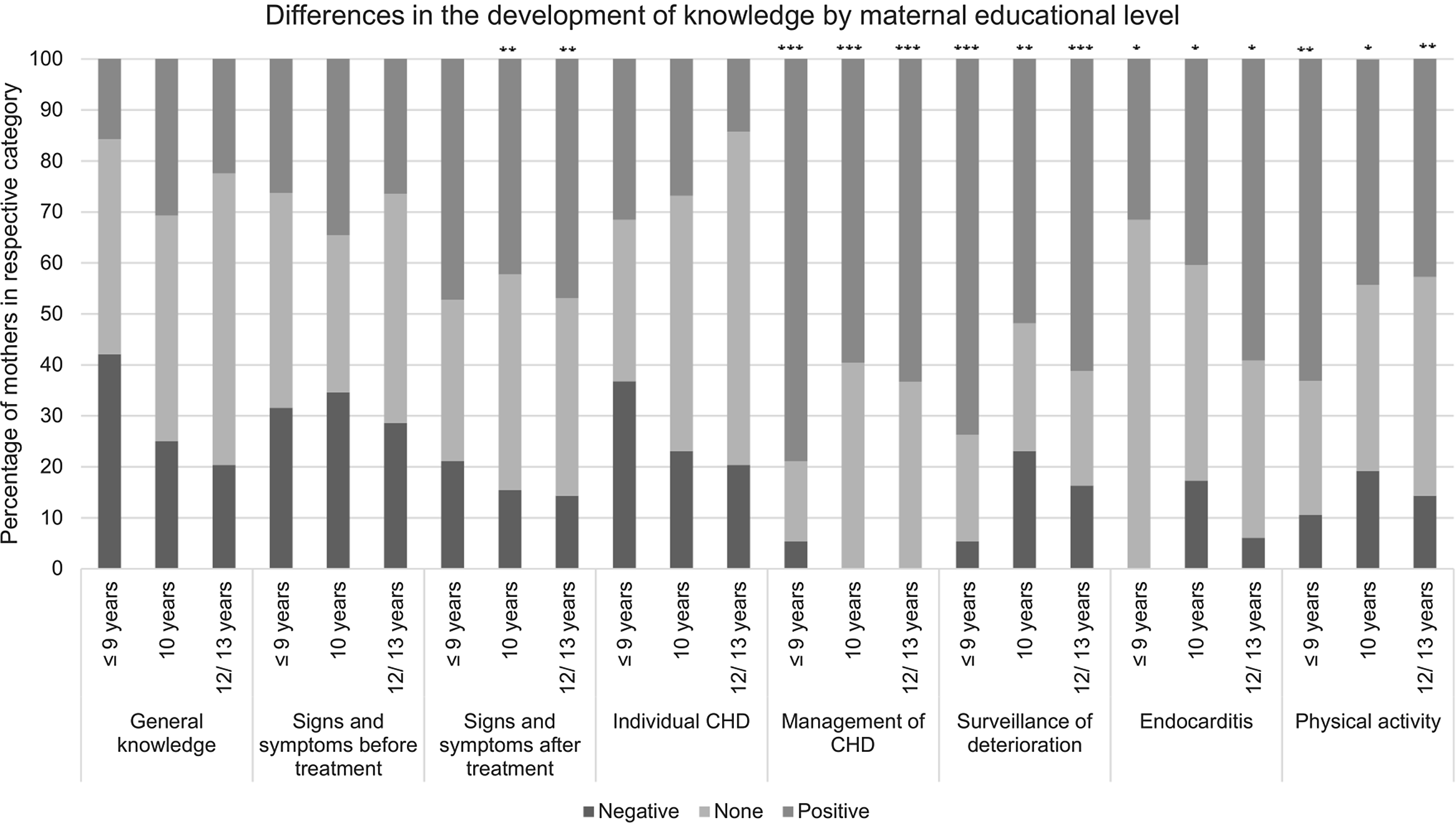
Mothers with the highest and lowest educational levels showed the most notable improvements (Fig 3). For “management at home”, “surveillance of deterioration”, and “physical activity”, mothers with nine or less years of schooling showed the highest levels of increased understanding (78.9%/ p < 0.001; 73.7 %/ p < 0.001; 63.2%/ p = 0.004). Mothers with the highest school degrees showed the most improvements regarding “signs and symptoms after treatment” and “endocarditis” (46.9%/ p = 0.01; 59.2%/ p < 0.001). The most pronounced decline was found in mothers with ten years of schooling for “surveillance of deterioration”, “endocarditis”, and “physical activity” (23.1%/ p = 0.01; 17.3%/ p = 0.02; 19.2%/ p = 0.05).
Association between development of maternal knowledge and maternal educational level, Wilcoxon signed-rank test, knowledge assessed with HIPK-CHD. *** = significant = ≤0.001; ** = ≤0.01; * = ≤0.05.

Severity of CHD
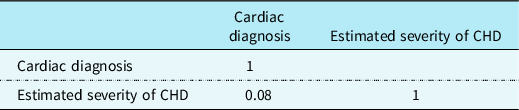
The cardiac diagnosis and estimated severity were not correlated, thus it can be assumed that they represent different aspects of disease severity (Table 2).
Correlations between different measures of cardiac diagnosis (Spearman correlation).

*** = significant = ≤0.001; ** = significant = ≤0.01; * = significant = ≤0.05.
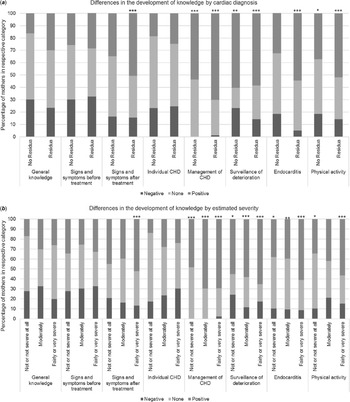
In general, mothers of children with expected residua after treatment showed the most notable improvements regarding their knowledge (Fig 4a). This was particularly pronounced for “management of CHD” with 70% showing increased knowledge (p < 0.001). They also had lower levels of decreasing understanding. The most pronounced decline was found for mothers with residua-free children on the subscale “surveillance of deterioration” (23.3%/ p = 0.002).
( a ) Association between development of maternal knowledge and cardiac diagnosis (categorisation according to Perloff), Wilcoxon signed-rank test, knowledge assessed with HIPK-CHD. *** = significant = ≤0.001; ** = ≤0.01; * = ≤0.05. ( b ) Association between development of maternal knowledge and estimated severity by mothers, Wilcoxon signed-rank test, knowledge assessed with HIPK-CHD. *** = significant = ≤0.001; ** = ≤0.01; * = ≤0.05.

Mothers who rated their child’s heart disease as fairly or very severe showed the highest rates of improvements (Fig 4b). This was particularly evident for “surveillance of deterioration”, “endocarditis”, and “management of CHD”, where more than 60% of the mothers were able to show increased understanding (p < 0.001). For “management of CHD”, only minor differences were found compared to mothers who perceived their child’s heart disease as moderately severe (69.8%/ p < 0.001; 69.6%/ p < 0.001). The highest rates of decreasing knowledge were found for mothers who assessed their child’s defect as not (at all) severe and with the most pronounced association regarding “surveillance of deterioration” (24.1%/ p = 0.02).
Sources of information
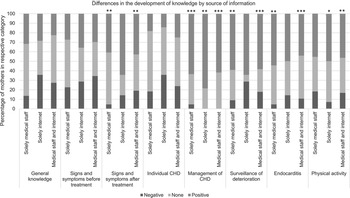
For “surveillance of deterioration” and “endocarditis”, the highest rates of improvement emerged among mothers who relied only on medical staff for information retrieval (Fig 5; 59.1%/ p = 0.003; 54.5%/ p = 0.002). The association between internet usage and increased understanding at follow-up was most pronounced for the subscale “management of CHD” (78.6%/ p = 0.002). Mothers who used both sources showed comparable results to those relying only on medical staff regarding “surveillance of deterioration” (58.3%/ p < 0.001) and achieved the most notable improvement on “signs and symptoms after treatment” (42.9%/ p = 0.01), where they also showed the highest knowledge decline (19%/ p = 0.01).
Association between development of maternal knowledge and source of information, Wilcoxon signed-rank test, knowledge assessed with HIPK-CHD. *** = significant = ≤0.001; ** = ≤0.01; * = ≤0.05.

Self-assessed knowledge
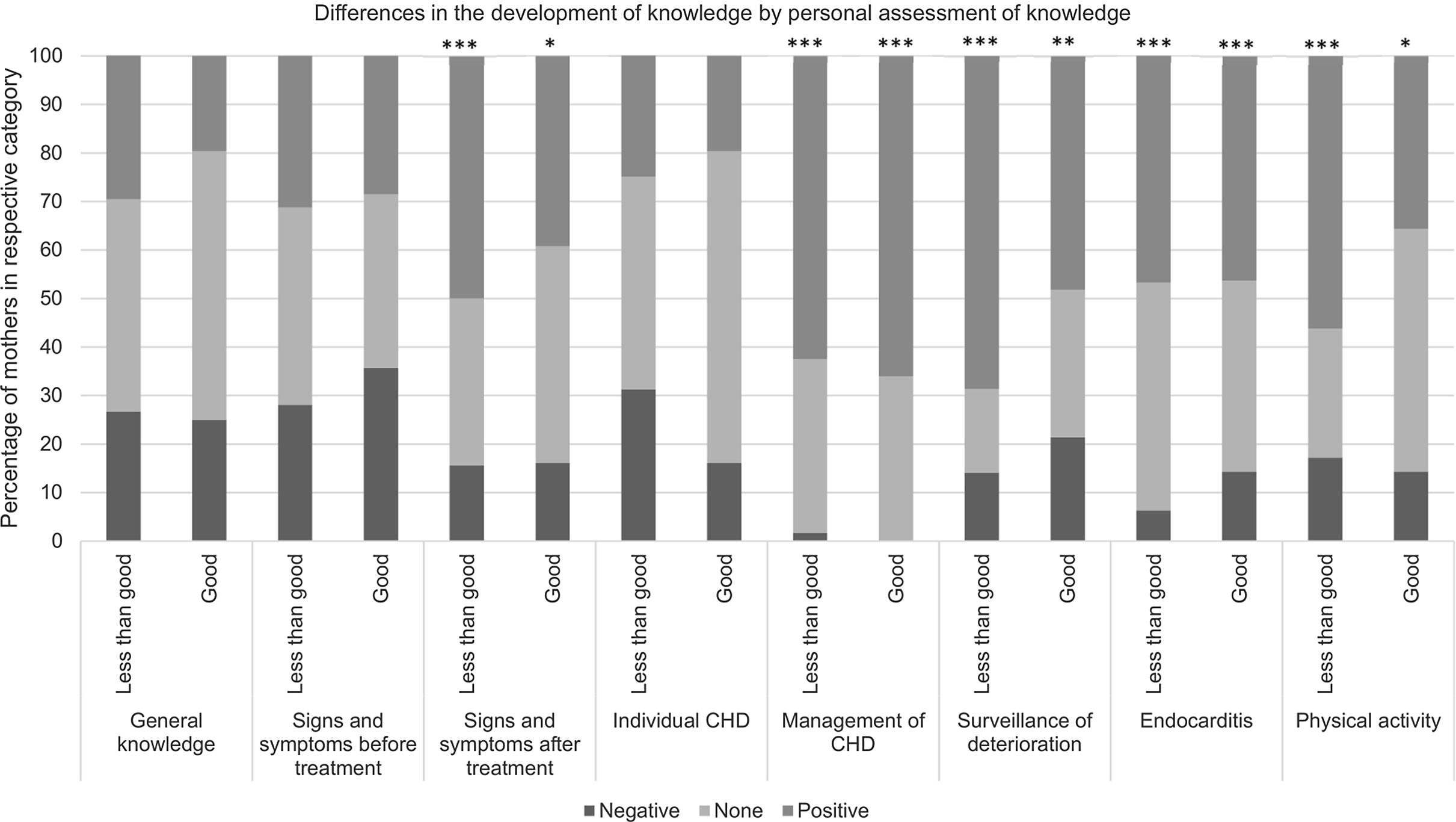
Mothers who initially rated their knowledge as less than good showed the highest rates of improvement over time (Fig 6). This was observable for “signs and symptoms after treatment”, “surveillance of deterioration”, “physical activity”, and “endocarditis” (50.0%/ p < 0.001; 68.8%/ p < 0.001; 56.3%/ p < 0.001; 46.9%/ p < 0.001). For the latter, similar rates emerged for mothers with good knowledge (46.4%/ p < 0.001). They also showed more improvement regarding the “management of CHD” (66.1%/ p < 0.001), but in general had higher rates of declining knowledge, especially on the subscale “surveillance of deterioration” (21.4%/ p < 0.001).
Association between development of maternal knowledge and self-assessed knowledge level at first interview, Wilcoxon signed-rank test, knowledge assessed with HIPK-CHD. *** = significant = ≤0.001; ** = ≤0.01; * = ≤0.05.

Discussion
In this longitudinal study, mothers of children with CHD showed a large variation of understanding regarding their child’s CHD at time of hospitalisation with severe knowledge gaps on the “management of CHD”, “surveillance of deterioration”, and “endocarditis”. From the first to the second survey respondents’ understanding was significantly improved in terms of “signs and symptoms after treatment”, “management of CHD”, “surveillance of deterioration”, “endocarditis”, and “physical activity”. At follow-up, the highest levels of knowledge were observed for “management of CHD” and “signs and symptoms after treatment”, yet the knowledge on “endocarditis” remained problematic.
Mothers with the highest and the lowest educational levels showed the most notable improvements. The same holds for respondents with children with residua-associated CHD and those who rated their child’s defect as fairly or very severe and for mothers with less than good knowledge. We were not able to identify sources of information, which were especially helpful for maternal understanding.
This study is among the first ones to examine changes in maternal understanding on the child’s heart malformation and associated factors. Therefore, it is problematic to draw comparisons regarding knowledge development. The results on knowledge levels in general are in line with prior findings. Most mothers have fewer difficulties with the child’s CHD and associated symptoms at hospitalisation, but show severe lack of knowledge regarding infective endocarditis at both time points. Reference Williams, Shaw and Kleinman3–Reference Wray, Small, Freedman and Franklin6,Reference Chessa, de Rosa and Pardeo8–Reference Haag, Casonato, Varela and Firpo13 The associations between maternal education and knowledge were similar to previous findings on knowledge levels in general, but in our study also mothers with low educational levels showed significant improvements. Reference Williams, Shaw and Kleinman3,Reference Beeri, Haramati, Rein and Nir5,Reference Chessa, de Rosa and Pardeo8–Reference Haag, Casonato, Varela and Firpo13 Our results support the assumption that more severe heart defects are related to higher knowledge levels on the child’s heart defect. Reference El Mahdi, Hashim and Ali9
Parts of the knowledge development might be explained by a reduced relevance of the aspects covered or because they are no more applicable, for instance on the signs and symptoms after surgery or because most of the children only faced minor residua. This might also apply to the management of the CHD because this subscale included questions on medication, which might not be relevant at follow-up.
Our focus was set on very young patients because we wanted to look at the development of maternal knowledge from the beginning. Since many patients have to deal with the CHD and possible consequences for the rest of their lives, it is important to set the stage for appropriate medical care at the beginning of treatment. Therefore, it is essential that the child’s caregivers are well informed about the malformation because it is likely that they are the link between different relevant health care providers, such as paediatric cardiologists, paediatricians, or dentists. Reference Wray, Small, Freedman and Franklin6 A review also concluded that parents are often extensively involved in patient care, such as administering medication or accompanying them to appointments. Reference Heery, Sheehan, While and Coyne22 They are also responsible for informing childcare facilities of any limitations the child might face and for giving correct information to the patient itself on a daily basis.
Most importantly, it is essential for the child’s health that parents know symptoms that are potential indicators of deteriorating health. They also need to know what their child can do to allow for a normal cognitive and motoric development, while making sure that they do not wear themselves out. Because we interviewed mothers of very young children in our study, we were able to provide insight into how knowledge is distributed in this regard, how it evolves, and what factors may be significant in changing knowledge.
Furthermore, parents can help to prepare for a smooth transfer and transition to adult care by providing all relevant information and by raising the necessary awareness for further monitoring. Both topics have been shown to be critical for a successful transfer from paediatric cardiologist. Reference Heery, Sheehan, While and Coyne22
Practical implications
Respondents showed the highest rates of improvement on topics that are essential for taking appropriate care of a child with CHD. Yet, our study has also shown that mothers of children with CHD who had undergone their first major surgery or interventional catheterisation might benefit from additional information on the surveillance of deterioration and infective endocarditis. While the knowledge of most of the examined topics improved over time, understanding of infective endocarditis as a major comorbidity remained insufficient. Reference Baltimore, Gewitz and Baddour23,Reference Knirsch and Nadal24 Because of the severity of endocarditis, further improvement of maternal knowledge should be sought. The same holds for surveillance of deterioration, even though to a smaller extent. Our results suggest that internet-based information might be helpful for improving parental understanding due to its low threshold of accessibility. To be a valuable instrument, paediatric cardiologists should be aware of websites, which are suitable for giving additional information between visits. It should also be noted that some mothers reported having information only from the Internet, although all children went to regular check-ups. We can only assume that the mothers received little or no information apart from the results of the check-up and that they did not consider this as sufficient. Unfortunately, we do not have detailed information on this.
Furthermore, mothers of children with less severe malformations, whether according to cardiac diagnosis or self-assessment, would probably benefit from additional information. Mothers of children with more severe CHD might have shown greater improvement because a thorough understanding is more relevant for them and consequently they received more advice. They might have also demanded for more information because they knew that their child would have to face residua. This might also explain why mothers with less than good knowledge had the highest increases in understanding. They probably assumed that they lacked information they need for appropriately caring for their ill child and therefore tried to fill this gap. To achieve equal improvement, clinicians could use instruments to validate the individual knowledge level, irrespective of the child’s CHD, and to give information accordingly. Additionally, written material on the type of heart defect, and on the next steps of treatment could be handed out. When our study was conducted, no manualised or standardised materials for providing information were available in the clinic.
So far, we have discussed the presence and absence of disease-related knowledge, and this may indeed suggest that providing more information also implies improvement. However, having a high level of knowledge does not warrant that parents are also able to apply knowledge and to manage their child’s disease successfully. It is also necessary to convert knowledge into practice, e.g., how to interpret symptoms of possible disease deterioration or how to determine how much exercise may be appropriate for a child with CHD. For CHD no evaluated structured parental or patient education schemes exist, as is the case for diabetes where elaborated programmes have been developed and evaluated. Reference Chrvala, Sherr and Lipman25 They will not necessarily have to be administered by physicians, and structured programmes would also reduce the dependence of knowledge and ability on educational level. Reference Wallace, Seligman and Davis26
Study limitations
Our study is among the first ones to examine maternal understanding longitudinally and with respect to associated factors, yet we are still lacking information. For example, it is not clear whether mothers of children with more severe defects asked for more information or whether they have received more advice. We do not have information on the specific websites mothers had used. Therefore, we cannot determine whether the development of maternal knowledge varies with specific sources. Furthermore, only mothers were included in this study. We do not know whether fathers add to existing knowledge, resulting in sufficient parental knowledge on all topics. It can be assumed that fathers gather information on other aspects of the child’s heart defect, which might balance the mother’s understanding. Previous studies support this assumption, as it was reported that fathers of children with CHD prefer informed joint decisions and that they feel the need to support their partner and to remain strong. Reference Clark and Miles27,Reference Bruce, Lindh and Sundin28
Future research should focus on exploring the knowledge of both parents and possible interactions, how the development of knowledge develops over a longer period, and whether better parental knowledge leads to a better understanding in adolescent patients upon transfer to cardiologists. Studies could also consider additional associated factors such as numbers of treatments, medication, or duration of hospital stay.
Conclusions
In general, mothers had sufficient knowledge on most of the examined topics and were even able to show improvements on some of them. Yet, the understanding of relevant topics, such as infective endocarditis, remained problematic. The knowledge of mothers improved especially on topics that were particularly important for taking appropriate care for their ill child. Additional understanding of infective endocarditis and surveillance of deterioration is nevertheless desirable. This might be achieved by creating an overview of recommended websites and by providing information in simple language. In order to ensure that all mothers receive the most appropriate information, clinicians could implement instruments for detecting knowledge gaps and to educate caregivers accordingly. Given the increasing number of children and adults with CHDs, it would be appropriate to develop programmes for educating parents and children to reduce the variability of knowledge for managing the disease.
Acknowledgements
The authors would like to thank our colleagues from the Clinic of Pediatric Cardiology and Pediatric Intensive Care of Hannover Medical School for the support for conducting this study and for providing their expertise throughout.
Financial support
The study was funded by the German Research Association (Deutsche Forschungsgemeinschaft) under grants GE 1167/5-1 and WE2670/3-1 to Siegfried Geyer and Armin Wessel.
Conflict of interest
None.
Ethical standards
The study was approved by the local ethics committee of Hannover Medical School under registry number 4457 issued on 22 January, 2007, and written consent was obtained from all participants.
Supplementary material
To view supplementary material for this article, please visit https://doi.org/10.1017/S1047951121001189