Introduction
Women entrepreneurs are essential catalysts for economic growth, job creation, and innovation (Chatterjee, Shepherd, & Wincent, Reference Chatterjee, Shepherd and Wincent2022). Yet they confront distinct challenges stemming from societal norms, gender stereotypes, and structural inequities (Xie & Wu, Reference Xie and Wu2022). Societal expectations often impose a ‘double burden’, intertwining entrepreneurial pursuits with domestic responsibilities and constraining the time and internal resources women can dedicate to their ventures (Brecht, Le Loarne-Lemaire, Kraus, & Maalaoui, Reference Brecht, Le Loarne-Lemaire, Kraus and Maalaoui2023). Compounding this, gendered stereotypes restrict access to external resources – funding, mentorship, and networks – heightening their vulnerability to crises like economic downturns or unexpected disruptions (Tlaiss & McAdam, Reference Tlaiss and McAdam2021; Zhu & Li, Reference Zhu and Li2024). In this demanding landscape, resilience – the capacity to recover, adapt, and thrive amid adversity – emerges as a cornerstone for women entrepreneurs, enabling them to drive new venture growth and safeguard mental well-being (Bagheri, Javadian, Zakeri, & Arasti, Reference Bagheri, Javadian, Zakeri and Arasti2024).
While prior research emphasizes external resources like social networks in fostering entrepreneurs’ resilience (Hartmann, Backmann, Newman, Brykman, & Pidduck, Reference Hartmann, Backmann, Newman, Brykman and Pidduck2022), women often face structural barriers that limit access to these supports, pushing them to rely on personal strategies and internal strengths (Bagheri et al., Reference Bagheri, Javadian, Zakeri and Arasti2024). Polychronicity – a temporal orientation favoring multitasking (Bluedorn, Kalliath, Strube, & Martin, Reference Bluedorn, Kalliath, Strube and Martin1999; Franczak, Gyensare, Lanivich, Adomako, & Chu, Reference Franczak, Gyensare, Lanivich, Adomako and Chu2024) – offers a promising lens for understanding how women entrepreneurs navigate these challenges. Rooted in role accumulation theory (Marks, Reference Marks1977; Sieber, Reference Sieber1974), engaging in multiple roles – though demanding – can generate valuable resources such as skills, networks, and emotional capital that support both personal and professional development (Manrai & Manrai, Reference Manrai and Manrai1995). Rather than compartmentalizing responsibilities, individuals high in polychronicity tend to perceive role boundaries as permeable, enabling them to integrate cross-role demands efficiently while minimizing the costs of resources (Berger & Bruch, Reference Berger and Bruch2021; Kaufman, Lane, & Lindquist, Reference Kaufman, Lane and Lindquist1991). For women entrepreneurs, this temporal orientation is particularly advantageous: by combining tasks within and across business, family, and community spheres, those high in polychronicity can transform the complexity of overlapping roles into a strategic source of resilience (König & Waller, Reference König and Waller2010).
However, prior research has yet to fully explore how polychronic women entrepreneurs strategically leverage their multitasking tendencies to accumulate resources and fortify resilience against entrepreneurial adversity. Moreover, while polychronicity can enhance adaptability (Anser, Yousaf, Sharif, Yijun, Majid, & Yasir, Reference Anser, Yousaf, Sharif, Yijun, Majid and Yasir2022), the boundary conditions amplifying this relationship remain largely uncharted. Entrepreneurial contexts, characterized by high uncertainty and resource variability (Zhou, Reference Zhou2018), likely moderate polychronicity’s effects through factors such as interruptions, cognitive resources, and emotional capability. Understanding these dynamics is critical to unlocking polychronicity’s full potential for women entrepreneurs.
Grounded in role accumulation theory, we conducted a two-stage survey of 129 Chinese women entrepreneurs to examine the relationship between polychronicity and resilience. We further explore three boundary conditions – both external and internal – that enhance this relationship. First, frequent interruptions, common in dynamic entrepreneurial settings, trigger dynamic resource reallocation, enabling polychronic women to integrate responsibilities dynamically and achieve person–environment fit (PE-fit) (Howard & Cogswell, Reference Howard and Cogswell2023; Leroy, Schmidt, & Madjar, Reference Leroy, Schmidt and Madjar2020). Second, entrepreneurial experience broadens resource access and refines management strategies, amplifying polychronicity’s benefits through accumulated knowledge and networks (Mmbaga, Lerman, Munyon, & Lanivich, Reference Mmbaga, Lerman, Munyon and Lanivich2023). Third, emotional intelligence (EI) supports emotional regulation and stability, mitigating the strain of managing multiple demands (Law, Wong, & Song, Reference Law, Wong and Song2004).
This study makes three key contributions. First, by introducing polychronicity as a distinct and underexplored temporal orientation of entrepreneurs, we examine how they experience and manage time under pressure to strengthen a critical personal capacity – resilience – thereby extending temporal research in entrepreneurship (Shepherd & Williams, Reference Shepherd and Williams2023). Second, drawing on role accumulation theory, this study suggests that polychronic women entrepreneurs actively integrate multiple roles to enhance resilience, shedding light on the psychological mechanisms underlying gendered patterns of entrepreneurial adaptation (Bagheri et al., Reference Bagheri, Javadian, Zakeri and Arasti2024). Third, this study advances polychronicity research by introducing EI as a key internal enabler that helps women entrepreneurs harness the benefits of polychronicity even under unfavorable external conditions – thus moving beyond the conventional focus on PE-fit (Howard & Cogswell, Reference Howard and Cogswell2023). Practically, our findings empower women entrepreneurs to leverage polychronicity and role engagement strategically, enhancing resilience to sustain venture survival and growth in the face of adversity.
Theoretical Background and Hypotheses Development
Role accumulation theory posits that engaging in multiple roles fosters personal growth and well-being by enabling individuals to transfer and reinvest resources – such as knowledge, motivation, and support – across domains (Sieber, Reference Sieber1974). While managing multiple roles can sometimes create conflict and strain, it more frequently yields overlooked benefits, as the cumulative experience enhances overall effectiveness (Anglin, Kincaid, Short, & Allen, Reference Anglin, Kincaid, Short and Allen2022). For women entrepreneurs, who often navigate overlapping responsibilities in business, family, and social spheres, this resource spillover strengthens their capability to address both entrepreneurial and personal demands (Paustian-Underdahl, Halbesleben, Carlson, & Kacmar, Reference Paustian-Underdahl, Halbesleben, Carlson and Kacmar2016). Time and energy, as flexible and expandable resources, can be strategically allocated across roles, maximizing efficiency and reducing strain (Berger & Bruch, Reference Berger and Bruch2021).
Polychronicity refers to a cognitive preference for engaging in multiple activities at the same time (Mohammed & Nadkarni, Reference Mohammed and Nadkarni2014). In the context of women’s entrepreneurship, these activities often span multiple roles – such as entrepreneur, caregiver, spouse, and community leader (Ruderman, Ohlott, Panzer, & King, Reference Ruderman, Ohlott, Panzer and King2002). This temporal orientation enables women to integrate cross-role demands by complementarily applying their skills, energy, and resources, promoting a more holistic coordination of diverse responsibilities (Kaufman, Lane, & Lindquist, Reference Kaufman, Lane and Lindquist1991). Such cross-role integration aligns with role accumulation theory, which highlights the psychological and instrumental benefits of managing multiple roles simultaneously (Greenhaus & Powell, Reference Greenhaus and Powell2006), suggesting that individuals who prefer role transitions are more likely to see their roles as compatible and mutually reinforcing (Ashforth, Kreiner, & Fugate, Reference Ashforth, Kreiner and Fugate2000). Supporting this perspective, Berger and Bruch (Reference Berger and Bruch2021) found that individuals with higher levels of polychronicity who participated in multiple team memberships reported greater role efficacy – a key mechanism of role accumulation – which ultimately led to lower levels of exhaustion. For women entrepreneurs facing gender-specific constraints, such as limited access to capital or networks (Xie & Wu, Reference Xie and Wu2022), polychronicity may help transform the burden of navigating multiple, gendered role expectations into a strategic advantage.
We distinguish polychronicity from multitasking, where the former is a proactive cognitive orientation and the latter is the observable behavior of handling multiple tasks concurrently (see Table 1). Proactive multitasking, characteristic of polychronic entrepreneurs, is intentional and goal-aligned, whereas reactive multitasking – often driven by situational demands – can impair decision-making and increase stress under cognitive overload (Kudesia, Pandey, & Reina, Reference Kudesia, Pandey and Reina2022). Consistent with Franczak et al. (Reference Franczak, Gyensare, Lanivich, Adomako and Chu2024), we conceptualize polychronicity at a broader strategic level, particularly in mission orientation, where entrepreneurs focus on holistic, long-term objectives rather than isolated tasks. This perspective aligns with the unique challenges faced by women entrepreneurs, who must navigate overlapping responsibilities in multiple domains. Notably, polychronic women entrepreneurs are more inclined to proactive multitasking, orchestrating their responsibilities with energy and intentionality to support long-term objectives (Anser et al., Reference Anser, Yousaf, Sharif, Yijun, Majid and Yasir2022; Franczak et al., Reference Franczak, Gyensare, Lanivich, Adomako and Chu2024). This strategic integration fosters adaptability, sharpens problem-solving, and builds resilience in a dynamic and resource-constrained environment.
Comparison between polychronicity and multitasking

Polychronicity and Women Entrepreneurs’ Resilience
Much of the existing research on entrepreneurs’ resilience relies on male-centric frameworks, potentially overlooking gender-specific dynamics (Bagheri et al., Reference Bagheri, Javadian, Zakeri and Arasti2024). Women entrepreneurs face unique challenges – gender stereotypes, restricted access to external resources, and the burden of balancing multiple roles – that necessitate reliance on personal strategies and internal resourcefulness (Xie & Wu, Reference Xie and Wu2022). Recent studies highlight that effective time and resource management are pivotal for women to recover from setbacks and thrive (Bridges, Wulff, & Bamberry, Reference Bridges, Wulff and Bamberry2023). Role accumulation theory provides a lens to understand how women entrepreneurs leverage their role multiplicity to enhance resilience through three mechanisms: additive effects, buffering effects, and transfer effects (Greenhaus & Powell, Reference Greenhaus and Powell2006), each uniquely driven by their polychronic orientation.
Additive effects occur as engagement in multiple roles cumulatively enhance psychological well-being and life satisfaction (Voydanoff, Reference Voydanoff2001). For women entrepreneurs, polychronicity enables the simultaneous pursuit of diverse activities – managing a business, nurturing family ties, and engaging in community networks – yielding a robust portfolio of resources (e.g., social capital, emotional support, and financial assets), as well as enhanced fulfillment and meaning (Perry-Jenkins et al., Reference Perry-Jenkins, Repetti and Crouter2000). Polychronicity supports these additive benefits by enabling women entrepreneurs to effectively integrate role demands, structuring their time and attention in ways that complement rather than compete (Kaufman-Scarborough & Lindquist, Reference Kaufman-Scarborough and Lindquist1999). Unlike monochronic approaches that prioritize sequential task execution, polychronicity allows women to ‘stack’ resources proactively, compensating for structural disadvantages such as limited access to traditional funding or mentorship. For instance, attending a business workshop while coordinating a family event can expand both professional networks and personal support systems – by perceiving these roles as mutually reinforcing, polychronic women entrepreneurs develop a more holistic approach to managing multiple responsibilities (Berger & Bruch, Reference Berger and Bruch2021), creating a synergistic resource base that enhances their resilience.
Buffering effects emerge as involvement in multiple roles protects against stress from any single domain (Greenhaus & Powell, Reference Greenhaus and Powell2006). Polychronicity equips women entrepreneurs to strategically allocate attention, cognitive resources, and emotional energy across responsibilities, mitigating the impact of entrepreneurial uncertainties – market functions, funding rejections, or gender bias (Sirén, Parida, Frishammar, & Wincent, Reference Sirén, Parida, Frishammar and Wincent2020). For instance, when business challenges arise, polychronic women can redirect energy to family or community roles for emotional replenishment, reducing burnout risk (Anser et al., Reference Anser, Yousaf, Sharif, Yijun, Majid and Yasir2022). This flexibility is particularly vital for women, who often operate in resource-scarce contexts; for example, a woman entrepreneur might offset a business setback by drawing on community support cultivated through simultaneous role engagement. By maintaining a ‘resource cushion’, polychronicity shields against shocks, preserving women entrepreneurs’ resilience.
Transfer effects occur when resources, knowledge, and experiences gained in one role are reinvested into others, amplifying overall capacity (Ruderman et al., Reference Ruderman, Ohlott, Panzer and King2002). Polychronic women entrepreneurs are more inclined to recognize and harness cross-role opportunities, applying their skills, networks, and insights across domains (Conte, Aasen, Jacobson, O’Loughlin, & Toroslu, Reference Conte, Aasen, Jacobson, O’Loughlin and Toroslu2019). For instance, negotiation skills honed in business dealings can enhance family resource management, freeing time for entrepreneurial pursuits, while community ties built through caregiving roles can yield business referrals. This cross-domain synergy aligns with research showing that resource transfers enhance adaptability (van de Brake, Walter, Rink, Essens, & van der Vegt, Reference van de Brake, Walter, Rink, Essens and van der Vegt2018), critical drivers of resilience. For women balancing multifaceted roles, polychronicity transforms these demands into a strategic asset, creating a self-reinforcing system where success in one area bolsters another, fortifying resilience amid uncertainty.
In summary, polychronic women entrepreneurs can better cultivate resilience by enabling additive effects that build a diverse resource base, buffering effects that protect against adversity, and transfer effects that optimize resource across domains. This framework addresses the gender-specific challenges women face, positioning polychronicity as a cognitive and strategic asset that turns role multiplicity into a source of strength. By proactively integrating responsibilities, polychronic women entrepreneurs overcome resource constrains, adapt to dynamic environments, and sustain resilience. Thus, we propose:
Hypothesis 1 (H1): There is a positive relationship between women entrepreneurs’ polychronicity and their resilience.
The Moderating Role of Frequent Interruptions
Frequent interruptions have surged in prevalence across work and nonwork domains, particularly since the COVID-19 pandemic, amplifying the need for continuous multitasking (Leroy et al., Reference Leroy, Schmidt and Madjar2020). For women entrepreneurs, who often juggle multiple roles due to societal expectations, these interruptions intensify an already complex landscape (Brecht et al., Reference Brecht, Le Loarne-Lemaire, Kraus and Maalaoui2023; Leroy, Schmidt, & Madjar, Reference Leroy, Schmidt and Madjar2021). However, drawing on the PE-fit perspective of polychronicity (Howard & Cogswell, Reference Howard and Cogswell2023; Madjar & Oldham, Reference Madjar and Oldham2006), we argue that frequent interruptions may actually strengthen the positive association between polychronicity and resilience. According to the PE-fit framework, individuals function more effectively when their personal characteristics align with contextual demands (Fournier, Weeks, Blocker, & Chonko, Reference Fournier, Weeks, Blocker and Chonko2013). For polychronic women entrepreneurs, frequent interruptions can create an environment that aligns with their temporal orientation, enabling them to function more adaptively. Complementing this with role accumulation theory, we propose that interruptions may enhance the benefits of polychronicity by reinforcing its additive, buffering, and transfer effects.
In terms of additive effects, frequent interruptions create an environment that aligns with polychronic individuals’ preference for multitasking, fostering a strong PE-fit (Fournier et al., Reference Fournier, Weeks, Blocker and Chonko2013). Polychronic women entrepreneurs often see interruptions not as disruptions, but as natural expressions of their preferred fast-paced, nonlinear working style. From a role accumulation perspective, interruptions offer real-time opportunities to integrate multiple roles, enabling smooth navigation across responsibilities (Berger & Bruch, Reference Berger and Bruch2021). For example, during a networking event, a woman entrepreneur might be discussing a potential business partnership when she receives an alert about a community initiative she supports. Instead of pausing the conversation, she seamlessly integrates insights from her community work into the discussion, strengthening social ties while advancing business goals. This alignment of temporal preferences with multiple role demands helps cultivate psychological coherence across roles, which may promote resilience over time (Howard & Cogswell, Reference Howard and Cogswell2023).
Second, frequent interruptions strengthen the buffering effects of polychronicity by encouraging strategic reallocation of cognitive and emotional resources, helping mitigate stress and maintain balance across competing role demands (Körner, Debus, Wu, & Kleinmann, Reference Körner, Debus, Wu and Kleinmann2025). From a PE-fit perspective, polychronic individuals experience fewer negative emotions during task switching, as interruptions align with their preferred cognitive style (Madjar & Oldham, Reference Madjar and Oldham2006). Meanwhile, role accumulation theory suggests that shifting between roles offers emotional replenishment and prevents overload in any single domain (Ashforth et al., Reference Ashforth, Kreiner and Fugate2000). For example, when a business setback is followed by a community or family responsibility, they can redirect their attention to a more emotionally fulfilling task – such as supporting a child or participating in a local initiative – which offers psychological relief while maintaining overall productivity. In this way, interruptions serve as natural inflection points, allowing polychronic women entrepreneurs to restore balance and better manage persistent role demands.
Finally, frequent interruptions enhance the transfer effects of polychronicity by fostering women entrepreneurs’ adaptive capacity across domains. Constant interruptions push polychronic individuals to reassess goals and adjust priorities in real time, building cognitive and behavioral flexibility that supports cross-role learning (Leroy et al., Reference Leroy, Schmidt and Madjar2021). From a PE-fit view, such dynamic environments align with polychronic preferences and offer repeated practice in rapid task-switching and problem-solving (Fournier et al., Reference Fournier, Weeks, Blocker and Chonko2013). Role accumulation theory further suggests that these adjustments promote the transfer of skills, insights, and social resources across roles (Greenhaus & Powell, Reference Greenhaus and Powell2006). For example, negotiation skills from business may aid family conflict resolution, while empathy from caregiving can enrich client relations. These cross-role exchanges expand polychronic women entrepreneurs’ resource base, boosting confidence and competence in managing complex demands and supporting greater resilience (Ruderman et al., Reference Ruderman, Ohlott, Panzer and King2002).
Together, the PE-fit and role accumulation perspectives offer an integrated lens for understanding how frequent interruptions shape the link between polychronicity and resilience, particularly in gendered, dynamic entrepreneurial contexts. Frequent interruptions enhance this link by enabling real-time role integration (additive effects), flexible resource allocation to ease stress (buffering effects), and cross-role learning that builds adaptability (transfer effects). In this way, interruptions act as catalysts, helping polychronic women entrepreneurs turn complexity into opportunity. By aligning their temporal preferences with situational demands and leveraging role experiences, they are better prepared to navigate uncertainty and strengthen their resilience. Based on these insights, we propose the following:
Hypothesis 2 (H2): The prevalence of interruptions strengthens the positive relationship between the women entrepreneurs’ polychronicity and their resilience.
The Moderating Role of Entrepreneurial Experience
Entrepreneurial experience – comprising accumulated knowledge, skills, and networks from previous ventures – serves as a vital resource for navigating the uncertainty and complexity inherent in entrepreneurship (Amaral, Baptista, & Lima, Reference Amaral, Baptista and Lima2011). For polychronic women entrepreneurs, this experience enhances their ability to transform competing demands into strategic opportunities rather than stressors (Mmbaga et al., Reference Mmbaga, Lerman, Munyon and Lanivich2023). Within the framework of role accumulation theory, entrepreneurial experience amplifies polychronicity’s additive, buffering and transfer effects, enabling women entrepreneurs to leverage their polychronic orientation more effectively and strengthen their resilience in dynamic environments.
Entrepreneurial experience strengthens the additive effects of polychronicity on resilience by expanding resource portfolio available to women entrepreneurs. Seasoned entrepreneurs bring diverse cognitive frameworks, extensive social networks, and strengthened psychological resources, such as self-efficacy and confidence – gained from past ventures (Amaral et al., Reference Amaral, Baptista and Lima2011). For polychronic women, these accumulated resources amplify their capacity to integrate multiple roles strategically, enabling them to respond to setbacks with greater agility, further bolstering their resilience.
Entrepreneurial experience also enhances the buffering effect of polychronicity on resilience by refining women entrepreneurs’ effectiveness in managing competing role demands. Specifically, experienced polychronic women possess sophisticated resource management strategies, honed through past challenges, that allow them to allocate time, attention, and cognitive resources with precision (Lévesque & Stephan, Reference Lévesque and Stephan2020). For example, an experienced entrepreneur might shift focus from a business crisis to a family need, using lessons from prior ventures to maintain equilibrium. Ruderman et al. (Reference Ruderman, Ohlott, Panzer and King2002) note that role multiplicity mitigates stress when supported by effective strategies – a dynamic amplified by experience. By enhancing polychronicity’s buffering capacity, entrepreneurial experience reduces strain, sustains productivity, and fortifies resilience against entrepreneurial pressures.
Finally, entrepreneurial experience magnifies the transfer effects of polychronicity by sharpening women entrepreneurs’ adaptability across role boundaries. Repeated exposure to entrepreneurial uncertainty refines their ability to prioritize and recalibrate resources in real time, drawing on insights from past success and failures (Mmbaga et al., Reference Mmbaga, Lerman, Munyon and Lanivich2023). For polychronic women, this translates into a heightened capacity to apply skills and networks across domains – e.g., using business-honed problem-solving to address family challenges or leveraging community ties for entrepreneurial growth. De Clercq, Kaciak, and Thongpapanl (Reference De Clercq, Kaciak and Thongpapanl2022) suggest that experience sharpens pattern recognition and obstacle anticipation, enabling flexible adjustments that prevent resource depletion. This adaptability is a resilience cornerstone, particularly for women navigating gendered role complexity. Entrepreneurial experience thus transforms polychronicity into a dynamic tool for cross-context learning, reinforcing resilience through continuous recalibration.
In sum, entrepreneurial experience moderates the relationship between polychronicity and resilience by broadening resource access (additive effects), helping manage competing role demands (buffering effects), and enhancing real-time adjustments (transfer effects). For polychronic women entrepreneurs, entrepreneurial experience acts as a multiplier, turning their polychronic orientation into a strategic asset that overcomes gender-specific barriers and thrives amid uncertainty. As experience accumulates, they become increasingly adept at leveraging polychronicity to build and sustain resilience. Therefore, we propose:
Hypothesis 3 (H3): Entrepreneurial experience strengthens the positive relationship between the women entrepreneurs’ polychronicity and their resilience.
The Moderating Role of EI
EI – the ability to recognize, comprehend, manage, and effectively utilize one’s own and others’ emotions – plays a pivotal role in interpersonal interactions and decision-making (Law et al., Reference Law, Wong and Song2004). High EI enables individuals to reframe emotionally charged situations and regulate internal responses, enhancing emotional stability and strategic thinking (Mayer, Roberts, & Barsade, Reference Mayer, Roberts and Barsade2008). For women entrepreneurs, who often experience emotions more intensely due to societal and role-related presses (Grossman & Wood, Reference Grossman and Wood1993), EI offers a unique advantage. When paired with polychronicity, EI transforms emotional awareness into a resilience-building asset, amplifying the effects of role accumulation in gender-dynamic entrepreneurial contexts.
EI amplifies the additive effects by enabling polychronic women entrepreneurs to extract greater value from their multiple roles. High EI facilitates efficient emotional regulation, reducing cognitive overload from simultaneous tasks and allowing polychronic women to integrate social and emotional resources seamlessly (Fang He, Sirén, Singh, Solomon, & von Krogh, Reference Fang He, Sirén, Singh, Solomon and von Krogh2018). For instance, an emotionally intelligent woman might leverage empathy gained in family interactions to strengthen business relationships, enriching her resource pool with trust and support. This aligns with role accumulation theory’s premise that multiple roles enhance well-being when effectively managed (Ruderman et al., Reference Ruderman, Ohlott, Panzer and King2002). By expanding emotional and social capital, EI empowers polychronic women to navigate setbacks with a broader, more robust resource base (Wong & Law, Reference Wong and Law2002), bolstering their resilience in complex environments.
EI also strengthens the buffering effects of polychronicity by alleviating the emotional strain of multitasking and uncertainty. Polychronic women entrepreneurs with high EI can reframe stressors – such as business rejection or family conflict – as manageable challenges rather than insurmountable threats (De Cock, Denoo, & Clarysse, Reference De Cock, Denoo and Clarysse2020). This reframing prevents emotional exhaustion and preserves psychological stability a critical buffer against the demands of multiple roles (Law et al., Reference Law, Wong and Song2004). For women, who often face more emotional labor due to societal expectations (Kovid, Singh, Sharma, Gaur, & Pandla, Reference Kovid, Singh, Sharma, Gaur and Pandla2025), EI is particularly vital. For example, an emotionally intelligent women entrepreneur might use self-soothing techniques during a chaotic day of overlapping responsibilities, maintaining focus and energy. By mitigating the emotional toll of multitasking, EI reinforces polychronic women entrepreneurs’ resilience amid adversity.
Finally, EI enhances the transfer effects of polychronicity by enabling women entrepreneurs to leverage emotional insights across roles, fostering adaptability. High EI allows polychronic women to reframe failures as learning opportunities and adjust strategies dynamically (Huy & Zott, Reference Huy and Zott2019). For instance, positive emotion gained from managing a personal setback can inform a business pivot, while emotional skills honed in negotiations can deescalate family tensions. Kovid et al. (Reference Kovid, Singh, Sharma, Gaur and Pandla2025) note that EI cultivates a growth mindset, which is crucial for women navigating gendered uncertainties. This adaptability – rooted in emotional regulation – installs confidence and control (Yao, Chen, & Wei, Reference Yao, Chen and Wei2023), enabling polychronic women to transfer resources and lessons across domains effectively. Over time, this cross-role synergy strengthens their resilience, turning EI into a catalyst for sustained performance.
In sum, EI moderates the relationship between polychronicity and resilience by maximizing the benefits of multiple roles (additive effects), mitigating emotional strain (buffering effects), and applying emotional insights across roles (transfer effects). For women entrepreneurs, EI transforms their polychronicity into a powerful tool, leveraging emotional depth to overcome gender-specific challenges and thrive in uncertainty. As an essential role ability, EI enhances polychronicity’s resilience-building potential, equipping women to navigate complex demands with agility and strength. Therefore, we propose:
Hypothesis 4 (H4): Emotional intelligence strengthens the positive relationship between the women entrepreneurs’ polychronicity and their resilience.
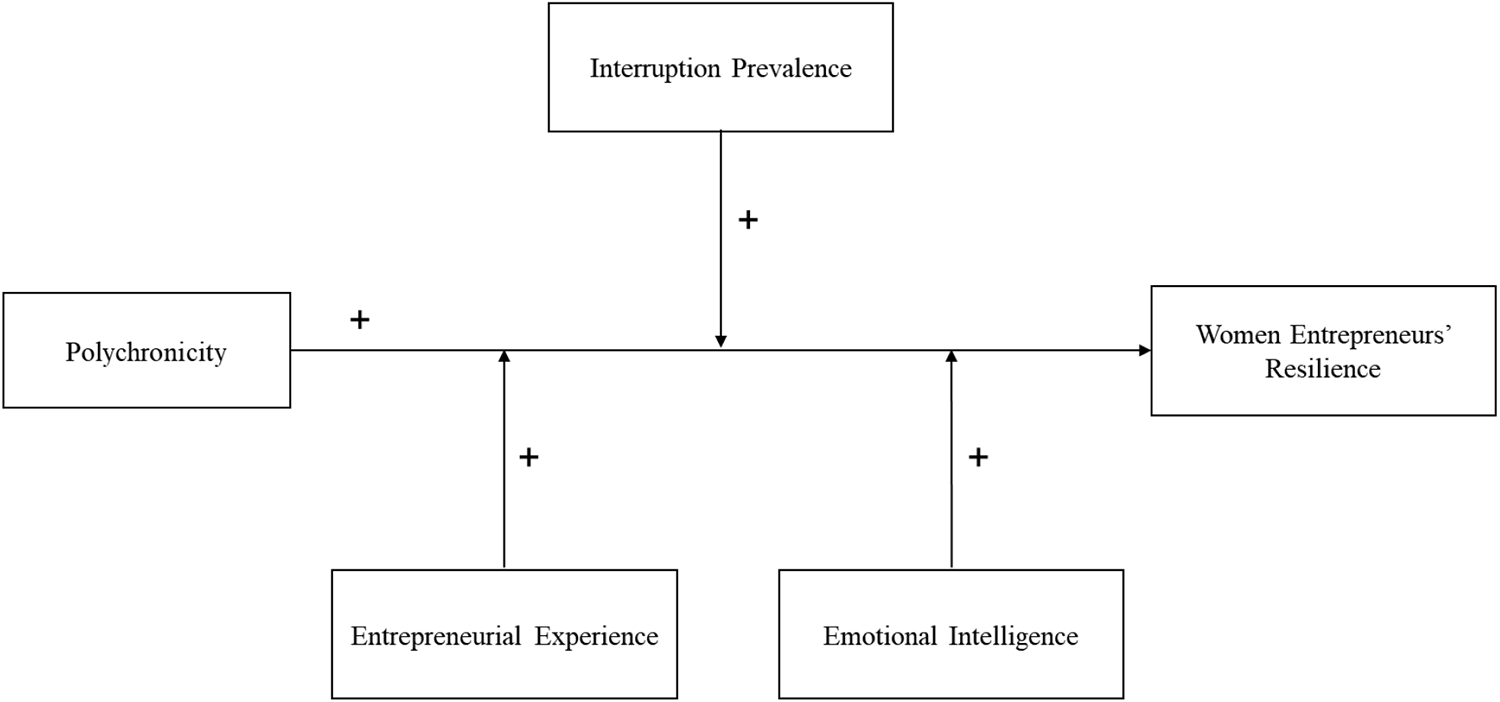
Figure 1 illustrates the theoretical framework of the study.
Theoretical model of hypothesized relationships

Methods
Sample and Data Collection
We conducted two rounds of questionnaires with women entrepreneurs in China between July and October 2022 and spaced the two rounds by at least 1 month to capture key intra-individual differences (Zhang, Gao, Odeh, & Leatherbee, Reference Zhang, Gao, Odeh and Leatherbee2021). The survey was mainly conducted by ePanel, a Chinese professional market research company serving as the executive director of the China Market Research Association, and the Asia-Pacific Internet Research Alliance. The company has a nationwide sample base of approximately 1,500 women entrepreneurs in China and supports various forms of online and offline surveys, providing effective data support for our research. Besides, we also employed the personal networks with entrepreneurs and business incubators for distribution via field surveys, emails, and other methods. Given the challenges in reaching a broader pool of qualified women entrepreneurs in China, this combined approach of collecting data proved to be an effective strategy (Liu, Li, Hao, & Zhang, Reference Liu, Li, Hao and Zhang2019).
First, we randomly selected 500 women entrepreneurs from an initial pool of 1,500. To ensure our sample aligned with the study’s focus, we targeted women entrepreneurs who had founded their businesses either independently or in partnership within the past 6 years and who currently maintained majority ownership and active management (e.g., Mueller, Wolfe, & Syed, Reference Mueller, Wolfe and Syed2017; Zahra, Ireland, & Hitt, Reference Zahra, Ireland and Hitt2000). To verify their entrepreneurial status, we cross-checked business records using Qcc.com, a Chinese professional business search platform. Applying these selection criteria, we further screened the sample and identified 210 women entrepreneurs who met the research requirements. We then collected participation confirmations and distributed questionnaires. The first round of data collection, conducted in July and August 2022, resulted in 168 valid responses, yielding a response rate of 80%. In this round, we collected data on independent variables, the moderating variables of entrepreneurial experience and EI, and part of control variables. The second round, conducted in September and October 2022, targeted all 168 participants from the first round, resulting in responses from 138 women entrepreneurs (response rate: 82%). In this round, we gathered data on dependent variables, the moderating variable of interruption prevalence, and other control variables. Throughout both rounds, we confirmed all samples continued to run their businesses.
After eliminating duplicate and unanswered responses, the hypothesis testing sample consisted of 129 women entrepreneurs, with a response rate of 61.42%. We conducted independent-sample t-tests comparing second-round respondents and nonrespondents on key variables from the first-round survey. The results showed no significant differences in polychronicity (t = 0.837, p = 0.404), entrepreneurial experience (t = −1.390, p = 0.167), or EI (t = − 1.197, p = 0.233), as all p-values exceeded the 0.05 threshold. We further compared the first and fourth quartiles of second-round responses on the dependent and moderating variables. No significant differences were found in women entrepreneurs’ resilience (t = −1.499, p = 0.139) or interruption prevalence (t = −1.907, p = 0.061). These results suggest that nonresponse bias is unlikely to have affected the our analysis. As detailed in Table 2, the average age of participants was 39 years (SD = 5.07), and the educational levels varied, with 30 having a college degree or less, 58 holding a bachelor’s degree, and 41 having a master’s degree or higher. The firms, on average, were just over 3 years old (SD = 1.25) and employed around 50 people (Median = 15), and were distributed across 22 provinces in China.
Characteristics of the respondents

Note: N = 129.
Measures
The validity of the measures translated from English into Chinese was ensured by following standard translation and back-translation procedures (Brislin, Reference Brislin, Lonner and Berry1986). The complete list of survey measurement items for the key constructs is provided in Appendix A (Table A1).
Women entrepreneurs’ resilience
Consistent with recent studies in entrepreneurship (e.g., Bullough, Renko, & Myatt, Reference Bullough, Renko and Myatt2014), women entrepreneurs’ resilience was measured using the four-item Brief Resilience Coping Scale, which was developed by Sinclair and Wallston (Reference Sinclair and Wallston2004). For example, a sample item is, ‘I believe I can grow in positive ways by dealing with difficult situations’. The items were rated on a seven-point Likert scale (1 = ‘not at all’ to 7 = ‘a great deal’), and the scale’s α = 0.770.
Polychronicity
Following Mohammed and Nadkarni (Reference Mohammed and Nadkarni2014), polychronicity was measured using seven items from the widely used scale developed by Bluedorn et al. (Reference Bluedorn, Kalliath, Strube and Martin1999) and two additional items from Hecht and Allen (Reference Hecht and Allen2005), with a seven-point Likert scale (1 = ‘completely disagree’ to 7 = ‘completely agree’), including two reverse-scored items. Sample items include, ‘I like to juggle several activities at the same time’ and ‘I believe it is best to complete one task before starting another’ (reverse item). The scale’s α = 0.804.
Interruption prevalence
According to Leroy et al. (Reference Leroy, Schmidt and Madjar2021), women entrepreneurs need to report the frequency of specific interruptions from both work and nonwork sources, categorized into five types (intrusions, distractions, breaks, multitasking, and surprises). This resulted in 10 items (5 interruption types × 2 sources) measured on a Likert scale ranging from 1 = ‘never’ to 7 = ‘extremely often’. A sample item is, ‘How often do you experience work-related distractions during your workday’? The scale’s α = 0.945.
Entrepreneurial experience
Following Mmbaga et al. (Reference Mmbaga, Lerman, Munyon and Lanivich2023), we assessed entrepreneurial experience by asking women entrepreneurs whether they had previously founded a venture (Ucbasaran, Westhead, & Wright, Reference Ucbasaran, Westhead and Wright2009). Participants who reported prior entrepreneurial experience were coded as 1, while those without were coded as 0.
EI
Following Ingram, Peake, Stewart, and Watson (Reference Ingram, Peake, Stewart and Watson2019), EI was measured using the Wong and Law (Reference Wong and Law2002) Emotional Intelligence Scale, which consists of 16 items with a seven-point Likert scale (1 = ‘completely disagree’ to 7 = ‘completely agree’). A sample item is, ‘I am quite capable of controlling my own emotions’. The scale’s α = 0.881.
Controls
Previous research has highlighted the correlation between resilience and demographic factors such as age, education, and experience (e.g., Hartmann et al., Reference Hartmann, Backmann, Newman, Brykman and Pidduck2022). To mitigate potential confounding factors in our model, we controlled several individual demographic variables: age (using the natural logarithm of their age), educational attainment (coded as ‘1’ for a bachelor’s degree or higher and ‘0’ otherwise), management experience (counting the types of positions they have held), as well as variables coded as ‘1’ for ‘yes’ and ‘0’ otherwise, such as marital status, reproductive status, and prior industry experience.
Considering the positive relationship between entrepreneurs’ resilience and their subjective perceptions of success, we also controlled women entrepreneurs’ definition of success, which was measured by Sherman, Randall, and Kauanui (Reference Sherman, Randall and Kauanui2016) with eight items adapted from Porras, Emery, and Thompson (Reference Porras, Emery and Thompson2007). A sample item is, ‘Success means I am doing something I love’ (α = 0.848), being assessed by a seven-point Likert scale (1 = ‘completely disagree’ to 7 = ‘completely agree’).
Furthermore, entrepreneurship research suggests that the process of starting a business and the internal and external entrepreneurial environments are key to developing entrepreneurs’ resilience (Hartmann et al., Reference Hartmann, Backmann, Newman, Brykman and Pidduck2022; Tlaiss & McAdam, Reference Tlaiss and McAdam2021). Thus, we took firm-level controls into consideration, including venture age (self-reported startup year), venture size (natural logarithm of the number of employees), and venture location (Marketization index of each province located in China; proposed by Wang, Hu, & Fan, Reference Wang, Hu and Fan2021).
Common Method Variance
We employed both procedural and statistical approaches to address concerns about common method variance (CMV). Procedurally, we first conducted a pilot test to ensure item clarity, reducing ambiguity. Second, we assured respondent anonymity in the survey introduction to minimize any inclination to alter responses. Third, we randomized the question order, separating the independent and dependent variables in different rounds to prevent participants from influencing later responses based on earlier ones (Podsakoff, MacKenzie, Lee, & Podsakoff, Reference Podsakoff, MacKenzie, Lee and Podsakoff2003). Additionally, in the second round of data collection, we strategically positioned the key variables at different points – front, middle, and end of the questionnaire – interspersed with other scales to create distance between them. Lastly, recognizing that similar scale anchors may lead to CMV (Podsakoff et al., Reference Podsakoff, MacKenzie, Lee and Podsakoff2003), we referred to the original measurement literature and used distinct sets of anchors for the independent, dependent, and moderator variables (Johnson, Rosen, & Djurdjevic, Reference Johnson, Rosen and Djurdjevic2011) without compromising scale validity. To statistically assess the risk of CMV, we conducted Harman’s one-factor test. The results showed that the first factor accounted for only 27.985% of the total variance, well below the commonly accepted 50% threshold for indicating a potential CMV issue (Hair, Anderson, Tatham, & Black, Reference Hair, Anderson, Tatham and Black1998). Therefore, CMV is unlikely to pose a serious threat to the validity of our hypothesis testing.
Results
Measurement Model
We conducted confirmatory factor analyses on four continuous variables (polychronicity, women entrepreneurs’ resilience, interruption prevalence, and EI) in Mplus. The hypothesized four-factor model showed an adequate fit (χ 2 = 1106.77, df = 696, RMSEA = 0.068, SRMR = 0.089, CFI = 0.832, TLI = 0.822) and provided a better fit than the alternative three-factor and one-factor models. The alternative models’ chi-square differences with the hypothesized model were all significant (see Table 3).
Comparisons of measurement models

*** Notes: p < 0.001. N = 129. P = polychronicity, IP = interruption prevalence, EI = emotional intelligence, WER = women entrepreneurs’ resilience.
Table 4 summarizes the descriptive statistics and correlations for all variables. We note that women entrepreneurs’ polychronicity and their resilience are significantly correlated (r = 0.22, p < 0.01). Nonetheless, multicollinearity diagnostics revealed that all variance inflation factors (VIF) were between 1.13 and 3.20, which is below the threshold value of 5, ruling out any issues with multicollinearity (Jiang, Yin, Liu, & Johnson, Reference Jiang, Yin, Liu and Johnson2023; Neter, Wasserman, & Kutner, Reference Neter, Wasserman and Kutner1985).
Descriptive statistics and correlations

* Notes: p < 0.05; **p < 0.01; ***p < 0.001; N = 129.
Hypotheses Tests
We test H1 with hierarchical regression analysis using Stata 17.0 software (Cohen, Cohen, West, & Aiken, Reference Cohen, Cohen, West and Aiken2013). As shown in Table 5, the results of Model 1 reveal a significant positive relationship between polychronicity and women entrepreneurs’ resilience (b = 0.37, SE = 0.13, p < 0.01). Hence, H1 is supported.
Regression results

* Notes: p < 0.05; **p < 0.01; ***p < 0.001. Robust standard errors are reported in parentheses. N = 129.
Tests of moderation
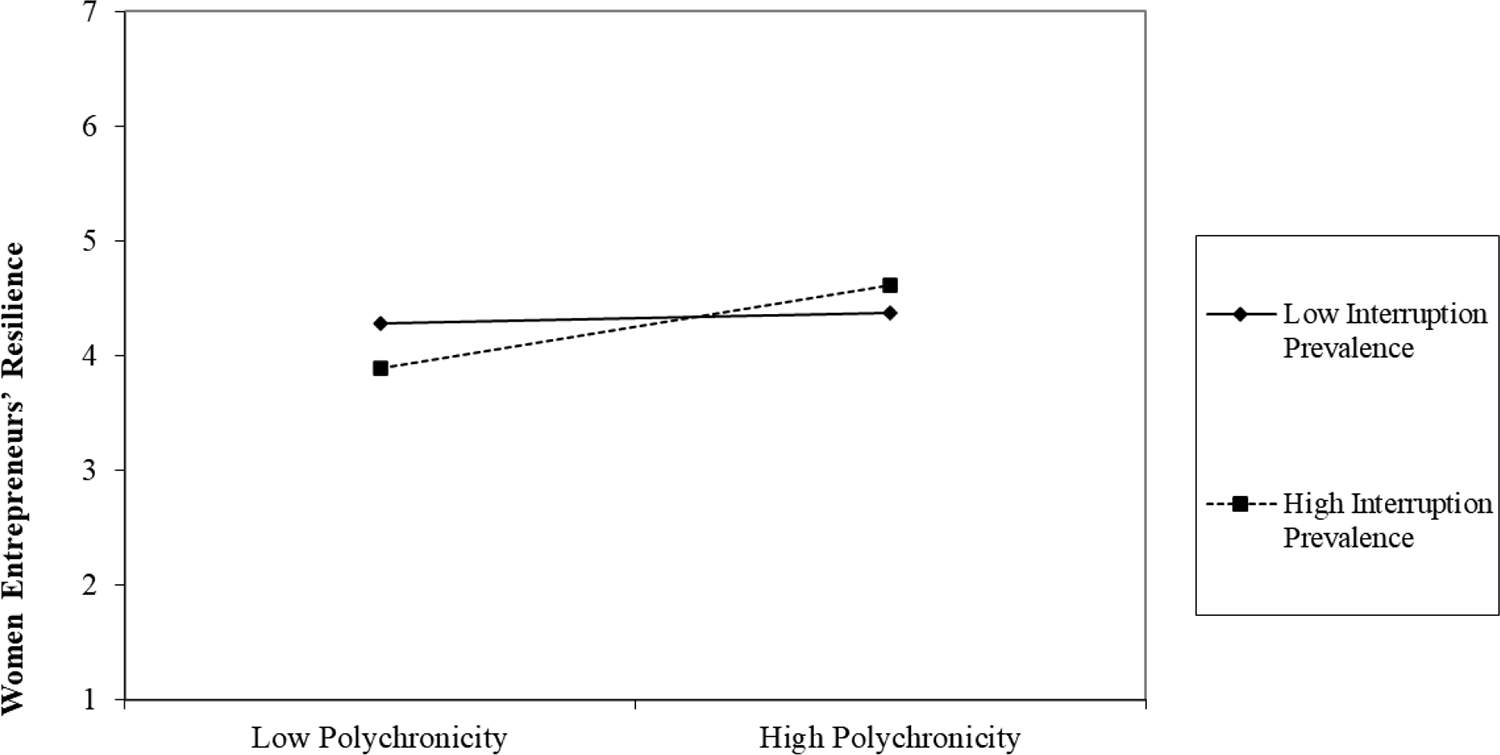
To examine the moderating effects, we introduced interaction terms hierarchically in Models 2–4, with all variables mean-centered to mitigate potential multicollinearity. Model 2 tested H2, which proposed that the positive effect of women entrepreneurs’ polychronicity on resilience is strengthened by higher interruption prevalence. The results revealed a significant interaction between polychronicity and interruption prevalence in predicting resilience (b = 0.17, SE = 0.05, p < 0.01). Figure 2 illustrates these interactions at one standard deviation above and below the mean of the moderator. Supporting H2, the positive relationship between polychronicity and resilience was stronger when interruption prevalence was high (t = 3.96, p < 0.001) but non-significant when it was low (t = 0.49, n.s.), supporting H2.
Interaction effect for interruption prevalence and polychronicity on women entrepreneurs’ resilience

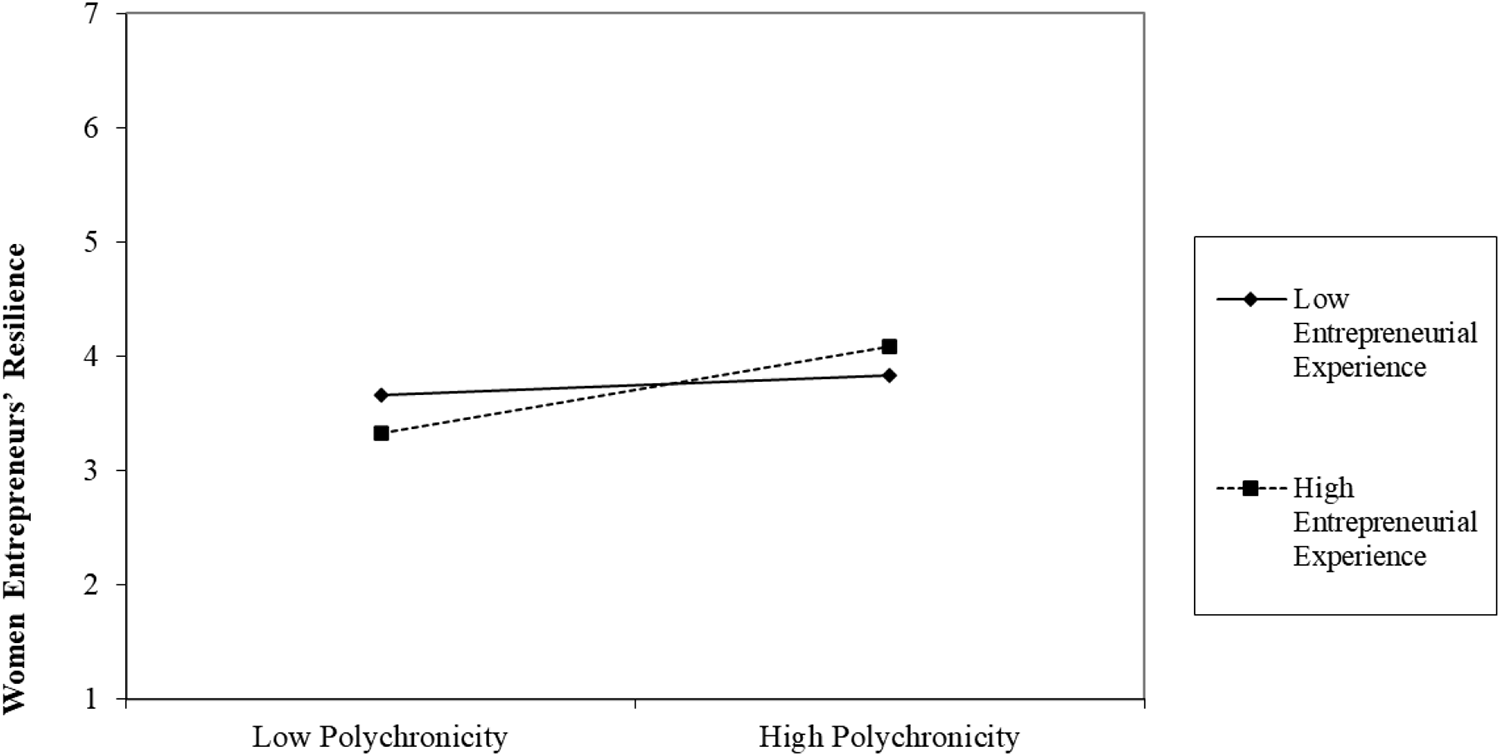
Model 3 tested H3, which suggested that the positive effect of women entrepreneurs’ polychronicity on resilience is enhanced by their prior entrepreneurial experience. The results showed a significant interaction between polychronicity and entrepreneurial experience in predicting resilience (b = 0.45, SE = 0.20, p < 0.05). As depicted in Figure 3, the positive relationship between polychronicity and resilience was found to be stronger for women entrepreneurs with prior entrepreneurial experience (t = 3.52, p < 0.001) and nonsignificant for those without experience (t = 0.92, n.s.), supporting H3.
Interaction effect for entrepreneurial experience and polychronicity on women entrepreneurs’ resilience

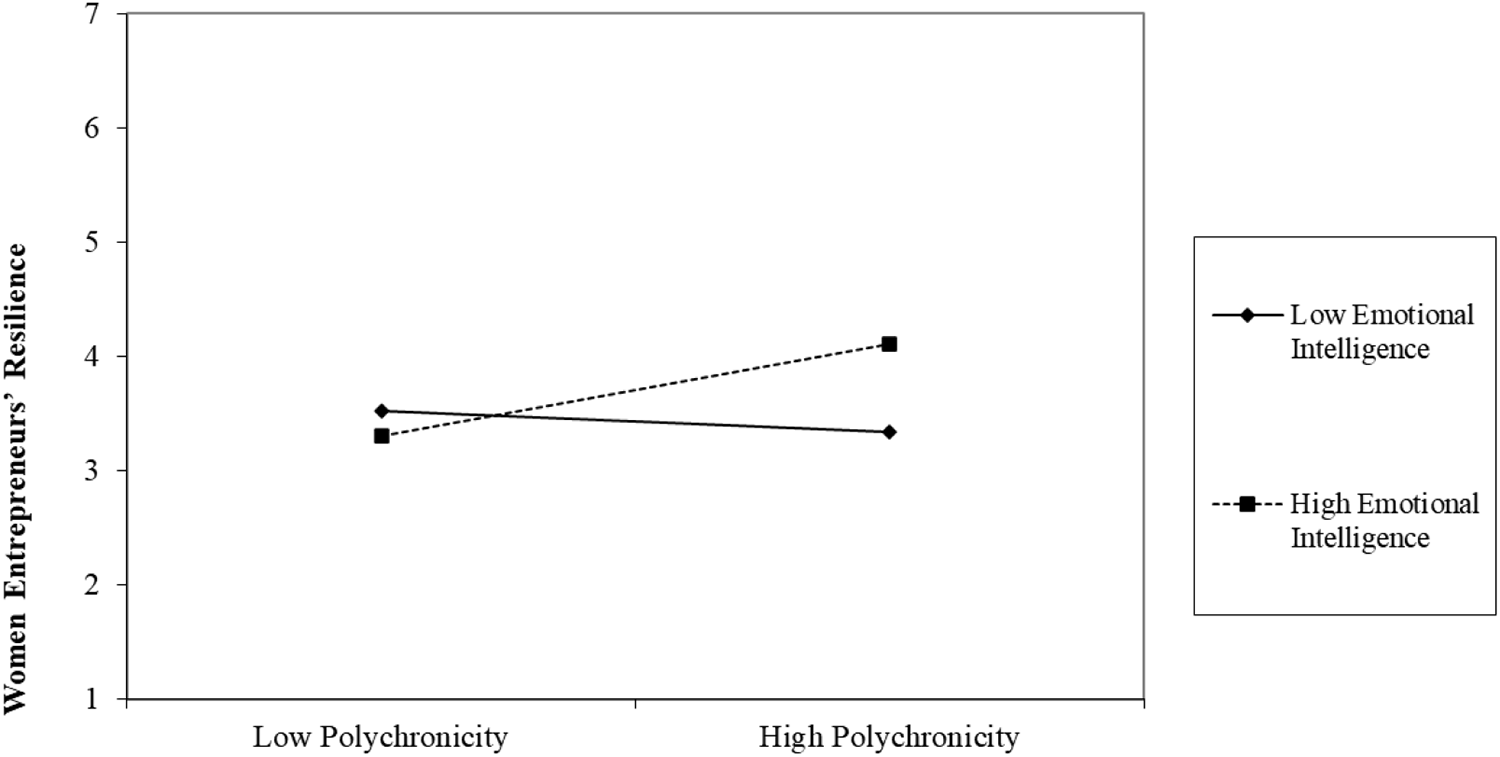
Model 4 tested H4, which proposed that the positive effect of women entrepreneurs’ polychronicity on resilience is strengthened by higher EI. The results confirmed a significant interaction between polychronicity and EI in predicting resilience (b = 0.57, SE = 0.18, p < 0.01). Figure 4 illustrates that the positive relationship between polychronicity and resilience was stronger for women entrepreneurs with higher EI (t = 4.66, p < 0.001), whereas the relationship was nonsignificant for those with lower EI (t = −0.76, n.s.), supporting H4.
Interaction effect for emotional intelligence and polychronicity on women entrepreneurs’ resilience

Overall, these findings reinforce that women entrepreneurs’ polychronicity positively influences their resilience. Moreover, this relationship is amplified in the presence of frequent interruptions, prior entrepreneurial experience, and higher EI, highlighting key factors that enhance the polychronic women entrepreneurs’ resilience-building process.
Robustness Check
To address potential endogeneity that may arise from unobserved individual characteristics correlated with both women entrepreneurs’ polychronicity and their resilience, we adopt a two-stage least squares (2SLS) regression method, with the provincial average of polychronicity as an instrumental variable. The provincial average of polychronicity represents social norms that encourage women entrepreneurs to adopt higher polychronicity in terms of cognition and behaviors. While this is positively related to a woman entrepreneur’s polychronicity, it does not directly affect their resilience, satisfying both the relevance and exogeneity criteria of instrumental variables. The results from the instrumental variable analysis indicate that the provincial average of polychronicity has a significant effect on the polychronicity of women entrepreneurs in the first stage (b = 0.79, SE = 0.13, p < 0.001; see Table 6). The partial F-statistics (36.21) meet the recommended cutoff (10) in the instrumental variable analyses, as well as the 5% Wald test distortion rate of 16.38. This leads to the rejection of the null hypothesis of a weak instrument and increases confidence in the assignment to match the provincial average of polychronicity as a relevant instrument (Staiger & Stock, Reference Staiger and Stock1997). Controlling for potential endogeneity using IV methods, the second-stage coefficients are positive and significant. These findings suggest a positive correlation between the polychronicity of women entrepreneurs and their resilience (b = 0.81, SE = 0.24, p < 0.01), which supports H1.
Results addressing endogeneity with 2SLS and Heckman’s two-stage regression

* Notes: p < 0.05, **p < 0.01, ***p < 0.001. Robust standard errors are reported in parentheses. N = 129. OLS = ordinary least squares, 2SLS = two-stage least squares.
The sample selection bias may arise due to potential differences in resilience between women entrepreneurs who continue operating their businesses and those who have exited, rather than a direct causal effect of polychronicity on resilience. To address this concern, we employ Heckman’s (Reference Heckman1979) two-stage model. In the first stage, we estimate a probit selection equation, arguing that resilience becomes reliable only for women entrepreneurs who have encountered prolonged adversity and sustained their businesses. The dependent variable is a binary indicator, equal to 1 if the entrepreneur’s business has been in operation for more than three years and 0 otherwise. Following the prior 2SLS regression method, we also incorporate the provincial average of polychronicity as an instrumental variable. From the first-stage probit regression, we derive the inverse Mills ratio (IMR). In the second stage, we regress women entrepreneurs’ polychronicity on resilience, including the IMR as an additional independent variable to correct for selection bias. The results, presented in Table 6, indicate that the coefficient of IMR is not significant (b = −0.01, SE = 0.59, n.s.) and the coefficient of polychronicity remains positive and significant (b = 0.50, SE = 0.19, p < 0.05), suggesting that our findings are not influenced by sample selection bias. We also conducted robustness checks on the interaction models using 2SLS and Heckman’s selection models, with the results presented in Appendix B.
Furthermore, our measure of interruption prevalence captures experiences such as intrusions, distractions, breaks, multitasking, and surprises across both work and nonwork domains. However, ‘multitasking’ conceptually overlaps with our focal construct – polychronicity – while ‘breaks’ may represent intentional pauses for recovery rather than disruptive interruptions, potentially inviting alternative interpretations. To address this concern, we conducted a robustness check by excluding items related to ‘multitasking’ and ‘breaks’ and recalculated the interruption prevalence score. The results continued to show a significant interaction between polychronicity and interruption prevalence in predicting women entrepreneurs’ resilience (b = 0.14, SE = 0.05, p < 0.01).
Post Hoc Analysis by Supplementing Men Entrepreneurs’ Sample
For the post hoc analysis, we want to explore the gender differences of polychronicity, entrepreneurs’ resilience and their relationship. Similar to prior research design, we conducted two rounds of questionnaires with both men and women entrepreneurs between August and October 2024. The total sample for the post hoc analysis included the 120 men entrepreneurs’ responses to the 122 women entrepreneurs’ responses. Although we continued to use ePanel as the survey platform, we ensured that the participants in this post hoc analysis were distinct from those in the initial study, thereby enhancing the robustness and validity of our findings. The average age of participants was 38 years (SD = 4.82). Educational backgrounds included 62 with a college degree or lower, 150 with a bachelor’s degree, and 30 with a master’s degree or higher. The firms, on average, were over 4 years (SD = 1.22) and employed around 38 people (Median = 18), with locations across 28 different provinces in China. We compared the women sample with the men sample by conducting t-tests on some control variables. The results indicated that the calculated t-statistics for marital status (t = 0.747, p = 0.456), industry experience (t = 0.073, p = 0.942), definition of success (t = 0.252, p = 0.802), venture age (t = 0.864, p = 0.388), and venture size (t = −0.822, p = 0.412), were all greater than 0.05. No significant difference is detected between the two samples.
We defined the variable of gender using a dummy variable: 0 = ‘men entrepreneur’, or 1 = ‘women entrepreneur’. According to the descriptive statistics and correlations for all variables (see Table 7), we note that gender and entrepreneurs’ polychronicity are significantly correlated (r = 0.18, p < 0.001). This suggests that compared to men entrepreneurs, women entrepreneurs show higher polychronicity. The results of the post hoc analysis are presented in Table 8. As shown, Model 2 demonstrated that the interaction of polychronicity and gender is positively correlated to women entrepreneurs’ resilience (b = 0.26, SE = 0.11, p < 0.05). Further, we conducted separate regression analysis for a sample of men entrepreneurs and a sample of women entrepreneurs. The results of Model 3 demonstrated that women entrepreneurs’ polychronicity has a positive impact on their resilience (b = 0.27, SE = 0.08, p < 0.01). However, we found no significant effect of men entrepreneurs’ polychronicity on their resilience (b = 0.03, SE = 0.07, n.s.). In light of these findings, it can be posited that gender differences exist with regard to polychronicity, whereby only women entrepreneurs’ polychronicity exerts a positive relationship with their resilience.
Descriptive statistics and correlations for post hoc analysis

* Note: p < 0.05; **p < 0.01; ***p < 0.001; N = 242.
Regression results for post hoc analysis

* Notes: p < 0.05; **p < 0.01; ***p < 0.001. Robust standard errors are reported in parentheses. Total sample N = 242, Women sample N = 122, Men sample N = 120.
Discussion
Using two-stage survey data from 129 women entrepreneurs in China, we tested a theoretical model examining the relationship between polychronicity and resilience, alongside the moderating roles of interruption prevalence, entrepreneurial experience, and EI. Our findings reveal a positive association between polychronicity – the preference to engage in multiple tasks simultaneously – and women entrepreneurs’ resilience, with this relationship appearing stronger in the presence of frequent interruptions, prior entrepreneurial experience, and higher EI. These results not only validate role accumulation theory as a lens for understanding women entrepreneurs’ resilience but also offer novel insights into the temporal and gendered dimensions of entrepreneurship.
Theoretical Contributions
This study makes several significant contributions to the entrepreneurship literature. First, by examining the distinct and underexplored effects of polychronicity on entrepreneurs, our study responds to the growing call to incorporate temporal constructs into entrepreneurship research (Shepherd & Williams, Reference Shepherd and Williams2023). Prior temporal studies have predominantly focused on firm-level outcomes – such as corporate entrepreneurship, innovation, and performance (Chen & Nadkarni, Reference Chen and Nadkarni2017; DesJardine & Shi, Reference DesJardine and Shi2021; Franczak et al., Reference Franczak, Gyensare, Lanivich, Adomako and Chu2024). We shift the temporal lens toward a critical yet understudied capacity of entrepreneurs – resilience – which is widely acknowledged as essential for their survival and long-term success, especially under the heightened time pressures inherent in entrepreneurial processes (Hartmann et al., Reference Hartmann, Backmann, Newman, Brykman and Pidduck2022). Although time is one of the most constrained resources in entrepreneurship, little is known about how entrepreneurs’ internal temporal orientations influence their ability to manage uncertainty and stress (Lévesque & Stephan, Reference Lévesque and Stephan2020). Our study addresses this gap by demonstrating how women entrepreneurs’ time-use preferences – specifically, their polychronic orientation – shape their engagement with time across overlapping roles. By foregrounding entrepreneurs’ temporal orientations as a key factor for building resilience, our study extends temporal research in entrepreneurship and offers a more grounded understanding of how entrepreneurs experience and manage time amid uncertainty.
Second, by applying role accumulation theory, this study offers new insights into how polychronic women entrepreneurs actively manage multiple roles to optimize internal and relational resources, thereby navigating gendered entrepreneurial constraints more effectively. Although prior research has documented the external barriers faced by women entrepreneurs (Bridges et al., Reference Bridges, Wulff and Bamberry2023; Xie & Wu, Reference Xie and Wu2022), less is known about how women leverage their internal strengths across roles to build resilience. Based on role accumulation theory, we propose that polychronic women entrepreneurs can reduce single-role strain, extract additive value from each role, and transfer cognitive and emotional resources fluidly across domains. The post hoc analysis adds a critical gender dimension, revealing that polychronicity is significantly positive with resilience only among women, not men, likely due to women’s greater role multiplicity (Eagly & Wood, Reference Eagly and Wood2013). These findings not only illuminate a psychological mechanism for gender-specific resilience but also advances a more agentic view of women entrepreneurs, highlighting how they proactively integrate roles to overcome structural disadvantages.
Third, the moderating effects deepen our understanding of when polychronicity is especially beneficial for women entrepreneurs, particularly by identifying EI as a novel enabling factor. While existing research has largely focused on the PE-fit perspective – emphasizing that polychronicity yields benefits only when aligned with external task demands (Madjar & Oldham, Reference Madjar and Oldham2006) – we extend this view by highlighting the critical role of internal emotional resources. Specifically, EI enhances women’s ability to regulate emotions and maintain psychological stability amid competing and shifting role demands (Ingram et al., Reference Ingram, Peake, Stewart and Watson2019). In emotionally complex, resource-constrained environments that typify many women’s entrepreneurial experiences, such emotional capacity becomes especially vital (Kovid et al., Reference Kovid, Singh, Sharma, Gaur and Pandla2025). Women with high EI can better manage the cognitive load and emotional stress of multitasking, enabling them to turn polychronicity into a strategic advantage – even when external conditions are less than ideal. By shifting the focus from external fit to intrinsic capability, our study refines current understandings of how women entrepreneurs can more effectively leverage polychronicity, fully realizing the resilience potential of polychronicity in dynamic, high-pressure contexts.
Managerial Implications
This study offers actionable insights for women entrepreneurs seeking to enhance their resilience in complex, dynamic environments. Our findings suggest that polychronic women entrepreneurs are more likely to cultivate resilience by integrating and optimizing resources across diverse roles, alleviating single-role stress, and maximizing overall benefits. By doing so, they can not only challenge restrictive gender norms but also demonstrate a dynamic capacity for sustained entrepreneurial success.
However, we also caution against overgeneralizing the benefits of polychronicity. As a temporal orientation rather than an inherent ability, polychronicity may not always translate into effective performance (Sanderson, Bruk-Lee, Viswesvaran, Gutierrez, & Kantrowitz, Reference Sanderson, Bruk-Lee, Viswesvaran, Gutierrez and Kantrowitz2013), especially when task complexity, cognitive demands, or emotional load exceed an individual’s processing capacity. Moreover, a misalignment between polychronic preferences and structured, sequential work environments may hinder creativity and productivity (Madjar & Oldham, Reference Madjar and Oldham2006). Therefore, women entrepreneurs should apply polychronicity judiciously – matching multitasking approaches with situational demands, personal capabilities, and available support resources.
Limitations and Future Research Directions
The limitations of this study provide potential avenues for future research. First, like most studies of polychronicity and entrepreneurs’ resilience, our study relies primarily on self-reported data from a single source, which may introduce method bias. To mitigate this, we employed procedural and statistical techniques to reduce CMV. However, the statistical reliability of our findings may be limited by the sample size. Future research may also benefit from more objective measures of entrepreneurs’ resilience, such as text analysis. Another limitation lies in the timing of data collection for the moderator and the dependent variable. Specifically, we measured interruption prevalence and women entrepreneurs’ resilience in the same survey round (i.e., Round 2). Ideally, moderators – especially dynamic ones like interruptions – should be collected before the outcome variable to ensure temporal precedence. Although we positioned the two variables at different points within the questionnaire and separated them with other scales to reduce potential bias, this design still limits our ability to rule out reverse causality. Future longitudinal research should collect moderators and outcomes in distinct rounds to better establish causal direction.
Second, while our main analyses support the moderating roles of interruption prevalence and entrepreneurial experience, robustness checks using 2SLS and Heckman’s selection models revealed some limitations. Specifically, the interaction effect between polychronicity and interruption prevalence was not statistically significant in either model, suggesting that for women entrepreneurs beyond the early survival stage, frequent interruptions may become a routine part of their experience, thereby weakening their moderating influence. Similarly, the interaction involving entrepreneurial experience was only marginally significant and demonstrated limited robustness across models. This reduced robustness may be attributable to measurement limitations, as entrepreneurial experience was operationalized as a binary variable following prior studies (e.g., Mmbaga et al., Reference Mmbaga, Lerman, Munyon and Lanivich2023), potentially failing to capture variations in experience depth or relevance. These findings suggest caution when interpreting the moderation effects and underscore the need for future research to investigate more nuanced boundary conditions that can better illuminate how women entrepreneurs’ polychronicity influences resilience over time.
Finally, although our post hoc analysis reveals that polychronicity is positively associated with resilience among women entrepreneurs, men entrepreneurs may also exhibit high resilience, which may be linked to different underlying factors. Given the limited scope of the current study, future research could explore gender differences in how entrepreneurs foster resilience and express temporal orientation. Additionally, polychronicity may still benefit men entrepreneurs. While it does not appear to have a direct impact on their resilience – possibly due to differences in time management and role accumulation – the influence of entrepreneurs’ temporal orientation warrants further investigation.
Conclusion
Despite the challenges they face, polychronic women entrepreneurs often demonstrate strong time management capabilities and a strategic approach to internal resource allocation. Drawing on role accumulation theory, this study suggests that polychronic women entrepreneurs are better able to integrate and coordinate resources across roles, thereby meeting diverse demands and enhancing their resilience. Our findings indicate that frequent interruptions, extensive entrepreneurial experience, and high EI strengthen the positive relationship between polychronicity and resilience among women entrepreneurs. By highlighting the benefits of time management and role accumulation in women’s entrepreneurship, this study offers practical implications for supporting women entrepreneurs in sustaining their ventures and improving their long-term business viability.
Data availability statement
The data that support the findings of this study are available from the corresponding authors upon reasonable request.
Acknowledgements
We sincerely thank the guest editors of this special issue, Professor Weiguo Zhong, Professor Pengxiang Zhang, Professor Sali Li, Professor Lin Jiang, and Professor Christine M. Chan, for their insightful suggestions and contributions. We would like to express our gratitude to all participants in the Paper Development Workshop for their valuable contributions to the discussions and comments. We are also grateful to the anonymous reviewers for their insightful and constructive comments and suggestions.
Funding statement
This work is supported by the National Natural Science Foundation of China (No. 72272059), the National Social Science Fund of China (No. 22&ZD191), and the Fundamental Research Funds for the Central Universities (No. 2024WKYXQN024).
Appendix A
The list of survey items used to measure key constructs

Appendix B Robustness Check on the Interaction Models
We conducted robustness checks on the interaction models using two-stage least squares (2SLS) and Heckman’s selection models, with results summarized in Table B1. In the 2SLS regressions, the provincial average of polychronicity served as the instrumental variable. To instrument the interaction term, we created a product of this instrumental variable and interruption prevalence. While this instrument was theoretically sound and statistically significant in the first stage, it demonstrated weak explanatory power in the second stage, resulting in a non-significant coefficient for the interaction (b = 0.21, SE = 0.14, n.s.; M1). The strong main effect of polychronicity (b = 0.61, SE = 0.29, p < 0.05; M1) may have further limited the identification of moderation effects. A similar pattern emerged for the interaction with entrepreneurial experience, which was also not significant (b = 0.47, SE = 0.37, n.s.; M2), likely due to both weak instrumentation and the continued significance of the main effect of polychronicity (b = 0.62, SE = 0.25, p < 0.05; M2). Together, these results suggest that limited instrument strength, combined with strong main effects, made it more difficult to detect interaction effects. In contrast, the moderating role of emotional intelligence remained robust. In the second-stage regression, emotional intelligence significantly strengthened the positive link between polychronicity and resilience (b = 1.01, SE = 0.47, p < 0.05; M3), indicating that women entrepreneurs with higher emotional intelligence are better able to translate their polychronic tendencies into resilience. Meanwhile, the coefficient for polychronicity itself, though positive, was not significant (b = 0.36, SE = 0.23, n.s.; M3), suggesting that emotional intelligence may play a more central enabling role in this relationship.
2SLS and Heckman’s two-stage regression results for interaction models

+ Notes: p < 0.1, *p < 0.05, **p < 0.01, ***p < 0.001. Robust standard errors are reported in parentheses. N = 129. 2SLS = two-stage least squares.
To address potential sample selection bias, we employed Heckman’s (Reference Heckman1979) two-stage model. In the first stage, we ran a probit regression with a binary dependent variable indicating whether the woman entrepreneur’s business had operated for more than 3 years (1 = yes, 0 = no), using the provincial average of polychronicity as an instrumental variable. The IMR generated from this stage was included as a control variable in the second-stage regressions. In the second stage, we tested the moderating effects of three interaction terms on resilience while controlling for the IMR. As shown in Table B1, the IMR coefficients were not significant across models (e.g., b = −0.07, SE = 0.66, n.s., M4; b = −0.14, SE = 0.60, n.s., M5; b = −0.40, SE = 0.51, n.s., M6), suggesting that sample selection bias is unlikely to materially affect the results. The interaction between polychronicity and interruption prevalence was not significant (b = 0.07, SE = 0.13, n.s.; M4), suggesting that for polychronic women entrepreneurs who have moved beyond the early survival stage, interruptions may have become a routine aspect, thus diminishing their impact on the relationship between polychronicity and resilience. In contrast, the interaction between polychronicity and entrepreneurial experience was marginally significant (b = 0.51, SE = 0.26, p < 0.1; M5), indicating that prior entrepreneurial experience strengthens the positive relationship between polychronicity and resilience. Likewise, emotional intelligence demonstrated a robust moderating effect (b = 0.81, SE = 0.22, p < 0.01; M6), suggesting that women with higher emotional intelligence are better equipped to leverage their polychronic tendencies to build resilience.
Appendix CThe Impact Threshold of a Confounding Variable
Despite the robustness checks conducted, we acknowledge that the possibility of bias from unobserved confounding variables cannot be entirely ruled out. To further assess potential endogeneity, we employ the Impact Threshold for a Confounding Variable (ITCV) method (Busenbark, Frank, Maroulis, Xu, & Lin, Reference Busenbark, Frank, Maroulis, Xu, Lin, Hill, Lê, McKenny, O’Kane, Paroutis and Smith (Eds.)2021; Busenbark, Yoon, Gamache, & Withers, Reference Busenbark, Yoon, Gamache and Withers2022; Frank, Reference Frank2000). This method estimates the minimum strength an omitted variable would need to possess – through its correlation with both the independent variable (polychronicity) and the dependent variable (women entrepreneurs’ resilience) – to render the observed effect statistically insignificant. Our results indicate that, after accounting for all observed covariates, a confounding variable would need to correlate at least 0.304 with both polychronicity and resilience, yielding an impact of 0.092 (0.304 × 0.304), to invalidate the results at the 5% significance level. Using the Stata command confound (Xu, Frank, Maroulis, & Rosenberg, Reference Xu, Frank, Maroulis and Rosenberg2019), we calculated the partial correlations between all control variables and the key constructs (see Table C1). Among them, emotional intelligence showed the highest partial correlation with both polychronicity and resilience; however, its impact (0.052) falls well below the ITCV threshold. Similarly, no other variable exhibits a sufficiently strong influence to challenge the estimated effect. This suggests that any unobserved confounder would need to exert a substantially stronger impact than any of the included covariates to nullify our findings. Given the comprehensive set of controls and guided by the ITCV decision framework (Busenbark et al., Reference Busenbark, Yoon, Gamache and Withers2022), we conclude that omitted variable bias is unlikely to fully account for the observed relationship. While no empirical method can completely eliminate endogeneity concerns, our ITCV analysis – together with previous robustness checks – provides strong evidence against the likelihood that the observed effect of polychronicity is spurious.
Impact threshold of a confounding variable

Notes: X represents Polychronicity, Y represents Women Entrepreneurs’ Resilience, V represents each covariate, ITCV represents a confounding variable’s impact threshold measured using the konfound STATA command.
Robustness of Inference to Replacement
To further assess the robustness of the moderating effects, we employed the Robustness of Inference to Replacement (RIR) method (Busenbark et al., Reference Busenbark, Frank, Maroulis, Xu, Lin, Hill, Lê, McKenny, O’Kane, Paroutis and Smith (Eds.)2021; Frank, Maroulis, Duong, & Kelcey, Reference Frank, Maroulis, Duong and Kelcey2013) using the pkonfound command in Stata (Xu et al., Reference Xu, Frank, Maroulis and Rosenberg2019). For interruption prevalence, the analysis shows that 42.92% of the observed effect (0.17) would need to be attributable to bias to render the result statistically insignificant at the 5% level, which translates to replacing 55 out of 129 observations with cases showing no effect. This high RIR value indicates that the moderating effect is robust and unlikely to be undermined by omitted variable bias. Then, the moderating effect of entrepreneurial experience appears more sensitive: 9.82% of the observed effect (0.45) would need to be due to bias to nullify the inference, equivalent to replacing 13 observations – suggesting the observed interaction effect is more vulnerable to bias. For emotional intelligence, 37.54% of the estimated effect (0.57) would need to be due to bias for the result to lose significance, requiring the replacement of 48 observations. This relatively high threshold provides additional confidence in the robustness of this interaction effect. Taken together, these findings reveal varying degrees of robustness across the three moderators, with interruption prevalence and emotional intelligence showing stronger resistance to omitted variable bias than entrepreneurial experience. The relatively low RIR value for entrepreneurial experience may stem from limitations in measurement – this variable was operationalized as a binary variable according to previous studies (e.g., Mmbaga et al., Reference Mmbaga, Lerman, Munyon and Lanivich2023), potentially failing to capture meaningful variation in experience intensity or relevance. Such coarse measurement can reduce statistical precision, making it harder to detect consistent interaction effects. While the direction of the effect aligns with theoretical expectations, the limited robustness invites caution and highlights the need for future research to refine the measurement of entrepreneurial experience.
Zhuxin Ye (zoe_yezhuxin@hust.edu.cn) is an associate professor of innovation, entrepreneurship, and intellectual property rights in the School of Management at Huazhong University of Science and Technology. She received her PhD in business administration from Huazhong University of Science and Technology. Her research focuses on entrepreneurship, entrepreneurial resilience, and firm innovation. Her work has been published in leading academic journals, including the Journal of Applied Psychology, Strategic Entrepreneurship Journal, and Human Resource Management, among others.
Xiying Song (xiying_2022@hust.edu.cn) is currently a PhD candidate of innovation, entrepreneurship, and intellectual property rights in the School of Management at Huazhong University of Science and Technology. Her research focuses on female entrepreneurship, entrepreneurial resilience, and innovation.
Jun Li (jun.li@unh.edu) is an associate professor of strategic management at the University of New Hampshire. He received his PhD from Texas A&M University. His research interests include top management team, entrepreneurial team, venture creation, technology innovation, and entrepreneurship in emerging markets. His work has appeared in Long Range Planning, Journal of Business Research, Asia Pacific Journal of Management, among others.
Chenxi Qiao (trqiao@ucsd.edu) is an undergraduate student majoring in psychology at the University of California, San Diego. Her research interests lie in the application of data analytics to uncover patterns in psychological and organizational processes. She has contributed to research projects on topics including motivation, workplace dynamics, and consumer behavior.