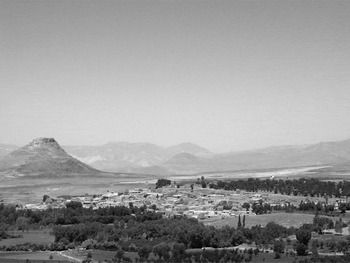
The relationship between nature and culture is unique and entirely dependent on each culture's perspective of nature, culture, and their interrelationship. The failure to recognize these differing cultural perspectives has resulted in inappropriate conservation decisions. In fact, the considerable debate over the interrelationship between culture and nature and also heritage conservation strategies has been largely driven by a Eurocentric view of how culture and nature interplay. These debates are reflected in the policies and activities of the World Heritage Convention (WHC), the international pioneer in conservation of cultural landscapes.
The concept of identifying and conserving the values of heritage places has been at the heart of the WHC (the UNESCO Convention Concerning the Protection of the World Cultural and Natural Heritage, 1972), and indeed, all international heritage conservation policies. However, the application of the convention in different countries with diverse cultural roots has raised a key issue. How can both the cultural and natural values inherent in many heritage properties be conserved and valued in an integrated way? Around the world places exist where natural and cultural values are both significant and interdependent; none of the values would mean the same without the presence of the other. However, because one value may seem more prominent than the other, only that value is recognized; and in these cases, the application of the convention results in partial conservation. A failure to recognize the interrelationship of nature and culture has also resulted in a number of cultural landscapes being inappropriately identified. The long application of either natural or cultural criteria in isolation of the other within the framework of the convention has led to planning, conservation, and development policies and decisions that are incomplete and often at variance. Experience shows that only with the understanding of the influence of culture on an understanding of nature, with a complete assessment of the interrelationship of the two in theory and in practice, can world heritage be protected in a meaningful and holistic way.
Takht-e-Soleyman Archaeological Site in Iran and Head-Smashed-In Buffalo Jump in Canada are examples of the problem when sites are recognized based on a single dominant value. In both sites cultural values were initially identified and considered sufficient for their designation according to the criteria in the Operational Guidelines for the Implementation of the World Heritage Convention. Yet, the natural elements of both sites and their connection to the cultural aspects are critical to their understanding and conservation. They are practical examples that illustrate how lack of recognition of all values has resulted in a designation that is inappropriate and causes management and conservation challenges. They also illustrate how experiences at international level can influence national practices. Reviewing the current situation of the two with a focus on the reasons for the failure of an integrated natural and cultural conservation strategy assists the future nominations of similar heritage properties with multiple values. These cases are discussed in detail to illustrate the complexities of the application of the convention. Several possible solutions and their applicability such as renominations or amendments of new areas (the larger landscapes) are also examined. Analysis of these unsuccessful experiences should assist in improving future nominations.
NATURE AND CULTURE INTERPLAY
To understand how cultural and natural attributes of heritage sites have been applied in accordance to the World Heritage Operational Guidelines, it is important that the concept of nature and culture be understood. The varying perspectives on the relationship between nature and culture depend on the cultural origins of their holders. That nature and culture are interwoven1
Lowenthal, “Landscape as Heritage”, “Cultural Landscapes”, “Natural and Cultural Heritage”; Mitchell, “Cultural Landscapes.” This issue is discussed in more details in the following literature: Amos, “The International Context for Heritage Conservation”; Buggey, “Associative Values”; Head, Cultural Landscapes and Environmental Change; Keisteri, “The Study of Changes in Cultural Landscapes”; Olwig, “Introduction”; Philips, “The Nature of Cultural Landscapes”, “Why Lived-in Landscapes Matter”; Sauer, “The Morphology of Landscape”; von Droste, Plachter, and Rossler, “Cultural Landscapes: Reconnecting Culture and Nature.”
In a broad sense, culture refers to all human activities and their affects. Perhaps culture can be best understood as a process, a continuous combination of shared values, beliefs, behaviors, and practices that characterize a group of people. It is the social practices that produce and modify material culture. As well, the self-understanding of human beings in relationship to the wider world is evidenced by differing concepts of nature. Nature is a key part of humanized, culturally defined places. Even if nature is defined as a quality, a feature distinct from that of human civilization, the dualism that exists between culture and nature is still apparent, especially from a Western way of thinking.2
Head, Cultural Landscapes.
Human activities have modified the environment, and their affects are evident in all aspects of nature. Many cultural and natural areas exist around the world that are evidences of such interplay and “are the meeting place of nature and people, of past and present, and of tangible and intangible values.”3
Philips, “Why Lived-in Landscapes Matter,” 10.
Olwig, “Introduction.”
Lowenthal, “Natural and Cultural Heritage”; Buggey, “Associative Values.”

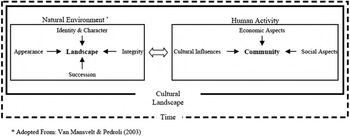
Integration of natural and cultural environments in cultural landscapes.
Sauer, a cultural geographer who introduced the term cultural landscape in 1925, believed that cultural landscape “is fashioned from a natural landscape by a cultural group. Culture is the agent, the natural area is the medium, and the cultural landscape is the result.”7
Sauer, “The Morphology of Landscape,” 343.
von Droste quoted in Williams, “The Four New ‘Cultural Landscapes’,” 9. Founding Director of World Heritage Centre in 1992, von Droste has been involved in international programs for the conservation of the cultural and natural environments and has been involved in introducing the concept of cultural landscape in the WHC.
Because peoples' activities and their cultural knowledge shape landscapes, it is never complete. Humans have shaped it in the past and always add to it.9
Ingold in Robertson and Richards, Studying Cultural Landscapes; Tilley, A Phenomenology of Landscape.
Sauer, “The Morphology of Landscape”, 343.
Lewis, “The Challenge of the Ordinary.”
Mitchell, “Cultural Landscapes”; Stoffle, Halmo, and Austin, “Cultural Landscapes and Traditional Cultural Properties,” 229.
FROM CULTURE OR NATURE TOWARD CULTURE AND NATURE
The dichotomy between culture and nature was evident early on in the UNESCO's WHC. The criteria set in the World Heritage Operational Guidelines for the purpose of the assessment of sites were divided into cultural criteria (six items) and natural criteria (four items). Even the two scientific advisory bodies of the World Heritage Committee, the International Council on Monuments and Sites (ICOMOS), and the World Conservation Union (IUCN), which are responsible for the assessment of the nominees, act separately. The argument by Philips on the nature and culture interaction clarifies that the long tradition of “the separation of nature and culture—of people from their surrounding environment—which has been a feature of western attitudes and education over the centuries, has blinded us to many of the interactive associations which exist between the world of nature and the world of culture.”13
Philips, “The Nature of Cultural Landscapes,” 36. Previous chair of the World Commission on Protected Areas, IUCN, he has more than 20 years of active involvement in IUCN, particularly landscape protection; and now he is involved in leading IUCN's work in the WHC.
Tikal National Park in Guatemala (an area of the tropical rainforest and one of the greatest Mayan city sites) was the first mixed site inscribed on the World Heritage List in 1979. By 1992 14 more mixed sites had been inscribed on the list.
According to article 1, monuments, groups of buildings, and sites are considered as cultural heritage.
The Lake District in the UK during 1980s.
The recognition of cultural landscape in the context of the convention was the first step toward bridging the gap between culture and nature. Prior to this recognition, such places as cultural landscapes (where nature had been culturally modified) were considered to have little value and were not recognized as a major area for conservation.17
von Droste, Platcher, and Rossler in Mitchell and Buggey, “Protected Landscapes and Cultural Landscapes.”
Cultural landscapes are the “combined works of nature and of man. They are illustrative of the evolution of human society and settlement over time, under the influence of the physical constraints and/or opportunities presented by their natural environment and of successive social, economic and cultural forces, both external and internal” (UNESCO World Heritage Centre, Operational Guidelines, 2005, clause 47).
Meier and Mitchell, in Buggey “Associative Values.”
Operational Guidelines, 2005, Annex 3, Clause 9.
The criteria for cultural properties set out in the Operational Guidelines were initially the basis of the evaluation of cultural landscapes. The issue of assessing the nomination of cultural and natural properties was addressed in the World Heritage Global Strategy Natural and Cultural Heritage Expert Meeting in Amsterdam in 1998. In spite of the conflicting opinions on the amalgamation of the natural and cultural criteria, the experts proposed establishing a new single set of criteria in place of the existing separate criteria for natural and cultural properties, hoping that this combination puts greater emphasis on the links between culture and nature.21
UNESCO World Heritage Committee, Report of the World Heritage Global Strategy.
The World Heritage Centre has noticed the dichotomy between nature and culture and has worked toward bridging the distances; however, it still needs to evolve and to develop further to become practical in different nations. The past dysfunctions have affected conservation activities. Many World Heritage Sites exist that are not designated as cultural landscapes and the resulting multidimensional values are neither identified nor addressed in planning decisions. Such sites are not fully protected because only traditional heritage elements or characteristics, not cultural landscapes are recognized.
CONSTRUCTION OF HERITAGE POLICY WITHIN THE WORLD HERITAGE CONVENTION
The primary aim of the WHC is to identify and safeguard cultural and natural sites that are considered to have outstanding universal value. The framework of the convention was originally driven by the separation of culture and nature long identified from Euro-American perspectives. In other words the selection of cultural properties for inscription on the World Heritage List is often criticized as Euro-American centric.22
Cleere, “The Concept of ‘Outstanding Universal Value’”; Tunbridge and Ashworth, Dissonant Heritage.
UNESCO World Heritage Center, Global Strategy Website.
The knowledge of indigenous peoples offers another approach toward understanding the interaction of nature and culture. They view cultural, natural, and spiritual values in places as inseparable and in balance. Their history is embodied in the land. To them, culturally significant landscapes are not viewed as places of the past, but as places that are both alive and sacred today; these people often have a strong spiritual, rather than material, relationship with the land. As a result of their powerful association with the land, they tend to respect the land on which they dwell.24
Buggey, “Associative Values.”
Furthermore, attention given to the interaction of cultural and natural values at the World Heritage meetings led to the addition of the associative cultural landscape category to the World Heritage List. The primary concern was that an important aspect of cultural landscapes was not being addressed within the then-dominant Euro-American perspective. In determining associative cultural landscapes, the predominant character of the landscapes was to be derived from the natural environment and the meaning attached to the landscape from its cultural context.25
Buggey, “Cultural Landscapes.” Notes from e-mail to the author, September 7, 2005.
Criterion vi indicates that a nominee should be directly or tangibly associated with events or living traditions; ideas or beliefs; and artistic and literary works of outstanding universal significance.
UNESCO World Heritage Centre, Operational Guidelines for the Implementation of the World Heritage Convention, 2005, II.D. Criterion iii indicates that a nominee should be a unique or at least exceptional testimony to a cultural tradition or civilization. Criterion iv requires a nominee to be an outstanding example of a type of building, architectural or technological ensemble or landscape.
CULTURAL LANDSCAPES WITHIN THE FRAMEWORK OF THE WORLD HERITAGE CONVENTION
According to the World Heritage Committee, there are three main categories for cultural landscapes28
UNESCO World Heritage Centre, Operational Guidelines for the Implementation of the World Heritage Convention, 2005, Annex 3, Clause 10.
That is Tongariro (a mountain sacred to the Maori people in New Zealand). Uluru (Australia) was inscribed in 1994. Like Tongariro, this place is of extreme importance to the indigenous peoples of the area and had been inscribed on the World Heritage List initially only for its natural value.
The first category, landscapes designed and created intentionally by man, is “easily identifiable” and usually under protection. This category is “often associated with religious and monumental buildings and ensembles” created for aesthetic reasons.30
UNESCO World Heritage Centre, Operational Guidelines for the Implementation of the World Heritage Convention, 2005, Annex 3, Clause 10(i).
The second category, the organically evolved landscape, is significant because of its “social, economic, administrative, and/or religious imperative,” identified either as a relict or fossil landscape or a continuing landscape.31
UNESCO World Heritage Centre, Operational Guidelines for the Implementation of the World Heritage Convention, 2005, Annex 3, Clause 10(ii). In a relict landscape “an evolutionary process came to an end at some time in the past, either abruptly or over a period.” In a continuing landscape “the evolutionary process is still in progress” and “retains an active social role in contemporary society closely associated with the traditional way of life.”
Irani Behbahani, Sharifi, and Dailoo, “A Glance at the Conservation.”
Associative cultural landscape, the third category, is significant because of “the powerful religious, artistic or cultural associations of natural element”; the physical or material evidence “may be insignificant or even absent.”33
UNESCO World Heritage Centre, Operational Guidelines for the Implementation of the World Heritage Convention, 2005, Annex 3, Clause 10(iii); Cleere, “Cultural Landscapes as World Heritage.”
WORLD HERITAGE CONVENTION IN PRACTICE: TWO ILLUSTRATIVE EXAMPLES
What are the main obstacles to sites attempting to become designated as cultural landscapes? The Operational Guidelines for the Implementation of the WHC in its legal form could well be complete; however, its application in different cultures is more challenging. The different cultural backgrounds, varied heritage types at local levels, and most importantly heritage terms in different cultures are some of the challenging problems. The problem is that the concept of cultural landscape is still new to many cultures; there are countries that do not even have the terminology or the perfect translation for cultural landscape. The examples illustrate why the convention has not been effectively implemented even in the cases that are eligible for recognition as cultural landscapes. Obviously, if the notion of cultural landscape is not thoroughly understood by locals, chances are low that sites will be recognized and protected.
Head-Smashed-In Buffalo Jump, World Heritage Site of Canada
Natural and Cultural Values
Head-Smashed-In Buffalo Jump is located northwest of the town of Fort McLeod in southern part of the Province of Alberta where the Rocky Mountains meet the Great Plains. A specific form of cultural landscape is well represented by Head-Smashed-In Buffalo Jump. This fairly extensive site includes the gathering basin leading to the drive lanes (the lines of rocks that were laid out where natural elements were culturally modified to improve the utility); the sandstone cliff, a natural feature of the site (approximately 300 meters long and more than 9 meters high); the kill sites at the bottom of the cliff edge; and the nearby butchering camps (the campsite and processing area). There is also a connection down the various coulees34
A dry streambed (Merriam-Webster Online); a canyon that was once filled with water (University of Virginia. “A History of the Grand Coulle Dam”).
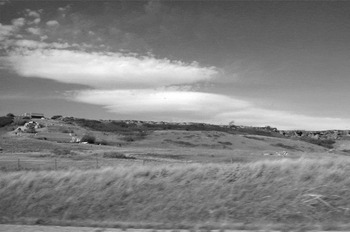
The key feature of Head-Smashed-In's natural landscape is the area that lies behind to the west of the buffalo jump, the gathering basin: a huge, natural, bowl-shaped depression. It acted as a natural trap, rich in grass and abundant water, to help contain the buffalo. The cultural and the natural elements coincide in this landscape. The great antiquity of the site, which has been used over 6000 years, is one of the key elements that define it as a cultural landscape. The other key factor is that it is extremely rich in terms of archeological material. There are deep layers of buried buffalo bones and stone tools that all tell the story of how Aboriginal people managed the hunt. There is also clearly a landscape component to that site. Its natural topography was vital to its successful use. It is a natural landscape that figures prominently in the cultural resources (Figure 2).

Head-Smashed-In Buffalo Jump.
There are other associated cultural features, namely a vision quest site (a ceremonial location at the southern tip of the cliff side, which is thought to be a burial place), petroglyphs, and rock carvings. To the Aboriginal people, all these sites were a practical place of sustenance as well as a spiritual place created by Napi, the Old Man, a key folklore and spiritual figure to the Blackfoot; they are examples of physical and spiritual interfaces. There is also a strong visual connection between Head-Smashed-In and Chief Mountain, further south on the U.S.–Canadian border (another feature of religious and spiritual significance made by Napi) where the native people go for vision quests and prayers. The cultural values and spirits present at the site makes this landscape culturally significant. Even today some believe that the buffalo spirit dwells on the site. Collectively then, the site is characterized by natural, cultural, as well as spiritual attributes.
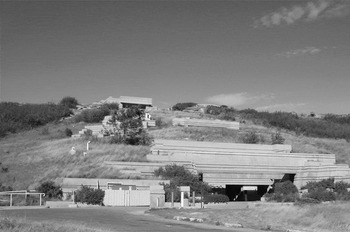
Head-Smashed-In is a unique site that represents the Blackfoot way of life. Everything was in perfect harmony, in terms of how Aboriginal peoples made the jump work, how the hunt was socially organized, and how it was run using their intimate knowledge of animal behavior to drive them to their death over the edge of a cliff. The native people's use of natural features and, in fact, the entire landscape was also significant; for example, they were familiar with the topography, climate, weather patterns, and prevailing winds. The whole story of the site, the Blackfoot people's way of thinking, and the archaeological findings by the Europeans are presented in the Interpretive Centre at the Head-Smashed-In Buffalo Jump, which is intentionally located underground in the cliff in a way that does not disturb the integrity of the site (Figure 3).

Interpretive centre at the Head-Smashed-In-Buffalo Jump.
Current Concerns
- Oil and gas developments: Recently, there has been strong pressure for oil and gas exploration. This might put the future of the site under threat.
- Subdivision: This area has a very low population density. There is tremendous pressure from Calgarians to build vacation houses. The economic pressures on the ranches in the surrounding Porcupine Hills might be so great that they will press to sell off their holdings in smaller parcels. The natural landscape that is so much a part of the traditions of Head-Smashed-In might be replaced with weekend housing estates.
- Windmills: If the region is rich in oil and gas, it is equally rich in environmentally friendly energy: wind. From the top of the Head-Smashed-In cliff, a long line of windmills marches into the horizon disturbing the view and the story and spirit of Head-Smashed-In. It might be argued that the windmills are not permanent in the landscape; their footprint would be virtually invisible should they be removed. The government does not own the lands that accommodate windmills, does not have any control on those lands, and has not developed a conservation plan for that area. There is not much control over what happens visually any distance from the site. This is linked to the issue of boundary of the site. There cannot be an indefinite boundary, but some regulations and designations are employed to avoid inappropriate interventions.
- World Heritage designation: The focus of Head-Smashed-In application was not cultural landscape; the notion of cultural landscape as a heritage type did not exist in the 1980s. The focus also was not Aboriginal people at all; there was little consultation with any Aboriginal group at the time of nomination, and the government prepared the nomination paper based on an archaeological draft. At the time of nominating the Head-Smashed-In Buffalo Jump to the World Heritage, the major focus of the application was on the archaeological part of the site that was more than 10 meters deep and at least 6000 years old. The application did describe the gathering basin back behind the cliff, the drive lanes, and so on; but it did not present it as a cultural landscape. The government would have a much better chance of conserving that site and its integrity if it had been designated a cultural landscape. It is the landscape that makes the story of Head-Smashed-In, not just the cliff and the bone bed at the base of the cliff.
- Conservation: The first protective tool at Head-Smashed-In is its Provincial Historic Resource status. Nothing physical and, in some cases, visual, can happen to the designated land that is owned by the government without the permission of the Minister of Tourism, Parks, Recreation and Culture. This area is under protection to prevent inappropriate development. Second is the Special Places 2000 program's extension which provided a form of government review for any development. This program identified a broader range of naturally significant places in the Head-Smashed-In region, which were added to the original land designation. The original submission to UNESCO and the development plan that was produced became, in effect, the landscape management plan, because it identified the areas that required preservation and the need to maintain a grazing regime on those areas. There is no formal cultural landscape management plan for Head-Smashed-In, but the review of the earlier documents indicated that the existing management plans are acceptable as an alternate to a formal landscape management plan. There remains a need for a coherent cultural landscape management plan that reflects the need to conserve the rare and endangered species in the area, as well as heritage concerns, and addresses the concerns of key stakeholders including Aboriginal peoples, ranchers, and the different industries that give the community economic life.
Takht-e-Soleyman Archaeological Site, World Heritage Site of Iran
Natural and Cultural Values
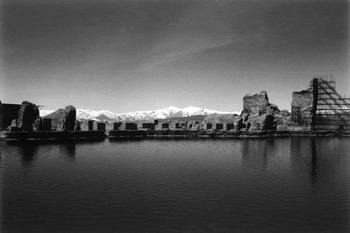
In the West Azerbayejan Province of Iran, near the town of Takab and on southern border of Balkash Mountain, there is a highland famous for its geomorphological features as well as its historic sites; the most significant ones are Zendan-e-Soleyman and Takht-e-Soleyman. Beside the archaeological remains, the landscape of the area is characterized by other integral parts such as natural features (mountains, river, woodland, and thermal springs), agricultural areas (farmlands and orchards), and the small village of Takht-e-Soleyman located between Takht and Zendan (Figure 4 and Figure 5).

Takht-e-Soleyman archaeological site.

Zendan-e-Soleyman hill and Takht-e-Soleyman village.
Around the opening of a great hollow sedimentary hill, known as Zendan-e-Soleyman (Solomon's Prison), there are remnants of a historic sacred place for worshiping Anahita, the Goddess of Water. Dateable potsherds found on these remnants show that they belong to the first millennium b.c. Zendan-e-Soleyman is a hollow hill approximately 110 meters high, which has a mouth approximately 60 meters wide and 100 meters deep. The region in west side of Zendan has many thermal water springs. Local people believe that these springs are of mysterious powers. Once a great thermal spring, Zendan-e-Soleyman dried up by its own sediments probably because of a seismic cataclysm. Taking it as the dissatisfaction of Anahita, the early residents left and settled around another thermal spring nearby, known as Takht-e-Soleyman (Throne of Solomon), to praise Anahita more respectfully.35
Naumann, Die Ruinen Von Tacht-E Suleiman.
Takht-e-Soleyman is an elliptical platform (380 × 300 m) of calcareous sediments and surrounded by a masonry wall and buttresses that make it resemble a fort. In the middle of Takht, there is a lake that has a spring in the bottom with a mouth approximately 2 meters in diameter. The shape of the lake is also elliptical with a great diameter of 115 meters and is funnel-shaped in the vertical section (46–115 m deep). The lake has two streams going outside; therefore, the level of water is almost unchanged. There is evidence of a residential enclosure as a small hamlet from the Achaemenid period (six to fourth centuries b.c.) on the alluvial platform, called Shiz at that time. But the most important buildings on this site are those from the Sassanid period (third to seventh centuries a.d.). The Azargoshnasp fire temple was on Takht-e-Soleyman and with Anahita temple, water and fire were worshiped at the same place and at the same time. This fire was one of the three most respected fires in Sassanid period and as the symbol of unity of the nation. The ancient fire temple was destroyed in seventh century a.d., restored, and used again in 1270 as a hunting palace. It was neglected once again in the fourteenth century and abandoned with its ruined monuments until 1819.36
Naumann, Die Ruinen Von Tacht-E Suleiman.
Takht-e-Soleyman is a testimony of the association of nature and history, revealing one of the great artistic achievements of Sassanid civilization and witnessing the organization of the landscape and the philosophical and religious activity in perfect harmony. The site has strong symbolic and spiritual significance and provides a valuable insight to Zoroastrianism, one of the oldest belief systems, as an official and royal religion and development of Persian art, architecture, and landscape planning. It is the only survival of the three important fire temples of the Sassanid Empire and the only representative of Zoroastrian sanctuary. Zoroastrians still perform annual religious ceremonies in this site. The symbolic relationship between Takht-e-Soleyman and the natural features (water and fire are among the fundamental elements respected by ancient Iranians) makes it culturally significant, as a testimony of the association of ancient beliefs.
Architectural style, design, and materials used for construction add a more physical value to the site. The ensemble of Takht-e-Soleyman is an outstanding example of the royal architecture of Sassanid period. The most significant characteristic of this site is that the principal architectural elements were joined together in a natural context and provided a harmonious composition of natural-architectural-cultural features. The ability of ancient people to use the lake as the center of the design represents their deep understanding of the relationship between their faith/philosophy and natural/geological feature.37
Iranian Cultural Heritage Organization, “Takht-E Soleyman Fire Temple of Knights”; ICOMOS, Evaluations of Cultural Properties.
Although Takht was developed and modified over time with different architectural characteristics, it still occupies its original setting and foundations and retains its historic ruin area and therefore its integrity. Occasional lake flooding deposits calcareous sediments all over the platform. This has partially preserved different settlement periods in separated layers of sediments. The structures became ruined because of neglect and natural erosion.
Current Concerns
[bull ] Urban development: Presently, the site is protected from any urban encroachments simply because it is far from major cities. The only threat might be the development of the nearby village. There was a master plan in place for the village, and the primary works and infrastructures were implemented; but the project was later discontinued. The proposed plan was prepared based on major cities master planning and did not consider the historical context and the identity of the place. Topography and other environmental factors as well as ownership issues regarding the agricultural lands were all overlooked. Had the master plan been completely implemented, the historical identity of the area would have been lost. It is the historic, natural, cultural, and spiritual values of the site that are of high significance and demands specific attention. Currently, there is a will to prepare an improvement plan for the village instead of subdividing the agricultural lands for urban development.
[bull ] Land-use changes: The archaeological heritage of the site is enriched by the Sassanid town, which is now covered by surrounding agricultural fields and still needs to be excavated. Any land use changes in the area threaten the archaeological site and question the integrity of the landscape. The discontinuity of land use is a key factor in endangering the protection of the integrity of the site.
[bull ] New constructions: Takht-e-Soleyman has been historically used by people. Even though human activities have shaped and modified the landscape through interventions on the natural elements (vegetation) and the cultural features (buildings, structures, roads), they have always respected the landscape in its broader sense. New facilities are constructed both inside and outside the plateau with the purpose of enhancing the visiting experience. Because there has been no comprehensive planning for outside of Takht, the placement of the new facilities is inappropriate and problematic in terms of infrastructure and aesthetic.
[bull ] Mineral resources: Takht-e-Soleyman region has a high potential in terms of mineral resources. There exist numerous metallic and nonmetallic mines including historical gold and silver mines that might attract industrial activity. Nearby quarries also have historical significance. They were used for construction of Takht-e-Soleyman. There is a potential threat if these mines were to be heavily used. Not only would the landscape be changed by the mines themselves, but the refining processes could be an even greater intrusion.
[bull ] Conservation: The focus of conservation activities has been mainly within the plateau on excavations, restoration, and reconstruction of architectural structures. The Iranian Cultural Heritage, Handicraft and Tourism Organization is only responsible for the archaeological remains. Although the organization has identified the boundary of the site and categorized it in different zones with varied physical and visual development restrictions, they are not responsible for the conservation of natural elements and environment of the site. The ensemble of Takht-e-Soleyman falls within the boundaries of a protected area and a wildlife refuge recognized by the Department of Environment of Iran. These areas are important in terms of natural resources; strict regulations are in place for such areas, which control any type of developments. Lack of effective communication between organizations, difficulties in negotiations, and separation of the natural and cultural conservation are the main concerns at Takht-e-Soleyman. Both organizations are well informed about their specific areas of concern, one from the standpoint of protecting the environment and the other from a cultural resource perspective; but they do not collaborate as they should, because collaboration could be seen as interfering with each other's administrations, which leads to operational conflicts. Due attention should be paid to the full range of values represented in the landscape, both cultural and natural, so that the character and the spirit of place can be protected.
The Iranian Cultural Heritage, Handicrafts and Tourism Organization has defined a landscape buffer zone for the site. Takht-e-Soleyman is like a bowl in the middle, with some specific regulations. It would be an effective tool to control all activities in the area. Any kind of intervention or physical/functional modification should consider the conservation regulations according to the defined buffer zone.
TAKHT-E-SOLEYMAN ARCHAEOLOGICAL SITE AND HEAD-SMASHED-IN BUFFALO JUMP: CULTURAL HERITAGE OR CULTURAL LANDSCAPE?
At the time of Head-Smashed-In's designation in the early 1980s, cultural landscape was not even included in the World Heritage categories. The only option was designation as a cultural heritage site. Although in 2003 Takht-e-Soleyman could have been nominated as a cultural landscape rather than as a complex of scattered historic sites, the Iranian authority only emphasized the architectural, archaeological, and historic aspects of the site. The inscribed cultural heritage area is huge in size and includes 14 historic sites around Takht-e-Soleyman. The examples were inscribed on the list at different times: one prior to and the other after recognition of cultural landscape within the World Heritage context. However, the results remain the same, they are recognized as cultural landscapes neither internationally nor nationally. This ignores the fact that the sites are obviously cultural landscapes.
The result of such designations, where priority was given to the historical and cultural considerations, was a lack of effective management planning. Cultural landscapes demand a different type of conservation and management planning to manage the change because of their dynamic and evolutionary nature. They require a plan that considers the landscape in its whole and includes natural features that are crucial to the integrity of the site and important for the people living and working there. Such plans must address major challenges in conservation because cultural landscapes are complex, usually contested spaces with many stakeholders. The lessons learned in both cases suggest that the future of the world's cultural landscapes will be most appropriately met by appropriate inclusive designation criteria.
Many of the previously inscribed sites on the list are now in fact qualified to be identified as cultural landscapes.38
For example, Kakadu (Australia), Tikal (Guatemala), and Mount Athos (Greece) are all, in effect, cultural landscapes. Inclusion of cultural landscapes in the cultural properties category will result in a significant increase in the number of properties inscribed on the list that also manifest natural characteristics.
This is not the case for Takht-e-Soleyman. The Iranian government still considers the current designation appropriate; and unfortunately, there is no willingness to amend the designation in near future. Regardless of the existing management plan for Takht-e-Soleyman, a more recent report will clarify that this site would be incomplete without its environment and natural features, not to mention its other associated values. The areas around Takht-e-Soleyman must be included in the original designation to ensure full conservation of all aspects of the site.
Countries should take their periodic reporting to the World Heritage Committee more seriously and determine whether all the values of the site have been recognized and that all the values of the sites are protected and well managed. This would encourage state parties to evaluate their designation and to propose changes of status or to enforce new amendments. It can evolve as an effective tool that ensures a successful and all encompassing management plan.
To ensure appropriate designations, first there is a need to understand the notion of cultural landscape at local levels and develop conservation policies for such heritage sites at national levels and next take the nominations to the next stage: the World Heritage Committee. Presently, the nature–culture debate wages at international levels but has little relevance to national or local preservation agendas. For example, Iran does not identify any heritage property as a cultural landscape, and thus no national policies or guidelines are available at the moment. However, slow progress has been made toward introducing the concept to the professionals and preparing a definition for cultural landscape in accordance with its cultural background. It is impossible to have international designations without adopting any national definition and policies. In the Canadian situation, Parks Canada has defined the term cultural landscape at the national level39
According to Parks Canada, cultural landscape is “any geographical area that has been modified, influenced, or given special cultural meaning by people.” Parks Canada, “Guiding Principles.”
Nominations still continue to be submitted without considering the cultural landscape option. Capacity building will be a highly effective tool to train experts in countries in different regions of the world. The 2006 International Expert Workshop on Enhanced Management and Planning of World Heritage Cultural Landscape was held in Persepolis, Iran. The workshop was co-organized by the Iranian Cultural Heritage and Tourism Organization and UNESCO as a part of capacity-building program during which experts were exposed to the recent developments on the concept of cultural landscape. Continuity of such programs is a key factor in the wider introduction of the concept of a cultural landscape; these capacity-building programs can contribute to a deeper understanding of values hidden in sites qualified as cultural landscapes.
Each country is responsible for preparing and submitting the nomination dossier to the World Heritage Committee. The advisory bodies to the Committee are responsible for reviewing the proposals and evaluating the values and criteria stated in the nomination application. In many cases they would not formally suggest changing the proposed category. If proposing countries could perform a thorough evaluation and a thorough comparative study before nominating the site and seek the advisory bodies' opinion prior to official nominations, it would likely make a noticeable difference toward avoiding disappointment. The limiting factors to achieving this importance are time frames and human and financial resources, which should be addressed within the World Heritage Committee.
CONCLUDING REMARKS
The international recognition of cultural landscapes has overcome the historic division of culture and nature in the WHC. The convention's new approach toward assessment of heritage sites and the recognition of the interaction between culture and nature can significantly influence conservation practices around the world. However, it has not been widely examined, and the implications of putting the two sets of criteria together are unclear. The situation will be clarified after a few years of experience and trial, and the outcome will be more apparent over time. Chances are high that new evaluation processes will result in possibly even more confusion in a number of countries. Many believe this new approach would not affect the existing inscriptions of cultural landscape, and the outcomes would remain the same; for example Canada could continue to nominate more natural heritage sites or Iran could continue with its all cultural heritage nominations. Others believe it will end the long-debated dichotomy between nature and culture and will present more appropriate nominations. Successful results can only be achieved if all aspects of a place are taken into consideration when identifying the appropriate criteria. And then these will only be effective if they are applied with knowledge.
Although UNESCO has recognized the links between nature and culture through attention to cultural landscapes, many nation states and their bureaucracies have not yet done so. Whether this new approach to evaluate heritage properties can be applied at national levels and whether the reassessment of national properties is achievable will largely depend on the local circumstances. They include not only local cultural beliefs, but also financial and operational opportunities, governments' willingness, and priorities.
Conservation of cultural landscapes can be included in a larger context, both in the field of historic preservation and the natural resource conservation. The primary obstacle in recognizing cultural landscapes within the preservation community and its practices has been the difficulty of identifying the landscape as a heritage resource. However, all three types of cultural landscapes (landscapes designed and created intentionally by man, organically evolved landscapes, and associative cultural landscapes) testify to the interaction of humankind and nature, as well as to how the passage of time adds to their values. In most cases of cultural heritage sites, the cultural values often overshadow their relationship with the natural environment. This issue is also evident in natural heritage sites where the natural influences are so significant that there is little room for cultural considerations. To be sure, the major problem in cultural landscapes designation is the identification of hidden heritage elements, finding their historic value and then preserving them in their context for future generations.
Conservation of cultural landscapes requires a framework that recognizes and evaluates the relationship between natural and cultural values. There is broad support both from academia and policymakers, but not in all countries, to link natural and cultural values. The Operational Guidelines' new set of criteria will hopefully influence local authorities and influence the system of identification, assessment, and inscription of heritage properties, as well as conservation practices. The convention's new approach may result in inscription of more cultural landscapes, which in turn will encourage the development of cultural landscape safeguarding practices. Indeed, it is crucial that countries reflect this integration into their heritage conservation policies considering their cultural circumstances. International bodies are critical to setting and championing standards; but in the end little will change without the engagement of the owning communities. National agencies must accept the responsibility for the dissemination of the latest information and policies to their local experts.
In addition, the close cooperation between cultural and natural institutions both at international and national levels must be encouraged to support the new amalgamated set of criteria. In fact, the new set includes 10 criteria, which are the same familiar ones that ICOMOS and IUCN have used for decades; ICOMOS used the six first criteria and IUCN applied the rest. It can be also suggested that instead of IUCN and ICOMOS each being responsible for the evaluation of cultural landscape, one new advisory body could be established within the World Heritage Centre and solely devote its work to cultural landscapes while collaborating with ICOMOS and IUCN. Conversely, establishing another body would add to the current financial and administrative complexities; nevertheless, it could be argued again that is reasonable when it results in better protection of the world's heritage. Many previously inscribed sites on the World Heritage List are eligible for recognition as cultural landscapes. It is not the intention of this article to suggest that all those sites must be renominated and their status changed. There is always the possibility that new categories of heritage could be identified in the near future, and it is impossible to review all inscribed sites each time there is a new addition to the already recognized categories. Rather, the hopes is to encourage the revision of the previous designations by each country to gain insights to support their future nominations and seriously consider cultural landscape as a heritage type. The World Heritage Committee's restriction that each country can only nominate one cultural property each year creates some reservations for renominating previously inscribed sites. Furthermore, this article recommends that countries consider amendments to the previous designations in cases that are undoubtedly cultural landscapes and when the futures of those landscapes are in danger.
To conclude, the UNESCO World Heritage Centre is exercising leadership in the identification of cultural landscapes; however, nation states are lagging behind in the application of the new criteria. This is resulting in planning and conservation problems. The first mandate in the World Heritage designation is to conserve the recognized values. Without appropriate designation, conservation and management practices will not focus on all values. There are, however, signs that in the next decade there might be a more holistic approach. This should result in better planning, management, and conservation practices that consider multiple values of all heritage properties.