INTRODUCTION
The unequivocally pristine invention of written language, defined here as the coherent distillation of speech sounds into an ordered representational system, occurred in only a handful of areas of the world (Daniels and Bright Reference Daniels and Bright1996; DeFrancis Reference DeFrancis1989; Piquette and Whitehouse Reference Piquette, Whitehouse, Piquette and Whitehouse2013). In ancient Mesoamerica, this impetus to graphically encode phonetic information occurred sometime before the fourth century b.c. (Flannery and Marcus Reference Flannery, Marcus and Cleland1976; Pohl et al. Reference Pohl, Pope and von Nagy2002; Rodríguez et al. Reference Martínez, Carmen, Ceballos, Coe, Diehl, Houston, Taube and Calderon2006; Strauss Reference Strauss2013). The origins of writing in the Near East, crystallized by the late fourth millennium b.c., are well-studied and may be primarily rooted in an economic and numeric representational system (Postgate et al. Reference Postgate, Wang and Wilkinson1995). The origins of writing in the New World, complicated by the likely lacunae of perishable and portable texts from these early centuries, are less secure. The greater Mesoamerican hieroglyphic corpus suggests that the prime motivating factor was not a concern with surplus and economic recordkeeping, as in Mesopotamia, but rather a keen interest in mythological narrative and calendrical cycles of time. A similar case may hold for ancient China (Chang Reference Chang1983), though issues of preservation in both Mesoamerica and the Far East make such hypotheses speculative. Nevertheless, across Mesoamerican time and space, hieroglyphic writing was indubitably and inextricably tied to cosmological image production, ideological messaging, and elite art practice. The discrete representational modes of writing and art, so clearly delineated from a lay perspective, were more than complementary approaches to elite messaging—they were deeply indexical means of communication that spanned a slippery visual boundary, each depending upon and structuring the other. By the Late Formative period, Mesoamerican elites were producing public monuments that explored the narrative domains of time, image, and glyphic exposition, pulling from and presaging the frames that best fit their goals and audience(s).
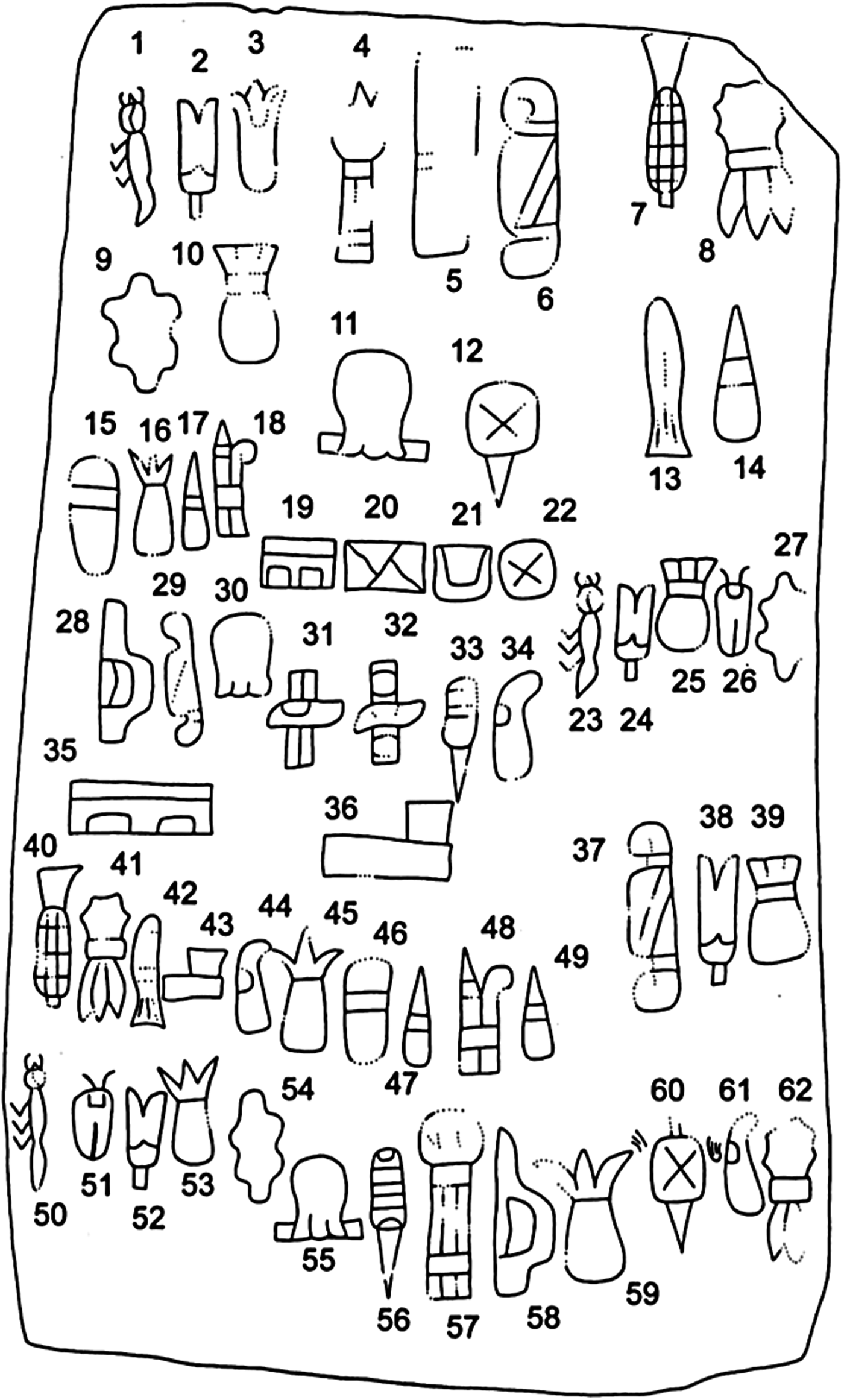
The earliest physical evidence of hieroglyphic writing in Mesoamerica appears in the Middle Formative period (ca. 900–400 b.c.), when inscribed materials in a variety of media, both portable and monumental, carved and painted, began to appear across far-flung cultural regions (Cahn and Winter Reference Cahn and Winter1993; Flannery and Marcus Reference Flannery, Marcus and Cleland1976; Pohl et al. Reference Pohl, Pope and von Nagy2002; Saturno et al. Reference Saturno, Stuart and Beltrán2006). The iconographic antecedents of hieroglyphic writing, however, may stem from the Early Formative (ca. 1600–900 b.c.). The Cascajal Block, uncovered almost two decades ago near Lomas de Tacamichapa, Veracruz, suggests that the ordering, isolation, and repetition of discrete signs occurred within the San Lorenzo horizon (Figure 1; Rodríguez et al. Reference Martínez, Carmen, Ceballos, Coe, Diehl, Houston, Taube and Calderon2006). Calzadas Carved Olmec-style ceramics, furthermore, provide a window into two key developments in the history of Mesoamerican writing: the distillation of full-figure composite images into discrete representational elements, and critically, the movement and exchange of these forms across the landscape (Blomster et al. Reference Blomster, Neff and Glascock2005; Neff et al. Reference Neff, Blomster, Glascock, Bishop, Blackman, Coe, Cowgill, Cyphers, Diehl, Houston, Joyce, Lipo and Winter2006). To a viewer literate in the visual culture of the Olmec heartland, these abstracted elements recursively indexed, or “read,” as whole composite figures. Such pars pro toto (part for whole) signaling practices are inherent in all Mesoamerican hieroglyphic systems; and if the origins of Mesoamerican writing lay in the Early to Middle Formative era, then the Late Formative (400 b.c.–a.d. 250), in turn, bore witness to the intense diversification and regionalization of text-and-image practice (Guernsey Reference Guernsey, Guernsey, Clark and Arroyo2010; Houston Reference Houston and Houston2004; Justeson and Mathews Reference Justeson and Mathews1990; Kaufman and Justeson Reference Kaufman and Justeson2001; Macri Reference Macri, Love and Kaplan2011; Strauss Reference Strauss2013). Recently, Inomata et al. (Reference Inomata, Ortiz, Arroyo and Robinson2014) presented a revised chronology for the Formative urban centers of the southern Maya highlands, using Bayesian statistics to reevaluate early radiocarbon data, ceramic seriations, and their resulting correlations. Although the authors did not formally include Izapa in their proposed revision, Inomata and Henderson (Reference Inomata and Henderson2016) suggest Izapa’s monumental corpus may also post-date the Late Formative Guillen phase (300–50 b.c.), making it more specifically “Terminal Formative” in date. Ongoing fieldwork at Izapa, however, suggests caution in extrapolating the Inomata et al. model (Reference Inomata, Ortiz, Arroyo and Robinson2014) to this site (see Mendelsohn Reference Mendelsohn2018 and Rosenswig et al. Reference Rosenswig, Culleton, Kennett, Lieske, Mendelsohn and Núñez-Cortés2018). Here I conservatively follow the chronology established by Lowe et al. (Reference Lowe, Lee and Espinosa1982), and broadly refer to Izapa’s monuments as “Late Formative” in date.
The Cascajal Block, reproduced from Rodríguez et al. (Reference Martínez, Carmen, Ceballos, Coe, Diehl, Houston, Taube and Calderon2006: Figure 4, 1612). Drawing by Stephen Houston.

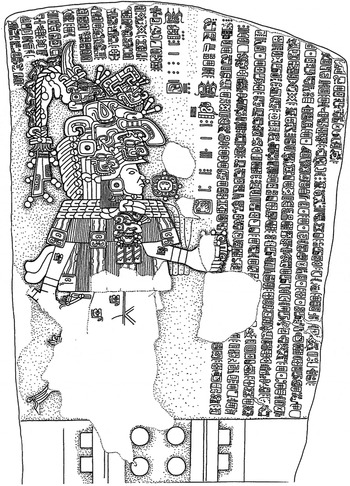
Speakers of many languages participated in this era of visual-verbal experimentation, and new modes of representation developed to accommodate better the needs of these diverse text-and-image programs. In broad terms, monumental stone practice shifted from three-dimensional representation in the round in the Early and Middle Formative (de la Fuente Reference de la Fuente, Clark and Pye2000), to more two-dimensional, inscribable surfaces (Figure 2) that may have had analogs in earlier mural, textile, and book-painting practices (Clark et al. Reference Clark, Guernsey, Arroyo, Guernsey, Clark and Arroyo2010; Guernsey and Strauss Reference Guernsey and Strauss2015; Houston Reference Houston2014). By the Late Formative period, the semiotic integration of complex images and pars pro toto motifs, calendrical dates, and extended glyphic passages stretched across the Isthmus of Tehuantepec, from the Valley of Oaxaca in the west, to the Pacific coastal piedmont in the south, east across the Maya highlands, and north into the Maya lowlands. That the interwoven narrative domains of image, time, and text received differential treatment across Late Formative Mesoamerica signals, I suggest, fundamental differences in the emically preferred means by which text, image, and material substrate were bundled to convey visually coherent, cosmologically and ideologically salient messages
The La Mojarra Stela, reproduced from Justeson and Kaufman (Reference Justeson and Kaufman1993:Figure 2, 1704). Drawing by George Stuart.

At least three distinct hieroglyphic systems were in operation in the Late Formative Period: the Zapotec, the Epi-Olmec (or “Isthmian”), and the Maya (Anderson Reference Anderson1993; Pérez de Lara and Justeson Reference Pérez de Lara and Justeson2006; Strauss Reference Strauss2013; Stuart Reference Stuart2015; Urcid Serrano Reference Urcid Serrano2001). It should be stressed, however, that this gross separation of scripts, while functionally accurate, fails to account for the existence of localized and sophisticated microsystems, as perhaps evidenced by El Baúl Stela 1, and clearly seen in later periods at sites such as Cotzumalguapa (Chinchilla Reference Chinchilla Mazariegos2012). Such microsystems provide a tantalizing glimpse into a vibrant and diverse landscape of indigenous script traditions that far exceeds the bounds of a Zapotec/Epi-Olmec/Maya triumvirate. And, yet, in this variegated landscape of Formative Mesoamerica, writing systems can be as notable for their conspicuous absence as for their precocious presence. This is certainly the case for the Late Formative urban center of Izapa, Chiapas, often pedagogically set apart from its neighbors to the west and east by its apparent lack of phonetic inscription. As I will explore below, however, if one employs Saussure's (Reference Saussure and Harris1983 [1916]) definition of a sign as a dyadic and (crucially) “phonocentric” relationship between a signifier and its signified, there are indeed glyphs at Izapa that likely linked discrete visual concepts with specific sound patterns. In other words, there are a handful of signs at Izapa that could be read aloud, with controlled and established meaning (and a discussion of Izapa's potential linguistic affiliation(s) will be explored below). That these glyphs are primarily calendrical in nature, furthermore, provides a window into the narrative domains that were most salient for the elite producers of these monuments, and the diverse audiences that engaged with their messages. Though the specific language, or, indeed, even the corresponding language family, used to voice these signs remains a subject of debate, a close study of a handful of these monuments serves to further integrate Izapa into the discourse on early Mesoamerican writing.
IZAPA AND THE FORMATIVE HIEROGLYPHIC LANDSCAPE
The Mesoamerican site of Izapa is well-known, on the one hand, for its program of elaborately carved narrative stelae and altars, and on the other, for its almost complete lack of hieroglyphic writing (Lowe et al. Reference Lowe, Lee and Espinosa1982; Marquina Reference Marquina1939; Stirling Reference Stirling1943). Formative urban centers in the Mexican and Guatemalan Pacific coastal plain and adjacent highlands, like Izapa, were situated in a highly favorable agricultural zone. Izapa was located in a fertile cacao-growing corridor and had relatively convenient access to the coast and marine resources, as well as a local supplementary source of obsidian (Gasco and Voorhies Reference Gasco, Voorhies and Voorhies1989; Love and Kaplan Reference Love and Kaplan2011; Lowe et al. Reference Lowe, Lee and Espinosa1982). A recent remote-sensing (light detection and ranging [Lidar]) and pedestrian survey project revealed that Izapa's monumental core spanned both sides of the Rio Izapa (Rosenswig et al. Reference Rosenswig, López-Torrijos, Antonelli and Mendelsohn2013), and likely followed alignments to significant topographic features like Tacaná volcano. Economic and raw material trade routes passed through the Isthmus of Tehuantepec and stretched east toward the piedmont site of Tak'alik Ab'aj and Kaminaljuyu in the volcanic highlands, and on to high quality obsidian sources and the fine jade of the Motagua River valley (Lange Reference Lange1993; Lowe et al. Reference Lowe, Lee and Espinosa1982; Seitz et al. Reference Seitz, Harlow, Sisson and Taube2001). This corridor of movement also stretched west, back towards Oaxaca and into central Mexico, so that the Late Formative peoples of these areas were likely exposed to the coeval art and hieroglyphic practices of their neighbors to the west and east.
Izapa has been described as “a major center associated with the Isthmian tradition” (Sharer and Traxler Reference Sharer and Traxler2006: 227), a geographically accurate but vague designation, as “Isthmian” is beginning to rival “Olmec” in its simultaneous widespread use and overall lack of specificity. As yet, no clear evidence of Epi-Olmec writing has been uncovered at Izapa. Indeed, as I will argue below, the Epi-Olmec and Izapan visual cultures evidence quite different approaches to the communicative domains of time, image, and text. Glottochronological reconstructions do place Izapa within the presumed Formative territory of Mixe-Zoquean speakers, or more narrowly, speakers of Proto-Mixean (Campbell Reference Campbell1988; Clark and Pye Reference Clark, Pye, Love and Kaplan2011; Lowe Reference Lowe and Adams1977; Josserand Reference Josserand, Love and Kaplan2011; Justeson Reference Justeson1986; Wichmann Reference Wichmann1995, Reference Wichmann, Bellwood and Renfrew2003). Maya speakers populated the lands immediately to Izapa's east, however, and some scholars prefer to place Izapa more squarely within a borderlands Maya tradition (Coe and Houston Reference Coe and Houston2015; Stuart Reference Stuart2015). Indeed, Coe and Houston (Reference Coe and Houston2015:69) contend that although “the language spoken in this area in early Colonial times was Tapachulteko, a Mixe-Zoquean tongue, the religious iconography of Izapa is entirely Maya, and the site was surely created by Maya-speakers.” In the abbreviated context of this study, perhaps the best approach to this cultural assignment debate, which tangles slippery notions of language, ethnicity, and the role of visual culture in the ancient past, is to adopt the model proposed by specialists of the Pacific slope region, and lean into Izapa's physical position at a crossroads of multilingual groups (Guernsey and Love Reference Guernsey, Love, Fields and Reents-Budet2005; Love and Kaplan Reference Love and Kaplan2011). The internally consistent visual culture of Izapa, which resonates with stylistic conventions to both the east and west, then, “may have [intentionally] fostered the penchant for nontextual communicative strategies, rather than language dependent ones” (Guernsey Reference Guernsey2006:15).
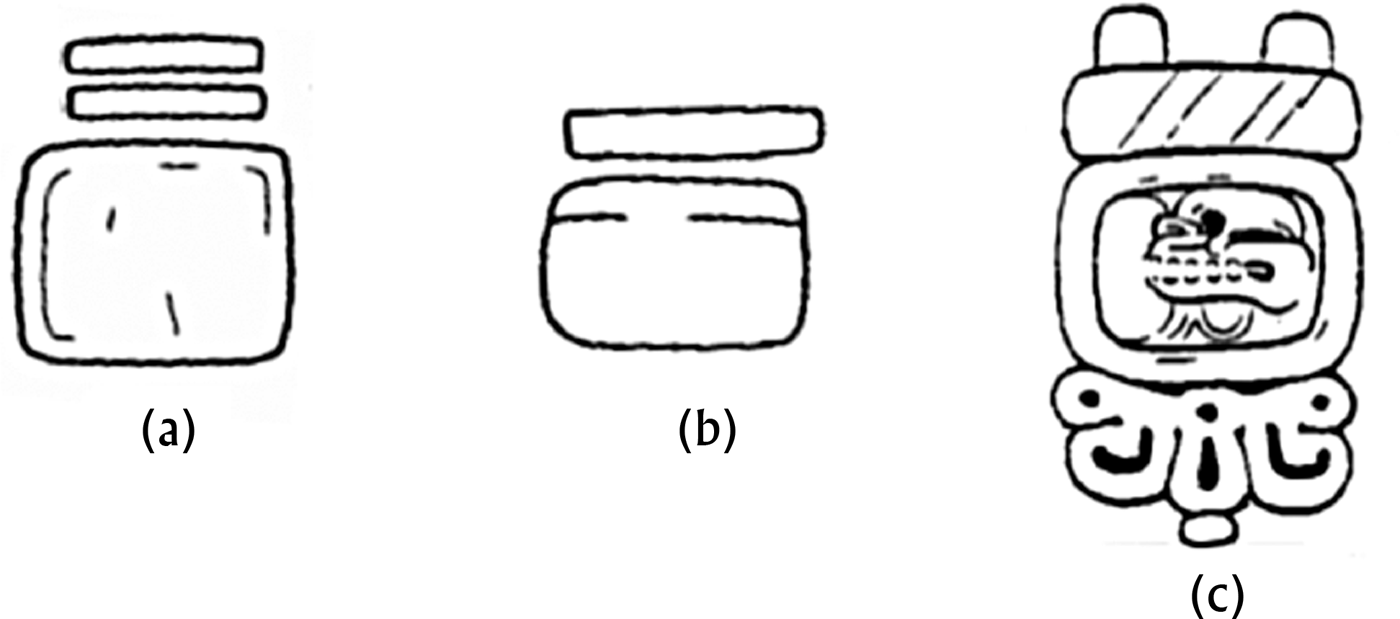
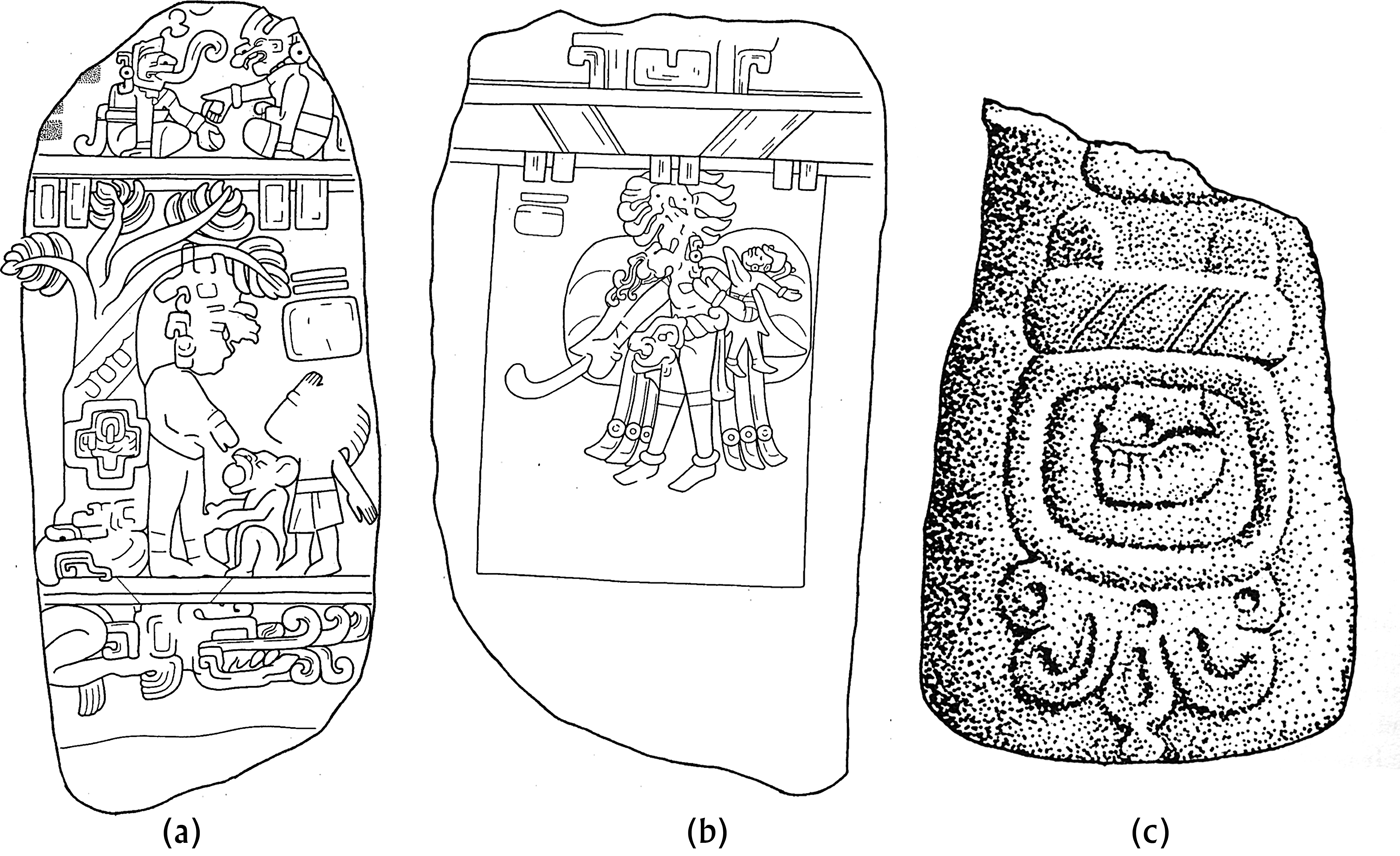
Incidentally, this study finds that the syntagmatic ordering of Izapa's few stringed glyphs aligns with linguistic conventions of both the Mixe-Zoquean and Mayan language families, in which numerals precede the object(s) that they quantify (Figure 3). Here I am using the syntagmatic/paradigmatic model (see Saussure Reference Saussure and Harris1983 [1916] and Jakobson Reference Jakobson and Sebeok1960) to differentiate between the stringing together of discrete glyphs to form a syntactically coherent phrase (the “syntagmatic” or horizontal axis) and the controlled substitution of specific signs to alter meaning (the “paradigmatic” or vertical axis). In Izapa’s case, the paradigmatic substitutions are most clearly seen in the highly structured use of iconoglyphs (defined and described further below), while syntagmatic ordering is limited to only a handful of calendrical inscriptions. Specifically, Izapan numerals in the form of both bars and dots appear to precede the glyphs they modify (from top-to-bottom), setting Izapan glyphs apart from the Zapotec language family (where numerals follow nouns; Urcid Serrano Reference Urcid Serrano2001), as well as glyphic statements known from both Teotihuacan and some Postclassic central Mexican inscriptions, in which numerals do precede glyphs, but in a reversed bottom-to-top reading order (Taube Reference Taube2000, Reference Taube, Boone and Urton2011; Whittaker Reference Whittaker2009; Zender Reference Zender2008). Though the corpus of Late Formative inscriptions is small, there may yet be room for further refinement of this analysis, as well, as Epi-Olmec inscriptions tend to place numerals to the sides of the glyphs they modify, while inscriptions from early Maya objects and those in Izapa's monumental corpus generally place numerals above the glyphs they quantify (Strauss Reference Strauss2015; David Stuart, personal communication 2016). Furthermore, while the Izapan hieroglyphs explored below do formally resonate with examples of calendrical glyphs found in the Maya highlands and lowlands, this by no means indicates that these Izapan signs were voiced in a Mayan language. As difficult as it may be to admit, there are no clear phonetic signatures at Izapa, and the language of its glyphs is a question that modern archaeologists, linguists, and art historians will likely never answer. A more fruitful approach, as I argue below, is to question the fine-grained differences between how visual culture systems addressed the reciprocal relationships between image, time, and text in the Late Formative period. In this regard, Izapa stands apart from its neighbors to both the west and the east, presaging the narrative domains of image and time over the inclusion of any expository passages.
Calendrical glyphs of Izapa: (a) Izapa Stela 27; (b) Izapa Stela 9; (c) Izapa Miscellaneous Monument 60. Note that images are not to scale. Details of drawings by Ajax Moreno, courtesy of the New World Archaeological Foundation.

Carved stone monuments and motifs of a so-called “Izapa-style” have been tracked across the Pacific coast, slope, and highlands, including at the proximal sites of Tak'alik Ab'aj and Kaminaljuyu, by a number of scholars (Guernsey Reference Guernsey2006; Henderson Reference Henderson2013; Lowe et al. Reference Lowe, Lee and Espinosa1982; Norman Reference Norman1973, Reference Norman1976; Parsons Reference Parsons1973; Prater Reference Prater, Bove and Heller1989; Schieber and Orrego Reference Schieber de Lavarreda, Corzo, Guernsey, Clark and Arroyo2010; Smith Reference Smith1984). The Izapa style, while a patently local visual tradition that engaged with Izapa's natural topography, climate, and the political motivations of its elite, also bears residual traces of Olmec-style art and resonates with early Maya representational modes (Guernsey Reference Guernsey2003, Reference Guernsey2006; Quirarte Reference Quirarte1973, Reference Quirarte and Nicholson1976). This blended visual vocabulary and the site's chronology once prompted early scholars to place Izapa on a developmental continuum between the Olmec and the Maya, not a robust visual culture in its own right, but rather a transitional regional style nestled between two more clearly delineated programs (Coe Reference Coe and Adams1977; Graham Reference Graham, Sharer and Grove1989; Greene et al. Reference Greene, Rands and Graham1972; Parsons Reference Parsons1986; Quirarte Reference Quirarte1973; Smith Reference Smith1984). Consequently, early work on the Izapa style drew heavily upon Maya scholarship, and in particular its apparent resonance with certain passages of the sixteenth-century creation myth of the K'iche’ Maya, the Popol Vuh. While narratives of ritual performance are clearly integral to Izapa's monumental program, this interpretive practice is undergoing a much-needed revision in the field. For example, both Chinchilla (Reference Chinchilla Mazariegos2015) and Guernsey (Reference Guernsey2016) are exploring alternatives to these standing mythic narrative paradigms. Our understanding of writing at Izapa must undergo a similar revision, and this initial survey only further highlights the many potential avenues left open for further exploration.
IZAPA'S INSCRIBED CORPUS: ICONOGLYPHS, LABELS, AND CALENDRICAL STATEMENTS
As aforementioned, Izapa is located at a crossroads between the great early writing systems of Mesoamerica: the Zapotec, the Epi-Olmec, and the proto-Maya programs (Justeson Reference Justeson1986; Mora-Marín Reference Mora-Marín2001; Macri Reference Macri, Love and Kaplan2011; Stuart Reference Stuart1995). The linguistic affiliation of Izapa itself, however, will likely remain contested, due to the inherent circularity of glottochronological time-depth estimates, as well as the tautological shortcomings of theorizing “linguistic affiliation” in the deep past. What, indeed, does “linguistic affiliation” mean? Does it refer to the language spoken by the majority of Izapa's populace, regardless of class or occupation? Does it refer specifically to the language spoken by the polity's elites, or perhaps to a prestige language that may have stood apart from both (and by extension, was likely the voiced language of any inscriptions found therein)? More problematically, how does a modern reconstruction of linguistic affiliation correspond, if at all, to salient emic categories of identity in antiquity? Are “linguistic affiliations” really thinly veiled statements about the perceived ethnicity of a city's inhabitants? These are concerns that have been presciently raised by scholars of the southeastern Mesoamerican region, in particular (Guernsey Reference Guernsey2012; Josserand Reference Josserand, Love and Kaplan2011; Love Reference Love2007). As Josserand (Reference Josserand, Love and Kaplan2011:141) states, “while they have close connections, language, culture, and race are independent variables” in the ancient past. These are questions that must be carefully addressed across Mesoamerican scholarship, particularly as the field advances in our understanding of text and image relationships across Mesoamerican time and space.
Generally speaking, however, linguists agree that speakers of Mixe-Zoquean languages flanked Izapa to the northwest and Maya speakers stretched out to the northeast. Even ignoring the directionality and intensity of influence and interaction in this corridor, it is very likely that the people of Izapa, whatever their native language(s), interacted with neighbors who either used or were optically familiar with linguistically transparent writing systems. And yet, no narrative hieroglyphic texts have been found on Izapa-style monuments. In this way, the Izapa case is at least superficially similar to that of the later urban metropolis of Teotihuacan in central Mexico. Elite Teotihuacanos interacted with diverse peoples from the Valley of Oaxaca to the greater Maya region (Carballo Reference Carballo, Hirth and Pillsbury2013; Pasztory Reference Pasztory and Rice1993; Rattray Reference Rattray1995; Stuart Reference Stuart, Carrasco, Jones and Sessions2000; Sugiyama and López Luján Reference Sugiyama and Luján2007; Taube Reference Taube and Braswell2003), but did not commit lengthy textual passages to their monumental architecture or expansive mural programs. This is not to say that Teotihuacanos did not use hieroglyphic notation themselves, as is becoming increasingly evident (Helmke and Nielsen Reference Helmke and Nielson2014; Taube Reference Taube2000, Reference Taube, Boone and Urton2011); as a medium for public ideological messaging, however, the practice did not resonate as deeply as it did in neighboring Oaxaca and the distant Maya region. The Zapotec and Maya models of text-as-speech-sounds simply lacked sufficient utility at Teotihuacan, and text was not incorporated as a narrative domain in Teotihuacan's public art program.
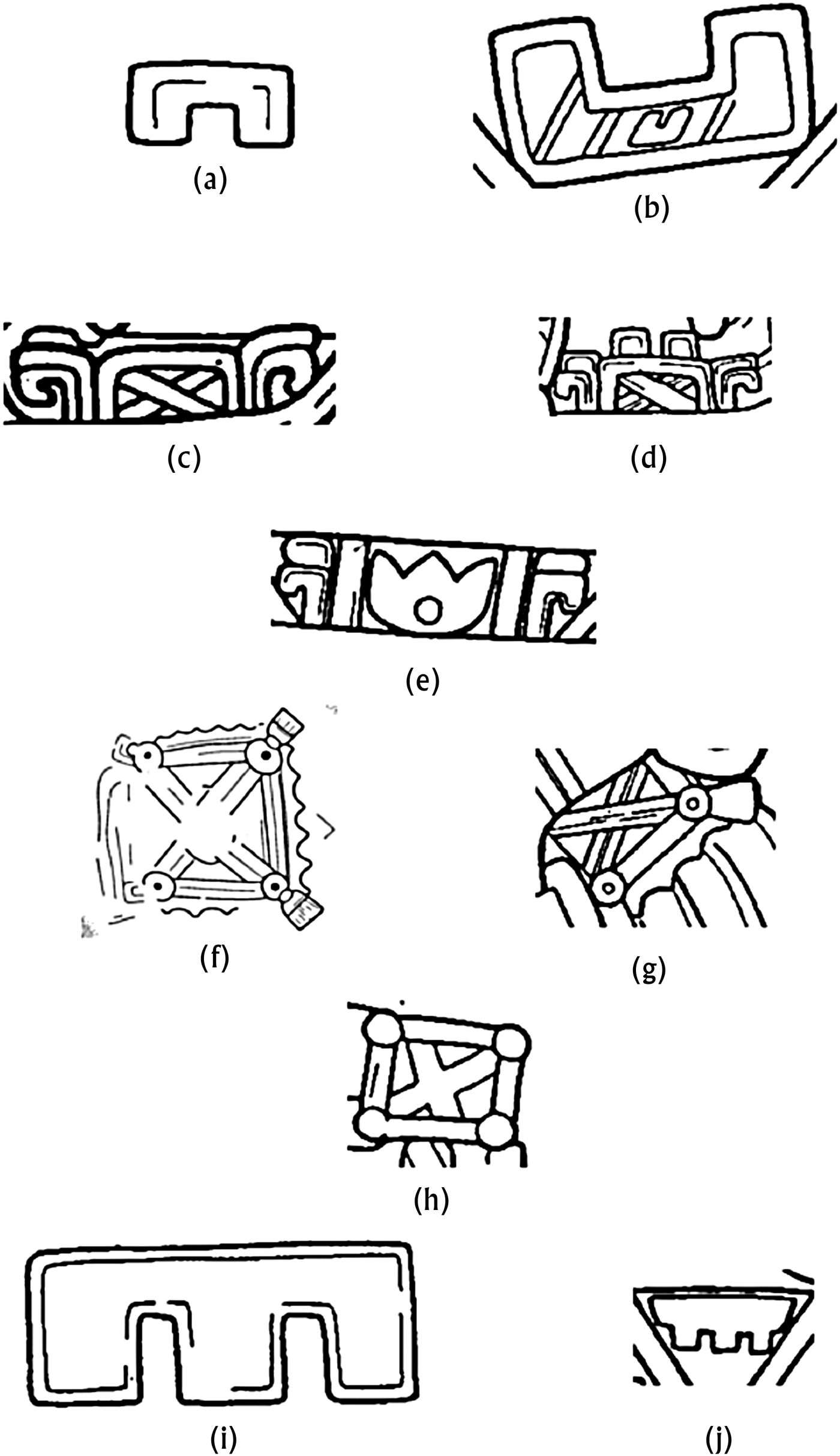
Although Izapa did not have the same pan-Mesoamerican reach and intensity of influence as Teotihuacan, its distinctive art style was exchanged with sites across the immediate landscape (see Mendelsohn Reference Mendelsohn2018 and Rosenswig et al. Reference Rosenswig, Culleton, Kennett, Lieske, Mendelsohn and Núñez-Cortés2018). A text independent communicative strategy, rather than a linguistically transparent writing system, may have better fit the elites’ needs. In other words, political authority at Late Formative Izapa, like Early Classic Teotihuacan, may have been expressed in accessible visual terms rather than language-dependent text (Guernsey Reference Guernsey2012). Embedded in these Izapa-style monuments, however, are motifs that bear a distinctly glyph-like iconicity, a robust category of repetitious, paradigmatic visual elements that I term “iconoglyphs.” These iconoglyphs have been explored in the literature on Izapa for decades, albeit with substantial variation in the ultimate interpretation, or glossed translation, of their forms (Baudez Reference Baudez, Heizer and Graham1971; Gomez and Grazioso Sierra Reference Gomez Rueda, Sierra, Laporte and Escobedo1997; Guernsey Reference Guernsey2006; Norman Reference Norman1973; Quirarte Reference Quirarte and Robertson1974; Smith Reference Smith1984; Stross and Reilly Reference Stross and Reilly1991). Cross-bar cartouches, U-shaped brackets, downturned E-shapes, and foliated motifs with strong iconographic ties to both Epi-Olmec and Maya forms stand as some examples (Figures 4a–4j). Izapan iconoglyphs are embedded within narrative scenes, often in terrestrial and celestial registers, or else nestled within costume elements or headdresses, and are repeated in similar contexts across various monuments. This contextual consistency indicates that Izapan iconoglyphs carried relatively stable meaning over the production of many sequential monuments, possibly commissioned by multiple generations of elite patrons.
A selection of Izapan iconoglyphs: (a) Izapa Stela 1; (b) Izapa Stela 3; (c) Izapa Stela 2; (d) Izapa Stela 4; (e) Izapa Stela 12; (f) Izapa Throne 1; (g) Izapa Stela 4; (h) Izapa Stela 18; (i) Izapa Stela 60; and (j) Izapa Stela 12. Note that images are not to scale. Details of drawings by Ajax Moreno, courtesy of the New World Archaeological Foundation.

Similar to the pars pro toto deconstruction of motifs that is emblematic of Olmec-style art, Izapan iconoglyphs were a part of an internally logical visual system, with some evident level of control over the “proper” connection between the signifier (the iconoglyph) and the signified (its meaning). Izapan iconoglyphs, admittedly, do not fit the conservative definition of “writing” delineated at the outset of this study. Nevertheless, I argue that the same mechanisms of power that attach arbitrary linguistic meaning to a concatenation of graphemes are also at work in the iconoglyphs of Izapa. Indeed, this provides a rather useful way to talk about non-hieroglyphic signaling practices in the Formative Period: as visual evidence for the stabilization and control of subtle meaning in graphic form.
Slightly apart from, or perhaps a subset of, the iconoglyphs are obscure, isolated motifs that may serve a naming or labeling function (perhaps a didactic necessity in the oft-dense narrative scenes of Izapa's carved stone monuments). At this time, it would be unwise to suggest phonetic values for these apparently context-specific motifs, if, indeed, they served a nominal function at all and are not simply detached iconographic elements, ripe for modern over-analysis. This category includes the detached profile heads that accompany certain figures and scenes on Izapa's monuments, such as the one seen in the bottom left of Izapa Stela 3 (Figure 5). These floating animate signs are also common in the monumental corpus of Tak'alik Ab'aj, and even closely resonate with forms found even farther afield, such as Monument 15 from Chinkultic (Navarrete Reference Navarrete1984:Figure 48). Another possible category of label/nominal sign appears on the trunk of the tree on Izapa Stela 27 (Figure 6). Nicknamed the kan-cross glyph by Smith (Reference Smith1984), similar quatrefoil forms also appear on Izapa Stela 8 and Miscellaneous Monument 38. The design in the interior of the Stela 27 quatrefoil is maddeningly obtuse—could this element name the supernatural tree that pushes up against the monument's upper and lower registers, and in turn foreshadow the named sacred trees in the Cross Group at Palenque? Of course, it is equally probable that this quatrefoil emblem marked the tree in some other, non-linguistic way—signaling the sacrality or vegetative abundance of the supernatural flora, for example—or perhaps was an iconographic feature of the tree itself. The design above the quatrefoil does look suspiciously like Classic Maya te’ markings. This linear pattern appears elsewhere in Izapa-style art and, interestingly, often on objects that were likely made of wood, like canoes (Guernsey Reference Guernsey2016), but it would be imprudent to assign a linguistic value to this motif at this juncture.
Izapa Stela 3. Drawing by Ajax Moreno, courtesy of the New World Archaeological Foundation.

Izapa Stela 27 detail. Drawing by Ajax Moreno, courtesy of the New World Archaeological Foundation.

And yet despite Izapa's almost universal preference for visually narrative monuments and linguistically unbound iconoglyphs, there are, in fact, three examples of what might be called “true” hieroglyphic writing at Izapa (although such value-laden terms are inherently reductive), and they are found on Stela 27, Stela 9, and Miscellaneous Monument 60 (Figures 7a–7c). These glyphs are eroded and lack phonetic signatures (i.e., they are logographic spellings); and with all the richness of Izapa's elaborate sculptural pantheon, these examples are admittedly anomalous outliers (though one wonders how this frequency and distribution might change if samples of written texts on perishable media survived to the present). These rare Izapan glyphs, nevertheless, are critical to placing Izapa in the continuum of early Mesoamerican writing. All three Izapan hieroglyphic examples are pairings of a single numerical glyph and a separate sign within a cartouche: forms clearly recognizable as calendrical day signs in the pan-Mesoamerican 260-day ritual calendar. It is worth noting, here, that while some scholars include Izapa Stela 1 in the site’s corpus of hieroglyphically inscribed monuments, I have excluded it from this study. The motifs in question (a pairing of five dots and a stepped form) appear in the upper register of Stela 1, above the monument’s celestial band. While Norman (Reference Norman1976:92) interpreted these graphic forms as the calendrical day name 5 Ik’, I find this reading unlikely. As evidenced on Stela 27, Stela 9, and Miscellaneous Monument 60, Izapan artisans utilized the well-known bar and dot numerical system seen in other early Mesoamerican hieroglyphic programs, and thus the five dots on Stela 1 are surely not a numerical coefficient. While Stela 1 (and Izapa Altar 60, which also bears a pairing of dots and a stepped motif) certainly merit further investigation, it is Izapa Stela 27, Stela 9, and Miscellaneous Monument 60 that provide the strongest cases for stringed writing at the site, and by extension, a window into the preferred narrative domains of Izapan monumental production. As will be explored below, two of the inscriptions, Stelae 9 and 27, may evidence more local forms and visually resonate with an example from Tak'alik Ab'aj, while the third (Miscellaneous Monument 60) bears striking resemblance to glyphs from Kaminaljuyu and the Maya lowlands.
(a). Izapa Stela 27. (b) Izapa Stela 9. Drawings by Ajax Moreno, courtesy of the New World Archaeological Foundation. (c). Izapa Miscellaneous Monument 60. Illustration by Norman (Reference Norman1976:Figure 5.83: 282). Note that images are not to scale.

REPRESENTING TIME AT IZAPA: SQUARED VS. DRIPPING CARTOUCHES
The inscription on Izapa Stela 27 includes a numerical coefficient of 10 (two bars) and a single squared glyph, suspended in the negative space to the right of the tree (Figure 7a). Although the details of this glyph are completely obliterated, the pairing of one numeral with one isolated glyph is a hieroglyphic structure found in all known Mesoamerican writing systems, and is a reflection of the sacred calendar shared (in one form or another) by all ancient Mesoamerican peoples. Izapa Stela 27 records a named day within this calendrical system, specifically a paired number and day name in the sacred 260-day count. Pulling from widespread Mesoamerican convention, this day sign likely fixed the narrative on Stela 27 in concrete time. Whether this glyphic calendrical ordering placed Stela 27's supernatural narrative in mythic or mytho-historic time is unclear. Though somewhat tangential, this distinction is worth mentioning because unlike the Long Count (which ordered linear time and does not appear at Izapa) the 260-day count ordered cyclical time, in which particular “mythic” dates would reappear again and again in the historical record. The day named on Izapa Stela 27, thus, may have linked its recorded supernatural narrative to lived ritual practice in real historical time.
Although not visible in Norman's tracing of the monument (Reference Norman1973:Plate 18), and unfortunately located almost exactly under a major crack in the stone, a more recent illustration of Izapa Stela 9 (Clark and Moreno Reference Clark, Moreno, Lowe and Pye2007) reveals that this monument also contains a pairing of a numeral with a squared glyph (Figure 7b). Though the details in this area of the monument are difficult to read, the notably off-center position of the winged protagonist and significant negative space to the figure's left makes this glyphic reconstruction plausible (Julia Guernsey, personal communication 2016), and in keeping with the placement of the date on Stela 27 (suspended in negative space, to the side of the primary scene). On Stela 9, the numerical coefficient is the number 5 (one bar), and together the two glyphs almost certainly record another calendrical day name. The isolated calendrical glyphs on Izapa Stela 27 and Stela 9 are also quite similar to the numeral and squared cartouche on Tak'alik Ab'aj Stela 12. The broken bottom portion of this monument includes a groundline with motifs that resemble Izapan iconoglyphs (Figure 4j) and two bars and a squared cartouche float to the left of the scene's protagonist (or more accurately, his/her feet).
In a radical departure from the active scenes and floating square day signs on Stela 27 and Stela 9 (and Tak'alik Ab'aj Stela 12, for that matter), the third example of “true writing” at Izapa appears on a monument completely devoid of any other narrative content (Figure 7c). Miscellaneous Monument 60 is a squat and roughly cylindrical basalt column, measuring 38 × 26 × 22 cm (Norman Reference Norman1976:Figure 5.83). Uncovered in a secondary context, Miscellaneous Monument 60 was buried in front of Mound 30e on the Mound 30 platform of Group B; its primary context is unknown (Norman Reference Norman1976:283). The midline of the sculpture was cracked and fragmented during excavation, while the top portion was broken and lost (or perhaps intentionally damaged) in antiquity. Only the slightest suggestion of what preceded the Monument 60 glyph remains, but it is possible this object once bore Izapa's only example of “stringed” hieroglyphs, linking two or more discrete ideas. The surviving inscription shows a large (approximately 30 centimeters tall) relief carving of two main elements: a numerical coefficient of 7 (two dots and one bar) and a cartouched glyph, almost certainly another calendrical day name. Norman's (Reference Norman1976) illustration of the broken monument makes the skull the central logogram of the cartouche and he accordingly reads the date as “7 Death,” which seems fairly plausible, if somewhat conventional. Fortunately, what is important about this monument has little to do with the exact reading of the glyph's interior details, and everything to do with the glyph's overall form. It is significantly oversized and deeply carved from the stone. Three lobes of viscous fluid seem to drip down from the cartouche itself, and three holes are bored into the tendrils above.
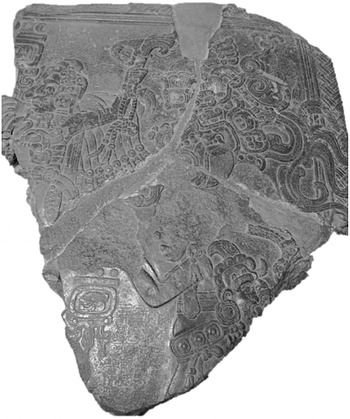
For decades, scholars have known about the similarity between Miscellaneous Monument 60 and the two dripping calendrical cartouches on Kaminaljuyu Stela 10 (Figure 8; Norman Reference Norman1976:Figure 5.84). As Kaminaljuyu also has an expansive pantheon of carved stone monuments that spans the so-called Maya, Izapa, and Olmec-styles, such similarity might be unsurprising. Though much ink has been spilled over the lightly incised text on Kaminaljuyu Stela 10 (for a selection of perspectives, see Henderson Reference Henderson2013; Kaufman and Justeson Reference Kaufman and Justeson2001; and Mora-Marín Reference Mora-Marín2005), these cartouched day signs, especially the fractured one in the upper left-hand corner, are often overlooked. Only rarely do epigraphic presentations of Kaminaljuyu Stela 10 include all of its extant fragments (or even its second, highly eroded hieroglyphic text, for that matter, preferring to focus on the four clear columns of script in the bottom left quadrant of the monument). Both day signs on Kaminaljuyu Stela 10, however, are significantly oversized vis-à-vis the rest of the Stela 10 composition (particularly the incised text columns, which almost recede from the scene), and the glyphs ooze three thick tendrils of liquid from their bases. Citing the glyphs’ proximal location to protagonists in the scene, Coe (Reference Coe1966:68) once suggested these “might be their calendrical names, for in ancient Mesoamerica, both gods and men were identified by the days on which they were born.” Norman (Reference Norman1976:283) further proposed that the numerical coefficients with dripping cartouches could be Cycle 7 or 8 markers, referencing early “b'aktuns” of the Long Count used by both Epi-Olmec and Maya scribes, and possibly others (Coe Reference Coe1957; Strauss Reference Strauss2013). It is clear today, however, that the dripping cartouche form likely records significant dates in the 260-day ritual calendar, and that this dramatic compositional style is not limited to the Pacific coast, slope, and highlands, or even to the greater Isthmus of Tehuantepec.
Kaminaljuyu Stela 10. Photograph by the author.

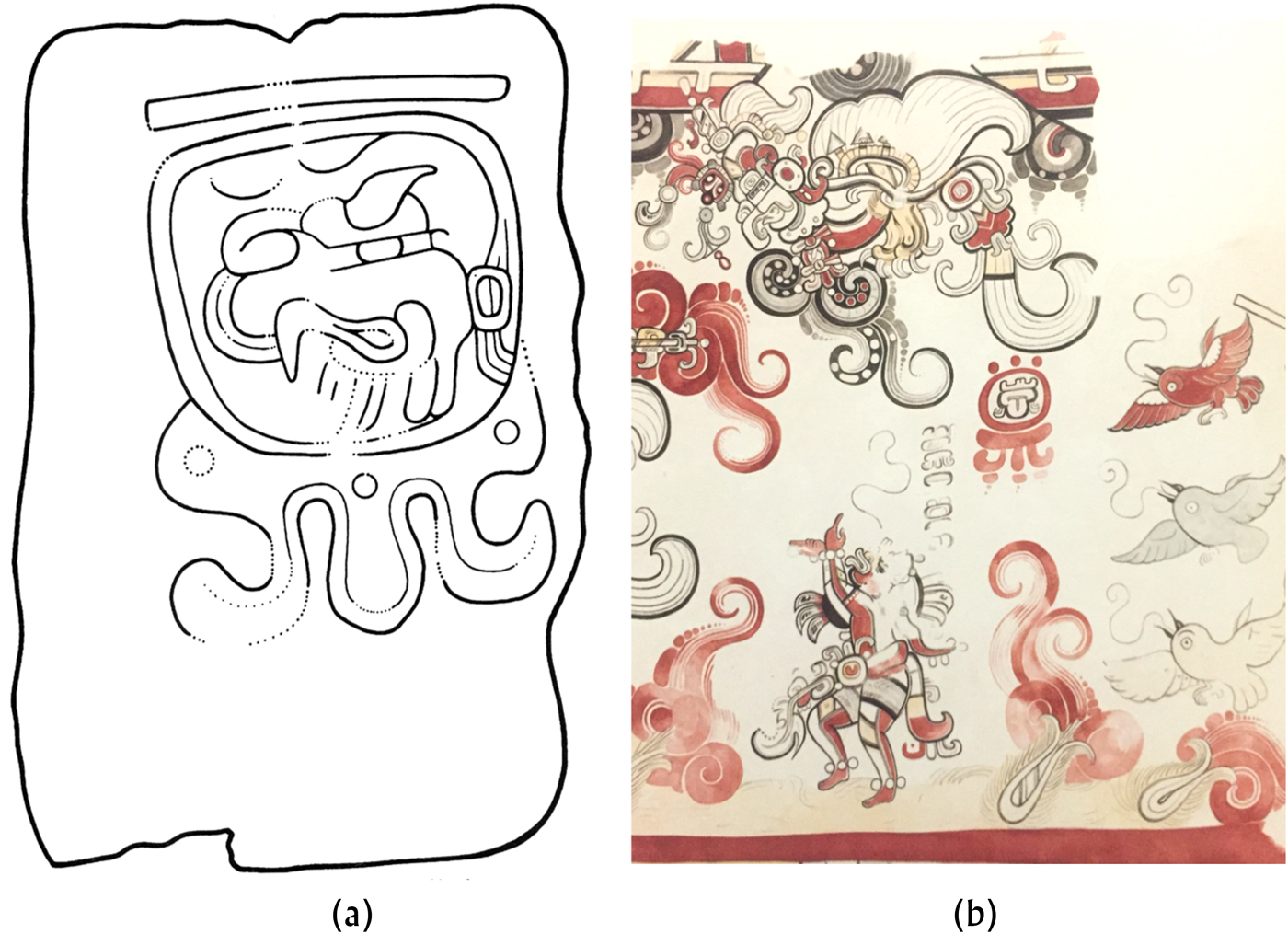
First, a parallel construction appears on Jaina Panel 3 (Figure 9a). This panel fragment from Jaina, Campeche, was found during the 1999 excavation of Structure 1 (Benavides and Grube Reference Benavides and Grube2002). The monument was reused in a staircase that dates to the Late Classic period, but as Benavides and Grube noted in their publication of the monument, Panel 3 was surely an early monument replaced in this later context. Just like Izapa Miscellaneous Monument 60, Jaina Panel 3 focuses exclusively on a combination of a numeral with a glyph encased in a dripping cartouche, which Benavides and Grube (Reference Benavides and Grube2002:96) read as the day 5 Imix. Here we again see the vertical organization of numeral and cartouched glyphs, and ever dramatically, the three dripping lobes with three dots above. Panel 3 measures 97 × 68 × 15 cm, and unlike the more deeply carved southern examples, the relief carving here is shallower (approximately 3 millimeters). The second examples of oversized and dripping calendrical day signs appear in the wall murals of the Late Formative Las Pinturas structure at San Bartolo, Peten, Guatemala (Figure 9b; Stuart Reference Stuart2015; Taube et al. Reference Taube, Saturno, Stuart and Hurst2010:Figure 7). Unlike the carved stone monuments described above, the San Bartolo murals preserve the additional experiential plane of color. At San Bartolo (Las Pinturas Structure Sub-1A, West Wall) these painted analogues of the carved-stone day signs are large, thickly outlined, and ooze three red viscous tendrils (i.e., blood), each trailed by a series of dots.
(a) Jaina Panel 3. Drawing by Nikolai Grube, reproduced from Benavides and Grube (Reference Benavides and Grube2002:Figure 2, 95). (b) San Bartolo, Las Pinturas, Structure Sub-1A, West Wall detail. Illustration by Heather Hurst, reproduced from special supplement to Ancient America No. 10 (Taube et al. Reference Taube, Saturno, Stuart and Hurst2010). Note that images are not to scale.

Thus, the Miscellaneous Monument 60 hieroglyphic date is a formal match with analogues from a neighboring highland metropolis (Kaminaljuyu) and two distant Maya lowland cities (Jaina and San Bartolo). The glyphs on Izapa Stela 27 and Stela 9, though part of dynamic compositions like that seen on Kaminaljuyu Stela 10, eschew the dripping cartouche, but nevertheless also record stations in the 260-day pan-Mesoamerican ritual calendar. Their squared cartouches are large and prominently placed within the negative space that surrounds their scenes’ narrative images; and their forms are echoed at nearby Tak'alik Ab'aj. Izapan iconoglyphs, furthermore, themselves perhaps the outgrowth of deep Formative pars pro toto signaling practices, appear in a restricted number of contexts, and as apparently paradigmatic substitutions that altered the reading of these scenes (see Figures 4a–4j and 5). The concept of graphically naming or labeling actors in a composition, though difficult to reconstruct today, may have also been a part of Izapan monumental production. So where, then, does this leave us in the pursuit of placing Izapa in the discourse on early hieroglyphic writing? Traditional interpretations tend to leave Izapa at a crossroads, but I believe we can be more specific.
TIME AND IMAGE: THE PREFERRED NARRATIVE DOMAINS OF IZAPAN VISUAL CULTURE
An elaborate visual narrative system was charged with graphically expressing Izapan political, economic, and cosmological authority. Iconoglyphs were a part of this internally coherent visual culture system, and Izapan elite clearly flexed some level of control over the proper connection between these signifiers (the iconoglyphs) and their signifieds (their meaning). This evidences a power differential not the same as, but akin to, the mechanisms of hieroglyphic writing, in which a restricted class of power holders (such as ideological leaders and highly educated scribes) established and deployed new ways of linking signs, sound, and meaning. Izapan iconoglyphs, furthermore, share formal similarities with linguistically-bound hieroglyphic forms from the Epi-Olmec, proto-Maya, and even Zapotec systems (Strauss Reference Strauss2013:Figure 24), a script that, in and of itself, deserves more careful consideration as a part of the greater Formative writing sphere. The Long Count dates that define precociously inscribed monuments from the western region, such as Chiapa de Corzo, Tres Zapotes, and La Mojarra, however, are absent at Izapa (although they are found at the nearby sites of Tak'alik Ab'aj and El Baúl and, of course, may have appeared on perishable surfaces now lost to the archaeological record). The only functionally, if not actually, legible glyphs from Izapa are concatenations of bar and dot numerals and single signs – clearly stations in the cyclical 260-day calendar. Two of these examples (Stelae 9 and 27) are squared and unadorned, floating next to dynamic and charged scenes. The third example, from Miscellaneous Monument 60, appears on its own and takes an elaborated form that is closely related to early day signs at the far-flung eastern sites of Kaminaljuyu, Jaina, and San Bartolo.
While this visual evidence is compelling, in my opinion, it should not be taken to suggest that Izapa was a “Maya” site; Izapa's tiny sample of hieroglyphic texts gives no hint of the phonetic value or language recorded in these glyphs. Nevertheless, against the backdrop of Izapan visual culture, with its emphasis on pictorial narrative and iconoglyphic messaging, the conscious decision to include calendrical glyphs on certain monuments cannot be overlooked. Whatever else they may be, these examples evidence an interest in the 260-day calendar, and an active participation in the modes of representation circulating across the Isthmus of Tehuantepec in the Late Formative era. While mythological and kingly tropes are the subject of most Izapan stone monuments, there was also a specific interest in crystallizing certain of those stories and events in cyclical time. I propose, thus, that time and image were the preferred narrative domains for Izapan monumental discourse—expository “writing” emphatically took a back seat. This is difficult to imagine from a Late Classic Maya standpoint, in which text and image are deeply recursive, and concepts of time are embedded within and structure both (Geertz Reference Geertz1983). While this intimacy is tempered in Late Formative Maya art—as aforementioned, the hieroglyphic columns in the Las Pinturas structure of San Bartolo are dwarfed by the murals’ vibrant images and calendrical glyphs (Houston Reference Houston and Houston2004; Taube et al. Reference Taube, Saturno, Stuart and Hurst2010)—the domain of text is nevertheless elevated even in early Maya visual culture.
Izapa's interest in the narrative domains of image and cyclical time, perhaps surprisingly, also sets the Izapan corpus apart from that other great Isthmian visual culture program: Epi-Olmec. The Tuxtla Statuette (Holmes Reference Holmes1907), La Mojarra Stela (Winfield Capitaine Reference Winfield Capitaine1988), and Teotihuacan-style mask (Houston and Coe Reference Houston and Coe2003) all bear lightly incised inscriptions, and in this way, show superficial similarity to the inscription on Kaminaljuyu Stela 10. These Epi-Olmec objects, however, evidence an understanding of the relationship between text and image that is quite distinct from both the Izapan model and other programs further east. Inscribed Epi-Olmec objects, whether portable or monumental, are covered in lengthy text passages. These hieroglyphic columns at times follow, and at other times seem to flow over, the curves of the sculpture. The Tuxtla Statuette, for example, is a duck-billed and winged anthropomorphic figure carved of greenstone. There is a visual weightiness to its form, coupled with a surprising sensitivity about the wings and face and a playful juxtaposition between its areas of two- and three-dimensional carving. Epi-Olmec text columns in the form of light and spidery rectilinear glyph blocks spread over the figure's body. Glyphs are tucked between the Tuxtla Statuette's folded wings, and lengthy passages stream down its back. The “epic” inscribed on the La Mojarra stela (the longest Formative text known to date) also compositionally envelopes the more deeply carved figure on the front of the monument (Figure 2). In this way, Epi-Olmec inscribed objects are more akin to Middle Formative antecedents like the Las Limas Figure, on which lightly incised and crisp motifs overlay the figures’ sumptuously carved features, than they are to the roughly contemporaneous monuments from either Izapa or Kaminaljuyu (Strauss Reference Strauss2013). Epi-Olmec monuments and objects both reflected and structured expectations about text-and-image practice in the Late Formative Isthmus of Tehuantepec, and yet Izapa's elite commissioned monuments that evidence very different expectations and goals.
Ultimately, Izapa's inscribed monuments resonate more clearly with the early text-and-image paradigms at work in neighboring Tak'alik Ab'aj, Kaminaljuyu, and more distant centers of Jaina and San Bartolo. Though most scholarship on Kaminaljuyu Stela 10 has focused on its hieroglyphic inscription, the monument's true impact is in its deep relief carvings: the dripping, oversized calendrical glyphs and the elaborately costumed protagonist. Today, the lightly incised hieroglyphic passage is pitted, difficult to see, and equally challenging to photograph. The inscription would have been crisper in antiquity, but undoubtedly remained secondary to the primary narrative, a visual one in which rulers danced and day signs oozed blood. The cyclical 260-day calendar engendered an understanding of time as an animate force (or perhaps vice versa); and deeply carved images carried the bulk of narrative content, making Stela 10's hieroglyphic inscription anecdotal to the monument's overall composition. At Izapa, however, the contrast was even more dramatic: the narrative domains of image and cyclical time alone could come together to form a meaningful communicative system. Structured iconoglyphs and possible nominal phrases stand as further evidence of elite control over the creation and crystallization of signs and meaning within this program.
In Late Formative Izapa, images held a currency that—in durable public monuments, at least—far exceeded that of hieroglyphic script. In certain contexts, it was crucial to illustrate the axis of time (cf. Izapa Stela 27 and Stela 9), and in other contexts time itself became the central actor (Miscellaneous Monument 60). These three monuments document two different approaches to recording a date in the 260-day calendar: Monument 60 employs the dripping cartouche form that carried saliency across eastern Mesoamerica, while the squared cartouches of Stelae 27 and 9 may evidence a more immediate/localized form, also present at Tak'alik Ab'aj. Late Formative Izapan visual culture, the emically preferred means by which Izapa's monumental producers bundled understandings of text, image, and time to convey legible and visually coherent messages, privileged the domains of image and cyclical calendrical time. Though elite Izapans undoubtedly encountered the linguistically transparent writing systems of their neighbors, in the context of durable public monuments, text lacked the potent utility of the narrative domains of image and time. One can easily imagine a landscape in which a multilingual Izapan population engaged with public monuments and ritual performances in ways that presaged the sensorial experiences of time and visual narrative over the rigidity of written text. Izapa's place in the discourse on early hieroglyphic writing, then, is an agentive one. When need demanded, Izapan elite waded into the textual practices of their distant neighbors to record cyclical time, and ultimately favored a public visual culture that required no further verbal explication.
RESUMEN
Este ensayo sitúa el centro urbano de Izapa, Chiapas, México en la gran discusión sobre los sistemas de escritura en la región mesoamericana en el formativo tardío. Los gobernantes de Izapa produjeron monumentos complejos en una época que dio testimonio a la florescencia de tres grandes programas jeroglíficos – el zapoteco, el la epi-olmeca, y el la maya – y aún así, solo un puñado de glifos aparecen en el programa monumental de Izapa. En una discusión que incluye los “iconoglífos” de Izapa, motivos nominales, y las inscripciones calendáricas de Izapa en la Estela 27, Estela 9, y Monumento Misceláneo 60; este estudio yuxtapone la cultura visual de Izapa con sistemas representacionales al este y oeste. Aunque las inscripciones en los monumentos de Izapa comparten similitudes visuales con ejemplos del este, en realidad la relación entre el texto y la imagen en Izapa fue distinta a la de la maya temprana y la epi-olmeca culturas visuales por igual. Así mismo, se exploraron los dominios narrativos de mayor prominencia de la élite de Izapa: la imágen y el tiempo cíclico.
ACKNOWLEDGMENTS
A version of this paper was first presented at the 80th annual meeting of the Society for American Archaeology in San Francisco, California, in a special session called “New Perspectives on the Izapa State.” I am indebted to Robert M. Rosenswig and Julia Guernsey for organizing that special session, and inviting me to discuss Izapa within the framework of early Mesoamerican writing practices. I would also like to sincerely thank Julia Guernsey, Elliot Lopez-Finn, David Stuart, and the anonymous reviewer for their thoughtful feedback and constructive comments on subsequent drafts of this essay.