




No CrossRef data available.
Article contents
Ecstasy (MDMA) exposure and neuropsychological functioning: A polydrug perspective
Published online by Cambridge University Press: 21 October 2005
Abstract
Ecstasy (MDMA) is a popular drug that can act as a selective serotonin neurotoxin in several species. The goal of the present study was to examine the relationship between ecstasy exposure and cognitive functioning after controlling for other drug use and demographic variables. Furthermore, we assessed whether gender was a moderator of the relationship between cognitive functioning and ecstasy use. Data were collected from 31 men and 34 women with a wide range of ecstasy use (17 marijuana users with no ecstasy use and 48 ecstasy users ranging from low to heavy use). Participants were interviewed and administered a battery of neuropsychological tests. The primary finding was that ecstasy exposure was significantly related to poorer verbal learning and memory ability in a dose-dependent manner, while no such relationship was observed between ecstasy exposure and executive functioning or attentional ability. Gender was found to significantly moderate the relationship between ecstasy consumption and design fluency. These results suggest primary memory dysfunction among abstinent recreational ecstasy users. This finding is consistent with reports of hippocampal vulnerability, particularly among heavy users. (JINS, 2005, 11, 753–765.)
Keywords
Information
- Type
- Research Article
- Information
- Journal of the International Neuropsychological Society , Volume 11 , Issue 6 , October 2005 , pp. 753 - 765
- Copyright
- © 2005 The International Neuropsychological Society
INTRODUCTION
Use of “ecstasy” (primarily containing 3,4-methylenedioxymethamphetamine, or MDMA) is a significant health care concern for adolescents and young adults, with lifetime prevalence rates reaching 11% for HS seniors and 10.6–14% for college students (Kavanagh et al., 2004; Strote et al., 2001; Zickler, 2001). MDMA affects brain neurochemistry by binding to serotonin (5-HT) transporters, preventing serotonin reuptake from nerve terminals and thus increasing serotonin in the synaptic space (Parrott, 2001).
The relatively high rate of ecstasy use is of great concern in that several studies have demonstrated that ecstasy is a selective serotonin neurotoxin in animals, including rats (O'Shea et al., 1998; Scheffel et al., 1992), squirrel monkeys (Hatzidimitriou et al., 1999), rhesus monkeys (Taffe et al., 2001), and baboons (Scheffel et al., 1998). Ecstasy (MDMA) also releases dopamine and has been shown to be a selective dopamine neurotoxin in mice. However, thus far, ecstasy has not been shown to be a selective dopamine neurotoxin in rats, guinea pigs, primates, and humans (Colado et al., 2004). Nonetheless, ecstasy polydrug users may demonstrate dopamine neurotoxicity since the combination of amphetamine and MDMA has been shown to be neurotoxic to dopamine neurons (Reneman et al., 2002a).
Recent converging lines of evidence have indicated that ecstasy is a selective serotonin neurotoxin in humans (McCann et al., 2000). For example, studies have demonstrated selective reductions in cerebrospinal fluid 5-hydroxyindoleacetic acid (serotonin metabolite) among recreational ecstasy users, compared to controls (with no differences in major metabolites of dopamine and norephinepherine; Bolla et al., 1998; McCann et al., 1994). With a few exceptions (Chang et al., 2000; Gamma et al., 2001), recent research utilizing imaging techniques, such as PET, SPECT, and MRI, have demonstrated serotonin depletion among abstinent ecstasy users (McCann et al., 1998; Reneman et al., 2000, 2002b), and in two studies the level of McN-5652 (a serotonin transporter ligand) was correlated with lifetime dosage of ecstasy (McCann et al., 1998; Ricaurte et al., 2000). Considering this evidence of ecstasy induced serotonin neurotoxocity, research focused on the cognitive effects of ecstasy use has gained attention during the last few years (Morgan, 2000).
The most consistent finding of neuropsychological studies is that ecstasy users demonstrate decrements in verbal learning and memory compared to ecstasy-naïve controls (Fox et al., 2002; Morgan et al., 2002; Rodgers, 2000; Verbaten, 2003; Zakzanis & Young, 2001). For example, Gouzoulis-Mayfrank and colleagues (2003) compared the neuropsychological functioning of 60 ecstasy users (30 “heavy” and 30 “moderate” users) to 30 controls. They found that heavy ecstasy users (with average lifetime use of 500 pills) performed significantly more poorly on verbal memory tasks compared to moderate ecstasy users and controls.
Studies assessing the effect of ecstasy consumption on visual memory ability are not as consistent in demonstrating deficits (Verbaten, 2003). Although many have found visual memory deficits (Bolla et al., 1998; Fox et al., 2002; Gouzoulis-Mayfrank et al., 1999; Rodgers, 2000; Verkes et al., 2001), one study found no differences between cannabis and ecstasy users (Croft et al., 2000), and three studies found no visual memory deficits in ecstasy users compared to controls (Krystal & Price, 1992; Wareing et al., 2000; Zakzanis & Young, 2001).
Until the past few years, research has focused primarily on the relationship between ecstasy and memory, while ignoring other cognitive domains such as attention and executive functioning. Of the studies that assessed attention, one found deficits in sustained attention (McCann et al., 1999) and divided attention (Gouzoulis-Mayfrank et al., 1999), while one found no differences (Thomasius et al., 2003). There are also conflicting results related to selective attention: one study did find differences (Gouzoulis-Mayfrank et al., 1999), while one did not (Morgan et al., 2002). Simple attentional capacity appears to remain unimpaired (Croft et al., 2000; Gouzoulis-Mayfrank et al., 1999; Thomasius et al., 2003). Finally, Zakzanis and colleagues (2002) found little differences in groups in attentional ability when comparing ecstasy users to drug-naïve controls, but did find significant bivariate relationships between selective attention and lifetime ecstasy consumption (Zakzanis et al., 2002).
There is also conflicting evidence regarding the relationship between ecstasy use and executive functioning. Studies have found deficits in working memory ability (Croft et al., 2000; Fox et al., 2001a; Gouzoulis-Mayfrank et al., 1999; Morgan et al. 2002; Wareing et al., 2000), while two studies only found working memory deficits among “heavy” ecstasy users (Daumann et al., 2003; Gouzoulis-Mayfrank et al., 2003). Verbal fluency results have also been mixed, with one study finding a reduction in fluency among ecstasy users (Fox et al., 2002) and one reporting negative findings (Morgan et al., 2002). Thus far, it appears that concept formation (Fox et al., 2001a; Gouzoulis-Mayfrank et al., 2003; Thomasius et al., 2003; Verkes et al., 2001) and sequencing ability (Morgan et al., 2002; Thomasius et al., 2003) remain relatively unimpaired among ecstasy users.
One factor that complicates the interpretation of existing neuropsychological studies is that the range and recency of ecstasy use and use of other drugs of abuse are substantially different across samples. The vast majority of these studies dichotomized participants into groups that had “never used ecstasy” or “used ecstasy,” even though several of these studies found significant bivariate correlations between frequency of ecstasy use and cognitive performance (Bolla et al., 1998; Croft et al., 2000; Fox et al., 2001a; Gouzoulis-Mayfrank et al., 1999, 2003; Morgan, 1999; Zakzanis & Young, 2001; Zakzanis et al., 2002). Studies examining differences between groups of ecstasy users who have different levels of exposure have found that “heavy” users demonstrate more severe cognitive deficits compared to “light” users (Fox et al., 2001b; Gouzoulis-Mayfrank et al., 2003; Verkes et al., 2001), which suggests that more work is needed that looks at dose-dependent relationships in ecstasy users.
In addition, several studies did not control for frequency of other drug use (Bolla et al., 1998; Gouzoulis-Mayfrank et al., 1999; Krystal & Price, 1992; McCann et al., 1999; Parrott & Lasky, 1998; Reneman et al., 2000; Rodgers, 2000; Zakzanis & Young, 2001). Considering the high rate of polydrug use among ecstasy users, particularly alcohol, cannabis, cocaine, and other amphetamines (e.g., Fox et al., 2001b; Parrott et al., 2000), it is difficult to determine whether the observed cognitive deficits among ecstasy users were due to ecstasy use, other drugs, or the combination of both. Studies that have attempted to control for other drugs of abuse have yielded variable results: some have found that ecstasy use predicts cognitive functioning after comparing to a polydrug control group (Fox et al., 2001b; Morgan, 1999; Verkes et al., 2001), while others did not find impairment after comparing to marijuana-using control group (Croft et al., 2000; Rodgers, 2000).
The present study was designed to clarify the relationship between cumulative exposure to ecstasy and various cognitive abilities (including memory, working memory, and executive functioning), while statistically controlling for the effects of other drug use and potentially confounding demographic variables that are related to cognitive ability. It was hypothesized that increased past year and lifetime ecstasy use would be significantly related to poorer neuropsychological performance after controlling for demographic and other drug use variables.
Finally, very few studies have examined gender differences in the functional consequences of ecstasy consumption. This is important because there are gender differences in markers for serotonergic integrity in MDMA users, in which women have relatively more impaired serotonergic functioning compared to men (McCann et al., 1994; Reneman et al., 2001). However, Bolla and colleagues (1998) found that women in their sample demonstrated fewer decrements in memory performance with increasing lifetime dose of ecstasy compared to men. Thus, the current study evaluated whether or not there are gender differences in the neuropsychological consequences of ecstasy use.
METHODS
Ecstasy Use Bins
Participants were recruited using a quota sampling technique based on bins of lifetime ecstasy use. The purpose of recruiting using this classification system was to ensure that there were adequate numbers of participants across the expected range of ecstasy use to inform the study of dosage effects on neuropsychological functioning. (When these categories were combined, they spanned the entire range of lifetime use; therefore, data were analyzed utilizing a continuous variable reflecting lifetime ecstasy exposure.)
The full possible range of ecstasy use was split into four bins, and participants were recruited according to a plan that ensured that the bins would include approximately equal numbers of participants, balanced for gender. As discussed earlier, nearly all ecstasy users also take other drugs, and comorbid marijuana use is particularly common. Therefore, Bin 1, reflecting no lifetime ecstasy use, was filled with marijuana-using participants who had lifetime marijuana use that was similar to the ecstasy-using participants. (Participants in this bin will be labeled “marijuana users” from this point on, although they also consumed alcohol and cocaine.) Bins 2–4 were filled with ecstasy polydrug users. (When group data are presented for descriptive purposes, Bins 2–4 are combined and labeled “ecstasy users.”) The bins were as follows: Bin 1 = 8 male, 9 female marijuana users with no ecstasy use; Bin 2 = 9 male, 10 female ecstasy users who consumed 1–60 tablets in their lifetime; Bin 3 = 8 male, 6 female ecstasy users who consumed 61–200 tablets in their lifetime; Bin 4 = 9 male, 6 female ecstasy users who consumed over 200 tablets in their lifetime.
Again, data from participants across all bins were combined to represent a continuous variable of lifetime (ranging from 0–2310 lifetime tablets) or past year ecstasy use.
Research Participants
Participants were recruited through advertisements in a free metropolitan newspaper. Potential participants were screened over the phone to determine their eligibility. Exclusion criteria included major medical or neurologic illnesses or injuries, mental retardation, serious premorbid psychiatric conditions (Axis I psychotic or mood disorder prior to abusing drugs) or use of prescribed medications that affect cognition. Participants were required to be fluent English speakers, 18 years of age or older, and had to fall within one of the bins of ecstasy exposure (described in detail above).
Participants were required to remain abstinent from ecstasy and other drugs of abuse for 1 week (to reduce symptoms associated with drug withdrawal; Bolla et al., 1998; Zakzanis & Young, 2001).a
When discrepant reports were given, the shortest length of abstinence was used and re-confirmed later in the interview. Two participants were excluded from the study due to consuming drugs within the past week.
Procedure
All aspects of this study were approved by the Institutional Review Board at the University of Cincinnati. Prior to beginning the study, informed consent was obtained.b
Participants had the right to waive signing the informed consent document (per the I.R.B.'s request), in which case K.L.M. and a research assistant signed the informed consent document as witnesses that informed consent was obtained.
Interview/Self-Report Questionnaire
Frequency of drug use
In order to reduce the memory load on retrospective reports of drug use, a modified version of the Time-Line Follow-Back (Sobell et al., 1979) technique was given, which utilizes memory cues of holidays and personal events to measure frequency of drug use over the past year. A semi-structured interview was then conducted in order to measure lifetime drug use frequency. The participants were asked their average weekly use each year they used the substance. Memory cues such as developmental milestones, school grades, and relationships were utilized. The following drug categories were assessed: ecstasy, marijuana, alcohol, sedatives (barbiturates, valium, Xanax, Ativan, ketamine, GHB), stimulants (cocaine, crack cocaine, amphetamine, and methamphetamine), hallucinogens (PCP, LSD, peoyote, mushrooms), opioids (heroin, opium), and inhalants (paint, glue, household cleaners, nitrous oxide, gas). The participant's drug use was measured by the number of standard units (tablets for ecstasy; standard drinks for alcohol; joints for marijuana; grams for stimulants; number of hits for inhalants, hallucinogens, and opioids; and pills or hits for sedatives).
Substance dependence
It was beyond the scope of the current study to conduct diagnostic interviews to assess symptoms of substance abuse and dependence for all drug categories. Instead, the Substance Abuse Subtle Screening Inventory–Third Edition (SASSI–3) was administered to assess drug dependence (Miller & Lazowski, 1999).
Neuropsychological Battery
Instruments included in the neuropsychological battery have been used often in studies assessing cognitive functioning in substance abusers (Croft et al., 2000; Fox et al., 2001a; Wareing et al., 2000; Zakzanis & Young, 2001). The battery included an estimate of premorbid intelligence which also reflects quality of education (Wide Range Achievement Test, Reading subtest; Wilkinson, 1993), selective and sustained attention (Ruff 2 & 7; Ruff & Allen, 1996), working memory (WAIS–III Letter Number Sequencing; Wechsler, 1997), ability to inhibit overlearned responses (D-KEFS Color-Word Interference Test; Delis & Kaplan, 2001), sequencing and psychomotor speed (Trail Making Test Part A and Part B; Lezak, 1995), problem solving and reasoning (WAIS-III Matrix Reasoning Test; Wechsler, 1997), visual and verbal fluency (D-KEFS Design and Verbal Fluency; Delis & Kaplan, 2001), visual memory (Benton Visual Retention Test–Fifth Edition; Sivon, 1992), and verbal memory (California Verbal Learning Test, Second Edition; Delis et al., 2001).
Data Analysis
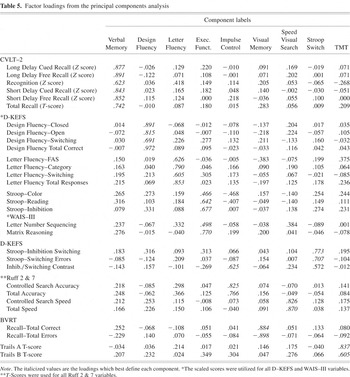
In order to reduce the number of dependent neuropsychological variables to be tested, we ran a principal components analysis (PCA) to produce factors composed of variables obtained from the neuropsychological battery (see Table 5.) In the preliminary analyses, the bivariate correlations were examined in order to gain an understanding of the simple relationships between cognitive functioning (neuropsychological components) and ecstasy use (past year and lifetime frequency).
The primary analyses included two series of multiple regressions that tested whether (1) past year; or (2) lifetime ecstasy exposure was significantly associated with cognitive functioning after controlling for age, gender, education, ethnicity, premorbid IQ (WRAT 3 Reading), and frequency of other drug use besides ecstasy. Ordinary least squares (OLS) multiple regressions were utilized in order to examine the unique variance accounted for by ecstasy above and beyond the other variables included. Interpretations about statistical significance were made if p was less than .05. No Bonferroni corrections were made due to the conservative use of standard multiple regressions, inclusion of multiple covariates, and data reduction technique (PCA) employed to reduce the total number of dependent variables.
More specifically, in the first series, past year ecstasy use was the primary independent variable (IV) of interest. In the second series, lifetime ecstasy use was primary IV. The two series of analyses included nine separate regressions each (one for each of the neuropsychological components). Both series of regressions controlled for demographic variables (age, gender, ethnicity, education) known to be related to cognitive functioning (e.g., Lezak, 1995). Because there were significant differences in ethnicity between the marijuana users and ecstasy users, a variable reflecting quality of education (WRAT3 Reading score) was included in both series of regressions as a covariate (Manly et al., 2002). Frequencies of drug use other than ecstasy that may affect cognitive functioning (including alcohol, marijuana, sedatives, opioids, stimulants, hallucinogens, and inhalants) were also included as covariates in all the regressions (e.g., Croft et al., 2000). (Past year drug use frequencies were included in the first series and lifetime drug use frequencies were in the second.) To assess whether gender moderates the relationship between cognitive functioning and ecstasy use, a variable representing the interaction between gender and ecstasy exposure was included in all regression models. For a detailed visual representation of the regression models, see Figure 1.

Multiple regression models.
If gender moderated the relationship between ecstasy use and neuropsychological functioning, then the bivariate relationships and scatterplots were reexamined separately according to gender in the subset of participants who used ecstasy.
RESULTS
Demographic Information
Although the ecstasy and marijuana users' data were combined to create a continuous variable, for descriptive purposes ANOVAs and chi-squares were run to test whether the ecstasy users and marijuana users differed significantly on the basic demographic variables. The ecstasy users and marijuana users (N = 48 and N = 17, respectively) did not differ significantly in length of education [F(1.64) = 1.5, p < .2], verbal ability [F(1,64) = .03, p < .8], or age [F(1,64) = .35, p < .6]. The groups did not differ in their gender composition [χ2(4) = .25, p < .61]. However, they did significantly differ in their ethnic identification [χ2(4) = 11.64, p < .02; see Table 1].
Breakdown of ethnic identification, education, reading ability, and age of ecstasy and marijuana users

Drug Use Information
The majority of the ecstasy users (89% of the men and 59% of the women) and the marijuana users (63% of the men and 56% of the women) scored in the “high probability” range for drug dependence according to the SASSI–3. The average length of abstinence from all drugs for the marijuana users was approximately 1 month (M = 31 days, SD = 89, range = 7–378 days) and 15 days for the ecstasy users (M = 15 days, SD = 17, range = 7–117 days). For the vast majority of participants, marijuana was used more recently than any other of the aforementioned drugs. The average length of abstinence from ecstasy among the ecstasy users was just over 5 months (M = 161 days, SD = 128, range = 11–491 days). Table 2 provides a detailed description of the type and frequency of drug use during the past year, and Table 3 shows lifetime drug use data for the ecstasy and marijuana users. In general, the ecstasy users demonstrated higher rates of use compared to the marijuana users, with the exception of marijuana and alcohol. As stated above, the frequencies of use for each of the aforementioned drug categories were included as covariates in the regression models.
Ecstasy and marijuana users' past year frequency of drug use (in standard units)[dagger]

Ecstasy and marijuana users' lifetime frequency of drug use (in standard units)[dagger]

Neuropsychological Functioning
Table 4 provides the means, standard deviations, and ranges for the scores on the neuropsychological tests for the ecstasy and marijuana users.
Mean, median, standard deviation, and range of neuropsychological variables

Principal Components Analysis
In order to reduce the number of dependent variables, the neuropsychological variables were subjected to a principal components analysis with varimax rotation. The first nine components met Kaiser's criterion (eigenvalues > 1). The varimax rotated components are shown in Table 5. The factors were as follows: Verbal Memory (15.97% of variance), Design Fluency (11.69% of variance), Letter Fluency (9.95% of variance), Executive Functioning (including working memory, abstract problem solving, processing speed, and inhibition on the Stroop; 8.63% of variance), Impulse Control (including Ruff 2 & 7 accuracy and Stroop inhibition/switching vs. color/naming contrast; 7.93% of variance), Visual Memory (7.39% of variance), Speeded Visual Search 6.99% of variance), Stroop Switching Task (5.92% of variance), and Trail Making Test A & B (5.63% of variance). These components account for 80.1% of the total variance.
Factor loadings from the principal components analysis

Bivariate Relationships
See Table 6 for the significant bivariate (Pearson product-moment correlations) relationships between the neuropsychological components and ecstasy and other drug usage variables (past year and lifetime).
Simple relationships between neuropsychological components and ecstasy and other drug usage variables (past year and lifetime)

Multivariate Relationships
Past year ecstasy use
After statistically controlling for past year consumption of other drugs and potential confounding demographic variables, increased past year ecstasy use was significantly related to poorer performance on the verbal memory component [t(64) = −2.74, beta = −.63, p < .008]. Increased past year ecstasy use was also unexpectedly and significantly related to better design fluency [t(64) = 2.00, beta = 1.00, p < .05].
Interaction between gender and past year use
A significant interaction between gender and past year ecstasy use were observed for the design fluency component [t(64) = −2.05, beta = −.42, p < .05]. Although neither of the correlations within gender groups was significant, there was a tendency for increased past year ecstasy use to be associated with better design fluency among the men (r = .35, p < .08) and with poorer performance among the women (r = −.28, p < .21).
Lifetime ecstasy use
Increased lifetime ecstasy use was significantly related to poorer performance on the verbal memory component variable [t(64) = −2.49, beta = −.90, p < .02], after controlling for other drug use, age, ethnicity, gender, education, and reading ability. Increased lifetime ecstasy use was again unexpectedly related to high scores on the design fluency component [t(64) = 2.35, beta = .94, p < .03].
Interaction between gender and lifetime ecstasy use
Increased lifetime ecstasy consumption was unexpectedly related to better performance in design fluency with a significant interaction between gender and lifetime consumption [t(64) = −2.58, beta = −1.00, p < .02]. A trend indicating that increased use was associated with better performance among the men, but the opposite was found among the women (r = .37, p < .07; r = −.37, p < .09, respectively).
Other drug use
(For bivariate relationships, see Table 6.) Past year drug use: Increased past year sedative use was related to superior verbal memory performance [t(64) = 2.02, beta = .81, p < .05]. Increased past year hallucinogen use was related to poorer verbal memory performance [t(64) = −2.29, beta = −.54, p < .03]. Increased past year alcohol use was significantly related to poorer visual memory [t(64) = −2.09, beta = −.29, p < .04]. Increased past year marijuana use was significantly related to superior performance reflected by the Trail Making Test component [t(64) = 2.59, beta = .35, p < .02].
Lifetime drug use
Higher lifetime usage of inhalants was significantly related to poorer design fluency [t(64)= −2.89, beta = −.39, p < .006]. Higher levels of hallucinogen use was significantly related to better design fluency [t(64)= 2.08, beta = .22, p < .05]. Lifetime use of sedatives [t(64) = 2.21, beta = .45, p < .04] was associated with superior performance on the Stroop Switching task.
DISCUSSION
The intent of this study was two-fold: (1) to examine whether there is a dose-dependent relationship between ecstasy use and neuropsychological functioning in a community sample of ecstasy and marijuana users, while controlling for potentially confounding demographic variables and frequency of other drug use; and (2) to examine whether gender moderated the relationship between ecstasy exposure and cognitive functioning. The primary finding was that ecstasy exposure was significantly related to poorer verbal learning and memory ability and better design fluency. In addition, gender was found to moderate the relationship between ecstasy consumption and design fluency. It is notable that these dose-dependent relationships between ecstasy use and cognitive functioning were demonstrated among ecstasy users who have, on average, been abstinent from ecstasy for over 5 months.
More specifically, increased past year and lifetime ecstasy use were significantly related in a dose-dependent fashion to poorer performance on an index of verbal memory ability, including variables reflecting learning, retention, and recognition ability. It should be noted that, as a group, the ecstasy users performed in the average range on several of the CVLT–2 indices. The ecstasy group mean was approximately 0.5 standard deviation below the mean on the CVLT–2 Trial 1, Total Recall, Short and Long-Delay Free Recall, and Recognition Ability. However, there was also a large range of performance among the ecstasy users (3 SD below the mean to 1.5 SD above the mean). Further examination revealed that a significantly larger percentage of the ecstasy-users than marijuana-users were considered impaired (−1.5 SD or more below the mean according to norms) on the CVLT–2 Short-Delay Free Recall [21% ecstasy vs. 0% marijuana; χ2(1) = 4.20, p < .05] and Long-Delay Free Recall [38% ecstasy vs. 6% marijuana; χ2(1) = 4.92, p < .05] variables. There was also a trend indicating a larger proportion of the ecstasy users than the controls were considered impaired on the CVLT–2 Total Recall score [19% ecstasy vs. 0% marijuana; χ2(1) = 3.72, p < .1].
The results also indicated that increased past year and lifetime ecstasy use was unexpectedly related to superior performance on design fluency. Gender significantly moderated this relationship. The trends demonstrated that the male ecstasy users performed better on this task (created more designs) with increasing ecstasy use, while the female ecstasy users performed worse with increased use. One possible explanation is that the male ecstasy users performed more quickly on these tasks and thus produced more designs. It is notable that ecstasy users were actually less accurate as a group on design fluency compared to marijuana users [38% ecstasy users were impaired vs. 12% marijuana users; χ2(1) = 3.92, p < .05]. Therefore, they may perform quickly but sacrifice accuracy.
The current results did not reveal a significant relationship between visual memory and ecstasy exposure. The existing literature is inconsistent regarding visual memory deficits among ecstasy users; some have found deficits (Bolla et al., 1998; Fox et al., 2001b; Gouzoulis-Mayfrank et al., 1999; Rodgers, 2000; Verkes et al., 2001), while others have not (Croft et al., 2000; Krystal & Price, 1992; Wareing et al., 2000; Zakzanis & Young, 2001). One potential reason for this discrepancy is moderator variables such as frequency of alcohol consumption (which this study found to be significantly related to visual memory deficits). Alternatively, the BVRT task may not have been sensitive enough to detect subclinical deficits. Other studies that have utilized more complex visual memory tasks, such as visual paired associates, did demonstrate deficits among ecstasy users (Bolla et al., 1998; Rodgers, 2000).
The analyses did not reveal significant relationships between past year or lifetime ecstasy exposure and executive function, including working memory, inhibition, abstract problem solving, or letter fluency. This finding is consistent with recent studies that found verbal memory impairments with relatively intact executive functioning abilities among abstinent ecstasy users compared to polydrug and drug-naïve controls (Fox et al., 2002; Gouzoulis-Mayfrank et al., 2003; Morgan et al., 2002; Thomasius et al., 2003).
The primary results that dose-dependent memory deficits are associated with ecstasy use lend further evidence to the recent hypothesis proposed by Fox et al. (2002) and Gouzoulis-Mayfrank et al. (2003) that the temporal lobe, including the hippocampus, is particularly sensitive to the neurotoxic effects of ecstasy consumption. This is supported by animal studies that have demonstrated selective vulnerability of serotonin neurotoxicity in the hippocampus, compared to the neocortex and parietal lobes of MDMA-exposed rats (Sharkey et al., 1991; Sprague et al., 2003). Research on non-human primates has also found the largest decrease in serotonin density in the hippocampus compared to other brain areas 7 years after MDMA administration (Hatzidimitriou et al., 1999). Furthermore, imaging research conducted on humans has shown preliminary evidence that ecstasy use is associated with hippocampal dysfunction (Daumann et al., 2003; Jacobsen et al., 2004).
It should also be noted that there was a significant difference in ethnic identification between the marijuana users and ecstasy users. If there was a cultural bias in certain of the tests in our neuropsychological battery (e.g., Norman et al., 2000), it is possible that the male marijuana users, which included a disproportionate number of African American participants, may have systematically obtained artificially lower standard scores due to nonrepresentative normative data. If this is true in the current sample, then the magnitude of the verbal memory deficits we identified as being associated with ecstasy use may be a conservative estimate, and we may potentially have failed to identify true deficits in executive function, visual memory, or attentional abilities. However, after controlling for quality of education and years of education, which has been shown to moderate the relationship between ethnicity and cognitive performance, ethnicity was not significantly related to cognitive functioning in this sample (Manly et al., 2002). Therefore, it is unlikely that group differences in ethnicity had a strong effect on the results.
As with any study, there are methodological limitations that need to be considered. One consistent critique of research focused on the cognitive effects of substances is that cognitive impairment might actually precede and place individuals at risk for drug abuse rather than being the result of abuse. In this regard, it is important to note that animal research has demonstrated MDMA induced neurotoxicity and altered brain functioning in several species, including primates (e.g., O'Shea et al., 1998). Although poor executive functioning may be a risk factor for using drugs/alcohol (e.g., Nigg et al., 2004), it was not related to cumulative lifetime or past year frequency of ecstasy use in this sample. Further, the observed relationship between ecstasy use and memory impairment was demonstrated above and beyond the effects of other drugs.
Another potential weakness is that this study did not utilize urinalysis or hair analysis when assessing length of abstinence. Still, there were several aspects of the study design that maximized the reliability of the self-reported frequency of use and last day of abstinence measures including guaranteed confidentiality, privacy, and the fact that the last date of use was assessed on two separate occasions. The current study utilized the Time Line Follow-Back technique which has shown high retest reliability, high convergent and discriminant validity compared to other established measures, high agreement with informants, and high agreement with patient's urine assays (Fals-Stewart et al., 2000).
We utilized a PCA for data reduction purposes, which may not be reproducible in other samples. However, the components represented empirically relevant factors and the verbal memory component met reliability requirements. It should also be noted that results cannot be generalized to other samples with different lengths of abstinence or different duration of ecstasy use. Although we strived to include the full range of ecstasy use, samples with substantially different patterns of ecstasy consumption may also yield different cognitive results. Therefore, longitudinal research is crucial to determine the effects of cumulative ecstasy use and whether recovery of cognitive functioning occurs with sustained abstinence.
There were significant differences in the overall drug use pattern between the ecstasy users and marijuana users. Ecstasy users tended to consume more and use a wider array of drugs compared to the marijuana users, such as opioids, methamphetamine, LSD, PCP, mushrooms, and inhalants. This study controlled for frequency of drug use statistically, but this is not the same as matching participants on all drug use. Therefore, another possible future direction is to examine the cumulative effects of drugs (e.g., alcohol and ecstasy, or marijuana and ecstasy) on cognitive ability.
In conclusion, this study demonstrated dose-dependent verbal memory deficits associated with cumulative ecstasy exposure with relatively spared executive functioning and attentional abilities. In addition, we found gender moderated the relationship between design fluency and ecstasy use. Future studies are needed to assess the effects of combining drugs, or to examine whether recovery of cognitive function occurs with sustained abstinence.
ACKNOWLEDGMENTS
This study was funded by a grant awarded by the University of Cincinnati's University Research Council (URC). We would like to thank Drs. Robert Stutz, Jeff Welge, and Kevin Shockley from the University of Cincinnati for their consultation. We acknowledge that the information in this manuscript and the manuscript itself is new and original and that it is not currently under review by any other publication, and that it has never been published either electronically or in print. Portions of this paper are presented in the first author's dissertation abstract. We acknowledge that any human data included in this manuscript was obtained in compliance with the University of Cincinnati's IRB regulations. Human research was completed in accordance with the guidelines of the Helsinki Declaration. We do not have any financial or other relationships that could be interpreted as a conflict of interest affecting this manuscript to disclose. All sources of financial support for this study have been disclosed in the acknowledgements section of this manuscript.
References
REFERENCES
Bolla, K.I.,
McCann, U.D., &
Ricaurte, G.A.
(1998).
Memory impairment in abstinent MDMA (“Ecstasy”)
users.
Neurology,
51,
1532–1537.CrossRefGoogle Scholar
Chang, L.,
Grob, C.S.,
Ernst, T.,
Itti, L.,
Mishkin, F.S.,
Jose-Melchor, R., &
Poland, R.E.
(2000).
Effect of ecstasy [3,4-methylenedioxymethamphetamine
(MDMA)] on cerebral blood flow: A co-registered SPECT and MRI
study.
Psychiatry Research Neuroimaging,
98,
15–28.CrossRefGoogle Scholar
Colado, M.I.,
O'Shear, E., &
Green, A.R.
(2004).
Acute and long-term effects of MDMA on cerebral dopamine
biochemistry and function.
Psychopharmacology,
173,
249–263.CrossRefGoogle Scholar
Croft, R.J.,
Mackay, A.J.,
Mills, A.T.D., &
Gruzelier, J.G.H.
(2000).
The relative contributions of ecstasy and cannabis to cognitive
impairment.
Psychopharmacology,
153,
373–379.Google Scholar
Daumann, J.,
Fimm, B.,
Willmes, K.,
Thron, A., &
Gouzoulis-Mayfrank, E.
(2003).
Cerebral activation in abstinent ecstasy (MDMA) users during a
working memory task: A functional magnetic resonance imaging (fMRI)
study.
Cognitive Brain Research,
16,
479–487.CrossRefGoogle Scholar
Delis, D.C. &
Kaplan, E.
(2001).
Delis-Kaplan Executive Functioning Scale manual.
San Antonio, TX:
The Psychological Corporation.
Delis, D.C.,
Kramer, J.H.,
Kaplan, E., &
Ober, B.A.
(2001).
California Verbal Learning Test–Second Edition.
San Antonio, TX:
The Psychological Corporation.
Fals-Stewart, W.,
O'Farrell, T.J.,
Freitas, T.T.,
McFarlin, S.K., &
Rutligliano, P.
(2000).
The Timeline Followback reports of psychoactive substance use by
drug-abusing patients: Psychometric properties.
Journal of Consulting and Clinical Psychology,
68,
134–144.CrossRefGoogle Scholar
Fox, H.C.,
McLean, A.,
Turner, J.D.D.,
Parrott, A.C.,
Rogers, R., &
Sahakian, B.J.
(2002).
Neuropsychological evidence of a relatively selective profile of
temporal dysfunction in drug-free MDMA (“ecstasy”) polydrug
users.
Psychopharmacology,
162,
203–214.CrossRefGoogle Scholar
Fox, H.C.,
Parrott, A.C., &
Turner, J.J.D.
(2001a).
Ecstasy use: Cognitive deficits related to dosage rather than
self-reported problematic use of the drug.
Journal of Psychopharmacology,
15,
273–281.Google Scholar
Fox, H.C.,
Toplis, A.S.,
Turner, J.J.D., &
Parrott, A.C.
(2001b).
Auditory verbal learning in drug-free Ecstasy polydrug users.
Human Psychopharmacology,
16,
613–618.Google Scholar
Gamma, A.,
Buck, A.,
Berthold, T., &
Vollenweider, F.X.
(2001).
No difference in brain activation during cognitive performance
between ecstasy (3,4-methylenedioxymethamphetamine) users and control
subjects: A [H2 15O]-Positron Emission
Tomography study.
Journal of Clinical Psychopharmacology,
21,
66–71.CrossRefGoogle Scholar
Gouzoulis-Mayfrank, E.,
Daumann, J.,
Tuchtenhagen, F.,
Pelz, S.,
Becker, S.,
Hans-Jurgen, K.,
Fimm, B., &
Sass, H.
(1999).
Impaired cognitive performance in drug free users of recreational
ecstasy (MDMA).
Journal of Neurology, Neurosurgery, and Psychiatry,
68,
719–725.Google Scholar
Gouzoulis-Mayfrank, E.,
Thimm, B.,
Rezk, M.,
Hensen, G., &
Daumann, J.
(2003).
Memory impairment suggests hippocampal dysfunction in abstinent
ecstasy users.
Progress in Neuro-Psychopharmacology & Biological
Psychiatry,
27,
819–827.CrossRefGoogle Scholar
Hatzidimitriou, G.,
McCann, U.D., &
Ricaurte, G.A.
(1999).
Altered serotonin innervation patterns in the forebrain of monkeys
treatment with 3,4-Methylenedioxymethamphetamine seven years previously:
Factors influencing abnormal recovery.
Journal of Neuroscience,
19,
5096–5107.CrossRefGoogle Scholar
Jacobsen, L.K.,
Mencl, W.E.,
Pugh, K.R.,
Skudlarski, P., &
Krystal, J.H.
(2004).
Preliminary evidence of hippocampal dysfunction in adolescent MDMA
(“ecstasy”) users: Possible relationship to neurotoxic
effects.
Psychopharmacology,
173,
383–390.CrossRefGoogle Scholar
Kavanagh, G.,
Corcoran, K.,
Medina, K.L.,
Wernke, J., &
Shear, P.K.
(2004, August).
Welcome to the party: Ecstasy use in college students.
Poster presented at the American Psychological Association,
Honolulu, Hawaii.
Krystal, J.H. &
Price, L.H.
(1992).
Chronic 3,4-methylenedioxymethamphetamine (MDMA) Use: Effects on
mood and neuropsychological functioning?
American Journal on Drug and Alcohol Abuse,
18,
331–341.Google Scholar
Lezak, M.D.
(1995).
Neuropsychological assessment
(3rd ed.).
New York:
Oxford University Press.
Manly, J.J.,
Jacobs, D.M., &
Touradji, P.
(2002).
Reading level attenuates differences in neuropsychological test
performance between African American and White elders.
Journal of the International Neuropsychological Society,
8,
341–348.CrossRefGoogle Scholar
McCann, U.D.,
Eligulashvili, V.,
Mertl, M.,
Murphy, D.L., &
Ricaurte, G.A.
(1999).
Altered neuroendocrine and behavioral responses to
m-chlorophenylpiperazine in 3,4-methylenedioxymethamphetamine
(MDMA) users.
Psychopharmacology,
147,
56–65.CrossRefGoogle Scholar
McCann, U.D.,
Eligulashvili, V., &
Ricaurte, G.A.
(2000).
3,4-Methylenedioxymethamphetamine (‘Ecstasy’)-Induced
serotonin neurotoxicity: Clinical studies.
Neuropsychobiology,
42,
11–16.CrossRefGoogle Scholar
McCann, U.D.,
Ridenour, A.,
Shaham, Y., &
Ricaurte, G.A.
(1994).
Serotonin neurotoxicity after 3,4-Methylenedioxymethamphetamine
(MDMA, “Ecstasy”): A controlled study in humans.
Neuropsychopharmacology,
10,
129–138.CrossRefGoogle Scholar
McCann, U.D.,
Szabo, Z.,
Scheffel, U.,
Matthews, W.B.,
Dannals, R.F.,
Ravert, H.T.,
Musachio, J.L.,
Mertl, M.M., &
Ricaurte, G.A.
(1998).
Positron tomographic evidence of toxic effects of MDMA
(‘Ecstasy’) on brain serotonin neurons in human beings.
Lancet,
352,
1433–1437.CrossRefGoogle Scholar
Miller, F.G. &
Lazowski, L.E.
(1999).
SASSI manual, second edition, substance abuse measures.
Bloomington, IN:
Baugh Enterprises.
Morgan, M.J.
(1999).
Memory deficits associated with recreational use of
“ecstasy” (MDMA).
Psychopharmacology,
141,
30–36.CrossRefGoogle Scholar
Morgan, M.J.
(2000).
Ecstasy (MDMA): A review of its possible persistent psychological
effects.
Psychopharmacology,
152,
230–248.CrossRefGoogle Scholar
Morgan, M.J.,
McFie, L.,
Fleetwood, L.H., &
Robinson, J.A.
(2002).
Ecstasy (MDMA): Are the psychological problems associated with its
use reversed by prolonged abstinence?
Psychopharmacology,
159,
294–303.Google Scholar
Nigg, J.T.,
Glass, J.M.,
Wong, M.M.,
Poon, E.,
Jester, J.M.,
Fitzgerald, H.E.,
Puttler, L.I.,
Adams, K.M., &
Zucker, R.A.
(2004).
Neuropsychological executive functioning in children at elevated
risk for alcoholism: Findings in early adolescence.
Journal of Abnormal Psychology,
113,
302–314.CrossRefGoogle Scholar
Norman, M.A.,
Evans, J.D.,
Miller, S.W., &
Heaton, R.K.
(2000).
Demographically corrected norms for the California Verbal Learning
Test.
Journal of Clinical and Experimental Neuropsychology,
22,
80–94.CrossRefGoogle Scholar
O'Shea, E.,
Granados, R.,
Esteban, B.,
Colado, M.I., &
Green, A.R.
(1998).
The relationship between the degree of neurodegeneration of rat
brain 5-HT nerve.
Neuropharmacology,
37,
919–926.CrossRefGoogle Scholar
Parrott, A.C.
(2001).
Human psychopharmacology of Ecstasy (MDMA): A review of 15 years of
empirical research.
Human Psychopharmacology,
16,
557–577.CrossRefGoogle Scholar
Parrott, A.C. &
Lasky, J.
(1998).
Ecstasy (MDMA) effects upon mood and cognition: Before, during and
after a Saturday night dance.
Psychopharmacology,
139,
261–268.CrossRefGoogle Scholar
Parrott, A.C.,
Sisk, E., &
Turner, J.J.D.
(2000).
Psychobiological problems in heavy ‘ecstasy’ (MDMA)
polydrug users.
Drug and Alcohol Dependence,
60,
105–110.Google Scholar
Reneman, L.,
Booij, J.,
de Bruin, K.,
Reitsma, J.B.,
de Wolff, F.,
Gunning, W.B.,
den Heeten, G.J., &
van de Brink, W.
(2001).
Effects of dose, sex, and long-term abstention from use of toxic
effects of MDMA (ecstasy) on brain serotonin neurons.
Lancet,
358,
1864–1869.CrossRefGoogle Scholar
Reneman, L.,
Booij, J.,
Lavalaye, J.,
de Bruin, K.,
Reitsma, J.B.,
Gunning, W.B.,
de Heeten, G.J., &
van de Brink, W.
(2002a).
Use of amphetamine by recreational users of ecstasy (MDMA) is
associated with reduced striatal dopamine transporter densities: A
[123I]B-CIT SPECT-preliminary report.
Psychopharmacology,
159,
335–140.Google Scholar
Reneman, L.,
Booij, J.,
Schmand, B.,
van de Brink, W., &
Boudewijn, G.
(2000).
Memory disturbances in “Ecstasy” users are correlated
with an altered brain serotonin neurotransmission.
Psychopharmacology,
148,
322–324.CrossRefGoogle Scholar
Reneman, L.,
Endert, E.,
de Bruin, K.,
Lavalaye, J.,
Feenstra, M.G.,
de Wolff, F., &
Booij, J.
(2002b).
The acute and chronic effects of MDMA (“Ecstasy”) on
cortical 5-HT2A receptors in rat and human brain.
Neuropsychopharmacology,
26,
387–396.Google Scholar
Ricaurte, G.A.,
McCann, U.D.,
Szabo, Z., &
Scheffel, U.
(2000).
Toxicodynamics and long-term toxicity of the recreational drug,
3,4-methylenedioxymethamphetamine (MDMA, ‘Ecstasy’).
Toxicology Letters,
112–113,
143–146.CrossRefGoogle Scholar
Rodgers, J.
(2000).
Cognitive performance amongst recreational users of
“ecstasy.”
Psychopharmacology,
151,
19–24.CrossRefGoogle Scholar
Ruff, R.M. &
Allen, C.C.
(1996).
Ruff 2 & 7 Selective Attention Test.
Odessa, FL:
Psychological Assessment Resources, Inc.
Scheffel, U.,
Lever, J.R.,
Stathis, M., &
Ricaurte, G.A.
(1992).
Repeated administration of MDMA causes transient down-regulation of
serotonin 5-HT2 receptors.
Neuropharmacology,
31,
881–893.CrossRefGoogle Scholar
Scheffel, U.,
Szabo, Z.,
Mathews, W.B.,
Finley, P.A.,
Dannals, R.F.,
Ravert, H.T.,
Szabo, K.,
Yuan, J., &
Ricaurte, G.A.
(1998).
In vivo detection of short and long-term MDMA neurotoxicity—A
Positron Emission Tomography study in the living baboon brain.
Synapse,
29,
183–192.3.0.CO;2-3>CrossRefGoogle Scholar
Sharkey, J.,
McBean, D.E., &
Kelly, P.A.
(1991).
Alterations in hippocampal function following repeated exposure to
the amphetamine derative methylenedioxymethamphetamine
(“ecstasy”).
Psychopharmacology,
105,
113–118.CrossRefGoogle Scholar
Sivon, A.B.
(1992).
Benton Visual Retention Test
(5th ed.).
San Antonio, TX:
The Psychological Corporation.
Sobell, L.C.,
Maisto, S.A.,
Sobell, M.B., &
Cooper, A.M.
(1979).
Reliability of alcohol abusers' self-reports of drinking
behavior.
Behaviour Research and Therapy,
17,
157–160.CrossRefGoogle Scholar
Sprague, J.E.,
Preston, A.S.,
Leifheit, M., &
Woodside, B.
(2003).
Hippocampal serotonergic damage induced by MDMA (ecstasy): Effects
on spatial learning.
Physiology and Behavior,
79,
I281–287.CrossRefGoogle Scholar
Strote, J.,
Lee, J.E., &
Wechsler, H.
(2001).
Increasing MDMA use among college students: Results of a national
survey.
Journal of Adolescent Health,
30,
64–72.Google Scholar
Taffe, M.A.,
Weed, M.R.,
Davis, S.,
Huitron-Resendiz, S.,
Schroeder, R.,
Parsons, L.H.,
Henriksen, S.J., &
Gold, L.H.
(2001).
Functional consequences of repeated
3,4-Methylenedioxymethamphetamine (MDMA) treatment in rhesus
monkeys.
Neuropsychopharmacology,
24,
230–239.CrossRefGoogle Scholar
Thomasius, R.,
Petersen, K.,
Buchert, R.,
Andresen, B.,
Zapletalova, P.,
Wartberg, L.,
Nebeling, B., &
Schmoldt, A.
(2003).
Mood, cognition and serotonin transporter availability in current
and former ecstasy (MDMA) users.
Psychopharmacology,
167,
85–96.CrossRefGoogle Scholar
Verbaten, M.N.
(2003).
Specific memory deficits in ecstasy users? The results of a
meta-analysis.
Human Psychopharmacology,
18,
281–290.CrossRefGoogle Scholar
Verkes, R.J.,
Gijsman, H.J.,
Pieters, M.S.M.,
Schoemaker, R.C.,
de Visser, S.,
Kuijpers, M.,
Pennings, E.J.M.,
de Bruin, D.,
Van de Wijngaart, G.,
Van Gerven, J.M.A., &
Cohen, A.F.
(2001).
Cognitive performance and serotonergic function in users of
ecstasy.
Psychopharmacology,
153,
196–202.CrossRefGoogle Scholar
Wareing, M.,
Fisk, J.E., &
Murphy, P.N.
(2000).
Working memory deficits in current and previous users of MDMA
(‘ecstasy’).
British Journal of Psychology,
91,
181–188.CrossRefGoogle Scholar
Wechsler, D.
(1997).
Wechsler Adult Intelligence Scale Third Edition manual.
New York:
The Psychological Corporation.
Wilkinson, G.
(1993).
Wide Range Achievement Test, Third Edition manual.
Wilmington, DE:
Wide Range, Inc.
Zakzanis, K.K. &
Young, D.A.
(2001).
Memory impairment in abstinent MDMA (“Ecstasy”) users: A
longitudinal investigation.
Neurology,
56,
966–969.CrossRefGoogle Scholar
Zakzanis, K.K.,
Young, D.A., &
Radkhoshnoud, N.F.
(2002).
Attentional processes in abstinent methylenedioxymethamphetamine
(Ecstasy) users.
Applied Neuropsychology,
9,
84–91.CrossRefGoogle Scholar
Zickler, P.
(May, 2001).
NIDA Notes, Volume 16, Number 2. Annual survey finds increasing teen
use of Ecstasy, Steroids.
U.S. Department of Health and Human Services, National Institute on
Drug Abuse:
Rockville, MN,
May, 2001.

Multiple regression models.

Breakdown of ethnic identification, education, reading ability, and age of ecstasy and marijuana users

Ecstasy and marijuana users' past year frequency of drug use (in standard units)[dagger]

Ecstasy and marijuana users' lifetime frequency of drug use (in standard units)[dagger]

Mean, median, standard deviation, and range of neuropsychological variables
Factor loadings from the principal components analysis

Simple relationships between neuropsychological components and ecstasy and other drug usage variables (past year and lifetime)
 You have
Access
- 22
- Cited by