


1. Introduction
Observations of natural snow single crystals often show the presence of steps with a height of a few to 100 μm, on prism or basal faces. Laboratory studies of ice crystals growing from the vapor show similar steps, which propagate inwards from crystal edges. Observations of ice single crystals growing epitaxially on covellite show that while growth on the basal plane sometimes occurs by propagation of thin (0.05 μm) steps, sometimes growth docs not occur at all even when subjected to ice supersaturation of several per cent (Nakaya, 1954; Hallett, 1961; Kobayashi, 1961; Mason and others, 1963).
These observations suggest that ice possesses surfaces in basal and prism planes which are smooth on a molecular scale. At low supersaturation, growth of these faces would be expected to occur only as layers are initiated. These could arise at the site of incorporation of particulate or chemical impurity, contact with another surface, or by dislocations caused by molecular processes within the ice lattice itself, for example, vacancy condensation or stress. At higher supersaturation, growth by formation and propagation of surface nuclei would be expected. The question arises as to the magnitude of critical supersaturation for growth initiation on basal and prism faces and the role of defects in the vapor-growth process. Of particular interest is the influence of these features in controlling the complicated variation of habit observed over the atmospheric range of temperature.
The presence of dislocations in crystals is revealed by examination by X-ray topography. The first topographs of ice crystals grown from the liquid were obtained by Webb and Hayes (1967). These studies, subsequently confirmed by later work, have found most dislocations to have a Burgers vector of  with a strong preference for screw orientation. Jones (1970) discovered prismatic dislocation loops (
 ), and Oguro and Hagashi (1971) concluded that such loops were due to impurities. No stacking faults have been observed in pure liquid-grown ice, but do appear in NH3-doped ice (Oguro and Hagashi, 1971).
Previous work on vapor-grown ice has been carried out by Mizuno (1973, 1974), who examined ice crystals grown in a cold room over several years under unknown conditions of temperature and supersaturation. She found dislocations of similar characteristics to those found in melt-grown crystals but which in addition contained stacking faults. Some crystals were found to be completely free of dislocations in the basal plane.
The current study investigates the presence of dislocations by X-ray topography in crystals grown from the vapor under carefully controlled temperature and supersaturation. Absence of dislocations in a specific face is taken as evidence of surface nucleation; the presence of dislocations, on the other hand, does not tell us that they were necessary for growth. The dislocation structure determined by X-ray topography was related to growth conditions and compared with the predictions of the Burton–Cabrera–Frank (BCF) theory (Burton and others, 1951). This theory is generally applied to ice crystal growth (e.g. Bartley, 1977) and predicts two-dimensional nucleation at supersaturation greater than 25%. Observations of crystals growing at much lower supersaturations than this are usually attributed to the screw-dislocation mechanism (Frank, 1949).
II. Technique
Ice crystals most convenient for topographic studies are those which are in the form of thin plates. These grow in two ranges of temperature, around — 2°C and — 15°C, and range from 50 μm to 500 μm in thickness. Dendrites occur between — 12°C and — 16°C providing the supersaturation is above water saturation under static conditions, or somewhat lower when the crystal is ventilated (Keller and Hallett, unpublished). Crystals were grown by a method suggested by C. A. Knight, in a cell containing supercooled water or sugar solution. The cell consisted of a 250 ml volumetric flask, 100 mm high, with crystals growing on a glass fiber centrally located above the liquid. The cell was immersed in a temperature-controlled bath which was thermostated to ±0.1 deg. Although the supersaturation and excess vapor density over growing crystals may vary slightly through the cell because of mutual competition, the maximum supersaturation cannot exceed the calculated value. Crystals for this work were also obtained from a dynamic diffusion chamber in which a thermal gradient between two horizontal ice plates (the lower being colder) produced a supersaturation with maximum values near the center. Temperature and supersaturation could be controlled by choice of top and base temperature; air velocity could be independently varied (Keller and Hallett, unpublished). Crystals were stored at temperatures of < — 20°C after growth, and maintained at this temperature ±1 deg during handling and analysis. Crystals were mounted between mylar sheets (0.025 mil or 6 μm thick) with silicone oil to reduce sublimation, and then transferred to the X-ray machine. They were mounted on an enclosed translation stage which was cooled by air passing through a temperature controlled bath. Crystals could be rotated in increments of 120° around their c-axis by electric rotation of the support enabling two or three topographs at these orientations to be obtained sequentially.
A standard X-ray topographic scanning Lang camera was used for imaging dislocations. A Picker Multifocus unit with a Cu target produced characteristic radiation of wavelength 0.154 nm. A line focus was used to increase intensity, and the resolution (which was limited by the vertical resolution) obtained in topographs is estimated to be about 15 μm. The time required for a topograph using Kodak NTB3 nuclear emulsion plates, 5 mm dimension, was about 30 min. In the photographs the diffraction vector g direction is shown; all crystals are plates grown in the basal plane and are scanned in this plane. The mean growth rate along the a-axis, ȧ, is shown for each crystal. It is evident that dislocations parallel to the c-axis cannot be seen with this technique. This work, therefore, is relevant only to the growth characteristics of prism {ȧ} faces. Sequential topographs showed that the majority of dislocations did not move over the course of several weeks, although a few were observed to move as much as 0.5 mm per day. While some movement was occasionally observed and dislocations were sometimes created during handling, no dislocations were observed to vanish.
III. Crystal Observation
Observations have shown dislocation-free crystals growing at low supersaturation in both low and high temperature regions. The crystal in Figure 1 was grown at — 1.5°C at water saturation (1.5% ice supersaturation). Two prism faces are free of emergent dislocations and are inferred to have grown without their aid. The broad band across the crystal appears to be a deformation boundary of unresolved dislocations as it is a source or sink for the individual screw dislocations. The feature in the lower left is a film defect (note that it protrudes beyond the crystal).
Several batches of crystals were grown at — 3°C at 1.5% supersaturation. Although there was a variety of surface features and dislocation structures, several of these crystals were found with dislocation-free prism faces. Figure 2 represents the best example of this type, and contains no dislocations lying in the basal plane.
The features in the lower right are Pendelösung fringes due to variation in crystal thickness. They are much enhanced in the second topograph due to sublimation. Pendelösung fringes are indicators of crystalline perfection and further confirm the perfection of this crystal (Tanner, 1976, p. 63). The feature in the upper left is more difficult to interpret. The band is broad, diffuse in places, and varying in width; even more important, it apparently does not terminate on any crystal face. It has the contrast normally associated with surface features rather than dislocations. In any case the crystal has faces which are free of emergent dislocations, and it may be concluded that crystals grow around — 3°C at supersaturations as low as 1.5% in the absence of screw dislocations.
Diffusion crystal grown at — 1.5°C and 1.5% supersaturation contains deformation boundary but low dislocation density otherwise, 〈1010〉 = 0.000 8 μm s -1. g = <〈1010〉.

Diffusion crystal grown at —3°C and 1.5% supersaturation over a sugar solution showing no evidence of dislocations emergent on any prism face, ȧ = 0.000 8 μm s -1, g = 〈1010〉.

A plate habit was found unexpectedly at — 5°C at 2.5% supersaturation. Experimental studies of V. Keller and the authorsFootnote * indicate that this plate habit exists at low supersaturation throughout the column region. Topography of two plates from this region showed a low dislocation density and one plate had two faces without emergent dislocations. When crystals were nucleated on the rod by chilling in liquid air, large numbers of crystals grew in the form of thin discs (Fig. 3). As these discs grew outwards, they thickened and developed prism faces.
Ice discs growing at — 5°C at 2.5% supersaturation. ȧ = 0.03 μm s -1.

Evidence of growth without dislocations has been found also at — 15°C. Several crystals obtained from the dynamic diffusion chamber were grown just below water saturation (c. 15% supersaturation over ice) near — 15°C. Every crystal examined from this region has been completely free of dislocations except for some local defects associated with ribs. Figure 4 is an example of these specimens. Some crystals grown at — 15°C and 8% supersaturation had low dislocation densities and one crystal grown at 6% supersaturation (Fig. 5) appeared to have no dislocations emerging from prism faces even though the density is fairly high around the ribs. The few crystals which have been obtained below 3% supersaturation at — 15°C have shown heavy dislocation densities. There is possibly a transition to a dislocation mechanism somewhere between 3% and 6% supersaturation, but data is not sufficient to be conclusive.
A ribbed crystal grown in a dynamic diffusion-chamber wind tunnel at — 15°C and 13% supersaturation. This crystal has no distinct dislocations except for prismatic edge loops along ribs. ȧ = 0.09 μm s -1. g = 〈1010〉.

Crystal grown at —15°C and 6% supersaturation over a sugar solution. The dislocations present do not emerge on prism faces. ȧ = 0.015 μm s -1. g= 〈1010〉. Sector growth is just beginning on this crystal.

IV. Ribbed Crystals
One of the most common features observed was ribs running across the basal face to the apices of the crystal. Topographs would be expected to show greater contrast at ribs because of their additional thickness and even higher contrast at the edges of the ribs due to enhancement at steps (Lang, 1973). Some portions of the ribs in Figure 4 exhibit the expected contrast (the lighter portions). However, this is rarely found and the ribs normally exhibit very strong contrast which can be attributed to dislocations.
The most conclusive evidence of the dislocation structure of ribs is the discovery of associated grain boundaries. These grain boundaries seemed most pronounced in ribbed crystals grown at — 3°C though they were also found in other regions. The mismatch across the grain ranged from too small to be measured by differential Bragg reflection (< 1′) to as much as 5°—which was visible in specular reflection of a light source. The topographs of Figure 6(b) and (c) each used one of the positions of the Bragg angle; Figure 6(d) was taken using two positions. Two grain boundaries (tilt) can be distinguished in these topographs, one of which follows a rib. These ribbed crystals also had high dislocation densities and many dislocations ended in the grain boundary.
Crystal growth at —3°C and 3% supersaturation shows a high dislocation density and two grain boundaries. (a) photograph; (b) and (c) were taken using only one position of Bragg angle; (d) was taken using two positions of the Bragg angle. ȧ = 0.01 μm s -1 ; (b) g = 〈1010〉; (c, d) g = 〈1120〉.

The nature and origin of the dislocations and tilt boundaries along ribs can be better understood by inspecting crystals whose ribs are not so developed. Topographs of such a crystal in Figure 7 show parallel lines of contrast running down each side of the ribs. It is further seen that the central portion of each of these lines vanishes when the diffraction vector is perpendicular to the direction of the line. We interpret these lines as rows of prismatic dislocation loops ( ) which were created along the edges of the ribs. Supporting this interpretation are the individual prismatic loops which are visible near the ends of some ribs, and which would cause the observed contrast along the ribs.
A crystal grown at — 2°C and 2% supersaturation which provides clues to the dislocation structure of ribs. The contrast at the ribs changes with orientation suggesting b =  loops and individual examples of such loops can be seen at the ends of some ribs.
ȧ = 0.006 μm s
-1. g = 〈1010〉.

In high densities, such loops will aggregate to form anti-parallel edge dislocations ( ). One of these dislocations will be nearer the rib edge and could more easily migrate out of the crystal, thus leaving an array of similar dislocations which is the model of a tilt boundary (Read, 1953, p. 157). The fact that deformation boundaries are usually formed rather than tilt boundaries suggests that both the antiparallel edges are normally retained in the crystal.
It is concluded that ribs almost universally contain dislocations giving evidence of having originated as prismatic dislocation loops,  . Prismatic loops are characteristic of vacancy condensation and collapse of adjacent crystallographic planes. It thus seems likely that there is some mechanism of vacancy formation along the ribs originally formed by lacunary growth (Frank, 1974); possibly the growth of large steps from the top of ribs down to the basal face where a sheet of vacancies is trapped.
A similar mechanism can be proposed for boundaries which do not coincide with a rib (Fig. 6). It is suggested that vacancies were trapped in this case by the meeting of two large steps propagating from opposite apices on a prism face—with results similar to those along ribs. A mechanism similar to that proposed here has been observed by Murata and Hondo (1977).
Herein is an explanation for the troughs mentioned by Frank which occur opposite some crystal ribs. Those crystals whose ribs become grain boundaries could give rise to the effect of grain-boundary grooving, which would appear as troughs behind those ribs. It seems likely that the troughs on each side of ribs may be largely due to the local strains induced by the dislocations.
V. Stacking Faults
Stacking faults were commonly observed in plates grown both at low and high temperature. This is in contrast to observations in liquid-grown ice crystals where stacking faults have only been observed in those doped with impurities (Oguro and Higashi, 1971). In the current studies every precaution was taken to avoid the introduction of impurities.
(a) A crystal grown at —3°C, water saturation, displaying large-area stacking faults. (b) Faults are still present after seven days, though some have vanished and others changed. g = 〈1010〉.

(a) Topograph of a crystal grown at —3°C at water saturation displaying two large-area stacking faults. (b) After nine days and some damage, the right fault has vanished, but the left fault is present and unchanged. g = 〈1010〉.

Figure 8(a) shows a crystal grown at —3°C, at water saturation, which was about 250 μm thick. Figure 8(b) is the same crystal seven days later after undergoing some sublimation and damage which introduced dislocations. As can be seen, many stacking faults are still present although changed in shape; others have vanished.
Figure 9(a) is the initial topograph of a crystal grown at — 3°C, at water saturation, 0.5 mm thick, in which two large-area stacking faults are apparent. The right-hand fault had vanished completely when further topographs were taken seven days later. The remaining fault, however, was stable against change after nine days (Fig. 9(b)) even though damage is apparent from the dislocations introduced.
As the faults appear in all the 〈1010〉 reflections and vanish in all the 〈1120〉 reflections, it is apparent that the fault vector contains the shear vector  . It has not been possible to determine whether the
 vector is present. We suspect that it is present and is the reason for the stability of the faults. The fault can then move only by climb, and would be more likely to be eliminated from the crystal the closer it lies to the surface. Furthermore, vacancy incorporation, for which evidence was found along ribs and steps, could nucleate
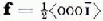 faults which energetically would be expected to nucleate the Shockley fault,
 . This mechanism would not be possible in melt growth, and could explain the differences in the occurrence of faults between melt- and vapor-grown crystals.
VI. Growth Characteristics
These observations show that dislocations lying in the basal plane usually emerge at steps or prism faces and not on basal faces, and thus are not available as a source of growth steps on this face. Most steps observed appeared to have their origin at the point of attachment to the rod. The outer edge, where two-dimensional nucleation would be expected to occur, was always the thinnest part of the crystal and thus not the source of basal steps. No spiral growth was visible in any crystals.
It has been observed that the linear growth rates of plates are roughly inversely proportional to the plate thickness; a result predicted by application of diffusion theory to a thin plate. This effect can give rise to an order-of-magnitude variation in growth rate under identical conditions; it can also influence the supersaturation at which the transition from plate to sector-plate occurs (Figs 4, 5). It was observed that low densities of dislocations emergent on a face do not enhance the growth rate of that particular face (see Fig. 1). There are indications that higher dislocation densities—as in grain boundaries—may enhance the growth raie of faces; this is inferred from observations of larger (twice linear dimension) crystals which often show these high dislocation densities.
Some unexpected growth habits were found at — 3°C and water saturation. In the midst of distinctly plate growth, an occasional solid prism would grow and in one instance a hollow column. Most surprising was the habit of a batch of crystals grown at — 5°C and 2.5% supersaturation. These crystals were nearly all distinct plates—even thin plates—with a few small solid prisms. One plate nearest the sugar solution transformed into a hollow column as it neared the surface. As approaching the surface of the solution raised the effective super-saturation at the crystal surface, there is strong evidence that the plate habit is characteristic of —5°C at low supersaturation, which changes to column habit at higher supersaturations.
VII. Conclusions
We have found crystal prism faces growing without the aid of screw dislocations in the region — 1.5°C to —3°C at supersaturations as low as 1.5%, at —5°C at 2.5% supersaturation, and around — 15°C at supersaturations as low as 6%. These defect-free faces are growing at a rate identical with a face with a few dislocations as is apparent from the fact that the crystals are almost symmetrical. Dislocations on one face cannot aid the growth of another face—steps vanish on reaching the edge of a face. In the absence of such dislocations it is concluded that layers are being initiated by the mechanism of two-dimensional nucleation on the prism faces. This conclusion is further supported by the beginnings of sector growth at the apices of the — 15°C, 6% crystal (Fig. 5). The rounded faces of the thin discs, found near —5°C (Fig. 3), result from equal growth rates in all directions in the basal plane; such growth without regard for crystallographic direction indicates a thermodynamically rough surface and is inconsistent with a spiral growth mechanism.
It is of interest that Lamb and Scott (1972), growing crystals in the absence of air, found that comparable growth rates required supersaturations which are about two orders of magnitude smaller. This means that surface nucleation is occurring at much smaller local supersaturation compared with the ambient supersaturation specified in this study.
The BCF theory, based on diffusion in a fractional monolayer, predicts a supersaturation c. 25% for two-dimensional nucleation on crystal faces. It is suggested in the case of ice, where we have shown that two-dimensional nucleation is occurring at much lower supersaturation, that the surface of the crystal is being modified through multilayer adsorption. This phenomenon has been suggested by Fletcher (1968) on theoretical grounds; it has been shown to occur by the experimental studies of Kvlividze and others (1974) at temperatures warmer than — 13°C. The results presented here suggest that multilayer adsorption may occur at temperatures above at least —15°C.
These considerations suggest that the ice crystal habit could become changed by super-saturation, in addition to its well known temperature variation, at sufficiently low super-saturations. This has been confirmed by the observations of disc-plate crystals growing near —5°C and low supersaturation. The habit variation is determined by preferential two-dimensional nucleation at the apices and lacunary growth towards the facet center as suggested by Frank (1974). With changing temperature and supersaturation, the form of the multilayer adsorption changes, leading to changing surface nucleation on one or the other face. These results show that natural snow crystals growing in the atmosphere, at supersaturations which usually approach water saturation, would always grow by two-dimensional nucleation, at least at temperatures down to — 15°C.
Acknowledgements
This work was supported by a grant from the Atmospheric Sciences Section, National Science Foundation.
Discussion
T. O’D. HANLEY: From your photographs of hexagonal plates, it appears from the position of the straighter sides of the hexagons, that loops of some kind develop first and then consolidate into continuous ribs. Do you have any explanation of the defect-producing processes in the crystal as these plates grow outward? I am interested in the mechanisms which produce such highly anisotropic growth velocities, and the stresses which may result from such anisotropy.
J. HALLETT: One may speculate that ribs in some way are associated with pile-up of dislocations, with equal numbers of opposite signs if no tilt results. The detail of the growth follows from later propagation (at different rates) from nucleation at different kinds of crystal edge. Our knowledge of the detail of rib formation is sparse, and some sequential direct photographs and sequential topographs during growth would help to clarify the mechanics of the process.
F. PRODI: Did you test only crystals grown on fibres or also crystals grown in free fall?
HALLETT: Results described here are for crystals grown on glass fibres. We are currently trying to examine natural snow crystals.
J. BILGRAM: If you have two-dimensional nucleation, is it possible to estimate the thickness of these nuclei?
HALLETT: The thickness of any disordered layer would be expected to depend on temperature and supersaturation. Estimates have been made of equivalent thickness (e.g. by Kvlividze using N.M.R.), showing an increase from a monolayer to c. 50 layers between —8°C and 0°C. Our present experiments suggest a significant dependence on supersaturation, which would be difficult to control in any experiment of that kind.



