INTRODUCTION
Anthropogenic activities, such as industry, sewage, coastal expansion, intensive agriculture and oil spills, have a high impact on the marine environment worldwide. In Argentina, a developing country, although the release of persistent organic pollutants (POPs) into marine ecosystems has prompted diverse conservation measures, there is a lack of research studies and legal under-regulation on this topic. Polychlorinated biphenyls (PCBs) are a family of 209 hydrophobic chlorinated compounds characterized by high persistence, bioaccumulative potential and toxic properties, reflecting the lipophilicity and widespread distribution of these compounds in the environment (Sbriz et al., Reference Sbriz, Aquino, Alberto de Rodriguez, Fowler and Sericano1998; Konat & Kowalewska, Reference Konat and Kowalewska2001; Frignani et al., Reference Frignani, Bellucci, Carraro and Favotto2004; Samara et al., Reference Samara, Tsai and Aga2006; Dercova et al., Reference Dercova, Selijova, Dudasova, Mikulasova, Silharova, Toyhova and Hucko2009). Once in the marine environment, these compounds enter the trophic web and tend to accumulate in organisms and biomagnify, rapidly reaching the long-lived apex predators (Clark, Reference Clark2001). PCBs were first synthesized in 1929, as various (commercial) technical mixtures, including ‘Aroclor’ (USA), ‘Clophen’ (Germany), ‘Phenoclor’ (France), ‘Fenclor’ (Italy) and ‘Kanechlor’ (Japan). PCBs were extensively used for different industrial applications (e.g. dielectric fluids, insulators for transformers and capacitors, hydraulic fluids, casting wax, carbonless carbon paper, compressors, heat transfer systems, plasticizers, pigments, adhesives, liquid cooled electric motors and others) until the late 1970s when the production, processing and distribution of these substances were banned in most countries. During the survey years of this research, an average of 62 tonnes year−1 of hazardous waste containing PCBs have been discarded in Argentina and 174 tonnes have been exported to European countries for authorized destruction (according to the National Environmental and Sustainable Development of Argentina, http://www.ambiente.gov.ar; this service is not available in Argentina). Added to this, the Stockholm Convention estimates that 2.2 million tonnes of PCB oils and equipment will still need disposal by 2015, suggesting that the present occurrence and industrial usage of PCBs requires proper environmental monitoring.
The usage and production of PCBs was banned in Argentina in 2002 (Law no. 25670), about 20–30 years after the ban in other countries (e.g. Japan banned the use of PCBs in 1972, while the USA imposed a ban in 1979 and the UK and Italy banned PCB use in 1981 and 1984, respectively). However, PCBs might still be in use in closed systems, such as capacitors, transformers and electronic equipment. In fact, the disposal of household and industrial waste is a major source of PCB emissions into the environment (ATSDR, 2000).
Concerning marine mammals, a global decreasing trend has been observed in the regions where PCBs pollution was initially high – which usually correspond to areas close to point sources of organochlorine compound release, e.g. Lake Ontario, the Baltic Sea, Waden Sea and North Sea (Addison et al., Reference Addison, Zinck and Smith1986; Olsson & Reutergardh, Reference Olsson and Reutergardh1996; Reijnders, Reference Reijnders1996; Borrell & Reijnders, Reference Borrell and Reijnders1999; Aguilar et al., Reference Aguilar, Borrell and Reijnders2002). However, an accumulating tendency has been observed in regions located far from these sources as a probable consequence of atmospheric transport, redistribution and new sources (Lailson-Brito et al., Reference Lailson-Brito, Dorneles, Azevedo-Silva, Lemos Bisi, Vidal, Legat, Azevedo, Torres and Malm2012; Dorneles et al., Reference Dorneles, Lailson-Brito, Dirtu, Weijs, Azevedo, Torres, Dorneles, Sanz, Eppe, Azevedo, Bertozzi, Martínez, Secchi, Barbosa, Cremer, Alonso, Torres, Lailson-Brito, Malm, Eljarrat, Barceló and Das2013). Franciscana dolphin (Pontoporia blainvillei) – an endemic species that inhabits coastal waters of the western South Atlantic Ocean – is exposed to pollution from several sources such as the discharge of chemical contaminants from domestic, agricultural and industrial wastewaters, boat traffic, tourism and fishing operations, as demonstrated by the presence of heavy metals (Marcovecchio et al., Reference Marcovecchio, Moreno, Bastida, Gerpe and Rodríguez1990; Gerpe et al., Reference Gerpe, Rodriguez, Moreno, Bastida and Moreno2002; Panebianco et al., Reference Panebianco, Negri, Botté, Marcovecchio and Cappozzo2013), pesticides (Borrell et al., Reference Borrell, Bloch and Desportes1995; Castello et al., Reference Castello, Junin, Rotman and Sartí2000), organobrominated compounds (Alonso et al., Reference Alonso, Eljarrat, Gorga, Secchi, Bassoi, Barbosa, Bertozzi, Marigo, Cremer, Domit, Azevedo, Dorneles, Torre, Lailson-Brito, Malm and Barceló2012; Dorneles et al., Reference Dorneles, Lailson-Brito, Dirtu, Weijs, Azevedo, Torres, Dorneles, Sanz, Eppe, Azevedo, Bertozzi, Martínez, Secchi, Barbosa, Cremer, Alonso, Torres, Lailson-Brito, Malm, Eljarrat, Barceló and Das2013) and particularly PCBs (Lailson-Brito et al., Reference Lailson-Brito, Dorneles, Azevedo-Silva, Freitas Azevedo, Vidal, Marigo, Bertozzi, Zanelatto, Lemos-Bisi, Malm and Machado-Torres2011; Dorneles et al., Reference Dorneles, Lailson-Brito, Dirtu, Weijs, Azevedo, Torres, Dorneles, Sanz, Eppe, Azevedo, Bertozzi, Martínez, Secchi, Barbosa, Cremer, Alonso, Torres, Lailson-Brito, Malm, Eljarrat, Barceló and Das2013; Santos-Neto et al., Reference Santos-Neto, Azevedo-Silva, Bisi, Santos, Meirelles, Carvalho, Azevedo, Guimarães and Lailson-Brito2014). Although the PCB literature on top predators of the southern hemisphere has increased during the last decade (Kajiwara et al., Reference Kajiwara, Matsuoka, Iwata, Tanabe, Rosas, Fillmann and Readman2004; Leonel et al., Reference Leonel, Sericano, Fillmann, Secchi and Montone2010; Lailson-Brito et al., Reference Lailson-Brito, Dorneles, Azevedo-Silva, Freitas Azevedo, Vidal, Marigo, Bertozzi, Zanelatto, Lemos-Bisi, Malm and Machado-Torres2011; Dorneles et al., Reference Dorneles, Lailson-Brito, Dirtu, Weijs, Azevedo, Torres, Dorneles, Sanz, Eppe, Azevedo, Bertozzi, Martínez, Secchi, Barbosa, Cremer, Alonso, Torres, Lailson-Brito, Malm, Eljarrat, Barceló and Das2013; Santos-Neto et al., Reference Santos-Neto, Azevedo-Silva, Bisi, Santos, Meirelles, Carvalho, Azevedo, Guimarães and Lailson-Brito2014) the available data on franciscana dolphins for the Argentinean sea is still scarce to null and precedents refer to at least 20 years ago (Borrell et al., Reference Borrell, Bloch and Desportes1995; Borrell & Aguilar, Reference Borrell and Aguilar1999; Castello et al., Reference Castello, Junin, Rotman and Sartí2000). Therefore, the southern hemisphere and in particular the area of study emerges as both a blank area in the current knowledge of marine mammals' PCBs burden and a certain concern in terms of pollution, as these water masses are likely to become a major sink for the most persistent forms of organochlorines in the years to come (Tanabe et al., Reference Tanabe, Subramanian, Ramesh, Kumaran, Miyazaki and Tatsukawa1993, Reference Tanabe, Madhusree, Oeztuerk, Tatsukawa, Miyazaki, Oezdamar, Aral, Samsun and Oeztuerk1997; Aguilar et al., Reference Aguilar, Borrell and Reijnders2002). The present research will test the null hypothesis that PCBs congeners are increasingly bioaccumulating in south-west Atlantic franciscana dolphins in relation to northern hemisphere records. In addition, the paper will analyse the correlation of each PCB burden with the dolphins’ biological variables (age, sex, length, maturity status and others), site of by-catch, potential PCB sources and evaluate the toxicological status of this species. These results will increase the awareness of the South Atlantic waters as a part of the international PCB burden and set the basis for future tiered studies (including pesticides, PAHs and PBDEs) to estimate the actual human exposure risk through seafood consumption. In addition, as Pontoporia blainvillei has been categorized as vulnerable (Reeves et al., Reference Reeves, Dalebout, Jefferson, Karczmarski, Laidre, O'Corry-Crowe, Rojas-Bracho, Secchi, Slooten, Smith, Wang, Zerbini and Zhou2012) and endangered (Convention on International Trade in Endangered Species and Convention on Migratory Species), the present output will contribute to the international discussion in order to give support for future conservation measures.
MATERIALS AND METHODS
Sampling and sample preparation
Franciscana dolphin, Pontoporia blainvillei, is an endemic species that inhabits coastal waters of the western South Atlantic Ocean, from Itaúnas (18°25′S 30°42′W), Brazil, to Golfo Nuevo (42°35′S 64°48′W), Argentina (Siciliano, Reference Siciliano1994; Crespo et al., Reference Crespo, Harris and González1998). A total of 41 blubber samples of these dolphins incidentally caught in artisanal fishing nets along the southern coast of Buenos Aires (Figure 1) were collected. The recovery of the dolphins was carried out through 8 years (2004–2011) during the reproductive and nursing season of the species, where the highest mortality levels have been recorded. The carcasses of the dolphins were kept frozen until their post-mortem analysis following standard procedures (Winchell, Reference Winchell1982). Total body length, weight and sex and gross health status were assessed according to standard procedures (Norris, Reference Norris1961). Total body length was measured as a straight line from the tip of the rostrum to the fluke notch, and total weight was obtained by an analogue scale to the nearest 0.002 kg. Mammary glands were examined to determine whether the female was lactating or not; the uterus was also examined to determine if a fetus was present. Mandibular teeth were extracted and preserved in 70% alcohol to ascertain the age by counting growth-layer groups (GLGs) (Pinedo & Hohn, Reference Pinedo and Hohn2000; Panebianco et al., Reference Panebianco, Negri, Botté, Marcovecchio and Cappozzo2013). Only central well-contrasted layers will be used for GLG readings in both dentine and cement. Although no direct validation exists for GLGs, indirect evidence supports that one GLG represents one year of age (Kasuya & Brownell, Reference Kasuya and Brownell1979; Pinedo & Hohn, Reference Pinedo and Hohn2000). Sexual maturity status was determined by standard histological preparations of the gonads (Danilewicz, Reference Danilewicz2003; Danilewicz et al., Reference Danilewicz, Claver, Perez-Carrera, Secchi and Fontoura2004; Panebianco et al., Reference Panebianco, Negri and Cappozzo2012; Negri et al., Reference Negri, Panebianco, Denuncio, Rodríguez and Cappozzo2014). General body condition of each dolphin was assessed by the fat index (FI), this parameter was determined from the contribution in percentage of the total weight of the fat in the blubber Wf (g), to the total body mass Wo (g): Fat Index = Wf/Wo × 100. For those specimens whose value of total fat weight was not available, FI was estimated through a linear regression between Wo and axillary girth (CA) as follows: Log Wo = (LogCA−0.79)/0.27(R2 = 0.86, N = 19) (Panebianco et al., Reference Panebianco, Negri, Botté, Marcovecchio and Cappozzo2013; Negri et al., Reference Negri, Panebianco, Denuncio, Rodríguez and Cappozzo2014).
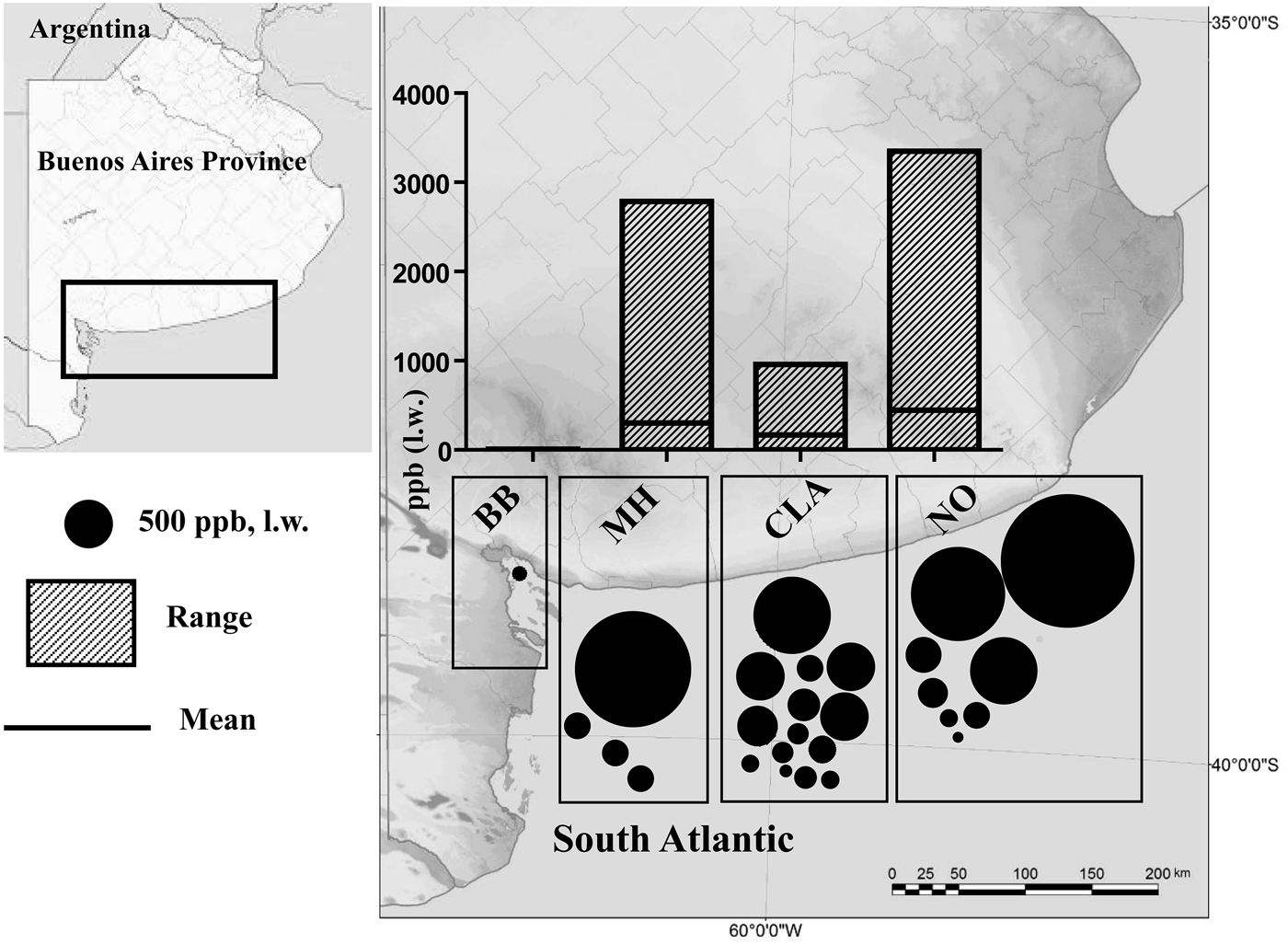
Sampling sites, levels, range, mean and distribution of total PCB (sum of 28 congeners) in the sampled franciscana dolphins. The circle in the legend represents the size of a potential specimen with a tissue burden of 500 ppb, l.w. In the map, each circle represents one real individual franciscana dolphin and its PCB burden. Abbreviations: NO, Necochea region; CLA, Claromeco region; MH, Monte Hermoso region; BB, Bahia Blanca region.

Extraction, instrumentation, analytical conditions and quality assurance
Each sample was chemically dried (Na2SO4) and extracted using Accelerated Solvent Extraction (ASE 200, Dionex Corp., USA). ASE, also known as pressurized liquid extraction, remains an efficient tool for different solid samples extraction including solvent and time saving but also because it allows extracting with high pressure which means that solvents can be heated to high temperatures above their boiling points, which make them much efficient to dissolve target compound from their matrix (Björklund et al., Reference Björklund, Nilsson and Bøwadt2000). The extraction procedure followed those described elsewhere (Dorneles et al., Reference Dorneles, Lailson-Brito, Dirtu, Weijs, Azevedo, Torres, Dorneles, Sanz, Eppe, Azevedo, Bertozzi, Martínez, Secchi, Barbosa, Cremer, Alonso, Torres, Lailson-Brito, Malm, Eljarrat, Barceló and Das2013) with slight variations. Briefly, the extraction conditions were preheat, 0 min; heat, 5 min; static solvent extraction time, 5 min (N = 2) at 100 °C; purge 3 min, 115% flush, 1500 psi and 1:1 hexane/acetone was used as the extraction solvent. The final extracts (20 mL) were concentrated to 5 mL in a rotary evaporator using a low-temperature thermostatic bath and subsequently further concentrated to 2 mL under a gentle, high purity nitrogen flow. For the elimination of polar components, the extracts were passed through a 5% H2O-deactivated basic alumina (5 g)/silica gel (10 g) column (1 cm i.d./15 cm), and the PCBs fraction were eluted with 50 mL hexane/methylene chloride (8:1, v/v). Before the extract loading step, 1–2 g of Na2SO4 was added to the top of each column. The eluates were evaporated to 10 mL in a rotary evaporator and further concentration to 1 mL was achieved under nitrogen flow at room temperature.
Mixed standard solution of PCBs was obtained from Accustandard, Inc. (New Haven, CT, USA). Tetrachloronaphthalene (TCN), 2,3,3′,5,6-tetrachlorobiphenyl (PCB112) and octachloronaphthalene (OCN), used as internal standard for PCBs quantification, were purchased from Dr Ehrenstorfer (Augsburg, Germany). HPLC-grade solvents (hexane, dichloromethane, methanol and acetone) were purchased from Dislab (France). Ultrapure water (Milli-Q) was produced by a Millipore apparatus with 18.2 MΩ cm−1 resistivity. Merck silica gel 60 (70–230 mesh ASTM) activated at 450 °C was stored at 120 °C for 12 h prior to use. Glassware was systematically washed with detergent (Decon, East Sussex, UK), rinsed with ultrapure water and acetone and finally dried at 120 °C prior to use. No significant amount of analytes was shown in procedural blanks.
The method was optimized for the analysis of 28 PCBs (mix). The final extracts were analysed using a Varian 3900 gas chromatograph (GC) equipped with a deactivated fused-silica guard column (5 m, 0.25 mm i.d.) and a fused-silica capillary Phenomenex XLB (60 m length, 0.25 mm i.d., 0.25 μm film thickness) and coupled with a Varian Ion Trap Saturn 2000 Mass Spectrometer (MS). The carrier gas was helium, held at a constant flow rate of 1 mL min−1. Samples were injected in the splitless mode at 280 °C and the injector was purged with helium after 1 min. The transfer line and the ion trap were respectively held at 280 °C and 220 °C. The oven temperature was programmed as follows: from 80 °C (1 min) to 170 °C at 10 °C min−1, then to 230 °C at 4 °C min−1, and finally to 300 °C at 3 °C min−1 (19 min). Each targeted PCB was identified based on the retention time and the mass spectrum from chromatogram of standard solutions acquired in full scan mode. Quantification was then performed in the MS/MS mode for better selectivity. Response factors were determined relative to the internal standards response and to standard mixtures.
28 PCB congeners (US EPA Methods 8081) were analysed (IUPAC numbers 28, CB8, CB18, CB28, CB52, CB44, CB66, CB101, CB112, CB81, CB77, CB123, CB118, CB114, CB153, CB105, CB138, CB170, CB126, CB128, CB157, CB156, CB169, CB180, CB187, CB167, CB189, CB195, CB206) and are listed in Table 1. The standard solutions were generated from ultra pure solvent by injecting known volumes of polychlorinated biphenyl solutions in iso-octane, and the sample concentrations were calculated using the internal standard method and experimental points distributed on the concentration axis. The minimum coefficient of determination was 0.9898.
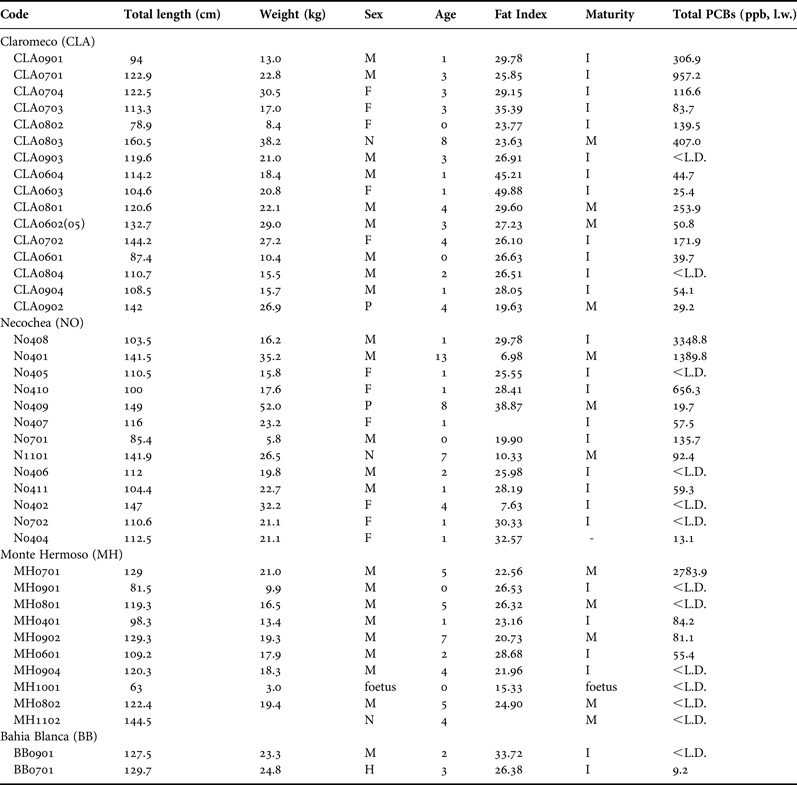
Biological parameters and total PCBs burden (TPCBs, ppb, l.w.) of the sampled franciscana dolphins.
N, Nursling; M, male; F, Female; P, Pregnant.
The instrumental detection limit (IDL) of the individual PCBs was evaluated as the concentration of the extract sample producing a signal three times the peak-to-peak noise ratio, which was approximately 1 pg L−1. Under the applied analytical conditions, using blank field samples and following the American Chemical Society criterion (Gibbons & Coleman, Reference Gibbons and Coleman2001), the Limit of Detection (LODs) for each compound was calculated as three times the blank standard deviation, ranging from 1 to 8 pg L−1. The total PCB levels were calculated as the sum (Σ) of all 28 determined congeners.
The analytical quality control scheme included the periodic analysis of reactive blanks, electronic blanks and duplicate samples. The accuracy of the determination was routinely assessed by injection of the middle point of the calibration curve. For each set of 12 samples, blank procedural and matrix samples were spiked with standards and used for monitoring interference, circumventing cross-contaminations and the % method recovery of congeners.
[TCDD] TEQs calculation
Toxic equivalency factors (TEFs) have been developed to compare toxicities of environmental samples with different congener make-ups (Van den Berg et al., Reference Van den Berg, Birnbaum, Bosveld, Brunstrom, Cook, Feeley, Giesy, Hanberg, Hasegawa, Kennedy, Kubiak, Larsen, van Leeuwen, Liem, Nolt, Peterson, Poellinger, Safe, Schrenk, Tillitt, Tysklind, Younes, Waern and Zacharewski1998); as a result, the use of TEQs improves correlations between PCB contamination and observed adverse effects (Giesy et al., Reference Giesy, Verbrugge, Othout, Bowerman, Mora, Jones, Newsted, Vandervoort, Heaton, Aulerich, Bursian, Ludwig, Dawson, Kubiak, Best and Tillitt1994; Leonards et al., Reference Leonards, de Vries, Minnaard, Stuijfzand, de Voogt, Cofino, van Straalen and van Hattum1995). Then, PCBs congeners are assigned TEFs based on their ability to induce a response in the cytochrome enzyme system relative to the most potent inducer, 2,3,7,8-TCDD (2,3,7,8-Tetrachlorodibenzo-p-dioxin). Within this study, all sample individual chemical concentrations were multiplied by their respective TEF and all products were summed to give a value expressed in toxic equivalency units (Canadian Council of Ministers of the Environment, 2001).
RESULTS
Table 1 shows a summary of the biological parameters of the franciscana dolphins collected. The sample included a foetus dolphin originally collected in the Monte Hermoso locality in 2010; the older specimen was collected in 2004 and was a 13-year-old male and the oldest female was 8 years old and was pregnant when incidentally caught. The general status of health was good; the immature dolphins – females and males – showed higher FI than the mature ones. The lower FI values were shown by the longest dolphins of the sample (sample code N0401 and N0402) – a male and a female – both from Necochea city and the lower average values were shown by lactating females followed by mature males. The mean body length and weight of adult dolphins were 147.6 ± 7.8 cm–35.9 ± 12.0 kg for females and 127.8 ± 7.8 cm–23.2 ± 6.6 kg for males; those values for immature dolphins were 115.8 ± 18.7 cm–21.6 ± 6.6 kg and 106.2 ± 13.8 cm–16.5 ± 5.0 kg for females and males respectively.
PCBs levels and source apportionment
Sixty-eight per cent of the sampled dolphins contained detectable amounts of PCBs. The overall mean of total PCBs (sum of 28 congeners) recorded in this study was 279.67 ± 698.05 ppb, N = 41 (all the results are expressed in lipid weight). Table 2 summarizes the average of each PCB congener in the sampled dolphins. The highest total PCB concentration was recorded at Necochea (NO, N = 13) station (Table 1, NO408, 3349 ppb, l.w.) which corresponded to a 1-year-old immature male. Consistently, the individuals at this site exhibited the maximum average concentration (444 ppb, l.w.) with a high detection frequency (69%). The following site in order of average PCB burden was Monte Hermoso (Figure 1 and Table 1, MH, N = 10, 300 ppb, l.w.); however, this site exhibited the lowest detection frequency (40%) and the average was biased by an individual with an unusually high PCB concentration (Sample code MH0701, 2784 ppb, l.w.). Then, on the one side Claromeco station (CLA, N = 16) exhibited the highest detection frequency (87% of 16 sampled individuals) and an average concentration of 168 ppb, l.w., while the Bahía Blanca Estuary (BB, N = 2) showed low concentration values for total PCBs (4.6 ppb, l.w., average).
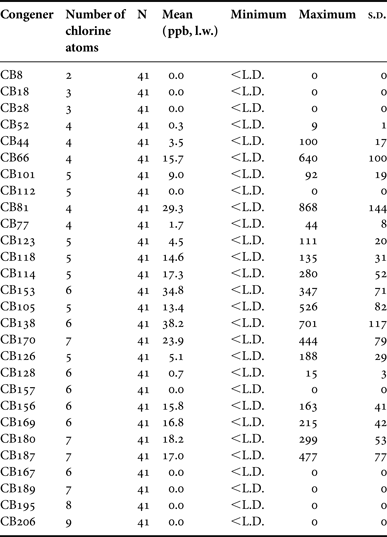
Mean, minimum and maximum values of each PCB congener at the sampled dolphins.
L.D., Analytical limit detection; S.D., standard deviation.
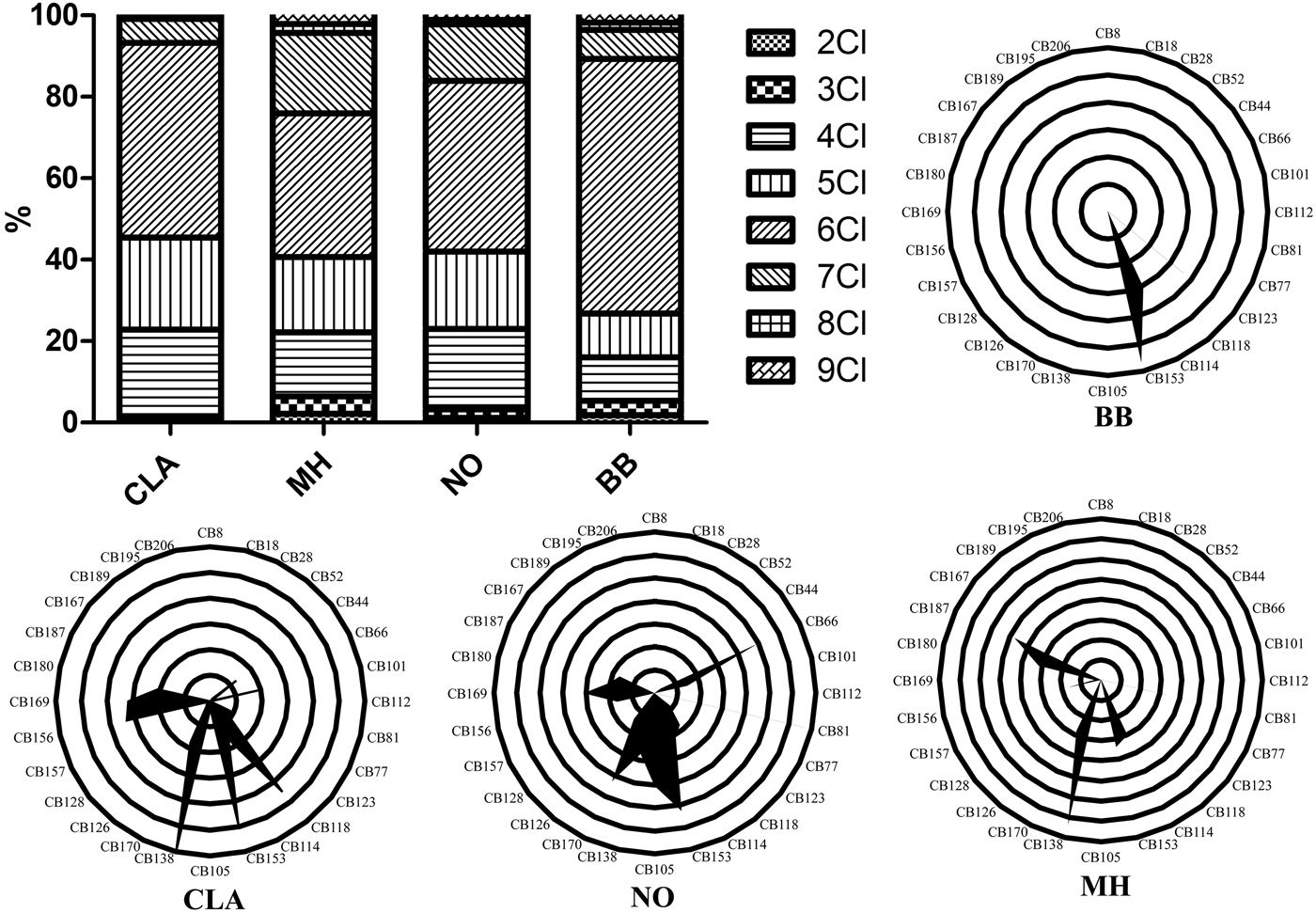
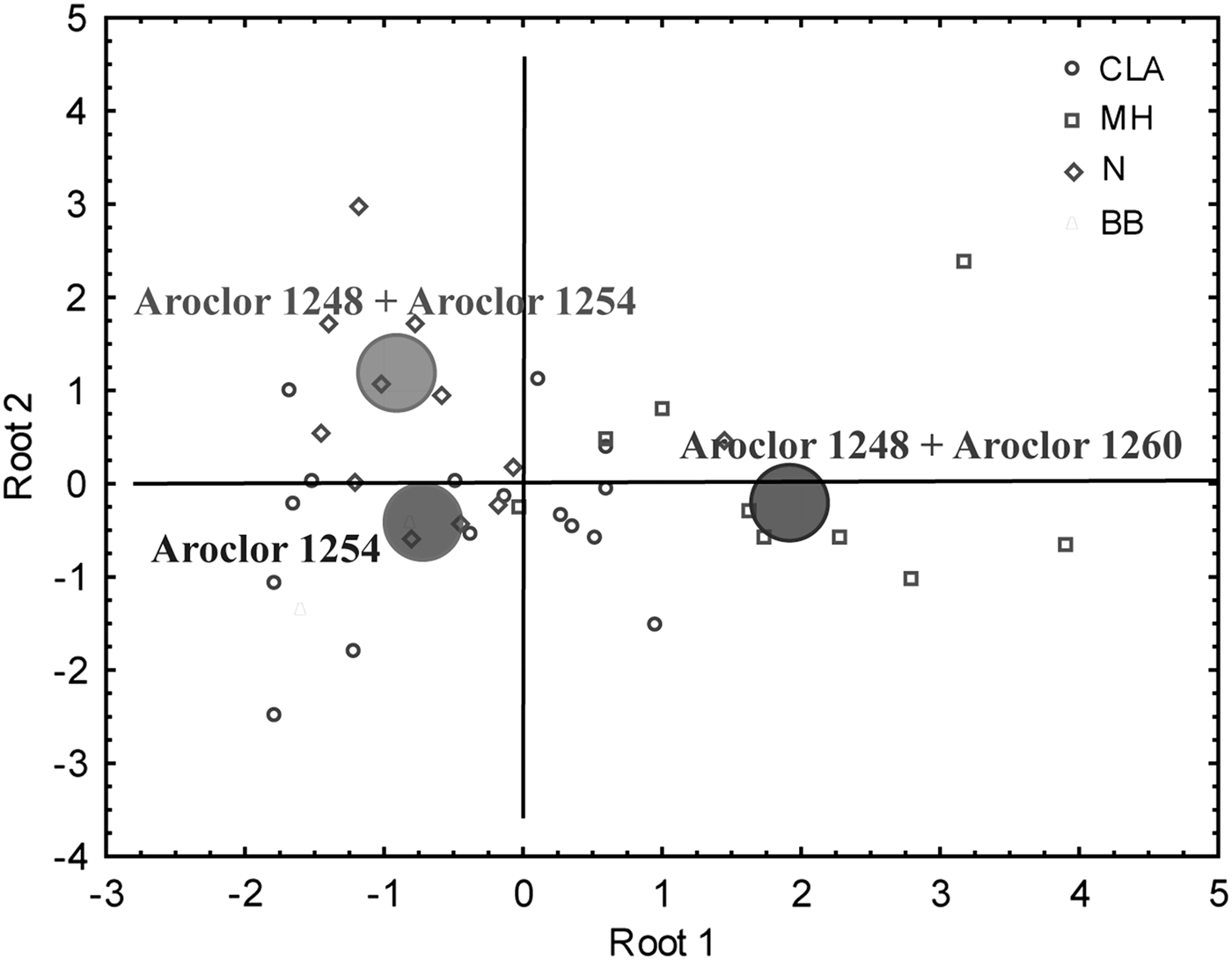
As shown in Table 2, the relative distribution of the controlling PCBs was as follows: CB138 > CB153 > CB81 > CB170 > CB180 > CB114. The difference in the congener pattern of each sample can often reveal underlying sources, then, at first, the average relative chlorine number distribution at each sampling site was considered. As shown in Figure 2 (bars and circles), the different regions showed a slight difference between the distribution of the homologue groups at each site of sampling/collection, pointing to more than one source contributing to the background burden. In order to deepen the analysis, a discriminant function analysis was performed to investigate any possible differences in the PCBs contamination profiles between the dolphin specimens from the four different regions (CLA, MH, N, BB). Results revealed the significant differences in the delphinid organochlorine accumulation patterns (Wilks’ Lambda: 0.33; F(18.85) = 2.31; P < 0.006). A canonical analysis was performed and the first two canonical variables are represented in Figure 3. However, the squared Mahalanobis distance (D2) between centroids were not significant (P > 0.01) and incorrect classifications were up to 28%, which suggests that the PCB pattern overlaps between sites.
Average contributions of the PCB congeners (circles) and grouped by the number of chlorine atoms in the molecule (bars) for the total PCBs in the lipid tissue of franciscana dolphins in the South-west Atlantic Ocean. Abbreviations: NO, Necochea region; CLA, Claromeco region; MH, Monte Hermoso region; BB, Bahia Blanca region.
Graphic showing the canonical variables for the franciscana dolphin. The circles represent means for each area. BB region was not averaged due to the low number of cases (2). Abbreviations: NO, Necochea region; CLA, Claromeco region; MH, Monte Hermoso region; BB, Bahia Blanca region.
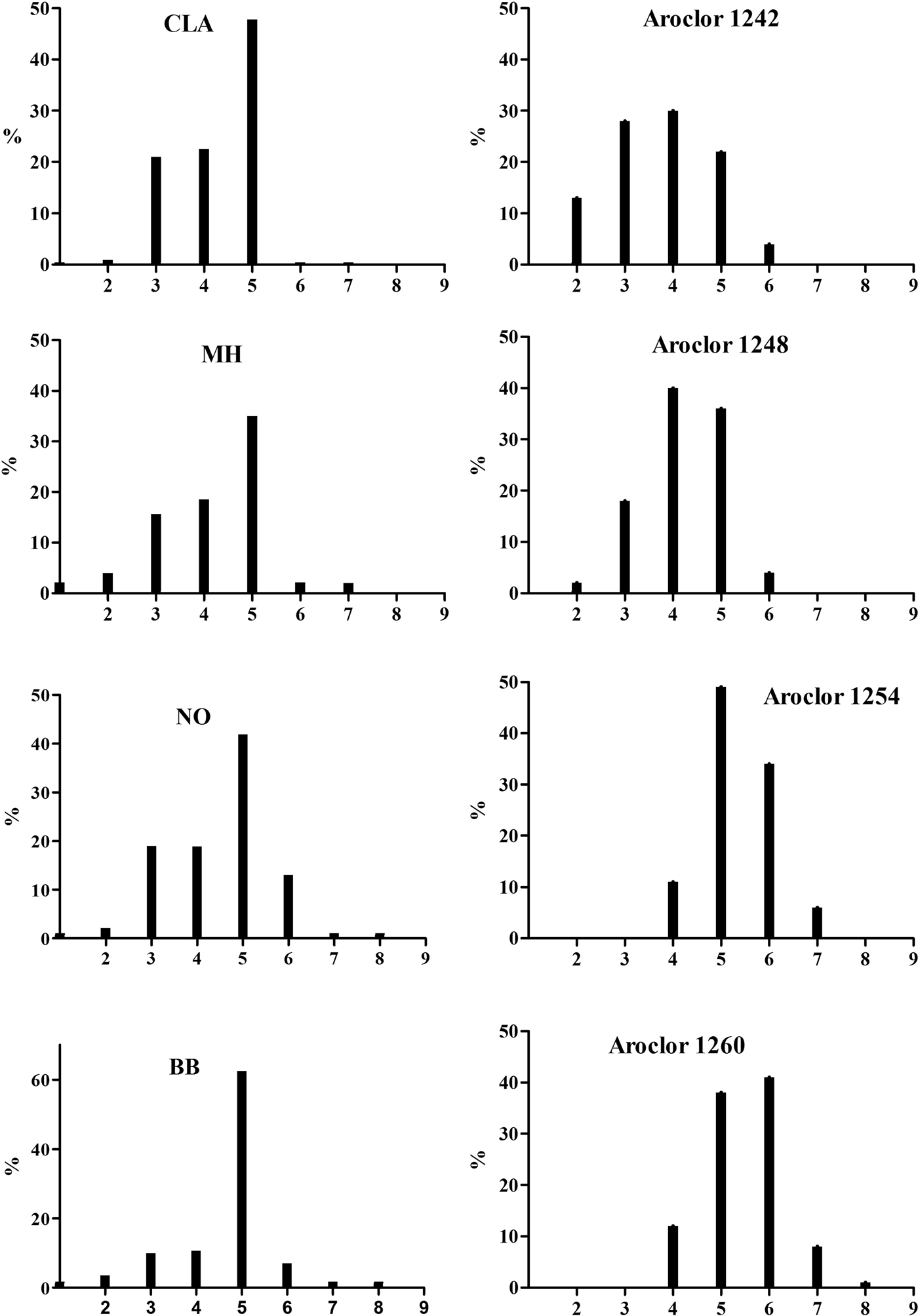
The commercial mixtures of PCBs congeners sold in Argentina were imported mainly from the USA and the most common mixture was the Aroclor® series (1221, 1232, 1016, 1242, 1248, 1254 and 1260). Considering the degree of chlorination (% Cl) composition at each Aroclor series (UNEP) vs. each group of dolphins, a pattern comparison was performed in order to assess possible sources at each site. As shown in Figure 4, the average PCB congeners distribution at CLA dolphins highly matched with the Aroclor 1254 mixture. The closest region in terms of discriminant distance – Necochea (N) specimens – was characterized mainly by Aroclor 1248 + 1254 contributions, while Monte Hermoso dolphins (MH), which showed higher chlorinated congeners, was dominated by Aroclor 1260.
Average degree of PCB chlorination distribution in franciscana dolphins at each region vs. the average Aroclor® composition (UNEP). Abbreviations: NO, Necochea region; CLA, Claromeco region; MH, Monte Hermoso region; BB, Bahia Blanca region.
PCBs burden in comparison to worldwide previously reported and toxicological assessment
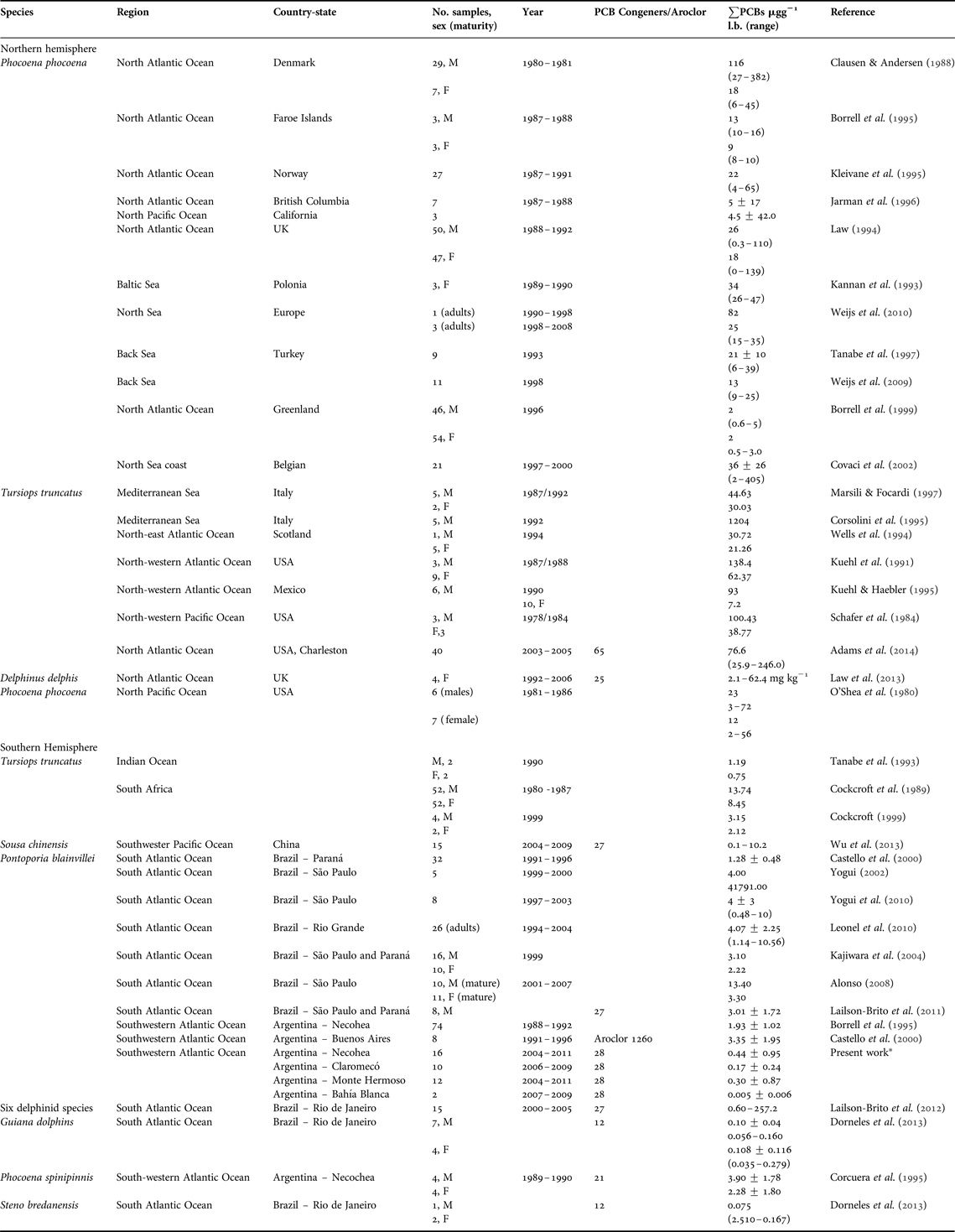
In order to place the studied organisms in a global context, observed PCBs concentrations of franciscana dolphins and other available delphinid species around the world are shown in Table 3. As reviewed by Aguilar et al. (Reference Aguilar, Borrell and Reijnders2002), most of the PCB marine mammals research is concentrated in western Europe, northern America and certain areas of Asia, while it is extremely limited or non-existent in Africa and most regions of the southern hemisphere.
Metadata for PCBs in blubber (μg g−1 lipid basis weight) of selected cetacean species reported from 1980 to 2011.
Regarding PCB levels in marine mammals, the northern hemisphere shows the greatest loads; noteworthy are the extremely high levels found in the Mediterranean Sea and certain locations on the western coasts of the USA. On the contrary, up to 10 years ago, concentrations throughout the southern hemisphere were considered low or extremely low (Aguilar et al., Reference Aguilar, Borrell and Reijnders2002); however, this last tendency has recently changed as several authors have contributed to set a solid baseline for South America (Kajiwara et al., Reference Kajiwara, Matsuoka, Iwata, Tanabe, Rosas, Fillmann and Readman2004; Leonel et al., Reference Leonel, Sericano, Fillmann, Secchi and Montone2010; Lailson-Brito et al., Reference Lailson-Brito, Dorneles, Azevedo-Silva, Freitas Azevedo, Vidal, Marigo, Bertozzi, Zanelatto, Lemos-Bisi, Malm and Machado-Torres2011; De la Torre et al., Reference de la Torre, Alonso, Martínez, Sanz, Shen, Reiner, Lailson-Brito, Torres, Bertozzi, Marigo, Barbosa, Cremer, Secchi, Malm, Eljarrat and Barcelo2012; Dorneles et al., Reference Dorneles, Lailson-Brito, Dirtu, Weijs, Azevedo, Torres, Dorneles, Sanz, Eppe, Azevedo, Bertozzi, Martínez, Secchi, Barbosa, Cremer, Alonso, Torres, Lailson-Brito, Malm, Eljarrat, Barceló and Das2013; Santos-Neto et al., Reference Santos-Neto, Azevedo-Silva, Bisi, Santos, Meirelles, Carvalho, Azevedo, Guimarães and Lailson-Brito2014). Results listed in Table 3 show that the levels found in several highly polluted areas around the world (mainly in the northern hemisphere) were widely above the 17 ppm (l.w.) threshold level proposed by Kannan et al. (Reference Kannan, Blakenship, Jones and Giesy2000). In fact, that threshold value was proposed for PCB toxicity in the blubber of marine mammals based upon experimental studies using a variety of marine mammal species, and functions as a guide to determine whether levels of PCB exposure in individual animals are likely to exert a significant biological (immunotoxic) effect. Regarding the southern hemisphere in general and the West Atlantic region in particular, the cited threshold is seldom achieved.
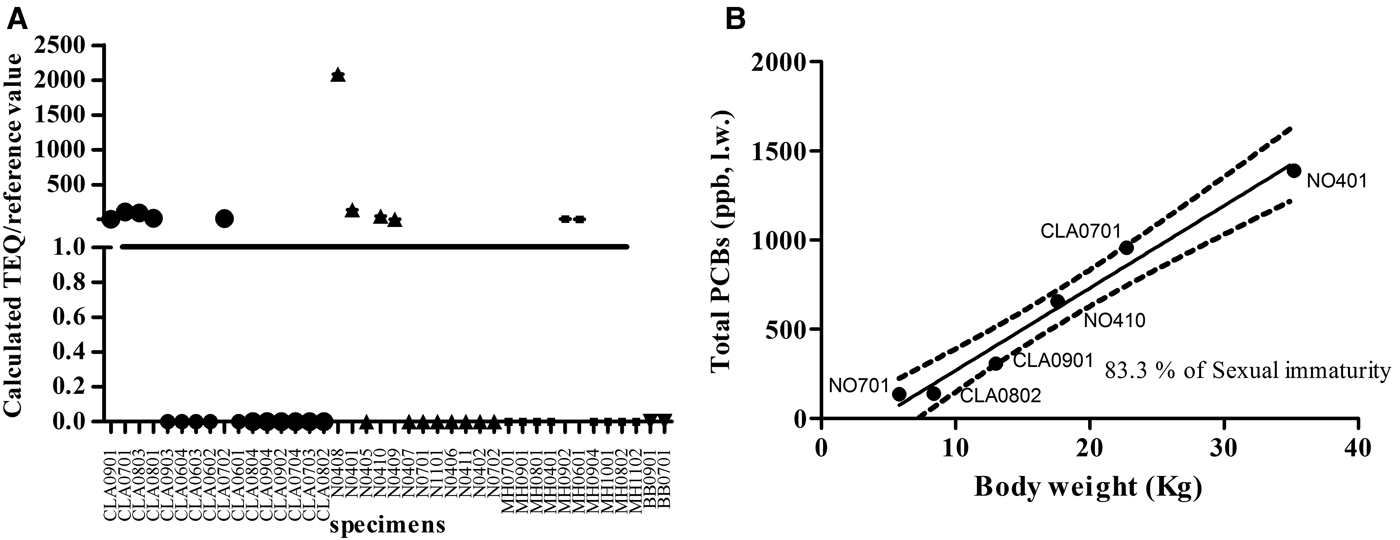
In order to deepen the toxic potential assessment of the franciscana's burden of PCBs, the Toxic Equivalency Factors (TEFs) approach was applied in order to calculate the toxicological potential of the dioxin-like PCB burden as 2,3,7,8-Tetrachlorodibenzo-p-dioxin (TCDD). Each Total Toxic Equivalent (TEQ) concentration was compared with the Canadian guideline, a PCB tissue residue for the Protection of Wildlife between the mammalian and avian values consumers of aquatic biota, which is set at 0.79 ng TEQ·kg−1 w.w. The guideline refers to the TEQ concentration due to PCBs found in an aquatic organism on a wet weight basis that is not expected to result in adverse effects on wildlife consuming these aquatic organisms (Environment Canada, 1999). The assumption is that by capturing the dioxin-like toxicity of the non- and mono-ortho PCBs (i.e. coplanar congeners), the Tissue Residue Guideline will also be protective of the non-coplanar congeners (Dorneles et al., Reference Dorneles, Lailson-Brito, Dirtu, Weijs, Azevedo, Torres, Dorneles, Sanz, Eppe, Azevedo, Bertozzi, Martínez, Secchi, Barbosa, Cremer, Alonso, Torres, Lailson-Brito, Malm, Eljarrat, Barceló and Das2013). Although franciscana dolphins are considered top predators and are not in the common diet of other marine organisms, it is known that certain cetaceans – apart from the humans – can predate these dolphins. For instance, the highest concentrations of biomagnifying pollutants are usually found in killer whales, due to their predation on organisms that occupy high trophic positions, such as sharks, seals and other cetaceans (O'Shea & Tanabe, Reference O'Shea, Tanabe, Vos, Bossart, Fournier and O'Shea2003). Then, the dioxin TEQs have become a guideline to assess the potential toxicity threat at this level of the tropic web. Added to this, the use of TEFs to achieve TEQ constitutes an accurate procedure for the assessment of the toxic potential of a complex mixture of pollutants that are capable of triggering Aryl hydrocarbon (Ah) receptor mediated effects, such as DRCs (Sanderson & Van den Berg, Reference Sanderson and Van den Berg1998; Dorneles et al., Reference Dorneles, Lailson-Brito, Dirtu, Weijs, Azevedo, Torres, Dorneles, Sanz, Eppe, Azevedo, Bertozzi, Martínez, Secchi, Barbosa, Cremer, Alonso, Torres, Lailson-Brito, Malm, Eljarrat, Barceló and Das2013). The following congeners (IUPAC numbers) were targeted for analysis: 77; 81; 126; 169; 105; 114; 118; 123; 156; 157; 167; and 189. Toxic equivalent (TEQ) concentrations were calculated using the World Health Organization toxic equivalency factors (TEF) (Van den Berg et al., Reference Van den Berg, Birnbaum, Denison, De Vito, Farland, Feeley, Fiedler, Hakansson, Hanberg, Haws, Rose, Safe, Schrenk, Tohyama, Tritscher, Tuomisto, Tysklind, Walker and Peterson2006). Concentrations below detection limits were considered as zero (lower bound TEQ). Th results showed that 27% of the franciscana dolphins exceeded the cited TEQ guideline (Figure 5). From this group, 54% of the individuals were sexually immature, including 66% of males and 34% females. In the case of the individuals exceeding the Canadian guideline, the correlation between Total Length and TEQ dioxin burden was assessed in order to evaluate any indicator of developmental disruption. As a result, TotalEq dioxin correlated negatively with Total weight for the female subgroup of the guideline-exceeding individuals; however, due to the low number of cases the correlation was not significant. As showed by Dorneles et al. for the same species (Reference Dorneles, Lailson-Brito, Dirtu, Weijs, Azevedo, Torres, Dorneles, Sanz, Eppe, Azevedo, Bertozzi, Martínez, Secchi, Barbosa, Cremer, Alonso, Torres, Lailson-Brito, Malm, Eljarrat, Barceló and Das2013), the fact that correlations with total weight were found for TEQ values rather than for concentrations, associated with the fact that they constituted negative correlations, suggests that these findings result from chemically induced developmental disruption.
(A) Calculated TCDD TEQ vs. Canadian safety threshold for marine and avian biota protection (Environment Canada, 1999). (B) Total PCBs vs. body weight for a subset of specimens exceeding the Canadian safety threshold (r 2 = 0.97; segmented lines indicate 95% confidence intervals) which show in overall 83% of sexual immaturity.
DISCUSSION
Concerning environmental PCB burden, emissions to ambient likely reflect the revolatilization of previously emitted compounds (Wania & Mackay, Reference Wania and Mackay1993; Harrad et al., Reference Harrad, Sewart, Alcock, Boumphrey, Burnett, Duarte-Davidson, Halsall, Sanders, Waterhouse, Wild and Jones1994; Breivik et al., Reference Breivik, Sweetman, Pacyna and Jones2002) and the continued release from point sources, such as old industrial/urban areas, where these substances were previously heavily used and still exist (Motelay-Massei et al., Reference Motelay-Massei, Harner, Shoeib, Diamond, Stern and Rosenberg2005). An important point to discuss is whether the runoff, tributaries or the atmosphere transport and allow the entry of PCBs in the marine environment. Because the incidence of runoff is larger in urban and industrial areas close to the sampling points (BB, MH, NO and CLA), it is possible that a significant contribution of PCBs was provided by the runoff of coastal lands. Results showed the predominance of heavier congeners, such as CB180, 153 and 138. On the one hand, the presence of PCB congeners 138, 153, 180, 170 and 114 could reflect the input of technical mixtures (e.g. Aroclors®) into the environment from potential non-point sources, which follow water-transport pathways, such as terrestrial runoff, sewage and industrial discharges (Froescheis et al., Reference Froescheis, Looser, Cailliet, Jarman and Ballschmiter2000). On the other hand, the third most abundant congener was the CB81. This lightweight compound is widely contributed from atmospheric transport; in fact, calculated air-soil exchange fluxes indicate that the contaminated soil can function as a secondary source to the atmosphere for lighter PCBs and as a sink for heavier ones (Bozlaker et al., Reference Bozlaker, Muezzinoglu and Odabasi2008). However, the results point to predominant regional non-point sources entering PCBs mixtures to the marine environment with possible regional/long-range atmospheric contributions. A support for this hypothesis can be found by looking at the main industries at the coastal region, which includes oil, chemicals, fertilizers and plastic factories, petroleum refineries and several commercial harbours. This observation has also been reported in several similar environments; for instance, Hong et al. (Reference Hong, Yim, Shim, Oh and Lee2003) showed that the compositional pattern of PCB congeners exhibited a higher concentration of high-chlorinated congeners in the most densely industrialized part of the study area (Masan Bay, Korea) and a relatively low concentration of low chlorinated congeners in the less populated area. Although both the lack of a time scale for the PCB sources plus the long-range mobility of franciscana dolphins preclude any attempt to associate PCBs body burden to a particular industry, the results show a slight difference in the congeners distribution in regards to the sampling site, associating each group of dolphins to one or two Aroclor® patterns (Figures 3 & 4). As the biotransformation/degradation of compounds is expected to be equivalent at each group of individuals (eliminating this factor from being the cause of variation), a rationale for that shall be explored in dietary exposure differences.
Concerning total PCBs levels verified in this study, the overall mean recorded was from four to seven times lower than the closer precedents for the area (18–26 years ago; Table 3). On the one hand this undoubtedly indicates a progress in the environmental release and biota exposure of PCBs, posing an objective success indicator of the present international elimination programme. On the other hand, this fact is opposed to the null hypothesis of this research as PCBs congeners in Argentinean (SW Atlantic) specimens appear to occur in a decreasing tendency when compared with regional and global patterns. Despite this, the shown TEQ TCDD levels constitute a matter of concern for the conservation of the species. In fact, 11 franciscana dolphins exhibited Total TCDD TEQs concentrations beyond the Canadian safety threshold for marine and avian biota protection (0.79 ppb, w.w.; Environment Canada, 1999, Figure 5A) and a particular subset of six individuals exceeding the safety level, from two close locations (NO and CLA), exhibited concomitantly a strong relationship between bioaccumulation (body weight vs. body burden, r 2 = 0.97, Figure 5B) and a sexual immaturity pattern (83%). While contamination with pollutants that have been shown to be risk factors for cancer, immune deficiency and reproductive abnormalities (Schecter et al., Reference Schecter, Päpke, Harris, Tung, Musumba, Olson and Birnbaum2006) constitutes a matter of concern for all species, including humans, this is especially important for species facing population decreases due to other man-made causes, which enhances the apprehension over this dolphin (Secchi et al., Reference Secchi, Ott and Danilewicz2003; Dorneles et al., Reference Dorneles, Lailson-Brito, Dirtu, Weijs, Azevedo, Torres, Dorneles, Sanz, Eppe, Azevedo, Bertozzi, Martínez, Secchi, Barbosa, Cremer, Alonso, Torres, Lailson-Brito, Malm, Eljarrat, Barceló and Das2013).
ACKNOWLEDGEMENTS
Our sincere gratitude to all the artisanal fishermen who made this project possible and Erasmus Mundus mobility programme staff (UE).
FINANCIAL SUPPORT
This work was carried out with the financial support of PICT 2010–1302 (A. Arias), Lille 1 University and its Interdisciplinary Institute IREPSE (S. Souissi and B. Oudanne) and the Félix Azára Foundation, the Society of Marine Mammalogy, the Cetacean Society International and University of Valencia.