INTRODUCTION
Methane (CH4), produced as a result of microbial digestion, represents an energy loss to the animal. The energy lost through CH4 production can range from 0·02 to 0·12 of gross energy intake, varying with the type of diet fed (Johnson & Johnson Reference Johnson and Johnson1995). While most of the research in the past on CH4 production has focused on methane emissions from an energetic inefficiency standpoint (e.g. Coppock et al. Reference Coppock, Flatt and Moore1964; Moe & Tyrrell Reference Moe and Tyrrell1979; Belyea et al. Reference Belyea, Marin and Sedgwick1985), attention has now shifted towards its contribution to climatic change and global warming (e.g. Johnson & Johnson Reference Johnson and Johnson1995; Benchaar et al. Reference Benchaar, Pomar and Chiquette2001; Boadi et al. Reference Boadi, Benchaar, Chiquette and Masse2004).
In 1997 the Kyoto protocol, the goal of which is to reduce global greenhouse gas emissions, was opened for signatures worldwide. It is now signed by more than 170 countries globally, and has committed developed countries to reduce their emissions by an average of 5% below 1990 levels by 2012 (UNFCCC 2007). Globally, agriculture produces approximately 0·20 of the projected anthropogenic greenhouse gas effect, mostly due to CH4 and nitrous oxide production (Kebreab et al. Reference Kebreab, Clark, Wagner-Riddle and France2006a). On a worldwide basis, the livestock sector produces 0·37 of anthropogenic CH4 (Steinfeld et al. Reference Steinfeld, Gerber, Wassenaar, Castel, Rosales and De Haan2006). As a result of the Kyoto protocol and growing concern for the global environment, it has become the focus of recent research in animal science to understand CH4 production in ruminants and how its production can be manipulated to reduce overall emissions.
Methane is produced predominantly in the rumen (0·87) and to a small extent in the large intestine (0·13) of ruminants (Murray et al. Reference Murray, Bryant and Leng1976; Torrent & Johnson Reference Torrent, Johnson and Aquilera1994). Conversion of feed material to CH4 in the rumen involves the integrated activities of several different microbial species, the final step being carried out by methanogenic archaea (Hobson & Stewart Reference Hobson and Stewart1997; Whitford et al. Reference Whitford, Teather and & Forster2001). The formation of acetate and butyrate, largely as the result of fermentation of structural carbohydrate (although reasonable amounts of butyrate are produced from soluble carbohydrates), results in production of hydrogen gas (H2), a substrate methanogenic archaea use to reduce CO2 (Hegarty Reference Hegarty1999; Moss et al. Reference Moss, Jouany and Newbold2000). The end result of this reaction is the production of CH4. Propionate, on the other hand, largely produced with fermentation of non-structural carbohydrates, serves as a competitive pathway for H2 use in the rumen and is accompanied by a decrease in overall CH4 production (Hegarty Reference Hegarty1999; Moss et al. Reference Moss, Jouany and Newbold2000). While the type of carbohydrate present in the diet appears to determine the microbial population present and thus the volatile fatty acid (VFA) profile, other major mechanisms that appear to influence total CH4 production, either directly on methanogens or indirectly through changes in digestion rate, are rumen pH (Sutton et al. Reference Sutton, Hart, Broster, Elliott and Schuller1986; Shabi et al. Reference Shabi, Bruckental, Zamwell, Tagari and Arieli1999) and passage rate (Okine et al. Reference Okine, Mathison and Hardin1989; Hegarty Reference Hegarty, Takahashi, Young, Soliva and Kreuzer2002).
Empirical models based on commonly measured dietary inputs are fairly successful in predicting CH4 emissions (Ellis et al. Reference Ellis, Kebreab, Odongo, McBride, Okine and France2007). However, the impact of mitigation strategies to reduce CH4 emissions has to be assessed holistically, and empirical models lack the biological basis for such an assessment. When dealing with the complex digestive processes in the rumen, it has become useful to develop mathematical models of digestion to both increase understanding of a complex system and to identify areas where knowledge is lacking and more research is required to improve prediction or understanding. Adding a dynamic CH4 prediction component to these dynamic models has been accomplished (Argyle & Baldwin Reference Argyle and Baldwin1988; Benchaar et al. Reference Benchaar, Rivest, Pomar and Chiquette1998; Mills et al. Reference Mills, Dijkstra, Bannink, Cammell, Kebreab and France2001), although limitations still exist in the accuracy of the CH4 predictions. It is likely that further modifications of the models, incorporating other aspects of the rumen ecosystem, are required to improve the prediction of CH4 production. It is worth noting that the purpose of these models is not to model the rumen microbial ecosystem per se, but to model rumen function and hindgut fermentation with a view to predicting nutrient supply to the host animal and emissions to the environment. This, however, requires detailed knowledge of the biology of the system. Therefore, it is the purpose of the present paper to review current rumen models that predict CH4 production and to address aspects of methanogenesis and rumen fermentation that may be relevant to improving modelling of CH4 production. The biology of the system will be considered and attempts to represent biology mathematically will be discussed. Discussion of areas for future work include competition for substrate within the rumen, interspecies H2 transfer, the role of protozoa, VFA stoichiometry, pH, the effects of supplemental dietary fat and hindgut fermentation.
METHANE MODELS
Dynamic mechanistic models of CH4 production already exist in the literature, and they attempt to account for the most important features of ruminal digestion and fermentation that will influence CH4 produced by the animal. It should be noted that, while the current review will focus on aspects of microbiology that could be relevant to modelling CH4 production, many have not yet been incorporated into models. The models evaluated herein attempt to describe aspects of digestion relevant to the nutritional status of the animal and to its environmental emissions, and not all aspects of rumen microbiology that may be relevant to CH4 prediction are covered. Therefore, they may benefit from some modifications and these will be discussed. The models described by Benchaar et al. (Reference Benchaar, Rivest, Pomar and Chiquette1998) and Mills et al. (Reference Mills, Dijkstra, Bannink, Cammell, Kebreab and France2001) will be reviewed.
Benchaar et al. (Reference Benchaar, Rivest, Pomar and Chiquette1998)
Benchaar et al. (Reference Benchaar, Rivest, Pomar and Chiquette1998) reviewed two dynamic, mechanistic models (Baldwin et al. Reference Baldwin, Thornley and Beever1987; Dijkstra et al. Reference Dijkstra, Neal, Beever and France1992) and incorporated into each a H2 balance sub-model previously developed by Argyle & Baldwin (Reference Argyle and Baldwin1988), from which CH4 production can be estimated.
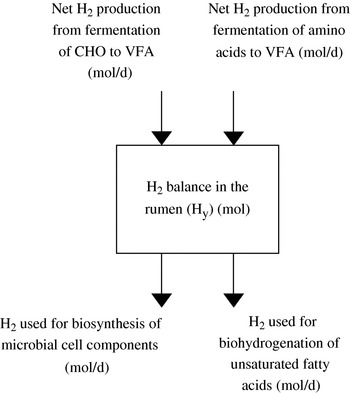
The H2 sub-model of Argyle & Baldwin (Reference Argyle and Baldwin1988) included as inputs: (1) H2 produced from fermentation of carbohydrates to VFA and (2) H2 produced from fermentation of amino acids to VFA (Fig. 1). Each input has associated equations to determine the net balance of H2 produced from acetate and butyrate production, and H2 utilized by propionate and valerate production. As outputs the model includes: (1) H2 used for the biosynthesis of microbial cell components, as a function of microbial growth with or without preformed amino acids (according to Reichl & Baldwin (Reference Reichl and Baldwin1975) ), as well as (2) H2 used for biohydrogenation of unsaturated fatty acids, a function of the amount of lipid ingested, the proportion of long chain fatty acids and the moles of H2 required for saturation. Methane production is estimated from the H2 balance (model inputs minus outputs) (Hy) (mol) as CH4rumen (Mcal/d)=(Hy/4)×0·211, which assumes 4 moles H2 are required to produce 1 mol of CH4, and 0·211 is the heat combustion of CH4 in Mcal/mol (Benchaar et al. Reference Benchaar, Rivest, Pomar and Chiquette1998). In this model Hy is a zero pool, meaning that whatever H2 is produced but not used for the two outputs is utilized for CH4 production by methanogens. While the Baldwin et al. (Reference Baldwin, Thornley and Beever1987) model used VFA stoichiometry developed by Demeyer & Van Nevel (Reference Demeyer and Van Nevel1979) and Czerkawski (Reference Czerkawski1986), the Dijkstra et al. (Reference Dijkstra, Neal, Beever and France1992) model used the VFA stoichiometry of Murphy (Reference Murphy, Baldwin and Bywater1984) and Murphy et al. (Reference Murphy, Baldwin and Koong1982).
Hydrogen gas balance model of Argyle & Baldwin (Reference Argyle and Baldwin1988) as used in Benchaar et al. (Reference Benchaar, Rivest, Pomar and Chiquette1998) and incorporated into Baldwin et al. (Reference Baldwin, Thornley and Beever1987) and Dijkstra et al. (Reference Dijkstra, Neal, Beever and France1992). Methane production is estimated from Hy as CH4rumen (Mcal/d)=(Hy/4)*0·211, which assumes 4 moles H2 are required to produce 1 mol of CH4, and 0·211 is the heat combustion of CH4 in Mcal/mol (Benchaar et al. Reference Benchaar, Rivest, Pomar and Chiquette1998).

Benchaar et al. (Reference Benchaar, Rivest, Pomar and Chiquette1998) showed that the modified Baldwin et al. (Reference Baldwin, Thornley and Beever1987) model, with the H2 sub-model, over-predicted CH4 production (root mean square prediction error (RMSPE) as a percentage of the observed mean=36·9%, bias=72·4% and random error=20·1% of RMSPE). The authors suggested this could be due to an over-estimation of the amount of structural carbohydrate degraded in the rumen, giving rise to increased acetate production and therefore increased H2 production, which would increase the resultant CH4 production. However, Donovan & Baldwin (Reference Donovan and Baldwin1998) stated that incorrect input parameters within the study were likely the major source of error for Benchaar et al. (Reference Benchaar, Rivest, Pomar and Chiquette1998) and their analysis showed a tendency for a slight under-prediction by the Argyle & Baldwin (Reference Argyle and Baldwin1988) model.
Evaluation of the modified Dijkstra et al. (Reference Dijkstra, Neal, Beever and France1992) model, with the H2 sub-model, showed a tendency for under-estimating CH4 production, with a RMSPE value of 19·9% (due to 25·7% bias and 66·1% random error). Benchaar et al. (Reference Benchaar, Rivest, Pomar and Chiquette1998) suggested the under-estimation of CH4 production could be due to under-estimation of fibre degradation in the rumen by the model. In both cases it seems that the underestimation of CH4 production is likely related to inadequate prediction of VFA production and VFA profile inputted into the H2 sub-model, however, other sources of error may also be contributing.
Mills et al. (Reference Mills, Dijkstra, Bannink, Cammell, Kebreab and France2001)
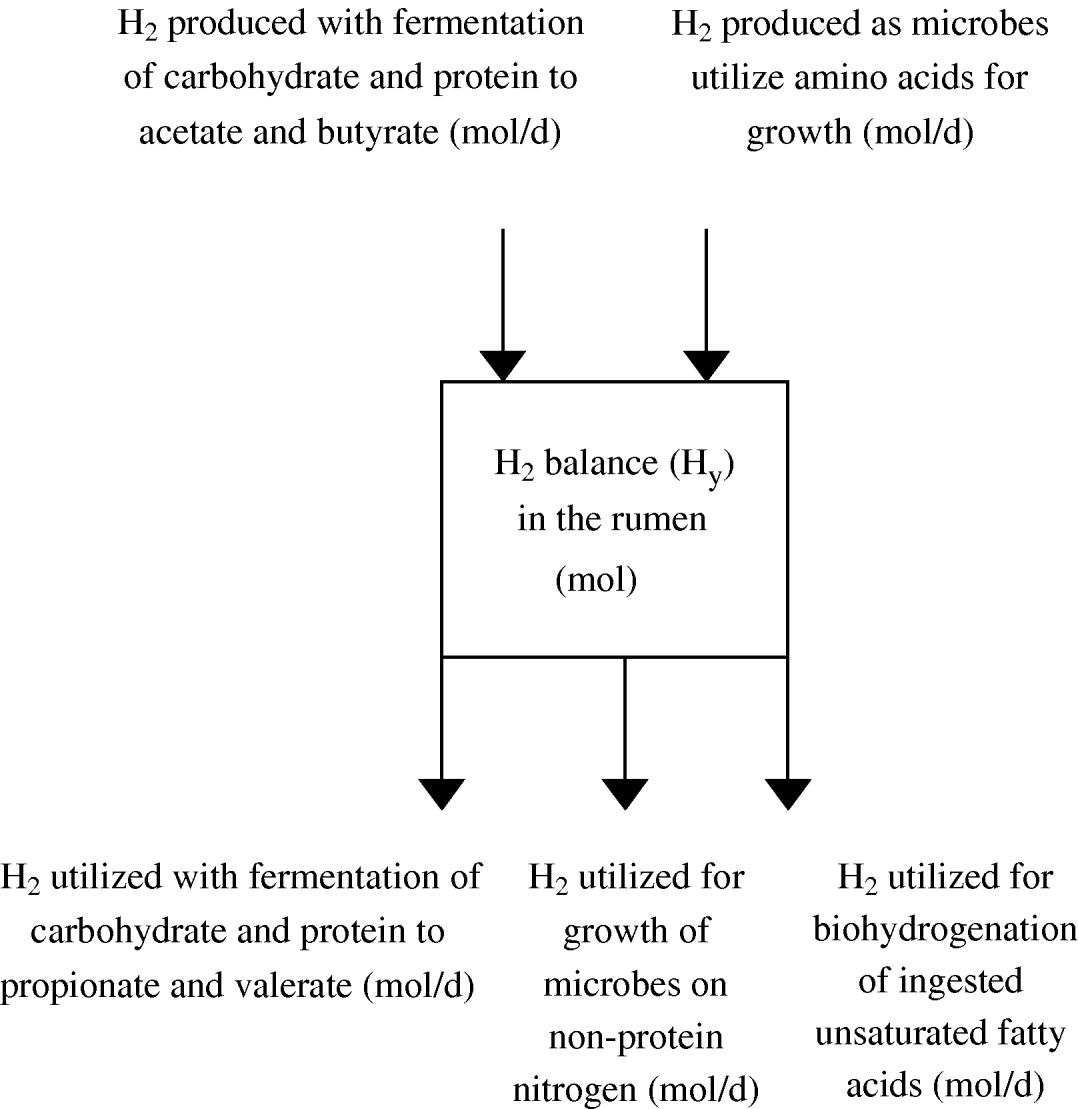
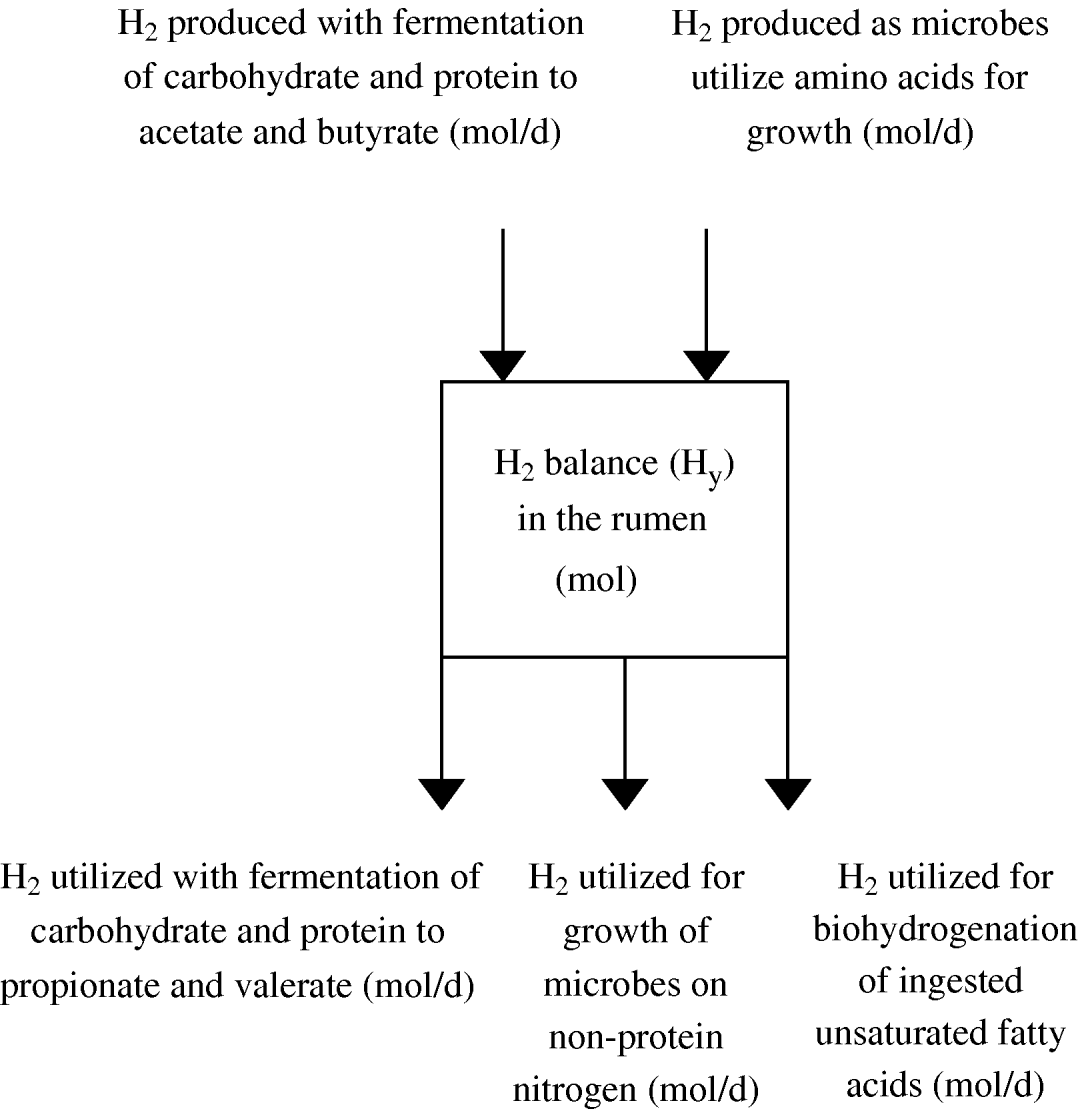
Further to the work of Benchaar et al. (Reference Benchaar, Rivest, Pomar and Chiquette1998), Mills et al. (Reference Mills, Dijkstra, Bannink, Cammell, Kebreab and France2001) also undertook mechanistic modelling of CH4 production in the rumen and the hindgut, with the goal of improving the representation of methanogenesis within the Dijkstra et al. (Reference Dijkstra, Neal, Beever and France1992) model. In addition to adding a different H2 sub-model and a representation of hindgut fermentation to Dijkstra et al. (Reference Dijkstra, Neal, Beever and France1992), Mills et al. (Reference Mills, Dijkstra, Bannink, Cammell, Kebreab and France2001) also updated the VFA stoichiometry of the model to that of Bannink et al. (Reference Bannink, Kogut, Dijkstra, France, Tamminga, Van Vuuren, McNamara, France and Beever2000, Reference Bannink, Kogut, Dijkstra, France, Kebreab, Van Vuuren and Tamminga2006) and modified the parameters used to determine H2 utilization during microbial growth compared to Benchaar et al. (Reference Benchaar, Rivest, Pomar and Chiquette1998) or Baldwin et al. (Reference Baldwin, Thornley and Beever1987). The H2 model is illustrated in Fig. 2, and inputs to the H2 sub-model developed included: (1) H2 produced with acetate and butyrate (lipogenic VFA) during fermentation of carbohydrate and protein and (2) H2 produced as microbial populations utilize amino acids for growth. Outputs of the model include: (1) H2 utilized with production of propionate and valerate (glucogenic VFA), (2) H2 utilized for growth of microbes on non-protein nitrogen and (3) H2 utilized for biohydrogenation of ingested unsaturated fatty acids. Methane production is calculated by the same methods used by Benchaar et al. (Reference Benchaar, Rivest, Pomar and Chiquette1998), from Hy.
Hydrogen gas balance model developed by Mills et al. (Reference Mills, Dijkstra, Bannink, Cammell, Kebreab and France2001) and incorporated into the Dijkstra et al. (Reference Dijkstra, Neal, Beever and France1992) rumen model. Methane production is estimated from Hy as CH4rumen (Mcal/d)=(Hy/4)*0·211, which assumes 4 moles H2 are required to produce 1 mol of CH4, and 0·211 is the heat combustion of CH4 in Mcal/mol (Benchaar et al. Reference Benchaar, Rivest, Pomar and Chiquette1998).
The model of Mills et al. (Reference Mills, Dijkstra, Bannink, Cammell, Kebreab and France2001) with the new H2 sub-model over-estimated CH4 production using a literature database, with a RMSPE % of 15·4, of which 0·73 was random. On an individual cow data database (named CEDAR), however, CH4 was under-estimated, with a RMSPE % of 12·4, of which a significant portion was due to bias (0·48) and deviation of the regression slope from unity (0·46). Mills et al. (Reference Mills, Dijkstra, Bannink, Cammell, Kebreab and France2001) suggested the difference in results between the two databases was due to differences in dry matter intake (DMI) and milk production level. The animals in the CEDAR trials were all lactating cows and had a higher DMI compared to the literature database. These results showed an improvement over Benchaar et al. (Reference Benchaar, Rivest, Pomar and Chiquette1998) in terms of RMSPE analysis. One major change in the Mills et al. (Reference Mills, Dijkstra, Bannink, Cammell, Kebreab and France2001) paper compared to Benchaar et al. (Reference Benchaar, Rivest, Pomar and Chiquette1998) is the inclusion of hindgut fermentation and its contribution to CH4 production by the animal. This resulted in an increase in the average model-predicted CH4 production. New VFA stoichiometry was also utilized by Mills et al. (Reference Mills, Dijkstra, Bannink, Cammell, Kebreab and France2001), switching from the original Murphy et al. (Reference Murphy, Baldwin and Koong1982) to Bannink et al. (Reference Bannink, Kogut, Dijkstra, France, Tamminga, Van Vuuren, McNamara, France and Beever2000) and this may also have contributed to better predictions. Details of the current state of VFA prediction will follow in a subsequent section.
The H2 sub-model of Mills et al. (Reference Mills, Dijkstra, Bannink, Cammell, Kebreab and France2001) was also used in the model of Kebreab et al. (Reference Kebreab, Mills, Crompton, Bannink, Dijkstra, Gerrits and France2004) and subsequently evaluated on an independent database of lactating and lactating plus dry cow data by Kebreab et al. (Reference Kebreab, France, McBride, Odongo, Bannink, Mills, Dijkstra, Kebreab, Dijkstra, Bannink, Gerrits and France2006b). Methane production was under-estimated for the lactating cows with a RMSPE value of 23·7% (0·97 due to random error), while it was overestimated for the lactating plus dry cow data with a RMSPE of 29·0% (0·89 due to random error). Better prediction on the lactating cow database is likely because the Mills et al. (Reference Mills, Dijkstra, Bannink, Cammell, Kebreab and France2001) and Kebreab et al. (Reference Kebreab, Mills, Crompton, Bannink, Dijkstra, Gerrits and France2004) models were developed on high producing dairy cows and not dry cows.
While the Mills et al. (Reference Mills, Dijkstra, Bannink, Cammell, Kebreab and France2001) and Benchaar et al. (Reference Benchaar, Rivest, Pomar and Chiquette1998) models have achieved some success in predicting CH4, there appears to be a tendency for under-prediction and in most cases this tendency increases as CH4 emissions increase. Thus, there is room for further improvement. It is important to note that the model into which the H2 sub-model is incorporated will significantly alter the predictions from the H2 sub-model. Therefore, the complete models must be considered and evaluated. Models, like the dynamic processes they intend to represent, are themselves, dynamic and constantly evolving as new information becomes available and is integrated into the model.
There are several areas of focus that repeatedly come up when searching the literature on rumen dynamic models with regards to CH4 production. The major areas, relevant to the development of an accurate H2 sub-model and for improving prediction of CH4 production include: representation of the competition between methanogens and other bacteria in the rumen for substrate, estimation and influence of rumen pH, protozoa and supplemental fat, improvement of the representation of VFA stoichiometry and of postruminal digestion/fermentation. The following sections will discuss current knowledge of the biology of these areas, and how they could be incorporated into a H2 balance model which aims to improve CH4 prediction.
SUBSTRATE USAGE
Despite the large number and variety of methanogens within the rumen, as a group methanogens use a small number of simple compounds as substrates, many of which contain single carbons (Zinder Reference Zinder and Ferry1993). Substrates include H2 and CO2, formate, acetate, methanol, methylamines, dimethyl-sulphide and alcohols (Zinder Reference Zinder and Ferry1993). As a result of specialization for a limited number of substrates, methanogens in the rumen are dependent on the products of other organisms as substrates for their metabolism (Zinder Reference Zinder and Ferry1993).
Within the rumen, fermentative bacteria hydrolyse and ferment carbohydrates, proteins and lipids to produce acetate, propionate, butyrate and other longer-chain fatty acids (FA) along with H2 and CO2. These end-products of microbial fermentation are either absorbed through the rumen wall and used by the animal, or used as substrates for other microbes in the rumen. Propionate, longer-chain FA, some organic acids and alcohols can be further degraded by obligate H2-producing (proton-reducing) acetogenic bacteria to produce acetate (Czerkawski Reference Czerkawski1986), although this may be a relatively minor occurrence in the rumen. Zinder (Reference Zinder and Ferry1993) stated that, for slow growing acetogenic FA oxidizers, retention time is not long enough to establish a significant population. When present, these organisms produce H2 and CO2 as byproducts of acetate formation and this contributes to the overall H2 and CO2 level within the rumen.
Hydrogen gas and CO2, produced as end products of fermentation, represent the major substrates used by methanogens, and methanogens represent the largest H2 sink in the rumen. As a result of the preferential use of H2 by methanogens, the concentration or partial pressure of H2 in the rumen is generally kept very low. Rumen H2 partial pressure may range from 1–10 Pa, and the contribution to the gas phase in the rumen has been estimated at 0·003 by Zinder (Reference Zinder and Ferry1993). Moate et al. (Reference Moate, Clarke, Davis and Laby1997), however, found less H2 in the ruminal gas phase of forage fed dairy cows than the 0·001 detection limit of their equipment. Hydrogen gas in the rumen is essentially used up as it is produced.
Although H2 is the major substrate of methanogens, other substrates can be used and some methanogens grow exclusively on these alternative substrates (Zinder Reference Zinder and Ferry1993). Most methanogens can use formate as an electron donor in CO2 reduction as an alternative to H2, using formate dehydrogenase (Schauer & Ferry Reference Schauer and Ferry1980), and formate is a common fermentation end product. Acetate, the ultimate end product in many fermentation pathways, can also be used as a substrate for methanogens. Methanol, arising from cleavage of methylated compounds such as pectin (Schink & Zeikus Reference Schink and Zeikus1980), can be a precursor for methanogens when the animal's diet is high in pectin. Other compounds such as methylamines and methylated sulphides, breakdown products of methylated amino compounds (such as choline and betaine) and methionine, respectively, can also act as methanogen substrates. Short chain alcohols can also serve as electron donors in CO2 reduction, where secondary alcohols get oxidized to ketones and primary alcohols get reduced to carboxylic acids (Widdel Reference Widdel1986; Zellner & Winter Reference Zellner and Winter1987). Most models of CH4 production do not consider these alternative substrates for methanogenesis and this may contribute to an under-estimation of CH4 production by the models under specific feeding conditions (Donovan & Baldwin Reference Donovan and Baldwin1998; Mills et al. Reference Mills, Dijkstra, Bannink, Cammell, Kebreab and France2001).
Knowledge of substrate utilization and preference is far from complete. The application of molecular techniques, in particular 16S rDNA techniques, allowed the further characterization of methanogen diversity within the rumen (McSweeney et al. Reference McSweeney, Denman, Wright and Yu2007). New yet uncultured archaea have been identified, but substrate use and methanogen activity requires successful attempts to cultivate such archaea (Whitford et al. Reference Whitford, Teather and & Forster2001). Methyl coenzyme-M reductase, involved in the reduction of the methyl group bound to coenzyme-M, is crucial in the terminal step of methanogenesis (Denman et al. Reference Denman, Tomkins, McSweeney, Soliva, Takahashi and Kreuzer2005). Measuring these reductase levels and genes controlling them may help to further quantify methanogenic activity in the rumen ecosystem. Even then, it will still remain questionable whether it will reflect in vivo scenarios in a quantitative manner.
Substrate preference
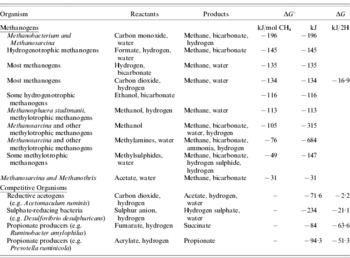
Substrate preference can be related to the thermodynamics of the reactions performed. Delta G (ΔG°), or change in free energy (products – reactants), of a reaction indicates how energetically favourable a reaction is. Table 1 summarizes the major reactions methanogens perform using the substrates discussed above, and the corresponding ΔG° value of the reaction. According to Table 1, while use of carbon monoxide is the most energetically favourable reaction for the methanogen to perform (ΔG°=–196 kJ/mol CH4), only two species of methanogens can perform this reaction (Methanobacterium and Methanosarcina). In addition, CO levels in the rumen are very low, and CO is toxic to many micro-organisms (Russell & Jeraci Reference Russell and Jeraci1984). On the other hand, H2 is highly available in the rumen and releases 145 kJ/mol CH4 produced, which is more energetically favourable than any alternative reactions, though followed closely by formate. Thus, in an environment with a spectrum of substrates available, methanogens prefer the substrate with which the associated reaction is the most energetically favourable, primarily H2. In addition, K m, the affinity constant, is quite low for H2 use by many methanogens (Table 2), which adds to its preference as a substrate. Due to this strong preference for H2, much of the CH4 modelling that has been done to date is based solely on H2 balance and availability in the rumen, with excess being used completely by methanogens for CH4 production.
Methanogenic and competitive organism reactions and reaction thermodynamicsFootnote a
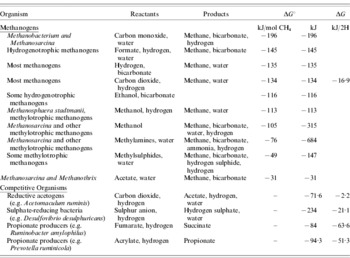
a Modified from Zinder (Reference Zinder and Ferry1993) and Ungerfeld & Kohn (Reference Ungerfeld, Kohn, Sejrsen, Hvelplund and Nielsen2006).
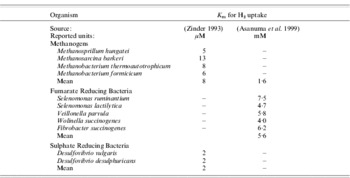
Km values for various methanogens, fumarate reducers and sulphate reducing bacteria from Zinder (Reference Zinder and Ferry1993) and Asanuma et al. (Reference Asanuma, Iwamoto and Hino1999) Footnote a
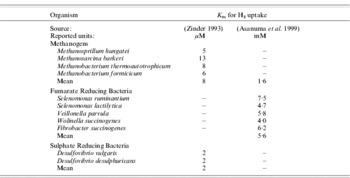
a This table presents results from two separate studies (Zinder Reference Zinder and Ferry1993; Asanuma et al. Reference Asanuma, Iwamoto and Hino1999). While comparisons can be made within study between K m values, it appears that either of the studies may have a K m unit error, as the units provided would result in a 1000-fold difference in values.
Competition for substrates by methanogens in the rumen
Partial pressure and thermodynamics
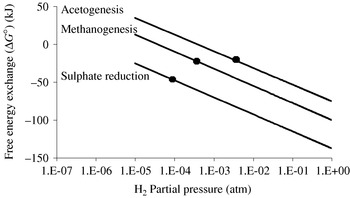
The minimum H2 partial pressure threshold required for a reaction to occur is related to the thermodynamics of the reaction involved. There is an inverse relationship between ΔG° for a reaction and the threshold H2, or minimum H2 partial pressure of the system, required for a H2 utilizing reaction to occur (Zinder Reference Zinder and Ferry1993) (Fig. 3). Thus, if the H2 partial pressure is high, it is very energetically favourable for the reactions with H2 as a substrate to occur (high levels of H2 substrate, large negative ΔG°); v. if the H2 partial pressure is low, it is less energetically favourable for the reaction to occur (lower level of H2 substrate, more positive ΔG°). Ungerfeld & Kohn (Reference Ungerfeld, Kohn, Sejrsen, Hvelplund and Nielsen2006) presented a comprehensive review of the thermodynamic control of rumen processes and Fig. 3 demonstrates this inverse relationship between ΔG° and H2 partial pressure for sulphate-reducers, methanogens and reductive acetogens, all of which use H2 as a substrate, along with their threshold H2 partial pressures. It is apparent that the higher the partial pressure, the more energetically favourable the reactions become.
Relationship between the free energy released from a reaction and the H2 partial pressure of the system for methanogens, acetogens and sulphate-reducing bacteria, with the solid dots representing the threshold H2 partial pressure required for the reaction to occur (diagram modified from Zinder (Reference Zinder and Ferry1993) ).

Acetogens
Two types of acetogens populate the rumen, the reductive acetogenic bacteria which reduce CO2 to acetate by oxidation of H2, and obligate proton-reducing acetogens that hydrolyse FA and convert them to acetate, CO2 and H2 (Mackie & Bryant Reference Mackie, Bryant and Drake1994). Reductive acetogens have the ability to compete with methanogens in the rumen for H2. However, in the unmodified rumen, very little acetogenesis from H2 actually occurs because the partial pressure of H2 is lower than the threshold required for acetogens. A literature search did not reveal any reported K m values for H2 use for acetogenesis, so it is unknown to the authors how well acetogens compete with methanogens in terms of affinity for H2.
The H2 threshold, or minimum H2 partial pressure required for uptake of H2 and thus use of it as a substrate, is much higher for acetogens than for methanogens (Breznak & Kane Reference Breznak and Kane1990) (Fig. 3). Methanogens can operate and use H2 as a substrate at a lower ruminal concentration of H2 than can acetogens. Thus, acetogens would not be able to compete effectively with methanogens for H2 unless the ‘steady-state’ H2 concentration in the rumen was maintained above their threshold level, e.g. if methanogenesis was inhibited. It is likely that micro-pockets of higher H2 partial pressure exist within the rumen, but as a whole, it is kept low. Methanogens have the advantage when competing directly with acetogens for H2, as methanogens can reduce the H2 partial pressure in the rumen to a level at which they can still use it as a substrate (by using up H2 as it is produced), while preventing acetogens from being able to use H2 at these low partial pressures.
Sulphate-reducing bacteria
The sulphate-reducing bacteria in the rumen represent a second population competing for substrate with methanogens, but much less information is available about them. Sulphate-reducing bacteria can use sulphate or other oxidized forms of sulphur (thiosulphate, sulphite and elemental sulphur) as electron acceptors, and use H2, organic acids, alcohols, amino acids and some aromatic compounds as electron donors (Zinder Reference Zinder and Ferry1993). Lin et al. (Reference Lin, Raskin and Stahl1997) showed that sulphate-reducers are a small but significant population of the rumen microflora.
In anaerobic environments where sulphate is not limiting, sulphate-reducing bacteria can out-compete methanogens for substrates (H2, CO2, formate and acetate) (Zinder Reference Zinder and Ferry1993). Sulphate-reducers have a lower minimum H2 threshold than methanogens, meaning they have a competitive advantage for H2 use in the rumen (Zinder Reference Zinder and Ferry1993), as well as having a lower K m value (Table 2, Fig. 3). The amount of sulphate-reduction that actually takes place in the rumen is, however, directly proportional to and limited by the amount of sulphur containing compounds available (Zinder Reference Zinder and Ferry1993). For a normal/healthy animal diet, the sulphur level is not high enough to allow sulphate-reducers to exceed methanogens as the major H2 sink in the rumen. It is possible, however, that on a high sulphur diet, sulphate-reducers could increase in numbers and compete with the methanogen population for available H2. This would not be very desirable though, as increased sulphur intake, and thus high sulphide concentrations in the rumen, can also depress DMI, retard growth rate, decrease copper status and cause the central nervous system disorder polioencephalomalacia (PEM) (Gould Reference Gould1998). Co-products such as maize gluten feed, modified distillers grains and wet distillers grains are typically higher in sulphur content than unprocessed maize because sulphur is added during the milling process. For example, the sulphur content for dried maize gluten meal, dried maize distillers grains, ground dried maize and maize silage are 8·6, 4·4 and 1 g/kg DM, respectively (National Research Council 2001). With the current interest in using ethanol as a fuel source, the economics of feeding more maize co-products instead of maize has become appealing to many cattle farmers. It is possible that increases in the sulphate content of the diet due to inclusion of more maize co-products may alter H2 use within the rumen and cause a reduction in CH4 production. Including sulphate-reducing bacteria in a model of H2 balance may thus become more relevant as feeding practices shift.
Propionate production
A more immediately relevant competitive pathway to methanogenesis is the reduction of dicarboxylic acids, including aspartate, malate and fumarate, to propionate in the rumen. These organic acids or their metabolites are reduced by rumen micro-organisms that use either H2 or formate as electron donors to succinate and then propionate. Ungerfeld & Kohn (Reference Ungerfeld, Kohn, Sejrsen, Hvelplund and Nielsen2006) showed that reduction of fumarate to succinate, which will result in propionate formation, is actually more thermodynamically favourable than methanogenesis within the range of H2 partial pressures seen in the rumen. Based on thermodynamics alone (Table 1), it is interesting that propionate formation does not out-compete methanogenesis in vivo. While some protection for methanogens may be granted by their frequently observed close associations with protozoa in the rumen and the resulting direct supply of H2 (Finlay et al. Reference Finlay, Esteban, Clarke, Williams, Embley and Hirt1994; Ushida et al. Reference Ushida, Newbold and Jouany1997), on a diet rich in ruminally degradable starch or at high intake levels, propionate production does increase, and this is mirrored by a reduction (although not complete elimination) of methanogenesis. On a high forage diet however, CH4 production is the major H2 sink in the rumen.
It is possible that the free energy for fumarate reduction (propionate production) cannot be efficiently used for microbial ATP synthesis, and how well the efficiency of ATP utilization for cellular anabolism compares between methanogens and different propionate producers in the rumen is unknown (Ungerfeld & Kohn Reference Ungerfeld, Kohn, Sejrsen, Hvelplund and Nielsen2006). In addition, fumarate reduction could also be limited kinetically by the availability of H2 or fumarate (Ungerfeld & Kohn Reference Ungerfeld, Kohn, Sejrsen, Hvelplund and Nielsen2006), and the average K m value for fumarate reduction using H2 as a substrate is much higher than that of methanogens using H2 as a substrate (Table 2). This could provide a competitive advantage to the methanogens. Recent research has also suggested a strong role for pH in determining the balance between methanogenesis and propionate production, and this topic will be discussed in detail in a subsequent section on pH.
Addition of fumarate to the diets of ruminants as a mitigation strategy to reduce overall CH4 emissions has been explored. Enhanced production of propionate in the rumen (through addition of fumarate or other organic acids) may also be beneficial to the dairy cow in certain situations (e.g. high roughage diet, peak lactation) and increased supply of glucogenic precursors may improve energy balance and reduce severity of ketosis and fatty liver (Van Knegsel et al. Reference Van Knegsel, Van Den Brand, Dijkstra, Tamminga and Kemp2005). In terms of CH4, if fumarate reduction is thermodynamically more favourable than methanogenesis, but kinetically limited (fumarate reduction has a higher K m value for H2 use than does methanogenesis, meaning methanogenesis is more favourable) (Asanuma et al. Reference Asanuma, Iwamoto and Hino1999), addition of fumarate to the system could increase the number of fumarate-utilizing bacteria which could, in theory, remove H2 and reduce CH4 formation by methanogens. Fumarate reducing bacteria do, however, have a lower K m value for formate use as an electron donor compared to methanogens (Asanuma et al. Reference Asanuma, Iwamoto and Hino1999), and addition of fumarate to the system allows formate-utilizing fumarate-reducers to steal substrate (formate and some H2) away from methanogens, resulting in a decline in CH4 production. Studies reviewed by Ungerfeld & Kohn (Reference Ungerfeld, Kohn, Sejrsen, Hvelplund and Nielsen2006), such as Asanuma et al. (Reference Asanuma, Iwamoto and Hino1999) and Callaway & Martin (Reference Callaway and Martin1996), have shown that while CH4 production is decreased by fumarate addition, the actual depression in CH4 is less than half what is expected if all fumarate added were metabolized down the succinate pathway. In reality, only a fraction of the added fumarate is metabolized to propionate and some other pathways, such as acetate production, are also stimulated. This is undesirable with respect to mitigating CH4 emission, as acetate production releases H2 which counteracts the uptake of H2 by fumarate and decreases the magnitude of expected CH4 reduction (Ungerfeld & Kohn Reference Ungerfeld, Kohn, Sejrsen, Hvelplund and Nielsen2006). Studies have also investigated other organic precursors of propionate, including malate, which is another intermediate of the succinate pathway.
The addition of malate to batch cultures resulted in a mild inhibition of CH4 similar to fumarate (Hino & Asanuma Reference Hino and Asanuma2003) and recoveries of malate as propionate and acetate were approximately the same as for fumarate addition (Martin & Streeter Reference Martin and Streeter1995; Callaway & Martin Reference Callaway and Martin1996; Carro & Ranilla Reference Carro and Ranilla2003). Newbold et al. (Reference Newbold, Lopez, Nelson, Ouda, Wallace and Moss2005) tested fifteen potential precursors of propionate, including fumarate, acrylate, malate and citrate, in short-term batch cultures. Sodium acrylate and sodium fumarate produced the most consistent effect and decreased CH4 production by between 8 and 17%. In longer term (21 d) in vitro incubations, fumarate addition, but not malate, was effective in reducing CH4 production. However, such in vitro results were largely unsuccessful in vivo. Wallace et al. (Reference Wallace, Wood, Rowe, Price, Yanez, Williams and Newbold2006) reported a large decrease (49–75%) in CH4 production by lambs upon fumarate supplementation, using a tunnel system to measure gaseous emissions. On the other hand, addition of fumaric acid to diets of steers or heifers by McGinn et al. (Reference McGinn, Beauchemin, Coates and Colombatto2004) and Beauchemin & McGinn (Reference Beauchemin and McGinn2006) did not reduce CH4 emissions determined using respiration chambers.
While the competition between H2 utilizing organisms in the rumen appears important in determining CH4 production, none of the current rumen models account directly for this aspect of rumen microbiology and its influence on the profile of end products. Similarly, none of the current rumen models account for alternative substrate use, such as formate, and competition for formate as a substrate. It is possible that not accounting for alternative substrate use by methanogens could contribute to under-estimation of CH4 production seen in some of the models discussed earlier. Similarly, it would be interesting to see whether competition with acetogenic bacteria or sulphate-reducing bacteria for excess H2 could be included in a model, and whether it would improve the model predictions. Competitive bacteria could share in a variable proportion of the H2 available when the amount of H2 going into CH4 decreases, or during dietary manipulations that alter the amount of methanogenesis taking place. With the search for dietary additives that could serve as mitigation strategies to reduce CH4 production, inclusion of other variables such as fumarate or malate into a rumen model may also become valuable in explaining observed shifts in ruminal metabolism. All of these areas would represent valuable research areas for mechanistic modelling of ruminal CH4 production.
Interspecies H2 transfer
Comparing species, sulphate-reducers release approximately 45 kJ/reaction at their minimum H2 partial pressure threshold, while methanogens and acetogens release approximately 25 kJ/reaction (Fig. 3) at their thresholds. The sulphate-reducers have the lowest threshold H2 partial pressure among the three, and thus, have an advantage over the other two species provided that sulphate is not limiting. This is rarely the case, however.
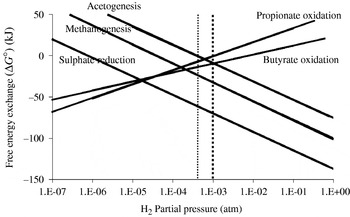
Based on Fig. 3, it would seem advantageous to keep the partial pressure in the rumen as high as possible, making H2 utilization by these bacteria as energetically favourable as possible. This, however, is not the case. Conditions in the rumen must also be made energetically favourable for H2 producers, for whom accumulation of too much product (H2) is inhibitory (Immig Reference Immig1996). For these organisms, low H2 partial pressure in the rumen makes their reactions more energetically favourable (Fig. 4) and they are limited by a maximum H2 partial pressure above which their reactions will not occur. For propionate and butyrate oxidation, for example, the maximum H2 partial pressure is 10−4 (Zinder Reference Zinder and Ferry1993), and is represented by the vertical dotted line to the right in the diagram (Fig. 4). The result of this balance between H2 production and utilization is a relatively narrow range of H2 partial pressure maintained in the rumen so that H2 produced is also used up (between the two dotted lines in Fig. 4) and both reactions are energetically favourable. Through this diagram one can see how, in an unmodified rumen, this balance (keeping the H2 partial pressure between the dotted lines) keeps the H2 partial pressure high enough such that sulphate-reducers cannot reduce it further to gain a competitive advantage, and low enough such that acetogens cannot take over either. The H2 produced by fatty acid oxidizers is utilized by methanogens almost immediately, and this keeps the ruminal H2 partial pressure low. This is imperative to the proper functioning of the rumen, as an accumulation of H2 would inhibit fermentation and negatively affect digestion in the animal (Wolin Reference Wolin, McDonald and Warner1975; Hegarty & Gerdes Reference Hegarty and Gerdes1998).
The relationship between the thermodynamics of a reaction and the H2 partial pressure, for H2 producing bacteria (propionate and butyrate oxidation) and H2 utilizing bacteria (acetogens, methanogens and sulphate reducers), where the vertical lines represent the minimum H2 partial pressure tolerated for methanogens (left) and for propionate/butyrate oxidation (right).

Steps involved in this electron transfer between H2 producing and H2 utilizing species include: reduction of H+ to H2, diffusion into the aqueous phase of the rumen towards a methanogen, and then oxidation of H2 by the methanogen (Boone et al. Reference Boone, Johnson and Liu1989).
Interspecies H2 transfer is facilitated for electron transfer from protozoa to methanogens by their frequently observed close associations. This relationship is advantageous to both organisms, as the protozoon can quickly rid itself of H2 produced and the methanogen is fed H2 directly without having to search for substrate. It is also advantageous because protozoa selectively retain themselves in the rumen, which is favourable for ‘slow’ growers such as methanogens (Jouany et al. Reference Jouany, Demeyer and Grain1988). The relationship between methanogens and protozoa will be discussed next, with a focus on their representation within dynamic mechanistic models and some of the associated limitations.
PROTOZOA
Protozoa release H2 and CO2 during the breakdown of starch, sugar and fibre, producing compounds such as acetate and butyrate (see Williams & Coleman (Reference Williams, Coleman, Hobson and Stewart1997) for a review of protozoal metabolism). Methanogens have been observed both attached to the cell surface, as well as in the cytosol, of these protozoa (Finlay et al. Reference Finlay, Esteban, Clarke, Williams, Embley and Hirt1994; Ushida et al. Reference Ushida, Newbold and Jouany1997), presumably benefiting from direct interspecies H2 transfer. The symbiotic relationship between methanogens and protozoa may be responsible for 0·25–0·37 of the rumen CH4 produced (Finlay et al. Reference Finlay, Esteban, Clarke, Williams, Embley and Hirt1994) and this interaction appears to be a significant consideration when examining factors important to modelling CH4 production in the rumen. The number of methanogens associated with protozoa, either on the surface or in the cytosol, appears to be regulated at least in part by the H2 partial pressure in the rumen (Finlay et al. Reference Finlay, Esteban, Clarke, Williams, Embley and Hirt1994). Methanogens tend to live free during a meal when the H2 partial pressure is higher and substrate is readily being fermented in the rumen. On the other hand, more methanogens tend to associate with protozoa when the H2 partial pressure is low, i.e. between meals, when substrate is less readily available (Tokura et al. Reference Tokura, Ushida, Miyazaki and Kojima1997). Tokura et al. (Reference Tokura, Ushida, Miyazaki and Kojima1997) reported that the number of methanogens associated with protozoa increased 100 to 1000-fold after a meal is finished. This makes sense, since when substrate is readily available such as during a meal, H2 is also readily available, and protozoa will also fill with substrate. Protozoa continue to digest the food after the meal has finished (Williams & Coleman Reference Williams, Coleman and Hobson1988). Methanogens then benefit from associating with protozoa particularly between meals, because they can directly receive the H2 produced as a result of protozoal fermentation of stored substrate. It also means that through their associations with protozoa, methanogens are perfectly capable to follow H2 gradients within the rumen.
In terms of biomass, protozoa represent a fraction comparable to that of bacteria in the rumen (Sylvester et al. Reference Sylvester, Karnati, Yu, Morrison and Firkins2004), suggesting they have an important role in rumen fermentation processes. Numerous defaunation experiments have demonstrated however, that protozoa are nonessential to the ruminant (Williams & Coleman Reference Williams, Coleman, Hobson and Stewart1997). The modifications caused by elimination of protozoa are generally large, but not systematic (see Eugene et al. Reference Eugene, Archimede and Sauvant2004). Protozoa, either directly or indirectly, influence ruminal retention time and passage rate, rumen volume, numbers and types of rumen bacteria present, overall concentration and proportion of VFA present, nitrogen recycling, pH, concentration of ammonia and DM digestibility (Williams & Coleman Reference Williams, Coleman and Hobson1988; Nagaraja et al. Reference Nagaraja, Towne and Beharka1992; Jouany Reference Jouany1996; Williams & Coleman Reference Williams, Coleman, Hobson and Stewart1997). The exact impact of the presence or absence of protozoa may depend on the diet being fed and the type and number of protozoa present in the rumen. In animals fed a low-protein diet, the presence of protozoa seems to have a negative effect on growth and performance (Bird & Leng Reference Bird and Leng1978), whereas in animals fed a high grain diet, protozoa may play a beneficial role through their ability to influence starch and lactic acid metabolism (Hungate Reference Hungate and Kreir1978; Veira Reference Veira1986; Nagaraja et al. Reference Nagaraja, Towne and Beharka1992). The molar proportion of propionate often increases and butyrate often decreases upon defaunation (Eugene et al. Reference Eugene, Archimede and Sauvant2004), suggesting reduced CH4 production. Observations confirm that CH4 production is reduced in defaunated cattle (Demeyer et al. Reference Demeyer, Van Nevel and Van de Voorde1982), either through methanogens being removed from the rumen with the protozoa or by a decrease in available substrate. However, the whole system, including both direct and indirect effects, must be evaluated when considering defaunation as a mitigation strategy.
In the rumen, protozoa feed on smaller organisms, particularly bacteria, which are an important source of nitrogenous compounds for protozoal growth (Williams & Coleman Reference Williams, Coleman, Hobson and Stewart1997). A requirement for live bacteria for protozoal growth is manifested in cultures longer than 2 to 4 days (Dehority Reference Dehority2003). Unfortunately, protozoal dependence on live bacteria confounds in vitro culture results (Dehority Reference Dehority2003), and thus in vitro data on protozoa, and their subsequent influence on the bacterial population and interactions with methanogens have been difficult to collect. In vivo work has been challenging due to the absence of a reliable protozoal marker, separating protozoa from the bacterial fraction (Broderick & Merchen Reference Broderick and Merchen1992; Firkins et al. Reference Firkins, Allen, Oldick and St-Pierre1998). Thus, most information to date on the role of protozoa in the rumen has been inferred indirectly, through measuring differences between faunated and defaunated animals as discussed above. This severely limits the research that has been done on protozoal metabolism to date. Recently however, Sylvester et al. (Reference Sylvester, Karnati, Yu, Morrison and Firkins2004) developed a promising assay for measuring protozoal biomass in rumen digesta by targeting and quantifying the DNA encoding 18SrRNA (rDNA). This methodology may aid in increasing the number and types of experiments investigating the role of protozoa in the rumen that can be undertaken.
More accurate representation of protozoa in digestion models than already attempted (Dijkstra Reference Dijkstra1994) will require more research to determine their exact role and function in the rumen. An accurate understanding of the role of ruminal protozoa would aid not only in better CH4 predictions under varying rumen conditions, but also other aspects of rumen digestion and nutrient assimilation. In the Mills et al. (Reference Mills, Dijkstra, Bannink, Cammell, Kebreab and France2001) and Dijkstra (Reference Dijkstra1994) models, consideration of protozoal dynamics is partly based on unconfirmed assumptions due to lack of experimental results. For example, the Dijkstra (Reference Dijkstra1994) model is sensitive to the maintenance requirement of protozoa (fixed in the model) and some indirect justification for the maintenance requirement was obtained from data on rate of endogenous amylopectin utilization in protozoa, assuming that this endogenous utilization rate represents maintenance requirements. Another sensitive attribute of the protozoa sub-model is bacterial engulfment by protozoa. Information on preference by protozoa for certain bacteria types due to species or adherence to substrate is also largely lacking (Dijkstra et al. Reference Dijkstra, Kebreab, France, Bannink, France and Kebreab2008), in contrast to other systems (including soil and marine ecosystems) in which much more information is available on the response of individual bacterial species to protozoal predation (Matz & Kjelleberg Reference Matz and Kjelleberg2005). It is also not known whether the nutritional state of protozoa affects what they engulf. Another important aspect of the model requiring development is rate of passage of protozoa from the rumen, which will affect the model predictions. The model currently assumes protozoa pass at a rate proportionate to the fractional solid passage rate (0·45). However, this assumption has been questioned in recent in vivo experiments with frequently fed cows (Karnati et al. Reference Karnati, Sylvester, Noftsger, Yu, St-Pierre and Firkins2007) and the knowledge that protozoa can sequester themselves within the rumen (Abe & Iriki Reference Abe and Iriki1989). A series of new experiments would provide raw data for the development of an improved protozoa sub-model.
A dynamic mechanistic model of rumen metabolism which includes a more detailed description of protozoa would provide: (i) greatly enhanced understanding of the requirement for nutrients by ruminant livestock and opportunities to optimize dietary nutrient inputs; (ii) better understanding of the interaction between bacteria and protozoa which would lead to better estimation of total microbial flow to the duodenum; (iii) a nutrient-based feed evaluation system that considers protozoal requirements and the impact of dietary manipulation such as defaunation on animal production efficiency and CH4 production. Increasing our knowledge of methanogen-protozoa interactions would aid in increasing our understanding of the defaunation-CH4 production level relationship, and is an area worthy of further research. The effect of defaunation on CH4 production could be attributed to removal of methanogens associated with protozoa during defaunation, resulting in lower methanogen numbers, as well as reduced substrate availability, due to the absence of protozoa which produce substrate for methanogens. Removal of protozoa will also alter the VFA profile produced in the rumen, and may result in a lowering of ruminal pH (Nagaraja et al. Reference Nagaraja, Towne and Beharka1992) due to removal of their buffering capacity. Incorporation of these effects into a rumen model would allow mitigation strategies that result in defaunation to be evaluated more accurately.
VFA PROFILE
Volatile fatty acids, the major end product of fermentation in the rumen, represent the primary energy source available to the animal, where acetate, propionate and butyrate account for more than 0·95 of the VFA found in rumen fluid (Bannink et al. Reference Bannink, Kogut, Dijkstra, France, Kebreab, Van Vuuren and Tamminga2006). While acetate and butyrate are primarily used as precursors for longer-chain FA synthesis in the ruminant, propionate is predominantly used as a glucose precursor (Bannink et al. Reference Bannink, Kogut, Dijkstra, France, Kebreab, Van Vuuren and Tamminga2006). Hydrogen gas is produced as a result of acetate and butyrate formation and is utilized in the production of propionate. Since H2 represents the major substrate for methanogenesis, it is important to be able to accurately predict the VFA profile created in the rumen as a result of the diet fed, which will in turn largely predict the H2 balance of the system.
On a high forage diet, the acetate:propionate:butyrate ratio in rumen fluid is typically in the proportion 70:20:10. The ratio of VFA produced is a function of the microbial populations present, which are largely dictated by diet and type of carbohydrate being fermented. On a high grain diet, typically high in non-structural carbohydrate and low in structural carbohydrate, the growth/development of propionate producing bacteria is favoured and the proportion of propionate produced is increased at the expense of acetate (Bannink et al. Reference Bannink, Kogut, Dijkstra, France, Kebreab, Van Vuuren and Tamminga2006). This results in an alternative sink for H2, and methanogenesis does indeed decrease with high concentrate diets. Diets that encourage the development of a large protozoal population are accompanied by an increase in butyrate rather than propionate production (Williams & Coleman Reference Williams, Coleman, Hobson and Stewart1997), resulting in production of H2, which can be used as substrate for methanogenesis and increased CH4 production. If intake is increased, increasing the amount of substrate available, a shift in the fermentation pattern away from acetate and towards propionate production occurs, in order to dispose of excess H2 (Dijkstra Reference Dijkstra1994). Accurate prediction of the rumen VFA profile and production rates of individual VFA for a given diet likely represent the biggest sources of error in predicting CH4 produced in the rumen.
Accurate determination of VFA is important for predicting nutrient availability to the animal, as well as being imperative to accurate prediction of CH4. The balance between H2-utilizing propionate production and H2-producing acetate and butyrate production has an important role in determining the H2 available in the rumen for utilization by methanogens. A number of methods for estimating rates of VFA production have been developed over the years. Predictions, however, of VFA molar proportions by these stoichiometric coefficients are still largely inaccurate. Bannink et al. (Reference Bannink, De Visser, Klop, Dijkstra and France1997) stated that this inaccuracy was due to either inadequate representation of VFA production or inadequate representation of VFA absorption through the rumen wall. It is very common that concentrations of VFA in the rumen are measured and this gives an indication of the balance between the rate of VFA production and the rate of VFA absorption. While these relative concentrations of VFA appear to be a reliable indicator of the rate of VFA production when forage diets are fed, it appears they are less reliable with high concentrate diets (France & Dijkstra Reference Bannink, Dijkstra, Mills, Kebreab, France, Kuczynski, Dämmgen, Webb and Myczko2005). Concurring with this, Bannink et al. (Reference Bannink, Kogut, Dijkstra, France, Tamminga, Van Vuuren, McNamara, France and Beever2000, Reference Bannink, Kogut, Dijkstra, France, Kebreab, Van Vuuren and Tamminga2006) found that the standard error of coefficient estimates were higher for concentrate-rich diets compared to those for roughage-rich diets, indicating more variation that could not be explained. This is likely due to differences in the relative fractional absorption rates of individual VFA, as well as to differences in production rates of individual VFA (Lopez et al. Reference Lopez, Hovell, Dijkstra and France2003), as the fermentation rate changes (Bannink et al. Reference Bannink, Kogut, Dijkstra, France, Kebreab, Van Vuuren and Tamminga2006). Recently, Bannink et al. (in press) developed a mechanistic model of absorption and intra-epithelial metabolism of VFA that addresses some of the inadequacies in representation of VFA absorption.
While others have worked on the problem of accurately predicting the VFA profile in the rumen (Argyle & Baldwin Reference Argyle and Baldwin1988; Pitt et al. Reference Pitt, Van Kessel, Fox, Pell, Barry and Van Soest1996; Friggens et al. Reference Friggens, Oldham, Dewhurst and Horgan1998; Kohn & Boston Reference Kohn, Boston, McNamara, France and Beever2000; Nagorka et al. Reference Nagorka, Gordon, Dynes, McNamara, France and Beever2000; Sveinbjörnsson et al. Reference Sveinbjörnsson, Huhtanen, Udén, Kebreab, Dijkstra, Bannink, Gerrits and France2006), they do so with varying levels of improvement over Murphy et al. (Reference Murphy, Baldwin and Koong1982). A full review of these papers can be found in Dijkstra et al. (Reference Dijkstra, Kebreab, France, Bannink, France and Kebreab2008) and will not be repeated here. In a recent attempt to improve VFA representation, Bannink et al. (Reference Bannink, Kogut, Dijkstra, France, Kebreab, Van Vuuren and Tamminga2006) developed a model of VFA production in the rumen of lactating dairy cows fed either high forage or high concentrate diets, based on Murphy et al. (Reference Murphy, Baldwin and Koong1982). In this model, the amount of starch, hemicellulose, cellulose, other carbohydrates (soluble and rapidly fermentable carbohydrates such as pectin) and protein convert to acetate, propionate, butyrate and other VFA, by rumen microbes, calculated in all combinations. As has occurred in previous attempts to model VFA production, Bannink et al. (Reference Bannink, Kogut, Dijkstra, France, Kebreab, Van Vuuren and Tamminga2006) observed that variation in predicted values was smaller than in observed values. This, however, was attributed to statistical methods and the necessity for molar proportions of VFA to add up to unity. Generally, predicted VFA followed the pattern of observed VFA. Bannink et al. (in press) further developed the model to include pH-dependent stoichiometric parameters for rapidly fermentable carbohydrates. These coefficients likely represent an improvement over Murphy et al. (Reference Murphy, Baldwin and Koong1982) because of the extensive and wide database used to derive the coefficient values, and it would be interesting to see them challenged on an independent dataset and applied in one of the current rumen models.
The Mills et al. (Reference Mills, Dijkstra, Bannink, Cammell, Kebreab and France2001) model (which uses the VFA stoichiometry of Bannink et al. Reference Bannink, Kogut, Dijkstra, France, Tamminga, Van Vuuren, McNamara, France and Beever2000, Reference Bannink, Kogut, Dijkstra, France, Kebreab, Van Vuuren and Tamminga2006) could be improved by replacing the current VFA stoichiometry in the model with the updated VFA stoichiometry of Bannink et al. (in press). Evaluation of the model should be conducted using an independent database, evaluating results with the current VFA stoichiometry and then again with the new Bannink et al. (in press) stoichiometry. The performance of other stoichiometry sets (e.g. Murphy et al. Reference Murphy, Baldwin and Koong1982; Argyle & Baldwin Reference Argyle and Baldwin1988; Pitt et al. Reference Pitt, Van Kessel, Fox, Pell, Barry and Van Soest1996; Friggens et al. Reference Friggens, Oldham, Dewhurst and Horgan1998) could also be evaluated for comparison, though some of them were previously assessed by Bannink et al. (Reference Bannink, De Visser, Klop, Dijkstra and France1997). Getting the VFA stoichiometry correct may be the most influential modification within a model of H2 balance with the aim of predicting CH4 production. Inaccurate prediction of VFA levels can lead to an over- or under-prediction of CH4 production in the rumen contributing to bias of the results, and deviation of the regression slope of predicted v. observed VFA from unity may transfer through to the predicted v. observed CH4 relationship as well.
RUMEN pH
When the ratio of fermentation end products, acetate:propionate, declines in the rumen, CH4 production also declines (Russell Reference Russell1998). A decline in the acetate:propionate ratio typically occurs when the diet is switched from a high forage to a high grain one, and is the result of increased ruminal propionate production (Russell Reference Russell1998). Switching the diet from high forage to high grain also causes a drop in rumen pH, an effect that is greater with increasing DMI. Methane and propionate production represent competitive pathways for H2 use in the rumen and while at high pH and on a forage based diet CH4 production out-competes propionate production for H2 usage, when the diet is switched to high concentrate resulting in a higher fractional rate of substrate degradation and a lower pH, CH4 production declines and propionate production increases. The exact mechanism regulating this shift is unclear. It is likely to be regulated by some combination of substrate availability and pH.
Substrate availability suggests that acetate is high and propionate low in forage-fed animals because acetate-producing bacteria prefer structural carbohydrates as substrates, and thus flourish and out-compete propionate producers (as their preferred substrate is in low quantities). Since acetate results in a net production of H2, methanogens flourish with a high availability of substrate in the rumen on high forage diets. On the other hand, when the diet is high in non-structural carbohydrates (high concentrate), propionate producing bacteria out-compete acetate forming bacteria because their substrate is now in abundance and they tend to be more acid tolerant (Russell Reference Russell1991). This then provides competition for H2 as a substrate with methanogens, and could explain the lower CH4 production levels in the rumen of animals fed a mainly concentrate-based diet. As stated earlier, Ungerfeld & Kohn (Reference Ungerfeld, Kohn, Sejrsen, Hvelplund and Nielsen2006) raised the issue that reduction of fumarate to succinate, the first step in propionate production, is more thermodynamically favourable than methanogenesis. It is possible that when the diet is forage based, methanogens out-compete propionate producers because non-structural carbohydrates are low and pH is high. When non-structural carbohydrates are high and pH low, however, such as with a high concentrate diet, propionate producers out-compete methanogens because (1) their substrate is now available, (2) they have an advantage of being able to survive in lower pH environments and (3) it is more energetically favourable than methanogenesis. However, methanogenesis is not completely eliminated on high concentrate diets. Johnson & Johnson (Reference Johnson and Johnson1995) reported that CH4 production is roughly 0·02 of gross energy intake on high concentrate diets. This might be explained by their lower K m values for H2 use compared to propionate producing bacteria (Table 2).
An alternative argument to explain these shifts in microbial populations is that they are regulated by pH. Van Kessel & Russell (Reference Van Kessel and Russell1996) showed that methanogenesis was sensitive to rumen pH, with methanogenesis decreasing dramatically in forage fed cows at pH<6·5 and virtually halting at pH<6·0. The inhibitory effect of low pH was supported by a variety of observations, which included the fact that addition of a base to the ruminal fluid of a concentrate fed cow resulted in resumption of CH4 production (Van Kessel & Russell Reference Van Kessel and Russell1996). If methanogenesis were inhibited at low pH, it would allow H2 to be used by propionate producing bacteria, allowing them a competitive advantage in a lower pH.
Van Kessel & Russell (Reference Van Kessel and Russell1996) discussed possible mechanisms for the inhibition of methanogenesis at low ruminal pH, mainly that VFAs were causing a pH-dependent inhibition of methanogenesis. In other species of bacteria (e.g. Escherichia coli), which are relatively acid-tolerant and able to grow in low pH, placement in a rumen fluid solution with pH<6·0 resulted in their inability to grow (Hollowell & Wolin Reference Hollowell and Wolin1965). Hollowell & Wolin (Reference Hollowell and Wolin1965) ascribed the inhibitory effect of rumen fluid to the concentration of VFA. VFAs are commonly used as food preservatives because they are able to inhibit bacterial growth at low pH values. Associated VFA, present at low pH values, easily cross cell membranes (Russell Reference Russell1992). If the intracellular pH is greater than the extracellular pH, VFA will cross the cell membrane, dissociate and accumulate in the intracellular compartment, eventually causing cell death. Because the concentration of VFA in the rumen is relatively high, particularly at low pH levels associated with high concentrate diets, even a modest increase in the ΔpH (intracellular v. extracellular) can lead to a dramatic increase in uptake by bacteria. It is possible, then, that ruminal methanogens are inhibited by the toxicity of VFA anions at low pH, while they remain non-toxic at higher pH values. This relationship between pH and VFA association/dissociation is described by the Henderson–Hasselbalch equation, which states that pH=pKa+log10[A−]/[HA] (where pKa is the acid dissociation constant, [A−] is the concentration of conjugate base and [HA] is the concentration of acid) (Po & Senozan Reference Po and Senozan2001), and it is likely that this mechanism has some role in inhibiting methanogenesis at low pH.
The shift in fermentation pathways from acetate and butyrate production at high pH towards propionate production at low pH could at least in part be explained by the sensitivity of methanogens to rumen pH and an inability to survive at low pH values. On the other hand, this cannot fully account for the shift in fermentation end products, as in monocultures, where fermented starches and sugars result in high propionate levels and a reduction in pH will shift VFA production towards propionate, even in the absence of methanogens (Bannink et al., in press). This indicates that at least part of the effect is not related to methanogens. More starch, sugar or a lower pH will automatically shift the rumen bacterial population towards species like Streptococcus bovis, thus increasing propionate production. While pH has a strong influence, it seems that more H2 will not go to propionate production unless there is enough substrate available (starch and sugars) to start with, allowing propionate producing bacteria to flourish.
Recently, Bannink et al. (in press) derived changes in stoichiometric coefficients of VFA produced from fermentation of starch and of soluble sugars at low pH that confirm the increase in propionate production at the expense of acetate and butyrate. The changes in propionate and butyrate production depended on the type of diet and the type of substrates involved (sugars or starch). In all cases, a strong decline in acetate at low pH explained much of the CH4 reduction. When these coefficients were included in mechanistic models such as the Mills et al. (Reference Mills, Dijkstra, Bannink, Cammell, Kebreab and France2001) model, a decrease of rumen pH indeed resulted in simulated reduction of CH4 emission (Bannink et al. Reference Bannink, Dijkstra, Mills, Kebreab, France, Kuczynski, Dämmgen, Webb and Myczko2005). Incorporation of the effect of pH on rumen VFA stoichiometric coefficients would improve VFA prediction, which would in turn improve prediction of CH4 production in the rumen.
Rumen pH is also a critical indicator of rumen function (Baldwin Reference Baldwin1995). On either side of a narrow pH range (6·0–7·2), microbial activity appears to be affected sufficiently to produce adverse effects on nutrient recovery by the host animal, although, even in healthy animals, pH may temporarily drop lower during the day depending on ration and feeding pattern. What seems to be important is the amount of time spent at sub-optimal pH, rather than the lowest value reached (Alzahal et al. Reference Alzahal, Kebreab, France and McBride2007b). A major issue of concern when incorporating rumen pH into a mechanistic model is accurate prediction of pH, without which, incorporation of the effects of pH change on the rumen microbiology cannot be realistically accomplished. The problem of predicting rumen pH can be overcome by input of observed pH values into a model, although even that contains error due to incomplete mixing of the rumen, and measuring ruminal pH through direct sampling is invasive and not practical at the farm level. Also, the feed intake pattern, mixing of the ration and grazing v. stall-feeding would all become influential factors. Predicting rumen pH from VFA concentrations has been shown to be relatively unsatisfactory over a wide range of diets fed in practice (e.g. see Allen Reference Allen1997) and, especially in rumen models that stimulate diurnal variation, representation of rumen pH requires further detail (Chilibroste et al., Reference Chilibroste, Dijkstra, Robinson and Tammingain press). Alternatively, Alzahal et al. (Reference Alzahal, Kebreab, France, Froetschel and McBride2008) predicted rumen pH from measured rumen temperatures. Imamidoost & Cant (Reference Imamidoost and Cant2005) presented an attempt at formulating equations to predict rumen pH entirely mechanistically according to the rate:state formalism (Thornley & France Reference Thornley and France2007), and monitoring ruminal pH in animals has been automated with the advent of continuous indwelling pH systems (Dado & Allen Reference Dado and Allen1993). The future of incorporating pH effects into models for on farm application lies in developing a non-invasive, real-time method to monitor rumen pH (Alzahal et al. Reference Alzahal, Rustomo, Odongo, Duffield and McBride2007a). As an option, predicting rumen pH from measured eructated sulphur gases (e.g. H2S, dimethly sulphide (DMS)) appears to hold some promise, as rumen pH changes alter the balance between ionic and non-ionic forms of H2S, and gaseous emissions differ accordingly (Elliott-Martin et al. Reference Elliott-Martin, Mottram, Gardner, Hobbs and Bartlett1997). It has been proposed that real-time monitoring of sulphur gas (e.g. H2S, DMS) emissions and other eructated gases in ruminant breath will provide a mechanism to monitor rumen pH remotely using Blue Tooth communication technology (Warren et al. Reference Warren, Andresen, Nagl, Schoenig, Krishnamurthi, Erickson, Hildreth, Poole and Spire2004; Alzahal et al. Reference Alzahal, Rustomo, Odongo, Duffield and McBride2007a). An established relationship between the proportions of these eructated gases and pH could be used to construct an improved sub-model of rumen pH that would be incorporated into the larger rumen model, thus significantly improving predictions.
SUPPLEMENTAL FAT
Fats are typically added to the diet of ruminants to increase energy concentration of the diet and meet the elevated energy requirements of high producing animals. Addition of dietary fat can also enhance milk yield and modify the FA composition of milk fat, partly related to the various FA intermediates formed in the rumen (Jenkins & McGuire Reference Jenkins and McGuire2006). Saturated long chain FA (LCFA) are of particular interest because of human health concerns over their contribution to the development of cardiovascular disease (Grundy Reference Grundy1990) and cancer (Parodi Reference Parodi1997). This area is of interest to ruminant nutritionists and nutritional modellers because fermentation in the rumen has a profound effect on the type of LCFA presented to the small intestine for absorption and subsequently the LCFA composition of milk and meat. The ability to model these processes could result in prediction of feeding strategies to produce healthier end products for human consumption.
The addition of FA to the diet, particularly those of medium (C12–C16) (Dohme et al. Reference Dohme, Machmuller, Wasserfallen and Kreuzer2000; Odongo et al. Reference Odongo, Or-Rashid, Kebreab, France and McBride2007) and unsaturated long (>C16) (McGinn et al. Reference McGinn, Beauchemin, Coates and Colombatto2004; Beauchemin & McGinn Reference Beauchemin and McGinn2006) carbon chain length have also been shown to depress CH4 production. These longer chain FA have the capacity to hold more H2 atoms and thus may be more able to influence the H2 balance in the rumen when large quantities are included in the diet compared to shorter chain FA. Giger-Reverdin et al. (Reference Giger-Reverdin, Morand-Fehr and Tran2003) also showed that the degree of saturation of a FA is inversely proportional to its effectiveness in reducing CH4 production, although there is some uncertainty about this relationship (Johnson & Johnson Reference Johnson and Johnson1995). Unsaturated FA contain double bonds that can be replaced with single bonds with addition of H2. As a result, the addition of unsaturated FA to the diet has been suggested as a mitigation strategy for reducing CH4 emissions from ruminants (Boadi et al. Reference Boadi, Benchaar, Chiquette and Masse2004). Biohydrogenation of LCFA appears to compete with methanogens for H2 as a substrate. A direct comparison of how biohydrogenation of FA compete with other H2 sinks in the rumen in terms of thermodynamics, minimum H2 partial pressure and K m (as discussed in earlier sections) is not available. Biohydrogenation of FA, as a fraction of FA liberation after lipolysis, is usually quite high, well over 0·90 for normal diets (linoleic and linolenic acid are hydrogenated 0·75–0·95 and 0·85–1·00, respectively) (Doreau & Chilliard Reference Doreau and Chilliard1997; Harfoot & Hazlewood Reference Harfoot, Hazlewood, Hobson and Stewart1997). When the amount of unsaturated FA in the diet is elevated, however, the efficiency of biohydrogenation (proportion of free FA) starts to decline, and thus the rate of biohydrogenation is influenced by the level of fat in the diet (Beam et al. Reference Beam, Jenkins, Moate, Kohn and Palmquist2000). However, this begs the question that, if methanogenesis was more thermodynamically favourable than biohydrogenation, would these bacteria be able to reach such high biohydrogenation levels? It seems likely that biohydrogenation of FA is very favourable, either enzymatically or thermodynamically, and that addition of unsaturated fat to the diet results in biohydrogenation out-competing methanogenesis for H2 use. The addition of fat would decrease the activity of fibrolytic bacteria, resulting in a shift in VFA production towards propionate, which would result in a decrease in CH4 production. Thus, while competition for H2 has an effect on CH4 production directly, it is difficult experimentally to separate the effects of biohydrogenation from other factors such as a decrease in fibre degradation caused by fat supplementation. It is interesting that the rate of lipolysis and biohydrogenation also appear to be somewhat pH-dependent, as depression in lipolysis is observed with high starch diets (Van Nevel & Demeyer Reference Van Nevel and Demeyer1996). This may make inhibition of fibre digestion the more likely pathway, at least during situations of low ruminal pH. Mechanistic modelling might be able to elucidate this.
It has also been shown that some fats and oils have a direct toxic effect on methanogens in pure and mixed cultures (Prins et al. Reference Prins, Van Nevel and Demeyer1972; Dong et al. Reference Dong, Bae, McAllister, Mathison and Cheng1997). The toxicity of FA to methanogens is positively related to the degree of unsaturation of the FA (Prins et al. Reference Prins, Van Nevel and Demeyer1972; Henderson Reference Henderson1973; Maczulak et al. Reference Maczulak, Dehority and Palmquist1981; National Research Council 2001). The addition of large amounts of fat to the diet (>0·05–0·06 of DMI) depresses fibre degradation in the rumen (Dong et al. Reference Dong, Bae, McAllister, Mathison and Cheng1997; Mathison et al. Reference Mathison, Okine, McAllister, Dong, Galbraith and Dmytruk1998), shifts the profile of VFA being produced from acetate to propionate (Nagaraja et al. Reference Nagaraja, Newbold, Van Nevel, Demeyer, Hobson and Stewart1997; Ungerfeld et al. Reference Ungerfeld, Rust, Burnett, Yokoyama and Wang2005) and depresses overall DMI (Allen Reference Allen2000). Long chain FA may specifically inhibit ruminal fibrololytic microbes (Maczulak et al. Reference Maczulak, Dehority and Palmquist1981) and added fats may also decrease protozoal numbers (Ungerfeld et al. Reference Ungerfeld, Rust, Burnett, Yokoyama and Wang2005). A decline in butyrate production is observed with fat supplementation, which could be the result of decreased protozoal numbers and activity (Nagaraja et al. Reference Nagaraja, Newbold, Van Nevel, Demeyer, Hobson and Stewart1997). Decreased protozoal numbers may also have a role in decreasing CH4 production, since methanogens are often found closely associated with protozoa, benefiting from their H2 production. Death of protozoa is, however, not likely the principal cause of CH4 reduction, because the reduction occurs in defaunated as well as faunated animals (Van Nevel & Demeyer Reference Van Nevel and Demeyer1996; Nagaraja et al. Reference Nagaraja, Newbold, Van Nevel, Demeyer, Hobson and Stewart1997).
Since LCFA also represent a non-fermentable substrate, increasing the proportion of LCFA in the diet may contribute to decreasing CH4 as a proportion of GE intake (Johnson & Johnson Reference Johnson and Johnson1995) by decreasing the amount of fermentable substrate as a proportion of the entire diet. A coating effect of fat on structural carbohydrates when fed at high levels may also contribute to decreased digestibility in the rumen with fat supplementation.
All of these changes would be responsible for a portion of the decrease in CH4 production in the fat supplemented animal. The degree to which CH4 production is decreased is likely to depend, however, on the type of fat fed, the amount, and the composition of the basal diet. Dohme et al. (Reference Dohme, Machmuller, Wasserfallen and Kreuzer2000) found with in vitro work, that CH4 production was reduced by 34, 21 and 20% with the addition of 53 g of palm kernel, coconut or canola oil, respectively. Palm kernel and coconut oil are high in medium chain saturated fatty acids, and canola oil is high in unsaturated longer chain fatty acids (see Odongo et al. (Reference Odongo, Or-Rashid, Kebreab, France and McBride2007) for recent in vivo work). Machmuller & Kreuzer (Reference Machmuller and Kreuzer1999) found that for coconut oil supplemented to sheep at levels of 0·03 and 0·07 of DM, CH4 production was reduced by 28 and 73%, respectively. This was attributed to direct inhibition of microbes, lower DMI and lower levels of digestible fibre in the diet. In a study by Dohme et al. (Reference Dohme, Machmuller, Sutter and Kreuzer2004), lauric, myristic and stearic acid were added to the diet of Brown Swiss dairy cows fed a 3:2 forage to concentrates ratio. Compared to stearic acid, the addition of lauric acid decreased feed intake by 18%, reduced NDF digestion by 7% and reduced CH4 loss (g CH4 kg/milk) by 16%. Myristic acid showed little difference to stearic acid, except a reduction in CH4 of almost 8%. Odongo et al. (Reference Odongo, Or-Rashid, Kebreab, France and McBride2007) showed a 36% reduction in CH4 production with the addition of myristic acid to the diet. On the other hand, in a long term study Johnson et al. (Reference Johnson, Kincaid, Westberg, Gaskins, Lamb and Cronrath2002) showed no effect of adding whole cottonseeds or ground canola oilseed at up to 0·056 of DM. It was suggested in the study by Johnson et al. (Reference Johnson, Kincaid, Westberg, Gaskins, Lamb and Cronrath2002) that the level of added fat in the diet may not have been high enough to cause a reduction in CH4 production, but it may also be due to the type of fat added and its availability in the rumen. It is worth noting that while FA supplementation definitely appears to reduce CH4 production expressed in, e.g. MJ/d, it may not always substantially reduce CH4 production expressed per kg of milk, meat or DMI. Lowering the digestibility of the diet would result in a lower milk yield per kg feed consumed, and thus a higher proportion of the ME intake is used for maintenance instead of production.
Despite the impact of dietary fats on rumen metabolism, its representation has received only limited attention in extant models of rumen fermentation. Lipid has not been included in the rumen models of, e.g. Baldwin et al. (Reference Baldwin, Lucas, Cabrera, Phillipson, Annison, Armstrong, Balch, Comline, Hardy, Hobson and Keynes1970), France et al. (Reference France, Thornley and Beever1982) and Lescoat & Sauvant (Reference Lescoat and Sauvant1995). Other models have only a crude representation of ruminal lipid metabolism (Black et al. Reference Black, Beever, Faichney, Howarth and Graham1981; Baldwin et al. Reference Baldwin, Thornley and Beever1987; Danfaer Reference Danfaer1990; Dijkstra et al. Reference Dijkstra, Neal, Beever and France1992; Dijkstra Reference Dijkstra1994; Dijkstra et al. Reference Dijkstra, France, Assis, Neal, Campos and Aroeira1996; Mills et al. Reference Mills, Dijkstra, Bannink, Cammell, Kebreab and France2001). The Dijkstra (Reference Dijkstra1994) model currently employs a highly simplified representation of lipid metabolism in the rumen, representing the balance between lipid input from diet, outflow to the duodenum and incorporation into microbial lipid. The Mills et al. (Reference Mills, Dijkstra, Bannink, Cammell, Kebreab and France2001) model has made some advance over this; however, it uses a fixed unsaturated FA part that has a fixed biohydrogenation and no toxic effect of individual FA on various microbial species. Dijkstra et al. (Reference Dijkstra, Gerrits, Bannink, France, McNamara, France and Beever2000) made efforts to account for the negative effects of unsaturated FA on fibre degradation and on protozoa, and the depressing effects of high levels of unsaturated long chain FA on CH4 production. Any of the models attempting to accurately predict H2 balance and subsequently CH4 production could benefit from the development or inclusion of an extended lipid sub-model. This would enable prediction of the effect the amount and composition of fat in the diet have on digestion, the nutrient profile available to the animal, as well as evaluate diets for their potential to reduce absolute CH4 emissions, emission per kg DMI, or per kg animal product obtained.
POSTRUMINAL DIGESTION/FERMENTATION
Another area worthy of mentioning is CH4 production in the hindgut, which is an important factor to consider when developing models of CH4 production. The rumen does not account for all of the CH4 produced by the animal and, while its contribution may be relatively small, the hindgut does produce and contribute to overall CH4 production by the animal. Comparisons of CH4 production measured using the sulphur hexafluoride tracer gas technique (SF6) (measures only eructated CH4) to whole animal calorimetry show differences that range from −5–10% (Johnson et al. Reference Johnson, Huyler, Westberg, Lamb and Zimmerman1994a, Reference Johnson, Huyler, Westberg, Lamb, Zimmerman and Aguilera1994b; McGinn et al. Reference McGinn, Beauchemin, Iwaasa and McAllister2006; Pinares-Patiño et al. Reference Pinares-Patiño, Holmes, Lassey and Ulyatt2008), to+1–2% (Boadi et al. Reference Boadi, Wittenberg and Kennedy2002; Grainger et al. Reference Grainger, Clarke, McGinn, Auldist, Beauchemin, Hannah, Waghorn, Clark and Eckard2007). To account for this discrepancy, Basarab et al. (Reference Basarab, Okine, Baron, Marx, Ramsey, Ziegler and Lyle2005) adopted an upward adjustment of 3% to all SF6 measurements of CH4 production to account for hindgut methanogenesis. Other studies report greater discrepancies between SF6 and calorimetry measurements of CH4 production. Wright et al. (Reference Wright, Kennedy, O'neill, Toovey, Popovski, Rea, Pimm and Klein2004) found that SF6 CH4 estimates were consistently more variable, as well as higher by 2–3 times than respiration chamber estimates. In Wright et al. (Reference Wright, Kennedy, O'neill, Toovey, Popovski, Rea, Pimm and Klein2004), there was no significant correlation between the SF6 methane estimates and the respiration methane estimates (R 2=0·11). It is evident that caution should be used when comparing and combining different types of measurements.
Mills et al. (Reference Mills, Dijkstra, Bannink, Cammell, Kebreab and France2001) developed a framework for a postruminal digestion/fermentation model. The postruminal model is based on the same structure as the rumen model, with modifications for fractional digestion and passage rates, fluid volume, pH parameters and exclusion of the activity of protozoa, and it aims to account for the extra CH4 produced by the animal not accounted for in the rumen model. Inputs to the large intestine sub-model are essentially the outflows from the rumen model modified for small intestine digestion. Digesta passage is assumed to be that of a system of complete mixing, however, in reality it is a combination of plug flow and mixing (France et al. Reference France, Thornley, Siddons and Dhanoa1993). While many simplifications are made, it provides the structure upon which modifications can be made to improve representation of hindgut digestion and metabolism further. The simulated contribution of hindgut methanogenesis to total CH4 production on a range of dairy cattle diets was 0·091±0·026 (Mills et al. Reference Mills, Dijkstra, Bannink, Cammell, Kebreab and France2001). Accounting for postruminal digestion may improve estimates of overall CH4 production by the model when predictions are to be compared against observed data that represent production by the entire animal and not just the rumen. Volatile fatty acid stoichiometry within the hindgut will need to be addressed with the same considerations as those discussed for the rumen. In addition, the balance and competition between H2 utilizing and H2 producing micro-organisms may differ in the hindgut compared to the rumen and should be considered. Inclusion of a hind-gut model in the paper of Mills et al. (Reference Mills, Dijkstra, Bannink, Cammell, Kebreab and France2001) likely contributed to lower RMSPE values and correction of some of the under-estimation of CH4 production by the model, although it is evident it could still benefit from further expansion.
CONCLUSIONS
The current review has attempted to address aspects of rumen microbiology that are relevant to dynamic models of rumen digestion and gaseous nutrient emissions, particularly those attempting to describe H2 balance and CH4 production by the animal. The rumen H2 sub-models evaluated at the start of this review paper over- or under-predicted CH4 production to varying degrees depending on the rumen models used, the H2 sub-model, as well as the database used for evaluation. It is likely that their errors result from combinations of factors discussed in this review that are not fully accounted for in the models, as well as some factors that are not discussed here. Accurate prediction of VFA stoichiometry is likely to have the largest impact on a model of CH4 prediction, as the VFA profile being produced in the rumen is central to any model of H2 balance. In addition, many of the topics discussed in this paper will influence the VFA profile produced. However, other factors also appear important. For example, over-estimation of CH4 production could arise from not accounting for competition for H2 as a substrate with animals fed specific diets such as those containing maize co-products or high levels of supplemental fat. Under-prediction of CH4 production could result from not considering alternative electron carriers, such as formate, or not considering hindgut methanogenesis. Consideration of the close interaction of methanogens with protozoa is important, particularly when considering mitigation strategies that involve defaunation. All of these areas represent areas of rumen microbiology relevant to modelling rumen function. Incorporation of these concepts into current models of rumen function should advance knowledge of the complexities of rumen metabolism, including those issues relevant to CH4 production.