“No man is an island, entire of itself; every man is a piece of the continent, a part of the main…”
John Donne,
English Poet, 1572-1631
Introduction
A 2008 study on the impact of public health emergencies on modern disaster taxonomy emphasized that the threat of compromised public health infrastructure in the wake of a geographically widespread, population dense, and prolonged disaster should influence the manner in which disasters are observed, planned for, and managed so as to avoid adverse health consequences.Reference Burkle and Greenough 1 The Pacific Island nations face a clear and worsening public health emergency in a vast ocean. 2 The US response, both civilian and military, to this unique geographic area's public health emergency is rightly being scrutinized, debated, and judged by the international community, consisting of “disaster managers, urban planners, the global humanitarian community, the World Health Organization (WHO) authorities, and the participating parties to war and conflict.”Reference Burkle and Greenough 1
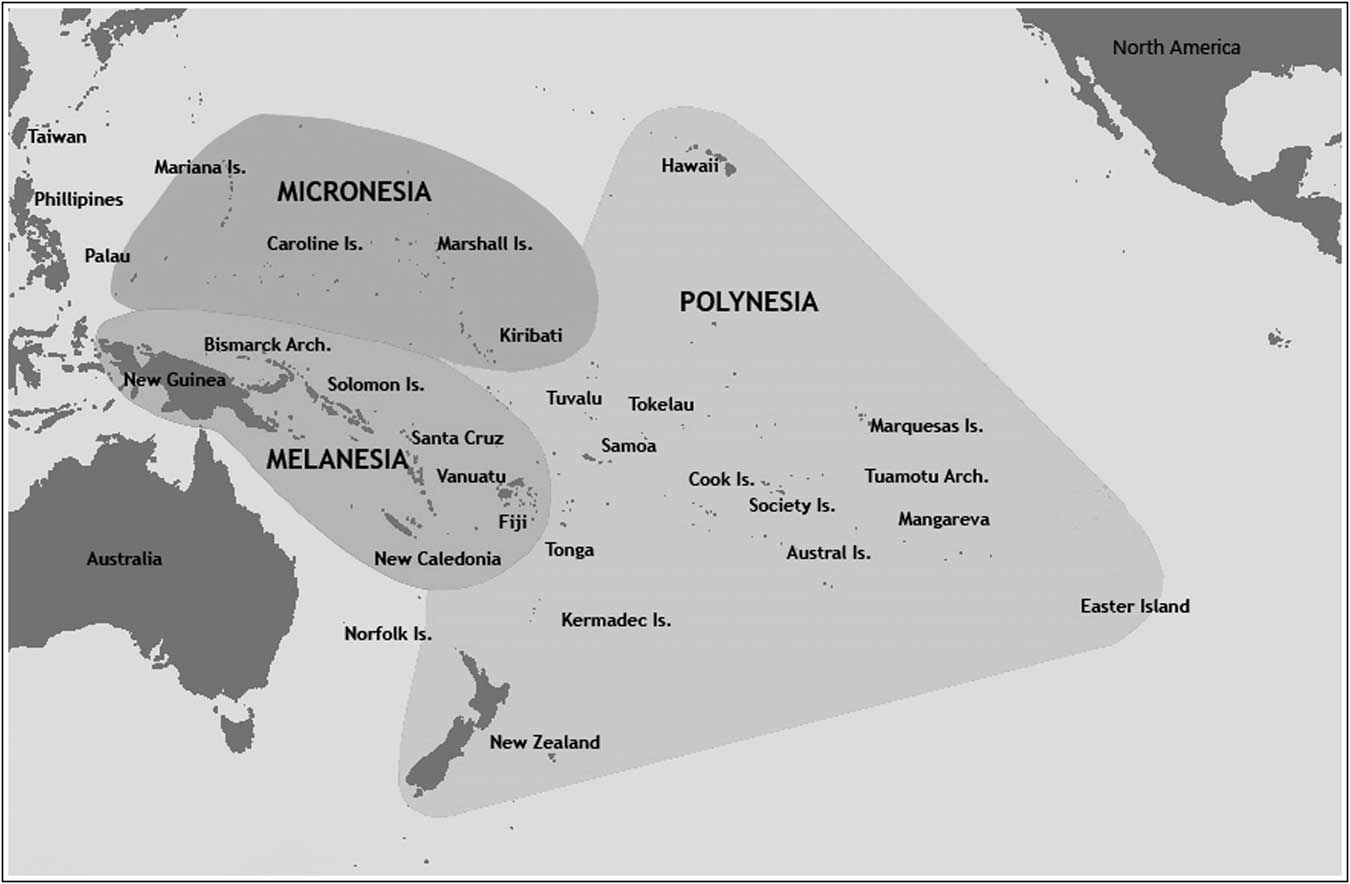
Oceania, defined as Melanesia, Micronesia, and Polynesia, contains some of the world's least developed countries (Figure 1). This region is ecologically fragile and vulnerable to the experience of “acute-on-chronic” environmental stresses defined by acute disaster events on top of the consequences of climate change. Much of the region is situated around the Pacific “ring of fire” which aligns with the boundaries of the tectonic plates. This area tends to be a very active seismic zone capable of generating large earthquakes and major tsunamis. The region is also known for frequent tropical cyclones with damaging winds, rains, and storm surge year-round.
Map of Oceania

Papua New Guinea (PNG), for example, is expected to incur, on average, US $85 million per year in losses due to earthquakes and tropical cyclones. Over the next 50 years, PNG has a 50% chance of experiencing a loss exceeding US $700 million and more than 4,900 casualties. 3 In Palau, a tropical cyclone loss exceeding US $34 million, which is equivalent to about 20% of Palau's GDP, is to be expected, on average, once every 100 years. 4 Kiribati, which could be the first nation-state to disappear below the surface of the sea, has experienced several decades of failed adaptive mitigation. Today the population of 100,000 is urbanized, mimicking the rest of Oceania, where migration to towns and cities is common and results in slum living conditions. With urbanization comes the associated problems of inadequate water and sanitation facilities, and lack of social infrastructure, including those for health and education. 5 , 6
While infectious diseases such as typhoid fever, dengue fever, and lymphatic filariasis are endemic, communicable diseases such as tuberculosis, HIV and other sexually transmitted infections are in higher risk categories. Oceania has been in the midst of another “acute-on-chronic” threat, namely an epidemiological transition to a greater burden of non-communicable diseases (NCDs), such as obesity, Type I and II diabetes mellitus, hypertension, stroke, and cancer. Non-communicable diseases account for nearly 50% of total health care expenditure and with increasing prevalence, prevention remains the mainstay of NCD management and control in this region. 7 To reduce risk factors, changes in the lifestyles and the behavior of individuals, families, and communities are necessary, requiring a coordinated, multisectoral response. 8
Security issues are increasingly being defined through health indicator decline. For example, in Kiribati, with a population density similar to that of London and an infant mortality rate twice that of other South East Asian countries, the susceptibility to this milieu of “acute-on-chronic” conditions is a particularly difficult risk to manage during times of calm let alone during times of crisis. 9
The South Pacific Islands are unique and discrete. Unlike other countries, these nation-states have no effective support from a robust central government and would be easily overwhelmed in the event of a major catastrophe. Under the rubric of “stabilization” strategies, the US has “explicitly sought to combine humanitarian, military, and other spheres of action under an overarching political objective”;Reference Metcalfe, Hayson and Gordon 10 and to hold secure all strategic bases, demonstrate the value of the military, and improve their global image. In doing so, they have excluded major civilian resources working in other geographic areas. Currently, these stabilization strategies lack a viable strategic plan, suffer from outmoded operational elements and exercises, and fail to provide disaster reduction plans that are available for future response and recovery efforts.
The Structure of Civilian and Military Engagements in Disaster Relief and Humanitarian Assistance
Civilian
The seminal documents that define foreign military and civil defense assets in disaster relief are the Oslo Guidelines prepared in 1992 and revised in 2007. 11 These guidelines address the UN's Office of the Coordination of Humanitarian Affairs direct assistance and the face-to-face distribution of goods and services. The guidelines also address the indirect assistance that facilitates relief efforts such as transporting relief goods and personnel, road repair, airspace management, and power generation. 11 These guidelines are seen as “tools complementing existing relief mechanisms acknowledged to support the ‘humanitarian gap’ between the disaster needs that the relief community is being asked to satisfy and the resources available to meet them.” 11 The UN Humanitarian Civil-Military Coordination Section promotes necessary dialogue and interaction between civilian and military responders to protect and promote humanitarian principles of humanity, neutrality, impartiality, and independence, and to avoid competition, minimize inconsistency and, when appropriate, pursue common goals.Reference Metcalfe, Hayson and Gordon 10
The UN General Assembly Humanitarian Reform of 2005 introduced the Cluster Approach, comprised of humanitarian organizations, both UN and non-UN, working in the main sectors of humanitarian action; for example, water and sanitation, health, shelter, food, and other essential public health elements required for immediate mitigation and recovery after a disaster. 12 The reform applies to natural and conflict emergencies, public health emergencies, and protracted, smaller disasters all requiring international support. All of these define the South Pacific Islands’ daily risk. The critically important International Health Regulations Treaty (IHR) of 2005 authorizes the WHO to provide a public health response to the international spread of infectious disease. The IHR does not regulate a large number of external participants such as nongovernmental and international organizations, the private sector, or the military.Reference Burkle and Walker 13 As such, the military has spent expensively on duplicative efforts and exercises to define their own response separate from WHO.
A resilient community builds self-reliance to successfully adapt to disaster risks by disaster recovery and response efforts.Reference Foster 14 The most successful efforts identified by the international development community to reduce disaster risks and ensure sustainable programs are systematically integrated into national policies and multilateral partnerships. 15 Most humanitarian work involves long-term, life-supporting operations with 55%-60% of programs lasting more than three years, and many more than a decade.Reference Burkle and Walker 13 Standards and professional certification of humanitarian health workforce becomes crucial when humanitarian work is done for a long period of time and, in effect, replaces many normal state and government functions which are no longer functioning or in existence.Reference Burkle and Walker 13 As such, the UN's Inter Agency Standing Committee draws a distinction between humanitarian assistance and the provision of relief by the military. It makes clear that relief activities “undertaken for political” or “military” purposes are, by their nature and definition, not “humanitarian.”Reference Bessler and Seki 16 Therefore, disaster risk-reduction strategies at the community-level undertaken by the military must be integrated into the national-level policy framework and viewed as an institutional responsibility. 17
Military
The geographic combatant commands (eg, Pacific Command, European Command, African Command) are required to integrate with related capabilities, strategies, and plans of other US and foreign government agencies, security forces, and the private sector in their regional/theater security plans. 18 US Pacific Fleet (PACFLT) is the US Navy component under US Pacific Command (PACOM) that plans and executes its humanitarian missions through a continuum of phases that enable a scaled response of activities from prevention to recovery, supporting community capacity building. 19 The desired end state is when nations affected by disaster are able to provide services to their population and continue restoration efforts without continued support by the US military. Predisaster vulnerability assessments and risk calculation, to bolster prevention and preparedness, leads to a coordinated and organized postdisaster response and recovery. This response and recovery includes services such as emergency relief, shelter, and medical care. These services accelerate the transition to the desired end state, and are some of the reasons why the DoD must focus its efforts on capacity-building activities.
United States military-led humanitarian missions are categorized and executed through Humanitarian and Civic Assistance (HCA), Cooperative Health Engagements, and Medical Stability Operations. 18 , 20 , 21 The importance of these missions is comparable across all military operations and supported by national policy. 19 , 22 – 25 The scope and visibility of US military disaster response capability in the Pacific has grown in the wake of Operation Unified Assistance, which represented a multinational humanitarian response to the earthquake and tsunami disasters that occurred off the coast of Sumatra, Indonesia in December 2004. In many of the devastated areas, the necessary relationships between host nation and the US military did not exist, which complicated disaster response and recovery and ultimately highlighted the importance of establishing interoperability through pre-planned humanitarian engagement missions such as HCA, in advance of a crisis. The annual Pacific Partnership exercises grew out of this identified gap to promote stability, disaster preparedness and response capacity, interoperability, and partnerships between host nations, nongovernmental organizations, and the US Navy. 26
With the DoD's recent shift in emphasis away from today's wars, and the disproportionate attention on terrorism as the primary threat to stability and national security toward the Asia-Pacific region, the US military must implement ongoing, longer-term activities through their recurring, annual Pacific Partnership and other similar missions that aim to build sustainable host nation system capacity. As the influences of emergent economic and military power in the region are realized, so too are the competing influences of humanitarian activity as a political tool, particularly as the DoD strives to be the regional security partner of choice when crises strikes.
Challenges and Weaknesses of the Current Model of Military Engagement
Vulnerability Assessments Are Not Included in the Country Selection Process
Recipients of US military humanitarian assistance by PACOM historically have been chosen through a complex process whereby host nations are selected and grouped based on weighted scoring of the following priorities: host nation request and population size; publicly available and classified (secret) US government theatre and maritime security cooperation plans; and US military capability, including navy ship capacity and transit considerations. Lacking from this selection process, however, is consideration of important indicators of population health and disaster risks. Future efforts should align with host nation priorities and national disaster management plans. A transparent methodology that identifies vulnerable communities, assesses disaster risk, and helps build community resilience is well overdue.
Measures of Effectiveness Have Routinely Been Lacking from Past Missions
The goal of US military-led humanitarianism is to enable a safe and secure environment, provide essential services, emergency response infrastructure and humanitarian relief. 27 , Reference Michaud, Moss and Kates 28 In the DoD, the term “humanitarian assistance” permeates doctrine and cultural language, and though it's more aptly applied to activities conducted by aid organizations governed by basic humanitarian principles, it also is used to represent Foreign Humanitarian Assistance and Disaster Relief (FHA/DR) missions. The US Navy's Cooperative Strategy for the 21st Century identifies “building partnerships” as an integral part of US military maritime strategy. 29 While the details of these partnerships are not defined, the desired outcomes of partnerships “forged in times of calm” are to mitigate human suffering and improve disaster preparedness and response during “times of crisis.” 29 To meet these objectives, the DoD executes missions that incorporate activities implemented in areas of a host country that are rural or underserved, including education, training, and technical assistance related to the care provided. 21 However, there is no empirical evidence that these efforts prepare the island communities for disaster mitigation. Potential outcomes from engagement often are viewed through a “security lens,” and are minimally vetted with the island nations themselves.
Since the inception of Pacific Partnership, the ability to assess the effectiveness of health activities on mission objectives has been limited to activity descriptions and output data (eg, number of patient encounters or pharmaceutical supplies dispensed).Reference Reaves, Schor and Burkle 30 , Reference Burkle 31 Concluding mission success from data such as these can only assign success to the physical action of completing activities. This conclusion falls short in its ability to link actions to specific and desired outcomes such as effects on improving host nation health systems and population health; disaster preparedness and response capacity; and in meeting US military interoperability and capacity to conduct such real-world missions, training, and meet geopolitical objectives.
Sourcing of Supplies and Manpower Is Often Not Consistent with Country Needs
The island states where the Pacific Partnership exercises are routinely executed are more likely to be adversely affected by conflict, natural disasters, and economic fluctuations, as well as the increasing effects of climate change. These problems are particularly amplified in rural and coastal populations that tend to be the most deprived of health, education, wealth, and other aspects of human well being. United States military-led humanitarian action, however, has not routinely aligned the right capability (eg, properly trained personnel with appropriate equipment and supplies) with the host nation needs to improve community resilience to disasters. Currently, predefined, standardized templates of personnel and resources are utilized for each military-led mission. Future missions must better align military services with host nation capacity and needs.
For example, medications and other consumable supplies for PACOM engagements are often procured through US vendors rather than through local, host nation economies when available, which makes links to national health plans and continuity of care even more difficult after the completion of military-led missions.
Most US Military Engagement Provides Short-term Solutions for Long-term Problems
Although the US military seemingly has numerous assets to assist the humanitarian mission, this new role of projecting “soft power” as a diplomacy tool (winning hearts and minds, access, and influence) has occasionally taken it quite far from its core mandate of deterring conflict, winning wars, and protecting US national security. Additionally, there is risk that the robust resources and poor planning of military aid may overshadow both symbolically and substantively the non-military aspects of engagement by the US government and other civilian agencies in the developing world.Reference Patrick and Brown 32 Consequently, these missions lead to an overemphasis on short-term engagements that potentially compromise both long-term stability and sustained development. In this regard, the military is poorly suited to the role of a generalized development agency and must learn to balance short-term, military-led missions with the long-term investment required for true capacity building.
Pacific Partnership requires a coordinated, long-term commitment toward supporting development goals shared by other international initiatives, to many of which the US already ascribes. The prolonged effects of poor urban governance, vulnerable rural livelihoods, and ecosystem decline have been identified as the greatest barriers to global disaster risk reduction, particularly in underdeveloped nations. 17 Progress towards achieving development goals depends on government institutions, services, and support, such as schools, health facilities, agricultural extension, and physical infrastructure. 33 A single intervention, which is most common for US military-led humanitarian action, is unlikely to be sufficient to build capacity for any of the disaster cycle phases both within DoD as an emergency service organization and host nations where DoD operates.
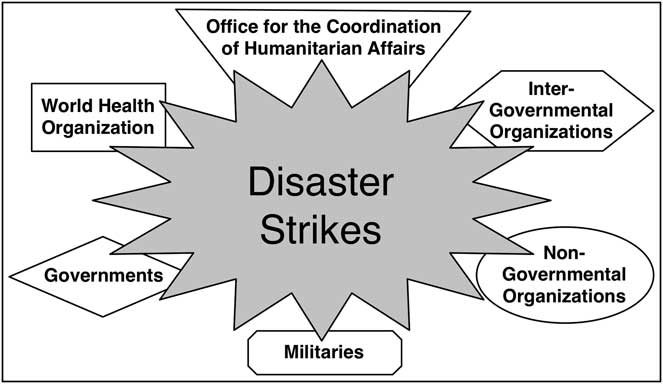
Past missions have focused on short-term efforts such as primary care and minor surgery through Medical Civic Action Programs (MEDCAPS) rather than shared capacity-building projects. Noteworthy problems with MEDCAPS are illustrated in Table 1. 34 Despite recurring missions, military-led humanitarianism has been widely faulted in the literature as undermining local capacity by being ad hoc, short-term, episodic, variable and limited in its ability to show effectiveness and sustainability, which is consistent with analysis of trends that humanitarian aid for health is fragmented into large numbers of small projects.Reference Reaves, Schor and Burkle 30 , 35 – Reference Drifmeyer and Llewellyn 39 Well-managed hospitals and clinics, skilled health workers, and efficient drug procurement channels are vital if host nations are to improve the health of their populations. 35 Host nation government funding in the health sector may adversely change following military-led humanitarian visits due to perceptions of increased health spending on military activities that cannot be quantified within context of the mission. This makes it more difficult for developing countries to influence the type and process for how humanitarian aid is provided over time. Relatively little aid is provided directly into countries’ budgets. This complicates the ability of host nation ministries of health to finance and plan over the long-term, creating health sector funding distortions. 35 Predictability of aid and the funding to support it is crucial in health services where many costs such as staff salaries and long-term drug therapies for chronic illnesses are recurrent. Improving upon the FHA/DR planning effort requires refocusing of effort in areas of mission overlap, such as disaster preparedness, with other DoD, inter-agency and foreign government partners. A practiced, evidence-based approach to predisaster planning in times of calm can bring the international community together in a targeted and streamlined response when disaster strikes (Figure 2).
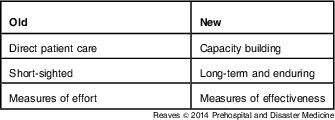
Past Humanitarian Efforts Compared to a New Refocused Approach

International Stakeholders Who Must Provide a Coordinated Response During a Large-Scale Disaster

Leaders and Planners of Military-led Missions Often Lack Humanitarian and Disaster Response Experience
Health has long been recognized as a key determinant of economic growth, productivity, poverty reduction, and stability. At the same time, health is increasingly viewed as a human right, and populations affected by disaster have the right to life with dignity, the fulfillment of which places obligations on the US military as it performs as a humanitarian organization. Operational references to establish humanitarian principles followed by humanitarian aid responders are rarely referenced by military planners. Arguably, the “differences between military [responders] and humanitarian [responders] are not simply about language and terminology”, rather “they relate to fundamental differences in their agendas and priorities” that have “an effect on the interaction between the two spheres of action at policy and strategic levels and on the ground.”Reference Hayson 40 Failure to abide by a common set of principles can impede the medical response by leading to issues with accountability, professional ethics, standards of care, and unmet needs.
Health practitioners are underutilized in the planning of military-led missions even though they have had the greatest impact of any professional group in mitigating complex emergencies.Reference Burkle 41 Military-led humanitarian action continues to keep health practitioners in a supporting role, while such missions might benefit from greater medical leadership and decision making. Properly trained and experienced medical personnel, such as Humanitarian Health professionals who possess not only specialty-specific competencies but also share core humanitarian competencies, are more qualified to identify population health needs and make decisions on how best to allocate resources and implement evidence-based health interventions to address the local disease burden. Improved planning and execution of military-led missions for the Pacific Islands will require PACOM and component commands to track professionals with a predefined requisite training in a humanitarian curriculum for assignment to military humanitarian missions.
Strategies to Reshape Military-led Disaster and Humanitarian Activities in US Pacific Command
Community-Based Capacity Building
First, it must be recognized that resiliency is a “concept,” “theory,” or “metaphor” that suddenly appeared in disaster terminology without much vetting as to what it actually meant.Reference Levine, Pain, Bailey and Fan 42 , Reference Burkle 43 In the Pacific Islands it was preceded by or accompanied efforts to get populations to “adapt” to rising sea levels. A rather prophetic definition of resiliency for islands facing the consequences of climate change is: “the capability of a system to maintain its functions and structure in the face of internal and external change and to degrade gracefully when it must.”Reference Allenby and Fink 44
Overall, building resilience is usually invoked as a way to:Reference Levine, Pain, Bailey and Fan 42 1) prevent unacceptable fatalities and suffering; 2) reduce costs of emergency response; and 3) develop the ability to adapt, primarily from climate change events (eg, destruction of reefs, warming of oceans, urbanization of population, etc.).
Identifying operational solutions is not easy and skepticism is common on how useful current ways of portraying resilience are.Reference Levine, Pain, Bailey and Fan 42 Yet many sources openly state that their community capacity-building programs and projects build resilience through activities, resources, and support that strengthen the skills and abilities of people and community groups to take effective action based on community interests. Clearly more knowledge is needed about what kind of support is most effective and how to achieve results. However, community capacity building is one area where civil-military partnerships are crucial as no one discipline or nation has all the answers.Reference Burkle and Greenough 1
Challenging the “Top Down” Approach
The traditional “top down” approach to managing major crises has dominated thinking and research for decades. This includes normal emergency management hierarchy at the city, state, and national levels and is the foundation of strategic and tactical operations that influence military decisions. Both the 2003 SARS pandemic and the 2009 swine flu epidemic challenged this approach. In studies from five continents, both strategic- and tactical-level plans functioned well, but major flaws occurred in local community-level operational capacity. These ranged from lax case management triage procedures and operational capacity within strategic national preparedness plans in 53 developing and highly health-challenged African countries,Reference Ortu, Mounier-Jack and Coker 45 and lack of “operational capacity” in Australia, such as resource supply burdens, delays in receiving laboratory test results, approval for provision of antivirals to patients and lack of clear communication about policy changes as the situation progressed.Reference Burkle 46 , Reference Johnson, Bone and Pready 47 This has sparked researchers to look at improving emergency management planning by focusing on strengthening local capacity. Considerable growth and interest has occurred in the meaning and use of the term “community” and the cultural nuances such terms bring.Reference Burkle 46 , Reference Rogers 48 This is critical as PACOM and other military resources increasingly become involved in other cultures. A major criticism of military forces in Vietnam, Iraq, and Afghanistan is that they did not understand the local culture. These are lessons that should be operationally learned during peacetime, as one never knows when military assets will be mobilized to assist vulnerable populations throughout respective areas of responsibility.
Factors that increase a “crisis resilience profile” are: the increased severity and frequency of natural and technological disasters; increasing risk as public health infrastructure capacity declines; and the changing taxonomy of natural disasters as more knowledge of the science of these events are uncovered. There is a demand for evolving shared models of cultural interaction, especially locally, and how this knowledge impacts the nation-state, the region, and the manner in which outside relief and aid is put into practice.Reference Burkle and Greenough 1 , Reference Callaway, Yim, Stack and Burkle 49
The Disaster Management Cycle
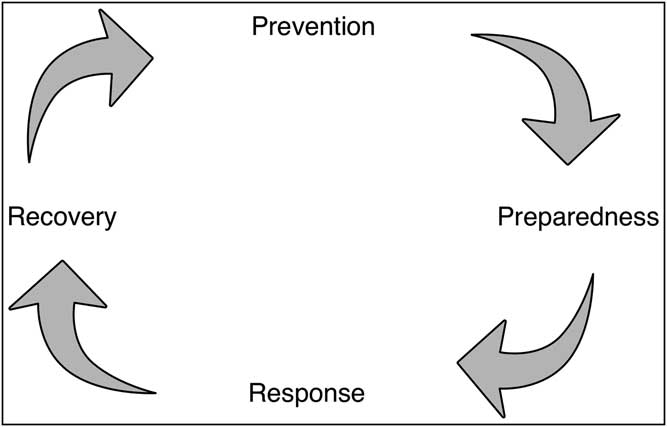
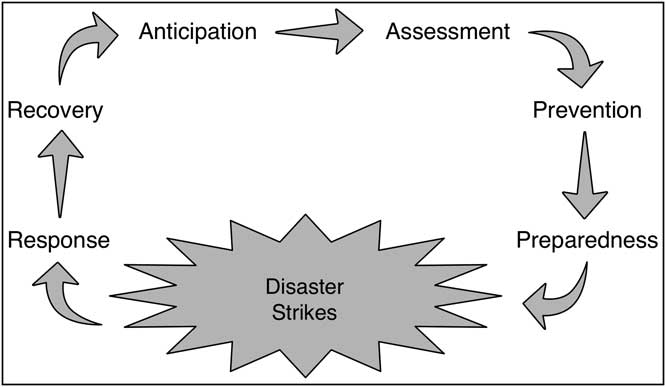
The disaster management cycle is an appropriate common language framework that is universally known and one with which most countries and cultures understand and identify (Figure 3).Reference Warfield 50 While many countries and emergency service organizations identify their roles in the response and recovery phases, it has been acknowledged for decades that management to realize long-term solutions must focus more on mitigation (prevention) and preparedness. The cycle illustrates the ongoing process and framework by which governments, businesses, and civil society plan and reduce the impact of crises.Reference Callaway, Yim, Stack and Burkle 49 The cycle also shapes public policies and plans that modify the cause or mitigate the effects on people, property, and infrastructure.
The Traditional Disaster Management Cycle

Operationalizing the disaster cycle mandates that appropriate actions are performed at all phases in the cycle. In Australia, the Prepared Community “bottom up” concept began in the 1980s to provide “an alert, informed and active community that has agreed and is coordinated for prevention, preparedness, response, and recovery with the efforts of governments.”Reference Jones 51 Unfortunately since the September 11, 2001 terror attacks in the US, national governments in western countries and their militaries in particular, have been pursuing “top-down” disaster management policies and methodologies. This is perceived as in the “national interest”, while individual communities live with risks that are specific to, and only capable of management within, those communities. In every community crisis/disaster events are “discreet and unique.”Reference Rogers 48 Letting the community anticipate and assess individual, local characteristics and risks has revealed that considerable information was not known through the traditional top down assessments, which tended to be generic in content, and lacked necessary specificity. These issues can only be addressed properly within the communities themselves.Reference Rogers 48 , Reference Jones 51
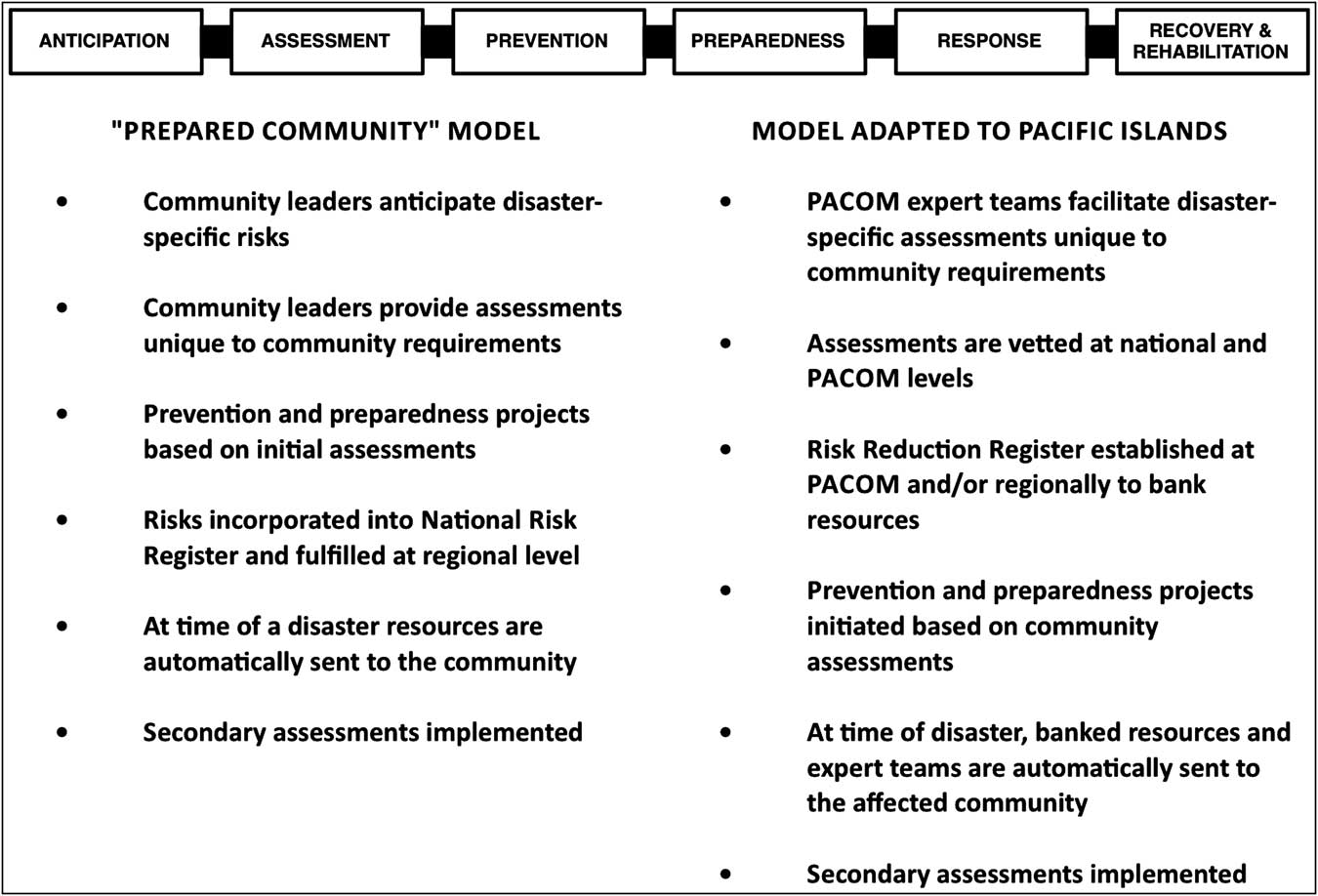
The region of Oceania is already suffering severely from the consequences of climate change and there is a stark contrast in how the area's developed nations are adapting compared to the lesser-developed ones. For example, Australia has introduced several emergency management agendas to improve resilience, including restoring the emphasis on “prepared communities.” Australia has added “anticipation and assessment” to the disaster cycle (Figure 4) requiring all communities to define their characteristics and needs based on specific disaster risks.Reference Rogers 48 This “registration of risks,” as a pre-emergency requirement, is a “precursor to mitigation” through formally registering threat identification and targeting risk assessment resources.Reference Rogers 48 This process “enhances the implementation of resilience as more than a metaphor but as a meaningful strategy and a formative framework for best practice.”Reference Rogers 48 , Reference Jones 51 These assessments are proactively incorporated into a National Risk Register located and fulfilled at the regional level. When a disaster occurs, the requirements are immediately forwarded to the community without any additional assessment. Controllers of national resources and communities work together to mitigate these risks before disaster strikes. Where implemented in recent severe flooding, the response and recovery phases were accelerated, proved more effective and efficient, and did not result in a single fatality. Common mistakes made by decision makers are that they routinely assume communities lack this expertise, and authorities fail to recognize the capacity of capable, non-expert citizens, and community organizers to facilitate response and recovery if given the opportunity and resources to do so.Reference Burkle 43 Crisis/disaster risk reduction begins and ends at the local level.
The Disaster Management Cycle with Expanded Community Level Input

Implementation of a Disaster Risk Reduction Framework at PACOM
This proposed framework draws from widely accepted international strategies for disaster risk reduction, tailored specifically for the unique vulnerabilities of countries that fall under PACOM. 15 , 52 For example, the small, island nations represent the greatest disaster risk areas because of their increased vulnerabilities and limited capacity to respond to and recover from disasters. The goal in reshaping military-led humanitarian missions is to reduce vulnerabilities and disaster-related risks by operationalizing a systematic approach that improves host nation resilience through community-level capacity building engagements. How this would be accomplished is illustrated in Figure 5, which contrasts the community-based approach of a well-resourced developed country with that of resource-poor countries such as those in Oceania.
Community-Based Disaster Management Cycle Risk Reduction Planning Adapted to Disaster-prone Pacific Islands

The Steps to Implement the Disaster Risk Reduction Process Through PACOM
Step 1 —Reorganize and integrate all PACOM humanitarian deployments to focus primarily on engagement of Assessment Teams with community leaders, first performed in the most disaster prone areas, and under the auspices of the national authorities within the country.
Step 2 —Facilitate dialogue with community leaders that would explain the process of community-level assessments gained from local anticipation of the risks throughout each disaster management cycle phase.
Step 3 —Share the evidence-based risk reduction information with national authorities and re-vet according to country level priorities and national health plans, and by predetermined agreement with prior approval of the US Agency for International Development, these resources would be required immediately without further assessment.
Step 4 —Establish and review a PACOM National Risk Register. Results are computerized and resources for immediate disaster response are warehoused either at PACOM facilities (Pacific Island Disaster Risk Reduction Bank) or within the host country/or region.
Step 5 —Utilize competency-based planning teams that will identify national priorities focused on prevention and preparedness capacity-building projects and align the appropriate staffing and resources to meet these defined missions.
Step 6 —During an actual disaster threat, the warehoused relief resources would be automatically deployed to communities at risk along with predesignated PACOM personnel with specific expertise to work with local and national authorities to expedite the response, recovery, and rehabilitation of the community, and to perform secondary assessments.
Step 7 —Develop a documentation gathering and data analysis capability to ensure outcomes from capacity-building activities are measured during each phase of the disaster management cycle, are sufficient for peer reviewed publications, and are compatible with WHO cluster reporting.Reference Burkle, Nickerson and von Schreeb 53 , Reference Reaves, Schor and Burkle 54
Conclusions
Military disaster management capacity is currently modeled after the antiquated response-focused crises and contingency management approach that continues to dominate policy and military mission planning.Reference Warfield 50 , Reference Jones 51 This report recommends the DoD embrace the theme of “shared responsibility”Reference Metcalfe, Hayson and Gordon 10 that recognizes the direct role of individuals and communities in disaster risk management. Irrespective of the occasional intervention conducted by the DoD, the individual communities within host nations where military engagements occur possess unique disaster risks that they must manage at their level. In these circumstances, a top-down policy and engagement strategy is minimally effective in building host nation and community resilience.
The 21st century resiliency benchmarks and crisis/disaster diplomacy requires a full spectrum strategy that deploys a flexible variety of tactics throughout the entire disaster cycle that meet the following criteria:Reference Bhutta and Reddy 55
-
1) Prioritize local, national, and regional stability;
-
2) Encourage good governance;
-
3) Support human rights and social justice with multidimensional equity;
-
4) Restore public health protections;
-
5) Strengthen community resilience;
-
6) Support sustainable development; and
-
7) Use the application of advancing science and technology for all-around well being.
Lastly, it is known that policies most likely to survive are those that align the national interests with diplomatic, epidemiological (evidence-based), and ethical realities relevant to the community level.Reference Bhutta and Reddy 55 It is also crucial that military resources should continue to use the OSLO Guidelines as an overall model for civil-military engagement. The recommendations presented in this paper support use of the OSLO Guidelines to “protect the principles of humanity, neutrality and impartiality… [while] at the same time [being] prepared to use these valuable resources in extraordinary circumstances… to maintain a continuous dialogue with military and civil defense organizations throughout the world.” 11
Disclaimer
The views expressed in this manuscript are those of the authors and do not necessarily reflect the official policy or position of the Department of the Navy, Department of Defense, nor the US Government. Some of the authors are military service members of the US Government. This work was prepared as part of their official duties. Title 17 USC. §105 provides that “Copyright protection under this title is not available for any work of the United States Government.” Title 17 USC. §101 defines a US Government work as a work prepared by a military service member or employee of the US Government as part of that person's official duties.