Introduction
Chewing lice (Insecta: Phthiraptera) are permanent ectoparasites found on birds and mammals (Marshall Reference Marshall1981). Since parasites can have detrimental effects on their hosts, it is important to understand their natural history. In order to accomplish this accurately, confident identifications of all members of the community under study must be achieved.
Species of Anatoecus Cummings (Phthiraptera: Philopteridae) infest ducks, geese, swans (Anseriformes), and flamingoes (Phoenicopteriformes) (Price et al. Reference Price, Hellenthal, Palma, Johnson and Clayton2003). There are six species of Anatoecus recorded from Anseriformes worldwide; however, two of these species, Anatoecus clayae (Kéler) and Anatoecus regina Ansari, are only recorded from hosts found outside of North America. The four species found on hosts that have at least part of their distribution in North America are Anatoecus cygni (Denny), Anatoecus dentatus (Scopoli), Anatoecus icterodes (Nitzsch), and Anatoecus penicillatus Kéler.
The majority of Anatoecus species infest one to three closely related host species. For example, A. penicillatus infests mute swans (Cygnus olor (Gmelin)), and A. cygni infests tundra swans (Cygnus columbianus (Ord)), trumpeter swans (Cygnus buccinator Richardson), and whooper swans (Cygnus cygnus (Linnaeus)). Anatoecus dentatus and A. icterodes are found on at least 67 and 70 host species, respectively, and co-infest at least 55 of the same host species worldwide (Price et al. Reference Price, Hellenthal, Palma, Johnson and Clayton2003). Co-infestations among species of lice from the same genus do occur; however, co-infestations usually only occur on one or a small number of host species (Price et al. Reference Price, Hellenthal, Palma, Johnson and Clayton2003; Galloway Reference Galloway2004). Anatoecus dentatus and A. icterodes are extraordinary in the large number of Anseriformes host species they co-infest.
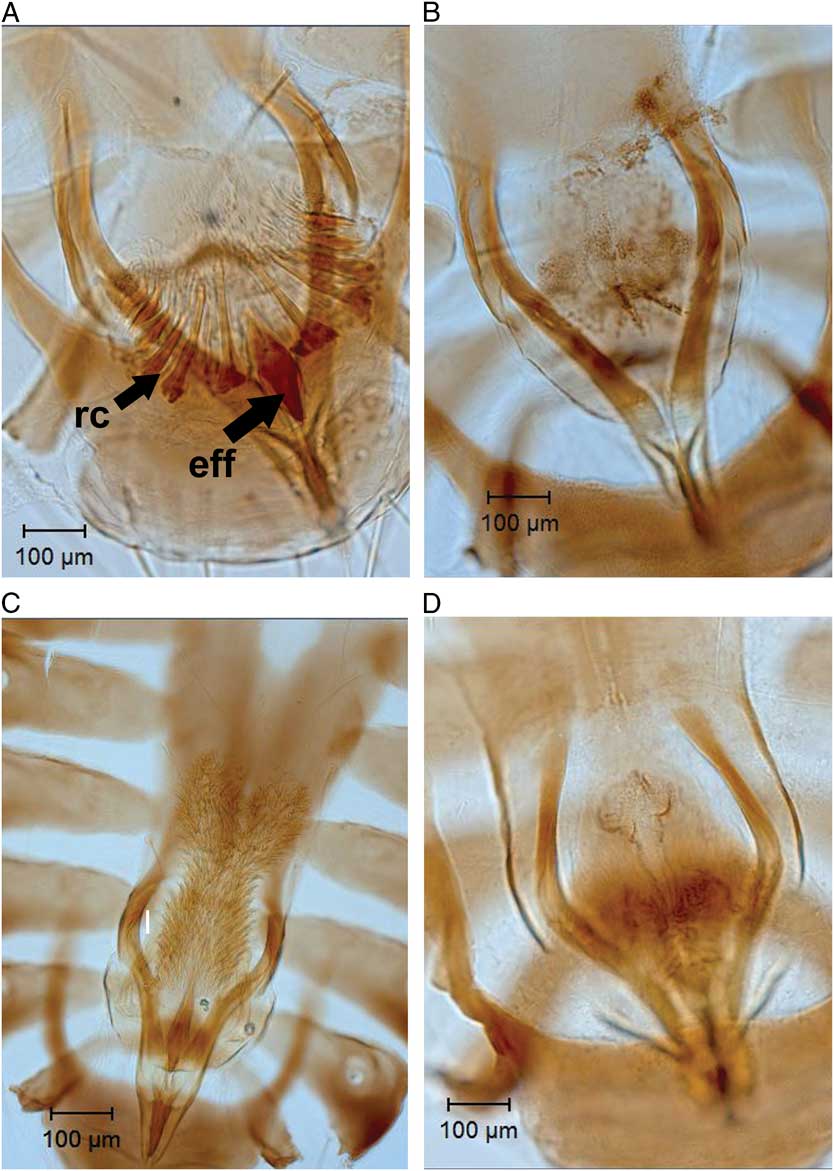
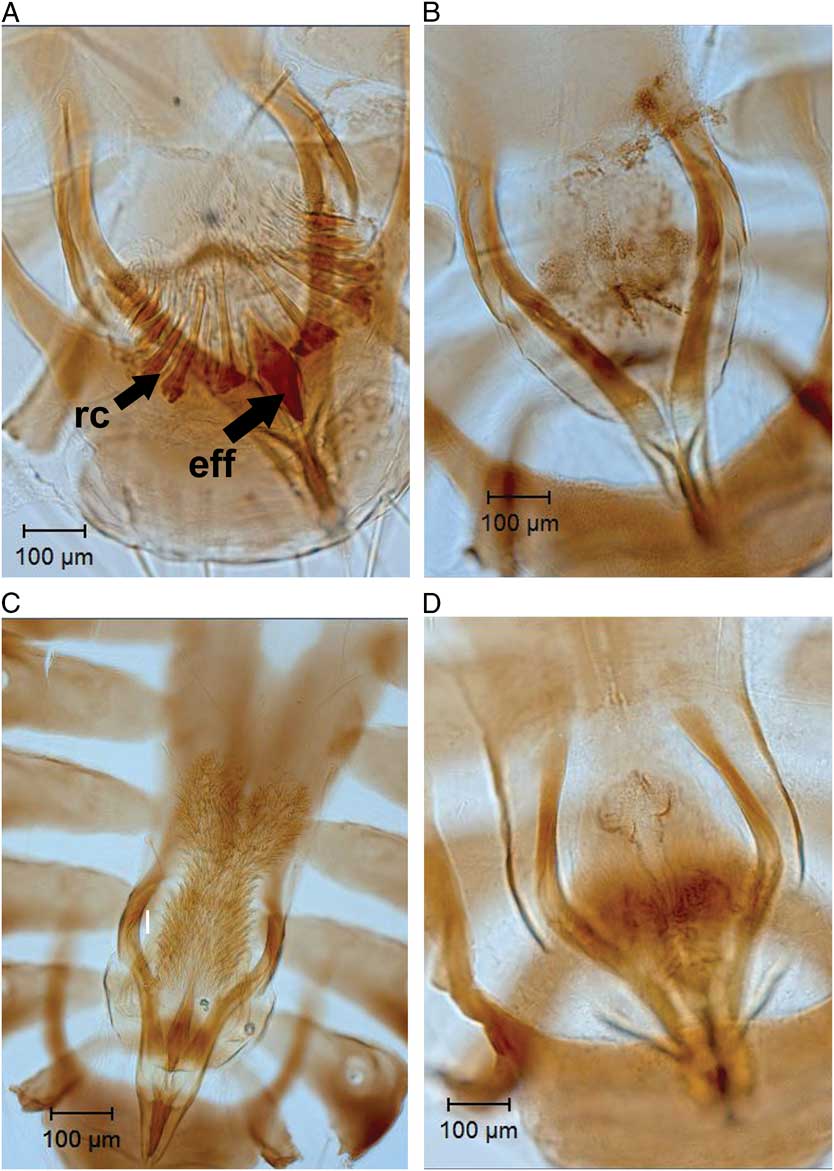
Females of all species of Anatoecus can be identified by the shape of the clypeal plate and characteristics of the terminal segments, except A. dentatus and A. icterodes (Kéler Reference Kéler1960). Interestingly, females of A. dentatus and A. icterodes are morphologically indistinguishable. However, males of all Anatoecus species are separable by characteristics of the genitalia (Fig. 1). Male A. dentatus have an effractor, which is an oval piece of dark-shiny chitin on the posterior margin of the endomeral plate, described by Cummings (Reference Cummings1916) as resembling a “tin-opener without the handle” (Fig. 1A). Males of A. dentatus also have a conspicuous reticular comb on the hypoineral area (Cummings Reference Cummings1916) (Fig. 1A). Anatoecus icterodes lacks both the effractor and the reticular comb (compare Figs. 1B to 1A). The lack of distinction between females of A. dentatus and A. icterodes, coupled with both species co-infesting the head and neck of their host (Ash Reference Ash1960; Strilchuck Reference Strilchuk1976) and being found together on at least 55 species of hosts, has raised questions about the validity of these two species (Emerson Reference Emerson1972).
The male genitalia of (A) Anatoecus dentatus, (B) Anatoecus icterodes, (C) Anatoecus penicillatus, (D) Anatoecus cygni. (eff, effractor; rc, reticular comb).
DNA barcoding using the mitochondrial gene cytochrome c oxidase subunit I (COI) has been developed to assign specimens to species as well as to identify cryptic species in insects (Hebert et al. Reference Hebert, Cywinska, Ball and DeWaard2003). For genetically well-defined lineages, specimens can be assigned to different species by using neighbour-joining analyses in which species form clustered groups on a tree and by the presence of a barcoding gap between species that forms when interspecific and intraspecific genetic distances are compared. The barcoding gap appears when interspecific genetic variation exceeds intraspecific genetic variation (Hebert et al. Reference Hebert, Stoeckle, Zemlak and Francis2004; Barrett and Hebert Reference Barrett and Hebert2005). A barcoding gap threshold of the interspecific genetic distance being at least 10 times greater than the distance within samples has been proposed; therefore, if the interspecific genetic divergence is below the threshold, this would support the taxonomic similarity among the samples and if the interspecific genetic divergence is above the threshold, the samples are distinct (Hebert et al. Reference Hebert, Stoeckle, Zemlak and Francis2004). In the past, a 383 base pair (bp) portion of COI has been successfully used to differentiate species of chewing lice (Johnson et al. Reference Johnson, Adams and Clayton2001; Clayton et al. Reference Clayton, Price and Johnson2006; Price et al. Reference Price, Johnson and Palma2008; Price and Johnson Reference Price and Johnson2009; Valim et al. Reference Valim, Price and Johnson2011). Here we compare DNA sequence divergence of COI of A. cygni, A. dentatus, A. icterodes, and A. penicillatus to assess the taxonomic status of A. icterodes and A. dentatus.
Materials and methods
Lice were collected from salvaged birds collected in Manitoba, Canada, from 1994 to 2012. The majority of birds came from wildlife rehabilitation centres where they were either euthanised or died in their care. A few birds were provided by Manitoba Conservation and by hunters. All birds have been salvaged under a Wildlife Scientific Permit (WB12483) issued by Environment Canada, Canadian Wildlife Service.
Each bird was individually bagged as soon as possible after death and frozen at −20 °C for a minimum of 48 hours in order to kill all ectoparasites. Birds were allowed to thaw at room temperature until the wings and legs were movable. To remove ectoparasites, birds were washed twice with warm water and liquid soap and once with just warm water. The contents of each washing were poured through a 90 μm mesh screen and rinsed into a plastic 400 mL storage container with either 70% or 95% ethanol to preserve the contents. Specimens were originally stored in 70% ethanol but were subsequently switched to 95% ethanol when the necessity of DNA analysis became apparent. Lice from each sample were sorted under a dissecting microscope.
In order to see the genitalia clearly, lice were cleared and mounted onto microscope slides. Mounting can be done after DNA extraction; however, this would have lead to hundreds of unnecessary extractions. Instead, half the louse was cleared and mounted onto a slide. If the louse was male the abdomen was mounted and if the louse was female the head was mounted; the other half of the louse was placed into an Eppendorf tube for DNA extraction. From this procedure, specimens were identified to species and selected for DNA extraction. All slides were prepared using the method described by Richards (Reference Richards1964) and vouchers were deposited in the J.B. Wallis – R.E. Roughley Museum of Entomology, University of Manitoba, Winnipeg, Manitoba, Canada.
DNA was extracted from the portion of the louse placed in the Eppendorf tube using the DNeasy™ Tissue Kit (Qiagen, Valencia, California, United States of America) following the manufacturer’s protocol for animal tissue using spin columns. The DNA extract was used for PCR amplification of the COI gene using primers LCO1490 and HCO2198 (Folmer et al. Reference Folmer, Black, Hoeh, Lutz and Vrijenhoek1994). Each PCR reaction mixture included 20.0–50.0 ng/μL of DNA template, 1X Buffer (0 mM Tris-HCl, 550 mM KCL, 1.5 mM MgCl2, pH 8.3 at 25 °C) (New England Biolabs (NEB)), 0.2 mM dNTP (NEB), 4.0 μM MgSO4, 0.4 μM of each primer, one unit of Taq (NEB) and enough purified water to reach a final volume of 25 μL. Amplification was carried out using a MyCycler Thermal Cycler (BioRad −170-9701EDU). The thermal regime consisted of an initial denaturation of one minute at 95 °C followed by 35 cycles of 15 seconds at 95 °C, 15 seconds at 46 °C, and 45 seconds at 72 °C, with a final extension of 4 minutes at 72 °C. Sequences were obtained using an ABI3730 sequencer from the University of Kentucky, Advanced Genetics Technology Center (refer to Table 2 for accession numbers).
Sequences were aligned by eye using BioEdit 7.2.0 (Hall Reference Hall1999). As there were no indels, alignment was trivial and the ends were trimmed to minimise missing data across taxa. Genetic distances were calculated using Kimura’s two-parameter model (K2P) (Kimura Reference Kimura1980) for base substitutions in MEGA v. 5.1 software (Kumar et al. Reference Kumar, Tamura and Nei2004), following the barcode of life data system (BOLD) protocol (Ratnasingham and Hebert Reference Ratnasingham and Hebert2007). A neighbour-joining (NJ) analysis was performed based on these distances using MEGA software. MEGA was also used to perform bootstrap analysis for the NJ analysis (1000 replications) (Kumar et al. Reference Kumar, Tamura and Nei2004). Anaticola crassicornis (Scopoli), a common chewing louse infesting ducks, was also used in the analysis and sequences for this species were obtained from GenBank (Accession numbers: NC015998.1 and DQ007339).
Results
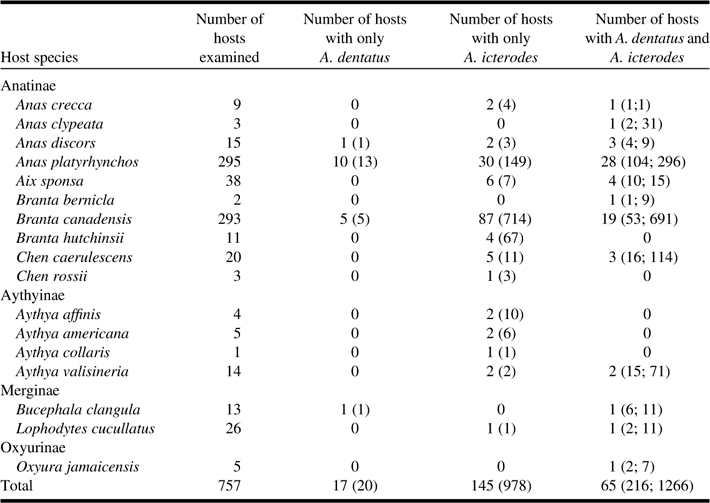
In the 19 years that birds were examined for ectoparasites, 28 species of anseriform birds were examined and 17 of them were infested with Anatoecus species in Manitoba, Canada (Table 1). In all host species examined in which A. dentatus and A. icterodes were present, A. icterodes was more frequently observed than A. dentatus with an average of nine A. icterodes to one A. dentatus.
Male Anatoecus dentatus and Anatoecus icterodes collected from Anseriformes birds from 1994 to 2012 in Manitoba, Canada.

Note: The numbers in brackets represent total lice collected. Where both species were collected from the same bird, the first number in brackets is A. dentatus and the second is A. icterodes.
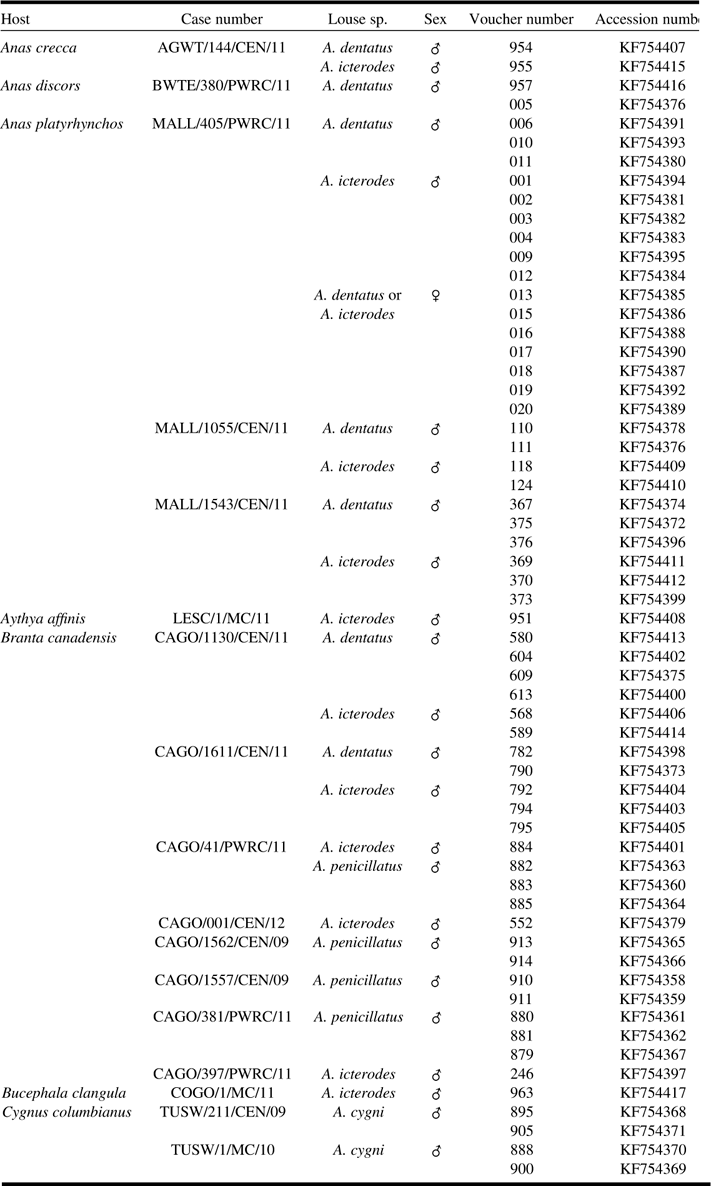
DNA was sequenced from 60 specimens of Anatoecus, which were collected from 18 hosts, representing seven species (Table 2). Hosts from which lice were acquired for sequencing were salvaged from 1999 to 2012; 10 were from Winnipeg, four were from within 360 km of Winnipeg, and four had no locality data, but all came from within the province of Manitoba, Canada.
Anatoecus specimens chosen for sequencing with corresponding GenBank accession numbers and host from which they were collected from in Manitoba, Canada.

Note: Case number: the first four letters are the bird species, the number indicates the hospital case number, the next letters represent the source from which the host came (CEN, Wildlife Haven; PWRC, Prairie Wildlife Rehabilitation Centre; MC, Manitoba Conservation) and the last two numbers represent the year the bird was collected.
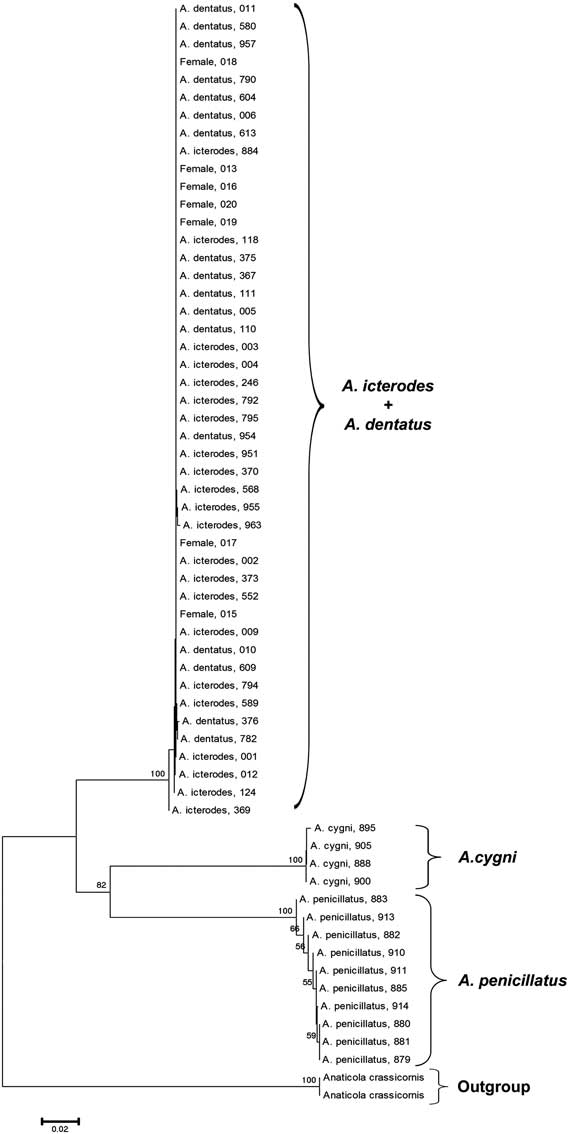
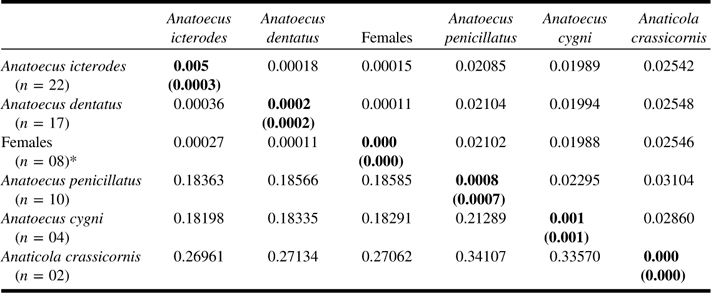
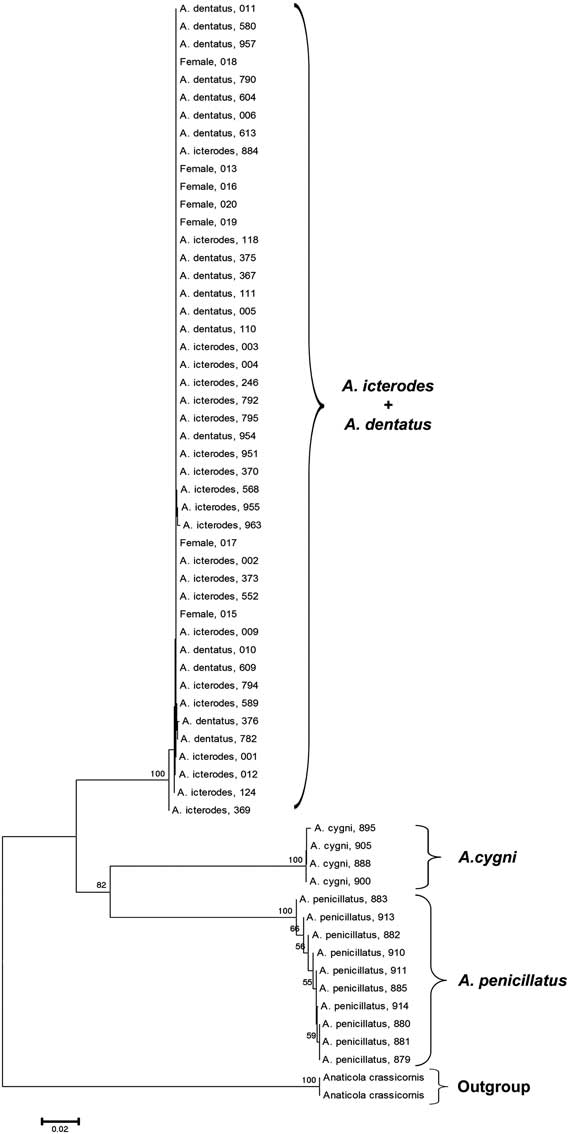
The final alignment of COI was 519 bp in length of which 189 sites were variable, 189 were parsimony informative. The genetic distances of all specimens are presented in Table 3. The average interspecific genetic distance between A. icterodes and A. dentatus was 0.04%, which equates to <1 substitution per 519 bp. The next lowest interspecific genetic distance was 18.2% between A. icterodes and A. cygni. The average intraspecific genetic distances for A. icterodes and A. dentatus were 0.05% and 0.02%, respectively. These average intraspecific genetic distances are comparable to the other Anatoecus species, which range from 0% to 0.1%. The average interspecific genetic distance between A. icterodes and A. dentatus does not meet the barcoding gap threshold of being 10 times greater than the average intraspecific genetic distances. The average interspecific genetic differences between all other combinations of Anatoecus species exceed the 10 times barcoding gap threshold for the intraspecific genetic differences of those species and therefore support specific distinctness for A. penicillatus and A. cygni. All specimens of A. icterodes and A. dentatus were recovered in a well-supported cluster (bootstrap support=100%) regardless of host (Fig. 2). However, A. dentatus and A. icterodes were mixed within the same cluster, which is not surprising given the extremely low interspecific distances between these species.
Neighbour-joining tree under the K2P model based on cytochrome c oxidase subunit I (COI) with bootstrap values over 50% (1000 replications) indicated at the relevant nodes. Data based on 63 sequences from four Anatoecus species. Female specimens that are not distinguishable as A. dentatus or A. icterodes are labelled “Female”. After the louse species name is the voucher number.
Average interspecific (plain text) and intraspecific genetic distances (in bold, standard error in brackets) under the K2P model for CO1 (519 bp).

Notes: Standard errors are based on 1000 bootstrap replications. Data are based on 62 sequences from five species of lice collected from seven species of Anseriformes in Manitoba, Canada. Two sequences of Anaticola crassicornis were downloaded from GenBank (NC015998.1 and DQ007339).
*Females are either A. icterodes or A. dentatus since they are indistinguishable. All other lice listed are males.
We have also observed two new host records for A. penicillatus. In 1995, A. penicillatus was first collected from a Canada goose (Branta canadensis (Linnaeus) (Anseriformes: Anatidae)). Since then, it has been recorded from 27 Canada geese. Anatoecus penicillatus was found on a snow goose (Chen caerulescens (Linnaeus) (Anseriformes: Anatidae)) in 1998 and has been recorded from two additional snow geese. Specimens were sent to Ricardo Palma (Museum New Zealand Te Papa Tongarewa, Wellington, New Zealand) for identification and we compared our specimens to a syntype of A. penicillatus, which was borrowed from the K.C. Emerson Entomology Museum, Oklahoma State University, Stillwater, Oklahoma, United States of America. Material Collected: 113 ♂, 211♀, ex Canada geese from Winnipeg, Stony Mountain, Selkirk, Headingley, Hecla Island, Pine Falls, Oakbank, and East St. Paul, Manitoba, Canada; 18 ♂, 7♀, ex snow geese, from Winnipeg and Winnipeg Beach, Manitoba, Canada. Some vouchers of A. penicillatus (not specimens used for this study) were also deposited in the Canadian National Collection of Insects, Arachnids and Nematodes, Ottawa, Ontario, Canada.
Anatoecus penicillatus has been collected from hosts that were also infested with A. dentatus and A. icterodes. Of the 30 geese from which A. penicillatus was collected, 14 Canada geese also had A. icterodes, one Canada goose was infested with both A. dentatus and A. icterodes, and one snow goose was also infested with both A. dentatus and A. icterodes.
Discussion
There is good genetic evidence based on the lack of a barcoding gap (Table 3), that A. dentatus and A. icterodes are conspecific. The average interspecific genetic distance between A. dentatus and A. icterodes was 0.04%, considerably smaller than the next smallest interspecific distance of 18.2% between A. icterodes and A. cygni. In other studies on lice, the genetic divergences between species were >14.5% for Myrsidea Waterston species (Phthiraptera: Menoponidae) (Price and Johnson Reference Price and Johnson2009) and >7.0% for Dennyus Neumann species (Phthiraptera: Menoponidae) (Clayton et al. Reference Clayton, Price and Johnson2006).
Hosts of A. dentatus and A. icterodes are found around the world; however, we have only sampled birds within Manitoba. Since these hosts are migratory in North America, and some, such as the Canada goose, may travel from Canada to northern Mexico to overwinter (Saunders and Saunders Reference Saunders and Saunders1981), this allows different populations to interact. Although only birds collected from Manitoba were examined, because of their migratory behaviour, they should contain a reasonable representation of the population diversity of louse fauna that occurs over a wide area of North America. Therefore we formally propose the synonymy of A. icterodes and A. dentatus, as Anatoecus dentatus (Scopoli) (new synonymy).
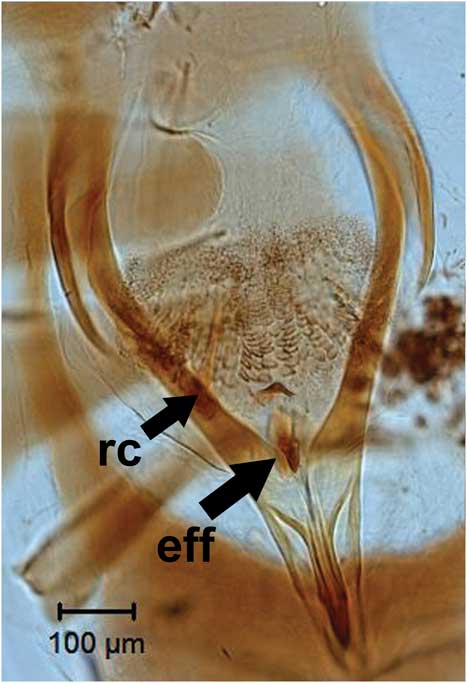
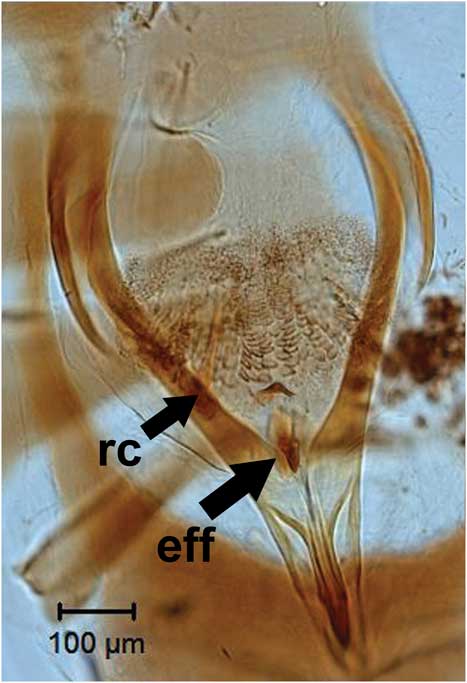
The effractor and reticular comb are fascinating structures, although their function is unknown. Anatoecus dentatus without the effractor and reticular comb outnumbered those with the effractor and reticular comb nine times to one. In the course of this study, hundreds of male A. dentatus were mounted onto slides. All of the lice examined, with the exception of one, were clearly distinguishable as either expressing the effractor and reticular comb or not. In one louse from a brant goose (Branta bernicla (Linnaeus) (Anseriformes: Anatidae)), the reticular comb was not completely developed (Fig. 3). However, an effractor was present so it was initially identified as A. dentatus. This was not the only male Anatoecus on this host; it was also infested with nine males that lacked an effractor and reticular comb.
Anatoecus dentatus from a brant goose (Branta bernicla) with an incompletely formed reticular comb (eff, effractor; rc, reticular comb).
The effractor and the reticular comb are always expressed together; however, it is not known what triggers the expression of these structures or how many genes are involved. Expression could also be based on environmental cues, or stress caused by resource availability or competition. Since the effractor and reticular comb are located in the same region as the male genitalia, they could possibly serve some function during mating or reproduction. If would be interesting to see if females are biased when offered a choice between a male with an effractor and reticular comb versus a male without.
Anatoecus penicillatus was previously recorded only from the mute swan (Price et al. Reference Price, Hellenthal, Palma, Johnson and Clayton2003). Mute swans are native to Eurasia and were introduced to North America from the mid-1800s through the early 1900s as embellishments to parks and large estates as well as exhibits in zoos (Ciaranca et al. Reference Ciaranca, Allin and Jones1997). Since then, the mute swan has escaped captivity and the greatest concentration of them can be found along the Atlantic coast from Maine all the way to South Carolina, United States of America (Ciaranca et al. Reference Ciaranca, Allin and Jones1997). There are also populations of mute swans along the northern shores of Lake Erie and Lake Ontario as well as on Vancouver Island and the Fraser River delta of British Columbia, Canada (Cadman et al. Reference Cadman, Eagles and Helleiner1987; Campbell et al. Reference Campbell, Dawe, McTaggart-Cowan, Cooper, Kaiser and McNall1990). There are no established populations of mute swans in Manitoba (Parsons Reference Parsons2003) and none have come through the rehabilitation centres in Manitoba during the time this study was conducted. For this reason, it is unlikely that the specimens of A. penicillatus found on Canada geese and snow geese were the result of contamination in the rehabilitation centres.
Anatoecus penicillatus has invaded hosts that have a smaller body size than its native host. This is opposite to what Bush and Clayton (Reference Bush and Clayton2006) found when they transferred Columbicola columbae (Linnaeus) (Phthiraptera: Philopteridae) and Campanulotes compare (Burmeister) (Phthiraptera: Philopteridae) from rock pigeons (Columba livia Gmelin (Columbiformes: Columbidae)) to smaller, novel Columbiformes. When birds were able to preen normally, introduced louse populations were reduced to near zero. Columbicola columbae, a wing louse, was not able to insert itself fully between the furrows in the barbs of the contour feathers. Campanulotes compar, a body louse, was not able to burrow into the downy feathers as successfully when on the smaller exotic hosts due to the smaller amount of downy feathers. Therefore, C. columbae and C. compar were more susceptible to preening by smaller, novel host birds. However, A. penicillatus is found on the head of its hosts (Grossi and Galloway, personal observation), where preening may be less efficient, therefore feather size may not be a restricting factor.
Over a period of seven years (2006–2012), A. penicillatus has been found regularly on Canada geese and snow geese. Therefore, it appears A. penicillatus has expanded its host range and has established populations on these novel hosts. Canada geese have also been introduced to Europe, where the mute swan is native. It would be very interesting to see if A. penicillatus has also made this transition to Canada geese in Europe.
The mute swan, in addition to being host to A. penicillatus, is host to A. dentatus, which is also recorded from Canada geese and snow geese (Price et al. Reference Price, Hellenthal, Palma, Johnson and Clayton2003). In our study, A. dentatus and A. penicillatus were recorded co-infesting 15 Canada geese and have been observed together on the head and neck of their hosts (Grossi and Galloway, personal observation).
Finding two species of louse from the same genus recorded from the same host is not uncommon. For example, Columbicola baculoides (Paine) and Columbicola macrourae (Wilson) can be found together on mourning dove, Zenaida macroura (Linnaeus) (Columbiformes: Columbidae) (Galloway and Palma Reference Galloway and Palma2008). There is even one bird, the sora (Porzana carolina (Linnaeus) (Gruiformes: Rallidae)), which is host to two pairs of species of lice within the same genus (Galloway Reference Galloway2004): Fulicoffula americana Emerson and Fulicoffula distincta Emerson and Rallicola mystax (Giebel) and Rallicola subporzanae Emerson. The ability for two species of the same genus to co-exist on one host seems counterintuitive to the competitive exclusion principle (Gause's law), where two species with the same resource requirements cannot occupy the same niche (Gause Reference Gause1934; Hardin Reference Hardin1960). By this principle, either competition will drive one species to extinction or the species will evolve adaptations that allow them to exploit non-overlapping niches. The majority of sampling techniques only capture a snapshot of the louse population and do not monitor its change over time. It seems A. penicillatus and A. dentatus are able to co-exist, suggesting they inhabit at least, in part, non-overlapping niches.
To conclude, A. icterodes and A. dentatus are formally synonymised as Anatoecus dentatus (new synonymy), and Canada geese and snow geese are identified as new hosts for A. penicillatus. Nevertheless, we encourage others to replicate this study in other locations to further test this synonymy among additional populations of lice and former subspecies of Anatoecus dentatus (Price et al. Reference Price, Hellenthal, Palma, Johnson and Clayton2003). We also encourage louse workers to examine anseriform birds to see if A. penicillatus has established populations on novel hosts elsewhere.
Acknowledgements
This work would not have been possible without the staff at Wildlife Haven, Prairie Wildlife Rehabilitation Centre and Manitoba Conservation and the care they give in processing hosts for this study. The authors thank D. Holder, P. Snarr, S. Repa, and D. Dunlop for their technical support in washing birds. They also thank Ricardo Palma (Museum of New Zealand Te Papa Tongarewa, Wellington, New Zealand) for clarifying the identity of A. penicillatus and Don Arnold for lending us specimens. They thank Kateryn Rochon for the French translation of the abstract and Megan Otu for helping us with imaging. Funding was provided, in part, by a Discovery Grant held by Terry D. Galloway from the Natural Sciences and Engineering Council of Canada. They also thank Richard Labossière and John Dunlop for issuing Canadian Wildlife Service Scientific Permits.