


1. Introduction
Mixed-member electoral systems create strong incentives for strategic coordination across tiers. Small parties often withdraw from single-member district (SMD) races, encouraging their supporters to lend votes to ideologically aligned major-party candidates (Duverger, Reference Duverger1954; Rae, Reference Rae1967; Cox, Reference Cox1997; Reilly, Reference Reilly2007; Batto et al., Reference Batto, Huang, Tan and Cox2016). While such vote-lending facilitates major-party victories in district contests, it also generates a form of reverse contamination. Because these victories are partly built on borrowed support, the estimated spillover effect of incumbency is attenuated when voters subsequently revert to their preferred minor parties in the proportional representation (PR) tier (Bawn, Reference Bawn1999; Reed, Reference Reed1999; Pappi and Thurner, Reference Pappi and Thurner2002; Moser and Scheiner, Reference Moser and Scheiner2005, Reference Moser and Scheiner2009; Ferrara, Reference Ferrara2006; Gschwend, Reference Gschwend2007; Brunell and Grofman, Reference Brunell and Grofman2009; Plescia, Reference Plescia2017; Bauer and Juncosa, Reference Bauer and Juncosa2024). Under these conditions, legislative incumbency reflects cross-tier electoral coordination rather than purely partisan support, obscuring its downstream effects in naïve comparisons of party-list vote outcomes.
Decades of research demonstrate that presidential or list-level candidates can shape legislative outcomes through coattail and contamination effects (Shugart and Carey, Reference Shugart and Carey1992; Herron and Nishikawa, Reference Herron and Nishikawa2001; Cox and Schoppa, Reference Cox and Schoppa2002; Ferrara and Herron, Reference Ferrara and Herron2005). Yet, this literature is largely confined to single electoral cycles, leaving a central question unresolved: can incumbency advantages in one electoral tier generate durable effects that persist across time and institutional boundaries? Put differently, does securing a district seat in election t enhance a party’s performance in the PR tier in election t + 1?
We argue that incumbency advantages extend beyond a single electoral cycle. Benefits generated through strategic vote coordination do not dissipate after the election; instead, they carry forward into the subsequent party-list contest, producing a temporal spillover that reinforces major-party performance across cycles. We distinguish this mechanism from concurrent contamination. The latter captures same-cycle vote alignment across tiers, whereas temporal spillover refers to the causal effect of SMD incumbency on a future outcome in a different electoral tier. This study conceptualizes incumbency as a sustained form of political presence that endures throughout the legislative term. By enhancing visibility, access to resources, and mobilizational capacity, incumbency generates advantages that accumulate over time. Crucially, when these advantages operate at the party level rather than being confined to individual candidates, they should manifest in improved party-list performance in the subsequent PR election.
Taiwan provides an ideal setting for examining these dynamics. Following the 2005 electoral reform, Taiwan adopted a parallel mixed-member system that combines 73 SMD seats with 34 PR seats allocated nationwide. Unlike compensatory systems such as Germany, the two tiers are formally independent, with no seat adjustment across tiers (Cox, Reference Cox1997; Bawn, Reference Bawn1999; Shugart and Wattenberg, Reference Shugart and Wattenberg2001; Cox and Schoppa, Reference Cox and Schoppa2002; Karp et al., Reference Karp, Vowles, Banducci and Donovan2002; Gschwend et al., Reference Gschwend, Johnston and Pattie2003).
Using constituency-level data from four legislative elections (2012–2024), Figure 1 provides an initial descriptive benchmark. The figure shows a clear positive association between SMD vote share – measured as the two-party vote margin (with positive values indicating a district victory and thus incumbency for the focal party) – and same-year PR vote share in the corresponding constituencies for the two major parties, the Democratic Progressive Party (DPP) and the Kuomintang (KMT). Across all four panels, the relationship exhibits a consistently upward slope, indicating that districts in which a party wins the SMD tend to have higher PR vote shares in the same election. The clustering of observations along this trend suggests a moderately strong correlation, with some dispersion reflecting variation in local electoral conditions and party competition.
Correlation between SMD vote share and party-list vote share in concurrent elections.
Note: The scatterplot illustrates the positive association between SMD vote share and party-list vote share for candidates from theDPP and theKMT in the same election year. This descriptive relationship reflects concurrent electoral dynamics and should not be interpreted as evidence of a causal effect.
Source: Central Election Commission; authors’ calculations.

This pattern is consistent with concurrent contamination, whereby strategic voting and coordinated nominations produce aligned outcomes across electoral tiers within the same election. However, this relationship is descriptive rather than causal. The observed correlation reflects a combination of strategic vote allocation, nomination decisions, and underlying party strength, rather than the independent effect of incumbency. Figure 1 therefore highlights the need for a research design capable of disentangling incumbency effects from these confounding factors and assessing whether any advantage persists beyond the election cycle.
Table 1 extends this perspective by incorporating minor-party outcomes and providing a system-level view across elections from 2008 to 2024. Two patterns emerge. First, party-list voting has become increasingly fragmented, with the combined PR vote share of small parties rising from 7.5% in 2008 to 24.6% in 2024. Second, despite this growing pluralism in the PR tier, electoral dominance in SMDs remains concentrated in the two major parties – the DPP and the KMT.
Legislative election results in Taiwan, 2008–2024 (SMD and PR vote shares)

Table 1. Long description
A table comparing legislative election results in Taiwan from 2008 to 2024, focusing on vote shares in single-member districts (SMD) and proportional representation (PR) tiers. The table has 5 rows and 5 columns. Column headers are Year, DPP (SMD/PR), KMT (SMD/PR), Small parties (SMD/PR), Total PR vote: small parties, and Total seats DPP/KMT/small. Row labels are the years 2008, 2012, 2016, 2020, and 2024. Each row lists the vote shares for the Democratic Progressive Party (DPP), Kuomintang (KMT), and small parties in both SMD and PR categories, along with the total PR vote for small parties and the total seats won by DPP, KMT, and small parties. Notable trends include the increasing fragmentation of party-list voting, with the combined PR vote share of small parties rising from 7.5 percent in 2008 to 24.6 percent in 2024. Despite this, electoral dominance in SMDs remains concentrated in the two major parties, the DPP and the KMT.
Note: Vote shares are reported separately for the single-member district (SMD) and party-list (PR) tiers. ‘Total seats’ includes seats from both tiers as well as indigenous constituencies. Numbers in parentheses indicate the number of SMD seats won by small parties. ‘Small parties’ include the Non-Partisan Solidarity Union (NPSU), Taiwan Solidarity Union (TSU), People First Party (PFP), New Power Party (NPP), and Taiwan People’s Party (TPP).
This divergence between tiers is also reflected in seat outcomes. While small parties consistently secure a nontrivial share of PR votes, their success in SMD contests remains limited, as indicated by the small number of district seats won across elections. The result is a dual structure: fragmented competition in the PR tier alongside concentrated organizational control in the SMD tier.
Together with the concurrent correlation shown in Figure 1, this pattern is consistent with strategic coordination across tiers. Minor-party supporters often shift votes to major-party candidates in district races while retaining their preferred party in the PR tier. This behaviour reinforces major-party dominance in SMDs while allowing small parties to expand their presence in the PR arena, thereby shaping the conditions under which cross-tier spillovers may emerge.
At the same time, this institutional and behavioural configuration introduces important inferential challenges. The observed relationship between SMD outcomes and PR vote shares may be confounded by underlying party strength, candidate quality, district-level partisan composition, and strategic nomination decisions. In addition, national-level electoral trends – including shifts in party popularity and the reallocation of votes across election cycles – can obscure or even reverse the apparent relationship between incumbency and subsequent PR performance. These factors make it difficult to distinguish the causal effect of incumbency from broader electoral dynamics.
To address these challenges, we employ a sequence of empirical strategies that culminate in a regression discontinuity design (RDD) based on close electoral races. By comparing narrowly winning and narrowly losing candidates, this approach isolates the causal effect of incumbency on subsequent PR vote shares while minimizing bias from unobserved confounders. It leverages the quasi-random assignment of incumbency near the electoral threshold, providing a credible basis for causal inference (Lee, Reference Lee2001; Hainmueller and Kern, Reference Hainmueller and Kern2008; Fowler and Hall, Reference Fowler and Hall2014; Eggers et al., Reference Eggers, Fowler, Hainmueller, Hall and Snyder2015; Hainmueller et al., Reference Hainmueller, Hall and Snyder2015; Hall and Snyder, Reference Hall and Snyder2015; Ariga et al., Reference Ariga, Horiuchi, Mansilla and Umeda2016; Klašnja and Titiunik, Reference Klašnja and Titiunik2017; Roh, Reference Roh2017; Ventura, Reference Ventura2021; Wu et al., Reference Wu, Chen, Chang and Hsu2026).
Our study makes three main contributions. First, it reconceptualizes incumbency not as an exogenous condition, but as the endogenous product of strategic coordination in district races. In concurrent elections, small parties often under-contest SMDs, while their supporters shift votes to ideologically aligned major-party candidates. This coordination helps generate incumbency, and the resulting advantage persists beyond the election, carrying into subsequent PR contests even as voters revert to their preferred parties. By framing incumbency as a strategically generated and temporally persistent resource, the study links the literature on contamination effects with research on incumbency advantage and party-building, moving beyond contemporaneous correlations (e.g., Herron and Nishikawa, Reference Herron and Nishikawa2001; Cox and Schoppa, Reference Cox and Schoppa2002; Ferrara and Herron, Reference Ferrara and Herron2005) to a causal account of intertemporal, cross-tier spillovers.
Second, this framework highlights a key identification challenge: observed changes in PR vote share may reflect the reversion of strategically shifted votes rather than the causal effect of incumbency. As a result, raw intertemporal changes in PR vote share may systematically understate – or even reverse – the true effect of incumbency. To address this problem of reverse contamination, our analysis defines the outcome as the demeaned change in PR vote share, calculated by subtracting each party’s national-level shift between elections from the corresponding district-level change. This transformation removes aggregate electoral dynamics – such as nationwide swings in party popularity, the rise or decline of minor parties, and broader realignment processes – that affect all districts simultaneously but are not driven by local incumbency conditions.
Third, the study extends the literature beyond compensatory systems such as Germany (Hainmueller and Kern, Reference Hainmueller and Kern2008) by examining Taiwan’s parallel (non-compensatory) system. Because no institutional linkage connects the SMD and PR tiers, this setting provides a stringent test of whether temporal spillovers persist in the absence of formal compensatory mechanisms. A useful comparison is Japan, which also employs a parallel mixed-member system but permits dual candidacy, allowing SMD candidates to simultaneously appear on their party’s PR list (Pekkanen et al., Reference Pekkanen, Nyblade and Krauss2006; Nemoto and Tsai, Reference Nemoto, Tsai, Batto, Huang, Tan and Cox2016). This institutional feature introduces two identification challenges. First, it blurs the causal boundary between tiers, as SMD performance can directly influence PR ranking and seat allocation. Second, it generates endogenous strategic incentives – such as vote transfers, dual-seat insurance, and ‘best-loser’ provisions – that link SMD and PR outcomes within the same election cycle, complicating efforts to isolate cross-cycle causal effects (Hizen, Reference Hizen2006; Krauss et al., Reference Krauss, Nemoto and Pekkanen2012; Ariga et al., Reference Ariga, Horiuchi, Mansilla and Umeda2016; Kerevel et al., Reference Kerevel, Matthews and Seki2019).
By contrast, Taiwan offers a cleaner institutional setting because dual candidacy is prohibited. Candidates must run either in the SMD tier or on the PR list, but not both. This separation eliminates mechanical linkages between tiers: SMD incumbency does not directly affect PR nominations or list rankings. As a result, subsequent changes in party-list vote share can be more credibly interpreted as behavioural spillovers rather than artefacts of institutional design, strengthening the identification of temporal incumbency effects.
Our findings show that narrowly elected incumbents increase their party’s demeaned PR vote share in the subsequent election, with stronger effects in competitive districts in southern Taiwan. This effect becomes visible only after accounting for reverse contamination. Without adjustment, the reversion of strategically lent votes to minor parties masks the underlying impact, creating the misleading impression that incumbency has little persistence. Once addressed, incumbency emerges as a cumulative and durable resource, rather than a short-term electoral advantage.
These results challenge the view that the two tiers of parallel systems operate independently. Instead, advantages generated in SMD contests can carry forward and shape subsequent PR outcomes. More broadly, they highlight how strategic voting and institutional asymmetries can bias conventional estimates and show that redefining the outcome as the demeaned PR vote change is essential for isolating the true party-level effect of incumbency.
2. Literature review: spillover effects, incumbency advantage, and electoral systems
Research on electoral spillovers has long examined how outcomes in one electoral arena shape behaviour in another. Classic studies of coattail effects demonstrate that high-salience executive contests can influence legislative outcomes (Shugart and Carey, Reference Shugart and Carey1992; Mainwaring and Shugart, Reference Mainwaring and Shugart1997). In mixed-member systems, a parallel concept – contamination effects – captures how preferences formed in the district tier shape voting behaviour in the PR tier (Herron and Nishikawa, Reference Herron and Nishikawa2001; Ferrara and Herron, Reference Ferrara and Herron2005). Empirical studies document such cross-tier linkages in countries including Germany, Japan, and South Korea, where ticket-splitting allows voters to balance expressive and strategic considerations (Duverger, Reference Duverger1954; Moser and Scheiner, Reference Moser and Scheiner2005; Choi, Reference Choi2006; Gschwend, Reference Gschwend2007). In these settings, major-party candidates benefit from the strategic defection of minor-party supporters in SMD races, while smaller parties retain support in the PR tier, where voters are more likely to vote sincerely (Pappi and Thurner, Reference Pappi and Thurner2002; Plescia, Reference Plescia2017).
Despite these advances, the literature remains largely confined to concurrent electoral dynamics. Relatively little attention has been paid to whether such interdependence persists over time – that is, whether incumbency in one tier generates downstream effects in subsequent elections in another. This gap is consequential because incumbency-related advantages – heightened visibility, access to resources, and enhanced organizational capacity – are not limited to a single electoral moment but accumulate over the legislative term. If these advantages translate into improved party performance in future PR contests, the implications extend beyond short-term vote coordination to the long-term evolution of party systems under mixed-member rules.
We propose a distinct mechanism to capture this dynamic. The concept of temporal spillover extends the logic of contamination into the longitudinal domain, describing how the sustained advantages of holding SMD office reshape party support in subsequent PR elections. Unlike concurrent contamination, which reflects short-term strategic coordination within an election, temporal spillover captures an office-holding effect that unfolds over time through party branding, constituency service, and sustained local mobilization.
Existing evidence on such long-term effects remains limited but suggestive. Rudolph and Leininger (Reference Rudolph and Leininger2021) document spillovers across contemporaneous local elections in Germany, while Hainmueller and Kern (Reference Hainmueller and Kern2008) show that SMD incumbency in Germany’s compensatory system increases a party’s subsequent PR vote share, identifying a direct cross-tier linkage. In contrast, studies of parallel systems such as Japan and South Korea report weaker or null incumbency effects (Ariga et al., Reference Ariga, Horiuchi, Mansilla and Umeda2016; Roh, Reference Roh2017). These findings suggest that formal institutional independence between tiers may attenuate short-term spillovers, but they leave unresolved whether longer-term effects may still emerge.
The broader incumbency literature provides a complementary foundation. In majoritarian systems, incumbents typically enjoy a 2–5 percentage point electoral advantage, attributed to credit-claiming, visibility, and constituency service (Erikson, Reference Erikson1971; Ansolabehere et al., Reference Ansolabehere, Hansen, Hirano and Snyder2007; Fouirnaies and Hall, Reference Fouirnaies and Hall2014). While early work focused on candidate-level reelection (Mayhew, Reference Mayhew1974; Cover, Reference Cover1977), more recent research distinguishes between candidate- and party-level advantages, showing that holding office can enhance a party’s broader electoral performance and organizational strength (Fowler and Hall, Reference Fowler and Hall2014; Hall and Snyder, Reference Hall and Snyder2015).
Collectively, this body of research suggests that incumbency operates not only as a personal electoral advantage but also as an institutional resource capable of reinforcing broader party support structures. Yet an important question remains unresolved: do these advantages extend beyond the electoral arena in which they are generated? In particular, it is unclear whether the benefits of incumbency persist across electoral tiers and over time, especially in parallel systems where district and list tiers are formally independent.
Taiwan’s mixed-member majoritarian (MMM) system offers a particularly informative setting for evaluating this question. The absence of seat compensation creates a clear institutional separation between SMD and PR outcomes, while multi-party competition and widespread ticket-splitting generate meaningful behavioural linkages between the two tiers. This combination of formal independence and practical interdependence provides a useful testing ground for identifying cross-tier effects. By examining whether district incumbency translates into higher party-list support in subsequent elections, we can assess whether institutional separation effectively insulates the tiers or whether incumbency generates durable spillovers that shape party competition over time.
Building on this discussion, this study contributes to two strands of research. Substantively, it identifies a form of longitudinal partisan linkage in a system designed to maintain tier independence, showing how advantages generated in district contests can extend across elections and reshape party-level outcomes. Methodologically, it advances RDD approaches in electoral studies (Lee, Reference Lee2001; Eggers et al., Reference Eggers, Fowler, Hainmueller, Hall and Snyder2015; Hainmueller et al., Reference Hainmueller, Hall and Snyder2015) by adapting them to a multi-tiered setting and introducing an outcome adjustment that accounts for the confounding effects of reverse contamination. In doing so, the analysis provides a more accurate estimate of the party-level consequences of incumbency under mixed-member rules. The following section develops the theoretical framework and outlines the mechanisms underlying this temporal spillover effect.
3. Theorizing temporal spillovers of legislative incumbency
The concept of incumbency advantage provides a well-established explanation for why officeholders tend to outperform otherwise comparable challengers. Incumbents benefit from greater visibility, privileged access to resources, and expanded opportunities for credit-claiming and constituency service (Mayhew, Reference Mayhew1974). These advantages generate informational and organizational asymmetries that typically translate into vote gains of approximately 2–5 percentage points (Erikson, Reference Erikson1971; Cover, Reference Cover1977; Alford and Hibbing, Reference Alford and Hibbing1981).
Beyond direct electoral competition, incumbency advantages are often reinforced by structural factors, including superior access to campaign finance (Jacobson, Reference Jacobson1987; Fouirnaies and Hall, Reference Fouirnaies and Hall2014) and the well-documented ‘sophomore surge’ observed in reelection campaigns (Ansolabehere et al., Reference Ansolabehere, Hansen, Hirano and Snyder2007). While this literature has traditionally focused on individual-level reelection outcomes, more recent work has begun to examine whether incumbency also generates party-level benefits. For example, Hainmueller and Kern (Reference Hainmueller and Kern2008) demonstrate that in Germany’s compensatory mixed-member system, SMD incumbency increases a PR vote share in subsequent elections, providing clear evidence of a cross-tier, party-level spillover.
This shift in focus from the candidate to the party as the unit of analysis is critical. Recent work by Fowler and Hall (Reference Fowler and Hall2014) and Hall and Snyder (Reference Hall and Snyder2015) explicitly disentangles the personal and partisan components of incumbency advantage, demonstrating that incumbency can generate benefits that extend beyond individual legislators. Building on this foundation, we argue that incumbency produces organizational and informational spillovers that reinforce party strength across electoral cycles. In particular, incumbency provides access to material and institutional resources that, while operating at the district level, accrue to the party as a whole. Legislative office confers staff support, discretionary resources, constituency service channels, and sustained media visibility, all of which extend the party’s presence beyond the immediate election cycle. These advantages translate into casework, targeted benefits, and public credit attribution, reinforcing partisan – rather than purely personal – loyalty among voters.
Second, incumbency enhances the visibility and symbolic strength of the party label. Holding office increases repeated exposure to the party brand through sponsored events, bill sponsorship, committee participation, televised questioning, and targeted communication. Even when some voters revert to their preferred minor party in subsequent PR elections, the major-party label remains more salient in districts where it previously held the seat. In this sense, incumbency operates as a branding mechanism that elevates baseline recognition, credibility, and perceived legitimacy for the party over time.
Third, incumbency generates organizational capacity that persists between elections. Officeholders maintain district offices, volunteer networks, mobilization teams, and ties with local brokers and intermediaries, all of which function as localized extensions of the party. These infrastructures facilitate voter contact, issue framing, and campaign mobilization even outside electoral periods. By contrast, narrowly defeated candidates are less able to sustain such embedded networks and often exit active political engagement. As a result, incumbency creates an enduring organizational advantage that continues to produce partisan benefits in subsequent electoral cycles.
These mechanisms jointly explain why a strategically produced district victory can generate a durable partisan benefit, even after the voters who supported the incumbent for strategic reasons return to their preferred minor parties in the PR tier. The resulting spillover is not simply a personal vote effect, but a localized process of party building rooted in office-holding rather than candidate-specific attributes. Incumbency thus operates as an organizational asset that persists, accumulates, and reenters subsequent elections as a party-level advantage. This logic implies a clear spillover pathway: an officeholder’s sustained presence in a district should increase the party’s subsequent PR vote share. Taiwan’s parallel mixed-member system provides an ideal setting to evaluate this mechanism. Although both tiers elect members to the same legislature, district and party-list votes are institutionally independent, enabling a clean assessment of whether incumbency generates cross-tier spillovers.
Isolating such effects is inherently challenging because incumbency is not randomly assigned. Parties strategically nominate stronger candidates in competitive districts, meaning that incumbents often differ systematically from challengers in experience, resources, and electoral appeal. In addition, strategic retirement by weaker incumbents and selective entry by high-quality challengers can introduce endogenous incumbency bias, confounding estimates of the true causal effect (Calvo and Medina, Reference Calvo and Abal Medina2002; Hainmueller and Kern, Reference Hainmueller and Kern2008).
To address these concerns, we employ RDD, exploiting close elections as a natural experiment (Dunning, Reference Dunning2012). First applied in this context by Lee (Reference Lee2001), this approach compares candidates in near-tie races, where the assignment of incumbency is plausibly as good as random around the victory threshold, thereby providing a credible estimate of the local average treatment effect (LATE) of incumbency. Subsequent applications have documented robust incumbency advantages in settings such as the U.S. Congress (Fowler and Hall, Reference Fowler and Hall2014; Hall and Snyder, Reference Hall and Snyder2015), while also identifying weaker or context-dependent effects in other contexts, including Japan and South Korea (Ariga et al., Reference Ariga, Horiuchi, Mansilla and Umeda2016; Roh, Reference Roh2017). Although concerns have been raised about potential non-randomness in very close races (Caughey and Sekhon, Reference Caughey and Sekhon2011), large-scale evidence suggests that such imbalances are rare in legislative elections (Eggers et al., Reference Eggers, Fowler, Hainmueller, Hall and Snyder2015), supporting the validity of the design, while Erikson and Rader (Reference Erikson and Rader2017) argue that extreme margins largely reflect statistical noise rather than manipulation.
Building on this framework, we apply the design to Taiwan’s legislative elections by focusing on close district races to test whether SMD incumbency generates a downstream effect on party performance in the subsequent electoral cycle. Specifically, we examine whether narrowly elected incumbents produce a statistically significant increase in their party’s demeaned change in PR vote share in the next election relative to their narrowly defeated counterparts. Evidence of such an effect would provide strong support for a temporal spillover mechanism, indicating that incumbency advantages arise from office-holding itself rather than from pre-existing differences in voter preferences or underlying party strength.
4. Reverse contamination and the need for adjusted outcomes
Yet identifying this effect requires addressing a key inferential challenge. In Taiwan’s MMM system, incumbency is not only the result of electoral competition but is also shaped by strategic coordination across tiers. We refer to this problem as reverse contamination. Whereas classical contamination captures the contemporaneous influence of one electoral tier on another, reverse contamination arises when the treatment – SMD incumbency – is itself influenced by prior strategic behaviour that also affects downstream outcomes. In particular, strategic vote transfers from minor-party supporters can both help produce incumbency in district races and later revert in the PR tier, thereby biasing estimates of incumbency effects. This dynamic generates a systematic distortion that can mask the true causal relationship, underscoring the need for an adjusted outcome measure to isolate the effect of incumbency.
Krauss et al. (Reference Krauss, Nemoto and Pekkanen2012) introduce the concept of reverse contamination through their comparison of dual nomination systems in Japan and New Zealand, focusing on the relationship between district and party-list votes. In Japan’s MMM system, candidates who are not dual-nominated or who are placed lower on the party list face stronger incentives to maximize their district vote share. By contrast, in New Zealand’s mixed-member proportional system, only candidates who are dual-nominated and placed high on the party list benefit from increasing their district vote, relative to candidates competing solely in the district tier.
In Taiwan, this bias is driven primarily by the strategic withdrawal of small parties from SMD competition. Minor parties rarely contest district races in a meaningful way – over 90% of their candidates receive less than 10% of the vote, and very few place above third – so they do not substantially alter major-party competition at the district level. Instead, their supporters often vote strategically for an ideologically proximate major-party candidate (typically the DPP or the KMT) in the SMD tier while reserving their party-list vote for their preferred party. This behaviour inflates major-party vote margins and increases the likelihood of securing incumbency.
In the subsequent election, many of these voters revert to their preferred minor parties in the PR tier. This reversion mechanically reduces the major party’s observed PR vote share, even when incumbents perform well, generating a systematic downward bias in naïve estimates of incumbency effects. As a result, incumbency may appear to have little or even negative impact on party-list outcomes, not because it lacks substantive effects, but because earlier victories incorporate temporary cross-party support. This dynamic captures the essence of reverse contamination: the true incumbency effect is masked by the prior influx – and subsequent withdrawal – of strategic voters.
Although small parties occasionally nominate candidates in SMD races, they are rarely competitive. Even the strongest recent cases – such as the New Power Party in Hsinchu City in 2020 (28.62%) and the Taiwan People’s Party in New Taipei’s 3rd district (18.22%) – are outliers, as most candidates remain electorally weak and frequently fail to retain their deposits. This reflects institutional incentives: parties receiving less than 2% of the PR vote must nominate at least ten district candidates to maintain eligibility, leading many to field ‘mission-type’ candidates aimed at securing ballot access rather than winning seats. While such nominations may increase PR vote share (Wang et al., Reference Wang, Weng and Wang2018), it remains unclear whether this effect reflects candidate appeal or strategic vote-lending. At the aggregate level, supporters of these parties often cast strategic votes for major-party candidates in SMD races and later revert to their preferred parties in the PR tier. This reversion dampens the major party’s observed PR gains, even in districts where incumbency has strengthened local support. Because this vote-splitting occurs on both sides of the cutoff, it affects both treated and control units, implying that identification strategy alone cannot eliminate reverse contamination. An outcome-based adjustment is therefore required to recover the true spillover effect.
To illustrate this mechanism, consider Chiayi County’s first electoral district. In 2012, the KMT candidate Wong Chung-chun narrowly won the seat with a margin of just 0.62%. Despite this razor-thin victory, the demeaned change in the KMT’s subsequent PR vote share was + 5.16. By contrast, in 2016 and 2020, when the KMT no longer held incumbency in this district, the demeaned outcomes turned negative at −0.40 and −0.80, respectively. This case highlights how incumbency can shape party performance even amid broader electoral decline. Nationally, the KMT’s PR vote share dropped sharply from 44.54% in 2012 to 26.91% in 2016. Yet in Chiayi County’s first district, the decline was substantially less severe. The raw PR vote change was approximately −10%, which becomes positive once adjusted for the national trend.
The comparison illustrates two key points. Substantively, incumbency can buffer parties against unfavourable national swings, generating localized gains that persist into subsequent elections. Methodologically, it demonstrates why accounting for national-level change is essential: without demeaning, the reversion of strategically shifted votes would mask the underlying incumbency effect.
To address this problem, we construct the demeaned change in PR vote share as our primary outcome variable. For each party and election cycle, we calculate the district-level change in PR vote share from election t to t + 1 and subtract the party’s corresponding national average change. This transformation isolates local deviations in party support by removing aggregate trends driven by the widespread reversion of strategic voters to minor parties. As a result, the remaining variation more plausibly reflects constituency-level incumbency effects rather than shifts in national partisan dynamics.
This adjusted outcome offers both methodological and substantive advantages. Methodologically, it strengthens internal validity by accounting for a source of bias not addressed by the discontinuity at the cutoff alone. Substantively, it aligns with the theoretical concept of temporal spillover by capturing district-specific party gains attributable to incumbency. More broadly, this approach is particularly useful in mixed-member systems characterized by asymmetric nomination strategies and strategic ticket-splitting, offering a generalizable solution for causal inference in multi-tiered electoral settings. The following section outlines the research design and empirical strategy used to estimate the causal effect of incumbency within this framework.
5. Data and research design
Our study draws on official constituency-level returns from Taiwan’s Central Election Commission for four legislative elections (2012, 2016, 2020, and 2024). Each dataset records SMD and PR vote shares for parties and candidates. After excluding multi-member Indigenous seats, the sample initially includes 73 districts per election for the two major parties. We then remove redistricted constituencies, yielding a final sample of 402 district-level observations. Candidate attributes, including party affiliation, gender, and reelection status, are merged from legislative archives. The analysis focuses on the two major parties, the DPP and the KMT, which consistently compete in nearly all SMD races, while accounting for minor-party dynamics through national trends and outcome transformations of PR vote shares.
5.1. Estimation strategy overview
We adopt a multi-stage empirical strategy to identify temporal spillover effects while addressing reverse contamination in PR voting. The analysis begins with descriptive comparisons and progressively advances towards a design-based causal estimate, with each step refining the previous one rather than serving as a substitute.
We first establish baseline patterns through simple subsequent-election comparisons, contrasting mean PR vote share in election t + 1 across constituencies represented by incumbents and non-incumbents. We then examine inter-election change by comparing the raw difference in party-list vote share between elections t and t + 1 across the same groups. These approaches provide initial descriptive evidence but do not account for national-level shifts in party support, including the rising PR vote share of small parties.
To isolate district-level deviations from national trends, we next construct a demeaned inter-election change measure by subtracting the nationwide change in PR vote share from each district-level change. This transformation removes systematic ‘reverse contamination’ – the mechanical reversion of strategically loaned votes back to minor parties in the national PR tier – and sharpens the focus on localized incumbency effects.
While informative, these comparisons remain correlational and may be confounded by the strategic production of incumbency. Our primary identification strategy therefore exploits the as-if random assignment of legislative seats in elections decided by narrow margins. By restricting estimation to close races, where strategic behaviour and district characteristics are balanced around the cutoff, the approach addresses the limitations of difference-in-means approaches and yields a credible causal estimate of incumbency’s spillover onto future PR vote share.
Taken together, these components form a unified, layered estimation strategy: the comparisons establish baseline patterns, the demeaned outcome mitigates national reversion bias, and close-election identification isolates the causal effect by separating genuine spillover from strategic voting.
5.2. Adjusted outcomes
No single method can simultaneously address both reverse contamination in the outcome and the endogeneity of incumbency. The demeaned-change measure addresses the first problem by subtracting the party’s national PR swing, thereby removing the component of the district-level change that reflects the reversion of strategically loaned votes to minor parties. Because this reversion occurs in both winning and losing districts, it induces a downward bias on both sides of the cutoff and cannot be resolved by the design alone. While this adjustment accounts for reverse contamination in the outcome, the national trend removed by the demeaning procedure may capture not only strategic vote reversion but also the statistical regression to the mean.Footnote 1
But correcting the outcome does not address the second problem: incumbency is not randomly assigned. Instead, it is often the product of strategic nomination decisions and vote shifting, especially in districts where minor parties do not field candidates. To address this treatment-side bias, we use RDD and restrict the analysis to elections decided by narrow margins, where strategic behaviour is unlikely to differ systematically across the threshold.
Accordingly, our core analysis implements a sharp RDD with the SMD vote margin as the running variable. Treatment status equals 1 for narrow winners (incumbents) and 0 for narrow losers. Under the continuity assumption, potential outcomes vary smoothly around the cutoff, so any discontinuity in the demeaned PR vote change at zero identifies the causal effect of incumbency. Formally,
 $${Y}_{i,t+1}^{*}=\alpha +\tau \,{\rm Incumbent}_{i,t}+f\left({\rm Margin}_{i,t}\right)+\varepsilon _{i,t}$$
where
 ${Y}_{i,t+1}^{*}=(\Delta PR_{i,t+1} )-\overline{\Delta PR_{p,t+1}}$
denotes the demeaned change in PR vote share between elections t and t + 1 for each major party p (DPP/KMT), and f (⋅) is a flexible polynomial or local-linear function of the vote margin. Following best practice (Cattaneo et al., Reference Cattaneo, Idrobo and Titiunik2019; Gelman and Imbens, Reference Gelman and Imbens2019), we estimate models using both global fourth-order polynomials and local-linear regressions within bandwidths of ±5%, ±3%, ±2%, and ±1%. Standard errors are clustered by party and are robust to heteroskedasticity.
The parameter of interest is τ, which captures the discontinuity in the outcome at the victory threshold. By focusing on closely contested races, where the treatment status changes sharply at the cutoff, this design enables credible identification of the causal effect. In the bandwidth-restricted local-linear estimates, this discontinuity is interpreted as the LATE of incumbency. Under the continuity assumption – that potential outcomes vary smoothly around the cutoff – any observed discontinuity can be attributed to the treatment (De la Cuesta and Imai, Reference De la Cuesta and Imai2016). This approach ensures that constituencies on either side of the cutoff are comparable, thereby minimizing confounding bias (Cattaneo et al., Reference Cattaneo, Idrobo and Titiunik2019, Reference Cattaneo, Idrobo and Titiunik2023).
6. Empirical results
This section presents empirical evidence on the spillover effect of district-level incumbency on subsequent PR vote share in Taiwan. We report descriptive comparisons, adjusted outcomes, and causal estimates from the identification strategy. The results consistently indicate that narrowly elected SMD incumbents generate a statistically significant increase in their party’s PR vote share in the subsequent election, particularly after accounting for national trends and strategic voting.
6.1. Misleading raw patterns
We begin with a set of descriptive comparisons that illustrate how conventional measures can produce misleading inferences about incumbency effects. Figure 2 contrasts three alternative outcome specifications, revealing how the apparent relationship between district incumbency and subsequent PR performance depends critically on how electoral change is measured.
Comparative estimates of the incumbency effect across outcome measures.
Note: The figure presents a four-panel comparison of party-list (PR) vote share changes by incumbency status. The top-left panel reports subsequent election averages, while the top-right panel shows raw inter-election change. The bottom-left panel displays demeaned change, adjusting for national trends, and the bottom-right panel presents regression discontinuity (RDD) estimates. Although the bottom-left and bottom-right panels use the same outcome variable – demeaned PR vote change – they differ in visualization. The demeaned scatter plot reports binned averages, with 200 bins on each side of the cutoff, such that each point represents the mean of multiple observations, whereas the RDD plot illustrates the fitted discontinuity at the threshold.
Source: Authors.

The upper-left panel presents a simple cross-sectional comparison of average PR vote shares in the subsequent election. Constituencies with incumbent district legislators exhibit a higher average PR vote share (36.76%) than those without incumbents (31.86%), suggesting a positive spillover effect. This pattern is consistent with the expectation that incumbency enhances a party’s electoral position beyond the district tier.
However, this inference is overturned when temporal change is introduced. The upper-right panel plots raw inter-election change in PR vote share, showing that incumbent-held districts experience an average decline of 3.19 percentage points, while non-incumbent districts display a modest increase of 0.84 percentage points. This reversal generates a clear empirical puzzle: incumbency appears beneficial in cross-section but detrimental over time.
This contradiction reflects the influence of reverse contamination. In the initial election, minor-party supporters frequently engage in strategic coordination by casting SMD votes for ideologically aligned major-party candidates. This behaviour inflates the electoral margins of major-party winners and contributes to the emergence of incumbency. Yet this coordination is temporary. In the subsequent PR election, these voters revert to their preferred parties, producing a mechanical decline in the major party’s vote share. As a result, raw intertemporal comparisons confound the causal effect of incumbency with aggregate shifts in vote allocation.
The bottom-left panel addresses this issue by redefining the outcome as the demeaned inter-election change in PR vote share. By subtracting each party’s national-level shift, this measure isolates local deviations from broader electoral trends. Under this specification, the positive relationship between incumbency and subsequent PR performance reappears: incumbent-held districts show gains relative to the national baseline, while non-incumbent districts fall below it.
These comparisons demonstrate that raw descriptive patterns can obscure underlying causal relationships. Without accounting for national electoral dynamics – particularly the reversion of strategically shifted votes – analyses risk underestimating or mischaracterizing incumbency effects. Adjusting the outcome measure is therefore essential for revealing the localized spillover from district-level incumbency to party-level electoral performance.
6.2. Recovering the true incumbency effect
To isolate this localized effect, we combine the demeaned-change outcome with the RDD. As shown in Figure 2 (bottom-right), a clear discontinuity at the zero-margin cutoff: narrowly elected district legislators generate a statistically significant increase in their party’s PR vote share in the subsequent election. Unlike both the raw level comparisons and the unadjusted inter-election comparisons, this estimate captures the causal effect of incumbency net of national trends and strategic vote reversion.
Figure 3 presents the main results. Across both global polynomial and local linear specifications, a clear discontinuity appears at the cutoff. Estimated effects range from 0.5 to 1.9 percentage points across bandwidths, with an average effect of approximately 1 percentage point. Although modest in magnitude, this effect is substantively meaningful in a parallel system where SMD and PR tiers are institutionally separate. Alternative bandwidth choices yield consistent results, supporting the robustness of the findings (Erikson et al., Reference Erikson, Folke and Snyder2015).
RDD estimates of incumbency effect on demeaned PR vote share: global and local specifications.
Note: The figure reports estimated treatment effects of incumbency on demeaned party-list (PR) vote share. The left panel presents a fourth-order global polynomial estimated over a ±40% bandwidth, while the right panel displays a local linear specification using a ±5% bandwidth. In both panels, a visible discontinuity at the cutoff indicates a positive incumbency effect.
Source: Authors.

In Table 2, we assess the robustness of the estimated spillover effect using four complementary estimation strategies that vary in functional form and bandwidth. We begin with a baseline OLS model that excludes the running variable, providing an unrestricted estimate of the association between narrow victory and subsequent PR vote change. We then estimate a global specification using a fourth-order polynomial in the vote-margin running variable, which imposes a single functional form across the full support of the data. Since high-order polynomials are sensitive to specification and may distort local patterns near the cutoff, we also implement a set of local linear regressions that restrict estimation to progressively narrower windows around the threshold. The first local specification uses a ±5 percentage-point bandwidth, capturing moderately close elections, while additional models employ tighter bandwidths of ±3, ±2, and ±1 percentage points, where the identifying assumptions are strongest.
Incumbency effects on party-list (PR) vote share: full sample and subgroup estimates

Table 2. Long description
The table presents data on the incumbency effects on party-list vote share using various estimation strategies. It includes columns for different estimation methods and subgroups, with rows for specific models and their respective results. The columns are labeled as All seats, DPP without control, South without control, Female without control, and Reelected without control. The rows are labeled with different models: OLS, RDD fourth-order polynomial, RDD 5% margin + local linear, RDD 3% margin + local linear, RDD 2% margin, and RDD 1% margin. Each cell contains values with standard errors in parentheses and sample sizes in brackets. The table shows how different estimation strategies affect the vote share under various conditions.
Note: The table reports estimated treatment effects of district-level incumbency on PR vote share using ordinary least squares (OLS) and RDD models. Estimates are presented for the full sample (all seats) and subgroups, including DPP-held districts, southern Taiwan constituencies, female incumbents, and reelected incumbents. RDD specifications include a fourth-order global polynomial and local linear models with bandwidths ranging from ±5% to ±1% around the electoral margin cutoff. Robust standard errors are reported in parentheses, with sample sizes in brackets.
* p < 0.05; ** p < 0.01; *** p < 0.001.
Source: Authors.
Following Gelman and Imbens (Reference Gelman and Imbens2019), we treat the local linear estimates as our preferred specification, which avoids overfitting associated with global polynomials and provides the most credible approximation of the treatment effect at the cutoff. The stability of the estimated incumbency spillover across model specifications and bandwidths indicates that the results are not driven by specification choice.
6.3. Heterogeneous effects and substantive implications
Subgroup analyses reveal substantial heterogeneity in the magnitude of incumbency spillovers (Figure 4 and Table 2). The effects are strongest in southern Taiwan, where partisan identities are historically entrenched (Lee and Hsu, Reference Lee and Hsu2002; Hsu and Lin, Reference Hsu and Lin2009). In these regions, local linear estimates using bandwidths within ±3 percentage points indicate that increases of approximately 6–8 percentage points in party-list vote share, with point estimates reaching as high as 7.98 percentage points. This pattern suggests that incumbency reinforces pre-existing partisan alignments, allowing district-level advantages to persist and scale into subsequent PR elections.
Subgroup RDD estimates: DPP candidates, southern constituencies, and candidate characteristics.
Note: The figure presents RDD plots across subgroups. The upper-left panel shows estimates for DPP candidates, and the upper-right panel for southern Taiwan constituencies. The lower panels report results by candidate characteristics: sex (lower-left) and reelection status (lower-right). All plots are based on fourth-order polynomial specifications. Across panels, visible discontinuities at the cutoff indicate positive incumbency effects, with larger magnitudes in southern districts.
Source: Authors.

A similar amplification appears in electorally competitive districts. Narrow margins intensify constituency engagement and resource mobilization, which in turn translate into higher levels of party-list support. This is consistent with a mobilization-based mechanism in which narrowly elected incumbents sustain campaign infrastructure and voter contact networks beyond the immediate election cycle, effectively converting short-term electoral success into longer-term organizational capacity.
At the candidate level, gender and reelection status reveal additional layers of heterogeneity that speak directly to the mechanisms of incumbency advantage. Female incumbents exhibit consistently positive and statistically stable effects across specifications, particularly under narrower bandwidths where identification is strongest. This pattern suggests that female legislators may be especially effective at translating district-level incumbency into durable party support. One plausible interpretation is that female incumbents engage in more intensive constituency service or cultivate more personalized and trust-based relationships with voters, consistent with findings in the representation literature that emphasize differences in responsiveness, outreach, and issue prioritization. In the Taiwanese context – where descriptive representation remains politically salient – female incumbents may also benefit from heightened visibility and symbolic representation effects, which reinforce both individual and party-level support across elections.
Reelection status further reinforces the cumulative nature of incumbency advantage. Reelected incumbents display robust and consistently positive effects, with estimated magnitudes generally ranging from 1 to 3 percentage points across specifications. Unlike first-term incumbents, reelected legislators have had time to consolidate constituency networks, deepen ties with local brokers and party organizations, and build reputational capital through service delivery and policy engagement. These accumulated resources reduce coordination costs for voters and strengthen partisan attachment, making it easier to sustain electoral support beyond a single cycle. The evidence thus points to a process of incumbency accumulation, in which advantages compound over time rather than resetting with each election.
By contrast, the results for DPP-only districts are less stable. Although the estimated effects remain positive, they are sensitive to bandwidth choice and sample size, with the narrowest bandwidth (±1%) yielding nonsignificant estimates. This instability likely reflects reduced statistical power as well as greater electoral volatility in competitive districts, where party competition and third-party entry may disrupt the consolidation of incumbency advantages.
Overall, these patterns point to a conditional and cumulative incumbency effect. Spillovers are strongest where partisan alignment, electoral competition, and legislator-level embeddedness jointly reinforce the transmission of district-level advantages into party-level outcomes. Gender and reelection effects further indicate that incumbency is not uniform, but varies systematically with the depth of constituency ties and the capacity to mobilize and maintain voter support over time.
More broadly, incumbency emerges not merely as a short-term personal advantage, but as a durable organizational and relational resource that shapes party performance across electoral cycles. The next section presents robustness checks to further assess the validity of these causal estimates.
7. Validation
To assess the credibility of the identification strategy and rule out spurious correlations, we implement a series of validation tests. These include placebo tests, a density test of the running variable, and covariate balance tests at the cutoff. Together, these diagnostics evaluate whether the key assumptions are satisfied: that potential outcomes are continuous at the threshold, that there is no manipulation of the running variable, and that treated and control observations are comparable in pre-treatment characteristics. The absence of discontinuities in placebo outcomes, a smooth density of the running variable, and balanced covariates collectively provide evidence supporting the internal validity of the design.
7.1. Placebo tests for identification
We begin by examining a set of placebo outcomes that are theoretically unrelated to legislative incumbency. The logic of these tests is straightforward: if the identification is valid, no discontinuity should be observed at the electoral cutoff for variables determined prior to treatment.
The first placebo captures the prior partisan context of the district, measured by the outcome of the most recent county or mayoral election. This variable is coded as 1 if the DPP won, –1 if KMT won, and 0 for minor-party victories. As a pre-treatment indicator, it reflects underlying partisan alignment but should not be causally affected by subsequent legislative incumbency. Accordingly, the absence of a discontinuity at the cutoff would support the assumption that treated and control districts are comparable in their baseline political characteristics.
The second placebo examines expected partisan support in a corresponding cross-tier executive contest, using a binary indicator for whether the DPP received higher support in the corresponding presidential election. The third placebo considers the number of eligible voters in each district, a pre-determined demographic characteristic that is fixed prior to treatment.
Figure 5 presents the placebo results. Across all specifications, there is no evidence of a discontinuity at the cutoff, indicating that the assignment of incumbency is not systematically related to these placebo outcomes. This absence of discontinuity provides strong support for the validity of the design, suggesting that the identifying assumption of local randomization around the threshold is not violated.
Placebo test visualizations: no discontinuities at the cutoff.
Note: The panels show the RDD estimates for placebo outcomes: prior county or mayoral election outcome (top-left), the corresponding DPP presidential election outcome (top-right), and number of eligible voters (bottom-left). No visible jumps support a causal interpretation of incumbency effects.
Source: Authors.

Figure 5. Long description
Three scatter plots with trend lines depict relationships between lagged SMD legislator win/lose margin and various electoral outcomes. Panel A: The scatter plot shows the relationship between the lagged SMD legislator win/lose margin and the DPP Governor vote. The x-axis represents the lagged SMD legislator win/lose margin in t, ranging from -40 to 40. The y-axis represents the DPP Governor vote, ranging from -0.6 to 0.2. Blue circles represent data points, and a black line indicates the trend. Panel B: The scatter plot shows the relationship between the lagged SMD legislator win/lose margin and the DPP President win in t+1. The x-axis represents the lagged SMD legislator win/lose margin in t, ranging from -40 to 40. The y-axis represents the DPP President win in t+1, ranging from 0.6 to 1. Blue circles represent data points, and a black line indicates the trend. Panel C: The scatter plot shows the relationship between the lagged SMD legislator win/lose margin and the electorate population in t. The x-axis represents the lagged SMD legislator win/lose margin in t, ranging from -40 to 40. The y-axis represents the electorate population in t, ranging from 200000 to 300000. Blue circles represent data points, and a black line indicates the trend.
Table 3 reports placebo estimates across the same specifications used in the main analysis, including OLS, a fourth-order polynomial model, and local-linear models with bandwidths from ±5% to ±1%. Columns 2–4 assess whether treatment assignment generates discontinuities in outcomes that should be unaffected by incumbency.
Robustness checks and placebo tests of the incumbency spillover effect

Table 3. Long description
The table presents a comparison of different statistical models and placebo tests to assess the incumbency spillover effect. It includes columns for ʼAll seats without controlʼ, ʼDPP gov. placeboʼ, ʼDPP president placeboʼ, and ʼVoters placeboʼ. The rows are labeled with different models: OLS, RDD fourth-order polynomial, RDD 5% margin + local linear, RDD 3% margin + local linear, RDD 2% margin, and RDD 1% margin. Each cell contains numerical values representing the results of the respective models and placebo tests. The table aims to evaluate the robustness of the incumbency spillover effect by examining discontinuities in outcomes unaffected by incumbency. Row 1: OLS, -0.16 (0.26) [n = 402], -1.10e-18 (0.49) [n = 402], 0.01 (0.07) [n = 402], 0 (10,282.38) [n = 402]. Row 2: RDD, fourth-order polynomial, 1.07*** (0.07) [n = 392], 0.01 (0.58) [n = 392], -0.04 (0.14) [n = 392], -1,547.89 (29,401.84) [n = 392]. Row 3: RDD, 5% margin + local linear, 1.02*** (0.06) [n = 92], 3.01e-16 (0.81) [n = 92], -0.07 (0.16) [n = 92], 0 (14,508.34) [n = 92]. Row 4: RDD, 3% margin + local linear, 1.91*** (0.32) [n = 58], 5.83e-17 (0.10) [n = 58], -0.00 (0.17) [n = 58], 3.82e-12 (12,503.33) [n = 58]. Row 5: RDD, 2% margin, 0.92*** (0.24) [n = 36], 0.00 (0.50) [n = 36], -0.06 (0.13) [n = 36], 0 (3,517.478) [n = 36]. Row 6: RDD, 1% margin, 1.90*** (0.18) [n = 22], 0.00 (0.20) [n = 22], 1.01e-17 (0.17) [n = 22], 0 (2,665.054) [n = 22].
Note: Estimated coefficients from the RDD models using placebo outcomes, including prior mayoral election results, corresponding presidential election outcome, and eligible voter counts. The table also reports the estimates without controls for comparison. All models use the demeaned PR vote share change as the main specification.
* p < 0.05; ** p < 0.01; *** p < 0.001.
Source: Authors.
Column 2 uses an ordinal measure of prior mayoral election outcomes (DPP = 1, KMT = −1, minor parties = 0), which, as a pre-treatment variable, should exhibit no discontinuity at the cutoff. Column 3 examines corresponding presidential election outcome, coded as 1 if the DPP leads and 0 otherwise, and likewise shows no discontinuity. Column 4 considers the number of eligible voters, a predetermined demographic characteristic, and yields statistically insignificant estimates.
Across all specifications, the placebo outcomes remain smooth around the cutoff. These results support the validity of the identification strategy, indicating that the estimated incumbency effects are unlikely to be driven by spurious correlations.
7.2. Density test of the running variable
We test the continuity of the running variable using the McCrary density test (McCrary, Reference McCrary2008), which assesses whether the distribution of SMD vote margins is smooth at the cutoff. Any discontinuity may indicate manipulation or endogenous sorting, thereby violating the continuity assumption underlying the RDD.
Figure 6 plots the estimated density of the SMD margin around the threshold. The distribution appears visually smooth, and the formal McCrary test yields a p-value of 0.99, providing no statistical evidence of sorting or manipulation. This finding supports the credibility of the identification strategy.
McCrary density test for running variable continuity.
Note: Density estimates of the SMD vote margin near the RDD cutoff. The absence of discontinuity supports the assumption of continuity in the running variable and reinforces the design’s validity.
Source: Authors.

7.3. Balance of covariates at the cutoff
We test whether key candidate characteristics differ systematically across the cutoff, following Lee et al. (Reference Lee, Moretti and Butler2004). Figure 7 and Table 4 present balance tests for gender and reelection status. Small differences appear in the baseline OLS specification; however, these differences disappear under all RDD models, particularly in the local linear estimates with narrow bandwidths. These results indicate that incumbents and nonincumbents have similar observable attributes near the cutoff, supporting the assumption of local comparability.
Covariate differences between incumbent and nonincumbent legislators.
Note: Estimated coefficients from the RDD models using the covariate balance test, including sex and reelection status. The absence of discontinuity supports the assumption of continuity in the running variables and reinforces the design’s validity.
Source: Authors.

Figure 7. Long description
The image contains two line graphs side by side. Panel A on the left shows the relationship between SMD Legislator Win/Lose Margin in t and Candidateʼs gender. The x-axis represents the SMD Legislator Win/Lose Margin in t, ranging from -40 to 40. The y-axis represents the Candidateʼs gender, ranging from 0.00 to 1.00. The graph includes a red line with a shaded area representing the trend and confidence interval, and blue circles representing data points. The red line shows a trend where the proportion of female candidates increases as the win/loss margin becomes more positive. Panel B on the right shows the relationship between SMD Legislator Win/Lose Margin in t and Re-elected vs. Open-seat. The x-axis represents the SMD Legislator Win/Lose Margin in t, ranging from -40 to 40. The y-axis represents the proportion of re-elected versus open-seat candidates, ranging from 0.00 to 1.00. Similar to Panel A, this graph includes a red line with a shaded area representing the trend and confidence interval, and blue circles representing data points. The red line shows a trend where the proportion of re-elected candidates decreases as the win/loss margin becomes more positive. Both graphs include a vertical dashed line at the x-axis value of 0, indicating a reference point.
Covariate balance test results

Table 4. Long description
A table comparing covariate balance test results for gender and reelection status across different models. The table has 6 rows and 3 columns. The columns are labeled Gender, Reelected, and the row labels are OLS, RDD Fourth-order polynomial, RDD 5 percent margin + local linear, RDD 3 percent margin + local linear, RDD 2 percent margin, and RDD 1 percent margin. Each row contains values for Gender and Reelected along with the sample size (n) in brackets. Row 1: OLS, Gender 0.05 (0.06) [n = 402], Reelected 0.23*** (0.06) [n = 402]. Row 2: RDD Fourth-order polynomial, Gender 0.09 (0.18) [n = 392], Reelected 0.01 (0.04) [n = 392]. Row 3: RDD 5 percent margin + local linear, Gender 0.12 (0.29) [n = 92], Reelected -0.03 (0.09) [n = 92]. Row 4: RDD 3 percent margin + local linear, Gender 0.09 (0.14) [n = 58], Reelected -0.17 (0.09) [n = 58]. Row 5: RDD 2 percent margin, Gender 0.17 (0.14) [n = 36], Reelected 0 (0.04) [n = 36]. Row 6: RDD 1 percent margin, Gender 0.09 (0.24) [n = 22], Reelected 0 (0.12) [n = 22].
Note: Estimated coefficients from the RDD models using the covariate balance test, including sex and reelection status. The table also reports the estimates without controls for comparison. All the models use the demeaned PR vote share change as the main specification.
* p < 0.05; ** p < 0.01; *** p < 0.001.
Source: Authors.
7.4. Summary
These diagnostics collectively support the validity of our empirical strategy. The absence of discontinuities in placebo outcomes, the smooth density of the running variable, and the balance of observable covariates all suggest that the estimated jump in the demeaned change in PR vote share reflects a genuine incumbency effect rather than an artefact of manipulation or confounding.
From a methodological perspective, these robustness checks reinforce the credibility of the RD design in mixed-member systems, where asymmetric nomination patterns and strategic ticket-splitting can complicate identification. Together, the results support the plausibility of local randomization in Taiwan’s closely contested SMD races, allowing the design to recover the LATE of incumbency with strong internal validity.
8. Research findings
Using RDD to exploit close elections as a natural experiment, we investigate whether legislative incumbency in Taiwan’s SMDs generates temporal spillover effects that extend beyond the district tier and shape subsequent PR vote outcomes. Drawing on four legislative cycles from 2012 to 2024, the analysis provides consistent evidence of a durable cross-tier advantage associated with incumbency.
Across specifications, the results indicate that narrowly elected incumbents increase their party’s subsequent PR vote share by approximately one percentage point, after accounting for national electoral trends using the demeaned change measure. This effect is substantively meaningful in Taiwan’s competitive multiparty environment, where small shifts in list vote share can influence party system dynamics and seat allocation.
Importantly, the spillover effect is not uniform. It is most pronounced in electorally competitive districts, where marginal incumbents are more likely to maintain localized organizational networks and voter mobilization capacity. In addition, the effect is stronger in southern constituencies, suggesting that regional political contexts condition the persistence and transmission of incumbency advantages across electoral tiers.
These findings demonstrate that incumbency in mixed-member systems generates not only immediate district-level benefits but also lagged, party-level electoral gains. This temporal spillover mechanism highlights how candidate-centred advantages can be converted into broader partisan support over time, reinforcing the strategic importance of closely contested SMD races for parties competing in both tiers of the electoral system.
8.1. Causal evidence of spillover
The estimates provide clear causal evidence that legislative incumbency generates temporal spillover effects on party-list voting. Focusing on local linear specifications within narrow bandwidths (±5%, ±3%, and ±2%), we observe a statistically significant discontinuity at the cutoff: parties that narrowly win SMD races experience a positive jump in subsequent PR vote share change relative to those that narrowly lose. The consistency of this result across bandwidth choices and model specifications reinforces the internal validity of the design and supports a causal interpretation of incumbency effects.
More importantly, the identification of this effect depends critically on how the outcome variable is constructed. The discontinuity emerges only when using the demeaned PR vote change, which removes national-level electoral swings between periods. When raw vote shares or simple intertemporal changes are used, the estimates become unstable or attenuated, reflecting the influence of aggregate dynamics – such as strategic vote reallocation and reversion – that are orthogonal to district-level incumbency.
This pattern highlights a central methodological insight: in multi-tier electoral systems, causal identification requires separating localized treatment effects from system-wide temporal shocks. The combination of a close-election identification with an adjusted outcome measure allows the analysis to isolate the LATE of incumbency, rather than conflating it with broader electoral trends.
8.2. Heterogeneous effects and mechanisms
Our subgroup analyses reveal not only variation in effect size but also the mechanisms underlying temporal spillovers. The large effects observed in southern Taiwan – where the DPP enjoys long-standing dominance – suggest that incumbency amplifies entrenched political structures rather than generating support de novo. In these regions, incumbents are embedded in dense local networks linking constituency service, grassroots mobilization, and party organization, facilitating the transmission of district-level advantages into subsequent party-list support.
This pattern is consistent with multiple mechanisms. A network channel operates through sustained organizational linkages that lower coordination costs for voters. A loyalty channel reflects strengthened partisan attachments through repeated exposure to co-partisan incumbents. A mobilization channel emerges as incumbents maintain campaign infrastructure and voter contact beyond a single election cycle. By contrast, weaker and less stable estimates in the DPP-only sample highlight the conditional nature of these processes. In more competitive districts, where partisan ties are less entrenched and third-party alternatives are more salient, incumbents face greater difficulty converting localized advantages into durable party-level gains.
Overall, temporal spillovers depend on the interaction between incumbency and local political structure: they are strongest where organizational depth, partisan alignment, and voter loyalty reinforce one another.
8.3. Comparative implications for mixed-member systems
Our findings call into question the conventional institutional assumption that electoral tiers in parallel mixed-member systems operate independently. While Taiwan’s system is formally non-compensatory, legislative incumbency in the district tier exerts a durable influence on party performance in the PR tier across elections.
Substantively, this pattern suggests that incumbency operates through multiple reinforcing channels, including office-holding advantages, sustained party mobilization, local exposure, and party brand reinforcement. District seats thus function as platforms for expanding influence into the national PR arena, particularly in competitive or strategically important regions where local organizational capacity can be translated into broader electoral support.
These dynamics are likely to extend beyond Taiwan. In Japan and South Korea, where mixed-member systems are also non-compensatory and party systems are characterized by varying degrees of volatility, similar mechanisms of strategic coordination and vote reallocation may generate intertemporal spillovers. In these contexts, frequent party realignment, candidate-centred competition, and the presence of minor parties create conditions under which incumbency advantages may persist across tiers despite the absence of formal institutional linkage.
However, in compensatory systems such as Germany, where district and list tiers are formally integrated, cross-tier effects are typically understood as a product of institutional design. The evidence presented here suggests that such spillovers can also emerge endogenously through strategic behaviour, even when institutional incentives do not explicitly connect the tiers. This distinction highlights the need to reconsider the relative roles of institutional structure and voter-party coordination in shaping electoral outcomes.
Methodologically, the analysis underscores the importance of carefully constructed outcome variables in causal inference designs. In electoral environments characterized by strategic voting, asymmetric nominations, minor party emergence, and major-party realignment, standard vote share measures may obscure underlying treatment effects. National-level shifts – such as the rise of new parties or the reconfiguration of major-party competition – can dominate observed changes and mask localized incumbency dynamics.
To address this challenge, the use of demeaned PR vote change – which removes each party’s national trend between elections – provides a systematic way to isolate local deviations attributable to incumbency. This approach is broadly applicable to mixed-member systems experiencing party system volatility. In such settings, controlling for national-level realignment is essential for distinguishing true incumbency spillovers from aggregate electoral change, thereby improving causal identification of cross-tier and intertemporal effects.
9. Conclusions
Research on mixed-member electoral systems has long documented correlations between SMD and PR voting, yet establishing a causal relationship has remained difficult due to the lack of temporal separation. Our study addresses that gap by examining how district-level incumbency shapes subsequent PR outcomes in Taiwan. Using close elections as a natural experiment, the analysis demonstrates that incumbency generates persistent, cross-tier spillover effects once national electoral dynamics are properly accounted for.
Beyond clarifying the incumbency effects in Taiwan, our results identify a net positive spillover from SMD incumbency to subsequent PR performance once national reversion is removed. Substantively, this implies that Taiwan’s ‘parallel’ tiers are not fully behaviourally independent: office-holding in the district tier functions as a party-building asset that major parties can carry into the next cycle’s party-list race. In system terms, the MMM rules – combined with small parties’ strategic withdrawal from SMD contests – create an inter-tier feedback loop in which strategic vote-lending produces incumbency, incumbency generates organizational advantages, and those advantages raise the party’s baseline vote share in the PR tier. This loop tends to advantage major parties, particularly in competitive and southern districts, and helps explain the persistent difficulty small parties face in converting PR visibility into durable territorial presence.
From a party-system perspective, the uncovered spillover suggests that MMM in Taiwan stabilizes a dominant two-bloc structure despite PR’s permissive incentives. PR seats give minor parties national vote visibility, but incumbency-related resources in the district tier re-concentrates organizational capacity and mobilization within the major parties over time. The result is a hybrid equilibrium: minor parties remain electorally relevant on the list, yet the system’s organizational centre of gravity continues to reside in SMD-held constituencies. This helps account for observed patterns of party nationalization and the limited territorial institutionalization of small parties.
More broadly, the results extend Duvergerian logics into a temporal dimension. Strategic coordination in one election – through vote lending and nomination restraint – produces incumbency resources that shape competition in subsequent elections. Mixed-member systems therefore exhibit a form of cross-tier path dependence, linking voter behaviour and party strategy across time even in the absence of formal institutional integration.
Methodologically, the study underscores the importance of accounting for national-level realignment and party system change. In contexts characterized by minor party entry, shifting coalitions, and asymmetric competition, raw vote changes can obscure localized causal effects. By using demeaned PR vote change, the analysis isolates incumbency-driven deviations from broader electoral trends, offering a replicable approach for studying spillovers in other mixed-member systems.
Finally, these findings carry implications for institutional design. Features such as nomination rules, PR thresholds, and resource allocation can shape the extent to which incumbency advantages accumulate across tiers. Systems seeking to enhance minor-party development may need to counterbalance the organizational advantages generated by SMD incumbency, while those favoring stable two-bloc competition may reinforce them. Future research can extend this framework to other cases and further investigate how institutional variation conditions the magnitude of temporal spillover effects.
Acknowledgements
The authors thank Chi Huang, Yu-hsien Sung, Chia-hung Tsai, and Dennis Lu-Chung Weng for their valuable comments and suggestions, and the Editor and anonymous reviewers for their constructive feedback. An earlier version of this manuscript was presented at the 2024 International Conference on Parliamentary Studies at Soochow University, and the authors thank conference participants for their helpful discussions.
Funding statement
The authors acknowledge financial support from the National Science and Technology Council, Taiwan, for the research, authorship, and/or publication of this article (Grant No. 113-2410-H-031-056-MY2).
Competing interests
The authors declared no potential conflicts of interest with respect to the research, authorship, and/or publication of this paper.
AI contributions statement
We used OpenAI’s ChatGPT solely for English language editing and improving clarity of expression. All ideas, analyses, and interpretations are the authors’ own.

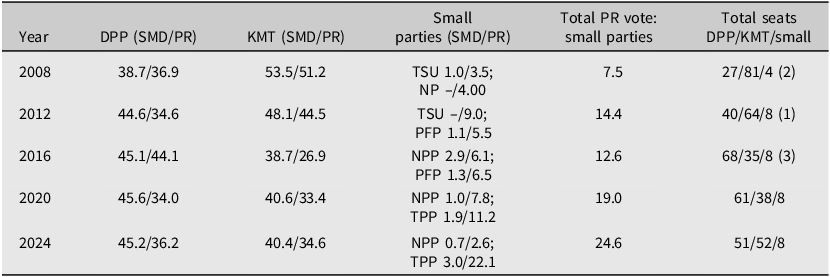


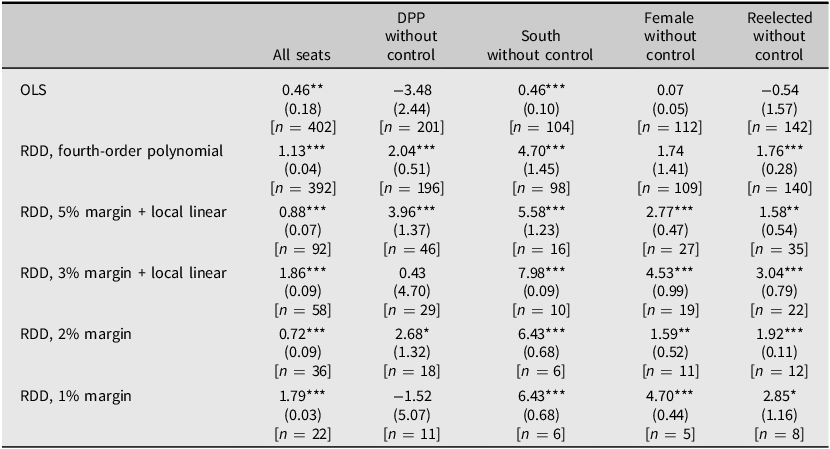


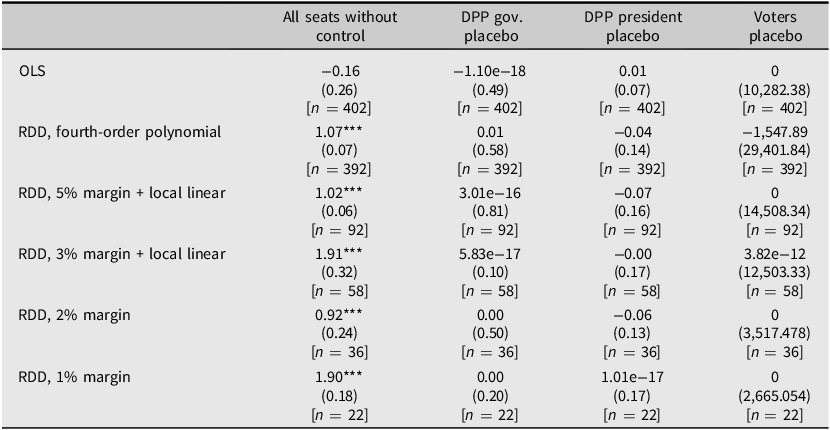
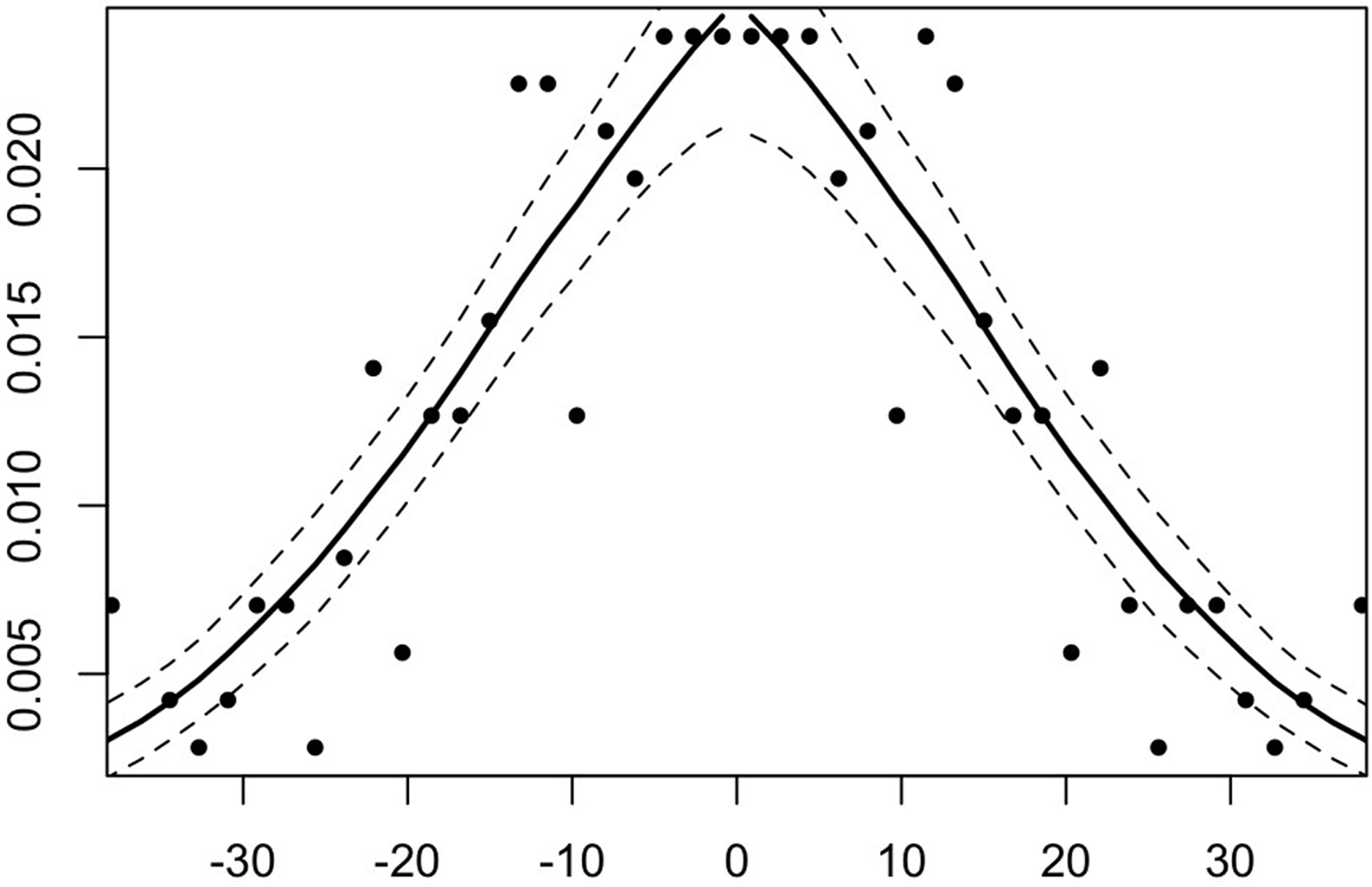

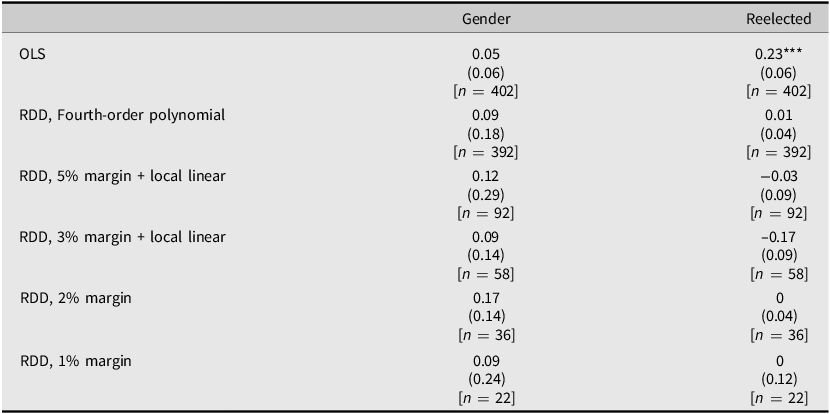

 Open access

