


Introduction
W. E. B. Du Bois’s intellectual contributions to U.S. sociology and Black social thought are too numerous to enumerate, broad to summarize, and provocative to ignore. His scholarly productivity, methodological sophistication, theoretical breadth, poetic writing, and ingenious data visualizations distinguish him (Morris Reference Morris2015; Morris and Ghaziani, Reference Morris and Ghaziani2005; Wortham Reference Wortham2022). Further, he chaired the first U.S. school of sociology, the Atlanta Sociological Laboratory (Wright Reference Wright2002a, Reference Wright2002b, Reference Wright2008, Reference Wright2012, Reference Wright2016, Reference Wright2020). However, many mainstream sociologists today, emulating Du Bois’s White contemporaries, disregard his pioneering scholarship examining racism, colonialism, culture, family, religion, rurality, urbanism, and work (Morris Reference Morris2015).
Throughout his long career and life, Du Bois produced scholarship ahead of its time empirically and theoretically (Morris and Ghaziani, Reference Morris and Ghaziani2005; Wortham Reference Wortham2022). For instance, in The Philadelphia Negro, Du Bois ([1899] Reference Du Bois2007b) conducted a thorough investigation of Black life in the Seventh Ward in Philadelphia, PA on behalf of the University of Pennsylvania. The book confirms Du Bois was, first and foremost, a scholar of systemic racism. His White contemporaries published studies with similar aims as The Philadelphia Negro but ignored Du Bois’s findings. Moreover, the Chicago School of Sociology conducted studies similar to those conducted by the Atlanta Sociological Laboratory, but Chicago School sociologists dismissed Atlanta Sociological Laboratory sociologists and studies. Today, Chicago School scholarship remains acclaimed and canonical, whereas mainstream sociologists overlook Atlanta Sociological Laboratory scholarship (Wright Reference Wright2002a, Reference Wright2002b, Reference Wright2008, Reference Wright2016).
As documented elsewhere, individuals and institutions marginalized Du Bois and his intellectual contributions to the foundation and flourishing of U.S. sociology (Gaines and Reed, Reference Gaines and Reed1994; Go Reference Go2016; Lemert Reference Lemert1994; Lewis Reference Lewis1993; McKee Reference McKee1993; Morris Reference Morris2015; Morris and Ghaziani, Reference Morris and Ghaziani2005; Wright Reference Wright2008, Reference Wright2020). Despite efforts to practice epistemicide (Santos Reference Santos2014), a small but growing group of largely qualitative underrepresented minority sociologists embrace W. E. B. Du Bois and his scholarship. Unlike Emile Durkheim, Karl Marx, and Max Weber, Du Bois viewed the Maafa (i.e., transatlantic slave trade) and colonialism as foundational to modernity and the Maafa and systemic racism as foundational to U.S. exceptionalism. Du Bois’s unique position on the Maafa, colonialism, and systemic racism attracts critical sociologists to him.
Arguably, Du Bois’s most important contribution was his theory of double consciousness, wherein he explained how the color line (i.e., systemic racism) dehumanizes Blacks living in the United States. Du Bois (Reference Du Bois1897, [1903] Reference Du Bois1994) introduced double consciousness in “Strivings of the Negro People,” published in The Atlantic Monthly, and reintroduced it six years later in “Of Our Spiritual Strivings” in The Souls of Black Folk (hereafter called Souls). Double consciousness describes, explains, and predicts sociological and social psychological consequences of the color line. It describes Blacks’ self-formation under conditions of racialization and White supremacy (Gaines and Reed, Reference Gaines and Reed1995; Itzigsohn and Brown, Reference Itzigsohn and Brown2015, Reference Itzigsohn and Brown2020; Meer Reference Meer2018) and is foundational to the “underground” (vs. mainstream) approach in the Black racial identity literature (Baldwin Reference Baldwin1984; Cross Reference Cross1991; Fanon Reference Fanon1963, Reference Fanon1967; Gaines and Reed, Reference Gaines and Reed1994, Reference Gaines and Reed1995; hooks Reference hooks1992; Parham and Helms, Reference Parham and Helms1981; Sellers et al., Reference Sellers, Smith, Shelton, Stephanie and Chavous1998). Double consciousness is one of the earliest examples of Black sociology (Ladner Reference Ladner1973; Staples Reference Staples and Ladner1973, Reference Staples1976; Wright Reference Wright2020), defined as analysis of Black life from Black scholars’ perspective based on the premise Black and White scholars rarely share the same physical environment, lived experiences, or social consciousness.
Mainstream sociologists today may question utility of a 129-year-old theory, especially considering contemporary changes in ideological underpinnings shaping expressions of White prejudice (Bonilla-Silva Reference Bonilla-Silva2022, Bobo et al., Reference Bobo, Kluegel, Smith, Tuch and Martin1996, Henry and Sears, Reference Henry and Sears2002). Nonetheless, the color line still structures life for Blacks and Whites in the United States (Feagin and Ducey, Reference Feagin and Ducey2018; Oliver and Shapiro, Reference Oliver and Shapiro2006; Pager and Shepherd, Reference Pager and Shepherd2008). Despite cases of individual Black success (e.g., Barack Obama, Ketanji Brown Jackson, and Oprah Winfrey, among others), the problem of the twenty-first century remains the color line. It still inflicts sociological and social psychological harm upon Blacks and those located near them. Put bluntly, Blacks anchor the bottom of the U.S. racial hierarchy just as they did when Du Bois published “Strivings of the Negro People” in 1897.
Existing quantitative studies investigate how double consciousness constructs correlate with patriotism (e.g., Shaw Reference Shaw2004), outcomes in educational and occupational spheres (e.g., Brannon et al., Reference Brannon, Markus and Taylor2015; Dukes Reference Dukes2018), racial and political attitudes (e.g., Lyubansky and Eidelson, Reference Lyubansky and Eidelson2005), and coping strategies and identity conflict (e.g., Walker Reference Walker2018; Whaley Reference Whaley2016). However, those studies typically use equivocal and/or single-item survey measures (Dukes Reference Dukes2018; Lyubansky and Eidelson, Reference Lyubansky and Eidelson2005; Shaw Reference Shaw2004; Walker Reference Walker2018; Whaley Reference Whaley2016) that poorly operationalize constructs from Du Bois’s theory. The field lacks multiple-item survey measures aligned tightly with constructs in his theory. It is fair to assert existing quantitative studies fail to represent double consciousness correctly because of weak measurement. Further, among scholars examining double consciousness constructs quantitatively, just one is a sociologist (i.e., Dukes Reference Dukes2018). What an epistemological tragedy if sociologists fail to lead the social movement to center Du Bois’s intellectual contributions to the quantitative social psychology of racism literature.
Hence, this extended research note focuses on development and validation of double consciousness measures. Specifically, it introduces multiple-item survey measures of the perceived veil, second sight, and two-ness. With data collected online in early 2024 from a national sample of 2,008 Black adults via the Prolific platform, we evaluate psychometric properties of nineteen items indicating the perceived veil (Cronbach’s alpha and McDonald’s omega equaled .75), second sight (Cronbach’s alpha equaled .71; McDonald’s omega equaled .69), and two-ness (Cronbach’s alpha equaled .63; McDonald’s omega equaled .66). Common factor analyses show eight items indicate the perceived veil, six items indicate second sight, and five items indicate two-ness, respectively.
Du Bois’s Theory of Double Consciousness
Double consciousness explains how White supremacy maintains Blacks’ second-class citizenship in U.S. society. Du Bois ([Reference Du Bois1903] Reference Du Bois1994) summarized the qualitative phenomenology of double consciousness as follows:
It is a peculiar sensation, this double-consciousness, this sense of always looking at one’s self through the eyes of others, of measuring one’s soul by the tape of a world that looks on in amused contempt and pity. One ever feels his two-ness, ––an American, a Negro; two souls, two thoughts, two unreconciled strivings; two warring ideals in one dark body, whose dogged strength alone keeps it from being torn asunder (p. 2)
He argued double consciousness operates through three constructs: 1) the veil, 2) second sight, and 3) two-ness (Du Bois [1903]Reference Du Bois1994; Field and Fields, Reference Fields and Fields2012; Itzigsohn and Brown, Reference Itzigsohn and Brown2015, Reference Itzigsohn and Brown2020; Meer Reference Meer2018). Each construct captures related aspects of Blacks’ experiences with second-class citizenship and White supremacy in the United States. Further, he theorized double consciousness operates across macro-, meso-, and micro-levels.
The Veil
The veil is a macro-level structure representing the color line (i.e., systemic racism). It stratifies U.S. society, creating two disparate and separate “worlds,” one Black and one White. It permeates every aspect of life, including economic mobility, interpersonal relations, knowledge production, social institutions and organizations, and it perpetuates Black exclusion (Du Bois [1903] Reference Du Bois1994; [1920] Reference Du Bois1999; [1940] Reference Du Bois2007a). It shapes lived experiences and worldviews of Blacks and Whites (Itzigsohn and Brown, Reference Itzigsohn and Brown2015, Reference Itzigsohn and Brown2020). To that point, Du Bois [1903] Reference Du Bois1994; [1920] Reference Du Bois1999, [1940] Reference Du Bois2007a) conflated citizenship, Whiteness, and Americanness. Behind the veil, society obligates Blacks to requirements of U.S. citizenship but denies them its full benefits (Meer Reference Meer2018).
Du Bois described the veil’s structural nature throughout his writings. For example, in Darkwater: Voices from Within the Veil (hereafter called Darkwater), Du Bois ([1920] Reference Du Bois1999) wrote:
And then – The Veil. It drops as drops the night on southern seas – vast, sudden, unanswering. There is Hate behind it, and Cruelty, and Tears. As one peers through its intricate, unfathomable pattern of ancient, old, old design, one sees blood and guilt and misunderstanding. And yet it hangs there, This Veil, between Then and Now, between Pale and Colored and Black and White – between You and Me. Surely it is a thought-thing, tenuous, intangible; yet just as surely is it true and terrible and not in our little day may you and I lift it. We may feverishly unravel its edges and even climb slow with giant shears to where it ringed and gilded top nestles close to the throne of God. But as we work and climb we shall see through streaming eyes and hear with aching ears, lynching and murder, cheating and despising, degrading and lying, so flashed and fleshed through this vast hanging darkness that the Doer never sees the Deed and the Victim knows not the Victor and Each hates All in wild and bitter ignorance. Listen, O Isles, to these Voices from within the Veil, for they portray the most human hurt of the Twentieth Cycle of that poor Jesus who was called Christ! (pp. 143-144).
Du Bois acknowledged the veil’s permanence and connection to modernity (Fanon Reference Fanon1963, Reference Fanon1967; Itzigsohn and Brown, Reference Itzigsohn and Brown2015, Reference Itzigsohn and Brown2020; Robinson Reference Robinson1983). Throughout his long career and life, he watched the veil unleash death, dehumanization, neglect, economic plunder, hatred, and racial terror upon Blacks and the Black community. Nowadays, the veil’s effect on Black life persists less conspicuously to Whites (but no less perniciously to Blacks) via the carceral state, colorblind policies, excess morbidity and mortality, police brutality, environmental hazards, the religious right, institutional discrimination, residential racial segregation, respectability politics, and underfunded majority Black school districts, among other mechanisms (Alexander Reference Alexander2010; Feagin and Ducey, Reference Feagin and Ducey2018; Khan Reference Khan2022; Oliver and Shapiro, Reference Oliver and Shapiro2006; Pager and Shepherd, Reference Pager and Shepherd2008; Ray Reference Ray2019; Soss and Weaver, Reference Soss and Weaver2017).
Second Sight
The veil creates opportunities for Blacks to develop second sight. Second sight is a meso-level dynamic tapping knowledge of the veil through racial consciousness at the group or community level. Remember, Blacks experience both sides of the veil. In Souls, Darkwater, and Dusk of Dawn (hereafter called Dusk), Du Bois ([1903] Reference Du Bois1994, [1920] Reference Du Bois1999, [1940] Reference Du Bois2007a) described how Blacks often labor on the White side of the veil but live on the Black side. Thus, they acquire intimate familiarity with Black society and White society (Itzigsohn and Brown, Reference Itzigsohn and Brown2015, Reference Itzigsohn and Brown2020). Second sight captures understanding of “the absolute contradiction between what is and what ought to be” (Cone Reference Cone2018, p. 9). It grants the Black community agency to anticipate and circumvent the veil’s obstacles to a limited extent.
Du Bois ([1903] Reference Du Bois1994) described second sight’s utility in “The Coming of John” in Souls. John, a young Black man, did not perceive the veil until he left his hometown in Georgia for college. John grew “in body and soul” during his education (Du Bois [1903] Reference Du Bois1994, p. 144). John developed second sight through education and realized the veil bifurcated his hometown. He felt an obligation to return to his hometown to establish a Black school to challenge White supremacy. He encountered resistance from both his community and the White community. Second sight alienated John from Black individuals who could not understand his need to challenge white supremacy. Further, he agitated White individuals by challenging the status quo. The point is John exercised agency despite (and because) of White supremacy. In this way, Du Bois ([1903] Reference Du Bois1994) suggested second sight represents a gift and a curse.
Two-ness
The veil engenders a feeling of two-ness. It is a micro-level phenomenon, capturing the sociological and social psychological consequences of dehumanization and second-class citizenship among Blacks. Du Bois ([1903] Reference Du Bois1994) defined two-ness as “two souls, two thoughts, two unreconciled strivings; two warring ideals in one dark body, whose dogged strength alone keeps it from being torn asunder” (p. 2). Two-ness has plagued Blacks since Emancipation, reflecting internalized angst caused by identity conflict between being American and Black. Society yields Blacks no true self-consciousness (Du Bois [1903]Reference Du Bois1994). They can only perceive themselves through Whites’ dehumanizing eyes.
Du Bois ([1903] Reference Du Bois1994) theorized Blacks strive to fit into U.S. society while retaining their Africanness (i.e., Black identity and culture). Du Bois ([1903] Reference Du Bois1994) mentioned two-ness explicitly once in Souls but discussed it throughout his writings. For example, in The Conservation of Races, Du Bois ([1897] Reference Du Bois, Beck and Solomos2000) wrote:
Am I an American or am I a Negro? Can I be both? Or is it my duty to cease to be a Negro as soon as possible and be an American? If I strive as a Negro, am I not perpetuating the very cleft that threatens to separate Black and White America? Is not my only possible practical aim the subduction of all that is Negro in me to the American? Does my Black blood place upon me any more obligation to assert my nationality than German, or Irish or Italian blood? (p. 83).
In “The White World,” published in Dusk, Du Bois ([1940] Reference Du Bois2007a) wrote:
…had I not been born in its modern counterpart, racial segregation; first into a world composed of people with colored skins who remembered slavery and endured discrimination; and who had to a degree their own habits, customs, and ideals; but in addition to this I lived in an environment which I came to call the white world. I was not an American; I was not a man; I was by long education and continual compulsion and daily reminder, a colored man in a white world; and that white world often existed primarily, as far as I was concerned, to see with sleepless vigilance that I was kept within bounds…I could not stir, I could not act, I could not live, without taking into daily account the reaction of my white environing world (p. 69).
These passages implicate two-ness as a dilemma. On the one hand, it represents Blacks’ lived reality behind the veil. Being Black means feeling internalized angst because of the veil’s permanence. On the other hand, identity conflict and seeking to satisfy two unreconciled ideals make Blacks ashamed of themselves and emotionally exhausted (Du Bois [1903] Reference Du Bois1994). Being Black means living in “existential exile” (Burr Reference Burr2014).
Quantitative Studies of Double Consciousness
As part of an exhaustive literature review, we identified six quantitative studies explicitly mentioning and measuring constructs from Du Bois’ theory of double consciousness. First, Todd C. Shaw (Reference Shaw2004), a political scientist using a single item to measure two-ness, asked respondents whether their racial/ethnic identity was “much more important,” “somewhat more important,” “just as important,” or “not as important” as being American (p. 29). Shaw coded responses dichotomously with “racial identity more important than American identity” versus “not as important as American.” He found respondents who considered their racial/ethnic identities more important than their American identities performed fewer symbolic acts of patriotism post-9/11.
Second, Mikhail Lyubansky and Roy J. Eidelson (2005), both social psychologists, examined the association between racial and mainstream acculturation and Blacks’ beliefs about their racial and national groups. They measured something loosely akin to the veil using an abridged version of the General Ethnicity Questionnaire (GEQ; Tsai et al., Reference Tsai, Ying and Lee2000). Designed originally to examine ethnicity among U.S.-born and immigrant Chinese respondents, authors adapted the GEQ by eliminating language-use and fluency-based items and removing ‘irrelevant’ items. Blacks immersed in Black culture believed their racial group’s ability to favorably influence or control events and outcomes through political or economic means was weaker than their national group. Additionally, they believed their racial group was superior to other groups but received more criticism than other groups of Americans. They believed their national group was more vulnerable (i.e., the collective target of pervasive threat and potential destruction) and more distrustful toward other groups than their racial group. Lyubansky and Eidelson (Reference Lyubansky and Eidelson2005) analyzed a small sample size (n = 100) and did not validate the GEQ for use with Blacks.
Third, Tiffany N. Brannon and colleagues (Reference Brannon, Markus and Taylor2015), all social psychologists, theorized two-ness operates as two self-schemas: 1) an independent self-schema developed with engagement in mainstream American cultural contexts and 2) an interdependent self-schema developed with engagement in Black cultural contexts. They primed students to create experimental conditions to examine two-ness. They found Black college students benefited academically, shifting self-descriptions and social behaviors (i.e., giving a speech, making a cooperative decision) in schema-relevant ways when primed with Black culture (i.e., leveraging the interdependent self-schema). Overall, they concluded educational contexts steeped in Black culture associated with positive outcomes for Black college students. Of relevance here, Brannon and colleagues (Reference Brannon, Markus and Taylor2015) did not directly measure two-ness.
Fourth, Arthur L. Whaley (Reference Whaley2016), a psychiatrist, investigated whether two-ness predicts identity conflict among Black adolescents and young adults. Whaley operationalized two-ness with a single-item measure from the 2001-2003 National Survey of American Life (NSAL; Jackson et al., Reference Jackson, Torres, Caldwell, Neighbors, Nesse, Taylor, Trierweiler and Williams2004). It read, “Which is more important to you—being Black or American?” Response categories were “both Black and American,” “Black,” “American,” and “Human Being.” Whaley (Reference Whaley2016) argued the “both Black and American” category represented a multicultural perspective (the reference group in his regression analyses), the “Black” category represented an Africentric perspective, the “American” category represented a double consciousness perspective, whereas the “Human Being” category represented a Humanist perspective. Whaley (Reference Whaley2016) found the double consciousness perspective failed to predict identity conflict among Black respondents, compared to a multicultural perspective. Whaley (Reference Whaley2016) justified coding “both Black and American” as a multiculturalism perspective instead of two-ness, which an informed reader would expect, in this way:
It is important to understand why the dual identity represents multiculturalism instead of double consciousness: Du Bois’s notion that African Americans see themselves through the “eyes of the oppressor” is better characterized by the American only national identity, whereas the best-of-both-worlds assumption underlying the multicultural perspective is better portrayed by the dual national identity (p. 113).
We would argue “American” and “both Black and American” capture two-ness. Du Bois [1903] Reference Du Bois1994; [1920] Reference Du Bois1999, [1940] Reference Du Bois2007a) discussed citizenship, Whiteness, and Americanness synonymously. Practicing Americanism meant embracing Whiteness and patriotism while supporting U.S. imperialism (Du Bois [1940] Reference Du Bois2007a). So long as Blacks’ humanity is conditional on White acceptance, Blacks’ access to American identity is tenuous. According to Du Bois (Reference Du Bois1897; [1903] Reference Du Bois1994), reconciling identity conflict is the dilemma. The veil and most Whites require Blacks to embrace Americanness and disavow their Blackness.
Fifth, Sheena M. Walker (Reference Walker2018), a psychologist, examined whether the veil predicts mental conflict among African American men. Like Lyubansky and Eidelson (Reference Lyubansky and Eidelson2005), Walker modified the GEQ (Tsai et al., Reference Tsai, Ying and Lee2000) to measure something loosely akin to the veil. Walker measured mental conflict (i.e., levels of depression, anxiety, and somatization) with the Brief Symptom Inventory-18. She found 71.4% of respondents reported an unhealthy coping style vis-à-vis the veil (i.e., low separation from Whites and high assimilation, or high separation from Whites and low assimilation), whereas 57.1% reported a healthy coping style vis-à-vis the veil (i.e., low separation from Whites and low assimilation, or high separation from Whites and high assimilation). Walker analyzed a small sample (n = 119). Further and as noted prior, Tsai and colleagues (Reference Tsai, Ying and Lee2000) did not create the GEQ to measure the veil.
Finally, Warren Dukes (Reference Dukes2018), a sociologist, invoked Du Bois’ theory of double consciousness (Du Bois [1903] Reference Du Bois1994) and Merton’s (Reference Merton1949) anomie theory to examine Black police officers’ occupational anomie caused by the intersection of their racial identity and role as agents of social control. Dukes developed a two-ness scale within an original survey data collection of Black police officers (n = 84). Dukes found his two-ness scale predicted retreatism, ritualism, and rebellion adaptations in response to occupational anomie. Regarding his two-ness scale, Dukes did not share it (i.e., it is not shown in the article or posted online) or describe the scale development process.
To sum, existing quantitative studies routinely conflate two-ness with double consciousness (Shaw Reference Shaw2004; Whaley Reference Whaley2016). Further, they often analyze small samples with limited coverage and generalizability (Brannon et al., Reference Brannon, Markus and Taylor2015; Lyubansky and Eidelson, Reference Lyubansky and Eidelson2005; Shaw Reference Shaw2004; Walker Reference Walker2018) and/or assess double consciousness constructs indirectly (Lyubansky and Eidelson, Reference Lyubansky and Eidelson2005; Shaw Reference Shaw2004; Walker Reference Walker2018, Whaley Reference Whaley2016). Furthermore, one study failed to share its two-ness measure (Dukes Reference Dukes2018). To add insult to injury, a sociologist authored only one study, proving disrespect for Du Bois in the quantitative social psychology of racism literature.
Study Contributions
This study increments the literature in three unique ways. First, it introduces multiple-item survey measures capturing the perceived veil, second sight, and two-ness. With multiple-item survey measures, researchers can ask what the perceived veil, second sight, and two-ness predicts. Doing so seems essential for understanding the color line and its consequences for Blacks and the Black community today. For example, does the perceived veil, second sight, and two-ness demonstrate physical health significance (e.g., morbidity or mortality), relevance for school achievement (e.g., persistence in school or GPA), or psychological well-being (e.g., self-esteem or mastery), or pertinence for politics (e.g., political attitudes or voting behavior)? Second, it allows Du Boisian scholars to pursue previously inaccessible hypotheses about double consciousness and devise data collections to test them. For example, Du Bois ([1903] Reference Du Bois1994) theorized second sight as a gift and a curse. Survey measures introduced here allow, for the first time, ability to address which of those possibilities is more accurate empirically. Finally, it compels sociologists to acknowledge Du Bois’s intellectual contributions and potentially increment them using a quantitative epistemology unavailable to him when he wrote.
Data and Methods
Data
Data originated from the 2024 Social Ontology of Undervalued Lives Study (SOULS), funded by the Racism and Racial Experiences (RARE) Workgroup (https://rare.rice.edu/), housed in the sociology department at Rice University. Prolific participants (https://www.prolific.com) served as online respondents. Prolific is a platform for recruiting and managing participants for academic research, AI (artificial intelligence) training and evaluation, research and development, and market research. Researchers launch new surveys on Prolific approximately every two minutes and as of today, there are over 300,000 active, vetted participants. Prolific participants opt in and are thereby self-selected, in contrast to platforms where researchers recruit participants to serve as panel respondents (e.g., American Life Panel, KnowledgePanel, the Gallup Panel, Conjointly, the SSRS Opinion Panel, Understanding America Study).
Prolific overcomes data quality flaws endemic to other opt-in platforms (e.g., Amazon Mechanical Turk, CrowdFlower, CloudResearch, SONA, Centiment, Qualtrics Online Panel, Dynata, Lucid, and Sogolytics). In fact, evaluation research indicates Prolific delivers higher quality data (Douglas et al., Reference Douglas, Ewell and Brauer2023; Palan and Schitter, Reference Palan and Schitter2018; Peer et al., Reference Peer, Brandimarte, Samat and Acquisti2017; Peer et al., Reference Peer, Rothschild, Gordon and Damer2022). The platform acquires participants through social media (Facebook, Twitter/X, Reddit, and online forums), flyer distribution on university campuses, word of mouth, and a now-discontinued referral scheme. Further, researchers can also invite participants to join Prolific. It vets participants by verifying: 1) internet protocol (IP) addresses continuously to confirm their location and ensure they only participate in any study once; 2) their identities with bank-grade identification checks; 3) their email accounts and phone numbers; and 4) any suspicious activity via manual and algorithmic quality checks. Moreover, to eliminate fraud, Prolific introduced document, biometric, and data validation via Onfido ID verification (see https://onfido.com) in January 2021. The platform bans participants who fail initial or repeated attention checks, receive a certain percentage of data submission rejections, or use high-risk IPs and internet service providers, virtual private networks (VPN), or proxy servers. Through these overlapping layers of quality control, it aims to identify and remove four types of malicious participants: 1) bots (i.e., automated software generating data submissions), 2) liars, 3) cheaters, and 4) slackers (see https://www.prolific.com/blog/data-quality-of-platforms-and-panels-for-online-behavioral-research for more information). Finally, the platform encourages researchers to flag and reject data submissions when it appears participants did not supply accurate responses, failed attention checks, or did not take tasks seriously.
Prolific distributed the 2024 SOULS survey to a national, gender-balanced sample of 2,008 self-identified Black adults (ages eighteen and older) living in the United States who previously successfully completed at least twenty data submissions on Prolific. Participants followed a link from Prolific to the 2024 SOULS survey housed on Qualtrics (https://www.qualtrics.com/). After the initial recruitment and invitation, Prolific sent reminders to non-responding eligible participants every forty-eight hours. Additionally, the study appeared on eligible participants’ dashboards for the study’s duration. Data collection occurred across five weeks (Tuesday, January 9, 2024 to Tuesday, February 13, 2024). All 2,008 participants who participated completed the survey. Because respondents hailed from forty-eight states (excluding Montana and North Dakota) and Washington, DC, these data better approach national representation than standard surveys. For instance, Black respondents in the 2022 General Social Survey (GSS; Davern et al., Reference Davern, Bautista, Freese, Herd and Morgan2024) only lived in thirty-eight states (excluding Alaska, Hawaii, Idaho, Iowa, Louisiana, Maine, Montana, Nebraska, New Hampshire, North Dakota, Oregon, and Wyoming) and Washington, DC. We assume the 2024 GSS data originates from the same number of states. However, a new 2026 GSS disclosure policy prevents us from accessing 2024 GSS state-level data for comparison purposes.
The final 2024 SOULS sample represented a random subset from the 4,083 eligible, according to our criteria, Prolific participants at the study’s start date. As such, the response rate equals forty-nine percent (2,008/4,083) though that is an underestimate because only a random subset of the 4,083 potentially eligible participants received invitations. At the study’s end date, the number of eligible Prolific participants had increased to 4,589. The increase from 4,083 occurred because more participants met the twenty successful data submission criteria for inclusion during our field period. After respondents completed the approximately twenty-five-minute survey, Qualtrics redirected them to the Prolific website with a unique completion code authorizing incentive payment into their Prolific accounts. Participants completing the 2024 SOULS survey received $5.50 for their time and effort. This incentive payment represents a wage of $13.20 per hour, exceeding the federal minimum wage of $7.25 required by the Fair Labor Standards Act (FLSA). Before launching the data collection, we conducted a pilot study with ten randomly selected Black Prolific participants to verify harmonization between Prolific and Qualtrics. We excluded those ten participants from the 2024 SOULS data collection.
After completion of the 2024 SOULS data collection, Qualtrics’ bot detection algorithms identified sixteen cases that might be bots. We meticulously reviewed survey responses for these sixteen cases. Based on the respondents’ Prolific IDs, responses to two attention checks (e.g., “What is the eighth word in this question: How many colors are in the U.S. Flag?”) built into the survey, and answers to open-ended questions in the 2024 SOULS questionnaire, we determined these sixteen cases were not bots. Stated differently, the Qualtrics bot detection algorithms were wrong. Finally, the Rice University Institutional Review Board approved this study and data collection (IRB-FY2024-2).
Double Consciousness Survey Measure Development Process
We conducted an exhaustive literature review of studies invoking Du Bois’s theory of double consciousness, including his original writings. We then focused on quantitative studies claiming to measure double consciousness constructs (see Quantitative Studies of Double Consciousness section). We next developed thirty-nine original items to capture constructs described in Du Bois’s theory of double consciousness (thirteen for the perceived veil, thirteen for second sight, and thirteen for two-ness).
We shared the thirty-nine double consciousness items with two focus groups composed of local and visiting scholars (graduate students and sociology department faculty from the RARE Workgroup at Rice University and a visiting sociology professor from another university). We then conducted a pre-test via Qualtrics of the thirty-nine items with respondents from a Facebook group composed of Black adults (eighteen and older) from a major southern U.S. city (n = 251). Common factor analytic results from the pre-test suggested two-ness and second-sight items indicated two latent factors with items demonstrating simple structure. The perceived veil items tended to cross-load on the second sight and two-ness factors, which makes sense because the veil supposedly causes both (see Du Bois [1903] Reference Du Bois1994, [1920] Reference Du Bois1999, [1940] Reference Du Bois2007a). Next, we emailed the thirty-nine items to five sociology and two political science professors considered Du Boisian experts. We used their feedback to revise and improve the items’ wording. Finally, we shared the thirty-nine items with the RARE Workgroup again, using their feedback to revise and improve the items. Relying on all the feedback we received, we reduced the number of items to twenty-seven (nine each for the perceived veil, second sight, and two-ness).
Measuring the Perceived Veil, Second Sight, and Two-ness
The Perceived Veil
Initial exploratory analyses indicated one of the nine perceived veil items did not correlate significantly or in the expected direction or load on the common latent factor with the remaining eight items, consequently, we discarded it. Thus, the first panel in Table 1 presents eight items capturing the perceived veil (i.e., views of the structure producing racial stratification). Response categories were: 1 = “Strongly Agree,” 2 = “Somewhat Agree,” 3 = “Undecided,” 4 = “Somewhat Disagree,” and 5 = “Strongly Disagree.” We randomly administered the perceived veil items in Qualtrics to reduce question order bias. We recoded five items so high values indicated the perceived veil. Table 2 presents listwise Spearman correlations among the perceived veil items. All items correlated positively and significantly (p < .001). “Whites recognize the difficulties Blacks face.,” and “Whites understand that generations of slavery and discrimination continue to disadvantage Blacks.” correlated most strongly (rho = .50; p < .001).
Descriptive Statistics for Items Representing Double Consciousness Constructs for Black Respondents in the 2024 Social Ontology of Undervalued Lives Study (SOULS)

Table 1. Long description
The table contains 19 items categorized into three constructs. The columns are Item, Mean, S E (Mean), Skewness, Don’t Know, and Skipped. N equals 1,616. Response categories range from 1 (Strongly Agree) to 5 (Strongly Disagree).
Perceived Veil items:
1. Two United States: Mean 3.36, S E .03, Skewness -.47, Don’t Know 41, Skipped 1.
2. Whites fail to appreciate advantages: Mean 3.47, S E .03, Skewness -.52, Don’t Know 73, Skipped 2.
3. Whites recognize difficulties: Mean 3.50, S E .03, Skewness -.43, Don’t Know 39, Skipped 1.
4. Whites understand slavery/discrimination: Mean 3.44, S E .03, Skewness -.38, Don’t Know 46, Skipped 3.
5. Blacks can reach potential: Mean 2.78, S E .03, Skewness .25, Don’t Know 27, Skipped 0.
6. Whites like culture more than people: Mean 4.04, S E .03, Skewness -1.17, Don’t Know 46, Skipped 1.
7. Whites believe racism is declining: Mean 3.82, S E .03, Skewness -.94, Don’t Know 77, Skipped 1.
8. Blacks never first-class citizens: Mean 3.47, S E .03, Skewness -.50, Don’t Know 35, Skipped 1.
Second Sight items:
1. Blacks can tell when racism happens: Mean 4.20, S E .02, Skewness -1.26, Don’t Know 31, Skipped 0.
2. Blacks appreciate democracy more: Mean 3.36, S E .03, Skewness -.32, Don’t Know 133, Skipped 1.
3. Whites feel contempt: Mean 3.20, S E .03, Skewness -.29, Don’t Know 89, Skipped 2.
4. Whites view Blacks as less than human: Mean 3.27, S E .03, Skewness -.29, Don’t Know 40, Skipped 1.
5. Comfortable surrounded by Blacks: Mean 3.75, S E .03, Skewness -.72, Don’t Know 21, Skipped 6.
6. Comfortable in Black spaces: Mean 3.74, S E .03, Skewness -.72, Don’t Know 25, Skipped 4.
Two-ness items:
1. Tension between Black and American: Mean 3.40, S E .03, Skewness -.54, Don’t Know 23, Skipped 4.
2. Worry what Whites think: Mean 2.23, S E .03, Skewness .68, Don’t Know 8, Skipped 1.
3. Behave differently around Whites: Mean 2.68, S E .04, Skewness .19, Don’t Know 20, Skipped 0.
4. Convincing Whites I deserve respect: Mean 2.06, S E .03, Skewness .89, Don’t Know 13, Skipped 3.
5. Careful about Black-sounding names: Mean 2.53, S E .04, Skewness .36, Don’t Know 36, Skipped 0.
Notes: N = 1,616. Items’ response categories were: 1) Strongly Agree, 2) Somewhat Agree, 3) Undecided, 4) Somewhat Disagree, and 5) Strongly Disagree.
Spearman Correlations among Perceived Veil Items for Black Respondents in the 2024 Social Ontology of Undervalued Lives Study (SOULS)

Table 2. Long description
The table presents Spearman correlations among eight survey items for 1,616 Black respondents. The diagonal values are all 1.00.
* Item 1: There are two United States, one for Whites and one for Blacks (REVERSE CODED).
* Item 2: Whites fail to appreciate the advantages of being White (REVERSE CODED). Correlation with Item 1 is .33.
* Item 3: Whites recognize the difficulties Blacks face. Correlation with Item 1 is .29; with Item 2 is .26.
* Item 4: Whites understand that generations of slavery and discrimination continue to disadvantage Blacks. Correlation with Item 1 is .26; with Item 2 is .28; with Item 3 is .50.
* Item 5: Blacks can reach their full potential in the United States. Correlation with Item 1 is .44; with Item 2 is .30; with Item 3 is .39; with Item 4 is .36.
* Item 6: Whites like Black culture more than they like Black people (REVERSE CODED). Correlation with Item 1 is .39; with Item 2 is .33; with Item 3 is .22; with Item 4 is .27; with Item 5 is .31.
* Item 7: Whites believe racism is on the decline (REVERSE CODED). Correlation with Item 1 is .24; with Item 2 is .28; with Item 3 is .19; with Item 4 is .33; with Item 5 is .19; with Item 6 is .34.
* Item 8: Blacks will never be treated as first-class citizens in the United States (REVERSE CODED). Correlation with Item 1 is .40; with Item 2 is .24; with Item 3 is .27; with Item 4 is .15; with Item 5 is .42; with Item 6 is .28; with Item 7 is .15.
Statistical notes: Cronbach’s alpha is .75, McDonald’s omega is .75, and the average inter-item correlation is .48.
Notes: N = 1,616. See items’ response categories in Table 1. All correlations significant at p < .001 (two-tailed tests). Cronbach’s alpha equals .75. McDonald’s omega equals .75. Average inter-item correlation equals .48.
Second Sight
Initial exploratory analyses indicated three of the nine second sight items did not correlate significantly or in the expected direction, or did not load on the common latent factor with the remaining six items, consequently, we discarded them. Thus, the second panel in Table 1 presents six items capturing second sight (i.e., knowledge of the veil through racial consciousness). Response categories for the six items were: 1 = “Strongly Agree,” 2 = “Somewhat Agree,” 3 = “Undecided,” 4 = “Somewhat Disagree,” and 5 = “Strongly Disagree.” Again, we randomly administered the second sight items in Qualtrics to reduce question order bias. We recoded all six items so high values indicated second sight. Table 3 presents listwise Spearman correlations among the second sight items. All items correlated positively and significantly (p < .001). “I feel most comfortable when surrounded by Blacks. (reverse coded),” and “I feel more comfortable in Black spaces compared to white spaces. (reverse coded)” correlated most strongly (rho = .71; p < .001).
Spearman Correlations among Second Sight Items for Black Respondents in the 2024 Social Ontology of Undervalued Lives Study (SOULS)

Table 3. Long description
The table presents a lower-triangular matrix of Spearman correlations for six items, all of which are reverse coded. The sample size N is 1,616.
Items are numbered 1 through 6:
1. Blacks can tell when something bad happened because of racism.
2. Blacks appreciate democracy in a way that Whites cannot.
3. Most Whites feel contempt for Blacks.
4. Most Whites view Blacks as less than human.
5. I feel most comfortable surrounded by Blacks.
6. I feel more comfortable in Black spaces compared to White spaces.
Correlation values are as follows:
- Item 1 correlates with itself at 1.00.
- Item 2 correlates with Item 1 at .26.
- Item 3 correlates with Item 1 at .16 and Item 2 at .18.
- Item 4 correlates with Item 1 at .25, Item 2 at .25, and Item 3 at .46.
- Item 5 correlates with Item 1 at .27, Item 2 at .21, Item 3 at .22, and Item 4 at .31.
- Item 6 correlates with Item 1 at .27, Item 2 at .18, Item 3 at .23, Item 4 at .32, and Item 5 at .71.
Statistical reliability measures include a Cronbach’s alpha of .71, a McDonald’s omega of .69, and an average inter-item correlation of .39.
Notes: N = 1,616. See items’ response categories in Table 1. All correlations significant at p < .001 (two-tailed tests). Cronbach’s alpha equals = .71. McDonald’s omega equals .69. Average inter-item correlation equals .39.
Two-ness
Initial exploratory analyses indicated four of the nine two-ness items did not correlate significantly or in the expected direction, or did not load on the common latent factor with the remaining five items, consequently, we discarded them. Thus, the third panel in Table 1 presents five items capturing two-ness (i.e., feelings of identity tension arising from second-class citizenship). Response categories were: 1 = “Strongly Agree,” 2 = “Somewhat Agree,” 3 = “Undecided,” 4 = “Somewhat Disagree,” and 5 = “Strongly Disagree.” Yet again, we randomly administered the two-ness items in Qualtrics to reduce question order bias. We recoded all five items so high values indicated two-ness. Table 4 presents listwise Spearman correlations among two-ness items. All two-ness items correlated positively and significantly. “I worry about what whites think of me. (reverse coded),” and “I spend time convincing whites that I deserve respect. (reverse coded)” correlated most strongly (rho = .50; p < .001).
Spearman Correlations among Two-ness Items for Black Respondents Participating in the 2024 Social Ontology of Undervalued Lives Study (SOULS)

Table 4. Long description
The table presents Spearman correlations for five items, all noted as reverse coded. The sample size N equals 1,616.
* Item 1: Because of racism, I feel tension between being a Black person and being American.
* Item 2: I worry about what Whites think of me.
* Item 3: I behave differently when I am around Whites.
* Item 4: I spend time convincing Whites that I deserve respect.
* Item 5: I think Black parents should be careful about giving their children names that sound too Black.
Correlation values:
* Item 1 with itself: 1.00.
* Item 2 with Item 1: .22 (p < .001).
* Item 2 with itself: 1.00.
* Item 3 with Item 1: .26 (p < .001); with Item 2: .37 (p < .001).
* Item 3 with itself: 1.00.
* Item 4 with Item 1: .21 (p < .001); with Item 2: .50 (p < .001); with Item 3: .31 (p < .001).
* Item 4 with itself: 1.00.
* Item 5 with Item 1: .08 (p < .01); with Item 2: .23 (p < .001); with Item 3: .22 (p < .001); with Item 4: .19 (p < .001).
* Item 5 with itself: 1.00.
Statistical notes: Cronbach’s alpha equals .63. McDonald’s omega equals .66. Average inter-item correlation equals .48.
Notes: N = 1,616. See items’ response categories in Table 1. Cronbach’s alpha equals .63. McDonald’s omega equals .66. Average inter-item correlation equals .48.
** p < .01 *** p < .001 (two-tailed tests)
As a reminder, the Informed Consent Form encouraged respondents to “skip any question they did not want to answer.” Table 1 shows the number of respondents who skipped each item or responded “Don’t know,” along with descriptive statistics for each item. We conducted supplemental analyses to address missingness in the Discussion section.
Analytic Strategies
We used common factor analysis to investigate whether the nineteen double consciousness indeed indicate either the perceived veil (eight items), second sight (six items), or two-ness (five items), respectively. Common factor analysis is a data reduction strategy designed to determine how many latent factors explain covariance among observed items (DeVellis Reference DeVellis2017; Trizano-Hermosilla and Alvarado, Reference Trizano-Hermosilla and Alvarado2016). Our aim was to determine the substantive meaning of the latent factors. Du Bois’s theory of double consciousness guided our footsteps. Common factor analysis makes the congeneric assumption, whereby observed items share latent factors but do not share identical factor loadings or error terms (DeVellis Reference DeVellis2017; Raykov Reference Raykov1997). We used the principal axis factoring (PAF) extraction method. PAF is appropriate for assessing sources of common variance while excluding unique variance (Carpenter Reference Carpenter2018; DeVellis Reference DeVellis2017). We applied the eigenvalue rule (see Kaiser Reference Kaiser1960): extracted factors should at least account for the variance of a single standardized item (i.e., 1.0). Eigenvalues equal the total amount of common variance each latent factor accounts for. Additionally, we computed Cronbach’s alpha to assess reliability of each scale (Cronbach Reference Cronbach1951). Cronbach’s alpha assumes tau equivalence, meaning equal factor loadings and error terms. Upon examining the common factor analytic results (see Tables 5, 6, and 7), we acknowledge apparent violation of this assumption and therefore also present McDonald’s omega (Hayes and Coutts, Reference Hayes and Coutts2020; Kalkbrenner Reference Kalkbrenner2023; Raykov Reference Raykov1997), which makes the congeneric assumption. We conducted all analyses in Stata 19.
Estimates from Common Factor Analyses among Perceived Veil Items for Black Respondents in the 2024 Social Ontology of Undervalued Lives Study (SOULS)

Table 5. Long description
The table contains four columns: Item Number, Item Description, lambda (factor loading), and Uniqueness.
* Item 1: There are two United States, one for Whites and one for Blacks (REVERSE CODED). lambda equals .60, Uniqueness equals .64.
* Item 2: Whites fail to appreciate the advantages of being White (REVERSE CODED). lambda equals .47, Uniqueness equals .78.
* Item 3: Whites recognize the difficulties Blacks face. lambda equals .55, Uniqueness equals .69.
* Item 4: Whites understand that generations of slavery and discrimination continue to disadvantage Blacks. lambda equals .54, Uniqueness equals .70.
* Item 5: Blacks can reach their full potential in the United States. lambda equals .64, Uniqueness equals .60.
* Item 6: Whites like Black culture more than they like Black people (REVERSE CODED). lambda equals .48, Uniqueness equals .77.
* Item 7: Whites believe racism is on the decline (REVERSE CODED). lambda equals .39, Uniqueness equals .85.
* Item 8: Blacks will never be treated as first-class citizens in the United States (REVERSE CODED). lambda equals .51, Uniqueness equals .74.
Statistical notes: N equals 1,616. Kaiser-Meyer-Olkin Measure of Sampling Adequacy (K M O) equals .79. Eigenvalue equals 2.23. L R test: independent vs. saturated: chi-squared equals 2,472.41, p is less than .001.
Notes: N = 1,616. See items’ response categories in Table 1. Kaiser-Meyer-Olkin Measure of Sampling Adequacy (KMO) equals .79. Eigenvalue equals 2.23. LR test: independent vs. saturated: χ2 = 2,472.41, p < .001.
Estimates from Common Factor Analyses among Second Sight Items for Black Respondents in the 2024 Social Ontology of Undervalued Lives Study (SOULS)

Table 6. Long description
The table contains four columns: an index number, the survey item text, lambda (factor loading), and Uniqueness. All items are noted as REVERSE CODED.
* Item 1: Blacks can tell when something bad happened because of racism. Lambda is .41, Uniqueness is .83.
* Item 2: Blacks appreciate democracy in a way that Whites cannot. Lambda is .35, Uniqueness is .87.
* Item 3: Most Whites feel contempt for Blacks. Lambda is .44, Uniqueness is .81.
* Item 4: Most Whites view Blacks as less than human. Lambda is .55, Uniqueness is .70.
* Item 5: I feel most comfortable surrounded by Blacks. Lambda is .72, Uniqueness is .48.
* Item 6: I feel more comfortable in Black spaces compared to White spaces. Lambda is .73, Uniqueness is .47.
Statistical notes below the table indicate a sample size N of 1,616, a K M O Measure of Sampling Adequacy of .68, an Eigenvalue of 1.83, and an L R test chi-squared of 2,087.61 with p less than .001.
Notes: N = 1,616. See items’ response categories in Table 1. KMO Measure of Sampling Adequacy equals .68. Eigenvalue equals 1.83. LR test: independent vs. saturated: χ2 = 2,087.61, p < .001.
Estimates from Common Factor Analyses among Two-ness Items for Black Respondents in the 2024 Social Ontology of Undervalued Lives Study (SOULS)

Table 7. Long description
The table contains four columns: Item Number, Item Text, lambda (represented by the Greek letter), and Uniqueness. All items are noted as REVERSE CODED.
* Item 1: Because of racism, I feel tension between being a Black person and being American. lambda is .39, Uniqueness is .85.
* Item 2: I worry about what Whites think of me. lambda is .65, Uniqueness is .58.
* Item 3: I behave differently when I am around Whites. lambda is .53, Uniqueness is .72.
* Item 4: I spend time convincing Whites that I deserve respect. lambda is .60, Uniqueness is .64.
* Item 5: I think Black parents should be careful about giving their children names that sound too Black. lambda is .32, Uniqueness is .90.
Footnotes indicate a sample size N of 1,616. The K M O Measure of Sampling Adequacy is .71. The Eigenvalue is 1.31. The L R test for independent versus saturated shows a chi-squared value of 1,012.41 with a p-value less than .001.
Notes: N = 1,616. See items’ response categories in Table 1. KMO Measure of Sampling Adequacy equals .71. Eigenvalue equals 1.31. LR test: independent vs. saturated: χ2 = 1,012.41, p < .001.
Results
Table 1 presents descriptive statistics for the nineteen double consciousness items measuring the perceived veil (eight items), second sight (six items), and two-ness (five items), respectively. The perceived veil items’ means ranged from 2.78 to 4.04. Most respondents fell in the “Undecided” or “Somewhat Disagree” (or “Somewhat Agree” if reverse coded) categories. Aside from “Blacks can reach their full potential in the United States,” skewness statistics signaled negatively skewed distributions. The negative skew means respondents tended to report high scores on these items. Second sight items’ means ranged from 3.20 to 4.20. Respondents tended to“ Strongly Agree” (or “ Disagree Strongly” if reverse coded) with most items. All items’ distributions skewed negatively, again signaling respondents tended to report high scores. Two-ness items’ means ranged from 2.06 to 3.40. Most respondents chose the “Undecided” category. Four two-ness items skewed positively, whereas one skewed negatively. Overall, skewness statistics for the nineteen items did not indicate extreme skewness (i.e., skewness > 3.0) but confirmed violation of maximum likelihood estimation’s multivariate normality assumption (Kline Reference Kline2011).
Common Factor Analysis
Table 5 presents parameter estimates from common factor analysis of the eight perceived veil items. The Kaiser-Meyer-Olkin measure of sampling adequacy (KMO) tested items suitability for factor analysis (Kaiser Reference Kaiser1974). KMO equaled .79, indicating factor analysis was appropriate for the eight items. The only eigenvalue surpassing 1.0 equaled 2.23, explaining twenty-eight percent of the total variance among the eight items (2.23/8.0). Factor loadings, an indication of correlation between the latent factor and observed items, ranged from .39 to .64, an acceptable range when developing a new scale. Items’ uniqueness, an indication of the variance unexplained by the latent factor, ranged from .60 to .85. We generated factor scores for each respondent using regression scoring. Regression scoring predicts respondents’ location on the perceived veil using weighted coefficients obtained by multiplying the inverse of the observed variable correlation matrix by the factor loadings matrix (DiStefano et al., Reference DiStefano, Zhu and Mîndrila2009). The upper left panel in Figure 1 shows the standardized distribution of the perceived veil factor score; it ranged from -2.21 to 1.66.
Univariate distributions of the perceived veil, second sight, and two-ness factor scores with overlaid kernel densities for Black respondents participating in the 2024 Social Ontology of Undervalued Lives Study (SOULS).

Figure 1. Long description
A multi-panel figure containing three histograms arranged in two rows. All panels share a Y axis labeled Frequency ranging from 0 to 125 in increments of 25, and an X axis ranging from -3 to 2.
Top-left panel: Red histogram for Perceived Veil Factor Scores. The data is roughly symmetrical and centered around 0. The frequency peaks near 85 at a score of 0. The black kernel density line follows a broad, slightly plateaued curve from -2 to 1.5.
Top-right panel: Yellow histogram for Second Sight Factor Scores. The distribution is negatively skewed, with more data concentrated on the right side. The frequency peaks above 100 at a score of approximately 0.5. The black kernel density line shows a steady incline from -3, peaking at 0.5 before a sharp decline toward 1.5.
Bottom-left panel: Green histogram for Two-ness Factor Scores. The distribution is positively skewed, with a higher concentration of data on the left. The frequency peaks near 100 at a score of -0.8. The black kernel density line shows a sharp initial rise from -1.2, a peak around -0.5, and a gradual tapering off toward a score of 2.
Table 6 presents parameter estimates from common factor analysis of the six second sight items. KMO equaled .68, once again indicating factor analysis was appropriate for the six items. The only eigenvalue surpassing 1.0 equaled 1.83, explaining thirty-one percent of the total variance among the six items (i.e., 1.83/6.0). Factor loadings ranged from .35 to .73, again an acceptable range when developing a new scale. Items’ uniqueness ranged from .47 to .87. As before, we generated second sight factor scores using regression scoring. The factor scores represented respondents’ predicted location on second sight. The upper right panel in Figure 1 shows the standardized distribution of the second sight factor score; it ranged from -2.85 to 1.48.
Table 7 presents parameter estimates from common factor analysis of the five two-ness items. KMO equaled .71, yet again indicating factor analysis was appropriate for the five items. The only eigenvalue surpassing 1.0 equaled 1.31, explaining twenty-six percent of the total variance among the five items (i.e., 1.31/5.0). Factor loadings ranged from .32 to .65, yet again an acceptable range when developing a new scale. Items’ uniqueness ranged from .58 to .90. As before, we generated two-ness factor scores using regression scoring. The lower left panel in Figure 1 shows the standardized distribution of the two-ness factor score; it ranged from -1.27 to 2.20.
Table 8 presents pairwise zero-order correlations among the perceived veil, second sight, and two-ness factor scores; and social location variables (age, educational attainment, and gender); two feeling thermometer ratings (Blacks and Whites); always vote for Black candidates; political conservatism; self-rated happiness; and recent African or West Indian immigrant status. Considering the factor scores, we produced Pearson correlations among factor scores and continuous variables (e.g., age, and Black and white feeling thermometer ratings), and polyserial and biserial correlations among factor scores and ordinal and binary variables (e.g., educational attainment, gender, and self-rated happiness), respectively. Correlations between the perceived veil and the second sight equaled .33, the perceived veil and two-ness equaled .08, and second sight and two-ness equaled .26. Age correlated negatively with the perceived veil (r = -.13) but positively with second sight (r = .05). Educational attainment correlated negatively with the perceived veil (rho = -.13) but positively with second sight and two-ness (rho = .13 and .20, respectively). Compared to men, women reported high levels of the perceived veil (rho = .30) and second sight (rho = .07) but lower levels of two-ness (rho = -.11). The Black feeling thermometer rating correlated positively with the perceived veil and second sight (r = .16 and .41, respectively) but negatively with two-ness (r = -.07). The White feeling thermometer rating correlated negatively with the perceived veil, second sight, and two-ness (r = -.41, -.30, and -.12, respectively). Always vote for Black candidates correlated positively with second sight (rho = .41) and two-ness (rho = .29). Political conservatism correlated negatively with the perceived veil (rho = -.26) and second sight (rho = -.15). Self-rated happiness correlated negatively with the perceived veil (rho = -.28) but positively with second sight (rho = .11). Finally, compared to native-born Blacks, recent African or West Indian immigrants reported lower levels of the perceived veil (rho = -.24) but higher levels of second sight (rho = .14) and two-ness (rho = .20). Overall, these correlations suggest the perceived veil, second sight, and two-ness factors scores share distinct relationships with a range of meaningful correlates, signaling their external validity.
Pairwise Zero-order Correlations among the Perceived Veil, Second Sight, and Two-ness Factor Scores; and Social Location Variables; Two Feeling Thermometer Ratings; Always Vote for Black Candidates; Political Conservatism; Self-Rated Happiness; and Recent African or West Indian Immigrant Status among Black Respondents in the 2024 Social Ontology of Undervalued Lives Study (SOULS)

Table 8. Long description
A lower-triangular correlation matrix with 12 variables. Bold values indicate statistical significance at p < .05.
Variables and their ranges/coding:
1. Perceived Veil (range -2.21 to 1.66)
2. Second Sight (range -2.85 to 1.48)
3. Two-ness (range -1.27 to 2.20)
4. Age (in years)
5. Educational attainment (1 to 5)
6. Gender (0 = men, 1 = women)
7. Black feeling thermometer (0 to 100)
8. White feeling thermometer (0 to 100)
9. Always vote for Black candidates (1 to 4)
10. Political conservatism (1 to 7)
11. Self-rated happiness (1 to 3)
12. Recent African or West Indian immigrant (0 = no, 1 = yes)
Key Correlations:
* Perceived Veil (1) correlates with Second Sight (2) at .33, Two-ness (3) at .08, Gender (6) at .30, and negatively with White feeling thermometer (8) at -.41 and Political conservatism (10) at -.26.
* Second Sight (2) correlates with Two-ness (3) at .26, Black feeling thermometer (7) at .41, and Always vote for Black candidates (9) at .41.
* Two-ness (3) correlates with Educational attainment (5) at .20 and Always vote for Black candidates (9) at .29.
* Black feeling thermometer (7) and White feeling thermometer (8) have a correlation of .18.
* Recent immigrant status (12) correlates negatively with Perceived Veil (1) at -.24 and Gender (6) at -.31, but positively with Educational attainment (5) at .27.
Correlation types are indicated by superscripts: P E for Pearson, P O for Polyserial, B S for Biserial, T E for Tetrachoric, and S P for Spearman.
Note: Bold indicates statistical significance at p < .05 (two-tailed tests).
PE Indicates Pearson correlations (two continuous variables)
PO Indicates polyserial correlations (one continuous variable and one ordinal variable)
BS Biserial and point biserial correlations (one continuous variable and one true/artificial dichotomous variable)
TE Indicates tetrachoric correlations (two artificial dichotomous variables)
SP Indicates Spearman correlations (two ordinal variables)
Reliability Analyses
We calculated Cronbach’s alpha for observed items indicating each double consciousness construct. For the eight perceived veil items, Cronbach’s alpha equaled .75, and the average inter-item correlation equaled .48 (see Notes in Table 2). Dropping any item would reduce alpha. For the six second sight items, Cronbach’s alpha equaled .71, and the average inter-item correlation equaled .39 (see Notes in Table 3). Once again, dropping any item would reduce alpha. For the five two-ness items, Cronbach’s alpha equaled .63, and the average inter-item correlation equaled .48 (see Notes in Table 4). Dropping “I think Black parents should be careful about giving their children names that sound too Black” would increase the alpha by .01. Given the tau equivalence assumption, Cronbach’s alpha may underestimate reliability if factor loadings and uniquenesses vary across observed items. Therefore, we also calculated McDonald’s omega, which makes the congeneric assumption. For the eight perceived veil items, McDonald’s omega equaled .75. For the six second sight items, McDonald’s omega equaled .69. For the five two-ness items, McDonald’s omega equaled .66. At one time, psychometricians considered .70 the standard for adequate reliability (see, for example, Nunnally and Bernstein, Reference Nunnally and Bernstein1994), but such standards are no longer absolute. In fact, reliability estimates are easily manipulated upward by simply adding more items (Morera and Stokes, Reference Morera and Stokes2016) and considerable numbers of studies get published with reliability estimates less than the supposed standard cutoff (see McCrae et al., Reference McCrae, Kurtz, Yamagata and Terracciano2011). Hence, we assert these reliability coefficients are acceptable for novel research like this study.
Discussion
Disregard for W. E. B. Du Bois and his intellectual contributions motivated this study, as did weak measurement of double consciousness constructs in existing quantitative studies. Amidst renewed interest in his intellectual contributions to U.S. sociology and Black social thought more broadly, it is time scholars recognize and revere Du Bois. Scholars should recognize Du Bois as the founder of U.S. sociology (Morris Reference Morris2015), with the Atlanta Sociological Laboratory (Wright Reference Wright2002a, Reference Wright2002b, Reference Wright2008, Reference Wright2012, Reference Wright2016, Reference Wright2020) as its epicenter. It is time the Chicago School became a footnote on a page in U.S. sociology’s intellectual history book. Methodological sophistication (including ingenious data visualizations) in Du Bois’s work surpassed his White contemporaries’ and his ideas remain relevant contemporaneously, unlike many scholars of his time (Morris Reference Morris2015; Wright and Morris, Reference Wright and Morris2021) and largely because White supremacy endures effortlessly. Thus, he should be revered by more than a small but growing group of largely qualitative underrepresented minority sociologists.
Du Bois’s ([1903] Reference Du Bois1994) theory of double consciousness answered this question, “How does it feel to be a problem?” (p. 1). His theory explained how Blacks, who are second-class citizens, developed attitudes toward themselves, the United States, and their place in the world system (Itzigsohn and Brown, Reference Itzigsohn and Brown2015, Reference Itzigsohn and Brown2020). According to the theory, 1) the veil, 2) second sight, and 3) two-ness together inflict sociological and social psychological harm upon Blacks.
With data collected online in early 2024 from a national sample of 2,008 Black adults via the Prolific platform, we field-tested multiple-item survey measures of the perceived veil, second sight, and two-ness. Common factor analytic results show the nineteen items we developed (see Table 1) indicate those constructs. For example, in separate common factor analyses, the eigenvalue for the perceived veil equaled 2.23 (eight items). The eigenvalue for second sight equaled 1.83 (six items), and the eigenvalue for two-ness equaled 1.31 (5 items, see Tables 5, 6, and 7). Cronbach’s alpha and McDonald’s omega for the perceived veil both equaled .75. For second sight, they equaled .71 and .69, respectively. For two-ness, they equaled .63 and .66, respectively. The take-home point is scholars can measure double consciousness constructs with these scales.
The multiple-item survey measures introduced here are key to unlocking doors leading to refined, emic quantitative research describing Black life in the United States. First, scholars can investigate prevalence of double consciousness constructs across different contexts (e.g., educational, occupational, and residential), social locations (e.g., ethnicity, gender, skin tone, and social class), and their intersections. For example, in Dusk, Du Bois ([1940] Reference Du Bois2007a) theorized educated Blacks experience two-ness heterogeneously and may either: 1) reject the Black community and strive to emulate Whites’ political and cultural lives, or 2) reject Whites completely, and join Black organizations and live with their people. However, Du Bois ([1940] Reference Du Bois2007a) also acknowledged variation between those extremes. Further, some scholars theorized two-ness as a strictly middle-class phenomenon, implying poor and working-class Blacks in the early 1900s could not develop an American identity due to rigid segregation and institutional exclusion (Allen Reference Allen1992). Post-civil rights era changes in U.S. race relations may render this critique irrelevant. Socialization within desegregated contexts (e.g., educational, occupational, and residential) and exposure to the White racial frame (Feagin Reference Feagin2013) through popular and social media use may lead Blacks to develop strong American identities despite systemic racism and White supremacy. With introduction of our multiple-item survey measures, scholars can investigate these dynamics and expose processes informing Blacks’ strategic choices. To that end, our measures would be essential additions to national studies with sizable numbers of Black respondents, such as the General Social Survey (GSS) or the National Health Interview Survey (NHIS).
Second, this study should motivate scholars to revisit Du Bois’s original writings in search of new ideas about the significance of systemic racism and white supremacy. To wit, his writings contain myriad hypotheses about Black life in the United States, many related to the veil’s operation. For instance, in The Talented Tenth (1903), Du Bois theorized college-educated Blacks should lead their racial group post-slavery. A prior study using survey data investigated belief in the talented tenth (see Battle and Wright, Reference Battle and Wright2002), yet failed to measure the construct directly. Therefore, its conclusions were unreliable. We encourage scholars to develop a robust measure of belief in the talented tenth because Du Bois imagined the talented tenth as: 1) a response to the veil, 2) a mechanism members of the Black community with second sight would endorse, and 3) an antidote to two-ness.
Third, scholars and policymakers tend to evaluate U.S. race relations based on Whites’ attitudes only, typically ignoring Blacks’ attitudes (Brown et al., Reference Brown, Quintin, Koohi and Culver2026). Distributions in Figure 1 reveal variation in Black respondents’ perceived veil, second sight, and two-ness factor scores. Such variation is important to decompose (Hunter Reference Hunter2015). For instance, variation in the perceived veil and second sight probably explains how certain Blacks view the supposed liberalization of Whites’ attitudes (Brown et al., Reference Brown, Bento, Gorman, Koku and Culver2019; Brown et al., Reference Brown, Culver, Bento and Gorman2023). Scholars and policymakers should always account for Blacks’ attitudes when assessing race relations and evidence of racial progress.
Finally, we must debunk the debate within sociology about the ‘right’ methods for addressing Du Bois’s hypotheses and ideas. Du Bois was methodologically avant-garde. To wit, Jordan A. Conwell and Kevin Loughran (2023) wrote his scholarship “…blurs binaries such as quantitative/qualitative and social science/literature” (p. 5). His quantitative studies, such as The Negroes of Farmville, Virginia (Reference Du Bois1898), The Philadelphia Negro (Du Bois [1899] Reference Du Bois2007b), and The Negro Artisan: A Social Study (Du Bois Reference Du Bois1902) are among the earliest in U.S. sociology. However, he often employed a descriptive and inductive approach rather than the inferential and deductive approach dominant in sociology (Conwell and Loughran, Reference Conwell and Loughran2023; Itzigsohn and Brown, Reference Itzigsohn and Brown2015, Reference Itzigsohn and Brown2020; Morris Reference Morris2015; Williams Reference Williams2006). Consequently, some Du Bois experts may suggest this study’s methods do not align with Du Boisian sociology. We disagree. Quantitative scholarship on systemic racism and White supremacy placing race and social location variables in context avoids racecraft (Fields and Fields, Reference Fields and Fields2012) and refutes scientific racism, thereby embodying principles of Du Boisian sociology (Conwell and Loughran, Reference Conwell and Loughran2023; Itzigsohn and Brown, Reference Itzigsohn and Brown2015, Reference Itzigsohn and Brown2020; Zuberi Reference Zuberi2000, Reference Zuberi2001; Zuberi and Bonilla-Silva, Reference Zuberi and Bonilla-Silva2008). There is no point, at this juncture, while Du Bois remains marginalized alongside members of the Atlanta Sociological Laboratory, in arguing which methodological approach is better for doing Du Boisian sociology. Channeling Du Bois ([1899] Reference Du Bois2007b), we propose sociologists should use every method available to seek the truth about systemic racism and White supremacy. We envision our multiple-item survey measures complementing qualitative, mixed-methods, and descriptive Du Boisian scholarship, not replacing it.
Limitations and Future Directions
This study breaks new ground by introducing multiple-item survey measures of constructs from Du Bois’s theory of double consciousness. Du Bois’s theory is 129 years old, yet existing quantitative studies fail to measure its constructs comprehensively or with precision (see Quantitative Studies of Double Consciousness section). Moreover, mimicking his White contemporaries, mainstream sociologists today ignore Du Bois’s intellectual contributions. We aim to counter this epistemicide (Santos Reference Santos2014). In what follows, we discuss this study’s limitations while offering directions for future quantitative research on Du Boisian double consciousness.
First, 2024 SOULS data did not originate from a random, area probability sample of Black adults. Prolific participants self-select into the platform, thus, by conventional standards, generalizability of this study’s findings may be limited. To address this issue, Table 9 presents descriptive statistics for age, educational attainment, gender, and region among Black respondents in the 2024 SOULS, U.S. Census 2024 American Community Survey 1-Year Estimates Public Use Microdata Sample (ACS; U.S. Census Bureau 2024), and 2024 General Social Survey (GSS; Davern et al., Reference Davern, Bautista, Freese, Herd and Morgan2024). Basically, it shows 2024 SOULS demographics in comparison to two nationally representative surveys. Overall, and compared to respondents in the 2024 ACS and 2024 GSS, 2024 SOULS respondents were younger with higher educational attainment. For example, regarding age (i.e., 18-24, 25-34, 35-44, 45-54, 55-64, 65 and older), 2024 SOULS overrepresented ages twenty-five through fifty-four and underrepresented ages fifty-five and older compared to 2024 ACS and 2024 GSS. Specifically, 2024 SOULS respondents were about thirty-nine years old, whereas 2024 ACS and 2024 GSS respondents were about forty-five and forty-four, respectively. Regarding educational attainment (i.e., less than high school diploma, high school diploma or GED, some college, no degree, bachelor’s degree, graduate or professional degree), 2024 SOULS underrepresented respondents with high school diplomas or less and overrepresented college educated respondents compared to 2024 ACS and 2024 GSS. Hence, 2024 SOULS respondents, on average, held bachelor’s degrees, whereas 2024 ACS and 2024 GSS respondents had some college, no degree. Gender (i.e., men, women) was split evenly in 2024 SOULS, whereas the 2024 ACS and 2024 GSS overrepresented women. Distributions by U.S. Census regions (i.e, south, northeast, midwest, west) were similar across all three surveys. Altogether, we maintain the 2024 SOULS may better approach national representation than standard, well-known social surveys (see Data section). Further, well-known social surveys typically over-sample Black respondents from high-density, urban primary sampling units, as if the Black population is spatially homogeneous. We argue 2024 SOULS data includes members of the Black population who are underrepresented at best or excluded at worst from well-known social surveys.
Descriptive Statistics for Age, Educational Attainment, Gender, and Region among Black Respondents in the 2024 Social Ontology of Undervalued Lives Study (SOULS), U.S. Census 2024 American Community Survey (ACS) 1-Year Estimates Public Use Microdata Sample, and 2024 General Social Survey (GSS)

Table 9. Long description
The table presents Mean or Proportion and Standard Error (S E) for four demographic categories across three datasets: 2024 S O U L S (N = 1,926), 2024 A C S (N = 275,490), and 2024 G S S (N = 546).
* Age: The mean age in S O U L S is 38.83, compared to 45.16 in A C S and 44.01 in G S S. S O U L S has a higher proportion of 25 to 34 year olds (0.31) compared to A C S (0.20) and G S S (0.20).
* Educational Attainment: S O U L S shows a higher mean attainment (3.64) than A C S (2.81) and G S S (2.75). In S O U L S, 0.37 have a Bachelor’s degree and 0.20 have a graduate degree, while A C S and G S S show higher concentrations in High school diploma or Some college categories.
* Gender: The proportion of women is 0.50 in S O U L S, 0.53 in A C S, and 0.54 in G S S.
* Region: Distribution is consistent across all three datasets, with the South being the most represented region (0.57 in S O U L S, 0.56 in A C S, and 0.57 in G S S), followed by the Northeast, Midwest, and West.
Note: Sampling weights in the 2024 ACS (i.e., PWGTP) and 2024 GSS (i.e., WTSSPS) addressed differential probabilities of selection and nonresponse, and corrections to poststratification benchmarks from the U.S. Census.
Second, we conducted common factor analysis of all nineteen double consciousness items collectively (see Table A1 in the Appendix). Eigenvalues for the perceived veil, second sight, and two-ness equaled 3.47, 1.69, and 1.0, respectively). Results presented in Table A1 indicated some measurement fuzziness (i.e., four noteworthy cross-loadings). The perceived veil, second sight, and two-ness represent constructs that overlap in content because of Du Bois’s framing of double consciousness theory. We encourage using any of the three scales independently without worry and using all three scales collectively with a degree of caution. We brought multiple-item measures of the perceived veil, second sight, and two-ness to the field 129 years after Du Bois first theorized double consciousness. Revisions (i.e., rewording and omissions alongside development of new items) are welcome and necessary in future research. Specifically, we encourage revisions until these scales reach the highest level of psychometric robustness. Special attention might first be given to tightening measurement of second sight and two-ness. In the latter case, for example, researchers should field our original five two-ness items alongside new items such as: “I feel tension between being authentically black and being American.” “Being patriotic is hard for Black people.” “It is hard to love America when you’re Black.” “Authentic Blackness is frowned upon in the United States.” “I sometimes act less Black to seem more American.” “Being Black means it’s hard to be a proud American too.” “I feel like I must make a choice: be Black or be American.” “I feel torn between being Black and being American.” “I feel being American means I have to be less Black.” “I love being Black more than I love being American.”
Related, two-ness might be multidimensional. For example, we found evidence suggesting two latent factors in initial exploratory analyses (not shown but available upon request). Two second sight items (i.e., “I feel most comfortable when surrounded by Blacks.” and “I feel more comfortable in Black spaces compared to white spaces.”) initially loaded negatively on the two-ness factor. These two cross-loadings suggested Blacks who prefer other Blacks’ company in Black spaces see through the veil (exactly as Du Bois [1940] Reference Du Bois2007a predicted). Consequently, their preferences may inoculate them from contracting two-ness. In-depth interviews may be necessary to assess this conjecture about preference for other Blacks’ company and Black spaces. Still, we speculate there might be two-ness subtypes. On the one hand, there is the bipolar subtype (the latent factor we measured with five items, see Tables 7 and A1), which reflects internalized angst caused by identity conflict between being American and Black. On the other hand, there is the realist subtype, where Blacks cathartically relinquish American identity and abandon hope of earning Whites’ acceptance and adoration. Overall, two-ness encourages a peculiar impression management strategy to appease Whites. Ultimately, some Blacks may choose racial authenticity instead because it may be less emotionally taxing.
Third, 2024 SOULS data were cross-sectional. Thus, we could not address change across time in levels of, or associations among, the perceived veil, second sight, and two-ness. Moving forward, it would be imperative to gauge if and when double consciousness fluctuates. For instance, we suspect Donald Trump’s 2024 presidential election signaled the veil’s permanence to certain Blacks. Future studies should collect longitudinal data using the scales introduced here.
Fourth, Du Bois was first and foremost a scholar of systemic racism in the United States. He examined U.S. Blacks’ experience with racism and White supremacy (see Introduction). However, he later wrote about colonialism and capitalist subjugation across the globe (Du Bois [1920] Reference Du Bois1999, [1940] Reference Du Bois2007a; Go Reference Go2016; Itzigsohn and Brown, Reference Itzigsohn and Brown2015, Reference Itzigsohn and Brown2020). Consequently, we recommend scholars attend to double consciousness cross-nationally. This recommendation begs the question: where does the perceived veil, second sight, and two-ness manifest because of global anti-Blackness and White supremacy? For instance, it seems reasonable to hypothesize Blacks across the Black Atlantic/Diaspora in colonized parts of the world perceive the veil, report second sight, and experience two-ness. Ergo, international comparisons should be part of future research using context-specific, culturally appropriate, translated and back-translated variations of the multiple-item measures developed here. We hypothesize the constructs travel cross-nationally though operationalizations may differ slightly.
Fifth, the Informed Consent Form preceding the 2024 SOULS survey encouraged potential respondents to “skip any question they did not want to answer.” Further, we offered respondents the option to choose “Don’t know” to attitudinal items in the 2024 SOULS questionnaire. These are gold standard survey practices. Respondents indeed skipped or chose “Don’t know” to certain double consciousness items (total missing cases on double consciousness items = 392). It could be they had no opinions to share, which would be acceptable and theoretically interesting. There were certain double consciousness items where rates of missing data approached, but did not pass, a percent warranting concern and redress (see last two columns in Table 1). However, we did not feel comfortable recovering missing data via multiple imputation because we did not randomly sample respondents from the population with known probabilities of selection. To investigate potential bias due to missingness, in logistic regression analyses (not shown but available upon request), we regressed missing or not missing on the double consciousness items (i.e., 0 = no [n = 1,616]; 1 = yes [n = 392]) on three measures of racial identity centrality (i.e., a feeling thermometer toward Blacks [0 = cold or less favorable feelings toward Blacks; 100 = warm or favorable feelings toward Blacks], closeness to Blacks in their ideas and feelings [1 = not close at all; 4 = very close], and linked fate [0 = no; 1 = yes]), controlling for age (in years), educational attainment (i.e., less than HS diploma, HS diploma or GED, some college, no degree, bachelor’s degree, graduate or professional degree), and gender (i.e., men, women). Racial identity centrality mattered to some extent. Specifically, respondents’ closeness to other Blacks in their ideas and feelings associated marginally with seventeen percent smaller odds (odds ratio [OR] = .83, p < .10) of skipping or choosing “Don’t know” to the double consciousness items. These results support what Du Bois theorized in Dusk ([1940] Reference Du Bois2007a): some Blacks feel little connection to Blackness and do not think of themselves or their community in racial terms. To modernize his thinking, some Blacks today grow up in White spaces (e.g., churches, neighborhoods, or schools) socializing with predominantly White peers, enjoying social distance from Blacks while embracing colorblindness. To wit, older respondents reported one percent smaller odds (OR = .99, p < .01) of skipping or choosing “Don’t know” to the double consciousness items. Highly educated respondents reported twelve percent smaller odds (OR = .88, p < .01) of skipping or choosing “Don’t know” to the double consciousness items, compared to those younger and less educated. Thus, it appears respondents with less life experience and education may have no opinions to share. In-depth interviews may be necessary to assess this conjecture about missingness.
To close, W. E. B. Du Bois should sit at the head of the table called U.S. sociology (Itzigsohn and Brown, Reference Itzigsohn and Brown2015, Reference Itzigsohn and Brown2020; Morris Reference Morris2015; Morris and Ghaziani, Reference Morris and Ghaziani2005; Wright and Morris, Reference Wright and Morris2021). The Atlanta Sociological Lab and many denied scholars therein including Du Bois (Wright Reference Wright2002a, Reference Wright2002b, Reference Wright2008, Reference Wright2012, Reference Wright2016, Reference Wright2020) must become the focal point of undergraduate and graduate contemporary sociology theory courses. Sociology should take seriously hypotheses Du Bois developed throughout his long career and life. This study correctively nudges the field by introducing multiple-item survey measures capturing constructs from Du Bois’s theory of double consciousness. It proves there remains no good excuse for continued marginalization of Black sociology and its practitioners including Du Bois (Ladner Reference Ladner1973, Staples Reference Staples and Ladner1973, Wright Reference Wright2020) and no good excuse for avoiding quantitative approaches within Black sociology.
Acknowledgments
Preliminary results from this manuscript were presented at the Legacy of W. E. B. Du Bois: Crossing Boundaries for Social Justice Conference at Brown University and the 54th Annual Conference of the Association of Black Sociologists in Montréal, Québec, Canada. The authors thank the anonymous reviewers for their constructive comments. They also thank members of the Racism and Racial Experiences (RARE) Workgroup at Rice University for their critical feedback on early manuscript drafts and perpetual encouragement.
Appendix
Common Factor Analyses among Perceived Veil, Second Sight, and Two-ness Items
Table A1 presents parameter estimates from common factor analysis of all nineteen double consciousness items collectively. KMO equaled .81, indicating factor analysis was appropriate. Using the eigenvalue rule (Kaiser Reference Kaiser1960), we extracted three latent factors. We assumed extracted factors would correlate, therefore we chose oblique oblimin rotation. All eight perceived veil items loaded on Factor 1. Its eigenvalue equaled 3.47, explaining forty-three percent of the total variance among the eight items (i.e., 3.47/8.0). Perceived veil factor loadings ranged from .42 to .63. Items’ uniqueness ranged from .59 to .83. All six second sight items loaded on Factor 2. Its eigenvalue equaled 1.69, explaining twenty-eight percent of the total variance among the six items (i.e., 1.69/6.0). Second sight factor loadings ranged from .33 to .76. Items’ uniqueness ranged from .46 to .86. All five two-ness items loaded on Factor 3. Its eigenvalue equaled 1.00, explaining twenty percent of the total variance among the five items (i.e., 1.00/5.0). Two-ness factor loadings ranged from .33 to .66. Items’ uniqueness ranged from .58 to .84.
Estimates from Common Factor Analyses among Perceived Veil, Second Sight, and Two-ness items for Black Respondents in the 2024 Social Ontology of Undervalued Lives Study (SOULS)

Table A1. Long description
A statistical table presenting estimates from Common Factor Analyses. The table columns are Item, Factor 1 lambda, Factor 2 lambda, Factor 3 lambda, and Uniqueness.
Perceived Veil items (1 through 8) load primarily on Factor 1, with bolded values ranging from .42 to .63. Item 4, regarding Whites’ understanding of slavery and discrimination, has the highest loading at .63. Uniqueness values for this group range from .59 to .83.
Second Sight items (1 through 6) load primarily on Factor 2, with bolded values ranging from .33 to .76. Items 5 and 6, regarding comfort in Black spaces, show the strongest loadings at .76 and .73 respectively. Uniqueness values range from .46 to .86.
Two-ness items (1 through 5) load primarily on Factor 3, with bolded values ranging from .33 to .66. Item 2, regarding worry about what Whites think, has the highest loading at .66. Uniqueness values range from .58 to .84.
Statistical notes indicate an estimation sample of 1,616. K M O Measure of Sampling Adequacy is .81. Eigenvalues are 3.47 for Factor 1, 1.69 for Factor 2, and 1.00 for Factor 3. The L R test chi-squared is 7,121.43 with p less than .001.
Notes: See items’ response categories in Table 1. Estimation sample equals 1,616. Bold indicates the largest magnitude loading in each row. KMO Measure of Sampling Adequacy equals .81. Factor 1 Eigenvalue equals 3.47. Factor 2 Eigenvalue equals 1.69. Factor 3 Eigenvalue equals 1.00. LR test: independent vs. saturated: χ2 = 7,121.43, p < .001.
The literature defines noteworthy cross loadings as items loading simultaneously above the absolute value of .32 on more than one factor (Costello and Osborne, Reference Costello and Osborne2005; Tabachnick and Fidell, Reference Tabachnick and Fidell2001). Because we aim to be conservative in this study, we instead defined noteworthy cross-loadings as those with absolute values greater than .20. There were four of them. First, “Blacks will never be treated as first-class citizens in the United States. (REVERSE CODED),” an item we developed to capture the perceived veil, loaded on the perceived veil (Factor 1 at .42) and second sight (Factor 2 at .28). The unexpected second sight cross-loading makes sense conceptually because this item presupposes awareness of the veil, suggesting Blacks see through it and understand its permanence. Second and third, “Because of racism, I feel tension between being a Black person and being American. (REVERSE CODED),” an item we developed to capture two-ness, loaded on the perceived veil (Factor 1 at .31), second sight (Factor 2 at .24), and two-ness (Factor 3 at .33). The two unexpected cross-loadings suggest this item connects conceptually with the perceived veil and second sight because each creates some type of tension. Ironically, in the Quantitative Studies of Double Consciousness section, we concluded existing quantitative double consciousness studies reduced Du Bois’s double consciousness theory to two-ness. The fact this two-ness item loaded on all three factors suggests the reduction might be justified. In fact, if researchers can only use a single item to represent double consciousness theory, then they might include this item in their study. Fourth, “I think Black parents should be careful about giving their children names that sound too Black. (REVERSE CODED),” an item we developed to index two-ness, loaded on second sight (Factor 2 at -.24) and two-ness (Factor 3 at .39). This cross-loading makes sense conceptually because Blacks with second sight would tend to embrace Blackness and Black-sounding names, meaning this particular item might measure both constructs.
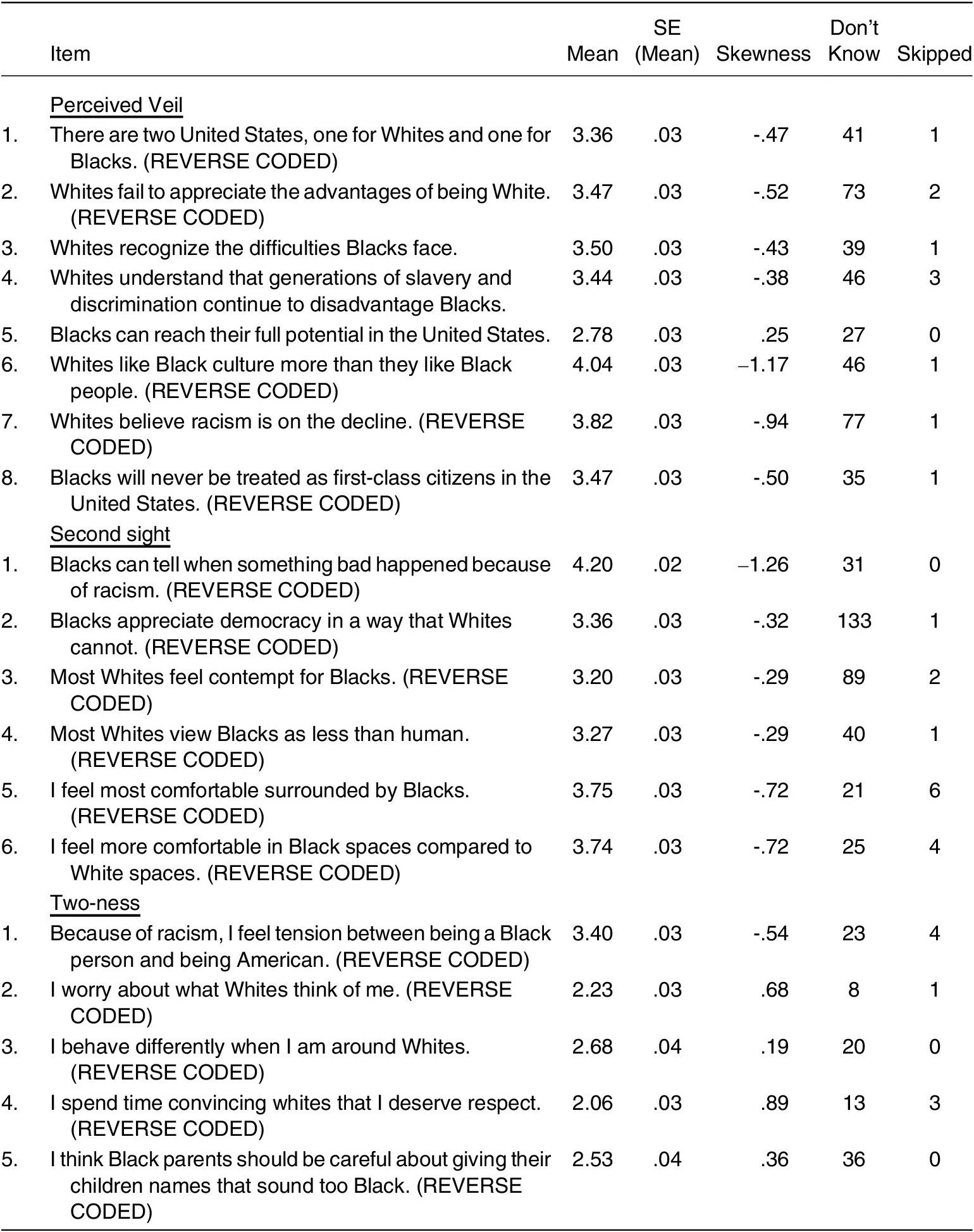
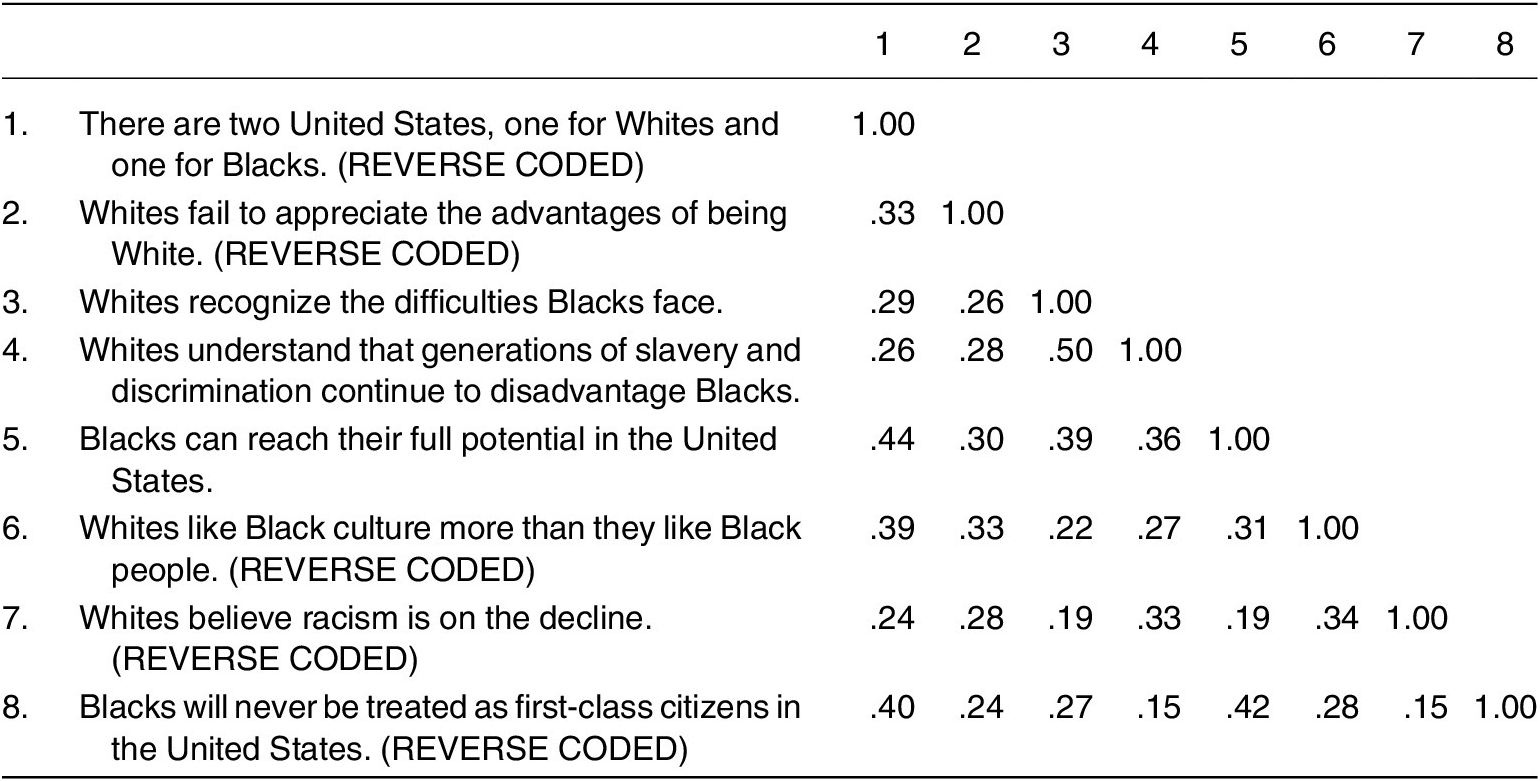
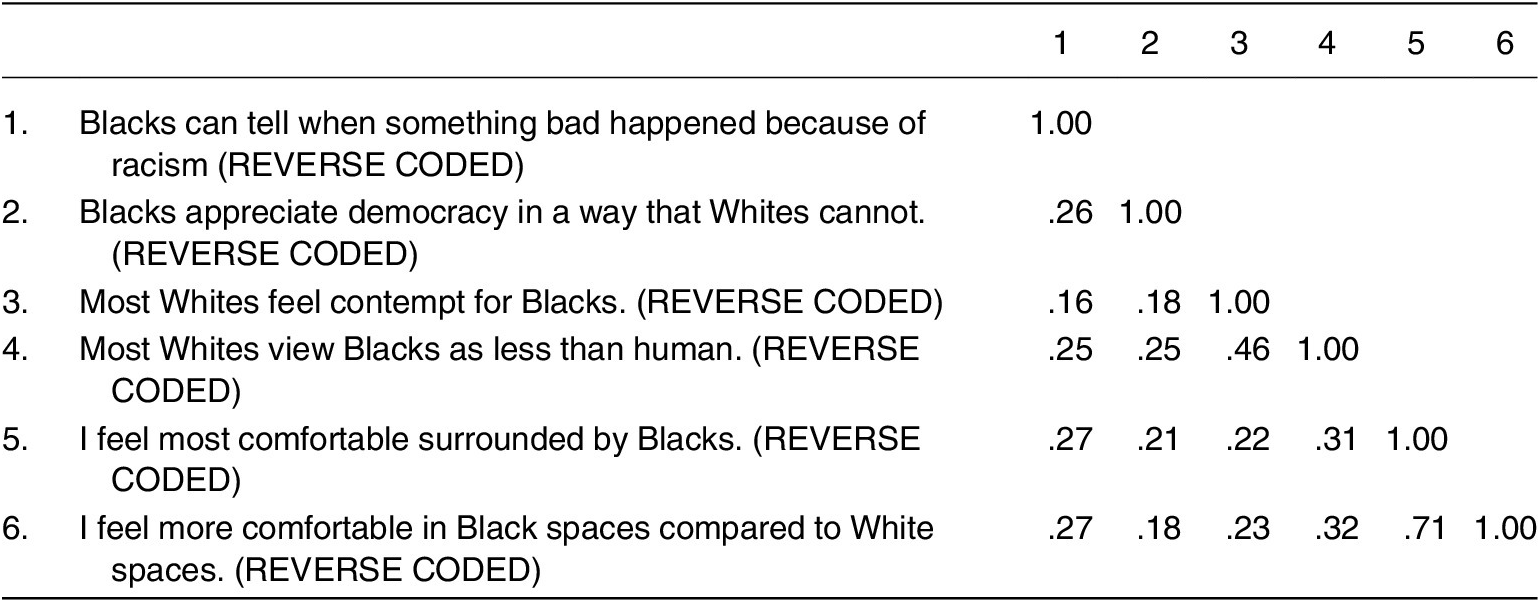
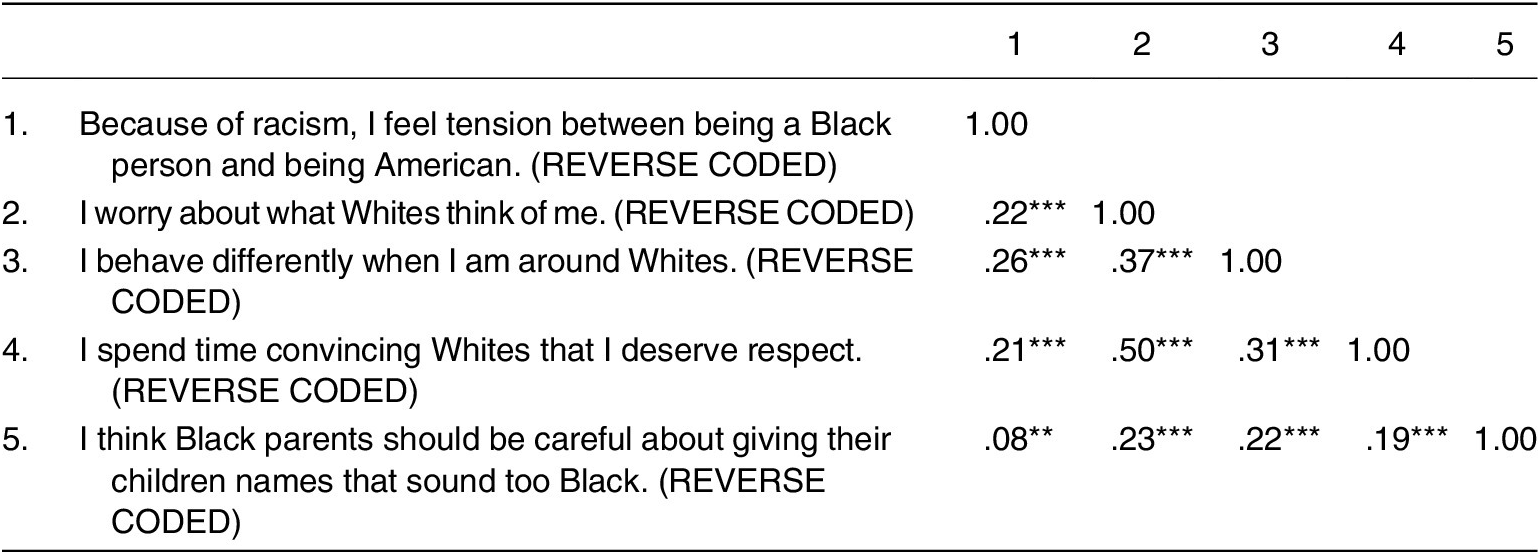
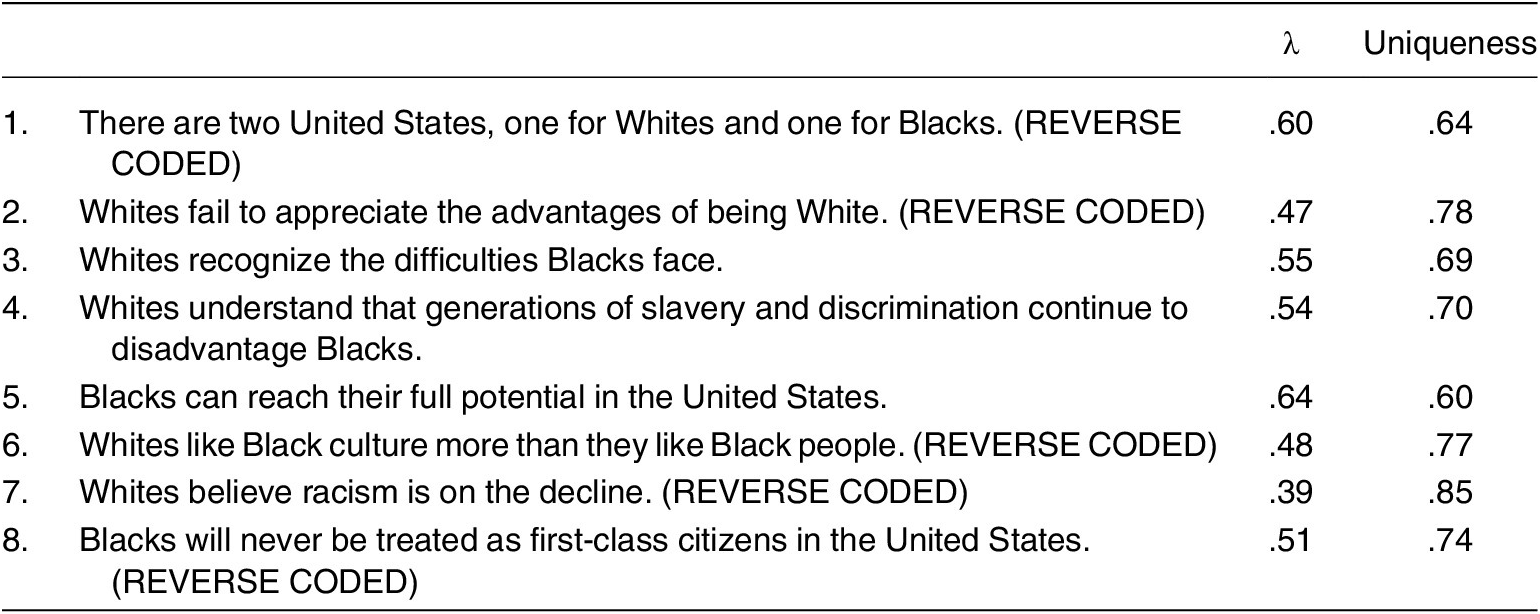
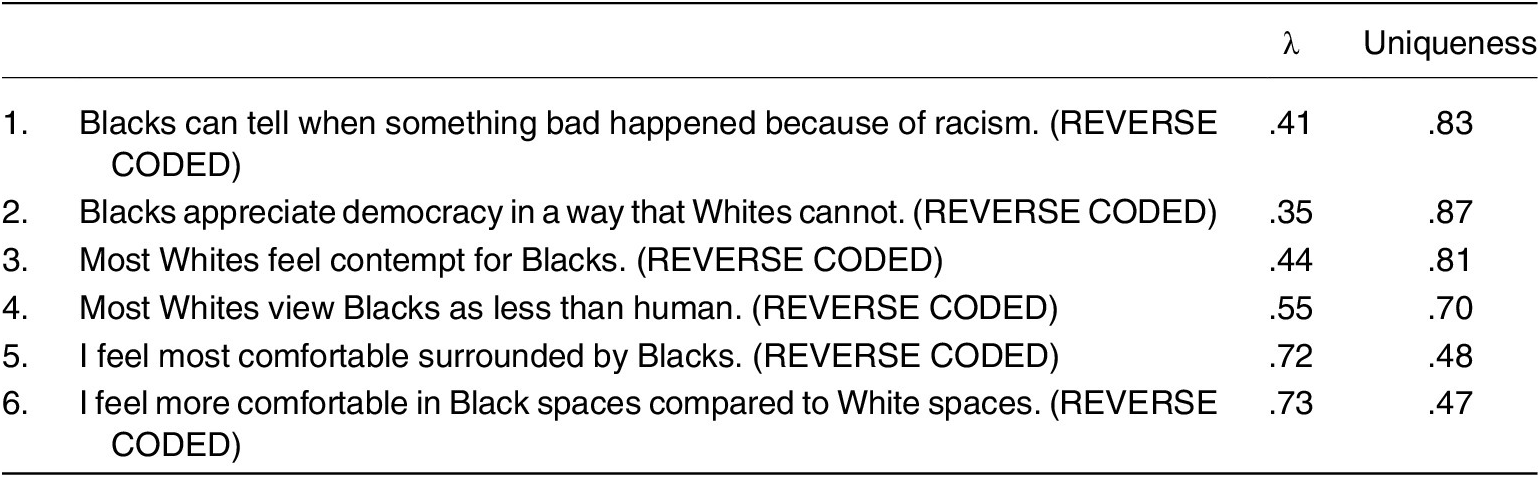
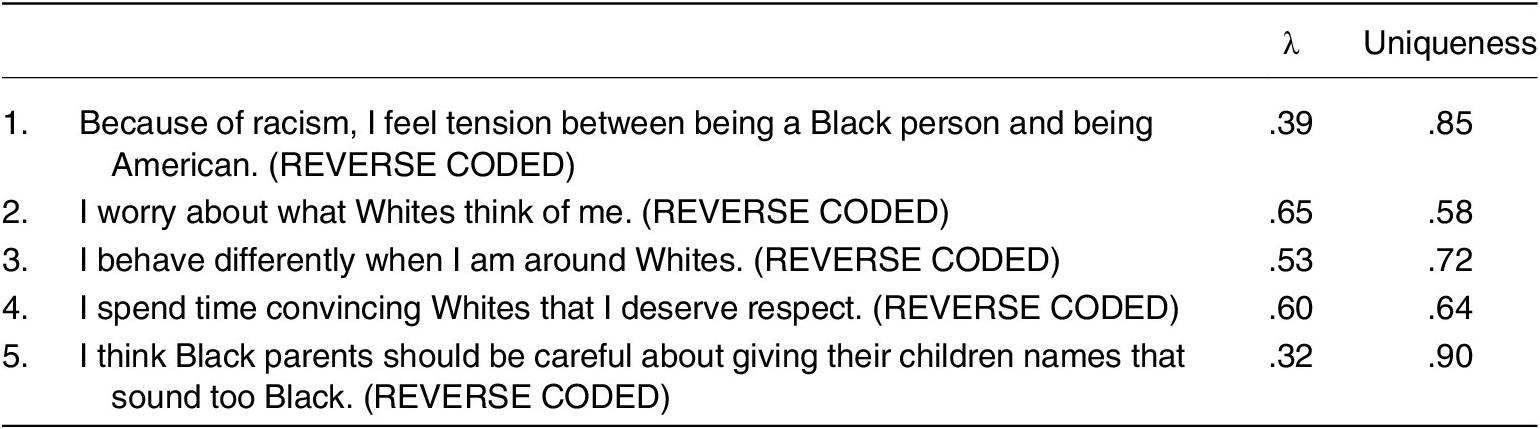
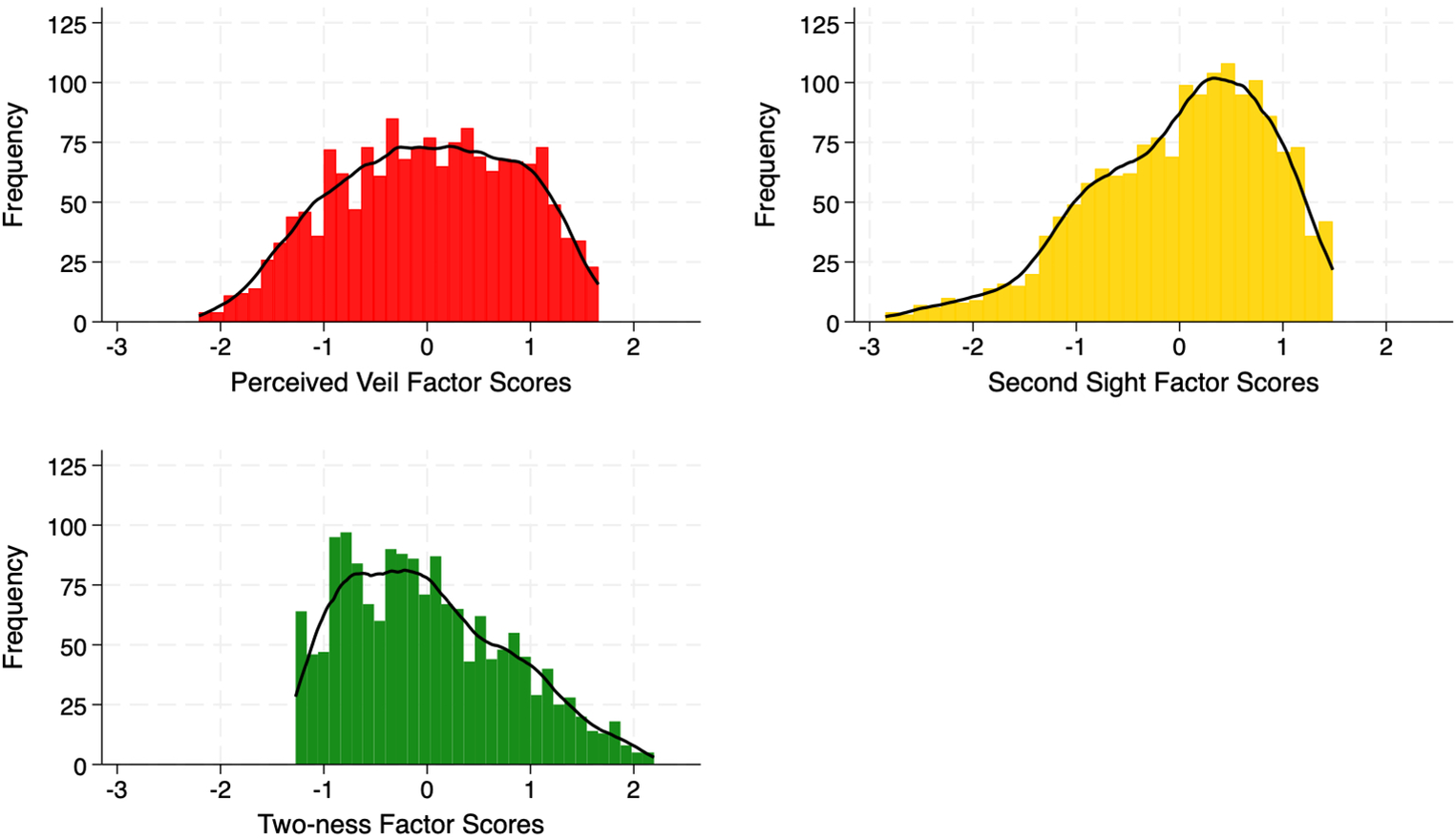
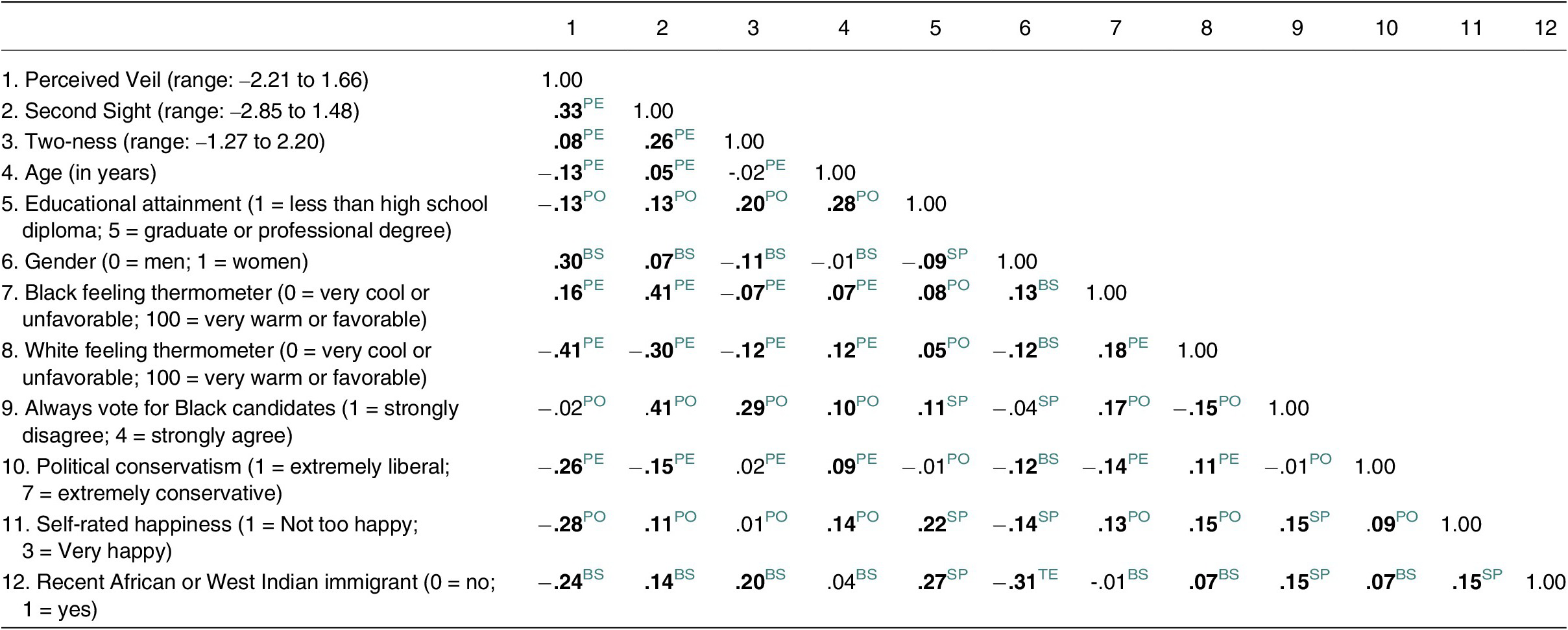
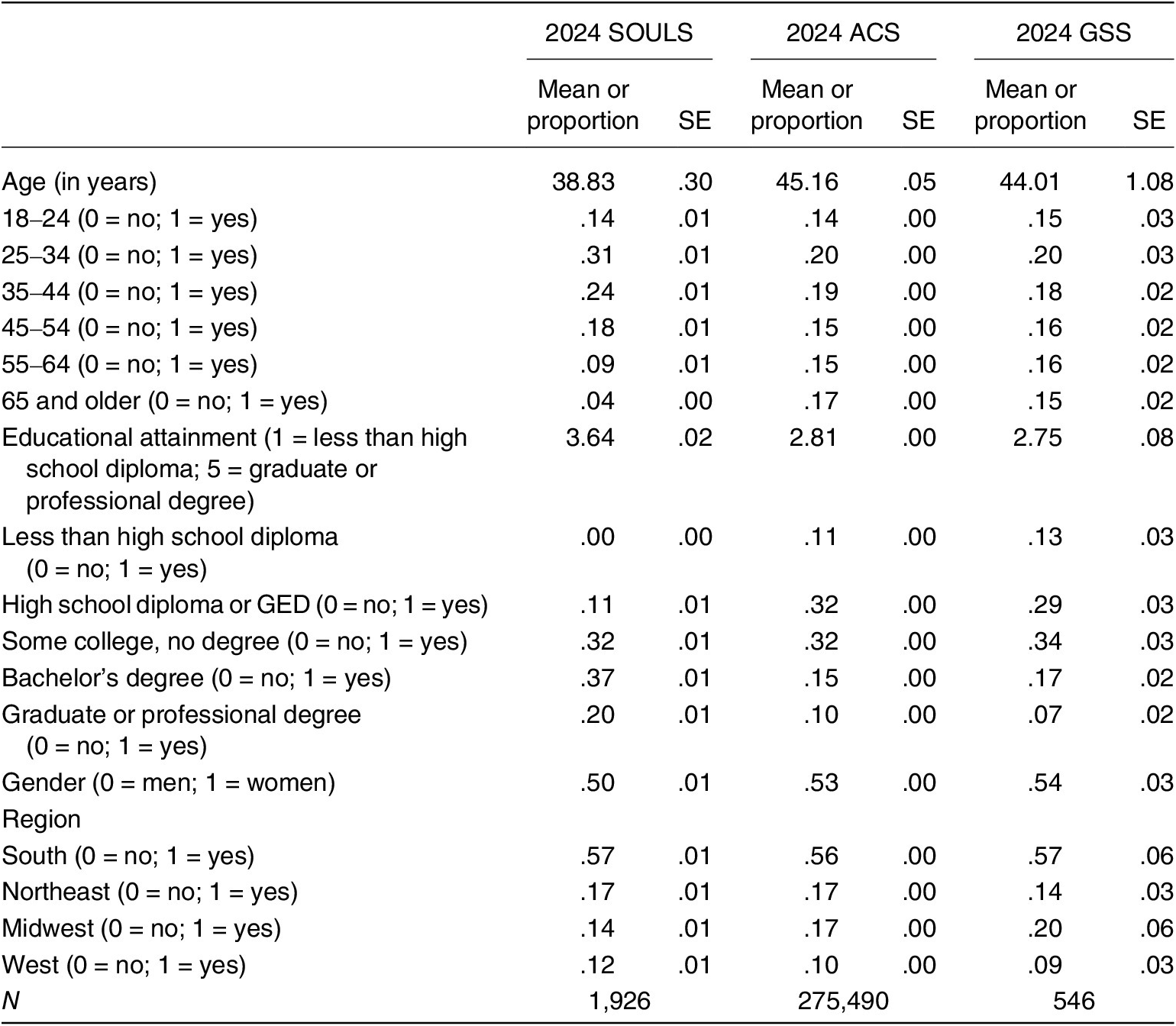
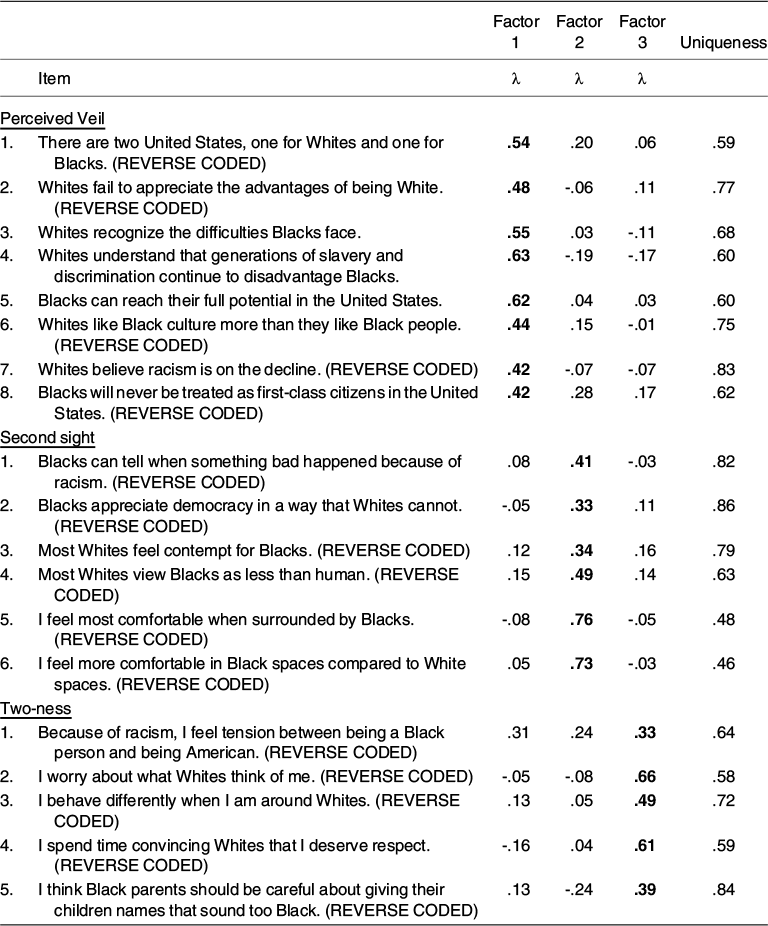

 Open access

