Introduction
The detection and diagnosis of dementia that begins before the age of 65 years is often a challenge for clinicians and takes longer than in the elderly (van Vliet et al., Reference van Vliet2010c). Factors causing a delay include the lower prevalence and the broader differential diagnosis compared with late onset dementia (LOD) (Sampson et al., Reference Sampson, Warren and Rossor2004; Bryan and Martin, Reference Bryan and Martin2005; Mendez, Reference Mendez2006). In addition, the clinical presentation of many types of early onset dementia (EOD) is marked by neuropsychiatric symptoms instead of cognitive disturbances (Mendez, Reference Mendez2006; Kelley et al., Reference Kelley, Boeve and Josephs2009). Therefore, it is common for there to be a psychiatric diagnosis preceding the dementia diagnosis in EOD (Luscombe et al., Reference Luscombe, Brodaty and Freeth1998; Sampson et al., Reference Sampson, Warren and Rossor2004; Mendez, Reference Mendez2006).
As a consequence, people with EOD and their caregivers are at risk of undergoing a large number of referrals and may feel like they are being “passed from pillar to post” in the period prior to diagnosis (Williams et al., Reference Williams, Cameron and Deardon2001). It has also been found that being younger and appearing to be physically fit and healthy makes it more difficult for some people with EOD to receive a correct and early diagnosis (Harris and Keady, Reference Harris and Keady2004). The prolonged time to reach an accurate diagnosis often leads to frustration among caregivers about the medical profession (Harris and Keady, Reference Harris and Keady2004). Other problems that caregivers may experience during this period are: inadequate help, lack of professionals’ knowledge and feeling responsible for finding available help themselves. These issues are distressing to people suffering from EOD and their caregivers (Sperlinger and Furst, Reference Sperlinger and Furst1994; Luscombe et al., Reference Luscombe, Brodaty and Freeth1998; Williams et al., Reference Williams, Cameron and Deardon2001; Harris and Keady, Reference Harris and Keady2004).
It is not only diagnostic uncertainty or misdiagnosis that can cause a delay in diagnosing dementia. Younger people and their relatives are also less likely to even consider the possibility of dementia, leading to a delay in seeking help (Werner et al., Reference Werner, Stein-Shvachman and Korczyn2009). It has been reported that caregivers of individuals with EOD thought the initial symptoms were temporary exacerbations of character or that they were due to stress or depression. They only contacted their GP after a significant life event (Williams et al., Reference Williams, Cameron and Deardon2001). In a study of early onset Alzheimer's disease and vascular dementia, Sperlinger and Furst (Reference Sperlinger and Furst1994) reported that work-related problems were the primary initial symptoms, whereas Newens et al. (Reference Newens, Forster and Kay1994) reported memory deficits, disorientation and lack of energy in another study on early onset Alzheimer's disease (Newens et al., Reference Newens, Forster and Kay1994).
None of the studies reported the main concerns of EOD caregivers within the period from symptom onset to diagnosis. It is important to explore the experiences of caregivers within this period, because it could give further insight into the factors and dynamics that contribute to the prolonged time before diagnosis. Such studies have been conducted in dementia (Clark et al., Reference Clark2005; Krull, Reference Krull2005; Leung et al., Reference Leung2011), but to the best of our knowledge, none of them have focused on EOD. Therefore, the goal of this paper is to investigate the barriers to obtaining a dementia diagnosis for caregivers of people with EOD and to develop a typology of the diagnosis pathway from the perspectives of these caregivers.
Methods
Participants
The present study is part of an ongoing prospective cohort study, the NeedYD-study (Needs in Young onset Dementia). More details have been described elsewhere (van Vliet et al., Reference van Vliet2010a). In short, the NeedYD-study is a prospective cohort study in which people with EOD and their caregivers (N = 215) are followed up for two years and undertake measurements every six months, including semi-structured and structured interviews, questionnaires and cognitive tests. The main objectives are to investigate the (un)met needs of individuals with EOD and their family members and to investigate the course of neuropsychiatric symptoms and their possible risk factors. An additional aim is to explore the experiences and feelings of people with EOD and their caregivers during the diagnostic period. The NeedYD-study consists of two community-dwelling cohorts: one in the diagnostic phase (i.e. those not yet receiving specialized day care) and one receiving specialized day care. For the present study, the data from the cohort of people with EOD and their caregivers in the diagnostic phase were selected (N = 100) because they were expected to be included shortly after receiving the diagnosis. The caregivers were recruited through the memory clinics of the Maastricht University Medical Center+ (MUMC+) and the VU University Medical Center (VUMC) in the Netherlands, regional hospitals, and regional mental health services in the southern and central parts of the Netherlands. In addition, some caregivers applied individually to participate.
Data collection
Written informed consent was obtained before participation in the study. A semi-structured interview was administered to the caregivers. The interviews were administered and audiotaped at the caregivers’ homes. Each section started with an open question followed by more specific sub-questions. When needed, the interviewer asked caregivers to clarify or to expand their answers. Caregivers were also encouraged to explain their feelings or thoughts about issues they brought forward. For the present study, we selected the parts of the interview that addressed topics concerning the period prior to diagnosis (Box 1). Apart from this interview, caregivers were asked in which year the first symptoms occurred. In addition, the patients’ medical files were consulted to obtain the year of diagnosis and medical history. Researchers had internal access to 55 medical records from the VUMC and MUMC+. The remaining medical information from external hospitals was requested by mail. Furthermore, the Mini-Mental State Examination (MMSE) (Folstein et al., Reference Folstein, Folstein and McHugh1975) was administered to the patients.
Box 1. Questions asked at the interview with EOD caregivers concerning the period prior to diagnosis
When did you first notice something was wrong with your family member?
What did you notice?
Can you describe the period prior to diagnosis?
What did you think was wrong?
Which problems did you experience during this period?
Which problems did the children encounter?
When did you seek help?
Where did you seek help?
Can you tell me how you were helped from that point onwards?
Analysis
The interviews were completely transcribed verbatim. The transcripts were analyzed using ATLAS.ti software (Muhr, Reference Muhr2004). We used constant comparative analysis and applied a grounded theory approach (Glaser and Strauss, Reference Glaser and Strauss1967; Corbin and Strauss, Reference Corbin and Strauss1990) to assess four steps in the diagnostic process: (1) problems experienced, (2) suspicion and interpretation, (3) seeking help, and (4) the referral trajectory. A three-step procedure was used in the analysis.
First, two researchers (DvV and MdV) independently analyzed a subset of interviews in consecutive order until, after 21 transcripts, saturation of data occurred (i.e. no new information was obtained). During this analysis, the researchers coded the transcripts thoroughly and constantly compared the content of pieces of transcript with the codes that were established. After establishing the codes, they were grouped into categories, and these categories were then grouped into major themes. Based on this first analysis, a framework for a theory was established.
Second, the theory was tested in an additional 29 interviews by constant comparison by one researcher (DvV). The theory was then verified by another researcher (AD), who read all the pieces of transcripts per category. She looked at the interrelations between codes and categories, in particular, and identified the most important issues per category. If there were different views on the results of the analysis, these were discussed and incorporated in the results. This step is necessary because in this type of study, the existence of inter-coder differences should be recognized (Endacott, Reference Endacott2008).
Third, the categories that resulted from the first two steps were identified and quantified in the whole sample by one researcher (DvV). Another researcher analyzed a random sample of 20 interviews in the same way (AD).
In addition to the quantification of the identified categories, the codes making up the categories concerning the initial symptoms and the referral trajectory were also quantified. Results regarding the referral trajectory were verified by assessing the patients’ medical histories.
Results
The sample
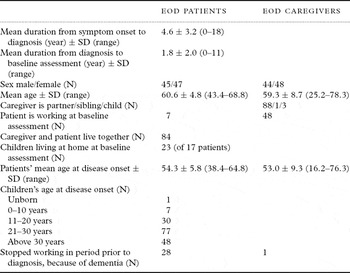
Data from eight caregivers were missing. Table 1 presents the characteristics of the included group (N = 92) of people with EOD and their caregivers.
Characteristics of the participants (N = 92)

The diagnoses of the people with EOD were: Alzheimer's disease (AD) (68%), frontotemporal lobar degeneration (FTLD) (17%), vascular dementia or mixed dementia (VaD/AD) (10%) or another cause (5%). In the group of people with FTLD, eight suffered from frontotemporal dementia and seven from primary progressive aphasia. The mean MMSE score of the whole group (minus the missing/non-reliable scores) was 20.1 (SD = 6.8; N = 74).
Time from symptom onset to diagnosis was calculated to compare the group for which we did not have interviews (N = 8) with the group for which we had interviews (N = 92). In the group with interviews, it took an average of 4.6 years (SD = 3.2) to obtain a diagnosis and in the missing group 4.1 years (SD = 3.8). The group without interviews (N = 8) had a mean MMSE score of 21.0 (SD = 5.8) at baseline. The group with interviews and the group without did not differ in terms of MMSE score (U = 386.5, z = ˗0.149, p = 0.882) or time to diagnosis (U = 309.0, z = ˗0.756, p = 0.449).
Findings
The analysis of the four steps in the diagnostic process resulted in the identification of the following themes: (1) changes in the family member, (2) disrupted family life, (3) misattribution of symptoms, (4) denial, (5) lack of confirmation from social context, (6) lack of responsiveness of the GP, and (7) faulty diagnosis.
Changes in the family member
This theme relates to the experience of the caregiver noticing changes in the person who is eventually diagnosed with dementia, ranging from feelings of uneasiness to a clear suspicion that something is wrong. Apart from cognitive changes, caregivers also frequently reported behavioral changes.
Most caregivers did not recognize the changing behavior of their spouse or family member as deviant at the time it first occurred. Only in retrospect, once the diagnosis of dementia was established, were they able to understand the initial subtle changes in cognition, behavior and/or daily functioning. Some caregivers mentioned more pronounced symptoms as first signs, such as delusional behavior.
One caregiver described the first symptoms displayed by his 61-year-old wife with AD: “I did not really give it a name at first, but I noticed that she got less interested in the newspaper or television programs she used to watch. I noticed that there was only interest for a music or fun television program, but for a conversation there was no interest at all. That was nonsense in her opinion.”
Behavioral changes were quite common as a first symptom (43%). Apathy and lack of social reciprocity were highly prevalent. Forty percent of caregivers mentioned only cognitive problems. These symptoms were mentioned in combination with behavioral symptoms in 17% of the cases and with functional impairment in 14%. Eighteen percent of the caregivers reported only behavioral disturbances as the first symptoms. In some cases, the changes only became noticeable after a patient lost their job and was at home more often.
As time progressed, cognitive and behavioral changes and a decline in activities of daily living were reported to become more profound during the period prior to diagnosis, with accumulating problems within the family and incomprehension of the caregiver. Within this period most caregivers (85%) noticed cognitive changes, especially memory problems.
A caregiver described the early memory problems of her 60-year-old husband with AD: “My husband became forgetful, forgetting appointments or where he put his keys. He did not just forget things, but he wasn't even capable of imagining places where he could have left his keys. Normally when you forget something, you remember again when someone reminds you. But he did not have that; it just didn't come back.”
Personality changes and problem behaviors were mentioned by 57% of the caregivers. Loss of interest/apathy, loss of social reciprocity and irritability/agitation were the most prevalent.
One caregiver mentioned the lack of responsiveness to her needs by her 60-year-old husband with dementia NOS (not otherwise specified): “The behavior of my husband changed. He just did not respond when I needed help or when I needed an arm around my shoulder.”
In some cases, caregivers blamed their family member for their apathy or for being self-centered and reacted strongly. This was expressed by a caregiver about her 62-year-old husband with VaD in the following way: “His behavior changed; he lost interest in us. Yes, I worried, but I was also angry with him.”
Disrupted family life
This theme expresses the problems within the family life of EOD patients. The changes in the patient may disrupt the basic daily routines in family life and can cause tension.
Family/marital conflict. Problems within the family were mentioned by 33% of the caregivers. Most of these caregivers described the period prior to diagnosis as tense or full of anger, misunderstanding and conflicts between them and their spouse. Memory problems led to tension and quarrels between the caregiver and their spouse. Caregivers were confronted by their family member denying something had happened, sometimes blaming the caregiver for making things up.
One caregiver expressed how his 59-year-old wife with VaD/AD reacted as a result of her memory problems: “She forgot a lot of things and blamed me. If I did not remember something she said I had not listened, according to her. If she did not remember something I said, I had not told her.”
Another caregiver described how she reacted to the memory problems displayed by her 62-year-old husband with AD: “The memory problems caused friction and impatience. From my side, of course, especially in the beginning there was a lot of impatience. I frequently reacted with: ‘I already told you, we just talked about that’.”
The personality changes and behavioral problems were most often mentioned with regard to major conflicts and serious disruptions to the marital relationship. Five caregivers even reported being on the verge of leaving their spouse. They emphasized the importance of knowing the diagnosis.
One caregiver stated she was on the verge of leaving her 67-year-old husband with AD: “In that period he constantly went wandering on the streets at night. After that there was a period when he was stalking me. At a certain point I thought, ‘this is it, now I am going to leave him’, but my children prevented me from doing that.”
Twenty-eight percent of the caregivers with children (N = 74) reported that their children suffered from difficulties in the period prior to diagnosis. The children, especially those who were living at home at that time or were in their adolescence, came into conflict with their ill parent, because of irritation and misunderstandings.
Two caregivers described what it was like in the period prior to diagnosis for them and their children:
“It just was difficult in the household. Potatoes were boiled, but no water was in the pan. Dinner was ready, but the meat was still in the freezer and so on. Such things happened. You don't want to sit at the table with teenagers and dinner is not ready. That always caused tension. In that sense the diagnosis was a pleasure.”
“It was a terrible period in which you would rather stay away from home because of the tension my husband brought. He was very nasty to the children. And a child cannot think about that rationally. A child of 13 does not think like an adult.”
Other problems caregivers mentioned were, for example, children noticing tension between their parents or receiving less attention from their parents.
Work and financial issues. Of the patients who still worked at the time their first symptoms occurred (N = 65), 52% of the caregivers reported problems with regard to work or financial issues. Caregivers mentioned several difficulties, such as patients being less productive in their jobs, being unable to manage their previous routine tasks or having conflicts at work. Caregivers had to deal with the emotional impact on their family member and support them by, for example, talking to their employers. For caregivers, it was hard to understand why their family member encountered these problems.
A caregiver described the problems at work of his 58-year-old wife with AD: “She experienced a lot of grief; she did not understand anything about all the accusations she got at work. They accused her of neglecting things at work and I had to go out of my way to comfort her.”
Another problem that was frequently mentioned concerned the patients not informing their caregivers about the problems they experienced at work. Some caregivers reported that patients lost their jobs, sometimes leading to a decrease in income. At this stage, patients were often obliged to apply for a new job, although they were mostly not capable of doing that. One patient did find a new job, but was dismissed again.
This caregiver mentioned the importance of knowing the diagnosis of her 61-year-old husband with frontotemporal dementia: “He got fired constantly, one dismissal after another. I was happy they found out what was wrong with my husband. I only had a small income and then he got declared disabled and we got money from the health insurance. That made a difference.”
Misattribution of symptoms
This theme describes how the occurring symptoms were interpreted by caregivers and which factors were involved in the decision-making process leading them to seek help.
The majority of caregivers were not aware that their family member suffered from dementia when initial symptoms occurred. Some caregivers attributed symptoms to aging. For instance, a caregiver stated about his 68-year-old wife suffering from AD that he thought her memory problems were normal: “To me her forgetfulness was not abnormal. People tend to get more forgetful when they get older. I also noted that she was not able to calculate the scores anymore when we played cards and she did not like to do that anymore. I noticed that, but did not think it was important.”
Some caregivers did not notice any changes for a while and looking back on that period they tried to explain why they did not notice the changing behavior of their spouse. One caregiver related it to characteristics that his 61-year-old wife with AD had always had: “After my sister-in-law pointed out my wife suffered from memory problems, I noticed that she forgot more appointments than she used to. My wife always was a forgetful person, so these problems were not obvious to me before”.
Another caregiver explained not noticing changes in his 64-year-old wife with dementia NOS because they spent so much time together: “Close family knew beforehand something was wrong. I mean, my two daughters are pharmacists with a PhD degree, so they know the story. They came home once in a while and they saw things much clearer. I mean, I saw my wife every day, so I didn't see the nuances that clear anymore. My daughters said, listen dad; ‘when I come in and walk through the house and look in the closet I see what happens here’.”
There was also a group of caregivers who did not have any idea of what could be wrong. For example one caregiver described noticing that his 64-year-old wife with AD had changed, but did not know why this happened: “If your wife always has been active, but she stops doing that all of a sudden, you think: what is going on?’ However, I never knew what to make of it; I was never able to label this behavior. I only thought it was very annoying.”
The largest proportion of caregivers thought the cause of the changes in their family member was psychological – e.g. burnout, depression or stress. The main reasons for this were problems at work or losing their jobs. Most of the caregivers attributing symptoms to psychological causes mentioned behavioral problems next to cognitive changes as the first sign of the disease. If potentially influential events occurred, these were also easily seen as possible causes of stress and changes in behavior.
A caregiver mentioned several reasons that would explain the changes in her 60-year-old husband with AD: “When he had to stay home, because of a burnout, I first noticed something was different. At that time I had recovered from cancer twice, so everything came all at once. I noticed he did strange things, but I thought this was because he could not take it anymore and his work was too burdensome for him.”
Sometimes the reason was not found in concurrent events, but rather in the past. For instance, a caregiver thought the changes could be due to the difficult childhood of his 64-year-old wife with AD: “I noticed a certain strain between us and the input in the relationship was not equal anymore. But after several years of marriage you think you can get through it. I thought: ‘This is a dark period, she suffered from a difficult childhood, and things will work out eventually’. But everything just got worse.”
There were also caregivers who thought of a neurological cause other than dementia, such as a brain tumor or vascular problems. Caregivers who mentioned these concerns either had a spouse with a family history of vascular disease running in the family or their family member suffered from physical complaints, such as headaches, hyperventilation or sleep apnea.
Eventually, because of worsening symptoms, some caregivers did suspect the cause could be dementia. Those caregivers mostly recognized symptoms because they were familiar with this condition in their own family. A small minority of caregivers did suspect dementia in the initial stage of the disease. In this group, cognitive changes were commonly mentioned as the presenting sign in the patient without behavioral changes.
Seeking help
Generally, it took a while before caregivers thought something was sufficiently wrong that they decided to consult a GP. In nearly every case, the caregiver rather than the person with dementia was the one to seek help. Patient-related factors that contributed to the feeling that something was wrong and help was necessary were the development of more pronounced memory complaints and the occurrence of a significant limitation in functioning, such as getting completely lost or losing the ability to cook.
An important turning point mentioned was the return from holidays. A break from the normal routines made caregivers more aware of the limitations of their family member. While on holidays the limitations were attributed to the change of environment, after returning home the changes were even more striking.
Further, the social context played an important role for caregivers in triggering the idea something was wrong or confirming their worries. Confirmation of others helped them in the decision to seek help. Family members, including children, often pointed out the changes in behavior to caregivers and sometimes were able to convince the caregiver that they should consult a GP. Also, the interference of an “outsider” (e.g. child, district nurse) sometimes helped to convince the patients themselves to find professional help.
A caregiver pointed out that it was not until one of his children convinced him it was necessary, that he sought help for his 59-year-old wife with AD: “I first thought my wife was too busy at work, but later on one of my children said to me, ‘Let's go ask the GP.’ That set things in motion.”
Although family members commonly played an important role in recognizing symptoms, sometimes they were not aware of these symptoms because patients were able to cover up their deficits to the outside world.
A caregiver of a 59-year-old male with primary progressive aphasia underlined the need to be understood by her family and friends: “That period was very tiring for me because I could not convince anyone that something was wrong. My husband, a giant of a man, knew very well how to manage in specific situations, so nobody noticed anything. He could really fool people.”
A lack of understanding from family or friends, including children, made the period prior to diagnosis more difficult for caregivers and made it harder to seek medical advice.
Hiding problems and denial
A major barrier for caregivers to realize something was wrong and to seek help were the fact that patients were denying and hiding their problems.
Possible denial (33%) showed itself in several different behaviors, namely: denying mistakes, denying something was wrong, trivializing difficulties, covering up cognitive deficits and hiding problems experienced, such as conflicts at work.
For example, one caregiver described how her 63-year-old husband with AD denied something was wrong with him and hid things from her: “I noticed his functioning declined, but he denied it. Finally he went to the GP, alone, because I was not allowed to go with him. When he came back he told me the GP said nothing was wrong. However, it appeared that my husband had received a referral letter, but he just ignored it.”
Looking back, the first impairments in daily living usually started at work. However, often caregivers did not get any signals about these problems by their spouses nor were they informed by the employer. They commonly only became aware of the severity of problems when their spouse lost his/her job or, in a few cases, when caregivers contacted their spouses’ employer. Awareness of these work-related problems was an important factor contributing to the feeling something was wrong and help was necessary.
One caregiver described how her 47-year-old husband with frontotemporal dementia did not tell her about his difficulties at work: “When he got fired I heard afterwards what had happened. He appeared to have had weekly appointments with his superior and received a report every week. He never brought those reports home, but left them in his locker at work. And they stayed there, so I didn't know anything about his problems.”
Other caregivers had to rely on the accounts of their spouses, usually not representing an accurate picture of reality, because they were not able to reflect on their own functioning.
Once caregivers had decided to seek help, a major problem was resistance or refusal of their family member to consult a GP, because their family member did not think there was anything wrong.
A caregiver described how the refusal of his 61-year-old wife suffering from AD resulted in a delayed diagnosis, although he had already consulted the GP: “I mentioned it to the GP. He said if you come together, I can help you, but if she refuses to see me, there is nothing I can do for you. So it took several years before I convinced my wife to go to the GP. She refused and said it wasn't true what I said. That was the problem.”
Non-responsiveness, misdiagnosis and inadequate help
This theme focuses on the period after the patient and caregiver have decided to seek help. We found that EOD caregivers and patients encounter a considerable number of problems with professional health care.
A number of issues were brought forward by the caregivers about the referral trajectory. They felt that their GP did not take them seriously. For instance, a caregiver described the non-responsiveness of the GP of her 65-year-old husband with Alzheimer's AD: “I went to the GP several times, but he just did not respond, and I suffered from the consequences. He thought it was a depression and referred my husband to the regional mental health service. At a certain point I got frightened because of the memory disturbances, so I went to the GP again. I told him: ‘I want you to do something, because I can no longer keep it up. You don't know what is happening and pass me from pillar to post. I demand a medical examination’.”
Of the patients and their caregivers for whom a GP was the first clinician they consulted (N = 79), 22% of the caregivers stated that their GP neglected to refer them after their first consultation. In the case of the other patients, the situation was different because they were under regular control for somatic conditions and got referred to a memory clinic by their specialists, or the caregiver asked the advice of an acquainted specialist directly, which could have influenced the decision of the GP to refer.
Furthermore, one of the main issues was the feeling of being passed “from pillar to post”. Thirty-one caregivers (34%) reported that their family member received an erroneous diagnosis prior to the dementia diagnosis either by their GP or a specialist. When patients received a psychological diagnosis they were sent home or were referred and received counseling for the established psychological conditions.
Overall, the referral trajectory was considered too long and some caregivers stated that they had to fight to get attention or a medical examination. Fifteen percent of the caregivers explicitly reported that they felt relief after the dementia diagnosis was established.
A 26-year-old caregiver felt she and her mother, a 58-year-old with AD, did not get proper help before the dementia diagnosis was established: “The neurologist concluded my mother suffered from post-traumatic stress disorder, so he advised us not to worry and not to pay attention to the memory problems. My sister and I managed to do that until we began to worry again. Finally she got diagnosed with Alzheimer's disease. As soon as this word ‘Alzheimer's’ appeared, which of course is terrible to hear, we received help. It is almost a magical word, although it has a terrible meaning. Medical doctors take us serious for the first time. Thus, all the people who are still out there without a proper diagnosis don't get any help.”
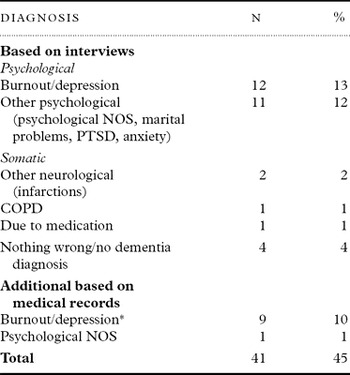
Verification of other diagnoses based on medical history. A total of 41 cases (45%) were found to have received a diagnosis other than dementia, prior to their dementia diagnosis. These diagnoses are listed in Table 2. Twenty-six of the reported diagnoses in the interviews were consistent with the medical records, whereas fifteen cases of misdiagnosis were inconsistent in the interview and the medical record. Five diagnoses were mentioned by caregivers, but not found in the medical files. According to the caregivers these diagnoses were established by GPs. It is often the case that not all information about GP consultations is documented in hospital medical records, which can explain the fact that five diagnoses were not found. Ten diagnoses were found in the medical records, but not mentioned by caregivers. Suspicions leading to wrong referrals were also taken into account; for example, a neurologist referred a patient to the regional mental health service because of suspected depression. Psychological diagnoses were the most common (36%). From the medical records it appeared that in 15% of these cases, the diagnoses were maintained when the dementia diagnosis was established, indicating comorbidity. In one case, the diagnosis “mild cognitive impairment (MCI), no dementia” was established. The caregiver did not agree and obtained the dementia diagnosis through a second opinion. Furthermore, in three patients there were suspicions of autism in addition to another established psychological condition.
Types of earlier diagnoses (N = 92)

*In two cases, medical history showed chronic conditions.
COPD = chronic obstructive pulmonary disease; PTSD = post traumatic stress disorder; NOS = not otherwise specified.
Integration of themes
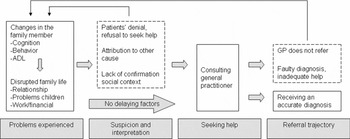
The themes and categories that emerged from the qualitative analysis are integrated and presented in Figure 1. The different possible trajectories that EOD patients and caregivers follow are presented. In the model, there is a specific focus on which factors could be involved in the delay in receiving a diagnosis (boxes with dashed lines). The process starts with changes in the person with EOD, leading to the decision to seek help, which is often preceded by problems within the family. However, when the individual with EOD denies and refuses to seek medical advice, when symptoms are not accurately attributed or when caregivers do not receive any confirmation of their suspicions from others, the decision to seek help may be postponed. Meanwhile, symptoms may worsen and possible disruption to family life worsens/remains until people actively seek help. Similarly, if a medical doctor is consulted and inadequate help is offered (e.g. not being referred, erroneous diagnosis), the unstable situation continues. Accurate diagnosis can break this vicious cycle. It should be noted that there were also people who did not experience these problems, as is indicated in the figure.
Graphic summary of results: Different possible trajectories from symptom onset to diagnosis emerging from the qualitative analysis of interviews with EOD caregivers. The dashed boxes represent possible factors prolonging the period before diagnosis.

Discussion
The goal of this study was to investigate the barriers to obtaining a dementia diagnosis for caregivers of people with EOD and to develop a typology of the diagnosis pathway for these caregivers, by investigating four steps in the diagnostic process: (1) problems experienced, (2) suspicion and interpretation, (3) seeking help, and (4) the referral trajectory.
We theorized that the following themes play a role in the delay in diagnosing EOD: (1) “misattribution of symptoms by caregivers”, (2) “denial of the individual with EOD and the refusal to seek medical advice”, (3) “lack of confirmation from the social context”, (4) “lack of responsiveness of GP”, and (5) “misdiagnosis of people with EOD leading to inadequate advice/help”. Two other themes characterize the problems experienced by EOD caregivers in the period prior to receiving a diagnosis: (6) “changes to the family member” and (7) “disrupted family life”. These findings partly overlap with existing literature on EOD as well as on LOD, but there are also factors distinguishing the experiences of EOD caregivers from those of the elderly.
An additional possible barrier to obtaining a diagnosis in EOD is the occurrence of behavioral symptoms. Overall, behavioral changes were mentioned frequently (57%). The same was true when looking only at the initial symptoms (43%). The general idea that behavioral disturbances and problems in social functioning only present in later stages of AD (Sampson et al., Reference Sampson, Warren and Rossor2004) may therefore be unwarranted. Misattribution of symptoms appears to be common in EOD and our findings suggest that behavioral changes play an important role in this process. While in LOD behavioral symptoms trigger recognition of dementia (Eustace et al., Reference Eustace2007), in our group, caregivers related them to psychological causes.
Further factors leading to attributions to psychological causes were difficulties at work, dismissal from work or other potentially influential events, such as the caregiver becoming ill. Normalizing behavior by understanding it in relation to a stressful event is common before a dementia diagnosis is given, because in such events it is acceptable to behave differently (Krull, Reference Krull2005). Explaining symptoms in the light of problems at work is therefore obviously common in young people and is also demonstrated by the establishment of diagnoses of burnout. Although potentially leading to misinterpretation, it is important for caregivers to know about the work-related problems of their family member. This helps them to become aware that something is wrong and decide to seek help. These findings suggest a role for employers and company doctors in facilitating recognition of dementia in younger people.
The denial of symptoms by the person with EOD was an additional factor making it hard for caregivers to deal with their changing family member and, in several cases, led to refusal and delay in help seeking. This finding is in line with other studies on dementia in different age groups (Newens et al., Reference Newens, Forster and Kay1994; Clark et al., Reference Clark2005). Denial is common in dementia and may serve as a protective mechanism, especially when the concept of self is under threat, which is the case with the onset of dementia (Clare, Reference Clare2002). The social context, including the relationship with the partner, is likely to have an impact on the way the person with early stage dementia understands what is happening (Clare, Reference Clare2002). From the present data it appears that, in the case of refusal to seek advice, someone other than the spouse can play a key role in persuading a person with EOD to seek medical advice. Also when the caregiver was not aware of changes in the patient, the social context played an important role in triggering this awareness, which has also been established in LOD (Krull, Reference Krull2005).
Other factors leading to the prolongation of the period prior to diagnosis were lack of responsiveness from GPs and the establishment of erroneous diagnoses leading to inadequate support or treatment. Therefore, not only GPs but also therapists should have knowledge about early onset dementia, enabling them to pick up early dementia signs. The referral trajectory was experienced as problematic and too long. The diagnosis came as a relief in some cases, illustrating the magnitude of the struggles the EOD caregivers experienced. In studies on LOD, similar reactions after diagnostic disclosure have been reported (Connell et al., Reference Connell, Boise, Stuckey, Holmes and Hudson2004; Derksen et al., Reference Derksen, Vernooij-Dassen, Gillissen, Rikkert and Scheltens2006). In LOD, it has also been reported that caregivers experience resistance from physicians when trying to convince them something is wrong (Connell et al., Reference Connell, Boise, Stuckey, Holmes and Hudson2004) and dementia appears to be commonly under-diagnosed (Iliffe et al., Reference Iliffe2009).
Besides the factors prolonging the period prior to diagnosis, several aspects have been identified impacting on the client system. Behavioral symptoms are one of the major risk factors for caregiver burden (Ballard et al., Reference Ballard, Lowery, Powell, O'Brien and James2000; de Vugt et al., Reference de Vugt2006) and are hard for caregivers to understand, even when a diagnosis has been given (Paton et al., Reference Paton, Johnston, Katona and Livingston2004). Our finding that behavioral symptoms had a high impact on the spousal relationship is in line with literature showing that behavioral problems independent of cognitive or functional status are associated with deterioration in the quality of the marital relationship. Apathy in particular appears to diminish the amount and reciprocity of interactions between spouses (de Vugt et al., Reference de Vugt2003) and this was a relatively frequent symptom in the present study.
The other issues from the theme “disrupted family life” – e.g. problems with children and work, and financial issues – are likely to be more specific to people with EOD because of their different phase in life compared to those with LOD. These problems have repeatedly been reported in the literature to be important within EOD families (van Vliet et al., Reference van Vliet, de Vugt, Bakker, Koopmans and Verhey2010b). This finding is in line with a study on the impact of having a father with EOD, which showed that a delay in diagnosis and misdiagnosis instilled uncertainty and confusion in the children. The same study showed that a diagnosis was important for acquiring the appropriate financial support (Allen et al., Reference Allen, Oyebode and Allen2009). Other studies have attempted to explore the unique challenges people with EOD and their caregivers’ experience. However, their main focus was not on the period prior to diagnosis (Harris and Keady, Reference Harris and Keady2004) or they focused only on the referral trajectory (Newens et al., Reference Newens, Forster and Kay1994; Williams et al., Reference Williams, Cameron and Deardon2001).
The present study provides the first detailed overview of the specific experiences of a unique sample of EOD caregivers in the period before diagnosis. The strength of qualitative research is that it is suitable to study complex issues, it illuminates context and identifies areas to be explored in future research. Combining this method with quantitative research methods provides us with a deeper understanding of the experiences of EOD caregivers as well as an indication of how these are distributed in the EOD group. Considering the fact that the analyses are mainly based on spontaneously mentioned problems, the reported percentages are most likely an underestimation of the total proportion of caregivers experiencing these problems.
Although qualitative research is interpretative in itself, researchers need to be reflexive on their own influence on data analysis. The strengths of this study are that separate analyses have been done by different researchers, and there were continuous discussions between them, which is important for increasing theoretical sensitivity and the trustworthiness of the data (Corbin and Strauss, Reference Corbin and Strauss1990; Endacott, Reference Endacott2008).
A limitation of the present study is that the “erroneous” diagnoses reported here sometimes actually represent comorbidity, the suspicion of a physician and, in one case, MCI. However, the study shows how these are experienced by caregivers and how symptoms are labeled by the medical profession. It should also be noted that we did not have access to all complete medical records. Portions of medical files were received from external hospitals in 37 cases.
In addition, the results are restricted to the EOD group because no comparison group was used. Therefore, it is not clear whether the themes revealed result in a longer delay in diagnosing EOD than LOD. Misattribution of symptoms, for example, is also common in LOD. The older people are, the more they tend to attribute memory problems to normal aging. Furthermore, although older people may suspect dementia sooner, this does not necessarily mean they seek help earlier. Fear of facing the possibility of dementia has been found to delay help-seeking (Clark et al., Reference Clark2005), which may be related to fear of admission to residential care. Likewise, being employed may facilitate recognition in younger people, because it is more evident there is a problem and more difficult to deny. Further, possible genetic links in presenile dementia and senile dementia with early onset can make family members more conscious of symptoms (Miyoshi, Reference Miyoshi2009). It has been found that EOD patients were less severely impaired on presentation than LOD patients (McMurtray et al., Reference McMurtray, Clark, Christine and Mendez2006).
However, the factors and dynamics causing the delay in obtaining a diagnosis are probably different in the EOD than in the LOD group, and the impact on family life seems to be higher in EOD than in LOD.
In conclusion, this study provides some insight into the factors prolonging the time to diagnosis. The denial and the refusal to seek help by the person with EOD, the misattribution of symptoms, professionals’ inadequate help and faulty diagnoses are key issues for future support for EOD caregivers and should be studied further. Furthermore, EOD patients encounter a high number of problems in the period prior to diagnosis, which cause strain and insecurity in several life domains. These problems seem specifically related to the situation of people with EOD. Although a timely diagnosis is not always considered useful by GPs (Cahill et al., Reference Cahill2008; Hansen et al., Reference Hansen, Hughes, Routley and Robinson2008), these findings show the specific importance for younger people to receive an earlier diagnosis. Knowing the nature/background of difficulties experienced may help caregivers and patients better understand and cope with their increasingly difficult situation; it may prevent loss of their jobs, divorce or disrupted relationships with children.
These findings underline the need for faster and more adequate support from healthcare professionals. It should be noted that establishing a dementia diagnosis will remain a challenge for clinicians until unique differentiating markers are found. The risk of erroneously diagnosing psychiatric conditions as dementia is also present, as shown in previous studies (Marsden and Harrison, Reference Marsden and Harrison1972; Ron et al., Reference Ron, Toone, Garralda and Lishman1979). Recommendations, therefore, are mainly aimed at improving clinicians’ alertness to the possibility of dementia at young age, improving responsiveness to individual needs and ensuring the regular follow-up of people presenting with cognitive and/or behavioral changes. In addition, society needs to be more sensitive about dementia and EOD symptoms.
Conflict of interest
None.
Description of authors' roles
D. van Vliet designed the study, collected parts of the data, performed the qualitative analyses and wrote the article. M. de Vugt, R. Koopmans and F. Verhey supervised and supported the process of formulating the research questions, designing the study and they reviewed the paper. M. de Vugt supervised data collection and performed parts of the qualitative analyses. C. Bakker reviewed the paper. M. Vernooij-Dassen provided support with methodology and reviewed the paper. Y. Pijnenburg supervised part of the data collection and reviewed the paper.
Acknowledgments
We thank all research assistants for collecting the data and/or transcribing the audiotapes. We also thank Astrid Dello for assisting with the analyses. This study was supported by a grant from the Dutch Alzheimer's Society and a grant from the Florence Care group in the Netherlands.