Introduction
Demand for meat products exhibiting health-promoting properties has been increasing recently. Regarding its nutritional aspects, poultry meat fits the current consumer demand for quality protein, low-fat meat and a high unsaturation degree of fatty acids with low sodium and cholesterol levels. Poultry meat may be a source of bioactive substances with favourable effects on human health, such as conjugated linoleic acid (CLA), vitamins and antioxidants, and a balanced n-6 to n-3 PUFA ratio (Barroeta, Reference BARROETA2006; Givens, Reference GIVENS2009).
Poultry meat is a major source of protein (18-25%) with a well-balanced amino acid composition. The nutritive value of poultry protein is high, amounting to 80-84%, with methionine and phenylalanine acting as limiting amino acids (Insel et al., Reference INSEL, TURNER and ROSS2001; Nistor et. al., 2013). Poultry meat protein has high digestibility, amounting to as much as approx. 97%. Meat from young poultry contains a lower amount of collagen and elastin (on average 1-6%) in comparison to meat from larger animals, in which it may be as high as 20%. Lipids in poultry meat are basically a mixture of triacylglycerols, phospholipids and cholesterol. They are characterised by their high availability, which results from the content of unsaturated fatty acids, including EFAs (at 68% and 23%, respectively). Cholesterol content in poultry meat material varies, and depends on species, type of muscle and skin content. Turkeys have the lowest amount of cholesterol in breast muscle, at approx. 49 mg/100 g. (Ponte et al., Reference PONTE, MENDES, QUARESMA, AGUIAR, LEMOS, FERREIRA, SOARES, ALFAIA, PRATES and FONTES2004).
Poultry meat is an important supplementary source of B vitamins, particularly B1 (thiamine), B2 (riboflavin), B3 (niacin), B6 (pyridoxine) and B12 (cobalamin) and fat-soluble vitamins such as A, D, E and carotene. For consumers, poultry meat and processed derivates are important sources of minerals, particularly iron and zinc as well potassium, phosphorus, sodium, magnesium, calcium and copper (Kunachowicz et al., Reference KUNACHOWICZ, NADOLNA, PRZYGODA and IWANOW1998).
Apart from dairy products containing probiotic cultures, the range of functional products obtained from poultry meat is relatively limited. Thus a question arises whether poultry meat and its products, frequently considered to be of high health-promoting and nutritive value, may exhibit properties of functional food.
The legal aspect of functional food
Functional food in the European Union is not separately regulated. If these products are proved safe and are not included in another category of foodstuffs, for which certification is required, they may be launched on the market (Meulen and Velde, Reference MEULEN and VELDE2008). Japan is the only country in the world which has passed an act on functional food; the Nutrition Improvement Law. In 1991, the concept of food for specified health use (FOSHU) was established. Producers wishing to be granted a permit to produce and introduce such food on the market have to file a special application at the Japanese Ministry of Health, containing results of medical tests and scientific data confirming the advantageous effect of these products on human health. Approved products are labelled with the stamp of Japan's Ministry of Health and Welfare (MHW). In the USA there is no legal definition of functional food, despite the fact that products exhibiting a supplementary, positive effect on health are commercially available. However, there are two legal regulations aimed at the classification of functional food. One of them is the Nutrition Labelling and Education Act passed in 1990. The other is the act on food enrichment and health education passed in 1994. The problem of labelling of food articles is particularly important, especially in disseminating information concerning medicinal and nutritional properties of natural products. The above recommendations can be found in the Directive concerning food nutritional and health statements (Regulation (EC) No 1924/2006). Placement of claims is not obligatory, but their content has to be verified, since it is regulated by law. The decision on the authorisation of health claims is made by the European Commission following a prior positive opinion from the European Food Safety Authority. The labelling of food ingredients, especially additives and supplements, has been a feature of the Codex General Standard since its inception. Such labelling has consumer information as its primary objective as it is a general principle that any substance added to food as an additive must have been evaluated and approved for safety in use (Randell, Reference RANDELL2010).
The implementation of the Directive of the European Parliament and Council (UE) No 1169/2011 from the 25th October 2011 was made regarding consumer information about food materials and the presence of such constituents, e.g. gluten. In addition, the Directive of the European Parliament and Council No 609/2013 from the 12th June 2013 was implemented regarding food intended for infants and young children, for special medical purposes, and total diet replacement for weight control. As of the 13th December 2016, with very few exceptions, every single food product will have to bear information about its nutritional value (Art. 9, par. 1, letter l in connection with Art. 54, par. 1 of the EU Directive No 1169/2011).
The European Commission's Concerted Action on Functional Food Science in Europe (FuFoSE), coordinated by the International Life Science Institute (ILSI) Europe defined functional food as food products which, together with basic nutritional impact, have beneficial effects on one or more functions of the human organism, thus either improving general and physical conditions or/and decreasing the risk of disease. The intake and form of any functional food should be stated as it would be normally consumed in the diet (Hoffmann et al., Reference HOFFMANN, WASZKIEWICZ-ROBAK and ŚWIDERSKI2010).
Methods to increase contents of health-promoting compounds
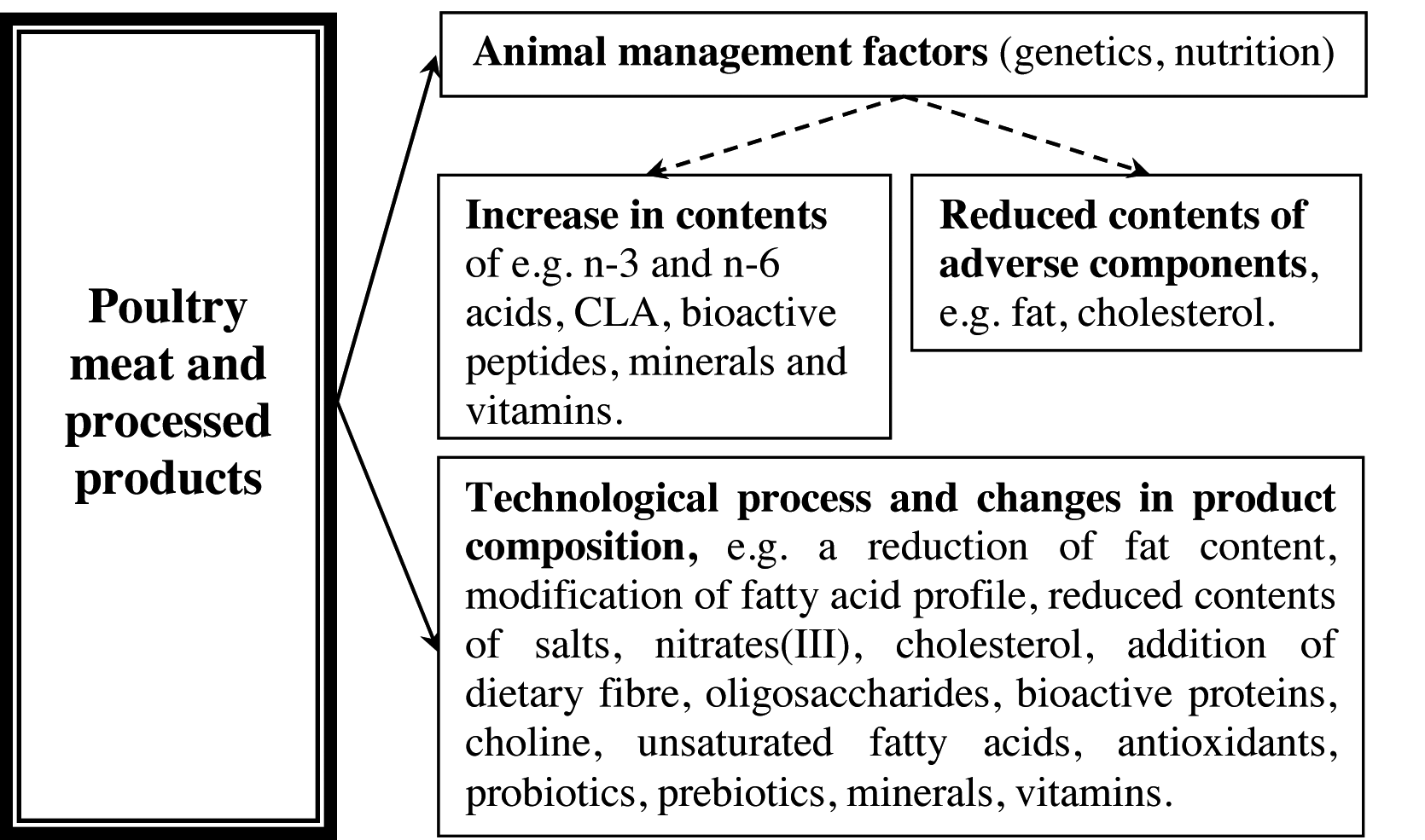
In order to produce quality food from poultry meat it is necessary to fully understand both its potentially positive and negative effects on consumer health. It needs to be stressed that poultry meat and processed product may also contain other compounds less advantageous to human health. The latter include substances naturally found in meat, such as fat, cholesterol, residues of e.g. antibiotics, compounds added during technological processing (e.g. salt, nitrates, phosphates) and those formed during processing (fat oxidation products, hydrocarbon derivatives, nitroso amines, etc.). These compounds at high consumption may contribute to the development of certain diseases. For this reason, methods for eliminating or significantly limiting the adverse effects of consumption of animal origin food products is being attempted. The aim of this is to ensure that products meet the requirements of ‘safe food’. Several approaches may be applied to modify the composition of poultry meat and its processed products (Figure 1).
Methods to increase nutritive value of poultry meat and processed products.

modification of poultry raw material composition
Nutritive and health-promoting values as well as sensory attributes may be modified through nutrition, pharmacology and genetics. The latter method is the most difficult and may cause the greatest controversies (Sang, Reference SANG2003). Modification of these attributes in meat, thanks to the addition of individual biocomponents in feed, is a simpler and much more commonly applied method than the genetic approach. This can improve nutritive value of meat including the reduction of fat and cholesterol and increasing polyenic fatty acids, to give a more advantageous ratios of fatty acids, particularly from the n-3 and n-6 families (Pisulewski, Reference PISULEWSKI2005).
The literature is limited regarding changes in muscle cholesterol due to the effect of cholesterol-reducing agents, especially in chicken. Konjufca et al. (Reference KONJUFCA, PESTI and BAKALLI1997) indicated that garlic and copper alter lipid and cholesterol metabolism, although they do not work by the same mechanism. Feeding dietary garlic or copper for 21 days reduced cholesterol levels of broiler meat without altering growth of the chickens or feed efficiency.
According to joint statements by the WHO and FAO, the recommended ratio of polyunsaturated fatty acids (PUFAs) and saturated fatty acids (SFAs) in diets should be between 0.4 and 1.0 while n-6/n-3 PUFA ratio should be between 1 and 4, respectively (WHO, 2003; Wood et al., Reference WOOD, RICHARDSON, NUTE, FISHER, CAMPO, KASAPIDOU, SHEARD and ESNER2003). Poultry fat contains 25-30% saturated fatty acids and a comparable amount of polyunsaturated fatty acids, as well as approx. 40% monounsaturated fatty acids. However, fatty acid composition of poultry meat depends on the fat composition of their diet. The addition of fat of plant origin containing oleic acid added to the diet of broiler chickens appears to exert a positive impact on their development and their body weight gains as well as on the increase of this fatty acid in lipids. It should be emphasised that broiler diets supplemented with maize, soybean or sunflower oil affects the increase in the content of α-linolenic acid from the n-3 family found in their fat tissue.
For n-3 fatty acids in particular, multiple large-scale population (epidemiology) studies and randomised controlled trials of intake of recommended amounts of eicosapentaenoic acid (EPA) and docosahexaenoic acid (DHA) from fish oil have shown to lower triglycerides, reduce the risk of death, heart attack, dangerous abnormal heart rhythms and stroke in people with known cardiovascular disease. Interestingly, while not aggressively marketed yet, most meat products contain inherently a potent bioactive compound; namely conjugated linoleic acid (CLA) at approximately 3-8 mg of CLA per gram of fat. In addition to its anticarcinogenic property, CLA has antioxidative and immunomodulative properties and appears to play a role in bone metabolism, diabetes and obesity control (Weiss et al., Reference WEISS, GIBIS, SCHUH and SALMINEN2010). In order to enrich feeds with CLA, vegetable oils with increased contents of these acids may be used, such as e.g. linseed, sunflower, corn or rapeseed oils. It is thought that poultry has the physiological capacity to embed conjugated fatty acids in reserve and intramuscular fat stores (Maciołek and Gieszcz, Reference MACIOŁEK and GIESZCZ2009). At a 4% CLA addition to feed, its content in meat increased approx. 40-fold, i.e. in the breast muscle from 1.5 to 69.5, and in thigh muscle from 4.7 to 177 mg/100 g tissue. The content of n-3 fatty acids in poultry meat changed depending on the composition of fatty acids in the feed. Fat in breast muscles of broiler chickens fed linseed oil contains from 15 to 20 times more n-3 fatty acids than that from broilers having access to other sources of dietary fat. In 100 g of breast muscle from chickens fed linseed oil, analyses showed approx. 250 mg n-3 fatty acids, while the ratio of n-3 to n-6 fatty acids was approx. 1:1.3 (Jankiewicz and Słowiński, Reference JANKIEWICZ and SŁOWIŃSKI2007). It has been shown that feeding fish oils or meals (n-3 fatty acid sources) to growing poultry lead to their deposition in adipose and muscle tissue (mainly C20:5, C22:5, and C22:6) at the expense of decreasing incorporation of n-6 fatty acids. At the same time, dietary CLA isomers were deposited in poultry tissues (Pisulewski, Reference PISULEWSKI2005). In order to protect dietary fat against oxidation and to provide advantageous flavour of meat it is necessary to supplement with antioxidants such as vitamins C or E and selenium, β-carotene, while linseed needs vitamin B6 for stabilisation (Wenk et al., Reference WENK, LEONHARDT, MARTIN and SCHEEDER2000; Surai, Reference SURAI2002).
Poultry feed can be formulated to contain greater amounts of minerals, including trace elements, which increases the mineral content in meat. Selenium content in tissues are generally considered to be low; however, when adding 0.4-0.8 mg/kg Se to feed, a marked increase of its content was observed in muscle tissues. In trials, the level of selenium has been shown to increase from 70-90 ng/g tissue up to 270-290 ng/g (Słowiński and Jankiewicz, Reference SŁOWIŃSKI and JANKIEWICZ2011a). In meat, selenium is found in conjunction with amino acids (methionine), which gives it good bioavailability. A diet containing 100 g poultry meat supplies approx. 13 µg selenium, accounting for almost 25% daily allowance for humans. A daily allowance of 55-70 ug ensures adequate activity of selenium enzymes in the organism.
Meat contains bioactive substances such as carnosine, anserine or taurine, the importance of which is only just beginning to be recognised in human physiology. Carnosine (β-alanyl-L-histidine) and its natural derivatives are important health-promoting components of poultry meat. It has antioxidant, antiglycation and chelating activities and maintains acid-base equilibrium in muscles. Turkey meat is the richest source of bioactive histidine dipeptides (carnosine 1.62 mg/g and anserine 3.60 mg/g). Low quality poultry meat, e.g. breast muscles from hens or mechanically deboned poultry meat (MDPM) contains half the amount of histidine dipeptides (Biazik et al., Reference BIAZIK, KOPEĆ, PUDŁO and SKIBA2011). It has been proposed that muscles from turkey wings could be used as a source of carnosine and anserine. According to a study by Peiretti et al. (Reference PEIRETTI, MEDANA, VISENTIN, GIANCOTTI, ZUNINO and MEINERI2011), turkey breast muscle may contain six-times more anserine in comparison to carnosine. The content of carnosine in animal tissue varies depending on the sex, genotype and age of (Intraoichet and Maikhuntand, Reference INTRAOICHET and MAIKHUNTAND2005). Results from some experimental studies have shown that addition of carnosine in feed may improve the amount and quality of poultry meat, and may affect the level of dipeptides in muscles of slaughter poultry (Hu et al., Reference HU, HONGTRAKUL, JI, MA, GUAN, SONG, ZHANG and ZHAO2009). Poultry broths containing dipeptides, carnosine and anserine, may be used to enrich the nutritive value of meat products as well as constitute the basis for dish preparation. Taurine is involved in a number of physiological processes including bile acid conjugation, osmoregulation, neuronal excitability, inflammatory reactions and glucose metabolism (WHO, 2003). The panel on Additives and Products or Substances used in Animal Feed (FEEDAP) estimated the observed safe level (OSL) in humans to be 6 g/person per day (corresponding to 100 mg/kg BW per day). Consumption of foodstuffs and ‘energy drinks’ together amount to about one-third of the OSL. The use of taurine as an additive for all animal species should not raise concerns for consumer safety (EFSA Journal, 2012).
changes in the composition of final products
Feed enrichment with polyunsaturated fatty acids has to be combined with an increased content of antioxidants. Oxidation of lipids contained in poultry products results in a marked deterioration of their nutritive value. It was found that vitamin E effectively prevents adverse changes in taste, aroma and colour of meat and its processed products when its concentration (converted to α-tocopherol) is 0.30-0.35 mg/100 g (Morrissey et al., Reference MORRISSEY, SHEEHY, GALVIN, KERRY and BUCKLEY1998). Licopene or lutein reduce fat oxidation processes, while at the same time, exhibit health-promoting properties. For instance meat products with an addition of lutein and zeaxanthine may reduce the risk of age-related macular degeneration of the eye in humans (Granado-Lorencio et al., Reference GRANADO-LORENCIO, LÓPEZ-LÓPEZ, HERRERO-BARBUDO, BLANCO-NAVARRO, COFRADES, PÉREZ-SACRISTÁN, DELGADO-PANDO and JIMÉNEZ-COLMENERO2010). Other natural antioxidants include ascorbic acid, spices and spice extracts, e.g. rosemary, oregano and sage (Boon et al., Reference BOON, XU, YUE, MCCLEMENTS, WEISS and DECKER2008; Hernandez-Hernandez et al., Reference HERNANDEZ-HERNANDEZ, PONCE-ALQUICIRA, JARAMILO-FLORES and COERRERO LEGARRETA2009).
Another important trend in the development of health-promoting food is connected with an attempt at reducing the intake of salt as well as nitrates and/or nitrites used in meat products to preserve colour, for example. Raw meat contains a relatively low amount of sodium (50-90 mg/100 g) (Romans et al., Reference ROMANS, COSTELLO, CARLSON, GREASER and JONES1994). However, the addition of sodium chloride, which contains about 40% sodium, enhances the sodium content of meat and meat products significantly during processing (Webb et al., Reference WEBB, CASEY and SIMELA2005; Jiménez-Colmenero, Reference JIMÉNEZ-COLMENERO2007). As a result the content of salt may grow from 2% to as much as 4.5% in the final product depending on the applied thermal processing method and the type of the product. The high content of sodium chloride at a level of 5-6% is characteristic for Indian poultry products, e.g. cooked cured meats (Verma et al., Reference VERMA, SHARMA and BANERJEE2010; Verma and Banerjee, Reference VERMA and BANERJEE2012). Sodium chloride can be replaced by potassium or magnesium salts, with no significant deterioration of product quality, including sensory attributes. For this purpose, phosphorus compounds (mainly phosphates), lactic acid derivatives, protein preparations and binding agents may be introduced (Desmond, Reference DESMOND2006; Verma and Banerjee, Reference VERMA and BANERJEE2012). An example of a complex processing system includes using trehalose (up to 1.5%), potassium citrate, potassium monophosphate and salts, i.e. NaCl and KCl, used in cured chicken meat, making it possible to reduce sodium chloride content by 20-50% (Ganesan et al., Reference GANESAN, ZOERB, MULLALLY, WEIGLE and ADAMS2007).
The addition of an enzyme, i.e. transglutaminase ranging from 0.05% to 0.3%, can be used to secure an improvement of texture in final products (Stangierski and Kaczmarek, Reference STANGIERSKI and KACZMAREK2012). This facilitates a certain reduction of sodium chloride or phosphate content used in the production of processed meat products (Muguruma et al., Reference MUGURUMA, TSURUOKA, KATAYAMA, ERWANTO, KAWAHARA, YAMAUCHI, SATHE and SOEDA2003; Jiménez-Colmenero and Carballo, Reference JIMÉNEZ-COLMENERO and CARBALLO2005; Dimitrakopoulou et al., Reference DIMITRAKOPOULOU, AMBROSIADIS, ZETOU and BLOUKAS2005). Advantageous effects of using this enzyme has been observed in the production of chicken meatballs, turkey kebab and other products made from comminuted poultry meat (Trespalacios and Pla, Reference TRESPALACIOS and PLA2007; Askin and Kilic, Reference ASKIN and KILIC2009). An Other processed meats that benefit from this treatment include restructured poultry steaks, produced from broiler breast muscles with the addition of a mixture of microbial transglutaminase and sodium caseinate (0.7% and 1.5%, respectively) and a seaweed preparation (3%). This made it possible to reduce the amount of sodium chloride from 1.5% to 0.5% (Cofrades et al., Reference COFRADES, LOPEZ-LOPEZ, RUIZ-CAPILLAS, TRIKI and JIMENEZ-COLMENERO2011). The product had good texture both when raw and after thermal processing, which improved its sliceability.
This introduces the advantageous health-promoting properties of seaweed, and attempts are being made to combine it with other meats, not only poultry products. Typically seaweed has high dietary fibre, minerals, vitamins, polyphenols, tocopherols and polyunsaturated n-3 acids as well as good quality protein and a low fat content. Adding seaweed increases the content of biogenic amines such as tyramine and spermidine, as the latter is much higher in seaweed (64.19 mg/kg) than in meat (3 mg/kg) (Ruiz-Capillas and Jiménez-Colmenero, Reference RUIZ-CAPILLAS and JIMÉNEZ-COLMENERO2004a). High spermidine content in the diet reduces the risk of cancer and limits cell ageing processes. At the same time, excessive levels of e.g. tyramine, cadaverine or phenethylamine in meat may be an indicator of excessive storage time or inappropriate storage conditions (Vinci and Antonelli, Reference VINCI and ANTONELLI2002; Kalač, Reference KALAČ2006). Researchers have noted a relationship between tyramine production in meat and the presence of lactic bacteria, especially in vacuum-packed meat products (Edwards et al., Reference EDWARDS, DAINTY, HIBARD and RAMANTANIS1987; Ruiz-Capillas and Jiménez-Colmenero Reference RUIZ-CAPILLAS and JIMÉNEZ-COLMENERO2004b).
An important problem to be solved by nutritionists and food technologists is connected with reducing nitrates in processed meat products. Cured poultry meat, due to its low fat content, does not pose a serious health problem in terms of its content of N-nitroso compounds. However, the content of nitrosoamines, e.g. in frankfurter sausages, may increase with the amount of sodium nitrate used in the curing process (Gray, Reference GRAY1981). In order to avoid a direct addition of nitrate to meat, attempts have been made to use natural additives with high contents of nitrate. This method has been tried in the production of the so-called organic sausage. Components which may be used in the production of such sausage include unrefined cane sugar, food flavourings and spices, as well as celery, carrot, sugar beet and spinach (Sebranek and Bacus, Reference SEBRANEK and BACUS2007). However, it needs to be stressed that this product still requires addition of nitrates, although from another origin. Another example of an additive making it possible to reduce the content of sodium nitrate from 120 ppm to 50 ppm in hot dogs is connected with the addition of glucono delta-lactone at 0.3% to curing brine at the simultaneous 0.04% addition of sodium ascorbate (Jafari and Emam-Djomeh, Reference JAFARI and EMAM-DJOMEH2007). Thus final products had better consumer acceptance and sensory attributes comparable to those conventionally made.
Technological properties of certain functional food additives result in their potential applicability in poultry meat curing. Lactate effectively inhibits growth of food spoilage microorganisms as well as pathogens including Clostridium botulinum (Weiss et al., Reference WEISS, GIBIS, SCHUH and SALMINEN2010). Lactic acid salts stabilise the pH of the product, have an antioxidant effect, improve taste and stabilise the colour and aroma of the product (Brewer et al., Reference BREWER, MC KEITH, MARTIN, DALLMIER and MEYER1991). Significant causes for the application of sodium lactate to meat products include improvement of juiciness and tenderness of meat products and water holding capacity, which results in increases product yield. Studies conducted by Gajowiecki et al. (Reference GAJOWIECKI, KOTOWICZ, LACHOWICZ, DĄBROWSKI, KORONKIEWICZ, ŻOCHOWSKA-KUJAWSKA, SOBCZAK and ŻYCH2005) show that substitution of sodium nitrate with an addition of sodium or potassium lactates at 3-4% in poultry products provided microbiologically safe products of high overall quality and enhanced wholesomeness.
addition of other functional components
Dietary fibre preparations, frequently neutral in taste and aroma, make it possible to enrich poultry products, low in these substances. Their addition makes it possible to reduce fat in the final products, thus leading to a reduction of energy value. Introduction of a wheat fibre preparation at 2% to poultry tenders gave high yields after thermal processing, while maintaining advantageous sensory qualities (Dasiewicz et al., Reference DASIEWICZ, SŁOWIŃSKI and GAŁĘZIEWSKI2005). Oat fibre, which has a neutral taste and is light-yellow colour, when added to chopped meat products gave better water holding capacity, good fat emulsification and technologically desirable texture-forming properties. Potato fibre added to processed meat products made it possible to reduce energy value, at the same time increasing yield after thermal processing, by improved water binding and retention, and advantageous effects on texture and decreases fat absorption during frying (Słowiński and Jankiewicz, 2011b).
The applicability of inulin has been made to an extensive range of different types of poultry sausages and ready-to-eat products. In the production of low-fat scalded sausages, the addition of inulin eliminated the deterioration of sensory quality, resulting from the substitution of fat with lean meat. As a consequence, scalded sausages may be produced at only 5% fat content (Jánváry, Reference JÁNVÁRY2005). Similarly, the addition of inulin made it possible to produce quality bologna, in terms of sensory attributes, at a fat content of as little as 1% (Brauer, Reference BRAUER2005). The application of 25% inulin solution in finely comminuted poultry sausages facilitated the substitution of two thirds of the pork fat normally used. This resulted in a reduction of the proportion of fat in frankfurters from 30% to 16%, with no significant change in protein content (10%) (Florowski et al., Reference FLOROWSKI, ADAMCZAK, HERNÁNDEZ, FRANCO and TYBURCY2010). Thanks to the application of inulin as a fat substitute it has been possible to produce homogenised offal sausages and sliceable and spreadable pates with a reduced fat content. Particularly good results are provided in this group of products by the combination of other hydrocolloids, including protein. In the case of turkey breast or ham, inulin is introduced mainly as a prebiotic. Examples of products containing added inulin include bologna and turkey breast fillet, turkey breast pate containing 2% fat, 6% prebiotic substance and 25% whey and light-type dry sausage (Coussement, Reference COUSSEMENT1999; Mendoza et al., Reference MENDOZA, GARCIA, CASAS and SELGAS2001).
Other additives facilitating not only a reduction of fat content, but also contributing to an increase in nutritive value of meat products are plant-origin proteins, i.e. soy, sunflower, corn, oat and legume proteins. The advantageous effect of soy in the prevention and treatment of cardiac diseases, cancer and osteoporosis as well as the positive effect of phytosterols on the limitation of menopausal symptoms are generally known. Sunflower protein, rich in the amino acid L-arginine, promotes the prevention of hypercholesterolemia and atherosclerosis. Enrichment of ready-to-eat foodstuffs with nuts, characterised by high contents of polyenic fatty acids and protein, may contribute to improved lipid metabolism, reduced cholesterol level and may prevent cardiovascular diseases. Moreover, plant-origin raw materials enhance the nutritive value of meat products thanks to the introduction of vitamins, mainly vitamin C, naturally absent from meat, as well as minerals or polyphenolic compounds exhibiting antioxidant properties. An advantageous effect on the limitation of lipid oxidation processes is found in compounds contained in green tea, oregano, rosemary, citrus rind, buckwheat hulls, and Baikal skullcap roots, for example. Apart from the positive health-promoting effects, these substances may improve the quality of meat products such as sausages, pates or ready-to-eat products and extend their shelf-life.
The microflora responsible for fermentation processes occurring in maturing sausages, which include processed turkey meat products, are a source of probiotics which regulate digestion as well as fat and cholesterol absorption processes (Smolińska et. al., 2009).
technological processes
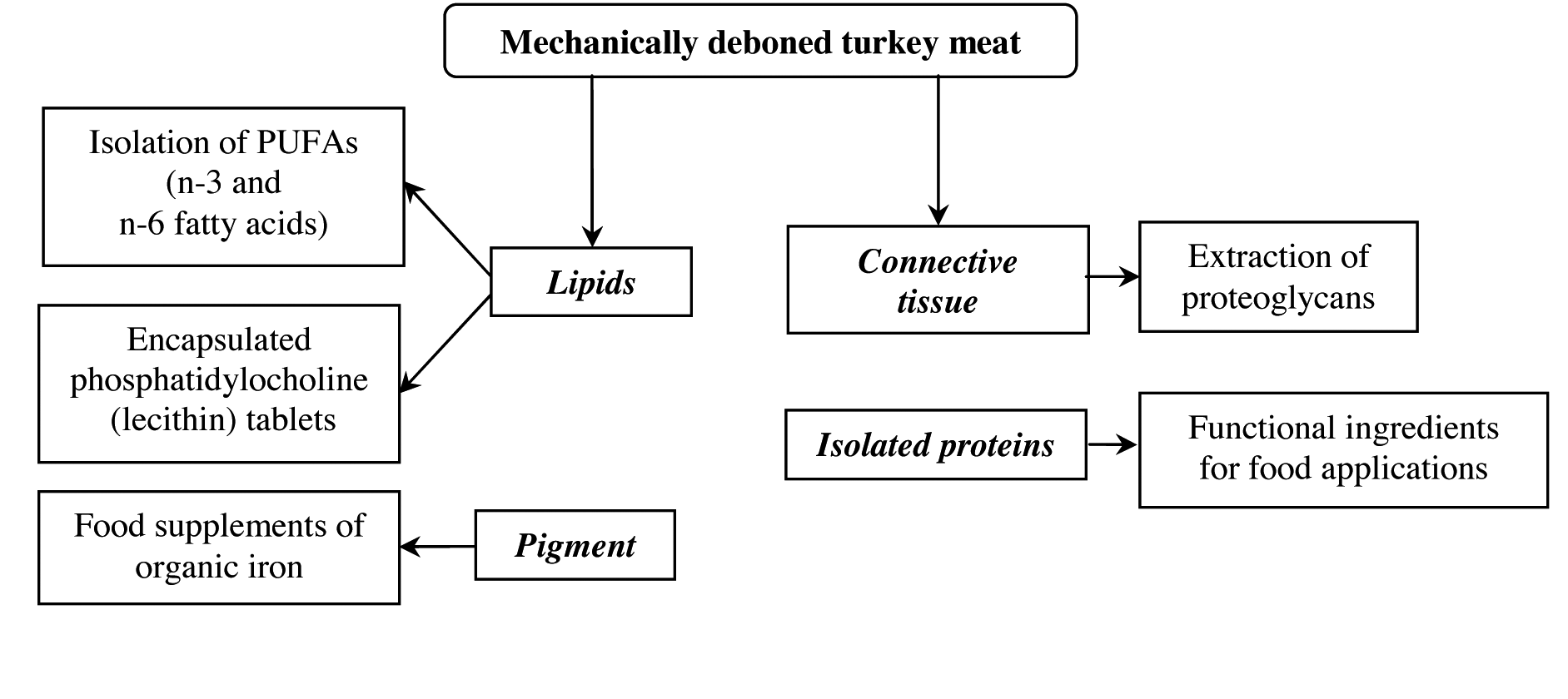
Mechanically deboned poultry meat (MDM) is one of the cheapest sources of animal protein, frequently used in meat processing, although its technological applicability is limited and its nutritive value is questioned by many nutritionists. A potential solution that can improve MDM quality is via an adaptation of the method used in surimi production in the fish processing industry, consisting in the repeated washing of the raw material using water and the separation of fat and connective tissue. As a result of washing turkey MDM, the amounts of certain amino acids such as lysine, glutamic and aspartic acids, increase by 40%, 28% and 17% respectively (Betti et al., Reference BETTI, SCHIEBER, CURTIS and GODDARD2010). The isolation of myofibril proteins makes it possible to obtain other valuable components from MDM (Figure 2).
Potential production of other health-promoting compounds from mechanically deboned turkey meat in the production of protein isolate (Betti et al., Reference BETTI, SCHIEBER, CURTIS and GODDARD2010).

The range of applications for myofibril protein preparations in meat processing is extensive, and includes massaged and restructured products or as an addition to brine injections. An interesting proposal for the food industry is the use of poultry protein in combination with plant materials to produce extruded products. Adding 12% dried myofibril protein preparations to corn grits produced extruded products with advantageous quality and sensory attributes (Stangierski and Kijowski, Reference STANGIERSKI and KIJOWSKI2007). The volume of the addition may be extended to 15% following protein modification using transglutaminase (Stangierski, Reference STANGIERSKI2009). These extruded products not only contain two times more crude protein (over 19%), but, thanks to the amino acid substitution effect, have better nutritive value. They have a fat content below 2.5%, which is competitive in relation to certain snack foods, as conventional corn extruded puffs contain 1% to 3% fat, and flavoured puffs contain up to 30% fat while potato crisps have as much as 40% fat. Due to the presence of dietary fibre as well as organic iron, zinc and copper in such snack foods, they may be considered as a bioactive food.
Conclusions
Poultry meat is important in human nutrition for its nutritive value and natural contents of health-promoting compounds. Certain types of poultry-derived products may be considered health-promoting or constitute the basis for the development of functional foods, potentially from enrichment with additional nutrients. Poultry products may serve an important source of compounds related to the prevention of diet-dependent diseases and in delaying body aging processes. The health-promoting value of food is of lesser importance for consumers, particularly younger people, than sensory value. Thus even the most optimal composition and nutritive value of the final product will not achieve health benefits if they are not acceptable by consumers. For this reason the poultry industry needs to focus on all these elements, starting from the organic rearing system and ending with the processing technology, which will determine the health-promoting value of poultry meat and its processed products. Thus for the purposes of processed poultry, it is important to produce meat of a desirable composition and sensory quality, advantageous for consumer health. Enrichment of poultry meat with nutritionally valuable components may be assumed to gain in importance in the near future. Such developments should focus on attempts to produce products from raw materials obtained from specialist animal breeding systems or from specially selected, biotechnologically modified strains; the application of compounds exhibiting prebiotic properties, obtained through the modification of carbohydrate raw materials and the application of bioactive peptides and animal origin proteins.
The new poultry meat products must be not only high in nutritional value and health enhancing, but also have to be safe, tasty and convenient for consumption.