

Introduction
The purpose of this article is, first, to explain why China, after having launched a crash programme in the mid-1950s to develop a nuclear deterrent, did not formulate a clear operational doctrine with respect to the targeting and employment of nuclear weapons until the mid-1980s. Second, it aims to contribute to the development of a neoclassical realist approach to the study of international relations by demonstrating its utility in explaining the formation of a state’s military doctrine. We will employ neoclassical realism to shed some light on the puzzling development of China’s nuclear doctrine.
The article is organized as follows. The second section examines the debate on China’s nuclear doctrine and discusses the strengths and weaknesses of the different explanatory approaches so far utilized in the literature. The third section introduces a neoclassical realist framework for the analysis of military doctrine formation, highlighting its value in overcoming the limitations of previous explanations and especially of mainstream neorealist accounts. The fourth and fifth sections apply the neoclassical realist perspective to two case studies: the first analyses the situation of hard factionalism and conflicting threat perception in which the making of the Chinese nuclear doctrine occurred during the period 1964–71. The second, related to the period 1978–89, enlightens the reasons of a greater sophistication of Chinese nuclear doctrine as a consequence of a more relaxed domestic political situation and a higher degree of elite consensus on external threats perception. The conclusion provides a summary of the main research findings.Footnote 1
The puzzle of the underdevelopment of China’s nuclear doctrine
China tested an atomic bomb in 1964, and 3 years later tested a thermonuclear bomb; meanwhile, it also developed a small arsenal of ballistic missiles with nuclear capacity. These rapid developments notwithstanding,Footnote 2 Beijing did not devise a nuclear doctrine on targeting and employment for several decades. There is a general consensus on this point among scholars.
China’s present political leaders have inherited a realpolitik world view […] A realpolitik world view and a confidence in the status and military value of nuclear weapons ought logically to lead to a more or less coherent nuclear doctrine that stresses the operational utility of nuclear weapons. One of the puzzles in the Chinese case is that for about 30 years after China exploded its first nuclear weapon, there was no coherent, publicly articulated nuclear doctrine (Johnston, Reference Johnston1996b: 549, 552).
[…] the first three decades of China’s approach to nuclear modernization and doctrinal development raises several important questions […]. First, why did China maintain such a small and vulnerable nuclear force structure for so long, given that it undermined China’s ability to deter nuclear aggression? Second, why did China not develop a detailed operational nuclear doctrine? Why, in particular, did China not pursue nuclear war-fighting concepts (and associated force structures) as a response to its nuclear and conventional inferiority? (Fravel and Medeiros, Reference Fravel and Medeiros2010: 48–49).
One can see general trends in Chinese thinking about nuclear weapons, particularly a pervasive belief that nuclear weapons are primarily instruments of political coercion, as well as the related view that small numbers of weapons would suffice to neutralise larger arsenals used in this manner. However, China would not develop a formal nuclear strategy and operational plans until after Mao’s death in 1976 and the deployment of the first ICBM in the early 1980s (Lewis, Reference Lewis2014: 14–15).
The explanations of the Chinese nuclear doctrine based on neorealist models, which focus on adaptive responses of state to international environmental pressures, have several shortcomings: the situation of severe international danger notwithstanding, China was reluctant to explicitly address the issue of targeting and the definition of operational rules for the use of nuclear weapons in the period 1964–71.
Another puzzling aspect, from a neorealist viewpoint, is the adoption by Chinese policymakers of a posture of no first use, a doctrine not consistent with a position of inferiority – both in conventional terms and non-conventional ones – of the PRC vis-à-vis the two superpowers (Powell, Reference Powell2015).
Thus, even if external threats are considered central to explain the interest of China, and primarily of Mao Zedong, for the development of nuclear weapons,Footnote 3 the neglect of a clear and articulated formulation of a doctrine tailored to the needs of a poor country, internationally isolated, and with powerful nuclear enemies, remains untheorized.
A partial response to these puzzles comes from the studies that stress the impact of cultural tradition on Chinese nuclear posture. The cultural traditions of a country affect the way policymakers think about international events – the conflictual or peaceful image of world politics – and their reactions: accommodating behaviours, defensive, or offensive strategies.Footnote 4
According to Lin (Reference Lin1988), traditional strategic culture affected the contemporary Chinese nuclear doctrine. The strategic ambiguity surrounding China’s nuclear doctrine would be the result of the application of the concepts of extra-military means, integrated dualism, flux and fluidity, minimalism, and negativism – which are hallmarks of Chinese traditional military thought – to the management of nuclear weapons.
The strategic culture approach has much to say about military behaviour,Footnote 5 but because culture, by definition, changes very little over short/medium periods of time, its contribution to the explanation for the attitude of the PRC’s leaders towards nuclear weapons in the two periods considered in this study is limited: there is not a great gap between the strategic culture of the Maoist and post-Maoist periods. As Scobell puts it, the two periods are marked by different approaches to civil-military relations, the conception of the role of the Armed Forces, and military doctrines (from ‘People’s War’ to ‘People’s War under Modern Conditions’). However, these changes notwithstanding, China’s overall strategic culture – called by Scobell the ‘Cult of Defence’ – maintained strong elements of continuity (Scobell, Reference Scobell2003).
The third type of explanation for China’s inadequate attitude towards the nuclear doctrine refers to the military thought of Mao Zedong. There is no doubt that Mao’s scepticism towards military technology, in general, and nuclear technology, in particular, played a significant role in determining the position of the PRC. The problem, however, is that these ideas cannot explain the timing of the programme and, particularly, the changes in the attitude of the Chinese leadership towards these weapons. In fact, as indicated by Fravel and Medeiros, ideas cannot explain the adjustment that occurred during the period of reforms, as Deng’s ideas about nuclear weapons were substantially similar to those of Mao Zedong (Fravel and Medeiros, Reference Fravel and Medeiros2010). The real variation between the Maoist and post-Maoist periods was not about the beliefs of the paramount leader in the field of nuclear weapons, but the different domestic political situations.
The model used in this present work, based on neoclassical realism, contends that we can explain the puzzles missed by the approaches presented above. It combines both international variables and unit-level variables to explain the way a country reacts to international threats/opportunities.
Neoclassical realism and military doctrines
Neoclassical realism emerges as a reaction to the incapacity of neorealism (or structural realism) to offer a theory of foreign policy and explain what states do and why. It is true that some scholars have attempted to show that it is possible to develop a foreign policy theory using neorealist assumptions (Elman, Reference Elman1996), but leading neorealists, and Waltz in primis (Reference Waltz1979), have insisted that this theory is mainly concerned with international politics (i.e. recurring patterns of state interactions), not foreign policy (i.e. the external behaviour of a single state).Footnote 6
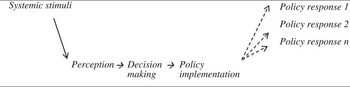
Neoclassical realism starts from an established realist position: the main actors in international politics are states, and their behaviours are stimulated by changes in the balance of power. To this basic tenet it adds several specifications: between the change in the balance of power and state (re)action there is not a direct link; there are many intervening variables, located at the unit level (individual and domestic variables), which affect how a government responds to international events (Rose, Reference Rose1998; Lobell et al., Reference Lobell, Ripsman and Taliaferro2009). In particular, according to neoclassical realism, the response of states to international events is mediated/conditioned by a number of unit-level intervening variables grouped into three broad clusters: the perceptions of policymakers, the decision-making process, and the implementation process. The perceptions of leaders, decision-making, and policy implementation are influenced by the images (belief systems) of individual leaders, the national strategic culture, the state–society relationship, and the characteristics of political institutions (Ripsman et al., Reference Ripsman, Taliaferro and Lobell2016) (Figure 1).
A neoclassical realist explanation of foreign policy decisions. Source: Ripsman et al. (Reference Ripsman, Taliaferro and Lobell2016: 31).

To explain the development of China’s nuclear doctrine from a neoclassical realist perspective, it is necessary to consider the international environment in which Mao’s decisions concerning atomic weapons matured, Chinese policymakers’ perceptions of the balance of power, and the domestic constraints within which they decided. Given the particular nature of the communist regime, which was centred on the dominant position of the party/state, the dynamics of elite politics and the vulnerability of the regime are the most important unit-level variables between systemic factors and the reaction of the state (Schweller, Reference Schweller2004, Reference Schweller2006). Variables related to social cohesion and the role of interest groups or the extractive capacity of the state are less significant.Footnote 7
From the above analysis, several propositions can be inferred. The neorealist baseline proposition is:
-
− Proposition 1. The emergence of an external threat will push a state to develop/deploy its best weapon system and elaborate a military doctrine tailored to the characteristics of the external threat and weapons capacity.
The neoclassical realist propositions are:
-
− Proposition 2. The emergence of an external threat will push a state to develop/deploy its best weapon system, according to the state extraction capacity, and elaborate a military doctrine tailored to the characteristics of the external threat if domestic conditions – intra-elite relations and regime stability – do not trump security considerations.
-
− Proposition 2.1. If the domestic environment is characterized by a unified elite, a consensus on the source and nature of external threats, and regime stability, the most likely result will be the innovation of military doctrine.
-
− Proposition 2.2. If the domestic environment is characterized by a conflictual elite, lack of consensus on the source and nature of external threats, and regime vulnerability, the most likely result will be the preservation of the old military doctrines or their marginal fine-tuning.
A comparison between two critical periods in the history of the PRC has been conducted. The first period proceeds from 1964, the date of the first nuclear test, to 1971, the year of Lin Biao’s death, when the Chinese regime – after reaching the highest point of internal crisis – headed towards a phase of normalization. The second period is that of the reforms, which proceeds from 1978 – the year of the consolidation of power of the new leadership under Deng Xiaoping – to 1989, the year of the dramatic events in Tiananmen Square, when the regime was again under heavy stress, due to both international facts (the rapid dissolution of the Socialist regimes in the world) and internal events (students’ protest). The general hypothesis is that, international predicaments notwithstanding, China’s domestic politics prevented the possibility of articulating a clear and detailed nuclear doctrine during the first period, when such a doctrine was more necessary (Proposition 2.2). Conversely, in the 1978–89 period, the change in elite politics (a shift from hard factionalism to soft factionalism)Footnote 8 and the reduction in the regime’s vulnerability to domestic turmoil supported the development of a more nuanced nuclear doctrine. Thus, the second period is expected to be characterized by clearer statements concerning deterrence/war-fighting options, target selection, and rules of employment for nuclear weapons (Proposition 2.1).Footnote 9
Nuclear doctrine as a continuation of factional politics by other means, 1964–71
After the first test of a nuclear device in 1964, the PRC stated a declaratory policy of no first use. Beijing apparently renounced formulation of a more sophisticated nuclear doctrine. This was at odds with the particular international predicament of the PRC: a threat from the United States and the Union of Soviet Socialist Republics, two nuclear-armed states hostile towards China that were also considering the possibility of using their nuclear arsenals to destroy the infant Chinese deterrent capability.Footnote 10 In such a situation of nuclear and conventional inferiority, a no first use doctrine was not rational. At the same time, China was entering a highly troubled period domestically with the onset of the Cultural Revolution. The domestic environment, characterized by hard factionalism, an unstable regime, and a lack of consensus among the elite regarding the external threat, prevented an in-depth debate about the employment of nuclear weapons and their targeting rules.
The international situation: the Indochina war, the Soviet threat, and the 1969 military clashes
Between 1964 and 1971, after a decline of its national power, China slowly began to recover its international rank. This small change notwithstanding, its position compared with that of its main enemies, United States and USSR, remained critical. In 1964, China’s relative power index was around half the index of American power and approximately two-thirds of the Soviet power. By 1971, China’s power had improved compared with the United States, but remained similar compared with the USSR (Table 1).
Correlates of War’s national power index (composite index of national capabilities, United States 1964=100)

The second half of the 1960s was the most critical period for China’s national security due to the overlap of internal and external crises. The onset of the Cultural Revolution in 1966 had serious repercussions on the international behaviour of China: on the one hand, it contributed to diplomatic isolation, with the leadership completely absorbed by domestic affairs; on the other hand, it favoured a militant diplomacy that alienated the sympathies of many nations.
The situation worsened in 1969 when the conflict with the Soviet Union, which hitherto had remained purely verbal, escalated to border clashes along the Amur and Ussuri rivers. To escape this critical situation of international isolation, strategic encirclement, and internal instability, Mao – supporting the line of Zhou Enlai and officials from the Ministry of Foreign Affairs – began a policy of rapprochement with the United States.
If the strategic predicament on the northern border was worrisome, no less dangerous was the situation on the Vietnam–China border. The escalation in Vietnam pushed China on a collision course with the United States. Beijing indirectly participated in the conflict by providing technical and material aid to Hanoi. In 1967, there were ~170,000 Chinese soldiers in Vietnam. The operations were aimed at contrasting two types of threat: American air raids on North Vietnam and the risk of an invasion.
Thus, from the viewpoint of Chinese leadership, the period following the development of the atomic bomb was a time of maximum danger. From a simple neorealist position, the absence of a serious debate about how to employ the strategic arsenal, and the declaration of a no first use doctrine – in presence of more powerful enemies – was a very risky military posture (Powell, Reference Powell2015). The only way to solve this puzzling behaviour is to look at the domestic constraints on the strategic debate. The international and domestic inputs did not converge towards a similar direction (Lobell, Reference Lobell2009), so Chinese policymakers were not free to respond to external threats in a consistent way.
The domestic environment: ‘politics in command’
From 1966 to 1971 (the year of Lin Biao’s death), the Chinese leadership experienced very high stress and the regime stability was deeply shaken. Intra-elite relations were characterized by harsh divisions along cultural, ideological, political, and economic lines; at the same time, the transformation of power relations undermined the capacity of Mao to control the situation. The outcome was a highly conflictual political elite. This fact produced both a reduced level of attention for international politics and an inclination to look at external events through the lens of their impact on the domestic power struggle.
In such a conflictual domestic environment, it was very difficult to disentangle strategic issues from the domestic struggle and to elaborate a sophisticated nuclear doctrine. The nuclear doctrine in this context was nothing but a continuation of factional politics by other means. The same nuclear programme was under attack by the Red Guards and the radical faction. The technical limitations imposed by economic underdevelopment and the disruption of the normal working of industry provoked by the Red Guards’ actions played an important role in complicating the development of the nuclear programme. As Marshal Nie Rongzhen recalls in his memoirs:
Our scientific research was seriously undermined by Lin Biao and the Gang of Four during the ten years of turmoil: the ‘Cultural Revolution’ that began in the second half of 1969. Many intellectuals (particularly those who formed our scientific research core) and leading cadres were persecuted, research programmes and plans had to be suspended. It was indeed distressing to see how much of our precious time was wasted and how the narrowing gap between us and the world’s advanced scientific levels was widened again. On the top of all this, Lin Biao, the Gang of Four and their ilk often wilfully created trouble to shut down projects which had been successfully completed (Reference Nie1988: 729).Footnote 11
What Nie omits in his memoirs is that during these years Lin Biao and the Gang of Four were backed by Mao himself. To insist on the elaboration of a nuclear doctrine meant to defy Mao’s theory of ‘People’s War’ (and his critiques of a purely military point of view and of the superiority of technology over men) and, accordingly, his very leadership. Such an action was an infringement of one of the most important prudential rule of Chinese politics during the Maoist era: ‘[D]o not cross the paramount leader’ if you want to survive in politically troubled water (Teiwes, Reference Teiwes1984).
The strategic debate during the Cultural Revolution: factions and foreign policy attitudes
Between 1966 and 1971, China’s elite perception of external threats and the best strategy to cope with them was not consistent. During the first decade of the PRC, Chinese foreign policy was Mao Zedong’s foreign policy. Mao’s vision (operational code) of the international situation was highly conflictual, leaning towards a pessimist realpolitik approach. According to Mao, social relations – both domestically and internationally – were based on intrinsic contradictions, and thus military force was the main instrument of statecraft. He was a sort of offensive realist (Feng, Reference Feng2005).
In the turbulent period of the Cultural Revolution, strategic debate was captured by factional politics. Mao’s role was always decisive, but he had to manoeuvre between the different groups to have his preferences prevail. ‘Mao occupied the unique position as the “core” and practiced the traditional tactics of divide and rule, using the Lin Biao “faction” and the Gang of Four “faction” first to balance and then destroy the rising power of Liu Shaoqi and others leader who did not share his visions’ (Tsou, Reference Tsou2002: 113).
Even if there is not a consensus among scholars about the real content and stakes of the strategic debate, it is a widespread belief that a hot dispute between several actors was going on. This dispute centred on three questions: what was the main threat; what was the best strategy to manage it; and what kind of military preparedness was necessary.Footnote 12
During the Cultural Revolution, there were three main factions in the field of foreign policy.Footnote 13 The first was represented by the radical wing of the Chinese Communist Party (CCP), whose main exponents were Mao’s wife, Jiang Qing, and other leading figures of the party, such as Chen Boda, who ran the propaganda apparatus, and Kang Sheng, who was a member of the Politburo Standing Committee. Internationally, they believed that both the United States and the USSR represented a serious threat to China’s security that should be combated through political and ideological struggle, fomenting riots in Third World countries. The second group was represented by the military, led by Chief of Staff Luo Ruiqing. It considered the United States to be the main threat and believed that the best way to address this threat was through modernization of the Armed Forces. Finally, there was the moderate faction, whose leading representatives were Zhou Enlai and diplomats from the Ministry of Foreign Affairs, who regarded the Soviet Union as the greatest threat and, for this reason, were favourable to a relaxation of tensions with the United States. The role of Mao was ambivalent, trying to mediate between the different factions and supporting at different times one position or another. In the end, he sided with the moderate faction, tilting the balance in favour of the policy of rapprochement with America.
The first round of debate started in 1965–66 and culminated with the purge of Luo Ruiqing. In these two years, the problem of the ideological clash with the Soviet Union marred with the conflict in Vietnam and the possibility of a direct military confrontation with US troops. In particular, on the table was the issue of formation of a united front with Moscow to support North Vietnam. According to Harry Harding and Melvin Gurtov, Mao’s opposition to Luo’s programme was the main cause of his purge. However, his opposition did not stem from the substance of military modernization but because these reforms ‘required a number of domestic policy decision inconsistent with Mao’s plan and the interests of other groups’ (Harding and Gurtov, Reference Harding and Gurtov1971: vi).
The second stage of the strategic debate occurred in 1967–68. During this period, the three factions began to better articulate their reciprocal positions: the radicals, who were mostly silent during the previous two years on foreign policy issues, were now more vociferous in prompting their position about a double threat.Footnote 14 Lin Biao was caught between the position of radicals and that of the military he represented.
The third period of the strategic debate – 1969 – was characterized by the intensification of US involvement in the Vietnam War and the outbreak of military clashes between China and the USSR. The debate ended with Mao’s decision of rapprochement with Washington.
The different perceptions and strategies within the leadership – especially for their implications for domestic priorities and power struggles – affected in a negative way the elaboration of a nuclear doctrine. The difficulty of singling out a main enemy was deleterious for the selection of possible targets of a nuclear (counter)attack. In a period when China’s nuclear arsenal was very small, with fewer than 10 warheads,Footnote 15 not specifying the targets was not a very prudent strategy.
The impact on nuclear doctrine: the lack of operational concepts
Mao was not really interested in the operational aspect of nuclear weapons (Hsieh, Reference Hsieh1962).Footnote 16 The basic national strategy remained that of the ‘People’s War’, whose main tenet was the decisive role of politically motivated soldiers. To make the new weapons consistent with the dominant military doctrine, it was necessary to downsize their role and not to elaborate too much on the operational definition of targets and mode of employment.
In Mao’s view, as in Zhou Enlai’s and Deng Xiaoping’s view as well, nuclear weapons should be used only to deter a possible nuclear attack and not on the battlefield in a war-fighting mode (Nie Rongzhen, Reference Nie1988). The strategy of the ‘People’s War’, based on the idea of luring the enemy deep into Chinese territory to exploit the advantage of fighting in a well-known and friendly theatre, was not consistent with the idea of using atomic bombs in a tactical way. The doctrine of the ‘People’s War’ was premised on the idea that future war should be waged in Chinese territory; thus, it was nonsensical to plan for a nuclear battlefield. In this period, ‘[f]ew Chinese leaders’ statements assessing the wartime utility of nuclear weapons are available. What is most notable is the absence of such statements (along with any serious effort to develop theatre nuclear weapons or robust command and control systems for their use)’ (Fravel and Medeiros, Reference Fravel and Medeiros2010: 62).
In such a dramatic domestic environment, the few supporters of a more sophisticated nuclear doctrine were not free to express their views, as doing so would mean contradicting Mao’s position. As said previously, Mao’s position on the strategic debate was strongly affected by the domestic consequences that the choice of a particular posture could have. The build-up and professionalization of the People’s Liberation Army (PLA), as advanced by leaders such as Luo Ruiqing, contrasted with Mao’s idea of a ‘political’ army to be used, first and foremost, for domestic tasks.
The key military organizations were hesitant in elaborating on the operational requirements of an effective nuclear deterrent. As Fravel and Medeiros write:
Following China’s first successful nuclear test in 1964, the upheaval of the Cultural Revolution that started in 1966 limited the attention and resources within the PLA devoted to all aspects of military development, including its nuclear doctrine. […] In addition, China’s nuclear and missile scientists dominated the country’s development of nuclear strategy. Although most of this coterie was formally part of the PLA, they were distinct from operational war-fighting units within the Chinese military. China’s leading weapons scientists exercised such influence over nuclear strategy by directly interpreting the requirements suggested by Mao’s and Deng’s ideas and expressing them in China’s nuclear and missile procurement plans. The operational arms of the PLA under the General Staff Department had little role in these processes (Reference Fravel and Medeiros2010: 66–67).
The establishment in 1966 of the Second Artillery – the organization in charge of the nuclear weapons inside the PLA – was not sufficient to create a political/bureaucratic constituency capable of stimulating a different approach to nuclear doctrine.
The Second Artillery grew out of several organizations established in the 1950s and 1960s to manage the nuclear programme (Allen and Kivlehan-Wise, Reference Allen and Kivlehan-Wise2005). After the launch of the nuclear programme, one of the most important decisions was to establish an organization for the management of delivery vehicles, especially missiles.Footnote 17 In 1958, a base for the testing of missile technology, named Northwest Comprehensive Missile Test Base (NCMTB), was established in Gansu province. The NCMTB was organized in four main bodies that managed the technology for surface-to-surface missiles, surface-to-air missiles, and air-to-air missiles, with the addition of a leading organization that monitored the activities of the three test sites.
Paralleling the advancement of the nuclear warheads, the programme for the development of delivery systems was also proceeding speedily. In December 1957, the Central Military Commission decided to build a new organization for the management of missile technology near Beijing. This was the precursor to the Second Artillery Corps and was named the ‘Special Artillery Corps’. In the meantime, an organization for training personnel on missile technology was set up in the Hebei province: the People’s Liberation Army Air Force 15th Aviation School. In mid-1959, Chinese leaders decided to disband the school and to establish two new missile battalions that absorbed the function of the former unit.
In June 1966, China established the ‘Second Artillery Corps’. It merged the functions of all former sparse organizations charged with the goal of managing missile technology for the delivery of atomic warheads. Xiang Shouzhi, a military leader from the Sichuan province who joined the CCP in 1936 and participated in the Long March, was appointed commander of the new unit. Li Tianhuan, an officer from the Public Security Force, with close links to Lin Biao, was appointed political commissar. Due to the affiliation of these two men, the chaos of the Cultural Revolution was immediately transferred to the new institution. As reported by Lewis and Xue:
The rise and fall of Xiang Shouzhi, the first commander of the Second Artillery, illustrates the damage inflicted by the resulting dissension on the missile command. In the first year, the missile headquarters had no designated commander at all, and the CMC only formally appointed Xiang to that post on July 4, 1967. It took him some forty-three days to disengage from his post as deputy commander of the Artillery Corps and to report to his new assignment. By that time, however, the power struggle was escalating, and Lin Biao, Mao’s chief Lieutenant who then ran the CMC’s daily affairs, labelled Xiang an enemy and plotted to disgrace him. Lin told his wife to phone Li Tianhuan, the political commissar of the Second Artillery, and to tell him, ‘Xiang Shouzhi is not our man. He came to the Second Artillery in order to gobble up your forces [that is, Li’s supporters]. You should report to us. Chief Lin will append a note to his transmittal letter in your report to dismiss him from office’ (Reference Lewis and Xue2006: 177).
Lin Biao manoeuvred to force Xiang – whom he did not trust, as Xiang was considered a man of the moderate factionFootnote 18 – out of the office. In October 1969, Xiang was deprived of all military responsibility and forced to the countryside, where he remained until the death of Lin Biao.
Personnel in the Second Artillery were unable to consult studies and research on nuclear strategy:
These did not exist. The missileers called periodically for achieving longer ranges, better accuracies, improved reliability and operability, and more rapid deployment capability, but these calls were never tied to any particular strategic requirements. The soldiers of the Second Artillery and their comrades in the First Academy merely imagined that nuclear strategy was a matter to be debated and decided upon by leaders in the Central Military Commission. With other pressing demands at hand and with no research institute to help them, however, these leaders never considered, let alone issued document on, nuclear strategy until the mid-1980s (Lewis and Hua, Reference Lewis and Xue1992: 20).
All these events curtailed the capability of the Second Artillery to offer an organizational base for the elaboration of an operational military doctrine. ‘The Second Artillery was treated as a technical branch of the PLA tasked with managing China’s nuclear forces, not developing strategic concepts or determining force requirements […] According to the AMS history, the Second Artillery began to research “nuclear strategy theory” only in the early 1980s’ (Fravel and Medeiros, Reference Fravel and Medeiros2010: 67).Footnote 19
The Academy of Military Science (AMS) did not have a substantially different destiny. The AMS was founded in 1958 with the goal of providing an institutional centre for military research and studies (Gill and Mulvenon, Reference Gill and Mulvenon2002: 623). The AMS was under the direct control of the Central Military Commission (CMC) and the General Staff Department. It was heavily involved in the hard factional struggle of the Cultural Revolution; thus, it was not in the right position to advance a ‘technical’ point of view on the nuclear doctrine issue. During these turbulent years, as Shambaugh reports, the AMS virtually ceased to function (Shambaugh, Reference Shambaugh2002: 114).
The Military Affairs Academy – the antecedent to the National Defence University – was not in a better situation. Its mission of educating senior officer corps and producing studies and research on strategic issue was very hard to implement during a period in which all that was required was to be loyal to Mao and to learn his Red Book teachings (Gill and Mulvenon, Reference Gill and Mulvenon2002: 223).
Thus, during this period, ‘the politics in command’ principle and the hard factionalism that was unravelling the Chinese leadership blocked the possibility of a free debate on nuclear doctrine. All the main actors involved in the nuclear programme were caught in domestic factional struggle. Many of them tried to shield the nuclear programme from the more adverse consequences of the Cultural Revolution, and they were partially successful in these efforts (Nie, 1988). However, the conflict-prone domestic environment, the division among the elite regarding the main external threats and the best way to address them, and the disruption of military organizations that could offer a more professional viewpoint on nuclear doctrine all contributed to the inability to approach the issue in a serious way.
As Lewis and Hua put it (Reference Lewis and Xue1992), the nuclear programme in this period, because of domestic dynamics, was mainly prompted by technological imperatives. Because, for Mao, atomic weapons did not change the nature of warfare, it was not deemed necessary to elaborate too much on nuclear doctrine. The ‘People’s War’ remained valid in the nuclear age and did not need a deep revision. To propose a different doctrine was to defy Mao’s thought and, accordingly, his position of power.
Policymakers involved in the nuclear programme were not explicitly instructed about how to use the new military technology. Before the Soviet split, they were only charged with the goal of building delivery vehicles capable of reaching several targets in Japan, Philippines, US Pacific bases, and US continental territory. After the split with the USSR, new technical requirements were introduced to be able to hit Soviet territory. Weapon designers were, accordingly, forced to work without a clear military leadership and had to use as a baseline for their work not the strategic effectiveness of a policy but its domestic/ideological repercussions. In such a situation, it was obvious that there were few stimuli to elaborate a clear nuclear doctrine. The risk was that such a doctrine could be used as an instrument of political struggle: to label their proponents as supporters of a purely military point of view, as ‘capitalist roaders’, as followers of the omnipotence of technology, and, worst of all, as enemies of Mao.
According to Lewis and Hua, however, ‘[a]lthough their [of nuclear planners] world was essentially technology driven, a strategic retaliatory doctrine was implicit in target selection, and after Mao’s death in 1976, the more adventurous strategists began to make that doctrine explicit and to explore its ramifications for Chinese military and foreign policy’ (Reference Lewis and Xue1992: 20).
To sum up, notwithstanding the international predicament and a detrimental balance of power that required a better articulation of target selection and employment doctrine of atomic weapons, the domestic environment during the 1964–71 period was not supportive of such an attitude (Lobell, Reference Lobell2009). International and domestic factors pushed in different directions, and the result was that policymakers had no incentives to embark on a politically dangerous doctrinal endeavour. Proposition 1 is clearly inconsistent with the empirical evidence. Proposition 2.2 is consistent with the empirical evidence (Table 2).
The making of China’s nuclear doctrine during the Cultural Revolution

Elite stability and nuclear doctrine formulation, 1978–89
In the 1980s, even if the international situation was less ominous compared with the Cultural Revolution period, several threats worried the Chinese leadership: the Sino–Vietnam war in 1979 exposed the weakness of the PLA; the Soviet invasion of Afghanistan reminded Beijing of the northern threat; and the American Strategic Defence Initiative (SDI) programme was a potential mortal blow to the small Chinese deterrent. Because of a more relaxed domestic environment and greater elite stability (a halt to this situation occurred in 1989 with the Tiananmen square incident, which deeply shacked regime stability), the strategic debate about how to respond to these events and the formulation of military doctrine proceeded in a more consistent way and generated new ideas about targeting and employment.
The international situation: the Vietnam ‘lesson’, the Soviet invasion of Afghanistan, and the SDI
Between 1978 and 1989, China’s international position was quite stable. Notwithstanding a slight decrease in its power, the gap vis-à-vis the two superpowers was smaller than the previous decade. This was mainly due to the sharp decline of USSR power at the end of the 1980s. In 1978, the PRC had a power index that was ~30 points less than the power index of Moscow. In 1989, the power index gap was 13 points. Conversely, the PRC position compared with the US position registered a worsening due to the recovery of American national power during the Reagan years. In 1978, Washington had a power index 11 points higher than Beijing’s power index. In 1989, the difference between the power indexes of the United States and the PRC was 21 points (Table 3).
Correlates of war’s national power index (composite index of national capabilities, USSR 1978=100)

During this period, Beijing had to cope with several external events that posed a serious threat to its military security. The disastrous war with Vietnam in 1979 forced a rethinking of military doctrine. The Soviet invasion of Afghanistan in late 1979 evidenced the expansionist nature of Moscow’s foreign policy. Finally, Reagan’s military build-up and the launch of the SDI represented a severe threat to the Chinese nuclear deterrent.
On 17 February 1979, war broke out between Vietnam, recently reunited, and the PRC. It was short but intense. The causes of the conflict between the two former allies were linked to different international political developments of the 1970s. By attacking Hanoi, Beijing intended to achieve two objectives: the strengthening of China’s regional position and the strengthening of its role vis-à-vis the United States and the Soviet Union, of which Vietnam was a close ally (Tretiak, Reference Tretiak1979).
The Soviet invasion of Afghanistan rang another alarm bell for Chinese policymakers about their strategic predicament. The conflict began with the invasion of the country in December 1979. Moscow was willing to depose the Afghan President Hafizullah Amin and replace him with Babrak Karmal, considered a more reliable politician by the Soviet leadership. The military intervention of the USSR led to a resurgence of the Afghan guerrillas who waged a long campaign against Soviet forces and their local allies. The anti-Soviet resistance was supported by nations such as the United States, Pakistan, Iran, Saudi Arabia, China, and the United Kingdom, which provided military aid and logistical and political support.
The launch of the SDI programme was followed with worried attention by Chinese policymakers. Already in the late 1960s/early 1970s, the ABM programme was justified as an anti-China system. The risk in the 1980s was that the operational limit of the system against the huge Soviet arsenal could transform the SDI in an anti-Chinese deterrent system. In the eyes of Beijing’s policymakers, the SDI could render the PLA counter-strike capability ineffective and – stimulating a Soviet build-up of offensive weapons to compensate for the American strategic shield – indirectly worsen the strategic position of China (Garver, Reference Garver1986).
All these international events could justify a renewed attention for nuclear doctrine.
The domestic environment: Deng, elite stability, and military modernization
The period 1978–89 was characterized by a certain stability of the elite. This was the result of the defeat of the radical wing of the party and the consolidation of a pragmatic elite centred on the figure of Deng Xiaoping.
An important consequence of the political change in Chinese politics in the late 1970s was the modernization of the Armed Forces. In the programme of the ‘four modernizations’ (agriculture, industry, science, and defence), the necessity of the Armed Forces’ modernization was ranked last. This fact did not mean that military power was less important for Deng and the new leadership than for Mao, but that Deng believed that to build a militarily powerful China, the development of the other three sectors came first. In the fall of 1979, the Chinese Minister of Defence stated that:
The modernization of national defence cannot be divorced from the modernization of agriculture, industry, science and technology and, in the final analysis, is based on the national economy. […] Blindly pursuing large-scale and high speed development in building national defence will invariably and seriously hinder the development of the national economy and harm the base of the defence industry. Subsequently, ‘haste makes waste’ (Xu Xiangqian quoted in Pollack, Reference Pollack1983: 8).
In this process of modernization, Deng underlined two issues in particular: the combat capacity of the PLA and the ageing of military cadres.
First, we must raise efficiency. This means increasing combat effectiveness and efficiency in general. Second, structural reform will make it possible for us to select more capable people for promotion – this is one of its important features. With the bloated organization we have had, it has been virtually impossible to train and promote able people. For years we have been talking about the need for younger cadres in the army and about promoting outstanding young cadres faster. But we have to admit that our work in this respect has been far from ideal. If the problem is not solved, we will have failed in our duty. Is there anyone sitting here who is under 60? I doubt it.Footnote 20
Thus, the first half of the 1980s was marked by a gradual but important process of modernization of the Armed Forces that included all aspects of military policy: from the reduction of personnel to the upgrading of defence industry and equipment (importing the most advanced foreign technology); from conventional weapons to nuclear ones; and from the military doctrine of a ‘People’s War’ to the new doctrine of a ‘People’s War under Modern Conditions’ (Lovejoy and Watson, Reference Lovejoy and Watson1986).
The strategic debate: People’s War under Modern Conditions
The perception of external threats during the period of the Cultural Revolution was contradictory. During the period of reforms, the elite had a more consistent view of the international situation. This perception was both less pessimistic than the previous one and more widespread within the elite compared with the turbulent years of the Cultural Revolution. In the first half of the 1980s, a mildly positive view of world politics prevailed in Beijing. This view was expressed by Deng Xiaoping in various statements, in which issues of concern were outweighed by the identification of positive trends.Footnote 21 Deng’s operational code, although belonging to a realist vision of international politics, was characterized by a greater flexibility and a more pragmatic approach to foreign policy. If Mao was more similar to an offensive realist, Deng was more similar to a defensive one (Feng, Reference Feng2005).
The change in military doctrine was also a result of a change in the domestic environment that made it possible to debate the principles of Maoist military thought. In the late 1970s, Deng Xiaoping and the Chinese leadership experienced a great dilemma: how to preserve a link with Mao’s legacy – which was essential for the legitimacy of the regime and its policies – and, at the same time, modify policies to make them more attuned to current times. ‘Deng’s ingenious way out of the dilemma was to declare that Mao himself had sanctioned such a departure by stressing the necessity of “seek[ing] truth from facts”’ (Joffe, Reference Joffe1987: 556). In December 1979, Defence Minister Xu Xiangqian stated:
In particular, we must […] study the enemy, take the actual conditions of the enemy and ourselves into consideration and find out the laws for directing a people’s war under present-day conditions. We must whip up a high tide of studying military science with emphasis on the strategy, tactics, science and technology on modern warfare (quoted in Joffe, Reference Joffe1987: 558).
Another important step on the way to reforming the Maoist doctrine of a ‘People’s War’ was taken in the early 1980s, after the consolidation of Deng’s power. The publication of an important document on the Resolution on the History of People’s Republic, adopted by the Sixth Plenary Session of the Eleventh Central Committee of the Communist Party of China on 27 June 1981, was instrumental in opening the way to the possibility of revising Maoist doctrine. By listing the successes and the mistakes of Mao, the Resolution was used to remove the aura of the inviolability of Mao’s political tenets. This was a pivotal condition to reform Chinese military policy. The Resolution was particularly sharp in its assessment of the Cultural Revolution and the role that Mao played in it.
The ‘Cultural Revolution’, which lasted from May 1966 to October 1976, was responsible for the most severe setback and the heaviest losses suffered by the Party, the state and the people since the founding of the People’s Republic. It was initiated and led by Comrade Mao Zedong […]
The history of the ‘Cultural Revolution’ has proved that Comrade Mao Zedong’s principal theses for initiating this revolution conformed neither to Marxism-Leninism nor to Chinese reality. They represent an entirely erroneous appraisal of the prevailing class relations and political situation in the Party and state […]
Chief responsibility for the grave ‘left’ error of the ‘Cultural Revolution’, an error comprehensive in magnitude and protracted in duration, does indeed lie with Comrade Mao Zedong.Footnote 22
The shift to a military doctrine of ‘People’s War under Modern Conditions’ affected nuclear strategy, too. According to Joffe, the most important change regarded the role of tactical nuclear weapons. If the main military strategy was to lure the enemy deep into Chinese territory, a doctrine contemplating the tactical use of nuclear weapons on national territory was not feasible (if not suicidal). With the development of a doctrine that tried to stop the enemy on the border, the use of tactical nuclear weapons on the battlefield assumed a different and significant role.
The impact on nuclear doctrine: considering limited nuclear war-fighting options
The second half of the 1980s was marked by a surge in articles and documents on nuclear doctrines. The ambivalent nature of the operational reality of the Chinese nuclear posture notwithstanding – a minimum deterrence or a more complex strategy envisaging limited strikes on the battlefield, and counterforce attacks to implement some form of intra-war deterrence – it is a fact that in that period, contrary to the lack of a serious debate on nuclear targeting and the rule of employment of the previous era, there was a deluge of official or semi-official documents tackling these topics.Footnote 23 This is even more significant for our analysis because the international strategic situation of China was not so dire as during the years of the Cultural Revolution.
As Johnston convincingly shows, during these years – at all levels of the Chinese nuclear community – there was a great activism in elaborating new ideas about the employment of such weapons.Footnote 24 Ideas about intra-war deterrence, nuclear war-fighting, and counterforce limited strikes surfaced in the Chinese policymaking circles. These changes in the strategic debate and the surge of documents and position papers about operational aspects of nuclear strategy were not the results of technological progress because many of the proposals debated overreached the material capability of the PLA (Johnston, Reference Johnston1995/96: 23 ff).Footnote 25
In Chinese official documents – both public and those with limited internal circulation – many of the concepts linked to the difficult school of deterrence can be singled out. In 1987, the General Staff Department of the PLA elaborated on the idea of waging a nuclear war (Johnston, Reference Johnston1995/96: 9). The positive evaluation of the international situation expressed in Deng Xiaoping’s strategic decision of 1985 – which remarked the idea of a not so ominous international political landscape and the low probability of a major conflict between superpowers – was not sufficient to completely eliminate the possibility of a limited conflict in which nuclear weapons could be used. Accordingly, ‘China’s military had to be prepared to fight under nuclear and chemical warfare conditions’ (Johnston, Reference Johnston1995/96).
In 1988, a study elaborated by the National Defence University stated that ‘nuclear weapons not only cannot be pushed off the stage of warfare but rather will develop continuously; the question is how to develop the role they will play in future wars’ (quoted in Johnston, Reference Johnston1995/96). Other analyses, published in the same period, underlined the necessity for China’s Armed Forces to modernize their arsenal, both to improve its international status and foreign image, as well as to build-up its war-fighting capability and the plans for a tactical use of nuclear weapons.
These apparent changes in Chinese nuclear doctrine were reflected in the introduction into official debate of many concepts about nuclear strategy associated with the ‘war-fighting school’ of deterrence – which had already been long debated in western circles of strategists, arms controllers, and weaponizers (Freedman, Reference Freedman1989: Ch. 25) – stirring up much controversy and criticism for its presumed aggressive nature and negative effect on the arms race. This doctrine contemplates the possibility of using limited nuclear strikes on the battlefield.
In the mid-1980s, the Second Artillery published the first comprehensive textbook on nuclear war: The Science of Second Artillery Campaign. According to Fravel and Medeiros (Reference Fravel and Medeiros2010: 67–68), the Second Artillery textbook did not present a radical departure from the previous analyses about nuclear weapons and their employment. The two scholars consider the textbook as a confirmation of the traditional approach of China to deterrence, based on a pure retaliatory role of nuclear weapons. ‘Consistent with this view, the book describes only one kind of operation for China’s nuclear forces, a “nuclear counter-strike”’ (Fravel and Medeiros, 2010: 68).Footnote 26 Different on this point is the position of Johnston, who presents a list of operational tasks contemplated by the Second Artillery Corps that, according to him, clearly testified to a new orientation (Johnston, Reference Johnston1995/96: 20):
To strike enemy strategic missile bases and weapons stockpiles, major naval and air bases, heavy troop concentrations, and strategic reserve forces, and thus destroy the enemy’s strategic capabilities;
To strike at the enemy’s theater through strategic political and military command center and communications hubs, thereby weakening its administrative and command capabilities;
To strike the enemy’s strategic warning and defense systems;
To strike the enemy’s rail hubs, bridges, and other important targets in its transportation network;
To strike basic industrial and military industrial targets;
To strike selectively at several political and economic centers so as to create social chaos; and
To launch warning strike in order to undermine the enemy’s will to launch nuclear strikes, and thereby contain nuclear escalation.
This list of targets was a long way off the blind targeting approach of the nuclear doctrine of the previous 25 years.Footnote 27
Because the no first use doctrine remains the official declaratory policy of China today, and the development of the Chinese arsenal has not followed a path consistent with a more assertive doctrine (Lewis, Reference Lewis2007, Reference Lewis2014), it is right to have doubts about the effective translation of these prescriptions into an operational doctrine.Footnote 28 However, this is not the main point of this article’s analysis. What is more interesting here is to demonstrate how the change in the domestic environment allowed for an in-depth debate on nuclear targeting and weapons employment that the hard factionalism of the Cultural Revolution period prevented (just when such a debate – due to the strategic predicament – was more necessary).
The passage from debate to operational doctrine is a long way away, and the technical capabilities of a state can prevent this fact from becoming true. However, for our research, it is more interesting that this lively debate about nuclear targeting, war-fighting strategy, intra-war deterrence, and limited counterforce options was possible in Deng’s China. It was simply unthinkable in the aftermath of the first atomic test, when debating nuclear doctrine meant to debate Mao Zedong political-military thinking: a sure path to political disaster for any policymaker. The more stable domestic environment of the reform period (at least until the Tiananmen incident) and the high level of consensus within the political elite allowed Chinese policymakers to tackle the international security situation in a more in-depth and sophisticated manner. Proposition 1 is inconsistent with the empirical evidence. Proposition 2.1 is partially consistent with the empirical evidence (the less-threatening international environment and the more optimistic leaders’ perception would have to alleviate the pressure for a revision of nuclear doctrine) (Table 4).
The making of China’s nuclear doctrine during the reform era

Conclusions
This study sought to explain the evolution of China’s nuclear doctrine and contribute to the theoretical debate in IR by showing the utility of neoclassical realism to explain the formation of states’ military doctrines.
The real variation between the Maoist and post-Maoist periods was not about the beliefs of the paramount leader in the field of nuclear weapons, but rather the different domestic political situations. In the period following the first nuclear test, China precipitated into the vortex of the Cultural Revolution: a political infighting during which any decision – from the management of educational institutions to the choice of opera plays to the role of nuclear weapons – was evaluated in light of its relationship with the thought of Mao and its ideological purity. Nuclear policy was ‘hostage’ to the struggles within the political elite.
As we have tried to demonstrate, the two periods do not show great differences from an international point of view, although the former presents a far greater danger to China’s security and the second was marked by a greater optimism in elite perceptions. What had radically changed was the internal environment, the context in which political decisions were made. The consolidation of a reformist leadership, in which extremists on both sides had been purged, the removing of the aura of inviolability of Mao and his ideas – following the critical review process of the Cultural Revolution – and the restructuring of military institutions meant that in the second period, it was possible to freely discuss nuclear issues, without the awkward presence of the fetish of the ‘People’s War’ doctrine. In the second period, in other words, nuclear policy ceased to be the prisoner of the internal political debate and the struggle between factions (red vs. expert).
Neoclassical realism – by linking systemic stimuli and unit-level variables – offers a useful theoretical tool to explain many puzzles related to the formulation of Chinese nuclear doctrine. On one important point, however, this article contradicts Lobell, Ripsman and Taliaferro. In their latest book (Ripsman et al., Reference Ripsman, Taliaferro and Lobell2016), in fact, the three authors assert that the possibility of domestic intervening variables to influence a country’s policy responses to international stimuli is more likely when the international system presents a permissive strategic environment: that is, when there is not a clear and immediate danger.Footnote 29 The case of the Chinese nuclear doctrine, however, shows how the unit-level intervening variables can weigh in situations of a restrictive international system, too. Indeed, even in the case of the ‘Order Number One’,Footnote 30 issued in mid-October 1969 because of an alleged imminent Soviet nuclear attack on Chinese territory, the factor that weighed most heavily on the evolution of the situation was the strained relations between Mao and his designated heir and Minister of Defence, Lin Biao. What was supposed to be a confrontation between Moscow and Beijing turned into a showdown within the Chinese leadership on the definition of the command lines and the ultimate source of authority in Beijing, contributing decisively to seal the fate of Lin Biao (Xu, Reference Yahuda2015).
This reading is more consistent with the position of realist scholars such as Kirshner (Reference Kirshner2015), who considers international systemic variables as always indeterminate in their effects on state responses.Footnote 31 To be sure, this aspect deserves further investigation.
Acknowledgement
None.
Financial Support
This research received no grants from public, commercial, or non-profit funding agency.
Data
There is no replication material.