Introduction
Pop music is an integral part of Finland's society and culture. Finns’ taste in pop music includes both home-grown artists and imported genres. More than any other country, metal music has achieved a cultural prominence in Finland's popular music. Since the 1990s, Finland has boasted the highest concentration of metal bands per capita in the world (Makkonen Reference Makkonen2014, p. 1586). Groups such as Nightwish, Apocalyptica, Children of Bodom and HIM have boosted Finnish music exports and contributed to international interest in Finnish culture (Hjelm Reference Hjelm2013). Other Finnish pop genres, such as ‘Suomi-rock’, share many of metal's features. Mäkelä (Reference Mäkelä2009, p. 372) suggests that pop music in Finland today has a similar role to that of composer Jean Sibelius's work in the early 20th century: the music is a symbol of Finland's status as a modern Western state and a high civilisation.
Finnish pop music might sound sad, dolorous or even bizarre, at least to foreign ears. Indeed, it is often characterised as melancholic and dark. Yet is it persistently dark, or does the aggregate mood of Finnish pop music fluctuate over time? In this paper, we compare the levels of optimism and pessimism in a random sample of songs from the pop chart in Finland in 2006 with a comparable sample from 2009. We find that the 2009 sample is significantly more pessimistic than the 2006 sample. We employ socionomic theory to understand this change in mood within the context of a broader trend towards negative social mood in Finland, which also manifested in a rise in radical politics, an increase in unemployment, a plunge in measures of economic confidence, a financial and economic crisis both domestically and internationally, and a fall in the fortunes of Nokia, one of the most successful firms in the country's history. We also contribute to the literature at the methodological level by introducing a technique to assess optimism and pessimism in music. Our results suggest that researchers could gauge important elements of a nation's social psychology by examining the mood of its popular music. The study also serves to enrich our understanding of how popular music is embedded within the broader human social experience and is influenced by the same waves of social psychology that also influence the tenor and character of politics, financial markets, the economy and other domains of popular culture. The study thus helps researchers to better understand the linkages between popular music and other fields of study to reach a deeper, interdisciplinary understanding of social behaviour.
Theory
Robert Prechter's (Reference Prechter1985, Reference Prechter1999, Reference Prechter2003, Reference Prechter2016) socionomic theory proposed that social mood – the unconscious, aggregate levels of optimism and pessimism in a society – influences the tenor and character of social actions. One of Prechter's (Reference Prechter1985) earliest empirical applications of the theory was to popular entertainment and the stock market. He proposed that both popular entertainment and the stock market reflect underlying social mood trends, as each is an arena where participants express optimism and pessimism. He found that rising trends in the Dow Jones Industrial Average during the 20th century were associated with a greater quantity and intensity of frisky fashion trends, bright colours and positive, optimistic themes in popular entertainment in the USA, whereas falling trends in the Dow Jones were associated with a greater quantity and intensity of sombre fashion trends, dark colours and negative, pessimistic themes in popular entertainment in the USA.
Prechter (Reference Prechter1985, p. 5) also surveyed more than 60 years of American popular music and concluded that the music had ‘been virtually in lock-step with the Dow Jones Industrial Average as well’. He examined the hyper-fast dance music and jazz of the 1920s bull market; the folk music laments and mellow ballroom music that proliferated after the 1929 stock market crash; the vibrant swing music that gained popularity during the post-1932 bull market; the crooners who sang down-tempo love songs as the market slowed and eventually corrected in the late 1940s; the upbeat rock ’n’ roll music that emerged as the market soared from the 1950s to mid-1960s; and the depressed, angry or psychedelic rock, heavy metal and punk music that flourished as the market corrected from 1966 to 1982. Prechter updated his analysis of American popular music and the stock market in 1999 and 2006 (Prechter Reference Prechter1999; Moore Reference Moore2006), and Lampert and Wilson (Reference Lampert and Wilson2009) carried the analysis up to 2009. Prechter (Reference Prechter2010) showed how social mood trends can also drive the careers of pop stars in a pair of case studies on the Beatles and John Denver.
Socionomic theory recognises that there is always a mix of popular music styles. The theory proposes that, in the aggregate, the ratio of the quantity and intensity of positive expressions to those of negative expressions will fluctuate with the social mood trend: more joyous, optimistic, up-tempo, major-key songs gain popularity during positive mood periods and more sad, pessimistic, down-tempo, minor-key songs gain popularity during negative mood periods. To be clear, the theory does not propose that the stock market regulates popular entertainment trends or that popular entertainment trends regulate the stock market. Rather, the theory proposes that social mood regulates popular entertainment trends and stock market trends concurrently.
Most studies that address mood and popular music, such as that by Rea et al. (Reference Rea, McDonald and Garnes2010), seek to understand how popular music influences the mood of listeners. Socionomic studies, however, seek to understand how the moods of listeners influence the types of music that become popular. Scheel and Westefeld's (Reference Scheel and Westefeld1999) findings are compatible with this positioning. The authors found that, although a disproportionate percentage of metal fans entertain thoughts of suicide, this may be because the pessimism of metal is likely to attract listeners who are already unhappy, alienated and at greater suicide risk. Thus, they proposed that metal music does not produce suicides but rather reflects its listeners’ unhappy feelings. Indeed, Swaminathan and Schellenberg (Reference Swaminathan and Schellenberg2015) find in a thorough review of the literature that music's cultural universality is associated with its connection to feelings and affective states. Socionomic theory proposes that the moods of popular music and moods of society are related, as the popular music of an era is so because it resonates with the social mood.
Of course, any theoretical or methodological framework has limitations to what it can disclose. The socionomic framework, though, is especially well-suited to provide stability and coherence for our study and conclusions. At the metatheoretical level, socionomics recognises that the reductionist mechanics paradigm of exogenous causality and rational reaction does not work well in describing and predicting aggregate human behaviour in contexts of uncertainty. Instead, socionomics combines the worldviews of organicism and contextualism (Pepper Reference Pepper1942) in a holistic model of endogenous causality and pre-rational action (Prechter Reference Prechter2016). Its metatheoretical construction sets it in diametrical opposition to the reigning mechanics paradigm in finance and macroeconomics, under which the efficient market hypothesis (Fama Reference Fama1970) and dynamic stochastic general equilibrium models (Kydland and Prescott Reference Kydland and Prescott1982) fall. A detailed presentation of socionomics’ metatheory and a thorough comparative treatment of it against mechanistic analytical approaches are available in Parker's contributions to Prechter (Reference Prechter2016, pp. 621–66 and 691–729). Parker cited C.S. Peirce's argument that usefulness should be employed as a criterion to arbitrate debates between incommensurable metatheoretical worldviews that aim to explain the same domain, with predictive accuracy serving as the benchmark against which usefulness can be judged. The socionomically generated hypothesis that we test in this paper is one sign of the theory's usefulness, as the results described below serve to bolster the case for the predictive accuracy of that hypothesis.
Methods
The primary aim of our study was to assess whether the aggregate mood of popular music in Finland in the spring of 2006 was significantly different from that of the spring of 2009. We applied socionomic theory (Prechter Reference Prechter1985, Reference Prechter1999, Reference Prechter2003, Reference Prechter2016) to hypothesise that the aggregate mood of the 2009 sample would be substantially darker and more pessimistic than the 2006 sample, owing to a broader shift towards negative social mood in Finland, as revealed by its stock market decline and other manifestations described in more detail below. In the following section, we evaluate the social mood context of the time periods we studied, explain the tool we used to assess the mood of Finland's popular music and describe the two phases of testing we conducted.
Study period: spring of 2006 vs. spring of 2009
The year 2006 was the year before major peaks in many major stock market indexes around the globe, a time when socionomic theory would expect social mood to be relatively positive in the countries associated with those indexes. In contrast, 2009 was the year of the corresponding lows in many of those indexes, and thus a time when socionomic theory would expect social mood to be relatively negative in the countries associated with those indexes. We suspected, then, that the global shift in social mood would be evident not only in Finland's stock market but also in the mood of its popular music. We chose to examine the spring because global stock market lows generally occurred in March 2009, a time when mood would be especially depressed. We then also decided to examine the spring of 2006 to control for seasonal factors.
Finland's social mood context: spring of 2006 vs. spring of 2009
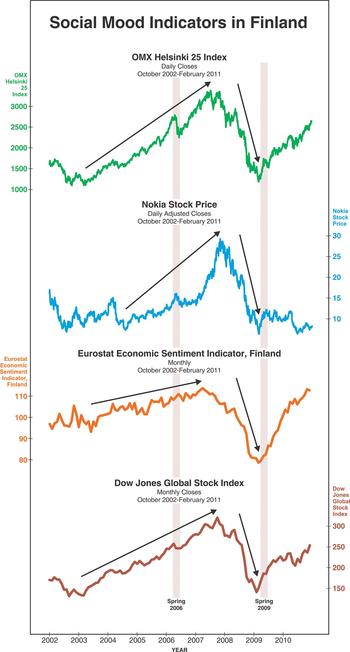
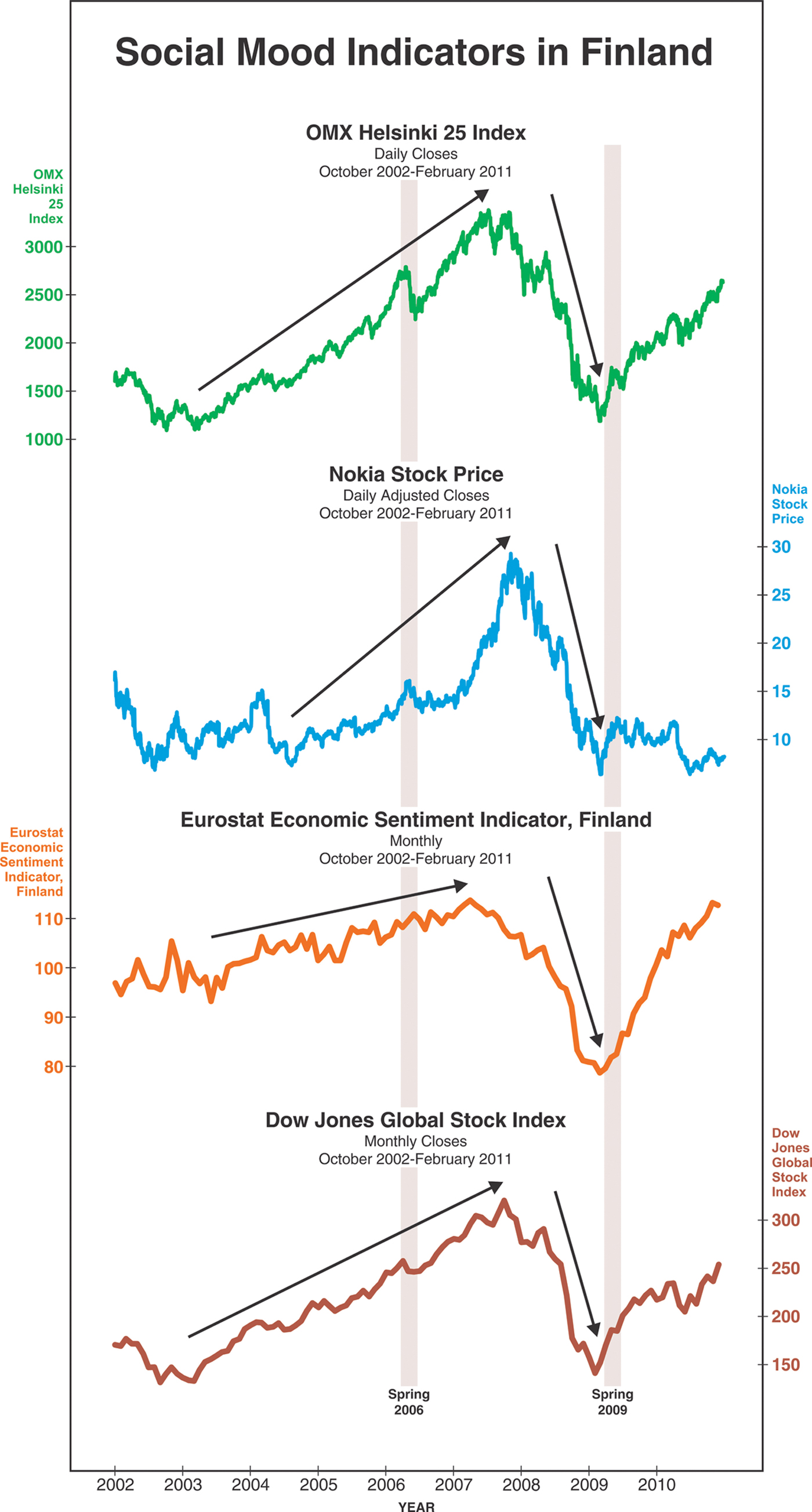
Here we evaluate and contrast the social mood in Finland in the spring of 2006 with that of the spring of 2009. We begin by plotting four social mood indicators in Figure 1. We describe the data series below and use them to evaluate the social mood during the periods of our study. We then consider additional social mood indicators to provide an even deeper context for our analysis.
Social mood indicators in Finland.
Stock market performance
We follow Prechter's (Reference Prechter1985) method by first examining the trends in Finland's benchmark stock market index, the OMX Helsinki 25 Index. The index consists of the prices of the 25 most-traded stocks on the Helsinki Stock Exchange, weighted by market capitalisation with a maximum weighting of 10 per cent per stock (Bloomberg 2015). We plotted the daily closing values in the OMX Helsinki 25 Index from its 8 October 2002 low to February 2011. We note that the spring of 2006 occurred in the middle of the 212 per cent rise in the index from October 2002 to November 2007, whereas the spring of 2009 followed the 66 per cent decline in the index from November 2007 to March 2009. These data, therefore, indicate that social mood was relatively positive in the spring of 2006 and relatively negative in the spring of 2009.
The rise and fall of Nokia
Nokia, a high-profile brand with global reach, is one of the most successful firms in Finland's history. Its importance as an iconic Finnish brand can be traced to a period of economic catastrophe in Finland, which followed the collapse of the Soviet Union. The entire economic structure of bilateral trade with the USSR in lumber, iron and other raw materials suddenly ended, and the unemployment rate in Finland skyrocketed from 3.5 per cent to 16.5 per cent (Gorodnichenko et al. Reference Gorodnichenko, Mendoza and Tesar2012). In the 1990s, Finns began searching for new economic resources and opportunities. Nokia, a local producer of black rubber boots, tyres and toilet paper, transformed itself into a global leader in the development of mobile phones. The company rose in prominence as Finland emerged from a deep depression and began to experience widespread prosperity. In its heyday in 2000, Nokia's stock shares accounted for more than 70 per cent of the Helsinki stock market's capitalisation (Kelly Reference Kelly2013). Finland became ‘Nokialand’. However, Nokia lost its status as a global mobile phones market leader in 2007, when Apple and Samsung smartphones emerged. In 2011, CEO Stephen Elop famously compared Nokia with a burning oil platform (Ziegler Reference Ziegler2011). Rapidly losing its share of the market, the company sold its mobile phone business to Microsoft in 2013. Even though the firm's network division survived, for many Finns the collapse of the most tangible part of the company was seen as a sad symbolic loss (Euronews 2013). Interestingly, in 2016, after a multi-year rally in the Finnish stock market, a Finland-based firm consisting of ex-Nokia employees acquired from Microsoft the rights to use the Nokia brand on a new range of smartphones and tablets (BBC News 2016). Thus Nokia phones went back into the hands of a Finnish corporation and back on the market at a time of heightened social optimism in the country, as reflected by the trend of the nation's benchmark stock index.
We plotted the daily closing stock price of Nokia, adjusted for dividends and splits, from October 2002 to February 2011 as a proxy for Nokia's performance. Figure 1 shows the firm's dramatic rise into 2007 followed by a precipitous fall. Like the OMX Helsinki 25 Index, the trends in this data series also reflect relatively positive mood in the spring of 2006 and relatively negative mood in the spring of 2009.
Economic sentiment
Indexes of consumer confidence and economic sentiment can also serve as indicators of social mood (Prechter Reference Prechter2016). In Figure 1, we also plotted the European Commission's Eurostat Economic Sentiment Indicator for Finland, an index that consists of weighted values from surveys of industrial confidence, services confidence, consumer confidence, construction confidence and retail trade confidence (Eurostat 2015). The surveys used in the construction of the index are conducted under the Joint Harmonised EU Programme of Business and Consumer Surveys. While the advance into 2007 is not as steep as it is in the other social mood indicators we have considered so far, the general pattern remains the same: this indicator shows that social mood in Finland was relatively positive in the spring of 2006 and relatively negative in the spring of 2009.
Global financial crisis
Of course, the shift from positive to negative social mood did not occur only in Finland. A worldwide mood shift ultimately resulted in the global financial crisis. Figure 1 plots the Dow Jones Global Stock Index, a 150-stock index that tracks leading companies from around the world. This measure indicates that global social mood was relatively positive in the spring of 2006 and relatively negative in the spring of 2009.
Macroeconomic trends in Finland
In addition to the four data series in Figure 1, we also consider other variables in order to provide a richer context for our understanding of the social mood in Finland during the springs of 2006 and 2009. Prechter (Reference Prechter2004) explained that changes in macroeconomic indicators such as GDP and unemployment levels can also serve as measures of social mood, although mood-motivated actions that lead to fluctuations in GDP and unemployment take longer to execute than stock trades and therefore tend to lag the overall trends of stock market indexes. From 2006 to 2009, the unemployment rate in Finland grew from 7.6 to 8.2 per cent. GDP data tell a similar story. The nation's annual GDP growth rate plunged from 4.1 per cent in 2006 to −8.3 per cent in 2009. These indicators confirm that social mood in the nation was relatively positive in the spring of 2006 and relatively negative in the spring of 2009.
Radical politics
Socionomic theory proposes that social mood manifests not only in popular music, financial market indexes and economic indicators but also across the full spectrum of human social behaviour, including cultural and political activity (Prechter Reference Prechter1999, p. 237). Prechter (Reference Prechter1999, p. 233) proposed that positive mood breeds political consensus, whereas negative mood engenders political polarisation and a growing popularity for radical parties and proposals. In Europe, these political dynamics manifested in the rise of ‘Non-Inscrits’, or non-affiliated members, in the European Parliament; their numbers increased from eight in 1999 to 52 in 2014 (Whitmer Reference Whitmer2015). In Finland, the rise of the Finns Party (previously the ‘True Finns’) has mirrored the success of the Non-Inscrits in broader Europe. The Finns Party – espousing ‘a brand of Finnish nationalism that targets refugees, immigrants and the Swedish population in Finland’ (Sundberg Reference Sundberg2015) – became the third-biggest party in Finland in 2011 when it won 39 of the 200 seats in parliament. Other parties in Finland have condemned the Finns Party's ‘hate speech’ and attacks on multi-culturalism (Crouch Reference Crouch2015). The rise of this radical party in Finland reflected the shift towards negative social mood in the nation.
Life satisfaction
There is one potential mood indicator of which we are aware that differs from all of the above. The Eurobarometer Life Satisfaction Survey reveals that slightly more people in Finland were satisfied with their lives in the spring of 2009 than in the spring of 2006. In April 2006, 33 per cent of survey takers reported they were very satisfied with the lives they led, whereas 5 per cent of people reported they were not very satisfied with the lives they led. In June 2009, 38 per cent of people reported they were very satisfied with the lives they led, whereas 3 per cent of people reported they were not very satisfied with the lives they led. We cannot say definitively why this indicator differs from the others we have considered. It could be that this survey fails to capture social mood, or it could be that the survey date in June 2009 was too late to capture the depressed mood that coalesced in early spring. The dynamic nature of social mood guarantees that it rarely will be uniformly positive or negative, so we evaluate the social mood trend in the context of the basket of indicators that we have presented in this section rather than on the output of any particular indicator.
Conclusion
While social mood was not uniformly positive in 2006 and uniformly negative in 2009, on the whole the evidence overwhelmingly suggests that social mood in Finland was substantially more positive in the spring of 2006 than in the spring of 2009.
Musical mood measurement scale
Next, we propose and validate a tool to quantitatively evaluate the mood of popular music. According to Rentfrow and Gosling (Reference Rentfrow and Gosling2003), individuals can reliably assess musical attributes. They report high inter-rater reliability of qualitative musical ‘attributes’ or moods – such as depressing, sad, uplifting, optimistic or enthusiastic – despite raters’ heterogeneous personal musical preferences.
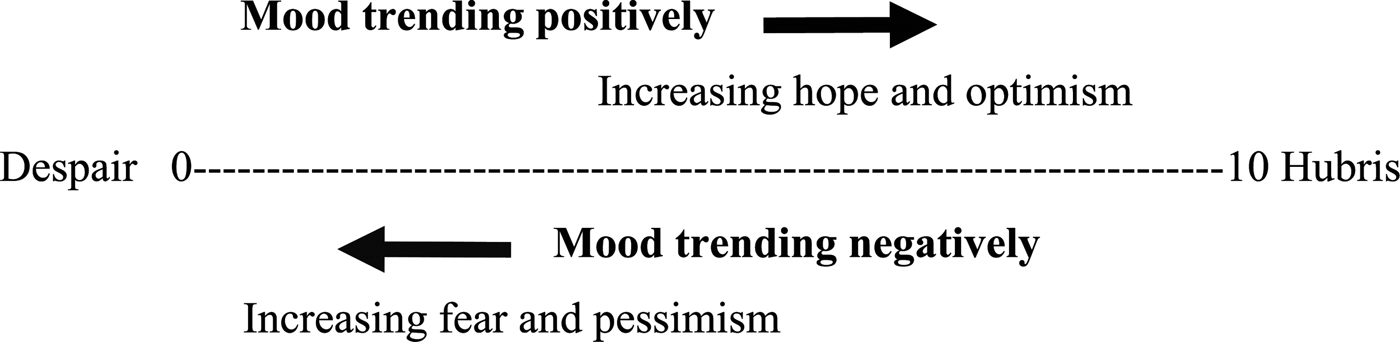
We contribute to this established practice in the field of music research by developing a tool for the quantitative measurement of mood in music. Moisi (Reference Moisi2009) discussed three classes of mood: hope, fear and humiliation. Casti (Reference Casti2010) mapped Prechter's socionomic theory onto this classification scheme and replaced the word ‘humiliation’ with ‘despair’ to develop the ‘Taxonomy of Moods’ depicted in Figure 2. The taxonomy simply illustrates Prechter's observation that aggregate feelings of optimism and hope generally become more common and intense as social mood trends positively, and aggregate feelings of pessimism and fear generally become more common and intense as social mood trends negatively. Hubris characterises a positive social mood extreme and thus an extreme in optimism, and despair characterises a negative social mood extreme and thus an extreme in pessimism. Mood fluctuates across these categories.
Taxonomy of moods, adapted from Casti (Reference Casti2010: 25).

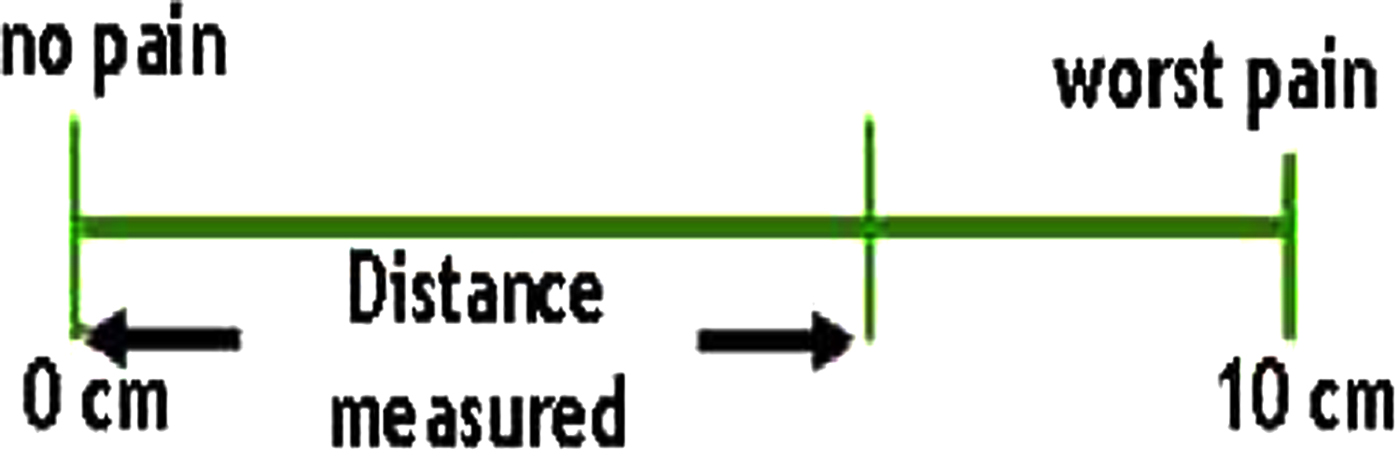
In order to measure moods in music quantitatively, we adapted the Taxonomy of Moods to a scale that is used frequently in health care. Health workers often employ the Visual Analogue Scale (VAS) to measure patients’ subjective experiences of pain, where different diagnoses and types of pain have unique categories of words and their equivalents on the VAS. The two extremes of the scale are ‘no pain’ and ‘worst pain’ (see Figure 3).
Pain measurement (VAS – visual analogue scale).
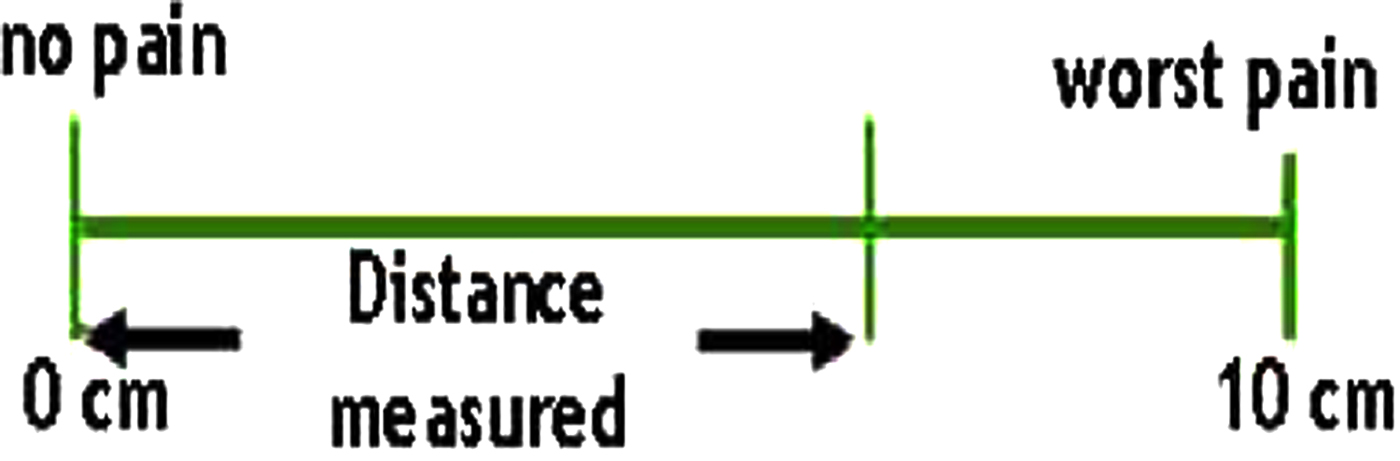
The concept was originally developed in the USA (Melzack and Togerson Reference Melzack and Torgerson1971), yet the scale has been adapted for clinical use in Finland (Ketovuori and Pöntinen Reference Ketovuori and Pöntinen1981). We adapted this scale of pain measurement to fit the Taxonomy of Moods by changing its two extremes to ‘despair’ and ‘hubris.’ Our completed musical mood measurement scale appears in Figure 4.
Scale for measuring moods in music.

Phase 1: pilot study
To determine the reliability and validity of our musical mood measurement scale, we conducted a pilot study. Test groups of students from the University of Helsinki (four test groups, n = 72) and the University of Turku (one test group, n = 10) used the scale to evaluate the moods of four songs. We selected four songs that, in our view, clearly express either a positive or negative mood. University of Helsinki students came from the Faculty of Education and had no specific training in music, whereas University of Turku students specialised in music studies in the Department of Teacher Education. University lecturer Sara Sintonen directed the pilot study in Helsinki, and university lecturer Mikko Ketovuori directed the pilot study in Turku. The proctors in both locations employed the same instructions and procedures.
Each of the sessions took 45 minutes. At the beginning of each session, the proctors played the four songs and instructed the students to evaluate the levels of pessimism or optimism in each song using the musical mood measurement scale. The proctors did not give the students any other information about the research study, including why or how the four songs were selected. The proctors also collected additional information about the students’ personal music tastes and preferences (heavy, classical, jazz or pop), as well as their gender and years of musical experience (for example, whether the student had ever played an instrument or sung in the choir).
We expected the first two songs in the pilot study to be rated as generally optimistic and the final two songs to be rated as generally pessimistic.
Song 1. Spice Girls, ‘Wannabe’ (Spice, 1996). Average Rating: 8.6.
‘Wannabe’ is one of the highest-selling singles by a female group in the world. The song is an up-tempo dance-pop song with a hint of rap and hip-hop music. The song presents an optimistic, future-oriented, hopeful attitude. The song's average student rating was 8.6.
Song 2. Queen, ‘We Are the Champions’ (News of the World, 1977). Average Rating: 8.2.
‘We Are the Champions’ is one of Queen's most famous songs. It is often used as an anthem in sports events. Although many people can recite the catchy chorus of this ballad, fewer are familiar with the beginning of the song, a segment that is much more retrospective rather than triumphant in tone. Thus, the song contains some elements of mixed mood before it ultimately capitulates to a positive tone. The students rated the song as 8.2, slightly lower than ‘Wannabe’ but still strongly optimistic.
Song 3. Nirvana: ‘Smells Like Teen Spirit’ (Nevermind, 1991). Average Rating: 3.8.
‘Smells Like Teen Spirit’ represents alternative rock, also defined as post-punk, grunge or indie. The lyrics are cynical and pessimistic. The song is at the very least one of the best-known songs in its genre, if not an anthem of a generation. The students rated the song as 3.8, moderately pessimistic.
We were surprised that the song was not rated lower on the musical mood measurement scale. We discovered the following explanation for the students’ rating: according to the students, many of them liked the song very much and felt that it was unfair to give Nirvana a low rating. For them, differentiating between personal fondness and the mood of the song was a difficult task. However, in discussions, many of the students admitted, ‘To be honest, the song is really not optimistic at all’. We took these factors into account when evaluating the paper's main study, as discussed in a subsequent section.
Song 4: Slipknot, ‘Psychosocial’ (All Hope Is Gone, 2008). Average Rating: 2.9.
The final song in the pilot study is from the American heavy metal band Slipknot, which falls into the nu metal, thrash metal or death metal genre. Slipknot are known for their energetic, chaotic and even violent live performances. The band's songs often feature aggressive tones, profanity and themes of nihilism, anger, disaffection and psychosis. The music video for ‘Psychosocial’ includes a burning barn and purgatory masks. In sum, the tone of the song is deeply pessimistic and fulfils the promise of the title of the album: All Hope Is Gone.
To evaluate the results of the pilot study, we first considered whether the aggregate average rating for each song generally aligned with our expectations. Since, indeed, the first two songs were rated as substantially more optimistic than the final two, we then performed a paired two-sample t-test in which each student's average rating for the first two songs in the sample was paired with his or her average rating for the final two songs in the sample. The test results confirm that the first two songs were rated as significantly more optimistic than the final two (t = 18.9604, d.f. = 81, one-tailed p < 0.0001). We determined that the musical mood measurement scale worked well enough to be used in our main study.
Phase 2: test music samples
Once we confirmed the accuracy of the musical mood measurement scale, the proctors then repeated the evaluation process with the same test groups of students for a larger sample of songs.
The proctors collected the music samples for this phase of the study from IFPI Finland's monthly statistics (lists of the highest-selling pop albums) for the spring of 2006 and the spring of 2009. IFPI Finland is a national non-profit trade association representing 23 record companies, including major international firms (EMI, Sony, Universal and Warner) and small, independent record producers in Finland. The proctors randomly selected 10 songs for the students to evaluate – six songs from the spring of 2006 and four songs from the spring of 2009. The songs came from the ten most-popular albums during those months. The styles of the songs vary and include ballads, Suomi-rock and heavy rock. The songs are detailed below.
From 2006:
Lordi, ‘Hard Rock Hallelujah.’ Average rating: 6.0.
This is the winning song from the 2006 Eurovision Song Contest. Finland had taken part in the annual contest since 1961 but had achieved relatively little success, finishing last 10 times, including three entries that earned zero points. Thus Lordi's unexpected triumph was widely celebrated throughout the country. Interestingly, 2006 marked a peak in Finnish pop music exports. From 1999 to 2006, Finnish music exports increased from €3.8 million to €28.9 million before trending lower in subsequent years (Mäkelä Reference Mäkelä2009, p. 370).
Egotrippi, ‘Nämä ajat eivät ole meitä varten’ (‘These Are Not Times for Us’). Average rating: 6.2.
The song's album, Vielä koittaa uusi aika (There Will Come a New Era), went gold within a week of its release. Anecdotally, we observe that the album title stands in contrast to the group's subsequent 2008 release, Maailmanloppua odottamassa (Waiting for the End of the World). This song, the album's lead single, features a protagonist who attempts to console a sad and desolated companion, promising better times ahead. The band evinced an admittedly muted but nevertheless hopeful outlook for the future with this spring of 2006 hit, declaring in the chorus ‘toivoasi et saa menettää’ (‘you can't lose your hope’), before succumbing to a pessimistic outlook once mood had turned negative in 2008.
Scandinavian Music Group, ‘Hölmö rakkaus’ (‘Stupid Love’). Average rating: 7.5.
The song can be described as a happy, breezy hit. The group consists of former members of the band Ultra Bra, which released an array of successful songs beginning in 1994. Ultra Bra started its career by competing in a political song contest held by the Finnish Democratic Youth League, and many of their songs deal with politically conscious issues such as the environment and equal rights. The 2006 hit, ‘Stupid Love’, on the other hand, sounds light and casual without any political connotations or reservations.
Pink, ‘Stupid Girls.’ Average rating: 5.4.
The song was recorded in the USA in 2005 and released in 2006. It reached the top 10 in 15 countries, including Finland. The song is upbeat instrumentally, and lyrically it carries a message of female empowerment, decrying female objectification and promoting positive decision-making.
Andrea Bocelli, ‘Ama Credi e Vai’ (‘Because We Believe’). Average rating: 5.0.
The song is from the album titled Per Amore (For Love). Andrea Bocelli is a crossover artist who brought classical music to the top of international pop charts. The music is from the closing ceremony of the 2006 Winter Olympics in Turin and features a sentimental Italian b el canto melody.
Shapeshifters, ‘Incredible.’ Average rating: 6.9.
This is an energetic dance song from a UK house music duo. The lyrics describe the ‘amazing’ feeling the protagonist experiences when she engages in ‘incredible’ actions. The joyful chorus entreats listeners to partake likewise, ‘Let's all do something incredible/Make it happen when we come together/Just stay in here, it's so wonderful/Incredible.’
From 2009:
Apulanta, ‘Ravistettava ennen käyttöä’ (‘Shake Before Use’). Average rating: 3.8.
Originally a punk band, Apulanta's style also has characteristics of alternative rock and nu metal. The lyrics of the song deal with the problem of being, noting that there is an error in the protagonist's internal programming that includes unpredictability, pessimism and dissatisfaction.
Kotiteollisuus, ‘Ukonhauta’ (‘Man's Grave’). Average rating: 2.0.
This heavy metal song deals with the shame and unlived life of a man. The songs of the band usually deal negatively with themes of the nation, religion and mankind. The band's leader, guitarist-vocalist Jouni Hynynen, is known for insulting his audience during live shows.
Waldo's People, ‘Lose Control.’ Average rating: 6.9.
This electronic dance song was the Finnish entry in the 2009 Eurovision Song Contest. Nomen est omen, the song went to the final round but then dribbled to last place among the remaining songs. Despite its upbeat musicality, the lyrics convey the sentiments of an emotionality volatile protagonist who is losing control while experiencing ‘a panic emotion that I cannot describe to you’ as the ‘world is tumbling down’.
Happoradio, ‘Puhu äänellä jonka kuulen’ (‘Speak with a Voice I Can Hear’). Average rating: 3.7.
This typical Suomi-rock song features a simple form and chord structure. The almost laconic melody places more emphasis on the lyrics. The protagonist sings about the problem of communication with a loved one, inquiring ‘Miksi sä itket/kun radiossa joku rakkaudesta laulaa?’ (‘Why do you cry/when someone on the radio sings about love?’)
To avoid objections that we chose these songs strategically, we segmented the selection process: Sara Sintonen identified the IFPI lists for the study and Mikko Ketovuori randomly chose the samples of songs from those lists.
Results
The paired two-sample (each student's average rating for the songs in the 2006 sample vs. each student's average rating for the songs in the 2009 sample) t-test showed a statistically significant difference of 2.0764 (t = 13.9369, d.f. = 81, one-tailed p < 0.0001), which was surprisingly clear: the songs from the spring of 2006 were significantly more optimistic than the songs from the spring of 2009.
We recognise that universally agreed upon classifications of ‘optimistic’ and ‘pessimistic’ do not exist; personal sentiments, opinions and preferences affect the evaluation. This observation is apparent in Scheel and Westefeld's (Reference Scheel and Westefeld1999) study on metal music: some of the listeners in their study associated even the darkest music with positive moods. We counteract potential individual idiosyncrasies by using a large group of independent student evaluators, as the aggregate evaluation should be accurate (Lorenz et al. Reference Lorenz, Rauhut, Schweitzer and Helbing2011).
In the pilot study, we found that some students appeared to have difficulty distinguishing their personal affinity for a song and its associated rating on the musical mood measurement scale. To assess whether personal musical preferences and other factors unduly influenced our results, we collected data on several background variables for each student including gender, personal musical tastes and years of musical experience. We found that these background variables had no influence on the results. In addition, the results from students at the University of Turku did not differ significantly from those from the University of Helsinki.
Discussion
We suggest that the generally optimistic mood of the highest-selling pop music in Finland in the spring of 2006 reflected a generally positive Finnish social mood during that period. Similarly, the generally pessimistic mood of the highest-selling pop music in Finland in the spring of 2009 reflected a generally negative Finnish social mood during that period.
Our results are consistent with Prechter's (Reference Prechter1985, Reference Prechter1999, Reference Prechter2003, Reference Prechter2016) socionomic theory, which proposes that social mood influences social actions, including the tenor and character of popular music. A positive social mood trend in Finland impelled the increased popularity of optimistic music in the spring of 2006. The positive mood trend also manifested in advances in the country's benchmark stock market index, good times for Nokia, lower unemployment and a rise in measures of consumer confidence. Similarly, a negative mood trend impelled the increased popularity of pessimistic music in the spring of 2009 and also manifested in declines in Finland's benchmark stock market index, bad times for Nokia, higher unemployment, a drop in measures of consumer confidence, a financial and economic crisis domestically and abroad, and a surge in radical politics.
Limitations and opportunities for further research
Limitations of our study highlight opportunities for further research. We note several of them. Our test music samples were relatively few in number. Future studies could examine a greater number of songs to increase the robustness of our findings.
Our study was limited geographically to Finland and temporally to the springs of 2006 and 2009. To the extent that comparable data series exist for other countries, similar analyses could be performed to determine the cross-national robustness of our findings. The study also could be extended temporally within Finland to consider earlier and subsequent years.
We analysed songs from the highest-selling pop albums during the spring of 2006, when social mood in Finland was in the middle of a long-term positive trend. Yet Finland's benchmark stock market index did not peak until more than one year later in late 2007, and it underwent a brief correction in the spring (see Figure 1). That could be why the average rating for the songs from the 2006 sample, while generally positive, did not reach the elevated levels we would expect to see had we considered a sample closer to the positive mood extreme. Likewise, Finland's benchmark stock market index bottomed in early March 2009. Examining the mood of popular music more precisely at these stock market turns could yield interesting, and possibly more extreme, results.
We used our musical mood measurement scale to evaluate the mood of Finland's popular music, yet there are many other tools that researchers could employ to measure musical mood. Scholars in the field of sentiment analysis could assess the mood of songs through the automated analysis of the lyrics. Researchers could also employ technologies to conduct automated analysis of other song traits, such as tempo, key and timbre.
Finally, several – but not all – of our social mood indicators are financial in nature. One may wonder whether our indicators suffer from a representative bias, as stock market participation is far from universal. Allaying these concerns, socionomic studies have found that stock market indexes function as accurate social mood indicators even in historical periods when few people invested in the stock market (Prechter et al. Reference Prechter, Goel, Parker and Lampert2012; Hall et al. Reference Hall, Lampert and Hayden2016), and the 21st century is a period of historic levels of elevated stock market participation. Furthermore, we did consider non-financial mood indicators, which in all but one case confirmed the message in the stock market data that the spring of 2006 was a period of relatively positive social mood and the spring of 2009 was a period of relatively negative social mood. Nevertheless, future researchers could consider and perhaps even apply statistics to other social mood indicators to further evaluate the robustness of the findings.
Conclusion
Popular music in Finland shifted from relatively positive in the spring of 2006 to relatively negative in the spring of 2009. We link this shift to the broader shift from generally positive to generally negative social mood in Finland between these periods. Our research makes several significant contributions at the methodological, theoretical, and practical levels. Our musical mood measurement scale enables researchers to quantitatively measure the mood of music. Our findings support Prechter's (Reference Prechter1985, Reference Prechter1999, Reference Prechter2003, Reference Prechter2016) socionomic theory, and our research has substantial implications for the ability of researchers to gauge the social psychology and mood of a nation through the study of the mood of its popular music.
Acknowledgements
We are grateful to Sara Sintonen for proctoring the testing procedure at the University of Helsinki and for her contribution to the design of the study, Eero Laakkonen at the University of Turku for help with statistics, Alyssa Hayden of the Socionomics Institute for a thorough proofread of the manuscript, and Robert Prechter of Elliott Wave International for numerous helpful suggestions and comments. We would also like to thank the Foundation for Economic Education, Helsinki, for financial support for this study.